Food Truck Parking in Cincinnati: Metered Curbside Rules vs Private Lot Fees
Every Cincinnati food truck operator runs into the same decision: take a metered curb space or rent a private lot. The two options follow different rules, different costs, and different risks.
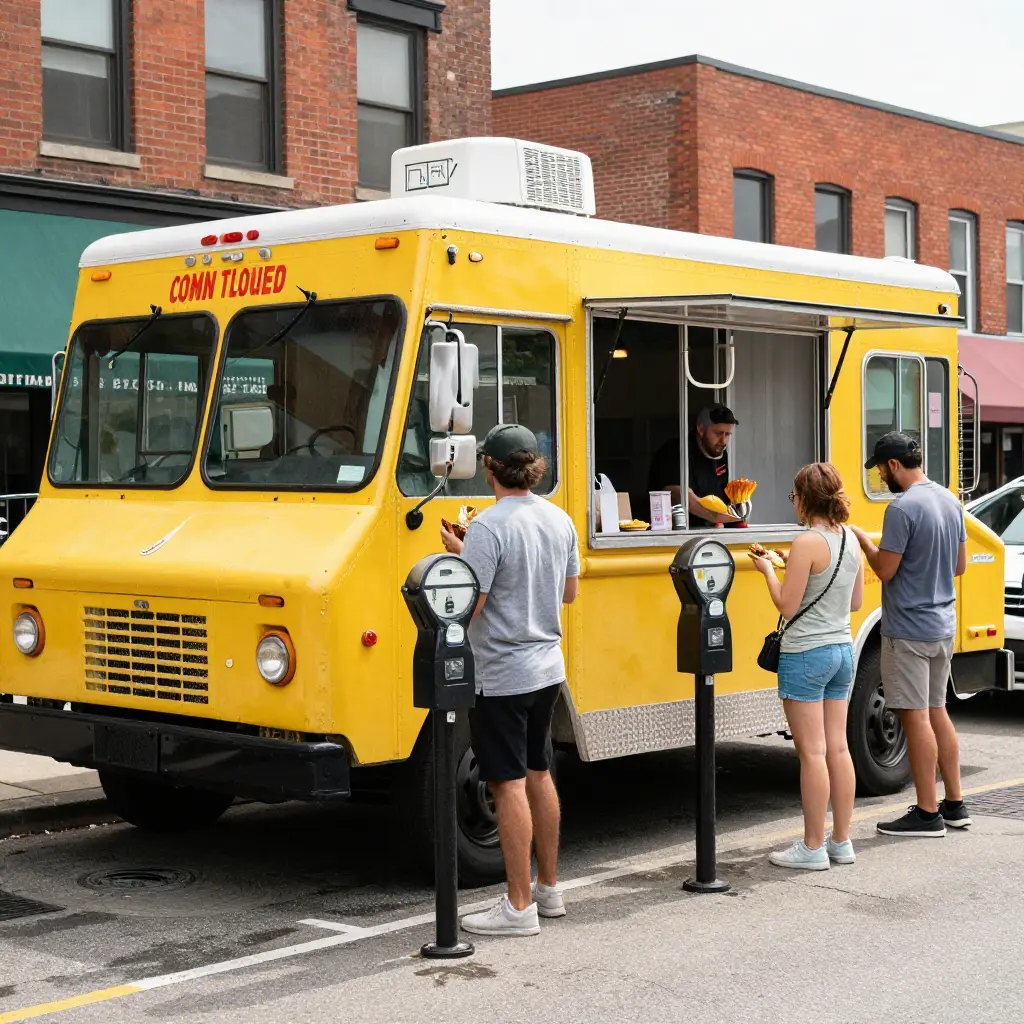
A metered space puts the truck inside the city’s street system. Posted rates, time limits, loading-zone bans, and enforcement hours decide where you can serve and for how long. The city sets the rates, and a missed meter or a misread sign can turn into a ticket before the lunch rush is over.
A private lot works more like a lease. The owner sets the price, the hours, and the access terms. You pay more, and usually pay upfront, but you get a reserved space, room for customer parking, and far less contact with parking enforcement.
Before committing to a daily routine, it pays to review food truck parking strategies that account for both.
Metered Curbside Rules for Food Trucks in Cincinnati
Meter Hours and Time Limits
Cincinnati does not run one meter schedule across the whole city. Downtown and the Banks are enforced 8 a.m. to 9 p.m. Monday through Friday, 9 a.m. to 9 p.m. Saturday, and 2 p.m. to 9 p.m. Sunday, with the Banks staying open until 11 p.m. Thursday through Saturday. Over-the-Rhine is a mix: its southern blocks run into the evening, while the northern section stops at 6 p.m. Northside, Hyde Park, Mount Lookout, and the U-Square area of Uptown run 8 a.m. to 9 p.m. Monday through Saturday; most other neighborhoods close at 6 p.m. Sunday enforcement is limited to the core, where it picks up at 2 p.m.
Time limits are printed on each meter and vary by block, so a spot that covers lunch may not cover lunch and dinner. Overstay, and the ticket comes whether or not customers showed up.
Payment Methods
Cincinnati meters take coins (nickels, dimes, quarters, golden dollars) and credit or debit cards. The city’s own app, Cincy EZPark, and PayByPhone both let you pay and add time without walking back to the meter. Rates are set by zone and shown on the meter display, so check your block before you commit.
Loading-Zone Restrictions
Cincinnati’s mobile food vending ordinance bars trucks from loading zones, valet zones, bus and bicycle lanes, no-parking zones, and permit-parking districts. Blocking a loading zone can get a truck towed. Treat all of these as off-limits, not just during posted commercial hours.
Enforcement Basics
Parking enforcement officers work the metered districts all week, and repeat violations cost more each time. A valid food truck permit does not excuse you from paying the meter or from moving when the city needs the space. Trucks must also stay actively vending while parked, keep a five-foot radius clear of litter, and pull out when an officer asks. For the full regulatory picture, see this walkthrough of food truck industry regulations.
Private Lot Fees: How They Work for Food Trucks in Cincinnati
A private lot gives a food truck a steadier home base than a meter. The terms are worth understanding before you sign anything.
Typical Lease Structures
Cincinnati lot deals range from a handshake for a single event to a full contract. Some owners rent by the day, others by the month. A written agreement should cover which days you can operate, who handles cleanup and trash, and who carries liability.
Daily vs. Monthly Rates
Price tracks location and foot traffic. A prime downtown or Over-the-Rhine spot can run $75 to $150 a day, while outlying neighborhoods and event-only rentals often fall in the $40 to $75 range. A steady monthly arrangement generally lands between $400 and $900. When you tally your food truck parking cost, weigh the fee against what that corner actually sells. For many vendors, a predictable lot beats the daily hunt for a curb.
Insurance Requirements
Most property owners want proof of general liability insurance before granting access, often at least $1 million in coverage, and some ask to be named as an additional insured. The city’s own street-vending program sets the same $1 million floor.
Access Hours and Agreements
Access hours vary widely. Some lots open early for setup but ban overnight parking; others allow 24-hour use. Get the terms in writing either way. You can also look into structured secured parking solutions or see how paid truck parking can boost your business.
Food Truck Parking Cincinnati: Metered Curbside vs. Private Lot
| Attribute | Metered Curbside | Private Lot |
|---|---|---|
| Cost structure | Per-hour meter or app charges; cheap for short stops, adds up fast for all-day service | Flat daily, weekly, or monthly fee; predictable but higher fixed cost |
| Payment method | Coins, credit or debit cards, or the Cincy EZPark and PayByPhone apps | Contract, invoice, or direct payment to the lot operator |
| Time flexibility | Posted meter limits, often 1-4 hours; must feed or move the truck | Flexible hours, often 24/7 access with no re-feeding |
| Capacity | One truck per spot; space is scarce in busy districts | Scalable – can host multiple trucks, generators, and seating |
| Insurance requirements | Standard auto liability; owner’s own policy usually suffices | Often requires commercial general liability and additional insured coverage |
| Permit needs | Ohio mobile food service license plus a city food-service permit; street-vending rules also apply | Lot lease and property-owner consent; the same health license still applies |
| Enforcement risk | High – tickets, towing, and meter sweeps | Low – private property rules replace public enforcement |
| Setup & foot traffic | Instant visibility right at the curb; no booking needed | Built-in audience varies; may need signage and promotion |
The trade-off comes down to control versus cost. A metered curb is cheap and visible but demands constant feeding, respects tight time limits, and carries enforcement risk. A private lot costs more and usually requires a lease and proof of insurance, but it buys a reserved space, longer hours, and quiet. Use curbside for lunch rushes; use a lot for full-day service and events. For a deeper playbook, see our guide on mastering food truck parking challenges.
What Parking Really Costs Your Bottom Line
Parking is a running cost, not a one-time logistics problem, and it quietly reshapes your margin. In Cincinnati, two models dominate: metered curbside and private lot fees.
Metered curbside looks cheap at first. At roughly $1.50 to $2 an hour in the urban core, a four-hour lunch shift runs about $6 to $8. The trap is overtime risk. Run an hour long and a single citation can cost $50 or more, wiping out a chunk of the day’s profit. Multiply that across a busy week and the budget gets unpredictable. To avoid those surprises, follow proven budgeting strategies for food truck owners.
Private lot fees flip the math. A flat daily rate, often $40 to $150, buys certainty: a reserved spot, no meter feeding, and usually access to power and water. For high-volume dinner service, that predictability can be worth the cost.
Location decides the outcome. A cheap meter on a low-traffic street can cost more in lost sales than a premium lot on a busy corner. First-time operators should study financial tips for first-time food truck owners before committing to a daily spot.
Metered curbside rewards discipline; private lots reward planning. Track both against your average ticket and let margin, not habit, pick the spot.
Average Weekly Food Truck Parking Costs
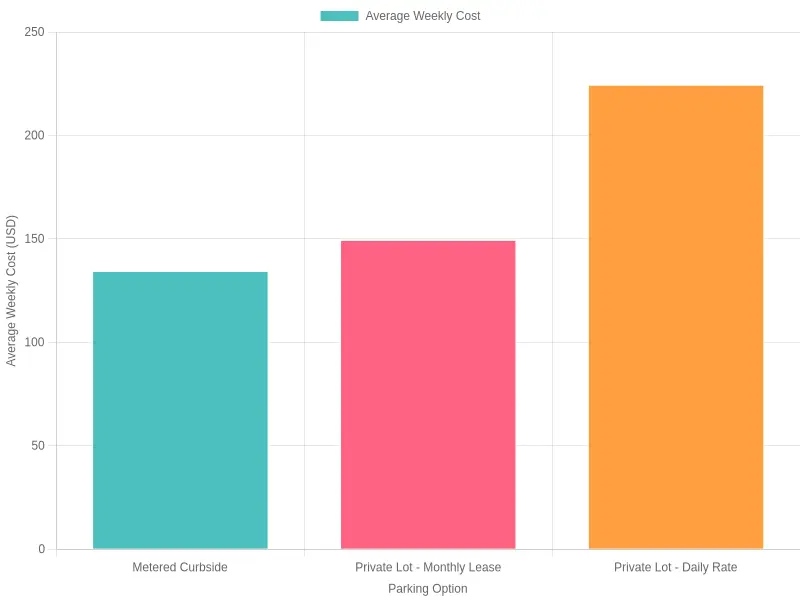
On a weekly basis, curb meters come out cheapest at about $135, a private-lot monthly lease runs about $150, and a lot’s daily rate costs about $225. That makes daily lot parking roughly 67% more expensive than meters. Whether the premium pays off depends on how much the lot’s foot traffic adds to your register. Mastering food truck parking challenges goes deeper on the trade-offs.
Key Factors to Weigh Between Curbside and Private Lots
A poor parking choice can dent a week’s revenue, so compare each setup before you commit. The factors below, drawn from mastering food truck parking challenges, help you pick the spot where your truck earns most while staying legal and predictable.
- Location traffic: Consider how many passing drivers actually see the truck. A high-traffic curb only pays off if they can safely pull over.
- Customer footfall: Measure nearby pedestrian traffic. A lot beside busy offices often beats a quiet metered spot.
- Permit availability: Confirm the city permits curbside vending at your spot. Private lots skip that paperwork but may still need landlord approval.
- Insurance: Check how each option affects your coverage. Curb exposure to moving traffic can raise premiums compared with a controlled lot.
- Overnight security: Metered curbs rarely offer the gated protection of a paid private spot.
- Proximity to events: Gauge the distance to festivals, stadiums, and markets. Event crowds can fill either option.
- Cost predictability: Metered rates and time limits shift day to day; private lots often charge one flat monthly fee.
- Flexibility: Curbside lets you chase new locations; a private lot locks you to one address.

Permits and Compliance: What Each Parking Option Demands
Compliance is where Cincinnati’s food truck scene gets complicated. Before the wheels touch a public curb, the paperwork has to be lined up; a failed inspection can shut down service for the day.
Licenses and Health Department Approvals
Inside Cincinnati, the Cincinnati Health Department licenses and inspects food operations under the Ohio Uniform Food Safety Code, and that includes mobile units. A food truck needs a mobile food service operation license, usually shortened to mobile FSO, and must pass inspection on its water supply, refrigeration, and handwashing setup. You also need an Ohio vendor’s license to collect and remit sales tax. Staying current on commercial driving and operating rules keeps the truck legal and on the road.
Public Curbside vs. Private Lots
Curbside vending is governed by Cincinnati Municipal Code 723-42. A truck has to sit in a legal parking space and pay the meter, and it has to stay at least 100 feet from restaurants, schools, and outdoor dining areas unless every nearby operator gives written consent. It also has to stay 10 feet from hydrants, bus stops, building entrances, and fire exits, 750 feet from permitted events, and outside residential and permit-parking zones. Officers work the core districts, so expect checks. On private property the owner takes over enforcement and may ask for insurance certificates, a waiver, and a written agreement before you park. Fire-lane clearance applies either way, so confirm access routes before setup.
Neighborhood and Location Strategy
Parking in Cincinnati is not one-size-fits-all. A move that works Downtown may flop in Over-the-Rhine, and the suburbs play by their own rules. Here is how to read each district before booking a spot.
Downtown rewards density but punishes indecision. Lunch traffic is strong, meter availability is scarce, and rush-hour restrictions cut into your service window. The 100-foot restaurant rule also removes many blocks unless you get written consent from nearby operators. Reserve a metered spot early or negotiate a private lot for predictability.
Over-the-Rhine combines high customer density with heavy event traffic. Findlay Market and nearby venues draw crowds, but narrow streets squeeze large rigs. Matching truck size to location matters here, and our guide to the top food truck models for vendors can help you choose a footprint that fits tight blocks.
Suburban districts like Mason, Blue Ash, and Oakley trade walk-up customers for easier logistics. Private lot access is common outside strip malls, and lot fees there are often lower and negotiable by the event.
Key decisions to weigh:
- Customer density: high Downtown, moderate in OTR, event-driven in the suburbs
- Event traffic: peaks around stadiums, festivals, and market days
- Meter availability: tightest in the core, looser outward
- Private lot access: essential for large trucks and long events
Run through these before every booking to keep food truck parking Cincinnati manageable.
Monthly Parking Cost Distribution
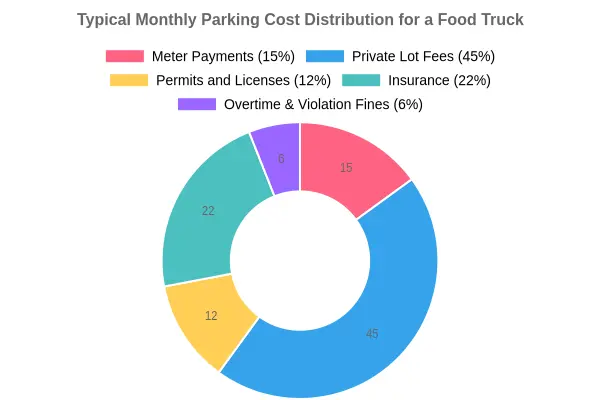
Private lot fees make up 45% of the monthly total, the single largest parking expense for most food trucks. A reliable, high-traffic location often justifies the premium, since steady foot traffic feeds sales directly. Owners who negotiate long-term agreements or bundle several days usually bring that number down. For a closer look at navigating Cincinnati’s food truck parking challenges, strategy matters as much as location.
Technology and Management Tools for Smarter Parking
For Cincinnati operators, a few well-chosen apps turn the daily scramble into a routine. Payment apps tied to the city system, including Cincy EZPark, let vendors top up meters remotely so a busy lunch rush does not become an overtime ticket. Reservation platforms such as SpotHero or local lot marketplaces hold a space in advance, letting you compare a curb against a private lot before spending a dollar.
GPS-based planning ties it together. Map your route, peak hours, and event schedule, and you can rotate between high-traffic curbs and quieter private lots without guesswork. Knowing the metered curbside rules, including time limits and loading zones, helps you avoid fines that quietly eat into daily profit. To keep those costs in check, review this food truck finance guide for practical budgeting tips.
Used together, these tools cut overtime fines and smooth the handoff between curbside and private lots, so the week stays flexible. The payoff shows up as fewer citations, tighter scheduling, and better use of every selling hour.
Frequently Asked Questions About Food Truck Parking in Cincinnati
Can food trucks park at metered spaces?
Yes, with conditions. In Cincinnati, a food truck can occupy a metered curbside spot if it pays the meter, respects the posted time limit, and stays out of loading zones, bus lanes, and other restricted spaces. The city also bars vending within 100 feet of a restaurant, school, or outdoor dining area unless those operators consent in writing, and within 10 feet of hydrants, bus stops, or building entrances. Read the signage and confirm your food-service permit before opening the service window.
How are private lot fees typically structured?
Private lot fees usually follow one of three models: a flat daily or weekly rate, a monthly lease, or a revenue-share percentage, often 10-20% of sales. Location, foot traffic, and event demand drive the price. Ask upfront about power access, trash disposal, and reserved spaces, since those extras often appear as add-on charges in the agreement.
What happens if a meter expires?
Expect a parking ticket, and downtown enforcement moves quickly. Cincinnati’s fine schedule puts most violations at $50, with an extra $10 after 14 days and a doubled base fine after 21. Repeated violations can eventually lead to towing, which costs far more than the original fee. Set phone reminders, use a parking app, or overpay slightly.
Is insurance required for private lots?
Most private lot operators require proof of commercial auto and general liability insurance before granting access, and many insist on being named as an additional insured. Requirements vary, so read the contract. Keep certificates on hand, because managers may deny entry without documentation. Solid coverage also protects the business if a customer is injured on-site.
How do I choose between the two options?
Choose based on traffic, cost, and flexibility. Metered curbside suits short, high-visibility lunch stops where you rotate locations often. Private lots offer stability, more room, and dependable customers, but higher recurring fees. Compare daily revenue against total costs, then pick the model that matches your menu, schedule, and goals. Mastering food truck parking challenges covers how to weigh each option.
Do I need separate permits for each option?
Both options need the same Ohio mobile food service license, so that requirement does not change. What differs is everything around it: curbside vending also requires a city food-service permit and compliance with street rules on time limits and restricted zones, while a private lot needs a written agreement with the property owner plus proof of insurance. Confirm both sets early, because missing paperwork can shut down a profitable location overnight.
Conclusion
Choosing between metered curbside parking and private lot fees is one of the most practical decisions a Cincinnati food truck operator makes. Metered spaces offer flexibility and low upfront cost, but they come with strict time limits, unpredictable availability, and the need to move. Private lots provide reliability, steady foot traffic, and room to set up, but they usually demand higher fees, deposits, or long-term agreements.
The key factors are daily revenue, permit costs, and how much time you can realistically spend relocating. City planners weigh turnover, traffic flow, and fair access for all vendors. Entrepreneurs entering the market balance growth potential against fixed overhead.
No single answer fits every truck. Match the choice to location, menu, and customer patterns: a downtown lunch rush may reward curbside metering, while evening events often justify private lot fees.
Success in food truck parking Cincinnati comes down to planning rather than luck. Weigh the trade-offs, track your costs over time, and stay current on local rules. For deeper strategies, review this guide to mastering food truck parking challenges before your next service day.