
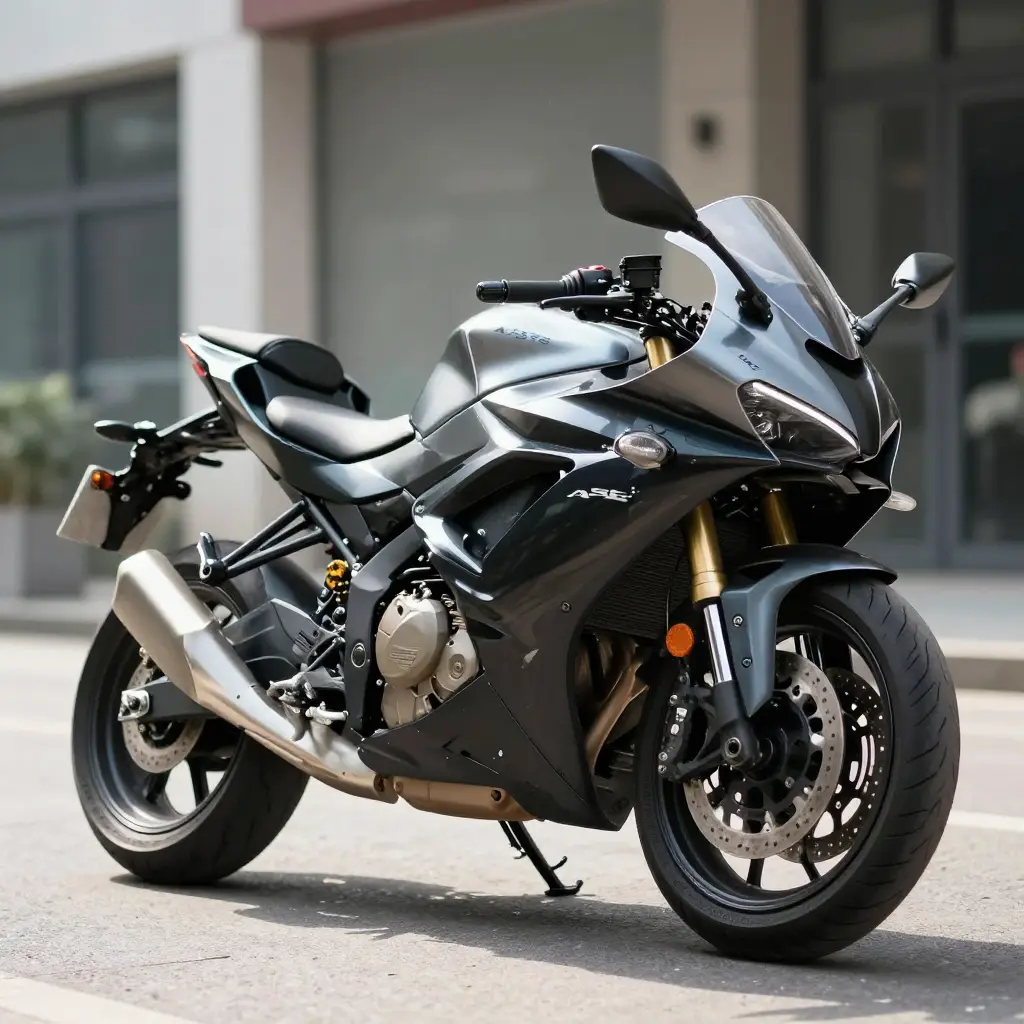
What Are ABS Fairing Kits?
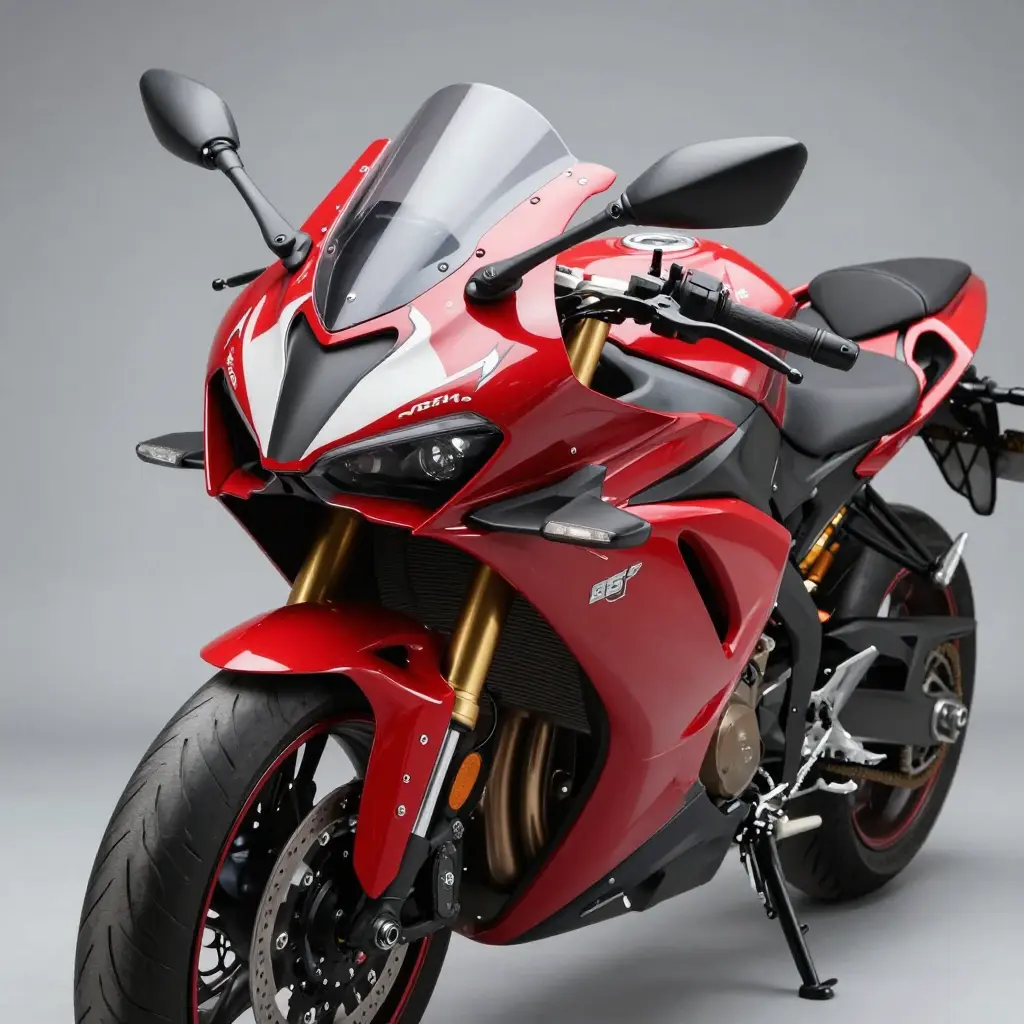
ABS fairing kits are aftermarket body panels molded from acrylonitrile butadiene styrene, the thermoplastic that most sportbike bodywork is made from today. Each of the three monomers does a specific job: acrylonitrile gives the plastic hardness and chemical resistance, butadiene adds toughness and impact absorption, and styrene produces the smooth surface that takes paint well. The result holds an aggressive, sculpted shape yet bends instead of shattering when the bike tips over in a parking lot. If you are shopping for motorcycle fairing kits, that balance is why ABS is still the default.
Rigidity and Impact Resistance
ABS sits between brittle and rubbery. It takes road debris, minor drops, and the odd stone at highway speed without cracking the way a pure thermoset does. Fiberglass splinters on impact; a thermoplastic fairing deforms where it is hit, absorbs the energy, and springs back. That is what you want on a bike that commutes all week and runs canyons on Sunday.
Paintability and Finish
ABS takes primer and topcoat readily, so a painter can match factory livery or lay down custom graphics with crisp results. It also sands and polishes cleanly, which means a scuff can be repaired instead of forcing a whole new panel. That repairability is why shops keep recommending it over cheaper materials that are harder to finish.
Thermal Behavior and Molding
ABS softens gradually as it warms rather than melting abruptly at a single threshold. Manufacturers use that window to injection-mold or vacuum-form panels at controlled temperatures, then cool them into a rigid, dimensionally stable shape. The same forgiving window means heat is never neutral to ABS fairing kits.
Heat, Fitment, and Older Models
On older sportbikes, heat is where fitment starts to drift. Sun, engine warmth, and torqued mounting points make ABS panels creep: a slow, permanent relaxation out of their molded shape. After years of heating and cooling, tabs and bolt holes move, panel gaps widen, and seams that used to be tight let daylight through. It is the reason an aging kit loses its factory-tight alignment, and it sets up the comparison that follows: two thermoplastics, two different reactions to the same heat and the same bolt holes.
What Are Polypropylene Fairing Kits?
Polypropylene fairing kits are full replacement panel sets molded from polypropylene, a semi-crystalline thermoplastic rather than a purely rigid or purely rubbery plastic. The structure explains the behavior. Ordered crystalline regions give it strength, toughness, and chemical resistance, while the amorphous regions between them let the panel bend, stretch, and spring back instead of shattering. Anyone who has dropped a bike understands the payoff: a sportbike fairing made of polypropylene can survive a parking-lot tip-over or a slow low-side and flex most of the way back, where a brittler panel would simply crack.
Chemically, polypropylene is a workhorse. It resists motor oil, coolant, brake fluid, and most mild road solvents, which is the mix fairings actually live in. Fuel is the exception: gasoline and other aromatic solvents will swell it over time. The bigger trade-off shows up at the paint booth. Polypropylene has low surface energy and is chemically non-polar, so paint, primer, and vinyl struggle to bite into an unprimed panel. Unprimed polypropylene fairing kits tend to peel, flake, or blister along the edges unless the surface is flame- or plasma-treated and sealed with an adhesion-promoter primer made for olefin plastics.
Flex also changes how panels seat on the frame. ABS is amorphous and rigid, so it behaves like a molded shell: it holds its cast shape, snaps onto its mounting points, and presses against the frame with predictable gaps. Polypropylene conforms instead. It can absorb a slightly tweaked subframe or a mount that sits a few millimeters off, a real advantage on a 20-year-old machine that has been down the road once or twice.
That same compliance is why fairing fitment becomes a moving target. A flexible panel absorbs misalignment, but it also shows it, sagging in the middle, pulling away at speed, and letting gaps drift where a rigid panel would have held one consistent position. Flexibility is both the fix and the problem.
Knowing how these two plastics behave before you buy is the best way to avoid a fairing that fights you at every bolt hole. The table below compares ABS and polypropylene across the traits that matter to owners, shops, and restorers, with an eye on why fitment drifts on older sportbikes as the bodywork ages.
| Material | Rigidity / Flexibility | Heat and Thermal Behavior | Painting and Finish | Impact Resistance | Recyclability | Typical Fitment Tendency on Older Models |
|---|---|---|---|---|---|---|
| ABS (Acrylonitrile Butadiene Styrene) | Semi-rigid and stiff; holds molded shape well but can crack rather than bend under stress | Softens near 200-220 F (approx. 93-104 C); deforms in strong engine or exhaust heat | Paints easily; accepts primer, OEM color match, and clear coat with a smooth, glossy finish | Good on direct hits but more prone to stress cracks and spider fractures at mounting tabs | Recyclable in dedicated ABS streams (resin code 7) and commonly reprocessed, though not widely accepted in curbside programs | Generally closer to OEM spec; stiff panels keep original alignment so fitment drift is usually minor on unmodified older bikes |
| Polypropylene (PP) | Flexible and impact-tolerant; bends and springs back, resists permanent deformation | More heat-tolerant than ABS: melts near 320 F (160 C) and holds shape to roughly 212 F (100 C) in continuous service | Paint adheres poorly without special adhesion promoters or flame treatment; often left matte or color-molded | Excellent; absorbs impacts and resists cracking, ideal for track and crash-prone use | Widely recyclable (resin code 5); among the easiest plastics to reprocess | More likely to sag and flex over time, so fitment can drift noticeably on older, sagging subframes and heat-cycled frames |
Takeaway: Choose ABS for OEM-accurate appearance and easier painting, and polypropylene for impact and heat tolerance. Budget extra test-fitting either way if your older sportbike has any frame or subframe fatigue, since flexibility is exactly what lets PP fairings wander out of alignment.
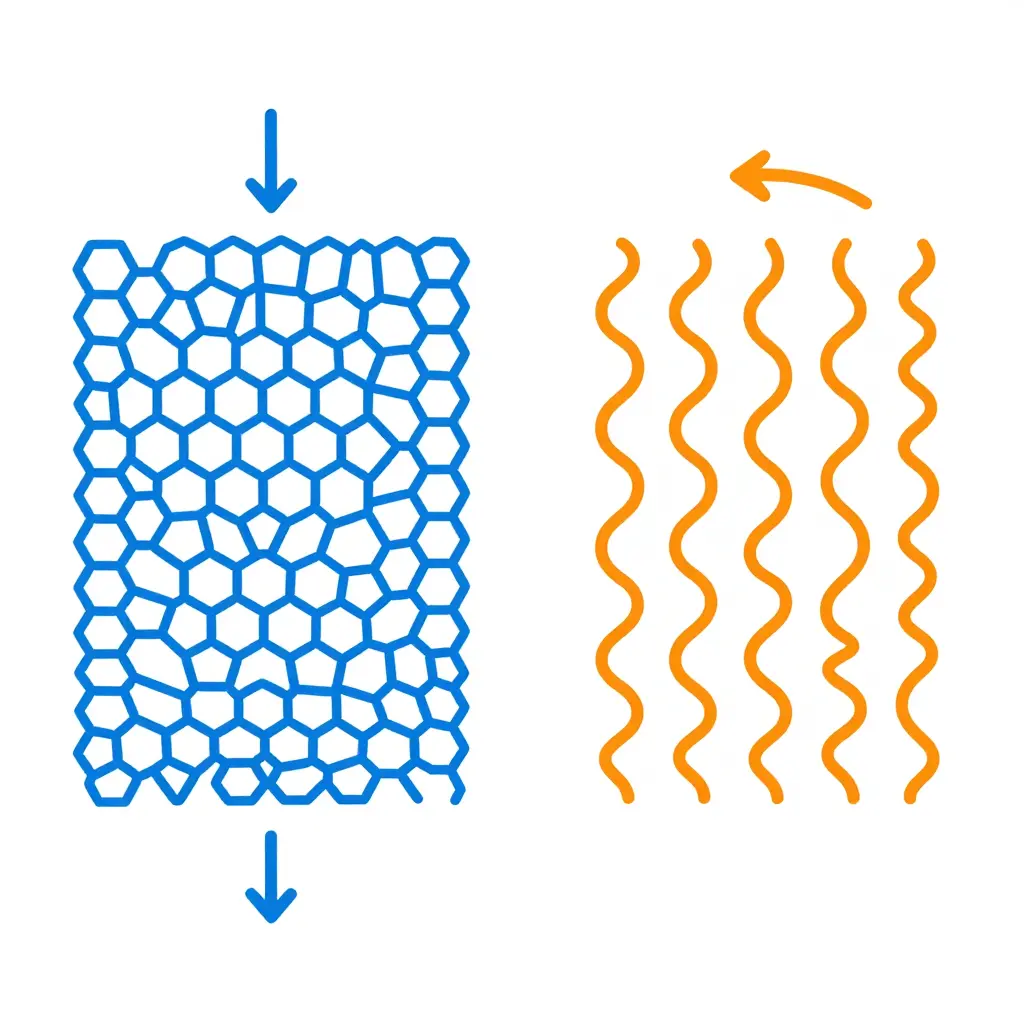
Reading the Diagram at a Glance
The illustration puts the two materials side by side so you can see why they behave so differently once bolted onto an older sportbike frame.
- Left panel (blue, rigid): the dense, tightly interlocked chain segments show how ABS holds its molded shape. Those short, stiff structures resist bending, which is great for a crisp factory look and unforgiving when a panel has to follow 15-year-old, slightly tweaked mounting points.
- Right panel (orange, flexible): the loose, wavy strands reveal why polypropylene can bend, absorb impact, and spring back. That same give is what lets PP panels conform to a frame that has drifted out of spec.
Rigidity keeps a shape locked in; flexibility lets a panel move with the bike. When you are matching fairings to a model that has seen a few drops and heat cycles, knowing which side of the diagram your panels lean toward decides whether you get a clean, flush fit or a gap you stare at every ride.
The Engineering Root Causes of Fitment Drift
A misaligned panel usually gets blamed on a bad batch or a stroke of bad luck. It rarely is either. Fitment drifts because four forces overlap, and each one has a mechanism you can measure.
Mold Aging and Dimensional Wear
Every mold slowly stops being the mold it started as. Aftermarket producers cut steel or aluminum tooling, then run thousands of cycles through it. Heat cycling, abrasive resin flow, and mechanical clamping erode the cavity surfaces and open the parting lines. A mold that once ejected a panel within 0.3 mm of spec can drift past 1.0 mm before anyone retires it. Early-run and late-run panels from the same tool can stop fitting together cleanly.
Tolerance Stack-Up Between Frame, Subframe, and Panels
No single part has to be wrong for the whole assembly to be wrong. Tolerance stack-up is every allowable variation added across the chain: a slightly tweaked frame, a subframe jigged a few millimeters off, mounting tabs bent in shipping, panel edges molded at the limit of their window. Each deviation sits inside tolerance on its own. Stacked together on a 15-year-old sportbike, they push the visible gap far outside it.
Thermal Expansion: ABS vs Polypropylene
The two materials grow and shrink at different rates, which matters when panels bolt directly to a hot engine cradle and expand against metal that barely moves.
| Material | Thermal Expansion (per °C) | Typical Role |
|---|---|---|
| ABS | ~70-90 x 10^-6 /°C | rigid aftermarket shells |
| Polypropylene | ~100-180 x 10^-6 /°C | flexible OEM-style panels |
A polypropylene fairing kit flexes enough to absorb some of that mismatch; an ABS fairing kit trades that forgiveness for a stiffer, more paint-friendly surface, so expansion differences show up as creeping gap variation instead.
Material Creep Over Time
Plastic keeps moving long after it leaves the mold. Under constant load, bolt tension, gravity, engine vibration, polymers deform slowly in a process called creep. Over months and years, the mounting points settle, edges relax, and alignment shifts by fractions of a millimeter at a time. The bike did not change; the plastic did.
Put all four together and the conclusion is hard to avoid: drift is built in, forecastable, and manageable with the right material choice and mounting technique.
Visualising the Drift: Fitment Variance by Material and Model Age
Numbers argue better than adjectives here. The chart below compares average measured fitment variance across the four combinations that matter most: ABS and polypropylene fairing kits, each fitted to a fresh showroom model and a well-worn older one.
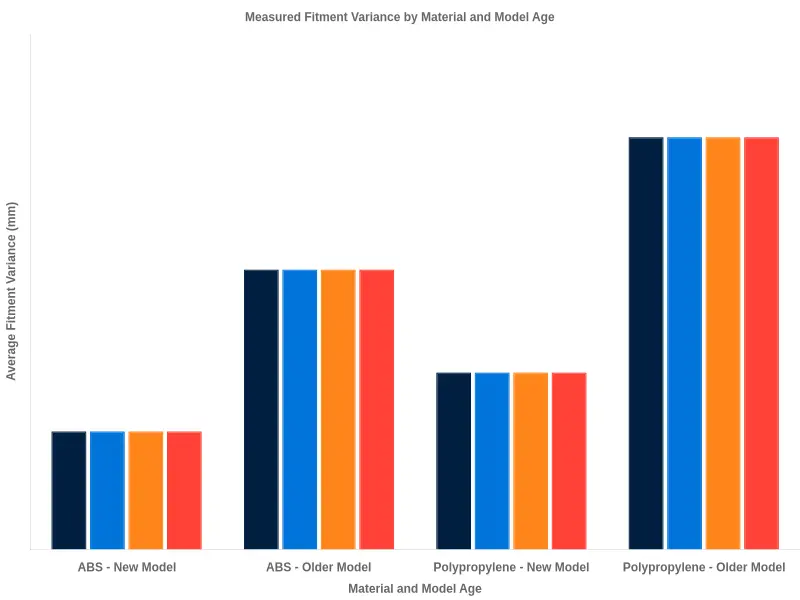
Caption: Average fitment variance (in millimetres) by material type and model age. Variance grows with both model age and material stiffness, with polypropylene on an older model showing the widest gaps. Figures are illustrative examples representing typical trends, not measurements from any single product line.
Reading the Bars
| Material & Age | Example Variance (mm) | What It Tells You |
|---|---|---|
| ABS – New Model | 0.8 | Tight, predictable fit |
| ABS – Older Model | 1.9 | Noticeable creeping misalignment |
| Polypropylene – New Model | 1.2 | Slight flex-driven drift |
| Polypropylene – Older Model | 2.8 | The worst-case scenario |
Two forces are stacking here.
- Model age adds wear, fatigue, and slow frame and tab relaxation, so the mounting points your kit was designed around are no longer where the drawings say they are.
- Material stiffness decides how gracefully a panel responds. ABS holds its intended shape; polypropylene flexes more, and that flex compounds every small discrepancy.
Put the softest material on the oldest model and the errors do not add, they multiply. That is why a kit that drops onto a new bike with a satisfying click can demand heat, patience, and persuasion on a machine that has seen a decade of road.
That is the root-cause story in one line: fitment drift is a conversation between a shrinking, softening motorcycle and a panel that either resists or yields. Knowing which bar you are standing on tells you whether to expect a bolt-on afternoon or an adjustment project.
OEM Tolerances vs. Aftermarket Fairing Tolerances: Where the Numbers Diverge
When Honda, Yamaha, or Suzuki engineers a sportbike, the bodywork is designed around a tightly controlled set of dimensional targets. OEM tolerances are the acceptable deviation from those targets, often measured in fractions of a millimeter at each mounting tab, panel gap, and bolt hole. Factory tooling is purpose-built for a single model year: the injection molds, stamping dies, and weld jigs are all indexed to that specific frame geometry. Because the same machines and fixtures produce the same panels year after year within a model generation, factory bodywork snaps into place with predictable, repeatable precision.
Aftermarket fairing kits play by a different rulebook. To hold down cost and warehouse space, most suppliers cut one set of molds and market it across several model years, say a 2004-2007 sportbike. That mold has to stretch across every subtle change the factory made in that window, so the shape it produces is generalized: mounting points land close enough across the widest possible range of bikes. A kit that fits an ’05 model perfectly can need trimming, shimming, or drilling on an ’07.
This is where fitment drifts on older sportbike models becomes frustrating. Older bikes carry both documented and undocumented changes across their production years. A mid-cycle refresh might move a radiator, reshape a subframe, or reposition an indicator bracket, updates that rarely make it into the copy on a fairing listing. Crash repairs, aftermarket exhausts, and frame straightening add another layer of variance that no single mold can anticipate.
So the two approaches assume different things. OEM tolerances assume a known, fixed baseline, while aftermarket fairing kits assume a moving target. The older and more modified the bike, the wider that gap grows, and the more a “bolt-on” kit turns into a hands-on fitting project.
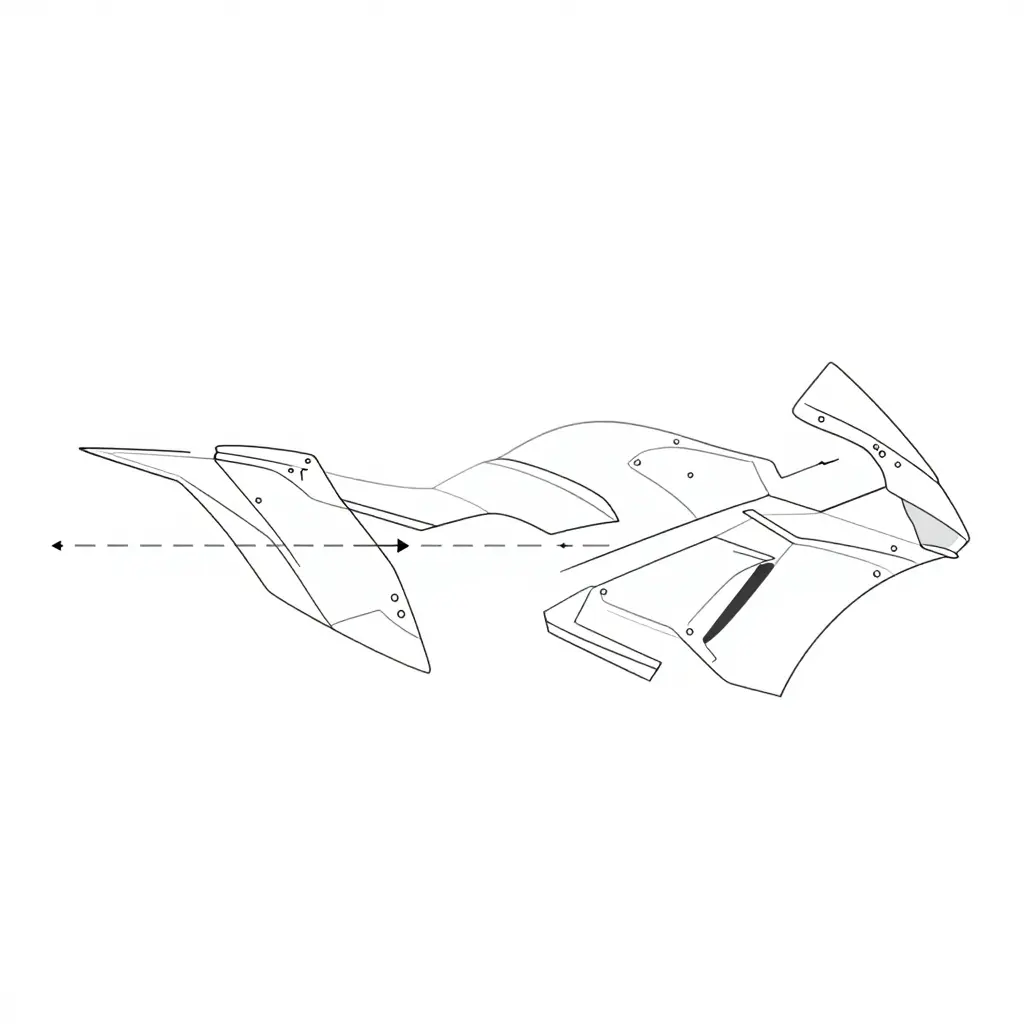
Pre-Purchase Fitment Assessment: What to Check Before You Buy
Few things sting like unboxing a fresh kit and watching every panel fight the mounting tabs. For sportbike owners and repair shops, the real money-saving step happens before checkout, not after the courier pulls away. A disciplined fairing fitment check beats any glossy product photo.
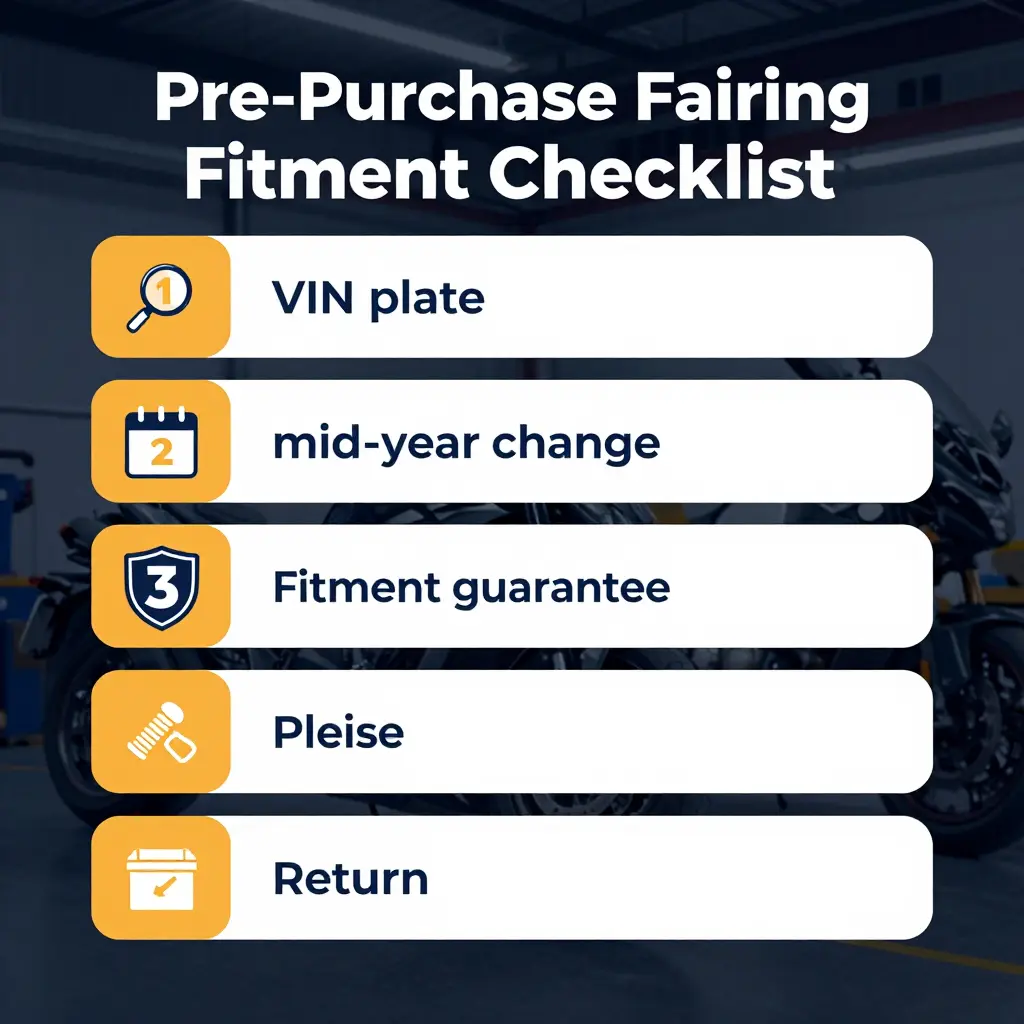
The catch is that ABS and polypropylene behave differently on older machines. Rigid ABS reveals a wrong year as obvious gaps at the nose and tail. Flexible polypropylene can bend over a mismatch and hide it until you have already drilled and clipped everything. The routine itself stays the same.
Run these checkpoints in order:
- Lock down the exact model and year. Read the VIN, not the badge or the seller’s listing. The 2007 and 2008 versions of the same bike often share a silhouette but not the same mounting points.
- Hunt for mid-cycle production changes. Manufacturers revised tabs, headlight cutouts, and tail sections mid-year without announcing it. Ask the vendor which production runs their mold is based on, and confirm yours falls inside that window.
- Review the vendor’s fitment guarantee. Look for explicit coverage promising a fit for your specific year. Vague “may require minor trimming” wording is a red flag worth walking away from.
- Confirm the mounting-point design. Request photos of the tabs and hardware. OEM-style clip points install far easier than kits that expect you to fabricate brackets.
- Settle returns before you order. Get the return window and restocking terms in writing, especially for custom-painted panels where mistakes get expensive fast.
Do that and you will spend your weekend riding, not wrestling plastic onto a frame that never wanted it.
Installation Tips That Reduce Fitment Drift
Even a perfectly molded kit can warp, crack, or misalign if you rush the job. Good fairing installation is less about force than about patience and sequence. These practices keep panels true and your fairing mounting points intact.
Tighten in a cross or star pattern. Snug every bolt by hand first, then torque gradually in an alternating pattern. Working bolt-by-bolt around the ring pulls one corner tight and stresses the panel, one of the most common causes of slow fitment drift.
Use proper spacers and rubber isolators. Spacers keep panels off the frame and absorb vibration, while rubber grommets let the fairing flex slightly without cracking. Skip them and hard plastic grinds directly against metal.
Leave clearance for thermal expansion. Hot engines and direct sun make panels swell. A small gap at each fairing mounting point prevents buckling when everything heats up on a summer ride.
Test-fit before final tightening. Mount everything loosely, check panel gaps and alignment, then adjust. Finding a mismatch at the end usually means a full teardown and costly rework.
Avoid over-torquing. Excess force crushes grommets and distorts mounting tabs, shifting panels out of line permanently.
How This Applies to ABS vs. Polypropylene
Stiffer ABS panels hold their shape well but crack under stress, so torque them precisely to spec and lean on rubber isolators to soak up vibration. More flexible polypropylene bends and springs back, which makes it forgiving during fairing installation but more prone to sagging over time. With polypropylene, double-check clearances and support points, then re-snug the bolts after the first few heat cycles to keep everything aligned.
Major Causes of Fairing Fitment Drift on Older Sportbikes
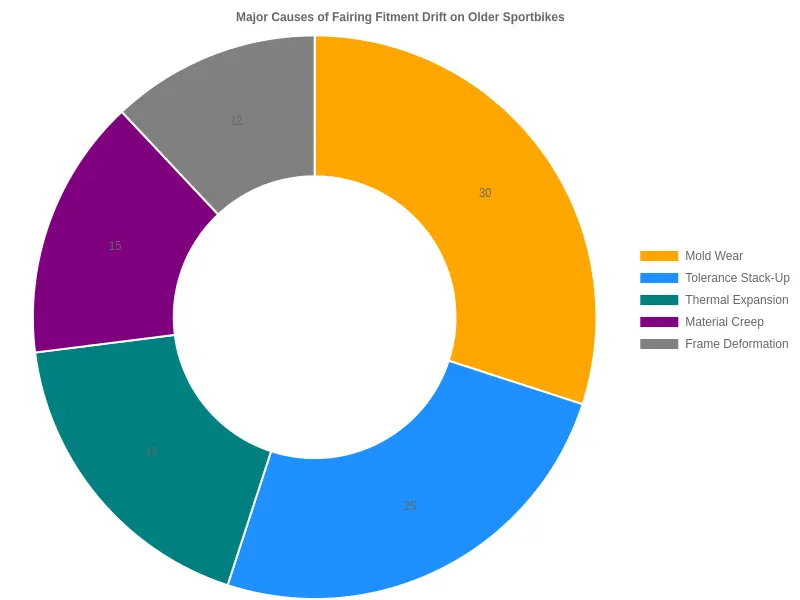
Illustrative generalized representation of common trends; actual proportions vary by model and age.
The doughnut chart weighs the forces that push an aftermarket fairing kit out of alignment as a sportbike ages. Mold wear is the largest slice: high-mileage production tooling loses its sharp edges and subtly reshapes every panel that comes off the line. Tolerance stack-up follows closely, because even tiny dimensional variations compound across dozens of mounting points. Thermal expansion, material creep, and frame deformation make up the rest, each nudging fitment further from factory-fresh specs over time. Treat the slices as a diagnostic starting point, not a precise measurement, when you are chasing a stubborn gap between fairing and frame.
Cost and Value: ABS vs Polypropylene Fairing Kits for Older Sportbikes
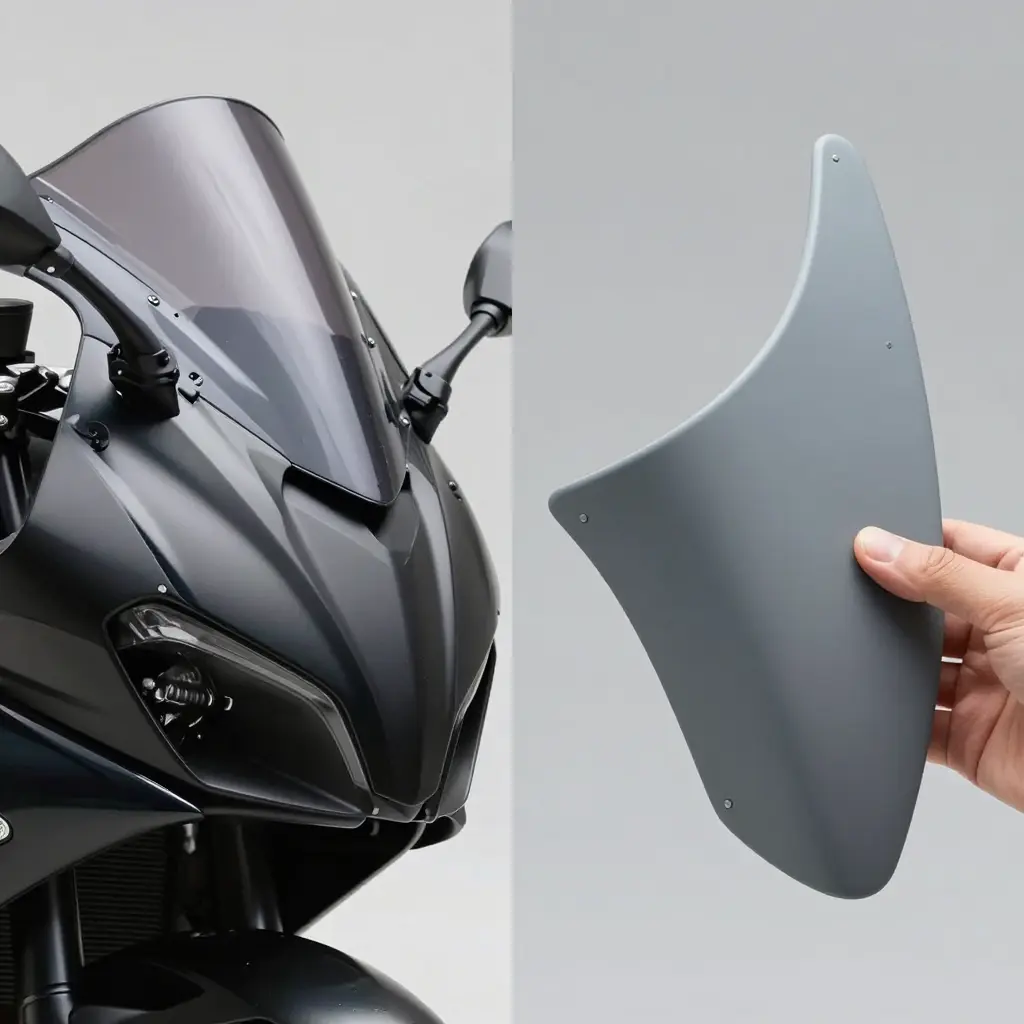
When you shop for sportbike fairing kits for a machine that is already a decade or two old, the shelf price is only the opening bid. ABS and polypropylene kits can look almost identical in the box, then spend your money in very different ways once bolted onto a bike that has seen plenty of sun, spills, and track days. Here is where the dollars actually go.
Price points
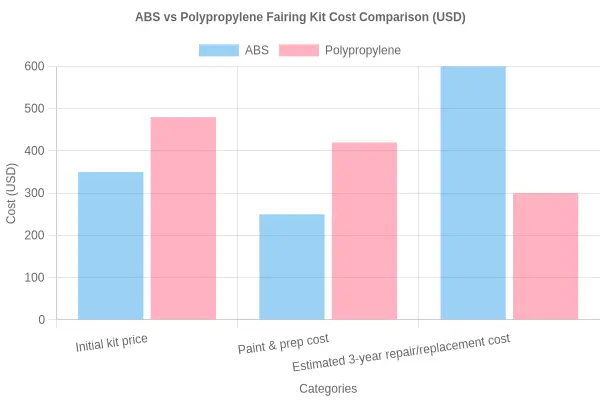
ABS is the budget-friendly entry point and is usually easier to find for discontinued models. Polypropylene typically carries a moderate premium because it costs more to mold and finish, but that gap narrows when you count how often each kit has to be replaced. A quick cost picture:
| Cost factor | ABS | Polypropylene |
|---|---|---|
| Typical kit price | $300 – $500 | $400 – $650 |
| Paint and prep | Standard primers, $200 – $350 | Needs adhesion promoter, $350 – $500 |
| Repairability | Glue or solvent weld; cracks spread | Plastic welding; repairs hold |
| 3-year replacement risk on old mounts | Higher | Lower |
Durability expectations
ABS is rigid and stiff, easy to mount and unforgiving. A tip-over or a fatigued mounting tab tends to crack it, and that crack spreads over time. Polypropylene is far more flexible. It bends and springs back, so it shrugs off the vibration and small impacts that aging sportbike frames throw at a kit.
Repairability
Here the two materials split sharply. ABS responds well to glue and solvent welding, so a shop can patch a minor crack quickly. Polypropylene resists ordinary adhesives and generally needs plastic welding, but once repaired it stays repaired. On a long-neglected model, that durability often outweighs the easier ABS repair.
Painting costs
Painting is where hidden costs hide. ABS takes standard primers and paints with predictable results. Polypropylene needs a dedicated adhesion promoter and careful prep, or the finish will flake later, which pushes paint labor higher.
Long-term fitment experience
Heat and time are the real enemies. ABS softens sooner under sustained heat and its mounting holes drift, which is why older bikes so often develop rattles and gaps. Polypropylene tolerates higher temperatures and, matched to a properly tooled mold, keeps panel lines tighter across the seasons.
Spending smarter on the right kit
This is where the supplier you choose changes the math. SummitFairings.com stocks more than 3,000 styles and lists coverage for nearly every motorcycle model, so owners of older sportbikes are not limited to the one kit a local shop happens to carry. Buyers typically pay 10 to 40 percent less than on other sites, and if you are unsure which material suits your exact model year, questions get a real answer within six hours instead of a canned auto-reply. That blend of range, price, and support keeps the ABS-versus-polypropylene decision tied to your budget instead of a guess.
Frequently Asked Questions: ABS vs Polypropylene Fairing Kits
Which material fits better on older sportbike models, ABS or polypropylene?
Usually ABS. It is stiffer and holds its molded shape, so panels follow the factory contours with fewer gaps at seams and headlights. Polypropylene’s flexibility can be forgiving around cracked or repaired mounting tabs, but the same flex sometimes lets panels sag or pull off the mounting points. The right answer depends on your frame and how much adjustment you are willing to do.
Can polypropylene fairing kits be painted?
Yes, but it takes more preparation than ABS. Polypropylene has low surface energy, so paint needs an adhesion promoter and a flexible primer to bond. ABS takes standard primer and base coat far more easily. If a factory color match matters to you, ABS gives a cleaner, more durable painted result, while polypropylene works best left in its molded finish or wrapped.
Why do newer kits still misalign on older frames?
Fitment depends on more than the panel itself. Older sportbikes accumulate frame tweaks, worn rubber grommets, aftermarket brackets, and old crash repairs, all of which shift the mounting geometry. Molds are also based on a specific model year, so small production differences across years create gaps. Add normal manufacturing tolerances in aftermarket kits and a “correct” kit can still sit a few millimeters off.
How do I correct minor fitment drift?
Install every bolt loosely before tightening anything, so the panels can settle into a natural position. Add small washers or shims behind low spots to lift them, and enlarge a mounting hole only when a tab truly will not line up. A gentle, even pass with a heat gun can relax a stubborn bend. Replacing worn rubber grommets helps too, since fresh cushions restore the tolerances the original fairing fitment was designed around.
Which is more durable, ABS or polypropylene?
It depends on how you ride. Polypropylene is tougher against impacts and flexes instead of shattering, which suits track bikes and riders who expect the occasional drop. ABS is stiffer, keeps its molded shape, and takes paint better, but it can crack under a hard hit and softens sooner in sustained heat. For daily street use and paint longevity, ABS often lasts longer; for impact resistance on a hard-ridden older sportbike, polypropylene wins.