
Introduction
Have you ever wondered what makes a food truck truly thrive in the bustling world of street cuisine? Imagine the vibrant atmosphere at a festival or community event, where the aroma of tantalizing dishes fills the air. Food trucks play a delightful role in this culinary landscape, but what happens behind the scenes? Enter the concept of a food truck depot-a crucial element that can elevate the efficiency and success of food truck operations. But do food trucks really require depots? In this guide, we’ll explore the importance of these spaces, their role in logistics and planning, and how they help food truck owners serve their delicious offerings to hungry crowds. Whether you’re an event planner looking to enrich your gatherings with diverse food options or a food enthusiast excited about the mobile dining experience, understanding the intricacies of food truck depots can be a game-changer! So, buckle up as we navigate through the vibrant world of food trucks and discover the potential that a depot holds!
Learn more about choosing the right food truck model and how it can impact your culinary adventure.
The Advantages of Having a Depot for Food Trucks
For food truck owners, having a dedicated depot can make a world of difference. It’s not just about having a place to park; it enhances operations in various essential ways. Let’s explore the numerous benefits, from storage solutions and maintenance ease to logistical efficiency, making depots a vital part of the food truck ecosystem.
1. Ample Storage Space
Food trucks come with a range of equipment and ingredients needed to whip up those delicious meals we all love. A depot offers the much-needed storage space to keep everything organized and accessible. Instead of packing and unpacking every time, operators can store:
- Ingredients that require refrigeration
- Cooking equipment that may not always be used
- Spare parts for maintenance and repairs
This means less stress and an easier setup when it’s time to hit the streets again! For tips on choosing the right food truck model to suit your storage needs, check out this resource.
2. Maintenance and Repairs Made Easy
Just like any vehicle, food trucks require regular maintenance and occasional repairs. Having a depot simplifies this process. Food truck operators can:
- Access tools and equipment for maintenance tasks
- Store spare parts on-site
- Utilize the space for servicing vehicles, reducing downtime
The convenience of handling maintenance issues in a dedicated space allows food trucks to remain operational longer, ensuring they can continually serve their loyal customers.
3. Logistical Efficiency
Logistics can be a challenge for food truck operators, especially during events or bustling location shifts. A depot can streamline these logistics by:
- Acting as a base for planning routes and schedules
- Providing a central location for inventory management, making it easier to track supplies
- Allowing multiple food trucks to coordinate and collaborate for events
Having this hub not only saves time but also enhances coordination among food truck operators, fostering a sense of community and collaboration. For more insights on maintaining smooth operations, read about navigating food truck industry regulations.
4. Cultural Impact and Community Building
Food trucks are more than just mobile kitchens; they are cultural ambassadors. A depot can serve as a community hub, bringing together diverse cuisines and culinary experiences. Food truck depots often:
- Host events where various food trucks can showcase their dishes
- Empower local entrepreneurs to establish their brands within the community
- Foster connections between food lovers and truck owners, creating shared experiences around food and culture
This engagement not only enhances the gastronomic landscape but also strengthens community bonds, whether it’s through a vibrant outdoor event or a simple casual meal shared in good company.
In conclusion, a food truck depot serves as a powerhouse of support for operators, enhancing their storage solutions, facilitating easier maintenance, optimizing logistics, and fostering a deeper connection with the community. These benefits contribute to the thriving food truck culture that so many enjoy today. So, if you’re in the world of food trucks, consider the advantages of having a depot to elevate your culinary journey!
Operating Costs: Food Truck With vs Without a Depot
Operating a food truck can come with various costs, and having a depot can significantly affect these expenses. Below is a comparative table that highlights these costs, focusing on key factors such as rent, utilities, and maintenance.
| Cost Factor | With Depot | Without Depot |
|---|---|---|
| Rent | $1,500 – $3,000/month | $500 – $1,500/month |
| Utilities | $200 – $500/month | $100 – $300/month |
| Maintenance | $200 – $400/month | $100 – $300/month |
| Insurance | $300 – $600/month | $300 – $600/month |
| Total Monthly Cost | $2,200 – $4,500 | $1,000 – $2,700 |
Summary of Costs
In general, operating a food truck from a depot involves higher fixed costs, particularly in rent and utilities. However, these costs can sometimes be offset by the efficiency gained from having a centralized location for storage and prep. Businesses that use a depot may experience benefits in supply chain management and overall operational efficiency, making it a worthwhile investment for some.
If you want to dive deeper into the operational aspects, consider reading this guide on mastering food truck parking challenges or explore financial tips for first-time food truck owners.
Happy truckin’!
Legal Requirements for Food Trucks and Depots
When venturing into the vibrant world of food trucks, understanding the legal landscape is crucial. Food truck operators must navigate a complex web of regulations to ensure compliance and contribute positively to their communities.
Local Regulations and Permits
Different cities and states have varying requirements for food truck operation. Here’s what operators typically need to consider:
- Permits and Licenses: Operators often require specific licenses both for the food truck itself and for the food they sell. For instance, a health permit is usually mandatory, ensuring food safety meets local health codes. For detailed information on necessary permits, operators can refer to resources like Types Of Food Truck Licenses And Permits Required.
- Zoning Laws: Local zoning ordinances might restrict where food trucks can set up shop. Familiarizing oneself with these laws is essential to avoid fines and other legal troubles.
Health and Safety Regulations
Ensuring food safety is non-negotiable. Food truck operators must:
- Maintain Hygiene Standards: Regular health inspections from local authorities help ensure compliance with sanitary requirements. Operators should stay updated on health codes to avoid violations that could threaten their business.
- Food Handler Certifications: Many locales require that food handlers complete food safety training to manage risks associated with foodborne illnesses.
Importance of Compliance
Compliance with these regulations is not just about avoiding fines; it builds trust with customers and enhances the food truck’s reputation. It is a commitment to quality, safety, and community responsibility. Moreover, understanding these legalities can also open opportunities for partnerships with local events and festivals, enhancing visibility and customer reach.
In conclusion, navigating the legal requirements for food trucks and their depots is a vital step in ensuring business success. Operators are encouraged to consult resources like the complete guide for Food Truck Regulations to better understand their legal obligations and keep up with the ever-evolving landscape of food truck laws.
Success Story: The Lacey Food Truck Depot
In the vibrant city of Lacey, the Food Truck Depot has transformed the way food truck operators do business, creating a supportive environment for small enterprises. One operator, Nguyen, shared their inspiring experience:
“The Food Truck Depot is more than just a physical space; it’s a community anchor! It has given my business the roots to grow and interact with the community I serve. With shared facilities and marketing support, I’ve seen an incredible increase in traffic and customer engagement. It’s amazing to be part of this endeavor that helps not only me but also other local entrepreneurs!”
Nguyen’s journey echoes the impact of the Depot, which aims to enhance the local culinary scene while providing essential amenities that enable food trucks to thrive. The combined forces of community support and increased visibility have allowed many food trucks to reach new heights, enjoying busy service days filled with eager customers eager for unique flavors.
The Depot’s Positive Impact
- Community Support: The depot serves as a hub for local food truck operators, fostering collaboration and sharing resources.
- Increased Revenue: Many operators, like Nguyen, have reported significant boosts in sales since joining the depot.
- Enhanced Visibility: Being stationed at the depot increases exposure to potential customers who may not have encountered the trucks otherwise.
To learn more about how you can optimize your own food truck venture, check out this guide on choosing the right food truck model. Also, discover how branding plays an essential role in the food truck business by reading our branding on wheels guide.
The success stories emerging from the Lacey Food Truck Depot highlight the immense potential a well-structured facility can provide. Food truck operators are not just vendors but vital parts of the community, delivering culinary delights while sharing in the journey of entrepreneurship together!
Join us in celebrating their successes and inspiring more food entrepreneurs across the globe!
Tips for Food Truck Operators Considering a Depot
Setting up a depot for your food truck can be a game changer! Here are some practical tips to help you in the process:
- Choose an Accessible Location: Ensure your depot is located where there is high foot traffic, such as near parks, popular local eateries, or market areas. This helps attract customers easily.
- Consider Size and Layout: Evaluate the size based on the number of food trucks you plan to host. The layout should facilitate smooth operations, including space for cooking, serving, and customer interaction, along with adequate parking for trucks.
- Plan for Amenities: Incorporate essential facilities that enhance the customer experience, such as picnic tables, seating areas, and restrooms. This not only makes the depot welcoming but also encourages patrons to stay longer and enjoy the atmosphere.
- Focus on Logistics: Think about how deliveries and waste management will work. Ensure that the layout supports easy access for suppliers while considering waste disposal solutions to keep the area clean.
- Establish Clear Regulations: Familiarize yourself with the local food truck regulations. This includes health permits, signage restrictions, and operating hours to ensure compliance and avoid penalties. Learn more about industry regulations here.
- Promote Community Engagement: Create events or partnerships with local businesses to make the depot a community hub. Engaging with local events can also bolster your visibility and attract a diverse customer base.
- Evaluate Cost-Benefit: Weigh the financial implications against the potential increase in sales. Consider factors like the initial investment, upkeep costs, and expected foot traffic to calculate if a depot is financially viable.
By following these tips, you’ll set the groundwork for a successful food truck depot that can help drive your business forward! For a deeper dive into food truck success, check out our financial tips for first-time food truck owners.
The Community Impact of Food Truck Depots
Food truck depots have rapidly emerged as vibrant community hubs that bring numerous positives to local neighborhoods. These depots not only offer diverse culinary experiences but also foster economic growth and enhance community engagement. Here’s how they make a difference:
Economic Benefits
-
Job Creation: Food truck depots create jobs for chefs, servers, and support staff. This increase in employment opportunities helps to bolster the local economy and provides a platform for small business owners to thrive.
-
Boosting Local Businesses: Food trucks stimulate foot traffic, leading to increased sales for nearby brick-and-mortar shops. According to Boardwalk Bites, local businesses benefit tremendously as they see an uptick in customers drawn by the food truck scene.
-
Supporting Entrepreneurs: By providing a relatively low-cost entry point into the food service industry, these depots allow new entrepreneurs to test their concepts without the heavy overhead of a traditional restaurant. This was notably seen at the Lacey Food Truck Depot, which focuses on helping small businesses flourish.
Community Events
-
Building Connections: Food truck depots often serve as community gathering spots, fostering social interactions. Events such as the Lacey Night Market bring people together to enjoy local food, music, and arts. This enhances community ties and creates a supportive environment.
-
Diverse Food Choices: With various trucks offering different cuisines, residents can explore new tastes and support diverse food cultures. This culinary variety not only enriches the community’s dining landscape but also encourages cultural exchange.
-
Community Initiatives: Many food truck programs, like those initiated by students at Oakleigh Grammar, aim to give back to the community by fostering responsibility and support among local residents.
In summary, food truck depots are more than just places to grab a meal. They are vital assets for local communities, driving economic development, encouraging social interactions, and facilitating community events. By supporting these dynamic spaces, communities can continue to thrive economically while celebrating their unique cultures and connections to one another.
Conclusion
The resurgence of food truck depots highlights their importance in enhancing local economies and building community relationships. As we embrace this evolving trend, it’s essential to recognize the multifaceted benefits these depots bring to our neighborhoods.
Growth Trends in the Food Truck Industry
The food truck industry has been a vibrant part of the culinary landscape, showing distinctive growth trends over the years. Here’s a quick look at how food trucks have evolved with and without depots:
Chart: Growth Trends of Food Trucks with and without Depots (2018-2023)
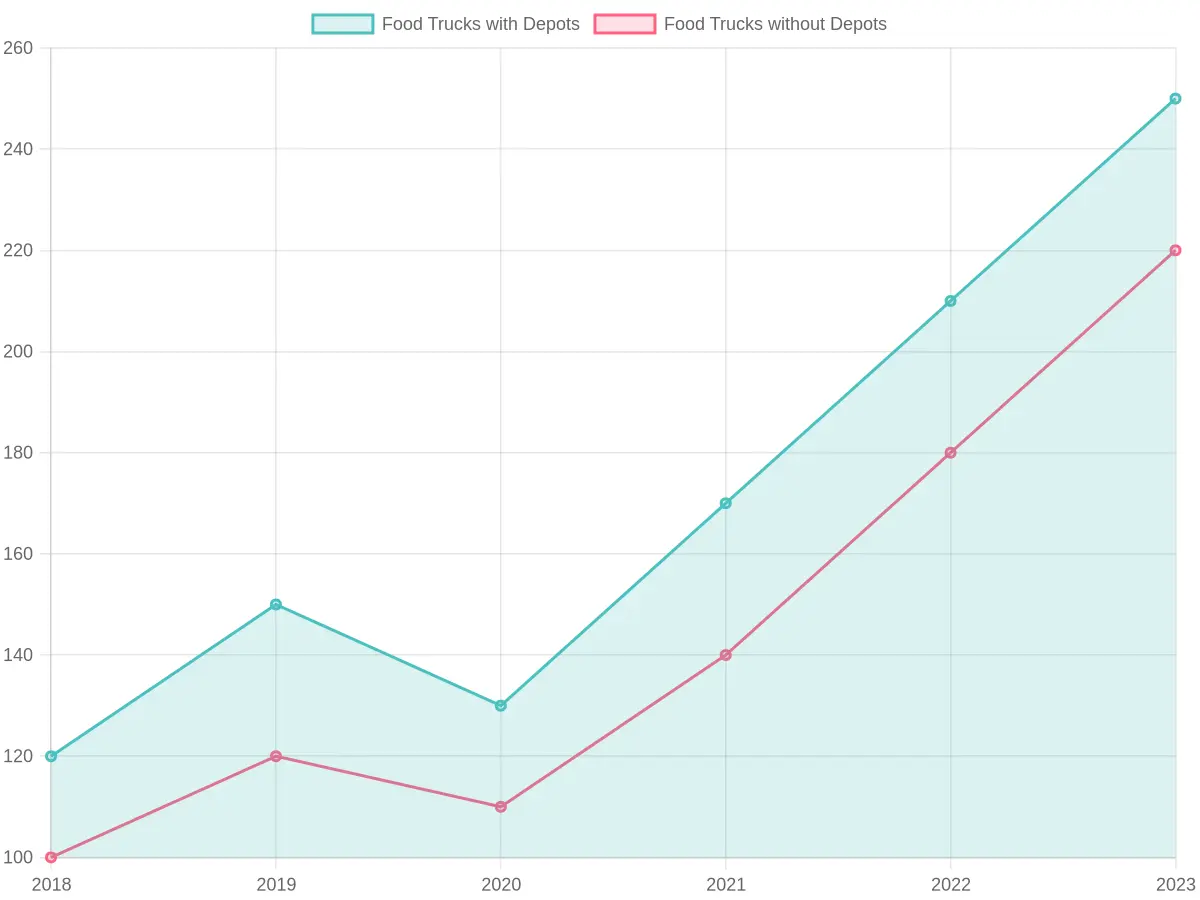
- Food Trucks with Depots: From 120 units in 2018 to 250 units in 2023, this segment has shown substantial growth, driven by operational efficiencies and customer accessibility.
- Food Trucks without Depots: This segment also grew, from 100 units in 2018 to 220 units in 2023, highlighting the industry’s flexibility in meeting consumer demands without the need for fixed locations.
Key Takeaways
- The food truck market is growing at an approximate rate of 9.9% annually which indicates strong consumer interest in mobile food options.
- Operating with a depot can offer advantages such as better logistical management, but many successful food trucks thrive without one, showcasing the adaptability of the food truck model.
For more insights on food truck models and their operational strategies, learn more about choosing the right food truck model!
Additionally, understanding how to strategically plan for food truck parking can significantly impact your business success. Check out this resource on mastering food truck parking challenges to enhance your operational strategies!
Conclusion: The Vital Role of Depots for Food Trucks
In the fast-paced world of food trucks, having a depot is not just a luxury; it’s a crucial component for success. As discussed, depots offer food truck operators a secure space for storage, maintenance, and preparation, which can significantly reduce operational challenges. They serve as a central hub where food trucks can refuel, restock, and operate efficiently without the constant worry of finding adequate parking or dealing with regulatory hurdles.
Moreover, these depots allow food truck owners to maintain a high standard of hygiene and quality by providing a space for washing equipment and managing food safety effectively. This operational efficiency translates into better customer experiences, which, in turn, can increase sales and build a loyal customer base.
As you consider the possibilities for your food truck venture, reflect on the benefits of establishing a depot. Whether you’re an event planner organizing food for an occasion or a culinary entrepreneur eager to serve delicious meals, having a depot can simplify your logistics and enhance your operations. Don’t forget to explore your options and make informed decisions that align with your goals.
Having a reliable depot isn’t just about convenience; it’s about strategically positioning yourself for success in an ever-growingly competitive market. Whether you are an individual food enthusiast dreaming of your food truck or part of a corporate HR team managing food services for events, understanding the importance of a depot could redefine your approach to operating efficiently and sustainably in the food truck industry.
Start planning today and see how establishing a depot can take your food truck operations to the next level!