In the heart of Idaho’s vibrant food truck scene, a mysterious figure has sparked curiosity and conversations—who was that guy at the food truck? His presence has become a legendary curiosity among event planners, corporate HR teams, local community groups, and food enthusiasts alike. This article serves as a comprehensive journey to identify this enigmatic figure, delve into the cultural fabric of food trucks in Idaho, and suggest ways to uncover more about him or her. Each chapter promises insights that can enhance community engagements and food experiences, all while celebrating the lively ecosystem created by these mobile kitchens.
Unmasking the Man at the Idaho Food Truck: Identity, Investigation, and the Ethics of Public Curiosity
When a grainy surveillant video surfaces from a street-side food scene in Idaho, it does more than identify a moment in time. It invites a broader, more unsettled question: who is the man captured in the frame, and why does his presence become a flashpoint for rumor, fear, and moral suspicion? This chapter does not pretend to settle a crime or declare guilt where there is none. Instead, it follows the arc of a public mystery that begins with a single image and travels through threads of community memory, media interpretation, and the slow, careful work of investigators. It asks how a seemingly ordinary encounter—two strangers at a food truck—can become a hinge on which a town tilts toward either vigilance or misjudgment. In doing so, it situates the Idaho moment within a longer story about how modern communities use surveillance, how they respond to tragedy, and how they negotiate the line between curiosity and responsible citizenship.
In the earliest hours of the case, the image circulated with a gravity it did not deserve, as if a simple recording could speak for a complex truth. The man appeared in the background of a surveillance video taken at a food truck in Idaho, a place where the daily rhythms of community life hinge on the regulars who order the same favorite dish and the strangers who wander in from the surrounding streets. News outlets and social media feeds amplified what the footage could not answer: Was this man a perpetrator? Was he merely a passerby who found himself caught in a frame that told a larger story about violence, vulnerability, or fate? The questions are comprehensible in the moment because a tragedy—especially one that involves a young life—presses on the collective memory of a town. An 18-year-old victim becomes a focal point not only for grief but for the moral narrative people want to build around an event. Yet the more urgent and difficult questions are not the ones we instinctively ask first; they are the ones we owe it to the living to pursue with care: Who is this person? What is his relationship, if any, to the victim or the crime? And what does the public deserve to know without compromising due process or privacy?
To understand the arc of this case, one must separate sensational reading from procedural reality. Investigators, with access to more sources than the public, map the field with a meticulous, stepwise approach. The footage shows two individuals with the victim at the food truck—an intimate setting where choices about timing, proximity, and carryout options become part of the record. The initial rush to identify the man—driven by the graininess of the video and the human impulse to search for explanations—soon collides with the reality that identification in a still frame does not equal culpability. Law enforcement officials clarified that the man pictured was not a suspect. The distinction matters deeply: a person may be in the wrong place at the wrong time, or simply be a bystander who happened to appear in a frame that later became a proxy for guilt in the public imagination. This clarification did not erase public curiosity; it reframed it, shifting from a hunt for a single culprit to an understanding of how a situation unfolded in a public, visible space where strangers intersect during moments of crisis.
The turning point in the narrative comes not from a splashy media debut but from careful communication by authorities. They disclosed that the man had been seen with the victim and another person at the food truck, but both individuals had been ruled out as suspects. Such statements, though they may seem technical or bureaucratic, function as essential public service. They manage expectations, reduce the spread of unfounded claims, and preserve the integrity of the investigative process. In small communities, where rumors travel faster than the official steps of a probe, this kind of measured reporting can be as decisive as the evidence collected from the scene itself. The public, in turn, learns to recognize the limits of what is known in the present moment and to defer judgment until the investigators connect the relevant dots through verifiable lines of inquiry.
Behind the legal and procedural layers, there is a human dimension that is often overlooked. The victim’s family, already navigating the shock of loss, must also navigate the social aftershocks: the rumor mill, the second-guessing from anonymous commentators, and the intrusions that can accompany a widely shared, yet incomplete, narrative. In these times, responsible media coverage—and responsible community discourse—becomes an act of care. It means resisting the urge to convert uncertainty into entertainment and choosing instead to foreground accuracy, context, and respect for those most affected by the tragedy. The way a community talks about its own pain matters. It shapes how survivors are treated in the days, weeks, and months that follow. It also shapes the future of the food trucks—these mobile hubs of local commerce that carry not just meals but also stories about resilience, adaptation, and neighborhood belonging.
The Idaho food truck ecosystem itself is a microcosm of the larger American landscape of small business, mobility, and informal networks. Food trucks do more than serve meals; they create social spaces where people meet, exchange news, and test new ideas about cuisine, entrepreneurship, and community responsibility. The presence of a camera at such a site—whether it is deployed by the business owner, a security system, or municipal enforcement—adds a layer of accountability. It invites contemplation about privacy in public spaces and the extent to which surveillance serves safety without chilling ordinary social life. In reflecting on the man who appeared in the footage, one cannot ignore the broader question: what kind of information society are we building when a person’s image becomes a potential weapon in a public drama? The careful answer is not to erase curiosity but to channel it toward verification, empathy, and a shared commitment to truth.
Within this frame, the role of local institutions becomes relevant. The Idaho food truck scene is supported by formal structures and informal networks alike. There is an official pathway for industry players to access resources, training, and regulatory guidance, a path that helps ensure not only the safety of food handling but also the transparency of incidents that involve the public. The Idaho Food Truck Association, for instance, serves as a touchstone for operators and for communities seeking reliable, consistent information about the sector. This association, along with city and state public safety agencies, shapes how incidents are understood and communicated. When a case involves a public space and a common good—a meal, a shared hour of service, a moment of human connection—the obligation to accurate, timely information multiplies. The story of the man at the food truck is thus not a single, closed episode but part of a living record about how communities hold together in moments of uncertainty.
The investigative arc also invites reflection on how rumors acquire their own momentum. In the absence of complete facts, people fill gaps with plausible, emotionally resonant narratives. The grainy image becomes a canvas onto which fears are projected, and the safety story—often complicated, sometimes unsatisfying—takes a backseat to the drama of revelation. Public trends around surveillance, identity, and blame have real consequences: they influence how people treat others in the neighborhood, how vendors staff their booths, and how quickly communities respond to future incidents. The cautious path forward emphasizes the cultivation of media literacy, critical consumption of early reports, and a readiness to revise early conclusions when authorities provide new information. The Idaho case illustrates this dynamic vividly: initial speculation gave way to official clarification, and the public learning curve followed the slow, essential tempo of investigative work rather than the instant cadence of social media.
Yet even as officials confirm that the man is not a suspect, the narrative leaves behind a set of enduring lessons about visibility, memory, and the ethics of public speculation. To observe a moment of crisis in a public space is to bear witness to the fragility of human life and the fragility of the social fabric that binds strangers into a community. The food truck, a symbol of mobility and immediacy, magnifies both connection and risk. It is a place where people share a meal, yes, but also a place where reputations can be shaped, and where a single frame can become a catalyst for moral adjudication if not tethered to verified facts. The story asks a simple but demanding question: how do we honor the truth while preserving the dignity of people who, in the moment of crisis, may have been asking only for a hot meal and a moment of ordinary kindness?
In the weeks and months that followed, the Idaho case settled into a different rhythm. The initial urgency gave way to steady reporting and to the consolidation of investigative records that could be reviewed by professionals and, when appropriate, by the public in a more cautious form. The food truck communities continued their routines, the vendors refined their safety practices, and the neighborhoods maintained their habit of gathering around a shared service that is as much about human warmth as it is about food. The lesson here is not simply about whether a man was a suspect or not; it is about how public life negotiates uncertainty, how communities balance curiosity with responsible citizenship, and how institutions can guide that balance with clarity and compassion. It is a reminder that truth is not a single image, but a junction where multiple sources—video, witness statements, forensics, and official confirmations—meet and are interpreted with care, restraint, and accountability.
For readers who seek to situate this within a broader context, the Idaho case can be read alongside the ongoing conversations about how public spaces in small towns are navigated when tragedy intersects with everyday commerce. Food trucks operate under a double gaze: the commercial gaze of competition and the communal gaze of safety. Operators manage variables like crowd flow, food safety, and parking logistics, all while maintaining a constant awareness that a momentary lapse could have consequences beyond a single stall. The public, meanwhile, learns how to balance the hunger for information with the obligation to wait for verified facts. This balance is not a sign of weakness but a mark of maturity in a community that values integrity and fairness as much as it values transparency.
As we consider the interplay between visibility and responsibility, one can also reflect on how branding and identity shape public perception in a mobile culinary environment. A well-crafted brand does more than attract customers; it conveys trust, quality, and consistency. In cases where public scrutiny attaches to a person or a moment, the values encoded in a brand—ethics, reliability, and openness—become a touchstone for how communities interpret what they see. This connection between image and integrity is echoed in the broader literature about food trucks: how operators present themselves, how they respond to incidents, and how they build lasting relationships with neighborhoods. For readers who want to explore these concepts further, the resource on branding on wheels provides a useful lens for thinking about how graphics, storytelling, and identity influence consumer confidence and community trust. branding-on-wheels-the-ultimate-guide-to-food-truck-graphics-and-identity
Returning to the core question, it is essential to reiterate a principle that should guide everyone who covers or contemplates such incidents: avoid conflating presence with culpability. A person’s association with a victim in a public setting does not establish guilt. The responsible practice is to wait for the full, verified chronology of events, to respect family rights, and to allow the investigative conclusions to unfold with due process. In a world where every image can be instantly shared and amplified, restraint becomes a virtue, and transparency becomes a duty. The Idaho case—a quiet incident in a bright, dynamic place—offers a case study in how to navigate moral judgment without sacrificing the humanity of the people involved. The community that emerges from this reflection is one that values truth-telling, supports those who have endured tragedy, and remains vigilant against the seductions of easy certainty. In this sense, the man in the grainy frame is no longer the subject of speculation but rather a reminder: public life requires both openness and caution, a balance that protects individuals while still honoring the public’s right to know.
For readers seeking to deepen their understanding of how such incidents are interpreted, and how communities can respond with both care and clarity, the available reporting provides a model of responsible communication. The journalism surrounding this matter demonstrates that reporting can be precise without sensationalism, that it can correct misperceptions without dampening legitimate inquiry, and that it can respect the people at the heart of a tragedy while still serving the public good. In this ongoing dialogue between memory, evidence, and ethics, the Idaho food truck episode becomes more than a single headline; it becomes a reflection on how we, as a society, choose to remember, investigate, and share the truth in the face of uncertainty.
External resources offer one avenue for readers who wish to verify the sequence of statements and the timeline of events. For a detailed account that captures the family’s perspective and the official stance on the mystery man’s status, consult the reporting from KTBB, which situates the case within the broader practice of public accountability and media responsibility. https://www.ktvb.com/article/news/local/idaho-victims-dad-says-mystery-man-in-surveillance-footage-not-a-suspect/56-20221219
In sum, the Idaho food truck moment teaches a careful craft of interpretation. It shows how a community can hold fast to truth while extending empathy to those who find themselves part of a story they did not choose to tell. It reminds readers that a moment captured on camera is just a fragment of a larger narrative—one that requires time, corroboration, and the shared commitment of citizens, reporters, and officials to move from speculation to understanding. The result is not merely a verdict on one man or one incident; it is a blueprint for how towns confront harm, protect the vulnerable, and retain the integrity of the social fabric that makes a place feel like home.
When a Face at a Food Truck Becomes a Story: Food Trucks as Cultural Stage in Idaho
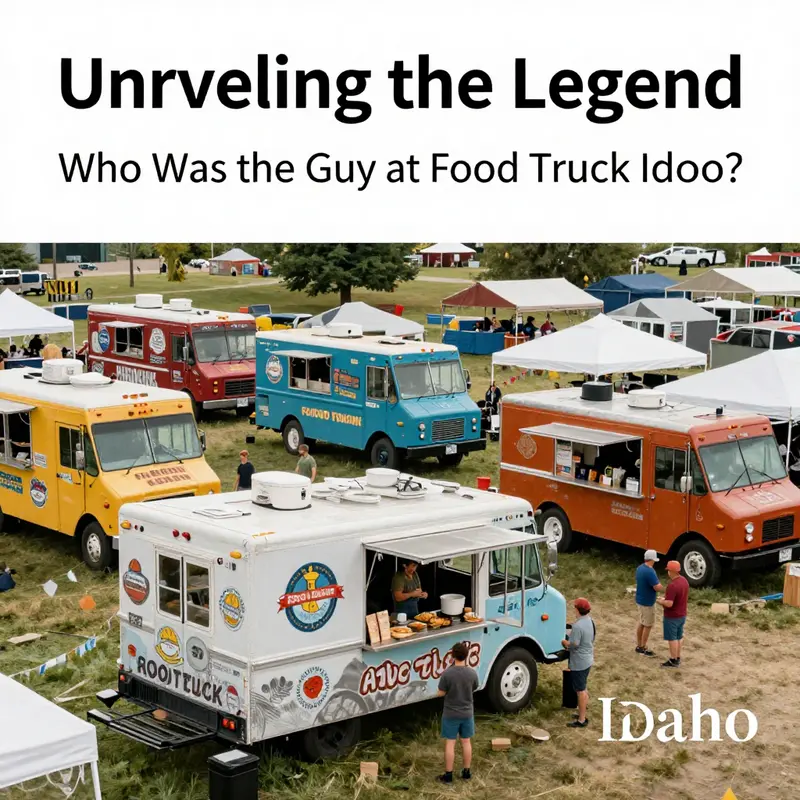
Food trucks in Idaho do more than feed crowds. They create moments that stick in memory. A short encounter at a downtown truck can become a viral clip. It can also spark a local mystery: who was the guy at the food truck in Idaho? That question, simple on the surface, opens a window onto why mobile kitchens matter as cultural stages. They stage interactions between farmers, cooks, families, and visitors. They foreground regional pride. They surface the kinds of characters who populate a community. Understanding the cultural role of food trucks helps explain why one person’s presence can seem to matter so much.
On any given weekend, a food truck gathers people around a shared table of smells and tastes. In Idaho, that table often carries potatoes and produce. It also carries histories: farming tales, migration stories, seasonal rhythms. A food truck operator may be a longtime farmer’s child, a refugee who brought recipes across an ocean, or a young entrepreneur experimenting with flavors. Each of these backgrounds animates the menu and the moment. When someone stands in front of a truck and becomes visible in a photo or a short video, the image rapidly accumulates meanings beyond a single face. Viewers read identity into dress, accent, and the foods being served. They read regional symbolism, too. That is why a fleeting scene at a truck can prompt the question, who was that guy? People are trying to locate a story in one framed instant.
The visibility of food trucks makes them natural places for notable encounters. They park at festivals, markets, and civic events. They are present at activities that celebrate local crops, such as the Famous Potato Drop in Boise. At events like that, vendors serve potato-forward dishes that function as a local pride symbol. The menu itself becomes narrative. A loaded fry, a gourmet potato salad, or a reinterpretation of hash browns points back to Idaho’s agricultural backbone. The person behind the counter, or the customer featured in a clip, stands at the crossroads between food and identity. The crowd records, comments, and sometimes elevates that person into a local touchstone.
This public dimension explains why questions about identity propagate quickly. Digital cameras and social apps compress a scene into a shareable moment. A passerby records a friendly exchange, a playful mishap, or a memorable order. The clip lands online, and the search begins. People ask who the vendor was, who the customer was, or who the person at the truck became in that clip. Such questions reveal two things. First, viewers crave connection; they want to link a face to a story. Second, the food truck acts as a cultural amplifier. It magnifies small encounters into stories that speak to community values, like hard work, ingenuity, and hospitality.
Food trucks are also sites of entrepreneurial expression. Many are run by small teams or families. In Idaho, this includes a mix of long-standing local families and recent arrivals who bring new flavors. This blend of actors shapes local food identity. When someone becomes noticed at a truck, they may represent wider social dynamics: a second-generation small business owner taking over the family trade, or an immigrant cook adapting ancestral recipes to local produce. These personal arcs matter to onlookers. They feel like condensed narratives of resilience and adaptation. Thus, even an apparently anonymous face can be read as emblematic of a larger communal story.
The cultural significance of food trucks extends beyond identity and entrepreneurship. These mobile kitchens reconfigure public space. They gather people who might not otherwise mix. A lunch line brings office workers, students, tourists, and long-time residents together. At festivals, trucks create temporary marketplaces where tastes mix and conversations follow. People exchange recipes, farming tips, and neighborhood news. Here, the shared act of eating functions as a social glue. When a person stands out—perhaps due to wardrobe, behavior, or a unique order—they become a focal point of that social exchange. Viewers of a shared video often feel they witnessed a meaningful, communal moment.
This is why it can be difficult to answer a question asking after a single person. Cultural context matters. Many identities overlap at a truck: vendor, volunteer, customer, musician, or passerby. Without details like time, event, or a clearer image, identification relies on inference. Social networks may supply clues. A clip might carry tags, location markers, or recognizable branding. Local news outlets sometimes follow up on viral moments. But absent those signals, the responsible answer is cautious. It acknowledges the scene’s social weight while recognizing that a single frame rarely provides enough reliable information to identify a person.
There is also a deeper, ethical layer to consider. When a stranger’s face is circulated online, privacy and consent must be weighed. People in public places have limited expectations of privacy, yet sharing their image widely can have real consequences. Vendors and customers often prefer their interactions to remain part of local memory rather than global scrutiny. Community norms often govern how a viral clip is treated. In many Idaho towns, people value neighborliness and direct contact. If a clip raises questions, a respectful way to learn more is to reach out to local organizers, event hosts, or the food truck itself. Those sources frequently provide context without exposing individuals unnecessarily.
Food trucks also act as cultural bridges in a literal sense. They carry ingredients and techniques from different traditions into the local palate. In Idaho, some vendors combine Indigenous ingredients like bison or wild rice with contemporary techniques. Others render Latin, Asian, or European dishes using potatoes and regional produce. This blending creates a unique culinary landscape. When someone appears in a viral moment, their identity may be read as an example of cultural mixing. Viewers often ask who that person was because they want to understand how a particular dish or style became part of local life. The answer rarely lies in a single person, though. It lies in networks of migration, trade, and daily creativity.
The social life of food trucks also shapes how communities remember events. Annual gatherings, such as harvest festivals and city celebrations, rely on mobile vendors to animate their offerings. At these events, food trucks are less about quick meals and more about ritual. Serving, eating, and sharing become ceremonial acts that reiterate local values. People who participate repeatedly become familiar faces. They acquire reputations, nicknames, and local mythologies. A now-famous “guy at the food truck” might be someone locals know as the person who always orders off-menu. Alternatively, he might be a musician who plays at the truck every Saturday. For outsiders who see a clip, that contextual and communal knowledge is not available. The scene, however, still resonates. It conveys the sense that something meaningful was happening.
All of these dimensions—entrepreneurship, identity, public life, and memory—help explain why a fleeting presence at a truck can provoke curiosity. Answering the question about a particular person requires context. Helpful details include time, place, and any names or tags. Local institutions can assist. Associations that represent food trucks keep records and can often point to vendors at a given event. Local journalism sometimes covers large gatherings and profiles standout vendors. And many trucks maintain social pages with photos and timestamps. If the questioner seeks a reliable identification, those channels usually produce the clearest answers.
Even without identifying a person, it is valuable to reflect on what the curiosity reveals. It shows the public’s desire for narrative and connection. It shows how food, as a cultural medium, mediates belonging. It shows how a small business on wheels can become a civic landmark. In Idaho, the relationship between land and table amplifies this effect. Potatoes and other crops are not mere ingredients; they are emblems of place. People who appear in scenes at food trucks thus often become visual shorthand for wider local stories.
There is also a practical side to consider. Food trucks are subject to regulation and industry realities. Many operators navigate licensing, parking rules, and seasonal markets. These constraints shape when and where trucks appear. They affect who is present at certain times. Recognizing those patterns helps contextualize a viral image. For example, a scene at an event that takes place only once a year is easier to research than one at an impromptu downtown gathering. Trade groups and guides for food truck owners provide resources on scheduling, permitting, and branding. For anyone curious about where a truck operates, these resources can be helpful. For those who want to understand the truck’s story, guides on identity and presentation show how vendors use design and messaging to signal their roots and values. See this guide on branding on wheels: the ultimate guide to food truck graphics and identity for practical insight into how vendors craft a public face.
In sum, the question, who was the guy at the food truck in Idaho, matters because it points to a larger cultural phenomenon. Food trucks are tiny civic theaters. They host exchanges of taste and story. They make visible the networks that sustain local foodways. A single person photographed at a truck can thus become a flashpoint for curiosity about place, labor, and identity. Finding a definitive name depends on context and sources. More importantly, the scene itself speaks to community practices of memory and belonging. Food trucks are ephemeral by design. Yet they leave a lasting cultural imprint. That is why a casual encounter can prompt such earnest inquiry.
For further reading on how food trucks shape Idaho’s cultural landscape, including coverage of events where mobile vendors play a central role, see this article from the Idaho Statesman: https://www.idahostatesman.com/news/local/food-and-drink/article301284596.html
The Guy at the Food Truck Idaho: Rumor, Place, and the Making of a Local Legend
The question itself arrives like a gust of wind across a long line of customers: who was the guy at the food truck in Idaho? It sounds simple enough, a name that could be checked off a list, a face that might appear under a bright awning, a moment that could be captured in a video or a photo. Yet the truth, as often happens with public spaces that are busy and porous, is not so easily pinned down. The Idaho landscape—its rolling plains, its city corners, its parklets where a glee of pigeons and steam from a cooking pot mingle—tells a different kind of story. It tells stories that are collective, iterative, and sometimes stubbornly elusive. In many communities, the person standing at a curbside grill becomes more than a cook. They become a node in a network of conversation, a focal point for shared meals, a hinge where strangers become neighbors. When we ask who the guy was, we are really asking what the moment meant to the people who were there, and what the moment has become since. It is a test of how memory works in public life, and how online search engines, local lore, and municipal records each offer a different lens on a single event, if we can call it an event at all.
What the available materials frankly show is a boundary condition rather than a revelation. There are no publicly available, authoritative news reports or official records that identify a specific individual as “the guy at the food truck” in Idaho in any canonical sense. The available research results suggest that this is not a single, verifiable incident with a named individual. Rather, it is a phrase that has circulated in various forms—on social media, in hushed conversations at farmers’ markets, in blogs that chase regional food-truck stories, and in the oral histories of neighborhood dining neighborhoods. The absence of a clear, authoritative reference is not a sign of failure; it is a sign of the kind of culture that sustains mobile dining. In many places, the person people remember most vividly is not a celebrity or a culprit, but an ordinary participant in a shared ritual of food, space, and social encounter. In Idaho, as in many other regions, the food truck scene functions as a mobile civic space. It offers a place to gather, to compare notes about the day, to exchange recommendations, and to witness the small dramas that unfold when food is made in public and served to strangers who become acquaintances over the course of a single lunch.
The research results invite us to slow down and examine the contours of that space. Local food trucks in Idaho are more than jobs that sell meals; they are itinerant stages where community rituals occur. The truck itself becomes a rolling storefront, a portable kitchen, a social experiment, and a micro-economy. The people who work at these trucks—whether they are the guy behind the grill, the woman who slices vegetables, or the person who handles the payments—contribute to a shared atmosphere. In Boise, in Coeur d’Alene, in Idaho Falls and beyond, you can trace the rhythms of the week by the trucks that appear in the park near the river, or by the corner where the street food festival unfolds. These are not mere anecdotes; they are social infrastructures. When someone is widely mentioned as “the guy at the food truck,” the reference is less about a specific biography and more about a social role performed in a particular urban fabric. The role is provisional, easily overwritten by new stories, and always contingent on who is there, what they make, and who they serve on a given day.
One useful frame for understanding the phenomenon is to view the scene through the lens of rumor, memory, and place. Rumor travels quickly in a city that values quick information and local color. A short video clip captured at a moment of heat and steam can go worldwide within hours, and the identity of the person in the clip—if there is one—may be inferred by viewers who never met him. Yet what endures is the memory of the interaction: the taste of the food, the speed of the service, the way a joke landed between a cook and a customer, or the way the line bent into an intimate, almost ceremonial circle. The variable here is not merely who the person is, but what the encounter signifies for a community that uses food trucks as social hubs. In Idaho, the food truck becomes a mobile commons, a place where strangers share space, talk about weather, schools, bills, and the day’s small triumphs. The identity of the worker then becomes secondary to the function of the moment: a ritualized exchange that creates belonging, if only for the duration of a meal and a line of chatter.
The absence of conclusive identification invites a more careful inquiry into what makes a moment of public interaction memorable. It pushes researchers and writers toward the paths that can illuminate the texture of the scene without forcing a personal label on an individual. Local news databases, for example, can offer a window into documented incidents that involve food trucks, but the framing often emphasizes safety, regulation, or large events, not the idiosyncratic, everyday encounters that shape local memory. Social media—short clips, captions, comments—often preserves the flavor of a moment longer than a print report, yet it can distort or simplify the context. The posts may show a man whose mannerisms seem distinctive, or a distinct apron color, or a catchphrase that sticks in the mind. But a distinctive look is not evidence of identity in any verifiable sense. Law enforcement reports, when applicable, might record a public incident, yet they rarely identify a person as “the guy” in a way that resolves a rumor or settles a social question. Academic research can offer frameworks—sociology of public space, street-food economies, or urban anthropology—that help decode the meaning behind a fleeting figure in a curbside setting. Each of these paths has value, but none guarantees an exact name. This is not a shortcoming; it is a reminder of the fluidity of public life and the porous boundaries between a person and a story.
If we look at the problem with a broader historical awareness, the figure of a man at a food truck evokes a long tradition of street-level conviviality. In many cultures, the street is a theater as well as a market. The person who cooks in public negotiates with the crowd through smile, tempo, and the repetition of a recipe that travels from grandma’s kitchen to a modern food truck window. In Idaho, with its diverse geography—from the rugged mountains to the fertile plains—such street theaters anchor moments of everyday life in communities that often rely on small businesses to sustain local economies. The culinary act becomes a shared ritual that helps people imagine a common space even when they come from different neighborhoods, backgrounds, or ages. The memory of a single face at a curbside can crystallize into a symbol of fairness, generosity, or a certain craft that resonates with people who ate there and those who heard about it later.
In this sense, the absence of a verifiable identity is not a missing piece. It is a clue about how local culture preserves itself in the absence of a singular biography. The research paths proposed in the current overview—local news databases using phrases like “food truck incident” or “man at food truck,” social media searches filtered by Idaho locations, and basic checks of police or sheriff reports for public-safety documentation—are all valuable, but they work best when supplemented by oral histories and community memory projects. The nature of these projects is to invite residents to share their recollections, not to enforce a hierarchical record of who did what on a particular day. The goal is not to crown a name; it is to examine how a neighborhood experiences a moment, and how that experience travels across time through stories, receipts, and photographs. In practice, this means listening to what people remember about the moment: the tone of the exchange, the smells of the grill, the rhythm of the line, and the way a community uses a shared food experience to confirm social bonds.
The question of identity, then, becomes a meditation on the social life of the city rather than a genealogical inquiry. If the “guy” was a figure who made an impression, that impression is measured less by a precise identity and more by the social capital created in the interaction. The man becomes part of a ledger of shared meals, a line in a notebook of local color, a punctuation mark in the day when a certain street corner offered warmth and nourishment. This is not a narrative deficit but a particular strength of studying food-truck culture: it foregrounds process over person, community over celebrity, and place over portrait. The stories that persist are those that connect people to a place and to one another. The person who stands behind the grill—whether he exists in any easily searchable form or not—serves as a reminder that a city is a network of temporary gatherings made meaningful by the way people respond to each other across the counter and beyond.
To connect this to the concept of branding and identity, consider the idea that a vehicle’s public face is not only about logos or color schemes but about the atmosphere it creates. In studying this, one can borrow a concept from branding on wheels—the idea that a vehicle’s identity is built through graphics, color, and typography. The linked resource offers a lens for understanding how a truck communicates with its audience long before the customer orders a bite. Visual cues—the label on the window, the shade of the paint, the font of the menu—shape expectations and help people recognize a space as a place they can trust. When a person at the truck is remembered, those visuals blend with the memory of a familiar service. The two strands—visual identity and personal interaction—interweave to produce a fuller picture of what a moment at the curb can signify for a community. While the exact name of the individual may remain elusive, the broader story of how a street-food encounter becomes part of local identity is tangible and repeatable across Idaho’s cities and towns.
This is why the absence of a definitive answer matters for readers who want to understand how rumors form and why they endure. The absence invites methodological patience. It invites readers to look not for a single photograph that proves a name but for a sequence of experiences that demonstrates the social function of the food truck. It invites local researchers and curious observers to treat the scene as a living archive, where each visit to a truck adds to a larger, evolving record of who we are when we gather to eat. If we carry this approach forward, it becomes possible to describe the Idaho food-truck landscape not as a set of isolated incidents but as a network of moments that people remember because they fed more than their stomachs—they fed conversation, connection, and a sense of shared place.
In pursuing further research, a practical mindset helps. A local news database can be searched with nuanced keywords that capture the social dimension rather than the sensational. A social-media sweep can be tailored by date ranges, geographic filters, and content types to surface clips and captions that reveal what people cared about in a given moment. Law-enforcement reports can shed light on public-safety concerns that occasionally accompany large gatherings, which in turn shape the perception of who the “guy” might be to the broader audience, even if the person remains unnamed in official documents. Academic projects focusing on street-food economies can offer a vocabulary for discussing the social roles people play at the curb, and the ways in which public space is negotiated through food and conversation. All of these avenues, pursued with care, can build a richer understanding of why a figure who may never be conclusively identified still carries weight in collective memory.
The final, essential takeaway is that the search for one person should not overshadow the broader inquiry about a living, breathing cultural practice. Idaho’s food truck scene is more than a set of mobile kitchens; it is a dynamic public forum that travels across neighborhoods, announcing itself with steam, spice, and sound. The guy at the food truck—whether he is a particular person or a figurative stand-in for any eager cook and social broker—helps to illuminate how people relate to each other when appetite and sociality intersect. The chapter, then, does not end with a triumphant unveiling of a name. It ends with a recognition that a community’s memory is resilient because it can hold multiple versions of a moment at once. A single face in a video may be one thread, but the larger tapestry is woven from the patterns of interaction, the taste of the meals, and the shared habit of turning a curbside stop into a small, public feast. And when future readers come to this moment seeking a precise identifier, they will discover something more meaningful: a map of how a place culture negotiates identity through food, space, and time, and how a single, ordinary encounter can become a long-running chapter in the story of a place.
For readers who want to explore related discussions on how branding, space, and identity intersect in the mobile-food economy, a useful resource on the topic of truck graphics and identity can be found here: branding on wheels: The ultimate guide to food truck graphics and identity. This connection offers a lens for appreciating how visual cues work alongside personal interactions to shape what a food truck represents in a community. The chapter’s aim has not been to pin a precise name to a moment, but to illuminate the social ecology of the curb, the ways people come together around shared meals, and the enduring significance of a space where food makes conversation possible. Ultimately, the Idaho food-truck scene teaches that public life thrives when strangers become neighbors through meals, stories, and the simple act of waiting in line beside a friend or a stranger alike. If you look closely at a map of a city where trucks park and serve, you can see how each stop adds to a collective memory, and how that memory, in turn, informs what the place becomes for everyone who passes through.
External resource for broader context: Idaho Food Truck Association. This organization offers insights into how the mobile-dining economy is organized at the state level, including the people who drive, regulate, and support this vibrant cuisine landscape.
Final thoughts
In your quest to discover who the guy at Food Truck Idaho truly is, remember that behind every food truck lies a story waiting to be uncovered. From the delicious aromas wafting through the air to the vibrant conversations shared across tables, food trucks embody community spirit and culture. Identifying this enigmatic figure isn’t just about a person—it’s about celebrating the connections and experiences that these mobile eateries provide to Idahoans and visitors. So next time you visit a food truck, think about the legends being crafted right before your eyes.