
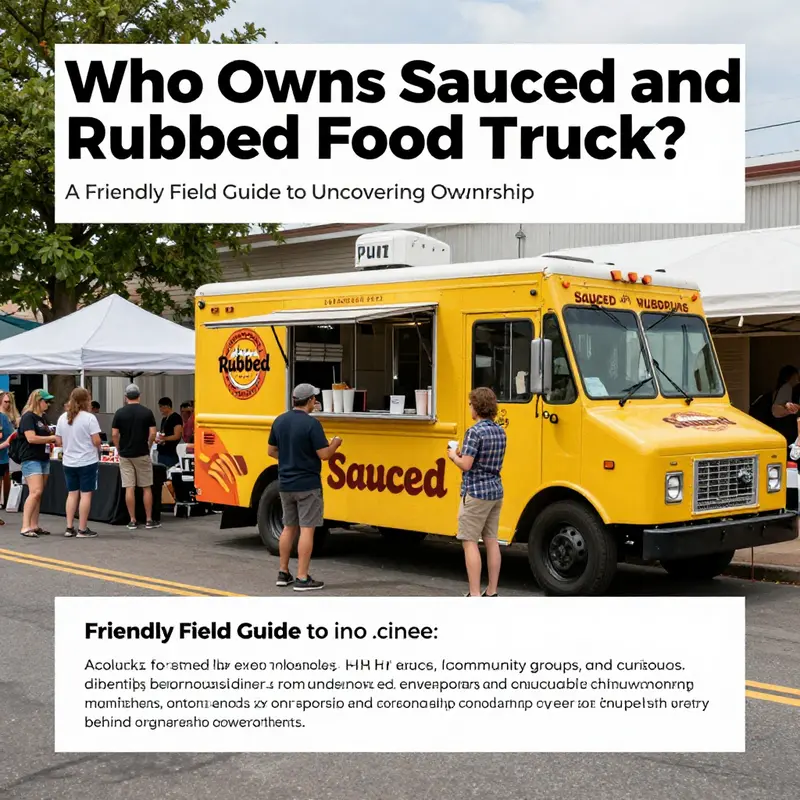
Ownership clarity matters for trusted partnerships, compliant partnerships, and community confidence. Sauced and Rubbed Fine Food and Caterers operates on wheels in markets that blend delivery, pickup, and on-site catering, but public records and visible channels don’t reveal a clear proprietor. This piece builds a practical, transparent framework for understanding who owns Sauced and Rubbed, why ownership details matter to event planners and diners, and how to verify ownership through public records, licensing, and professional due diligence. Across five chapters, we connect the dots between legality, economics, operations, and community trust, showing how each facet informs collaboration, risk, and accountability. Whether you’re booking for a corporate retreat, organizing a neighborhood festival, or simply exploring a beloved street food favorite, you’ll gain a holistic view of ownership that respects privacy while prioritizing transparency, compliance, and responsible partnership.
Chapter 1: Ownership in Motion — Tracing Who Owns the Sauced and Rubbed Food Truck Through Public Records

Ownership in motion is the core question when a mobile food venture travels from street corner to festival, yet public notice often trails behind. The case around the Sauced and Rubbed food truck illustrates this tension: a brand name that appears in listings and reviews, offers delivery or pickup in some markets, and a chorus of anecdotes about quality and service, but little in the way of disclosed proprietor identities. The research materials assemble what is publicly visible and what remains obscured. They show a pattern familiar to many small, mobile operators: a strong consumer-facing presence paired with a cautious or even opaque ownership footprint in official records. The consequence is not merely curiosity. Ownership clarity matters for liability, financing, licensing, governance, and accountability. When a business travels, so does the responsibility for licenses, permits, health compliance, and safe operations. Consumers, suppliers, event organizers, and landlords increasingly expect a straightforward owner story to accompany a brand promise of quality. In the absence of that story, trust must be earned through verifiable processes rather than reflexive transparency.
From the vantage point of regulatory and records landscapes, the challenge becomes evident. The available sources typically identify a business by its name and track service modalities and customer feedback, but they rarely reveal who stands behind the wheel. For mobile food ventures, ownership data is dispersed across jurisdictions and embedded in a tangle of DBA filings, LLCs, corporate registrations, health permits, mobile vendor licenses, commissary registrations, and sometimes trademark registrations. Each jurisdiction holds a different thread, and tracing them requires a disciplined, primary-source approach rather than piecing together secondhand impressions. The framework laid out in the research is not a guess but a map: start with the formal business entity, then verify licenses, then corroborate through permits, filings, and branding records, always cross-checking for consistency in names, addresses, and contact points. Within that framework, a few core questions guide the inquiry: Is there a DBA filing under the brand name that ties to a legal entity? If yes, who are the owners or managers listed on the filing? Does the health department tying the mobile unit to a particular license reveal a recorded operator or entity? Are there commissary registrations that identify the operator of the vehicle or the catering entity? And, if available, do trademark records or public-facing communications point to a principal owner who can be cross-validated against registry entries?
The landscape also invites a closer consideration of ownership structures and their implications. A mobile food business may operate as a sole proprietorship under a DBA, which often places the owner’s name in licensing documents and permits. It may be organized as an LLC, housing members and a management team whose identities appear in organizational filings. Or it could be a corporation, with shareholders and a board, creating a layered governance framework. Partnerships or joint ventures can cloud ownership further, especially when multiple brands share a single commissary or vehicle. In some arrangements, a trust or family-owned structure sits behind the brand, hidden behind the legal entity rather than visible in everyday customer-facing channels. Each structure shapes liability, tax obligations, reporting duties, and the exact locus of accountability for compliance with health codes and safety standards. For researchers and public readers, recognizing these structural possibilities is crucial because ownership disclosure is not a single fact but a constellation of records that must be interpreted together.
The research materials also underscore a broader social and regulatory reality. Transparent ownership supports consumer trust and simplifies due diligence for suppliers, event organizers, and landlords who rely on clear lines of responsibility for health and safety. Opaque ownership, conversely, can complicate audits, stall financing, or hinder coordination with partners who need to verify who is authorized to contract or sign off on permits. In the municipal and regulatory environment, mobile vendors operate at the intersection of zoning, health codes, wage laws, and licensing regimes. Data privacy and local rules governing disclosure further shape what can be publicly visible. The tension between openness and privacy is not trivial; it defines how public records meet real-world expectations for accountability, especially in shared spaces where vehicles, tents, and kitchens intersect with customer safety.
A critical element of the chapter is the acknowledgement that the ownership signals in the public record can be inconsistent or subject to misinterpretation. The materials reveal a spectrum of signals and sometimes contradictory cues. In some prompts, an individual is identified by name in a customer review as the owner or principal operator, while other sources point to an administrative entity or suggest there may be a management company behind the scenes. Some references discuss related entities or similarly named brands, which can create confusion if one relies solely on brand-name searches without examining the underlying legal structures. The risk here is not just confusion; it is the possibility of conflating two distinct entities or overlooking a separate but related entity that actually holds the licenses, permits, and responsibilities for the mobile unit.
To move from confusion to clarity, the research outlines a rigorous, multi-source verification method that reads across records rather than relying on a single public notice. The suggested approach begins with a DBA and entity search across the jurisdictions where the business operates. This helps identify whether the brand name is linked to an LLC or a corporation, and who the listed owners or managers are. If a corporate form is found, the Articles of Organization or Incorporation and annual reports can reveal ownership percentages and controlling individuals. Health department mobile food vendor permits and catering licenses should be examined to determine the operator named on the permit, as this often reflects the legally recognized business entity rather than an individual. Licenses and permits by city or county can further illuminate the operator’s identity, and commissary registrations or fire marshal documents may also disclose who has authority to operate the vehicle and the kitchen facilities in use.
Tax and employment filings, while not always publicly accessible, can provide important confirmations when obtainable. Trademark or service mark registrations connected to the brand frequently align with the owner or controlling entity, offering another avenue for verification. Public communications—official websites, press releases, and professional profiles—can reveal founders or managing partners when the information is disclosed openly. In some cases, direct inquiry through official channels may be permissible and productive, particularly when legitimate purposes justify the request for ownership details. The most reliable conclusions emerge when data points are cross-referenced—entity name, address, phone, and email—across multiple sources to confirm ownership and to identify affiliated entities or parent organizations.
The materials also remind readers that ownership signals can evolve. A small food truck may begin as a sole proprietorship and later reorganize into an LLC or corporation as financing, liability concerns, or growth demands shift. In such moments, timelines matter: a permissive public record from years past may not reflect a more complex current structure. This temporal dimension is essential for anyone seeking a definitive answer about who owns a mobile unit. It also means that ownership is best understood as a moving profile rather than a single static entry in a registry.
In practice, the chapter invites a deliberate, methodical workflow. Start with a targeted search in the state or local jurisdictions where the business operates, looking for DBA filings that match the brand name and for any registered legal entity that uses the same address or contact channels. If a formal entity is identified, retrieve the founding documents, ownership disclosures, and annual filings to pinpoint principals. Review health department licenses to see which entity is listed as the operator for the mobile unit and whether that operator aligns with the entity found in business registries. Inspect local licenses, commissary registrations, and fire marshal attestations for operator names, and pursue trademark databases to connect branding to the legal owner when possible. Where confusion persists, consider a direct inquiry through official channels that requests ownership information for legitimate purposes, clearly stating the intended use of the data and respecting privacy boundaries and legal constraints.
A key practical insight from the material is the need to cross-reference signals and to triangulate between operating licenses, vehicle registrations, and branding registrations. The goal is not to settle ownership with a single data point but to assemble a robust ownership profile that can respond to due diligence needs. In the context of Sauced and Rubbed, that means constructing a clear trail from the brand name to the legal entity, and then to the principals behind that entity, if such disclosures are publicly available and legally accessible. It also means acknowledging where such a trail stops short of public visibility and reframing expectations accordingly. When ownership cannot be verified with official records alone, public communications and professional profiles can offer hints, but they should never substitute for primary source documents and regulatory filings.
For readers who want to extend this inquiry beyond the chapter, a practical path includes consulting the city or county clerk, Secretary of State or equivalent agency, and the health department’s licensing division. A consolidated, time-stamped ownership profile can then be maintained, reinforcing accountability and informing future decisions about partnerships, events, or tenancy on venues that require proof of responsible ownership. The broader takeaway is that ownership clarity matters not as a curiosity but as a governance and regulatory liability issue. As mobile vendors continue to occupy dynamic spaces in cities and towns, transparent ownership becomes part of the contract between the brand and the community it serves. It signals accountability, supports safety, and ultimately helps the brand sustain trust with customers and collaborators alike.
For readers seeking a practical touchstone on navigating these regulatory waters, the following external resource provides foundational guidance on what constitutes public records and how to access them: https://www.usa.gov/public-records. And for a locally anchored exploration of how regulation intersects with operations on the ground, you can explore one practical, topic-relevant discussion through an industry-focused resource that delves into regulatory considerations for mobile food ventures: navigational links include a trusted primer you can consult as you review your own ownership verification plans. Within the chapter’s internal references, consider the discussion of industry regulations as a companion to the ownership verification framework. As you move to the next chapter, you will see how performance, safety, and governance interlock when a brand’s ownership footprint is clear and accountable, and how that clarity translates into smoother collaborations with event organizers, suppliers, and regulators.
Internal link: While reading, you may find more about how regulations shape day-to-day decisions in the broader workflow of mobile operations at this resource: Navigating Food Truck Industry Regulations.
External resource (for reference): https://www.usa.gov/public-records
On the Road to Ownership: Tracing the Legal Footprint of Sauced and Rubbed on Wheels
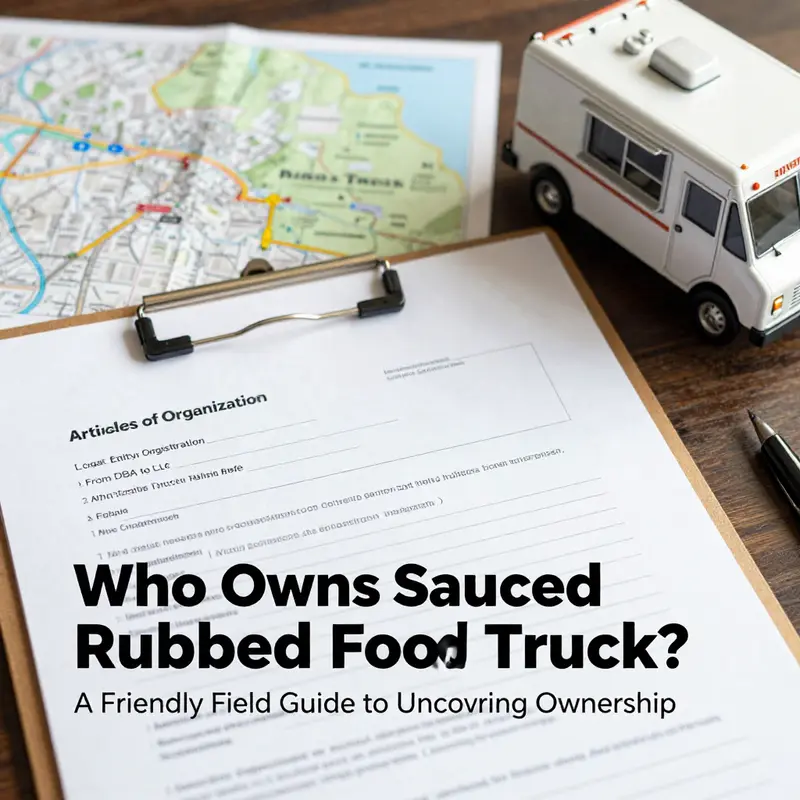
Ownership in the realm of mobile food ventures like Sauced and Rubbed on Wheels is less a single, static identity than a web of regulatory filings, licensing records, and branding that travels across jurisdictions. The public narrative of a food truck often highlights menus, service formats, and customer feedback more visibly than the person or entity behind the wheel. Yet for operators, suppliers, landlords, and regulators, knowing who owns the legal business entity is essential for liability, accountability, and long-term planning. The available materials about Sauced and Rubbed Fine Food and Caterers reveal a familiar pattern: the business name appears in listings and reviews, delivery and pickup options surface in certain markets, and consumer sentiment centers on quality and price. Crucially, the owner’s name or corporate structure does not appear in the sources that are publicly accessible. This absence is not a mere gap in curiosity; it shapes how stakeholders approach contracts, health and safety compliance, and even opportunities for expansion or partnerships. In that sense, the chapter you are reading is less about identifying a person and more about illustrating a disciplined method for uncovering an owner’s footprint when it does not stand out in a straightforward way.
From the outset, the pursuit of ownership information for a mobile food operator rests on a fundamental truth: many jurisdictions regulate the operator rather than the individual owner. A mobile unit entered into service through a permit or a health license is often tied to a legal entity that can be a DBA, an LLC, or a corporation. The complexity arises when a venture presents itself under a brand name that acts as a trade name, while the underlying entity remains private or opaque. Sauced and Rubbed, in its various references, aligns with this scenario. The name can appear across permit databases, business directories, and customer-facing channels while the actual ownership line—who holds the controlling interest, who signs tax returns, who sits as the registered agent—remains concealed behind a layer of filings or even management arrangements. That is not inherently nefarious; it is a structural reality of many small food businesses that optimize flexibility by using different organizational tools in different markets. The practical implication is that ownership verification must be meticulous, multi-sourced, and anchored in verifiable records rather than assumptions.
To approach ownership verification with integrity, a researcher must treat public records as the primary evidence and understand how they interlock. The first realization is that ownership is frequently distributed across multiple domains. A DBA filing in one state may name a trade name while the articles of organization or incorporation may exist in another jurisdiction under a different entity name. Health department permits, mobile vendor licenses, and commissary registrations sometimes list the operator’s name or the legal entity responsible for the permit rather than the brand that appears on the storefront. Tax records, when accessible, often reflect the legal entity rather than a private individual. Trademark registrations, if applicable, can reveal ownership information embedded in the rights holder details, but those filings may cover branding rather than the day-to-day management of the mobile unit. These realities require a layered strategy: verify the corporate or entity name first, then trace licenses, permits, and registrations that tie to that entity, and finally test whether different brands or locations point to the same governing party. The goal is not to produce a guess but to construct a cross-validated ownership profile that holds up under regulatory and business scrutiny.
In the case of Sauced and Rubbed, the current public data landscape is consistent with what one would expect for a small but mobile catering and food service operation. The research synthesis indicates that while the business identity is searchable and the service modalities are documented, there is no disclosed proprietor’s identity within the cited sources. This situation invites a careful, methodical inquiry rather than speculation. The recommended path begins with a targeted DBA and entity search across the jurisdiction(s) where the business operates. The search should capture all forms of the legal name: the exact name used in filings, potential abbreviations, and any variations that might appear in state or local records. If an LLC or corporation is found, the next step is to retrieve the articles of organization or incorporation, the associated registered agent, and the list of members or directors. These documents often illuminate who sits at the apex of the enterprise or who holds voting control. If no single entity emerges, the inquiry should expand to include partnerships, joint ventures, or management agreements that may assign control to another party without changing the branding. There is a legitimate case for considering that a brand like Sauced and Rubbed could be operated by a management company or a private equity-backed entity that prefers to keep the owner’s name shielded from day-to-day consumer interactions.
The regulatory and records landscape further informs the interpretation of ownership data. In many jurisdictions, the operator listed on a health department permit or a mobile vendor license is the entity accountable for food safety compliance and service operations. The permit name may reflect a DBA or a legal entity, but the key question remains: does that name map cleanly to a single owner, or is the control dispersed among several principals or a management structure? Local ordinances and licensing rules often require the operator to be registered with the city or county, and sometimes the fire marshal or health department maintains additional notes about facilities, commissary affiliations, or vehicle registration that can reveal names associated with the operation. This crosswalk between regulatory records is where ownership information tends to emerge most reliably, though not always in a direct, easily readable form. It is also where privacy considerations and administrative delays can obscure the link between a brand and a person. Yet, even in privacy-protective regimes, patterns emerge: consistent names on permits across multiple locations can point to a core ownership group; a single registered agent or a recurring address can hint at the governance structure. Such patterns, observed across jurisdictions, can guide the investigator toward the most plausible ownership configuration without making leaps beyond the documented evidence.
From a broader perspective, the implications of ownership clarity ripple through financing, liability, and regulatory compliance. An LLC or corporation, as opposed to a sole proprietorship, can offer liability protection and a clearer governance framework, which is particularly relevant for a mobile operation subject to a mosaic of permits, health inspections, and zoning rules. A corporation or LLC also affects how the business is financed and how profits are distributed, which in turn influences vendor relationships and expansion strategies. When ownership is opaque, lenders, insurers, or potential partners may demand more rigorous due diligence to verify the legitimacy and stability of the operator. Conversely, transparent ownership fosters trust with suppliers and landlords and can facilitate smoother licensing processes. But transparency is not a guarantee of simplicity. The same structures that provide liability protection also shape tax reporting, annual disclosures, and governance complexity. The existence of a branded entity without a clearly disclosed owner can, in practice, signal a layered corporate arrangement intended to manage risk or to support growth while preserving privacy for individual principals.
There is also a societal and geopolitical dimension to ownership transparency in the mobile food sector. A public, accessible map of ownership tends to support consumer trust, health and safety accountability, and fair competition among operators. When ownership information is fragmented or concealed, it can complicate due diligence for venues, event organizers, and suppliers who seek consistent standards and reliable partnerships. At the same time, privacy norms and regulatory constraints rightly protect sensitive information, particularly for small operators who may prefer to keep personal details off public records. The tension between transparency and privacy reflects a balance that regulators and researchers must navigate. In practice, it means that ownership verification is about assembling enough verifiable pieces to form a credible picture, rather than uncovering the private lives of individuals. That approach aligns with professional norms for business due diligence, which favor official, traceable sources and cross-referenced data over rumors or isolated disclosures.
Despite the best efforts, limitations and uncertainties remain. A fundamental constraint is that not all jurisdictions publish comprehensive ownership data, and where data exists it may appear under different names or in archives that are not easily searchable. A DBA may mask the legal footprint under a widely recognized trade name, while the actual controlling party may operate through a separate entity or management vehicle. In some situations, the operator may be part of a larger network where multiple brands share resources, commissaries, or management teams, further obscuring direct ownership ties. This is not a flaw in the methods but a reflection of how many mobile food businesses structure themselves to stay agile in a competitive environment. To advance toward a definitive ownership profile, the proposed future work emphasizes cross-jurisdictional research, direct outreach through official channels, and the involvement of professionals who can interpret records in the context of privacy laws and regulatory expectations. The ultimate aim is to produce a transparent, defensible ownership narrative anchored in primary documents rather than secondary impressions.
For researchers and practitioners, the path forward includes several practical steps that blend diligence with caution. Initiating a targeted search across state and local registries can reveal DBA filings, LLCs, and corporate entities tied to the brand. Examining permits, licenses, and commissary registrations may locate the operator name on file with health and safety authorities. Trademark activity linked to the brand can sometimes identify ownership, especially when the mark is tied to a specific corporate entity or to the principals behind it. Public communications from the business, including official websites and formal press releases or LinkedIn profiles, can illuminate founders or managing partners, even if those names are not present in regulatory records. When permissible and appropriate, direct inquiries to the business through official channels can yield ownership information for legitimate purposes such as partnership proposals or supplier arrangements. Finally, cross-referencing data points across entities, addresses, and contact details provides a more reliable signal of control than any single source alone. In this way, ownership becomes a matter of triangulation rather than assertion, a methodological discipline that respects both transparency and privacy while seeking factual accuracy.
For readers who want practical guidance tailored to the realities of food trucks and other mobile operations, there is value in embracing a narrative of due diligence rather than a single data point. The materials discussed in this chapter suggest that a robust ownership profile emerges from a disciplined, multi-source approach. It is not about exposing private information, but about understanding who holds the authority to sign contracts, secure licenses, and ensure compliance across markets. If you are exploring a venture, or if you are part of an organization that could partner with Sauced and Rubbed, the emphasis should be on clear governance, documented ownership structures, and verified licensing alignments. In that light, the journey from brand to business entity mirrors the move from street-level flavor to formal accountability, from a truck that serves meals to a corporate posture that sustains growth and sustains health and safety standards.
For readers seeking deeper context on how regulatory pathways intersect with ownership in the food-truck ecosystem, an integrated resource on navigating food truck regulations provides a practical frame of reference. This broader discussion complements the specifics of Sauced and Rubbed by situating ownership verification within the regulatory rhythm of mobile food service. External references can anchor the analysis in established procedures and public records management, ensuring that conclusions reflect verifiable evidence rather than conjecture. In practice, ownership clarity contributes to more predictable collaborations, steadier supply chains, and stronger communities built around shared food experiences. As the chain of verification travels from name on a license to the hands that steer the enterprise, it becomes a story of governance as much as gastronomy.
External reference: For foundational information on business registrations and how states track corporate entities, consider consulting official state resources. A publicly accessible example is the California Secretary of State filing portal, which provides a transparent entry point for searching corporate records and ownership-related filings. https://bizfileonline.sos.ca.gov
Ownership on Wheels: Tracing the Economic Position and Market Presence of Sauced and Rubbed Food Truck
This chapter examines how ownership visibility shapes economic positioning and market presence for a mobile food operator, emphasizing branding, governance signals, and regulatory considerations even when the proprietor’s identity is not publicly disclosed.
Ownership in Motion: How Sauced and Rubbed Shapes Its Kitchen on Wheels Through Structure, Menu, and Customer Experience
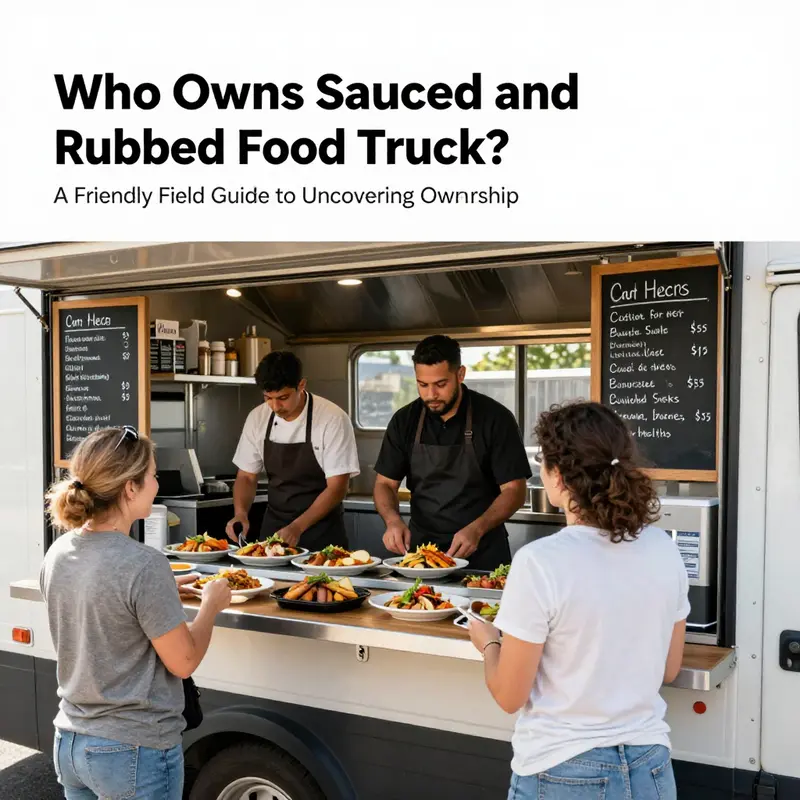
Ownership of a mobile food venture operates much like the vehicle that carries it: it quietly undergirds every decision, from where the truck parks to how flavors evolve. In the case of Sauced and Rubbed, a name that surfaces in listings and reviews but whose proprietor remains elusive in public records, the ownership question is more than a legal footnote. It is the lens through which the truck’s daily routines, its signature menu, and the way it speaks to customers come into focus. The research terrain makes clear that public sources rarely reveal a proprietor’s identity for mobile operators. Yet the owner’s identity matters deeply: it frames liability, access to capital, and strategic risk-taking; it also anchors the narrative customers feel when they line up for ribs, brisket, or pulled pork. A thorough look at Sauced and Rubbed thus unpacks not just who owns the truck, but how ownership structures—whether a sole proprietorship or a limited liability company—shape the brand’s delivery of comfort, consistency, and community in busy markets. The result is a story about ownership as an operating principle, not just a matter of who is at the register when a customer buys a meal strapped in the glow of barbecue aromas.
In mobile barbecue operations, the ownership model—often a simple sole proprietorship or a more formal LLC—provides a practical balance between nimbleness and protection. A sole proprietor can move quickly, innovate on recipes, and respond to feedback with a direct line to the customer. An LLC, by contrast, introduces a layer of governance that can help in obtaining financing, managing risk, and separating personal assets from business liabilities. Sauced and Rubbed appears to fit the adaptive, hands-on mode common to street-level barbecue: the same person or small group often manages day-to-day cooking, menu iteration, and customer interactions, while a formal entity may sit behind receipts, permits, and tax filings. This structural choice matters when a customer experience hinges on the sense of authenticity—the feeling that a flavor is being guided by someone who cares deeply about the sauce, the rub, and the story behind each cut of meat. The owner’s imprint becomes part of the menu narrative and the way the truck negotiates peak hours, events, and the shared economy of farmers’ markets and pop-up gatherings.
The menu, anchored in slow-smoked barbecue, is a benchmark of that ownership-driven authenticity. Ribs, brisket, and pulled pork anchor the offerings, but it is the iterative development of signature sauces and dry rubs that reveals the owner’s hand. The process typically involves testing, tasting, and listening—three activities that sit at the core of any small-batch kitchen that wants to stay relevant in crowded markets. When the owner is directly involved in tasting panels or behind the smoker, feedback loops translate quickly into tweaks that reinforce the brand’s identity. This is not merely about a unique flavor profile; it is about a recognizable, repeatable experience that customers can seek out again and again. The links between ownership and menu are intimate: the person or entity at the helm decides which flavor directions get funded, which collaborations are pursued at events, and how the menu adapts to local tastes without losing its essential character. The signature blends are, in effect, a palatable ledger of ownership values—dedication to craft, patience in smoke, and a readiness to evolve with the community.
Community engagement stands as a visible proxy for ownership-driven strategy. A mobile barbecue truck that leans into local events, farmers’ markets, and food festivals signals a deliberate choice about where influence and accountability reside. Staff interactions, story sharing about the cooking process, and even the offering of samples become extensions of the owner’s philosophy. In many cases, the person behind the operation uses these moments to translate a culinary ethic into a social one: respect for ingredients, transparency about techniques, and a generosity of taste that invites conversation. This approach creates trust, which in turn lends authenticity to every plate served. The customer experience, then, is as much about relationship-building as about briskets resting on a warming tray. When owners engage directly with guests, they validate the idea that the business is not a faceless service but a local, human enterprise with a stake in the community’s culinary conversation.
A notable facet of operational agility lies in the truck’s fuel system, a practical detail with outsized implications for performance. Sauced and Rubbed’s capability to operate on gas, charcoal, or wood reflects a strategic adaptability that ownership decisions enable. This flexibility supports consistent quality across venues and environments, from a sunlit farmers’ market to a packed lunch session in an urban corridor. The ability to adjust fuel sources helps control temperature, smoke levels, and flavor outcomes, which in turn reinforces the owner’s commitment to a steady, recognizable product. It’s a quiet but powerful example of how ownership manifests in everyday practice: the choice of a flexible infrastructure translates into reliability for customers and resilience for the business during peak periods. When kitchens on wheels must respond to weather, space limitations, or vendor competition, this operational elasticity becomes part of the brand’s promise.
The regulatory and records landscape further illuminates how ownership is disclosed and verified in practice. Public visibility of an owner’s name often appears on licenses, permits, and health compliance documents, even as many gatherings and reviews remain anonymous. For Sauced and Rubbed, the absence of a readily identifiable proprietor in public sources does not mean a vacuum of accountability; rather, it underscores a layered approach to governance in mobile food operations. Local health departments, city licensing offices, and state registries typically hold the most reliable signals about who operates the vehicle and where responsibility rests for safety, labeling, and service conditions. The ownership model can influence which filings appear, how financial interests are described, and who is listed as the operator on a permit. In this respect, ownership verification requires a careful cross-check of entity filings, DBA registrations, and the operator names on regulatory documents. The process is not merely bureaucratic; it informs broader questions of liability and governance that matter to event organizers, landlords, and suppliers who rely on clear lines of accountability.
Within this framework, the research suggests a practical, non-speculative path to clarifying ownership. Start with a targeted DBA and entity search in the jurisdictions where the truck operates, then examine any LLC or corporate filings for owners or managers. Licensing records—especially mobile food vendor permits and catering licenses—often reveal the operator’s name listed on permits, commissary registrations, and fire marshal documents. Trademark searches can also surface ownership through branding claims, while public communications and professional profiles may identify founders or managing partners. When permissible, direct inquiries through official channels can yield legitimate ownership information. The challenge lies in correlating data across multiple sources to confirm consistency and identify affiliated entities that may control operations behind a familiar brand. This approach aligns with the broader imperative of transparency, which supports consumer trust, regulatory compliance, and the ability to coordinate with suppliers and venues with confidence.
From a narrative standpoint, ownership is thus not only a legal credential but a living thread that ties the operation’s structure to its daily rituals. The person or entity behind Sauced and Rubbed is the brave center of the wheel, shaping how menus are conceived, how cooks talk about meat and smoke, and how customers are invited into a shared table of flavors. The owner’s identity, once verified, lends legitimacy to the entire enterprise and reframes every interaction—from a brisk lunchtime lineup to a weekend festival demonstration—as part of a coherent, accountable, and resilient business model. In short, ownership is the invisible engine that powers the outward-facing experience: the aroma of slow-smoked meat, the stories told at the counter, and the trust customers place in a meal that feels handcrafted and local even when it travels across a city on a trailer.
For those seeking a deeper technical primer on the standards and practical applications of mobile barbecue vending, the referenced guide offers detailed guidance on equipment, fuel choices, and compliance considerations that inform how an owner plans and executes a mobile operation: https://www.foodtrucks.com/technical-guide-mobile-bbq-trailer. On the regulatory front, broader discussions about navigating food truck regulations and the governance of mobile food businesses can be found in places that synthesize licensing, permits, and health-code expectations across jurisdictions. For a concise, actionable overview of those regulatory dimensions, consider exploring https://loschifladostruck.com/navigating-food-truck-industry-regulations/. This anchored approach helps connect the ownership puzzle to the practical world of day-to-day operations, where the owner’s decisions shape the menu, the service style, and the reliability that keep customers returning to the window.
In the end, the chapter on Sauced and Rubbed’s ownership is less about pinning a name to a file and more about understanding how ownership informs the very texture of the business. It is about how a solvent legal form or a lean sole proprietorship can support a hands-on cooking philosophy, how a flexible fuel system can translate into consistent flavor, and how a community-centric operating mode creates a sense of belonging around a shared meal. The ownership question, once resolved, becomes a lens through which to read the rest of the story: the menu’s evolution, the cadence of events, and the trust customers place in a barbecue experience that feels both intimate and widely accessible. The chapter thus binds structure to flavor, governance to generosity, and regulation to reputation, reminding readers that in the mobile food universe, who owns the truck is inseparable from what diners taste from the window and what they remember after the last bite.
Chapter 5: Ownership on Wheels — Bridging Data Gaps and Mapping the True Owner of Sauced and Rubbed Food Truck
The road carries more than meals; it carries claims, responsibility, and trust. When a mobile kitchen rolls into a market or an event, the name on the side of the truck is a cue for quality, reliability, and accountability. Yet, in the case of Sauced and Rubbed Fine Food and Caterers, the publicly accessible trail does not reveal who sits at the top of the ownership chart. The current public footprint—brand name, service options like delivery and pickup, and customer feedback—reads like a map of perception rather than a passport to ownership. This chapter threads through that map, not to sensationalize opacity but to illuminate what can be verified and what remains unsettled. The aim is to present a disciplined, transparent framework for understanding ownership in mobile food enterprises when direct owner data is not readily disclosed, and to sketch the practical steps that move a researcher, regulator, or partner from curiosity to clarity without crossing into conjecture.
From the outset, the data landscape is clear in scope but narrow in depth. The sources identify the business as Sauced and Rubbed Fine Food and Caterers, note service modalities such as delivery and self-pickup in certain markets, and accumulate consumer reviews focused on menu quality, speed, and pricing. What they do not do is disclose a proprietor’s name, a corporate structure, or a governing board. In other words, the surface corroborates the brand’s existence and activity but not its ownership. This is not unique to this truck. Many mobile food operators operate behind a veil of privacy, where the legal entity may be separated from the physical operator, and where branding can outpace the formal disclosure that accompanies a fixed-location restaurant.
To move from impression to identity requires a deliberate, multichannel approach. The first lane is the formal business registry terrain. State and local registries, sometimes called Secretary of State databases, routinely capture filings for DBAs, LLCs, and corporations. A DBA entry may reveal a trade name tied to a legal entity and list registered agents, addresses, and dates of formation. If Sauced and Rubbed operates as a DBA alongside a legal entity, the owner or managers might surface in those records even when public-facing materials spare the name. In parallel, corporate filings— articles of organization or incorporation, annual reports, or organizational statements—often disclose ownership percentages or at least the identities of managers or members. The challenge is that a mobile operation may file in multiple jurisdictions, or may hold licenses under a parent company, or a management entity, obscuring the direct owner.
The second lane runs through licensing and permits. Local health departments issue mobile food vendor permits and catering licenses that identify the operator of record. Fire and safety authorities, too, maintain registrations for vehicles, commissaries, and operations tied to a license. If Sauced and Rubbed presents a single truck or a fleet under a single chassis, the operator name on these permits often maps to the business entity behind the operation. Yet licenses may also bear the name of a managing partner or of a parent company, especially if the operator has engaged a service company to handle compliance, payroll, or logistics. Here lies another layer of nuance: a permissible owner might use a management company to streamline operations, which can mask the principal owner in public license records while still controlling day-to-day decisions.
A third axis traverses the financial and branding registers. Employer Identification Numbers, when accessible, tie filings to a legal business entity, not an individual, and can illuminate who sits at the helm if a sole proprietor or single-member LLC is involved. Trademark registrations and branding filings can also offer breadcrumbs. The owner of a mark is often the owner of the business that uses that mark, or at least the entity responsible for brand stewardship. Trademarks may reveal the identity of the entity that controls the brand, which is a meaningful piece of the ownership puzzle, even when the person behind the brand remains behind a veil. Public communications—official websites, press releases, and professional profiles—can supplement the paper trail. Founders, managing partners, or key operators sometimes appear in bios, team pages, or announcements that accompany events or expansions.
All of this is not a call for sensational sleuthing, but a reminder that ownership is typically a construct built from multiple sources. No single document usually suffices. The most reliable approach aligns with the idea of triangulation: verify a name across at least two independent, primary sources and then cross-check with licensing, payroll, and branding records. The goal is not to confirm a rumor but to corroborate through verifiable records. In practice, this means a researcher would start with a targeted DBA/entity search, extend to corporate filings, then cross-check with health and licensing records. If a license lists a particular operator, that operator should be the focal point for further inquiries. If the business operates under a parent company, the next step is to map the chain of ownership through ownership statements, annual reports, and related agreements that may reveal controlling interests. When data diverges—one source says one name, another source says a different name—the responsible move is to document the discrepancy, note its origins, and pursue the missing records rather than leap to conclusions.
The question of ownership structures adds another layer of complexity with meaningful implications. A sole proprietorship under a DBA might prioritize simplicity and direct accountability, but it can also leave a personal liability exposure that is risky for health and safety infractions. An LLC typically signals a shield against personal liability and a more formal governance framework, with members or managers listed and a clear hierarchy. A corporation introduces shareholders and a board, potentially complicating public disclosure further but offering a robust mechanism for capital and governance. Partnerships or joint ventures involve shared control, which must be reflected in contractual agreements or filings. Trust or family-owned arrangements, though less common in the public-facing arcs of mobile food brands, may appear in estate planning or succession documents that surface in more thorough due diligence. Each structure carries distinct implications for licensing, taxes, reporting, and the allocation of liability in incidents that might arise in the field.
In the real world, ownership clarity matters beyond mere curiosity. For suppliers and landlords, knowing the true owner affects the reliability of payment, the enforceability of contracts, and the capacity to address regulatory or safety concerns. For event organizers and markets, transparent ownership supports due diligence, risk assessment, and accountability in the face of public health standards. For consumers, it translates into trust: who is responsible for the food, for safety compliance, and for the business decisions that shape menus and pricing. These are not abstract concerns when a mobile operation moves from one jurisdiction to another, or when a health department requests documentation during a routine inspection. The ethical underpinning is straightforward: transparent ownership reduces ambiguity, fosters trust, and helps ensure that governance aligns with the standards customers expect when they choose to eat on the go.
Of course, there are constraints that shape what can be publicly disclosed. Privacy considerations, corporate governance practices, and data protection laws can limit the visibility of ownership details. Some operators prefer to reveal only essential contact information to the public, reserving ownership disclosures for authorized inquiries or regulated audits. In such environments, the researcher’s task is to document what is publicly verifiable while clearly distinguishing it from private data. This distinction matters because it preserves both the rights of individuals and the legitimate interests of the business in protecting sensitive information while still supporting accountability. The resulting narrative is not a conspiracy theory but a careful ledger of verifiable signals—the name on a permit, the entity that files taxes, the address associated with a registration, and the public statements that tie a brand to a leadership team.
A useful way to connect the research to the broader regulatory landscape is to view ownership verification as part of navigating the rules that govern mobile food operations. For a concise overview of the regulatory terrain and how it shapes due diligence, see the resource on navigating food truck industry regulations. This material complements the record-based approach by providing context for why certain data points appear or disappear across jurisdictions. It also helps explain the practical limits researchers face when regulatory regimes differ from city to city, and when unincorporated operators use management entities to handle everyday compliance. Navigating Food Truck Industry Regulations
In light of these considerations, the current state of publicly available information about Sauced and Rubbed points to a clear data gap rather than an intentional opacity. The recommended path is not speculation but a disciplined, multi-source inquiry that triangulates entity names, licenses, and brand registrations to paint a credible ownership profile. The risk of misidentification can be mitigated by documenting the provenance of every data point, noting dates, sources, and any discrepancies among records. This approach preserves the integrity of the inquiry while acknowledging the legitimate privacy boundaries that can shape what is publicly visible for small, privately held businesses. The outcome—whether it yields a single, verifiable owner or reveals a controlled structure that defies a simple label—will have practical consequences for compliance, partnerships, and the ongoing stewardship of the Sauced and Rubbed brand on the road.
For scholars, practitioners, and regulators alike, the lesson extends beyond one name. Mobile food operations operate at the intersection of public health, business law, and community trust. Ownership transparency is not merely a corporate nicety; it is a foundation for accountability, financing opportunities, and sustainable growth. The absence of a clear answer in public records should not be accepted as a final verdict but as a prompt to pursue a careful, documented verification process. As markets evolve and ownership models grow more complex, a repeatable, auditable method becomes essential. It ensures that future inquiries—whether undertaken by journalists, researchers, event organizers, or consumer protection entities—can proceed with confidence, anchored in verifiable documents rather than rumors.
External resources for further guidance on ownership and entity identification can provide additional clarity beyond public registers. For an accessible overview of obtaining a federal taxpayer identifier and linking it to the proper legal entity, see the IRS guide on applying for an Employer Identification Number (EIN). This resource helps illuminate how the legal structure underpins ownership claims and is a stepping stone for more comprehensive cross-checks across state, local, and industry records.
Final thoughts
Understanding who owns Sauced and Rubbed is a multi-source puzzle that benefits event planners, HR teams, community groups, and fans. Public records, licensing, and corporate filings provide the backbone of ownership verification, but privacy norms and jurisdictional nuances require a thoughtful, multi-step approach. The five chapters above offer a practical framework: start with disclosures in public registries, map legal entities and registrations, assess economic presence and partnerships, review operational branding and customer experience, and finally address data gaps with a documented, multi-jurisdictional search plan. For stakeholders, this isn’t just due diligence; it’s a pathway to trust, accountability, and better collaboration with a beloved food truck that shows up at your events and neighborhoods.