
Sarasota is alive with food trucks—from sunny park afternoons to bustling corporate events and vibrant farmers’ markets. But the idea that a truck can simply set up shop anywhere is a myth. Local regulations and zoning govern where and when a mobile kitchen can serve, and those rules are as dynamic as Sarasota’s events calendar. For event planners organizing pop-ups, HR teams coordinating campus celebrations, community groups rallying for neighborhood-friendly sustenance, and passionate food enthusiasts chasing new flavors, knowing where you can legally operate—and who to coordinate with—can save time, avoid headaches, and help you serve happily and safely. This guide unpacks the core question: can a food truck sell food anywhere in Sarasota? We’ll walk through the broad landscape of allowed locations, drill into location-specific restrictions and proximity rules to brick-and-mortar spots, outline the permitting landscape and responsible agencies, and close with practical implications for operators, events, and neighborhoods. Each chapter builds toward a practical understanding you can deploy in planning meetings, vendor briefings, and community outreach. By the end, you’ll have a clear view of where mobile kitchens can legally appear, what approvals are typically required, and how to create event-ready experiences that delight guests while respecting local rules.
Navigating Sarasota’s Food Truck Landscape: Permits, Zones, and Practical Pathways
In Sarasota, turning the dream of a mobile kitchen into a thriving business starts with reading the local map of rules as closely as you study a menu. Mobility is encouraged, but the city balances speed and flavor with traffic safety, neighborhood character, and fair access for brick-and-mortar shops. This chapter lays out the practical path: where you may operate, which permits you must obtain, how proximity and timing shape your routes, and how to navigate the agencies that issue approvals.
Designated venues and zones form the backbone of the permitted landscape. You may find opportunities in designated commercial zones, parks and plazas, farmers markets, or city events and festivals. Each site type has its own coordination requirements and calendar, so plan well in advance. Proximity rules are a common thread in many ordinances and usually set a minimum distance from other food establishments to prevent crowding around a single block. The typical distance ranges from about 200 to 500 feet, though exact figures vary by district and site. The key point is that location is a documented condition, not a free choice you can exercise without backing it up with a permit history and a site plan.
Timing matters as well. Some zones restrict hours, especially in residential neighborhoods or near schools and hospitals. Special event permits are often necessary for temporary setups, parades, and street fairs, and even in commercial pockets trucks may operate only during defined windows. This framework is designed to keep streets safe and predictable for all users.
Permitting in Sarasota is multi-layered. At the city level you will typically need a City of Sarasota business license. Health compliance comes from the Florida Department of Health in the form of a Food Service Establishment Permit. Depending on where you operate, a Sarasota County permit may also apply, reflecting the shared jurisdiction across city and county lines. Stay current by checking both city and county portals and by planning renewals in advance.
Insurance and business registration provide the bedrock of professional operations. Most operators establish a business entity with the Florida Division of Corporations and carry general liability insurance. Along with permits, you should implement robust food handling practices, waste management plans, and routine vehicle sanitation. The discipline of daily record keeping, temperature control, handwashing facilities, and clean, visible waste streams supports trust with markets, venues, and customers.
A practical approach is to build a portfolio of reliable sites and partners. Secure base locations such as markets and parks, and then layer in events that fit your cuisine and capacity. Early planning reduces delays and demonstrates reliability to venues and organizers.
To stay compliant over time, start with the official sources that spell out permitted locations, hours, and required documents. Use the city business services portal as a central hub for the city permit, health permit, and any event-specific approvals. Prepare a concise filing package that shows you understand site rules, waste management, and neighborhood impacts. Keeping thorough records and maintaining open lines of communication with park managers or market organizers will help you scale across Sarasota’s diverse venues.
For ongoing guidance, consult general resources on food trucks and how to interpret proximity, zoning, and permit requirements. Local regulations can shift with planning priorities and event calendars, so make a habit of checking official portals for the latest updates. The result is a resilient model that respects the city’s boundaries while delivering the vibrant, community-centered experience that makes food trucks compelling.
External resource: City of Sarasota Business Services provides a primary reference point for up-to-date requirements and application processes. https://www.cityofsarasota.com/business-services
On the Map of Appetite: Navigating Sarasota’s Rules for Where a Food Truck Can Sell
Sarasota’s appetite for mobile cuisine is real, but so too is the map of rules that keeps every truck in its lane. A food truck can bring a hot, fresh meal to a town that values outdoor dining and local flavor, yet it cannot simply park anywhere and call it a kitchen. The city and the state maintain a framework that aims to balance opportunity with accountability, safety, and neighborhood character. For operators, the question isn’t only about what tastes good or what sells best; it’s about understanding the pathways that allow a truck to legally serve customers in the right places, at the right times, and without overstepping the lines that separate a park pavilion from a storefront down the block. The practical answer to, can a food truck sell food anywhere in Sarasota, is layered and nuanced. It begins with permits and licensing, moves through designated zones, and culminates in proximity rules that shield brick-and-mortar restaurants while preserving equitable access to busy commercial corridors and public spaces.
To operate in Sarasota, a food truck must navigate two primary regulatory channels. The City of Sarasota’s Department of Code Enforcement issues the local permits that authorize street vending in specific locations, hours, and circumstances. The Florida Department of Agriculture and Consumer Services (FDACS) adds another layer, ensuring that mobile food operations meet health and safety standards appropriate to the foods being prepared and served. The interplay between these agencies creates a framework where a truck can legally roll into a public park, join a farmers market, staff a festival, or set up in a designated parking zone, provided all prerequisites are met. This division of labor reflects a broader pattern in many Florida municipalities: local land-use rules handle where and when a truck can operate, while state health and safety requirements govern how food is prepared and kept safe for customers.
Within Sarasota’s city limits, the allowed venues tend to focus on collective, controlled environments rather than open-ended street vending. Public parks and plazas can host mobile food operations, but often only after the operator secures the appropriate park-permitting approval and adheres to park-specific rules. Farmers markets are a natural fit for trucks that can complement the existing lineup with rotating menus, consistent scheduling, and the shared energy of a market day. Events and festivals provide opportunities to reach larger crowds, but they almost always require an event permit, a coordination process with organizers, and sometimes a separate health inspection or vendor checklist. For business districts, proximity to office clusters, retail corridors, or mixed-use zones can be permissible, yet it typically hinges on approval from the city and, in some cases, cooperation with property owners or district managers. Finally, designated food truck parking zones exist to create predictable footprints for customers and operators alike, minimizing disruptions and conflicts with existing brick-and-mortar neighbors.
Even when a location seems open, Sarasota imposes proximity rules designed to prevent duplicate competition in tight footprints. The Municipal Code, notably Chapter 3-17, governs mobile food vendors and sets clear expectations about how close a truck can operate to a fixed restaurant’s entrance or primary point of operation. A typical standard is that a food truck may not work within 200 feet of an active restaurant entrance, a rule that preserves the market space for established eateries while still allowing new and diverse offerings to reach customers in multi-use zones. Exceptions do arise, depending on zoning classifications and the precise conditions of a permit. A change in the classification of a district, an adjustment to a parking lot’s hours, or a variance granted through the city can tilt the balance in either direction, opening or narrowing the field of operate-now options. In practice, this means a truck operator must not only check the current zoning map but also confirm whether the area has a permit conditionality attached to it and whether a special event permit might override usual restrictions for a given day or weekend.
For operators new to Sarasota or those expanding into the city from neighboring jurisdictions, the path begins with a careful orientation to the local permitting ecosystem. The first step typically involves verifying which district or venue is under consideration, then confirming whether an operating permit from the City of Sarasota is required, and whether FDACS considerations apply based on the menu and preparation methods. It also means recognizing that some areas and times are off-limits or require a temporary permit tied to a specific event. Because regulations are subject to revision and interpretation, it’s prudent to confirm details with the City’s permitting office and, when appropriate, with the Sarasota County Business Development resources. The landscape can change with policy updates, new district plans, or adjustments to the seasonal permit calendar, so ongoing diligence is essential for a truck aiming to stay compliant year-round.
From a planning perspective, a successful Sarasota strategy blends logistics, stakeholder engagement, and a pragmatic sense of where customers are likely to congregate. For many operators, markets and festivals provide a reliable customer base and a built-in audience, but they require a schedule and a relationship with event organizers, vendors, and city staff. In other settings, such as designated parking zones or business districts, success depends on securing permits that align with the zone’s character and traffic patterns. Parks, plazas, and public spaces often demand a formal agreement, proof of insurance, and adherence to health and safety standards. On top of the permit packet, operators must maintain clean operations, proper waste management, and a willingness to adapt to the rules about noise, hours, signage, and even the type of cuisine offered in a given block or precinct. The net effect is a dynamic combination of timing, location, and compliance, rather than a simple yes-or-no right to park anywhere and sell anything.
In practice, the most effective approach to Sarasota’s location rules is to view the city as a mosaic. Each piece—the park, the plaza, the farmers market, the district, the event—carries its own permissions, its own time windows, and its own day-of-operations checklist. A hypothetical operator would map out a weekly or monthly route that synchronizes with seasonal markets, recurring festivals, and ongoing business-district programs. They would also prepare to demonstrate how their truck will harmonize with neighboring brick-and-mortar venues, respecting the 200-foot rule when applicable, while seeking creative avenues to reach audiences in zones where policy allows. The city’s insistence on fair access suggests there are times when a truck should pivot to a nearby park or market rather than attempt to press into a tightly held corridor. That flexibility—paired with a strict attention to permit status and proximity boundaries—forms the backbone of legitimate, profitable mobile food service in Sarasota.
For readers seeking a compact practical lens, a useful way to frame this landscape is by consulting a concise overview of the regulatory framework and its real-world implications. A deeper dive into how these rules translate on the street can be found in the broader exploration of navigating food truck industry regulations, which offers guidance on licenses, inspections, and the cadence of permit renewals. Such resources help bridge the gap between statute and street-level execution, turning regulatory awareness into confident deployment of a mobile kitchen. This alignment of compliance and opportunity is where operators who respect the rules discover a steady path to sustainable growth.
The core takeaway for anyone wondering can a food truck sell food anywhere in Sarasota is that location freedom exists, but it is bounded by a system designed to protect public spaces, support local commerce, and maintain safe, reliable food service for residents and visitors alike. By recognizing the types of permitted venues, honoring proximity constraints to brick-and-mortar locations, and pursuing the correct permits from the City and state authorities, a truck can chart a route through Sarasota that is both compliant and commercially viable. The most resilient operators remain nimble, building relationships with organizers and property owners, and keeping a close eye on regulatory updates that might shift where and when a truck can operate. In the end, success in Sarasota comes not from a limitless map, but from an informed map—one that shows where to go, what is permitted, and how to move with the rhythm of the city rather than against it.
For a practical sense of how those rules play out in day-to-day decisions, see navigating the food truck industry regulations. It links to ongoing guidance about permits, inspections, and compliance considerations that help keep operations smooth as the city’s calendar fills with markets, festivals, and daily opportunities. As you plan or expand a Sarasota footprint, keeping this regulatory compass at hand will make the difference between a stall that sits idle and a truck that becomes a familiar, welcome part of the local dining scene. And remember, the official City of Sarasota site and the Municipal Code’s Chapter 3-17 remain your steady references for the latest requirements and any updates to proximity rules or venue approvals. External reference: https://www.sarasotacounty.gov/government/city-of-sarasota/municipal-code/chapter-3-17-mobile-food-vendors
Wheels Within the Lines: Navigating Permits, Zoning, and Public Health for Sarasota’s Food Trucks
When a food truck rolls into Sarasota, the scene can feel electric—the sizzle of a hot grill, the inviting aroma of spices, and the quick rhythm of a busy street. Yet beneath that energy lies a framework of rules that keeps things orderly, safe, and fair for everyone who uses public space. The question, Can a food truck sell food anywhere in Sarasota? does not have a simple yes or no. The answer is that you can move and serve in many spots, but only if you align with a layered system of local zoning rules, business licensing, and state health standards. Understanding how these layers fit together helps vendors plan strategically rather than drift between permits and protests. It also helps communities enjoy a vibrant, diverse street-food culture without sacrificing safety or neighborhood character. In Sarasota, as in many bustling Florida cities, mobility and regulation must grow together, each enabling the other rather than competing for space and credibility.
At the heart of Sarasota’s regulatory framework are two distinct yet deeply connected authorities: the City of Sarasota’s Code Enforcement division and the Florida Department of Agriculture and Consumer Services (FDACS). Each has its own scope, and together they ensure that a truck not only finds a place to operate but does so under conditions that protect public health, neighborhood quality, and fair competition among vendors. The city’s jurisdiction covers local zoning, business licensing, and site-specific permissions. The state agency oversees food safety, sanitation, and the correctness of the processes that accompany any food service operation that moves from one place to another. This dual structure matters because a truck cannot simply decide to park anywhere, serve any cuisine, or operate at any hour without aligning with both layers. The practical outcome is that operation is possible in Sarasota, but within clearly drawn boundaries that are designed to balance opportunity with responsibility.
From the local side, one of the first realities a prospective operator encounters is the need for a valid City of Sarasota Business Tax Receipt and a Mobile Food Vendor Permit. The idea is straightforward: a vehicle-based food business is still a business, and like any business in the city, it must be registered, insured, and subject to inspections. The documentation and process are not just bureaucratic hoop-jumping; they are a structured way to ensure that trucks meet street-level standards—from vehicle safety and insurance to the adequacy of waste management and the suitability of operating sites. Many operators have learned that the most efficient path comes from presenting clear, well-thought-out operation plans. These plans typically detail routes, hours of operation, menus, the way customers will access the service, and the practical steps for maintaining cleanliness on and around the vehicle. In Sarasota, the city’s Code Enforcement division is also the body that checks for proper signage, waste disposal arrangements, and compliance with designated operate zones, all of which can vary by neighborhood and by the type of location.
A recurring theme in Sarasota’s permitting landscape is location specificity. Not every curb is a curb in Sarasota, and not every lot is a suitable stage for a mobile kitchen. Proximity matters. In many cases, operating near a brick-and-mortar restaurant is not permitted within a certain radius, often described as a buffer zone—commonly around 500 feet, though exact distances can vary by district or city policy. The practical effect is that vendors must choose spots that permit mobile service without stepping on someone else’s established customer flow. Residential zones, likewise, are subject to stricter scrutiny. The city’s zoning framework protects residential peace and parking patterns, so a truck may be allowed to park in a commercial district or a designated public area while avoiding quiet residential blocks during certain hours.
To truly operate, a truck must also align with the state-level guardrails that FDACS maintains for food safety and sanitation. The Florida Food Service Establishment License is not optional; it is a core credential that verifies the operation meets health standards. Before the license is issued, a health inspection is conducted to confirm that the equipment, food handling practices, temperature control, and sanitation procedures meet state requirements. This inspection is not a one-off hurdle. It forms part of a continuous standard of practice that governs how food is prepared, stored, and served, no matter where the truck sets up for business. The state’s role complements the city’s by ensuring that a truck’s mobility does not erode public health safeguards simply because a different zip code is involved on a given day.
The practical workflow for a prospective Sarasota food truck operator usually unfolds in a sequence that blends city and state requirements with site access and operational readiness. First, a business registration with the city is filed, and a Mobile Food Vendor Permit is pursued. The application often requires detailed operational plans, including the vehicle’s layout, waste management strategies, grease handling, and proof of insurance. In parallel, the operator must secure the FDACS license, which involves a health inspection and documentation of safe food-handling procedures. Aligning these steps is not merely about ticking boxes; it creates a consistent standard across the city and the state, helping to prevent last-minute surprises when a site-specific permit is requested or when a health inspection is scheduled.
The actual path to a permitted operating site is usually navigated through a mix of designated spaces and event-based opportunities. Public parks and plazas can be options, but they require permits that specify duration, footprint, and adherence to park rules. Farmers’ markets are classic arenas for mobile vendors, offering built-in foot traffic and shared infrastructure, though participation still hinges on compliance with market rules and health standards. Events and festivals are particularly attractive for exposure but demand permits that cover temporary operations, waste management, and vendor coordination. In business districts, a truck can operate with city approval, often tied to specific times and permissible locations. There are also designated food truck parking zones, which are pre-approved spaces that reduce some of the friction of site selection while still requiring adherence to the broader permitting framework. In short, Sarasota rewards mobility but within a managed ecosystem of approved locations and times.
The requirements extend beyond location permits to the operational discipline that keeps a truck compliant over time. Vehicle inspections are part of the city requirements, ensuring the mobile unit is safe and roadworthy. Insurance is not optional; it protects the operator, customers, and the city in the unlikely event of an incident. The waste streams—grease, trash, and wastewater—must be handled according to city and state guidelines, with provisions for cleanup when the truck leaves a site and for preventing nuisance conditions that could affect neighbors or park users. The registration and permit process also asks for a clear plan for hours of operation. The city’s aim is to ensure that the truck’s schedule meshes with the rhythm of the neighborhood and the availability of the chosen site, rather than creating conflicts with nearby businesses or residents.
All of this creates a dynamic where success relies on proactive planning and ongoing compliance. A truck operator who consults the right resources—early, often, and with specificity—will avoid last-minute permit denials and will establish a predictable pattern of operation. This is where broader regulatory literacy becomes essential. For readers who want a consolidated map of the regulatory terrain, a good starting point is to review the more general guidance on navigating the industry regulations. The article and resources at navigating-food-truck-industry-regulations can provide a helpful frame for understanding how city, county, and state rules interlock, even though Sarasota has its own local flavor of policy details.
The balance of opportunity and oversight is also shaped by the day-to-day realities of running a mobile kitchen. Vendors must be adaptable, recognizing that a desired location might be available only at certain times or for limited periods. Special event permits, for example, open temporary windows to operate in new places, but they come with requirements that the operator must meet for the event’s duration. This can include additional site plans, shared-power considerations, and sanitation arrangements compatible with the event’s footprint. Such permits can be a powerful engine for growth—letting a truck reach new audiences in a structured way—so long as the operator keeps the regulatory plate spinning: city approvals, state health compliance, site-specific terms, and a plan for ongoing site management during the event. The net effect is a city that supports a diverse and accessible street-food scene, while ensuring that every site is used responsibly and safely.
As Sarasota’s food truck ecosystem evolves, operators benefit from cultivating a disciplined approach to permits and compliance. A well-prepared application packet, a reliable plan for site selection, and a clear schedule that respects neighbors and other businesses can turn what might feel like a maze into a roadmap. The city and state operations teams appreciate vendors who do the upfront work—presenting a thoughtful layout, showing proof of insurance, and demonstrating plan-worthy practices for health and safety. In return, they open doors to locations that can expand a truck’s customer reach, such as parks with established programming, farmers’ markets with consistent attendance, and festival environments that celebrate culinary diversity. The synergy between mobility and regulation, when managed well, creates a vibrant public-space economy without compromising safety or order.
For anyone considering Sarasota as a future stage for a food truck, the practical takeaway is to approach the process with curiosity and preparation. Start with a precise understanding of where you can legally operate, not just where you want to operate. Map out a portfolio of potential sites, noting proximity rules, hours, and any site-specific restrictions. Build your permit packets to demonstrate how you will meet both city and state expectations for safety, waste, and customer service. Seek out opportunities in designated spaces and at events that align with your concept and your operational capabilities. And remember that community spaces thrive when vendors contribute to the local economy without creating friction or public health concerns.
For those who want to explore the broader regulatory landscape at their own pace, and to keep a pulse on how rules may shift with new policies or city priorities, the internal link above offers a narrative that complements Sarasota’s specifics while reinforcing the value of regulatory literacy in a mobile-food business. The Sarasota story is not just about where a truck can park today; it’s about how the city’s rules and the state’s health standards shape a resilient, accessible, and safe street-food scene that benefits operators and residents alike. The key is to treat permits as an ongoing practice rather than a one-time hurdle, and to view compliance as a foundation for creative and sustainable growth on wheels. For the official guidelines and up-to-date information on permitted locations, application processes, and compliance, consult the City of Sarasota’s resources directly. The official pathway is practical, transparent, and designed to harmonize mobility with public welfare, allowing Sarasota’s diverse food offerings to flourish in a responsible environment.
External resource: https://www.sarasotacounty.gov/business/permits/mobility
Riding the Line: Can a Food Truck Sell Anywhere in Sarasota? Practical Realities for Operators, Events, and Neighborhoods
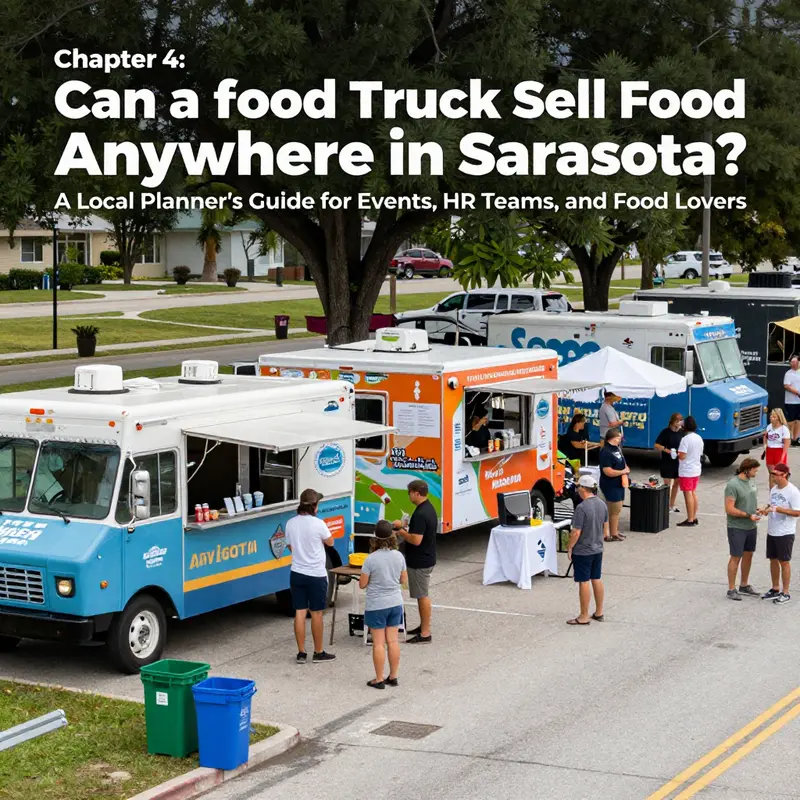
The lure of a food truck—the immediacy of a hot meal, the buzz of a roaming kitchen, the chance to meet customers where they live and work—collides quickly with the practicalities of a regulated urban environment. In Sarasota, a city famous for beaches, vibrant markets, and a steady stream of visitors, the idea that a truck could simply pull up anywhere and sell food is appealing but incomplete. The full picture is shaped by a careful balance of opportunity and constraint. Operators who want to thrive must understand the framework that governs where, when, and how food can be sold on wheels. This is not merely about licensing; it is about aligning business goals with the rhythms of neighborhoods, the footprint of events, and the expectations of the public. The result is a landscape where smart planning, not opportunistic placement, determines success.
At the core of Sarasota’s approach are clear oversight and predictable processes provided by the City of Sarasota’s Department of Code Enforcement, alongside the requirements of the Florida Department of Agriculture and Consumer Services. A food truck cannot become a moving restaurant without permits, inspections, and assurances that the operation meets health, safety, and insurance standards. These layers matter because they protect public health and neighborhood livability, while still enabling entrepreneurs to reach customers beyond a fixed storefront. The practical upshot is that a truck must be tethered to a formal authorization stream before it can ply its trade in most public or quasi-public spaces. The permitting ecosystem is not optional; it is the gatekeeper that separates a casual curbside setup from a compliant, sessionable business.
In Sarasota, the spectrum of permissible venues is often framed around designated sites rather than open-field freedom. Public parks and plazas become viable through permits, and farmers markets and organized events offer predictable volumes and a built-in customer base. In addition, business districts can host food trucks, provided they receive the requisite approvals. There are also designated food truck parking zones in certain locations. This zoning-centric model aims to channel activity into locations where foot traffic is high but where authorities can manage capacity, traffic flow, sanitation, and noise. The mark of a successful operator is recognizing those zones and aligning a schedule with the openings available in each zone. It is not enough to want to serve a crowd; the truck must be situated where the crowd is legally and logistically permitted to gather.
The regulatory string is not uniform across every block. Proximity rules frequently apply, limiting operations near brick-and-mortar restaurants or sensitive residential zones. Some residential areas are off-limits to mobile vendors altogether, or require special permissions that acknowledge the impact on neighbors. There are also provisions tied to health inspections and safety standards that can influence which menus travel well from day to day and season to season. The goal is to minimize disruptive clustering, traffic congestion, and waste while still offering diverse, accessible dining options.
A themed tension runs through the Sarasota picture: the desire for vibrant street food culture against the need for orderly, predictable urban spaces. This tension manifests in the requirement for event permits for temporary setups. When a festival, concert, or community gathering is on the calendar, vendors often benefit from pre-approved vendor lists and a framework that governs health checks, insurance coverage, and the specifics of how a site is laid out. From the operator’s view, event-based work is a consistent revenue channel, but it demands a rigorous compliance mindset. Health and safety become ongoing priorities, with inspections, power access, waste disposal, and nighttime operations under careful watch. The cost and effort of securing these permits must be weighed against the expected demand and the length of the event.
Seasonality further shapes the math of where a truck sells. Sarasota’s popularity in the winter months—when tourism peaks—creates prime opportunities in certain popular areas. Yet the same locations can retreat during hurricane season or off-peak periods, when demand drops and regulatory mood shifts. Operators who rely on a fixed, year-round schedule may find themselves challenged by these ebbs and flows. Conversely, a rotating calendar of events can smooth revenue but requires a knack for portfolio management: knowing which events align with the truck’s cuisine, managing inventory, and maintaining continuity of brand presence across multiple venues. In practice, many operators blend fixed-location permits—where permitted—with a savvy cadence of festival appearances and farmers markets. The result is a portfolio that balances reliability with the excitement of new venues.
Density matters. In areas with high foot traffic—downtown Sarasota, certain waterfront districts, or popular shopping corridors—competition among trucks can be fierce. A crowded lineup may attract attention, but it also raises the bar for every vendor’s execution. A crowded space can dilute a brand if a truck cannot stand out through taste, speed, clarity of menu, or a compelling customer experience. This reality pushes operators to differentiate through product quality, efficient service, and a strong identity that travels with permits and a well-planned route. In practice, successful operators treat a permit not as a final finish line but as one milestone in a strategy that includes location scouting, neighborly communication, and ongoing relationship-building with event organizers and venue managers.
Some operators obsess over a single prime spot, hoping wishfully that one location will deliver a steady stream of customers. Others deploy a rotating schedule that keeps the brand fresh in different neighborhoods while spreading risk. The trade-off is simple: fixed spots provide consistency and easier logistics, but rotating placements offer exposure to new customer groups and can align with seasonality. A thoughtful operator will map potential zones, identify peak times for each, and cross-check with permit calendars. This disciplined approach turns regulation into a framework for opportunity rather than a hurdle.
Another practical thread is the relationship between the regulatory framework and neighborhood impact. Cities want to avoid turning residential streets into constant dining corridors. The effect is a cautious approach to nighttime operations, truck size, waste management, and noise levels. For operators, this means culture-building with the community matters as much as compliance. Clear communication about service hours, trash removal schedules, and neighborhood coordination can reduce friction and pave the way for easier renewal of permits. A well-regarded operator who demonstrates respect for neighboring residents often earns smoother approvals when a site is up for renewal or when new permit windows open.
The lifecycle of a permit, in Sarasota, is a continuous interaction between the operator, the local government, and the organizers of events and markets. It is not merely about obtaining a license once and forgetting it. Every venue, every event, and every season can bring a fresh set of conditions—new health inspections, updated insurance requirements, or revised safety protocols. Savvy operators keep a pulse on these changes by maintaining open lines of communication with the city’s permitting office and by aligning their internal processes to the cadence of approvals. In many cases, this means maintaining up-to-date documents, rehearsing setup protocols, and building relationships with event coordinators whose calendars fill quickly with opportunities to showcase a culinary craft.
For those exploring the spaces where a truck may operate, the best path is to start with a clear map of permitted venues and then layer on a practical plan. Identify which parks, markets, and districts allow mobile vendors, and learn the application steps for each. Build a portfolio of health and insurance documentation, certificates of completion for any required local food-safety training, and a choreography for setup, service, and teardown. Then, test the waters during smaller events to accumulate feedback, refine the menu for diverse audiences, and tighten the operational clock so a larger venue or festival becomes a scalable opportunity.
As a final note, operators should treat Sarasota’s regulatory landscape not as a maze to be hurried through but as a living system to navigate with care. The city’s rules are designed to protect public health and preserve neighborhood livability while still enabling a dynamic, mobile food culture. Understanding the rules helps a vendor avoid costly permit delays and reduce the risk of last-minute venue changes. It also supports a sustainable business model: predictable revenue streams, repeat customers, and a brand that travels with confidence between parks, markets, and events.
For a concise overview of official guidance, operators can consult the City of Sarasota’s resources and contact points for food truck permits and regulations. While the specifics evolve, the core principle remains constant: success hinges on aligning culinary craft with a transparent, well-managed regulatory path. For deeper legal and procedural context, see the official regulatory page that outlines the scope of permits, inspections, and eligibility criteria, and consider exploring the broader guidance published by local authorities. For readers seeking a practical primer on navigating these requirements, you can explore resources such as Navigating Food Truck Industry Regulations, which distills the regulatory landscape into actionable steps without losing sight of the community and business realities involved. You may also find value in reviewing the detailed insights and case studies that illuminate how operators successfully balance permit compliance with growth. For official guidance, refer to the City of Sarasota’s Food Truck Permits & Regulations page: https://www.sarasotacounty.gov/CodeEnforcement/Pages/Food-Truck-Permits.aspx.
Final thoughts
Navigating Sarasota’s food truck landscape means balancing opportunity with accountability. The city offers vibrant, flexible venues—parks, markets, and events—while maintaining boundaries that protect residents, brick-and-mortar businesses, and the public’s health and safety. By understanding where you can operate, honoring proximity rules, following the permitting steps with City Code Enforcement and the Florida Department of Agriculture and Consumer Services, and planning with neighborhoods and event hosts in mind, operators can design experiences that feel seamless and compliant. For planners and organizers, building clear vendor guidelines, pre-event permit checks, and open lines of communication with neighbors turns pop-ups into welcomed moments rather than regulatory friction. The Sarasota food-truck ecosystem thrives when operators know the playbook, and communities feel confident that each bite comes with a stamp of care and consideration. Ready to start mapping your next pop-up? With the right permits, partnerships, and planning, your next Sarasota event can serve up success—one compliant, crowd-pleasing truck at a time.