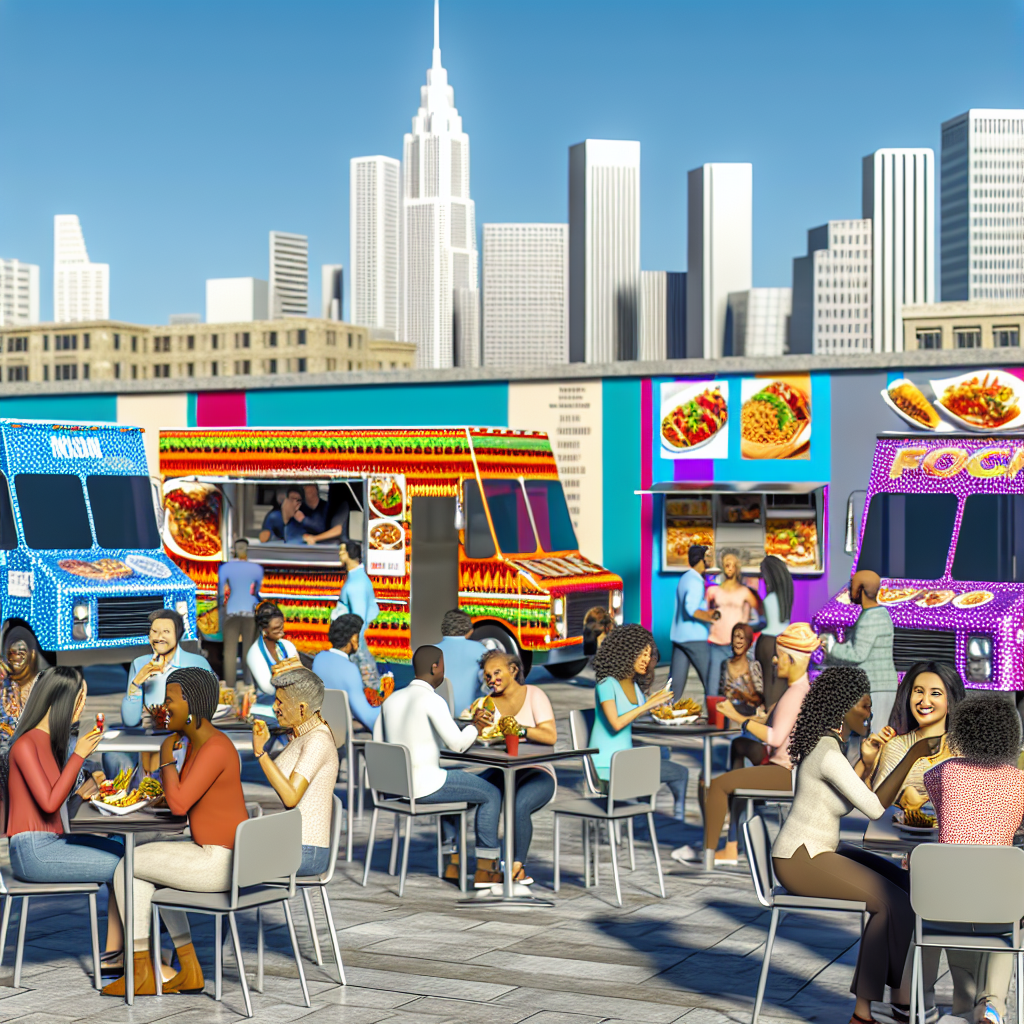
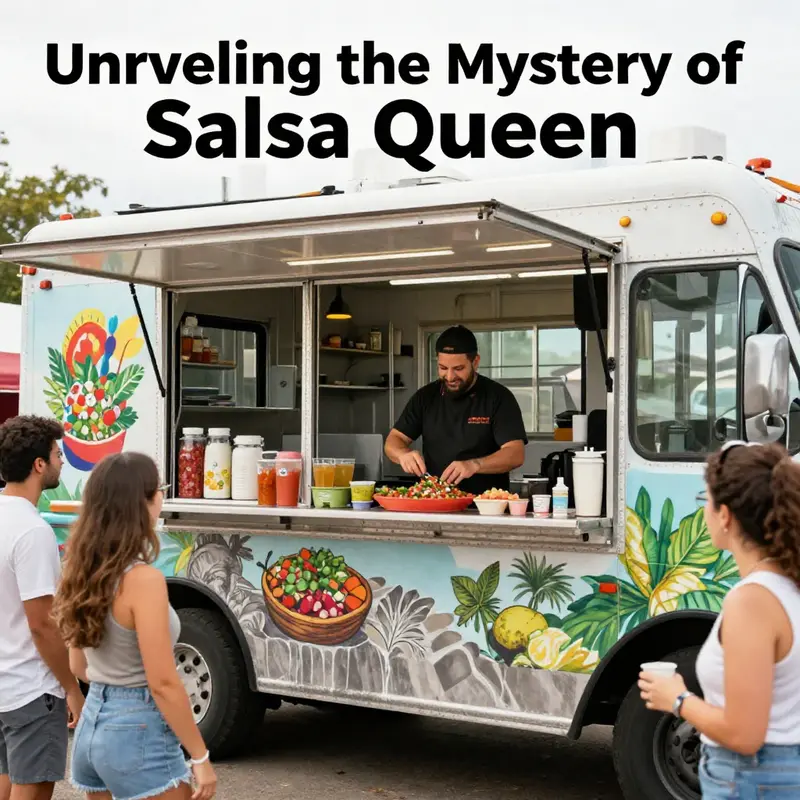
The food truck scene in Austin has long been a melting pot of flavors and cultures, embodying the spirit of culinary innovation. Among these trucks, the elusive Salsa Queen has captured the imagination of food enthusiasts and event organizers alike. But what is it about this enigmatic figure that resonates with such a diverse audience? In our exploration, we will dive deep into the essence of Salsa Queen within the food truck culture, highlighting the essential role of salsa machines, and understanding the rich tapestry of Austin’s food landscape that connects it all. Each chapter unveils facets of Salsa Queen’s journey, embodying community, creativity, and flavor that fuel the passion behind every sizzling dish.
Salsa Queen on Wheels: Craft, Culture, and the Mobile Kitchen
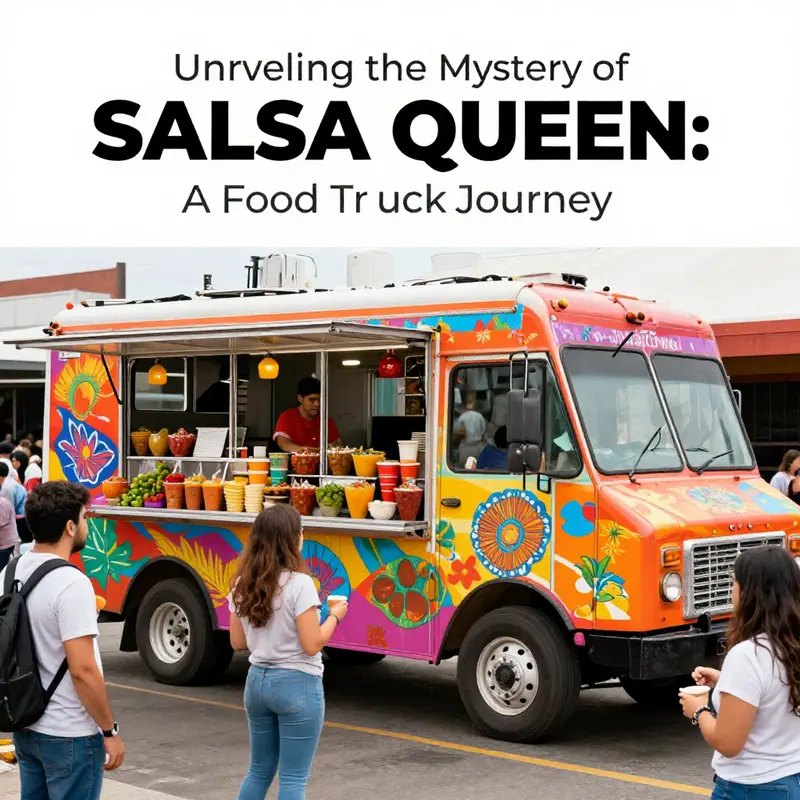
The idea of a Salsa Queen skates along the edge of myth and practice in the food-truck world. It is not a single person but a constellation of values: authenticity forged through daily handwork, a brand built on a clear signature, and a logistics backbone that keeps heat, freshness, and momentum in motion. The Salsa Queen becomes a lens through which the broader story of street-scale Mexican-inspired cuisine can be read. It invites us to see why a humble bowl of salsa, made in small batches with attention to origin, can become the fulcrum of a mobile business. When you chase a concept like this, you don’t just chase a recipe; you chase a philosophy that treats salsa not as a mere condiment but as a living archive—of chilies blistered to smoky sweetness, of herbs harvested at the edge of season, of the long memory of farmers and markets, all carried on wheels to wherever hunger and curiosity meet.\n\nWhat makes a Salsa Queen credible in a crowded scene is not the mere possession of a good recipe but the insistence on process as performance. The craft behind house-made salsas is a performance art that translates culture into bite-sized moments. It begins with sourcing: heirloom ingredients, regional varieties, and fresh, seasonal produce that carry with them a short, powerful life. It continues with technique: stone-ground tomatillos for a rustic tang, hand-roasted chilies for a bittersweet char, and a balance of salt, acid, and brightness that respects the natural sugars of the fruit and pepper rather than masking them. The Salsa Queen’s kitchen-on-wheels uses this craft as a narrative thread, weaving stories of place into every jar, scoop, and spoonful. The boat is small, the work intense, and the payoff immediate: a line of curious customers who lean in to ask, what’s in that salsa that makes it sing this way? The answer is not only a recipe but a culture, a memory, and a promise of consistency in a space that is inherently volatile.\n\nWithin the food-truck ecosystem, consistency is a form of hospitality. The Salsa Queen turns a moving kitchen into a sanctuary where guests know what to expect while still feeling the thrill of discovery. A signature lineup—perhaps a smoky chipotle, a bright pico de gallo, a tangy mango-jalapeño, and a cooling avocado-lime version—becomes the backbone of a brand, while weekly or seasonal rotations offer guests something new to chase without losing trust. This approach foregrounds a layered relationship with customers: you’re not merely selling salsa; you’re inviting them into a ritual of tasting that acknowledges region, season, and craft. The mobile format supports this ritual by allowing for rapid iteration. Feedback is immediate and actionable, and the best operators treat it as data, not as noise. A Salsa Queen truck can rehearse, refine, and relaunch a salsa with a speed that’s rare in fixed eateries, prototyping flavors the way a musician tests riffs—over and over until the rhythm lands just right.\n\nThe craft of salsa becomes a passport to culinary storytelling that resonates in city streets saturated with options. In practice, a Salsa Queen might pair salsas with a limited but potent set of offerings that highlight both the condiment and the dish it crowns. A simple grilled protein—think duck leg confit or grass-fed beef tuck-in with a crisp exterior—becomes the stage on which salsa shines. The plate is designed so that each bite is a cross-section of technique and history: a tender, savory bite under a crown of bright, herbaceous salsa; a contrast of heat that builds rather than overwhelms; a finish that lingers with the hint of roasted garlic or citrus zest. The philosophy here mirrors a broader trend in gourmet street dining: elevate components that used to be regarded as side dishes into a core, essential experience. The Salsa Queen’s menu becomes a case study in how a single signpost—the salsa—can govern the entire culinary architecture around it.\n\nYet a chapter like this cannot shrink to a single recipe or a lone signature. It must narrate how the practice of salsa-making travels from a grandmother’s kitchen to a bright, mobile storefront and then into the digital sphere that now shapes modern food culture. The Salsa Queen understands the power of storytelling as much as the power of heat. She curates a narrative that travels with the truck: the origin of a particular chile, the memory of a farmers’ market trip, the days when a batch spilled a bit of its character into the surrounding air and visitors remembered the scent long after the truck vanished around the corner. This storytelling is not merely a marketing gambit; it is a relationship-building discipline. It invites loyal followers to become ambassadors in their own right, sharing photos, riffs, and family salsa recipes that they learned from the queen’s careful demonstrations and tasting sessions. It also incentivizes curiosity in neighbors who might not yet trust street food as a sustainable, cherished culinary practice. When people taste salsa as if they are tasting a culture, they become part of a living conversation rather than spectators in a quick-service moment.\n\nThe social texture of the Salsa Queen’s mobility also matters. Street food thrives where crowds converge—farmers’ markets, music festivals, busy lunch corridors, and neighborhood corners that lack a full-service dining option. In such locales, the queen’s truck can become a catalyst for community. It offers a practical, inviting way to experience culture through shared food, rather than through a distant, abstract representation. The queen’s approach builds bridges: between urban neighborhoods with disparate identities, between new immigrants and longtime residents, between the nocturnal economy and daylight flows. This bridging work matters because it recasts salsa—from a potential stereotype of a regional staple to a dynamic commodity that travels, adapts, and marries with other culinary languages. A thoughtful Salsa Queen remains mindful of sourcing ethics and seasonal availability. She may emphasize locally grown ingredients when possible, and she negotiates with farmers and purveyors to ensure freshness while supporting the local food system. The result is a truck that does not exploit its mobility but rather leverages it to enhance sustainability, supply-chain resilience, and transparent storytelling.\n\nIt is useful to situate the Salsa Queen within the broader arc of street-food innovation. The city becomes the studio, the kitchen on wheels the instrument, and salsa the core repertoire that allows experimentation without losing identity. In urban centers with rich Mexican culinary legacies, like some of the sunlit pockets of the Southwest, the queen’s craft acts as a bridge between traditional preparation and modern sensibilities. The techniques—roasting, grinding, balancing—carry ancestral memory while the menu design speaks to contemporary palettes that crave brightness, heat, and texture. A remarkable aspect of this approach is its potential to attract nontraditional audiences without alienating core purists. The salsa acts as a common language that invites exploration. A curious diner who shows up for a spicy chipotle salsa can be coaxed to try a fruit-forward version with cucumber and mint, or a heat-forward version with roasted pineapple. The experience invites a dialogue: what do people want in a sauce that can anchor a meal as well as a stand-alone dip? In roaming cities, this conversation happens at a pace that suits street life: quick bites that satisfy, stories that linger, and a sense that every visit offers a new chapter in a long-running, mobile culinary diary.\n\nThis living diary is not simply a culinary exercise; it is a business model that can be sustainable for a one-person operation or an expanding collaborative. The Salsa Queen can start with a modest footprint, a small prep area, and a tight, repeatable system that scales through partnerships, pop-up events, and perhaps small, portable collaborations with other kitchen spaces. The mobility reduces the drag of a fixed-location lease, yet it imposes discipline in logistics: daily prep cycles, inventory management, and a careful calibration of spice levels to keep the palate energized without alienating guests who arrive with different heat tolerances. The queen’s practice includes a bottom-line awareness that ensures the operation remains accessible to a broad audience. While the craft is artisanal, the economics of a successful truck demand a minimum viable scale: efficient prep, reliable sourcing, smart pricing, and a clear value proposition that foregrounds the salsa as an experience rather than a mere topping. The queen’s success, then, rests on a combination of culinary excellence and practical business sense—two strands that, when braided tightly, create a resilient, mobile enterprise.\n\nThe city itself contributes to the myth and the method. In today’s discourse on food trucks, authenticity is no longer a quaint aspiration but a measurable process—ingredients, technique, and storytelling, all aligned with a consistent customer experience. The Salsa Queen becomes a representative figure in a broader ecosystem where the street becomes a laboratory for flavor, where entrepreneurs test ideas openly, and where the public is both tester and beneficiary. In such a landscape, the queen’s experiment might include pairing salsas with unexpected dishes—vegetarian or vegan options that rely on plant-based proteins, or fusion interpretations that blend Latin and other regional culinary elements. The key remains clarity of purpose: salsa as the guiding star, a disciplined craft, and a willingness to adapt without losing the soul of the practice. This is how a mobile kitchen travels from concept to culture, turning an iconic condiment into an embodied philosophy of food on the move.\n\nFinally, the Salsa Queen narrative invites a broader reflection on what the street-food revolution means for culinary identity. It challenges the idea that high culture is confined to brick-and-mortar eateries or rigid menus. It shows that meticulous technique and thoughtful storytelling can flourish in a weather-beaten van or refreshing early-morning cart, traveling through neighborhoods like a thread weaving together a diverse city. The mobility adds a muse for future innovators: start with a single, center-stage ingredient; craft it with care; invite the public to participate in the pleasure of discovery; and grow not only by expanding the menu but by deepening the relationship between the chef, the people, and the place. In that sense, the Salsa Queen is less about a specific moment in time and more about a trajectory—a demonstration that the most powerful ingredient in street food may indeed be a well-made salsa, prepared with pride, shared with openness, and carried forward by a community that tastes deeply and travels widely. This is not a conclusion but an invitation: to imagine what happens when a city’s hunger for flavor meets a kitchen that moves, a craft that endures, and a story that keeps turning on the wheels of a roving, resilient enterprise. And in that continuing journey, the Salsa Queen remains a beacon for aspirants who want to marry heritage and invention in the most portable form of all—food that travels as freely as the people who crave it. External resource for further exploration: https://www.coloradostreetfoodalliance.org/denver-food-trucks-flavorful-street-eats
The Role of Salsa Machines in Food Truck Operations
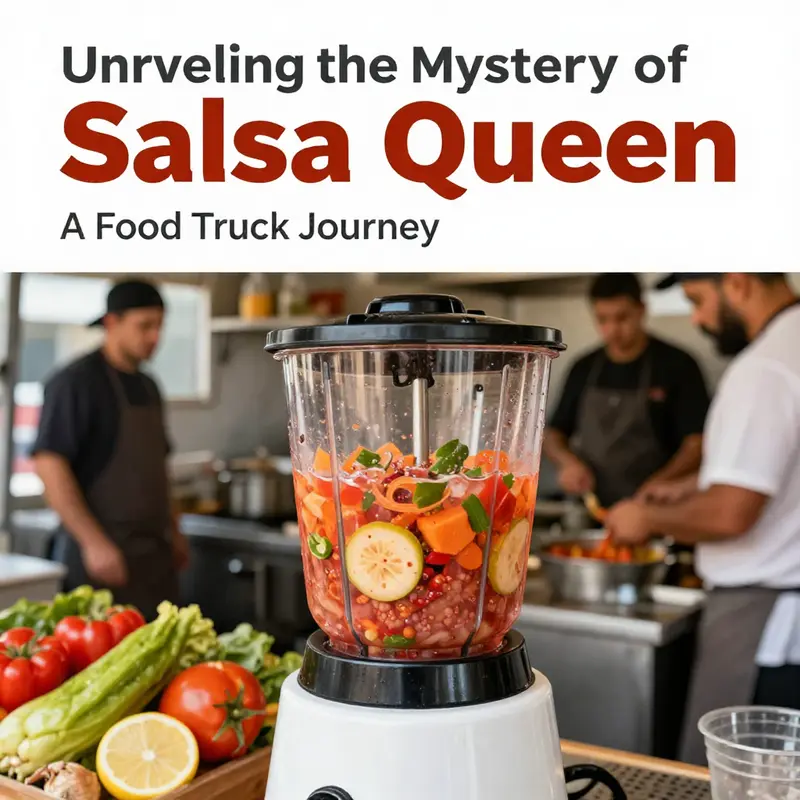
Salsa, in its many forms, often stands at the crossroads of flavor, speed, and perception on a food truck. It is not merely a dip or a topping; it is a signal to customers that the kitchen cares about fresh ingredients, balanced acidity, and the way a dish comes together with every bite. In this mobile world, where space is precious and service pace is relentless, the salsa machine becomes more than a gadget. It becomes a quiet, reliable partner that translates a chef’s vision into consistent reality across dozens, sometimes hundreds, of servings per service shift. The core advantage is straightforward: the machine standardizes texture, color, aroma, and portion, so that a guest who orders a salsa-tue dish in the first hour of service experiences the same bright brightness and measurable bite as the guest who orders it two hours later. Behind that reliability lies a design philosophy tuned to the realities of a moving kitchen, where every inch of counter, every watt of power, and every second of cleaning time matters.
In the tight footprint of a food truck, equipment must do more than perform a single task. A salsa machine is expected to blend, chop, and emulsify ingredients that can range from tomatoes and onions to peppers, cilantro, and citrus. The machine must handle this spectrum without sacrificing texture—sometimes a rustic chop for a courtyard street fare, sometimes a smooth, nearly puréed base for a modern, cohesive sauce. The ability to process both delicate fruit salsas and heartier tomato-based blends under the same roof is not a luxury; it is a necessity in a menu that shifts with the season, weather, and customer appetite. When a truck laments a lack of time between orders, the salsa machine delivers a practical solution: a batch prepared in advance can be portioned, chilled, and kept ready for service, allowing cooks to focus on the more time-sensitive tasks of cooking, finishing, and plating.
The compact design of salsa machines matches the spatial constraints that define food trucks. These devices are engineered to fit into narrow gaps beside prep tables or under the edge of a stall window, yet they pack a robust build that supports continuous use during peak service. The motor and drive train are reinforced for long days of operation, and the materials chosen for the bowl and blades resist corrosion and flavor carryover. This is critical, because a truck’s menu evolves. One night you may offer a fresh pineapple-salsa as a bright counterpoint to a grilled protein, the next you pivot to a zesty corn salsa for a burrito bowl. A well-chosen machine can adapt to these shifts without requiring a full retooling of the kitchen. The equipment becomes a flexible backbone that keeps the kitchen agile without surrendering precision.
Beyond the physical mechanics, the daily rhythm of a salsa program hinges on how the machine integrates with the rest of the team. In a high-volume window, a single batch can drive multiple dishes across a service, ensuring that when a sauce reaches the plate, its texture and flavor are consistent throughout. This consistency matters not only for taste but for the customer experience and brand perception. A guest who notices variation in texture or intensity from one order to the next is more likely to question the overall reliability of the operation. The machine helps minimize those uncertainties by providing a stable baseline of texture and distribution. It reduces the need for improvisation with every batch and frees up staff to engage with customers, execute tickets, and manage the flow of orders. The result is a more predictable line, where speed and quality move in a harmonious cadence rather than chasing each other in a chase-scene of improvisation.
A key advantage of modern salsa equipment lies in its sanitation philosophy. In a small kitchen, cross-contamination is a constant concern. The ability to clean quickly between batches is not simply a convenience but a safety and quality mandate. Many salsa machines are designed with components that come apart for rapid cleaning, with seals and gaskets chosen to resist flavor carryover. Food safety guidelines often favor equipment that supports clean-in-place or quick-disassembly for thorough washing. This is especially important when a truck offers several sauces or seasonal specials, each with distinct ingredients and potential allergen considerations. The capacity to switch from a mango-chile salsa to a cilantro-lime version without lingering flavors in the machinery helps a business maintain integrity across the menu while protecting customers who keep a close eye on ingredients.
Apart from hygiene and consistency, a salsa machine contributes to the logistical efficiency that defines a successful food truck operation. Manual chopping and hand-mixing are time sinks, especially during pressure hours when orders stack up in the queue. A machine can process batches in a fraction of the time, enabling staff to push through tickets with fewer interruptions. This speed translates into shorter wait times for customers and higher turnover for the truck. When a crew is trained to use the machine correctly, it becomes a predictable variable in the service equation. Operators understand how long a batch will take to reach the ideal texture and how many servings a batch yields. The predictability supports better inventory control: staff can forecast how much salsa they need to prepare in advance, reducing the risk of spoilage and waste. In turn, this tightens the restaurant’s cost structure and helps sustain margins in a business with slim margins and fluctuating demand.
Seasonality is another area where salsa machines prove their value. A street menu often accommodates seasonal fruits and produce that define a city’s summer or autumn mood. A fruit-based salsa can require precise balance between sweetness and acidity, a balance that a well-calibrated machine preserves across batches. When the menu pivots, the same device can switch from a fruit-forward blend to a pepper-forward salsa. The operator simply adjusts the recipe parameters, and the machine executes the new texture and slurry profile with the same reliability. This adaptability is not a mere convenience; it is a strategic lever that allows a truck to test new flavors, respond to daily specials, and diversify offerings without expanding the kitchen’s footprint or complicating the workflow. The menu remains responsive to what’s available and what customers crave, while the machine ensures that the new items are prepared with the same speed and consistency as the staples.
Quality control in the field relies on an invisible but powerful chain of decision points that start with the ingredients and end with the plate hitting the table. The salsa machine sits at the heart of that chain, linking farm freshness to flavorful balance. It supports portion control by delivering uniform quantities with each act of dispensing, reducing the risk of over- or under-saucing a dish. This is not purely about cost savings; it is about the guest experience and brand consistency. When a truck consistently presents a bright, well-textured salsa that complements a grilled main without overpowering it, customers begin to associate that dish with a dependable standard. Over time, these small, dependable moments accumulate into a reputation for quality—an essential asset in a market where customers decide quickly and have a long memory for experiences that meet or exceed expectations.
Equipment choice is rarely made in isolation. It intersects with a truck’s layout, power supply, and even branding strategy. The kitchen’s footprint influences which model will fit and how it will be positioned relative to the service window. The signage and menu design should reflect the availability of fresh, house-made salsas, reinforcing the perception of craft and care. In this sense, the salsa machine is not just a tool; it is a core element of the kitchen’s narrative. It communicates to staff and customers alike that the operation values consistency, hygiene, and speed without sacrificing flavor. For operators who want to anchor their equipment decisions in a broader plan, the choice of a salsa machine is connected to the overall strategy of how a truck will scale, how it will be perceived, and how it will evolve as the brand grows. See how this logic ties into broader equipment and layout decisions with resources like the guide on Choosing the right food truck model.
In practice, a well-integrated salsa station also considers the chain of maintenance that keeps the system dependable. Reliability on the road is largely about proactive care. Routine checks of blades, motor temperature, and drive seals prevent minor issues from derailing service. Operators often develop a simple maintenance rhythm: inspect after each shift, sanitize thoroughly, and schedule a deeper cleaning during downtime. The time saved through robust cleaning cycles and intuitive disassembly translates into more minutes available for cooking and customer interaction. It also reduces the risk of last-minute equipment failures that disrupt service and erode confidence. A single malfunction can cascade into longer wait times, customer dissatisfaction, and the need to improvise substitutes that may not align with the kitchen’s standards. The machine’s build quality, the availability of spare parts, and the ease of service are therefore not academic considerations; they are practical determinants of a truck’s reliability and capacity to meet peak demand.
The absence of perfection is not a failing of the concept but a reminder that a machine operates within a system. The salsa produced must be integrated with the other elements—beans, rice, tortilla, proteins, and garnishes—so that the final plate is balanced. The machine contributes to a coherent sensory experience, ensuring that the salsa’s brightness, heat, and texture complement rather than compete with other components. In many kitchens, this balance is achieved through a careful choreography: the salsa is prepared in a batch, tasted, adjusted for acidity and heat, and then allowed to rest briefly before service to let flavors settle. During service, the staff can monitor the salsa’s temperature and appearance, scooping it onto plates or into bowls with confidence that the texture will remain inviting across dozens of servings. It is this orchestration—recipe discipline, batch timing, hygiene rigor, and pace control—that elevates a salsa station from a functional feature to a reliable, brand-supporting operation.
Of course, no tool exists in a vacuum, and the decision to invest in a salsa machine is connected to broader strategic questions about the truck’s design and its long-term viability. A thoughtful operator will weigh the capital cost against anticipated savings in labor, waste reduction, and increased throughput. The payback period becomes a practical heuristic in daily planning: how many service days would it take for the equipment to earn its keep, considering both direct cost reductions and the intangible benefits of a consistently excellent guest experience? In this light, the salsa machine is not merely a gadget but a strategic asset that reinforces a truck’s ability to deliver quality at speed, day after day, across different neighborhoods, events, and menus.
As the story of any food truck unfolds, the salsa station often serves as a microcosm of how a small kitchen adapts to large-scale demands. The machine embodies a philosophy: simplify complexity without sacrificing character. It absorbs variation in produce, handles high-volume bursts, and preserves the chef’s intent across dozens of portions. It helps the operation tell a clear, convincing story about freshness and care, even as the scene outside the window changes with every passing block. The result is a kitchen that feels both purposeful and efficient, a place where expertise meets reliability, and where the salsa is more than a condiment—it is a dependable ambassador for taste, texture, and trust.
External resource reference: https://www.hefestus.com/salsa-packaging-machine
On Wheels of Salsa and Story: Austin’s Food Truck Culture and the Legend Behind a Salsa-Driven Icon
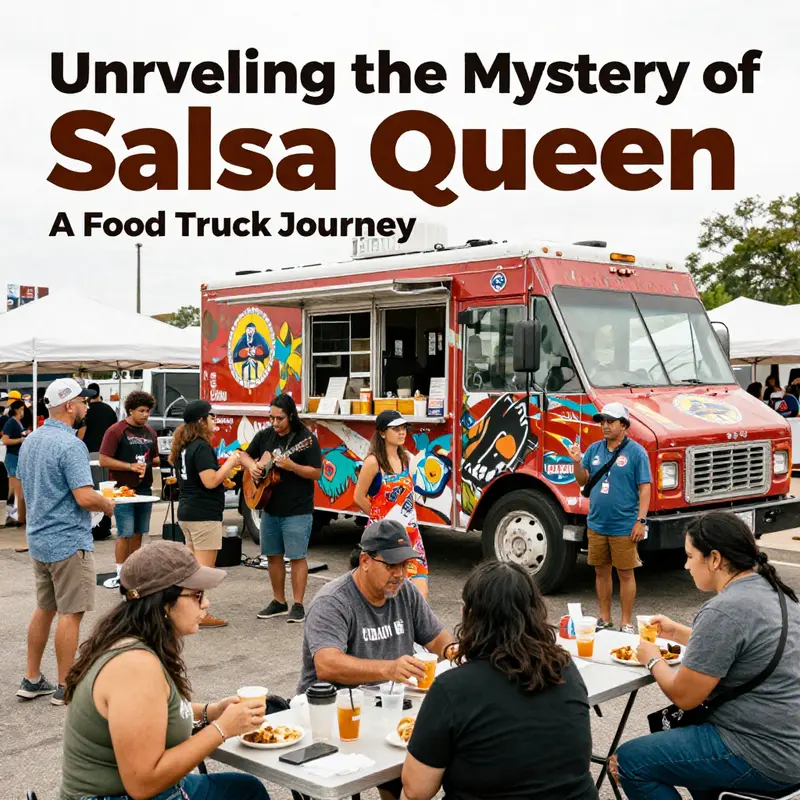
Austin’s food truck scene is more than a string of alleys and pods stitched together by traffic and hunger. It is a living map of the city’s values, a revolving door that turns street corners into tasting rooms and kitchens into neighborhood halls. The trucks move with the day, the season, and the city’s mood, yet they leave behind a trace of permanence: a shared memory of meals that tasted like home, a sense of place that belongs to every passerby who stops, eats, and talks with a cook who greets them by name. In this landscape, salsa is not merely a condiment; it is a language. It speaks of bright heat and cool freshness, of citrus and coriander, of generations that learned to balance boldness with restraint. It is a social practice as much as a culinary technique, a ritual that invites conversation, exchange, and hospitality. When we look at the broader arc of Austin’s mobile kitchens, the salsa-infused truck emerges as a microcosm of how street food can become a cultural institution without losing its connection to the street itself. The truck is a portable ceremony where recipes migrate, adapt, and flourish, carried by cooks who bring a lineage with them and a willingness to improvise in the moment. In that sense, salsa becomes a cultural passport. It signals affiliation with Latinx culinary traditions, it marks a space as welcoming to families with children and late-night workers alike, and it offers a common palate that invites strangers to share a table, or at least a few minutes of conversation, under a striped umbrella or a bright canopy. The mobility of the truck makes this exchange possible in neighborhoods that brick-and-mortar restaurants might overlook, especially after dark or in newer suburbs where pedestrian footfall is still growing. The street side becomes a classroom and a dining room at once, and the salsa truck participates in that education with a generous, accessible approach: if you can stand in line, you can learn flavors, you can learn a story, and you can learn how a simple bowl of salsa can carry the memory of farmers, families, cooks, and communities across miles and generations.
Within this dynamic, a particular figure in the city’s street-food lore often circulates as a symbol rather than a single, fixed identity. The legend centers on a salsa-driven truck that has come to stand for the broader idea of Latinx leadership in a space historically dominated by other narratives. In local lore and in readers’ conversations, this symbol is not a flawless biographical portrait but a narrative scaffold. It holds memory—of women who steered small businesses, of families passing down recipes, of cooks who learned to balance spice and sweetness, and of customers who found a sense of belonging in a line that stretched around a block. What matters in this telling is less the exact corporate lineage of any one operator and more the enduring pattern: a mobile culinary practice that foregrounds warmth, generosity, and technical craft, all wrapped in a set of flavors that invites participation rather than passive consumption. The absence of a single, documented, definitive figure does not diminish the story; it enlarges it. The city’s public memory can accommodate a dozen unsung heroes who, through years of grinding work and joyful experimentation, shaped how salsa is perceived on the street. It is this culture—the blend of Texan ambition, Mexican culinary heritage, and Central American improvisation—that the food-truck scene in Austin has made both visible and influential.
The economic and social ripple effects of such a culture are substantial, even when we focus on a single iconic emblem. Mobile kitchens lower the barriers to entry for aspiring chefs who might not have capital for a brick-and-mortar space. They democratize access to an audience by moving to where customers gather—near universities, at night markets, during neighborhood fairs, and along busy corridors that pulse with foot traffic. This mobility also allows cooks to test new ideas rapidly: a fresh salsa profile, a new tortilla technique, a different balance of acidity and heat. When a truck discovers a flavor that resonates, it can scale that discovery in a matter of weeks by adding a new offering, adjusting portions, or partnering with local farmers for ingredients that reflect the season and the community’s preferences. In this sense, the salsa-driven truck acts as a laboratory on wheels, where culinary risk is mitigated by the broader social payoff—the chance to connect with diners who might not venture into a formal restaurant setting but who crave the warmth of a shared meal and the storytelling that accompanies it.
The social fabric surrounding these trucks is equally significant. Women entrepreneurs have found in the mobile kitchen a platform for leadership, mentorship, and community visibility. The visibility is more than a marketing advantage; it is a signal to aspiring cooks, especially young women from immigrant backgrounds, that leadership and artistry can co-exist with being a good neighbor and a reliable neighbor vendor. In the eyes of critics and longtime locals alike, the success of such trucks underscores a broader truth about Austin’s food culture: the city’s most resonant flavors are often improvised on unmarked corners or tucked behind blocks of storefronts that do not advertise their presence in grand ways. The charm lies in the surprise—an unassuming trunk of a truck that opens to reveal a compact kitchen and a bright array of salsas, each jar a microcosm of a larger family recipe and a history of travel across borders and generations.
The narrative of salsa on wheels is ultimately a story about hospitality. The truckers’ repertoire—whether they lean toward fiery habanero, bright tomatillo, creamy avocado, or a mango-chile blend—invites tasting as a form of conversation. A bite is an invitation to share a memory, a request for a cooking tip, or a question about where the ingredients come from. The act of offering a sample becomes a social contract: if you taste and engage, you become part of the truck’s extended family for the afternoon, a passerby who helps feed the collective memory of a city in motion. In neighborhoods that shift with new residents and students, such ritualized sharing fosters trust, which in turn sustains business. The trucks don’t merely deliver meals; they curate communal experiences that reflect a city’s evolving identity and its capacity to absorb new flavors while honoring traditions. That balance—between reverence for heritage and openness to innovation—is what sustains Austin’s street-food culture and makes it a genuine cultural institution rather than a passing novelty.
The iconography and branding of these trucks, though modest in scale, play a crucial role in how the story is told and remembered. A salsa truck that commands attention through color, typography, and a confident sensory cue—say, a bold red and green palette that echoes peppers and cilantro—tells a story before the first bite. The visual language serves as a compact, portable advertisement for warmth, hospitality, and craft. It is no accident that the visual identity of such trucks often emphasizes hand-drawn flourishes, sunlit colors, and a sense of movement that echoes the street itself. Branding on wheels is not simply about standing out; it is about coordinating a set of sensory signals that reassure customers they are about to experience something authentic and well-made. For operators who study this balance, a practical truth emerges: the more coherent the visual language, the easier it is for a first-time customer to trust the food and the cooks behind it. In this sense, the design becomes a bridge between memory and appetite, a way to condense years of apprenticeship and family cuisine into a single storefront-on-wheels that greets you as if you’ve known it for years.
For readers who want to dive deeper into how branding and identity work in the food-truck world, the following guide offers a practical synthesis of visuals, messaging, and customer perception. It emphasizes how a consistent, attractive on-wheels identity supports flavor storytelling and helps new readers interpret the cuisine they encounter on the street. branding on wheels—the ultimate guide to food truck graphics and identity
Beyond the bricks-and-mortar equivalence of a storefront, the salsa-centered truck embodies a different certainty: that culinary culture travels. The city’s Latinx communities bring a long memory of salsa as a social glue—from family gatherings to neighborhood celebrations—but the mobility of the truck carries that memory into new districts and across different audiences. Local events, festivals, and late-night pods become stage sets where the truck performs its daily ritual. It serves as a visible reminder that food is not merely sustenance; it is a shared experience that can cross language barriers, build trust across diverse communities, and create a sense of belonging even for temporary visitors. In this way, the presence of a salsa-inflected truck is more than a market response; it is a cultural statement about inclusion, resilience, and the city’s willingness to honor the flavors that refugees, travelers, and new residents bring with them.
As with any living culture, there are moments when the story becomes more complicated, or when a particular figure or event attracts intense attention and then recedes. The absence of a single, well-documented, central figure in the salsa-on-wheels narrative does not undermine the authenticity of the phenomenon. Instead, it invites a broader, more inclusive reading: a constellation of cooks, families, and neighborhood legends who together sustain a vibrant, evolving discipline. The city’s critics and historians can point to a celebrated moment in which a salsa-focused truck became a symbol of Latinx presence and female entrepreneurship on the street. They can also acknowledge the nuanced reality that such symbols are often composite, a mosaic crafted from many kitchens, many recipes, and many nights of service when the crowd grew too large to count. The story is not a single biography but a tapestry. It is a tapestry that the Austin Chronicle highlighted through coverage of a truck that has become a touchstone for Latinx culture on wheels in the city. That article anchors the narrative in a real place and a real moment, offering readers a tangible entry point to understand how a mobile culinary practice can become a conduit for memory, solidarity, and pride. For anyone tracing the arc of salsa on the street, the key takeaway is that the food-truck world does not rely on dramatic, singular moments. It thrives on steady, everyday acts of generosity, curiosity, and craft that accumulate into something larger than the sum of its parts.
If you are planning a visit to Austin with this lens in mind, you will notice how often the city’s sidewalks become informal classrooms. A line might form around a compact, sun-warmed storefront on a late afternoon, where a cook explains a salsa’s heat level or a tortilla’s origin with the same care a sommelier shows for wine. The choreography of service—the timing of the salsa scoop, the speed of the griddle, the warmth of the welcome—repeats across pods and neighborhoods, building a silent archive of taste and memory. In the end, the question of “what happened to” a specific figure may give way to a broader narrative about how such figures—whether remembered or not—shape the landscape of possibility for others. The salsa truck becomes a beacon, not for a singular achievement but for a shared practice that invites everyone to participate. The act of choosing a flavor, of offering a sample, of watching a cook flip a tortilla with practiced ease—all of these are acts of belonging, and they travel as swiftly as the salsa leaves the bowl.
The city’s residents, scholars, and visitors thus encounter a compact truth: the best meals in Austin often arrive from a trailer that looks ordinary from the curb but holds a lively, ongoing conversation about culture, identity, and hospitality. The salsa truck, in particular, teaches a lesson about how food can carry a community’s stories across boundaries, how women in the street-food economy can lead with generosity and vision, and how a simple bowl of salsa can open a dialogue between strangers. In the pages of local journalism and in the memories of diners who sat beside a curb under a fading sun, the story persists—not as a single biography but as a living practice that continues to shape what people expect when they step up to a window and place their order. The scent of lime and cilantro, the crackle of a hot tortilla, the bright colors on the truck’s side—these impressions endure long after the last spoonful has been tasted. They become part of the city’s living archive of flavor, texture, and community.
External resources and further reflections can be found in the article that documents a salsa-focused truck’s impact on Latinx culture-on-wheels in Austin, which offers a grounded, journalistic perspective on these themes. https://www.austinchronicle.com/food/2026-02-17/salsa-queen-a-taste-of-latinx-culture-on-wheels-in-austin/
Final thoughts
Salsa Queen might remain an enigmatic figure within the food truck scene, but the cultural significance and love for flavor it embodies are undeniable. As we have explored, its journey reflects the vibrant community spirit of Austin’s culinary landscape, highlighting how food trucks serve not just food but also connection, creativity, and celebration. By understanding the role of salsa machines in these operations, we see how technology blends with tradition to create memorable experiences for all. So whether you’re an event planner looking to incorporate unique culinary experiences, or simply a food enthusiast eager to sample new delights, the story of Salsa Queen reminds us of the joy and passion that food brings into our lives.