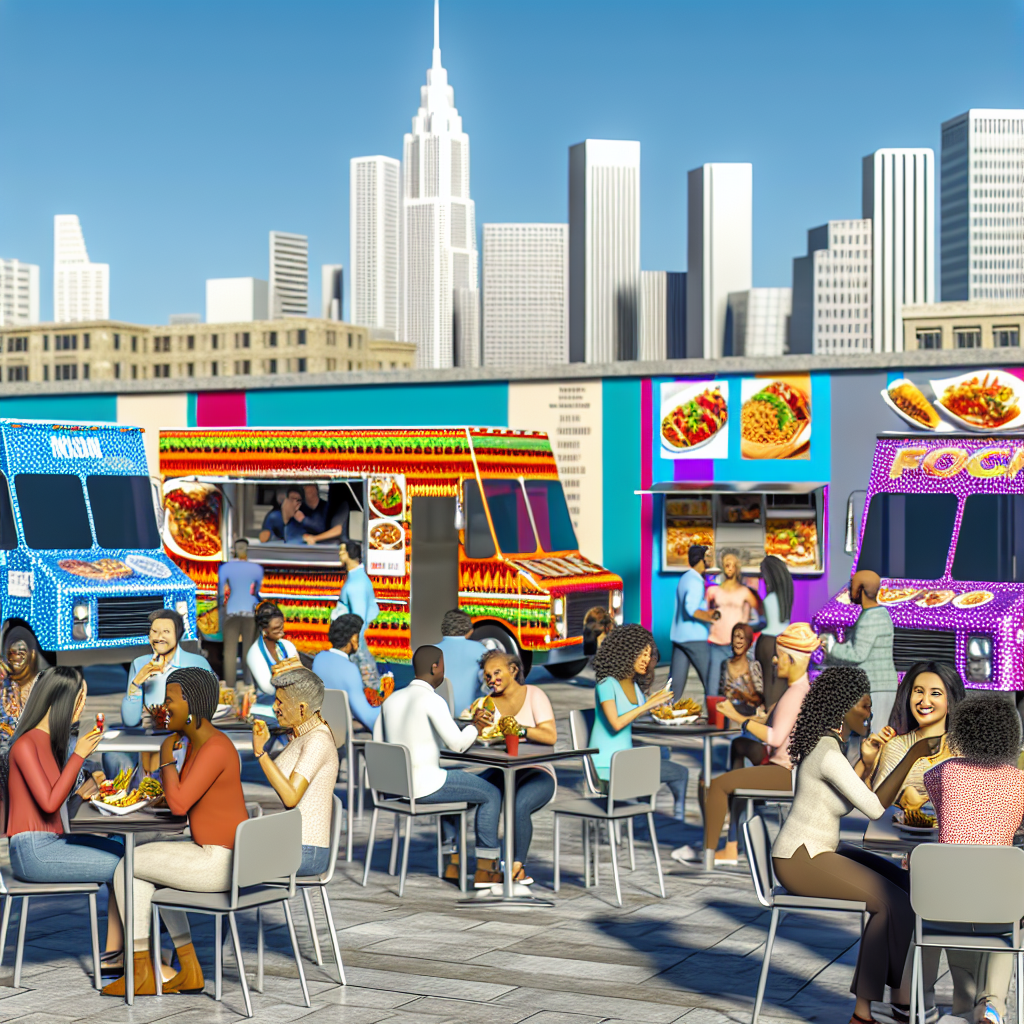
Across cities and communities, a familiar pattern repeats: a nimble food truck rolls into town, serves crave-worthy fare, and quietly seeds a lasting dining tradition. What begins as a portable kitchen often grows into a permanent space that anchors neighborhoods, drives local economies, and inspires event planners, corporate teams, and food enthusiasts alike. This journey—from fleet-footed mobility to brick-and-mortar identity—fuses entrepreneurship with culture, economics with place, and regional flavor with scalable opportunity. In the chapters that follow, we’ll trace how restaurants started as food trucks illuminate four critical narratives: the origins and mobility that sparked initial fame, the economic pathways from mobile kitchens to steady storefronts, the cultural and societal impact of how we eat on the go, and the geopolitical and regional forces shaping where and when these transitions occur. By spotlighting real-world examples and community perspectives, we’ll reveal why mobility matters, how it sustains growth, and what planners and locals can learn to cultivate vibrant, inclusive dining scenes.
Chapter 1: Wheels on the Menu — Origins, Concepts, and Mobility as Catalysts in Restaurant Evolution
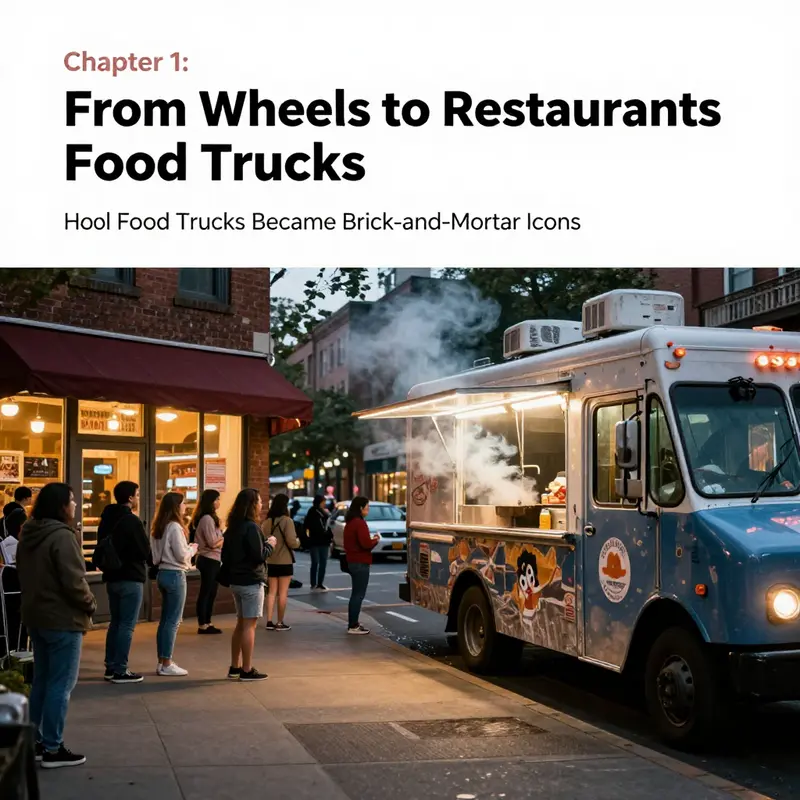
Across modern urban dining, a surprising proportion of beloved brands began their lives not in a fixed dining room, but on wheels. The mobile kitchen first appeared as a practical answer to city life—dense neighborhoods, shifting work patterns, and the economic calculus of opening a storefront. Mobility lowered barriers to entry and opened a corridor for experimentation. It allowed cooks to test flavors, refine service, and build a following before committing to a permanent space. The journey from truck to brick-and-mortar is not always linear, but it reveals a consistent pattern: mobility acts as both a proving ground and a branding amplifier. To understand why so many restaurants emerge from the street, it helps to trace three intertwined forces—origins, concepts, and mobility—and see how they feed one another.
Origins and historical lineage begin with the simplest of setups: carts and stalls that followed the day, serving workers and travelers. As cities expanded and industrial zones sprawled, vendors migrated from static stalls to mobile wagons and compact kitchens. The logic was clear: if a business could slide a kitchen into a van or a cart, it could move to where appetite was strongest. Locations changed by the hour or by the week, and with each shift, a different crowd learned to expect something distinctive at a predictable time. This was less about creating a permanent image than about ensuring consistent access to customers who were otherwise hard to reach. In those early days, the new mobility was both a lifeline and a laboratory. It offered a way to run lean, to avoid the steep fixed costs of a storefront, and to reallocate attention toward the aspects of cooking and service that customers cared about most: flavor, speed, and reliability.
The drivers behind this mobility were practical as much as aspirational. Land costs were high, licenses and permits could be slow to obtain, and urban zoning often restricted new buildings in promising locations. A truck could circumvent some of these barriers by moving between job sites, markets, and events, hitting a new audience while the old one rested. The mobile kitchen also encouraged a climate of constant iteration. A vendor could change the menu to reflect what people were ordering most, experiment with fusion concepts, or highlight regional specialties that felt urgent and authentic. The ability to swap ideas quickly without a large lease created a space where culinary risks mattered less financially but could pay off in cultural terms. Over time, these micro experiments normalized a larger shift in the industry: the restaurant is not a single place but a system of spaces, routes, and moments when the brand is present.
When food service culture points toward the street, it also prompts a rethinking of how a menu is designed. On wheels, efficiency drives the core of product development. A mobile kitchen is a compact workshop where every square inch counts. The most successful operators learned to design menus that could be prepared quickly, with repeatable techniques that held up under the spin of a day’s traffic. The rhythms of the road fed the menu’s structure—a few staples anchored by rotating specials that responded to seasonality and audience feedback. The branding that emerged from these limited spaces proved equally important. A truck that carried a strong visual identity—colorful graphics, a memorable name, and a signature line of offerings—could become a beacon in a crowded street. Word of mouth, and later social media, translated a single night’s line into a community and a promise. The vehicle itself became an ambassador; the brand’s personality traveled with it and was reinforced each time customers sought it out again.
But the mobility of food also depended on a framework: regulatory and logistical rules that defined what mobile operations could do and where they could do it. Health codes, vehicle inspections, and street permits shaped the daily dance of parkings and line times. Operators learned to negotiate the tension between safety compliance and flexibility. They mapped routes that captured predictable crowds while leaving room for surprise pop-ups. They formed alliances with event organizers and markets that could host rotating concepts, creating a recurring stage for the brand to perform. These constraints, while real, did not suppress creativity; they redirected it toward predictable routines and reliable safety checks without dulling the appetite for experimentation. In the best stories, regulations become an enabling force, a shared language that lets a concept scale from a single cart to multiple trucks and then to bricks-and-mortar spaces that feel as nimble as the original.
Mobility as a catalyst reshapes more than location; it reshapes opportunity. The road teaches lessons about customer flow, peak times, and the value of a dependable service model that can travel with a loyal following. It also democratizes the process of brand building. A chef with a bold concept could reach neighborhoods with a lower upfront investment than a traditional restaurant required. The same concept could be tested, refined, and reproduced—first as a single truck, then as a small fleet, and later as a multi-location enterprise. The scale of growth did not require an immediate leap into a large, permanent space. The truck could be the first storefront, a temporary embarkation point for a brand, or a satellite that extended a beloved concept into new markets. Mobility, therefore, becomes not merely a logistical choice but a strategic posture that aligns culinary ambition with economic reality.
Technology and culture arrived as accelerants to this mobility. Refrigeration, efficient generators, and compact cooking systems expanded what could be produced and shipped. The low capital outlay of a mobile operation meant that a wider range of cooks and entrepreneurs could test ideas with real customers. Early digital tools—simple ordering, route planning, and calendar-based event listings—began to connect operators with their audiences in new ways. As smartphones and social networks matured, a truck’s route could be shaped by real-time feedback from diners who reported their favorite hours, dishes, and locations. The modern food-truck movement fed into a larger ecosystem that included pop-ups, shared commissaries, and, eventually, the formation of small, semi-mobile brands that could exist in multiple forms: trucks, stalls in markets, or hybrid spaces that mixed food, beverage, and dining.
From this background arise the stories that anchor the chapter—the experiential proof that mobility can birth durable, scalable brands. Consider the Texas barbecue truck that turned into a permanent dining room where fans could indulge in slow-smoked meats and Southern sides in a more expansive setting. The story is not simply about a recipe; it’s about a carpenter’s patience in turning a moving concept into a fixed home without losing the character that drew guests in the first place. The customer experience remained anchored in the voice of the pit, the aroma of smoke, and the familiarity of the menu’s core elements, now delivered with more room to breathe. Then there is the Chicago Italian-American comfort-food truck that built a reputation on hearty, familiar flavors and practical, satisfying portions. The arc from truck to storefront here rests on two pillars: consistency in taste and a sense of neighborhood belonging that continued to attract a growing audience as the brand expanded.
Across the region, a bold, colorful truck offering Mexican-inspired fare became a beacon for curious diners seeking something beyond standard taco shells. The concept embraced bright presentation, inventive fillings, and a menu that could evolve with appetite. That spirit of experimentation—without surrendering on quality or speed—proved transferable to a full-service space where guests could linger longer, enjoy a curated beverage program, and savor a broader tasting of the specials that had earned a devoted following on the road. In the Midwest, the Detroit-area pizza truck offered a Detroit-style slice as a signature, a heavy, cheese-stretched midwestern staple reimagined for the street. The branding and fan base translated well into permanent venues, where the pizza could be served with the same crisp edges and caramelized cheese that customers had learned to expect on a humming curbside line. The path from the truck to multiple bricks reflects the way a concept can travel in time, proving that the core appetite—comfort, boldness, and authenticity—transcends the form in which it is served.
Beyond these edible narratives lies a newer, more deliberate model in which mobility emphasizes plant-forward and botanical sensibilities. A mobile cafe that foregrounds plant-based dishes and craft beverages hints at a longer horizon for the road as a platform for healthful, environmentally conscious menus. The mobile phase allows the concept to refine its identity—color, aroma, and a sense of place—before stepping into a permanent space that can host events, collaborations, and a broader community. This evolution demonstrates a wider principle: mobility as a catalyst does not merely transport meals; it transports ideas. The truck becomes a rolling stage where a brand tests its cadence, builds a following, and proves its resonance with a city’s appetite. When the time comes to step into a fixed building, the brand carries with it the stories of every location it visited—the tastes that traveled, the people who joined, the lessons learned from the road.
Some patterns emerge when we look across regions and cultures. The mobility-first approach often begins with a lean menu that communicates a distinct point of view. A short, high-signal menu that can be produced quickly helps a new concept gather a loyal crowd without overextending resources. The experiments are not idle; they are methodical trials in real markets. The brand’s personality tends to emerge from the vehicle itself—from the color of the truck, the rhythm of the service, and the way staff engage with customers in line. The market’s feedback loops—what people order again, what warms the crowd on an overcast day, what becomes a signature dish—shape the evolution toward a brick-and-mortar footprint that still carries the essence of the original concept. This process is not a sidestep from culinary craft; it is a precursor to craft at scale. The chef who begins with a cart learns to choreograph the kitchen, the crew, the schedule, and the brand with a degree of precision that once seemed unnecessary but grows increasingly invaluable as the concept expands.
Viewed through the lens of industry evolution, mobility has reframed what a restaurant can be. A brand no longer depends on a single storefront to be complete; instead, the vehicle, its routes, and its schedule become essential elements of the identity. The experience of walking up to a truck, ordering from a familiar set, and watching the crew perform is part of the brand’s storytelling. That storytelling remains a reliable magnet as the concept scales into multiple sites or a permanent home. The outcome is a more pluralized restaurant ecosystem in which small-scale, nimble operations prove that big ambitions can be achieved without a long, single lease. In many ways, the modern dining landscape reflects a mosaic of places where the same concept reappears in different forms: a truck on a busy weekday, a stall inside a market on weekends, and a fixed location that hosts curated tastings and pop-up collaborations. Mobility has not vanished; it has multiplied, and with it the opportunities to learn, adapt, and grow.
In telling these stories, it is important to ground them in the lived realities of operators who navigated a changing urban fabric. The skills that turned a truck into a restaurant are not only culinary; they are operational. They include route planning that takes into account customer behavior and competition; a branding discipline that communicates a clear point of view even from a distance; and a relationship with regulators that makes room for experimentation without compromising safety. The literature of this field emphasizes the balance between freedom and accountability, the art of staying legible to customers while moving through complex city systems. It also highlights the social dimension of food on wheels—the way a familiar truck line can become a neighborhood event, a place where people meet, talk, and share, even if they alternate with a permanent dining room. The social contract around mobility is part of the fabric that sustains a brand as it matures.
For readers who want to explore these narrative threads further, several case studies and industry chronicles offer vivid illustrations of how mobility translates into enduring culinary identities. The most compelling stories show that the arc from truck to table is less about time and more about signal: a strong concept, consistent execution, and the ability to connect with communities wherever the brand is present. Mobility is not a detour from quality; it is a proven route to it. The concept may begin with a simple menu and a modest footprint, but the relationship between the cook and the city grows into something more lasting—an ecosystem where street energy informs the dining room, and the dining room later reflects the energy of the street. These are not just tales of entrepreneurship; they are case studies in how cities influence what we eat and how we come to love it.
As you move through the rest of this volume, you will see that mobility remains more than a tactic. It is a philosophy about accessibility, agility, and community building. It teaches us that a restaurant’s origin can be as important to its future as its formula or its décor. And it makes plain why so many brands begin their life on four wheels, only to arrive, with fans in tow, at a more permanent and celebrated home. The road is a teacher, and the kitchen on wheels is a conduit between culinary risk and cultural resonance.
Further reflections on these threads can be found in a broader discussion of how mobility reshapes dining culture and business models. As operators gain traction, they discover that the road is both a classroom and a stage. The same energy that drew cooks to a curbside window becomes the energy that fills a dining room with a sense of discovery. The stories of the five archetypes—casual barbecue, Italian comfort, bold Mexican-inspired fare, Detroit-style pizza, and botanical-inspired beverages—illustrate how a single spark can ignite a series of chapters: a truck’s first customer, a storefront’s opening night, a bustling dining room, and perhaps a community hub that hosts events in a renovated space. The mobility that started as a workaround evolves into a legitimate, multi-faceted brand architecture that remains faithful to its origins while embracing new possibilities.
Operators and students of food business alike benefit from recognizing mobility as a catalyst, not merely a tactic. It invites us to reimagine the path of a brand—from curb to corner, street to square, and finally to community spaces that extend the same invitation to new audiences. It asks us to consider the city not as a backdrop for a restaurant but as an active partner in its growth. And it invites a deeper curiosity about what it means to serve good food when the vehicle is part of the promise, when the meal is inseparable from the movement, and when the route itself is a feature of the dining experience.
If you’d like a deeper dive into how operators balance regulatory considerations with creative ambition, you can explore navigating food-truck industry regulations. This resource, among others, helps illuminate the practical dimensions behind the stories above and provides actionable insight for future ventures that want to ride the same road.
External resource for further context and examples: The Best Restaurants Start As Food Trucks: 5 Success Stories. https://www.foodandwine.com/restaurant-news/food-truck-to-restaurant-success-stories
From Wheels to Walls: How Mobile Kitchens Forge Economic Pathways to Brick-and-Mortar Restaurants
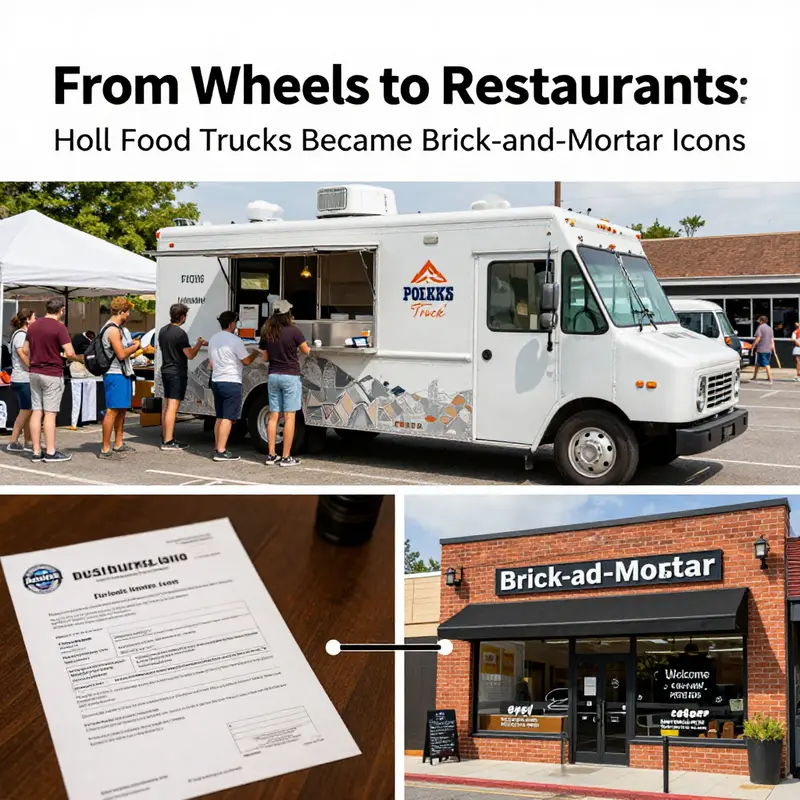
The path from a mobile kitchen to a permanent dining room is not just a change of address; it is a deliberate economic strategy. Food trucks offer an unusually small entry threshold for aspiring culinary entrepreneurs. They let an idea prove its appetite for a neighborhood without locking the founder into a long lease or a complex build-out before revenue begins to flow. In many cases, the truck is less a vehicle for selling food than a platform for testing demand, refining recipes, and building a community around a concept. The economic logic is straightforward but powerful: start compact, learn fast, and invest progressively in capacity that matches proven demand. When the concept earns its keep on the street, the need for a fixed location becomes less about necessity and more about scale, steadiness, and convenience for customers who want a predictable dining experience.
Consider the arc of several well-documented journeys, told in part through the lens of mobility itself. One Texas barbecue operation began in a single, unassuming truck that drew crowds with slow-smoked meats and comforting, Southern sides. The menu evolved in response to what the street taught—the time of day, the neighborhood’s tastes, and the rhythms of a city’s weekend crowd. The truck’s popularity created a reserve of cash and a growing base of loyal patrons, who followed the brand not merely for the food but for the sense that the crew understood their preferences as well as a neighbor might. That capital—both financial and relational—made a storefront a plausible next step. A permanent location wasn’t just about more seats; it was about expanding the capacity to meet demand with consistency and to deepen the relationship with a community that had already embraced the name and its cuisine.
In another city, a family-run Italian eatery found its footing on a food truck that offered meatball-centric sandwiches, calzones, and other familiar comforts. The narrative here is less about a dramatic pivot and more about a natural intensification of a winning formula. The truck validated the concept in real-time: customers loved the textures, the seasoning, and the sense of homestyle hospitality. As revenues increased and word-of-mouth amplified, the family expanded into a storefront network, preserving the core menu’s integrity while multiplying the hands that could cook it. The transition to brick-and-mortar did not erase the values that sparked the journey; it amplified them, making room for longer lines, bigger ovens, and a kitchen designed to sustain growth without compromising the attention to detail that first drew people in.
A Pacific Northwest taco truck story offers a similar throughline with a twist. The brand leaned into bold flavors and a vibrant, color-rich presentation that turned heads and earned repeat visits. The truck became a canvas for experimentation—new fillings, new toppings, new social rituals around meals. When demand solidified, the entrepreneur translated that energy into a multi-location footprint, extending the same appetite for adventure that customers initially encountered in a single street-side bite. The lesson here is not simply about replicating a menu but about translating the playbook: the ability to spark curiosity, deliver a consistent experience, and then scale that promise in a way that preserves the sense of discovery that made the concept compelling in the first place.
Detroit, known for its distinctive pizza lineage, supplied another variant of the same core: a street-tested concept that grew into a central piece of the city’s culinary identity. A truck specializing in a regional specialty can become a neighborhood fixture precisely because it sits at the intersection of accessibility and authenticity. The mobile phase invites rapid feedback loops—customers signaling their enthusiasm with repeat visits and online chatter, owners adjusting dough formulas, sauce balances, and crust textures in response. When the testing ground proves reliable, a fixed space becomes a home for that specificity, a place where the rhythm of service can be tuned with the precision of a seasoned operator rather than the more exploratory pace of a rotating truck schedule. The formalization into a storefront is not a surrender of the mobile ethos; it is a deepening of it, achieved through scale without sacrificing the craft.
Beyond the culinary profiles themselves lies a common, strategic thread: the capital efficiency of starting small. Mobility reduces initial risk by lowering upfront investment and ongoing overhead. A truck can be leased or purchased with a fraction of the capital required for a full-service restaurant. Rent, insurance, permits, and utilities—all major line items for a brick-and-mortar concept—are proportionally lighter in the early days. Revenue can be reinvested quickly into product development, equipment upgrades, and staff training. Cash flow models in this phase are straightforward but unforgiving; they demand discipline and careful inventory management, precise portioning, and a menu that can be delivered at speed without sacrificing core quality. The ability to iterate rapidly translates into a more resilient business model, one that can withstand the inevitable fluctuations of consumer demand and the unpredictable weather, festivals, and events that circulate through a city’s calendar.
As these operators move from street to storefront, they are not simply chasing more seats or bigger menus. They are extending a brand narrative that began with a lean concept and quick service. The truck becomes a rolling brand ambassador—an on-the-ground market research lab that collects signals from customers in real time. The owners learn which dishes spark conversations, which price points attract first-time buyers, and which neighborhood dynamics predict repeat visits. They discover where meals can be completed in a rush and where customers prefer a more relaxed dining tempo. This experiential intelligence translates into strategic choices about location selection, hours of operation, and even the interior design and service style of the brick-and-mortar space. The brand’s identity—its color palette, its hospitality tone, its signature plate presentation—evolves alongside the product itself, ensuring that the storefront does not betray the essence customers came to know on wheels.
Crucially, the path from truck to storefront is often supported by a deliberate sequence of financing and real estate decisions. The initial phase permits a level of savings and credit-building that is rarely possible in a traditional restaurant startup. Profits accumulate in a way that can be earmarked for a down payment, for a build-out loan, or for the acquisition of a suitable, scalable storefront location. The operator’s credibility grows as well: a customer base, supplier relationships, and a demonstrated track record become valuable collateral when seeking capital. Local lenders and investors often favor ventures with a credible proof point—an accessible customer stream, steady growth, and a clear plan for maintaining quality while expanding footprint. In that sense, mobility becomes a credible strategy for capital formation, a stepwise approach to scale that reduces the likelihood of capital paralysis at the critical moment when a physical space must be secured.
A key part of that strategy is brand coherence. The food on the truck carries the same DNA as the food in the restaurant. The same sourcing standards, the same cooking techniques, and the same commitment to service quality must survive the transition. To maintain that continuity, many operators build a simple, repeatable operating system early on. This system covers recipes, portion sizes, cooking times, supplier relationships, and even the cadence of employee training. The aim is to create a replicable model that can be scaled as the business grows, with minimal disruption to customers who expect a familiar taste, texture, and flavor profile regardless of where they encounter the brand. When done well, the storefront becomes more than a larger version of the truck. It becomes a secure platform for consistent execution, a place where the community can gather, celebrate, and rely on the same stable experience they discovered on wheels.
The stories behind these transitions also illuminate the softer, equally important dimension of entrepreneurship: community. A successful mobile business builds a following by showing up where people live, work, and socialize. It learns the rhythms of a city—the lunch surge, the after-work crowd, the weekend festival circuit—and it uses those signals to plan growth. The relationship with customers extends beyond a single transaction. People become advocates, returning for the comfort of familiar tastes and the trust that the cooks understand their preferences. The brand becomes a shared experience, something that anchors a neighborhood’s sense of place. When the time comes to settle into a brick-and-mortar home, that community continues to support the business as it scales. In neighborhoods where food is a form of storytelling, the storefront is a continuation of that narrative, not a departure from it.
Economic literacy is essential to this journey. The layering of costs—the initial equipment, insurance, licensing, maintenance, payroll, and the ongoing cost of goods sold—must be managed with forethought and discipline. Startups in the mobile phase often rely on simple financial tracking: daily revenue, margin per item, and a forecast that maps weekend peaks to staffing needs. As the venture matures, the financial model grows more complex. The business might explore debt options for a build-out, capital improvements for a larger kitchen, or even a multi-unit strategy that requires centralized procurement and streamlined logistics. The goal is to maintain healthy margins despite higher fixed costs and to preserve the nimbleness that allowed the brand to prove itself in the first place. In practice, this means negotiating strong supplier terms, optimizing menu engineering, and making real estate decisions that align with the brand’s identity and the customer’s expectations.
The broader lesson, supported by multiple success narratives, is that mobility can be a powerful catalyst for permanence. A truck is not merely a test kitchen; it is a scalable platform for brand development, customer engagement, and capital formation. It enables an operator to validate the concept in a live market, to adapt quickly, and to build a loyal following before the expense and risk of a fixed-location bet. When the market signals a sustainable opportunity, the same energy that drew customers to a food truck can be redirected into a storefront that preserves the brand’s essence while expanding its capacity to serve more people. This is the crux of the economic pathway: mobility as a proving ground, and permanence as a natural, well-supported evolution.
For readers and aspiring operators considering this path, the takeaway is not a single decision but a sequence of informed moves. Start with a concept that can thrive in a lean format, test it in diverse settings, and collect data on what resonates. Build a brand that customers trust and want to follow, not just a menu they enjoy for a single visit. Develop an operating system that can travel with you when you scale and that becomes the backbone of a fixed-location operation. Maintain financial discipline, forecast carefully, and treat every success as fuel for the next phase of growth. The stories that begin on wheels are not merely about food; they are about how small, deliberate steps can accumulate into a lasting presence in a city’s culinary landscape.
Readers who want practical grounding on the financial mechanics of starting and growing a mobile operation can explore targeted guidance on fiscal planning and cash flow management, including foundational tips for first-time truck owners. This type of resource can help an entrepreneur map the early costs, anticipate seasonal variation, and plan for a transition to a brick-and-mortar location without sacrificing the brand’s core values. The key is to approach the journey as a staged, disciplined process rather than a single leap. Mobility can be the vehicle that carries a concept from street corner fame to neighborhood staple, with a storefront that invites the next generation of customers to discover why the brand started in motion in the first place.
Internal resource for further reading and practical steps. For practical financial grounding on the mobile-start phase, consider financial tips for first-time food-truck owners.
External perspective corroborating these pathways is found in broader coverage of truck-to-restaurant success stories, which illustrate how mobility has historically served as a testing ground for durable brands. For a broader look at how trucks become permanent institutions, see https://www.foodandwine.com/restaurant-news/food-truck-to-restaurant-success-stories.
Turning Wheels into Destination: The Cultural and Societal Life of Restaurants Born on Food Trucks
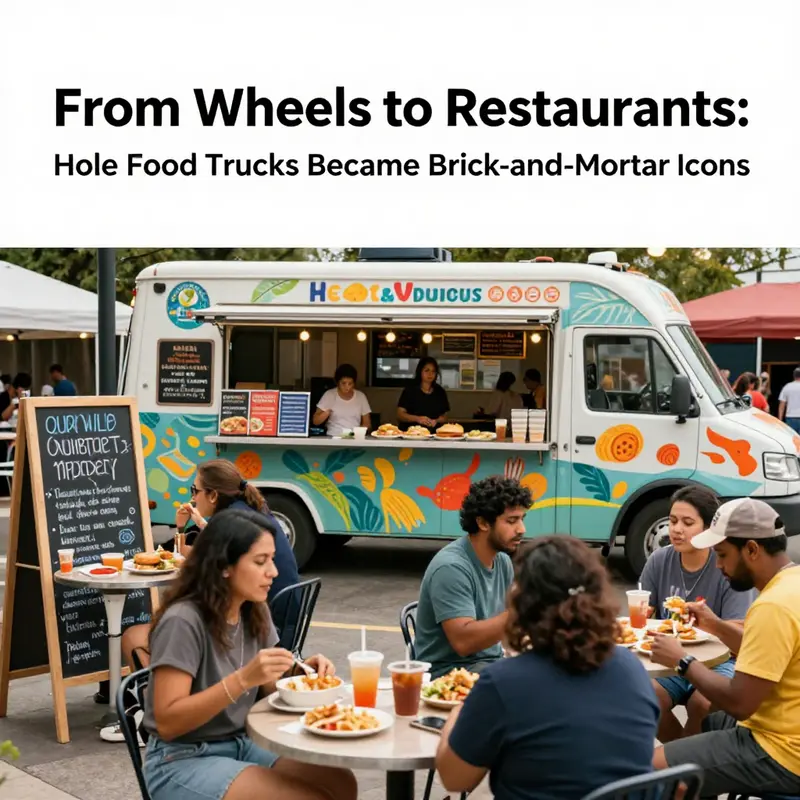
The arc from a mobile kitchen to a standing restaurant is more than a business pivot; it is a cultural trajectory that reveals how cities adapt to changing appetites, how communities forge identities around everyday meals, and how entrepreneurship can begin with nothing more than a cart, a dream, and a stubborn commitment to doing something well. When we trace the journeys of restaurants that started as food trucks, we see a pattern that repeats across urban landscapes: concepts honed in the open air, feedback gathered in real time from diverse passersby, and a brand identity crafted on wheels before it ever anchors a brick-and-mortar space. The stories are instructive not because they are rare exceptions, but because they illuminate a broader shift in how food businesses are conceived, tested, and scaled in the modern city. The essence of this shift lies in mobility as a strategic asset – an asset that lowers the barriers to entry, accelerates learning, and creates a vivid, participatory dining culture at the street level.\n\nIn practical terms, the food-truck-to-restaurant path has often begun with a concept born to fit a compact footprint and a budget that accommodates experimentation more than excess. A barbecue truck might win fans with slow-smoked meats and simple, comforting sides that speak to local taste memories. An Italian-American comfort-food truck could become a community favorite with meatball sandwiches and calzones that comfort and surprise in equal measure. A bold, Mexican-inspired truck might experiment with inventive taco constructions and vibrant presentation, while a Detroit-style pizza truck showcases the city’s unique crust and cheese configuration in a way that travels well and spreads by word of mouth. A plant-based mobile cafe might emphasize botanical flavors, craft beverages, and seasonal ingredients, inviting a broader audience to rethink what a green concept can feel like in a crowded dining scene. Each of these paths demonstrates a core truth: the truck creates a laboratory where a chef can test a vision in the crucible of real-time feedback, where menu ideas, service tempo, and branding all evolve together in response to actual customers rather than market forecasts.\n\nThe significance of the mobile form goes beyond the menu. It introduces a new relationship between food and place. In many urban environments, the traditional restaurant space is a fixed point of consumption – addressed, easy to locate, and often encumbered by rent, zoning, and byzantine permitting processes. The mobile unit lowers these barriers, allowing culinary teams to test what resonates with a given neighborhood, while simultaneously inviting residents to participate in a social ritual around a shared meal. This dynamic contradicts the old dichotomy that equates good food with expensive surroundings. Instead, it reveals a democratization of gastronomy in which authenticity is judged not by the grandeur of a dining hall but by the sincerity of a recipe, the consistency of a service ritual, and the capacity to surprise within a familiar framework. The street becomes a gallery, the menu a living exhibit, and the customer a collaborator in refining the product through everyday interactions.\n\nCultural theorists who study mobile eating emphasize that this phenomenon should be understood as part of a larger cultural movement toward flexibility, immediacy, and cross-cultural exchange. The idea that food can travel beyond conventional restaurant walls is not simply a matter of convenience; it reflects a shift in how communities imagine access to new flavors and new culinary ideas. When a taco or pizza concept is introduced in a walking corridor, a public square, or a campus district, it invites conversations about origin, technique, and taste that extend beyond the confines of a printed menu. The mobility of the concept itself becomes part of the flavor profile, a playful reminder that food is not a static product but a social experience that travels, negotiates, and evolves with its audience. In this sense, the truck plays a role not merely in feeding people but in shaping cultural memory – the way people remember where they ate, who cooked for them, and how those meals felt in the moment they tasted them.\n\nThat cultural dimension is inseparable from the economic and logistical realities of street food entrepreneurship. Mobile ventures operate in spaces that traditional restaurants often overlook – office districts during lunch hours, busy transit hubs, festival grounds, and neighborhood corridors undergoing redevelopment. These are the places where food can be both practical and aspirational: practical in its quick service, portable setup, and affordability; aspirational in its ability to spark a sense of place and identity among residents who see their daily routines reflected in a familiar food voice that still feels novel. By occupying these spaces, food trucks contribute to the revitalization of neighborhoods. They animate streets during daylight lulls, provide a platform for local producers to showcase ingredients, and create a sense of temporary, yet repeatable, cultural events that the community can anticipate. The effect is not merely economic; it is social, turning ordinary lunch breaks into shared experiences and giving local economies a pulse that can be felt by passersby long after the truck has left.\n\nThe transition from truck to brick-and-mortar is a natural evolution in many of these narratives, but it is not a universal destiny. The decision to stay mobile or to anchor a permanent space depends on a constellation of factors: the consistency of demand, the capacity to scale quality without diluting the original concept, the ability to secure more stable supplier relationships, and the desire to cultivate a larger dining environment that supports longer, more immersive experiences. When a concept proves itself over time, the owners often find that the operational discipline developed on wheels – precise timing, high-volume throughput, rigorous inventory control, and disciplined menu selection – translates well into a seasonal, weather-considerate brick-and-mortar operation. The menu, initially tuned for efficient, repeatable batches, may expand gradually as the team develops reliable sourcing networks, a longer service window, and a clearer sightline into what their guests value most. Yet even in cases where the truck becomes the flagship for a broader line of restaurants, the spirit of the concept – the direct dialogue with customers, the immediacy of feedback, and the willingness to pivot – remains the driving force behind the brand’s longevity.\n\nA brand’s story is another essential thread in this tapestry. Brand identity on a mobile platform is not an afterthought; it often precedes a storefront. The visual language – colors, typography, logo form, even the shape of the truck or cart – becomes a traveling ambassador that communicates tone before a single word is spoken. This chapter’s exploration of the branding dimension, though brief here, hints at a wider truth: the street-level experience demands messaging that is legible at a glance and experiences that reward curiosity. A strong brand helps customers find a sense of belonging in a crowded food scene. It tells them what to expect, creates a standard against which quality can be measured, and invites repeat visits in a city where novelty is the currency of engagement. In the transition to a permanent space, the brand’s core promise – that intimate, chef-driven flavor and a dependable, friendly service – can be scaled without losing the warmth that originally drew diners to the street. The brand, once a portable manifesto, becomes a guiding compass for every location the concept inhabits, ensuring consistency while allowing for local adaptation.\n\nThe five notable journeys – though described here in broad terms to honor the diversity of their origins – underscore how mobile beginnings cultivate entrepreneurial fluency. They illustrate how a concept, tested in a single truck, can expand to serve broader communities with more extensive spaces, hours, and amenities. They demonstrate a capacity to innovate under constraints: a small kitchen, a shared cart, a rotating schedule, and the daily challenge of forecasting demand in the moment. They highlight resilience in the face of regulatory complexity, staffing, and maintenance realities, reminding us that food entrepreneurship is as much about problem solving as it is about recipe development. They also reveal a shared ethos: the belief that great food can travel, cross borders, and still feel intimately local no matter where it is served. That ethos contributes to a broader urban culture in which dining is not simply the act of eating but the practice of gathering, storytelling, and social exchange conducted in public spaces that invite casual conversation, spontaneous mingling, and a sense of belonging.\n\nIf there is a through-line to these narratives, it is this: mobility creates a laboratory for experimentation that is simultaneously accessible to the entrepreneur and welcoming to the consumer. The utility of a truck is not in its capacity to move goods alone, but in its ability to move ideas – about flavor, about technique, about the kinds of experiences people want when they pause from their day to eat. The open-air platform makes it possible to witness the evolution of a concept from pilot to mainstay in real time, and it rewards those who listen closely to the city’s living, breathing appetite. This is not about a single trend but about a model of culinary entrepreneurship that foregrounds improvisation, community engagement, and a philosophical openness to change. It positions food as a site of social cohesion rather than a simple commodity, inviting residents to participate as co-authors of the dining landscape. The street is no longer merely a place to pick up a meal; it is a forum where ideas about health, tradition, sustainability, and innovation intersect and flow in a rhythm that is both practical and poetic.\n\nIn this sense, the cultural and societal impacts of mobile eating extend beyond the table. They shape how people perceive access to diverse cuisines, how neighborhoods reimagine their street life, and how young cooks pair risk with ambition. They encourage a flexible approach to entrepreneurship – one that values rapid learning, community listening, and the audacity to pilot a new concept in public space before committing to a permanent site. They also remind us that food, in its most compelling form, is a social art – an art that thrives when it invites participation, adapts to feedback, and remains anchored in a place while traveling to new audiences. The narrative of restaurants that started as food trucks is, in many ways, a story about urban evolution itself: an ongoing project in which mobility, culture, economy, and memory weave together to redefine what a dining experience can be.\n\nExternal resource for further cultural context: Mobile Eating: A Cultural Perspective. https://www.researchgate.net/publication/319568421MobileEatingACultural_Perspective
From Street Corners to Main Streets: How Geopolitical and Regional Forces Shape the Leap from Food Trucks to Brick-and-Mortar Restaurants
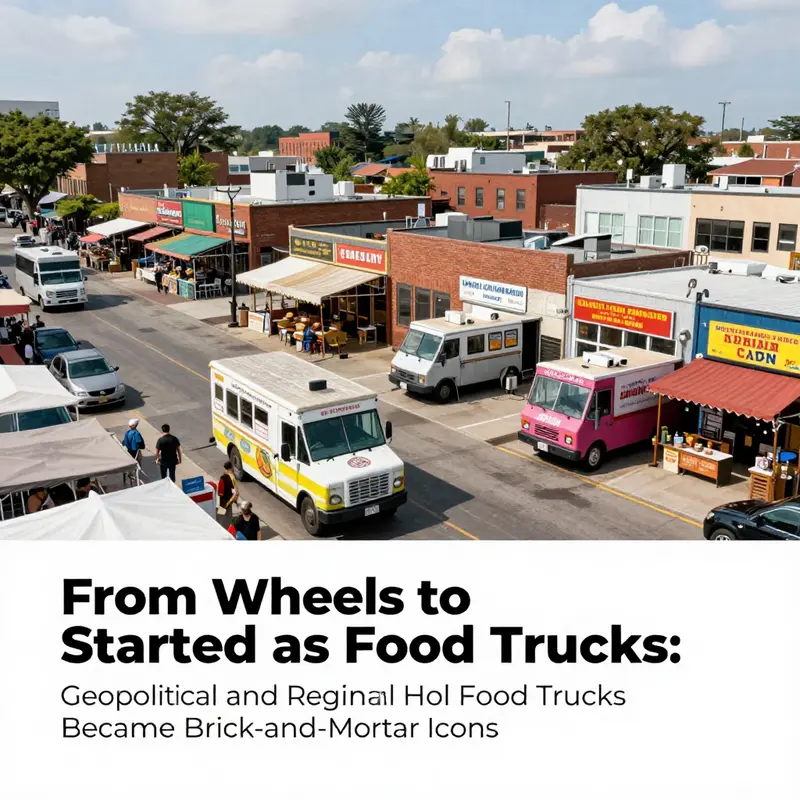
The arc from a mobile kitchen to a permanent dining room is rarely a straight line. It is a map drawn by the specific shapes of cities, neighborhoods, policies, and economies. When a food concept proves itself on the curb, it becomes not just a business plan but a barometer of place. The transition from truck to storefront unfolds where regional food culture meets urban policy, where street-level entrepreneurship intersects with real estate markets, and where the rhythm of a city–its traffic patterns, its festival calendar, its hours of operation–aligns with a carefully choreographed supply chain and an accessible labor pool. In this light, the rise of brick-and-mortar restaurants that began as food trucks is less about a singular moment of breakthrough and more about a confluence of geopolitical and regional dynamics that shape what a city rewards, how it regulates, and what its residents are willing to invest in. The narrative is not just about clever branding or kitchen skills. It is about place—the way a locale’s identity and policy environment become co-authors of a culinary story that starts on wheels and ends in a dining room with a fixed address.
Cities that cultivate vibrant street food cultures tend to become laboratories for ideas about how food wins audiences, builds trust, and sustains momentum long enough to justify a permanent space. In Los Angeles, Austin, and Portland, for instance, a permissive yet disciplined approach to street vending, coupled with a robust consumer appetite for diverse, high-quality mobile cuisine, creates a pathway for success that many concepts later translate into brick-and-mortar chapters. But the exact shape of that pathway is not universal; it shifts with the regional economy, the urban planning philosophy, and the way a city channels foot traffic, parking equity, and public space. A truck that garners a steady crowd in a dense, transit-rich corridor may find an easier transition than one trying to scale up in a market where commercial real estate is scarce or where health and zoning codes treat mobile kitchens as a temporary economy rather than a stepping-stone to permanence.
Geopolitics enters this story not through grand foreign policy speeches but through the day-to-day governance that governs where a wheel can park, how long a pop-up can run, and what standards a kitchen must meet to pass a health inspection. The same policy framework that governs a farmer’s market stall, a temporary trailer, or a sidewalk cart also shapes the potential for a concept to graduate into a full-service, brick-and-mortar restaurant. In practical terms, this means that the timeline from mobile to fixed space is often bound to the pace at which a city updates its regulations to accommodate growth while protecting public safety, labor standards, and neighborhood character. Some municipalities actively reimagine their downtowns and district cores by offering streamlined permitting, affordable incubator spaces, or co-working kitchen facilities designed to help emerging brands scale up without losing the qualities that made them popular in the first place. Others, faced with competing interests—from established restaurateurs, neighborhood associations, to residents worried about congestion—tend toward more conservative permitting regimes. The difference in approach can be the deciding factor in whether a concept works enough to warrant a storefront or remains a beloved but cherished truck in perpetuity.
Regional identity also matters. The story a city tells about food—and who gets to tell it—becomes a driver of demand that makes the leap from cart to counter a plausible business strategy. In the South, where barbecue has long functioned as both cultural touchstone and social glue, a mobile concept can ride the enduring appeal of artisanal technique and communal dining into a permanent space. The transition here is as much about preserving tradition as it is about expanding capacity; a storefront can act as a cultural hub where guests can linger and savor the same slow-smoked flavors that drew them to the truck, while a larger kitchen and dining room allow for greater consistency, broader service hours, and a more predictable supply chain during busy weekends or festival seasons. In the Midwest and rust-belt cities, the appeal of Detroit-style pizza or similarly regional specialties becomes a lever for urban revival. The same regional pride that fuels residency programs, local sourcing networks, and neighborhood redevelopment programs also amplifies the value proposition of a permanent venue. A brick-and-mortar storefront can anchor a broader neighborhood redevelopment story, attracting ancillary businesses such as grocers, beverage producers, or dessert makers, all of which reinforce the idea that food concepts rooted in mobility can become anchors for place-making rather than stand-alone curiosities.
The economics of scale is another critical strand in this weave. A mobile model provides a relatively low-cost entry point, allowing an entrepreneur to test a concept with reduced exposure to real estate risk. The feedback loop from the curb—foot traffic, order volume, social media resonance, and community event participation—becomes the early market research that informs whether there is durable demand enough to justify a fixed kitchen and dining area. When a concept hits that threshold, the advantages of an anchored operation—a stable labor pool, predictable inventory management, and a consistent customer experience—become compelling. Yet scale is not merely about more seats or a bigger grill; it is also about the ability to coordinate supply chains, labor shifts, and maintenance across multiple locations while preserving the essence of what attracted customers in the first place. The most successful transitions honor the core elements that made the truck compelling—the speed, the flavor profile, the sense of discovery—while layering in the sophistication of a full-service operation: a menu that can withstand the demands of dinner service, a brand experience that transcends weather and street noise, and a back-of-house system that can sustain growth without diminishing quality.
Policy environments shape these considerations in concrete ways. Parking restrictions, curbside management, and the allocation of street space for food vendors influence where a mobile concept can gain traction and, later, where a storefront can thrive. Health codes, which govern kitchen layout, ventilation, and sanitation, become a blueprint for the more demanding standards of a fixed kitchen. Labor regulations—minimum wage, benefits expectations, scheduling practices, and the rights of gig workers—reframe the economics of expansion in ways that can either accelerate or slow a transition. The interplay between local law and local appetite matters deeply. When a city celebrates the food truck scene as a component of its economic vitality—through street-food festivals, market corridors, and partnerships with cultural districts—the climate becomes friendlier to the growth of mobile concepts and, by extension, more supportive of permanent growth. When a city views street vendors with suspicion or constrains space aggressively, the same promising concepts face higher costs, longer timelines, and the risk that novelty may fade before a storefront becomes viable.
Urban development strategies interact with these micro-dynamics. Areas undergoing revitalization, repurposing of rail yards, or the transformation of old industrial districts into mixed-use neighborhoods often provide fertile ground for a restaurant that started on wheels. The presence of a robust culinary ecosystem—a cluster of producers, farmers, distributors, and hospitality professionals—offers a network effect that accelerates growth from truck to storefront. A concept can leverage nearby commissaries, shared production spaces, or co-retail environments to manage rising costs while maintaining quality. In these environments, the transition is not a solo sprint but a collective movement, aided by partners who understand the value of a known flavor and a familiar customer base. The same regional energy fueling neighborhood-level revivals—craft beverage scenes, artisanal food production, and cultural programming—feeds the appetite for brick-and-mortar experiences that feel both new and familiarly rooted in place. The narrative of these transitions is, at its core, a story about how a city’s identity evolves to accommodate, celebrate, and sustain the growth of culinary concepts that began in motion.
Even when a city’s policy and regional identity are aligned to promote growth, the decision to invest in a permanent location often hinges on more practical calculations: the stability of the supply chain, access to capital, and the predictability of consumer demand. Here, the regional economy plays a decisive role. A consumer market with strong discretionary spending, robust tourism, and a backbone of local small business lenders can fund expansion more readily. Conversely, in markets where costs rise quickly or where access to credit is stricter, the road from truck to storefront becomes longer and more circuitous. In the end, these transitions reveal a broader truth about urban economies: they tend to evolve through stages that reward concepts capable of delivering consistent value in a reliable setting, and the place where a concept begins—curbside or street corner—can influence the shape, timing, and texture of its final form. This is not to suggest that a storefront is inherently superior to a mobile approach. Rather, it is to acknowledge that the decision to settle into a brick-and-mortar space is deeply conditioned by the city’s architecture of policy, its economic vitality, and the cultural resonance of the cuisine it embraces.
The specific examples that anchor this chapter—though described here in general terms to respect the broader discussion—illustrate a recurring pattern: a food concept earns legitimacy and a following through mobility, then leverages that momentum into a permanent space that preserves the original essence while enabling expanded operations and deeper community engagement. A Texas barbecue truck might evolve into a full-service dining room that still honors the method and the slow rhythm of its cooking. A Detroit-style pizza truck could translate into multiple locations, maintaining the local pride and the familiar, crisp crust that drew customers in the first place. A vibrant, plant-forward concept could become a destination cafe, offering botanical beverages and a curated menu while serving as a community gathering place. The arc is not just a business pivot; it is the crystallization of a locality’s appetite for authentic, accessible flavors rendered with craftsmanship and rooted in a place’s unique cultural grammar.
As readers consider these dynamics, it is useful to connect the macro-patterns to the concrete experiences of entrepreneurs who stood at the crossroads between mobility and permanence. The decision to move into a brick-and-mortar space is rarely a leap of faith alone. It is a response to a confluence of street-level demand, supportive regulatory environments, and the economic confidence to invest in a future that promises greater scale without erasing the distinctive character that the mobile model introduced. In this sense, the story of restaurants that started as food trucks is as much about urban identity and community-building as it is about kitchen technique or brand storytelling. The city, in its complexity, becomes a partner in the journey, enabling concepts to grow from nimble beginnings into enduring institutions that shape how residents and visitors understand local food culture.
For further context on how these stories are understood in broader culinary discourse, see the external synthesis of five notable transitions documented in industry coverage. This broader piece underscores the idea that the move from truck to storefront often marks not just a business milestone but a structural shift in how a city perceives and supports its culinary entrepreneurs. The narrative aligns with the regional patterns described here and adds another layer of nuance about how communities invest in authentic, high-quality, and locally resonant food experiences—and how those investments pay off in both cultural and economic terms. https://www.foodandwine.com/food-truck-restaurants-2025. And for readers seeking practical, on-the-ground guidance as they navigate the regulatory maze that accompanies each step—from permit applications to health inspections and zoning—there is a useful internal resource that breaks down the complexities and offers actionable tips for those charting a path from mobile success to fixed-location impact. navigating food-truck industry regulations. This blend of regionally informed storytelling and pragmatic guidance helps illuminate how the best ideas endure—not by ignoring the rules of the road, but by mastering them in service of a community’s evolving tastes and needs.
Final thoughts
The arc from food truck to brick-and-mortar is more than a business path; it’s a story of curiosity meeting opportunity, of communities rallying around taste, and of places evolving to serve evolving needs. Mobility creates a low-risk entry point for experimentation, brand storytelling, and community engagement. When the spark catches, capital, culture, and regional dynamics align to sustain growth beyond the wheel. For event planners, HR and admin teams, and local groups, these journeys offer practical lessons: pilot ideas in flexible formats, invest in brand storytelling that travels, partner with local events to test concepts, and nurture spaces that welcome diverse audiences. The four chapters above illuminate not just the success stories, but the why behind them—why a prepared palate, a nimble business model, and a sense of place can turn a mobile kitchen into a beloved, enduring destination.