
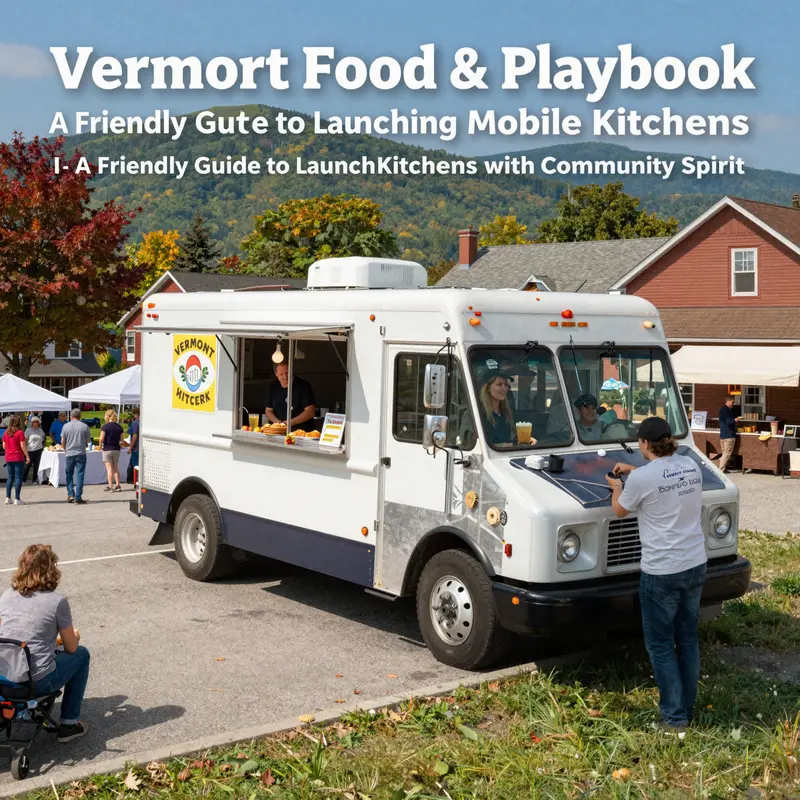
Vermont’s villages, farms, and vibrant event calendars create an inviting stage for a mobile kitchen. For event planners coordinating festivals, corporate teams planning catered experiences, neighborhood groups rallying neighbors, and food enthusiasts chasing new flavors, a food truck brings energy, local pride, and flexibility. But success rests on solid foundations: a clear business structure, health and safety compliance, local permits, and reliable operations. This guide stitches together practical steps into a cohesive roadmap, so you can move from concept to serving hungry guests with confidence. In the chapters that follow, you’ll see how to choose a business structure and register in Vermont, navigate the Vermont Department of Health’s Mobile Food Unit requirements, understand local zoning and permits, and align insurance, vehicle readiness, and sales tax. Each section ties back to the core aim: deliver delicious, responsibly produced experiences that reflect Vermont’s farm-to-table spirit and community vibe.
Foundations on Wheels: Choosing a Structure and Securing Registration to Launch a Vermont Food Truck
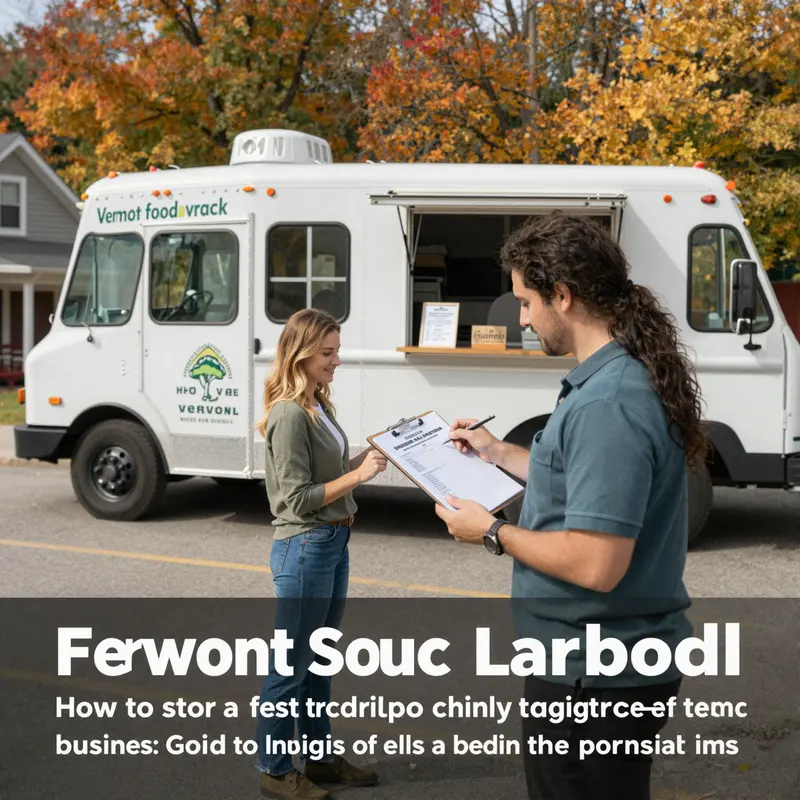
Foundations on Wheels: Choosing a Structure and Securing Registration to Launch a Vermont Food Truck
Chapter 2: Laying the Health Foundations for a Vermont Food Truck — Navigating the Mobile Food Unit Permits
When you picture a Vermont food truck rolling along a rural byway or threading through a bustling college town, what you’re really imagining is a carefully built system. In Vermont, that system starts with health and safety standards that protect the public as steadfastly as a mountain sunset protects a small town. The Vermont Department of Health (VDH) administers these standards through the Mobile Food Unit Permit, a formal gateway you must pass before anyone bites into your signature dish from a moving kitchen. This chapter isn’t about dreaming up recipes or crafting a brand story alone; it’s about laying the health foundations that make your dream legally sound, operational, and sustainable in a state that values community wellness as much as flavor. The journey begins with understanding what the permit covers, how to prepare a compelling application, and what the VDH and local authorities will expect once your truck hits the road.
The first step is straightforward, even if the paperwork feels like navigating a maze. The Mobile Food Unit Permit is the official authorization for any vehicle that prepares, sells, or serves food in motion or from a fixed location tied to a vehicle. It is a health-based permit, meaning it concentrates on sanitation, proper food handling, and safe facility design. The application asks for concrete details about your vehicle’s design, the equipment you plan to use, and the procedures you will follow to keep foods safe from the moment you receive ingredients to the moment a customer takes a bite. It’s not enough to have a great recipe; you must prove that every bite is prepared in a clean, controlled, compliant environment. In your application, you will describe the vehicle layout, the placement of cooking and cooling equipment, the location of handwashing stations, waste disposal methods, and the ways you will train and supervise staff. A robust plan shows you have thought through the daily realities of mobile food service in Vermont’s varied climates—from crisp autumn markets to brisk winter events.
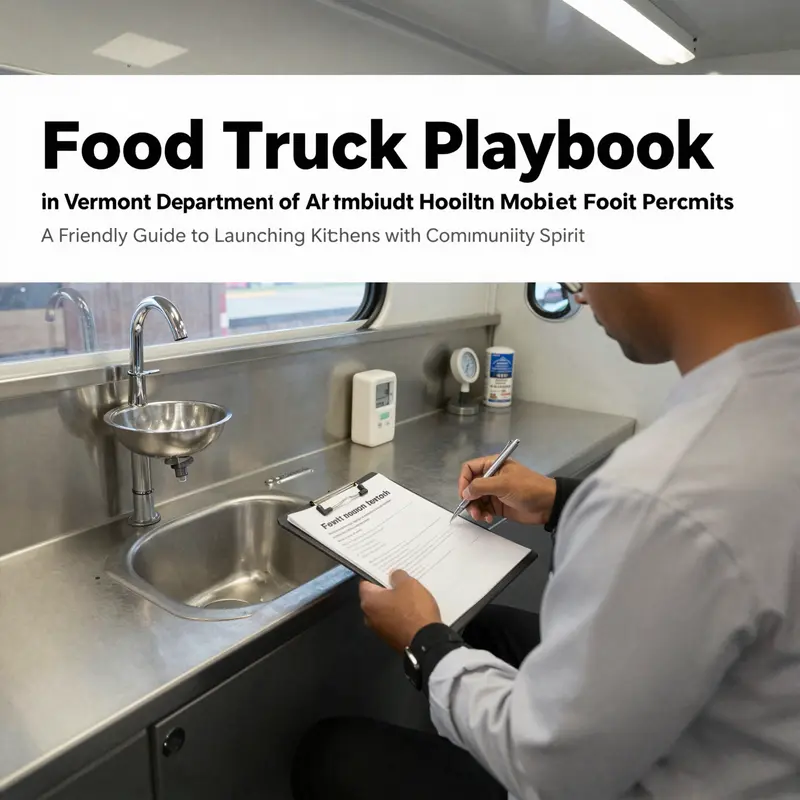
A critical component of the permit process is demonstration of facility compliance through a site inspection. The inspector will verify that your truck meets health code requirements in a hands-on way. You may be asked to show how you maintain proper refrigeration temperatures, how you separate raw and ready-to-eat foods, and how you manage waste. The inspection is not a one-size-fits-all checkpoint; it is tailored to your specific unit. Each mobile food unit is inspected and approved individually, and the permit is not transferable between vehicles or operators. This last point matters as you plan growth or a potential vehicle change. If you upgrade to a larger truck, or switch to a different chassis, you will need a new inspection and a new permit, ensuring that the safety standards travel with the machine as rigorously as your recipe travels with your brand. Preparing for this reality early—by building your plan around a single, scalable layout—saves frustration later.
Your application should convey two things at once: a clear operational story and an ironclad compliance framework. Start with the vehicle itself. Describe refrigeration, cooking capabilities, heat sources, and any specialized equipment that affects safety, such as a dedicated cold-holding unit for dairy or a separate area for raw proteins. For many operators, the ability to maintain correct temperatures is the hinge that keeps everything else in balance. The permit process will expect you to outline monitoring practices for temperatures, including how you log real-time readings and what corrective actions you take if a refrigerator or hot-holding unit dips or spikes. You’ll also be asked to present a sanitation plan—standard operating procedures that detail cleaning schedules, sanitizing agents, and the frequency with which you wash surfaces, utensils, and equipment. The plan should extend to pest control, waste handling, and facility safeguards that prevent cross-contamination. A thoughtful sanitation plan shows a respect for guests and a respect for the spaces in which you operate, from vendor fairs to busy downtown street corners.
The human element is equally essential. The VDH expects that staff who handle food have appropriate training and that management understands why training matters. In practice, that means a Food Protection Manager Certification or equivalent credential for the person who oversees food safety. The standard path many operators follow is ServSafe or an equivalent course—a credential that remains valid for five years and signals to the health department that the management team has the knowledge to prevent foodborne illness. Beyond formal certification, you should document ongoing staff training, including hands-on food handling, temperature control, personal hygiene protocols, and events where safety issues were reviewed. This is not merely a compliance checkbox; it represents a culture of safety that becomes part of your brand promise to customers. When a health inspector sees that your crew routinely engages in training and practice, it reinforces trust in your business and in the state’s regulatory framework that supports your license to operate.
In addition to the core permit application, there is a practical side to readiness that touches every shift, every service window, and every interaction with a customer. Your plan must address how customers encounter your truck in real life. Will your site allow for a handwashing sink with running water, a waste disposal system that is tidy and discreet, and a space that keeps customers safe from hot surfaces or slippery floors? The layout is not just about convenience; it is about safety, accessibility, and the ability to meet health code expectations even during peak service. The inspector will also look at how you manage traffic around your unit, how you handle peak times, and how you prevent overcrowding that can lead to safety issues. While these considerations might feel logistical, they are integral to a health-focused operating model. The better you document these plans, the more smoothly the permit review proceeds, and the faster you can begin serving a community that’s ready to support you.
The practical path to permit approval also includes gathering the right documentation and presenting it in a coherent, easy-to-navigate package. Have clear floor plans that indicate where cold storage sits relative to the cooking zone, where handwashing occurs, and how waste is contained and removed. Equipment lists should be precise, with model numbers and capacities where possible. If you’re sourcing equipment to meet vested health requirements, you should demonstrate compatibility with cold chain management, wind and weather resilience, and the Vermont climate, which can swing between warm market days and chilly festival evenings. The goal is to paint a vivid picture of a kitchen that travels well, stays clean, and remains compliant under Vermont’s varied demands. The permit reviewer does not expect perfection, but they do expect accountability in how you design, operate, and monitor your unit.
As you move through the process, it’s beneficial to anchor your path in broader regulatory wisdom while staying focused on your immediate goals. For a deeper, broader context on how to navigate the regulatory landscape beyond the mobile unit itself, you can explore thoughtfully written guidance on navigating food truck regulations. This resource helps frame the permit within a wider ecosystem of compliance, licensing, and operational best practices. navigating-food-truck-industry-regulations. This cross-reference can remind you that while the VDH permit is essential, your truck’s success also depends on a coherent strategy that aligns with local licensing, zoning rules, and community expectations. Vermont towns may impose their own local business licenses or mobile vendor permits, and those requirements can vary widely. It’s wise to connect early with the town office or local health department to confirm what additional steps apply to your specific operating location. In some districts, the proximity to schools, parks, or residential neighborhoods can trigger different restrictions on hours, parking, or service types. The goal is not to impose a rigid mold, but to design a flexible, compliant operating model that can adapt to the rhythms of multiple communities across the state.
The timing of the permit process is another practical consideration. Processing can take weeks, particularly if a site inspection reveals a need for adjustments to your truck’s layout or equipment. It’s prudent to plan your build and renovations with the permit timeline in mind, so you don’t find yourself chasing approvals while your dream slowly rolls away. If changes are needed after the inspection, you’ll want a clear path to update your documentation and reschedule inspections without creating a cascading delay in opening doors to customers. Since the permit is specific to a vehicle, you should treat the truck as an evolving platform—some operators stage a first launch with a basic, compliant configuration and layer in enhancements or seasonal equipment later, after receiving feedback from customers and inspectors alike. This practical approach minimizes downtime and keeps your momentum intact while you navigate the regulatory process.
Local engagement also matters. In Vermont, compliance isn’t only a state-level matter; it intersects with municipal rules and community expectations. A thoughtful operator doesn’t view these checks as adversarial hurdles but as a framework that preserves a level playing field and public confidence. If you’re planning events or fairs, you may find that municipalities appreciate advance notice and a clear demonstration that you can operate safely within their space. The health department’s guidance, your own sanitation SOPs, and a well-communicated plan to guests about safe handling can blend into a compelling narrative about responsibility and quality. This balanced posture—elevating safety while pursuing culinary appeal—often yields communities that welcome your truck and help you build a loyal following. In turn, a strong reputation for cleanliness and reliability supports sales, repeat customers, and, importantly, your long-term license to operate in Vermont’s vibrant food scene.
As you finalize your internal readiness, remember that the permit is one part of a larger system of compliance that includes registration, local licensing, and employee credentials. The steps converge into a sustainable operating model: a vehicle that is safe to drive, a kitchen that consistently produces safe food, and a team trained to uphold the highest standards. The permit process, while technical, is a powerful framework that protects customers and gives you a platform to grow. The more you invest in a robust application, the smoother the journey from dream to daily service becomes. You’ll be better prepared not just to pass an inspection, but to deliver a dependable, delightful experience that Vermont residents and visitors will seek out again and again, season after season.
External resource: For official guidance on the mobile food unit permit process, consult the Vermont Department of Health and its mobile food unit pages. This resource provides the most current forms, checklists, and contact information to support you through the application and compliance journey: https://healthvermont.gov/food-safety/mobile-food-unit-permits
Chapter 3: Navigating Vermont’s Local Permits, Zoning, and Compliance to Launch a Food Truck
The journey from a hobby on wheels to a legally operating Vermont food truck begins to tilt from the broad strokes of state compliance to the fine-grained expectations of local authority. After laying the groundwork with business registration, a state mobile food unit permit, and the health codes that govern food preparation, the next mile marker is often the landscape of local permits, zoning rules, and ongoing compliance. In Vermont, towns and cities aren’t simply administrative backdrops; they are active gatekeepers who shape where you can park, when you can serve, and how you must operate to protect public health and maintain neighborhood character. The interplay between state health standards and local ordinances creates a framework that is robust, but it also rewards preparedness and community engagement. Think of local permits and zoning as the practical skeleton that supports every delicious dish you plan to serve from your truck.
In practice, no two Vermont municipalities manage this process in exactly the same way. Burlington, Montpelier, Stowe, and a dozen smaller towns each have their own flavor of rules, even as they share underlying aims: safe food, safe vehicle operation, and respectful placement within the community. The core idea is to clarify where you can operate, what licenses you must hold, and how you prove you meet the community’s expectations for cleanliness, waste management, noise, and traffic. The first step is recognizing that local authority exists just as strongly as state authority, and your path to legal operation is as much about building relationships with local officials as it is about filing forms. To begin, contact the planning or zoning office in your intended operating municipality. They will tell you whether a local business license is required and whether your operation qualifies as a mobile vendor, a temporary food service, or a broader business activity in the public right of way. The answers are not merely bureaucratic; they determine where you can place your truck, how long you can stay in one spot, and what kind of insurance or permits you must carry.
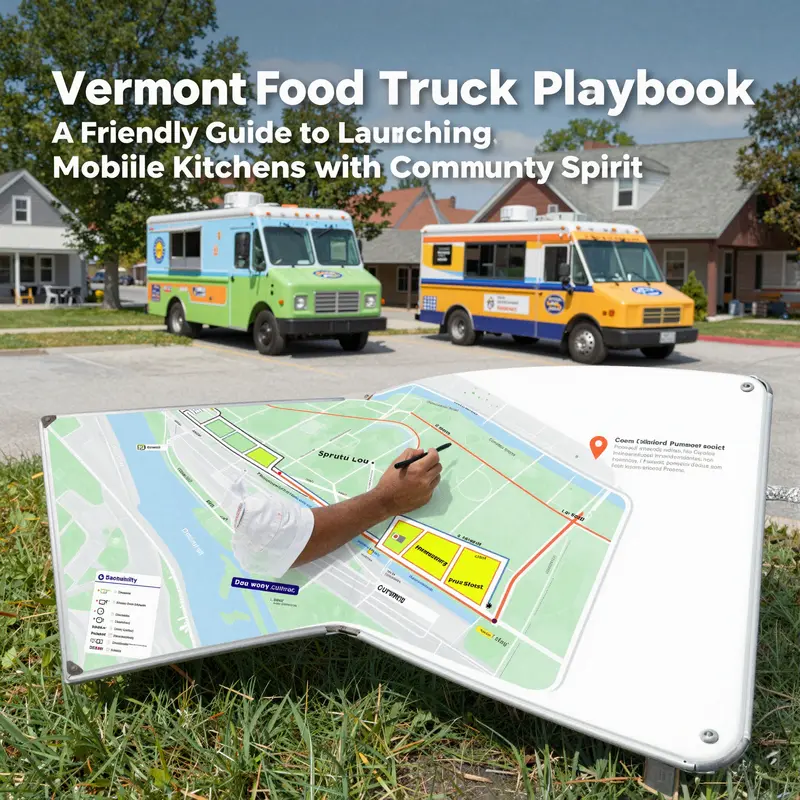
A practical way to approach this is to map your planned routes and high-traffic locations against the zoning districts described in each town’s code. In larger towns, you may find designated zones designed for food stalls—often near downtown hubs, waterfronts, or event venues. In smaller communities, the rules can be more restrictive, or they may be less formal but still enforceable through annual licenses or special-event permits. In Burlington and in similar municipalities, for example, there are typically explicit expectations about where food trucks may operate near parks, schools, or residential districts. These rules reflect a balance between giving small business owners the flexibility to reach customers and preserving the quality of life for residents and visitors alike. Understanding these nuances is not a one-and-done task. It requires ongoing attention to changes in local ordinances, annual license renewals, and sometimes seasonal adjustments that towns implement to accommodate events and peak tourism periods.
Once you’ve identified the local touchpoints, the next step is to secure the actual permits. In many Vermont towns, you’ll encounter two parallel tracks: a local operating permit and a local business license or mobile vendor permit. The local permit typically covers where you can operate and the conditions of your vehicle’s presence in public spaces. The local business license, when required, confirms that your business is registered to operate in that jurisdiction and that you meet local tax or fee requirements. In some communities, these items are bundled into a single application, while others require you to submit separate documents to different departments. Fee structures vary by town, and some jurisdictions require proof of insurance before issuing a license. Because these requirements can change with the municipal budget cycle or council updates, it’s wise to plan for a renewal window several weeks before your current permit expires.
Beyond permits, zoning plays a central role in defining the physical constraints of your operation. Zoning determines what types of uses are permitted in specific areas and may specify buffer zones, parking constraints, and distance from sensitive sites like schools. In Vermont, this often translates into explicit limitations on where you can set up your truck, how long you may stay, and whether a given location qualifies as a traditional storefront substitute or a temporary event setup. The zoning office can explain if your intended footprint—such as the truck itself, any canopy, and related equipment—complies with establishing standards. In some towns, you may also need to secure permission from a park district, a university campus, or a private property owner when you plan to operate in a particular space. If you intend to participate in farmers markets or special events, these activities may require separate event-specific authorizations, even if you already hold a general permit to operate in town.
Alongside the local permits and zoning considerations, there is a practical, health-focused layer that cannot be overlooked. The Vermont Department of Health’s public health framework still governs your day-to-day operations, particularly in relation to food safety at the point of service. While the state has its own Mobile Food Unit Permit for rolling kitchens, the local layer frequently requires you to demonstrate ongoing compliance with sanitation standards in a way that aligns with the larger health system. In some communities, local inspectors may look for evidence that your operation has a dedicated handwashing station, proper waste disposal arrangements, and clear separation between raw and ready-to-eat foods. The goal remains the same: prevent contamination, protect workers, and safeguard customers—whether you are serving in a busy downtown corridor or a quiet rural stretch.
That connection between state and local oversight also means you’ll likely be coordinating with the Vermont Department of Health’s Food Service Establishment program. It’s not merely a formality; it’s a foundational assurance that your mobile kitchen adheres to consistent food handling, storage, and sanitation practices. The state permit entitles you to operate, while the local permits validate your fit within a particular community. Together, they form a comprehensive compliance picture. You will find that a well-run operation keeps meticulous records: food sourcing logs, temperature records for perishable items, cleaning schedules, and staff training certificates. Keeping these records not only helps during inspections but also builds trust with customers and host communities who value safety and accountability.
To travelers and students of the craft who want to see how this systems thinking is articulated in full, a practical overview of integrated regulations can be found in resources that discuss navigating food-truck industry regulations. These materials emphasize that the licensing dance involves several agencies and layers of approval, each with its own timelines and expectations. A quick, meaningful read is available at the internal resource linked here: Navigating food-truck industry regulations. This reference helps reinforce the idea that success comes from respecting the rhythms of local governance as much as from delighting the palate.
As you pursue these local steps, remember that compliance is not a one-off hurdle but an ongoing discipline. You will need to keep your permits up to date, renew licenses when due, and respond promptly to any feedback from inspectors. Regular self-audits—checking that your trucks’ refrigeration units stay within safe temperature ranges, that your handwashing stations are stocked and accessible, and that waste disposal practices meet the community’s standards—will save time and money in the long run. The relationship with local health and enforcement officials can be strengthened by proactive communication and a willingness to participate in training sessions offered by the state health department. Attending these sessions signals your commitment to community safety and can lead to smoother permit renewals and fewer friction points during inspections.
From a practical standpoint, you’ll also want to align local permits with the broader tax environment. While the sales tax permit is handled at the state level, many towns require proof of this tax license when issuing a local vendor or business permit. Ensuring your tax registrations are current avoids last-minute complications when you pivot to peak seasons or seasonal events. Building a simple compliance binder—a folder or digital folder with scanned copies of licenses, permit numbers, inspection dates, and renewal timelines—can help you stay on top of deadlines and changes in local codes. It’s a small habit with outsized payoff, especially in bustling tourist pockets where permit renewals may occur while you’re chasing a high-volume weekend.
The actual process of securing a local permit can be as straightforward as submitting an application and paying a fee, or it can involve multiple steps that require coordination across departments. Some towns require a site or footprint plan, showing precisely where your vehicle will park, how traffic will flow around it, and what most closely resembles a public-facing footprint. Others may require a written statement of compliance with environmental health standards or a short risk assessment demonstrating that your operation won’t create undue nuisance in neighboring properties. Across the board, the emphasis is on clarity and predictability—knowing the rules before you pull into a location prevents surprises and keeps your operation focused on serving customers rather than chasing paperwork.
If you are thinking about long-term growth, consider how your local footprint might evolve as you expand to more sites or add additional trucks. You may encounter a future where multiple towns require separate licenses, or where a regional permit can cover several towns within a certain radius. In any case, maintain an open line of communication with your local authorities. Let them know your plans, ask questions early, and seek guidance on how your business can contribute to a vibrant local economy without compromising safety and community standards. This collaborative posture often yields easier renewals, faster permit processing, and better relationships with event organizers who value reliable, compliant operators.
In summary, Vermont’s local permits and zoning landscape demand a proactive, organized approach. They require you to translate the state’s health and safety expectations into concrete, locational reality. By engaging the local planning and zoning offices early, securing the appropriate licenses, understanding parking and operation constraints, and maintaining rigorous records, you build a compliant foundation for sustainable operation. Importantly, these steps dovetail with the state permits and health inspections already described in earlier chapters. The result is a business that travels the streets with confidence, earns the trust of communities, and consistently delivers safe, delicious meals to hungry patrons.
External resource: https://health.vermont.gov/food-service-establishments
Chapter 4: Insuring the Route to Vermont Street Food — Vehicle Safety, Insurance, and Sales Tax Essentials
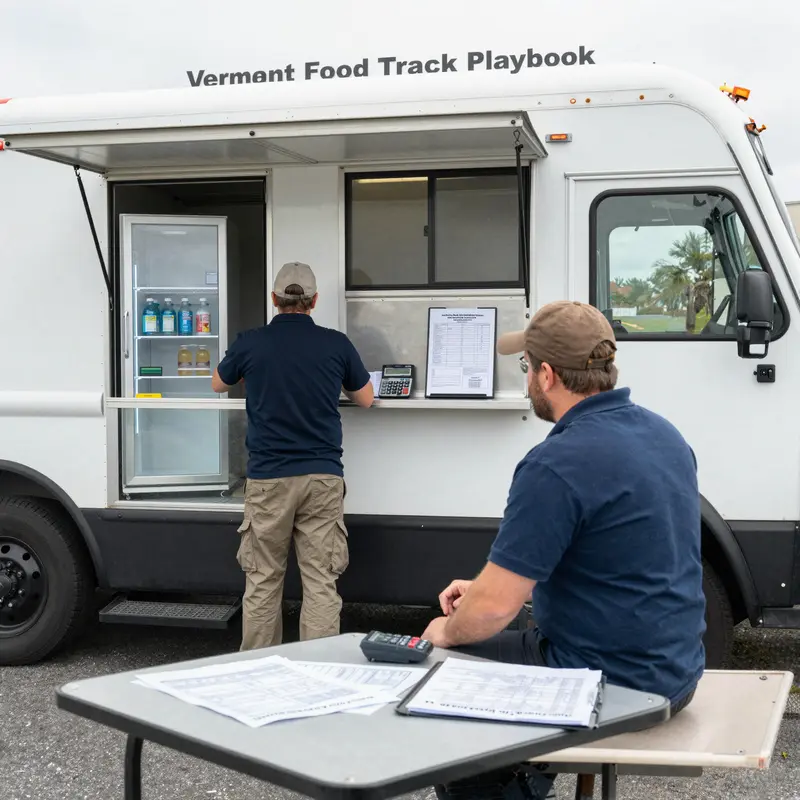
The path to launching a successful food truck in Vermont hinges on more than a great concept or a gleaming chassis. It rests on the quiet, often unseen disciplines that keep a small business on the road and compliant with a dense lattice of rules. In Vermont, as in many corners of the country, the practical backbone of a mobile kitchen is built from three interlocking pillars: insurance, the vehicle itself, and the sales tax framework that governs every bite sold from a voiceless, wheels-on-wheels kitchen. The journey from dream to daily service begins with you budgeting for risk, securing the right coverages, and ensuring the rig you depend on meets the state’s exacting safety standards. It is a rhythm of preparation, documentation, and vigilance, where every dollar spent on protection or compliance reduces ambiguity on the day the truck rolls and the customers line up for comfort food served hot and fresh in a Vermont parking lot, lot-line, or festival ground.\n\nWhen you step into the world of insurance for a Vermont food truck, you are entering a landscape where two kinds of protection work hand in hand to shield your crew, your patrons, and your investment. First, commercial auto insurance tailored for a vehicle used in a business is not optional—it is foundational. You will want liability coverage that protects against bodily injury and property damage arising from a collision or an accident in which your truck is at fault. This is not just about the truck; it covers the equipment you rely on to produce meals on the fly, the coolers, the generators, the hot cases, and the inventory that can vanish in an instant if a sudden shutdown occurs or a crash damages the stock. A robust policy should extend protection to physical damage—collision and comprehensive—so your wheels, chassis, and the kitchen module are shielded in case of fire, hail, theft, or vandalism. The equipment and inventory inside the truck deserve attention too; if a ladder, a generator, or a deep fryer gets damaged, you want coverage that compensates for the loss so you’re not financing your own misfortune out of pockets or lost revenue. For operators who run multiple venues or travel across county lines, a policy that understands the mobile nature of the business—covering travel, storage, and off-site incidents—becomes the bridge between a single incident and months of downtime.\n\nSecond, general liability insurance offers the broader shield most owners appreciate. It protects against claims of bodily injury or property damage that occur during operations, the kind of event that can snowball from a single spill to a civil suit if a customer slips near the service window or a bystander claims an unsafe operating condition caused harm. It is the kind of protection that helps a small business maintain credibility with event organizers, landlords, and municipalities who look for solid risk management as a prerequisite to permits and placements. Thoughtful coverage also extends to non-owned equipment or leased space that you might rely on during a pop-up or a weekend market. The discipline of documenting safety procedures, training staff, and keeping a responsive maintenance log can substantially influence premium costs and, more importantly, your peace of mind.\n\nAs you negotiate insurance, remember that Vermont’s regulatory reality values clarity and completeness. When you speak with brokers or carriers, be prepared to detail not only the make and model of your vehicle but also the layout of your kitchen, the cooling capacity of your refrigeration system, the sources of power, water supply, and the waste management plan. Insurers will want to understand your sanitation protocol, your food source controls, and the steps you take to prevent cross-contamination. A strong policy addresses not just the incident today but the contingency that a warning sign on a machine might indicate a larger maintenance issue tomorrow. You should expect to discuss the vehicle’s registration status with the Vermont DMV, the inspection cadence, and the safety features that protect staff and customers—working brakes, lights, reliable alarms, and clearly marked emergency exits. In the same breath you discuss coverage, you should buttress your risk management with practical practices: check your equipment periodically, train staff to follow standard operating procedures, and maintain an up-to-date inventory and a documented cleaning schedule. Insurance is not a ceiling to your dreaming; it is the scaffolding that keeps the dream standing when weather, traffic, or a busy event pushes your limits.\n\nVehicle compliance in Vermont follows a parallel track, and the two tracks eventually converge in a well-lit intersection of responsibility and opportunity. The food truck itself must be properly registered with the Vermont Department of Motor Vehicles, and the registration should reflect that the owner holds the license in their name. This legal realism matters: it anchors your ownership to a tangible record that can be verified at an inspection or during a permit renewal. The vehicle will need to pass state inspections, a standard that ensures basic roadworthiness and safety for a mobile kitchen. The safety features you depend on—reliable brakes, functioning lighting, and clear emergency egress—serve dual roles: they are essential for everyday safety and they are the very proof inspectors and insurance underwriters look for when assessing risk. If you are using a converted van or a trailer, the rules tighten in places. Conversions must meet fire safety expectations, electrical system integrity, and structural safety. In practice this means working with qualified professionals to verify that gas lines, electrical wiring, and flame-producing appliances are installed in a manner that minimizes risk of ignition, electrical faults, or structural failure during a sharp turn or a brisk Vermont wind. The result is not merely compliance; it is a clear signal to lenders, organizers, and customers that you take safety seriously and that your business can be trusted to operate in diverse settings—from a quiet farmers market to a crowded evening festival.\n\nThe vehicle story in Vermont cannot be told without attention to the day-to-day realities of operating a mobile kitchen in a state with consistent seasons and a robust tourism economy. Your truck will be subject to registration reviews with the DMV, annual or periodic inspections, and potentially local enforcement that monitors street vending regulations and parking. In practical terms, this means keeping up with registrations and renewals, maintaining proper refrigeration and sanitation hardware, and planning for seasonal shifts. Vermont’s environment rewards preparedness; the more you can demonstrate that your vehicle and its equipment are in top condition, the smoother the permitting process tends to be, the more favorable the terms you may secure from lenders, and the greater your ability to adapt to changing venues or weather windows. It also reduces the odds that a last-minute repair will derail a busy weekend or require a rushed, expensive fix that erodes profit margins. The beauty of this approach lies in its coherence: a well-maintained vehicle, compliant with safety and regulatory expectations, is the physical anchor that supports every menu change, every event booking, and every marketing story you tell across the state.\n\nOn the tax front, sales tax remains a critical, sometimes underestimated, dimension of operating a food truck. Vermont imposes a state sales tax on most prepared foods, and the practical effect is that your customer-facing price reflects tax in a predictable, reportable way. It is essential to secure a Vermont Sales Tax Permit and to align your point-of-sale system with the state’s reporting schedule. In Vermont, the formal approach is to collect the tax from customers at the point of sale and remit it to the Vermont Department of Taxes, typically on a monthly or quarterly cycle depending on volume. The mechanics may seem technical, but the consequences of missteps—late filings, incorrect remittance, or failures to collect—are real. They can erode margins, trigger penalties, and complicate audits. A disciplined approach to tax begins with a clean separation of business funds from personal funds, accurate record-keeping of every sale, and a reliable method of tracking tax collected. Integrating this into your daily routine means choosing a POS system or a bookkeeping workflow that distinguishes taxable and non-taxable items, records tax-exempt customers when applicable, and produces clear, auditable reports. It also means understanding whether your operation is taxed at the state level or subject to municipal variations that Vermont permits in certain contexts, though the core rule remains that prepared foods are taxable at the state level and must be reported to the Department of Taxes. As you plan the season, you should map out your filing cadence, set reminders for renewal windows, and budget for potential tax payments in your monthly cash flow. The practical payoff is a smoother year-round operation, fewer surprises at tax time, and more time to devote to menu development and customer service.\n\nTo weave these threads into a workable Vermont strategy, you must think holistically about how insurance, vehicle readiness, and tax compliance interact. Your insurance premiums, for example, reflect your vehicle’s safety record and the robustness of your risk management program. A well-maintained vehicle reduces the likelihood of a claim and, by extension, the cost of coverage. In turn, stable coverage supports better financing options for fleet expansions or upgrades to your kitchen equipment. Vehicle compliance plays into your ability to operate legally at more venues, which broadens the market and improves revenue stability. A compliant, properly insured truck is more likely to be invited to festivals, farmers’ markets, and long-standing partnerships with organizers who demand reliable operators. And tax compliance, while sometimes tedious, ensures that the business remains solvent and reputable. A misstep in taxes can overshadow months of careful compliance in other areas and create a drag on growth that is difficult to recover. Vermont’s regulatory ecosystem rewards operators who plan with clarity, document with discipline, and execute with consistency.\n\nAs you read this, you may find it helpful to situate your journey within a broader regulatory frame. For those seeking a broader view of how all the compliance pieces fit together in the industry, there is a useful guide on navigating food truck industry regulations that can complement the specifics of Vermont rules. You can explore it here: Navigating food truck industry regulations. This resource helps you connect insurance, vehicle compliance, local permits, and health inspections into a coherent operating plan that reduces friction at every stage of licensing, construction, and daily service. The integration of these elements becomes the backbone of a resilient business model, one that supports growth, reduces risk, and builds trust with customers, event organizers, and regulators alike.\n\nFinally, a note on the practical workflow of starting a Vermont food truck: begin with a clear, written plan that unlocks the sequence of approvals, the budget for insurance and vehicle upgrades, and the cash flow plan for tax obligations. Build a calendar that includes permit renewal dates, inspection windows, and staff certification expirations. Create a record-keeping system from day one that captures vehicle registrations, insurance declarations, inspection reports, and tax filings. The effort you invest up front pays dividends in fewer surprises, steadier operations, and the confidence to adapt menus or venues as demand evolves. In Vermont, the road to success for a food truck blends meticulous compliance with the vigor of a reliable business operation. It invites you to turn a mobile kitchen into a dependable, reputable presence that diners seek out and organizers welcome, season after season.\n\nFor more detailed guidance on Vermont sales tax obligations, refer to the official resources provided by the state: https://tax.vermont.gov. This external source offers the latest forms, payment schedules, and filing requirements that will complement the practical steps outlined here and help you stay aligned with state expectations. As you continue your journey, keep a steady focus on the three pillars that anchor your operation—insurance, vehicle readiness, and tax compliance—and let them guide every decision you make, from procurement and layout choices to venue selection and customer engagement. The road may be long, but with a solid foundation, your Vermont food truck can become a trusted, vibrant part of the state’s street-food landscape.
Final thoughts
Launching a Vermont food truck is a journey that blends legal setup, health and safety discipline, and community engagement. By aligning your business structure, securing the Mobile Food Unit Permit, navigating local permits, and ensuring solid insurance and tax compliance, you create a resilient foundation that can weather events, partnerships, and seasonal demand. Keep your mission — sharing great flavors with Vermonters and visitors — at the center of every decision, and you’ll build trust, reliability, and a loyal audience. Celebrate each milestone as a step toward a thriving mobile kitchen that embodies Vermont’s spirit of community, sustainability, and delicious, responsibly produced food.