
If you’re orchestrating a festival, planning a corporate gathering, rallying a neighborhood market, or simply chasing the next great bite, understanding whether food trucks need a seller’s permit is essential. A seller’s permit—often called a sales tax permit or resale certificate—allows a mobile kitchen to collect and remit sales tax, keep customers happy with smooth transactions, and avoid surprises at inspection time. Regulations swing wildly from city to city and state to state, but the core idea remains: selling taxable food typically requires proper credentialing. This four-chapter guide speaks directly to Event Planners & Organizers, Corporate HR & Admin Teams, Local Community Groups, and curious Food Enthusiasts. You’ll learn the role of seller’s permits, how local and state variations shape planning, what inspections and compliance look like in practice, and a clear path to obtaining the necessary permits—complete with timelines, costs, and practical tips. Each chapter connects to the central question and helps you coordinate safer, more successful mobile food experiences for your audience.
Roadmap to Compliance: Why Every Food Truck Needs a Seller’s Permit Across the United States
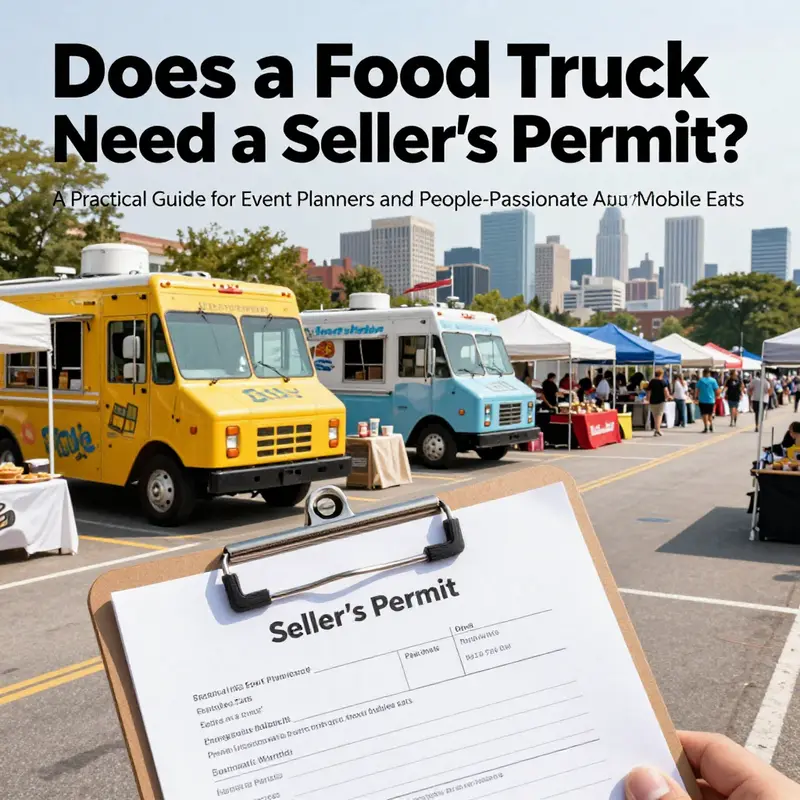
Every street corner where a food truck parks becomes a small jurisdictional crossroad. The decisions that keep that truck legally humming rely on a single, often overlooked document: the seller’s permit. In practice, this permit is less a badge and more a traffic signal for the tax authorities who guard the revenue streams behind every bite. For a kitchen on wheels, the seller’s permit is the essential tool that allows a business to collect sales tax from customers and to pass those taxes on to the appropriate state agency. It sits alongside health permits, business licenses, and vehicle registrations, but it is fundamentally different in purpose and operation. Unlike a health inspection, which guarantees food safety, or a business license, which authorizes the enterprise to exist, the seller’s permit governs the financial side of the transaction across multiple venues and jurisdictions. In many states it is known by a different name, but the core function remains the same: it legitimizes the act of collecting tax on taxable goods and services sold, and it provides the framework for reporting those collections to the state. For food trucks, where sales occur in a fluid map of neighborhoods, festivals, markets, and private events, the permit acts as a unifying thread that ties diverse operations into a single tax reporting responsibility.
The notion of nexus shapes much of this landscape. Nexus is the point at which a state asserts the authority to require a business to collect and remit sales tax. A food truck creates nexus in the state where it sells, where it stores inventory, or where it maintains payroll and other business activities. Because trucks often move from one city or county to another—and sometimes cross state lines—the question becomes not simply whether you need a permit, but in which jurisdictions you must obtain one. In practice, most food truck operators end up with a seller’s permit in every state where they have meaningful sales activity, and often for localities within those states. The result is a compliance routine that must adapt to the rhythm of the truck’s calendar—markets, fairs, block parties, and fixed routes alike.
In California, the need is explicit and continuous. The seller’s permit is issued by the state’s tax administration agency and becomes mandatory as soon as the truck has nexus, whether through selling, employing staff, maintaining inventory, or storing goods within the state. Issuance enables the operator to collect sales tax on taxable food and beverage items and to remit those taxes to the California authorities. Without it, a vendor risks penalties, interest, and potential legal action for noncompliance. The permit is more than a tax collection tool; it is a foundational credential that supports broader business activities. It can underpin the ability to open a business bank account, lease a commissary, or secure financing, because it demonstrates that the operator understands and embraces the state’s tax and regulatory framework.
In other states, the structure is similar, though the naming and the administrative home may vary. In Texas, for example, the seller’s permit is handled by the state Comptroller’s office. The requirement precedes the act of collecting sales tax and is designed to ensure that the operator is properly authorized before moving funds to the tax authorities. In New York, the permit lives under the banner of the State Department of Taxation and Finance, with online registration and associated fees that reflect both the administrative costs and the responsibility of reporting. Even in places where sales tax is not imposed at the state level, such as Oregon, the existence of local taxes or services can create an incentive to secure a seller’s permit or equivalent registration. The overarching logic is consistent: the permit serves as a gatekeeper that keeps tax obligations visible, trackable, and manageable across the various locales the truck traverses.
Beyond sales tax collection, the seller’s permit unlocks the ability to use resale exemptions when purchasing supplies. A resale certificate allows a food truck to buy ingredients, packaging, and equipment without paying sales tax at the point of purchase, on the condition that those goods are to be resold to customers. The tax is then collected at the final sale, to the consumer, rather than at every upstream purchase. This chain—tax collected at the point of sale, not at each procurement stage—helps keep operating costs predictable and aligned with cash flow. It is a practical tool for budgeting, pricing, and maintaining competitive margins in a business where every hundred dollars of savings can translate into a more flexible menu or a stronger presence in a crowded market. The resale mechanism also underscores why the seller’s permit is not a one-and-done formality; it is part of an ongoing system of documentation and compliance that follows the business through its growth and through its visits to different jurisdictions.
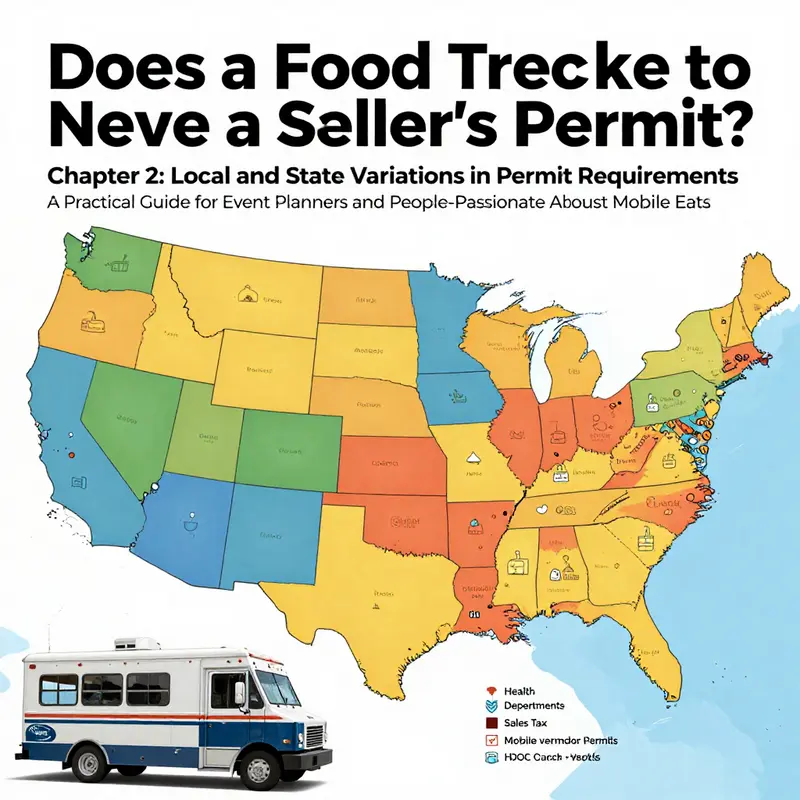
For the operator who is charting a course through multiple counties and municipalities within a single state, the permitting process often requires a careful map of where sales occur and where tax is due. Some locations wield a distinct local tax authority with its own registration needs, which means the operator must secure a local vendor permit or a mobile food vendor permit for that location. The workflow becomes a juggling act: you maintain your state seller’s permit to cover statewide sales tax obligations, while also securing local permits that cover the venues you frequent most. This layering is not just bureaucratic overhead; it is a practical necessity that ensures you can operate legally wherever your wheels take you. The ability to park and sell at a given event, a farmers market, or a downtown corridor often hinges on whether these local permissions are in place, in addition to the state-level permit that anchors your tax compliance. The result is a dual discipline: tax administration at the state level and venue-specific compliance at the local level.
A visitor to this regulatory landscape might ask how to begin and what to expect during the application process. In practice, the path starts with a business entity decision—often a sole proprietorship or a small LLC—and then proceeds through the agency that administers taxes in that state. The common denominator across jurisdictions is a requirement to verify business identity and to supply information about the business itself: the legal name, trade name if used, federal Employer Identification Number, the nature of the goods sold, and anticipated monthly or annual sales volumes. An EIN, while not a permit itself, becomes essential for tax reporting, banking, and hiring. It is typically obtained from the Internal Revenue Service, and it is a critical building block for the broader financial and regulatory structure that supports a food-truck operation.
Once the seller’s permit is issued, the operator is empowered to collect the appropriate taxes and to file returns in the format required by the state. The specifics—monthly, quarterly, or annual filing—vary by jurisdiction and by the size and reach of the business. The operator must maintain meticulous records of every sale, the tax collected, and the remittance schedule. This discipline—consistent reporting and timely payment—protects the operation from penalties, audits, and the reputational harm that can accompany a compliance breach. It also provides a clearer view of financial performance, because tax obligations are accounted for as a separate stream within the income statement rather than tucked into pricing without trace.
The interplay between the seller’s permit and other regulatory requirements further shapes the operating blueprint. Food trucks must obtain health permits or food facility permits from the local health department, ensuring that food handling, storage, and preparation meet sanitation and safety standards. A business license, usually issued by the city or county clerk, legitimizes the enterprise as a lawful business entity within the municipality. Vehicle registration and commercial liability insurance secure the truck as a mobile asset in good standing. And finally, local permits for particular locations or events ensure that each stop is authorized to operate, with access to the parking spaces, power sources, and waste management arrangements that make a stop possible. Taken together, these permits form a regulatory ecosystem in which each component serves a distinct purpose but all work toward a single objective: to enable a food truck to operate legally and financially sustainable across diverse venues.
For operators just starting out, the practical takeaway is clear. Determine where you actually sell—your core footprint, the markets you target, and the events you plan to attend. From there, identify the relevant state requirements for a seller’s permit and collect the necessary documents to apply. Do not overlook the local layer; some markets and counties operate with permits that are independent of the state level, and those can be the difference between a smooth weekend service and a last-minute scramble for paperwork. Build a compliance calendar that marks renewal dates, inspection windows, and reporting deadlines. Treat the permit as a cornerstone of your business operations rather than a checkbox on a form. When you view it as an ongoing obligation that supports trust with customers and with authorities, the permit becomes a strategic asset in your growth plan rather than a bureaucratic drag.
To help you navigate this terrain with confidence, consider using the following practice as a reference point. Start with the state’s official tax authority portal to locate the exact name of the permit and the application steps. Prepare your business details, your EIN, and a clear description of what you sell. If you operate in several localities, list each venue where you anticipate sales so that you can determine whether additional local registrations are required. If a vendor offers a resale certificate, obtain the certificate and keep it readily accessible to present to wholesalers when you purchase supplies that will be resold. The certificate should clearly indicate that you are purchasing goods for resale and not for personal use. Finally, maintain a file of all correspondence with tax authorities, licensing offices, and health departments, along with copies of the permits and the vehicle registration documents. Keeping this information organized will simplify renewal cycles and provide a solid audit trail if ever questions arise about your compliance practices.
For a practical path forward and a concise overview of the regulatory terrain that food trucks inhabit, there is a resource that maps the regulatory landscape in a way that complements this chapter. It offers a grounded, practitioner-friendly discussion of how to approach licensing, registering, and maintaining compliance as a mobile vendor. This resource dovetails with the broader narrative of this article, which emphasizes that a seller’s permit is not merely a form to be filed; it is a framework that supports operational integrity and financial discipline across the diverse jurisdictions a truck may encounter. For readers who want to connect these ideas to hands-on guidance, a deeper dive into the external material and related internal guidance will help you connect the dots between policy and practice.
As you plan your route from concept to rolling business, keep the process in perspective: the seller’s permit is the financial compass that keeps your pricing, your cash flow, and your tax obligations aligned. It anchors your credibility with suppliers, lenders, and customers who expect you to play by the rules. It is the platform on which you can build a scalable operation that can move confidently from a single location to a network of venues. The permit itself may be a small slab of bureaucratic paperwork, but its implications are large. It signals to regulators that you understand your obligations; it signals to financiers that you have prudence; and it signals to customers that you operate with transparency and accountability. In a business where the menu often changes, where locations shift with the season, and where competition can be fierce, such signals are valuable assets.
To keep this conversation grounded and actionable, consider this path as you begin: verify nexus in your primary state, apply for the seller’s permit through the state tax authority, secure any required local permits for the venues you expect to frequent, and obtain a resale certificate for wholesale purchases. Maintain documentation and schedule reminders for renewals and filings. Leverage online resources and trusted guidance to stay current with regulatory changes that could affect your permits or your obligations. And remember that the permit is part of a larger compliance ecosystem—one that rewards careful planning, disciplined recordkeeping, and proactive communication with regulators and partners alike. The road to a compliant, thriving food-truck business runs through the seller’s permit, and the more you treat it as a strategic asset, the more smoothly your wheels will turn.
Internal resource: For a practical overview of navigating the regulatory terrain in the context of food trucks, see the guide on Navigating food-truck regulations.
External resource: https://www.cdtfa.ca.gov/forms/2024/sellerpermitapplication.pdf
null
null
null
null
Does a Food Truck Really Need a Seller’s Permit? A Practical Guide Through Permits, Costs, and Timelines
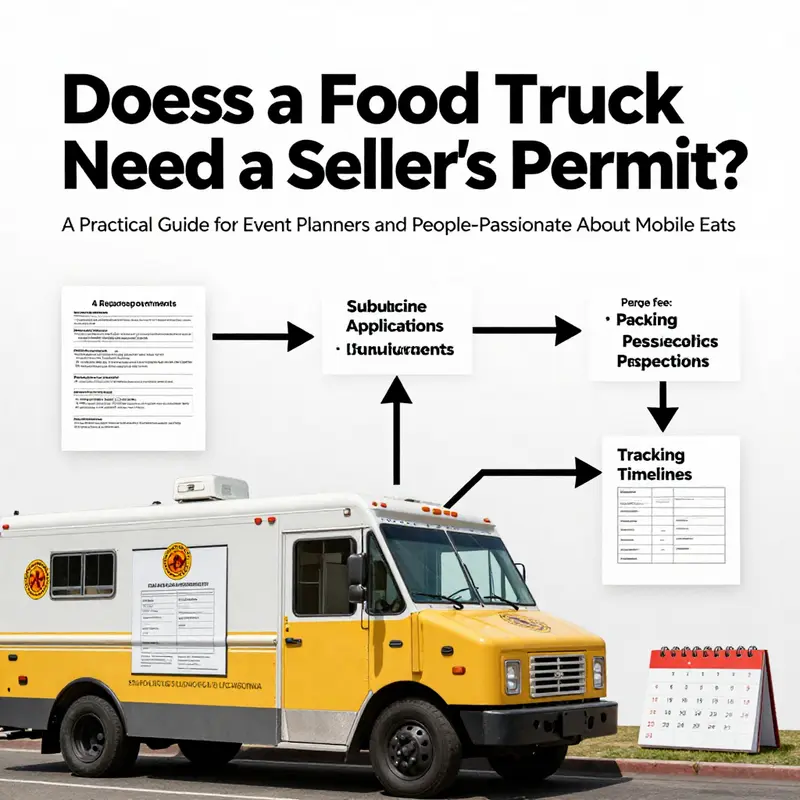
When a food truck rolls onto a curbside stage or wheels into a bustling market, the mouthwatering aroma is only part of the story. The other part is the legal framework that turns a simple cart into a legitimate business on the move. At the heart of that framework is the seller’s permit, often described as a sales tax permit or resale certificate. It isn’t just a badge of enforcement; it is the key that allows a mobile kitchen to collect the right amount of tax from customers and to remit it to the state. Yet the path to that permit isn’t uniform. Across the United States, the rules bend and stretch with state lines, city ordinances, and neighborhood zoning. The result can feel like a maze, but it is navigable with a steady map in hand and a clear sense of how a food truck moves from concept to compliant operation.
A seller’s permit serves a specific and practical purpose. If you plan to sell taxable goods, including hot meals, sandwiches, beverages, and even some prepackaged items, the permit is typically mandatory. It provides you with the right to collect sales tax from customers and to report those collections to the appropriate tax authority. In most states, the certificate is issued by the state revenue department or its equivalent, and it travels with your business wherever your truck roams. The logic behind this arrangement is straightforward: sales tax is a consumption tax, and sellers who collect it must be authorized to do so, with the funds properly remitted to the state. For a food truck, this is not merely a formality but a core component of financial compliance.
But the seller’s permit is just one piece of a larger permit ecosystem that supports safe, compliant operation. In practice, a food truck typically enters a constellation of licensing requirements. A general business license is commonly required to operate any enterprise within a municipality. Health and safety concerns bring a Food Service Permit or a Food Facility Permit, usually issued after an inspection that verifies sanitary practices, proper storage, and safe handling of food in a mobile kitchen. On top of these, a federal employer identification number, or EIN, though not a permit, becomes essential for taxes, banking, and hiring employees. A vehicle must be properly registered, and the owner must carry appropriate liability insurance to protect the business and the public. And in many places, vendors must obtain location-specific permits or temporary event permits when parking at certain venues or participating in festivals. The exact stack of requirements varies widely depending on jurisdiction, making local guidance more valuable than any generic checklist.
To understand why this matters, imagine a new operator who has designed a vibrant menu and built a sturdy truck, yet has not accounted for the sidewalk and street-level rules that govern who can sell food where and when. A seller’s permit without health clearance may let a truck are able to collect tax, but without a health permit, the operation cannot legally serve customers in most locations. Conversely, some jurisdictions require the health department’s seal before a seller’s permit will be considered, tying sanitation compliance directly to the ability to collect sales tax. The interplay among permits means that the journey to a single certificate often reveals the larger rhythm of regulatory compliance, a rhythm that can accelerate or stall a launch depending on how early and thoroughly an operator engages with each requirement.
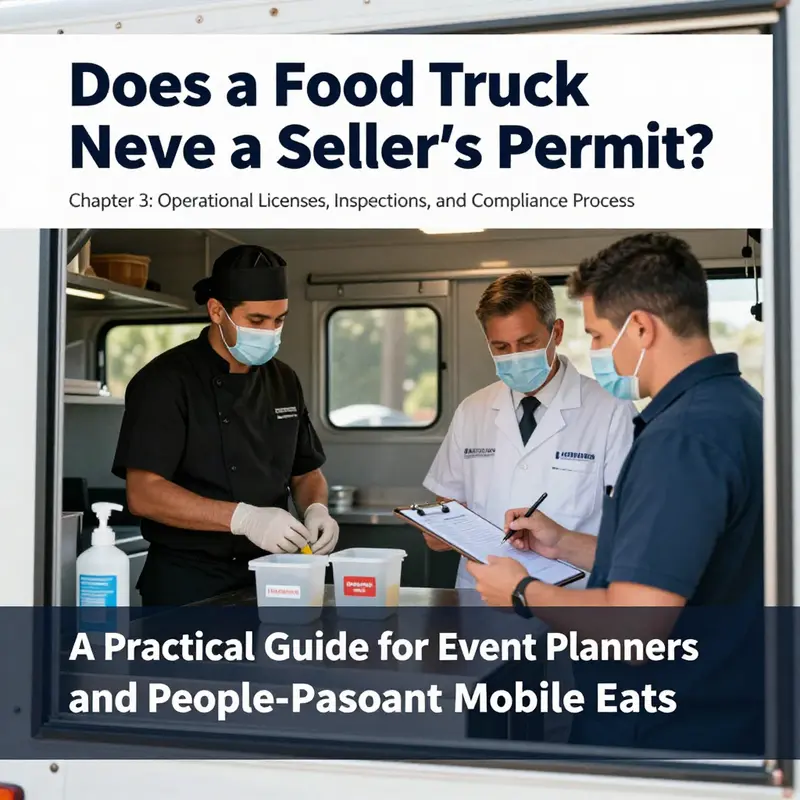
The practical steps to obtain these permits unfold as a narrative of sequential checks, each one building on the last. Start with the basics: register the business and decide on a legal entity. This creates the framework your permits will reference. In many cases, an Employer Identification Number from the IRS is your next milestone, serving as a universal business ID for banking, tax reporting, and employment. The addition of a seller’s permit follows, enabling you to collect and transmit sales tax. But you should not stop there. The food service landscape in a city typically requires a health department permit tied to the truck’s kitchen facility. This permit is usually contingent on an inspection of your mobile unit, including the kitchen setup, cold storage, handwashing facilities, and sanitation protocols. The health inspection acts as a gatekeeper, ensuring that a mobile food operation meets the standard of care expected in a fixed restaurant and, importantly, that customers are served safe food.
Following the health permit, many municipalities require a dedicated mobile vendor permit or a customized business license that acknowledges the unique nature of a food truck’s street presence. Some locales also mandate proof of insurance—often general liability and vehicle liability—to mitigate risks to the public. And then there are location-specific permissions. If your business plan includes parking on public streets, at markets, or near schools, you may face zone rules or temporary vendor permits that govern where you can operate and during which hours. In practice, the sequence often looks like this: establish the business and obtain an EIN, pursue the health permit after planning and inspections, apply for a mobile vendor or local business permit, secure the seller’s permit to facilitate tax collection, and, if needed, secure special permits for events or recurring locations.
The costs attached to this journey are as varied as the jurisdictions themselves. A ballpark range helps in initial budgeting, but the actual numbers can shift with city size, demand, and the scope of inspections. For a typical startup scenario, you might encounter the following approximate ranges: business registration could be anywhere from fifty to a few hundred dollars, depending on the state; the federal EIN is free and straightforward to obtain online. A food handler certificate, a common requirement for frontline staff, may cost roughly one hundred to one hundred fifty dollars per person and may be valid for a few years with renewal. The health department permit often lands in the neighborhood of one hundred to five hundred dollars, though larger cities can push the upper end higher if plan verification or more intensive inspection is needed. A Mobile Food Vendor permit can vary even more, sometimes from a couple hundred to well over a thousand dollars annually, reflecting differences in risk profiles, vehicle standards, insurance requirements, and ongoing compliance expectations. Insurance itself commonly runs from several hundred to a couple of thousand dollars per year, depending on coverage levels and the size of the operation. The seller’s permit itself is frequently free or a modest charge, while event-related permits or temporary permissions can range from a modest fee to several hundred dollars per appearance.
The timelines for securing these permits reflect a mix of online processing, in-person inspections, and the scheduling realities of crowded local offices. In many areas, the initial business registration and the issuance of an EIN can be completed within days online. A food handler certificate may be obtained in a short online course and test, typically finished in a day or two. The health department application and the inspection phase often occupy a few weeks to a couple of months, depending on staff availability and the complexity of your kitchen setup. The mobile vendor permit application and review may take four to eight weeks, again with regional variation and potential backlogs in high-demand markets. Insurance procurement can occur in parallel with applications but may require a few additional days to finalize. The overall duration from start to final approval frequently lands in the two- to three-month window, with some locations moving faster and others stretching longer, especially when a comprehensive plan review is involved or when spaces are capped by permit quotas. The most reliable path through these timelines is proactive planning, clear documentation, and early engagement with the agencies that will issue each permit.
Regional differences add texture to the permit landscape. In California, for instance, the seller’s permit and sales tax registration are essential when taxable goods are sold, guided by the state’s tax authority, which provides the official framework for how the permit works in practice for a large mobile-vendor market. Health department permits and mobile vendor permits are still administered locally, meaning a city’s health department and its licensing office dictate the precise steps, costs, and inspection protocols. Costs there typically include insurance and the requirement for vehicle compliance, with variations among municipalities. A parallel example in another jurisdiction reveals different rhythms: going through a local council for a Western Australian mobile food vendor, where registration, a plan review, and market permissions shape the permit journey in ways that remind operators this is a different legal order altogether. The contrast underscores a simple truth: mobile food regulation is a patchwork, and the most accurate guide comes from the specific city, county, or state authority that governs your planned operation. This is why the initial question—do you need a seller’s permit—often leads to a broader question about all the permissions needed to operate legally in your target zones.
What this means for a prospective operator is clarity about the end goal and patience for the process. If you intend to sell taxable goods, assume you will need a seller’s permit alongside the health permit, the business license, and the vehicle-related registrations. The seller’s permit is not optional in most contexts; it is the mechanism that makes tax collection legitimate and traceable. Yet the tax control framework sits within a broader ecosystem of health, safety, and location compliance. Planning ahead means securing the essential documents early, maintaining organized records, and anticipating that some steps will require plan reviews or inspections. A practical approach is to align the permit journey with your business milestones. For example, as you finalize your commissary or kitchen plan, you can coordinate the health department’s plan review and inspection, knowing that your mobile permit will depend on your kitchen’s compliance. As you prepare to launch, you can line up the seller’s permit to coincide with your grand opening or your first major event, ensuring you have the tax collection authority in place when customers begin to pay.
The interplay among permits also matters for budgeting. A common pitfall is underestimating the time and cost of the health and mobile vendor components, which can delay a launch or strain early cash flow if not accounted for. That is one reason why many veteran operators emphasize the value of a phased approach: begin with core registrations, then, as you secure space and confirm your kitchen layout, advance toward the more specialized permits. The goal is not speed at any cost, but a steady cadence of approvals that keeps your operation compliant without forcing you to scramble later in the season. This is a practical, not a theoretical, distinction. It is about ensuring that once you are on the road, you can stay on the road without a sudden licensing interruption or an unplanned shutdown.
To keep this journey grounded in useful detail, consider a realistic scenario where a new truck owner follows these arcs with intention. The owner first establishes the business entity and secures the EIN. With that foundation, they file for the seller’s permit to handle sales tax, while simultaneously applying for a food handler certification for staff. They then schedule the health department review and the kitchen inspection for the mobile unit. In parallel, they seek a mobile vendor permit and confirm vehicle insurance. Finally, they address any event-specific requirements for markets they intend to attend, including temporary permits if needed. Throughout, they maintain digital copies of all documents, organize renewal timelines for licenses that require periodic updates, and set reminders for permit expirations. This approach not only reduces the risk of noncompliance but also helps the business project cash flow and staffing with greater confidence.
If you would like a jurisdiction-focused comparison that makes the differences even more tangible, there are practical resources that map steps, costs, and timelines side by side for specific locations. For a practical, jurisdiction-specific roadmap, see Navigating food-truck industry regulations. This guide helps bridge the gap between general principles and the realities you will face in your chosen city or state. The broader takeaway is straightforward: the seller’s permit is a common and usually essential element for operating a food truck, but it is one piece of a larger compliance puzzle. The puzzle varies by place, and the timing of each piece depends on how early you start asking questions and how thoroughly you prepare your paperwork.
Beyond the permitting process itself, there is value in recognizing how these requirements shape the customer experience. When a truck brand is fully licensed, inspected, and insured, the customers sense a level of professionalism and safety that reinforces trust. Visible compliance—such as displaying business and health permits where appropriate, maintaining clean kitchen spaces, and adhering to sanitary handling practices—speaks as loudly as the flavors on the menu. The seller’s permit, while not something customers see directly, is a critical enabler of that trust, ensuring the business collects the right tax revenue and fulfills its obligations to the communities it feeds. In that sense, the road to obtaining permits is not a bureaucratic hurdle but a framework for sustainable, responsible operation on wheels.
For operators who are testing the waters or who are planning a future expansion to multiple markets, the permit landscape should be treated as a living map. Regulations change, and local authorities may adjust hours, zones, or inspection criteria. A proactive stance means keeping tabs on official channels, subscribing to local updates, and maintaining a relationship with licensing staff who can provide guidance when rules evolve. Regularly revisiting your compliance posture—before new events, before hiring new staff, and before expanding to additional locales—helps prevent surprises that could disrupt service. It also positions a food truck not as a fleeting street novelty but as a trusted, compliant partner in the neighborhoods it serves.
If you’re ready to take the next step, the first move is to identify your target jurisdiction and begin cataloging the permits you will likely need. Engage early with the local licensing authority and health department to understand their specific expectations, inspection schedules, and any prerequisites for food trucks in that area. Collect and organize your documents, prepare for potential plan verifications, and set a realistic calendar that aligns with your anticipated launch date. The aim is to arrive at opening day with all required licenses in hand and a clear schedule for renewals and inspections in the months that follow. That level of preparedness reduces stress and keeps your wheels turning instead of your paperwork faltering.
For readers who want to ground their planning in official guidance, a combination of sources is valuable. The framework described here is reinforced by state and local guidance, with California’s official seller’s permit guidance serving as a representative reference for a major market. Consulting your city’s health department and licensing office will yield the most precise, up-to-date requirements for your unique situation. And while the journey may feel intricate, the logic behind it remains consistent: compliance enables operation, and operation flourishes when the permits that enable it are secured in a timely, organized fashion. With that mindset, a food truck can move from concept to culinary presence with confidence rather than ambiguity, turning every mile into a step toward a legally sound and community-supported business.
External resource for official safety guidance is recommended to complement the regulatory route. For a broad overview of risk management and best practices in mobile food service, see the CDC’s food safety resources for mobile vendors. This external reference provides foundational safety principles that dovetail with the permit process and help ensure that your operation not only complies with rules but also prioritizes the health and safety of every customer you serve. CDC food safety resources
Final thoughts
Navigating permits for food trucks isn’t a one-size-fits-all process, but the core principles stay consistent: understand your local rules, prepare for inspections, and follow a clear path to obtain and maintain a seller’s permit. By aligning event goals with compliant licensing, you protect your guests, support dependable service, and keep the momentum of your mobile culinary program moving forward. Whether you’re coordinating a festival, organizing a corporate retreat, or rallying a community food event, the permit landscape is your roadmap to enjoyable, legally sound, and memorable dining experiences on wheels.