
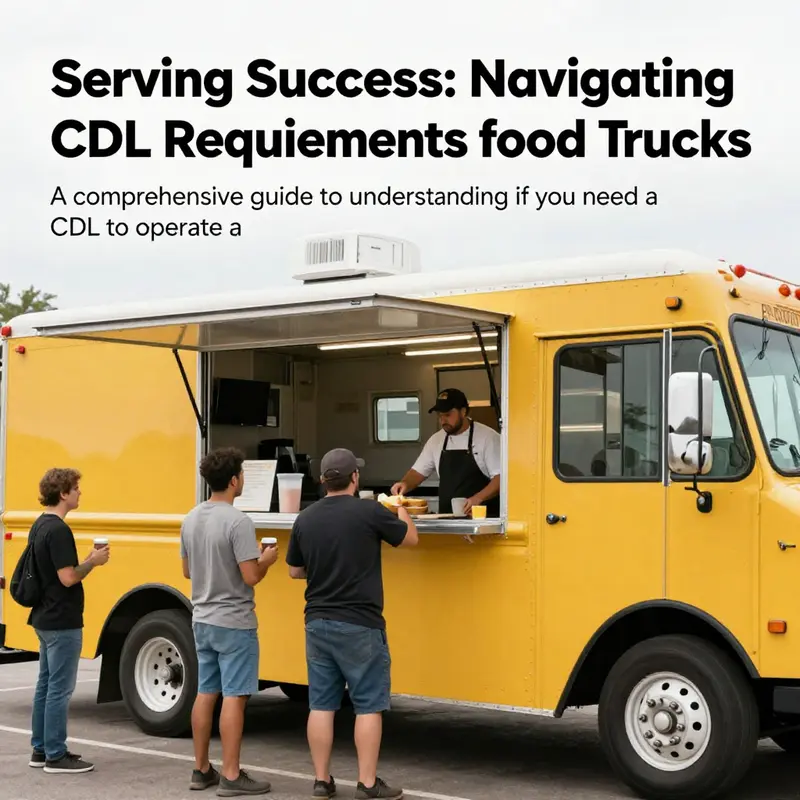
Dreaming of serving delicious meals from a vibrant food truck? Before you hit the streets, it’s crucial to understand the requirements surrounding Commercial Driver’s Licenses (CDLs). With the food truck industry bustling, knowing the ins and outs of vehicle licensing can set you apart. From navigating state-specific regulations to ensuring compliance with local permits—this guide unpacks everything you need to know about whether a CDL is necessary for your food truck ambitions. Each chapter will illuminate a different aspect of this critical topic, helping you feel equipped to serve up success on wheels.
Do You Need a CDL to Drive a Food Truck? Clear Rules and Practical Steps
How CDL Rules Apply to Food Trucks
Whether a food truck driver needs a Commercial Driver’s License (CDL) hinges on measurable facts, not assumptions. The core federal standard uses gross vehicle weight rating, or GVWR, as the dividing line. Vehicles with a GVWR of 26,001 pounds or more meet the federal threshold for a CDL. If a food truck crosses that mark, the operator must hold the appropriate CDL class. If it stays below, most operators can legally drive with a standard driver’s license.
This threshold is simple in theory. In practice, it requires careful verification. GVWR is a manufacturer-set number. It accounts for the weight of the empty vehicle and the maximum intended payload. That means equipment, supplies, water, fuel, and staff count toward the total when assessing CDL requirements. A truck that seems modest when empty can exceed limits once outfitted with grills, ovens, refrigeration, and full tanks. Always verify the GVWR on the vehicle’s certification label or through the chassis manufacturer.
Federal rules also look at passenger capacity and hazardous materials. Vehicles designed to transport 16 or more passengers (including the driver) require the appropriate CDL passenger endorsement. If the truck transports hazardous materials that require placards, the driver may need a hazmat endorsement. For food trucks, hazmat scenarios are uncommon, but they emerge if the operation moves fuel in bulk, carries propane tanks beyond typical cooking supply limits, or hauls certain cleaning chemicals in regulated quantities.
State regulations can and do change the picture. Some states adopt stricter thresholds than the federal standard. For example, one state sets its CDL trigger at 10,000 pounds GVWR for certain commercial vehicles. That lowers the bar dramatically compared to federal guidance. These state-specific rules can also place additional licensing or permit requirements on vehicles used for food service. Because state rules vary, the same truck may require a CDL in one state and not in another. When you plan to operate across state lines, the most restrictive applicable rule usually governs the licensing requirement for the driver.
A few other operational details can push a truck into CDL territory. Multiple-vehicle combinations, such as a tow vehicle plus trailer, are evaluated on combined GVWR. Large trailers can tip the balance toward a CDL requirement. Likewise, trucks registered or used for interstate commerce face federal oversight more directly. A vehicle used strictly within a single municipality may avoid some state or federal rules that apply to interstate carriers, but local licensing, health department rules, and municipal parking laws remain crucial.
Practical compliance starts with these steps. First, confirm the GVWR on the manufacturer label. Second, inventory and estimate how much equipment and supplies will add to the vehicle’s loaded weight. Third, include any towing equipment or trailers in your calculations. Fourth, check your state DMV rules for any lower weight thresholds or special commercial vehicle classifications. If weight or configuration is borderline, have the vehicle weighed at an official weigh station or certified scale while fully equipped.
If the vehicle does require a CDL, the next steps are straightforward. Identify which CDL class applies. Class A covers combined vehicles over the federal threshold. Class B applies to single vehicles exceeding the threshold. Passenger and hazmat endorsements require additional testing and background checks. Training courses help drivers pass the skills test and learn vehicle-specific handling techniques. Employers sometimes require training even when a CDL is not legally required, because a larger, heavier truck behaves differently and carries greater risk.
Even where a CDL is unnecessary, non-license requirements still demand attention. Local health departments, city permitting agencies, and parking enforcement often set distinct rules for mobile food vendors. These may dictate where you can park, how to install grease traps and waste lines, and what permits must be visible while operating. Compliance with these rules does not replace the need to verify driver licensing. Running afoul of parking or health rules can lead to fines or shutdowns, even if the driver holds the correct license.
Insurance firms and financiers also influence licensing decisions. Insurers set coverage requirements based on vehicle weight and use. If a truck exceeds a certain GVWR, insurers may require a CDL holder as a condition of coverage. Lenders and equipment lessors may impose similar requirements. These contractual terms matter because failure to meet them can void insurance or breach finance agreements in the event of a claim.
Penalties for operating without a required CDL range from fines to out-of-service orders. Enforcement can be immediate. A weigh-in during a routine inspection can reveal noncompliance and result in citations. Beyond fines, an operator who drives without the mandated license risks increased liability in an accident. Civil claims can allege negligence for using an improperly licensed driver. For a small business, those costs can be catastrophic compared to the modest investment to obtain proper licensing and endorsements.
Because the rules are technical, many operators benefit from professional help. A transportation law consultant or a regulatory specialist familiar with mobile food operations can review your vehicle specs and planned routes. They can advise on registration class, necessary endorsements, and steps to remain compliant in multiple jurisdictions. This guidance cuts risk and prevents costly surprises. For day-to-day operations, keep accurate records: vehicle weight certificates, maintenance documents, driver licenses and endorsements, and any permits issued by local authorities.
Finally, consider the operational upside of choosing equipment wisely. Selecting chassis and upfit options that keep GVWR safely below CDL thresholds preserves staffing flexibility. A lighter truck reduces the likelihood you must recruit or train CDL drivers. Conversely, if your concept needs heavy equipment, plan hiring and training around driver licensing early in the business plan. That clarity helps with budgeting, hiring, and insurance procurement.
For a practical summary: check the GVWR first, include all equipment and supplies when calculating loaded weight, account for trailers, verify state-specific rules, and confirm endorsements for passengers or hazardous materials. If uncertainty remains, get a certified weigh and consult the state DMV. If a CDL is required, follow the state’s testing and endorsement process and document compliance.
For more on navigating the regulatory landscape for mobile food businesses, see this guide on navigating food truck industry regulations: navigating food truck industry regulations.
For official federal guidance on CDL thresholds and classifications, consult the Federal Motor Carrier Safety Administration: https://www.fmcsa.dot.gov/
Weight, Warrants, and Waypoints: Decoding CDL Requirements for Food Trucks Across States
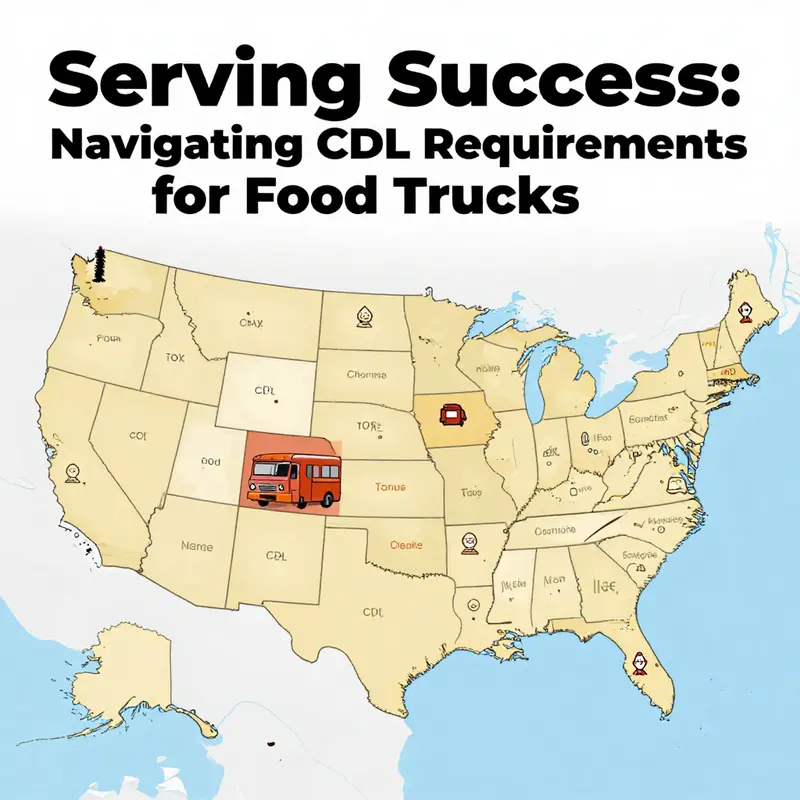
People frequently ask whether a CDL is required to drive a food truck. The short answer is it depends. The federal rule centers on the weight and the vehicle’s use, not on the tasty meals it serves. The threshold most commonly cited is 26,001 pounds GVWR, or a vehicle designed to carry 16 or more passengers including the driver. If your truck falls below that line and you aren’t hauling a student bus or other high passenger load, a standard driver license is typically enough. But weight alone does not tell the whole story. States implement their own interpretations, and local health and licensing offices layer in additional requirements for food service. For someone launching a mobile kitchen, this means the question is less about appetite and more about regulation, registration, and roadworthiness. Understanding where your operation fits within that regulatory web is essential before you sign a permit or roll out of the driveway. Most food trucks on the road today are compact rigs built on van, shuttle, or light truck chassis. They often weigh well under 26,001 pounds gross vehicle weight. They may be built with efficient kitchen appliances, walk-in coolers, generators, and a few shelves of dry goods. The result is a vehicle that is easily driven with a standard Class C license in most jurisdictions. The CDL question arises mainly if you have a larger, purpose-built truck with heavy equipment or if you operate across state lines and encounter broader rules. And there are situations that can push you into CDL territory, such as operating in certain urban centers with strict vehicle classifications, or if your business model involves transporting sizeable quantities of hazardous materials or other regulated goods. In those cases, even a smaller truck could trigger a CDL requirement depending on how the state interprets the rules on weight and cargo. A state-by-state tapestry is the norm. California and New York exemplify how local permitting can shape the daily reality of a food truck operator. In California, the bite starts with licensing from the Department of Public Health and often proceeds through a Mobile Food Facility Permit. The permit process can involve background checks, facility plans, and periodic inspections to ensure sanitation standards. In New York, you face a mosaic of city and state rules, where permits are tied to zoning, permit windows, and the right to operate in designated corridors or at temporary events. These rules are not merely ceremonial; they determine where you can park, for how long, and under what health code regime you must work. Even in states with friendlier permitting climates, you still must align with local health codes, parking restrictions, and neighborhood noise ordinances. The upshot is that legality is inseparable from geography for a mobile kitchen. Licensing and Permitting sections often create the most friction, but they are the backbone of legal operation. In many states, a food truck is treated as a mobile food facility and must obtain a license that is specific to mobile preparation and sales. California is a prime example, as noted, with a Mobile Food Facility Permit and associated health inspections. New York follows a similar pattern but adds the layer of local enforcement. Other states might reduce friction by offering combined business licenses that cover both the vehicle and the food service, while still requiring routine inspections. These processes regulate where you can park, how long you can stay, and how you must maintain your vehicle and the kitchen equipment to meet sanitation standards. Understanding the permitting pathway early avoids late fines and the costly relocation of a truck mid-season. The CDL piece is the crux of the conversation for many operators. The rule of thumb remains that a vehicle with GVWR of 26,001 pounds or more requires a CDL to operate, or a vehicle designed to transport 16 or more passengers, including the driver. If your rig is noticeably lighter and you’re not moving hazardous materials, most people steer toward a standard Class C license. Some states still exercise stricter interpretations. For example, in Texas, as long as the GVWR remains under 26,001 pounds and the vehicle isn’t carrying hazardous materials, a normal license suffices. Florida followers may present a nuanced picture where a non-CDL could still require additional endorsements or operator training if the vehicle falls into a specific federal classification. The overarching point is that weight is a primary gauge, but not the only one. In some cases, a unique configuration can push a truck into a different category, especially when the vehicle is used for commercial food service in dense urban areas or when state-specific rules treat the chassis as a commercial vehicle with heightened regulatory oversight. Beyond the license itself, several states require training that stands independent of CDL status. Illinois offers a notable example: operators who manage mobile food kitchens must complete a Food Protection Manager Certification program. This ensures that the leadership understands a rigorous food safety framework, performs regular internal audits, and can train staff to handle temperatures, cross contamination, and sanitation in a busy service window. Certification requirements like these sometimes appear even when a CDL is not needed, highlighting that the safety of the public and the integrity of the food business are managed through a combination of transport rules and public health standards. As a practical matter, pursuing such training early can ease compliance when you expand to multiple events or new jurisdictions, because it signals reliability and a willingness to meet high standards regardless of the vehicle’s weight. How do you determine your precise standing without guessing? Start with your GVWR. This is not the weight of the food but the maximum weight the vehicle is designed to carry, including passengers and cargo. Locate the GVWR plate on the vehicle, or refer to the owner’s manual. If the GVWR is under 26,001 pounds and you are not transporting hazardous materials or more than 15 passengers, you likely do not need a CDL. But weight alone does not guarantee a clearance. You must consider how you operate daily. Do you cross a state border for events? Do you operate in a city with a class of vehicles that receives special permits? Do you face a health department requirement that insists on specific licensing for mobile food facilities? These questions take you to the heart of local rules. A practical approach is to consult your state’s DMV or equivalent licensing authority, then verify local health department requirements and city permitting offices. In many markets, the DMV can confirm the CDL threshold for your exact chassis, while the health department can list the exact permits and inspections your unit must pass to serve food legally. For a practical map of state-by-state licensing, you can explore resources such as Navigating Food Truck Industry Regulations. Navigating Food Truck Industry Regulations. If you plan to play on a broader stage, a cross-state itinerary becomes a regulatory puzzle rather than a simple permit list. You may need to update your CDL status if you unexpectedly ride into a jurisdiction with a lower or higher regulatory bar. Some states count the vehicle weight differently for commercial purposes, so a truck that slides under the threshold in one place might face a different rule in another. In practice, this means carrying the right documentation and having a clear plan for compliance as you book events across states or provinces. You should track all licenses, permits, and inspections in a centralized record. Keeping a ledger of health department certifications, city permits, and any endorsements helps when your truck shifts between markets. It also makes annual renewals easier and reduces downtime between seasons. Ultimately, there is no one-size-fits-all answer to CDL requirements for a food truck. The landscape is a mesh of federal guidelines, state interpretations, and local ordinances that together define what is legal on any given street or market. The general rule is straightforward: keep your GVWR under 26,001 pounds and you can operate with a standard license, for many operations. But this is not a permission slip to ignore permits, inspections, and safety training. The safest course is to research your exact jurisdiction, contact the DMV or its equivalent, and consult the local health department. The USDA and CDC frameworks provide foundational guidance, but enforcement is decentralized. For federal context and to review the primary CDL thresholds, you can visit the federal regulator site. If you want a quick, practical overview that points you toward state resources, start with the broader guide to regulations and licensing in your market and then dive into local requirements. The right combination of weight awareness, permitting, and safety training lets you operate confidently, expand strategically, and keep customers healthy and satisfied. For official federal guidance on CDL requirements, visit https://www.fmcsa.dot.gov/.
Weight Thresholds at the Wheel: Do You Need a CDL to Drive Your Food Truck?
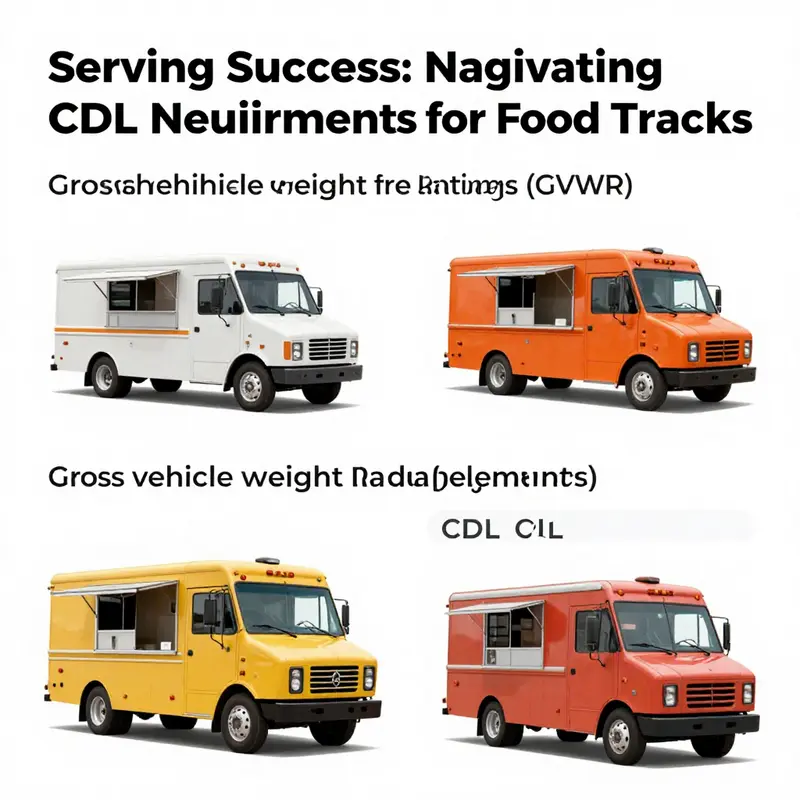
Weight thresholds at the wheel often decide more than you expect. For a food truck, the question Do I need a CDL to drive this is not a simple yes or no. It hinges on the vehicle’s gross vehicle weight rating, the GVWR, and how your truck sits on the scale of federal, state, and even local rules. Under federal guidelines, the threshold is 26,001 pounds. If your GVWR tops that number, the operator must hold a CDL. If not, a standard license typically suffices. But this is only part of the story, because rules vary widely by state, and some localities impose extra requirements for commercial food service vehicles or fleet operations. The path from curiosity to compliance begins with a clear distinction between weight you feel and weight you legally carry on paper. GVWR is not the actual weight of the truck when it is empty or loaded; it is a rating determined by the vehicle’s manufacturer that estimates how much weight the vehicle is designed to carry safely. That rating includes the chassis, body, engine, fuel, fluids, passengers, and cargo. The line between your loaded reality and the GVWR on the door jamb label can become a confusing chasm if you focus only on what the scale shows after you pull up to the loading dock. This distinction matters because a truck with a modest curb weight can still require a CDL if its GVWR, by design, exceeds 26,001 pounds. Consider a mid-sized food truck built on a heavy-duty chassis intended to carry a full prep kitchen, refrigeration, and high-volume service equipment. Even if that truck weighs far less than 26,001 pounds when empty, its GVWR might be well above the federal threshold, triggering CDL requirements. In practice, operators who run a food truck that is comfortably under the 26,001-pound GVWR often assume they don’t need a CDL. The truth is subtler. The key is to locate the GVWR on the vehicle’s certification label, usually found on the driver’s side door jamb, and verify it against the federal threshold. If the GVWR is 26,001 pounds or more, a CDL is needed, regardless of how light the truck feels on a given day. This is a rule that can catch people off guard when their vehicle has been customized or when aftermarket additions alter the carrying capacity. A kitchen setup with heavy commercial refrigerators, a robust stainless-steel shell, and reinforced bumpers can push the GVWR over the line, even if the truck’s empty weight remains modest. The upshot is simple: never base your CDL decision solely on the scale reading after an empty-weight check. Always confirm the GVWR rating as the governing figure. The importance of this distinction cannot be overstated because it affects insurance, hiring, and compliance. If you do fall above the threshold, a CDL becomes more than a box to check. It triggers training, medical certification, and often endorsements that reflect what you carry on the road. If you are responsible for a team or plan to hire drivers, a CDL with the appropriate endorsements ensures legal operation and reduces the risk of penalties during inspections. If your GVWR sits below the threshold, a standard Class C license in most places is enough to operate the vehicle. Yet even when a CDL isn’t required, other constraints may apply. Some states impose rules about transporting passengers, hazardous materials, or municipal or urban restrictions that affect how you legally operate a mobile kitchen. A food truck does not exist in isolation; it functions within a regulatory ecosystem that includes the DMV, the health department, and, in some cases, the city or county transportation office. For example, certain metropolitan areas impose stricter traffic patterns, gatekeeping for commercial vehicles in dense downtown zones, or specific permits and hours of operation that can indirectly affect whether a CDL would be beneficial or required. In this sense, the weight line is a starting point, not a destiny. The practical takeaway is to verify your GVWR, not just weigh your truck. The door jamb label is your first clue, but not the last word. A quick call to the state department of motor vehicles or its website can confirm whether any local or state-specific rules modify the federal baseline. If you operate in multiple jurisdictions, you may encounter different interpretations of the same weight. In some states, a vehicle with a GVWR slightly under 26,001 pounds may still attract a CDL requirement if it’s used to transport hazardous materials or to carry more than a certain number of passengers. Understanding these exceptions matters because it helps you forecast labor costs, training timelines, and your licensing roadmap before you buy or customize a truck. The environment around a food truck adds another layer of complexity. Health departments and permitting agencies may require vehicle-specific credentials that don’t depend on GVWR alone. Some programs ensure that the operator has a certain level of driver training, food safety certification, or vehicle inspection compliance that is independent of whether a CDL is legally required. This is not a contradiction; it’s a reminder that operating a mobile kitchen is a multi-layered governance challenge. A robust compliance posture means mapping the chain from vehicle weight to driver qualifications to health and safety standards, then aligning all elements with local ordinances. For those planning to work across state lines, the complexity multiplies. You may encounter one state with a strict GVWR-based CDL requirement and another with looser rules or additional restrictions. Crossing borders for events or festivals can create gaps in compliance if you assume uniform rules. The way forward is to treat the CDL question as a dynamic decision, not a fixed label. Start with the GVWR, confirm with the DMV, and then explore state-specific increments such as passenger-carrying limits or hazardous materials provisions. If you want a concise anchor for your broader regulatory journey, consider the following practice: always verify the GVWR, confirm the local and state requirements, and then assess whether a CDL would be a strategic move even when not strictly required. A CDL can offer flexibility, better insurance options, and simpler hiring processes if you eventually scale to larger equipment or a fleet. It may also provide a margin of safety for days with heavy loads, multiple staff members, and aggressive urban routes. In other words, CDL status is not just a regulatory checkbox; it can influence long-term viability and growth. While the federal threshold provides a clear baseline, the practical reality is that most food truck operators live in a patchwork of rules. To avoid surprises, develop a map of requirements that includes GVWR verification, state variations, and the role of local health and permitting bodies. A reliable starting point for understanding the broader regulatory landscape is to review resources that discuss navigating food truck industry regulations and licensing. For a deeper dive into how these rules fit together, see Navigating Food Truck Industry Regulations.
When it comes to implementing this knowledge in the real world, it helps to keep a few actionable steps in mind. First, locate the GVWR label on your vehicle and read it carefully. If the label indicates a GVWR of 26,001 pounds or more, you will need a CDL, and you should plan for driver training, medical certification, and any endorsements that reflect your operations. If the GVWR is under the threshold, proceed to confirm the license requirements with your state’s DMV and local authorities, recognizing that incidental rules might still apply. Next, investigate whether your state imposes additional obligations for vehicles used in commercial food service. Some jurisdictions require special permits, vehicle inspections, or driver qualifications that go beyond the CDL framework. Third, consider how your business model might evolve. If you anticipate scaling up, or if you expect to operate in urban centers with dense traffic and complex routes, a CDL could provide an added layer of compliance and confidence for both your team and your customers. Finally, stay connected to up-to-date guidance. Regulations change, and a clear understanding of current rules reduces risk during inspections and audits.
For readers who want a quick reference to broad regulatory themes beyond weight, a useful entry point is the broader discussion of how food trucks navigate licensing and compliance. It helps to situate weight-based CDL decisions within a larger, practical framework of permits, health code compliance, and driver qualifications. This integrated view ensures you’re not chasing a single number but aligning your vehicle choice, staffing, and daily operations with a coherent regulatory plan. If you find yourself weighing options and feeling uncertain about what counts as GVWR versus empty weight, a quick check-in with the state DMV can clarify. The agency will confirm whether the vehicle’s labeling and certification meet the threshold that triggers a CDL. And if you still feel uncertain, remember that a thoughtful approach can prevent costly missteps: you might even opt for a vehicle configuration that keeps you safely under the threshold while preserving capacity for your kitchen, ingredients, and crew.
To connect this topic with broader regulatory literacy, you can explore more about how licensing integrates with the entire lifecycle of a food truck—from model selection to operation and growth. Internal links to practical guides on food truck regulations can provide a supportive read while you plan. For instance, the article on navigating food truck industry regulations offers a comprehensive view of licensing, permits, and inspections that cut across the weight-based CDL decision. You can access that discussion here: Navigating Food Truck Industry Regulations. The journey from weight to wheels to regulation may feel intricate, but with a clear checklist and reliable sources, you can move forward with confidence.
External resource for official credential guidance: for authoritative CDL requirements and endorsements, consult the federal guidance at the Department of Transportation’s Motor Carrier Safety Administration. See https://www.dmv.org/vehicle-licenses/cdl.php for general CDL information and linkages to state-specific programs. This external reference helps you confirm federal baselines while you map your state’s exact rules for your own vehicle and operation.
The Permit Puzzle on Wheels: How Local Rules Shape Your Food Truck Dream (and the CDL Question)
When you imagine a food truck rolling into your town, ideas of sizzling flavors and late-night crowds often steal the spotlight. But behind every delicious menu lies a network of local rules that determine where you can park, when you can serve, and how you prove you’re a legitimate business. For most readers, the CDL question sits alongside this regulatory quilt: do you need a commercial driver’s license to drive a food truck? The short answer is often no, especially for the smaller trucks that most aspiring operators own. The longer answer is nuanced and deeply local. Weight classes and passenger counts matter for CDL eligibility, but so do dozens of city and county ordinances that govern health, parking, signage, and the very act of selling food from a mobile vehicle. Understanding this ecosystem is not a bureaucratic distraction; it is the groundwork that protects customers, investors, and your future revenue. Without it, even the tastiest concept can stall long before you fire up the oven. The CDL piece is a part of the broader picture, not a stand-alone precondition for success on the street. This chapter follows that thread, showing how permits, inspections, zones, and insurance create a lawful, reliable platform for your culinary venture to take root and grow, while still acknowledging the federal framework that shapes the driving side of the business.
In practice, most food trucks weigh less than the 26,001-pound threshold that triggers a Commercial Driver’s License under federal guidance. They also carry far fewer than 16 passengers, counting the driver. This combination often means you won’t need a CDL in the traditional sense; a standard driver’s license will suffice for the vehicle itself. Yet the absence of a CDL does not grant freedom from regulation. On the contrary, it places the onus squarely on the operator to secure a web of permits and meet minimum safety and health standards that vary by city and county. The result can feel like a maze, but it’s a navigable one when you approach it with a clear plan, a timetable, and a willingness to engage with local authorities early in the process.
To begin, you should expect to secure several core permits and licenses before you begin serving customers. A basic business license legitimizes your operation in the eyes of the city or county, establishing your intended activity as a registered business rather than a casual cart. A health department permit is nonnegotiable for any operation that prepares or serves food; it almost always requires a formal inspection to verify that food storage, handling, and cooking processes meet established safety standards. In many places, you’ll also need a mobile vendor permit or an equivalent designation that spells out where and when you can operate. These authorizations are not merely bureaucratic hoops; they determine your ability to park in certain zones, to participate in farmers’ markets or public events, and to use designated streets or lots without risking penalties.
Along with these, there are regulatory layers that govern the look and feel of your operation. Parking and operating zone restrictions are common in dense urban environments. Some cities designate specific corridors or districts where mobile food vendors can set up, while others permit a certain number of permits per block or per day. These rules keep streets navigable for pedestrians and other drivers and help ensure a fair playing field among vendors. Signage regulations may constrain what you can display on the truck’s exterior or the type and size of banners you use to advertise your offerings. Although it can seem petty, signage rules help maintain city aesthetics, reduce visual clutter, and prevent misleading claims that could confuse customers. The insurance landscape mirrors the rest of the regulatory matrix. Local governments frequently require liability coverage to manage the risk of accidents, injuries, or property damage. The cost and scope of coverage can vary, but the expectation is consistent: a well-protected operation signals responsibility and readiness to serve.
The practical path through this regulatory landscape begins with deliberate research. Start by identifying the exact requirements for your target location. The rules in a downtown core can be very different from those in a suburban shopping district or at a seasonal fairground. Online portals maintained by city or county agencies often provide the most up-to-date information on permits, fees, and application steps. Yet even the best online resources are not a substitute for direct conversations. Early contact with the local health department and the zoning or licensing office can save you weeks of delay. Bring a clear plan that outlines your truck’s layout, your service model, and the street or venue where you intend to operate. Being prepared for questions about vehicle sanitation, food sourcing, and waste disposal helps you build credibility and accelerates the approval process.
As you map the regulatory terrain, it’s helpful to see how the pieces fit together in real-world practice. A broad overview from experienced operators can illuminate common pitfalls—such as overlooked truck inspections, unclear waste management plans, or missing signage permits—that stall startups. For ongoing guidance on navigating these issues, you can consult resources that compile practical, jurisdiction-specific advice. In addition, many operators find it valuable to tap into local business associations or trade groups that advocate for small food-service businesses. These networks often host seminars, provide checklists, and share lessons learned from permitting experiences, which can shorten the learning curve and reduce costly missteps.
When you’re ready to study concrete examples or step-by-step processes, you can explore dedicated resources that focus on how the regulations come together in everyday operation. For a succinct case study of how local rules are applied in varied environments, check out the article on navigating food truck regulations and practices linked here: navigating-food-truck-industry-regulations. This kind of companion piece helps translate policy into action—showing how a vendor maps out permit timelines, negotiates with health inspectors, and selects parking zones that maximize hours of operation without inviting penalties.
The rhythm of staying compliant is a steady cadence rather than a one-time sprint. Compliance maintenance means you monitor changes in local ordinances, health codes, and parking rules. Laws can evolve with shifts in city planning, public health priorities, or traffic management strategies. Staying informed might involve joining a local chamber of commerce, subscribing to city notification systems, or attending a regulatory update session hosted by a city department. A robust compliance mindset also translates into branding and professional reputation. Customers tend to trust vendors who present professional licenses, clear health permits, and visible insurance information. The more transparent you are about your legal standing, the more seriously your business is perceived—and the better you weather inspections and audits when they occur.
The consequences of non-compliance are neither abstract nor remote. Fines are common penalties for missing filings or misrepresenting where you can operate. Some jurisdictions reserve the right to shut down operations temporarily until violations are addressed. Repeated violations can lead to longer-term consequences, including denial of permit renewals or even disqualification from future licenses. While the fear of penalties can be motivating, the more constructive framing is to treat compliance as a foundational investment in your brand. Every health inspection, every correctly posted permit, and every verified parking agreement contributes to a dependable customer experience. A truck that arrives on time, clean, and fully licensed becomes a reliable fixture in the community rather than a temporary novelty. In this way, compliance is not a cage but a scaffolding for growth, helping you expand to new neighborhoods, events, and opportunities with confidence.
Of course, the regulatory story does not exist in a vacuum. The CDL question remains a real consideration for operators who plan to drive larger rigs or who operate across state lines in ways that push beyond the typical local framework. The federal standard defines the point at which a commercial license is mandated based on weight or passenger capacity. For most food trucks, the practical implication is that a standard driver’s license is sufficient for the vehicle itself. Yet there are occasions—such as operating in states with stricter interpretations, or if your vehicle’s GVWR creeps above 26,001 pounds, or you regularly transport more passengers due to staff or multi-venue operations—where a CDL or additional endorsements might come into play. In these scenarios, you should consult the federal guidance from the Department of Transportation’s motor carrier agency to verify your status and to understand cross-state requirements. The official guidance will help you determine whether any exceptions or state-specific rules apply to your situation. To access federal CDL requirements and guidance, visit the official FMCSA site: https://www.fmcsa.dot.gov/
As you finalize your path, remember that the goal is not to check boxes but to build a lawful, trusted business that can scale. Your local permits and health approvals lay the groundwork for daily operations, while the CDL decision sits on the periphery for most small trucks. But both strands—the local permitting fabric and the federal licensing framework—shape how, where, and when you can serve. The practical takeaway is straightforward: identify your target markets, map the exact permits you’ll need, and begin conversations early with the right agencies. Build a calendar that aligns inspection dates, permit renewals, and insurance renewals so that nothing falls through the cracks. Establish a simple, accessible system for maintaining records—permits, inspection reports, receipts, and correspondence. The more disciplined your documentation, the less friction you’ll encounter during peak seasons when the city’s event calendar is crowded and regulators are busiest. And as you refine your business model, keep your menu flexible enough to adapt to venues with different health or waste disposal requirements. A thoughtful approach to compliance, paired with a clear understanding of the CDL framework, keeps your wheels turning and your service uninterrupted.
In sum, the permit puzzle is an integral part of launching a food truck. The rules you master locally can determine the fatigue of long waits, the viability of weekend pop-ups, and the ease with which you can expand. Treat every permit as a tool that sharpens your operation, not as a hurdle that blocks your dreams. When you blend a solid understanding of local restrictions with a grounded view of the CDL landscape, you equip yourself to navigate many roads with both confidence and compliance. Your truck becomes more than a vehicle; it becomes a mobile, trusted business that serves communities with consistency, safety, and flavor.
External resource: For official federal guidance on CDL requirements, consult the FMCSA website: https://www.fmcsa.dot.gov/
Beyond the Sticker: Verifying CDL Requirements and Staying Compliant While Running a Food Truck
Beyond GVWR, another axis in the CDL calculus is how the vehicle is designed to be used. If a food truck is intended to transport 16 or more passengers, including the driver, the federal rule kicks in regardless of weight. In practice, that scenario is rare for a typical street-food setup, but it is not unheard of for larger, multi-seat mobile kitchens or vehicles configured for catering missions with passenger transport capabilities. When the heavy lifting of a CDL is possible but not immediately obvious, the safest move is to confirm the classification with the state’s Department of Motor Vehicles (DMV) or its equivalent. This prevents missteps down the line, especially when you plan to operate across multiple jurisdictions or in environments with dense traffic, urban delivery routes, and tight loading zones. The federal layer of regulation does not always tell the whole story; many states impose additional, sometimes stricter, requirements for commercial food service operations or for vehicles that function as mobile businesses within city limits. Local health departments, permitting agencies, and zoning rules can all intersect with vehicle operation, licensing, and even the way you store or transport cooking fuels and ingredients. In other words, a CDL decision is not simply a motor-vehicle question; it touches health, safety, and business compliance in several overlapping domains. If you are mapping this out for the first time, start with the basics and then broaden your lens when needed to include state-specific nuances and local ordinances.
A core element of this assessment is understanding hazardous materials. The propane tanks and other fuels used to power cooking equipment are classified as hazardous materials in many regulatory frameworks. This classification triggers separate licensing and endorsement requirements, intended to ensure how such materials are transported, stored, and handled is safe for the vehicle occupants and for others on the road. If your operation relies on propane or other regulated fuels, you will need to confirm not only general CDL status but also whether you require any hazmat endorsements or additional certifications. The combination of GVWR, passenger capacity, and fuel handling creates a bespoke regulatory footprint for your truck, and that footprint can shift as you modify or expand your setup.
The practical path to clarity is a two-step process. First, verify the vehicle’s GVWR and seating capacity against official classifications. Second, check for any hazmat or other endorsements that may apply to your fuel storage and distribution practices. The most authoritative source for CDL classifications and endorsements is the Federal Motor Carrier Safety Administration (FMCSA). Their materials include detailed charts and guidelines that help you map your truck’s exact classification to the right license category. Relying on general summaries can lead to overgeneralizations that bite you when you least expect them, such as during a routine inspection, a roadside checkpoint, or a permit review with a city or county regulator.
To keep the process practical, think of compliance as an ongoing cycle rather than a one-time decision. Build a lightweight governance routine for your business that answers the following questions: Is the truck’s GVWR current in the official documentation? Are the vehicle’s endorsements and medical qualifications up to date? Do we have a clear process for medical examiner’s certificates (MECs), driver qualifications, and hours-of-service where applicable? Do we track any changes to the truck’s configuration that might alter its classification? Do we have a documented hazmat plan if propane or other hazardous materials are involved? These questions are not just bureaucratic hoops; they are protective measures that reduce risk for the business, the crew, and the customers who trust your food truck to show up, serve safely, and leave the street cleaner than you found it.
As you navigate this landscape, a practical, humane approach is to balance compliance with operational practicality. Most food truck owners end up operating under a Class C license, if a CDL is not required by weight or passenger capacity. Yet even in those cases, there are important steps that protect the driver and the business. Regular internal audits of vehicle documentation and endorsements help keep everyone aligned with the law. Maintain a simple, accessible file that includes GVWR documentation, the truck’s registration, insurance, any necessary endorsements, medical certificates, and a log of maintenance that could affect the vehicle’s weight or balance. The goal is not to create compliance clutter but to create a dependable safety net that reduces the chance of last-minute scrambles when inspectors arrive or when a permit reviewer asks for proof of compliance.
Training is the other side of the coin. CDL-related responsibilities are not only about what license you hold. They encompass a range of practices that protect the vehicle, the crew, and the public. Pre-trip inspections, for instance, are not mere formalities; they are proactive checks that catch problems before they become failures on the road. Logbook maintenance may or may not apply depending on your classification, but a familiar routine for recording driving time and rest breaks helps prevent violations and fatigue-related risk. Hours-of-service rules vary by jurisdiction and by whether you are operating interstate or intrastate; understanding the applicable framework ensures you plan routes, shifts, and back-up crews in a way that keeps your operation compliant and consistent with safety standards. Training also extends to the broader crew. Bar and kitchen staff who operate around propane lines, heat sources, and gas connections should understand basic safety protocols and emergency procedures. A well-informed team reduces the chance of accidents and makes it easier to demonstrate a culture of safety during any regulatory review.
The distinction between interstate and intrastate operation is another thread worth following in this discussion. Interstate travel falls under FMCSA federal jurisdiction, with full compliance obligations, whereas intrastate operation can sometimes benefit from exemptions or different requirements under state law. If your daily routes stay within a single state, you might discover a more flexible regulatory posture for your truck, but that is not a reason to skip due diligence. The safest approach is to verify the exact scope of your operations and verify that your licensing, endorsements, and vehicle classification align with that scope. In practice, a thoughtful operator keeps a forward-looking checklist that anticipates changes—whether you decide to expand your service area, switch to a larger kitchen module, or start catering events that draw heavier crowds and longer travel legs.
For a concrete frame of reference, many operators find it helpful to consult resources designed for navigating food truck regulations. One practical step is to refer to reputable guidance that specifically addresses industry compliance, which can be found through dedicated industry resources and regulatory portals. These materials help translate the formal language of the DMV and FMCSA into actionable steps on the ground. The aim is not to replace official sources but to harmonize day-to-day operations with the precise standards that govern driving a vehicle of your scale and purpose. When in doubt, err on the side of verifying against the official classification framework and seek clarification from the appropriate licensing authorities before you make any changes that could alter your truck’s regulatory status.
In addition to compliance discipline, there is value in thinking about your operation as an integrated system. The vehicle is a moving platform that carries people, equipment, and food. Ensuring that the platform remains within regulatory boundaries requires a blend of documentation, training, and disciplined procedures. For many operators, this translates into a simple governance routine: quarterly audits of GVWR documentation and endorsements, annual refreshers for driver training and safety practices, and a standing review of any modifications to the truck that could affect its weight, fuel storage, or passenger configuration. Such a routine helps you stay aligned with both the spirit and the letter of the law while preserving the efficiency and reliability that customers expect from a well-run food truck.
As you study your options and prepare for any licensing decisions, remember that you are not alone in this journey. The FMCSA provides the definitive baseline for CDL requirements, classification, and the broader safety standards that govern commercial driving. Their guidance, charts, and checklists are designed to help operators translate the letter of the law into practical, day-to-day conduct on the road. The goal is to keep you moving with confidence, not to impede mobility with overly burdensome rules. For anyone who operates beyond a narrow weight threshold or with complex vehicle configurations, engaging with official guidance early in the planning process can save time, money, and the kind of stress that arises when misinterpretations collide with reality.
If you want a quick, grounded entry point into this topic, you can explore one of the resources that discuss navigating the regulatory landscape for food trucks. It offers a pragmatic lens for understanding how different jurisdictions treat vehicle classifications and what kinds of documentation tend to be most important in inspections and permit reviews. For ongoing updates and authoritative insights, you can consult the FMCSA’s official portal, which remains the most relevant resource for determining CDL status and its implications for mobile food service. The path to clarity is anchored in verifying your truck’s GVWR, passenger capacity, and fuel-handling practices, then aligning those facts with the licensing requirements of your operating region.
This approach keeps the focus on practical steps you can implement today while ensuring you stay compliant as your business grows. For operators who want to anchor their compliance practices in a known framework, a helpful starting point is to read about Navigating Food Truck Industry Regulations, which provides a contextual overview of how regulatory bodies intersect with daily operations. Adopting a disciplined, no-surprise mindset around licensing helps you avoid costly delays, avoidable violations, and the kind of regulatory friction that can disrupt a busy service window. And when you need to confirm the precise rules that apply to your exact truck and route, consult the official channels and stay current with any changes that may affect your classification or required endorsements.
For ongoing reference and the most up-to-date guidance, visit the FMCSA website and the state DMV resources. These sources collectively define the playing field, and they empower you to run a mobile kitchen with confidence rather than conjecture. The goal is not to cloak your operation in compliance paperwork but to weave safe, predictable driving practice into the fabric of your brand’s service culture. In practice, this means a simple investment in documentation, a routine of training and audits, and a proactive approach to understanding how your vehicle’s weight, seating, and fuel arrangements influence licensing requirements. When you approach CDL questions with curiosity, a methodical plan, and a willingness to consult authoritative sources, you position your food truck not just for today’s menu but for a sustainable path forward that respects the road, the rules, and the customers you serve.
External resource: For official guidance from the federal regulator on CDL requirements and related classifications, see the FMCSA’s guidance and classification information at https://www.fmcsa.dot.gov/.
Internal link: For a practical framework that helps translate these rules into day-to-day operations, see Navigating Food Truck Industry Regulations.
Final thoughts
Successfully navigating the world of food trucks means understanding the terrain of regulations, particularly CDL requirements. Armed with knowledge about vehicle weight, state-specific rules, local permits, and best compliance practices, food truck operators can confidently hit the roads. Remember, operating within the legal framework not only safeguards your business but also paves the way for a thriving food truck venture. Embrace the journey and serve up deliciousness wherever you go!