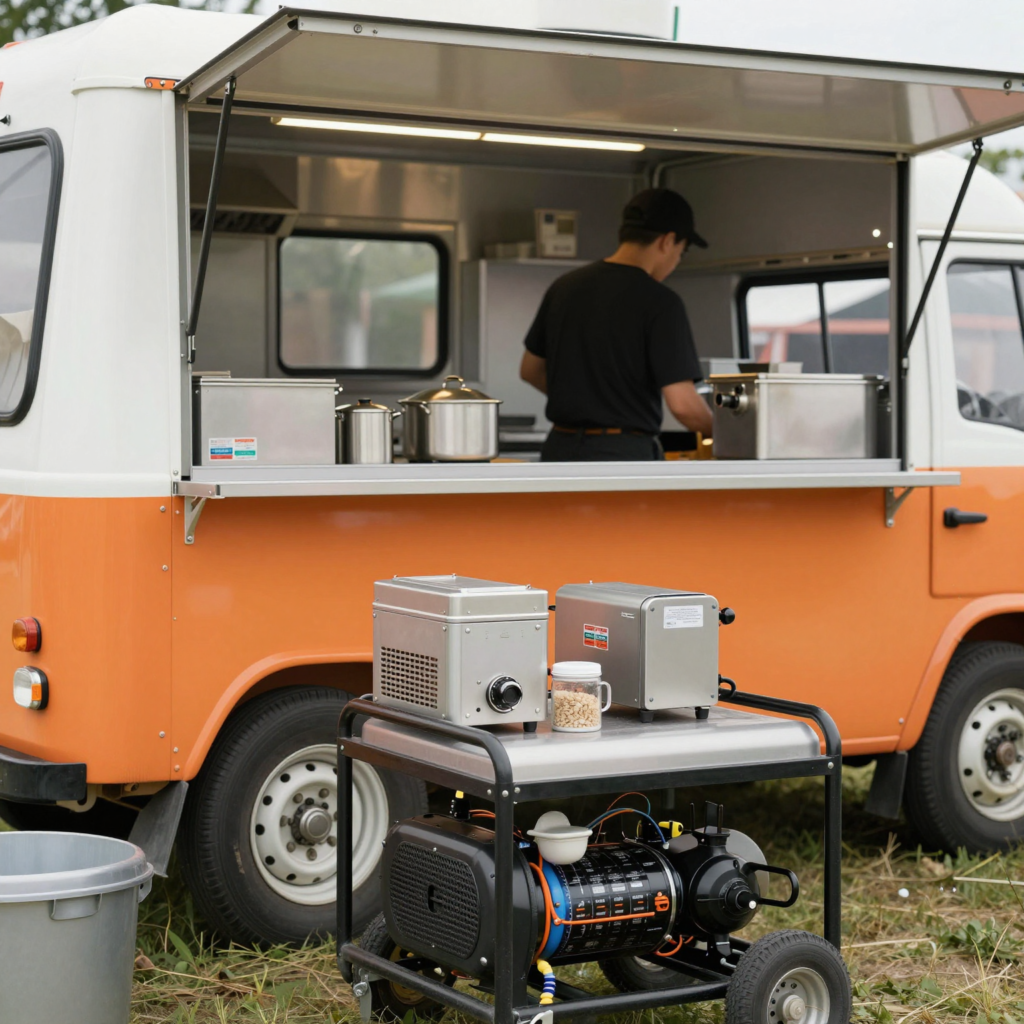
Choosing the right generator size for your food truck is not just a logistical detail; it’s a crucial factor that can make or break your culinary adventures on wheels! Whether you’re an event planner looking to fuel an epic outdoor festival or a passionate food enthusiast eager to share your gourmet creations with the world, understanding how to power your mobile kitchen efficiently is essential. The right generator ensures that your delicious offerings are prepared flawlessly, keeping everything from fryers to coffee machines running smoothly. It’s all about creating that perfect experience for your customers while maintaining your food truck’s operational harmony. So, let’s dive into the world of generators and discover how selecting the right size can supercharge your food truck journey! For more insights on optimizing your food truck experience, don’t miss our financial tips for first-time food truck owners or explore our blog for more helpful articles!
Key Considerations for Selecting the Right Generator Size for Your Food Truck
When it comes to running a food truck, power is essential! Choosing the right generator size ensures that you can operate all your necessary equipment smoothly and efficiently. Here are the main factors to consider:
1. Power Requirements
Before you dive into shopping for a generator, it’s crucial to understand your power needs. First, assess all the electrical equipment you plan to use. Typical food truck equipment includes:
| Equipment Type | Running Watts | Surge Watts | Recommended Generator Size |
|---|---|---|---|
| Commercial Griddle | 3,500-5,000W | – | 6,000-8,000W |
| Fryer | 4,000-6,000W | – | 6,000-8,000W |
| Refrigerator | 800W | 1,800W | 4,000-6,000W |
| Microwave | 1,200W | – | 4,000-6,000W |
| Blender or Mixer | 500-1,000W | – | 4,000-6,000W |
| Point-of-Sale System | 300-500W | – | 4,000-6,000W |
| High-Wattage Appliances | – | – | 8,000-12,000W |
Understanding these wattages helps you choose a generator that can handle the total electrical load, as well as any potential startup surges, which typically require an additional 20% buffer.
2. Equipment Needs
List all appliances in your food truck and sum their power requirements to find the total wattage needed. Don’t forget to consider any additional items like heaters, air conditioning units, or backup systems that may be necessary for comfort.
3. Operational Hours
Finally, think about how long you expect to run your generator daily. If you’re serving at events that require long hours, a larger generator may be more suitable, allowing you to operate multiple appliances without constant re-fueling.
For more tips on financial considerations for first-time food truck owners, check out financial tips for first-time food truck owners! For a broader perspective on food truck operations, don’t miss our blog on food trucks for more insights.
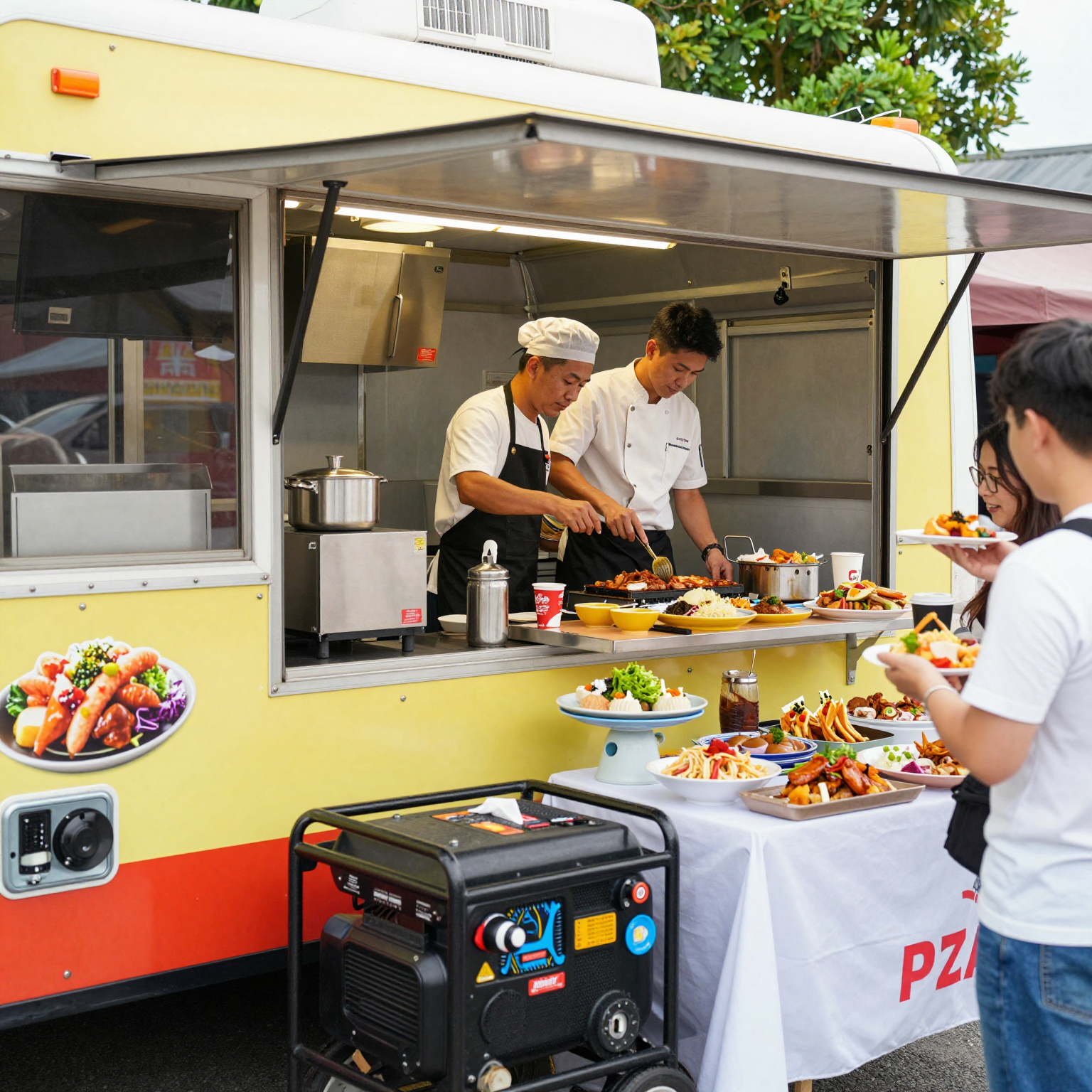
Essential Food Truck Equipment
If you’re planning on operating a food truck, having the right equipment is crucial for making delicious food efficiently. Here’s a look at some essential equipment that every food truck should have:
- Commercial Grill or Griddle: Perfect for cooking meats, veggies, and even breakfast items like pancakes and eggs.
- Deep Fryer: A must-have for frying up crispy fries, chicken, or other beloved items on your menu. Most food trucks use fryers with a capacity of 10-30 lbs.
- Refrigerated Prep Table: Keeps your ingredients fresh and cold, featuring under-counter refrigeration to save space.
- Hot Holding Cabinet: Ensures that cooked food is kept at safe serving temperatures until it’s ready to go.
- Point-of-Sale (POS) System: A mobile-friendly system is essential for quick transactions and to manage sales seamlessly.
- Water Filtration System: Ensures that you have clean water for cooking and sanitation.
- Ventilation System: Helps manage smoke and grease, crucial for health and safety compliance.
- Ice Machine: Needed if your truck serves drinks that require ice, helping to keep passengers refreshed during hot days.
- Portable Sink: Includes a greywater tank to meet health regulations regarding hygiene.
Choosing the right equipment aligns with your specific menu and needs, ensuring you operate efficiently while staying compliant with industry regulations. For more tips, check out our financial tips for first-time food truck owners. Now, let’s talk about generator sizing to power all this equipment effectively!
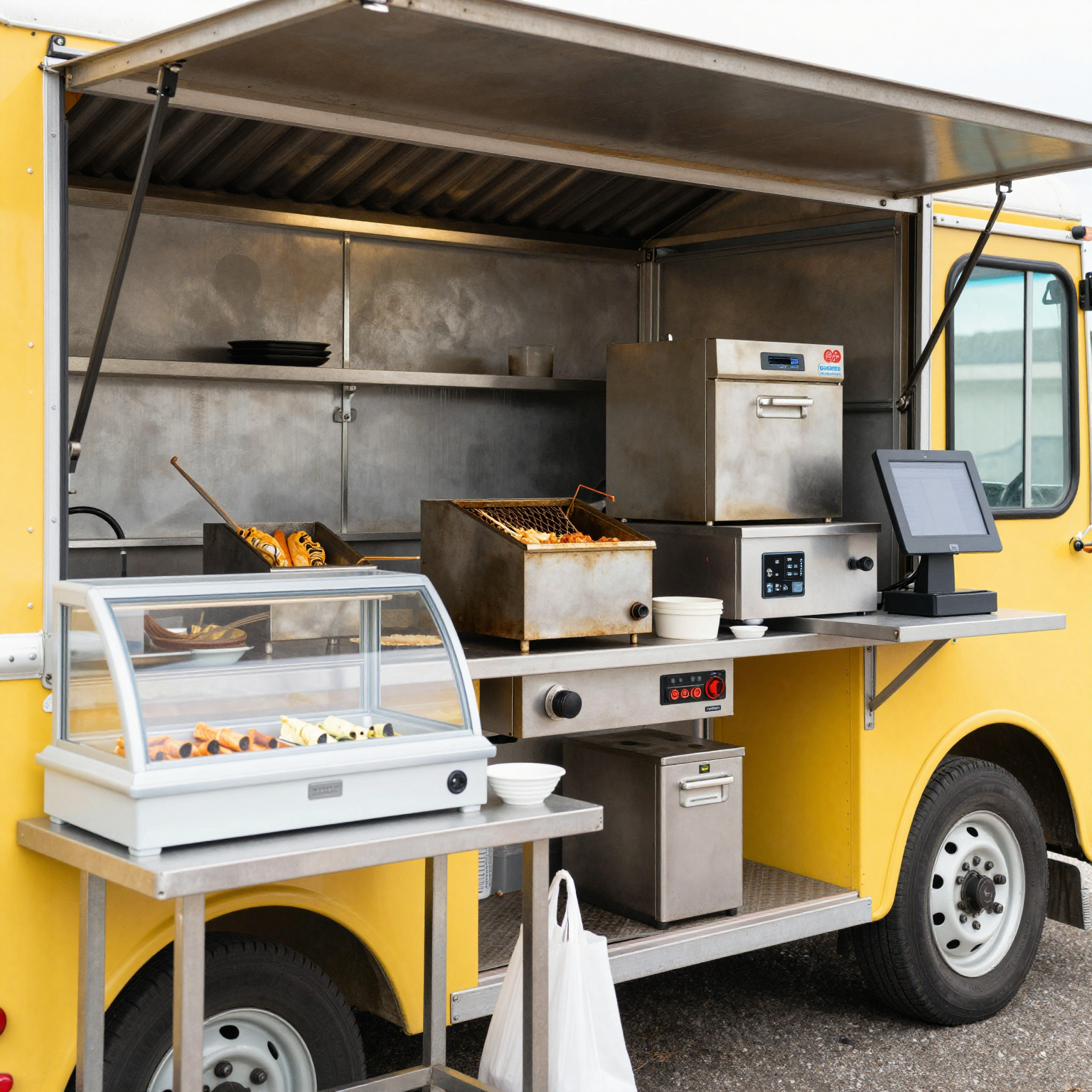
Calculating Power Requirements for Your Food Truck Setup
Understanding the power requirements for your food truck is crucial for ensuring a seamless operation. Different appliances have varying wattage needs, and knowing these can help you choose the right generator.
Common Appliances and Their Power Needs
Here’s a quick overview of some widely used appliances inside food trucks and their average wattage requirements:
| Device Type | Average Wattage Range (Watts) |
|---|---|
| Refrigerators | 150 – 400 |
| Deep Fryers | 3,000 – 6,000 |
| Grills | 2,000 – 5,000 |
| Coffee Makers | 800 – 1,500 |
Source: National Restaurant Association – Equipment Energy Use Guidelines (2024)
Taking into account each appliance’s wattage gives you an idea of your total power needs. For example, if you operate a deep fryer (let’s say at 4,000 watts) along with a refrigerator (300 watts) and a coffee maker (1,200 watts), your total wattage requirement would be approximately 5,500 watts.
Choosing the Right Generator
To ensure you can run all your appliances simultaneously, always add an extra margin (about 20%) to your total wattage calculation. Therefore, in the example above, a generator that delivers around 6,600 watts would be a safe choice for effective operation.
By understanding these power requirements, you can confidently make decisions on your food truck’s setup. If you want tips on managing finances as a first-time food truck owner, check out our financial tips here.
Power Consumption of Common Food Truck Appliances
When planning power requirements for a food truck, understanding the wattage of common appliances can greatly assist in determining the necessary generator size. Here’s a comparison of the power consumption for various appliances typically used in food trucks:
| Appliance | Power Consumption (Watts) |
|---|---|
| Food Blender | 300 W |
| Food Mixer | 127 W |
| Frying Pan | 1200 W |
| Air Conditioning (Range) | 1500 – 3000 W |
| High Capacity Ventilation System | 400 – 800 W |
Source: Industry standard specifications and product data from commercial kitchen equipment providers.
Understanding Your Generator Needs
Appliances like air conditioning units and high-capacity ventilation systems can draw substantially more power, often requiring up to 3000 watts during operation. It’s wise for food truck owners to calculate their total power consumption to ensure they select a generator that can handle the peak requirements. For an in-depth guide on choosing the appropriate generator systems, check out this resource.
Fuel Sources for Generators in Food Truck Operations
When selecting a generator for your food truck, the choice of fuel source is crucial. Each option-gasoline, propane, and diesel-comes with its own set of pros and cons that can significantly impact your operations.
Gasoline
- Pros:
- Widely available and easy to refill at gas stations.
- Affordable initial costs.
- Cons:
- Short shelf life (3-6 months).
- Produces higher emissions, requiring good ventilation.
Propane
- Pros:
- Burns cleaner, making it safer for indoor use.
- Longer shelf life, stable for years.
- Generally quieter operation, ideal for community events.
- Cons:
- Less readily available than gasoline.
- Requires larger tanks due to lower energy density.
Diesel
- Pros:
- High fuel efficiency and runtime, making it cost-effective for longer events.
- Excellent durability, preferred for heavy-duty cooking equipment.
- Cons:
- Higher initial costs and may require special handling in colder weather.
- Diesel fuel prices can be volatile, impacting operational budgets.
According to a 2025 industry report, diesel remains the most practical choice for most food truck owners due to its reliability and existing infrastructure. However, the emergence of electric and propane-powered options is reshaping the landscape, offering lower operating costs and cleaner emissions.
Understanding the nuances of these fuel types can help food truck operators optimize their energy choices, ensuring they deliver delicious meals while managing costs effectively.
| Generator Type | Capacity Range | Suitable Applications | Mobility | Fuel Type | Power Output Needs |
|---|---|---|---|---|---|
| Portable Generators | 1kW – 10kW | Lighting, refrigeration, small kitchen equipment | High – designed for mobility | Gasoline, diesel, propane | 3,500-6,000W peak for cooking appliances; 7,000-12,000W total depending on equipment load |
| Standby Generators | 10kW and above | Fixed installations: commercial kitchens, event venues | Low – not mobile | Diesel, natural gas | Not practical for mobile operations due to size, weight, and installation requirements |
When choosing the right generator for your food truck, real-life experiences can provide invaluable insight. One satisfied food truck owner from Texas shared his success story:
“I used to struggle with noisy generators that disturbed my customers. Ever since I switched to the Champion 4000-Watt Inverter Generator, it’s been a game changer! It powers my commercial fridge, coffee machine, and lighting system simultaneously, and you can hardly hear it. This peace has not only enhanced the customer experience but has also allowed me to focus on serving great food without distractions!”
This testimonial underscores the importance of selecting a generator that combines reliability and low operating noise, ensuring both smooth operations and satisfied customers. If you want to delve deeper into the nuances of generator selection, check out our guide on choosing the right food truck models.
For more tips on financing your food truck venture, consider visiting our financial tips for first-time food truck owners page.
Conclusion: Powering Your Food Truck Success
Choosing the right generator for your food truck is not just a technical decision; it’s a crucial factor for your operational success and can greatly influence your bottom line. An appropriate generator ensures that you have consistent power for your kitchen appliances, from refrigeration units to cooking equipment, especially during busy events. Using an undersized or unreliable generator can lead to costly equipment failures, especially during peak hours, which ultimately results in lost sales and a tarnished reputation. It’s also vital to invest in high-quality generators, such as diesel or propane models, which provide better fuel efficiency and reliability for long shifts.
At Summit Fairings, you’ll find a fantastic selection of generator products tailored specifically for food trucks and mobile catering businesses. Our generators are built to meet the demands of your culinary creations while enhancing efficiency and ensuring quality service. Interested food truck owners can explore options that combine durability with performance, helping you stay ahead in a competitive landscape.
Don’t let power issues compromise your service! Head over to Summit Fairings for our range of generator solutions and elevate your food truck experience. We are here to help support your food venture, ensuring that you have everything you need to make delicious food and unforgettable memories at every event!