Selling delicious street food from a food truck can be an exhilarating venture, sparking joy and taste sensations across communities. However, the regulations governing food truck licensing in the UK may appear daunting at first glance. Whether you’re an event planner lighting up festivities, a corporate HR director organizing employee engagement, a local community group celebrating togetherness, or simply a food enthusiast eager to explore culinary delights, understanding the rules is essential to navigating this vibrant market. From gaining local authority licenses to meeting hygiene standards and understanding where you can legally park your food truck, we’ll unravel every layer of selling from your mobile kitchen. Let’s dive deep into these essential components to turn your culinary dreams into reality!
Permits on the Move: How UK Local Authorities Decide Where Your Food Truck Can Sell
The appeal of selling hot food from a truck that moves as freely as your appetites do is undeniable. A food truck can take you from street corner to market square, festival ground to private event, all without the fixed burden of a bricks-and-mortar café. Yet the freedom comes with boundaries. In the United Kingdom, you cannot simply roll up anywhere and start serving meals to the public. The daydream of endless city blocks and quiet lanes turning into a booming fry-up becomes a practical plan only after you have navigated a maze of local authority licensing, location permissions, and food-safety guarantees. This is not a dusty list of bureaucratic hoops; it is the engine that ensures the food you serve is safe, that the streets you use can accommodate a mobile vendor, and that the business you build can stand up to scrutiny from traders’ standards and health inspectors alike. Understanding this landscape is the first step toward turning wheels and turning profits without compromising the law or the public’s trust. It also frames a straightforward truth: while your truck can travel, your selling must occur only in places that have been approved, with a license in your pocket and safety practices in place.
The core requirement, and the one that shapes every subsequent choice you will make, is local authority licensing. In practice, this means a mobile food vehicle licence or a temporary food stall licence issued by your local council. Each local authority—whether it is a city council, a district council, or another jurisdictional body within a county—holds its own rules, forms, and procedures. That fragmentation is deliberate. It reflects the diversity of urban layouts, pedestrian flows, and public health needs across the country. What is permitted in a bustling market square in one borough may not be permitted in a quiet greenspace in another. The licensing system exists to balance the appetite for mobile vending with concerns about hygiene, waste management, traffic, noise, and the impact on nearby businesses and residents. You can think of the licence as a formal permission slip that not only allows the truck to operate but also holds you to a defined standard of operation.
The licence itself is more than a stamp of approval. It is a framework you must meet and maintain throughout the life of your operation. The local environmental health department is usually the guardian of this framework. They assess whether your vehicle has a clean, well-organized kitchen, adequate storage, and proper waste disposal. They check that you have a reliable handwashing facility and that your temperature controls for hot and cold foods are appropriate. They may also require that you demonstrate compliance with the UK’s food hygiene regulations and that you show regular, documented cleaning schedules and safe food handling practices. These expectations are not punitive, though they can have teeth if neglected. The underlying aim is simple: protect the public’s health and ensure that a mobile vendor contributes positively to the local economy without creating avoidable risk.
To begin the process, you will typically submit an application to your local council. The application form asks for essential details about your business—your food truck’s registration, the menu you plan to serve, the equipment you use, and your hygiene practices. You will also need to provide information about where you intend to operate, how you manage waste, and how you comply with allergen and food safety requirements. A fee accompanies the application, and the amount can vary widely from one council to another. Alongside the application, you may be required to undergo or provide evidence of a food safety inspection. This inspection is not something to fear; it is a practical audit of your kitchen setup and practices. Passing the inspection confirms that you have a responsible approach to food safety, which is the bedrock of consumer trust and regulatory compliance.
The penalties for operating without this license are clear and serious. Local authorities have a mandate to enforce licensing conditions, and they can issue fines, issue enforcement notices, or seize your vehicle if you operate without the proper authorisation. The risk is not merely bureaucratic inconvenience; it could disrupt your business, damage your reputation, and increase the cost of compliance later. Because of this, it is essential to secure the correct licensing before you set up in any location. The path from concept to operation begins with the council and the licence that proves you belong in the places you choose to park.
Even with a licence in hand, your freedom to choose a selling location remains bounded by location rules. Public spaces—parks, beaches, marketplaces, or town centers—often require additional permissions beyond the licence. You may need permission from the landowner or organiser, and the local trading standards team will sometimes have a say in where you can operate, particularly if a site experiences high footfall or frequent events. There are also day-to-day considerations. Noise, traffic patterns, and public health concerns can influence whether a given site is suitable for a mobile vendor. The law is clear that you should not assume a license grants you the right to park anywhere you wish. A prudent operator checks with the local council’s trading standards department before setting up, particularly if the plan is to operate regularly in outdoor public spaces. This diligence reduces the risk of fines or disruption and helps you build a stable operating footprint over time.
Because the UK comprises four nations with somewhat different regulatory nuances, it is worth distinguishing the broader framework from the local specifics you will encounter. England’s guidelines are published and updated by central government, but the actual licensing, street permissions, and enforcement rest in the hands of local authorities. Scotland, Wales, and Northern Ireland maintain similar structural arrangements but with devolved governance that may alter some steps or terminology. The key constant across all four is that mobile food vendors must align with local control points: licensing, planning or permission to operate at specific sites, and compliance with hygiene standards overseen by a national body such as the Food Standards Agency in conjunction with the local authority. The practical implication is straightforward: no single absolute ‘right to sell anywhere’ exists. The path to freedom on the street is through permission granted place by place, with a license that binds you to standards of operation, safety, and accountability.
A core part of this compliance tapestry is the explicit connection between your licensing and your business registration. You are not merely applying for a permit to sell; you are also registering a business activity with HM Revenue & Customs (HMRC). This registration is standard practice for tax purposes and ensures your trading activity is recognised within the formal economy. In many cases, you may also need to consider a trading name if you operate under a name other than your personal or company name. While HMRC is the tax authority, the local council is the gatekeeper to your selling space; both worlds must be aligned for your venture to operate smoothly. Planning permission or a temporary event notice (TEN) may also be required if you intend to run at a fixed site on a regular basis or at particular events, especially when you want to occupy a public space like a park or a town square. Some councils also expect you to secure such permissions when you plan to operate near schools or other sensitive locations, where the impact on traffic, noise, or local services is more closely scrutinized.
When you look closer at the regional specifics, the London area alone illustrates how varied the landscape can be. The City of London, for instance, requires a dedicated mobile food vendor licence to be obtained through the local Environmental Health team. Other London boroughs, such as Camden or Hackney, bring additional requirements that can touch on how you park, how you manage noise, and how you handle footfall during events. The message is consistent across the capital: even within the same city, different jurisdictions apply the rules in ways that reflect their particular environments and priorities. Outside London, other counties and councils may set different thresholds for permits, hours of operation, and permitted zones. These variations are not obstacles to be resented but rather facets of a dynamic regulatory ecosystem that rewards careful preparation and proactive engagement with local authorities.
A practical takeaway from this regulatory mosaic is that the licensing and compliance processes are designed to be predictable and enforceable, not arbitrary. The framework ensures that mobile food vendors deliver safe food, operate from hygienic setups, and respect the communities in which they move. It also means you can plan a route or a business model with confidence, knowing that the main hurdles are known in advance and can be addressed with the right paperwork and practices. The presence of a licence and compliance with hygiene standards, waste management practices, allergen controls, and staff training forms a credible foundation for growth. It also signals to potential event organisers and landlords that you are a responsible operator, which opens doors to private events, markets, and partnerships that can sustain a business through the seasonal ebbs and flows of demand.
All of this underscores a single, practical frame: you cannot sell from your food truck anywhere you want. Your selling sites must be approved locations identified through the licensing process and corroborated by permissions where necessary. Your site choices should align with planning or TEN requirements where applicable, and your hygiene and safety practices must meet or exceed the standards set by the Food Standards Agency and your local environmental health team. In other words, your wheels can move, but your pitch must land within the lines of approved spaces. Your success hinges on the way you plan, engage, and document these elements—because a well-documented, well-regulated operation is the kind of business that can scale responsibly and sustainably.
To connect the path from regulation to everyday practice, consider how a typical cycle looks in a busy council area. You identify a potential site, perhaps a weekly market or a popular park corner that allows mobile vendors. You prepare the licence application, outlining your menu, equipment, waste management plan, and proof of hygienic handling. You arrange the food safety training for your staff, ensuring at least Level 2 Food Safety qualifications or equivalent credentials, and you assemble your temperature control procedures, cleaning schedules, and allergen information. When the inspector visits, you walk through your food preparation area, show evidence of proper handwashing facilities, and demonstrate your ability to keep raw and cooked foods separate. If all goes well, you receive the licence with conditions—perhaps limits on operating hours, waste disposal requirements, or how you manage queue control during peak times. You then secure any ancillary permissions needed for the site itself, apply for a TEN if a particular event requires it, and confirm that your vehicle is roadworthy and insured. Public liability insurance is a common minimum requirement, with cover often set at £1 million or more, depending on the council and the risk profile of the site. The result is a legally compliant footprint that allows you to serve customers with confidence, knowing you have the support of the local authority and a clear framework to operate within.
The beauty—and challenge—of this system is that it accommodates a wide variety of food concepts and operation models while maintaining a core standard: health and safety. To support operators in meeting these standards, many councils require ongoing documentation and periodic checks. This can include allergen records, supplier traceability, and temperature logs that prove you are maintaining safe hot and cold chains. Staff training remains a non-negotiable element, with the Level 2 qualification commonly cited as a baseline. The emphasis on training is not merely compliance; it translates into better service, fewer mistakes, and more consistent quality that customers can rely on when they entrust their meals to a mobile vendor. In turn, a well-run operation that consistently meets hygiene standards becomes easier to license, renew, and expand to new sites as opportunities arise. It is a virtuous circle: good practice yields more sites, more sites yield greater exposure, and exposure translates into more sales, all while keeping the public safe and the local environment orderly.
For operators who are navigating this landscape for the first time, there is substantial value in learning from those who have walked the path. The process of understanding local rules, preparing compliant systems, and forming relationships with council officers is not a one-off task. It is an ongoing part of running a mobile food business. A practical starting point is to explore resources that explain how local authorities regulate mobile food vendors and to engage with the particular council you intend to operate under. You can begin by examining the official guidance that outlines the legal framework for mobile food vendors in England, as well as the devolved equivalents for Scotland, Wales, and Northern Ireland. And when you are ready to deepen the thread of understanding, you can refer to the wider community of operators and regulators through articles and forums that discuss the day-to-day realities of licensing, site selection, and compliance. A useful step is to connect with peers who have already established a track record in the local market and who can share insights about site-specific requirements, peak hours, and community expectations.
In summary, the ability to sell from a food truck across the UK is not a free-for-all. It is a carefully regulated enterprise that requires a local licence, compliance with food safety and hygiene rules, proper insurance, and access to permitted sites. The licensing process, though occasionally intricate, is designed to protect consumers, maintain fair competition, and ensure that mobile food vendors operate in harmony with existing urban plans and community needs. Your job as a prospective operator is to translate ambition into action by building a compliant operations framework, engaging early with your local council, securing the necessary permissions for the sites you plan to use, and maintaining rigorous standards in food safety, waste management, and customer service. When you do that, the freedom to move with your menu becomes not a risk but a reliable pathway to growth and lasting success. For further reading and official guidance on the regulatory landscape for mobile food vendors in England, visit the government resource linked below, and for a sense of how these guidelines translate into practical steps, consider exploring the related discussions within the wider food-truck community and your local business networks. navigating food-truck industry regulations. External guidance can also be found at the national level, which provides the framework that local authorities apply in daily practice as you build your street-food business. You can consult the official guidance here: https://www.gov.uk/government/publications/food-hygiene-and-safety-rules-for-mobile-food-vendors
Limited Streets, Open Plates: Navigating UK Location Restrictions for Food Trucks
Selling from a food truck in the UK is a compelling proposition. The idea of rolling into a bustling square, a park, or a market with a sizzling menu and a loyal queue can be a powerful draw. Yet the freedom to park and serve anywhere you like does not exist. The reality is governed by a dense web of local regulations, licensing requirements, and health and safety standards that vary from council to council. The chapter that follows delves into these location restrictions with a focus on practical, real‑world implications. It treats licensing as the gateway, but it also unpacks the boundaries set by city planning, street trading rules, and the sometimes invisible lines drawn around noise, traffic, and competition. The aim is not just to obey the rules but to build a resilient, location-aware strategy that can scale across different boroughs and events while keeping the business compliant and sustainable.
At the heart of the matter lies the local authority, which acts as the gatekeeper for where you may operate. In most English jurisdictions, a temporary food stall license or mobile food vehicle permit is a prerequisite for even the most modest street corner operation. This license is not a singular national form; it is a local instrument tailored by each council’s trading standards and environmental health departments. Applicants typically submit a dossier that includes details about the food truck itself, a snapshot of the proposed menu, how you manage hygiene, and how you handle waste and storage. You will also face a food safety inspection as part of the permit process. And while the paperwork may appear routine, the consequences of noncompliance can be severe: fines, enforcement orders, or in the worst cases, seizure of stock and equipment. The underlying message is clear: you cannot simply show up with a permit in hand and assume free rein.
The license acts as a passport to operate, but it does not authorize freedom from locations. The moment you seek to park in public spaces, you step into a new layer of rules. Parks, beaches, town squares, and market sites all operate under their own permissions, often negotiated with the local authority or related organisations. High footfall zones in city centers, near schools, or adjacent to licensed premises frequently carry heightened scrutiny. The objective behind these rules is not adversarial; it is protective. Local authorities must balance commerce with resident tranquility, traffic flow, and public health. A well-run operation understands that location is not just about proximity to customers; it is about alignment with a community’s needs and rhythms. A food truck that appears during early morning commuter rush hours, for instance, might pose noise and congestion concerns in a residential district. Conversely, a festival or market event can present a curated setting where the council and event organisers explicitly invite mobile vendors to participate under defined terms.
While the core licensing framework is essential, the location rules weave in a set of practical constraints that push operators toward proactive planning. A common concern across councils is proximity to existing licensed premises. Some authorities restrict operating too close to restaurants and pubs to prevent undercutting or creating unfair competition, especially in busy urban cores where footfall already gravitates toward established outlets. The exact buffer or distance rule is not uniform; one borough might require a generous separation, while another relies on qualitative assessments of impact on nearby traders. The risk here is not merely a breach; it is the potential loss of new trading opportunities if a site is deemed too close to a brick-and-mortar rival. Hence, many operators start their location scouting by mapping competition and then contacting the council to confirm permissible distances before committing to any site.
Designated zones are another practical element of location strategy. Some cities carve out spaces where food trucks can operate under a defined set of conditions. These zones may be temporary or permanent and often come with clearer standards around waste disposal, power supply, and traffic management. London, for example, and other major cities have experimented with street trading licenses and designated hours in specific districts, while cities like Birmingham or Bristol may require mobile vendors to register with city or markets teams to operate in certain lanes, squares, or markets. The idea behind designated zones is simple: by concentrating activity in predictable areas, councils can better manage crowd flow, safety, and compliance while giving vendors reliable venues with known rules. Yet this system also imposes a discipline on operators who want flexibility. If your business model relies on swinging between neighborhoods or capitalizing on pop-up opportunities, you must plan around these zones rather than against them.
Time becomes a critical constraint as well. In residential neighborhoods and in areas where late-night activity would disturb residents, councils often impose strict operating hours. Early mornings, often ideal for breakfast concepts, may be restricted to prevent noise before a certain hour, while late evenings can be curtailed to keep noise and queueing from spiraling into disruption. A flexible deployment plan, therefore, is not only about where you operate but when. Some local authorities also place limits during school terms or near school grounds to minimize disruption. These time windows vary widely, and the same location may be permitted for a market, a festival, and a weekly street market at different times of the year. The onus is on the operator to keep a precise calendar and to coordinate with event organisers and the council when planning to attend a festival or a temporary event.
Health and safety compliance sits at the core of any location decision. The regulatory framework demands adherence to the UK food hygiene legislation, which governs how a mobile unit must function on site. A well‑maintained kitchen and storage area is non-negotiable, as are properly equipped handwashing facilities and temperature control for hot and cold foods. These standards are not simply bureaucratic hoops; they are practical requirements that protect customers and reduce the risk of incidents that could force a site closure. Regular inspections by environmental health officers are a standard feature of the licensing regime. In effect, you cannot purchase a permit and then ignore the day‑to‑day obligations that come with safe catering. Training, such as a Level 2 Food Safety qualification, is typically expected for staff and a baseline that supports consistent practice across different sites and shifts. When you plan a multi‑site operation, you also need a consistent approach to waste management and cleaning protocols to ensure that a single unsatisfactory site does not become a systemic risk across your route.
The practical implications of these rules are not only about compliance. They shape the very DNA of a mobile food business. They influence your menu design, equipment choices, and staffing patterns. They determine the kinds of events you bid for and the partnerships you cultivate with event organisers. They affect your branding choices, including how your truck looks in a given zone and how you manage queue lines so as not to block pedestrian flow or create safety hazards. A thoughtful operator does not merely apply for a license and hope to find forgiving locations; they demonstrate a clear plan for working within the local ecosystem. That plan includes surveying the location over several days, speaking to nearby traders about conditions, and scheduling site visits with council officers or market coordinators to understand why certain sites exist, how they function, and what would be required to operate there successfully.
An important part of building this plan is recognizing that a one‑size‑fits‑all approach does not work. You will not be able to operate in every place, every time, and under every circumstance. The beauty of a mobile business is the ability to move to where demand exists, but the rules that govern movement are real and sometimes unforgiving. That reality has a practical upside: it compels you to become a better planner. You learn how to identify the kind of site that aligns with your concept, your customer base, and your logistical capabilities. You become adept at reading a location’s seasonal rhythm, such as a summer market or a winter community event, and at negotiating the terms that will give you a stable, compliant footprint. You learn to prepare a portfolio of options rather than fixating on a single site. In this way, location restrictions become not a barrier but a map of opportunities, with each approved site offering its own set of advantages and constraints.
To navigate this landscape effectively, a holistic approach is essential. First, you secure the core license from the local council. This step is the passport that legitimates your operation and sets the stage for any site‑specific permissions. Second, you engage in proactive location planning. You study proximity to other traders and to potential customers, you identify designated zones, and you understand the time windows that will keep you compliant while allowing you to reach your market. Third, you align your health and safety practices with the expectations of the local authority. This alignment includes staff training, equipment checks, and waste management strategies that demonstrate responsibility and professionalism. Finally, you cultivate relationships with event organisers, market managers, and other stakeholders. Building trust with those who control access to desirable sites can unlock opportunities that pure persistence alone cannot. The best operators approach location not as a constant search for new space, but as a strategic orchestration of permissions, zones, timings, and reliable compliance.
For those who want a practical touchstone, consider a framework that invites you to view location as a partnership rather than a hurdle. Before you arrive at any site, confirm the permissions with the local council’s trading standards department and review any posted site guidelines. If you are unsure about a site, it is worth a call or a short visit to the local markets office or environmental health team. The aim is to avoid friction that could lead to a swift shutdown, which can happen even at a seemingly promising location if the paperwork or procedures are not up to date. If you are curious about how others in the trade navigate these complexities, you can explore broader guidance on navigating food truck industry regulations, which provides a consolidated view of licensing, zoning, and safety expectations across different jurisdictions. navigating-food-truck-industry-regulations.
In the end, the question of where you can sell from a food truck in the UK reduces to a disciplined process, not a risky leap. It demands a clear understanding of the local licensing environment, an awareness of the place‑specific rules that govern street trading, and a steadfast commitment to health and safety. It requires you to map your strategy with your eyes open to the realities of proximity rules, designated zones, time restrictions, and events. And it rewards you with the confidence that your operation can move from one approved site to another with minimal friction, a consistent standard across all locations, and a credible reputation with customers and authorities alike.
Official guidance emphasizes that mobile vendors must operate within the framework set by food safety and hygiene rules for mobile operations, a framework that supports both consumer protection and market integrity. As you build your location strategy, keep this framework front and centre. It is the backbone that ensures your truck can legally roll from one site to the next while preserving your ability to serve great food. If you want to dig deeper into the formal rules, you can consult the government’s detailed guidance on food hygiene and safety for mobile vendors, which outlines the responsibilities you carry as you move and set up in different spaces. For quick reference, the key points are licensing, location permissions, designated zones where applicable, hours, health and safety, and insurance. These elements together form a practical blueprint that helps you avoid common missteps and stay compliant as you grow.
As you plan, remember that the rule book is not static. Local authorities periodically update policies, and new markets or events can change the terms for participating. A proactive operator stays informed by maintaining regular contact with the council’s licensing and trading standards teams, by monitoring council minutes and public notices, and by joining community forums or business networks that focus on street trading and markets. Doing so not only minimizes the risk of penalties but also positions you to respond quickly to opportunities. It also signals to potential customers that your business is serious, responsible, and reliable—qualities that can set you apart in a crowded field of upstart food trucks. The path to success on the British street is not about sheer bravado; it is about a disciplined, location-aware approach that respects the distance to other traders, the rhythms of the urban environment, and the standards that keep every bite safe and every site functioning smoothly.
For more context on the regulatory landscape beyond this chapter, keep in mind that official guidance is your primary route to accuracy. The Food Standards Agency outlines the hygiene and safety requirements that mobile vendors must meet to operate legally, including waste disposal, handwashing, and temperature control. It is worth reviewing these standards in detail as you map out your routes, because a failure in one site can have ripple effects across the entire operation. To explore these principles, refer to the external resource at the end of this chapter. The guidance there is designed to help you translate regulatory language into practical daily routines that keep you compliant while you scale. In short, if your goal is to grow a resilient fleet of mobile venues, you must think about location not as a random choice but as a carefully engineered component of your business model, a component you can optimize with the same care you give to your menu and your branding. The street is your canvas, but compliance is the frame that enables a picture worth selling.
For further reading on the practical framework that underpins all of these considerations, the broader topic of how to navigate food truck regulations is available at the linked resource. And when you are ready to check the authoritative guidelines that govern mobile food vendors, the dedicated public health pages provide the definitive baseline for safe operations. The bottom line is simple: you can operate in the UK only in places and at times that are approved, with a proper license, and with rigorous attention to hygiene and safety. This is not an obstacle to growth but a map that helps you steer toward sustainable, repeatable success across diverse locations.
External resource for deeper reference: Food Standards Agency – Guidance on food hygiene and safety for mobile food vendors
Safe on the Move: Hygiene, Licensing, and the Real Limits of Selling from a UK Food Truck
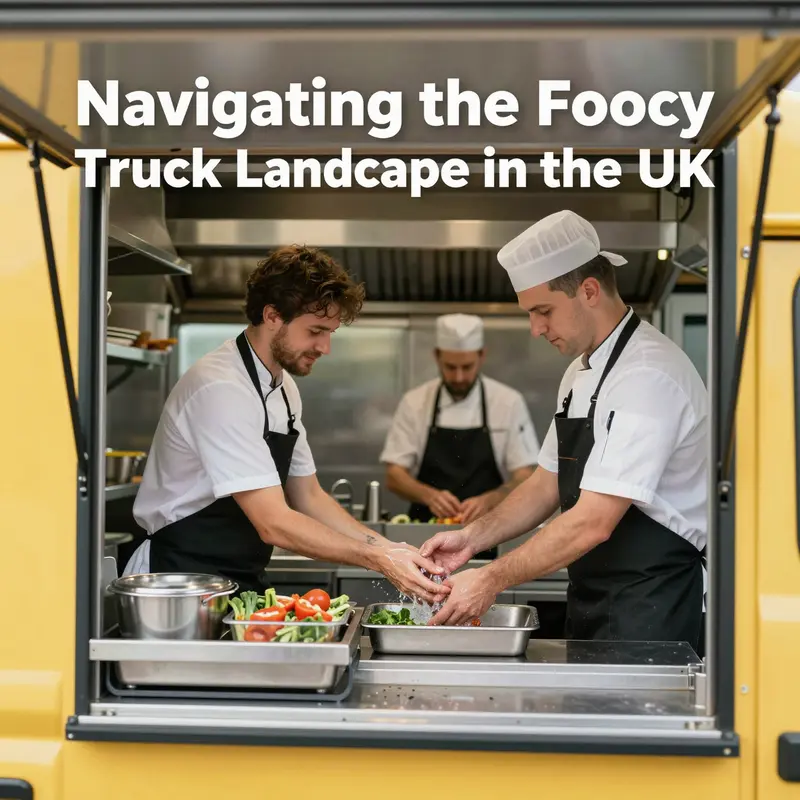
On the surface, driving a food truck through the UK can seem like a simple blend of mobility and appetite. In practice, the road is defined by national rules and local practices that ensure food safety. You can operate only in approved places and under a framework designed to protect public health. The aim of these rules is to keep food safe from preparation to plate and to build a business that can travel with confidence. The core idea is that location and process go hand in hand, not luck or proximity.
The backbone is HACCP. The Food Safety Act and the Food Hygiene Regulations set the baseline, and HACCP provides a documented, proactive approach to control hazards at every step, from ingredients to serving. This means mapping hazards, establishing critical control points, setting limits, monitoring, and acting on deviations. A well-run HACCP program makes your operation auditable and resilient rather than guesswork.
Registration and licensing are the entry ticket. Local councils typically require environmental health registration and a mobile food vendor license or a temporary stall license. The process asks for vehicle details, menu, hygiene practices, handling procedures, and where you intend to operate. Fees vary, inspections may be involved, and licenses are location- and time-bound. Without them, selling food can lead to penalties or seizure of the vehicle.
The sanitary environment and staff training matter. A mobile kitchen must have clean surfaces, proper waste management, handwashing facilities, temperature control, and routine temperature monitoring. Staff should hold suitable food safety qualifications, and training should cover hygiene, cross-contamination, and allergens. Regular inspections verify compliance and can trigger corrective action if lapses are found.
Where you may sell is also regulated. Sites like parks, markets, and event venues often require additional permissions beyond the base license, and proximity to sensitive locations may be restricted. Planning routes starts with site permissions, not just footfall. Private events may require contracts and site-specific permits.
In practice, align your business plan with regulatory requirements from day one. Register with the environmental health department, implement HACCP early, and build a record-keeping system for temperatures, cleaning, deliveries, and training. Check each site’s permissions before targeting a location, and confirm whether a temporary event license or a location permit is required. Treat location permissions with the same seriousness as food safety.
The official landscape is spelled out by government guidance. The core principles are consistent across England and the devolved nations: hygiene, documented controls, inspections, and clear licensing paths. For authoritative guidance, consult the government resource on mobile food vendors. https://www.gov.uk/guidance/food-hygiene-and-safety-for-mobile-food-vendors
Rolling with the Rules: Licensing, Vehicle Standards, and Insurance for UK Food Trucks
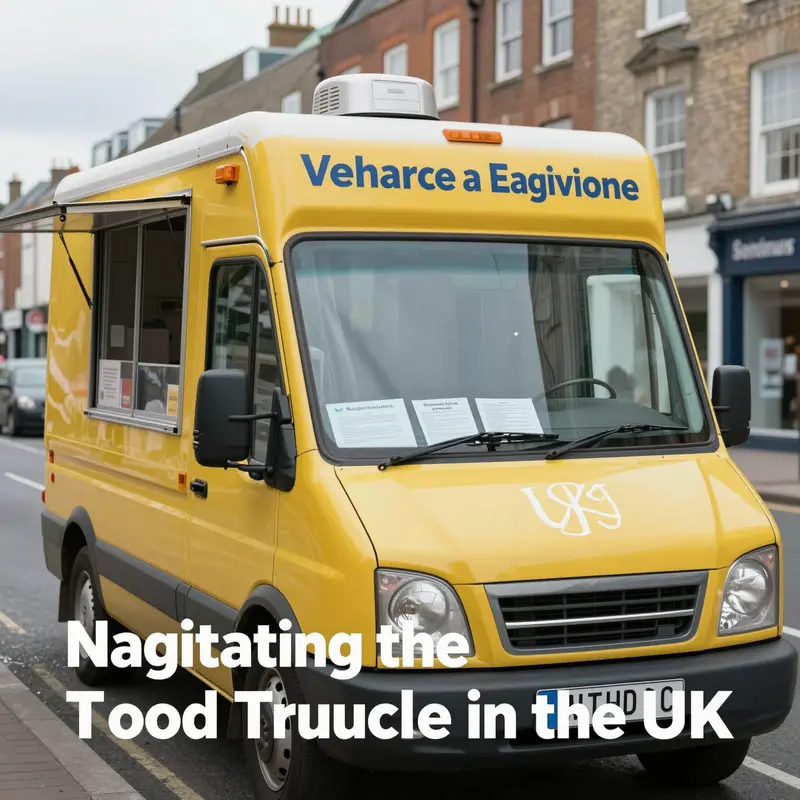
In the UK, selling from a food truck requires more than a tasty menu. Compliance with licensing, vehicle standards, and insurance forms the backbone of a legally operating mobile kitchen. You will typically need a local authority street-trading or premises license for mobile food service, plus documentation that your vehicle is roadworthy and registered for commercial use. Expect checks or inspections by environmental health to verify hygiene standards and food safety practices. The DVLA documents (often V5C and related declarations) and an annual MOT where applicable help confirm the vehicle is fit for purpose. Insurance should cover third-party liability, public liability, and employers’ liability if you employ staff, as well as optional cover for business interruption and equipment. Location matters too: many councils restrict where you can operate, and large venues or events may require proof of the proper licenses and insurance before you are invited to serve. A disciplined approach—keeping copies of licenses, MOT status, hygiene ratings, and insurance certificates—will improve your credibility with venues and customers and reduce downtime due to regulatory issues. While you can’t simply park anywhere, a well-planned compliance framework makes mobile food service safer, more reliable, and increasingly capable of growing across the UK.
Final thoughts
In conclusion, while the journey to sell from a food truck in the UK may seem complex, understanding local regulations, location restrictions, hygiene compliance, and insurance requirements is vital for paving the way to success. Whether you’re planning a community event, organizing corporate catering, or simply diving into the world of mobile cuisine, this knowledge empowers you to make informed decisions. Stay compliant, embrace the culinary adventure, and bring your food truck dreams to life, one delicious dish at a time! Remember, your next culinary innovation could just be around the corner!