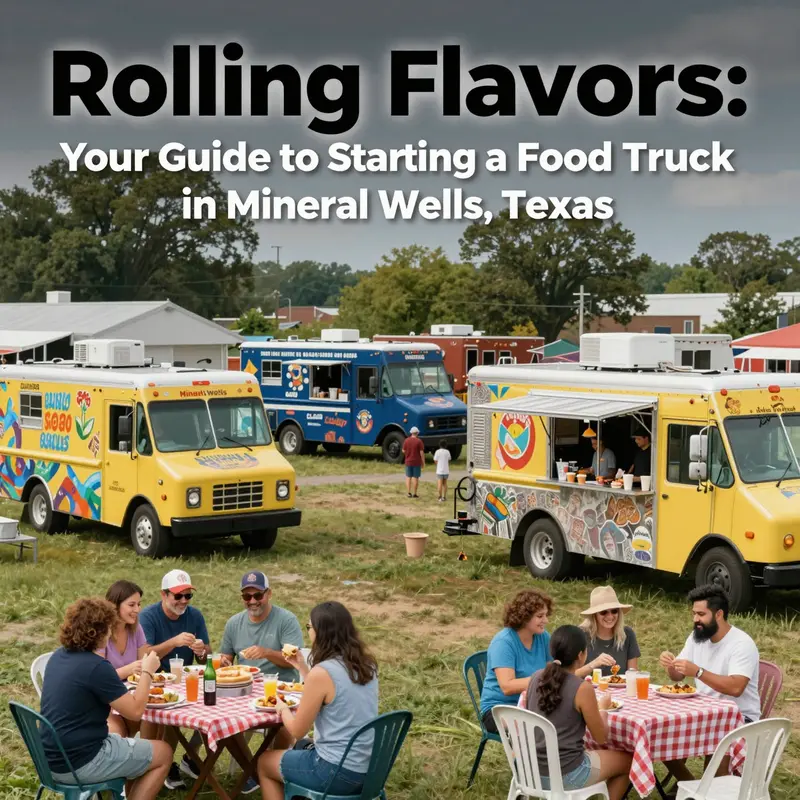
The aroma of sizzling tacos, the inviting sounds of busy kitchens, and the vibrant spirit of community gatherings draw many food lovers toward food trucks. If you’ve ever dreamed of serving your culinary creations from a mobile kitchen in Mineral Wells, Texas, you’re in for a thrilling endeavor! This city, known for its rich history and lively community life, offers a unique backdrop for starting your food truck business. As you explore this guide, you will uncover vital steps towards launching your food truck—from navigating the necessary business registrations and health permits to ensuring your vehicle meets operational requirements and strategizing marketing efforts. Each chapter is structured to provide a comprehensive understanding of the entire process, equipping you with the knowledge needed to fuel your ambition and satisfy the appetites of local patrons.
Licensing the Wheels: Registration and Permits for a Mineral Wells Mobile Food Truck
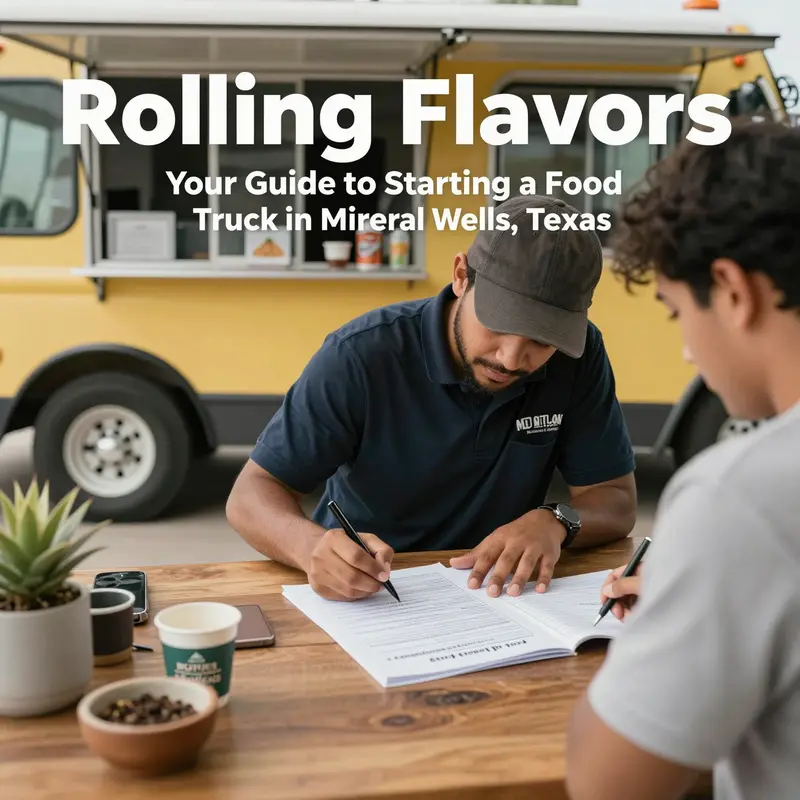
In Mineral Wells, Texas, launching a food truck begins long before the first sizzle. It starts with a clear map of registrations, licenses, and permits aligned with state rules, city codes, and practical operations. The licensing journey blends planning with hustle, treating compliance as a foundation for daily success rather than a one-time hurdle. The sequence protects public health, reduces legal risk, and clarifies responsibilities for every crew member, helping a new operator stay focused as the truck hits Mineral Wells streets and events.
A starting point is choosing a business structure. Whether you form an LLC or operate as a sole proprietorship changes tax treatment, personal exposure, and admin duties, and it influences how you file with the Texas Secretary of State. An LLC offers liability protection and credibility with banks and vendors but has ongoing requirements. A sole proprietorship is simpler but places personal assets at risk if disputes arise. Regardless, registering the business with the Texas Secretary of State establishes formal recognition and credibility.
Next comes the Employer Identification Number, or EIN, from the IRS. If you plan to hire staff—or anticipate growth—you’ll want an EIN for payroll, reporting, and financial separation from personal funds. Even without employees initially, an EIN can simplify bank accounts and vendor agreements and signals seriousness to customers and partners.
Local licensing is essential. Mineral Wells requires registration of your mobile food operation with the City Clerk’s Office and a local business license. This ties your truck to the city’s zoning, hours, and vending rules and helps determine where you may operate and how waste and parking are handled. A timely local license reduces fines and interruptions and keeps you aligned with planning and zoning standards.
The heart of food safety is the state health permit, the Food Service Establishment Permit (FSEP). This permit ensures that food safety and sanitation meet consistent standards. The application asks for a floor plan showing storage, preparation, and service zones; a detailed equipment list; and a ready-to-inspect hygiene setup. Health inspectors look for cross-contamination prevention, proper separation of raw and ready-to-eat foods, and functional handwashing stations.
Education and training are critical. Every staff member should have a certified food handler certificate, earned through recognized programs. This translates into real-world expectations for safe temperatures, cleaning, sanitizing, and illness response. A team with documented training tends to pass inspections and keep service smooth between events.
A vehicle inspection report is another practical requirement. The health department wants to verify the truck is clean, structurally sound, and capable of maintaining proper temperatures. A well-equipped truck with refrigeration, a clean handwashing station, proper waste disposal, and clearly labeled hot and cold zones performs better during inspections and daily service.
Other regulatory layers may apply. If your menu includes meat, poultry, or eggs, USDA registration may be necessary for certain products, especially if you plan broader distribution or catering. Confirm USDA requirements early to avoid unnecessary costs while staying compliant where needed.
Insurance is a practical safeguard. A general liability policy protects against third-party injuries, property damage, and some vehicle exposures. Insurance signals credibility to venues and partners and helps ensure continuity after incidents. It is not optional if you want sustainable growth.
Tax compliance also matters. The Texas Comptroller regulates sales tax on prepared foods. A sales tax permit is typically required and helps with pricing, cash flow, and audits. Keep renewals on a calendar and align tax collection with your menu and transactions.
For events, temporary food service permits can unlock opportunities at festivals and markets. They address event-specific safety plans and temporary facilities, allowing compliant operation in spaces with unique throughput needs.
A practical licensing plan includes a calendar of renewals, inspections, and updates for menu changes. Maintain ongoing communication with the city clerk, health department, and insurance adviser. Regular reviews prevent last-minute surprises and keep the plan moving forward.
Finally, the regulatory journey is a collaborative process. Build a simple checklist mirroring the sequence above, create a rotation plan that respects zoning and hours, and establish a team trained in health expectations and internal rules. A well-planned operator minimizes risk and builds trust with customers and venues. Official guidance comes from state and local agencies, such as the Texas Department of State Health Services, which publishes current food safety rules and verification channels.
This chapter offers a concise mental model for navigating licensing, emphasizing clarity, preparedness, and proactive communication. It sets the foundation for lawful, safe, and scalable food-truck operations throughout Mineral Wells and beyond.
Food Service Permits and Health Compliance: Launching a Mineral Wells, Texas Food Truck with Confidence
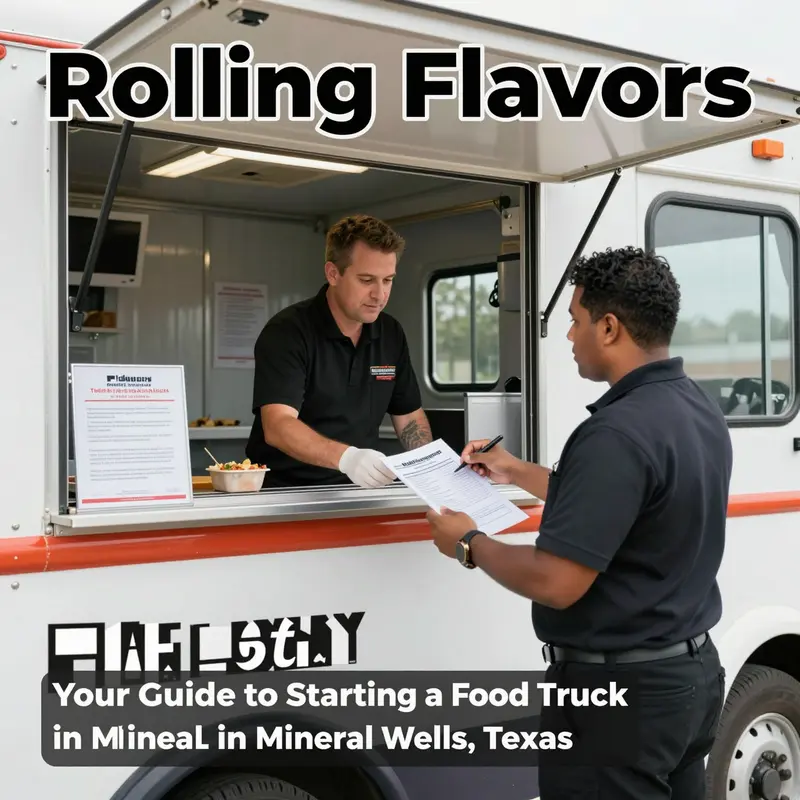
In a town where weekend farmers’ markets and downtown strolls draw crowds, a food truck can become a welcome addition to the local scene. But in Mineral Wells, as in any Texas city, the path from idea to open service window is paved with permits, inspections, and strict health practices. The license to sell hot meals on wheels is not simply a business formality; it is the framework that safeguards customers, staff, and the vehicle itself while shaping every step from menu design to day-to-day operations. Getting this right from the start reduces delays, avoids costly rework, and builds a reputation for reliability and safety before you ever flip your first kettle. To lay a solid foundation, you begin with the regulatory core: permits, health compliance, and the agencies that enforce them. You then translate those requirements into a practical, doable plan that accounts for your truck’s layout, your team’s responsibilities, and your daily rhythm on Mineral Wells streets. The goal is not just to tick boxes on a form, but to foster an operation that runs cleanly, predictably, and, most importantly, safely for every eater you serve.
At the center of this journey is the Food Service Establishment Permit, the permit that licenses a mobile unit to prepare and dispense food. In the Mineral Wells region, the primary authority pushing these permits forward is the Denton County Health Department. While Mineral Wells sits within a distinct county framework, this health department is the touchpoint for the core documentation. The permit application asks for a clear, comprehensive portrait of how your truck will operate every day: a menu, the methods you’ll use to prepare and handle food, an itemized list of equipment, and a floor plan that shows where food is stored, where it is prepared, where it is cooked, and where customers are served. The floor plan is not a mere sketch; it is a blueprint of safety. It demonstrates separation between raw and ready-to-eat foods, reveals how hot and cold holding will be maintained, and confirms that handwashing and utensil cleaning areas are logically placed and accessible. In short, your plan reveals your character as a food operator before a single bite leaves your grill.
In practice, the permit process asks for several concrete elements. You will need to provide your intended menu items and your food preparation methods so the health reviewers can assess whether the equipment and workflow you propose are adequate to maintain safe temperatures, to prevent cross-contamination, and to minimize time between food contact and serving. An equipment list is another critical component; it shows the refrigerators, freezers, grills, sinks, and any specialty gear you’ll rely on. The submitted floor plan must map the entire mobile unit, illustrating zones for storage, preparation, cooking, warewashing, and service. The specificity matters: it is impossible to over-prepare this plan. The better your plan aligns with state standards and local expectations, the smoother the review process will be. While you might assemble this with a designer or kitchen planner, you should also review the plan against your day-to-day realities, ensuring that you can keep the space clean, organized, and compliant, even on your busiest events.
Texas health guidelines compound this local permitting framework with state-wide expectations. The Texas Department of State Health Services (DSHS) operates the Texas Food Establishment Permit program and enforces the Texas Foodborne Illness Prevention Program (TFIP). The TFIP is more than a compliance noun; it is a living set of practices that governs how food is handled, stored, and served across the state. From proper temperature control to sanitation procedures, state rules push shops and trucks toward a universal standard of food safety. One practical implication for Mineral Wells operators is that every staff member should complete a certified food handler training program, such as ServSafe or similar accredited coursework. This credential is not only a checkbox; it is the baseline knowledge that empowers your team to prevent common hazards like improper cooling, cross-contamination, or poor personal hygiene. The TFIP framework also informs the cadence of inspections, which are a normal part of ongoing compliance and a routine cost of doing business. Rather than waiting for an inspector to arrive, you can anticipate the expectations and integrate them into daily routines—clean as you work, document temperatures, train staff, and keep the recordkeeping up to date. The result is not fear of inspection, but confidence that your operation consistently meets or exceeds the standard.
The practical journey from plan to permit is anchored by a straightforward yet exacting sequence of steps. First, gather and prepare the documentation you will submit to the Denton County Health Department or the appropriate county authority. This includes a detailed description of your truck’s menu, the food preparation methods you will employ, a complete equipment list, and your floor plan. Second, ensure your staff training framework is in place. Each employee should hold a valid food handler certificate. Third, align your vehicle with the regulatory expectations for mobile food units, including vehicle registration, title considerations if you are converting a standard vehicle, and appropriate insurance coverage that includes liability and property damage tied to food service operations. And fourth, coordinate with the local city and county offices to secure any required licenses beyond the health permit, such as a city business license and, where applicable, zoning clearances that address where you may park and operate.
One of the more practical tips for aligning plan with permit expectations is to treat the floor plan as a living document, not a once-and-done artifact. As you test your workflow—where you place your prep tables, where you stage ingredients, and how you move items from storage to serving—the floor plan should adapt to feedback from mock service runs. This is not about aesthetic preferences; it is about minimizing motion waste, reducing the risk of cross-contamination, and ensuring that a health inspector can trace every step from receiving to serving. The floor plan should also convey the layout for waste management. Local sanitation codes in Mineral Wells require grease containment and appropriate disposal practices, which typically means a grease trap or interceptor and a defined routine for waste storage and removal. These elements are not cosmetic; they are required to keep your mobile unit compliant and your neighborhood clean.
In addition to the core health permit, you will likely need to secure a Texas Sales Tax Permit if you intend to sell taxable prepared foods. This permit is obtained through the Texas Comptroller’s office and is essential for collecting and remitting sales tax. The permit integrates with your overall compliance ecosystem by ensuring that your financial records reflect legitimate tax obligations while your business operates legally within the state. A separate local license from the City of Mineral Wells may also be required. The city’s Finance Department or City Clerk’s Office typically handles business licenses for operators within city limits, and their requirements can interact with both the health-permitting process and your zoning status. Keeping a single point of reference—the Denton County Health Department for health permits, the Texas Comptroller for sales tax, and the Mineral Wells city offices for local licensing—prevents confusion and speeds up coordination when documents need to cross between agencies.
An often overlooked but crucial component of health compliance is staff training, which spans both food safety and operational practices. Beyond the mandated food handler certificates, a robust onboarding program includes the basics of proper glove use, handwashing habits, temperature monitoring, and clean-as-you-go routines. It also extends to the floor plan’s realities. For example, if your truck relies on a three-compartment sink, you must train staff to maintain the correct dishwashing temperatures and turnover times, as well as to track temperatures of cold holding units and hot holding appliances. The TFIP requires consistent adherence to sanitation procedures, and the cumulative effect of training is fewer mistakes, fewer health risks, and a better customer experience. In Mineral Wells, where events like weekend gatherings and church functions drive demand, well-trained staff help you scale quickly without compromising safety.
When the time comes to submit the permit, remember that the health department will expect a precise, honest depiction of your operations. The application will request your menu, your food preparation methods, your equipment list, and your floor plan, as noted previously. It will also require a detailed account of how you will clean and sanitize, how you will manage waste, and how you will maintain proper temperature controls. A vehicle inspection report, when applicable, can be part of the submission, particularly if you are converting a vehicle rather than purchasing a purpose-built mobile unit. The health department will also verify that each employee possesses a valid food handler certificate, ensuring that no lapse in training undermines your compliance status. This is the moment where careful preparation pays dividends. If you have anticipated questions and preemptively provided documentation, the review process can proceed with fewer back-and-forth inquiries and fewer delays.
As you navigate this regulatory landscape, you will likely encounter advisory resources and forms that help you marshal information efficiently. The DSHS Food Safety page consolidates current guidelines, application forms, and frequently asked questions that can clarify state expectations for a Mineral Wells truck. While the Denton County Health Department will be your administrative touchpoint for the local permit, the state’s guidance ensures alignment of practices across jurisdictions. The net effect is a compliant, resilient operation that can weather inspection cycles with confidence rather than anxiety. If you ever feel uncertain about whether a plan satisfies a particular requirement, a direct call or email to the county health inspectors can save weeks of back-and-forth and prevent the frustration of reworking your floor plan after submission.
To help you connect the dots between the different agencies and steps, consider consulting resources that break down the process in a navigable way. For a concise overview of how the various agencies coordinate during permitting, you can consult Navigating food-truck industry regulations. This resource maps the interplay between local and state bodies, and it emphasizes how pre-emptive planning can smooth your path from concept to launch. Incorporating this perspective into your preparation can sharpen your regulatory instincts and keep you focused on practical, measurable milestones rather than theoretical compliance alone. Navigating food-truck industry regulations.
Beyond the permit and inspection milestones, a successful Mineral Wells food truck operation also hinges on a practical, sustainable daily routine. The health and safety framework becomes a living standard when you routinely monitor temperatures, consistently clean and sanitize surfaces, and keep meticulous records of training and maintenance. The practical workflow—receiving, storage, preparation, cooking, holding, and serving—must be documented not only for inspectors but for staff onboarding and for potential partners or event organizers who may observe your operation. Your floor plan should reflect a logical flow that minimizes backtracking and cross-contamination while maximizing efficiency during peak service periods. The more transparent and robust your procedures, the more confidently you can manage the unpredictable rhythms of Mineral Wells’ event calendar, from Saturday morning farmers markets to late-evening food-truck gatherings.
In terms of ongoing compliance, it is worth recognizing that health regulations do not end at opening day. They are a continuous discipline that shapes your supplier choices, your inventory levels, and your equipment maintenance schedule. Regular calibration of thermometers, routine cleaning routines, and scheduled maintenance—especially for refrigeration units and water systems—are more than good practice; they are essential habits that protect customers and protect your business from violations, fines, or downtime. The health department’s inspections, while a source of accountability, ultimately serve as a constructive process that helps you refine your operation and deliver consistently safe food. When you approach compliance as an ongoing promise to your customers, the permit becomes not a barrier but a guarantee of quality that builds trust.
In Mineral Wells, the interplay among permits, health compliance, and local licensing creates a composite system that supports legitimate, sustainable growth. A well-prepared permit application combined with a solid floor plan and vigilant day-to-day practices can unlock a range of opportunities—from regular downtown locations to seasonal pop-ups at community events. The city’s regulatory environment rewards diligence, organization, and proactive communication. By treating health compliance as a core value rather than a compliance afterthought, you establish the credibility necessary to cultivate loyal customers, reliable event partnerships, and a brand that stands for safety as a foundation of flavor.
Finally, remember that the regulatory landscape can vary, even within the same state. Always verify requirements with the county health department before moving ahead, and stay current with any updates that the DSHS TFIP may publish. The emphasis on documentation, training, and hygiene is timeless, but the forms, fees, and review timelines can shift. Your readiness to adapt to changes will separate the truck that can weather evolving rules from the truck that struggles to stay compliant. In your planning, then, embed a continuous improvement loop: after every inspection, capture the feedback, revise your floor plan if needed, refresh training, and ensure that your team remains current on food handling and safety standards.
External resource: For the latest state guidelines, see the Texas Department of State Health Services Food Service page at https://www.dshs.texas.gov/foodservice/index.shtm.
Rolling Through Mineral Wells: Vehicle, Permits, and Everyday Operations for a Texas Food Truck
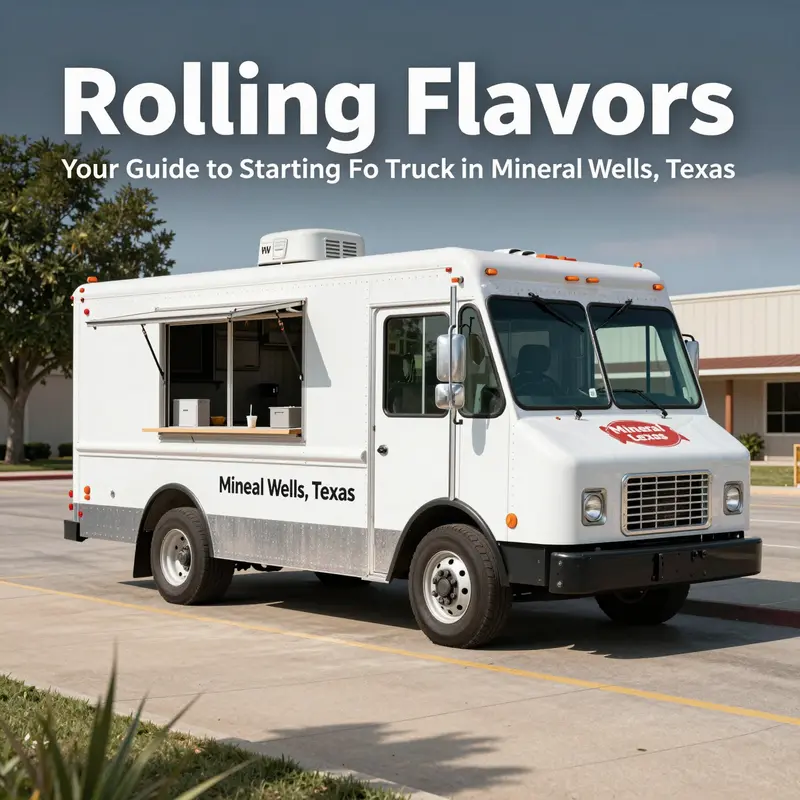
The idea of a food truck in Mineral Wells sits at the intersection of opportunity and discipline. The town’s hospitality, its steady stream of visitors, and the steady pulse of local events create a ripe environment for mobile kitchens. Yet the path from idea to the curbside service that travelers and locals expect is paved with precise vehicle standards and operational routines. In Mineral Wells, the difference between a truck that turns a few dollars and a truck that becomes a reliable, compliant business lies in how well you align vehicle safety, health compliance, zoning, and daily workflows. This chapter threads those threads into one cohesive narrative, showing how you move from a shiny truck through the inspection gate and into a rhythm that keeps customers coming back. It is not a checklist so much as a way of thinking about the truck as a mobile kitchen that must meet state standards, city rules, and local realities.
From the moment you design or acquire a mobile unit, the framework of compliance begins. The vehicle is not just a means of transportation; it is a regulated kitchen on wheels. Texas and Mineral Wells require that your mobile food vehicle pass safety inspections that cover more than a glint of chrome. Inspections hinge on fundamental elements: structural integrity, fire safety, proper ventilation for cooking, and clean means of water flow and waste management. A food truck in Mineral Wells must demonstrate that its design supports safe food handling from the moment your doors open until the last customer leaves. The floor plan submitted in the health-permitting process is more than a drawing; it is a blueprint for where cold storage sits, where raw ingredients are prepared, where hot foods leave the grill, and where clean dishes are washed. The plan must prove that there is separation between ready-to-eat items and raw ingredients, that refrigeration units maintain safe temperatures, and that a sink appropriate for handwashing and warewashing is accessible and compliant with health standards.
Alongside the floor plan, a detailed list of equipment forms the backbone of the application. This is not a vanity inventory but a snapshot of your operational reality. You may include refrigerators, freezers, ranges, grills, fryers, warming drawers, and proper handwashing stations. Each item has a role in ensuring food safety, controlling temperatures, and preventing cross-contamination. The trucks themselves require attention to safety codes that cover fuel handling, propane storage, extinguishing agents, and clear pathways for staff movement. The health department expects a vehicle that makes cleaning and sanitizing straightforward and repeatable, not a space that becomes a challenge at the end of a busy shift.
In Mineral Wells, regulatory harmony starts with people as much as with machines. Every staff member involved in food handling generally needs a certified food handler certificate. This credential is not a mere formality; it certifies understanding of safe food handling practices, cleaning schedules, proper personal hygiene, and correct temperatures for various foods. Training is a prerequisite, typically via reputable courses that cover the core principles of safety and sanitation. This is not only about compliance; it is about safety and trust. Customers begin to know they can rely on your truck when a trained crew is in the kitchen and on the service line. It also means that your daily operations can stay smooth, because workers understand the rules and the reasons behind them.
The vehicle’s compliance story also travels beyond the municipal border. The Texas Department of State Health Services (DSHS) sets the statewide standard for mobile food service, and Mineral Wells aligns with those rules. The FEP, or Food Establishment Permit, is a central milestone. It signals that your truck has become a sanctioned space for preparing and serving food, with an inspection history backing your processes. The application for the FEP is a comprehensive one. It demands the floor plan, the equipment list, and proof of staff training, as well as a vehicle inspection report if applicable. It also sets expectations for ongoing compliance: you will be subject to periodic health inspections, and your operation must adapt to any updates in safety guidelines.
Permits and licenses form the formal backbone of legitimacy. A mobile vendor license or permit from Mineral Wells, or broader Wise County if you operate across county lines, is essential. Without it, even the most delicious menu will struggle to reach a customer. The permits complement the health credentials by ensuring that your business is recognized by local authorities and that you pay the appropriate taxes. For many operators, this is a choreography rather than a destination: you file, you renew, you report, and you stay in step with a city that wants vibrant street commerce without sacrificing public safety.
But vehicle compliance is not a one-time hurdle. It interacts with zoning and parking rules that Mineral Wells enforces through its Planning & Zoning Department. The city guides where a food truck can operate, at what times, and for how long. Some areas may be more permissive during festivals or special events; others are restricted to protect traffic flow or residential quiet zones. Your strategy should reflect these realities from the outset. A common approach is to design a route and schedule that leverages high-traffic periods—downtowns during weekend events, lunch near schools or churches on weekdays, and opportunities during local festivals and farmers markets where permitted. The aim is not to maximize chaos but to synchronize your truck’s presence with predictable footfall and with the specific rules of each site.
As you map your operational footprint, the health department’s expectations for sanitation and cleanliness stay constant. The truck must be equipped and operated so that waste is managed properly, grease is contained, and cleaning procedures are documented and followed. Waste management is a crucial piece of the daily routine. The presence of grease traps or proper grease disposal mechanisms may be mandated, and waste streams must be handled in a manner that prevents odors, leaks, or slip hazards. Even the way water is used matters: you need an approved water supply and waste water containment method that meets sanitation standards. The day-to-day reality of functioning in Mineral Wells is shaped by how easily staff can clean, sanitize, and maintain equipment without interrupting service.
All of this culminates in the practicalities of operations. A food truck in Mineral Wells is, at its core, a compact, efficient workspace that must function like a controlled environment. It must incorporate a reliable, streamlined system for order taking and payment, while simultaneously preserving food safety. The operational side includes staff scheduling that acknowledges peak demand times and ensures that the team maintains the same safety standards across all shifts. A solid plan for daily maintenance—cleaning schedules, equipment checks, and inventory management—translates directly into fewer service interruptions and more consistent food quality.
A well-designed vehicle, equipped with proper storage, sanitation, and power, harmonizes with a practical workflow. A robust, mobile POS setup supports not only the efficient processing of orders but also the record-keeping that tax and health authorities require. In Mineral Wells, as in many Texas towns, the day-to-day operation of a food truck must stay within the lines drawn by city ordinances and health codes, yet it should also be flexible enough to accommodate the town’s events calendar and colloquial rhythms. This balance between compliance and adaptability is what allows operators to scale their presence—from a single truck serving near a festival to a network of units that circulate through different parts of Wise County.
To stay aligned with the changing regulatory landscape, many operators make a habit of consulting official sources. The City of Mineral Wells website offers up-to-date information on permits, licenses, inspections, and site-specific rules. Reaching out to the local municipal office or health department yields practical guidance tailored to your planned routes and operating hours. Wise County resources become relevant when plans exceed city limits or when you intend to participate in county-run events. The recommended approach is to establish a point of contact early and maintain an ongoing line of communication as your operation grows. This proactive stance reduces friction and ensures you can adjust quickly to new requirements or changes in policy.
For operators who want a concise orientation to the regulatory landscape without wading through pages of forms, a compact overview is available through industry resources that address the core concerns—vehicle safety, sanitation, permits, and compliance obligations. It is worth noting that the foundational documents and FAQs provided by the Texas DSHS can be a reliable companion. If you ever doubt the specifics of a floor plan requirement or the standards for handwashing facilities, those official guidelines are designed to be navigable and actionable. The key is to treat them as living documents that guide your daily decisions rather than static checklists you complete once and forget.
In practice, the journey from conceptual truck to steady street presence is a sequence of integrated decisions. You begin with the vehicle and its compliance framework, then attach the health and licensing pieces that make the operation lawful. You align your parking, site permissions, and event participation with zoning and municipal rules. You build a team talent pool that understands safety and customer service alike. And you establish operational routines that keep the truck clean, the customers satisfied, and the regulators confident in your ability to deliver safe, dependable meals on a predictable schedule.
A crucial element in that sequence is the patience to verify details before you launch. There is no shortcut that bypasses the need for a floor plan, equipment list, and trained staff when a permit application is on the line. The cost of rushing can be higher than the upfront investment in a well-planned truck and a thorough compliance program. Yet with minerals-well-scale opportunity, a careful, well-documented approach pays off in reliable permits, fewer shutdowns for corrections, and a stronger reputation among customers who value consistency and safety as much as flavor. In other words, vehicle and operational readiness is not merely about meeting minimum standards; it is about establishing trust with regulators, customers, and partners in Mineral Wells’ growing food scene.
As you advance, keep in mind the practical links between your truck and the town around it. If you are preparing for weekend downtown activity, ensure your vehicle can maneuver into tight spaces and contend with higher pedestrian traffic without creating hazards for bystanders. If you plan to operate near schools or during lunchtime events, think about signage visibility, queue management, and the potential for long lines. In every case, your day begins with arriving at a site that is prepared to welcome a mobile kitchen—one that has been vetted by inspectors, approved by the city, and equipped to handle the daily rhythms of service and sanitation.
If you want a quick conceptual compass, consider the following synthesis: the vehicle must be a compliant kitchen, the permits must be in hand, the health standards must be met, and the daily operations must be designed around safety, efficiency, and customer experience. The interplay among these elements is not theoretical. It translates into a standard of practice that you carry onto the streets of Mineral Wells, onto festival grounds, into farmers markets, and onto any curbside staging area that your route touches. Your truck becomes less about a single, perfect menu and more about a dependable platform that consistently delivers safe food with a friendly touch.
For those who want a streamlined reference as they build or upgrade their operation, a concise overview of the regulatory landscape is available at navig ating-food-truck-industry-regulations. It offers a compact map of the key stages—from vehicle inspections to health permits, from zoning checks to ongoing compliance—without replacing the official guidance. You should also keep a direct line to the Texas Health and Safety guidelines in mind. Official resources from the Texas Department of State Health Services guide your most technical decisions and provide forms, checklists, and FAQs that are important for long-term compliance. You can access these through the agency’s Food Safety pages, which are regularly updated to reflect new requirements and best practices. These references become your go-to anchors as you navigate the practical realities of Mineral Wells and Wise County.
In summary, Vehicle and Operational Requirements in Mineral Wells demand a holistic approach. The truck, the permits, the health credentials, the zoning permissions, and the daily routines all fit together to create a seamless, compliant operation. The best operators approach this with intention and flexibility: they anticipate regulatory needs, invest in a robust floor plan and equipment array, train staff to a shared standard, and cultivate relationships with local authorities and business networks that can aid in site access and event opportunities. This is how a small but ambitious food truck can become a staple of Mineral Wells—appearing on a bustling street corner or at a lively festival with all the confidence of a seasoned, compliant kitchen that respects the town it serves.
External resources and ongoing guidance are essential. The official DSHS Food Safety guidelines offer current parameters for food safety practices and the permitting process, ensuring you stay aligned with state expectations as local conditions evolve. Visit the Texas DSHS Food Safety page for the most current forms and FAQs when you’re preparing your application and planning future inspections. Official information and city-specific instructions can be accessed through the City of Mineral Wells and Wise County channels, which provide direct guidance on licensing, inspections, and permitted vending zones. The combination of formal permits, vehicle readiness, and disciplined operations is the heartbeat of a sustainable food truck business in Mineral Wells.
Endnote: to align with evolving standards, rebuild your knowledge periodically by revisiting the state guidelines and maintaining an active line of communication with local authorities. This ongoing diligence not only reduces risk but also signals to customers and partners that your operation is serious about safety and reliability. The path through Mineral Wells may be navigable now, but it benefits from a mindset that treats compliance as a living practice rather than a one-time hurdle.
External resource: For official guidelines, see the Texas Department of State Health Services Food Safety page: https://www.dshs.texas.gov/foodservice/index.shtm
Internal link reference: For a concise overview of the regulatory landscape, see navigating-food-truck-industry-regulations.
Rolling Toward Community: A Marketing-Driven Operational Blueprint for Launching a Mineral Wells Food Truck
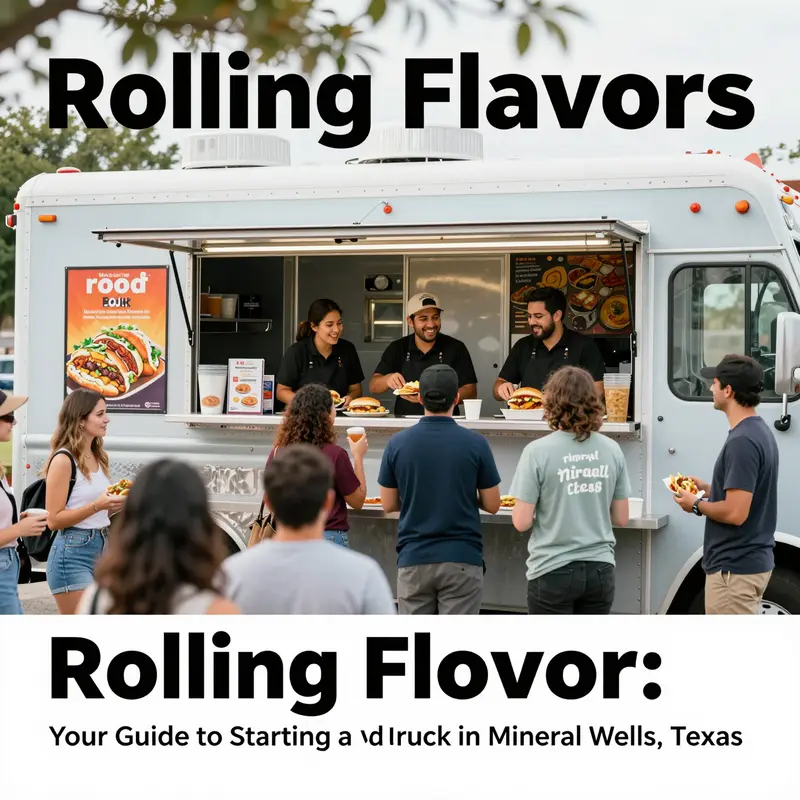
Mineral Wells is a town with a friendly pace, a walkable downtown, and a steady calendar of outdoor activities. A food truck can become a beloved extension of that charm when marketing intent and operational discipline travel in parallel from day one. The concept should feel distinctly local yet flexible enough to perform across parks, markets, school events, and lakeside days. The goal is a simple, repeatable experience: a quick, refreshing treat and a memory of Mineral Wells that customers carry into their day.\n\nMarket insight should drive the plan, but execution seals the outcome. Families, commuters, retirees, and visitors all shape demand. A shaved ice concept fits neatly here because it scales with modest kitchen infrastructure and invites a playful, family-friendly brand that travels well. Seasonal demand matters: cool treats in summer, warmer options in shoulder seasons. A lean menu with core flavors plus seasonal twists helps manage costs while preserving novelty. Marketing becomes about inviting a sense of place—this is Mineral Wells on wheels—rather than competing with every other vendor.\n\nOperational coherence anchors growth. The truck should have a clean, efficient layout that minimizes cross-contact and speeds service. A compact cold storage and syrup area, a dedicated ice reservoir, a dispensing station, and a handwashing station should be arranged for intuitive flow. The exterior appearance should be approachable and professional, with branding that is legible in motion and under bright sun. Weather resilience matters, so shade, wind blocks, and easy-to-clean surfaces keep service steady across events and seasons.\n\nSourcing smartly keeps capital lean and impact high. Choose a vehicle and interior that balance upfront cost with long-term reliability and flexibility. Prioritize durable, easy-to-sanitize materials and a modular setup that can adapt to festivals or pop-up venues. A lean starting point reduces risk while leaving room to upgrade as the business grows. A straightforward POS, integrated with inventory and loyalty data, helps transform daily sales into actionable insights without adding administrative burden.\n\nMarketing and branding reinforce trust and recognition. Build a two-way, location-driven social presence and partner with local events to become a familiar, anticipated stop. A simple loyalty program turns foot traffic into repeat visits, while a compact menu highlights the core offering. Packaging should be functional and eco-conscious, with branding that tells your Mineral Wells story at a glance.\n\nRegulatory and financial realities ground the plan. Begin with the Texas sales tax permit and local parking permissions, then secure health inspections and staff certifications. Keep a lean startup budget with operating capital to weather seasonality. Track sales, inventory, and customer preferences daily to understand which flavors perform best and which venues drive the most traffic. A simple POS system that links to inventory and loyalty data provides timely insights with minimal friction.\n\nThe broader local ecosystem matters. Engage with the chamber of commerce, partner with nearby businesses for cross-promotions, and maintain an online schedule so residents and visitors know where to find you. Soft launches at low-risk venues offer a practical test of workflow, flavor reception, and service timing. With a clear niche, disciplined operations, and a community-focused marketing approach, a Mineral Wells food truck can grow from a bright idea into a trusted neighborhood staple.
Final thoughts
Launching a food truck in Mineral Wells is an exciting venture that combines passion, creativity, and community engagement. By diligently navigating the essential steps—business registration, health compliance, and operational strategies—you can bring your unique culinary vision to the streets. Remember, success lies not just in the delicious food you serve but in the connections you forge with the vibrant Mineral Wells community. As you embark on this flavorful journey, let your truck become a beacon of taste, joy, and culture; the locals are eager to support what you bring to the table!