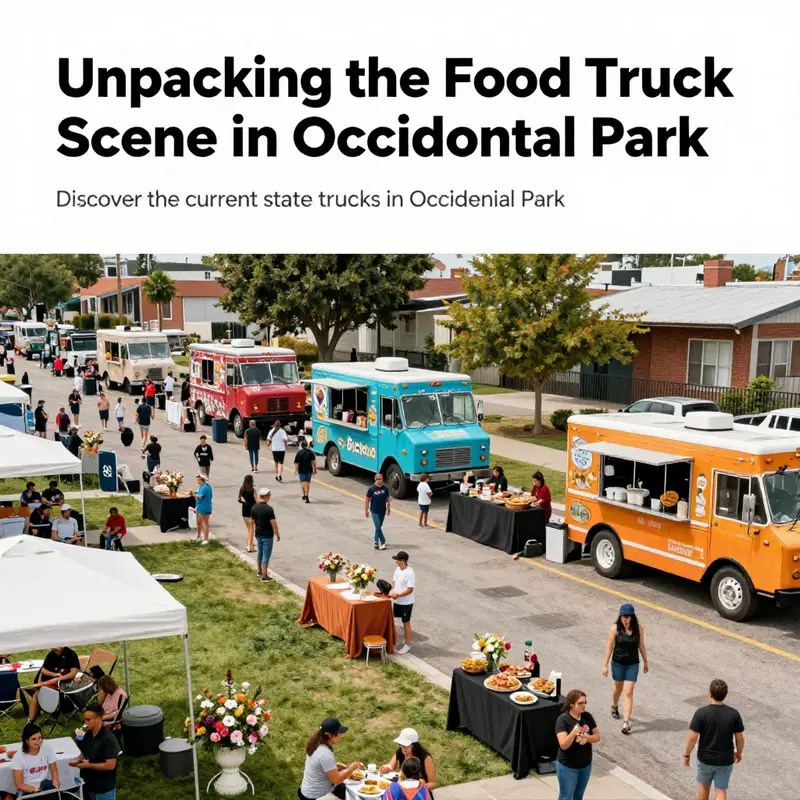
Occidental Park has long been a hub for the vibrant street food scene of Seattle, drawing in food enthusiasts, event planners, and curious passersby alike. However, recent developments regarding food trucks in the park have raised questions among local community members and organizers. Our exploration of this culinary landscape begins with an overview of what has been happening with the food trucks at Occidental Park, before diving into community reactions and comparisons to changes in other parks. Finally, we’ll provide recommendations for those seeking to get involved or stay informed about future developments. Let’s dig into the delicious details!
Where the Trays Turn: Tracing the Status of Food Trucks in Occidental Park Amid Policy Shifts
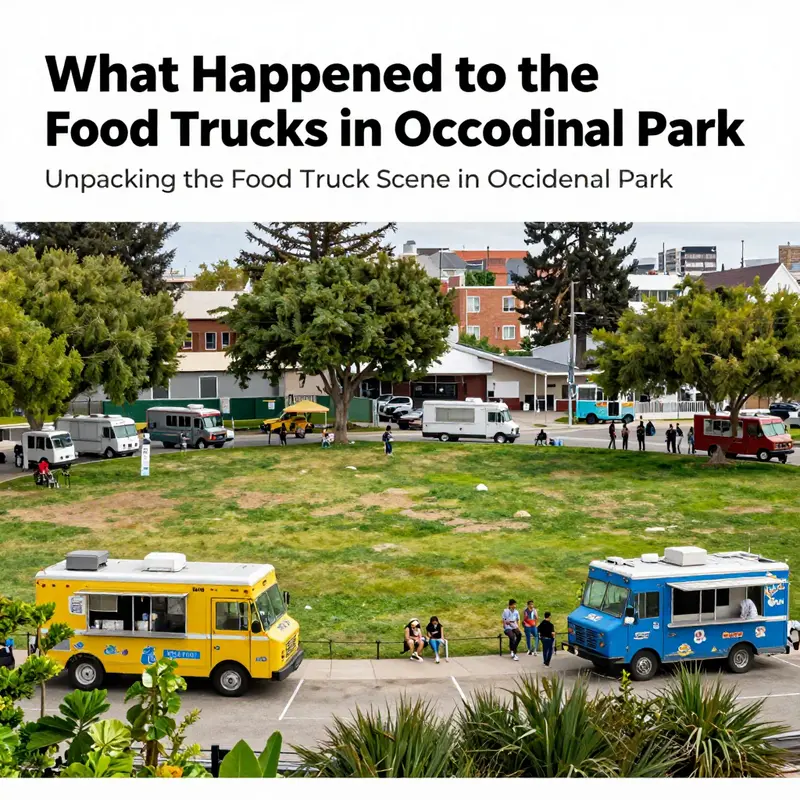
Occidental Park sits quietly for much of the year, a small square framed by brick and stone that still echoes with footsteps, chatter, and the occasional busker’s tune. In warmer months, though, it becomes a corridor for flavor and sociability as food trucks pull up to quick, cheerful lines. The park’s location in the heart of Pioneer Square makes it a natural crossroads for locals and visitors who want a bite before or after wandering nearby streets. The scene is not a single moment but a rhythm: some days a cluster of trucks appears with the morning sun, other days a single vendor parks with a steady cadence, and by dusk the lane spaces return to quiet efficiency as people drift toward public art, benches, or a nearby cafe. This cadence has long been part of Occidental Park’s character, a feature that speaks to an urban intention—to keep public space lively without sacrificing accessibility or the neighborhood’s historic fabric.
What makes the current landscape compelling is not a single announcement or a dramatic policy shift, but a set of subtle, ongoing recalibrations. Across Seattle, and particularly within the park system, authorities have been examining how temporary vendor permits are issued, renewed, and governed. The aim is not to banish vibrancy but to ensure that it coexists with safety, accessibility, and predictable public space usage. For Occidental Park, this translates into a dynamic where the same stretch of curb might welcome three trucks on one week and two on the next, depending on the schedule of city permits, event programming, weather, and the coordination with park staff and partners. In practical terms, this means the day-to-day experience for a visitor can feel both familiar and slightly unsettled, much like a street market that moves with the seasons and the city’s administrative tempo.
The question readers often ask is whether Occidental Park has seen a permanent retreat of the trucks, or if the fleet has simply found a different cadence. The most reliable answer, based on current information available through early 2026, is nuanced. There is no public record indicating that food trucks have been permanently removed from Occidental Park or that they have ceased operating there altogether. In other words, the trucks have not disappeared; they have become part of a fluctuating schedule that depends on seasonal patterns and city policy timing. This distinction matters. A permanent withdrawal would signal a wholesale change in how the park is used and could require a reimagining of nearby programming. A temporary shift or a recalibrated permitting process, by contrast, suggests that the park remains a viable venue for mobile food, but with tighter lanes of access, revised placement rules, or altered hours that respond to a broader citywide framework for public spaces.
To understand why that difference matters, it helps to zoom out a moment and place Occidental Park within Seattle’s wider conversations about public space and small-business vitality. Westlake Park—located a short distance away in downtown—has recently integrated food trucks as part of community activity and programming intended to enliven the space and draw more visitors. While Occidental Park is a different setting—historic, intimate, and framed by the dense pedestrian flows of Pioneer Square—the comparison points to a city-wide interest in leveraging street-level mobility to energize public realms. The objective is not solely to maximize numbers of trucks but to curate a rhythm that invites visitors to linger, explore, and connect with the neighborhood’s cultural fabric. This broader policy context matters because decisions about one park can echo across another, shaping expectations for vendors, property managers, and residents who consider Occidental Park part of a larger urban ecosystem.
In this environment, the status of the trucks at Occidental Park is influenced by a constellation of factors that operate at the intersection of policy, weather, and human behavior. On policy days, city agencies review permit renewal cycles, space allocation criteria, and the way seasonal events affect available curb space. Vendors, similarly, monitor these cycles with a mix of pragmatism and hope. They must plan around the timing of permit renewals, the probable demand they see from the public, and the competition for prime spots that offer visibility, foot traffic, and proximity to nearby eateries or venues. A shift in any one factor—such as a longer permit approval process, a tightened cap on the number of trucks allowed during a given window, or a new rule about where trucks may park relative to crosswalks—can ripple through the micro-economy of the park. The immediate consequence is often visible: the same weekend might feel busier one season and more restrained the next, while the distribution of trucks along Occidental Park’s edging pathways might rearrange to accommodate safety lines, seating arrangements, or the placement of performance or art installations.
Vendors themselves speak in mixed tones about the direction of policy. Some express relief that the city is paying renewed attention to how temporary vendors are integrated into public spaces; others voice concern about inconsistent renewal timelines, which makes long-term planning precarious. The tension is not simply about who gets to stand at the curb but about the predictability of a livelihood that thrives on repeat customers and routine presence. For people who depend on the income generated by a reliable run of business, even small changes in permit cadence or location rules can alter daily revenue, alter a vendor’s ability to schedule staff, or shift a family’s weekend plans. Yet this tension exists alongside the city’s legitimate interest in maintaining order, ensuring safe pedestrian routes, and preserving Occidental Park’s historic atmosphere. The challenge for park management is to craft a governance framework that respects the park’s identity while granting operators clear expectations and reasonable opportunities to serve the public.
The day-to-day reality of Occidental Park’s food trucks, then, becomes a story of micro-innovations. On some days, a cluster of trucks might converge in a zone that allows for easy queueing and a natural flow of foot traffic toward the park’s seating nooks. On other days, logistical constraints—perhaps a higher volume of pedestrians marching through the square for a special event, or the need to reserve lanes for emergency access—might lead to a leaner grouping, or a redistribution of where trucks stand. The interplay of these decisions is shaped not only by the city’s administrative calendar but also by the ebb and flow of the neighborhood itself. Pioneer Square is a place where people come to see and be seen, to linger over a bite and a conversation, to observe the way storefronts and galleries become part of a longer, evolving urban narrative. Food trucks, in this sense, are not just vendors; they are a way the city negotiates the pace of life, offering a moment of informal civic theater: an aroma in the air, a friendly exchange with a cook behind the window, a table of strangers sharing a bench and a story about the best taco in town or the most refreshing beverage for a hot afternoon.
It is also important to recognize that Occidental Park does not exist in isolation from seasonal dynamics and citywide programming. The park’s operations are coordinated with broader schedules for outdoor events, street closures, and accessibility considerations. As the weather warms, the appetite for al fresco dining increases, and the public space becomes more attractive for vendors who can leverage longer hours and higher pedestrian volumes. Conversely, in the colder months, when foot traffic tends to dip and the city’s public-space programming recedes, the number of trucks may decline or their operating hours may compress. The net effect is a living schedule that reflects both the city’s fiscal calendar and the weather’s mood. Even with these fluctuations, what remains steadfast is the park’s role as a public commons—a place where people from different walks of life intersect in a shared urban moment, whether they’re there for a quick bite, a stroll, or a pause to watch the street’s small theater unfold.
From the vantage point of the visitors who stroll through Occidental Park, the trucks often feel like a familiar thread in the fabric of the neighborhood. A family disperses their bubblegum-pold scent of pastry and coffee into the air as a child peers at the steaming pans, and an artist sets up near a truck’s long shadow to sketch the scene. The comfort of this arrangement depends on consistent access and predictable space. When policy shifts introduce ambiguity about where to queue or how long a truck may park, the subtle social contract that makes the park feel welcoming can loosen. Yet there is also resilience in this system. Park staff, neighborhood associations, and the vendor community tend to co-create practical solutions—temporary signage, adjusted seating layouts, or carefully timed load zones—that allow the space to remain both vibrant and navigable. These pragmatic adjustments underscore a larger truth: that public space thrives when rules are clear, when stakeholders exchange feedback with the city, and when the public can sense that the landscape is being stewarded with both care and ambition.
For readers who want to think more deeply about the governance of food trucks in public space, a broader regulatory perspective can illuminate the paths vendors and policymakers navigate. There is a resource that delves into the regulatory terrain of food-truck operations, offering a grounded look at licensing, zoning, permits, and the administrative steps that shape where a truck can park and when. This perspective can help readers connect Occidental Park’s particular dynamics to a wider set of practical considerations that emerge whenever a city seeks to balance commerce with crowd safety, neighborhood character, and public access. As the city continues to refine its approach to temporary vendors and public-space usage, Occidental Park remains a useful bellwether for how historic, intimate square can accommodate a modern, mobile food culture without losing its sense of place. The essential takeaway is that the status quo is not a fixed endpoint but a point along a shifting continuum, one that invites ongoing observation, dialogue, and careful experimentation.
Several threads weave through this evolving picture. First, the regulatory cadence matters. Permit renewals, park-usage rules, and the criteria for spot allocation can change the calculus for where and when a truck can operate. Second, space planning in the park is a collaborative exercise. Park staff, city agencies, vendors, and neighborhood groups all contribute to decisions about curb space, pedestrian lanes, seating, and the alignment of these elements with public-safety protocols. Third, seasonal patterns color the entire experience. The same stretch of Occidental Park might feel different from week to week as events rotate through, as maintenance work occurs, or as a new banner or mural brings a fresh visual cue to the square. Fourth, the human dimension remains central. Vendors defend their livelihoods and customers seek reliable options. When these human stories interact with policy, the conversation expands beyond numbers and grids into something more akin to a living map of the city’s values.
As this chapter moves toward its close, it is important to emphasize a practical point for readers who may be seeking the most current, on-the-ground information. The status of specific vendors, operating hours, and exact locations on any given day can be a moving target. The most reliable source for up-to-date details remains the official channels that govern public spaces and vendor licensing. Those seeking a deeper dive into the regulatory framework can explore resources dedicated to navigating food-truck regulations, including practical discussions about permits, licensing, and compliance. For readers who want a direct, navigable entry to this topic, the following resource provides a detailed examination of how such regulations shape a truck’s day-to-day decisions and the broader vendor ecosystem: navigational link to the regulatory resource. This kind of guidance helps ground readers in the realities of how public-space policies translate into the street-level experience you witness in Occidental Park.
For those who crave a more formal reference point, the city’s official portals offer the most authoritative and timely information on permits, park programming, and the status of vendor licensing. Checking Seattle Parks & Recreation’s site and the Office of Economic Development communications can clarify what remains possible for vendors in Occidental Park as the policy landscape evolves. These official channels are the most reliable lens for residents, visitors, and vendors who want to understand when a truck will be there, which spots are available, and what documentation or fees might apply. While the current information suggests no dramatic censorship or removal, the precise details are best confirmed by these sources, especially as seasons shift, and as the city reassesses how best to balance vibrant vendor presence with the needs of public space users and the integrity of historic districts.
Looking ahead, Occidental Park could see a future in which the presence of food trucks becomes even more integrated into its seasonal programming, commercial vitality, and community life. The city’s ongoing conversations about temporary-use policies and park usage are not about diminishing public appetite for mobile food; rather, they are about shaping a framework that ensures long-term access, fairness, and clarity for all involved. If the city can establish consistent permit cycles, predictable space allocation, and robust communication with vendors and park-goers, Occidental Park might become a model for how small, active food-truck clusters can exist in harmony with heritage-rich urban spaces. The people who live in and visit Pioneer Square—residents, workers, artists, and families—stand to benefit from a public space that remains approachable, safe, and vibrant at the same time.
In the end, what happened to the food trucks in Occidental Park is not a simple narrative of disappearance or permanence. It is a evolving practice, shaped by policies, seasons, and the city’s broader ambition to reimagine how public space is used. The trucks continue to appear, the curbs continue to adapt, and the square continues to offer a shared stage for food, conversation, and community memory. The cadence of plates and conversations in Occidental Park thus serves as a microcosm of urban life—a reminder that public space is not a fixed backdrop but a living organism, responsive to policy, weather, and the people who make it come alive. For readers who want to stay informed, the best course is to track official updates and, when possible, to engage with the community that makes Occidental Park a site of ongoing, incremental change. And for those who want a practical, policy-oriented lens on how vendors operate within this ecosystem, the linked resource on navigating food-truck regulations offers a grounded pathway to understanding the rules that shape every day in the park. The ongoing conversation is a sign of a city that values both mobility and place, both commerce and community, and it invites readers to observe how these elements unfold in one of Seattle’s most storied public spaces.
External note: For the most official and up-to-date details on vendor licensing, permits, and park policy, consult Seattle Parks & Recreation and the City of Seattle’s official resources at https://www.seattle.gov/parks.
Why Occidental Park’s Food Trucks Vanished: Rules, Reactions, and Lessons from Other Parks
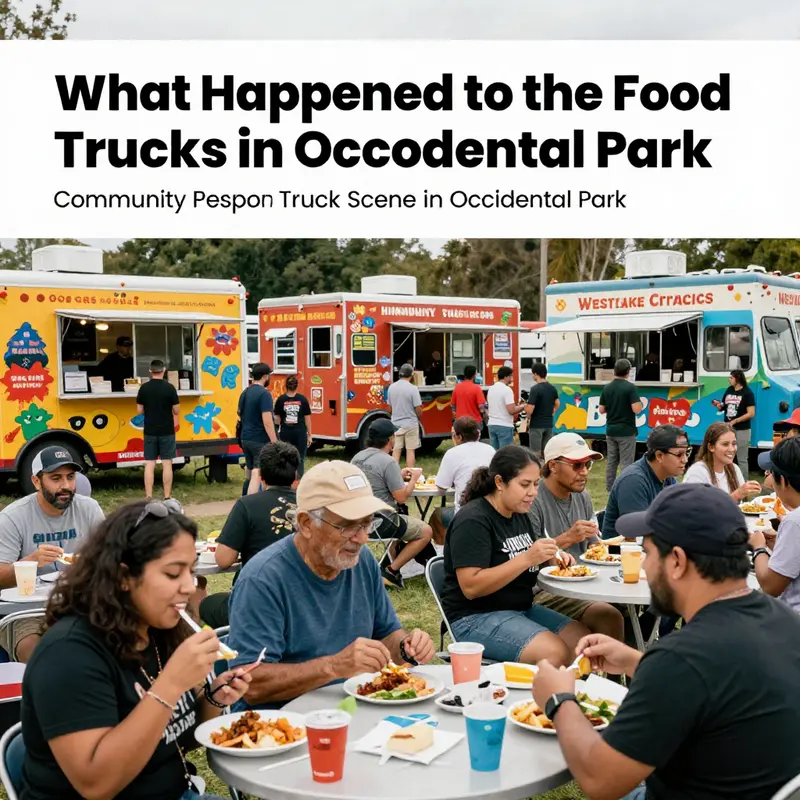
The disappearance of food trucks from Occidental Park did not happen overnight. What unfolded was a steady shift shaped by city policy, safety concerns, and mixed community responses. Vendors and visitors who once relied on daily lunchtime rhythms found the plaza quieter. The change has been visible in the park’s layout and felt in the neighborhood’s commerce. It also echoes broader debates about how cities balance public space use with vibrant street food culture.
In simple terms, tighter rules reshaped who could operate where. The Seattle Department of Transportation and the Office of the City Clerk introduced stricter limits on vending in high-traffic public spaces. Those measures aimed to reduce congestion and protect pedestrians. They also sought to preserve the park’s intended uses and visual character. For pedestrians and families, the park felt more open. For mobile vendors, access became more complicated.
Those regulations were not created in a vacuum. City staff cited recurring safety concerns. Trucks and customer lines had sometimes narrowed walkways. Events and daily circulation were affected. In a dense urban plaza like Occidental, even small physical obstructions can change how people move. Planners argued that clearer pedestrian corridors would improve accessibility for people of all abilities. They also wanted to keep emergency access routes clear during busy hours and events.
But policy changes were only part of the story. Community feedback played a major role in shaping local decisions. Responses split along practical lines. Some neighborhood residents and nearby businesses welcomed the quieter plaza. They said the park felt more relaxing and more functional for public programming. People pushing strollers, older adults, and visitors attending performances reported fewer obstacles.
At the same time, many vendors and regular customers voiced frustration. For some, the food trucks were a daily, affordable dining option. For others, they were a place to try new cuisines and meet neighbors. Small business owners lamented a drop in foot traffic during lunch hours. They connected that dip to the absence of midday crowds who previously extended their visits into adjacent stores and cafes. The cultural energy that accompanied street food also waned. Food trucks had provided variety and spontaneity. Without them, the plaza felt less dynamic.
The economic ripple effects mattered. Independent vendors operate on thin margins. Losing a reliable parking spot in Occidental Park meant reworking routes and schedules. Some vendors pursued permits for alternate nearby locations. Others focused on private events or relocated to permitted zones in other parts of town. For regular customers, the change meant adjusting lunch plans or seeking new gathering spots.
Comparing Occidental Park with other Seattle parks helps explain alternative approaches. Some parks adopted flexible, regulated models that preserve public space while supporting vendors. Volunteer Park, for example, established designated zones for food trucks. These zones are used under specific conditions and often tied to events and seasons. They create predictable spots for vendors without compromising primary paths and sightlines.
Westlake Park took a different route with rotating food truck events. These city-organized gatherings provide short windows for vendors. The events are temporary but highly visible. They attract crowds and can be scheduled to minimize pedestrian conflict. The rotation gives many small operators a chance to participate while keeping the plaza clear between events.
Both models aim for balance. They accept that mobile vendors bring vibrancy and commerce. They also accept that some degree of regulation is necessary in confined public spaces. Designated zones and rotating events create compromise. They allow food trucks to exist alongside safe, open walkways. These examples show that policy can be adaptive. It can preserve public access and support small businesses at the same time.
Yet adaptation can be difficult for vendors. Securing permits requires time and money. Regulations often demand specific equipment, liability coverage, and demonstrated compliance with health and safety standards. For many operators, the administrative burden is substantial. Some owners turn to resources that guide them through regulatory hurdles. A practical guide to navigating food truck regulations can help vendors prepare permits and meet city requirements. That sort of practical support reduces friction and improves the likelihood of returning to public plazas under acceptable terms.
Community voice and vendor resilience eventually shape outcomes. When residents organize to protect open space, their impact is strong. When vendors organize, they can press for designated vendor zones or event partnerships. In some neighborhoods, collaborative models emerged. Local business associations, park stewards, and vendor groups worked together to schedule pop-ups during peak hours. These partnerships often required a mediator, clear rules, and shared expectations about noise, litter, and circulation.
Operational adjustments by vendors also play a role. Some trucks transitioned from daily plaza stops to event-based service. Others retooled menus for faster service to limit crowds. A few invested in mobile ordering or cashless systems to shorten queues. Several concentrated on building relationships with office buildings and co-working spaces to secure steady business during lunchtime. These strategies helped some operators offset the loss of a prominent public spot.
From the city’s perspective, maintaining public safety and access is paramount. In practice, that sometimes conflicts with the goals of street food entrepreneurs. When officials consider policy, they weigh pedestrian flow, emergency access, the visual character of the park, and the needs of permit holders. They also consider equity: who benefits from public space and who is excluded by rules. Critically, rules that are too rigid can push small vendors into informal operations, which creates enforcement challenges and safety risks.
Effective policy seeks nuance. That means creating simple, transparent permitting processes. It means identifying specific locations where vending is allowed. It means setting clear hours and operational standards that minimize disruption. It also helps to offer low-cost or subsidized permits for small operators who cannot easily absorb permit fees. Some cities use pilot programs to test configurations before making permanent changes.
Design and infrastructure adjustments also make a difference. Creating vending pads, installing bike racks, and ensuring trash receptacles are adequate reduce conflict. Clear signage indicating pedestrian routes helps. Temporary barriers can guide flows during events. Thoughtful placement preserves key sightlines and emergency lanes. When the physical environment is planned with vendors in mind, both safety and vibrancy improve.
Occidental Park’s case highlights the tension between everyday use and programmed activity. The park serves office workers, residents, tourists, and event-goers. Each group has different needs. Vendors once accommodated many of those needs by offering quick lunch options. When rules limited their presence, some users lost convenience. Others found the change positive. This mixed result suggests there is no single right answer. Instead, cities must balance competing priorities through tailored responses.
Looking at lessons from other parks suggests a few practical paths. First, establish clear zones where vending will be allowed. A mapped, easy-to-understand set of permitted spaces reduces confusion. Second, create a simple rotation system that allows different vendors to access high-demand spots on a scheduled basis. Rotations spread opportunities without overcrowding. Third, tie vending to park programming. Food trucks that complement events can be granted temporary approvals under defined conditions. Finally, offer vendor support services. Help with permits, compliance, and basic business planning can expand the pool of operators who meet safety and public space standards.
Community engagement remains essential. Decisions are best made with input from residents, businesses, and vendors. Listening sessions can surface concerns and propose workable compromises. Pilot programs with built-in evaluation periods are useful. They allow adjustments based on real-world outcomes. When stakeholders see a transparent process, trust improves and compliance tends to rise.
For the vendors themselves, resilience often means diversification. Some have strengthened direct-to-customer channels, catering contracts, and event bookings. Others have collaborated with property managers to secure semi-permanent locations. These options are not perfect substitutes for a central plaza, but they can provide stability. Vendors that invest in clear branding and efficient service models also find it easier to succeed in regulated spaces.
Neighborhood businesses also have a role. When shops and cafes coordinate with vendors, they can create mutual benefits. For instance, cross-promotions or shared seating can extend customer visits. In some places, partnerships between brick-and-mortar and mobile vendors create a stronger overall draw. Combining fixed and mobile food options often increases dwell time and spending across the block.
Ultimately, the story of Occidental Park’s food trucks is about trade-offs. Public space must be safe and accessible. It must also support creativity and small business. Where those goals conflict, thoughtful policy and community collaboration can bridge the gap. Permit clarity, designated zones, and adaptive event strategies help preserve a park’s core functions while allowing culinary culture to thrive.
The practical next steps are straightforward. City officials and park managers can pilot designated vendor zones and rotating events. They can simplify permitting and provide vendor assistance. Community groups can convene stakeholders to shape rules that everyone accepts. Vendors can prepare by improving compliance and exploring diversified revenue streams. These steps will not guarantee an immediate return of numerous trucks to Occidental Park. They will, however, create conditions that make a return possible and sustainable.
For current details on rules and permitted locations in Seattle parks, refer to the city’s resources. For vendors seeking guidance on permits and industry rules, a practical guide to navigating food truck regulations can help clarify next steps and reduce administrative hurdles. For official updates about parks and park policies, the Seattle Parks and Recreation website remains the primary source: https://www.seattle.gov/parks
As the neighborhood evolves, so will the ways people use public space. The balance between quiet plazas and active street food scenes will continue to be negotiated. The experience in Occidental Park shows that with thoughtful design, clear rules, and community engagement, public spaces can accommodate both safe circulation and small business vitality. That balance takes work, compromise, and creativity from everyone involved.
Tracking the Missing Food Trucks of Occidental Park: Practical Steps and Questions to Find Them
Occidental Square is an energetic downtown space. Its brick terraces, mature trees, and bandshell attract office workers, tourists, and local residents. On many weekends the park pulses with live music and community gatherings. Food trucks are often part of that rhythm, adding aroma, color, and variety. Yet visitors sometimes arrive and find the trucks gone. This chapter explains why that happens and offers practical, research-focused steps to discover what happened to any given truck.
Start with the simple truth: there is no single, public, real-time log of which trucks are at Occidental Square. The park hosts many events that bring vendors. But individual truck schedules change frequently. Food vendors may relocate for reasons that are routine and non-public. Sometimes trucks are absent for a day or a week. Other times an operator ceases service, sells the truck, or shifts to private catering. The lack of a centralized, authoritative feed means observers must rely on layered sources. Piecing those sources together produces the clearest picture.
Think of the food truck ecosystem as a set of overlapping systems: event programming, vendor operations, city regulation, and informal networks. Each system affects whether trucks will appear. Event programming is often the most visible. Weekend concerts, markets, and festivals are scheduled by park managers or neighborhood organizations. These events may include pre-arranged vendor lists. If an event is canceled or retooled, the trucks scheduled through it may not show. Vendor operations are inherently flexible. Truck owners monitor foot traffic, labor availability, and ingredient supply. A truck might skip Occidental for a private catering job, mechanical repair, or weather-related safety concerns. City regulations shape where trucks can park and for how long, which in turn influences vendor choices about daily routes.
For precise answers about a missing truck, pursue a layered inquiry. Begin with public event calendars. Occidental Square and teams that program downtown events usually maintain calendars. Check the park’s official page and the managing organization’s social media. These pages sometimes post vendor lineups before a major event. If the truck operated during a regular weekly event, the organizer will often explain changes or cancellations. Next, scan neighborhood association pages and local event listings. Community groups often share small vendor markets and food-truck gatherings. These pages can show both scheduled trucks and last-minute changes.
Parallel to those official channels, consult vendor-facing communications. Many food trucks maintain social media profiles, daily menus, and location updates. A missing truck may have posted an explanation online. Search for the truck’s handle on common social networks, and check story highlights for recent location posts. If the truck has a website, glance at a calendar or a recent post. Operators sometimes list private bookings there. If the truck is part of a small local fleet, the fleet’s page may indicate route shifts.
When online checks fail, contact sources directly. A brief, polite message to the park’s events team can clarify whether an event included the truck. If the truck’s social account is active, a direct message asking about recent absence often gets a quick reply. When messages do not yield answers, call. Phone communication may connect you with a manager or owner who can explain scheduling changes. If the vendor is part of a catering company or a ghost-kitchen operation, a call is often the fastest route to clear information.
Understanding municipal layers helps when the search needs to go deeper. Food trucks operate under city permits and health inspections. Seattle’s parks and transportation rules dictate where trucks can set up in public spaces. If you suspect a longer-term shift, query the relevant city department. Ask whether permits for vending in Occidental Square have changed, or whether a new policy limits truck access during certain events. City permitting records are public and can confirm if a truck’s permit lapsed or was transferred. A permit change does not always mean disappearance, but it can explain a permanent relocation.
If you need official records, request them through established channels. Many municipalities publish permit lists online. If not, submit a public records request. Focus the request narrowly to speed response. For example, ask for permit records for mobile food vending in Occidental Square during a defined period. Include vendor names if you have them. Public records can reveal ownership changes, complaint histories, and enforcement actions. These records clarify whether a truck stopped operating because of regulatory action, or for typical business reasons.
Weather and seasonality are practical factors often overlooked. Food trucks are cost-sensitive to slow days. In Seattle, rain and cooler temperatures reduce foot traffic. Some operators choose to park in covered downtown areas, private lots, or indoor markets during off-seasons. Seasonal festivals supply concentrated demand; trucks that rely on those festival weekends may shift their schedules when events move. If a truck vanishes during winter, consider seasonality before assuming a permanent change.
Economics and operator strategy drive many decisions. Food truck owners juggle supply costs, labor expenses, and revenue per location. Occidental Square may no longer offer the best return for certain vendors. Nearby locations, like office districts or special events, sometimes promise higher midday sales. Trucks chasing profit will reassign their time where margins improve. Financial pressures like rising ingredient costs or mechanical repair expenses can force an operator to reduce open days. For deeper perspective on these pressures, consult resources on food truck operations. Many guides explain financial resilience strategies for truck owners and explain how parking choices affect profitability. One practical resource that explores real-world parking challenges and operational resilience is available here: Mastering food truck parking challenges.
Observe patterns over time. One missed weekend does not imply a permanent disappearance. Track a truck’s presence across weeks and months. Maintain a simple log noting dates, times, and any posted explanations. Over several weeks, patterns emerge. Perhaps a truck appears only during concerts. Or it might alternate Saturdays with another vendor. Longitudinal tracking reduces the chance of misinterpretation. It also helps if you need to make a formal inquiry to park managers or city officials.
If you represent a media outlet, neighborhood group, or business, frame questions to gather useful answers. Ask whether Occidental Square has experienced a change in vendor policy. Inquire about event cancellation records during the period you observed absent trucks. Ask park staff which organizers manage vendor lists for regular markets. If your interest is academic or civic, request aggregate data about vending at the park, such as the number of distinct vendors per month for the last year. These broader questions are more likely to produce helpful, shareable responses.
For individual vendors, ask direct, respectful questions. Find out if the truck’s absence is temporary, and if there is an expected return date. If the truck moved permanently, ask whether the owner can share the new regular locations. Many truck owners welcome direct contact from fans. They value customers and often announce permanent moves. If a truck sold or changed hands, the owner might refer you to the new operator.
Consider neighborhood dynamics. Belltown and nearby districts change rapidly. New developments can alter pedestrian flows and event priorities. Increasing private events in the park, or revised insurance and liability requirements, may reduce the number of food vendors allowed during public hours. Community planning decisions matter. If a change in landlord or property management led to fewer permit windows, then vendor absence might reflect broader planning choices, not individual operator decisions.
Another productive avenue is to monitor local vendor networks. Many truck operators belong to informal groups that share route tips and event leads. Those groups sometimes use closed social channels. If you wish to dig deeper, ask local vendor association contacts for context. They can explain whether a particular truck often rotates through markets, or whether a recent enforcement action affected multiple vendors. Building trust with operators yields better information than public speculation.
When public records suggest enforcement or permit revocation, interpret results carefully. A single complaint rarely causes a permanent ban. Repeated violations, health department actions, or unresolved liability issues are more likely to force an owner to cease operations. If you find enforcement records, look for resolution dates. Many issues are temporary and resolved with corrective action.
If your goal is simply to find food trucks for dining or photography, adopt a short, practical plan. Arrive early and walk the park perimeter. Follow scent and signage toward congregations. Look for permit placards on trucks. Truck operators often post menus on boards. If social feeds are silent, observe which trucks are consistently absent and which rotate. Speak with regular patrons. Locals frequently know which trucks appear on which days. That human intelligence is often the fastest path to an answer.
For research projects needing certainty, triangulate sources. Combine event calendars, vendor social accounts, park emails, and public records. Keep notes of each contact and source. Triangulation reduces bias and exposes gaps. For example, if a truck’s social feed shows activity but park records show no permit, the truck may be operating under a private booking elsewhere. Conversely, permits without recent social posts could indicate a dormant operation.
If you suspect a permanent exit from Occidental Square, follow up on secondary signs. Has the truck’s brand removed public references to the park? Has the truck been listed for sale? Has the owner posted about retirement or a shift to catering? A change in branding, sale listing, or a final social post typically marks a permanent move. Use these signals to update your records and to inform any public inquiries you make.
Finally, respect operator privacy and business realities. Many vendors juggle unpredictable schedules. Repeated public pressure or speculation can harm small businesses. Frame inquiries in ways that prioritize clear answers, not sensationalism. If you plan to share your findings publicly, focus on documented sources and avoid speculation about motives. Cite park calendars, permit records, and direct statements from owners. This approach yields credible, useful reporting that benefits both visitors and vendors.
For immediate, everyday checks, use a blend of official calendars and vendor social posts. When deeper clarity is required, contact park management and explore permit records. If you need vendor-level detail, message or call the vendor. For systemic questions about why trucks appear or vanish across the neighborhood, talk to organizers and vendor associations. Those conversations reveal the operational, economic, and regulatory realities that shape street food in Occidental Square.
If your next step is a formal inquiry, prepare a short list of specific questions before you contact anyone. Ask about dates of absence, event cancellations, permit changes, and any recent policy updates. Request timelines when you need them. Short, precise requests produce faster, more actionable answers. Keep your documentation organized so you can reference it later. This careful approach will help you track where the food trucks went, why they left, and whether they are likely to return.
External resource: For real-time vendor listings and user-updated event details, check Yelp: https://www.yelp.com
Final thoughts
In summary, the current status of food trucks at Occidental Park reflects broader trends in Seattle’s foodie culture and community engagement. As we explored, while Occidental Park may not currently host the bustling food truck scene it once did, other parks like Westlake are thriving with culinary diversity, echoing the community’s love for convenient and flavorful meals. For anyone interested in staying connected, following local updates from Seattle’s city government and park management is key. By being proactive, you can engage with and support the food truck landscape that makes our city so unique!