In the bustling landscape of food trucks and mobile cuisine, understanding the cost of hiring a food truck driver can be crucial for event planners, corporate HR teams, and food enthusiasts alike. Whether you’re orchestrating a vibrant community gathering or planning a sophisticated corporate event, the right food truck can make your occasion unforgettable. This article unravels the various salary ranges you can expect when hiring a food truck driver, highlights market influences affecting these costs, compares entry-level versus experienced drivers, and delves into the specialized roles within food truck operations. Buckle up as we navigate this flavorful journey into the financial aspects of food truck hiring!
null

null
Market Waves and the Hiring Price: How Local Conditions Shape What You Pay a Food Truck Driver
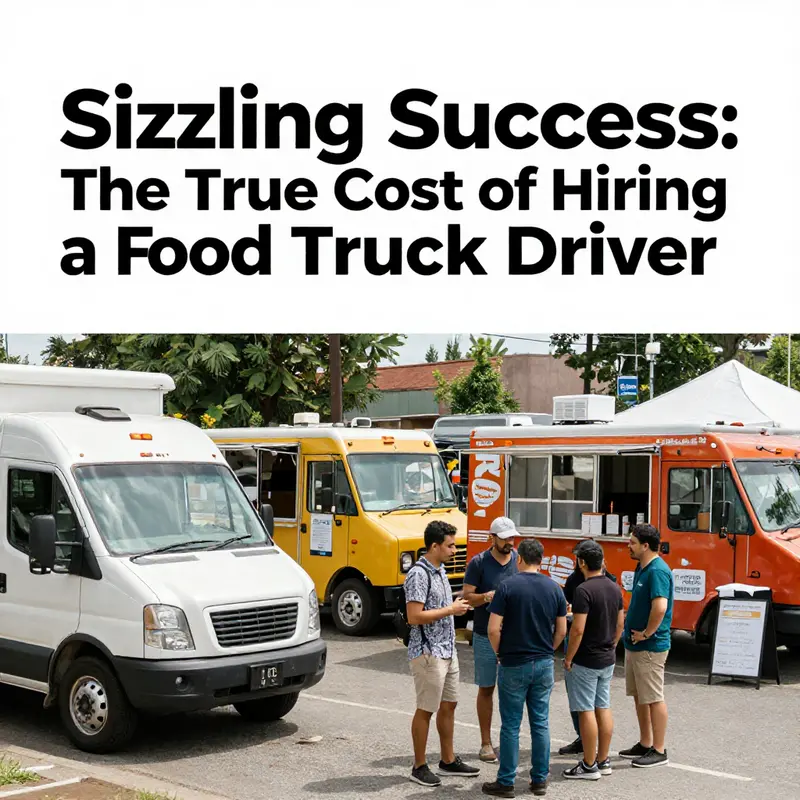
Whenever you price labor for a food truck, the wages are a function of local conditions, not a fixed line. The most concrete voice comes from regional data that show wide ranges in pay depending on city, role, and hours. In practice, you should build a hiring plan that adapts to location, competition, and season. The operating-cost environment matters: fuel, maintenance, insurance, and costs like parking influence how much you can responsibly pay a driver. More expensive cities may justify higher base rates or more comprehensive benefits, while leaner markets may rely on base pay with performance bonuses. Competition in the market matters: higher density of trucks and events creates pressure to offer more attractive packages, including incentives and flexible hours. In markets with fewer trucks, wages may be lower but the supply of reliable drivers can be tighter, pushing operators to rethink recruitment strategies. Seasonal demand adds another layer: peak seasons may support higher wages or seasonal bonuses, while off-peak periods call for tighter budgets or on-call staffing. Location matters: cities with complex routes, heavy traffic, or strict parking rules increase the value a driver delivers and can justify higher compensation, but they also raise operating costs. Broad economic conditions color wage expectations: inflation, labor-market slack, and minimum wage laws shape baseline offers, while on-demand hiring and gig platforms add flexibility at the margin. For a practical approach, start with a baseline local rate, then layer in bonuses tied to punctuality and service quality, plus non-wage perks for multi-day events. Build a seasonal buffer for overtime or temporary hires and account for travel costs when hiring near outlying sites. Finally, keep a simple budgeting framework that updates with market signals such as fuel trends or event calendars, so payroll can adjust without sacrificing profitability. This is not a fixed prescription but a disciplined system: wages reflect local conditions, the truck’s needs, and the business’s ability to sustain service levels during peaks and lulls.
From Entry-Level to Seasoned Road Warrior: Pricing the Hire for Food Truck Drivers
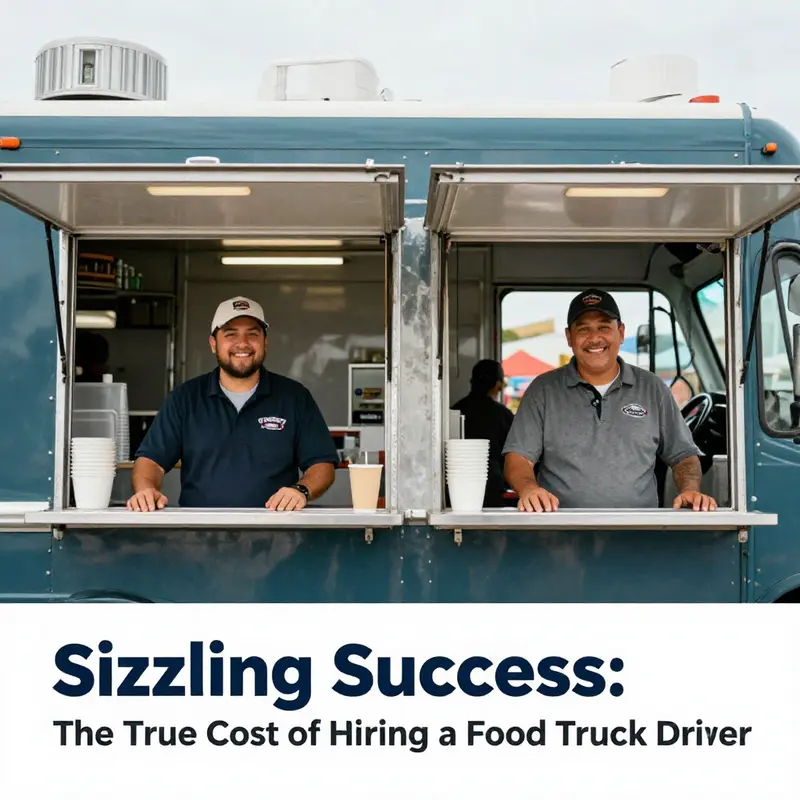
Hiring for a food truck sits at the intersection of logistics, service quality, and cash flow. It is a decision that blends apples and oranges values into a single practical equation: how much should you pay a driver who keeps the wheels turning, the orders flowing, and your reputation intact? The data you can lean on is oddly fragmentary. In one corner of the world, you find entry-level drivers in mid-sized urban markets earning comparatively modest sums, while in another, more mature market the same role carries a broader pay range driven by cost of living, hours, and the demand to reliably execute cold-chain tasks. What the research reveals, and what the practical chapter that follows must translate into is a framework, not a fixed answer. You need a method to price the hire that can adapt to location, lane complexity, and the difference between an independent contractor model and a salaried employee structure. This is especially true when your business model hinges on producing consistent, timely service in tight windows and high-traffic periods, where even small payroll variances can have outsized effects on margins and growth velocity.
The most concrete data available in the current materials centers on a marketplace outside a straightforward food-truck context, with a heavy emphasis on general truck driver salaries in various regions, and a handful of country-specific notes. What emerges clearly is variability. In one market, entry-level drivers may be seen as a stepping-stone to more advanced roles, and in another, the same position is valued for reliability, safety, and the ability to manage complex on-the-ground operations. The numbers that anchor the discussion in the Chinese market—where early-career drivers may earn roughly 3,800 to 5,000 RMB per month, while more experienced operators can command 5,000 to 12,000 RMB monthly—illustrate the spectrum. Add to that a layer of specialized roles that might require season-specific industry experience or refrigeration expertise, and the pay scale widens further. This illustrates a fundamental truth: the cost to hire a food truck driver is not a single figure. It is a range shaped by the interaction of locale, task complexity, and the employment relationship you choose to offer.
To translate those China-centric figures into the budgeting approach you need, you can treat them as anchor points for a broader benchmarking exercise. Convert the RMB ranges into approximate USD equivalents to gain intuition for readers outside the immediate market. As a rough guide, 3,800 RMB to 5,000 RMB per month translates to roughly $530 to $700 USD per month, while 12,000 RMB could approach $1,700 USD monthly. These are not wage proposals for other regions; they are indicative of the scale of variation you should expect when you map your own market’s cost of labor against the requirements of operating a mobile kitchen. The core takeaway is not the exact dollar figure but the fact that entry-level work may cost less, but with a ceiling that can rise quickly as the role absorbs more responsibilities or operates in denser urban corridors. By contrast, experienced drivers who manage more intricate tasks—such as refrigerated transport, precise delivery windows, or heavy weekend demand—often carry a premium that reflects risk, skill, and the value of uptime.
In markets where precise, food-truck-specific salary data is sparse, you should treat broad truck-driver benchmarks as a rough proxy rather than a direct substitute. Australia and the United States appear frequently in the general driver data, presenting entry-level hourly bands in the range of roughly AUD 35 to AUD 42 in Australia, and annual salaries around USD 53,000 on average with peaks near USD 81,000 for the upper end of the market in the United States. These numbers are useful in a budgeting exercise only insofar as they reveal the shape of the market: pay scales compress and expand with regional cost of living, labor demand, and the premium placed on logistical reliability. They also underscore a critical gap: the absence of consistently disaggregated data for food-truck operations, which behave differently from larger fleets and specialized long-haul carriers. The practical implication is clear: you cannot rely on a single line item to capture all the costs of driver labor; you must build a salary framework that can accommodate variation and reflect the strategic role drivers play in your business model.
So how do you translate this landscape into a workable hiring price for a food truck? Start with an anchored, location-aware baseline. If you operate in a market with fierce competition for dependable cold-chain delivery and on-time service, you should build a baseline that accounts for the higher end of the general-driver spectrum while adjusting downward for smaller, less dense markets where demand information and route complexity are lower. A simple yet effective approach is to establish a tiered pay plan that rewards not only time on the road but also performance and reliability. At the entry level, you could design a compensation package that includes a base wage with chain-of-custody bonuses tied to on-time deliveries, incident-free shifts, and customer service metrics. For more experienced drivers, add a premium that recognizes higher skill requirements, such as refrigerated handling, multi-stop routes, or longer shifts that align with peak service periods. The exact numbers will depend on your region, but the principle remains the same: pay should reflect both the cost of living and the incremental value that experience brings to service quality and operational resilience.
Beyond base pay, consider the broader compensation ecosystem. In some models, drivers receive meals and housing as part of the package, a practice that can be particularly attractive in regions where accommodation costs are high or where foodservice work aligns with a complementary lifestyle. The China-based examples emphasize how bonuses, free meals, and accommodations can be bundled into the role, effectively compressing total compensation into a package that is attractive to workers while still aligning with the business’s cost structure. If you operate in a jurisdiction where such benefits are commonplace or legally feasible, these additions can transform a modest base wage into a compelling total compensation story that supports lower job turnover and steadier service across busy periods.
A crucial distinction in budgeting is the choice between independent contractor arrangements and salaried employment. Independent contractors offer flexibility and cost control, with compensation tied more directly to hours worked or per-delivery performance. Salaried employees, by contrast, create cost predictability and a stable service layer but entail payroll taxes, benefits administration, and ongoing legal obligations. The data landscape does not provide a universal rule of thumb about which structure yields lower cost per hour or per unit of service; the answer depends heavily on your operating model, legal context, and the level of staffing stability you require to meet demand. If your sales are highly seasonal or event-driven, contractor-based arrangements might be advantageous to manage peak loads. If you aim for consistent daily service, a salaried model could deliver more predictable outcomes and reduce the risk of service interruptions that erode revenue during peak windows.
In practice, this means your hiring decision should be forward-looking, tied to a clear forecast of demand and a well-defined service promise. Build scenarios that compare the monthly cost of a salaried driver versus a contractor model under different volumes of deliveries and service windows. For example, in a hypothetical month with steady demand and modest overtime, a salaried driver at a middle-tier wage might come out with a stable cost profile and lower administrative overhead, while in a peak month with irregular hours, a contractor could offer flexibility that protects margins. The math hinges on more than pure wage rates; it hinges on the value you place on reliability, customer satisfaction, and the ability to scale operations when demand surges. In this sense, the chapter on driver salaries also serves as a chapter on cash flow discipline: the right hiring choice aligns workforce costs with revenue opportunities without sacrificing the quality of service that keeps customers coming back.
To bridge the gap between theory and practice, consider how you structure the job description itself. A well-constructed role that outlines required skills, such as safe driving, basic vehicle maintenance, knowledge of food safety protocols, and the ability to manage quick turnarounds, helps you filter candidates who can contribute to operational efficiency from day one. It also makes it easier to justify pay differentials because the job requires more than just steering a vehicle. A driver who can anticipate crowd flow at a busy event, coordinate with kitchen staff to ensure seamless handoffs, and troubleshoot cold-chain issues on the fly is adding value in ways that go beyond a stopwatch. This holistic view of the role can also inform how you price incentives. You might implement a delivery-time bonus, a customer-service bonus, or a quality-control bonus that reinforces the behaviors that ultimately drive growth. The bottom line is that driver compensation is not merely a wage line; it is an investment in reliability, brand experience, and the ability to operate at scale during peak service periods.
If you are piecing together a practical budgeting tool, you can borrow a page from broader payroll planning practices while tailoring it to the food truck context. Start with a market-appropriate base wage for the driver’s level, then layer on benefits and premiums for specialized capabilities. Project this against expected operating days and hours, not just calendar months. Include statutory costs such as taxes and insurance where applicable, and add a value for non-monetary benefits like meals or lodging if you offer them. Finally, run sensitivity analyses to understand how shifts in demand, fuel costs, or regulatory changes could alter the total compensation picture. In doing so, you will arrive at a salary-cost envelope that is not a single number but a range that aligns with your revenue plan and growth trajectory. In the end, the question—how much to hire for a food truck driver—narrows to: how much risk are you willing to absorb for price stability, and how much investment are you willing to make to ensure dependable service and customer satisfaction across fluctuating market conditions?
As you refine your approach, keep an eye on practical resources that discuss food-truck ownership and financial planning. For practical money planning and to understand cash-flow considerations for first-time owners, see Financial tips for first-time food truck owners. This resource can help you translate driver costs into cash-flow projections that reflect your entire operation, from sourcing ingredients to managing peak service windows. Keeping the budgeting conversation anchored in real-world planning ensures you don’t lose sight of the ultimate objective: delivering consistent, high-quality food and service while preserving healthy margins that fuel growth.
When it comes to benchmarking and early planning, another layer to consider is the data gap that exists when you try to map food-truck driver salaries across borders. The specificity of the food-truck role—its mobility, its dependence on on-site service quality, and its interaction with the kitchen crew—means your own local market intelligence will always be more valuable than any generalized salary report. Build your own salary ladder from a few trusted local sources, and then test it against a couple of plausible scenarios that pretend you are staffing for a typical weekend pop-up, a midweek dinner service, and a large-event day. This exercise helps you see not only what you might pay but what you can reasonably expect in terms of revenue per shift, customer orders, and repeat business. It also helps you articulate the logic to stakeholders—investors, partners, lenders—who want to see a direct link between wage costs, service quality, and revenue potential.
In summary, the question of how much to hire a food truck driver does not have a universally fixed answer. It is a layered decision that must consider location, market competitiveness, the driver’s experience, and whether you are employing staff or engaging contractors. The anchor data from one market illustrates the breadth of possible outcomes, while the broader, less food-truck-specific benchmarks remind us to adjust for regional realities. The practical path is to define a tiered compensation strategy that rewards reliability and specialized capabilities, to decide on an employment model that matches your operating rhythm, and to embed this choice within a cash-flow framework that explicitly links wage costs to revenue opportunities. In doing so, you create a hiring strategy that not only fills seats but also fortifies your service promise, supports growth, and protects margins in a business where every delivery and every customer interaction matters.
Internal link reference: For practical money planning and to understand cash-flow considerations for first-time owners, explore Financial tips for first-time food truck owners.
External resource: https://www.bls.gov/ooh/transportation-and-material-moving/truck-drivers.htm
The Role of Specialized Roles in a Mobile Kitchen: Cost, Value, and Growth
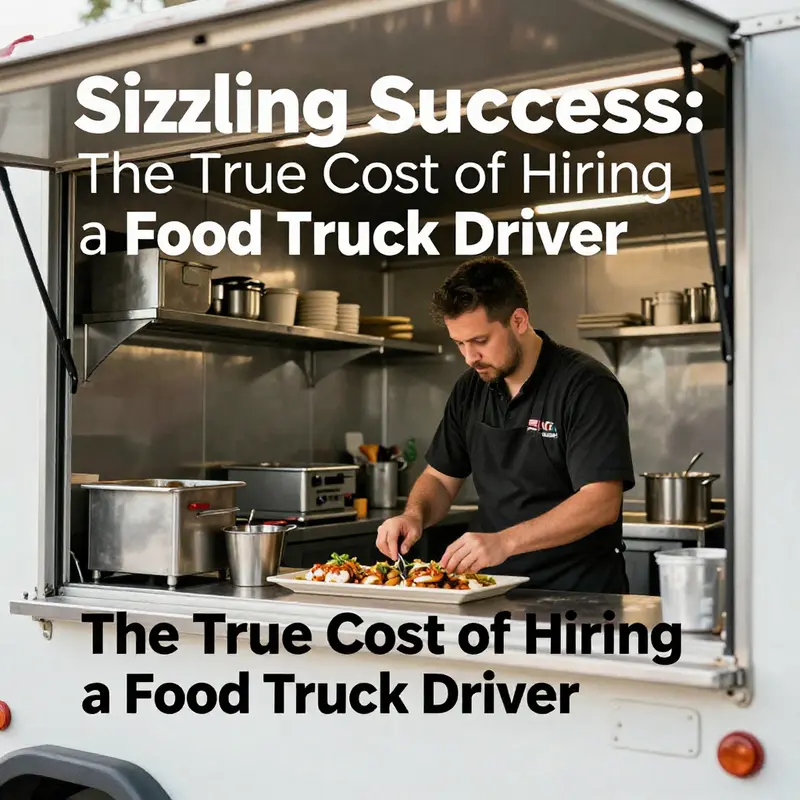
Specialized roles in a mobile kitchen alter the cost calculus in fundamental ways. A head chef, a food scientist, and a systems technician bring higher payroll and training requirements, but they also unlock higher quality, greater consistency, and more scalable growth. In practice, budgeting for talent becomes an investment decision rather than a simple expense. The wage premium reflects a smaller available talent pool and the higher stakes of mobile service. To justify it, operators should tie compensation to measurable outcomes such as waste reduction, yield improvements, throughput, and on-time delivery. A staged hiring strategy can minimize risk: start with the highest-impact role, then layer in others as revenue and complexity rise. Data-driven decision making helps quantify payback periods, while branding and reliability increase premium pricing opportunities and access to better locations. A blended model—one core specialist with a lean crew—can preserve liquidity while testing the value of deeper expertise. Ultimately, the right balance of talent and process enables a mobile kitchen to deliver consistent guest experiences, expand to new events, and sustain profitable growth.
Final thoughts
Understanding the cost of hiring a food truck driver is not just about numbers; it’s about crafting an experience that resonates with your audience. By analyzing salary ranges, considering market influences, comparing entry-level and experienced roles, and recognizing specialized skills, you can make informed decisions that will elevate your event. Whether you’re an event planner, HR personnel, or a passionate food enthusiast, this guide equips you with the knowledge to navigate the investments involved in hiring food truck drivers, ensuring that your culinary experience is as delightful as it is budget-friendly.