
Navigating the streets of New York City with your food truck can be a mouthwatering adventure, but before you hit the road, there’s an essential journey of regulations and permits to embrace. From delicious gourmet bites to vibrant fresh juices, NYC’s food truck scene is bursting with flavors that reflect its diverse culture. As an event planner, corporate HR professional, community group leader, or passionate food enthusiast, understanding how to get a food truck certified is pivotal for ensuring that your culinary creations take the streets safely and legally. In this guide, we will explore a step-by-step approach to obtaining your food truck certification, discuss the eligibility requirements that every aspiring vendor must meet, and uncover the compliance and inspection processes that keep the streets of NYC thriving with safe and delicious food options. Get ready to embark on your culinary journey through the Big Apple!
On the Road to NYC Certification: A Practical, Cohesive Path to Getting Your Food Truck Legally on the Streets
Every successful NYC food truck venture begins with a clear map of the licensing landscape and a steady method for navigating it. The city’s rules are specific, designed to protect public health while enabling entrepreneurial mobility, and while the process can feel intricate, it unfolds in a logical sequence. Start with the essential license that proves your operation is legitimate in the eyes of the city. From there, you move through safety training, vehicle compliance, and the practical realities of location and renewal. Taken together, the steps form a cohesive journey rather than a collection of isolated hurdles. Understanding this flow helps you plan, budget, and prepare your team so that you can roll onto the streets with confidence rather than scrambling at the last minute.
The core of the certification journey rests on three pillars: the hygiene authority’s license, the safety training that validates your knowledge in handling and serving food, and the vehicle’s readiness to meet rigid municipal standards. When you combine these with a permit to operate the business side and a plan for where you will park your truck legally, you have a complete framework that supports sustainable operation. This is not merely about ticking boxes; it is about aligning your daily practices with a city-wide expectation for cleanliness, safety, and accountability. As you read through this path, you’ll notice it emphasizes preparation, documentation, and ongoing compliance. The end goal is not only getting approved but maintaining the standards that keep customers safe and returning for more.
Perhaps the most fundamental starting point is the Mobile Food Vendor License issued by the NYC Department of Health and Mental Hygiene (DOHMH). This is the primary license required to operate a food cart or a truck in New York City. The application process is straightforward in structure but exacting in its details. You will submit the necessary forms and pay the required fees, and your submission sets the stage for the rest of the journey. While the paperwork can seem tedious, think of it as the city’s way of confirming that you have the basic operational framework in place: a compliant vehicle, a compliant menu, and a plan to keep customers safe. As you prepare, collect any documents that prove your identity, your business structure, and your operational plan. A well-organized packet not only speeds up the processing time but also demonstrates your seriousness as a business owner who respects the regulatory process.
Beyond the license itself, the city requires that you complete the Food Protection Course designed specifically for mobile vendors. This course is the heartbeat of practical food safety. It covers essential practices for preventing contamination, handling allergens, maintaining proper temperatures, preventing cross-contact, and implementing clean and hygienic workflows in the limited space of a mobile kitchen. The training culminates in a certificate that is valid for three years, a window during which you must maintain compliance and plan for renewal. The certificate is a tangible signal to inspectors, customers, and partners that you understand and prioritize safe food handling in a compact, high-throughput environment. You will want to budget time and perhaps even schedule the course early so that you can align this credential with your license timeline.
Another pillar that often shapes the pace of certification is the vehicle’s readiness. The NYC DOHMH sets specific technical specifications for mobile food vehicles. These standards cover construction materials, interior design, plumbing, refrigeration, waste disposal, and the placement of equipment. The intent behind these requirements is clear: to minimize the risk of contamination and to ensure that even in the tight, constantly moving space of a truck, everything can be cleaned, sanitized, and operated safely. Vehicle compliance may require working with contractors who understand the city’s expectations for safe surfaces, drainage, ventilation, and electrical systems. It is not merely about aesthetics or efficiency; it is about creating an environment where food safety can be maintained consistently, from the moment the truck doors swing open to the last customer of the night.
Having secured the DOHMH license and the Food Protection Certificate, the next piece of the puzzle is the permit from the Department of Consumer Affairs (DCA). The DCA permit authorizes you to run your mobile food business within the city and complements the health-focused approvals by addressing business operations, signage, and compliance with city business regulations. The timing of this permit is practical: you typically seek it after you have the foundational health license and the safety credential in hand, ensuring that your business structure is sound before you expand into the commercial side of operation. The DCA permit also signals to property owners, event coordinators, and venue managers that you have the official standing to operate, which eases negotiations when you are seeking locations for your truck.
Securing the right location to operate your truck is not an afterthought. The city’s Mobile Food Vendor Program and related resources help connect vendors with approved spots. In practice, this means finding spaces where you can legally park, set up, and serve customers without infringing on pedestrian access or parking rules. The reality is that high-demand locations can be competitive, and some operators expand their opportunities by participating in events, parks, and private property agreements. The crucial point is that, after you have your core licenses and permits, you have a viable landscape to work within. A well-planned approach to location can reduce downtime and increase revenue by reducing the guesswork about where you can operate on any given day.
As you navigate these steps, you will inevitably encounter periods of waiting or administrative action. In particular, the Green Cart program deserves special mention for operators who want to sell fresh produce. Green Carts operate on a waitlist and require that applicants already hold a valid DOHMH mobile food vendor permit with an ID badge, making it a pathway that can be pursued in parallel with your primary food truck certification but often with different timing. If your concept leans toward fruit and vegetable sales rather than prepared foods, this licensing track can open up unique opportunities, but you should plan for the possibility of an extended wait. The city’s approach to waitlists reflects demand and the desire to ensure equitable access to these limited licenses. Submitting the application is the first formal step, and the confirmation letter from the Department of Health and Mental Hygiene acknowledges receipt while the process unfolds. This is a reminder that certification in NYC is as much about patience as it is about compliance; success comes from steady progress along the required channels rather than a single leap forward.
Throughout this journey, it is important to maintain a coherent, integrated perspective on how each step connects with the next. The health license confirms you meet baseline safety standards; the safety course verifies your knowledge in applying those standards in a dynamic setting; vehicle readiness ensures you can implement the safety practices without compromising operations; the DCA permit and location strategy formalize your business presence and day-to-day feasibility. When taken together, these elements create a robust framework that supports sustainable day-to-day operation, predictable maintenance, and a credible presence in the city’s vibrant food scene. It is not unusual for prospective operators to consult multiple sources during this process, and it is wise to keep a running file of all licenses, certificates, and permits. In addition, staying connected to the broader regulatory conversation—such as the guidance found in resources like Navigating Food Truck Industry Regulations—helps you anticipate changes and plan proactively rather than reactively.
A practical path through this landscape also involves continuous attention to renewal and ongoing compliance. The Mobile Food Vendor License and the Food Protection Certificate require renewal every three years, a cadence that aligns with typical technician recertification and facility inspection cycles. Regular DOHMH inspections ensure ongoing compliance and provide an opportunity to catch and correct issues before they become more serious. The city’s focus on health and safety is continuous, not episodic; this means that your daily routines—how you store ingredients, how you clean, how you prevent cross-contamination—need to be baked into your standard operating procedures. Creating a culture of cleanliness within the truck, training staff to follow best practices, and documenting routine checks can transform what might feel like bureaucratic overhead into a steady, practical discipline that improves both safety and efficiency.
Operational readiness is not only about passing a test or obtaining a permit. It is about building a brand and a workflow that can scale as your business grows. To this end, consider how your menu, packaging, and service model interact with the regulatory framework. A well-specified menu helps with temperature controls and cross-contamination prevention, while thoughtful packaging reduces the risk of leaks and spoilage during transport and service. Inventory management becomes more precise when you have clear procedures for receiving, storing, and rotating ingredients within the truck. Equipment placement is not merely a design choice; it is a safety decision that influences how quickly your team can work while maintaining cleanliness. These practical details may not be glamorous, but they are the backbone of a truck that can operate smoothly under city rules and customer expectations.
As with any venture that blends entrepreneurship with public service, preparation, patience, and persistence are your allies. Start by assembling a robust documentation set that includes proof of identity, business structure, vehicle specifications, safety training certifications, and any other items the DOHMH or DCA requires. Create a timeline that aligns license expiration dates with renewal deadlines and inspection schedules. Build a budget that accounts for the upfront costs of vehicle modifications, course fees, license fees, and the ongoing costs of permits and inspections. And cultivate a network of mentors, peers, and regulatory contacts who can offer guidance when the process feels slow or opaque. The city’s rules are not arbitrary barriers; they are a framework that, when navigated with care, can support a thriving, compliant operation that treats customers with respect and care.
In the end, the certification journey is a narrative of turning compliance into a competitive advantage. When you can demonstrate to customers, partners, and event organizers that your operation is clean, properly licensed, and safely run, you build trust that translates into repeat business. The path is not a single line but a continuous loop: license, train, verify vehicle readiness, obtain permits, secure a location, operate, renew, and repeat. Each cycle reinforces the next, creating a durable platform for growth. For readers who want a concise blueprint, the city’s official mobile food vendor guidance remains the definitive reference, and it is worth visiting to verify any changes in requirements.
If you want to explore how other operators have managed similar regulatory challenges, consider reviewing resources that discuss the broader regulatory environment. These pieces often illuminate how licensing, safety, and business operations intersect in real-world settings, offering perspectives that complement the step-by-step framework described here. And for a deeper dive into the regulatory landscape and practical tips, you can refer to the broader discussion on Navigating Food Truck Industry Regulations, which can provide a complementary perspective to the procedural sequence outlined in this chapter. By anchoring your plan to both the formal requirements and the lived realities of operating a food truck in NYC, you create a resilient foundation that supports long-term success, even as you adapt to evolving rules and opportunities.
In closing, the journey to certification is both a technical process and a logistics challenge. It asks you to orchestrate permits, courses, vehicle readiness, and strategic location choices into one coherent operation. It asks you to stay organized in documentation, proactive in renewal, and steadfast in compliance. And it asks you to hold a customer-centric vision—from sanitation to service—so that every shift feels deliberate, professional, and ready for the streets of New York City. The result is not merely a license on a wall; it is a commitment to quality, safety, and accountability that customers can taste in every bite. For official references and the most current requirements, consult the NYC Health Mobile Food Vendors page on the city’s website, and remember that particular programs like the Green Cart license exist for producers who focus on fresh produce—even as you pursue the core food truck certification described here. Official resources and authoritative guidance are the compass that keeps you oriented as you navigate the road to certification and beyond.
External resource:
For official requirements, see the NYC Health Mobile Food Vendors page: https://www.nyc.gov/site/health/businesses/mobile-food-vendors.page
From Eligibility to Certification: Charting the Path for NYC Food Trucks
Rolling through the streets of New York City with a gleaming food truck can feel like stepping into a shared dream. The city’s avenues hum with a mix of aromas, clattering grills, and the steady rhythm of wheels rolling toward a hungry crowd. Yet behind every sizzling pan and friendly smile lies a framework of rules designed to protect the public and ensure a level playing field for operators. The journey from a hopeful concept to a certified mobile kitchen is less a sprint and more a careful march through a landscape of licenses, permits, and training. Understanding the core eligibility and licensing requirements is not only about compliance; it is about setting a sturdy foundation that can weather the city’s demanding health codes, shifting regulations, and competitive markets. When you begin with clarity about what the DOHMH expects, you can map a path that reduces surprises, minimizes backtracking, and positions your operation for sustainable success on the curb and beyond.
The central gate in this process is built around the idea that a food truck is both a business and a mobile health facility. The most fundamental credential you will need, in practical terms, is a valid Food Vendor License or a Supervisory License. These licenses authorize an individual to manage or operate a mobile food vending unit. But a license by itself does not turn the key in the truck. The vehicle itself must carry a valid Mobile Food Vendor Permit, a prerequisite that ties the person to the unit and ensures the vehicle meets the city’s basic operational standards. This two-layer structure–a license for the operator and a permit for the vehicle–frames the entire eligibility landscape and anchors every step that follows.
To begin, consider the scale of preparation beyond the obvious appetite for a great menu. The eligibility rules are designed to verify that the operator not only understands food safety but is also prepared to handle the responsibilities of running a mobile kitchen in a bustling urban environment. The core requirements typically include age, background, training, financial readiness, and a willingness to complete and submit the appropriate forms and fees. While the specifics can evolve with policy changes, the essence remains consistent: your readiness to comply is assessed before the city grants you permission to roll.
First, the age criterion is straightforward yet non-negotiable. You must be at least 18 years old. This threshold is not merely a formality; it signals a level of personal responsibility and accountability that the city expects from operators who will be handling food, cash, and customer interactions in a fast-paced setting. The age requirement is complemented by a background check. The city wants to ensure that operators who will be entrusted with safety responsibilities and customer trust do not bring unresolved legal issues into a public space where they can directly impact health and safety outcomes. A clean or acceptable background profile becomes a practical prerequisite for advancing in the process.
Food safety training stands as another pillar of eligibility. In many cases, the recommended standard is a recognized certification such as ServSafe or an equivalent program that demonstrates a solid grasp of food handling, cross-contamination prevention, temperature control, and sanitation practices. The training is not a mere checkbox; it is intended to translate into daily discipline on the truck. When you walk into a service window with a well-understood plan for keeping foods at safe temperatures, managing raw ingredients, and maintaining hygienic work surfaces, you are delivering a tangible assurance to the regulatory body and to your future customers.
Financial responsibility is the next essential layer. The city wants to see evidence of reliable financial planning, including proof of liability insurance. The insurance requirement protects both the public and the operator by providing a safety net against accidents, spills, or other incidents that could occur on the street. It is not a sign of weakness to secure coverage; it is a prudent business practice that reinforces longevity in a city where luck can be tempered by preparedness. Alongside insurance, you will typically be asked to complete and submit formal applications, along with the required fees. The application forms themselves vary by jurisdiction and by program, but they share a common goal: to capture a clear record of who you are, what you plan to serve, where you will operate, and how you will meet the city’s health and safety standards.
The DOHMH’s official processes emphasize a holistic picture of readiness. A successful applicant demonstrates not only a clean background and proper insurance but also an actionable plan for compliance. This includes documenting your food safety training, your procedures for temperature control and safe storage, and your approach to waste disposal and sanitization. The regulatory emphasis is practical: can you maintain sanitary conditions in a small, moving kitchen? Can you prevent contamination when you are serving dozens or hundreds of customers in a shift? Can you properly label and store ingredients to minimize spoilage and foodborne risk? The answers to these questions often shape whether an applicant progresses smoothly or encounters delays.
The vehicle itself—the mobile unit—must be a compliant platform for food preparation and service. The Mobile Food Vendor Permit for the truck underpins the practical ability to operate in the city’s streets, parks, and permitted locations. This permit links the vehicle to the regulatory framework, ensuring that the physical setup aligns with health and safety expectations. The permit process usually requires inspections, documentation of the truck’s equipment, and confirmation that all components—refrigeration, heating, sinks, drainage—meet the city’s standards. The permit is not a mere formality; it is a live instrument that can be suspended or revoked if the unit fails to maintain compliance, leading to downtime and reputational damage.
In addition to these core pathways, there is a distinct avenue for those who want to focus specifically on selling fresh produce rather than prepared foods: the Green Cart program. The Green Cart license is designed to promote access to fresh fruits and vegetables in underserved areas. If that is your niche, you would apply for the Green Cart license after meeting the prerequisite of holding a valid DOHMH mobile food vendor permit. The Green Cart process operates on a waitlist, reflecting high demand relative to available licenses. Applicants receive a confirmation letter acknowledging receipt of their application, but the timeline can stretch due to queue dynamics. The eligibility framework remains grounded in the same basic health and safety commitments, yet the emphasis shifts toward sourcing, display, and handling of produce on the street. If you pursue this path, you will still need to stay in step with the overall regulatory cadence—permits, inspections, compliance—and you will add the specific obligations that come with selling fresh produce in a municipal setting.
The practical path through eligibility and licensing also relies on guided expectations about inspections and ongoing compliance. After a license is awarded, a food truck remains under the city’s watchful eye. Regular inspections by DOHMH personnel ensure adherence to proper food handling, temperature control, waste disposal, and cleanliness standards. These inspections are not merely bureaucratic rituals; they are continuous quality checks that determine whether your operation can keep serving customers. The inspector’s report becomes a living document that can influence when and where you operate, how you train your staff, and how you respond to incidents on the road. The most successful operators treat inspections as opportunities to refine systems rather than as punitive hurdles. A culture of proactive maintenance—daily checklists, calibrated thermometers, documented cleaning schedules—translates into smoother renewals, fewer surprises, and the confidence to focus on delivering a consistent, high-quality customer experience.
To translate these broad principles into a workable, friction-minimizing plan, it helps to view the process as a continuum rather than a single hurdle. Start with your personal validation: are you prepared to meet the age, background, and training expectations? If the answer is yes, assemble your document package early. Gather proof of age, complete your food safety training, secure proof of liability insurance, and be ready to present a coherent business plan that details your operating locations, hours, and environmental considerations. Then prepare for the vehicle side: ensure your truck’s configuration aligns with health and safety standards, have the necessary equipment inventories documented, and be prepared for inspections that verify your readiness on the day of approval. By integrating these elements into a unified preparation arc, you reduce back-and-forth with authorities, shorten the path from application to operation, and create a foundation that can scale as you add staff, expand routes, or broaden your menu.
The regulatory landscape is dynamic, and changes can impact timelines and requirements. That reality makes one more practice essential: regular consultation of official sources. While many chapters in the broader article map out the sequence of steps, the details—forms, fees, and procedural nuances—shift with policy updates. The NYC Health department’s guidance pages and related resources provide the authoritative baseline for what is currently required and how to navigate any recent amendments. In particular, the Mobile Dining information hub serves as a central reference point for the day-to-day realities of operating a food truck in the city. Keeping an eye on these official channels, and cross-referencing with trusted industry guidance, helps you stay ahead of regulatory shifts and ensures that your business remains in good standing as you grow.
Beyond the mechanics of licensing and the letter of the law, there is a strategic dimension to eligibility that often determines how quickly you move from concept to service. A credible plan for training, licensing, and compliance signals to regulators and potential investors that you are serious about quality and safety. It also sets expectations for your staff and your customers. If your truck becomes known for strict adherence to safety standards, prompt sanitation, and reliable service, the resilience of your operation strengthens. In a city where customer demand is high but competition is intense, that credibility can become a differentiator that draws repeat customers and favorable locations. It can also ease life for you as a business owner—fewer compliance headaches, clearer channels of communication with inspectors, and a smoother expansion path into additional routes or even multiple units.
The path through eligibility and licensing is, at its core, a discipline of preparation and ongoing oversight. It begins with an accurate assessment of whether you hold the foundational licenses necessary to operate legally and safely. It includes preparing for the vehicle’s permitting, ensuring your kitchen setup meets health standards, and establishing a clear record of compliance that you can present to inspectors and regulators. It also encompasses foresight about the type of permit you need—whether you will operate under a Food Vendor License, a Supervisory License, or a Green Cart license when appropriate. And it demands a practical appreciation of the operating environment: the city’s streets, the rhythm of its hours, the realities of crowd flow, and the constraints of nearby health codes that influence where and when you can park and serve.
As you navigate this terrain, a few practical reminders can help you stay on track. First, don’t underestimate the importance of a solid food safety training record. If you can demonstrate mastery of temperature control, cross-contamination prevention, and safe sanitation practices, you create a resilient foundation for all your other steps. Second, treat insurance not as a formality but as a strategic investment in risk management. A robust liability policy protects both you and your customers and can smooth relationships with landlords, event organizers, and partners who require formal coverage. Third, plan for the Green Cart pathway only if it aligns with your business goals. If your aim is to sell produce in addition to or instead of prepared foods, understand the additional waitlist dynamics and the compliance expectations that apply to produce display, cleaning, and restocking. Finally, remember that the process is iterative. You may need to update your forms, adjust your business plan, or revise your equipment inventory as you learn from initial inspections or as your concept evolves.
To further enrich your understanding of the regulatory terrain beyond the core DOHMH framework, you can explore broader discussions on how operators navigate these landscapes and how to align regulatory compliance with business strategy. For readers who want a consolidated overview of regulatory considerations, a useful resource is the article series at the blog focused on navigating food-truck industry regulations. This piece provides practical perspectives on how to interpret rules, prepare applications, and maintain ongoing compliance in a way that complements the formal DOHMH requirements. For a concise introduction to the broader regulatory context, you can read about navigating food-truck industry regulations in the blog post linked here: Navigating food-truck industry regulations (https://loschifladostruck.com/navigating-food-truck-industry-regulations/).
The road from eligibility to certification is not a straight line, but rather a carefully sequenced set of milestones that you can anticipate and prepare for with confidence. Start with the applicant profile you will present in your forms, create a compelling narrative about how you will keep food safety at the forefront of daily operations, and outline a realistic plan for inspections, record-keeping, and ongoing staff training. Build your proof of concept not just around a delicious menu but around a documented commitment to health, safety, and reliability. When you approach the process with clear documentation, a disciplined safety program, and a readiness to adapt as guidelines evolve, you will find that the city’s checks and approvals become a manageable, even predictable, stage of your entrepreneurial journey. The certification you seek is not only a piece of paperwork; it is a doorway to consistent service, to a scalable brand, and to the sense of pride that comes with serving the city from a kitchen-on-wheels that you and your team can steward with care and professionalism.
In the end, the eligibility and licensing framework for NYC food trucks is about preparedness, accountability, and service. By aligning your goals with the city’s health and safety expectations, you transform a regulatory hurdle into a market advantage. You create not just a truck but a trusted platform for food that travels with you to storefronts, parks, and events across the five boroughs. You map a path that future growth can follow—whether that means expanding to additional routes, employing more staff, or exploring related opportunities in the mobile dining ecosystem. The city’s balance of rigorous standards and vibrant opportunity invites operators who are ready to learn, adapt, and lead with integrity. If you want a crisp, official road map, the starting point remains rooted in the dual pillars of operator licensure and vehicle permitting, underpinned by rigorous training and solid financial protections. Your success story begins the moment you choose to align your passion with the city’s imperative for safe, accessible, and delicious street food—and then back that choice with the steady, disciplined steps of preparation, submission, and ongoing compliance.
For those who prefer to anchor their understanding in the most authoritative, up-to-date guidance, the official NYC Health website provides the definitive resource on mobile dining. It is the touchstone for procedures, fees, and documentation, and it can be a steady companion as you navigate the process with clarity and confidence. As you plan your menu, your routes, and your growth, keep that official channel open and check in regularly to ensure your practice matches the city’s current expectations. This disciplined approach not only smooths the path to certification but also reinforces the quality and safety that customers rightly expect from a licensed NYC food truck. The result is a venture that is not only compliant but enduring, that earns trust at every window, and that stands ready to evolve with the city you serve.
External resources for further reading and official guidance can be found at the NYC Health Mobile Dining page, which aggregates the latest procedures and requirements for mobile food vending in New York City: https://www.nyc.gov/site/health/about/mobiledining.page
From Permit to Pass: Mastering Compliance and Inspections on the NYC Food Truck Certification Journey
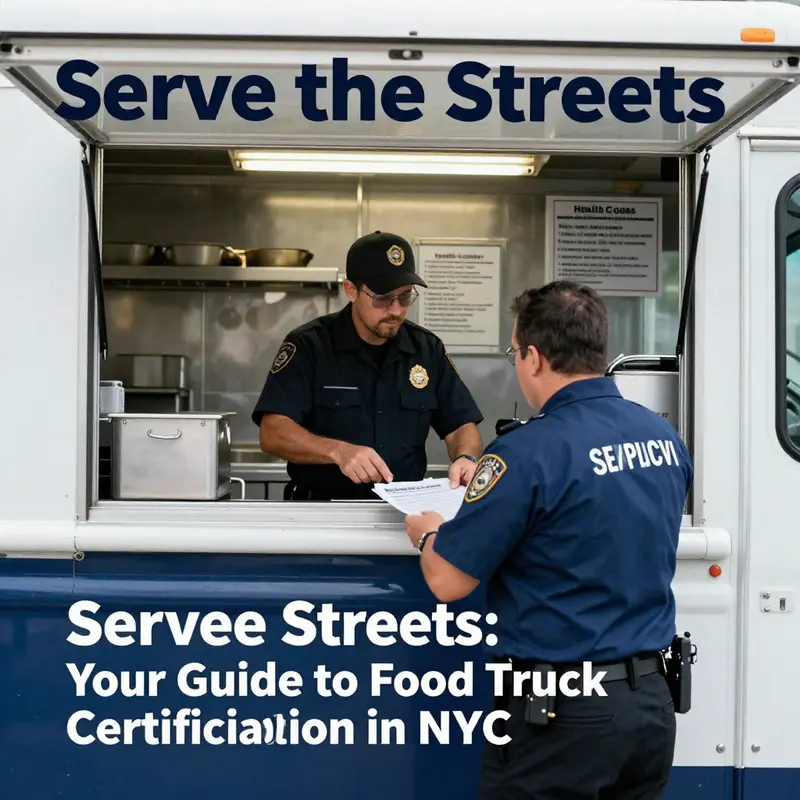
In New York City, every food truck that hopes to roll into the busy streets begins not with a menu but with a careful choreography of compliance, inspection, and preparation. The path from first permit to final certification is not a single checkpoint but a continuous rhythm of demonstrations of safety, cleanliness, and responsible operation. This rhythm is designed to protect the public, yes, but it also clarifies the responsibilities of the vendor, the team, and the business as a whole. To understand the process fully is to see how every practical choice—where you source supplies, how you store and handle perishables, how you train staff, and how you document your procedures—plays into a broader assurance of health and safety. The journey starts with the foundational credential every NYC mobile food entrepreneur must secure: a valid mobile food vendor permit issued by the Department of Health and Mental Hygiene (DOHMH). Without this permit, the door to further licensing, including a possible Green Cart license for selling fresh produce, does not open. The permit is not a mere formality. It anchors a set of expectations about safety, sanitation, and accountability that inspectors will scrutinize at every stage. And because the city’s approach to public health is thorough and data-driven, the permit comes with a clear sequence of steps, each building on the previous one until the food truck can confidently pass the required inspections and carry the city’s seal of approval. As you chart this course, it helps to keep the big picture in view: compliance is not a one-time hurdle but a recurring discipline that informs daily operations, long-term planning, and a vendor’s reputation in a crowded marketplace. The DOHMH’s framework emphasizes not only what you do but how you document what you do. A well-documented operation is more than a safety net; it is a passport that proves you understand the risks and have instituted controls to mitigate them. This mindset—document, train, verify—shapes every decision you will make as you prepare for inspection and beyond. For many operators, the first practical step is to align operational realities with regulatory expectations in a way that is sustainable on a changing schedule, often dictated by the bustle of city events, peak hours, and the seasonal rhythms of NYC neighborhoods. The inspection process is designed to be rigorous, but it also rewards preparedness and proactive maintenance. The best way to think about it is as a collaborative conversation between you and the city’s health professionals, one in which your truck represents a moving laboratory of safety standards, your team embodies a culture of hygiene, and your systems demonstrate that health considerations are integrated into every shift, every service, and every menu item. The conversation begins with the permit, but it extends far beyond it into the daily life of the operation. The practical implications of compliance touch many aspects of the business: where you keep your cold and hot storage, what kinds of equipment you use, how you clean and sanitize, how you wash hands and manage waste, how you train crew members, and how you respond when a potential issue arises. These elements are not abstract requirements; they are tangible, observable practices that inspectors will verify as part of the licensing process. The inspection process itself has a clear logic. Inspectors initiate a compliance verification that covers a spectrum of health and safety standards. Each element on their checklist corresponds to a risk area that has been shown to influence foodborne illness or cross-contamination. The process begins with a careful review of your permit status and the credentials attached to it, including the identification badge that verifies your role and authority. The moment an inspector steps aboard the vehicle, they begin a tactile audit of conditions, looking for signs that your operation respects temperature controls, hygiene, and sanitation. The first touchstone is proper food storage temperatures. Food that is not held at safe temperatures becomes a reservoir for bacterial growth, which can escalate into a public health incident with serious consequences. Inspectors will verify that your refrigeration units maintain temperatures within the safe range for each category of food, and they will note any deviations. They will look at how you separate raw from ready-to-eat foods, how you label containers, and how you monitor temperatures during service. A second vital area is the cleanliness of the vehicle and equipment. A clean truck is more than a cosmetic requirement; it signals to staff and customers that hygiene is a core value. The inspector examines the surfaces where food is prepared and stored, the integrity of seals and gaskets, the cleanliness of the floors and walls, and the ease with which these surfaces can be sanitized. Inspections are meticulous, but they follow a predictable logic that vendors can anticipate through routine internal audits. A third focus is handwashing facilities. The capacity for clean hands at the point of use is a practical line of defense against cross-contamination. The inspector checks that handwashing stations are present, functioning, and conveniently located for staff. They confirm that water is hot enough, soap is available, and towels are accessible. They may also verify that procedures for hand hygiene are posted and that staff adhere to them during service. A fourth area concerns pest control measures. Even a small gap or a hidden crumb can invite pests, creating health hazards and surprising customers. Inspectors look for active pest management plans, integrated pest management practices, clean drains, sealed entry points, and documented routine treatments. They want to see that the truck minimizes food attractants and does not rely on ad hoc fixes, which can be a red flag during an inspection. A fifth dimension is safe handling practices. This category encompasses training, supervision, and the daily habits that prevent mistakes. Inspectors check whether staff are trained in safe food handling, whether tasks are performed in the right order, and whether procedures for avoiding cross-contamination are followed. They may review training records, schedules, and the way tasks are delegated during a shift. All these elements come together in the documentation that accompanies every inspection. Violations, if identified, are recorded with precision. The document is not a punitive report alone; it is a map that guides the vendor toward corrective actions and a timely reinspection if necessary. In many cases, violations are categorized by severity, which helps determine how quickly a response is required and what resources must be allocated to fix the issue. The process is designed to be efficient, but it also expects that operators will take ownership of the fixes. Vendors who respond promptly with a clear corrective plan and evidence of changes often experience smoother reinspections and a faster path to final certification. The interplay between documentation and practice becomes especially important when a city inspector notes violations. The key lesson here is that the inspection is not a punitive rite but a safety-oriented dialogue. The inspector’s notes become a tool for continuous improvement. They illuminate gaps that might not have been evident in a morning rehearsal of service or in a routine check of temperatures. For operators, the most practical approach to navigating this landscape is to adopt a disciplined, systematized routine. This routine begins with a comprehensive compliance plan that translates health codes into daily procedures. It includes explicit steps for temperature logging, cleaning schedules, pest control routines, and staff training modules. The plan should be more than a binder on a shelf; it should be a living document that reflects actual practices and is updated as processes evolve. The reality of NYC’s mobile food ecosystem means that you will also need to plan for the inevitable variability of schedules, locations, and crowd dynamics. During events, for example, the risk profile can shift with longer hours, higher throughput, and more complex customer interactions. A well-designed compliance system anticipates these fluctuations and provides practical adjustments without sacrificing safety. That is why a strong emphasis on temperature control remains central. Temperature logs, if maintained consistently and legibly, provide a continuous narrative of compliance that inspectors can follow even across shifts. They also serve as a historical record that can help staff recognize patterns, such as recurring equipment reliability issues or the need for more frequent calibration. Cleaning and sanitation are equally important. The inspection lens will scrutinize the cleanliness of your vehicle and equipment, but a proactive operator will treat cleanliness as a daily habit rather than a periodic checkpoint. This mindset translates into routines such as wipe-down practices, sanitizing sequences, and post-service cleanups that minimize buildup and cross-contamination risks. Staff training is another enduring pillar. A competent crew reduces the likelihood of violations and speeds up corrective actions when issues arise. Training should cover basics such as personal hygiene, temperature control, safe food handling, and emergency procedures. It should also address the practical realities of cooking on wheels, including how equipment functions in a mobile environment, how to stage food safely during service, and how to respond to common service disruptions. The inspections also encourage a culture of accountability. Vendors who take ownership of issues show a commitment to public health and to the business’s long-term viability. In the city’s regulatory landscape, this translates into transparent communication with inspectors, prompt submission of corrected plans, and a willingness to adjust workflows to meet safety requirements. The relationship between the vendor and the city, once established, becomes a shared responsibility for food safety. A practical question you will face is how to prepare for the approval window when the Green Cart license is relevant to your concept. The Green Cart program is designed to support the sale of fresh fruits and vegetables and operates on a waitlist basis. While it is distinct from the standard mobile food vendor permit, its success depends on demonstrating consistent compliance with health and safety standards that apply to all food-related operations. When applying, the documentation you present should reflect the same level of rigor that you would bring to a routine inspection. In addition to the compliance fundamentals, there are subtle but essential operational choices that influence your inspection outcomes. The layout of your vehicle matters, not just for efficiency but for safety and sanitation. Contoured workstations that minimize cross-contamination risk, clearly designated zones for raw and ready-to-eat foods, and accessible handwashing stations contribute positively to the inspection experience. Even the placement of equipment, such as refrigeration units and sinks, communicates your commitment to organized safety. The vehicle’s surface integrity—seals, hinges, and non-porous materials—also matters. It signals how seriously you take maintenance, which in turn correlates with how inspectors gauge your readiness for certification. Documentation extends beyond the inspection form. It includes standard operating procedures (SOPs) that specify how tasks are executed and by whom, as well as checklists and daily logs that demonstrate consistency. A robust set of SOPs helps new crew members learn the required routines quickly and ensures that safety practices are not dependent on the presence of a particular supervisor. The city values the predictability that SOPs provide in a mobile setting. They help inspectors see that your operation is not a fragile, one-off enterprise but a resilient business with reliable processes. It is worth noting that the inspection process in NYC is not just about a single encounter. It often involves a cycle: initial assessment, notification of findings, a period for corrective action, and a reinspect. The timeline can vary depending on the severity of violations and on the speed with which you address them. A proactive operator will anticipate this cycle and prepare a corrective action plan that outlines concrete steps, responsible team members, timelines, and evidence of remediation. The goal is to minimize downtime and to demonstrate to the inspectors that safety is the baseline, not the exception. To reinforce this approach, many operators engage in regular internal audits that mirror the DOHMH inspection framework. These audits are conducted by a dedicated team or an external consultant who brings a fresh perspective on possible gaps. An internal audit should not be a ritual performed only to pass an upcoming inspection; it should be part of the business’s ongoing commitment to quality. In practice, these audits translate into improved practices across the entire operation. For instance, they can reveal recurring issues with cross-contamination, highlight the need for more frequent recalibration of thermometers, or identify gaps in handwashing accessibility during peak service. When gaps are found, the corrective action is not simply to fix the symptom but to re-engineer the process. This might involve reconfiguring the work flow to reduce handwashing distance, upgrading storage organization to minimize mixups, or revising cleaning schedules to align with busy service periods. The result is a more resilient operation that not only passes inspections but remains compliant during the busiest times. As you anticipate the inspection process, it helps to maintain a practical orientation toward compliance as a core business discipline. The result is not a brittle system designed to avoid penalties but a living framework that supports consistent service quality and customer trust. In this sense, compliance becomes a competitive differentiator. A food truck that can demonstrate reliable safety practices, transparent documentation, and a well-managed operation stands out in a crowded market. It earns a reputation for reliability, which translates into repeat customers, favorable reviews, and smoother collaborations with event organizers and venues. The city’s enforcement philosophy reinforces this outcome: when operators embrace safety as a continuous, observable practice, inspections become a routine reminder rather than an anomaly. It is also helpful to connect these ideas to the broader context of regulatory navigation for food trucks. The compliance and inspection processes share a common thread with other regulatory requirements—namely, the importance of preparation, documentation, and ongoing improvement. For readers exploring more about how regulatory expectations intersect with the realities of running a mobile food business, consider turning to resources that discuss navigating food-truck industry regulations and the practicalities behind them. A practical, grounded resource for this broader view is available at Navigating food-truck industry regulations. This reference can help you align your internal compliance culture with the city’s expectations while you plan long-term growth and resilience for your operation. The journey from permit to pass is continuous, not episodic. The inspection process is a lens that highlights where your operation already excels and where it can improve. The good news is that NYC’s framework rewards those who invest in health and safety as strategic business priorities. If you approach compliance with the same care you bring to your menu testing, you will find that the path to certification becomes not a single milestone but a steady cadence of enhancements—improving safety, elevating service, and building a durable brand identity on wheels. For operators who want to anchor their practice in official sources, it is wise to consult the NYC Health’s guidance on the inspection process, which lays out the procedural expectations, standard categories, and the sequence of steps inspectors typically follow. This resource provides the authoritative backdrop against which a food truck can plan its readiness and respond confidently when the day of inspection arrives. The chapter ends not with a checklist but with a mindset: compliance is a discipline that informs daily operations, not a hurdle to be cleared once. Your truck’s success depends on how well you translate safety codes into real-world routines, how clearly you document those routines, and how quickly you respond when the city points to opportunities for improvement. In the end, the certification you seek is a public signal that your business is trustworthy and responsible. The city’s inspections are not mere bureaucratic hurdles; they are opportunities to demonstrate your commitment to the health and safety of every customer who orders from your window. As you move through this process, you will learn to anticipate questions inspectors may ask, to gather the right kinds of evidence, and to present a coherent picture of your daily practices. You will also discover that your team’s coherence and your operational discipline matter just as much as the equipment you choose or the recipes you develop. The best operators integrate compliance into the culture of their business. They train with intention, maintain records with discipline, and operate with a constancy that makes safety feel like second nature. And as the city’s doors open to compliant vendors, the experience you create for customers—speed, safety, and trust—will be the true measure of your certification’s value. For those who want a more practical gateway into the inspection landscape, the official DOHMH channel provides a reliable compass, detailing how inspections are conducted, what they assess, and what vendors can expect during the process. This external resource anchors the practical realities described here and helps ensure that your preparation aligns with the city’s current standards and expectations. External reference: NYC Health – The Inspection Process (https://www.nyc.gov/site/doh/services/food-truck-inspection.page).
Final thoughts
Embarking on the journey to food truck certification in New York City is not just about following laws; it’s about contributing to the vibrant tapestry of urban culinary culture. As you take each step—gaining your mobile food vendor permit, applying for the Green Cart license, and ensuring compliance with health regulations—you are part of a community that celebrates creativity, diversity, and deliciousness. With this guide, you now hold the key to unlocking your dreams of serving the streets of NYC. So, gather your permits, get your gear ready, and prepare to delight the palates of locals and tourists alike. The streets are waiting for your culinary creations!