Cooking in a food truck is not just about serving delicious dishes; it’s an intricate dance of planning, equipment management, and food safety. As food trends hit the street and events beckon, the food truck business has never been more vibrant. From local festivals to corporate gatherings, the demand for food trucks is booming! This guide serves as your trusty sidekick, walking you through essential areas: choosing the right equipment to withstand the hustle, managing fuel and power for peak performance, organizing your kitchen layout for efficiency, and prioritizing food safety and hygiene to keep everyone smiling. Embrace the adventure of mobile cooking and settle into this engaging and informative roadmap!
Gear on Wheels: Building a Food Truck Kitchen Around the Right Equipment
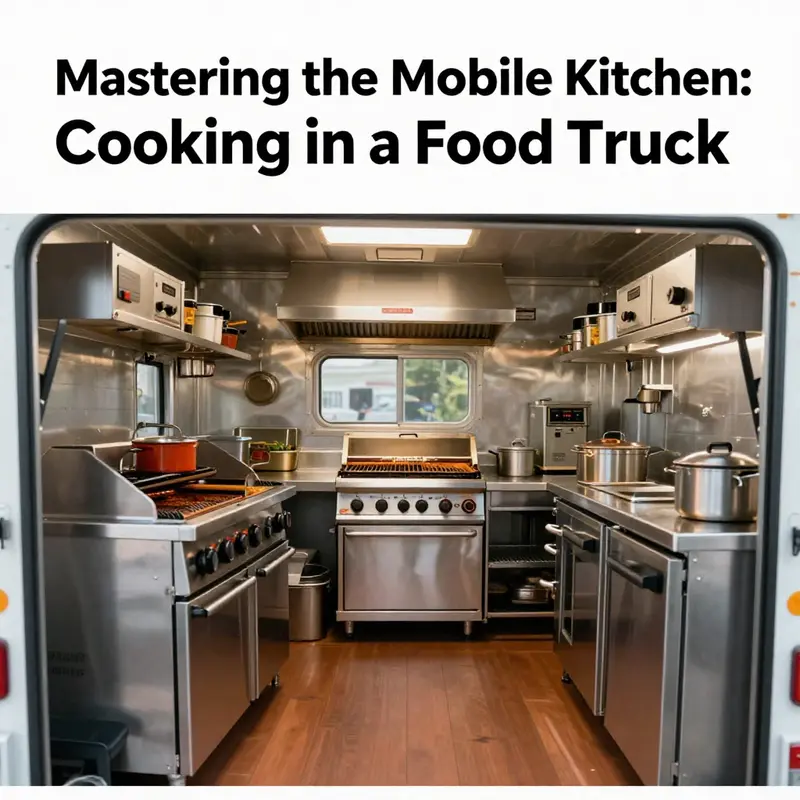
Choosing equipment for a food truck is more than picking a few appliances. It is about shaping a compact, efficient, safe, and compliant workspace that supports your menu, your pace, and your people. In a kitchen-on-wheels, every choice reverberates through service speed, consistency, and even the mood of your crew during a busy Friday night. The first step is to translate your menu into a gear map: what must heat, what must chill, and what needs both a quick browning and a steady plate. Deep fryers and griddles often become the backbone for popular comfort foods, while an oven or a combi oven broadens your capabilities for baking, roasting, or delicate steaming. Refrigeration, both a fridge and a freezer, is non-negotiable. Without reliable cold storage, ingredients waste, margins shrink, and food safety becomes a daily anxiety. The core idea is simple: select equipment that is durable, space-efficient, and adaptable to the evolving needs of your business.
The specificity of a mobile operation makes the process distinct from a fixed restaurant. Your equipment must withstand the constant motion of travel, the vibrations of a road and the shocks of potholes, and the temperature swings that come with unpredictable weather and long service days. Durability starts with materials. Look for 304 stainless steel for essential surfaces and frames. The material resists corrosion, cleans easily, and holds up under heavy use. Secure mounting is non-negotiable. In a truck, there is no room for equipment that shifts with every turn. Appliances should be bolted or affixed to a rigid chassis, with vibration dampening where possible to minimize wear and noise. These choices matter not just for longevity but for safety, especially when heavy units are involved and space is at a premium.
The power architecture of a food truck is another defining constraint. Most trucks rely on propane for cooking heat because of its portability and strong heat output, but the reality is more nuanced. A well-run truck plans power carefully. Propane tanks, regulators, and proper connections require routine checks and secure storage. On the electrical side, a dedicated panel with circuit breakers and proper grounding keeps the system safe. Depending on the truck’s design, you might operate 12V DC from the vehicle battery or 110V AC from a generator or external hookup. Energy efficiency matters as much as capability. Appliances with high energy demands must be matched to the truck’s capacity, with room for essential systems like refrigeration, lighting, and a POS setup. In some newer designs, solar integration can supplement the power plan, but it remains a thoughtful complement rather than a primary source for heavy equipment.
Ventilation sits at the intersection of safety, compliance, and comfort. A robust hood system is essential in any mobile kitchen. It must remove smoke, heat, and greasy fumes and carry them safely outside the vehicle. A grease management system within the hood helps keep the truck clean and reduces the risk of flare-ups. Fire suppression is not an optional add-on but a required safety feature that should be integrated into the installation plan. Gas-powered equipment demands meticulous attention to shut-off valves and professional installation aligned with safety codes. The goal is steady air movement that keeps the work area comfortable and the kitchen compliant with health regulations, while also preventing heat buildup that can degrade equipment and staff performance over a long shift.
Layout and workflow are inseparable from the equipment list. The kitchen must be organized around a logical flow—the classic work triangle translated into a compact mobile space. The main cooking stations should be positioned with proximity to prep surfaces and to storage. Fryers and griddles are typically the anchors of the hot zone, with ovens or combi ovens nearby for versatility. Refrigeration should be accessible but not in the prime path of traffic, to minimize unnecessary movement and reduce the risk of cross-contamination. Storage solutions, including modular shelving, pull-out drawers, and wall-mounted racks, should keep ingredients and utensils within arm’s reach without clutter. Cleanability is a persistent design constraint; every surface should be smooth, non-porous, and easy to sweep or mop. In a truck, even the floor matters—sloped sections help with drainage and reduce standing water that invites pests or odors.
Hygiene and sanitation are twin pillars of daily operations. A three-compartment sink is standard in a well-equipped mobile kitchen, enabling washing, rinsing, and sanitizing with a bench of clean water. Handwashing stations are essential for food handlers, with soap and paper towels readily available. Cross-contamination prevention becomes second nature when you set up dedicated cutting boards and color-coded utensils for raw proteins and ready-to-eat items. Clear labeling and a disciplined approach to storage prevent unnecessary errors. When you map out your equipment, you are also mapping a sanitation plan—where to wash, how to store, and how to dispose of waste responsibly. Waste management, including separate bins for garbage, recyclables, and compost where appropriate, should be integrated into the kitchen design and scheduling to prevent odors and pests during long service blocks.
Compliance and future-proofing thread into every practical choice. Local health departments require permits, inspections, and proof of a safe operation plan. Your equipment should meet sanitation standards, and your installation should reflect a documented approach to food safety. Beyond the immediate regulatory hurdle, there is the question of flexibility. A modular design and a compact form factor aren’t just about current efficiency; they are about being prepared for growth. If you add more menu items, you want to be able to reconfigure or swap in new components without a complete overhaul. This is where the mindset of choosing the right equipment becomes a broader strategic decision. It is not merely about what you can cook today, but about what you can reliably offer tomorrow without sacrificing speed or safety. As you navigate this decision, consider how the gear package aligns with the business model you are pursuing, including a realistic view of traffic patterns, peak times, and the potential need to pivot or expand.
Budget and value often emerge as the practical compass in this process. While it can be tempting to pursue the newest, flashiest equipment, the smarter approach weighs durability, ease of maintenance, and potential downtime against upfront cost. Mobile kitchens demand devices that withstand vibrations, frequent cleaning, and long hours of operation. Investments in high-quality joints, secure mounts, and materials that resist corrosion pay dividends in reliability and resale value. In addition, look for equipment that simplifies routine tasks and reduces the chance of errors, such as efficient heat distribution on a grill or a combi oven’s ability to perform multiple functions without adding separate machines. The cost equation extends beyond purchase price. Consider installation, maintenance contracts, fuel efficiency, and the energy demands of continuous refrigeration. When you balance these factors, you create a kitchen that stays true to your menu promises and your service standards, even at the end of a demanding shift.
The practical path to a well-equipped truck also involves testing and phased implementation. Rather than loading every appliance at once, start with a core set that covers your base menu and then layer in additional capabilities as you validate demand and workflow. This staged approach reduces risk and makes it possible to train staff on a stable system while you observe how the space operates under real-world conditions. It also opens a window to refine your plan, from how you lay out the work zones to the way you rate the speed of service on the street. In this sense, equipment selection is not a one-off purchase but a part of ongoing optimization that evolves with your business.
As you chart these decisions, it helps to anchor yourself to a broader guide that addresses the relationship between equipment and the overall vehicle package. For readers curious about how to think about the bigger picture of truck configurations, consider exploring a related resource that discusses choosing the right food truck model. This perspective helps ensure the equipment you select not only fits your current concept but also sits well within the long-term architecture of your mobile operation. Choosing the Right Food Truck Model.
In the end, choosing equipment for a food truck is about engineering a workflow that supports speed, safety, and consistency from the first order to the last. It means prioritizing durability, cleanability, and adaptability, while keeping a sharp eye on regulatory requirements and the realities of mobile service. The right combination of grater heat and precise cooling, of a compact, cleanable work surface and an exhaust system that actually works in a hot kitchen on wheels, turns a truck into a kitchen that can deliver on its promises—reliably and safely. It is a foundation, not a finish, and it sets the rhythm for the entire operation. When the gear fits well, staff smile, customers taste the difference, and the business runs with fewer hiccups, even on the busiest nights. As you move forward, let the menu tell the equipment story, and let the equipment tell the story of a kitchen that travels with purpose and pride.
External resource: For a broader view on safety and resilience in food operations, see Food Safety During Disasters. https://www.foodsafety.gov/food-safety-during-disasters
Fuel and Power on the Move: Designing a Reliable Energy System for a Mobile Kitchen
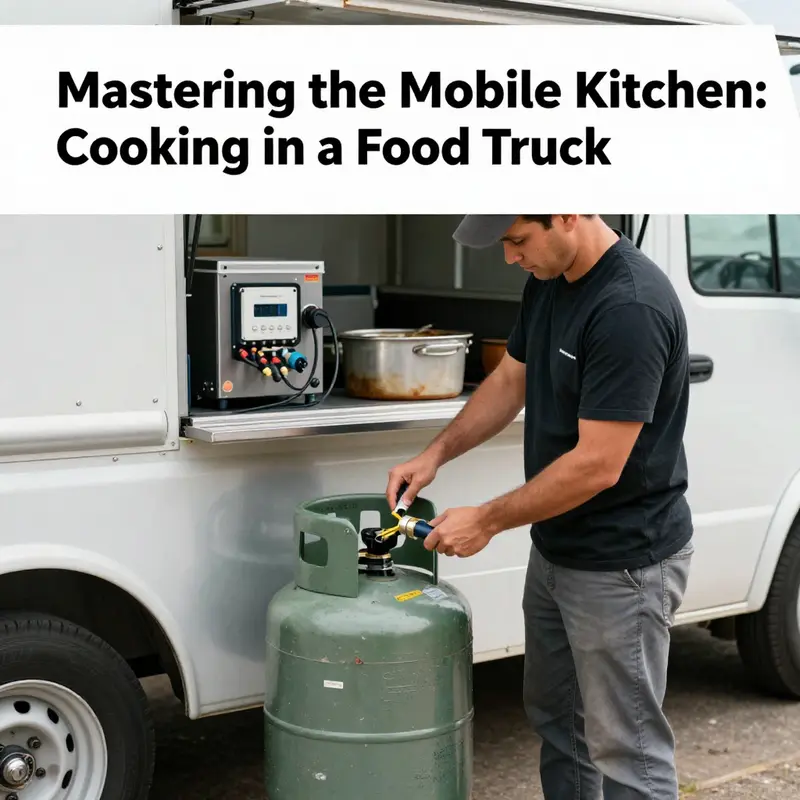
Moving a kitchen on wheels demands a thoughtful balance of heat, light, and reliability. The heart of a successful food truck operation is not just the dishes you serve, but the energy that keeps your stove hot, your refrigeration steady, and your service lights bright from dawn to dusk. In this chapter, we explore how to plan, build, and manage a fuel and power system that supports consistent cooking performance while staying safe, compliant, and cost-conscious. The aim is to help you create a kitchen that feels like a full studio inside a compact space, where every watt is accounted for and every drop of fuel is purposeful. The choice between electric and gas powered equipment isn’t a simple one. It hinges on the truck’s electrical infrastructure, the availability and cost of propane or other fuels, regulatory constraints, and the realities of your daily workflow. Electric solutions can deliver clean, precise heat and fast recovery, but they demand a robust electrical backbone. Gas, especially propane, offers portability and high heat output, which many chefs associate with the signature sear and crisp texture that define great street foods. In practice, most modern trucks pursue a hybrid model: induction or electric heat for warming and delicate tasks, complemented by propane for high-heat searing and rapid heat up. This hybrid approach leverages the strengths of both systems while providing flexibility when you park in locations with limited power or when you want to scale production during peak events. Think of your energy plan as a core pillar of your business design. It should align with your menu, service cadence, and location strategy. A truck that can perform consistently at a festival as well as in a neighborhood corner will need to sustain longer shifts, handle recurring peak loads, and recover quickly between rushes. It will also need backstop power and safety features that prevent a single failure from cascading into a service disruption or a health-and-safety risk. The practical architecture begins with a clear understanding of how much power your equipment requires during peak service. High-wattage appliances are the main drivers. A commercial griddle or a heavy-duty induction cooktop can demand several thousand watts when operating at full power. Fryers and ovens contribute similarly large loads. In many setups, these devices draw 3,000 to 5,000 watts each, with occasional surges that exceed base ratings. Planning for these loads means sizing your electrical system not just for normal operation, but for the inevitable rush moments when every burner is in use and your refrigeration cycles run continuously. Electric power on a truck is rarely a single source. A common backbone is a dual approach: a main 12-volt battery system or a shore power connection that can be used when parked at a permitted site, paired with a substantial generator to cover high-demand situations and to keep the battery bank charged during long days. A high-capacity inverter—the device that converts DC from the battery to AC to run appliances—helps smooth out the power supply and prevent dips that could cause temperature swings in the fridge or glitches in the POS system. When you size this system, you must consider not only the average draw but also peak surges. A 5,000–8,000 watt generator is a typical range for a mid-sized truck that runs several energy-intensive appliances simultaneously. For smaller operations, a 3,000–5,000 watt generator can be sufficient, but you must manage loads carefully and avoid long idle periods that waste fuel. Efficiency is not merely about power availability; it’s also about the heat you generate and the energy you waste. Induction cooktops have become a favored option for many mobile kitchens precisely because they convert electricity into heat with high efficiency and precise control. They heat rapidly, respond quickly to temperature changes, and remain relatively cool to the touch, reducing the thermal load inside the truck. Induction also enables better energy management because you can preheat less and cook more on-demand, which lowers overall consumption. Another efficiency lever is the lighting and ancillary systems. LED lighting, though small in isolation, can significantly reduce the draw on the power system over long shifts. When you illuminate a compact work area with traditional lighting, the energy waste compounds quickly and adds to the generator run time. Adopting LED fixtures, motion-sensing zones for prep and service, and even smart timers can shave hours off generator usage while preserving a bright, inviting customer space. The guidance from energy researchers in mobile food operations emphasizes building a power system that integrates well with on-board refrigeration, ice machines, heaters, and ventilation. A properly sized refrigeration unit is non-negotiable for food safety and product quality. It must stay below 40°F (4°C) to keep perishables safe, a constraint that pushes the electrical plan toward robust cooling capability and stable ambient temperatures. Refrigeration adds another layer of complexity because it cycles on and off, which creates electrical transients. A reliable battery bank or a dependable shore power feed can smooth these cycles and prevent temperature drift during busy periods. Safety is inseparable from capability. LPG systems must be designed and maintained with strict attention to leak detection, valve integrity, and secure mounting. Propane tanks should be fixed in a secure location with proper clearance, and regulators must be checked regularly for signs of wear or pressure issues. If a hybrid system is in place, operators should ensure that the interplay between electric and gas devices does not create conflicting demands on ventilation or exhaust systems. The ventilation hood, in particular, has to handle not only smoke and steam but also grease-laden air generated by high-heat cooking. A well-designed hood reduces heat buildup inside the truck and minimizes the risk of exhausting fumes into the street or workspace. A robust ventilation system works in concert with energy planning. If the setup calls for aggressive high-heat stages, you want to ensure the hood and ductwork are appropriately sized and that the exhaust fan maintains a steady flow under load. In practice, the energy plan should be reviewed as part of regular maintenance and incident preparation. Preseason checks should verify that the generator is in good mechanical shape, that gas lines are leak-tested, and that the battery bank remains within its expected voltage range. You want a plan that anticipates the unexpected: a misfiring burner, a tripped circuit, or a sudden weather change that demands more ventilation or more lighting. In these moments, your ability to adapt determines service continuity and safety. With this in mind, you can design a workflow that minimizes wasteful energy usage. Preheating should be purposeful, not habitual. If a recipe can move from rest to service without prolonged preheating, that saves energy and reduces wear on your electrical system. Timing is everything: coordinate cooking cycles so that you ramp up power only when needed, and stagger tasks to avoid simultaneous peak loads. A well-considered schedule can dramatically extend run times between fuel top-ups or generator runs, which translates to tangible savings and more reliable service. For operators concerned with the regulatory and safety landscape, the energy plan must align with local requirements and inspections. Training staff to recognize electrical and gas safety concerns reduces risk and gives the crew a sense of confidence during service. It also supports a consistent customer experience. If you want to deepen your understanding of how energy practices align with broader rules, you can explore resources such as Navigating Food Truck Industry Regulations, which covers licensing, inspections, and compliance considerations that intersect with equipment and fuels. For further guidance on energy efficiency beyond the basics, Sigma Earth offers practical recommendations for mobile food vendors, including tips on optimizing lighting, insulation, and power management. Navigating Food Truck Industry Regulations is a useful companion to this energy-focused planning, because your energy choices cannot be decoupled from the regulatory framework that governs where and how you operate. The larger picture is that power and fuel do not exist in isolation. They influence every other dimension of your business—from menu design and service pace to equipment longevity and total cost of ownership. A cohesive energy strategy reduces equipment downtime, lowers fuel costs, and improves food safety by maintaining stable temperatures and preventing heat or grease buildup that could compromise kitchen performance. When you assemble your truck with energy as a core consideration, you are making a statement about reliability and professionalism. Your customers experience consistent heat, well-controlled temperatures, and clean surroundings. Your team operates with confidence because the systems respond predictably under pressure. And you, as the owner or operator, gain a clearer path to profitability because your energy plan becomes a straightforward part of your daily operating rhythm rather than a recurring source of stress and last-minute improvisation. The path to a resilient mobile kitchen is never about chasing the single best piece of equipment. It is about crafting an integrated energy ecosystem that acknowledges the realities of street operation, the constraints of a small space, and the need to protect food safety and staff welfare. You balance electric and gas sources, size your power backbone to your typical service profile, and design the workflow so that every watt and every drop of fuel serves a purpose. It is a continuous optimization—revisiting load forecasts, monitoring generator run times, and updating procedures as your menu evolves and as you gain firsthand experience with the rhythms of your locations. In the end, the shape of your energy system mirrors the character of your food. It supports a menu that can adapt to popping lunch crowds, late-night cravings, or long festivals. It provides calm in the kitchen when the lines stretch and the heat rises. And it delivers steady, safe service that keeps you cooking and your customers coming back for more. External resource: for deeper energy efficiency insights tailored to mobile operations, see Sigma Earth energy efficiency tips for mobile food vendors at https://www.sigmaearth.com/energy-efficiency-food-truck/.
Mastering the Tight Work Triangle: Designing an Efficient Food Truck Kitchen
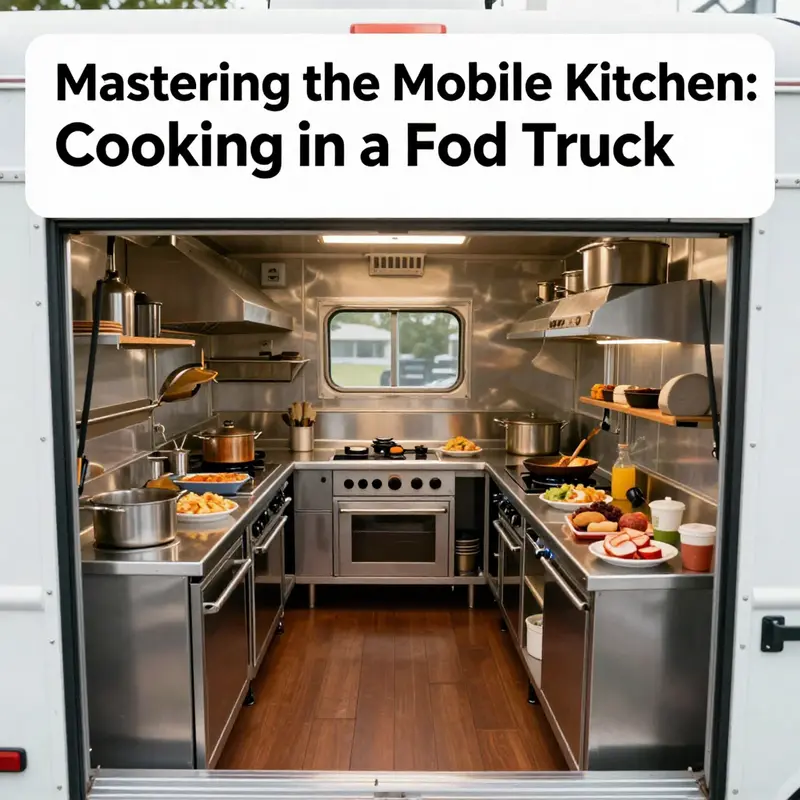
Every minute in a food truck counts, and every inch of space must pull its weight. The kitchen is more than a cooking space; it is a compact, high-stakes workflow machine where speed, safety, and sanitation hinge on layout. When you design a truck’s interior, you are scripting a daily performance: how ingredients move from storage to prep, how heat transforms them, and how plates reach the window without a hiccup. The chapter that follows considers the core principle that guides this script—the work triangle—and threads it through storage, prep, cooking, cleaning, and serving. The aim is not to squeeze as much as possible into a tiny box, but to choreograph a sequence of movements that feels almost instinctive to your team, even during peak hours.
At the heart of an efficient food truck kitchen sits a compact work triangle that links three core zones: storage, preparation, and cooking. This triangle should be tighter in a truck than in a brick-and-mortar kitchen, because every step you take adds up in a service cycle. In practice, aim for a perimeter that doesn’t balloon beyond roughly six meters, or about twenty feet, and strive to place these zones in a natural, intuitive sequence. The storage area should sit at the back or along a counter edge, keeping cold items within arm’s reach but out of the primary flow. The prep station should be immediately adjacent to the sink and nearby the cooking surface, so that diced onions, minced garlic, or marinated proteins can slide directly from cutting board to pan to flame without a detour. The cooking zone, whether a grill, griddle, or stove, must be positioned so that the cook can monitor heat and communicate with teammates without constantly moving around obstacles. When the work triangle is tight and familiar, a line of service worker feet can glide along the window line, delivering plates without blocking the cook’s path.
Maximizing vertical space is part of the same logic. In a truck, wall-mounted racks, magnetic strips for knives and metal tools, and tall, deep cabinets free precious counter real estate for food preparation and assembly. Every millimeter used for storage is a millimeter saved from clutter and wasted motion. Keeping frequently used items within a fingertip reach—spices at a wall shelf above the stove, oil bottles on a narrow ledge, common utensils on a magnetic strip—makes the entire operation feel smoother, almost choreographed. The goal is to reduce the need to bend, reach, or search. A well-planned vertical system also improves cleanability; shelves built flush to the wall minimize nooks where dust and grease accumulate, and allow easy wipe-downs between rushes.
The counter space in a mobile kitchen should tell a clear story of workflow. A primary prep area sits near the sink to facilitate washing and moisture control during ingredient handling. Immediately to its right, the cooking zone should invite a seamless transfer of prepared items onto the hot surface. You want to be able to scan from raw components to finished items without crossing paths or crossing streams of traffic. This unbroken workflow reduces misplays and near-misses during service and makes it easier to scale up during busy periods. An assembly and serving corner near the window is essential for final plating, garnishing, and quick handoffs to the front-of-house staff. There should be enough space to lay out platters, paper, and takeout containers without crowding the window or blocking the cooks’ movements. The unspoken criteria are simple: no obstructions, no jams, and no surprise trips for your team.
In practice, the placement of appliances matters as much as their power. The back of the truck often houses the heavy refrigeration, still with access to be reached without disturbing the main line of action. The refrigerator should be out of the main cooking corridor but easy to reach for quick stocking during service. The sink location benefits from proximity to a window or exterior vent for natural light and air exchange; this setup helps with disposal and reduces the feel of a small, enclosed space. The stove or grill needs durable, heat-resistant mounting and adequate clearance for heat dissipation, while still allowing the cook to observe the entire workstation. If you have a microwave, an oven, or a dishwashing option, put them where they won’t interrupt the flow of the core zones. The overarching aim is to minimize back-and-forth movement while preserving safety and efficiency.
Space planning should always be tied to safety. A clear, unobstructed pathway is non-negotiable. In most configurations, you should maintain a minimum walking space of about 90 centimeters, roughly three feet. This buffer keeps staff from jostling each other during busy service windows and makes emergencies easier to manage. Fire safety remains a central pillar. A readily accessible fire extinguisher is essential, and its location should be obvious to anyone on shift. Surfaces should be non-combustible where possible, and you should select countertop and cabinet materials that resist heat and grease. The design also bears on electrical and plumbing planning. Plan outlets, water lines, and drainage during the build; avoid reliance on extension cords and improvisation. A well-ordered layout reduces hazards and supports a hygienic workflow.
Hygiene and sanitation must be woven into every layout decision. The three-compartment sink is a universal standard for washing, rinsing, and sanitizing, and the handwashing station should be placed for quick access from both prep and cooking zones. Clear labeling and color-coded utensils help prevent cross-contamination, especially during fast-paced service. Waste management deserves equal emphasis. Designated bins for garbage, recyclables, and compost should be close enough to the serving window to prevent dumpster trips mid-shift, yet sealed and kept separate to control odors and pests. The goal here is discipline: a kitchen that encourages clean-as-you-go habits rather than a last-minute scramble to sanitize a chaotic workspace.
Beyond basic safety and hygiene, the layout should support a lean, repeatable service rhythm. Consider the crew size and the typical menu. A one-person operation will require a tighter, more linear flow; a two- or three-person team can sustain a controlled, segmented loop that maintains speed without crowding. In all cases, the design should anticipate the types of tasks that recur daily: washing produce, pre‑portioned ingredients, quick-cook items, and assembly tasks. This anticipation translates into a work surface that stays clear, a prep station that never overflows with tools, and a cooking zone that can deliver consistent heat without requiring the cook to back away from the line to fetch an item from behind.
The practical example you might turn to as you sketch your truck’s interior is a detailed design guide that analyzes real-world layouts and their outcomes. It helps translate theory into concrete measurements, recommended clearances, and workflow recipes you can adapt to your truck’s specific dimensions. If you want a quick primer on the truck layout approach, you can read the relevant thoughts at loschifladostruck.com/blog.
As you build toward a layout that feels intuitive, it’s valuable to imagine the day-to-day experience of the crew. The work triangle should feel like a well-rehearsed dance, with glances between the prep station and the cooking surface, and a steady rhythm of production that never feels rushed, only efficient. You can test ideas by sketching floor plans on graph paper or using simple digital tools to simulate movement paths. If your plan keeps you close to the window for quick plating and handoffs, and if every essential task—washing, cutting, searing, assembling—has a designated space with a clear line of sight to the window, you’re on the right track. The beauty of a good layout is that it reduces cognitive load. When staff don’t have to think about where a tool is or where a plate goes next, they focus on delivering consistent, high-quality food with every service.
Finally, remember that a kitchen is a living system. It evolves with your menu, your volume, and your crew’s strengths. Build in flexibility: allow room for a slightly larger prep area if you anticipate more complex components, or a more expansive window area if your service model emphasizes quick turnover and closer front-of-house interaction. The best layouts are adaptable, resilient, and, above all, human-centered. They support sustained performance without sacrificing safety or sanitation. The ultimate measure of success is not how many recipes you can run through the line, but how smoothly a team can move through a shift, how cleanly they can pivot when demand shifts, and how consistently diners receive a well-executed, hot plate at the window.
For readers seeking a detailed, practical example of the approach, a design guide from a respected industry resource provides deeper dimensions of layout strategy and tested configurations. External readers can explore the guide here: Kitchen layout guide.
Safe Service on Wheels: Practical Food Safety and Hygiene for Food Trucks
Safe Service on Wheels: Practical Food Safety and Hygiene for Food Trucks
Operating a food truck means cooking in tight quarters, under time pressure, and often in public view. That makes reliable food safety systems non-negotiable. The consequences of lapses are immediate: sick customers, fines, and damage to reputation. Research on mobile vendors at mass gatherings highlights predictable weak points. These include poor temperature control, surface contamination, and inconsistent hygiene routines. The solution is a simple, repeatable system that fits the rhythm of a busy truck. Implementing it keeps food safe and protects your staff and business.
Temperature control is the backbone of safe food handling. Bacteria multiply quickly in the temperature danger zone. Keep hot foods above 60°C and cold foods below 5°C. Use calibrated thermometers to verify internal temperatures during cooking and hot holding. Hold logs at regular intervals. Record readings every two hours during service. If a hot holding unit drops below 60°C, reheat foods to the correct temperature before serving or discard them. For cold items, never allow refrigeration to creep above 5°C. If a cooler’s temperature rises, move stock to backup refrigeration and check seals, door use, and power sources.
Time matters as much as temperature. Limit the time food spends in the danger zone. Use portioning strategies that reduce exposure, such as serving from insulated containers and replenishing from smaller batches stored at correct temperatures. Pre-portion sauces and garnishes in clean, covered containers to speed service and reduce handling. Train staff to avoid unnecessary door openings on refrigerators and to use timed rotation of cooked batches. When serving large crowds, plan for fast replenishment while maintaining safe holding temperatures.
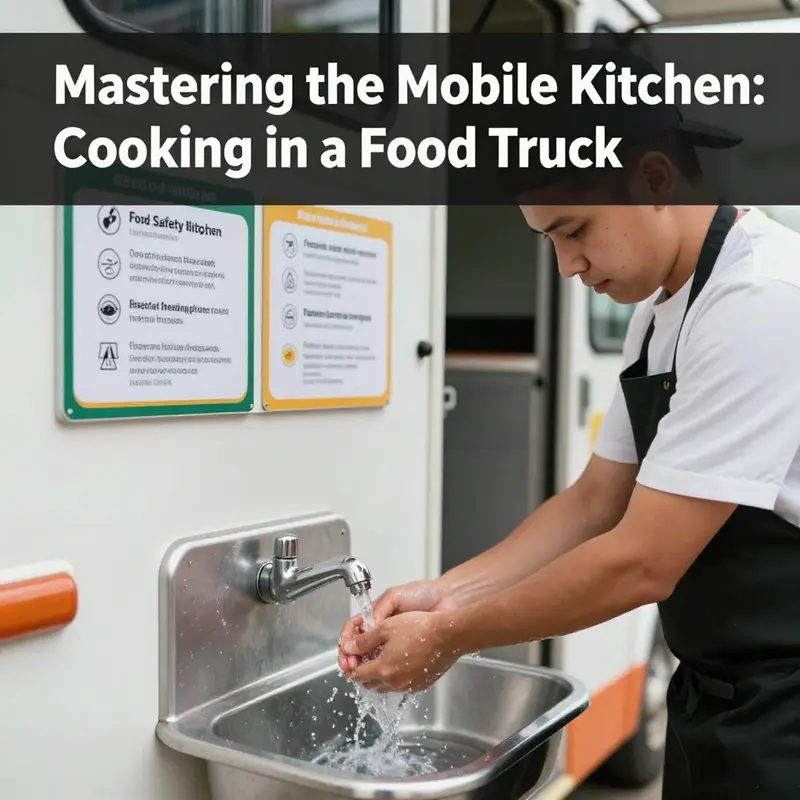
Cross-contamination is another common source of problems. Raw proteins often carry pathogens. Without strict separation, those microbes reach ready-to-eat foods. Design a clear workflow in the truck with distinct zones for receiving, preparation, cooking, and cleaning. Store raw meats below ready-to-eat items in refrigeration units. Use color-coded cutting boards and utensils for different food groups. Label them and keep them on wall racks for quick visual checks. After raw contact, surfaces and utensils must be cleaned and sanitized immediately. A three-compartment sink is essential: wash, rinse, and sanitize. Use sanitizing solutions at the correct concentrations and change them according to a schedule.
Personal hygiene is the human barrier against contamination. Handwashing stations must be accessible and well-stocked with soap and paper towels. Enforce handwashing before shifts, after handling raw food, after smoking or touching the face, and after any break. Train staff on the five-step handwashing method and set expectations for frequency. Gloves are useful, but they are not a substitute for handwashing. Teach staff to change gloves between tasks and to avoid wearing them for extended periods. Have a clear illness policy. Staff with vomiting, diarrhea, or fever should not handle food. Provide paid sick leave when possible to prevent presenteeism.
Cleaning routines stop microbes from accumulating. Create a daily cleaning schedule that lists tasks, frequencies, and responsible staff. Include high-touch areas like door handles, POS terminals, and service counters. Clean floors and drains frequently; standing water and food debris attract pests. Grease accumulation is a fire risk and a hygiene issue. Clean hoods and filters on schedule and keep grease traps emptied. Use appropriate cleaning agents and follow label instructions for contact time.
Waste management ties directly to hygiene. Place trash bins with secure lids inside and outside the truck. Empty interior bins often to prevent odors and pests. Provide separate containers for recyclables and compostables if required. Store external waste away from food entrances. If you operate at events, coordinate regular waste pick-ups. Use closed, insect-proof bins and consider adding lids with foot pedals for hands-free use.
Pest control prevents contamination and customer complaints. Keep doors closed or screened when possible. Seal gaps around entry points and fasten window seals. Store dry goods in sealed, elevated containers. Engage a pest control professional on a maintenance schedule, especially when operating in multiple locations. Document treatments and inspections as part of your recordkeeping.
Training builds consistency. Staff must know not only what to do, but why it matters. Conduct initial training on food safety basics, then reinforce with short, regular refreshers. Use demonstrations and checklists to train on handwashing, thermometer use, cleaning, and cross-contamination prevention. Run mock inspections to build comfort with real audits. Maintain certifications for at least one staff member as required by local rules. Clear, simple standard operating procedures reduce stress during busy shifts and ensure safe practices are followed.
Recordkeeping and documentation are not paperwork for paperwork’s sake. Logs prove you followed correct procedures. Keep temperature logs, cleaning schedules, maintenance records, and training certificates on board. Make them accessible during inspections. Calibrate thermometers monthly and log calibration checks. Keep records of grease trap cleanings and hood maintenance. These documents are also valuable when troubleshooting problems. They show patterns and help identify equipment failures or training gaps.
Equipment choices impact hygiene. Select appliances with smooth, non-porous surfaces that are easy to clean. Avoid unnecessary crevices where food particles collect. Install a proper ventilation hood to remove grease-laden vapors and reduce surface residue. Ensure plumbing supports a three-compartment sink and handwashing station. Maintain seals on refrigeration units and keep backup power plans for refrigeration. Plan propane storage carefully and inspect tanks and regulators. Safe fuel systems protect both people and food.
During mass events or long service runs, plan for higher throughput. Bring extra refrigeration capacity, or rotate chilled crates in insulated coolers with ice packs. Use insulated hot holding to keep food at safe temperatures during transport between prep and service sites. Consider a runner system inside the truck to move empty containers out and replenish fresh ones in a clean manner. Anticipate waste accumulation and arrange for more frequent removal.
Inspections and compliance vary by jurisdiction. Know the local rules before you operate. Many health departments publish guidance for mobile vendors. Maintain required permits and insurance. Be ready for spot checks. Treat inspections as opportunities to improve. If authorities flag issues, act quickly and document corrective steps. For details on local operating rules, refer to a practical local food truck regulations guide.
Safety also means planning for common emergencies. Have protocols for power outages, refrigeration failures, and suspected foodborne illness reports. If you lose refrigeration and cannot maintain 5°C, discard perishable items. If a customer reports illness, document the complaint, collect remaining samples if possible, and notify local health authorities. Train staff on how to handle chemical spills and burns, and keep first-aid materials on board.
Finally, a certified, visible commitment to safety builds customer trust. Display food safety certifications and offer transparency about your processes. Train staff to explain safe food practices when appropriate. Consistent safety practices reduce risk and make operations smoother. They also save money by avoiding waste and fines.
Adopt a system that fits your truck; make it simple, repeatable, and visible. Temperature control, cross-contamination prevention, rigorous cleaning, and staff training are the pillars. Keep logs, maintain equipment, and know local rules. A disciplined approach turns a cramped kitchen into a safe, efficient production line. That keeps your food delicious, your customers healthy, and your truck on the road.
For further guidance on mobile vending hygiene and compliance, consult the Food Standards Agency’s mobile vending resource: https://www.food.gov.uk/business-guidance/mobile-food-vending
Final thoughts
As the wheels of your food truck roll to event after event, the knowledge you’ve gained about cooking in a food truck will serve as the backbone of your success. By investing time in choosing the right equipment, managing your fuel and power needs, organizing your kitchen layout, and adhering to food safety standards, you supercharge your chances of delighting your customers and making a name in the culinary world. Get ready to bring smiles, flavors, and unforgettable experiences to all who cross your path.