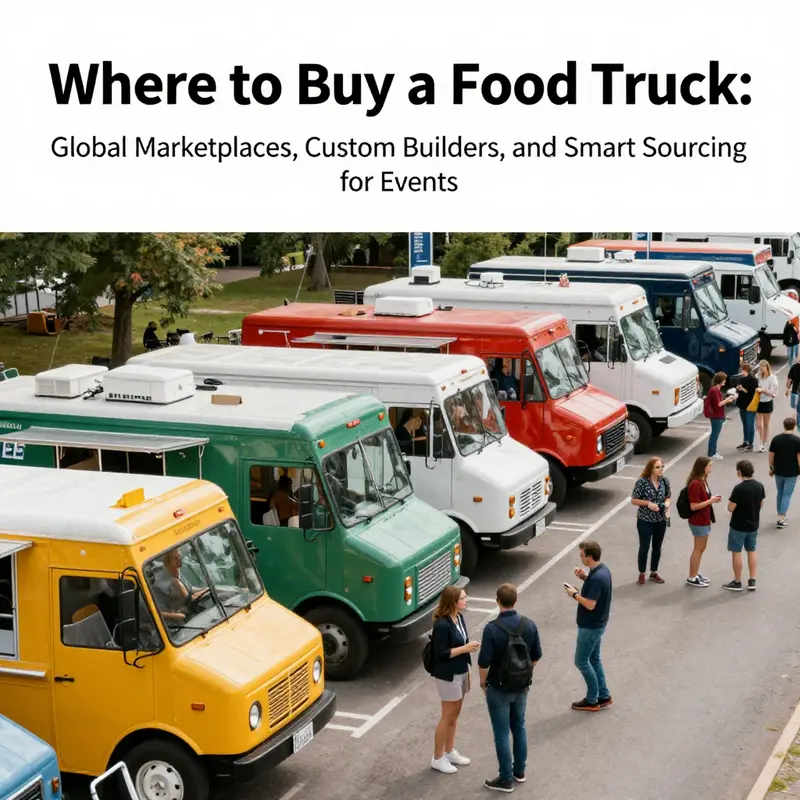
Mobility, flavor, and a little bit of showmanship come together when you bring a food truck to an event, campus, or community festival. Today’s marketplace makes it easier than ever to source a truck from around the world, tailor it to your branding, and navigate the logistics of packaging, shipping, and timelines. Whether you’re coordinating a large conference, an employee appreciation day, a neighborhood market, or a pop-up tasting tour, the question isn’t just whether to buy a food truck—it’s where to buy, who to trust, and how to tailor the purchase to your goals. This guide helps you move from “I’m interested” to “we’ve got the truck rolling” by outlining three clear angles. The first chapter looks at Global Marketplace and Supplier Options, where you’ll see a spectrum of platforms and manufacturers that handle everything from quick-turn carts to multifunctional units. The second chapter dives into Custom and European-Style Manufacturers, where you can invest in distinctive aesthetics, robust build quality, and refined layouts that align with your brand identity. The third chapter tackles Pricing, Shipping, and International Considerations, giving you practical steps for budgeting, choosing the right shipping method, and planning for cross-border transactions. Across all three chapters, you’ll find practical questions to ask, red flags to watch for, and tips to align the truck with your events calendar and community goals. The result: a smarter buying journey that supports memorable experiences, smooth operations, and a vendor network you can count on as you scale your mobile culinary program.
Chapter 1: Navigating the Global Market to Buy a Food Truck — From Online Marketplaces to Custom Builders
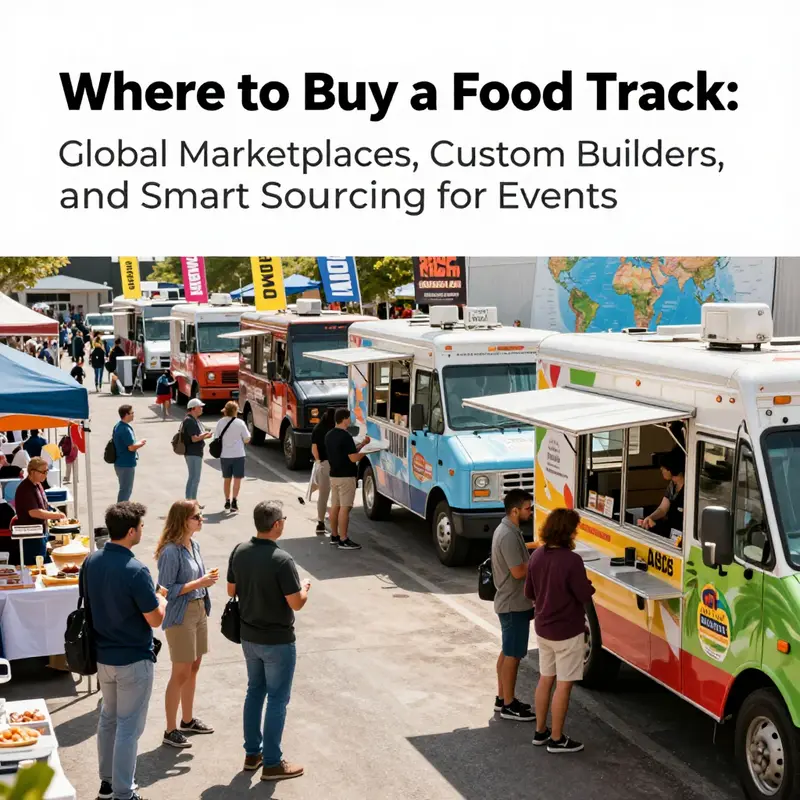
Buying a food truck is more than acquiring a vehicle; it is translating a culinary idea into a moving kitchen that must perform in diverse places, at crowded events, and under variable weather. The global market for mobile kitchens has expanded to meet that challenge, offering a spectrum of options from ready-to-work units to fully customizable rigs. You can find turnkey trucks that arrive with interiors already configured for grills, fryers, or steam, as well as build-to-spec solutions that let you design the kitchen around your menu, branding, and operational workflow. The choice hinges less on a single dimension—price—and more on a balance between cost, long-term reliability, regulatory compliance, and the capacity to evolve with your concept as markets shift. The result is a marketplace that rewards clarity of purpose as much as it rewards technical finesse in fabrication and layout design.
To navigate this landscape, you will encounter several broad pathways. There are established manufacturers with deep experience who can deliver competent, durable vehicles at scale. There are online marketplaces that connect buyers with a wide range of suppliers, including smaller shops that excel at customization. There are professional builders in major regions who can tailor every square inch of the interior—kitchen geometry, ventilation, plumbing, and utility loads—into a coherent whole. And there are refurbished or second-hand trucks that offer lower upfront costs for entrepreneurs who want to test a concept before committing to a new build. Each path has its own rhythm, lead times, and risk profile, but all share a common aim: translating a concept into a mobile operation that can consistently deliver food, speed, and experience wherever customers gather.
The global marketplace offers a breadth of options that can feel exhilarating and overwhelming at the same time. Some suppliers operate at scale from distant production hubs, delivering consistent quality and standardized processes. Others are smaller shops that bring specialized skills, distinctive finishes, or menu-specific configurations to the table. The practical upshot is that the market can accommodate both the lean, low-volume launch and the more expansive, brand-forward rollout. The tradeoff, of course, is time, logistics, and the degree of control you want over the kitchen’s articulation. A larger, more standardized supplier might move faster and provide a clearer warranty framework, while a boutique builder could tailor the interior with a level of detail that resonates with your brand and customer expectations.
Within this landscape, the decision about where to buy often becomes a question of how you balance speed with customization. If speed to market matters—getting a kitchen into operation for a marquee location or a major event—a turnkey unit with pre-installed kitchen components and compliance packages may be preferable. If your concept relies on a distinctive workflow or equipment that isn’t common, a customizable chassis and interior built by a specialist can be the better route. The market supports both approaches, with production networks and fabrication shops ready to accommodate diverse menus, service styles, and branding ambitions. The key is to identify a partner whose capabilities align with your menu, your service model, and your geographic footprint, because a truck is not just a vehicle; it is a platform for your entire business plan.
As you begin to map out your purchase, it helps to separate the decision into a few practical dimensions without losing sight of the bigger picture. First, consider the kitchen’s core requirements: the types of appliances you need, the anticipated throughput, the climate you must endure, and the ergonomic flow for staff who will move through the space all day. A well-conceived layout minimizes motion waste, speeds service, and reduces the risk of cross-contamination. Second, examine the power, water, and waste infrastructure. The electrical load has to be adequate not only for ovens and refrigeration but also for lighting, fans, and HVAC requirements that ensure a safe and comfortable working environment. Water capacity and waste management must be designed for the locations where you plan to operate, including potential off-grid sites or temporary footprints at events. Third, assess regulatory considerations: permits, inspections, equipment standards, and the certification processes that vary by country, state, or city. A supplier who can speak with confidence about these requirements and provide robust documentation will save you time and friction down the road.
A pivotal consideration is the relationship you build with your supplier. The truck you procure will remain in service for years, and parts, service, and upgrades are part of the total cost of ownership. The right partner will respond quickly with a transparent specification sheet, a realistic production timeline, and a clear warranty framework. They will discuss how their trucks are integrated into regulatory ecosystems that differ from jurisdiction to jurisdiction and will outline the pathways for spare parts, servicing, and training for your crew. That relational dimension—trust, responsiveness, and technical transparency—often equals the difference between a smooth launch and a costly detour caused by unexpected downtime or misaligned expectations. The global nature of the market makes this emphasis on partnerships even more critical, since a truck does not function in isolation; it travels across regions, sharing space with different electrical standards, water codes, and fire-safety requirements.
A practical way to approach supplier screening is to begin with a concise concept statement that captures your menu direction, service style, and target audience. Translate this into a one-page layout and equipment plan, including the interior arrangement, equipment footprint, electrical load, water and waste needs, and ventilation strategy. Use this document as a screening tool when you review quotes, checking for lead times, production flexibility, certification coverage, and after-sales support. If a supplier cannot provide a comprehensive, written response to these core questions, that is a signal to pause and push for more robust documentation before any commitment. A credible partner will offer not only a valid quote but also a path to ongoing cooperation—training for staff, a spare-parts plan, and a schedule for periodic inspections and updates as your concept evolves.
Another dimension to consider is the potential for cross-border logistics. When engaging with international suppliers, you will encounter varied shipping terms, customs documentation, and currency considerations. Some regions have well-developed export logistics and warranty service networks that can be mobilized across multiple markets. Others may require you to designate a local service partner to bridge the gap between production and everyday use. The reality is that the more you standardize your expectations—clear BOMs, defined warranties, and a shared language around safety and sanitation—the easier it becomes to compare options and align on a contract. The vendor that can present a transparent, auditable path from quote to delivery to operation is the one most likely to support you through the inevitable changes a growing business encounters.
If you are navigating this globally for the first time, you will also benefit from testing different supplier models and observing how they translate your concept into a physical form. Some buyers prefer a direct-from-factory engagement that can yield cost savings and shorter lead times, but this path may require more stringent due diligence on quality control, certifications, and the ability to secure after-sales support across borders. Others opt for regional distributors who offer local support networks, hands-on demonstrations, and a smoother interface for training and maintenance. The choice is less about one perfect solution and more about finding the right mix of price, reliability, and strategic alignment with your long-term goals. The market is generous with possibilities, but it rewards those who enter with discipline, curiosity, and a willingness to learn from every conversation.
As you integrate your concept with the realities of supply, you will increasingly hear the language of parameters and trade-offs. The kitchen must be functional yet forgiving: easy to clean, easy to service, and adaptable to staff with varying levels of experience. The chassis must be rugged enough to endure long days of operation and the vibration and heat of heavy equipment. Electrical and plumbing systems must be designed with redundancy and safety in mind, and they should be documented in a way that inspectors can understand quickly wherever your truck travels. You will also want to consider the resilience of the supply chain: how parts are sourced, how quickly replacements can be obtained, and how service networks respond when you need them most. In other words, your supplier choice is as much about the reliability of the partnership as it is about the truck itself. A well-chosen partner helps you navigate licenses, permits, insurance, and financing, especially when you operate across multiple jurisdictions. They help you translate your culinary vision into a vehicle that performs and preserves your brand’s promise under the pressures of service and the variables of an outdoor dining environment.
To help you move from intention to action, it is valuable to anchor your exploration to a few practical steps. Start by drafting a concise, three-sentence concept statement that captures your menu direction, service style, and target audience. Then translate that into a one-page set of specifications that defines the interior layout, equipment footprint, electrical load, and water and waste considerations. Use this document as a checklist when you review supplier quotes, asking pointed questions about lead times, production flexibility, certification standards, and after-sales support. If you encounter a supplier who lacks a matching response or hesitates to share essential compliance information, that is a signal to reassess or to push for more robust documentation before committing to a deposit. The aim is to move toward a short-list of credible partners with whom you can schedule live discussions, virtual walkthroughs, or site visits.
When you reflect on the trade-offs, remember that the true value of buying a food truck through a global marketplace or a dedicated builder is not simply a lower price or a flashier design. It is the capacity to bring your concept to life with predictable quality, consistent supply chains, and a clear path to ongoing optimization. A well-chosen partner helps you navigate the complexity of licenses, permits, insurance, and financing, especially when you operate across multiple jurisdictions. They help you translate your culinary vision into a vehicle that performs and preserves your brand’s promise under the pressures of service and the variables of an outdoor dining environment. The more you invest in due diligence upfront—the clarity of your menu, the detail of your layout, the realism of your budget, and the governance of your timelines—the more likely you are to experience a smooth launch, positive guest experiences, and sustainable growth.
For readers who want a quick reference as they compare options, the most practical next step is to review a guide that concentrates on choosing the right model and layout for your concept. It is a resource that consolidates layout patterns, equipment configurations, and workflow considerations into a usable framework. This step often precedes supplier outreach because it sharpens your questions and clarifies the specifications you will request in quotes. From there, you can begin to test relationships with potential partners, compare warranties, estimate total ownership costs, and chart a realistic route to profitability. The market is generous with possibilities, but it rewards those who enter with discipline, curiosity, and a willingness to learn from every conversation.
In the end, the question of where to buy a food truck is not a binary choice between a single supplier category. It is a strategic decision about how to secure a robust, scalable platform for your culinary idea. You may begin with one path and expand into others as your confidence grows, or you may blend approaches from the start: a turnkey package to hit the ground running in your primary location, complemented by a relationship with a builder who can customize and support you as your concept expands. The market supports that versatility, offering pathways that can adapt as you learn what works in practice. The key is to maintain a clear, testable specification framework and to protect your business with a realistic schedule for testing, iteration, and eventual scale.
As you integrate your concept with the realities of supply, you will increasingly hear the language of parameters and trade-offs. The kitchen must be not only functional but also forgiving: easy to clean, easy to service, and compatible with a staff that has limited downtime. The chassis must be rugged enough to withstand long days of operation and the vibration and heat of heavy equipment. The electrical and plumbing systems must be designed with redundancy and safety in mind, and they must be documented in a way that inspectors can understand quickly wherever your truck travels. You will also want to consider the resilience of the supply chain: how parts are sourced, how quickly replacements can be obtained, and how service networks respond when you need them most. In other words, your choice of supplier is as much about the reliability of the partnership as it is about the truck itself.
To help you move from intention to action, it is valuable to anchor your exploration to a few practical steps. Start by drafting a concise, three-sentence concept statement that captures your menu direction, service style, and target audience. Then translate that into a one-page set of specifications that defines the interior layout, equipment footprint, electrical load, and water and waste considerations. Use this document as a checklist when you review supplier quotes, asking pointed questions about lead times, production flexibility, certification standards, and after-sales support. If you encounter a supplier who lacks a matching response or hesitates to share essential compliance information, that is a signal to reassess or to push for more robust documentation before committing to a deposit. The aim is to move toward a short-list of credible partners with whom you can schedule live discussions, virtual walkthroughs, or site visits.
When you reflect on the trade-offs, remember that the true value of buying a food truck through a global marketplace or a dedicated builder is not simply a lower price or a flashier design. It is the capacity to bring your concept to life with predictable quality, consistent supply chains, and a clear path to ongoing optimization. A well-chosen partner helps you navigate the complexity of licenses, permits, insurance, and financing, especially when you operate across multiple jurisdictions. They help you translate your culinary vision into a vehicle that performs and preserves your brand’s promise under the pressures of service and the variables of an outdoor dining environment. The more you invest in due diligence upfront—the clarity of your menu, the detail of your layout, the realism of your budget, and the governance of your timelines—the more likely you are to experience a smooth launch, positive guest experiences, and sustainable growth.
For readers who want a quick reference as they compare options, the most practical next step is to review a guide that concentrates on choosing the right model and layout for your concept. It is a resource that consolidates layout patterns, equipment configurations, and workflow considerations into a usable framework. This step often precedes supplier outreach because it sharpens your questions and clarifies the specifications you will request in quotes. From there, you can begin to test relationships with potential partners, compare warranties, estimate total ownership costs, and chart a realistic route to profitability. The market is generous with possibilities, but it rewards those who enter with discipline, curiosity, and a willingness to learn from every conversation.
In the end, the question of where to buy a food truck is not a binary choice between a single supplier category. It is a strategic decision about how to secure a robust, scalable platform for your culinary idea. You may begin with one path and expand into others as your confidence grows, or you may blend approaches from the start: a turnkey package to hit the ground running in your primary location, complemented by a relationship with a builder who can customize and support you as your concept expands. The market supports that versatility, offering pathways that can adapt as you learn what works in practice. The key is to maintain a clear, testable specification framework and to protect your business with a realistic schedule for testing, iteration, and eventual scale.
As you integrate your concept with the realities of supply, you will increasingly hear the language of parameters and trade-offs. The kitchen must be not only functional but also forgiving: easy to clean, easy to service, and compatible with a staff that has limited downtime. The chassis must be rugged enough to withstand long days of operation and the vibration and heat of heavy equipment. The electrical and plumbing systems must be designed with redundancy and safety in mind, and they must be documented in a way that inspectors can understand quickly wherever your truck travels. You will also want to consider the resilience of the supply chain: how parts are sourced, how quickly replacements can be obtained, and how service networks respond when you need them most. In other words, your choice of supplier is as much about the reliability of the partnership as it is about the truck itself.
To help you move from intention to action, it is valuable to anchor your exploration to a few practical steps. Start by drafting a concise, three-sentence concept statement that captures your menu direction, service style, and target audience. Then translate that into a one-page set of specifications that defines the interior layout, equipment footprint, electrical load, and water and waste considerations. Use this document as a checklist when you review supplier quotes, asking pointed questions about lead times, production flexibility, certification standards, and after-sales support. If you encounter a supplier who lacks a matching response or hesitates to share essential compliance information, that is a signal to reassess or to push for more robust documentation before committing to a deposit. The aim is to move toward a short-list of credible partners with whom you can schedule live discussions, virtual walkthroughs, or site visits.
When the moment comes to take the next steps, the decision of where to buy your food truck will feel less like a risk and more like a pathway to launching your culinary concept with confidence. It is a decision that binds suppliers, logistic networks, and field operations into a single moving asset that must perform under the pressures of service, the variability of weather, and the expectations of a brand. The best outcomes arise when you approach the process with consistent standards, transparent communication, and a willingness to iterate. The market accommodates those traits, and the right partner will help you translate your menu, your service model, and your brand story into a mobile platform that travels with you toward growth.
For readers who want a quick reference as they compare options, the most practical next step is to review a guide that concentrates on choosing the right model and layout for your concept. It is a resource that consolidates layout patterns, equipment configurations, and workflow considerations into a usable framework. This step often precedes supplier outreach because it sharpens your questions and clarifies the specifications you will request in quotes. From there, you can begin to test relationships with potential partners, compare warranties, estimate total ownership costs, and chart a realistic route to profitability. The market is generous with possibilities, but it rewards those who enter with discipline, curiosity, and a willingness to learn from every conversation.
In the end, the question of where to buy a food truck is not a binary choice between a single supplier category. It is a strategic decision about how to secure a robust, scalable platform for your culinary idea. You may begin with one path and expand into others as your confidence grows, or you may blend approaches from the start: a turnkey package to hit the ground running in your primary location, complemented by a relationship with a builder who can customize and support you as your concept expands. The market supports that versatility, offering pathways that can adapt as you learn what works in practice. The key is to maintain a clear, testable specification framework and to protect your business with a realistic schedule for testing, iteration, and eventual scale.
As you finalize your approach, consider that a major benefit of engaging with the global market is exposure to a range of pathways for financing, leasing, and insurance. Some buyers find it advantageous to structure an arrangement that connects a long-term asset purchase with capital-efficient operating plans. Others may prefer phased deployments, where a second truck or a second concept is introduced after the first unit proves the concept’s viability. Regardless of the chosen path, a disciplined, data-informed approach will help you optimize your investment and align your procurement with your commercial milestones. The chapter that follows will delve into how to assess permits, financing options, and launch planning to ensure your purchase translates into a successful, scalable business opportunity.
For readers who want a quick reference as they compare options, the most practical next step is to review a guide that concentrates on choosing the right model and layout for your concept. It is a resource that consolidates layout patterns, equipment configurations, and workflow considerations into a usable framework. This step often precedes supplier outreach because it sharpens your questions and clarifies the specifications you will request in quotes. From there, you can begin to test relationships with potential partners, compare warranties, estimate total ownership costs, and chart a realistic route to profitability. The market is generous with possibilities, but it rewards those who enter with discipline, curiosity, and a willingness to learn from every conversation.
In closing this overview, you are reminded that buying a food truck is not merely a purchase; it is a collaboration across borders, trades, and technical disciplines. It is an entry into a market that prizes speed, safety, cleanliness, and branding, all folded into a rolling kitchen that must meet the demands of busy customers at the moment they decide to eat. The chapters that follow will help you translate this global mosaic into a local plan: how to assess permits in your city, how to finance the purchase, how to stage a launch, and how to prepare for the inevitable learning curve. But at this stage, the central message remains clear. The world offers a spectrum of options to suit every concept and budget, and the task is to source a partner who can translate your menu and your culture into a trustworthy, mobile platform that will carry your business forward.
If you want a practical path as you begin, consider reading the guide on Choosing the Right Food Truck Model for more specifics on layout planning and equipment planning that align with your concept. Choosing the Right Food Truck Model. If you wish to broaden your understanding of how global trade shows shape supplier relationships, you may explore international expo resources at SIAL Paris. SIAL Paris.
Buying a Custom or European-Style Food Truck: Where to Find Bespoke Mobile Kitchens
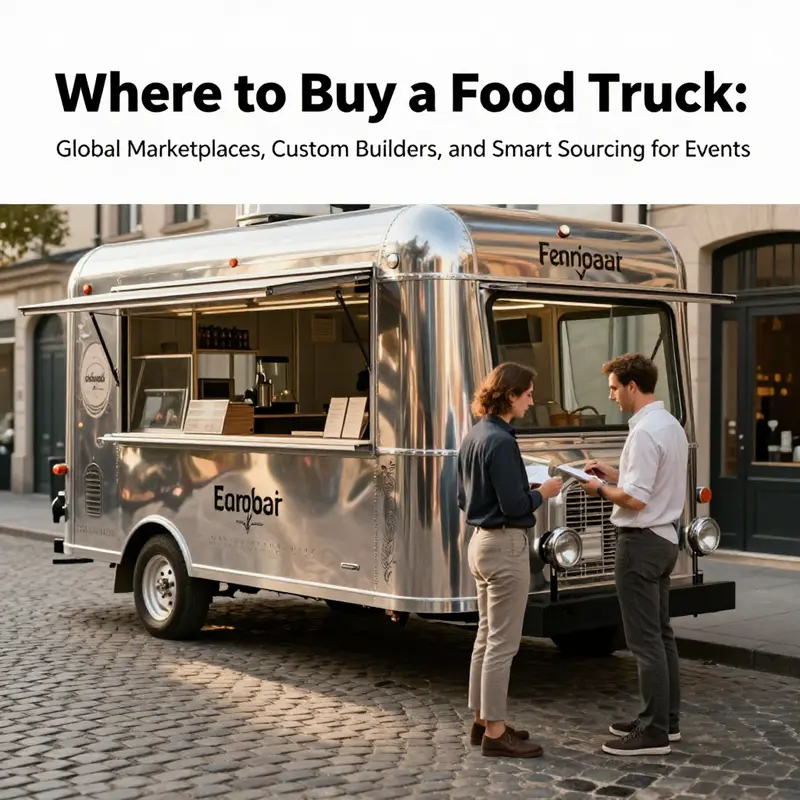
When your vision for a mobile food business goes beyond a basic converted van, knowing where to buy a truly custom or European-style food truck becomes essential. Manufacturers across Europe and specialist builders elsewhere offer tailored solutions that combine durability, efficient layouts, compliance with hygiene rules, and a design that broadcasts your brand. Finding the right supplier means balancing design preferences, technical needs, delivery logistics, warranties, and cost. This chapter walks through how to identify reputable custom and European-style manufacturers, what to expect from the build process, and practical considerations that help you choose a truck that works for your menu, your markets, and your budget.
The search for a custom food truck typically starts with a clear brief. Think of the truck as a compact restaurant: you need a workflow that suits your menu, sufficient power and ventilation for your equipment, and a service window layout that matches how you plan to sell. Good manufacturers ask detailed questions about menu volume, peak service times, power sources, water needs, and local health-code requirements. They translate those answers into a design that balances ergonomics, safety, and brand presence. European-style builders often emphasize compactness and maneuverability without sacrificing kitchen capability, since many urban pitches demand slim footprints and easy parking.
Quality matters in materials and systems. European and specialist custom manufacturers typically use stainless steel for interior surfaces, food-grade insulation, and reinforced subframes that cope with heavy equipment and constant movement. Flooring choices favor non-slip, easy-clean materials. Plumbing and drainage are designed with local code compliance in mind. Electrical systems are laid out to support professional appliances, usually with separate circuits for heavy loads and properly rated inlets for shore power. In many cases, manufacturers offer integrated solutions: undercounter refrigeration installed to manufacturer specs, inline grease traps, and ventilation systems sized to the cooking equipment you plan to use. These technical details keep your daily operation efficient and reduce the risk of costly refits later.
Customization is the main value of working with a dedicated builder. You can choose the kitchen layout, specify the exact combination of equipment—grills, griddles, fryers, ovens, coffee machines—and determine storage and prep areas. Exterior choices are equally important. Panel finishes, window placement, lighting, and serving counters affect customer experience and brand visibility. European-style trucks often feature thoughtful design touches: streamlined service hatches, fold-out counters that increase serving area without increasing parked width, roof-mounted ventilation integrated with solar arrays, and compact, elegant exteriors that echo cafe or bistro aesthetics. When you discuss options with a manufacturer, ask for drawings and 3D renders; seeing the design helps you spot inefficiencies before fabrication begins.
Lead times vary, and so do production capacities. Some bespoke manufacturers accept only a limited number of full custom projects annually, offering a high level of handcrafting and individualized attention. Others maintain modular lines that speed delivery while still allowing meaningful customization. Confirm realistic delivery windows up front and get them in writing. A longer lead time can mean better fit-and-finish, but if you need a truck fast, consider semi-custom builds that adapt proven chassis and interiors to your needs. Remember that production time does not include shipping, customs clearance, or any required local modifications to meet local regulations.
Regulatory compliance is a frequent stumbling block for international buyers. European manufacturers generally build to EU standards for electrical safety, gas installations, and food hygiene, which helps buyers operating in EU markets. If you purchase from outside your operating country, you will still need local approvals for vehicle roadworthiness and food-service compliance. Share local code requirements with the builder early. Many reputable manufacturers have experience exporting trucks and can advise on documentation, such as CE markings, wiring diagrams, and appliance certifications. They may also offer options to equip the truck with features required by specific markets, like particular water heater types or waste-handling arrangements.
Power systems deserve careful attention. European-style food trucks increasingly combine shore power compatibility with alternative energy sources to reduce generator use. Solar panels and lithium battery banks can support lighting, POS systems, and refrigeration for limited durations. However, high-draw appliances—fryers, high-demand ovens, and espresso machines—still require substantial electrical capacity. Work with your builder to size generators, inverters, and battery systems to match your menu’s peak requirements. Designers who understand current flow and thermal loads will help prevent voltage drop and overheating. If you plan to run gas appliances, check the builder’s certification and ensure proper ventilation, flame supervision devices, and installation of gas detectors where required.
Materials and build techniques influence long-term resilience. A truck built on a reinforced chassis and fitted with properly mounted equipment avoids constant vibration issues and repeated repairs. Interior joins sealed against water ingress and well-planned waste drainage prevent mold and corrosion. Roofing and exterior seams should be weatherproof, especially if you plan to operate in wet climates. Ask for references and, where possible, inspect previous builds from the manufacturer or request videos of the manufacturing and assembly process. Warranties vary widely; a longer warranty on the structure and key systems signals confidence from the builder but verify what is covered and whether labor or shipping costs are included for warranty repairs.
Cost transparency helps avoid surprises. Custom trucks have variable pricing depending on chassis type, equipment list, degree of finish, and shipping. Obtain detailed quotes that separate base vehicle cost, interior fit-out, appliances, electrical systems, and shipping. Ask about common add-ons that can increase the final bill: refrigeration upgrades, additional ventilation, branded wraps or specialized paint, and import taxes. For international purchases, clarify who arranges and pays for export documentation, port handling, and inland transport. In some cases, manufacturers offer turnkey packages including transport and local registration assistance for an added fee.
When evaluating manufacturers, prioritize experience and a strong portfolio. Look for suppliers who specialize in commercial-grade installs rather than those who primarily do novelty builds. Commercial-focused builders understand the stresses of daily food-service use and design for easy maintenance. Ask for client testimonials and contact details for recent customers. If a factory does a mix of retail and custom work, consider whether their production scale matches your expectations for quality and delivery.
Comparing local versus international manufacturers involves trade-offs. Local manufacturers simplify logistics and can often meet you face-to-face for design signoffs. They may better understand local regulations and offer faster post-delivery support. International manufacturers, including some European and overseas specialists, can offer unique design features, cost advantages for certain equipment, and access to different styling cues. If you work with an overseas builder, arrange for clear communication channels and milestones. Use photo and video updates to follow progress. Consider hiring an independent inspector at the point of shipment to verify fit and function before the vehicle leaves the factory.
Financing and total cost of ownership should factor into your choice. Custom builds can carry higher upfront costs but may deliver superior operational efficiency that reduces labor and energy expenses over time. Consider how the truck’s layout impacts staff movement, service speed, and cleaning time. A well-organized build reduces the number of hands needed to manage rushes and lowers the risk of service errors. Discuss maintenance plans with the manufacturer; some offer scheduled service packages or supply chains for replacement parts. A clear maintenance plan helps you budget and protects the truck’s resale value.
Sustainability is becoming a differentiator in food truck design. Many European-style manufacturers incorporate energy-efficient appliances, LED lighting, and thoughtful insulation to reduce power needs. Solar panels and battery systems can reduce generator hours, quiet operations, and improve the customer experience. Water-saving fixtures and gray-water management options also appear frequently in modern builds. If sustainability matters to your brand, make it a design requirement and ask builders to model projected energy use. That helps you weigh the upfront cost of green technologies against long-term fuel and generator savings.
Branding and customer-facing design are central to success in competitive markets. A custom builder can integrate signage areas, menu boards, and lighting into the truck’s architecture. Material choices, color schemes, and service-window ergonomics all affect how customers perceive your business. Request mock-ups or virtual wraps to preview branding in context. Consider visibility from different angles—customers often decide to buy within seconds, and clear, well-lit branding helps you stand out in busy urban landscapes or festival fields.
Logistics after purchase shape how soon you can operate. Factor in registration, insurance, and necessary local inspections. If the truck was built abroad, account for customs clearance, vehicle homologation where required, and any modifications mandated by local authorities. Some manufacturers partner with logistics providers or offer import assistance for an additional fee. If you must complete final compliance work locally—such as setting meter calibrations, installing locally certified fire suppression systems, or fitting localized signage—build extra time and cost into your launch plan.
Finally, plan for growth. A custom or European-style build that anticipates future menu changes and volume growth saves money later. Modular designs that allow for equipment swaps, added refrigeration, or larger power inlets are smart investments. Discuss upgrade pathways with your manufacturer: can you easily add a second service window? Is there space to install a larger oven down the road? Forward-thinking designs keep your truck adaptable as your concept evolves or as regulations change.
For a curated selection of European and custom food truck options, including virtual tours and manufacturer contact details, explore this comprehensive marketplace of mobile food trucks. It showcases both ready-to-use units and fully customizable builds across the EU and helps connect buyers with builders who specialize in commercial-grade, stylish mobile kitchens.
Internal resource: For guidance on selecting the base vehicle and model type that fits a custom build, see Choosing the Right Food Truck Model (https://loschifladostruck.com/choosing-the-right-food-truck-model/).
External reference: https://www.foodtruckdirect.com
Between Price Tags and Port Permissions: A Practical Guide to Where to Buy a Food Truck, and How Shipping and Regulations Shape Your Move
Buying a food truck is not a one-step purchase. It is a journey that begins with a price tag and ends in a working kitchen on wheels that meets the local rules, the right engines, and a schedule that aligns with your business plan. The question of where to buy a food truck sits at the heart of that journey because the source you choose determines not only the upfront numbers but the logistics, the risk, and the day-to-day feasibility of getting your business off the ground. A globally enabled market expands options far beyond the local dealer, but it also multiplies the unknowns. You may find a chassis, a shell, a fully equipped kitchen, or a turnkey operation across oceans and time zones. The opportunity is clear: you can source designs and components that fit your brand, your target location, and your price tolerance. The challenge is to build a coherent plan around pricing, shipping, and the regulatory environment that awaits once the truck lands at the curb. The chapters that follow revolve around this triad—price, transport, and policy—so you can move from idea to ignition with a framework that keeps you in control even as the horizon expands. To begin, imagine two broad paths: a domestic purchase that emphasizes speed and local service, and an international path that opens a wider supplier universe but demands deeper planning, currency awareness, and a broader set of due diligence checks. Both routes share a common core: the total cost of ownership. When you sit down to price a food truck, you are not just considering the sticker price. You are calculating a lifecycle that includes the base vehicle, the upfit scope, equipment selection, compliance features, financing, insurance, permits, and the time-to-operational window. The more you codify these elements, the more you protect your capital and your time. On the pricing front, the base platform categories remain consistent across markets. You can choose a simple shell or a minimally equipped platform that invites you to upfit gradually. Or you can opt for a fully engineered kitchen on a robust chassis, designed to run high-volume services and support a strong menu. Comparative pricing will vary by region, but the consensus across markets is instructive: a used base vehicle can range from tens of thousands to well into six figures, depending on age, condition, and region. A basic upfit to a functional mobile kitchen often sits in the tens of thousands to the mid six figures, while a fully equipped kitchen on a proven platform commonly lands in the six figures range, sometimes higher in premium markets. For new or premium custom builds, the price can exceed the mid six figures and approach or surpass three hundred thousand dollars when the scope includes a new chassis, top-tier equipment, and extensive branding. These numbers are rough anchors; the precise figure depends on your equipment list, the fuel type, the electrical demand, the plumbing complexity, and the energy efficiency of the systems you select. They also hinge on the form factor you choose—whether a step van, a box truck, or a trailer—and the level of insulation, ventilation, and fire safety required in your operating locale. Beyond the upfront price, the total cost of ownership begins to shape the decision long before you place an order. Fuel efficiency and maintenance costs will accumulate as you travel from event to event, and insurance premiums will reflect usage, territory, and the expected risk profile of your routes. Permits, health inspections, and license fees occur not once but repeatedly as you expand into new jurisdictions. The upfront budget must include reserves for contingency, because even well-planned builds encounter surprises—an unexpectedly lengthy lead time, a well-publicized permit update, a change in health codes, or a supplier delay that pushes your launch window. When you are considering international sourcing, the calculus shifts again. The base price may be attractive, but you must add the costs of international transport, duties, and the likely need for post-arrival installation and commissioning. The shipping method you select makes a meaningful difference in risk, timing, and protection of your interior. Roll-on/roll-off shipping may be cheaper and simpler for some turnkey units but offers less protection for interiors than container shipping, which allows more controlled handling and easier inland transport once the unit arrives. For most fully built units with customized interiors, container shipping paired with a clear set of disassembly requirements is a prudent choice because it preserves interior fixtures during transit and reduces the likelihood of damage during port handling. Lead times are another critical dimension. Domestic moves can be compressed to a few weeks if the unit is already built and ready for delivery, whereas international paths usually stretch into months, factoring in production time, ocean transit, port congestion, customs clearance, and inland trucking. The potential savings on the purchase price can be offset by longer wait times and higher working capital requirements as you wait for your truck to arrive, pass inspections, and receive final commissioning. Insurance is a constant companion on any path. Transport insurance for the unit in transit is essential, and depending on the contract, you may need additional coverage for post-arrival installation and commissioning. International deals typically demand marine cargo insurance that covers theft, damage, and loss across multiple handling points, including inland transport once landed. You should also think through service availability and spare parts. A unit sourced internationally may require parts that are not stocked locally, which can alter maintenance lead times and increase the risk of downtime. Begin with questions about the supplier’s after-sales support and whether they provide international warranty coverage or a service window and remote support. The quality and reliability of the interior systems matter just as much as the structural integrity of the chassis. The upfit scope—what you install in the shell, how you route electrical and plumbing, what kind of hood and ventilation you use, and how you ensure waste handling—will define your day-to-day operation, your energy consumption, and your compliance footprint. When you negotiate, insist on an itemized bill of materials, with drawings of the kitchen layout and a clear warranty and service agreement. If you are buying a used shell, request a mechanical inspection and a proof of maintenance records, and set expectations about what will be replaced or upgraded before you launch. If you are purchasing a new or fully upfitted unit, require a staged delivery and commissioning plan, with milestones for electrical, plumbing, gas, and fire-safety testing. The sheer variety of options means you should build a comparison framework. Compare apples to apples by aligning the upfit scope, brand choices for critical equipment, and the terms of warranties and service. A phased procurement path can be a prudent option if cash flow is a concern: begin with a shell or a partially equipped unit and add equipment in stages as you validate demand and secure revenue streams. In international deals, the contract terms matter as much as the equipment. Clearly define who bears the risk at each stage, what meals you can expect to cover under warranty, and how post-sale support will be delivered across borders. The incoterms you choose in the contract will determine who pays duties and when risk transfers from seller to buyer. If you are new to international purchases, consider engaging a freight forwarder and a customs broker to help navigate documentation, labeling, and clearance. You should also have a plan for currency risk management, including whether pricing is set in your home currency or the seller’s currency, and whether you have the option for currency hedging or fixed-rate arrangements to avoid sudden price swings as the deal unfolds. From a regulatory standpoint, the landscape shifts by country and by state or province. Vehicle safety, emissions, fire and sanitation standards, and electrical installations all require attention before the truck ever hits your test kitchen stage. For example, local health authorities may require inspections of sinks, food prep surfaces, drainage, and wastewater management. The electrical system may need to meet specific voltage and grounding standards, while the fire suppression system must be installed and certified according to regional codes. Every jurisdiction has its own set of import procedures, documentation, and potential exemptions or duties. In addition to the physical and procedural checks, consider the broader market-entry questions: does the destination market encourage or restrict foreign food trucks, what are the licensing timeframes, and how long does it take to obtain a health permit, a business license, and a street-use permit for daily operation at the sites you intend to frequent? These questions shape not only the initial launch but the scalability of your concept as you expand across neighborhoods or regions. The decision to buy domestically vs. internationally should be guided by both your risk tolerance and your appetite for managing complex logistics. A domestic purchase often delivers speed and easier access to service networks, with closer oversight of build quality and a simpler permit path. An international route can provide access to specialized layouts, branding opportunities, and potentially lower equipment costs, but it requires a robust risk management framework: due diligence on suppliers, inspection protocols before shipment, careful contract drafting, and a clear plan for installation and ongoing maintenance in your market. Regardless of path, the due diligence phase should anchor your decision. Validate the seller’s ownership and title, verify the interior and shell condition, and arrange for third-party mechanical inspections when necessary. Ensure you have a comprehensive understanding of lead times, installation requirements, and the sequence of milestones from order to commissioning. If you pursue international sourcing, you should map out the end-to-end process from production, through export, to import and inland delivery. Ask for documentation that includes a bill of lading, commercial invoice, packing list, export declaration, and proof of serial numbers for critical components. Clarify who handles customs clearance and which party will coordinate inland trucking and on-site installation. A concrete plan for post-arrival service is essential; confirm if the vendor offers remote support and whether spare parts will be accessible in your region or require import coordination. The goal is a smooth transition from purchase to operation, with predictable timelines and a clearly defined set of responsibilities for every milestone. In practice, many buyers lean on a structured yet flexible timeline: secure a quotation with an itemized build, evaluate financing options, choose a shipping path, secure a purchase agreement with defined milestones, commission the unit on-site, and begin training staff before the first service window. A realistic plan will include contingency allowances for permit delays, equipment substitutions, and potential refurbishment of components that did not meet expectations in testing. If you want a practical blueprint for next steps, consider a jurisdiction-focused reference that can help you translate these general concepts into concrete regulatory actions. For a jurisdiction-specific overview of regulatory pathways, see Navigating Food Truck Industry Regulations. This resource helps align your purchase with the permits, inspections, and licensing you will need in your operating locale, ensuring that your new mobile kitchen can move from document to dining room with minimal friction. As you close in on a final decision, remember that a well-considered purchase is not about chasing the lowest price alone. It is about a balanced approach that harmonizes cost, reliability, and the ability to operate legally and profitably in your chosen markets. The best buyers treat the purchase as a strategic investment in a mobile platform for your culinary concept. They build in time for research, line up multiple supplier options, insist on transparent cost breakdowns, and plan for a phased upfit if necessary. They also acknowledge the realities of cross-border trade: duties, currency differences, transportation risks, and the possibility of delays that can affect critical launch windows. To navigate these realities successfully, you should equip yourself with a clear decision framework, a careful risk assessment, and a live contact network—consultants, brokers, and trusted mechanics who understand the unique needs of mobile food businesses. Finally, it can be helpful to anchor the process to a practical feed of information that keeps you grounded. A credible external resource on cross-border trade and duties can provide a macro view of how international shipments are priced, insured, and taxed, helping you frame your expectations as you negotiate with suppliers and forwarders. External resource: https://www.export.gov. The key is to stay proactive, ask the right questions, and maintain a concrete budget that reflects both the excitement of a new venture and the realities of bringing a kitchen on wheels into the world. You will be rewarded with a truck that not only fits your menu but also travels with confidence through the regulatory landscape. And when it finally arrives, you will know you chose a path that balances ambition with preparedness, making your start in the food-truck space both viable and enduring.
Final thoughts
Buying a food truck is a multi-step journey that blends vision with practicality. By exploring global marketplaces and direct manufacturers, you open doors to a wide spectrum of builds, finishes, and financing options. Custom and European-style trucks offer branding advantages and durable workflows that can elevate your event experiences, campus programs, or community festivals. Finally, a clear understanding of pricing, shipping, and international considerations helps you guard timelines, protect quality, and select partners you can trust across borders. With thoughtful planning, you’ll simplify vendor selection, accelerate delivery, and ensure your mobile kitchen becomes a standout feature at every event.