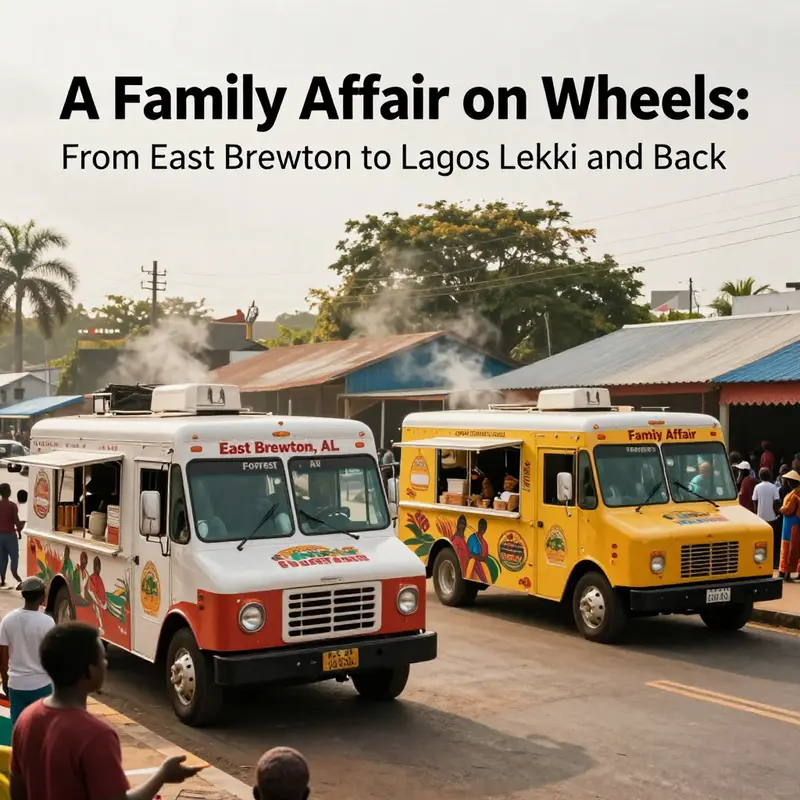
Across two continents, a family affair food truck threads a continuous line from familiar comfort to adventurous fusion. In East Brewton, Alabama, the truck parks along 504 Forrest Ave, turning a neighborhood corner into a veritable gathering place where locals swap stories as they share plates. In Lagos Lekki, Nigeria, the same brand meets a fast-changing urban scene—palm trees swaying beside bright signage, a steady stream of new faces, and a menu that nods to both Nigerian favorites and international tastes. This cross-continental journey isn’t just about where the wheels turn; it’s about how a shared identity—bold flavors, friendly service, and a deep care for community—travels with discipline, adaptability, and heart. The five chapters that follow map out how East Brewton provides a rooted operations context, how Lagos Lekki sparks expansion and menu fusion, how the business model keeps people and processes aligned, how community engagement fuels events and online presence, and how the local economy responds to a mobile dining concept. Together, these threads reveal a holistic view of a family affair food truck as a dynamic, people-centered brand that thrives by listening to places, pairing cultures, and inviting others to the table.
Chapter 1: A Family Affair on Forrest Avenue—Breakfast, Community, and the Small-Town Food Truck Ethos in East Brewton
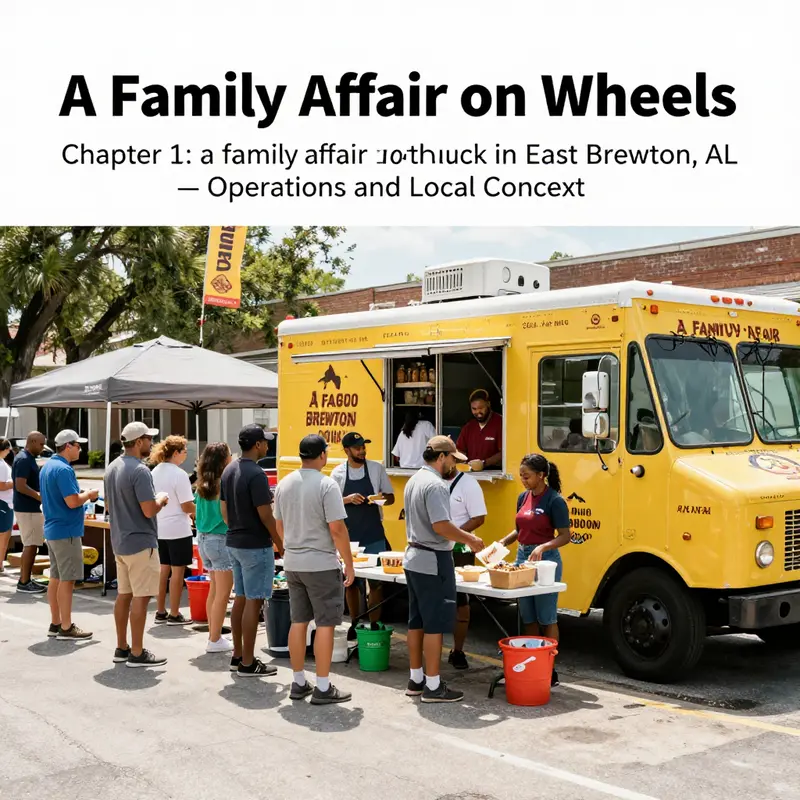
On a sun-warmed corner of Forrest Avenue, where the hum of morning traffic blends with the scent of fresh pastry and promise, a small kitchen on wheels greets East Brewton with a familiar, welcoming smile. A Family Affair Food Truck has carved out a steady heartbeat for this corner of Alabama, not as a flashy novelty but as a dependable morning companion for neighbors and visitors alike. Its address—504 Forrest Ave, East Brewton—takes on the character of a neighborhood post office, a place where the first light of the day feels official and the chatter of regulars writes the opening scene of the town’s daily life. In this setting, the truck is less a business and more a community ritual, a compact engine of local exchange where taste and conversation travel in tandem and linger long after the plates are cleared. The atmosphere is deliberately unpretentious: a place to pause, catch up, and begin the day with something warm, comforting, and well earned. The family at the helm radiates a quiet confidence that comes from working side by side for years, layering generations into the service style and the menu itself—an approach that makes new customers feel like long-lost friends and regulars feel cherished in a way only a family business can provide.
The breakfast and brunch focus is not incidental. It is a deliberate response to the rhythms of a town that wakes early and gathers later. The menu leans into familiar favorites, crafted with care and prepared with ingredients sourced as locally as possible. Fresh pastries that arrive warm, eggs prepared with gentle emphasis on texture and flavor, and pancakes with a lightly crispy edge—these are not novelty items but a celebration of everyday comfort. The kitchen’s pace is steady rather than sensational, designed to accommodate a steady flow of orders while preserving that home-kitchen sincerity that keeps customers returning week after week. The absence of alcohol on the premises reinforces a family-friendly ethic, inviting people of all ages to linger without a sense of intrusion or noise. It is a space where parents can bring children without constraint, where seniors can stop by for a quick bite and a story, and where students and workers can make a brief, energizing stop before the day’s responsibilities begin in earnest.
From the outside, the truck looks like a well-loved neighbor rather than a polished showpiece. Inside, though, the operations reveal a disciplined, practical approach. The crew is small, often involving family members who rotate through roles as cooks, servers, and cashiers. This cross-training is not merely a cost-saving trick; it is a deliberate design to keep service smooth even when demand spikes on weekends or during community events. The portable kitchen is efficiently organized, with stations that ensure hot food travels to the customer with minimal delay and maximum consistency. The emphasis on simplicity has its advantages: fewer moving parts means fewer breakdowns, quicker turnover, and a sense of reliability that makes the morning line feel less like a queue and more like a welcome ritual. This is a business built on repetition married to warmth, with every item plated to strike the balance between indulgence and everyday practicality.
Locally sourced ingredients are more than a talking point; they are a practical choice that strengthens bonds with nearby farmers, bakers, and small wholesalers. This commitment to the regional economy underpins the truck’s identity as a community asset. When a farmer’s market season peaks, the menu can subtly shift to incorporate the freshest finds, offering a sense of seasonal connection that residents quickly recognize and appreciate. The family behind the counter understands that reliability matters: consistent portions, predictable prices, and a familiar greeting that makes customers feel seen. In a town where people know one another by name, the trust built through dependable service becomes a form of social capital, not merely a revenue stream. The decision to maintain a fixed location—rather than a roaming schedule— amplifies this trust. The truck becomes a stable reference point in a community that values place and routine as much as flavor and speed.
The everyday realities of operating in East Brewton shape every aspect of the experience. Weekday mornings see a steady pour of early risers, local workers grabbing a quick bite before the day begins. Weekends bring families and weekend visitors who relish the chance to connect with neighbors over a shared plate. In all cases, the service style remains intimate and unhurried. The staff reads the room as an extension of the family table, offering suggestions with a soft confidence and taking the time to smile at a child’s reaction to a pastry. The food itself becomes a story the truck tells with each order: of a grandmother’s recipe adapted with a respectful nod to modern tastes, of a father’s careful eye for texture, and of a sibling’s keen sense for balancing flavors that feel like hometown memories long after a bite is gone. The ethos is clear: good food, prepared with care, in a space that feels like a gathering place rather than a storefront.
Where some food trucks chase the newest trend, A Family Affair anchors itself in the predictable pleasures of a good morning and good company. Yet this stability does not denote stagnation. The operation remains agile, able to accommodate a last-minute catering for a local school event or a spontaneous crowd at a neighborhood shop’s grand opening. The ability to scale modestly, to adjust portions, and to rearrange the day’s workflow without rattling the core routine speaks to a well-practiced choreography developed within a family that understands what it means to serve a community daily. The business’s local impact goes beyond meals; it offers a model of employment for family members and close neighbors, a micro-economy that supports other small ventures in East Brewton, from the corner shop to the local farmers’ cooperative. In this sense, the truck is less a standalone business and more an integral piece of the town’s social and economic fabric.
The chapter’s focus on the East Brewton operation also invites a gentle reflection on how such enterprises mirror the broader arc of family-run food ventures around the world. A parallel story exists, for example, in Lagos, where another Family Affair Food Truck builds its reputation with a different energy and a different set of local dynamics. Though the two chapters unfold in different climates and cultural landscapes, they share a belief in food as a conduit for connection, a corner of the street where strangers become neighbors and neighbors become a community’s extended family. This contrast of settings underscores a simple truth: hospitality travels well, but it is rooted in something deeply familiar—ritual, routine, and the small acts of care that make a daily meal feel like a family gathering.
For readers curious about the regulatory and logistical landscapes that frame this kind of venture, the mechanics of keeping a food operation compliant and smooth are worth understanding. The day-to-day practice—permits, safety protocols, equipment maintenance, and staff training—accounts for much of the quiet efficiency that characterizes a well-run truck in a small town. While this chapter foregrounds the warmth of welcome and the pleasure of shared breakfast, it also nods to the pragmatic discipline that supports it. Those who want to learn how the system supports these small livelihoods can explore resources on navigating food-truck industry regulations, which offer practical guidance without diminishing the human-centered heart of the story. navigating food-truck industry regulations.
As this chapter closes, the East Brewton operation remains a vivid illustration of how a family, a fixed street corner, and a well-tended menu can become a town’s daily invitation to pause and belong. The community’s sense of place is reinforced every morning by the sight of a familiar truck, the clink of cups, the soft rustle of paper, and the shared laughter that arises when someone’s favorite pastry meets a well-executed plate. And while the story here centers on a single location, its larger resonance speaks to the enduring appeal of family-led food ventures that transform everyday meals into meaningful local rituals. The next chapters will continue this thread, looking outward to see how similar family-driven models operate in other places, and how the same fundamental commitments—quality, care, and community—translate across borders and cultures. In that broader view, a family affair on Forrest Avenue offers more than a meal; it offers a lens on how small-town life can sustain, nourish, and delight through meals shared in good company.
External Resource: Google Maps listing for the East Brewton location: https://www.google.com/maps/place/504+Forrest+Ave,+East+Brewton,+AL+36426
Lagos Lekki on Wheels: Expansion Dreams and Menu Fusion for a Family-Affair Food Truck
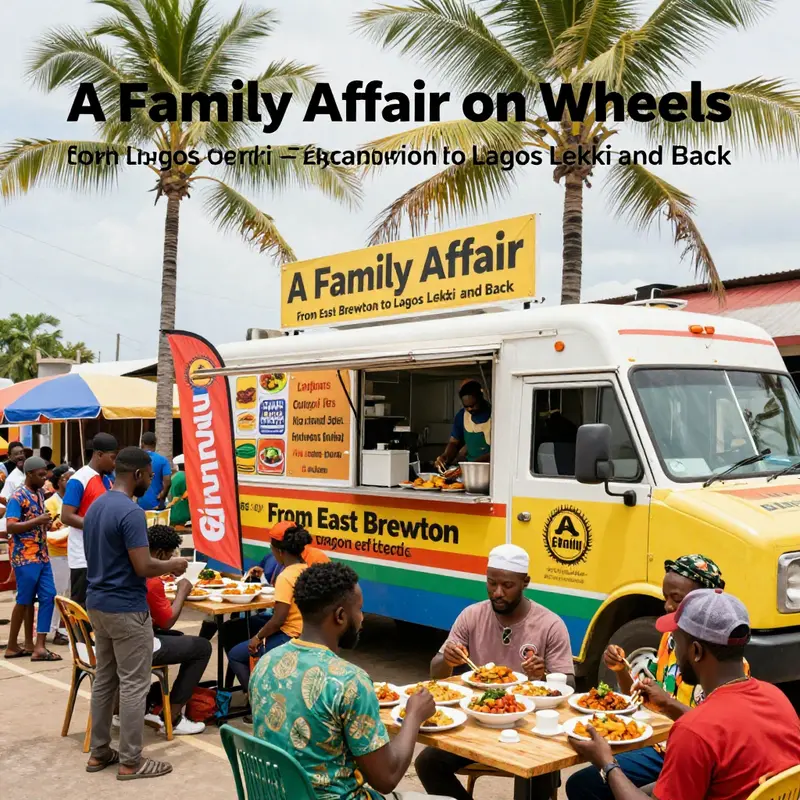
The first taste of Lagos Lekki comes not from a menu but from the air—heat, neon, the echo of motorcycles, and the quick chatter of vendors along a road that feels both cosmopolitan and intimate. In this place, a family business known for its warmth and a shared love of cooking sees an opportunity to grow beyond a single truck into a small fleet that travels with the same sense of belonging that defined its origin. The plan is not merely to add more grills and more hours; it is to infuse expansion with a careful sense of place, a fusion of flavors that respects local palates while inviting curious urbanites to discover something new in familiar textures. In Lekki, the market rhythm is fast, but it remains human. The team behind the Family-Affair truck understands that expansion in this part of Lagos requires more than extra space; it needs a deliberate tuning of culture, logistics, and interaction with the city’s diverse food culture. They study the streets the way a musician studies a city’s quiet corners before playing a new song—listening first, then responding with a riff that feels natural, not forced.
The expansion vision begins with a clear sense of Lekki’s geography and its footfall patterns. Lekki Phase 1 hums at a steady tempo: outdoor markets, corporate lunch crowds, evening strolls along the lagoon, weekend pop-ups near galleries and music spaces. Ajah adds a different cadence, with pedestrian clusters around malls and busier residential strips where families gather after work. The idea is simple in outline but complex in execution: two or three mobile units positioned to cover distinct trails—one near a high-traffic market corridor, one in a residential-restaurant belt, and a mobile unit that can anchor events and pop-ups. Growth is planned not as a sprint but as a sequence of well-timed moves, each reinforcing the others and each learning from the city’s feedback loop. The team relies on a pragmatic blend of experience and data—daily sales patterns, popular items, peak hours, and the turns of the weather that affect street dining. They will evolve the offering not in isolation but in dialogue with customers who carry stories in their bags and voices in their chat groups.
The business model must stretch to accommodate more wheels, but it also must protect what already makes the operation distinct. Fleet management becomes a central discipline: how many trucks can operate simultaneously without compromising kitchen quality or service speed? How will they coordinate permits across multiple hubs, maintain consistent branding, and manage insurance and liability for a growing crew? Branding remains a thread that weaves through every decision—the same color palette, same friendly hand-drawn logo, and the same promise of reliable, comforting food, now delivered with a more ambitious reach. The company considers modular vehicle layouts so each truck can be configured for specific menu themes or event needs while preserving the core cooking processes. The aim is to create a cohesive family of trucks that recognizes a shared ethos even as each unit finds its own local cadence. A key facilitator in this plan is leveraging technology to keep things simple for frontline staff and customers alike: mobile ordering, real-time queue management, and a lightweight inventory system that ties directly to procurement cycles. Each new truck is treated as a micro-business that benefits from the same routines the original unit relies on, including transparent pricing, consistent portion control, and a culture of hospitality that welcomes everyone as a guest to a family table on wheels.
Fusion takes its place at the center of the menu strategy. The team believes that fusion should feel like a natural bridge between familiar street-food comfort and the adventurous pleasure of new tastes. In practice, this means studying flavor profiles that resonate with Lagos’s broad audience while still allowing for creative twists. Core motifs include wood-smoked notes, bright citrus tangs, and balanced heat—seasoning practices that travel well and hold up under the demands of outdoor cooking. The kitchen embraces a local-sourcing philosophy: peppers, leafy greens, cassava, and cassava-based products become the backbone of a rotating set of dishes that pair with a handful of signature sauces. The aim is to create pairings that are repeatable across trucks, yet easily adjustable to local suppliers and seasonal produce. Pricing strategy is anchored in value: a tiered approach that offers a trusted set of staples at accessible prices while reserving a few premium, chef-driven items for weekend events and special pop-ups. The fusion is not a carnival of oddities but a curated conversation—enough novelty to spark curiosity, enough familiarity to comfort a routine lunch break.
The operational spine of expansion rests on practical kitchen design and disciplined sourcing. Each truck is imagined with a compact, efficient kitchen layout that minimizes movements and speeds up service without sacrificing flavor. A lean prep line feeds a compact cooking area, while cold storage and dry goods are organized for easy access during busy periods. Inventory is kept tight, with low-waste targets and a clear discipline for restocking that aligns with event calendars and school-year rhythms. Sourcing emphasizes local growers and small-scale suppliers who can deliver quality ingredients consistently. Such relationships are not merely transactional; they are partnerships that support community resilience and offer the team a reliable stream of ingredients that translate into consistent taste across trucks. The approach to tech is practical and light: a portable POS, simple digital dashboards for stock levels, and a shared calendar that maps out market days, private events, and once-a-month community gatherings. In this setup, the business stays lean enough to pivot when market conditions shift while preserving the warmth and reliability that earned loyal customers in the first place.
Marketing and community engagement fuse with the operational plan. The strategy is built on visible, friendly presence in the neighborhoods they intend to serve. The trucks become ambassadors for a family business that knows how to listen as well as feed. Pop-ups at local markets, collaborations with neighborhood artists, and sponsorships of school fundraisers create a network of relationships that extend beyond the lunch crowd. Social media remains a practical instrument rather than a glitzy drumbeat: timely posts about daily specials, behind-the-scenes kitchen moments, and customer stories establish a sense of belonging. The team also tests loyalty ideas that reward regulars with a small, personal touch—a handwritten note from a cook, a sampler plate for first-time customers, or a family-style tasting session at a community event. They recognize that expansion will be judged as much by how many new faces they reach as by how well they honor repeat guests who have supported the brand from the start. In this sense, growth and hospitality walk in step, each reinforcing the other.
Financial planning and risk assessment anchor every decision. The capital plan anticipates the costs of acquiring and outfitting additional trucks, expanding staff training, and maintaining a buffer for regulatory delays or unexpected repairs. Break-even timelines are conservative enough to breathe through the first year of multiple vehicles but ambitious enough to reflect Lagos’s dynamic market. Revenue projections rely on a mix of steady street-day business, weekend events, and well-timed pop-ups that convert to longer-term partnerships or recurring contracts. The team outlines risk mitigations—diversified routes to avoid overreliance on a single corridor, a robust maintenance schedule to reduce downtime, and a flexible staffing model that scales with demand. They also keep a pulse on external shocks—weather, transportation disruptions, and policy changes—so responses can be swift rather than reactive.
Implementation unfolds as a carefully staged roadmap. In the first phase, two trucks share core menus and branding while testing separate routes in Lekki Phase 1 and Ajah. Phase two introduces a third unit to cover an event-friendly corridor and a larger weekend cluster. Each stage comes with clear owners, KPIs, and a feedback loop that translates field observations into menu tweaks, service refinements, and scheduling shifts. The mini-cases help anticipate real-world choices: Lekki Phase 1 might yield high daytime footfall and demand a fast, streamlined service, while Ajah could reward slower evenings with a more expansive menu and a stronger emphasis on family dining. What matters most is a culture of learning embedded in every unit, with the central team maintaining the thread of shared values—hospitality, consistency, and a joyous invitation to try something new.
The road ahead is inviting but exacting. When the first brick is laid for a small fleet on Lekki’s streets, it should feel like a natural extension of the original truck’s spirit: a family affair that travels with its story, inviting the city to taste both comfort and surprise on a single street. The aim is not only to multiply servings but to deepen relationships, to show up at the moments Lagos residents want to celebrate or simply refuel after a long day. By blending expansion with mindful fusion, the Family-Affair on wheels becomes more than a business expansion—it becomes a moving table where neighbors become friends, and every curbside encounter hints at the next shared memory.
External reading and practical insights can further guide this journey: https://www.entrepreneur.com/article/how-to-start-a-food-truck
For a closer look at the regulatory environment and practical considerations, see the internal guide on navigating local requirements at navigating-food-truck-industry-regulations.
Chapter 3 Reimagined: A Family Affair on Wheels—Orchestrating Operations, People, and the Road Ahead
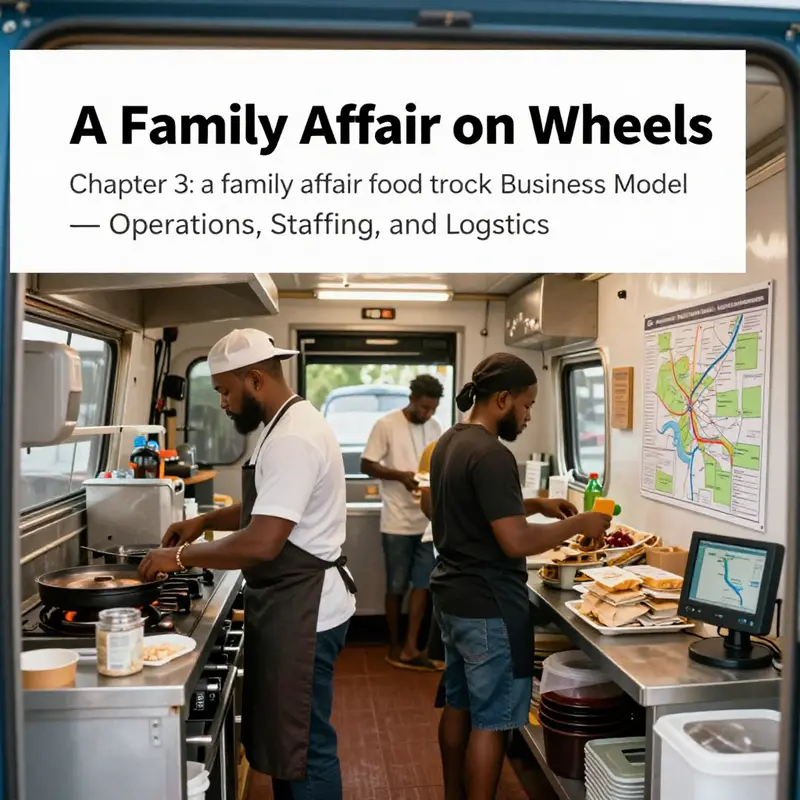
When a family takes to the street with a kitchen on wheels, the truck becomes more than a vehicle. It is a shared workspace, a revolving door for relatives and trusted friends, a moving storefront, and a test of how well values translate into daily practice. A Family Affair Food Truck embodies that mix of affection and practicality. The family unit brings a warmth that customers notice, but the true test is turning that warmth into reliable service, consistent quality, and a business that can survive the caprices of weather, crowd size, and city regulations. In many ways, the model rests on a simple premise: align personal strengths with the needs of a bustling kitchen on the move, and couple that with disciplined processes that turn passion into repeatable performance. It is this blend—family trust paired with professional rigor—that distinguishes a family-run operation from a hobby on wheels and from a large, impersonal catering fleet. The road is long, and the stakes are high, but so too are the rewards when the crew knows its roles, anticipates demand, and keeps the service as fresh as the ingredients on the pan.
Operations in a family-affair food truck are not about grand abstractions. They are about making small, repeatable choices that accumulate into a dependable experience. It starts with standardized recipes and portion controls that guarantee consistency from shift to shift, even when the kitchen has to improvise for a sudden rush. Hygiene and food-safety protocols become cultural norms rather than paperwork. A simple hygiene manual, complemented by daily, weekly, and monthly checklists, keeps the truck’s standards visible to every cook and cashier, from the newest family member to the seasoned relative who has managed other kitchens before this one. Inventory management goes beyond stock numbers; it is a discipline that minimizes waste and drives cost control. Par levels and reorder thresholds create a safety net so that a run of popular dishes never depends on memory. When waste is tracked, conversations shift from blaming factors outside the kitchen to diagnosing processes and identifying opportunities for leaner, cleaner operation. The result is not a sterile, soulless system but a living framework that supports the family’s collective energy without draining it.
A core ingredient of smooth operations is the standard operating procedure, a compact playbook that makes predictable what could otherwise be chaotic. In a family setting, where people are likely to interpret a task through the lens of loyalty and affection, the SOP acts as a neutral referee. It clarifies who handles what, how tasks transition from one person to another, and how equipment is used and cleaned. The chain of accountability matters as much as the chain of recipes. With clear metrics, the family can measure performance in practical terms—speed of service, accuracy of orders, and adherence to food-safety checks. Rather than relying on charisma alone, they build a system that can scale. Even the most intimate business can grow when structure supports growth rather than constrains it. The emphasis on data—food safety timestamps, inventory turnover, waste percentages, and customer wait times—transforms family intuition into a strategic asset. In short, the truck becomes a classroom where the family learns to balance warmth with efficiency, care with precision, and loyalty with accountability.
Staffing in this model follows a similar logic. Roles are allocated not by seniority alone but by strengths, whether that means a chef with a flair for balancing flavors, a quick-tongued cashier who can defuse a tense line, or a driver who can read the crowd and the route with equal ease. The family advantage lies in the trust that makes candid feedback possible, and the discipline to translate that feedback into tangible improvements. A clear role matrix helps to avoid overlap and friction, especially during peak times when the pressure to perform can turn sentiment into snappy exchanges. Training becomes an ongoing partner to family tradition: onboarding new members with a safety-first mindset, coaching on cash handling and point-of-sale literacy, and investing in customer-service etiquette that preserves the family’s personal touch without sacrificing professionalism. This approach creates a governance-ready culture even when the organizational chart is compact. The aim is not to suppress personality but to channel it through well-defined responsibilities and decision rights. As the family grows the venture—perhaps by adding a sister-in-law who doubles as social-media coordinator or a cousin who runs promotions—the governance framework matures, providing a check against conflict and a roadmap for sustainable scaling.
Logistics, the often-unseen backbone, is where a mobile kitchen reveals its true complexity. The truck itself must be a dependable engine of service, fitted with reliable refrigeration, efficient cooking appliances, and clever storage that keeps ingredients fresh and accessible. Preventive maintenance calendars keep downtime predictable rather than disruptive. Route planning and permit compliance become strategic choices rather than administrative hurdles. A family business benefits from a flexible yet predictable schedule that adapts to changing demand across seasons, holidays, and events. The team that travels together must know which locations on a given day hold the most promise and how to navigate the permit landscape that dictates where and when they can operate. Digital tools, including GPS-based routing, cloud-based inventory, and a social-media calendar for promotions, transform guesswork into real-time decisions. When a city fair draws a larger crowd than anticipated, the team can adjust the plan on the fly—knowing which menu items to push, where to position the truck for visibility, and how to reallocate staff to maintain service speed. This mobility becomes a competitive edge, a living expression of the family’s willingness to be agile, responsive, and present where it matters most.
Beyond the mechanics of daily life, there is a strategic perspective that makes a family business more than a series of okay days. Shared values and a unifying vision act as a compass when the road curves toward growth. A cohesive team operating under a single mission—one that emphasizes quality, service, and adaptability—builds resilience. In this frame, family dynamics do not hinder progress; they become a source of trust and consistency that customers experience as dependable hospitality. The mobility itself becomes part of the brand’s story. Real-time decisions about where to stand and how to engage with the crowd live at the intersection of family pride and business opportunity. High-traffic zones, popular local events, and recurring markets become not just revenue opportunities but stages where the family’s collaboration and care can shine. The model thrives on the fusion of shared values with professional discipline, because the family’s identity provides the moral energy while the systems and processes deliver repeatable results.
This chapter’s practical advice points to a pragmatic path. Start with concrete operational basics: document recipes and portion controls, codify hygiene practices with checklists, and implement a simple, transparent inventory system. Build a role matrix and a robust onboarding program, then cultivate a culture of accountability through regular, structured feedback and clear handoffs. Invest in the truck’s health through a preventive maintenance schedule and in the route network by pre-qualifying permits and mapping out a calendar of events. Embrace technology not as a distraction but as a way to sharpen focus—GPS for routing, cloud inventory for real-time stock, and a social-media calendar for promotions that drive footfall. And remember governance as a living practice. A formal but flexible approach to decision-making, conflict resolution, and growth keeps the family aligned as the business scales, preserving the trust that first brought them to the road.
For readers curious about how branding intersects with this operational backbone, a practical pathway is to explore how graphics and identity reinforce the family’s story on wheels. See the guidance offered in branding on wheels—the ultimate guide to food-truck graphics and identity, which speaks to how a cohesive visual language can translate the family’s values into customer recall and loyalty. This chapter’s emphasis on process, people, and movement remains the engine driving that identity forward, ensuring the business is not only seen but remembered in every bite and every exchange. As this family navigates the lanes between East Brewton’s local markets and the bustle of city-centered events, the road ahead is less a line on a map and more a shared commitment to quality, care, and continuous improvement.
External resource: https://www.shopify.com/za/blog/food-truck-business-ideas-2026
Chapter 4: A Family Affair on Wheels — Building Community Through Festivals, Personal Encounters, and Social Stories
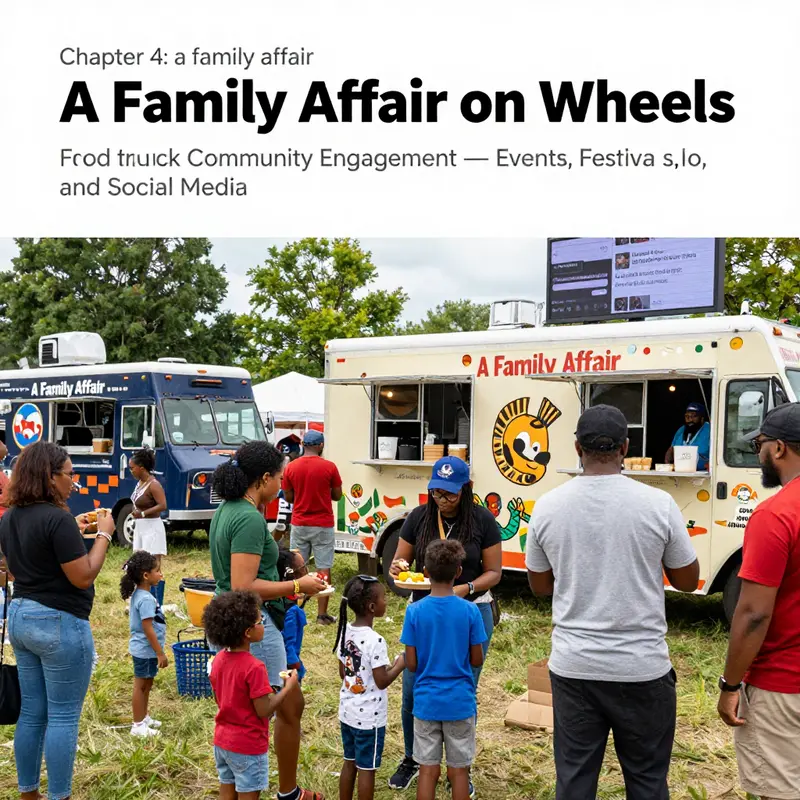
A family affair on four wheels is more than a catering option; it is a running invitation to belong. In places where a mobile kitchen parks, a small crew becomes a temporary town square. The family-turned-organization behind this kind of venture often builds its identity not just through what it serves, but through how it serves the people who come to taste and linger. The truck moves from one gathering to the next, and with each stop it stitches a new thread into a larger tapestry of local culture. The consistent thread is unmistakable: food acts as a catalyst for connection, and a family’s shared work ethic becomes the common language that brings strangers into conversation and neighbors into collaboration. The effect extends beyond the dish aroma that fills the air; it becomes a pattern of interaction that communities carry with them long after the last tray is cleared away. In this sense, the vehicle is less a business and more a rolling commons, a site where stories are swapped as freely as recipes, and where the act of sharing a meal builds social capital that endures between events and between generations.
When a mobile kitchen is seen as a fixture at regional gatherings, its presence signals participation in a wider civic life. Festivals that gather dozens of trucks become arenas for discovery, not just for diners but for families, students, and professionals who crave quick nourishment and a moment of pause amid a busy day. A recent example from the broader festival circuit highlights how a family-run crew can anchor a communal mood: during a major autumn festival weekend, a cluster of food trucks converged on a park square to offer a spectrum of flavors, while live music and community booths framed the culinary showcase. The shared energy of such events converts routine lunch into a social event, inviting people to linger, compare notes with their neighbors, and plan future meetups around the next festival date. The truck, in this setting, becomes a listening post where people speak with their appetites first and their expectations second, and where the operators listen in return. That two-way attention—the willingness to read the crowd while offering a trusted lineup—transforms ordinary service into an ongoing dialogue with the neighborhood.
The human element is central. Behind every sizzle, there is a plan, and behind every plan there is a family story: generations teaching and learning, skills being honed, and a kitchen dynamic that blends efficiency with warmth. The team’s ethos often translates into a hospitality style that makes guests feel known even if they are meeting the crew for the first time. This personal touch takes many forms, from the way servers introduce themselves by name to the moments when a chef steps out from the prep area to explain a dish or offer a tasting suggestion. The goal is to convert a transactional moment—order, eat, move on—into a relational one: a moment where a guest feels welcomed, seen, and valued. The effect compounds when guests decide to return not just because the food is good, but because they recognize the people who prepared it as part of their extended community. In practice, this translates into repeat attendance at festivals, longer conversations at the event site, and a sense that the kitchen is a corner of the city where everyone’s story is welcome.
Crucially, the power of these community engagements also flows through the online space. Social media becomes a living canvas for behind-the-scenes looks, event highlights, and testimonials that capture the emotional pulse of the truck’s work. Posts that show the team preparing dishes with care, or photos of guests sharing laughter at a pop-up tasting, invite audiences to see themselves in the experience. A wedding catering story from a recent year—praised for the menu quality and the professionalism of the staff—illustrates how digital storytelling can extend the life of a single event into a wider narrative of reliability and warmth. When fans encounter these stories, they are not simply following a brand; they are joining a community that expects consistent care, creative flavor, and a hospitality that makes guests feel like family long after the meal ends. This is the essence of a social media strategy that aligns with on-site experiences: authenticity in tone, openness in sharing, and a cadence of content that reflects both the hustle of the kitchen and the joy of the encounter.
The geography of a family-run food operation often adds another layer of meaning to its community work. While the truck may have a home base in one locale, its story travels. In the collective imagination, the family behind the wheel becomes a bridge between different places, whether a coastal street market or a suburban festival field. In some cases, the same ethic travels across continents, finding resonance in similar crowds and similar moments of shared hunger and celebration. Local menus might adapt to reflect the tastes and traditions of a neighborhood, enabling a sense of place while preserving the core value of hospitality. It is this adaptability—paired with a steadfast commitment to personal touch—that makes the brand feel approachable across diverse audiences. The family unit that steers the business is not merely running a vehicle; it is stewarding a flexible social contract: show up with good food, greet people with warmth, and let the event become a forum for connection. The effect is a ripple that touches vendors, volunteers, and attendees, who carry the positive energy into their own circles, extending the reach of the truck’s influence far beyond the immediate line of customers.
To readers curious about how appearance and identity on wheels influence this movement, branding is a vital, practical lens. Visual identity, color, and typography become a nonverbal handshake with a community. A well-conceived truck design and coordinated branding can invite curious onlookers to pause, step closer, and feel a sense of belonging before a single bite is savored. This is where the literature on branding on wheels proves useful for operators who want to translate a family’s values into a recognizable, trustworthy image. For designers and operators curious about how identity and branding travel on four wheels, see branding-on-wheels-the-ultimate-guide-to-food-truck-graphics-and-identity. Such resources help reframe the vehicle from a transient service point into a familiar, inviting platform that mirrors the family’s ethos and invites ongoing participation from the community.
The ethical core of this approach is simple but powerful: community engagement is not a one-off event but a longitudinal practice. It requires listening as much as speaking, showing up even when there is no obvious return, and treating every encounter as an opportunity to deepen trust. A family-run truck that maintains a robust calendar of events—festivals, pop-ups, charity collaborations, and exclusive tasting opportunities—turns ordinary days into a calendar of shared experiences. It also builds resilience. When economic or logistical challenges arise, those relationships with guests, volunteers, and partners often become the social capital that allows the business to weather fluctuations. People are more likely to adapt their plans to accommodate a beloved truck if the relationship feels reciprocal and genuine. The exclusivity of a couple’s tasting night, in which guests get direct access to Nikki, Katlyn, and the rest of the team, is not merely a marketing tactic; it is a ritual that formalizes the emotional contract between the kitchen and the community it serves. It validates the idea that a family affair on wheels is a communal asset rather than a private venture.
In sum, the chapter of a family-run food truck’s story is written in events, in conversations, and in the steady hum of social media that carries the memory of each gathering forward. The festival field, the wedding reception, the weekday market, and the digital feed all contribute chapters to a bigger narrative: a living, breathing, edible invitation to belong. The family behind the wheel and the families who gather around the counter share a belief—that meals are better when people know each other, and that communities grow strongest when they are nourished by more than flavors alone. The truck becomes a moving testimony to that belief, a portable version of the dining room table where every plate passed along is a reminder of shared belonging. For operators looking to cultivate a similar sense of community, the lessons are practical as well as aspirational: show up with consistency, tell honest stories, invite participation, and treat every guest as part of the extended family—because in this running kitchen of a community, flavor and friendship travel together.
External source: https://www.greaterpittsburghfoodtruckfestival.com
A Family Affair on Wheels: Navigating Competition, Craft, and Community Impact
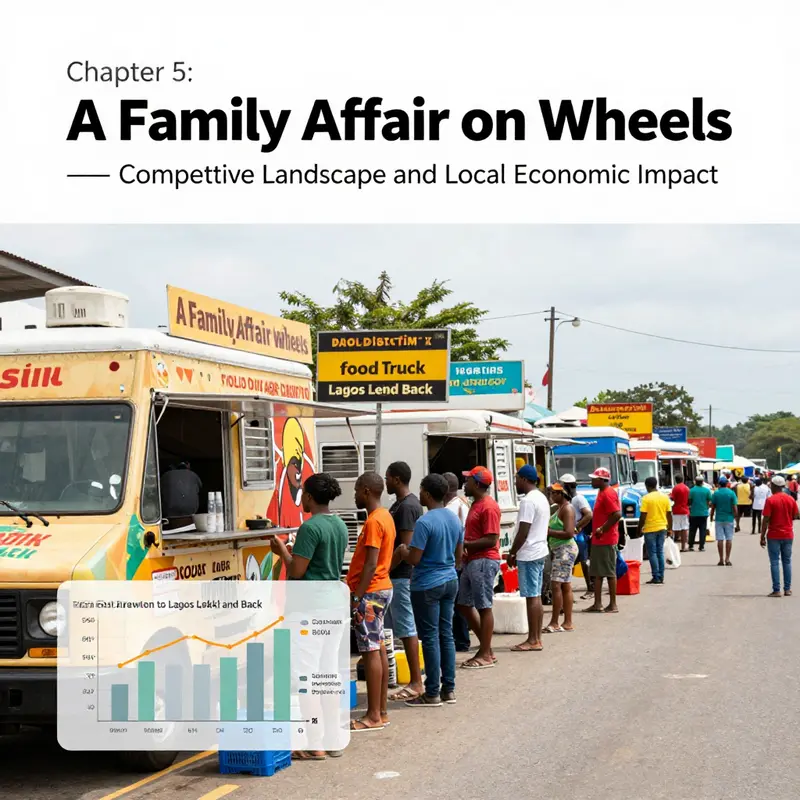
A Family Affair Food Truck stands as a portrait of mobility meeting intentionality, a family-run operation that stretches across distinct geographies while keeping its roots firmly planted in shared recipes, shared stories, and a shared work ethic. On one side of the map, the truck operates in East Brewton, Alabama, with a pinpoint precision that comes from knowing a small town’s rhythms and seasonal schedules—504 Forrest Ave, East Brewton, AL 36426, a location that becomes a hinge between neighborhood rituals and the weekly cadence of local events. On the other side, the same family holds a face in Lagos’s Lekki district, where a different crowd, different tastes, and a different pace demand agile adaptation. The juxtaposition is not simply about two storefronts on two continents; it is a living case study in how a family affair can translate traditional cooking into mobile, scalable hospitality that remains intimate and responsive to the communities it serves. In both places, the truck is not merely an option for a quick meal but a signal that food can be a shared experience, a memory on wheels that travels with the customers as they move through their day. The narrative is less about a single menu and more about a philosophy: how to fuse family heritage with professional discipline to create a product that travels well, speaks clearly, and earns loyalty through consistency and care. The market is alive with competition, yet the value proposition of a family-run truck often rests on something quieter and deeper than price alone—storytelling that feels personal, operational discipline that minimizes hiccups, and a brand that promises steadiness wherever the truck pulls up. In the broader arc of the mobile food ecosystem, this family’s approach aligns with an industry trend toward professionalization. Trucks are evolving from informal street carts into compact, highly managed operations, where standardized recipes, predictable portioning, and reliable sourcing enable a replicable experience across multiple venues. That shift matters because it transforms risk into repeatability, a crucial factor when a second truck or a new location is imagined. The East Brewton operation embodies this mindset with a deliberate turn toward processes that protect quality while preserving the spontaneity customers expect from a mobile kitchen. The Lekki presence, meanwhile, demonstrates how adaptability and cultural listening can broaden a family brand without erasing its essence. In both ecosystems, the heart of the business remains a set of family recipes and the care of a crew that knows each other’s strengths, limits, and shared jokes. The operational challenge is then not a single decision but a choreography: how to schedule cooks, allocate inventory, and respond to demand spikes across two very different customer bases, all while maintaining a cohesive brand narrative. This is the core of Chapter 5: a Family Affair on Wheels does not pretend to conquer every market, but it does demonstrate how thoughtful positioning—niche focus, reliable branding, and real-time engagement—can yield a durable competitive edge. The local market becomes less a battlefield of competing menus and more a stage for storytelling, speed, and trust, where customers return not just for a dish but for the sense that they are part of a family tradition that travels and evolves with them. The social fabric around the truck—its posts, live updates from events, and responsive customer service—becomes part of the product itself. In this sense, the truck’s success rests as much on how well it communicates its story as on how well it cooks. The branding thread, in particular, matters because it provides continuity as the operation shifts between sites. A well-defined identity helps customers recognize the truck across neighborhoods and countries, and it supports loyalty programs and word-of-mouth referrals that are essential when physical locations vary widely. For readers keen on practical branding mechanics, a concise resource exists that translates the idea of identity into a usable framework: Branding on Wheels. That link offers a structured pathway to translate heritage, chef’s touch, and family voice into graphics, tone, and customer-facing cues that travel with the truck rather than becoming anchored to any single place. The narrative also invites reflection on how the market rewards local ties and global reach at once. In small towns like East Brewton, the truck becomes a neighborhood touchstone, a reliable vendor aligned with community events, church suppers, school fundraisers, and farmers markets. In a bustling urban corridor like Lekki, the same truck must respond to longer lines, diverse palates, and a higher tempo of service, all while maintaining the same standard of care. The contrast is not a contradiction; it is a proving ground for the adaptability that modern family businesses must cultivate. The competitive landscape, as observed in broader market analyses, rewards operators who can blend niche specialization with operational excellence. A Family Affair demonstrates that a strong identity—coupled with speed, accuracy, and consistent quality—can outpace broader market volatility. The family’s approach to supply chain, staff training, and menu development embodies the practical implications of the latest industry thinking: that mobile ventures succeed when they treat cooking as a craft, logistics as a discipline, and storytelling as a differentiator. In this light, the local economic impact becomes more tangible. Each location’s activity supports jobs, from cooks and cashiers to seasonal helpers and event staff, while the trucks’ visibility encourages local procurement—produce, dairy, packaging, and other essentials sourced from regional partners. The presence of a food truck can also enliven vacant spaces, turning empty lots into temporary marketplaces and social hubs. This placemaking ripple effect—where food becomes the catalyst for pedestrian traffic, evening strolls, and spontaneous conversations—reframes the truck’s role from a simple vendor to a community-anchored enterprise. The East Brewton and Lekki operations together illustrate this dynamic: one anchors in a quiet, familiar setting with predictable rhythms; the other catalyzes urban exchange and cross-cultural exchange, bringing a diverse menu that still carries the family’s signature voice. The economic argument strengthens when we consider the broader supply ecosystem: local farmers and artisans providing seasonal produce, artisans delivering packaging materials, and small service providers maintaining the trucks’ engines and equipment. The multiplier effect, while modest in each instance, accumulates across markets and through repeated events, strengthening the case for mobile food concepts as engines of local commerce. As the chapter moves toward practical implications, it is worth noting how a family business can scale while retaining its essence. The growth calculus favors deliberate expansion: more trucks, shared purchasing power, a centralized commissary, and careful replication of training modules to preserve consistency. This is where the brand narrative and operational discipline converge to create a scalable model without erasing personality. A Family Affair’s careful attention to staffing, training, and menu development supports a multi-unit future, with each location adding a verse to a larger family song rather than merely multiplying orders. The final read on competition and community impact is nuanced. The landscape rewards clarity in purpose and reliability in delivery, both of which stem from a strong family foundation. The brand’s ability to tell its story, honor supplier relationships, and respond nimbly to shifting tastes underpins resilience in a market that prizes speed and sustainability as much as flavor. The chapter’s resonance lies in the recognition that local economic impact is not a one-time contribution but an ongoing cycle of jobs, demand for goods, and places for people to gather. In this sense, A Family Affair on Wheels offers a persuasive argument for why mobile hospitality can be a powerful catalyst for neighborhoods and why family-led ventures, when disciplined and adaptive, can endure and inspire. External resource: https://www.mordorintelligence.com/industry-reports/mobile-food-truck-market
Final thoughts
The journey from East Brewton to Lagos Lekki and back reveals a mobile dining story built on consistent values: warm hospitality, flavorful food, and an ability to adapt to place without losing identity. Each chapter highlights how operations, expansion, the business model, community engagement, and market awareness reinforce a common mission: to serve delicious, accessible meals while strengthening local networks. The result is a resilient, scalable brand that honors its roots and embraces new audiences with curiosity, care, and collaboration. For operators and organizers alike, the takeaway is clear: successful food truck ventures grow by leaning into community, refining logistics, and inviting partnership—one flavorful stop at a time.