
Malaysia’s vibrant street-food culture is a magnet for events, corporate gatherings, community groups, and food enthusiasts. A food truck adds mobility, flavor, and flair to any occasion—but turning a mobile dream into a compliant, licensed reality takes planning. This guide walks you through the four essential stages to secure a food truck license in Malaysia, with stakeholders like event planners, HR teams, local groups, and curious diners in mind. You’ll discover how the journey begins with registering a legitimate business, progresses through a local council’s Temporary Food Business License, and culminates in a smooth process of documentation, inspections, and renewals—all while staying aligned with health, safety, and community expectations. Throughout, we’ll keep the tone practical and culturally relevant, offering concrete steps, timelines, and tips to help your team coordinate seamlessly, whether you’re organizing a city-wide festival, a company appreciation day, or a neighborhood market. Here’s how the four chapters connect to your planning and execution needs:
- Chapter 1 focuses on the critical first step: registering your business with SSM (Suruhanjaya Syarikat Malaysia). This establishes the legal foundation every license requires and signals professionalism to partners and venues.
- Chapter 2 unpacks the Temporary Food Business License issued by local councils. For mobile operations, this license is your ticket to legally serve at markets, events, and pop-up spaces.
- Chapter 3 dives into the practical documents, site plans, health clearances, and submission workflows that councils and health departments rely on to assess hygiene and safety.
- Chapter 4 covers the financial and operational rhythm—fees, processing times, inspections, renewals, and compliance best practices that prevent delays and keep the truck rolling.
Whether you’re an event planner coordinating multi-day festivals, a corporate admin team enabling engaging staff experiences, a community group seeking healthy street-food options, or a food lover eager to explore Malaysia’s mobile culinary scene, this guide brings clarity and action-ready steps. By the end, you’ll have a holistic view of the licensing journey—from the legal skeleton (SSM) to the local council’s permit and the ongoing duties that come with operating a food truck in Malaysia.
Chapter 1: From Paperwork to the Pavement — Why SSM Registration Is the First Step in Securing a Malaysian Food Truck License
The journey to running a mobile food business in Malaysia begins not with a gleaming stove or a perfect menu, but with a legal identity that can travel with you. In the hierarchy of regulatory steps, registering your business with the Companies Commission of Malaysia (SSM) stands as the indispensable first mile. This is not merely a paperwork ritual; it is the foundational act that tokenizes your enterprise, creates a distinct legal personality, and unlocks the path toward every subsequent license, permit, and site agreement you will need as a food truck operator. Without SSM registration, you can chase the more visible hurdles—the health licenses, the vehicle inspections, the location permits—but you will find the process grinding to a halt at the gates of legality. In short, SSM registration is the quiet engine that powers every other requirement, turning a float of ambition into a verifiable business presence that authorities can recognize, inspect, and trust.
Choosing the right structure at this stage matters as much as choosing your first location. Malaysia allows a range of business entities, including Sole Proprietorship, Partnership, or Private Limited Company (SDN. BHD.). Each carries distinct implications for liability, taxation, and growth. If you intend to test the waters with a lean, low-overhead operation, a sole proprietorship or simple partnership can be attractive for their simplicity and lower upfront barriers. Yet, because a food truck is a portable business that handles prepared foods, many owners eventually outgrow the friction of personal liability and seek the shield of a Private Limited Company. A company can limit personal exposure, improve credibility with suppliers, and create a scalable framework for future expansion, franchise possibilities, or partnering with other vendors at events. The choice should align with your current plan and future trajectory, recognizing that the decision is not set in stone and can be revisited as the business matures.
Regardless of the structure you choose, you must complete the SSM registration process through the online channels that Malaysia has standardized and digitized in recent years. The idea of a one-man operation registered in a single county file is replaced by a formal corporate or business identity that lives on the national registry. The online journey through SSM’s platforms—whether you are dissolving, forming, or registering a business name—has been designed to be fast, efficient, and, importantly, traceable. The path to legitimacy begins with a local address that can receive official correspondence, a clear ownership and management structure, and a name that meets regulatory standards. In practice, this means you will need to prepare details about directors or owners, shareholders, and the registered address. It also means recognizing that the name you want for your business must be checked and then approved or reserved through SSM’s system before you can finalize incorporation. The system is the gateway; it ensures that the name you choose is not already in use, that it does not mislead, and that it follows the naming conventions required for your chosen entity type.
The name-check-and-reserve step is not a mere formality. It is a critical signal to the local authorities about the uniqueness and propriety of your venture. If you are uncertain about the availability of a name, you should perform a name search on SSM’s official site. A favorable result creates the opportunity to proceed with incorporation and to obtain the certificates you will need to anchor further licensing processes. The official guidance emphasizes that the SSM system is the sole legitimate channel for name searches and incorporation tasks, and it warns against relying on third-party platforms that could misstate requirements or create delays. Once the name is approved, the process moves into formal formation—the drafting of constitutional documents for a company, the appointment of a company secretary (a mandatory requirement for a company, within a specified window), and the submission of the necessary forms and supporting materials through the online portal. The objective is to establish a CRN, a formal registration number that appears on your Certificate of Incorporation and anchors your business in the national registry.
The timeline for this stage is encouragingly predictable: once you have the necessary information and documents, you can complete the registration typically within a few working days. The process is designed to be efficient, and in many cases registrations are completed within three to five working days, provided all documents are in order and the registration details are clear. This speed is not a license to rush; rather, it reflects the Malaysian regulatory framework’s commitment to supporting small and mobile businesses while maintaining rigorous standards for legitimacy. The mantra here is simple: get the fundamentals right, and the rest of the licensing maze becomes navigable rather than opaque. The receipts you obtain—your Certificate of Incorporation, your CRN, and the official name-reservation certificate—will follow you into every subsequent step. They are the proofs that you exist as a legal entity, that you have a permanent address, and that you are ready to engage with local councils on more specific permits designed for mobile vendors.
A few practical details anchor this chapter in the living reality of Malaysian business life. First, even if you plan to operate solo, your venture must be registered. The law does not tolerate a blind corner approach to commerce, particularly when food safety and public health are involved. Second, the registration will require basic documentation related to your proposed business structure. If you opt for a private company, you will need more formalities—such as a constitution (the company’s charter), a directors’ consents, and a company secretary appointment—that ensure your entity satisfies statutory requirements beyond mere naming. If you lean toward a sole proprietorship or a partnership, the documents become simpler, but you still must register the business name under your own or your partners’ identity, and you must present a realistic address for correspondence and licensing.
The act of registering with SSM dovetails with the broader regulatory architecture of mobile food services in Malaysia. The SSM registration is not a stand-alone checkpoint; it is a file-year and identity that you carry forward into the health departments that issue Food Hygiene licenses, and into the local councils that grant you the right to operate in markets, parks, or event spaces. In practical terms, your SSM registration lends credibility to your entire licensing package. It demonstrates that you are a legitimate business operator rather than a casual vendor, a distinction that matters when you approach a municipal council for a Temporary Food Business License or a mobile food vendor permit. The more complete and credible your business profile, the smoother the pull toward approvals can be, provided you also meet the hygiene and safety expectations that accompany mobile food operations. As you prepare to step beyond the desk and into the street, the SSM registration framework provides the scaffolding on which every other regulatory requirement can be built.
To help you connect the dots between the broader regulatory landscape and the specific steps you take at this stage, consider viewing resources that discuss how to navigate the regulatory maze for food trucks. These explorations highlight how SSM registration integrates with health licenses, vehicle compliance, and location permissions. In particular, you can explore discussions about how the licensing ecosystem fits together, which clarifies the sequencing that most operators follow. For a comprehensive view of how these pieces interlock, some readers may find it useful to consult the broader guidance on navigating food-truck industry regulations and how local authorities apply standards in practice. This contextual understanding supports you in planning not only for today’s license but for the ongoing compliance that sustains a mobile, customer-facing business. And as you map your steps, remember that the SSM portal is the definitive entry point for establishing your business identity.
Your next milestone will be to secure the Temporary Food Business License that local councils issue for mobile operations. But you will not be able to apply in a meaningful way without the initial proof of legibility—the SSM registration. The SSM step, while appearing procedural, is the anchor of trust that underpins all subsequent interactions with public authorities. It confirms that you are a registered business with a real address, a defined ownership structure, and a legally sanctioned name. It confirms, in short, that the wheels you want to turn on the street are attached to a legally recognized vehicle of commerce rather than a mere idea. This is why the first step in Malaysia’s path to a food truck license—and the most crucial one at that—is to secure your SSM registration with diligence, accuracy, and timeliness.
As you prepare for the name search and eventual incorporation, bear in mind the practicalities that shape your daily operations. You will need a local address that can receive official mail, whether it is a fixed site, a shared workspace, or a virtual office that is legally acceptable for business registration. If you intend to operate in multiple locations, you might consider the advantages of a structure that scales with your ambitions, such as a Private Limited Company, which can more readily attract investors or partners and support more formal contracts with event organizers or venue owners. Whichever path you choose, your SSM registration will be the universal reference used on all licenses, permits, bank accounts, supplier agreements, and tax registrations. It is the passport your business will carry across every jurisdiction within Malaysia’s mobile food ecosystem.
To further align with the operational realities you will face on the ground, you may want to reference the broader conversation about how to navigate food-truck industry regulations and the practicalities of moving from registration to operation. This broader frame is not a substitute for the specifics of SSM, but it complements your understanding by placing the steps you take now within a longer, more coherent arc of compliance and opportunity. The first mile, however, remains clear: register your business with SSM, secure your name, prepare the required documents, and establish the entity that will anchor your license applications and day-to-day operations. When you have those essentials in place, you will be in a far stronger position to approach the local council with a well-structured plan, ready to demonstrate safety, hygiene, and service that meet community expectations and regulatory standards.
Internal link: For a broader view on the regulatory landscape you will navigate as a mobile vendor, you can read about navigating food-truck industry regulations in our extended guide, which helps connect the dots between SSM registration and on-the-ground licensing. (navigating food-truck industry regulations)
External resource for official guidance: official SSM MyCoID platform and name-search services provide the authoritative framework for your entity and name selections, ensuring you are aligned with current rules and timelines. You can access the official portal here: https://www.mycoid.ssm.com.my/ .
Chapter 2: On the Move and In Compliance — Navigating Malaysia’s Temporary Food Licenses for Mobile Vendors
In a country where street foods and pop-up experiences are part of the urban rhythm, turning a mobile kitchen into a lawful, sustainable business is as much a political act as a culinary one. The road to a Malaysia food truck license begins not with a sizzling pan but with a careful alignment of registration, rules, and reliable systems. This chapter follows that path for the modern mobile vendor: the cart, the truck, the repurposed container that becomes a kitchen on wheels. It is a journey of paperwork, but also a narrative about trust—trust from the local council that your operation is safe, hygienic, and accountable to the public, and trust from customers who know the food they eat from a truck has met a baseline of safety. The core vehicle for this journey is the Temporary Food Business License, the instrument local councils issue to accommodate food-on-the-go while preserving public health, hygiene, and order in busy markets, events, and city streets. The license is your gateway to location flexibility, to markets you can reach and seasons you can chase, but it comes with clear expectations: operate only within the permitted zones, maintain food safety standards, and renew when the license period ends.
To start, the essential first step is to register your business with the Companies Commission of Malaysia, known as SSM. Even when you plan to work solo, the law requires a formal business presence. Choosing the right business structure—sole proprietor, partnership, or private limited company—shapes your liability, taxes, and growth trajectory. Registration is typically swift, often completed within three to five working days, and it sets the legal foundation for everything that follows. This stage is more than a bureaucratic checkbox; it signals to the authorities and your future customers that you are serious and prepared to operate within a regulated framework.
Once the enterprise is registered, you move to the second major consideration: selecting the correct license type. For a food truck, the Temporary Food Business License is the practical instrument. Local councils issue these licenses because they recognize that mobile vendors move between markets, events, and zones, rather than occupying a single storefront. The license is designed with mobility in mind, offering a standard validity period—commonly up to 30 days—and a renewal mechanism when you need to keep moving. It is the license that reconciles temporary, seasonal, and itinerant food services with public health oversight. While the duration matters, the scope matters even more. The license applies to food stalls, pop-up vendors, food trucks, and event-based food services; it does not confer the permanence of a brick-and-mortar premise, yet it creates a predictable framework for safe operation.
But the Temporary Food Business License is not granted in a vacuum. Each local council—whether in Kuala Lumpur, Petaling Jaya, Shah Alam, or other municipalities—has its own nuanced procedures and fee schedules. This is why the path to licensing must adapter to the local council’s rules. In practice, this means you will apply through the relevant council’s portal or office, and you will pay a fee that can vary by state and council. Typical application fees range from RM300 to RM500, a reminder that even “temporary” licenses carry a cost associated with health inspections, documentation processing, and the administrative bandwidth of the council. The processing period is not instantaneous; most councils require about four to six weeks, though expedited options may exist for an extra fee. Those timelines are not whims; they reflect the thoroughness of checks, the volume of applications, and the need to align licensing with public health priorities.
With the foundation in place and the license type defined, the third major phase centers on documentation. The documents you prepare are more than paper; they are a demonstration of your operation’s hygiene, safety, and oversight. A completed Food Business License Application Form is the frontline document, and alongside it you will provide your SSM registration certificate. If your operation uses a fixed storage or prep site, you’ll include a lease agreement or landlord consent letter to confirm the location. Crucially, a site plan or layout diagram of the food truck is required. This map should clearly delineate cooking areas, food storage zones, handwashing stations, waste disposal points, and equipment placement. The physical arrangement matters because it translates to safer food handling practices—separating raw from cooked foods, ensuring cleanable surfaces, and confirming adequate space for movement and cleaning.
Health considerations are not theoretical in this process. Every staff member who handles food typically must possess an health clearance from a government clinic. This requirement underscores the public-health dimension of mobile food vending. In addition, you should prepare proof of food supplier qualifications to support ingredient traceability. For operations where water quality is a concern, a water quality test report may be required if you rely on a private water source. Finally, many councils require proof of food safety training—for instance, HACCP awareness or equivalent coursework. These training credentials are evidence that you understand contamination risks, storage temperatures, cross-contamination prevention, and hygienic work practices.
With the documents assembled, the next milestone is submission to the local council where you intend to operate. This submission is commonly done online through the council’s official portal, though some councils still accept in-person submissions. The listed fees are paid at submission, and you will receive confirmation of receipt and a reference number to track the application. The timeline, as noted, tends toward several weeks, but councils vary. Some offer expedited review for an extra fee, which can shave several days off the typical wait. The purpose of this stage is not merely bureaucratic throughput; it is the council’s opportunity to verify that your plan aligns with local zoning, public health standards, and hygiene requirements.
Following submission, the process enters a more evaluative phase: on-site inspection. An inspector from the health department or the local council will visit your food truck to assess practical compliance with hygiene standards. The focus is on the quality of the cooking environment, cleanliness of surfaces, waste management, and pest control measures. Inspectors look for the clear separation of raw and cooked foods, the adequacy of handwashing facilities, and the overall condition of ventilation and lighting. They may ask for adjustments before approval, sometimes requiring changes to trap placement, sealing of joins, or the addition of splash guards. This inspection is not punitive; it is a joint verification that your operation can be sustained in daily practice, not just on paper.
Assuming the site visit passes, you will receive and display your Temporary Food Business License. The display is important: it should be clearly visible inside the truck and accessible to inspectors and customers alike. The license’s temporary nature means renewals are necessary, typically every 30 days, subject to council policy. Even with a temporary credential, the enforcement environment remains rigorous, with annual or periodic inspections possible. The logic is straightforward: the mobility of a food truck increases risk vectors, so regular checks help preserve public health while supporting entrepreneurs who keep markets vibrant and accessible.
In practice, this pathway requires more than ticking boxes. It demands a readiness to adapt to local variations. Some councils emphasize different document formats or place unequal weight on certain safety assurances. The reality is that while the federal framework provides a common language, the local council is the final arbiter of what meets the local hygienic baseline. For example, in a city that hosts many street-food events, the council might require more frequent health checks or stricter waste management plans to prevent spillover into high-traffic pedestrian areas. Conversely, councils that actively promote culinary entrepreneurship may offer streamlined processing for applicants who present robust compliance documentation and an established track record from other jurisdictions.
For those who operate from converted shipping containers or other semi-permanent structures, extra scrutiny applies. Inspectors examine not only the food-handling procedures but also the structural integrity and material standards of the container. The goal is to ensure that the vessel itself does not pose health risks—not just the activities conducted inside it. A sturdy wash station, proper insulation, non-porous surfaces, and hygienic door seals are not ornamentation; they are essential elements that can determine whether your operation qualifies for a license and remains compliant during operation.
The practical implications extend beyond compliance alone. A licensed mobile vendor benefits from a predictable operating window, better access to event spaces, and increased customer trust. It also interacts with broader regulatory ecosystems. Depending on the jurisdiction, you may find aligned guidance from national health agencies or ministries. For instance, you can consult the Ministry of Health Malaysia’s guidance on food safety and hygiene to understand the general expectations around food safety practices, cross-contamination controls, and safe food handling as context for the more location-specific rules set by your council. A broader understanding of the regulatory landscape—maintained through professional networks and industry associations—helps you anticipate changes, avoid pitfalls, and plan expansions or relocations with confidence. To explore one such facet of the evolving regulatory environment, you can consult resources that discuss navigating food-truck industry regulations in a broader sense.
The path to licensing is not a single horizon but a sequence of practical steps you integrate into your business plan. The registration with SSM is the formal theater where legitimacy begins. Then the choice of Temporary Food Business License aligns your operation with mobility while keeping public health protection in view. The document collection forms the backbone of trust—not only proving you exist as a business but proving you will manage food safely. The online submission and the on-site inspection transform paperwork into practice, turning anticipation into compliance. Finally, the license, once earned and displayed, becomes a passport to operate, albeit a passport that must be renewed and renewed again as rules evolve and your footprint grows.
As you move through this chapter, keep a steady eye on the dynamic nature of local regulations. If you are unsure about a local council’s pocket of rules, reach out directly to the council’s food licensing department. The staff there are often the best sources of up-to-date information, including any recent amendments to fees, processing times, or required documents. The online portals continually expand their capabilities, offering downloadable forms, fee schedules, and contact details for quick inquiries. Above all, remember that the licensing process is a commitment to the communities you serve. It is a promise that your kitchen on wheels will meet safety standards, manage waste responsibly, and operate with integrity in the shared public space. This commitment, rightly observed, earns the trust that turns customers into regulars and events into recurring opportunities.
For a concise synthesis of how these elements interlock, consider the cross-cutting idea that the Temporary Food Business License is not just a permit, but a framework for responsible mobility. It acknowledges that food trucks bring variety to the urban food scene while requiring discipline in hygiene, storage, and service. It recognizes that the planning stage—layout diagrams, site plans, and health certificates—translates into safer food for diners. It accepts that the on-site inspection is the moment when theory meets practice, and it respects that the license is renewable because the public health landscape is not static. By embracing this perspective, a vendor can approach licensing not as a hurdle, but as a structured path to sustainable operations that stand up to scrutiny and flourish in the markets and events that define Malaysia’s vibrant street-food culture.
To deepen the sense of how this landscape unfolds across different councils, you can explore broader regulatory guidance through related discussions on the practicalities of managing food-truck operations. For those who want to anchor their understanding in a wider regulatory conversation, a useful point of reference is the ongoing discourse around navigating food-truck industry regulations, which helps situate the local licensing experience within national regulatory expectations.
Internal link: navigating-food-truck-industry-regulations.
As you prepare for the next step—choosing the right vehicle, planning your menu, and mapping your route through markets and events—keep this licensing framework in view. The Temporary Food Business License is your operating rhythm and your stress test rolled into one. It is the mechanism by which mobility and safety align, enabling you to bring your flavors to a growing audience while honoring the communities you serve. The aim is not merely to obtain permission to operate; it is to establish a dependable, compliant, and scalable platform from which a food business on wheels can thrive amid Malaysia’s diverse urban landscapes.
External resource: MOH Malaysia—Food Safety and Hygiene: https://www.moh.gov.my/en/food-safety-and-hygiene
Chapter 3 — The Paperwork Pipeline: Documentation, Site Plans, Health Certificates, and Submissions for Malaysia’s Food Truck License
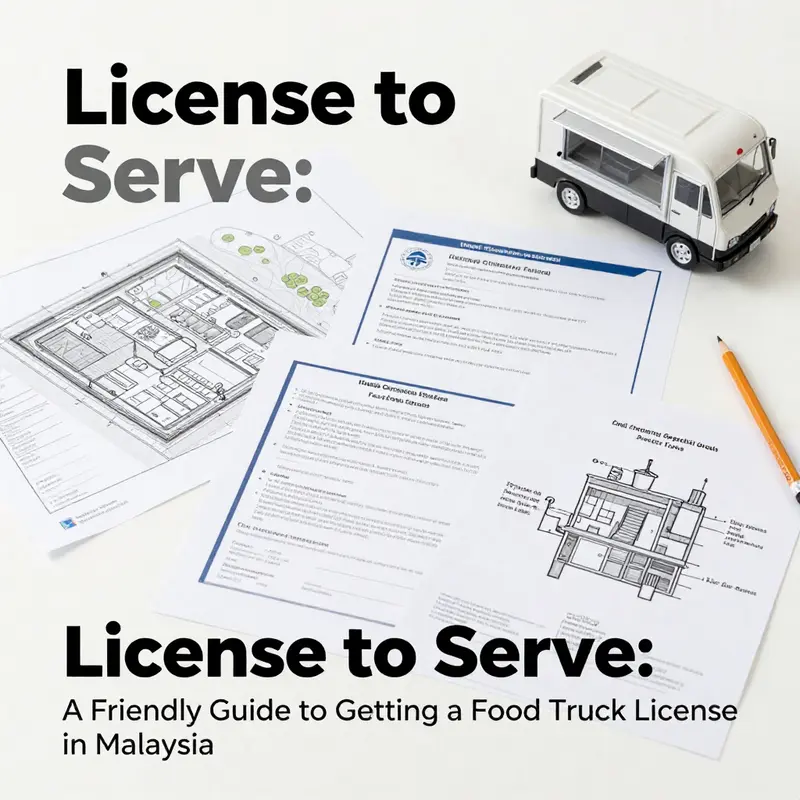
A food truck slides through a city’s rhythm with a pot of steam and the chatter of hungry passersby, but it cannot operate legally without a precise map of forms, plans, and permits. In Malaysia, the journey from a bright idea on wheels to a licensed operator begins with a disciplined sequence of documentation and inspections that align culinary ambition with public health and urban regulation. The process is designed not to trap creativity but to ensure food is prepared, stored, and served in environments that protect consumers and preserve the integrity of the city’s streets. If you picture your truck as a mobile kitchen that travels from market to market, you also picture how every mile is governed by paperwork that travels with you. The first move is formalizing your business, and the next is anchoring your mobile kitchen in a license that proves you meet local standards. The steps are distinct, yet they form a coherent narrative: from registration to site plans, through health certificates, and onto submission, inspection, and issuance. The chapters that follow weave these elements into a seamless story rather than a set of isolated tasks, because a license is not merely a stamp; it is a living contract with the community you serve.
The starting point is a decision about your legal structure, and it is not optional. Before you can apply for any license, you must register your business with the Companies Commission of Malaysia, commonly known as SSM. This isn’t a gatekeeper exercise; it is a formal declaration that your street-food venture has a recognized presence as a business entity. You can register as a sole proprietorship, a partnership, or a private limited company, depending on your preferred governance and risk profile. The registration is typically completed within three to five working days, a window that can feel surprisingly quick given the weight of what follows. Even if you intend to operate solo, the law requires that your business be legally registered. In practice, this means your name appears on a business record, a fixed address, and a tax identity that authorities can trace. Skipping this step is a door you cannot open, and attempting to shortcut it invites avoidable delays later in the process.
Once your business is registered, the next milestone involves choosing the correct license type for a mobile operation at events and markets. In Malaysia, the Temporary Food Business License—often referred to as a Temporary Permit—fits the mobile, temporary, or pop-up nature of a food truck. This license is issued by the local municipal council that has jurisdiction over the area where you plan to operate. The Temporary Food Business License is designed for stalls, pop-up vendors, food trucks, and event-based food services. Its validity is typically up to thirty days, with the possibility of renewal upon request. The temporary nature of the license mirrors the mobility of the business. It signals to authorities and customers that you are compliant for the specific window of operation, and that you are ready to adapt to the cadence of the council’s inspection and renewal cycles.
With the decision to pursue the Temporary Food Business License clear, you enter the documentation phase. Gather and prepare a set of documents that, together, tell a complete story of your operation: the people, the equipment, the kitchen layout, and the safety practices that will keep your patrons safe. The core documents usually include a completed Food Business License Application Form sourced from your local council’s website; copies of your SSM registration certificate; and, if you operate from a fixed location for storage or prep, a lease agreement or landlord consent letter. Your site plan or layout diagram of the food truck is crucial. It should illustrate the cooking area, food storage zones, a handwashing station, a waste disposal point, and the equipment layout, all arranged to comply with hygiene standards. The site plan is not just a drawing; it is a declaration that your truck’s interior design supports safe and hygienic operation.
Health and safety are the backbone of the licensing conversation. Most councils require that all staff handling food hold medical clearance from a government clinic, and they may require evidence of food supplier qualifications to ensure traceability of ingredients. A water quality test report can be essential if you rely on private water sources, and food safety training, such as HACCP awareness or equivalent, may be required by your local council. The plan for waste disposal—how you manage both solid and liquid waste—often appears as a formal component of the submission package. In practice, this means your documentation should include a description of waste management practices, pest control measures, and the availability of cleaning and sanitizing agents appropriate for a mobile kitchen. The beauty of this phase is that it clarifies your operational standards long before inspectors arrive; it is a sandbox where you align your realities with the expectations of health authorities and the public.
The submission itself is a moment of transition from preparation to validation. You will submit the package to the local council—such as the registry office of the city hall or municipal authority that covers the area where you intend to operate. Many councils provide an online submission portal, while others require an in-person visit to a customer service center. Fees vary by state and council, typically ranging from a modest several hundred Malaysian ringgit. The processing window is measured in weeks, and the numbers you see—four to six weeks, sometimes shorter with expedited options—reflect the thoroughness of the review: documents are checked for completeness, plans are assessed for compliance, and the vehicle’s suitability for food service is verified through an inspection plan.
The on-site inspection is where the dream of a portable kitchen faces the reality of regulatory scrutiny. The health department or council inspector will visit to verify hygiene practices, validate the integrity of the site plan, and confirm that there is a clear separation of raw and cooked foods, a functioning handwashing station, and proper waste management arrangements. They will assess the cleanliness of surfaces, the organization of storage, the arrangement of equipment, and the adequacy of ventilation and lighting. It is common for inspectors to request adjustments—perhaps repositioning a sink to improve workflow, or adding a handwashing station where it is more accessible to staff and customers. This stage is not punitive; it is a collaborative step that ensures your operation is safe and sustainable as you scale to more events and locations. If your plan is robust and your practices are sound, you will receive a positive affirmation that your truck is a legitimate, compliant mobile kitchen.
Receiving the license marks a turning point in your journey. Once approved, you will obtain your Temporary Food Business License and you will be required to display it prominently inside the food truck, ensuring it is visible to both customers and inspectors. The license is typically issued with a 30-day validity period, and renewal is normally required on a monthly basis or according to the council’s policy. Even though the license is temporary, the obligations do not vanish. You should anticipate periodic audits or inspections that keep you aligned with ongoing standards. The lifecycle of the license from issuance to renewal becomes part of your operating rhythm. During this cycle, you will need to keep your records up to date and maintain the hygiene and safety practices that earned the permit in the first place. This is not a one-time formality; it is the ongoing relationship between your mobile kitchen and the authority that safeguards public health.
To help you navigate this journey without getting lost in the paperwork, consider a few practical pointers that connect the theory to daily operations. First, use a licensed food truck vendor service provider if you are not building your own vehicle. These providers often offer vehicles that come with licensing support, a service that can streamline the early steps and seed the operation with compliant layouts and systems. Second, always check with your local council’s website for precise rules and forms; the specific requirements can vary from one jurisdiction to another, and what works in one city may require adjustments in another. Third, joining an industry association can be a wise move. A local association will keep you informed about regulatory updates, provide networking opportunities, and share best practices for compliance and safety. Finally, use the official resources like the council’s online portal as your primary reference, but complement them with practical, on-the-ground planning that anticipates the realities of street vending—crowded sites, weather, variable footfall, and the evolving tastes of customers who expect both quality and consistency.
As you prepare the documentation, there is value in acknowledging a broader context: the journey to a food truck license in Malaysia sits at the intersection of entrepreneurship, health security, and urban management. The local council’s requirements are not merely about ticking boxes; they are about shaping a safe, reliable, and community-friendly street-food experience. Your site plan becomes a blueprint not only for your kitchen’s physical layout but for the way your business will scale—how you manage supply chains, how you maintain product freshness, and how you respond to the changing demands of events and markets. The health certificates and training reflect a commitment to public health, the same principles that guide any professional kitchen on land. The submission process, with its fees and timelines, is a respectful handshake with the city: a mutual understanding that your success on wheels must coexist with the well-being of others who share the streets you travel.
To connect these ideas to practical navigation, you can explore resources that help demystify the regulatory language and turn it into actionable steps. For example, many prospective operators find it helpful to refer to guides that discuss navigating food-truck industry regulations in a broader sense, which distill the core principles into accessible checklists and timelines. Such guidance complements the official forms and inspection criteria, providing a clearer picture of what to expect at each stage and how to prepare for the conversations you will have with council staff and inspectors. Understanding the regulatory landscape in this way reduces anxiety and positions you to respond quickly if a revision is requested during the review process. The goal is not to avoid effort but to transform effort into a predictable pattern that supports your business plan and your customers’ safety.
In the spirit of practical integration, consider how your internal workflow aligns with the external process. The site plan you submit is not just a document; it is a map of your daily operations. The COF—or Certificate of Fitness for the vehicle—speaks to the vehicle’s roadworthiness and its suitability as a mobile food workspace. The Environmental Health Permit and the food-handler hygiene certificates certify that the people inside the truck are trained and compliant with recognized standards. All these elements together create a coherent narrative: a mobile business that travels responsibly, serving people safely, in a city that expects high standards from street food vendors.
As you prepare to submit, stay mindful of the timelines and the potential for quick wins. Some councils offer expedited processing for an additional fee, shortening the waiting period from weeks to days. If you anticipate peak seasons—festivals, holidays, or major events—plan your submission with enough lead time to accommodate inspection schedules and any requested plan revisions. While the process can require patience, the payoff is straightforward: a formal recognition that your mobile kitchen has the right to operate within the local public-health framework. And with the license in hand, you can focus on what you do best—crafting delicious, safe, and memorable experiences for customers who encounter your truck in markets, at events, or along urban corridors.
For readers who want a compact cue to action, keep a running checklist of the essential elements: ensure your SSM registration is complete and current; confirm you are applying for the Temporary Food Business License suitable for a moving operation; assemble your site plan with clear zones for raw and cooked foods, storage, sanitation, and waste; secure health certificates for staff and ensure any water or supplier documentation is in order; submit through the local council’s portal or in person with all attachments; prepare for an on-site inspection, addressing any raised concerns promptly; and finally display your license clearly once issued. The chain from registration to display is not merely administrative; it is the thread that binds your cuisine to the city’s safety standards and to the trust of your future customers. If you want a practical throughline while you prepare, you can consult resources that specifically discuss navigating food-truck industry regulations, which provide distilled insights that complement the official requirements. This approach helps you stay aligned with both procedure and performance, ensuring that your dream on wheels becomes a reliable, lawful, and beloved part of the urban food landscape.
To close the loop, remember that official guidance and forms are centralized and updated on the city’s pages. When in doubt, consult the local council’s portal for the most accurate, up-to-date information relevant to your area. For a regional perspective that supports your broader planning, you may also find value in general regulatory overviews that outline the core steps in a digestible format. Official guidance remains the gold standard for accuracy and currency, and it is the anchor you will return to as you expand from a single truck to a fleet that serves communities across multiple districts. If you want a direct, practical path to start crosswalking these ideas with your own business plan, the journey begins with your formal registration, moves through the precise documentation, and culminates in the license that legitimizes your mobile kitchen in the eyes of the city you call home.
For those seeking a credible external reference to deepen their understanding of the regulatory framework, see the official city portal for licensing guidance in the relevant jurisdiction: https://www.dbkl.gov.my. And for broader, industry-level navigation tips within the mobile food sector, the broader guidance on navigating food-truck industry regulations can be a useful companion as you chart your course and prepare your paperwork, including the internal resources you may link within your site plan and business materials.
Chapter 4: Navigating Malaysia’s Mobile Food License — Fees, Timelines, Inspections, Renewals, and Compliance Mastery
In Malaysia, getting a food truck license is a journey through a network of regulators who recognize the realities of mobile commerce. Food trucks are treated as temporary or pop-up operators rather than fixed storefronts, so the licensing framework mirrors the need for flexibility alongside accountability. The path you follow starts with the fundamentals of building a legitimate business and ends with a clear, repeatable process that keeps you compliant while you serve fresh, safe, and diverse meals to customers in markets, events, and city streets. The Temporary Food Business License is the formal permission to operate from one council to another, but it is not a single hurdle. It is part of an ongoing relationship with municipal authorities and health regulators designed to protect consumers and to help capable operators grow. When you approach licensing as a structured system rather than a one-off form, you gain predictable timelines, fewer surprises, and a stronger platform for expansion, partnerships, and better venue access. This mindset matters because every permit, every inspection, and every renewal contributes to trust with customers who want reliable, safe food on wheels as they move through neighborhoods and festivals.
To begin, you must register your business with the Companies Commission of Malaysia, commonly known as SSM. This step is non negotiable even if you plan to operate solo. You can register as a sole proprietor, a partnership, or a private limited company, depending on long term goals and the scale you envision. The registration process tends to be fast, typically completed within three to five working days. Once your business is formally registered, you have a verifiable legal entity that can open a bank account, sign supplier contracts, and access tax-related services. A clean registration also reduces friction later when regulators review your paperwork and when you seek bank financing for a truck or for equipment upgrades. The credibility that comes from having a properly registered business helps you negotiate with suppliers and venues and signals your commitment to responsible operation. It also creates a clearer path for managing licenses across multiple events, should you decide to scale up.
Next comes selecting and applying for the correct license type. Because food trucks operate temporarily and move between venues, the appropriate license is the Temporary Food Business License issued by the local municipal council in the area where you intend to operate. This license generally covers a 30-day period and can be renewed in 30-day blocks or as the council allows. The exact scope, fees, and renewal cadence are set by the council, so you will need to understand the rules for each location you target. Local councils frame licenses for food stalls, pop-up vendors, mobile kitchens, and event-based food services. Your license permissions will determine where you may park, how long you may stay, and what times you can operate. It is important to treat each activation as a separate engagement with the local authority, ensuring you stay within defined zones, follow posted hours, and maintain proper health and safety standards as expected for temporary operations. The licensing experience is easier when you integrate it into your event planning, including route calendars, vessel cleaning schedules, and supplier coordination.
With the structure chosen, you move into the document preparation phase. This is where the level of detail can determine whether your application sails through or drags on in reviews. You will typically need to complete the Food Business License Application Form, which is usually available on the local council’s website. Attach a copy of your SSM business registration certificate. If you use a fixed storage or prep location, include a lease agreement or landlord consent letter. A detailed site plan or layout diagram of the food truck is essential; it should clearly show the cooking area, food storage zones, handwashing station, waste disposal point, and the overall equipment layout. The plan must illustrate practical hygiene controls to prevent cross contamination and to enable easy cleaning. Every staff member who handles food should have a health clearance certificate from a government clinic, and you should provide proof of your food supplier qualifications to demonstrate traceability of ingredients. If you rely on private water sources, include a water quality test report. Some councils require evidence of food safety training, such as HACCP awareness, or an equivalent program, so gather certificates that confirm you or your team understand basic safe food handling. In many cases, you will also designate a qualified Food Hygiene Officer who will supervise daily operations and ensure ongoing compliance. The FHO is not merely a title; it is a practical role that helps you manage day-to-day sanitation, staff training, and corrective actions when issues arise. By assembling a comprehensive file, you signal your commitment to safety, reliability, and professional standards, which can smooth the regulator’s evaluation and shorten the wait for approval.
The submission to your local council marks a critical moment. You can usually apply online through the council’s official portal, or you may choose to submit in person if you prefer. The application fee typically sits in the RM 300 to RM 500 range, though the amount can vary by state and council. After you submit, the processing time is not a fixed countdown but a range, commonly four to six weeks. Some councils offer expedited processing for an additional fee, bringing the timeline down to roughly one to two weeks in certain cases. The delay often hinges on whether the submission is complete and on the council’s current workload. A meticulously prepared application reduces back-and-forth requests for information and minimizes the risk of delays that could push your launch date back. During this phase, you may be asked to supply additional documents or clarifications, so organize all materials in a clear, searchable format and keep a local copy of everything you submit. A streamlined submission is a practical investment that pays off in faster access to markets and venues.
After submission, the next major step is the on-site inspection conducted by the health department or the council’s inspectors. This visit is a verification of reality: does your truck and your operating plan align with hygiene standards and regulatory expectations? Inspectors assess several critical elements, including the cleanliness of surfaces, proper waste management, separation of raw and cooked foods, and the presence of handwashing facilities. They also examine adequate ventilation and appropriate lighting, the condition and arrangement of equipment, and pest control measures. You may be asked to adjust your setup, relocate equipment, or enhance your cleaning protocols to meet the standards. The inspection is not a test you pass once and forget; it is a dialogue about how you run daily operations. You should anticipate questions about temperature control, cross-contamination prevention, cleaning schedules, supplier traceability, and staff hygiene practices. If any area falls short, regulators typically set a remediation timetable and require follow-up actions or a re-inspection. Even with a clean bill of health, regulators may request ongoing documentation of cleaning rosters, ingredient sourcing, and staff training to ensure continued compliance.
When the inspection confirms compliance, you receive and display your Temporary Food Business License. The license must be displayed prominently inside the truck where it is visible to customers and to inspectors during visits. Remember that even temporary licenses carry ongoing obligations. Renewal is usually required every 30 days, and councils may impose additional compliance requirements for extensions, especially if you operate across multiple zones with different rules. While the license is temporary in name, the framework for compliance is ongoing, and regulators expect routine adherence to hygiene, food safety, and waste management practices. It is common to face annual compliance checks or audits in some jurisdictions, so even with a current license, you should stay prepared for periodic reviews. A well-run operation maintains a ready-to-inspect regimen: current staff health records, up-to-date supplier certifications, current roadworthiness documentation for the vehicle, and a clear mechanism to address any violations promptly. This disciplined approach reduces risk, supports smoother expansions, and builds trust with venues and customers alike.
The cost structure associated with licensing is not standardized nationwide and varies considerably by municipality. In Kuala Lumpur, the annual license fee for a food truck is generally in the RM 250 to RM 400 range, reflecting the city’s market dynamics and regulatory overhead. Other states such as Selangor or Penang can have slightly higher or variable charges that reflect local operating costs. It is important to anticipate additional charges beyond the base license, including inspection fees that may run around RM 100 to RM 200 per visit, equipment certification costs, and potential penalties for non-compliance. Given the variance, you should confirm all fees directly with the respective local authority before submitting your application. Framing these costs as part of a broader investment in safety, reliability, and guest experience helps ensure you plan appropriately for equipment upgrades, insurance, and working capital. Thoughtful budgeting reduces the risk that regulatory costs derail a planned launch or slow down expansion into new markets. A disciplined financial plan also motivates you to invest in dependable, compliant equipment and robust processes that deliver consistent quality to customers.
Renewal is a central rhythm of operating on wheels. Even temporary licenses require renewal, often on a monthly or quarterly basis depending on the council. Renewal typically involves re-submitting updated documents, including a current roadworthiness certificate for the vehicle and proof of insurance. It is prudent to maintain ongoing compliance with a certified Food Hygiene Officer and to ensure there are no outstanding violations from the prior period. Councils frequently send renewal reminders via email or SMS, but setting personal reminders in a calendar is a practical safeguard. Renewal procedures may also require an updated site plan if you have changed locations or the layout of your kitchen. The renewal process, while less flashy than the initial launch, is the backbone of sustainable operations. Adhering to renewal timelines protects your ability to operate in popular venues and at sought-after events without interruption. A proactive operator who treats renewal as a standard operating rhythm experiences fewer penalties, smoother audits, and steadier cash flow.
Behind the basics of license administration lies a broader discipline of compliance that, when embraced, elevates a mobile food business into a durable brand. Smart operators invest in high-quality, portable kitchen equipment designed for mobility and safety. They run regular internal audits, keeping detailed records of cleaning schedules, ingredient sourcing, and staff training sessions. They also stay current with regulatory changes, including allergen labeling requirements, sustainable packaging expectations, and waste management guidelines. The overarching aim is to turn licensing from a hurdle into a competitive advantage. Hygiene, transparency, and proactive communication with regulators create trust with customers and with event organizers. If you study how different districts enforce rules and how regulators respond to common issues, you gain a practical playbook that helps you scale responsibly. The right mindset is to view compliance not as a constraint but as a continuous improvement system that underpins growth, reputation, and long-term profitability in Malaysia’s dynamic mobile food market. This approach matters especially as the regulatory landscape evolves and as venues demand higher standards of sanitation and reliability.
For those seeking practical pathways, anchoring your journey in regulators’ guidance is valuable. You can explore resources that summarize regulatory navigation in the industry and provide perspectives from peers who have managed the same challenges. A concise guide that assimilates how to operate legally, what to prepare for inspections, and how to plan for growth within the regulatory framework can accelerate your time to market. You can access a relevant resource that distills these ideas here: Navigating food-truck industry regulations. This internal link ties your licensing effort to a broader understanding of how the sector organizes itself around safety and compliance, and it helps you align your daily routines with best practices observed by experienced operators.
Beyond the mechanics of obtaining and renewing the license, the broader journey is about building a sustainable, trusted business on wheels. You should stay connected with the regulatory ecosystem and seek out networks that offer guidance, updates, and professional connections. Joining industry associations can provide access to standardized practices, ongoing training, and peer support as your fleet grows from one truck to multiple units or expands into additional markets. In this chapter we have traced the essential route from SSM registration to the display of a valid license and through the renewal cycle to enduring compliance. The objective is not to overwhelm but to equip you with a practical, repeatable process that you can apply across Malaysia, adapting to local nuances while preserving consistent quality and safety for customers.
For an official, comprehensive reference that outlines the regulatory framework and the procedural expectations regulators use to evaluate mobile food operations, consult the health ministry’s licensing guide for food trucks. This resource provides a dependable baseline for planning and scale, helping you anticipate regulatory requirements rather than react to surprises. External resource: https://www.moh.gov.my/en/food-safety/food-businesses/food-truck-licensing-guide
Final thoughts
Securing a food truck license in Malaysia is a structured journey that blends legal steps, safety practices, and practical planning. By aligning your event or community initiative with the four chapters—SSM registration, understanding the Temporary Food Business License, gathering the right documents, and following through with fees, inspections, and renewals—you position your mobile kitchen to operate confidently, responsibly, and with pride. The payoff isn’t just a piece of paper; it’s the credibility to partner with venues, host memorable experiences, and deliver delicious, safe meals to your audience. Start early, stay organized, and keep your team aligned with local councils and health standards. With preparation and patience, your food truck can become a reliable, celebrated presence at markets, events, and community gatherings across Malaysia.