Rochester, NY, offers a thriving canvas for food trucks—from sunlit market days in City Square to breezy summer evenings at Riverside Park, and busy lunch crowds around the university campus. But every great mobile kitchen needs the right permits, locations, and processes to keep wheels turning and flavors flowing. This guide is built for event planners harnessing Rochester’s energy, corporate teams coordinating wellness and community initiatives, local groups rallying for neighborhood pride, and curious food enthusiasts chasing new flavors on the go. You’ll see how Rochester’s regulatory framework works, where trucks are typically allowed to operate, what seasonal opportunities exist, how to submit applications without headaches, and where to find up-to-date resources. Each chapter builds on the last to give you a holistic, actionable view of the Rochester food truck landscape. By the end, you’ll know who to contact, which streets or spaces are most viable for your goals, and how to stay compliant while delivering memorable experiences.
Where a Food Truck Can Roll in Rochester, NY: Navigating Streets, Spaces, and Permits
Rochester, New York presents a living map for food entrepreneurs who want the energy of a moving kitchen without sacrificing compliance. The city welcomes mobile food vendors on its public streets, but it also sets clear guardrails to ensure safety, traffic flow, and fair access to prime sites. For someone planning to operate a truck in Rochester, the starting point is less about a perfect street and more about understanding who grants permission, where that permission covers, and how to align the vehicle as a legitimate, roadworthy business. In practice, this means treating the truck as a licensed motor vehicle and treating public spaces as controlled zones that require permits, periodic reviews, and sometimes event specific access. The result is a system that rewards preparation with a steadier route to bustling places and consistent customers, rather than a grab bag of spontaneous spot picks that can lead to delays or penalties if the paperwork is not aligned with the pavement you intend to share with the public.
Regulatory clarity in Rochester hinges on a few core actors who together define the path from concept to lunch crowd. The City of Rochester maintains a General Code that sections on food trucks and food trailers govern the core licensing and operation rules. In particular, the licensing framework covers general requirements and the conditions under which licenses can be revoked, creating a predictable set of steps for any operator who wants to set up on city streets. This structure also carries a price tag. License fees apply annually and are tied to the type of operation. Food trucks and trailers typically face an annual license fee, with certain exceptions or designations for areas that city planners have identified as hubs of commerce or special events. The same logic applies to food carts, which are covered by similar licensing and zoning provisions once the operator elects to pursue a cart or a trailer as the business model. The text of the official code is accessible through the city’s legal code resources, which provide the most authoritative, up-to-date specifics for fees, renewals, and revocation criteria. When a reader wants to verify exact numbers and sections, the eCode360 portal for Rochester is the go-to reference, and it is worth revisiting before planning any concrete timeline.
Yet numbers alone do not tell the full story. The heart of Rochester’s operating reality lies in zoning and designated zones where mobile food services can legitimately operate. The city’s approach is designed to balance vibrant street life with safe traffic management and predictable retail dynamics. In Rochester, certain zones—such as core downtown areas and historically busy waterfront districts—are highlighted for access, sometimes with transitional or seasonal allowances. The center city and marina districts are commonly cited as areas where licenses and permit processes intertwine with special event calendars and market days. The implications for a truck operator are practical: if you intend to park, serve, and move through these zones, you need to align with the permitted footprints for the year or the season and be prepared for inspections or approvals tied to each location. The process often begins with confirming that your truck is properly registered and that you hold the vehicle’s motor vehicle license aligned with public street operation, a prerequisite that keeps the operation in the same lane as other street-legal vehicles rather than a curbside novelty.
The operational choreography extends beyond licensing into health and safety considerations. For those planning to operate as a mobile food establishment, the Monroe County Health Department becomes relevant. Health regulations focus on food safety, sanitary practices, and the appropriate facilities required to prepare and serve foods in the moving context. When a mobile establishment operates on public space, a health review or a related permit may be part of the upfront approvals. The aim is to avoid health risks that could compromise not only a single vendor but nearby street activity as well. The guidance from health authorities emphasizes standard practices such as maintaining proper food temperatures, preventing cross-contamination, and ensuring adequate handwashing facilities. Even though the regulatory emphasis is on safety, the practical effect for a truck operator is a clearer playbook: invest in reliable transport, maintain clean and organized service spaces, and prepare for inspections with a well-documented operations plan. For operators who want a compact overview that ties regulatory risk to day-to-day operations, a resource that outlines the pathway through regulations can be helpful, and it can be accessed through the internal link here: Navigating food-truck industry regulations.
Locations in Rochester are not random; they reflect the city’s attempt to stitch together commerce, culture, and daily life. City Square and Riverside Park stand out as focal points during the warmer months, when weekend markets and outdoor events draw crowds looking for variety and quick bites. Around the university campus, student and staff foot traffic creates a natural corridor for lunchtime activity, while the downtown corridor along East Avenue and adjacent business districts can yield steady streams of office workers seeking convenient meals. In these areas, the permission to operate is not just about a line on a map; it is about aligning with scheduled events and cooperating with event organizers who may assign space or coordinate access for multiple vendors. The practical rhythm is to keep an eye on city announcements and event calendars, because a “placement” in a market square may come with a conditional permit, a required vendor meeting, or a short-term lease on a given curb or plaza. The upside is tangible: predictable footfall, a built-in audience, and the chance to join a curated food culture scene that roars to life with summer concerts and community festivals.
Of course the day-to-day operation must account for more than licensing and geographic eligibility. Rochester operators must manage the interface with city agencies, neighboring businesses, and the needs of pedestrians and transit. A well-run mobile unit keeps its space clean, uses waste disposal protocols that are understood by city crews and event coordinators, and respects times when curbside public space is most congested. This is a city that values orderly street life, and the licensing process reflects that priority by linking operational hours, zoning compliance, and vehicle regulations to a clear set of expectations. The practical upshot for operators is a straightforward cycle: identify the districts that suit your cuisine and branding, verify zoning and license coverage for the intended site, arrange any event-specific permissions, complete the health and safety checks if applicable, and maintain ongoing compliance through renewal cycles. The process is iterative, but it yields a stable footing for steady operations rather than chasing last-minute permits.
In building a Rochester strategy, few decisions are as consequential as how a truck will integrate with the urban landscape. A successful operator treats the city as a living market, not a single block that happens to offer a lunch crowd. The key is to connect with the places that consistently host crowds, while respecting the rules that protect safety and public order. A practical mindset blends location scouting with a front-loaded permitting plan. This means mapping out your preferred sites, understanding the license and zoning timelines, and aligning your truck’s route with the city’s event schedule. It also means understanding that some zones come with designated hours or seasonal access, while others may require a temporary permit for a one-off event. In this sense, the Rochester system rewards preparation and coordination. It also opens doors for collaborations with market organizers, campus event planners, and downtown merchants who welcome the energy that a well-timed food truck can bring to a neighborhood during lunch or after hours.
As you navigate this terrain, keep in mind the value of official sources. The City of Rochester website and the cited code portals remain the most authoritative touchpoints for the latest licensing steps, zone maps, and any fee amendments. Because regulations can update, a proactive operator checks these resources before finalizing a site plan or submitting an application. The conversation with the city is ongoing, and it is often a matter of securing a base license first and layering on event-specific permissions as needed. A clear advantage for operators who approach Rochester with a planning mindset is the degree to which the city can facilitate a schedule that balances street life with safety, ensuring that the public feels welcome to enjoy a meal on the go without compromising the flow of traffic or the integrity of neighboring businesses.
For anyone ready to begin this journey, a practical step is to pin down a core set of locations you want to serve and then verify through the official channels which are open for year-round operation and which require seasonal or event-driven access. Consider also the nature of health and safety inspections, the necessity of a valid motor vehicle license, and the annual licensing cycle that keeps a truck on the streets legally. With clear documentation, a well-prepared operator can move smoothly through Rochester’s changing seasons and the city’s evolving events schedule. This approach not only minimizes friction but also positions the vendor to capitalize on high-traffic windows, whether the bright morning bustle near downtown offices or a late afternoon crowd at a university quad. The city rewards this discipline with a reliable platform for growth and a shared sense of public space that respects both commerce and community.
External resource: https://www.rochesterny.gov/1529/Food-Truck-and-Food-Trailer-Vendors
Chapter 2: Where a Food Truck Can Roll in Rochester, NY — Navigating Allowed Locations and Zoning
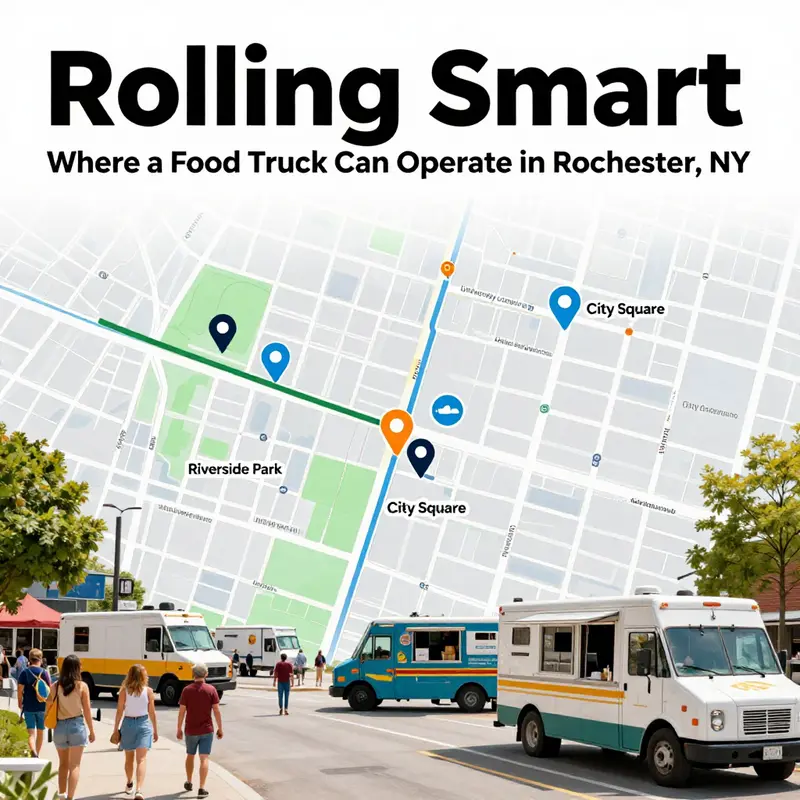
Rochester invites food trucks to be part of its lively street life, yet the city’s regulatory framework carves clear lines about where and how a truck can operate. The rules are written not to stifle opportunity but to safeguard public safety, preserve residential quiet, and ensure that food vendors integrate smoothly with pedestrians, park users, students, and office workers who share the same urban space. In practice, this means that success for a food truck in Rochester hinges less on plotting a clever route and more on understanding the jurisdictional map—the places the city designates for commerce, the constraints around those spaces, and the steps needed to secure permission before a single sneeze of steam escapes a kitchen vent. The core idea is straightforward: the vehicle must be treated as a motor vehicle for licensing purposes, its activity must occur in designated zones rather than along every curb, and operations must occur with a careful eye toward neighboring residents and pedestrians. The practical outcome is that a truck can perform well in Rochester, but only in places where the city has explicitly allowed such activity and where a vendor has taken the right steps to obtain the necessary permissions.
A basic but essential distinction concerns the prohibition on operating on public roadways. In Rochester, a food truck does not have the green light to pull onto any public street and begin service. The vehicle must be licensed as a motor vehicle under the city’s rules, and its location must be within spaces or zones that the city has expressly designated for commercial food activity. The distance requirements are not cosmetic; they reflect a policy intention to minimize disruption to residential neighborhoods and to maintain safe sightlines and traffic flow. Specifically, the city requires that a vehicle-based food operation remain at least a defined distance away from residential land uses classified as low-density (R-1) or medium-density (R-2). The practical effect is that you cannot simply park next to a row of single-family homes and start selling; you must locate in areas where the city has prepared for such use.
Even more concrete is the rule about parking spaces along public roads. In Rochester, operating from a public street parking space is generally not permissible unless the Traffic Control Board has reviewed the space and the city has formally approved the arrangement. This reflects a concern for not blocking traffic lanes or pedestrian pathways and for ensuring that a parking-based operation does not create unsafe or unsightly conditions for passersby. For many operators, this means that the best route to a successful street presence is to identify spaces that have already earned the city’s explicit approval or to pursue a formal permitting process to secure a sanctioned slot—often tied to a special event, a market, or a designated commercial district where the city has established guidelines for street vending.
When it comes to what Rochester calls a food cart—distinct from a mobile vehicle—there is an additional layer of regulatory clarity. Any food cart operating on public sidewalks or public spaces needs a valid city-issued food cart license. The distinction between a motor vehicle operation and a cart operation is not idle; it changes the licensing pathway, the inspections that may be required, and the timing of approvals. The city’s intent is to maintain consistent standards for safety, sanitation, and crowd management, regardless of whether the operation uses a full-size truck, a trailer, or a cart that sits on a sidewalk or plaza. In short, carts face a more explicit licensing hurdle for public-space activity, which is consistent with the city’s broader policy of orderly use of sidewalks and pedestrian zones.
Turning from the abstract to the concrete, Rochester’s typical operating locations cluster around a few familiar types of places. There are the spaces that routinely host food trucks on market days or during special events, such as city squares that become gathering hubs on weekends, along with outdoor venues that host music, arts, or community celebrations. Riverside Park, especially during the summer, is a classic example of a site where outdoor activity creates demand for quick, tasty options that complement the mood of a festival or a family day out. These spaces are not arbitrary; they are defined by the city and the event organizers as compatible with food service, with pedestrian flow, and with the surrounding park environment.
Beyond parks and markets, Rochester also treats certain institutional and campus edges as viable settings for mobile food. The Rochester area’s universities and colleges attract large populations of students, faculty, and staff, and the surrounding streets and plazas become natural corridors for lunch pickups and late-afternoon snacks. In practice, this means a food truck can find favorable exposures near campus boundaries if the location has been zoned or permitted for vendor activity and if the operators adhere to health and safety standards, noise controls, and the appropriate business licensing. The university-adjacent areas often require a coordinated approach with campus services or with the city’s licensing and permits office to ensure that the vendor aligns with campus policies and with traffic and safety requirements.
Another important category is the districts and corridors where businesses welcome lunch-hour traffic and shoppers who are looking for quick, high-quality options. Downtown Rochester and the East Avenue corridor are examples where a fleet of trucks may operate in a controlled, time-limited fashion, typically during mid-day hours. In these districts, some employers permit on-site lunch options or a monthly market-style setup, while others rely on a city-approved calendar of permissible hours and locations. The throughline is clear: brighter business districts with active pedestrian traffic tend to offer more opportunities for mobile vendors, but only when the operator has secured the appropriate permissions and chosen a space that aligns with city standards for safety, sanitation, and public convenience.
Of course, the system that governs where a truck can operate is designed to be both predictable for vendors and protective for residents and visitors. The City of Rochester publishes its rules so operators can plan in advance, apply for the necessary licenses, and know which spaces are off-limits. It is not unusual for spaces to rotate seasonally or to require a special event permit, or for operators to target recurring markets that have established arrangements with city agencies. The process typically begins with a careful review of the official guidance, followed by an application for the right licenses, inspections where needed, and a clear plan for the hours of operation, waste management, and safety compliance that will reassure both city staff and customers.
For those seeking a practical starting point, the city’s own guidance emphasizes two pillars: first, ensure your vehicle is properly licensed as a motor vehicle; second, locate your service in spaces recognized by the city as appropriate for mobile food operations. The distance-from-residential-zoning requirement reinforces the need to differentiate between the residential streets some neighborhoods would like to preserve and the commercial places designed to handle the bustle of a food truck. The requirement about not using on-street parking spaces—unless approved—further channels vendors toward spaces engineered for this use, typically in mixed-use districts or in dedicated market areas where traffic patterns and pedestrian movement have been studied and approved.
Navigating these rules involves more than securing a license. It means understanding how to read local zoning maps and how to interact with the city’s licensing and inspections offices. It means knowing when a location requires a temporary permit for a one-off event and when a venue or district has a permanent allocation for food trucks or carts. It also means recognizing that some sites, such as market plazas or event zones, may have fixed application windows or caps on the number of vendors allowed on a given day. A seasoned operator learns to align vehicle capability with space availability, weather considerations, and the calendar of city-sponsored events that attract large crowds and create dependable demand.
As you plan, consider the value of deep local knowledge. The City of Rochester maintains an up-to-date, official standard that is the reference point for every decision. For anyone serious about operating in the city, the starting point is to review the city’s general code and then to seek out the precise regulations that apply to food trucks, food trailers, and food carts. The eCode360 platform, which hosts the City of Rochester’s municipal code, is the practical repository for the exact language and the official amendments. Reading the code helps you understand the framework for licensing, the distances from specific land uses, and the conditions under which a parking-space operation might be approved. It also clarifies the responsibilities tied to health inspections, waste disposal, and signage requirements, all of which contribute to a reliable, safe, and legally compliant operation.
In addition to consulting the formal code, it helps to engage with the city early in the process. Contacting the appropriate department to confirm current rules and any district-specific rules prevents missteps and delays. If you are pursuing a recurring location, you may be invited to present a brief plan that demonstrates how you will maintain traffic flow, manage queues, and handle waste and spill containment. The city’s goal is not to block opportunities, but to ensure that each vendor’s presence contributes to the urban experience without compromising safety or neighborhood quality of life. When approached with a clear plan and the right licenses, a food truck can be a valued part of Rochester’s street life, offering diners a convenient and enjoyable option while contributing to the city’s economic vitality.
For operators who want a quick compass, a practical path is to consult the published guidance and then connect with the city’s licensing office and health department to align on the exact permits, inspections, and site approvals required for their vehicle, location, and hours of operation. As the city continues to balance the needs of residents, workers, students, and visitors, it remains possible for a food truck to thrive in Rochester by choosing spaces that the city has already vetted and by following the licensing dance that ensures each bite is served with safety and integrity. To explore more on how to navigate these regulations and integrate them into a running plan for a food truck business, consider the broader discussion on navigating food-truck regulations, which provides practical steps and considerations that complement this chapter’s focus on where and how Rochester vendors can operate. Navigating food-truck regulations.
For researchers, planners, or operators seeking the statutory backbone, Rochester’s Code is accessible online and structured to guide decision-making from site selection through ongoing compliance. The core principles—license as a vehicle, permissible locations, and distance from residential zones—frame a predictable, safety-conscious environment that nonetheless accommodates entrepreneurial mobility. If you keep these principles in view and couple them with a well-researched plan for a chosen site, you’ll be well positioned to capitalize on Rochester’s vibrant public spaces while respecting the city’s commitment to orderly, safe, and enjoyable urban life.
External reference: https://www.ecode360.com/Rochester-NY/Chapter-2
Rochester on Wheels: Seasonal Avenues and Event-Driven Opportunities
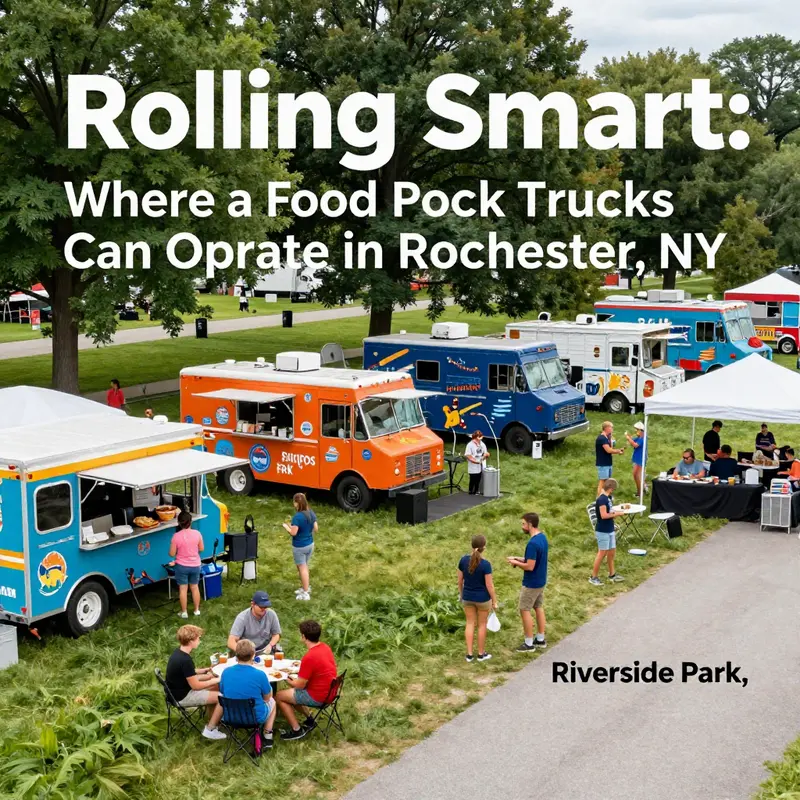
Rochester, New York, offers a dynamic landscape for food truck operators who want to ride the citys seasonal energy and event cadence. The streets are stages where appetite, culture, and community converge. Success here comes from reading seasonal rhythms, knowing where crowds gather, and aligning with the citys permitting framework. In Rochester, seasonal demand follows the calendar—warm months invite alfresco dining and longer street life, while winter offers opportunities at indoor venues and special events. The core idea is to move with the seasons and partner with the citys event ecology, rather than chase a single location year round. The practical path blends mobility with permitted sites and a readiness to adapt to the citywide calendar of markets, campuses, parks, and festivals.
Regulatory clarity is the first compass. In Rochester, food trucks must be licensed as motor vehicles and comply with state and local codes. The city issues permits for temporary or permanent deployments in designated venues, markets, and public spaces. Operators should begin with the basics: confirm vehicle licensing, ensure health and safety compliance, and apply for the appropriate permits tied to the chosen location and time frame. The most reliable route is to monitor official channels for the latest permit guidelines and site approvals. While exact curbside locations can shift with seasons and events, the framework remains consistent: mobility plus permits equals permission to serve.
Seasonal hotspots emerge where residents and visitors congregate. Highland Park becomes a summer magnet for concerts and family gatherings, where open spaces and programming create demand for quick, flavorful eats. Downtown Rochester lights up as temperatures rise, with office workers, students, and shoppers offering walkable audiences for trucks that can rotate through blocks while navigating parking and traffic rules. The downtown energy often blends with street fairs and markets, turning a block into a lively arc of food and street life.
Rochesters arts and cultural calendar offers dependable event opportunities. The city hosts a range of events from music festivals to gallery walks that attract diverse crowds. For food trucks these occasions are about joining a curated moment in the citys cultural narrative. At large festivals, organizers typically designate vendor zones and offer coordination support, reducing entry friction and increasing foot traffic. The public celebrations align with city calendars, creating a reliable pulse operators can tap into each season. For those who want a rotating menu, these gatherings are fertile ground for repeat customers and word of mouth referrals.
Beyond parks and festivals, Rochesters academic ecosystem provides steady demand. The University of Rochester and nearby institutions host events, games, and student gatherings that can turn a truck into a campus staple for part of a day or week. Campus-adjacent spots often yield predictable lunch demand and special events. This is not about a single street corner but about the broader university precincts where students and workers converge, creating vibrant rhythms through the academic calendar.
Another seasonally reliable channel is farmers markets, with the Rochester Public Market serving as a keystone example in spring and summer. Markets offer a built-in audience that values fresh, local, and convenient fare. A well-timed truck presence at market hours can capture that audience before, during, or after market windows. The market setting also provides a chance to showcase ingredients, build local supplier relationships, and craft menus that reflect locality. Seasonal shifts enable a truck to refresh its offerings with new produce and flavors while maintaining speed and consistency.
For operators focused on private and corporate events, Rochester presents year‑round opportunities. Weddings, private parties, and corporate functions often require mobile food services that can attend venues from hotels to outdoor campuses. The citys permitting pathways and guidance can help vendors connect with planners. The ability to scale for large events, coordinate with organizers, and manage logistics — power, water, waste, and food safety — becomes a core skill for long term viability. The advantage of events is longer service windows and the chance to build relationships that lead to future opportunities.
To uncover these opportunities, operators should plan with timing in mind and keep a practical workflow. Start with the citys official resources to understand permit requirements for each site type. A truck may carry multiple permits, each tied to a location, date, and event. The citys guidance and permit pathways are navigable for mobile vendors who plan ahead and keep compliance at the center of daily operations. Official calendars and municipal websites are valuable tools for spotting opportunities. By aligning menus, staffing, and maintenance with these calendars, operators can minimize downtime and maximize seasonal revenue.
Building a seasonal calendar is about understanding how a site behaves at different times of day and week. A downtown loop may offer a strong lunch crowd on weekdays and friendly weekend spillovers when paired with a market or concert series. A park venue may host repeat weekly events during the summer, rotating themes that draw different communities. A campus footprint benefits from a regular cadence—a predictable stop that becomes part of students daily routines. The key is to keep the menu flexible to respond to tastes while maintaining quick service, consistent portions, and a clean, welcoming presentation that reflects local roots and reliability.
To stay compliant and adaptable, operators should learn from those who navigated the citys system. Start with who to contact, what permits are needed for each site, and how to coordinate with event organizers who regulate entry to festival grounds or market lanes. A concise guide to licensing, health compliance, parking restrictions, and permit renewal cycles can be a helpful companion. This knowledge supports a confident menu and smoother daily operations in a city with lively public life and municipal oversight.
The practical take is clear: success comes from reading the citys tempo and weaving a flexible, compliant plan that leverages strong seasonal moments. It is less about chasing a single perfect location and more about building a network of venues such as parks, markets, campuses, and venues where crowds gather, often in predictable seasons. It also means adapting the business model around events—offering seasonal menus for festivals, adjusting hours to match event start times, and coordinating with planners for weddings or corporate functions. When operators treat Rochester as a living calendar rather than a fixed map, seasonality becomes a strategic asset.
For more on navigating local regulations, see official city and state guidance on licensing and health compliance.
As you plot Rochester’s seasonal map, remember that official resources and calendars are your compass. The city offers a vibrant public life that welcomes mobile food experiences. The opportunity is real: a well-timed, well-managed truck can become a familiar fixture at Highland Park concerts, a reliable lunch option near university campuses, a regular presence at the Rochester Public Market, or a trusted partner at weddings and corporate gatherings across the year.
Where a Food Truck Can Roll in Rochester, NY: A Practical Map of Locations, Permits, and Compliance
Rochester, New York, presents a dynamic landscape for mobile food vendors, where the joy of urban foot traffic meets the discipline of city rules. A truck can roam the streets, but not by instinct alone. The city treats a food truck as a motor vehicle that must ride the public roads legally and safely, and operators must walk a careful line between opportunity and compliance. The journey from concept to a thriving street-side business begins with understanding where a truck can set up and what permits, registrations, and inspections will keep the wheels turning. The core of Rochester’s framework rests with the City of Rochester’s Department of Finance and Licensing, which oversees the licensing of mobile food vendors, the issuance of the Mobile Food Vendor Permit, and the alignment of operations with health, safety, and zoning standards. This is not a single gatekeeping step but a sequence of checks designed to protect the public and preserve orderly street life while allowing vibrant culinary ventures to flourish. In practice, the permitted footprints for a truck are drawn around places that generate foot traffic and community engagement—areas near parks during outdoor seasons, at markets and festivals, along the busy corridors of the downtown core, and along campus perimeters where students and staff converge for midday meals. The exact siting is frequently shaped by partnerships with event organizers, property owners, or city programs that designate specific Market Zones, Event Corridors, or Temporary Use Permits for neighborhood celebrations. The visitor-friendly promise behind these arrangements is that operators can plan a route that matches their concept with predictable demand, while the city maintains orderly curb space, accessible sidewalks, and clean public spaces. To navigate this system, operators should start by visiting the city’s official channels and consulting the most current guidance, because the rules can shift with the calendar—seasonal restrictions, festival schedules, and the needs of seasonal markets all play a role. A practical approach is to think of the license as a bundle: a Mobile Food Vendor Permit coupled with a Health Department permit, and a registration for local taxes. Zoning compliance is never optional; it governs where a vehicle can park, how close it can be to storefronts, and what kind of signage is permissible in a given zone. The process is increasingly streamlined by digital tools; as of January 2026, applicants can submit many forms online through the city portal, which reduces the friction of paperwork and accelerates initial reviews. This online-first approach aligns with a broader trend in municipal governance, where convenience for small business owners meets the rigorous oversight needed to protect public health and street vitality. A practical reader might wonder how a fledgling operation translates those rules into real-world street activity. The answer lies in a careful balance of planning, permit timing, and the ability to respond to changing city events. A typical season in Rochester brings a mix of weekday lunch trades and weekend festival lines. Downtown Rochester, with its concentration of offices and cultural venues, often provides predictable lunchtime windows and a steady stream of passersby who crave a quick, flavorful bite between meetings. East Avenue and other busy arterial corridors along the city’s business districts also offer opportunities, especially during lunch hours when office workers seek fresh options near their workplaces. Alongside these corporate corridors, public spaces adjacent to parks or plazas attract families and students during warm months or during campus events. Publicly managed spaces may require temporary permissions that are tied to specific calendars—markets that operate on Saturdays, concerts that take place on Thursday nights, or community celebrations that only occur a few days each year. Each of these settings has its own rhythm, and vendors often plan their rotation to align with anticipated crowd flow, while ensuring compliance with any posted hours, placement restrictions, and fire-safety requirements set by the city or the event organizer. In practice, a well-run operation in Rochester tends to prioritize a few simple habits that support both compliance and success. First, maintain meticulous vehicle registration and license documentation. The Mobile Food Vendor Permit needs to stay current, and it should be paired with a valid Health Department permit that covers the kitchen, food preparation surfaces, and cold- and hot-holding equipment. Regular inspections are part of the routine and should be treated not as hurdles but as opportunities to demonstrate commitment to sanitation, food safety, and consistent quality. Second, align the vehicle’s footprint with the space rules of each site. Parking and maneuvering into a designated curb area must be choreographed to avoid obstructing pedestrian paths, drive lanes, or accessibility routes. Third, respect local taxes and business regulations. Sales tax collection, reporting, and proper bookkeeping help sustain a license that is both legitimate and beneficial to the operator, the city, and the neighborhoods that rely on street food as a valued amenity. A city portal or a licensing desk can guide applicants through a checklist that ensures no step is overlooked, and a single misstep—such as an expired permit or a lapse in sanitation documentation—can delay subsequent appearances in the best spots. The Rochester scene rewards those who plan with flexibility. A trustworthy operator keeps a calendar of upcoming festivals, farmers markets, and campus events that invite food trucks, while also negotiating steady weekday spots near offices or business districts where workers need a reliable lunch option. Even as opportunities proliferate, the regulatory framework remains clear and stable: operate in designated areas, maintain safe and clean equipment, and keep licenses up to date. For operators seeking a practical map to this landscape, an accessible route is to consult resources that summarize the rules in plain terms and offer contemporary guidance on the application journey. In one sense, the city’s framework mirrors a broader, universally understood principle: cities can be generous to entrepreneurial street food, so long as vendors are predictable, compliant, and considerate of neighbors and pedestrians. A more navigable entry point is to engage with the guidance that compiles the most common steps—from applying for a Mobile Food Vendor Permit to obtaining a Health Department clearance and registering for taxes—and to pair that with a realistic plan for where to operate. A useful way to connect with this body of knowledge is to explore the chapter that focuses specifically on the challenges and realities of navigating food-truck regulations. This chapter consolidates practical wisdom about screening locations, understanding seasonal constraints, and building relationships with event organizers and property owners. It also highlights how to balance the aspirational appeal of iconic city spots with the ground-level realities of permit conditions and site-specific requirements. To further deepen understanding, readers are encouraged to consult the internal resource that consolidates the regulatory journey—an entry that emphasizes the practical steps, supported by examples of compliant practice and trusted pathways through the licensing process. navigating-food-truck-industry-regulations. This connection can help a new entrant translate city rules into concrete plans, from securing a first site to sustaining a dependable schedule across a Rochester season. As with any robust local ecosystem, success stories in Rochester tend to follow a pattern: a vendor arrives with a clear concept, secures the necessary permits, demonstrates dependable sanitation and service, and then threads their operation through a network of markets, campuses, and event sites that welcome diverse flavors and experiences. The on-the-ground reality is that trucks do roll in response to an organized space and a predictable operational routine. Patrons benefit when the city’s public spaces are animated by honest, well-regulated food offerings, and operators benefit when they have a coherent playbook for locations, permits, and performance. A thoughtful operator balances the lure of high-traffic hubs with compliance discipline, ensuring that each stop respects the time, space, and safety of the surrounding community. The result is a vibrant street-food culture within Rochester that respects zoning, health standards, and public safety while delivering creative, accessible, and affordable meals to residents and visitors alike. For those curious about the broader market and how Rochester stacks up against similar municipalities, a look at community platforms and local roundups can offer a snapshot of the competitive landscape. A widely used reference point is a local aggregator that profiles top trucks and notable operators in the area, giving sense of what works in Rochester’s streetscape and what kinds of partnerships and venues tend to sustain a successful operation. External resource: https://www.yelp.com/bestfoodtrucksrochesterny
Roaming Rochester: A Practical Map of Where Food Trucks Can Park and Serve in Rochester, NY
In Rochester, New York, the appeal of a food truck is inseparable from the choreography of the city’s streets. A truck’s charm comes from the food it serves and from how it becomes part of a neighborhood’s daily rhythm. The city provides a framework to ensure safety, accessibility, and predictability for pedestrians and drivers. For vendors, success rests on knowing where you can operate legally, how to obtain licenses, and which spaces regularly accommodate mobile service without disruption. The licensing framework begins with defining the vehicle as a motor vehicle on public streets and aligns with state health and safety norms. This protects everyone on the road while giving vendors a stable platform to plan. Beyond licensing, Rochester emphasizes good neighborliness: adherence to health standards, clean premises, waste disposal, and coordination with event organizers about noise, signage, and queue management. The city designates zones such as parks and public spaces during events, designated markets and festivals, and commercial districts with daytime foot traffic. A truck may anchor at a park during outdoor gatherings or join a rotating lineup at markets recognized as sanctioned venues, or park along certain downtown corridors where office workers seek lunch. Each location is bounded by safety and order: residential areas are typically off limits to preserve quiet and character, and operators must plan with care to avoid traffic bottlenecks and sightline obstructions. Read the official guidance on permitted zones and permits on the City of Rochester website, which outlines licensing, zone maps, and permit windows. The guidance is a living document that evolves with city priorities, so operators should check it regularly and attend information sessions when offered. A practical path is to start with venues that regularly host mobile vendors and visit them at different times of day to study foot traffic and dwell times. Building relationships with market organizers, property managers, and neighborhood associations pays dividends in the long run. For new entrants, treat the process as a sequence of milestones: ensure your vehicle is properly registered and insured, then determine whether your site requires a temporary permit for a single event, a seasonal permit for a market, or a longer term arrangement in a designated district. While licensing is essential, success also hinges on service design: quick, consistent service during lunch rushes in downtown corridors, or a more relaxed pace in parks and campus-adjacent spaces. On the ground, develop a site plan that shows where you will park, how customers will queue, where equipment and trash receptacles will be placed, and how you will manage pedestrian and vehicle flow. Some policies require a waste-reduction plan, not to police every detail, but to keep public spaces clean and welcoming. As you plan, coordinate with organizers about event dates, street closures, and queue management so your operation integrates smoothly rather than competing with surrounding activities. The Rochester ecosystem thrives when operators respect the available spaces and opportunities. Start with venues that regularly host mobile vendors and learn their patterns before expanding. Build partnerships with event hosts and the local business community to align hours, parking practices, and cross-promotions with neighboring vendors. If you want a compact blueprint, use the city’s official resources as anchors, then supplement with practical roadmaps that translate requirements into site-specific tasks—site plans, health-inspection timelines, and permit calendars. The combined framework of zoning maps, permit calendars, and event calendars creates a dependable operating system for mobile cooks to serve flavorful, convenient meals while contributing to the city’s vitality. For deeper exploration, consult Rochester’s official food truck and food trailer guidance and the supplementary materials from trusted industry resources that translate legal requirements into a practical action plan. Finally, anchor your planning in the City of Rochester’s published guidelines and then actively engage with event organizers and licensing authorities to stay current on the latest rules. A steady, proactive approach reduces surprises and opens doors to a diverse range of spaces, from intimate markets and university-adjacent corridors to expansive park settings and downtown lunch routes. The journey is not abstract; it is a practical path that blends culinary craft with urban logistics.
Final thoughts
Rochester’s street-food ecosystem is dynamic, welcoming, and well-supported by a clear set of routes for operation. From understanding the regulatory framework and permits to identifying ideal locations and leveraging seasonal opportunities, the path to a successful Rochester food truck presence is navigable with preparation and the right partners. Event planners can design compelling street-food experiences by coordinating with hosts and vendors early, while corporate teams can align wellness and culture initiatives with preferred locations and timeframes. Community groups benefit from diverse offerings that energize neighborhoods, and enthusiasts gain access to a rotating roster of flavors that reflect Rochester’s multicultural spirit. Keep the conversation going with the city, market organizers, and health authorities, and you’ll stay current as rules evolve. Prepared operators who stay compliant and proactive will find Rochester to be a city where great food and great events come together wherever the truck wheels roll.