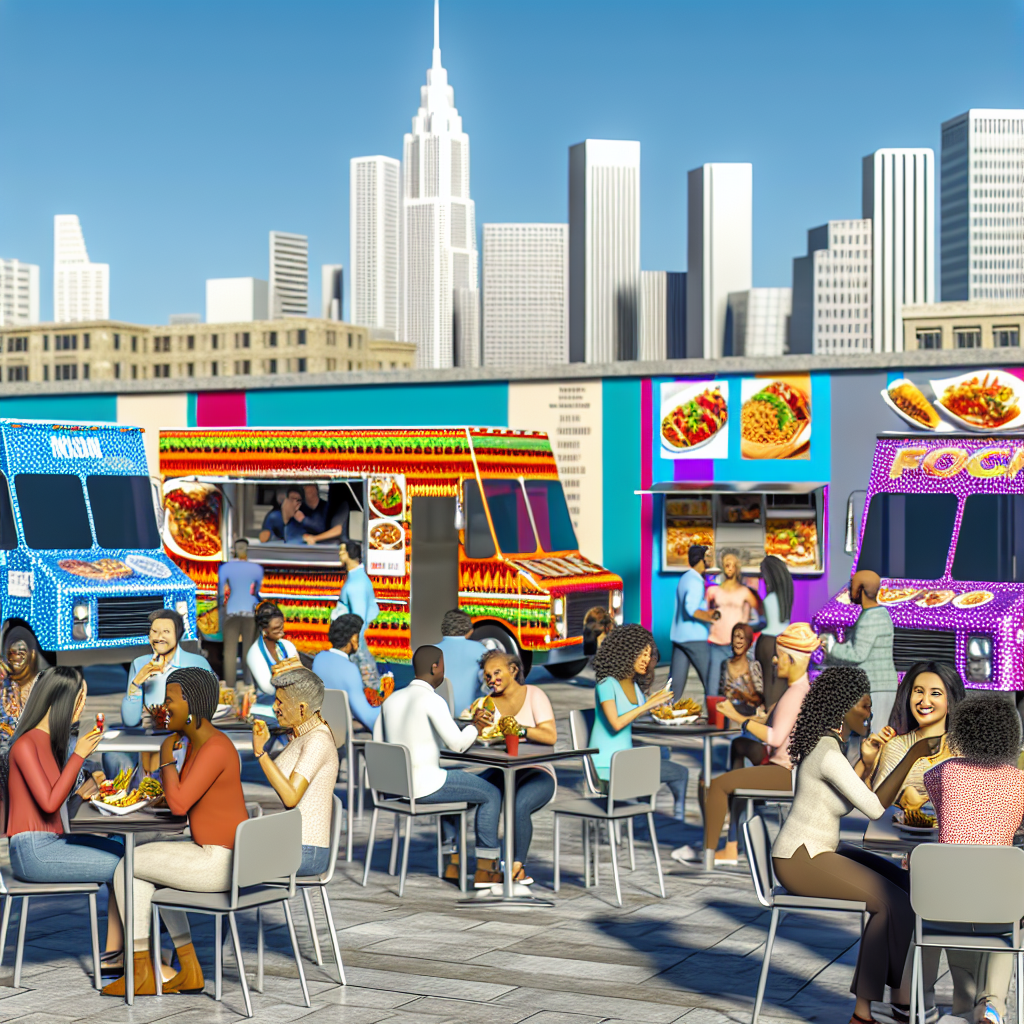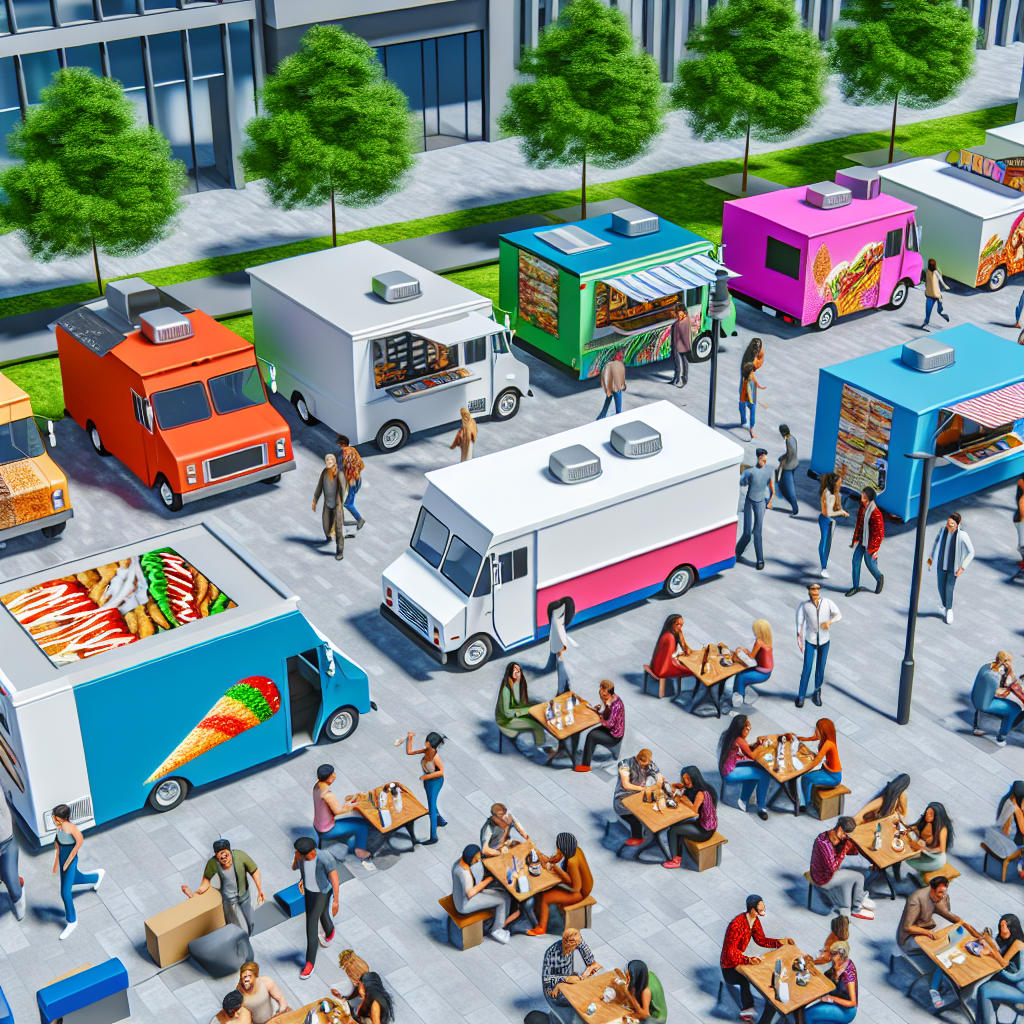
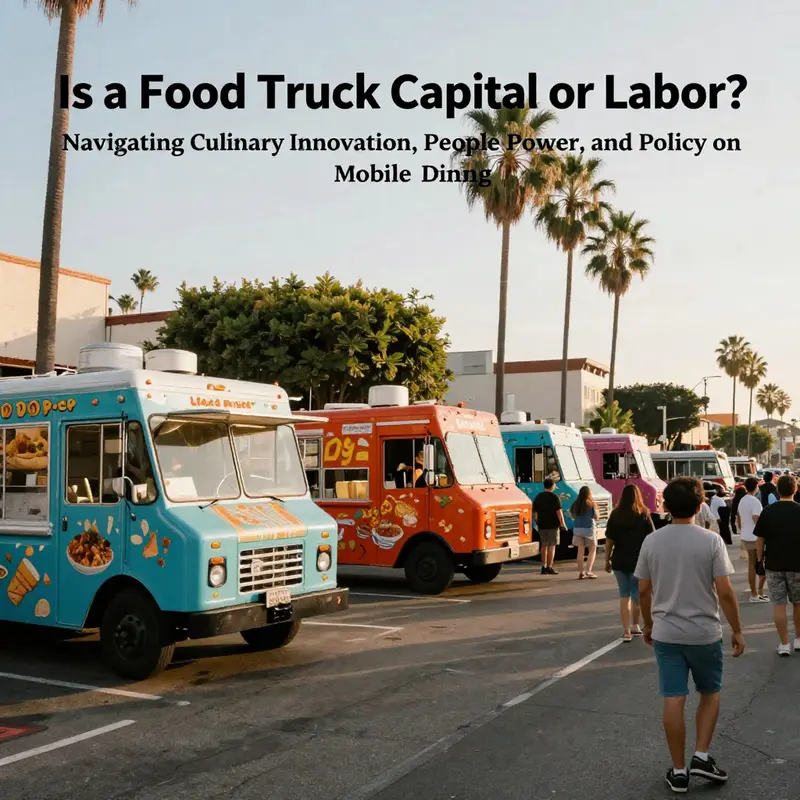
What makes a city feel like a true food truck capital? The answer isn’t simply the size of the labor pool or the number of grills on the curb. It’s a fluid blend of culinary imagination, entrepreneurial risk, supportive policies, and a place that invites people to taste the world on wheels. A food truck capital celebrates a thriving ecosystem where chefs, drivers, and crew collaborate with regulators, venues, and communities to turn street dining into a vibrant urban experience. Los Angeles stands out as a premier example in the United States, where warm weather and cultural diversity fuse with a dense, permissive street-food environment to foster ongoing innovation. Yet the same conversation must acknowledge that labor is the engine—drivers, cooks, and service teams keep the operation moving—while the label ‘capital’ highlights the broader environment that makes mobile dining possible and popular. Portland’s cooler climate reminds us that weather and infrastructure influence appetite and queuing patterns, while Boston’s 2025 nighttime food truck program shows how policy can catalyze urban vitality around universities, hospitals, and entertainment districts. Together, these threads form a holistic view: the capital label is earned where culinary variety, entrepreneurial spirit, and urban liveliness converge under thoughtful governance. Each chapter below builds on this idea, offering concrete examples for event planners, HR and admin teams, community groups, and curious food enthusiasts who want to understand how place, people, and policy come together to shape mobile dining beyond labor alone.
Chapter 1: The Capital of Flavor on Wheels — Labor, Innovation, and Urban Entrepreneurship in Los Angeles’ Food Truck Ecosystem
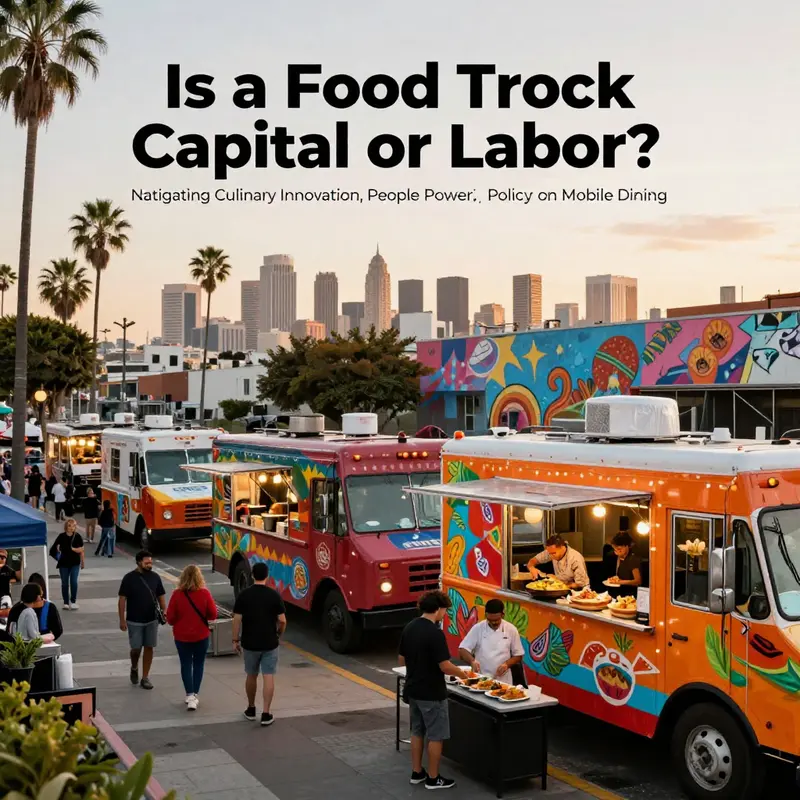
Los Angeles stands as a living argument for what a city can become when mobility fuses with culinary curiosity. The term food truck capital often signals a place where a distinctive street-food landscape thrives, a city where the mobile kitchen becomes as much a symbol as a business model. In Los Angeles, that symbol is inseparable from a broader urban economy built on labor as its most dynamic resource and on entrepreneurship as its most visible mechanism. The food truck, in this setting, is not simply a tavern-on-wheels but a portable workshop where cooks, designers, marketers, and operators translate skill into flavor, location into audience, and fleeting street corners into lasting reputations. The city turns labor into opportunity by transforming every shift, every route, every feedback loop into capital that compounds over time through reputation, community ties, and repeat mobility rather than through brick-and-mortar leverage alone.
A practical part of this story rests in the economics of entry. Unlike traditional restaurants that anchor themselves with expensive real estate, heavy permitting processes, and construction costs, food trucks in Los Angeles offer a comparatively lean gateway to independent culinary enterprise. The barrier to launch is not a fortress of capital but a doorway that opens with technical know-how, a taste for risk, and the willingness to improvise. Studies from local universities underscore this shift: more than seven in ten Los Angeles food-truck owners report starting with less than twenty-five thousand dollars, money primarily allocated to vehicle adaptation, equipment, and licensing rather than to land or facilities. That statistic reframes capital away from immovable assets and toward the specialized labor, ingenuity, and time of the operator. It also highlights a cultural logic at work: when the financial threshold favors mobility and skill over fixed asset ownership, the field becomes a laboratory for culinary experimentation, not just a battleground for price competition.
The city’s climate and demographics amplify this dynamic. A warm, forgiving climate makes year-round operation feasible, which in turn sustains a rhythm of pop-ups, lunch pickups, late-evening crawls, and weekend specials. The diversity of Los Angeles—the radius of its neighborhoods and the breadth of its tastes—creates a fertile ground for chefs to test ideas quickly and with relatively low fixed risk. A single truck can carry a portfolio of menus that shifts with season, neighborhood, or event schedule. The result is a culture where the labor of the cook is not merely a cost to be managed but a core value proposition to be marketed. Talent becomes a portable asset, a form of human capital that can be deployed in multiple zones of the city as demand shifts. In this sense, the city’s food-truck ecosystem is a vivid case study in how labor and mobility can substitute for, or even outrun, heavy capital investment.
Innovation in Los Angeles operates as a practical craft rather than as a theoretical ideal. Operators view their trucks as culinary studios on wheels, where techniques from street food, family recipes, and global influences collide and recombine. The phenomenon is not just about selling a product; it’s about building a brand that travels. Restaurateurs and cooks alike learn to stage their identities through flavor, visuals, and location strategy, with social media acting as a primary amplifier. In an environment where a single post can drive sales in a neighborhood miles away, the capacity to respond swiftly to consumer feedback—adjust a recipe, pivot a schedule, relocate to a busier corner—becomes a form of capital in itself. The emphasis shifts from owning a fixed asset to cultivating a flexible, responsive operation that can scale with appetite and opportunity. When a kitchen is mobile, a chef’s creativity becomes a portable asset, and that portability is a powerful economic asset in a sprawling metropolis with complex zoning, varied transit patterns, and shifting foot traffic.
The mobility itself also functions as a mechanism of inclusion. The possibility of testing a concept in multiple neighborhoods lowers the risk of failure and invites a broader array of voices into the food conversation. Vehicles can be reconfigured or rebranded with comparatively modest costs, enabling operators to experiment with cuisine types, service models, and price points in ways that a fixed-location restaurant cannot easily sustain. In this mode, the labor of the operator—the planning, the cooking, the customer engagement, the route optimization—becomes a set of transferable skills. Experience in one district can be translated into better location choices, stronger social networks, and sharper branding in another. The city’s street exchanges thus become not only sites of commerce but laboratories of urban entrepreneurship where ideas travel as quickly as people do.
The social and policy environment in Los Angeles reinforces this pattern. Permitting processes, street-activation programs, and partnerships with local organizations shape the practical realities of where and when trucks can operate. Yet even amid regulation, the narrative remains clear: this is a city where labor and entrepreneurship are magnified by mobility. The problem-solving temperament of operators—how to adapt recipes to different supply chains, how to manage queues in dense corridors, how to negotiate with event organizers and neighborhood associations—becomes the core competency that sustains the ecosystem. It is not that capital is absent; rather, the capital that matters most in this context is human and relational: chef craft, branding savvy, logistics acumen, and a crowd-drawing presence that makes the most of a small footprint.
Within this ecosystem, the role of branding and identity emerges as a critical form of urban capital. A truck is a moving billboard as much as it is a kitchen. The visual language of the vehicle, the tone of the menu, the rhythm of the service, and the resonance with communities all convert attention into trust and repeat business. The entrepreneurial arc often begins with simple, affordable equipment and a focused menu; it expands through consistent quality, reliable service, and a clear narrative that travels with the truck from curb to curb. In this sense, brand-building becomes a portable asset—the kind that endures far longer than a single location. A well-defined identity travels with the operator, earning loyalty across neighborhoods and social networks. To capture this dimension of the field, consider the way operators blend culinary experimentation with a storytelling approach that resonates across diverse audiences. A strong brand invites people to seek out the truck, to return for a trusted dish, and to share their experience in person and online. When that happens, labor and brand become a feedback loop: skilled cooks nurture the brand, and the brand attracts more customers, which in turn sustains more opportunities for talented cooks.
This chapter-in-miniature also keeps an eye on contrasts that sharpen the argument. Cities such as Portland show how climate and seasonal constraints can dampen the social and economic momentum of mobile food. The colder months complicate queuing and outdoor service, which in turn affects the tempo of innovation and the spread of labor- and brand-led momentum. Other cities, like Boston with its nighttime food truck program launched in 2025, reveal how policy interventions can shape a city’s capacity to leverage mobile dining for urban vitality. These contrasts are not merely curiosities; they illuminate the core idea that the “capital” in food-truck culture is not simply about money or location. It is about a system in which labor—skilled cooks, nimble operators, brand builders, and logistical problem-solvers—interacts with mobility, timing, and public space to produce a sustained cultural and economic effect.
The Los Angeles case thus offers a nuanced answer to the question of whether the city is a food-truck capital or primarily a labor economy. The answer lies somewhere in between, but the compelling frame is that Los Angeles converts labor into a strategic form of capital through mobility, experimentation, and community engagement. The food truck becomes a platform for culinary artistry that is accessible to aspiring operators, not a fortress guarded by barriers to entry. In this sense, the city demonstrates how a capital-light model—where the essential assets are the operator’s skill, adaptability, and relationships—can catalyze both innovation and economic opportunity at scale. This model does not minimize the importance of labor; it reframes labor as the currency by which opportunity is earned and multiplied. The result is a vibrant urban tapestry where creative cooks, savvy operators, and engaged communities co-create value in a shared, moving ecosystem.
For readers who want to situate this LA narrative within a broader economic lens, the discussion of mobile food economies becomes even more meaningful when paired with the expansive research on the subject conducted by the USC Sol Price School of Public Policy. The study highlights how a mobile kitchen economy functions as a social and economic engine in urban centers, emphasizing mobility, experimentation, and labor as core drivers of growth. As Los Angeles continues to evolve, the city’s food-truck landscape stands as a compelling argument that capital, in this context, can be most potent when it rests in the hands of labor-informed entrepreneurship, guided by a flexible, mobile infrastructure that invites risk, rewards adaptability, and sustains culinary innovation across neighborhoods.
External resource: https://www.usc.edu/spp/research/food-truck-economy-l-a
Internal reference and further reading: Branding on Wheels: the ultimate guide to food-truck graphics and identity. Branding on Wheels: the ultimate guide to food-truck graphics and identity
Wheels and Workforce: The Human Engine Powering the Food Truck Capital
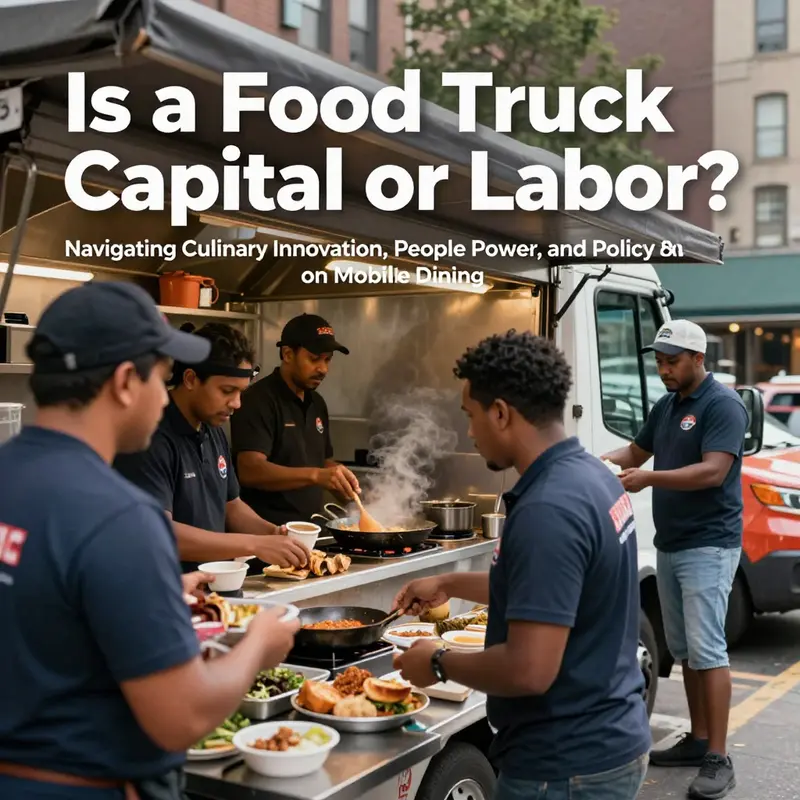
The city that glitters as a food truck capital is not simply a place where vehicles park and menus rotate. It is a field of constant motion, a theater where labor—the people who drive, cook, and greet customers—forms the real capital. In the mobile kitchen, the asset is elegant and essential, but the true value lies in the people who move it, keep it fueled, and translate a passing crowd into repeat business. The chapter you are reading foregrounds a truth that often hides in the chatter about innovation and branding: labor is not a backdrop but a central driver of success. The truck, with its compact footprints, supplies the stage, but it is the crew—drivers orchestrating routes and timing, cooks balancing quality with space and pace, and service staff shaping experience—that conducts the performance. When we ask whether a city is a food truck capital or labor, the answer emerges in the rhythm of shifts, the resilience of teams, and the willingness of owners to design operations that respect human constraints as much as financial ones. The claim is not that capital does not matter; it matters deeply. It is that the capital’s value is unlocked when labor is trained, cohesive, and agile enough to respond to the city’s appetite for novelty and reliability alike. The lesson for any operator, and for any city aiming to cultivate a vibrant mobile dining ecosystem, is clear: the most successful fleets treat labor not as a cost to be trimmed but as a strategic asset to be cultivated. In this light, labor becomes the lever that turns a handful of trucks into a living, breathing culinary economy, capable of weathering storms, seizing fleeting opportunities, and building durable relationships with neighborhoods and visitors.
The driver’s role is more than transportation. It is a logistics operation wrapped in a human interface. A skilled driver does not merely navigate from point A to point B; they choreograph routes around foot traffic patterns, city events, and permit windows. They optimize travel time to align with peak demand, manage the delicate balance between fuel, maintenance, and readiness, and anticipate disruptions—from road closures to last-minute location changes. A driver’s competence becomes a runway on which a day’s entire performance takes off or stalls. In this sense, the driver is a linchpin, a living connector between planning and execution. The best operators know that investing in driver development—route literacy, safety training, and quick problem solving—yields returns in steadier queues, fewer delays, and higher customer satisfaction. The road teaches humility and contingency planning in equal measure, especially when permits require park-and-pick constraints or when a beloved location suddenly becomes a no-go due to a municipal event. The driver’s capacity to adapt quickly is not just a skill; it is a competitive edge in a city where street life is fluid and desirable locations can change as rapidly as weather.
The cook sits at the heart of the enterprise, within a compact kitchen that operates under the same gravity as a full-scale restaurant but with far fewer resources. The mobile kitchen demands cooks who can think in three dimensions—order, space, and movement. Inventory is finite, station layouts constantly shifting with the truck’s configuration, and timing is everything. A cook in a mobile setting must translate recipes into streamlined steps that preserve flavor and texture while honoring speed and safety. They become inventory forecasters, menu adapters, and quality guarantors all at once. In peak periods, the cook’s efficiency translates directly into service speed, accurate portioning, and consistent presentation. When cooks cross-train to understand service and basic prep tasks, the entire operation gains a shared vocabulary. This cross-pollination reduces bottlenecks and fosters problem-solving on the move. The culinary heartbeat, however, beats best when cooks are empowered to experiment within constraints, not micromanaged into a rigid script; experimentation must coexist with standardization to sustain consistency.
Service staff complete the trio, shaping customer experience through presence, communication, and the micro-narratives that become word-of-mouth marketing. In a crowded street, a friendly greeting, a quick explanation of ingredients, and a speed of service can transform a first-time visitor into a loyal patron. Service staff are not just order-takers; they are brand ambassadors who carry the tone, values, and reliability of the truck into the crowd. Their interactions contribute to the social currency of the operation, influencing not only immediate sales but also future demand by encouraging return visits and sharing impressions with peers. The service team’s morale matters as much as its speed. When staff feel valued, supported, and well-trained, they communicate with warmth and efficiency. If they sense instability in scheduling or uncertainty in roles, the customer experience may suffer long before a kitchen can restock or a menu can be refreshed. In the mobile context, service staff thrive when they have clearly defined roles that still allow flexibility. They need to know who handles payments, who manages special requests, and who can step in if the line grows longer than anticipated. The best teams design rituals and rituals—brief pre-service huddles, clear signals for when a line forms, protocols for handling dietary needs—that reduce friction and elevate the guest experience without sacrificing the pace that makes food trucks attractive.
All three roles—driver, cook, and service staff—exist in a web of interdependence. The operation relies on silent timing and visible teamwork. Shifts must be designed with the expectation that staff will rotate tasks, fill gaps, and cover for one another during demand surges or when a crew member is unexpectedly unavailable. This flexibility, while a strength, also creates a pressure point: the need for transparent communication, robust onboarding, and ongoing development. The labor model becomes not a single function but a portable skill set that travels with the truck. Cross-training is not a luxury; it is a necessity in a business that moves from one street corner to another and in which a single breakdown—whether due to a tardy driver, an empty cooler, or a balky POS device—can ripple into hours of reduced service capacity. The operator’s challenge is to design a system that makes such cross-functionality natural, expected, and non-disruptive. Managers must set norms that encourage team members to share responsibilities and to see one another as mutually responsible for each shift’s success. In practice, that means clear onboarding that covers not just tasks but why those tasks matter, ongoing skills development that keeps pace with changing menus and equipment, and performance practices that reward reliability and teamwork rather than sheer speed alone.
Market dynamics intensify the importance of stable labor. Demand fluctuates with weather, events, and seasonal calendars. Festivals, sports celebrations, and university rhythms can produce spectacular peaks that strain even well-staffed fleets. Wind and rain can deter lines, while a sunny afternoon can draw a throng. The most successful operators anticipate these ebbs and flows with flexible scheduling, scalable staffing, and contingency plans that protect service quality. They understand that labor scarcity is not merely a function of wages; it is a function of training, mobility, and job design. External labor-market analyses emphasize the ongoing difficulties in recruiting qualified personnel during peak seasons, the need for better training and working conditions to enhance retention, and the implications of labor mobility for mobile service businesses that rely on tight margins and personal networks. In other words, the labor dynamic is not a back-office concern; it is a core strategic lever that determines uptime, throughput, and guest satisfaction when the doors of a truck swing open.
From a strategic standpoint, profitability hinges on staffing as a central component of operational design. That means investing in cross-training that yields cooks who can perform basic prep tasks and respond to service demands; drivers who contribute to setup or minor prep tasks when routes are quiet; and service staff who are confident handling payments, inquiries, and peak-period surges without sacrificing courtesy. Scheduling practices, too, must embrace flexibility. Seasonal demand invites seasonal staffing, but it also demands a robust onboarding framework so new hires can hit the ground running. Clear communication protocols, shared norms, and performance incentives that emphasize reliability, teamwork, and guest delight help sustain morale in the face of weather shifts and event-driven spikes. The most resilient fleets build a culture where staff feel seen, supported, and fairly compensated for the extra miles they travel and the extra minutes they endure to keep a line moving. The payoff is not just better reviews or higher tips; it is a more stable operation less vulnerable to disruptions that can magnify the costs of poor planning.
Cities that succeed in cultivating a vibrant food truck scene are those that recognize labor as a core asset rather than a marginal input. The synergy between location strategy and people strategy matters. A warm climate and diverse neighborhoods provide the conditions for frequent, predictable demand, but without a dependable crew to steer and serve, even the most compelling cuisine risks growing stale. Conversely, a city that invests in training, fair scheduling, and retention may see labor become a durable competitive advantage. A workforce that feels connected to the mission, understands the brand, and operates with shared norms is more likely to move with intention, maintain quality under pressure, and create memorable guest experiences that travel by word of mouth across neighborhoods. In that sense, the city’s reputation as a food truck capital emerges not solely from the trucks themselves but from the people who keep them rolling. The capital is human, not merely metallic, and the mobile kitchen becomes a platform for workers to elevate their craft, their livelihoods, and their dreams of autonomous, entrepreneurial success.
To close this thread, consider the practical implication: a well-staffed truck is a more reliable truck. Reliability compounds across the day, the week, and the season, turning occasional appearances into predictable rhythms. This reliability is not incidental; it is engineered through thoughtful hiring, careful onboarding, continuous training, and a culture that prizes cohesion as much as speed. The operator who treats labor as a strategic asset will find it pays back in uptime, guest satisfaction, and sustainable margins. In a city where foot traffic and curiosity align, the labor engine can outpace even the most well-funded competitors when kept well-tuned and well-led. The chapter ends with a reminder that the food truck capital is not simply a matter of where trucks are parked or how menus travel; it is a story about people who move, think, and care enough to keep a mobile dining experience thriving under the busy, bright lights of the urban street. For operators seeking a practical path forward, the steps are straightforward yet demanding: invest in cross-training, design flexible shifts that meet demand, implement robust onboarding and retention practices, and cultivate a team culture that treats each shift as an opportunity to build talent and trust. The most resilient fleets are those that recognize their people as the city’s true capital and the truck as the durable, flexible instrument through which skilled hands can shape a lasting culinary conversation on every corner they reach. And when the crew moves with confidence, the city moves with them, turning a simple meal on wheels into a recognizable, valued, and repeatable experience.
Internal link: For a broader look at how regulations shape staffing and operations across the industry, see Navigating Food Truck Industry Regulations.
External resource: For further context on labor market dynamics informing this sector, consult the European Labour Authority’s 2024 strategic analysis on accommodation and food service activities.
Geography, Climate, and the City’s Kitchen: How Place Assigns Capital or Labor to Food Trucks
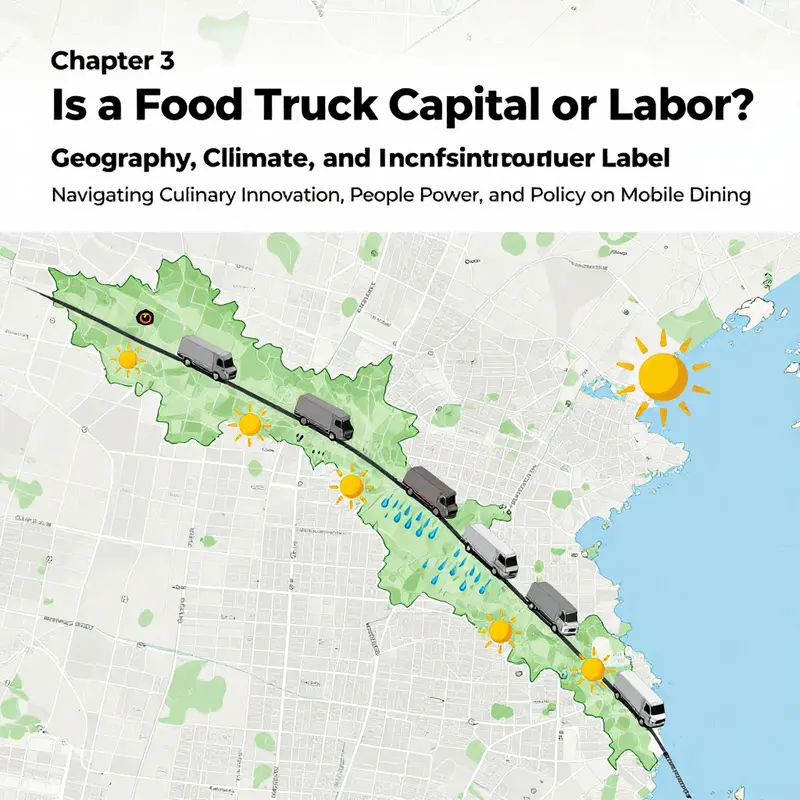
The geography of a city does more than map where trucks traffic; it writes the capital-labor script that defines what a meal on wheels can become. In some places, the street is a corridor for investment, branding, and scalable platforms; in others, it remains a lean, labor-intensive venture tethered to daily sales and improvisation.
Geography acts as a first-order determinant. Dense, transit-rich urban cores offer prime curbside real estate that can be commodified into location-based capital: branded trucks, permits, and data-driven strategies that convert mobility into a productive asset. In cities with mild climates and supportive infrastructure, year-round operation becomes feasible, and capital-friendly models—centralized procurement, scheduled restocking, and online ordering—can emerge as competitive advantages.
In other regions, infrastructure gaps and regulatory frictions push the operation toward labor-intensive models. Unreliable power, limited cold storage, or restrictive zoning can relegate a truck to a nimble, daily-earnings device rather than a capital asset. Climate intensifies these dynamics: hot deserts demand rapid turnover and robust cooling; frigid winters demand heating, insulation, and seasonal menus. In such settings, labor coordination, adaptability, and personal craft anchor the business more than scale alone.
Infrastructure and policy complete the triad. Permitting regimes, electricity reliability, parking access, and street-network efficiency shape whether a city treats food trucks as capital assets or as portable labor stations. When policy aligns with performance—night markets, flexible curb access, and reliable restocking—the street becomes a capital frontier. Conversely, underinvestment or rigid rules can keep the truck in the realm of labor, where value accrues slowly through daily service. The takeaway is that place sets the rules, but investment and policy can rewrite them, turning mobility into a durable, scalable enterprise.
Where the Wheel Sparks Civic Vitality: Boston’s Nighttime Food Truck Policy and the Hybrid World of Capital and Labor
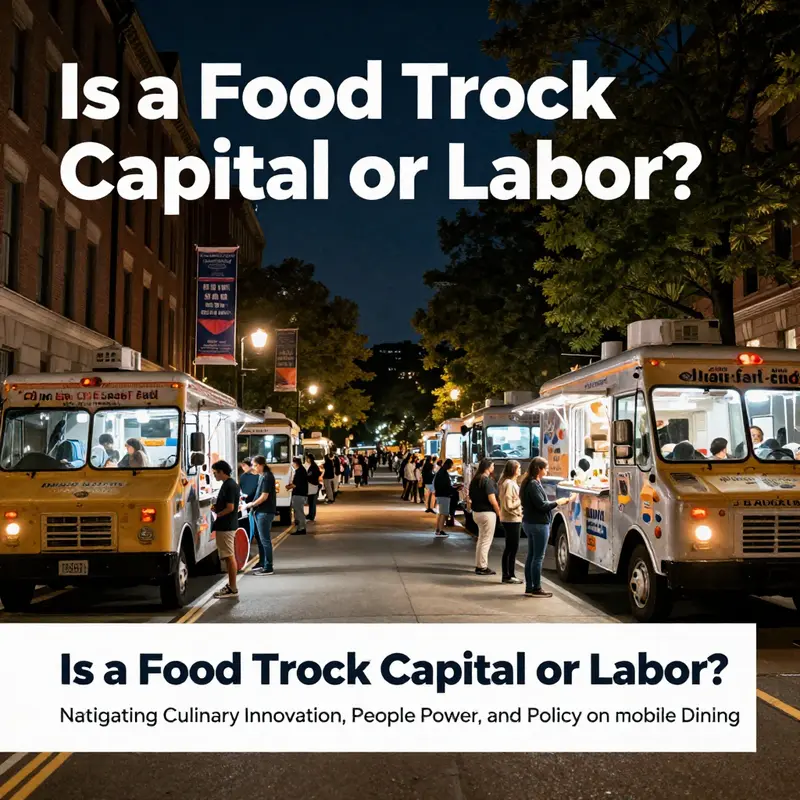
Cities aspiring to be recognized as a food truck capital do so not by statute alone, but through the lived texture of everyday urban life—the way a queue forms at dusk, the way a small crew turns overlapping skills into a cohesive menu, and the way street corners become laboratories for culinary experimentation. In that sense, Boston’s nighttime food truck program offers a revealing study. It sits at the crossroads of entrepreneurial ambition and municipal regulation, where capital in the form of vehicles, licenses, and inventory meets labor in the form of cooks, drivers, and service staff. The result is not a simple binary—capital versus labor—but a hybrid economy in which policy choices tilt the balance in ways that either empower or constrain each side. Recognizing this balance helps explain why some cities rise as recognizable food truck capitals while others struggle to sustain a vibrant street-food culture. It also clarifies why urban vitality, more than any single statistic, emerges when a city treats food trucks as engines of social and economic exchange rather than mere vendors passing through the landscape.
Boston’s Nighttime Food Truck Program is a deliberate attempt to choreograph this dance of capital and labor around the city’s most active nightlife and educational districts. By incentivizing vendors to operate during off-peak hours in high-traffic zones—from downtown corridors to entertainment districts near campuses—the program aims to extend the city’s economic heartbeat into hours when foot traffic might otherwise thin. In theory, this should enhance opportunity for small operators, reduce idle capacity, and expand the city’s culinary vocabulary when people are most amenable to trying something new after hours. Practically, it presses operators to scale operations in ways that require both careful capital planning and responsive labor management. Vehicles must be maintained, equipment and inventories financed, and permits navigated, all within a regulatory framework that dictates where and when a truck can park, how long it can stay, and what safety and health standards must be observed. The owners and operators who speak from the front lines describe themselves as small entrepreneurs who invest personal savings into purchasing or leasing vehicles, outfitting them with essential equipment, and stocking ingredients. This is capital in action—the kind of investment that makes a mobile kitchen a durable business entity rather than a transient impulse. Yet the same voices insist that without competent cooks, skilled drivers, and friendly crew members who can quickly adapt to a shifting customer base, even well-funded ventures falter.
The regulatory environment is the fulcrum on which that capital-labor interplay pivots. When operating locations are tightly restricted, when permits are scarce, and when hours are capped, the return on that capital investment can shrink or become unstable. Operators repeatedly stress that regulatory overhead is not merely bureaucratic friction; it is a direct determinant of profitability and risk. In conditions where compliance becomes a high fixed cost, fewer entrants can afford to participate, and the landscape tends to tilt toward those with deeper pockets or more extensive networks. As Boston’s scene demonstrates, this is not just about paperwork. It is about the strategic choices businesses must make to capitalize on high-demand moments—concerts, late-night events, sports fixtures, university gatherings—and how regulations enable or block those opportunities. The friction matters, not only for individual operators but for the collective market where competition, diversity of offerings, and consumer access hinge on the ability to move swiftly from one event to another.
From a broader perspective, the economic and social benefits of this ecosystem are tangible and multi-layered. A 2026 TIME study highlights a striking finding: when people wait in line for a popular food truck or at a concert venue, their mood tends to improve. That uplift translates into longer stays, greater foot traffic in adjoining streets, and higher likelihood of spending in neighboring shops and venues. The emotional economy of the queue—shared anticipation, social exchange, and the perception of value—becomes part of the city’s broader vitality. In Boston, this vitality is reinforced by the program’s potential to provide flexible entry points into the formal economy for groups often excluded from traditional brick-and-mortar paths. Immigrant entrepreneurs, young business students, and community members seeking low-overhead routes into self-employment can view the food truck as a stepping stone, not a cul-de-sac. The portable nature of the capital asset—a truck that can be moved to different neighborhoods as needs shift—complements the mobility and adaptability of labor, which must respond to evolving menus, seasonal ingredients, and shifting demand curves. In that sense, the Boston model foregrounds a hybrid economy in which both capital and labor are indispensable, each amplifying the other’s value when supported by thoughtful policy.
The literature and practitioner accounts converge on a shared insight policy has the power to either democratize opportunity or privilege a subset of operators who can weather the overhead of compliance and leasing. The CBS Local reporting from 2023 underscored the perils of overly restrictive licensing rules, which have caused many vendors to abandon lucrative opportunities during peak moments. When the city curtails the ability to line up at the right venues or to stay long enough to capitalize on a crowd that has waited in line, it diminishes not just the potential earnings of the operator but the chance for the surrounding neighborhood to reap spillover benefits. The story is not only about revenue; it is about how public spaces are used and how inclusive those spaces feel to visitors and residents alike. In the Boston context, the program is designed to retrofit urban spaces with new kinds of social currency—where a late-night bite becomes a social event, a place for intercultural exchange, and a catalyst for local commerce beyond the queue. The dynamic is subtle but potent: when policy is oriented toward enabling rather than hindering, the city grows more inviting, and the food truck becomes less a temporary fixture and more a contributing strand in the urban fabric.
There is, however, a persistent tension in this narrative. The very features that give food trucks their appeal—low overhead, mobility, flexibility—also render them vulnerable to policy shifts that misinterpret them as purely a labor-intensive phenomenon that must be micromanaged through permits and location policing. The result can be a tilt toward capital-intensive models, where only those with substantial upfront funding can navigate the regulatory maze and weather seasonal fluctuations. Yet the social upside remains compelling. The street becomes a stage for cultural exchange, where menus and techniques from different communities are tested in real time against neighbors’ palates and curiosities. The act of queuing evolves into a social ritual, and the urban night becomes a tapestry of flavors, voices, and shared experiences. In such a landscape, the ultimate measure of a city’s vitality is not simply the number of trucks or the amount of money spent in a given hour. It is the quality of public life—the sense that streets are alive with possibility, that small businesses can start with modest risk, and that diverse culinary voices can find a place in the city’s collective appetite.
For policymakers, the lesson is clear: cultivate a regulatory environment that respects safety and fairness while reducing unnecessary barriers. The goal is not to erode oversight but to recalibrate it so that the costs of participating do not exceed the potential benefits of late-evening activity and diverse offerings. This requires a careful alignment of licensing, parking, health compliance, and dynamic permitting with a city’s strategic priorities for nighttime economy and neighborhood resilience. It also invites a broader conversation about how to balance the needs of individual operators with the interests of street users, neighboring businesses, and downtown stakeholders. When done well, policy can help sustain a thriving market for both capital and labor, ensuring that the vehicle and the crew remain inseparable partners in building urban vitality. The Boston example grounded in a clear purpose, responsive to entrepreneurs, and attentive to public spaces offers a blueprint for other cities seeking to reimagine their nightscapes around mobile culinary entrepreneurship rather than around fixed, high-price experiences alone. To move forward, cities should emphasize scalable support mechanisms that offset high fixed costs, provide predictable regulatory pathways, and celebrate the labor that keeps the wheels turning and the lines moving. This balanced approach honors the hybrid reality of food trucks as capital-enabled ventures sustained by skilled, adaptable workers who bring flavor, service, and social connection to public spaces.
For readers who want to dig deeper into the regulatory dimension, resources that trace the practical challenges of licensing, location, and hours offer essential context. See the discussion in the linked guide on navigating the regulatory landscape for food trucks, which situates Boston’s approach within a broader national conversation about mobility, safety, and opportunity. This chapter thus ties together the conceptual question Is a city a food truck capital because of its culinary inventiveness or because labor powers its kitchens? with a concrete policy case that shows both sides of the equation in action. The Nighttime Food Truck Program, with its promise of extending urban vitality into the night, embodies a pragmatic stance: treat capital and labor as two faces of the same coin, and design rules that let them circulate freely enough to generate community joy, economic momentum, and inclusive opportunity. In that sense, Boston’s experience is less a verdict than a framework a way to think about how city streets can host living laboratories where food, work, and public life converge in service of a more vibrant urban future. The discussion continues, and as cities observe outcomes in real time, the balance between capital and labor will increasingly signal not just who feeds the city at night, but who sustains its social imagination after dark. External reference: https://www.cbslocal.com/boston/news/food-truck-regulations-boston-impact/ Internal link: navigating food truck industry regulations
Roving Kitchens, Shifting Power: Mobility, Labor, and Cultural Exchange in the Food Truck Frontier
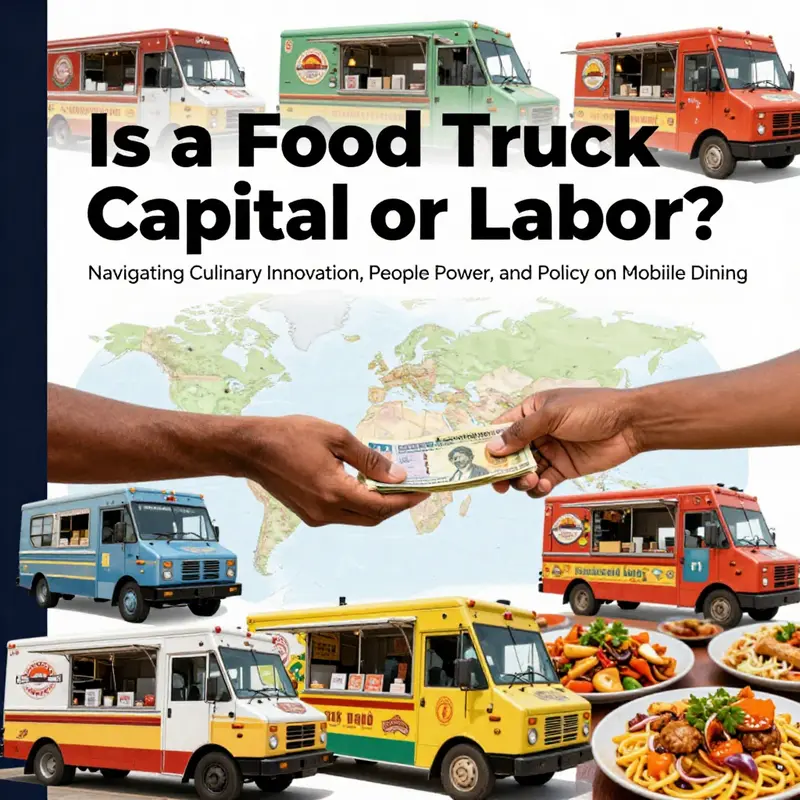
The food truck, in this chapter, emerges as a hybrid object that reveals more than the pulse of a city’s late-night scene. It is a moving laboratory where capital and labor intersect, where entrepreneurial vision meets the hard edges of regulation, and where culinary imagination travels with the wheels as it negotiates space, time, and taste. To ask whether a city is a food truck capital or a cradle of labor is to ask about how opportunity is distributed across mobility, policy, and performance. The answer, in practice, is neither a simple label nor a fixed category. It is a dynamic tableau in which capital, labor, and culture circulate together, sometimes harmoniously, sometimes contentiously, across borders of geography and governance. The chapter follows these threads to illuminate how mobility serves as both a strategic asset and a site of struggle, and how cultural production in the street economy can redefine who gets to participate in the urban economy and how benefits are captured.
From the capital side, the food truck economy is deeply capital intensive at entry. A truck is not merely a vehicle; it is a compact kitchen, a compliance apparatus, and a brand platform all in one rolling asset. Costs accumulate quickly: the vehicle itself, outfitting with commercial-grade equipment, obtaining licenses, securing insurance, meeting food-safety standards, and building a market presence through branding and marketing. Yet access to capital is often uneven. Whom you know, your credit history, and your proximity to high-value urban corridors shape your odds of starting—and surviving. The street economy reproduces, in miniature, the wider real estate dynamics of cities: coveted spots become gatekept by those with ready access to credit or established networks, while newcomers face longer odds of securing a foothold in busy corners or during lucrative time windows. In this sense, the food truck is a form of capital-powered micro-entrepreneurship that can create pathways for those with means, yet it can also reproduce systemic barriers for marginalized groups, especially when licensing hurdles, parking rules, and cost-of-doing-business requirements stack up against fresh entrants.
Yet the profitability and appeal of food trucks partly rest on their mobility. The same trucks that carry capital can, at scale, offset it by following demand—city by city, festival by festival, lunch crowd by late-night queue. This mobility is a strategic asset. It allows operators to test menus, chase seasonal ingredients, and pivot to neighborhoods where foot traffic and consumer appetite align with a particular culinary frame. It also means labor is central in a way that is sometimes glossed over in headlines about “innovation” and “street food.” A significant share of the labor force behind these rolling kitchens comes from migrants and workers who bring specialized culinary skills and cultural capital to new labor markets. They cook, drive, serve, and manage in roles that often require a blend of formal training, informal apprenticeship, and on-site improvisation. In many contexts, the mobile unit bypasses some of the traditional restaurant hierarchies, but it does not escape precarious working conditions, licensing complexity, or the spectrum of informal labor that can accompany itinerant work. The mobility of labor itself becomes a form of labor capital, a passport of sorts that enables operators to appear in new neighborhoods with familiar food and new audiences.
Cultural exchange sits at the heart of the street-food spectacle. Food trucks bring diasporic tastes and hybrid techniques into the urban public realm, turning the city into a rotating museum of flavor. A taco truck can carry Mexican diasporic identity into the daily life of a neighborhood, while a cart serving a fermented Korean dish might introduce audiences to techniques that emphasize communal dining. The mobile kitchen makes experimentation legible and legible to a broad audience, which accelerates the rate at which culinary forms cross-pollinate. But the value of this cultural production is unevenly distributed. City branding, festival circuits, and major event partnerships often extract a portion of the cultural value created by individual operators, sometimes more than it returns to the cooks who crafted the dishes. The cultural economy of mobile food thus becomes a microcosm of larger questions about who benefits from cultural exchange and who bears the costs of its commodification.
Geopolitics enters this space through policy, regulation, and governance choices. Immigration and labor policies directly shape who can participate in mobile food economies and under what conditions. Work restrictions, visa regimes, and enforcement practices determine who can join the labor force behind the wheel and in the kitchen, while zoning and licensing regimes determine where trucks can operate, what licenses are required, and how food-safety rules are enforced. In many cities, capital moves with relative ease across borders or economic jurisdictions, whereas labor faces more friction—language barriers, visa constraints, or legal ambiguities surrounding informal or precarious work. The chapter frames the food truck within this broader asymmetry: capital tends to move with fewer constraints, while labor mobility remains tightly regulated, unevenly distributed, and often contingent on political and social capital. In this frame, the food truck becomes a marker of global inequality—an arena where mobility regimes, urban planning, and immigration policies intersect to shape who can travel, who can work, and where their labor is valued.
Across cities and countries, the mobility regime can either widen opportunity or entrench exclusion. The Los Angeles model, for instance, demonstrates how a warm climate, a dense, diverse culinary scene, and accessible urban spaces can create a thriving macro-market for mobile dining. The city’s street-food culture becomes a magnet for entrepreneurial energy, a hub where immigrant cooks translate transnational recipes into local favorites, and where the regulatory environment, while demanding, does not close the door to new entrants. In other places, colder climates and tighter regulations can suppress queuing and curb the appetite for outdoor dining, limiting the scale and reach of mobile food culture. And in cities experimenting with nighttime or late-evening food programs—such as Boston’s 2025 nighttime food truck initiative—the urban economy is reconfigured to weave mobile dining into nightlife ecosystems near universities, venues, and hospitals. These policy experiments signal an ongoing negotiation between safety, quality, and accessibility, and they reveal how governance can either enable a vibrant street-food economy or tilt it toward a narrow set of operators with the right connections and resources.
One practical touchpoint for understanding governance in this space is how regulations are navigated and interpreted at the street level. Operators repeatedly cite the importance of clear, predictable rules and accessible advisory support. In this chapter, a concrete example from urban policy discussions helps illuminate the day-to-day reality of these dynamics: Navigating food-truck industry regulations. This topic underscores how licensing, parking, health inspections, and event permits shape entry, scale, and stability for operators who want to move between neighborhoods and cities while staying compliant. The sentence that follows from this common-sense observation is that regulation is not merely a constraint; it is an opportunity to design a framework that supports inclusive participation, protects workers, and sustains public health without stifling entrepreneurial energy. See more on this through the linked guidance on industry regulations.
The broader takeaway is a sober reminder that the food truck is not simply a symbol of capital or a simple ladder for labor. It is a hybrid form that reveals how power, privilege, and resistance operate within urban economies. The mobility of capital and the mobility of labor shape who can participate, how benefits are distributed, and what kinds of cultural exchange are likely to flourish. If cities want to harness the positive potential of mobile food economies while mitigating their risks, they must pursue governance that explicitly supports inclusive mobility, fair labor practices, and equitable value capture. This means lowering barriers to entry with streamlined licensing and microcredit, strengthening labor protections for mobile workers, reforming zoning to balance safety with accessibility for street vendors, and investing in training that couples food-safety compliance with business acumen and cross-cultural negotiation skills. It also means collecting robust data on labor conditions, economic outcomes, and migration status to inform policy in ways that illuminate who benefits and who remains on the margins. The literature and policy debates around these issues point to a future in which street-food economies contribute to urban vitality without reproducing the structural inequalities that often accompany global labor markets.
In thinking about city-level futures, it helps to anchor the discussion in the lived realities of operators who move between neighborhoods, festivals, and late-night hours, and who rely on a blend of capital resources, culinary skill, and social networks. The city is a machine for enabling mobility and for channeling cultural capital into tangible, shareable meals. When governance aligns with the needs of mobile operators and their workers, mobility becomes a force for inclusive opportunity rather than a veil for exclusion. In that sense, the food truck economy offers a lens on urban political economy that is both hopeful and cautious: hopeful because it can create democratized routes to entrepreneurship and cross-cultural exchange; cautious because the same mobility that grants possibility can also concentrate advantage and obscure the work of those who labor behind the wheel and in the kitchen.
For readers tracking the arc from local neighborhoods to global street-food networks, this chapter provides a throughline: the question of capital versus labor is not a zero-sum decision but a diagnostic for governance. Cities that cultivate inclusive mobility, transparent licensing, fair labor standards, and active support for immigrant and low-income operators will likely see a more equitable distribution of benefits and a more resilient, innovative street-food ecosystem. The path forward involves deliberate policy design that recognizes the street as a space of cultural negotiation and economic opportunity, not merely a venue for entertainment or a cost to be managed. As the urban landscape evolves, so too does the food truck, forever a moving testament to how labor, capital, and culture converge on wheels.
External resource: https://academic.oup.com/ongov/article/36/1/27/4890757
Final thoughts
The food truck capital label emerges from a dynamic mix of cooking creativity, people-powered operations, and a city’s willingness to organize around mobile food as a public, social, and economic asset. Los Angeles demonstrates how climate, diversity, and an entrepreneurial mindset create a fertile ground for culinary innovation to flourish on every corner. The labor story—drivers, cooks, and service crews—keeps the wheels turning, but the broader capital narrative depends on place, policy, and partnership: accessible infrastructure, welcoming regulation, and a nightlife ecosystem that invites food, music, and community. Boston’s nighttime program provides a practical blueprint showing how targeted regulation and partnership can amplify urban vitality. Globally, mobility and cultural exchange transform labor into a global value chain that feeds cities and neighborhoods, creating opportunities for events, campuses, and neighborhoods to design experiences that are both economical and memorable. In practice, event planners, HR teams, community organizations, and curious food enthusiasts can leverage this holistic view to curate mobile dining experiences that are equitable, diverse, and sustainable. The capital-labor conversation isn’t about choosing sides; it’s about recognizing the interdependence of cuisines, careers, governance, and place to keep streets vibrant and welcoming for all.