Lola’s Street Kitchen is a beloved roaming fixture in Heber City, delivering bold Mexican street flavors from a compact, colorful truck. Because Lola’s exact location shifts from day to day, planners, admins, and food lovers alike benefit from knowing how to track her movements in real time. The daily variability of Lola’s route creates vibrant opportunities for pop-up events, lunch rotations, and neighborhood gatherings—while also demanding a nimble coordination plan for organizers, HR teams arranging staff meals, and community groups aiming to host her at the right moment. Across the three chapters, we’ll explore Lola’s current location dynamics, the technology and social channels that keep her fans in the loop, and the broader impact of her daily itineraries on customers, accessibility, and the local economy. Each section is designed to help you anticipate Lola’s stops, adapt your plans, and maximize the flavorful outcomes for your event or community activity.
Finding Lola’s Today: Midway Base, Mobile Appearances, and How to Verify Where the Truck Is
Where Lola’s operates now and why that matters for visitors searching for the truck today
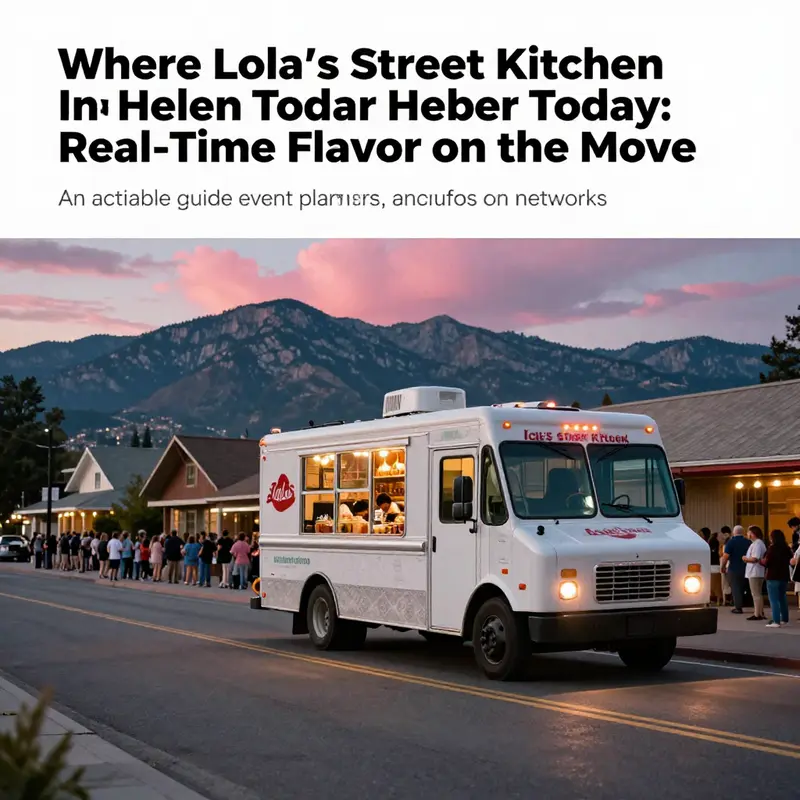
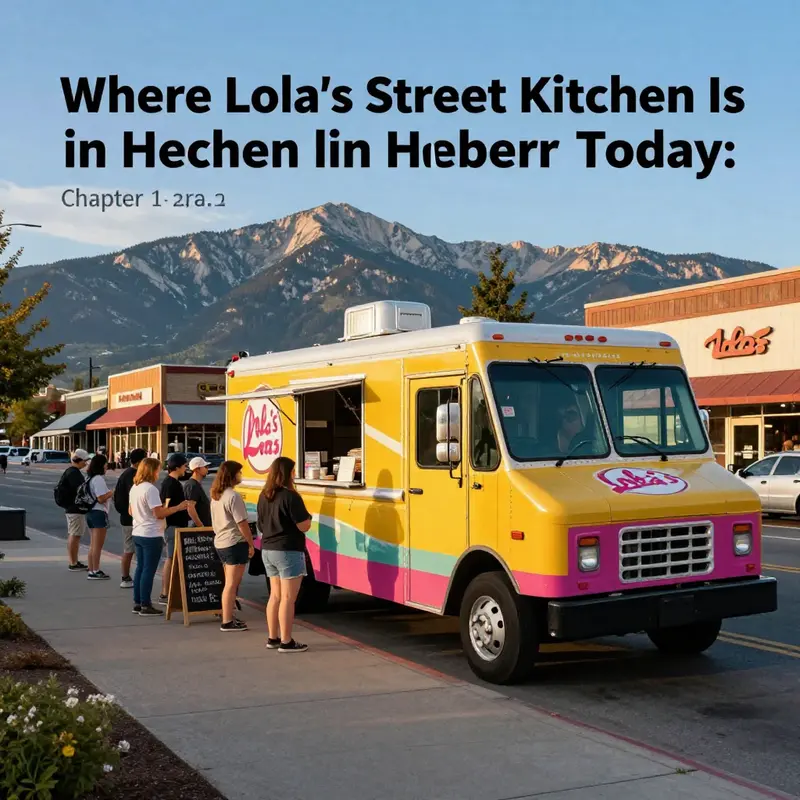
If you’re asking “where is Lola’s food truck in Heber today,” the practical answer begins with a simple fact: the operation that began as a roving street kitchen now has a stable, public-facing base in Midway, Utah. That address—on Main Street in Midway—serves as the primary, day-to-day location for diners. Over time the brand shifted from primarily mobile service to running a brick-and-mortar venue in the Heber Valley while still keeping mobile roots and occasional off-site appearances. This hybrid reality explains why searchers sometimes see mixed signals: some sources reference the original food truck history; others point to the permanent restaurant address; and a few mention occasional pop-ups in the Heber area.
Understanding this evolution helps set realistic expectations for anyone trying to find the food truck in Heber today. The truck itself is not guaranteed to appear each day on public lots or at markets; instead, when the truck does operate, its location is typically announced through direct, timely channels. If your goal is to visit wherever the team is serving that day, the best approach is to check the venue’s live updates. Social accounts and the official site will list same-day locations, special events, and private bookings. This is the fastest, most reliable way to answer the question for any given day.
The Midway restaurant functions as the anchor. It offers a consistent place to find the menu items associated with the food truck while providing predictable hours and a physical dining option. For people planning a visit from Heber, Park City, or other nearby towns, this means you can be confident of service and menu availability without relying on a mobile schedule. Midway’s Main Street is an established dining destination within Heber Valley, so the presence of a permanent location also makes logistical planning easier: parking, accessibility, and operating hours are clearer than with a purely mobile operation.
At the same time, the team’s history as a truck matters for community events and off-site catering. Local festivals, farmers markets, private parties, and collaborations with other businesses are natural places for the truck to appear. These appearances are typically special events rather than daily service points. When the truck is scheduled for a Heber-area event, updates are usually posted publicly and in advance, giving patrons time to plan. Without such an announcement, it’s safer to assume the truck is not roaming and that the Midway spot is the working location for the day.
Why the change from mainly mobile to a fixed site is important to know
A food operation that grows into a brick-and-mortar spot makes a practical shift: it favors consistency. This matters for customers because a fixed location reduces the uncertainty that comes with on-the-fly route changes. When you look for the truck in Heber today, you’re really asking whether it’s making an exception to that norm. The reasons for such exceptions are many: private catering contracts, seasonal festivals, collaborative pop-ups, or strategic choices to reach different neighborhoods. Those exceptions are signaled publicly when they occur. For everyday dining, though, the Midway address is the reliable option.
For locals and visitors, that consistency also influences how reviews, listings, and directory entries present the business. Some directories still describe the brand by its origins, resulting in wording that suggests daily mobility. Other listings reflect the present reality—a permanent location on Main Street. Both descriptions can coexist, and both can be technically correct, depending on whether you focus on the truck’s past identity or the current operating model. When planning a trip, rely on the most current public communications instead of third-party listings that may be outdated.
How to verify where the truck is right now
The simplest verification method is real-time social channels. Teams that operate both a restaurant and a mobile unit tend to use social media to post last-minute location changes, special menus, and event schedules. A quick glance at those feeds will tell you whether the truck is serving at a Heber event today or if service is concentrated at the Midway venue.
If social updates are unclear, direct contact is the next step. Calling the restaurant number listed on official pages will confirm whether the truck is out on a run or whether the kitchen is operating only from the Midway location that day. This is particularly useful when you’re coordinating a group or planning around a tight schedule. For recurring events—weekly markets or seasonal festivals—checking the event organizer’s announcements can also confirm whether the truck will attend.
Keep in mind that occasional mobile appearances may be made under private bookings. If the truck is hired for a private event in Heber, this will not necessarily be publicly announced. In that case, public-facing updates will typically indicate the truck is unavailable for walk-up service that day, or they will highlight the public event if it’s open to everyone.
Practical tips for finding the truck in the Heber area today
- Check live social updates first. They are the fastest way to know whether the truck is operating off-site in Heber. Posts often include times, exact locations, and any limited-menu items.
- Use the official website for confirmed hours and the physical address. The site is the best source for the restaurant’s regular schedule.
- Call the listed phone number for immediate confirmation. This reduces guesswork for groups or timing-sensitive visits.
- Look at event calendars for Heber Valley. If there’s a market, festival, or community event today, the truck might be participating.
- If you’re in the area and can be flexible, head to the Midway location. It’s the most dependable place to find the team and the full menu on a typical day.
What to expect if you find the truck or the restaurant
When the team operates off-site in Heber, expect a streamlined menu designed for quick service. Food trucks optimize for speed and mobility, so you’ll likely see favorites adapted for easy preparation and service. At the Midway restaurant, expect the fuller menu and the comfort of a sit-down or takeout experience. Both formats share the kitchen’s culinary style, but the restaurant expands options and service features like indoor seating and a stable ordering flow.
Timing and service can differ, too. Off-site events may have lines and limited hours tied to the event schedule. The restaurant runs on its regular daily rhythm, with predictable opening and closing times. If you arrive at a mobile event near closing, you might miss certain menu items. When precise availability matters, check that day’s announcement or call ahead.
Why this matters for people searching from Heber
Visitors based in or near Heber are often motivated by convenience and certainty. Knowing that the truck may not be present every day saves time and reduces frustration. The difference between assuming the truck is roaming and knowing the team is anchored in Midway can change travel plans. For someone who wants to ensure they can access a favorite menu item, the Midway address is the safer bet. For someone chasing a specific pop-up or event vibe in Heber, social channels and event listings are the right tools.
Staying informed without chasing rumors
Because directory listings and older articles can still describe the operation as a food truck, it’s easy for rumors to spread that the truck appears daily in local towns. Avoid this by relying on direct sources: the official site and the business’s social profiles. These channels are updated by the team and reflect day-to-day realities. If you see an announcement about a Heber appearance, it will usually be explicit about time, place, and whether service is open to the public.
Local context also helps. Heber Valley hosts seasonal events where food trucks and pop-ups are common. If there’s an event today, odds increase that the truck might be present. When there’s no event, the Midway location is the default. That pattern—event-driven mobility versus a consistent restaurant base—is common for operations that have matured beyond a purely mobile service.
A simple checklist to use right now
- Visit the team’s live social page for same-day posts. This answers the “today” question quickly.
- Check the official website for the fixed Midway address and hours.
- Call the listed number if you need immediate confirmation or are planning a large order.
- Look at community event listings in Heber Valley to see if the truck is scheduled at a local festival or market.
If you’re researching for an article, trip, or quick bite, the combined strategy above keeps you accurate and efficient. The Midway address is the reliable anchor; mobile appearances in Heber are possible but event-driven and announced publicly when planned. Use direct communications for the best, up-to-the-minute answer to “where is the truck today.”
For additional practical guidance about food truck logistics—like how operators choose parking and manage mobile schedules—see this useful resource on mastering parking and location challenges for trucks: https://loschifladostruck.com/mastering-food-truck-parking-challenges/.
For the most immediate confirmation about where the truck is today, consult the operation’s official social page for real-time updates: https://www.facebook.com/LolasStreetKitchen/.
Tracking Lola on the Move: How Real-Time Social Updates Guide a Heber-County Food Truck Between Lunch Bell and Sunset
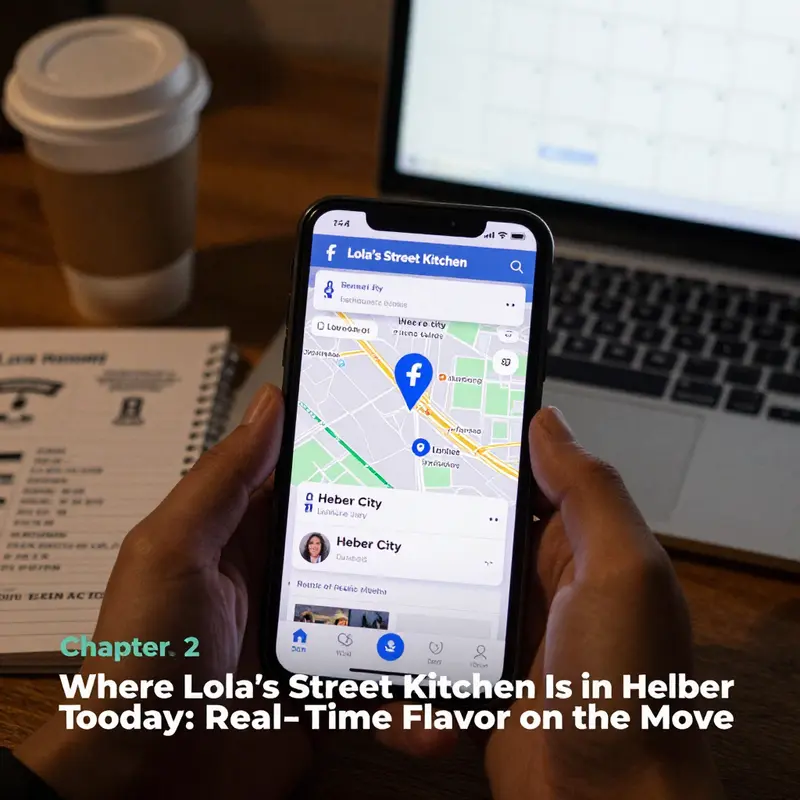
Lola’s Street Kitchen sits at the edge of memory and movement in Heber City, Utah—an image many residents carry as a quiet ritual: the gleam of a bright, solar-powered truck rolling into town, the savory promise of something hot, bright, and comforting, and the chance to map a day around where Lola’s kitchen will park next. When Lola’s Street Kitchen first rolled into Heber City back in 2015, it introduced something essential about the valley: a mobile, self-contained dining experience that could surface wherever the day’s currents took it. Today, the truck remains a fixture in the Heber Valley, a mobile beacon that travels with the sun and the community’s appetite. The brick-and-mortar restaurant in Midway offers a complementary anchor to the mobile presence, but the original truck continues to carry the fast-paced, improvisational spirit that first drew locals and visitors to its curbside windows. The way to catch Lola today is not by a fixed address but by following a living thread of updates—primarily through social media—that tells you where Lola’s wheels are parked and what the menu looks like in that moment. In Heber and beyond, customers have learned to anticipate the truck’s daily whereabouts in real time, learning to read the weather, the event calendar, and the city’s rhythms as clues to Lola’s next stop. The practice is simple in design but powerful in effect: a smartphone, a short post, and a plan that hinges on timely information. The most reliable map of Lola’s day is a stream of updates posted to Lola’s official social channels. A few lines of text can tell you not just the city block or park where Lola’s crew has pulled in, but what kind of crowd is gathering, what the night’s weather looks like, and whether there’s a special menu that day. In an era of instantaneous information, a well-timed post becomes almost a second kitchen—one that exists in the digital space as readily as Lola’s physical cart exists on the street. The beauty of this system lies in its reciprocity: the truck shares the plan, and the community responds by showing up, often with friends, families, and neighbors who have made a habit of chasing Lola through the valley’s lanes. This is not merely about convenience; it’s about participating in a local ritual where a street-food experience, a sense of place, and a sense of belonging align through the glow of a screen. From a logistical standpoint, Lola’s operation blends endurance with mobility. The truck’s solar-powered resilience is not just a technical note but a cultural one. It signals a commitment to quiet efficiency—the absence of a loud generator making the truck feel smaller, more neighborly, more at home in a small town’s core. The solar array keeps the kitchen powered during long shifts and allows Lola’s team to stay nimble, moving between posts with fewer logistical frictions. This energy independence also affects the schedule; wary of fluctuating power needs, Lola’s team often circles back to familiar hub spots that reliably welcome a truck and the bustle that follows. The result is a choreography of space and time—spots in Heber that become standbys for lunch, late afternoon cravings, or weekend events, and others that appear only when a local fair or a market invites the truck to set up shop. The act of following Lola’s precise location is a practice in reading the town’s pulse as much as it is a practice in reading the weather. Heber’s weather can rearrange a day’s plan in minutes. A gusting wind from the mountain passes or an unexpected shower might push Lola to swap a noon stop for a sheltered plaza or a covered market corner. The social posts translate weather conditions into actionable guidance: a quick weather check becomes a cue to check the feed, to see if Lola’s team has noted an alternative location, a new event, or a temporary closure for safety and service standards. The real-time element thus turns the audience into a kind of distributed kitchen crew, with people on the ground—friends and neighbors—who help spread the word and shape the flow of foot traffic. In this sense, social media does more than communicate; it choreographs shared experiences around a precious resource—the food truck’s presence in a community that has learned to look forward to its next arrival. What makes this system robust is consistency despite the lack of a single fixed home base. Lola’s team treats each post as a mini announcement with a built-in purpose: to invite, to orient, to promise satisfaction, and to celebrate the valley’s evolving landscape. The narrative of the day unfolds through a sequence of updates that often begin with a simple image from the truck’s prep space or a quick note about where the truck has rolled in. Then, as the sun angles change and as the team works its way through a menu, the feed becomes a diary of the day’s choices—photos of steaming bowls, the glow of fresh-made sauces, the playful garnish floating above a plate, the way a steam from the hot grill curls into the air. The community reads these posts not just to choose a location but to savor a moment before it happens, to feel the anticipation of a queue that forms in the shade of a storefront awning or a park’s pavilion, and to meet friends who have become seasoned regulars at a particular stall corner. A deeper layer of the social media strategy is the way Lola’s posts cultivate expectations and encourage a sense of shared discovery. Regulars know that a Saturday afternoon post often signals a high-traffic spot near a popular trailhead, where hikers intersect with families returning from a local farmers market. Weeknights bring a different cadence—an announcement that the truck will be stationed near a community center, where people gather for concerts or rallies, and where the kitchen’s aroma can draw in attendees who come for a show and stay for a meal. The copy in these updates tends to be concise, practical, and warmly inviting. It mentions not only the location but sometimes a teaser of menu items that day, a reminder about parking considerations, and a word of thanks to the community for their ongoing support. The language is collaborative rather than transactional, inviting followers to swing by, say hello to the crew, and share photos of their plates. This approach reinforces Lola’s identity as a piece of the valley’s social fabric—an edible signal that says the day’s plans are flexible, but the spirit of gathering remains constant. For customers, translating a real-time post into a precise plan often means a quick check-in protocol. First, confirm the posted location for the hour you plan to visit. Second, scan the post for any caveats—perhaps a longer line expected due to a special event, or a note about limited menu items if the truck has run through a particular stock. Third, consider the venue’s layout and parking; downtown cores and park-adjacent spaces can be bustling, while a quiet neighborhood street might offer easier access for families with strollers and dogs. Finally, as with any dynamic service, you take a small risk—the truck may shift locations, or a weather flip could nudge Lola’s crew to move sooner than expected. The beauty of the system, though, is its transparency. Even if a plan changes, the post is there, with a brief justification or a fresh location update, allowing customers to adapt on the fly without losing the sense of connection to Lola’s world. The social channel ecosystem is not just about Lola’s posts; it’s about the community’s response. Followers comment with reports from their own experiences, share tips about parking or best spots, and post photos of their meals, turning the feed into a living travelogue of Lola’s day-to-day adventures. The truck’s presence in Heber—an area known for its scenic byways and sense of small-town charm—benefits from this reciprocity. People become amateur reporters, the way a local knows a favorite corner where the wind drops just enough to keep the grills functioning and the smoke from drifting into nearby windows. The social stream becomes a mosaic of everyone’s efforts to bring Lola’s food to life, a collective task that emphasizes reliability in an otherwise unpredictable business model. The result is a sense of mutual investment: residents track the truck not for the sake of a fixed routine but for the shared pleasure of what Lola’s next stop might offer—a new dish, a familiar favorite, or a thoughtful adaptation to a day’s weather and crowds. To make sense of this dynamic, it helps to understand the sequence of events that typically shapes Lola’s day in Heber. The morning begins with prep reports and a teaser post—an early peek at what’s cooking and where the truck intends to be once the town wakes up. A late-morning or noon update often announces a primary lunch location, sometimes accompanied by a map image or a short note about parking arrangements and expected wait times. By mid-afternoon, Lola’s might shift to a second site, driven by market hours, school activities, or a neighborhood gathering that welcomes a portable kitchen. Evening posts tend to celebrate the close of day, sometimes with a last call that hints at a final stop or an upcoming weekend rotation. Each post functions as a waypoint in a geographic and social journey through Heber’s calendar, a way for the community to track not just a truck but a shared experience—sunlight, steam, friendly chatter, and the aroma of good food carried along the town’s winding streets. Embedded in this dynamic is an implicit trust. The audience trusts that Lola’s team will post accurately and promptly, that updates will arrive when the information is most needed, and that even if a location changes at the last moment, the message will reach followers quickly enough to recalibrate plans. In turn, Lola’s Street Kitchen learns to lean into this trust by maintaining clear, concise, and timely communication. It is this exchange that makes social media more than a marketing tool; it becomes a critical infrastructure for a mobile eatery, a way to ensure that a beloved truck remains accessible and relevant in a community that values both spontaneity and reliability. For readers and patrons who want to deepen their connection to Lola’s, there is a practical aside that complements the intuitive reading of posts. The channel strategy mirrors how many small, independent operators approach online visibility: a simple, repeatable cadence that keeps the audience engaged without overwhelming them with noise. The posts often highlight a simple truth—that in a mobile operation, the truck’s location is a moving target, and the value lies in the clarity of the signal, not in an elaborate broadcast. The same principle applies to how a neighborhood consumes information: people want to know where to be and when, and they want that information delivered in a respectful, accurate, and timely manner. By continually refining this approach, Lola’s Street Kitchen reinforces its role as a communal resource—a mobile kitchen that travels in step with the valley’s days and that invites people to participate in the city’s evolving map of flavors. If you are new to following Lola’s or if you are visiting Heber with the objective of tasting a particular dish, start by locating the truck through the official social channels and treating the feed as your day’s compass. Scan for the day’s opening post, which often serves as a beacon indicating the truck’s starting point and any special notes about what’s on the menu. Then follow the updates as they unfold, reading for cues about the next stop, and factoring in the time you need to reach the truck before the line grows too long. The practice of tracking Lola’s in real time fosters a deeper appreciation for how a small, solar-powered kitchen can connect a community across miles and moments; it turns a simple meal into a shared, town-wide event that can be anticipated and enjoyed by many, while still allowing for the surprises that only a mobile business can offer. For readers seeking a broader lens on how mobile food operations navigate visibility and scheduling, the story of Lola’s provides a human-scale example. It demonstrates how a business can leverage digital channels not only to advertise but to orchestrate daily life, aligning logistical constraints with social dynamics in a way that elevates both the food and the place it inhabits. The Heber Valley becomes not just a backdrop but a partner in the truck’s journey—a canvas on which the day’s plan is painted in real time by a community that cares about where Lola’s will appear next. In that sense, the chapter on Lola’s current whereabouts becomes a chapter about the broader ecosystem of real-time location updates: a practice that blends technology, community memory, and culinary craft into a single, unfolding narrative. Internal link for further context: for readers curious about how other food-truck operators approach online visibility and the different models they use to stay visible, see the resource hub at loschifladostruck.com/blog. External resource: real-time updates and verification of Lola’s Street Kitchen locations are published on Lola’s Street Kitchen’s Facebook Page. For the most current, day-by-day updates, you can visit https://www.facebook.com/LolasStreetKitchen/.
Chapter 3 — On the Move in Heber: Locating Lola’s Street Kitchen Today, Access for All, and the Local Economic Pulse
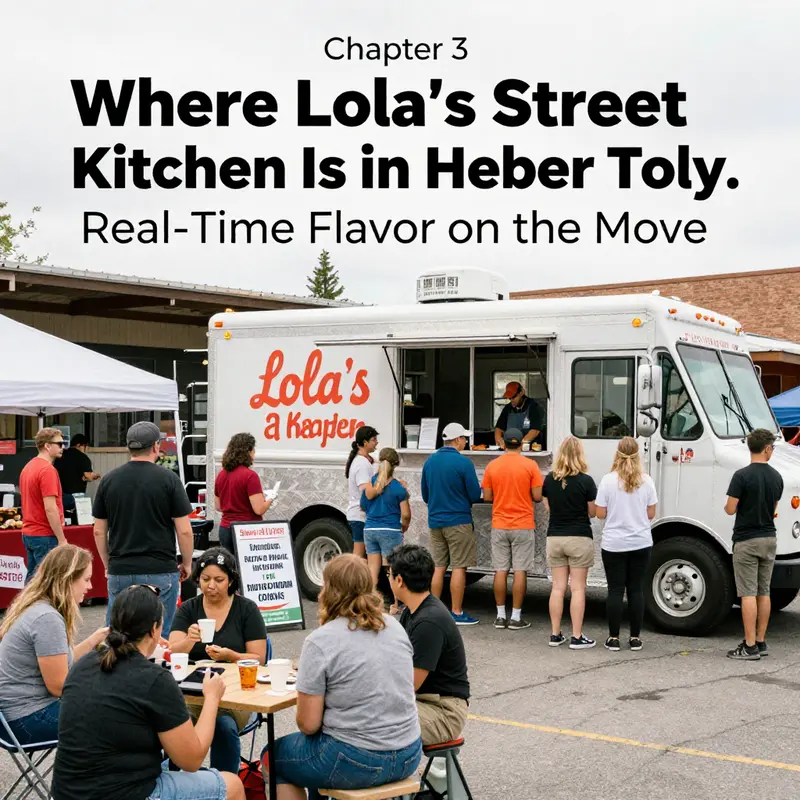
Heber City sits along the edge of the valley where farms meet trails, and Lola’s Street Kitchen has carved a moving footprint into that scenery since 2015. Each day the truck shifts its stage, greeting residents and travelers with the aroma of globally inspired street food. The quest to know where Lola is today becomes a part of the daily rhythm for locals and visitors alike, weaving together a practical guide with a sense of place. Instead of fixed hours and a brick building, Lola’s operates on a flexible map driven by weather, road conditions, and community demand. To stay in the loop, people turn to the restaurant family of channels, especially the official social media pages, where real time updates maintain both spontaneity and reliability. The truck may appear near a lively town square one afternoon and roll to a quiet overlook the next, a deliberate pattern that invites curiosity, rewards planning, and sustains a faithful, if roaming, audience. In this daily dance, the focus is less on a static address and more on a trusted workflow that blends accessibility with mobility, so that flavor finds every corner of the Heber Valley without sacrificing transparency or ease of use for customers on a tight schedule.
Lola’s Street Kitchen matters in Heber not only for its food but for the way it integrates with the town’s fabric. The truck emerged as a pioneer in the local food scene when it first rolled onto the scene in 2015, becoming the valley’s first permanent mobile culinary presence. Its reputation rests on a menu that travels the globe without leaving the valley, offering a spectrum of tastes that reflect a shared appetite for diversity, quality, and community connection. The operational model is also a statement about sustainability. The truck runs as a self contained unit powered by solar energy and designed to operate without the constant drone of noisy generators. This choice reduces environmental impact and creates a calmer street environment, which in turn broadens accessibility for families and individuals who might be sensitive to noise or simply seeking a leisurely dining experience in public spaces.
For someone planning a visit, the daily truth is that Lola’s location is a moving target—yet not an arbitrary one. Real time updates are the compass. A simple check of Lola’s Street Kitchen’s official social media pages can reveal the current stop, the day’s menu, and any seasonal specials worth prioritizing. The updates serve two essential functions. First, they deliver precise, current information so people can plan their routes, parking, and timing with confidence. Second, they create a living record of the transaction between the truck and the community, a kind of open invitation that makes the experience more inclusive and predictable for first timers and long-time regulars alike. In an era where food options multiply at speed, Lola’s approach to daily communication stands out, turning a mobile venture into a reliable beacon for the lunch break, the dinner rush, and the spontaneous craving that can strike any afternoon.
Accessibility at Lola’s Street Kitchen reflects a thoughtful approach to inclusivity that extends beyond the physical space. The counter is lowered to a comfortable height, making it easier for wheelchair users or guests with mobility devices to place orders and pick up meals without barriers. The clear labeling on every item helps patrons quickly identify allergens and dietary preferences, which reduces the guesswork that often accompanies street food. Quiet operation, a byproduct of the solar powered system, contributes to a calmer sensory environment that can be welcoming to people who are sensitive to loud noise or bright, bustling surroundings. The combination of low access barriers, clear information, and a peaceful ambiance demonstrates how a mobile eatery can adapt to multiple needs while maintaining efficiency and speed. It matters because accessibility is rarely a feature that can be added after the fact; Lola’s has built it into the core experience, from the design of the service window to the way menus are presented and the way staff communicate with customers.
The weathered ceilings of Heber’s blue skies and the town’s seasonal cycles pose a practical test for any mobile kitchen, yet Lola’s has demonstrated resilience and reliability by remaining open year round. Winter winds, spring rain, and autumn tourism seasons all shape the truck’s routes, but the underlying mission endures: to deliver fresh, affordable, diverse cuisine to a community that values both authenticity and convenience. The solar powered operation is more than a sustainability badge; it is a design choice that aligns with the rhythms of the valley, reducing noise and emissions while enabling longer operation hours during shoulder seasons when daylight remains ample. A quiet truck becomes a quiet neighbor, less likely to disrupt the peace of a residential street or a neighborhood event, and more likely to encourage lingering conversations, especially when crowds gather for an evening stroll or a weekend farmers market. These factors matter for accessibility beyond the obvious physical access. They shape how people who might be new to the area can discover Lola’s without intimidation, how families can time a visit around school schedules and errands, and how seniors can plan a relaxed meal without navigating a gauntlet of unfamiliar streets.
The economic ripple from Lola’s Street Kitchen extends well beyond the plate. As a locally owned enterprise, it anchors a broader network of collaboration within the Heber Valley. Ingredients are sourced from nearby farms and suppliers whenever possible, reinforcing a link between cooks and cultivators and keeping money circulating within the regional economy. This local sourcing supports farmers and small businesses, creates potential jobs, and fosters a sense of shared destiny among residents who value a vibrant, self sustaining community. The truck also draws visitors, drawing curious food lovers from nearby towns and beyond who might not have known Heber’s culinary scene without Lola’s presence. Those visitors spend time and money in other local establishments, from shops to galleries, fueling foot traffic that benefits a cluster of businesses along the truck’s path. When the Heber Chamber of Commerce recognized Lola’s with a Business of the Month award in October 2019, the accolade articulated more than praise for tasty food; it acknowledged the truck as a catalyst for sustainable growth, a reminder that a mobile kitchen can contribute to a community’s long term vitality as much as a storefront can.
The community impact does not end with economic indicators or applause from a chamber. Lola’s Street Kitchen regularly participates in events that bring people together, from street fairs to school fundraisers, and its presence often acts as a social anchor in neighborhoods where casual gatherings can become lasting memories. In these moments, food becomes a language that binds diverse groups, offering a shared experience that crosses age, background, and taste. The daily routine of updating locations and menus becomes part of a larger social contract: a promise that the truck will be there when needed, a risk worth taking to savor something new, and a reminder that local food can be a constant in a changing landscape. This sense of continuity matters for economic confidence as well. When residents know a trusted option will be nearby, they are more likely to plan out their day, support neighboring businesses, and participate in community life with less hesitation.
From a practical standpoint, anyone who wants to track Lola’s daily itinerary can benefit from a simple but reliable approach. Rather than guessing or relying on secondhand chatter, people are invited to follow Lola’s Street Kitchen on the official social platforms where daily maps and postings illuminate the truck’s current stop and menu. The routine is not rigid; it reflects an understanding of mobility and customer needs. If a family is coordinating a weekend visit, they might check the post announcing a market appearance and then map a route that includes a nearby coffee shop and a stroll along the river. If a group is planning a late lunch, they may search for a downtown pocket where the truck will set up after the school bell rings. The dynamic nature of Lola’s presence becomes less daunting when approached with this shared knowledge base, a collaborative system of neighborhood awareness that image and flavor go hand in hand with access and planning.
For those who are curious about the logistics behind moving food trucks, the path from one site to another is rarely a matter of mere luck. It involves coordination with event hosts, understanding traffic patterns, and anticipating customer flow. A resource that sheds light on how operators manage such challenges is the internal guide to parking and siting challenges for moving kitchens. See Mastering food-truck parking challenges for a practical look at the kinds of decisions that go into daily location planning, including considerations like curb space, line management, and accessibility needs. This note is not a blueprint for every truck, but it does offer a window into the craft behind keeping a mobile kitchen both visible and considerate of its surroundings. The modern food truck is less about a single point of sale and more about a flexible, customer centered approach to place and pace, a philosophy Lola’s embodies on every run.
The overarching theme of Lola’s current presence in Heber is simple: location is a service, accessibility is a permission granted to all who wish to partake, and the local economy benefits when a mobile unit maintains a steady rhythm within the community. As a reader of this chapter, you will have absorbed not only the practical steps to locate Lola’s today but also an appreciation for the values that accompany that mobility. The truck is a moving ambassador for flavor, sustainability, and inclusive experience, and its daily shifts are a reminder that food is most powerful when it travels, connects people, and leaves room for both surprise and familiarity. When you next wonder where Lola’s is today, remember that the answer is not a fixed line on a map but a living, evolving conversation that you can join by following the updates, planning around the posted location, and stepping into a moment of shared taste and local pride.
External resource: Lola’s Street Kitchen Facebook Page https://www.facebook.com/LolasStreetKitchen/
Final thoughts
Tracking Lola’s Street Kitchen in Heber today blends practical logistics with community enjoyment. By understanding location variability, leveraging social updates for real-time accuracy, and recognizing the broader benefits for customers and the local economy, event planners, admins, and enthusiasts can maximize the value Lola brings to any gathering. Flexibility remains the core advantage: Lola’s presence can shift to align with markets, team events, or neighborhood festivals, turning a simple lunch into a shared, flavorful experience. When you combine timely updates, clear guidance for attendees, and a commitment to accessibility and community impact, Lola’s daily itinerary becomes more than a meal—it becomes a unifying moment in Heber.