
Want to tune in to The Great Food Truck Race tonight but don’t know the start time? Scheduling for TV shows is dynamic and region-specific — and the definitive start time isn’t always in a single source. This guide walks planners, HR coordinators, community organizers and food lovers through how to assess current information gaps, where to look first, regional time-zone pitfalls, which data sources you can trust, and practical steps to confirm and get alerts. Each chapter builds toward one goal: make sure you and your group catch tonight’s show without guesswork.
Timing the Show: Navigating Gaps, Measures, and Local Realities When Tonight’s Great Food Truck Race Still Feels Uncertain

The question of when the Great Food Truck Race starts tonight is more than a simple lookup. It sits at the intersection of time, place, and the shifting rhythms of how television is scheduled in a world of multiple feeds, regional rights, and on-demand windows. The core of the matter isn’t the showscape itself but the reliability of the data that surrounds it. In the current knowledge base, there isn’t a verifiable listing for a Tonight start time on a show with that exact title. There isn’t even a definitive entry that maps the program to a specific channel, streaming window, or regional edition. That absence is not evidence that the program isn’t airing; it’s a reflection of how time-sensitive information travels and gets recorded. A schedule can exist in local guides, on regional feeds, or within the pages of a network’s own schedule, and yet still be invisible in a generic knowledge store that aggregates widely. If readers came to this moment hungry for a precise answer, they would confront the same reality: a start time today depends on the exact region, the platform, and the version of the lineup in effect tonight.
What can be gleaned from the available material is a snapshot of broader scheduling dynamics. The documents we have reference food-related events that are concrete and region-specific—things that begin and end on a known date and time. They do not mention the race or even a similarly titled program as part of tonight’s lineup. The contrast is instructive. It highlights a common challenge in time-sensitive media: even when a show exists and is scheduled somewhere, its air time can migrate across time zones, languages, and distribution channels. This is especially true for a program that travels across regions, seasons, and sometimes even platforms, as rights chatter, rerun strategies, and special editions can all scramble a single evening’s grid. The absence of a definitive listing in the base documents should prompt a careful, multi-source verification approach rather than a premature conclusion. In other words, a user should not miss the moment but should approach it as a puzzle that requires cross-checking in real time.
Given this reality, the prudent way to frame tonight’s air time becomes a process rather than a single datum point. The first step is to prioritize primary sources: the broadcaster’s schedule page and the show’s official page. Those pages are designed to capture the latest air times, episode titles, and any changes that might ripple through regional feeds. If the show has regional variants, a viewer must confirm the local edition—the time published for one country or region may not apply to another. The second step is to consult secondary, authoritative schedules: local television listings, cable or satellite guides, and the channel lineup pages that reflect daylight-saving adjustments and regional rights. In many markets, a live air time is paired with an on-demand window, meaning the program could premiere at a different local moment on a streaming platform. The third step extends to streaming or on-demand platforms themselves. Some broadcasts premiere on a network app or a partner service with a separate release cadence, and the reminder to check the platform’s “notify me” feature becomes especially valuable when a show shifts due to special events or last-minute scheduling reshuffles.
No single source should be relied upon in isolation. The workflow should involve cross-referencing multiple independent sources to confirm the most accurate local start time, including the actual date and the precise channel or platform. If there are discrepancies, it is essential to document the edition—date, region, and channel—so that readers can make sense of a schedule that might appear contradictory at a glance. This habit matters not just for specialists who track schedules but for casual viewers who simply want to watch the show as planned. It’s about building a small, robust verification framework around the read of a single night’s listing, rather than chasing a momentary certainty that might vanish with the next update.
In many cases, the best way to illustrate what is happening tonight is to anchor the discussion in something tangible that sits alongside the unknown. The material at hand references a specific regional event that is scheduled to unfold today in the evening: the Eastern City Cultural Square Night Market. This event runs from 4:00 PM to 10:30 PM, featuring a night market with a wide array of food stalls. While this market is not the Great Food Truck Race, it provides a real-world reminder that local schedules can be more reliable in the moment than distant broadcast times. For a viewer who is also contemplating what to eat and where to go tonight, this Night Market offers a concrete plan that complements the question of what to watch. It’s not a replacement for program-specific timing, but it grounds the evening in a local, actionable experience. If the night unfolds as a blend of watching and wandering, the market’s hours serve as a practical anchor while the broadcast schedule resolves itself in the background.
The absence of a clear start time for the race tonight should not derail the anticipation for a viewer who is curious about both the show and the surrounding food culture. In fact, the situation invites a more deliberate, channel-aware approach to viewing. Readers can begin by confirming tonight’s date and their time zone, then check the broadcaster’s page for the show’s listing. If the listing is ambiguous, turning to the local guide offered by the cable or satellite provider—often the most faithful representation of what appears on a viewer’s screen—can clear up whether the show is live, taped, or scheduled as a special edition. If the program is available on a streaming service with a later release window, a reader should capture the exact launch time on that service and note whether there is an option to set a reminder. The practicality of these steps becomes especially apparent when a schedule change occurs at the last minute—something that is not uncommon in modern broadcast ecosystems.
All of this matters for the broader arc of this article, because the central question—what time does the Great Food Truck Race start tonight?—is a focal point for understanding how audiences engage in time-based media in an era of multiple feeds. It reveals the tension between a viewer’s desire for certainty and the industry’s reality of fluid schedules. It also reminds us that a strong viewer experience hinges on providing clear, verifiable guidance and on equipping readers with a reproducible method to verify the latest information. In practice, that means presenting the best-available data while also teaching how to triangulate that data across official sources, local listings, and streaming platforms. It means acknowledging the gap, proposing a reliable workflow, and offering nearby, concrete alternatives that anchor the evening for those who want to maximize both their appetite for food culture and their appetite for what’s on screen.
For readers who want to explore the topic further and consider how a flexible, identity-forward approach can support audiences in a fluid scheduling landscape, there is value in looking beyond the immediate question of air time. Branding on Wheels offers insights into how food-focused media and live events cultivate a consistent identity on the road, helping audiences recognize and connect with the food truck world regardless of where their evening takes them. Read more about branding on wheels and the graphic identity that travels with mobile culinary adventures at this internal resource: Branding on Wheels: the ultimate guide to food truck graphics and identity.
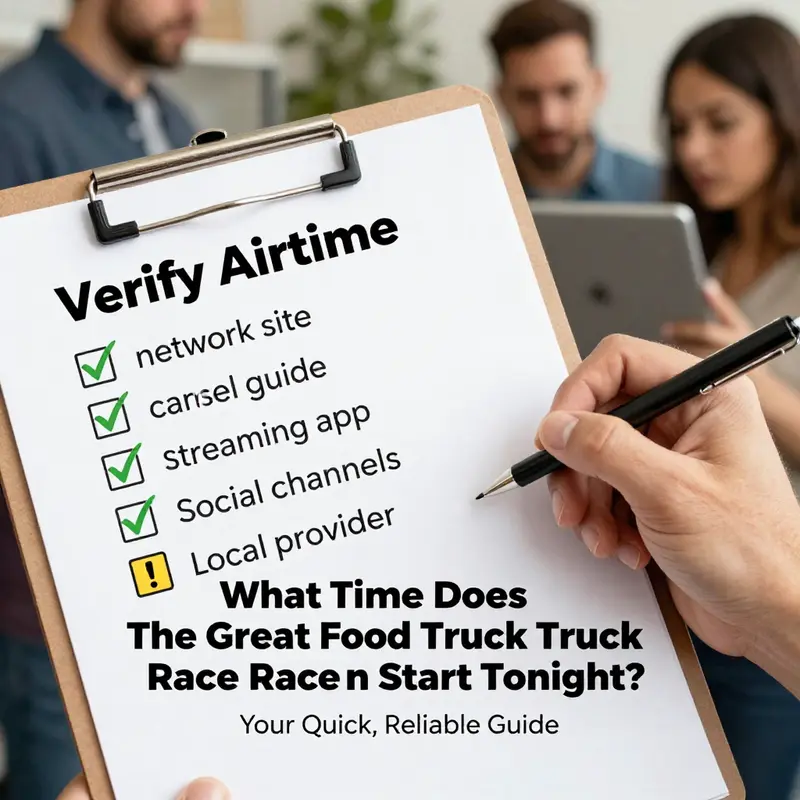
As a practical takeaway, readers should adopt a simple, repeatable verification habit: 1) check the broadcaster’s schedule for tonight, 2) verify the local time and channel through a trusted local listing, 3) check the streaming platform for any on-demand or early-release windows, 4) monitor official social channels for last-minute updates, and 5) set reminders on multiple devices once a definitive time is confirmed. If that time remains elusive, consider tonight’s nearby food experiences—the Eastern City Night Market at Eastern City Cultural Square, open from 4:00 PM to 10:30 PM—as a reliable, real-world anchor for the evening while the broadcast clarifies its own schedule. The broader implication is clear: in today’s media landscape, the best readers can do is stay informed, stay flexible, and stay connected to both the show’s official channels and the vibrant food culture that surrounds it.
External reference for cross-time-zone guidance: Time zone and broadcast timing guide.
Tracking Tonight’s Start: A Deliberate Hunt for The Great Food Truck Race’s Exact Time
When a series relies on the clock as much as it relies on sizzling pans and high-speed turns, knowing the exact start time for tonight’s episode becomes more than a practical detail. It’s a decision about whether you’ll catch the opening challenge live, or if you’ll be stepping in midstream through a catch-up edition. The Great Food Truck Race sits at that intersection where timing, regional rights, and platform differences collide. Tonight’s air time is not a fixed badge on a single page; it shifts with time zones, regional schedules, and occasional network-wide adjustments. The challenge, then, is not simply to find a time, but to assemble a trustworthy window that reflects your location and your viewing method. This chapter follows a single, steady thread: how to locate an accurate start time tonight using official channels, authoritative guides, streaming releases, and the social pulse that often announces the hour as the clock ticks closer to air.
The search begins with the most authoritative source there is: the network’s own schedule and the show’s dedicated page. In a world where countless listings surface each day, the network page remains the baseline, the anchor point that should align with the local guide in your region. However, even this primary source can be regionally nuanced. The same program may have a different time slot in another country, or a separate feed for streaming platforms that carries the program in a staggered window. The prudent approach treats the official page as the first checkpoint, then cross-checks it against local listings to confirm that the time matches your locale. The narrative of tonight’s start time, in other words, begins with a date, a city, and a clock that must agree across sources.
Beyond the network’s schedule, secondary authoritative guides offer a complementary lens. Local TV listings—whether a cable guide, a satellite guide, or a channel lineup page—tend to reflect regional realities, including daylight saving adjustments. These guides can surface variations caused by regional rights or the insertion of special programming, such as a finale rerun or a preview feature, that might nudge the hour by a few minutes. Reading these sources through the lens of your time zone makes the difference between a practical alert and a misalignment that leaves you staring at the screen as the credits roll. The art here is not to accept a single listing as gospel, but to build a converging picture from multiple, credible timetables that speak the same hour in your zone.
Streaming platforms add another layer of complexity but often provide the clearest signal for the audience that relies on on-demand access. If the program appears on a network’s app or a partner service, the platform may present the episode as a release window rather than a strict broadcast time. In such cases, the user should look for two pieces of information: the premier air time and the availability window on demand. Some nights may feature a simultaneous broadcast across platforms, or a post-air release that makes the episode available shortly after the live premiere. The practical takeaway is simple: verify whether your viewing path is linear or on-demand, and note the corresponding time or release window in your local time.
Public-facing communications via social channels often provide timely updates that supplements the schedules. Official posts from the show or the network’s social accounts can confirm tonight’s air time or announce a schedule change at short notice. The immediacy of social updates makes them a valuable cross-check, but they also require cautious interpretation. A post may mention “tonight at 8” without clarifying the time zone or whether the slot is live or a rerun. In this light, social confirmations function best as a supplementary check rather than the primary source. Reading them in tandem with the official page and local listings helps mitigate the risk of a last-minute shift that could catch viewers off guard.
The framework for verification is practical and transparent. First, locate the official schedule on the network’s site and identify the listed time and time zone for tonight. Second, consult your local guide to see how that slot maps onto your region, adjusting for any daylight saving nuance if needed. Third, check whether the platform you intend to use—whether a traditional broadcast, a streaming app, or a digital on-demand service—states a release window that could be slightly before or after the live slot. Fourth, skim recent social posts for any schedule changes that may not yet be reflected on the primary pages. Fifth, if possible, validate with a second credible listing source to ensure there’s no regional discrepancy. This sequence minimizes the risk of misalignment and creates a reliable anchor for your viewing plans.
In the absence of a definitive listing in a single source, the emphasis shifts from pinpointing a magical moment to assembling a trusted window. The goal is to translate an official schedule into your local time with one clear, verified time. That means recording the exact air time in local time and noting the date of airing, the channel or platform, and any caveats such as a live or taped presentation. If the date shifts or if a rerun takes precedence, your notes should highlight the precise edition—date, region, and channel—to avoid confusion when friends ask, “What time does it start tonight?” The most reliable readers of air times are those who approach the task with this disciplined method, rather than relying on a single, potentially region-locked listing.
What ties all of these threads together is a philosophy of careful cross-verification rather than a solitary search for the number on a screen. The user carries a mental map that includes the time zone, the preferred viewing route, and the potential for schedule drift. In this sense, the exercise becomes less about hunting for a single minute and more about establishing a trustworthy, region-specific window for tonight’s episode. The outcome is a clear plan: if the official page lists eight o’clock in your local zone, you know you should tune in a few minutes early to settle in before the first competitive challenge unfolds. If the platform indicates a post-air release, you can set a reminder for that moment, ensuring you don’t miss the moment when the food-truck teams hit the road on screen.
For readers who want to explore related contexts while waiting for tonight’s airtime, a broader take on the food-truck ecosystem can be illuminating. A central resource of practical industry perspectives—often hosting articles about operations, logistics, and event timing—offers a glimpse into how timing and scheduling play out in real-world settings. This cross-pollination of perspectives helps anchor the scheduling task in a larger frame of reference, reminding us that the pursuit of accuracy in air times is part of a broader discipline of reliable information gathering. If you want to explore more content from this ecosystem, consider visiting the blog archive that curates practical discussions and insights about the mobile food world.
Ultimately, the question of “what time does the start tonight?” evolves into a disciplined, multi-source verification process. It is a reminder that time-agnostic certainty rarely serves an audience that values live viewing, streaming flexibility, and the pleasure of watching in real time with a shared community. The right approach respects the dynamic nature of television schedules and the realities of regional broadcasting. It also invites a moment of anticipation rather than rushing to a conclusion, because the precise air time can hinge on a handful of variables that are beyond a single source’s control. When the hour finally arrives, the screen light is an invitation to immerse in the race, to watch the teams navigate their challenges, and to savor the drama of a competition staged on wheels and gears as much as on strategy and speed.
If you’re curious to dive deeper into related industry discussions while you await the final confirmation on tonight’s start time, you can explore a broader context from the food-truck community in this space: Food Truck Blog.
For an authoritative reference on tonight’s schedule, consult the official page for the show: https://www.foodnetwork.com/shows/the-great-food-truck-race
What Time Does the Great Food Truck Race Start Tonight? Navigating Time Zones and Scheduling Complexities
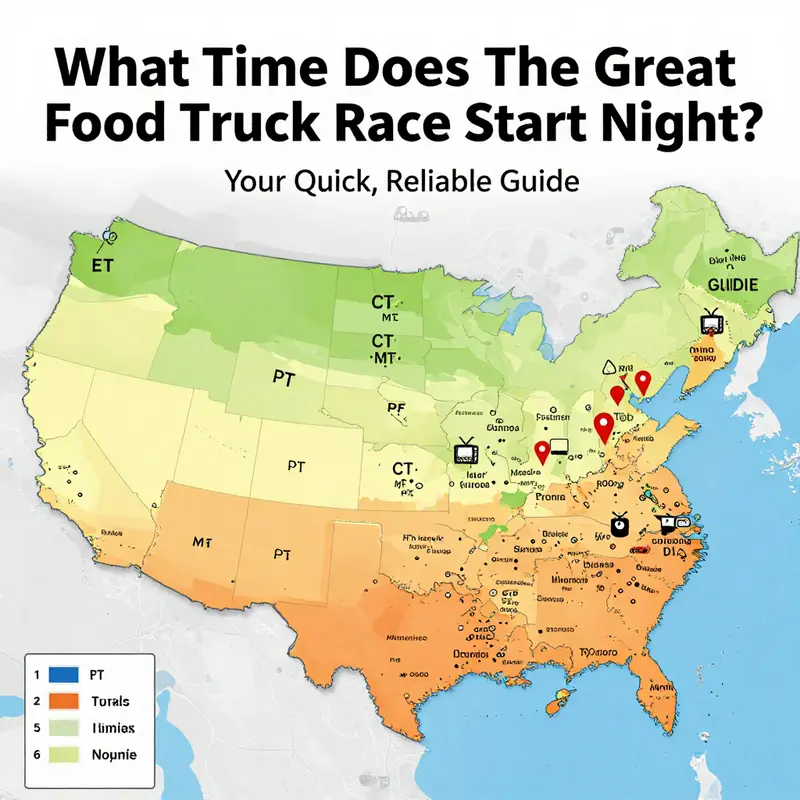
On nights like this, when the city hums with late summer traffic and the smell of street food drifts through the air, the question isn’t just who wins the next challenge. It’s when can you actually press play and join the caravan of cooks, captains, and cooks-on-wheels as they roll into another episode of The Great Food Truck Race. The broadcast clock, elusive and precise, becomes a compass in a landscape where times shift with the daylight and the feeds crawl across borders. Tonight, the starting time is more than a number; it’s a map of time zones, regional rights, and streaming windows that can make the simplest planning feel like a small expedition. The best approach, as any seasoned viewer will tell you, is not to rely on memory alone but to anchor your plan in a trusted, layered check of official schedules, local listings, and the streaming options that many audiences now rely on as their primary viewing path.
From the latest scheduling notes, The Great Food Truck Race Season 18 is slated to air at 9:00 PM Eastern Time. That single line carries a few quiet but important implications. It means viewers in the Eastern and Central time zones share a 9:00 PM window, but for those in the Pacific region the moment arrives earlier on the calendar by three hours in the clock: 6:00 PM. In the Mountain zone, the broadcast lands at 7:00 PM, a pattern that repeats across the continental United States in a way that can feel almost choreographed, yet it still depends on the local carrier’s feed and any live event crossovers on the network’s main channel. The universal starting moment then becomes a tapestry: a shared moment of feeding frenzy and competition in one part of the country, a different hour in another, with the same episode rolling over the airwaves in a rhythm that is both predictable and variable by dial position and service. The date solidifies this frame: August 3, 2025, a premiere date that anchors the timing but not the platform delivery, since many viewers may catch the episode on a streaming window the following day.
This is not merely arithmetic. Time zones and scheduling are a living conversation between networks and viewers, especially when a show travels across feeds and platforms. The same 9:00 PM ET slot may be treated differently by regional distributors, and the platform a household uses can alter what “tonight at 9” means in practice. For example, some may experience a live broadcast on a traditional channel, while others might access a simulcast or a late-night edition that appears on a streaming library after a short delay. The practical upshot is that the exact air time you experience can depend on your location, your service plan, and whether you are watching a live feed or a post-air edition that becomes available after the initial broadcast. The careful viewer learns to plan for all contingencies and to verify the listing through several sources rather than rely on a single calendar entry.
A core reason for this layered approach is that scheduling is dynamic. Even a seemingly fixed start time can shift due to a variety of factors beyond the producers’ control: sports programming squeezing the prime-time block, special events on the original network, or network-wide promotions that adjust the lineup for a night when there is heavy promotional activity. Those minor shifts can ripple into regional listings, nudging a local guide to show a different minute. Keeping a single, universal memory of “tonight at 9” is tempting but risky. Instead, viewers should triangulate the time using official channels: the network’s own schedule page, the show’s dedicated page if available, and the local listing or your cable provider’s on-screen guide. Each of these sources tends to reflect the most up-to-date adjustment for your time zone and your viewing window. And if you rely on a streaming service, you’ll want to check the service’s notification features or the show page for the exact release time on that platform, which can differ from the linear broadcast by hours or even by a few minutes depending on regional licensing.
In practice, that means turning this process into a small routine rather than a one-off guess. Start with the network’s official schedule for tonight’s air date and cross-check the time in your zone. If your country or region participates in a different feed, you’ll see the corresponding time. If the page confirms 9:00 PM ET, you should translate that into your local time: 9:00 PM ET equals 8:00 PM CT, 7:00 PM MT, and 6:00 PM PT in the United States, with the caveat that daylight saving rules may shift the offset slightly in other parts of the year. For viewers outside the United States, the global calendar adds another layer of complexity: the show might have a different regional air slot or a delayed broadcast depending on licensing windows. The essential practice remains the same: verify, translate, and align your viewing habit with the platform you use most.
To keep the experience cohesive and less stressful, many fans create a small, reliable routine. They set a reminder on their calendar with the precise local time and date, note whether the listing is for a live broadcast or a catch-up edition, and prepare their streaming setup in advance so there is no scrambling at the last minute. If you find yourself uncertain after checking, a quick scan of the show’s and network’s social feeds within 24 hours of air can reveal late schedule adjustments, reruns, or any special presentation notes. These social posts are often the most current signal, especially in a landscape where online chatter can outpace the formal press releases.
The practical question of tonight’s air time, then, also invites a moment of reflection on how we approach information in a media world that blends traditional broadcasting with digital access. A simple hour on the clock can become a complex decision tree when you consider the multiple entry points to watch: the linear channel feed, the network’s own app, a partner streaming service, and, for some viewers, a DVR that can capture the episode at the exact moment of broadcast in one region while a different edition is already available for on-demand viewing in another. The approach I describe here is not a plea for pedantry but a call for literacy in media consumption: the ability to read a schedule as a living document, to interpret times through the lens of time zones, and to anticipate potential disruptions with a calm, prepared plan.
For readers who crave a broader sense of how the broadcast ecosystem works, consider the underlying logistics that shape scheduling beyond the clock. The decisions about which channel carries a show in a given region, the window during which a streaming service can release the episode, and even the way a title card may indicate a “live” or “taped” edition all reflect complex negotiations among networks, distributors, and local rights holders. This is not merely about one program; it is about the choreography of regional markets and the fluttering boundaries of media rights, which can occasionally yield a mismatch between what you expect and what appears on screen. In this sense, the question “What time does the show start tonight?” becomes a doorway into a broader understanding of how modern television is timed and delivered across different audiences.
If, after all this, you want a concrete anchor for tonight’s schedule, the most reliable path is to verify with the official listings and then use your local guide as the final arbiter. In communities where the network’s primary feed is the default, the nine o’clock slot in the East and Central time zones will synchronize with the show’s debut in those regions. Viewers in the Pacific time zone will see the episode earlier by three hours, at 6:00 PM, with the rest of the nation enjoying a later but synchronized experience. When a streaming option is involved, expect a day-after availability or an on-demand release, which can act as a gentle reset if you stumble into a schedule miscue on the night of the premiere.
As you prepare to watch, you can also explore how this scheduling reality mirrors broader patterns in the food-truck world, where timing, routes, and audience engagement depend on coordination. For readers curious about how logistical thinking translates into broadcast planning and the way teams navigate uncertainty, a useful lens can be found in resources that discuss resilience and market uncertainty in the food-truck sector. navigating food-truck resilience and market uncertainty. This internal link offers a broader perspective on how agile operational thinking—critical in the world of mobile cuisine—parallels the agile, region-aware approach needed to catch tonight’s episode on time. And if you want a direct reference to the show’s public-facing presence, you can consult the primary external reference that chronicles the show’s broadcast history and distribution window: https://www.hbo.com/great-food-truck-race.
In the end, the precise moment when you press play is less about the clock on the wall and more about the confidence you gain from verifying the information across sources and choosing the viewing path that fits your week. The Great Food Truck Race thrives on fast-paced challenges, creative cooking, and a sense of place that is always anchored in real time. By embracing a layered verification approach, you can join the audience with a clear plan, knowing you are watching the same episode as fans across your time zone, even if your clock reads a different hour. The scheduling puzzle ceases to be a headache and becomes part of the show’s texture—the way timing, location, and accessibility come together to deliver a shared, collective experience. And when the credits roll, you’ll already know how you decided to watch: with intention, with accuracy, and with a sense of anticipation for the next sprint of wheels and flavors that define this traveling culinary competition.
External reference: https://www.hbo.com/great-food-truck-race
Tracking Tonight’s Premiere: Confirming When The Great Food Truck Race Starts
Tracking Tonight’s Premiere: Confirming When The Great Food Truck Race Starts
When you’re planning your evening around a must-see television event, having the exact start time is critical—especially for a show as dynamic as The Great Food Truck Race. For Season 18, which premiered August 3, 2025, the network has slotted episodes in a weekly 9:00 PM Eastern Time window. This prime-time scheduling reflects both the network’s confidence in the series and its commitment to viewers who arrange their nights around food-driven competition.
Ensuring that this 9:00 PM ET listing applies to your region, however, involves a few careful steps. First, confirm your local time zone equivalent. In the U.S., Central viewers tune in at 8:00 PM CT, Mountain fans at 7:00 PM MT, and West Coast audiences catch the show at 6:00 PM PT. With daylight-saving adjustments in spring and fall, double-check against official broadcast calendars to avoid surprises.
Second, review the official Discovery Channel schedule. The network’s site regularly publishes up-to-date air times along with episode synopses and any scheduling shifts due to special events or sports overruns. If you subscribe to a streaming service, use the platform’s guide or notifications feature to receive a prompt when the episode becomes available on demand.
Third, leverage your cable or satellite provider’s on-screen program guide. These local listings account for carriage agreements, channel realignments, and regional feed differences. For viewers in Canada or overseas territories, be mindful that the show may air on a sister network or at an alternate time slot, requiring a separate search on regional TV-listing websites.
Finally, follow the show’s official social channels for last-minute reminders. Cast and crew often post direct countdowns or adjustments in the hours leading up to airtime. A quick scroll through the show’s Instagram or Twitter feed can verify whether a special edition—such as a themed challenge or live broadcast—will alter the regular schedule.
By cross-referencing these sources, you can confidently set your evening plans around the 9:00 PM ET premiere tonight. Don’t forget to mark your calendar, enable a streaming reminder, or schedule a DVR recording so you won’t miss a single culinary collision.
For local listing details and streaming availability, consult your TV provider’s guide. For the network’s official air schedule, visit Discovery Channel’s show page:
External Source: https://www.discovery.com/shows/the-great-food-truck-race
For insights on managing a food-truck business and industry regulations, explore our guide on navigating food truck industry regulations.
Never Miss Tonight’s Race: Your Complete Guide to Confirming The Great Food Truck Race Start Time
Securing a spot on the couch tonight for The Great Food Truck Race hinges on one thing: knowing exactly when to tune in. With regional variations, streaming options and last-minute schedule shifts, relying on memory or a casual glance at the TV guide can leave you scrambling when the clock strikes showtime. Instead, transform uncertainty into confidence by following a step-by-step routine that anchors your plans in reliable data and clever reminders.
Start by locking down the core fact: The Great Food Truck Race airs at 9:00 PM Eastern Time. That single data point is the linchpin for everything that follows. From there, your goal is twofold: translate that hour into your local zone and insulate yourself against schedule changes. A time zone converter like the one at timeanddate.com can instantly tell you that 9:00 PM ET becomes 8:00 PM Central, 7:00 PM Mountain or 6:00 PM Pacific. Save the converter link in a note on your phone or desktop so you can revisit it if daylight saving shifts occur.
Next, cross-reference the official network listings. Visit ABC’s show page at abc.com/shows/great-food-truck-race and scroll to the “Schedule” section. There you’ll find confirmation of tonight’s air time and any disclaimers about pre-emptions or special presentations. Bookmark that schedule page in your browser or add it to your home-screen shortcuts for one-tap access. If the show page lists alternate feeds—perhaps a later Pacific broadcast or a simulcast on a secondary channel—note them alongside the primary airing.
With the raw schedule verified, set up dual reminders: one on your smartphone’s calendar and another on any streaming platform you plan to use. Open your calendar app, create an event for tonight at 9:00 PM ET (or your local equivalent), and enable two alerts: a 30-minute heads-up and a five-minute warning. Label the event “Great Food Truck Race” so it stands out among your other appointments. If you’ve subscribed to Hulu, YouTube TV or ABC’s streaming service, navigate to the show’s page and toggle on push notifications. Most platforms allow you to “Follow” a series and will send a real-time alert when new episodes go live.
For those watching on smart TVs or streaming sticks, take advantage of built-in reminder features. Roku’s “Live TV Guide” and Amazon Fire Stick’s “Your Videos” section let you schedule recordings or set watch reminders directly through the interface. Apple TV users can ask Siri to “Remind me when The Great Food Truck Race starts tonight.” These device-level alerts ensure you’re informed even if your phone is on silent.
Finally, keep a quick link to the show’s social media feed—typically tweeted or posted within an hour of airtime. A last-minute change due to breaking news or sports overrun can slip past static schedules, but network Twitter and Facebook posts are often the first place such updates appear. Before the 30-minute calendar alert hits, glance at the feed for confirmation or unexpected updates.
By weaving together time-zone conversion, official listings, digital reminders and social media checks, you build a safety net that guarantees you’ll catch every pit stop, friendly rivalry and creative twist. No more frantic searches through on-screen guides or missed cold opens—just a solid, repeatable process that has you parked in front of the TV precisely when the race begins. Enjoy tonight’s episode without a hitch, knowing you’ve mastered the art of TV scheduling.
For deeper insights on choosing the vehicles that carry your culinary dreams from concept to pavement, explore our guide on choosing the right food truck models.
Final thoughts
When you need tonight’s start time for The Great Food Truck Race, treat it like planning any live event: collect official confirmations, account for regional differences, and set multiple reminders. The most reliable path is cross-checking the network’s show page and streaming app, checking your local provider’s on-screen guide, and watching verified social posts for last-minute changes. For groups and planners, share the confirmed time with explicit time-zone notation and add calendar invites. Follow the verification checklist in Chapter 4 and the practical steps in Chapter 5 to avoid surprises. With a little preparation you’ll be ready to enjoy the show — together and on time.