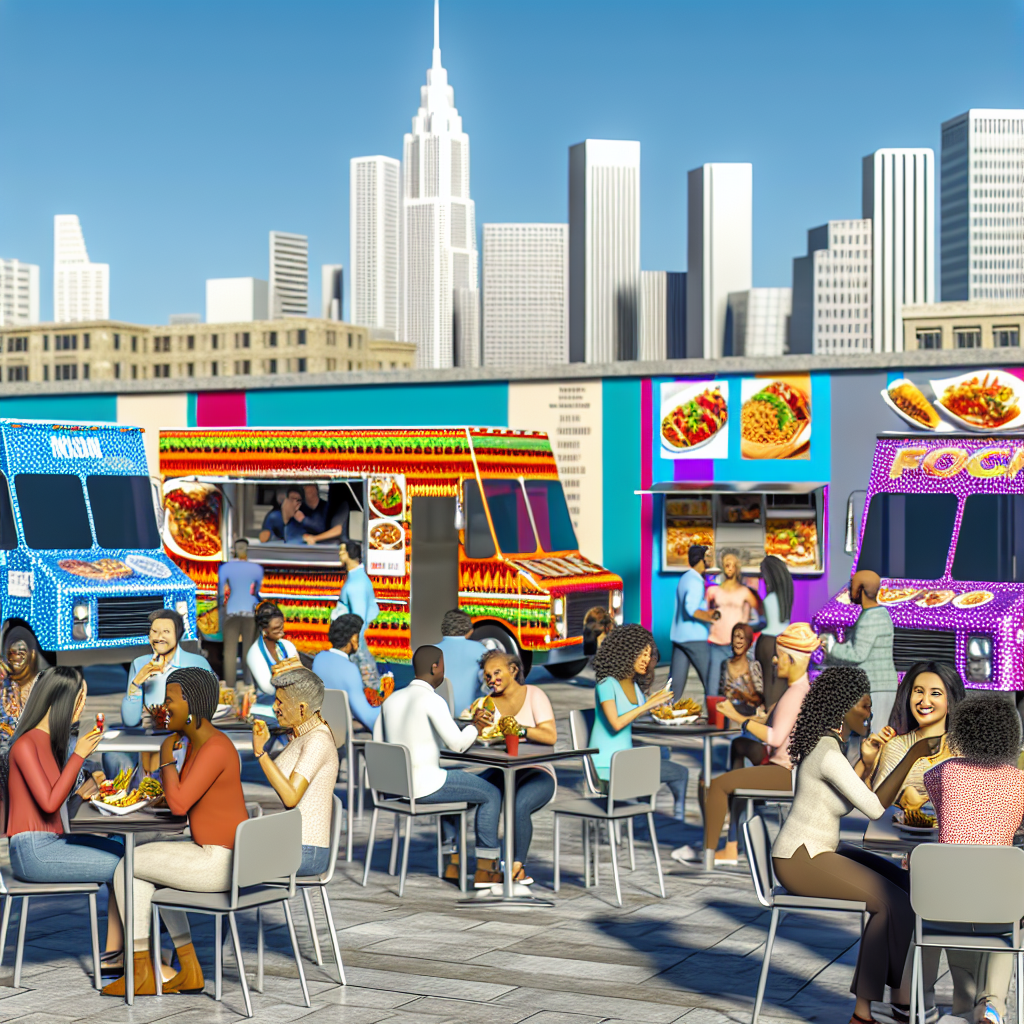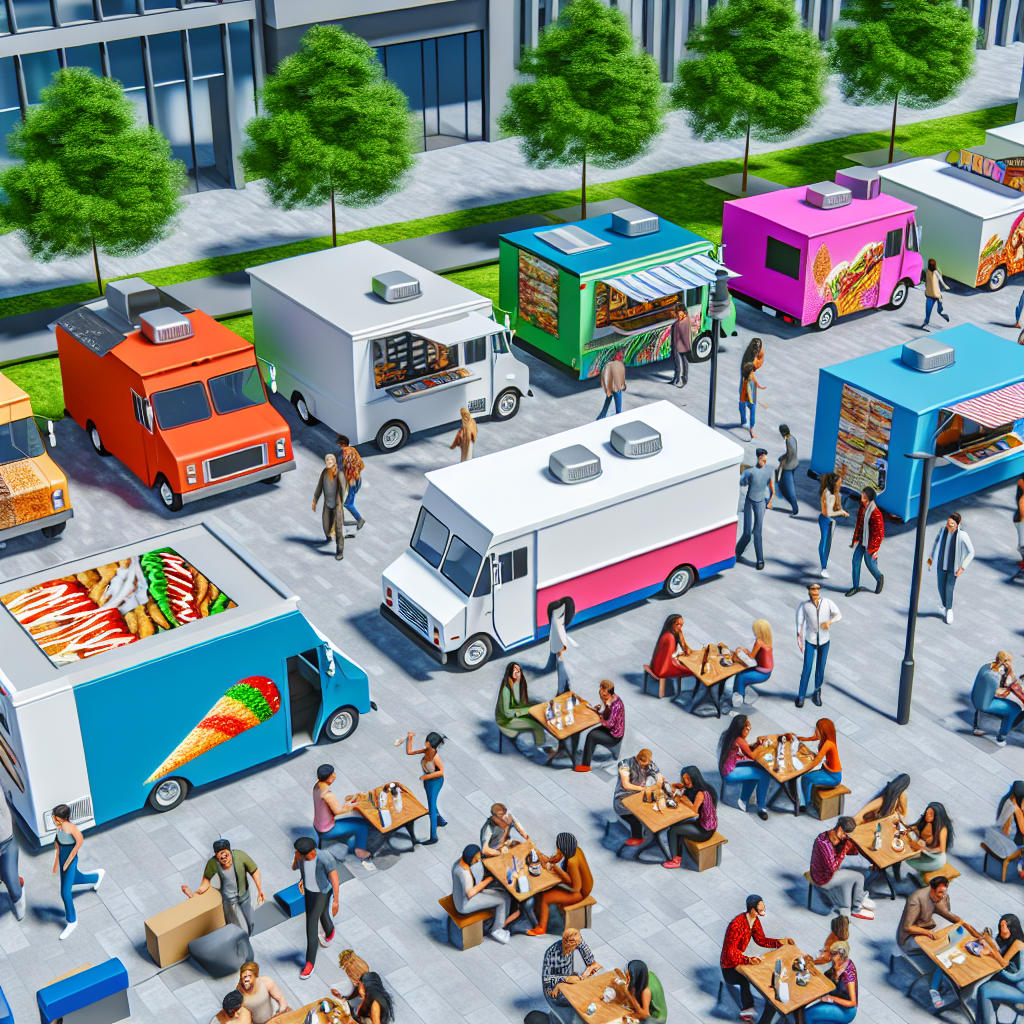
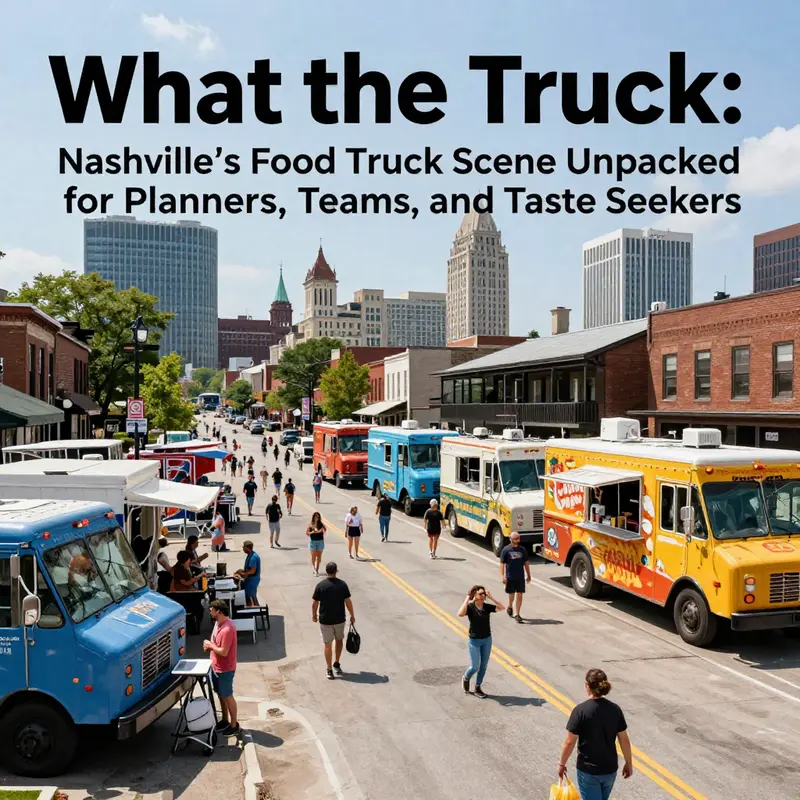
Nashville’s street-food heartbeat is powered by a growing cadre of mobile kitchens that turn sidewalks into stages, alleys into tasting rooms, and neighborhoods into shared dining spaces. What the truck food truck nashville means for event planners, Corporate HR and Admin teams, local community groups, and daily food enthusiasts goes beyond quick bites—these trucks deliver flexible experiences, local flavors, and collaborative energy that can elevate gatherings of every scale. Iconic names like Mas Tacos Por Favor, S’more Love Bakery, Brave Idiot, Dreamburger, and Jay’s Chicago aren’t just menu options; they’re ambassadors of the city’s culinary voice, showing up at 12South, on Broadway, and throughout downtown events with distinct personalities and crowds that keep coming back for more. This guide explores how the scene looks today, how the logistics work behind the scenes, and why these mobile kitchens are more than a fad—they’re a core piece of Nashville’s cultural fabric. Across four chapters, you’ll see who’s driving the movement, where action happens, how economics and operations shape schedules, and how the trucks contribute to community life and local pride.
Wheels on the Nashville Scene: How the City’s Mobile Kitchens Define a Culinary City
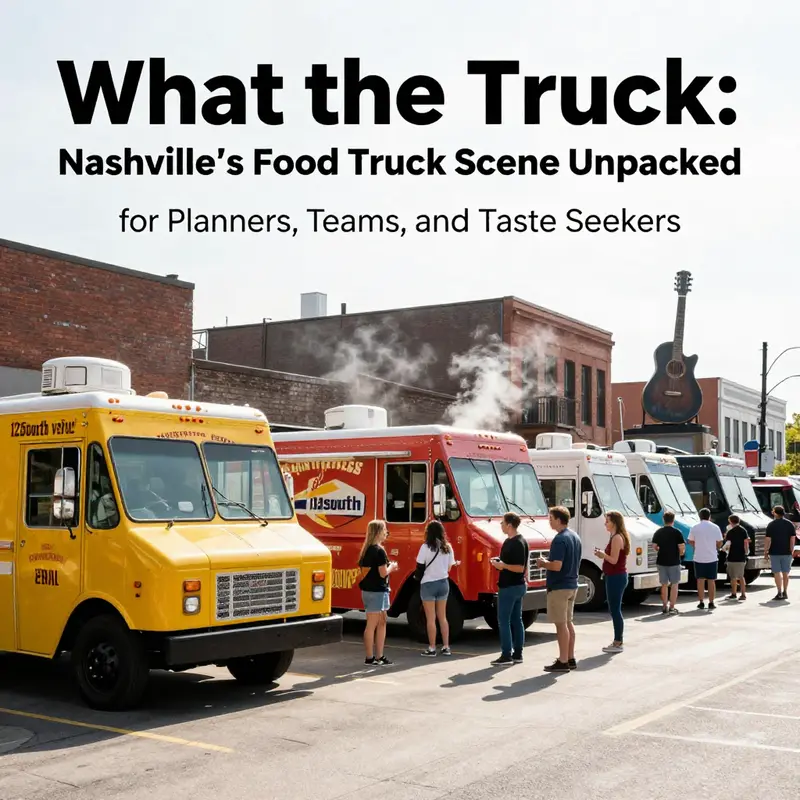
Nashville’s food truck ecosystem moves with the same rhythm as the city’s live music scene, and in this mobility lies the heart of its culinary identity. The trucks aren’t simply places to grab a bite between sets or errands; they’re micro-communities, rolling laboratories where chefs and home cooks alike pivot from kitchen-sink experiments to street-stage performances. In the warm breath of a Nashville afternoon or the glow of a neon-lit Broadway evening, these wheels become listening posts for tastes, neighborhoods, and conversations. The city’s streets—especially in vibrant corridors like 12South, along Broadway, and at downtown events—read like a map of appetite and ambition. The trucks pull up where foot traffic, curiosity, and appetite intersect, and what begins as a simple meal often becomes a shared memory, a story about a business started in a kitchen or a driveway, or a dish invented to fit a crowd’s hunger at a specific moment in time. The scene is dynamic, with menus that shift with the seasons, the rhythms of local supply, and the energy of the people who show up again and again for a particular truck’s signature dish. It’s this kinetic energy that makes Nashville’s mobile dining not merely a trend but a measurable force in how the city experiences food on its own terms.
At the center of this movement are several trucks that have become touchstones for locals and visitors alike. The Mac Shack, a beloved fixture in the city’s mobile dining landscape, carved a niche by elevating a comfort-food staple—mac and cheese—into a category of its own. The idea began in a home kitchen, then grew into a street-side staple that invites people to linger a moment longer, to smile at the gooey curls of cheese that pull with every forkful, and to think about what a simple dish can become when it is treated as a culinary canvas rather than a default side. When you pivot from nostalgia to novelty, The Mac Shack embodies a larger truth about Nashville’s truck culture: owners who start with a rooted idea can scale it by leaning into quality, consistency, and the storytelling power of a well-seasoned skillet. Alongside them, Mas Tacos Por Favor has earned a reputation for authentic Mexican street tacos, where the fillings, tortillas, and salsas carry a sense of place as much as they carry heat. The emphasis on craft and provenance resonates with crowds who crave flavors that feel both familiar and newly discovered, the kind of bite that prompts a second order and a conversation about where the ingredients come from and who prepared them.
Dessert also has a loud voice in this rotating chorus of flavors. S’more Love Bakery demonstrates how dessert can be both playful and refined, offering inventive, artisanal s’mores and related treats that invite a sense of whimsy without sacrificing technique. The dessert truck scene in Nashville isn’t about sugar overkill; it’s about tasting moments—crisp graham, a sheen of melted chocolate, a whisper of caramelized marshmallow—that become memories as much as meals. Brave Idiot adds a bold, globally inspired edge, pushing comfort-food boundaries with flavors that travel across continents in a single bite. The name itself signals a willingness to push, to question, to remix familiar forms in ways that spark conversation and curiosity. Dreamburger stands out with its emphasis on premium, customizable burgers. In a city famous for its music and its hospitality, Dreamburger offers a canvas where diners can assemble flavors—from toppings to textures—to suit mood and moment, turning a familiar concept into a personal signature. Then there’s Jay’s Chicago, which brings a deeper-dish Chicago-style pizza soul to Nashville’s streets, delivering thick-crust satisfaction and hearty toppings that feel like a portable, edible homage to a city known for its own deep-rooted food traditions. When these trucks appear in the same week at the same popular spots, the street scene reads like a living sampler—a curated tour through international ideas and American comfort, all on wheels.
To understand why these names carry weight, it helps to consider the work that goes into sustaining consistency while staying relevant. The Mac Shack’s founders, Kayla and Jeremy Nicholson, exemplify the entrepreneur’s arc in this arena: from home-kitchen beginnings to a fixture on the curb, growth has happened not by abandoning the original dish but by refining it until it becomes reliably excellent under a range of conditions—humidity, line length, and the unpredictable tempo of a bustling street. Their story mirrors a broader pattern in Nashville: the best trucks mix culinary clarity with adaptability, listening to their customers as they iterate. Mas Tacos Por Favor, long celebrated for its authentic approach, demonstrates how a strong core concept—these are not generic tacos but a respectful recreation of street food—can travel well across neighborhoods and seasons, driven by who’s in the kitchen and what’s in the pantry. S’more Love Bakery’s approach to dessert capitalizes on a similar discipline: creative ideas anchored in technique and a respect for the simplest components—graham, chocolate, marshmallow—so a single bite feels both comforting and new. Brave Idiot’s global lens highlights how a city with a musical, multicultural heartbeat responds to bold ideas: dishes that might seem risky in a brick-and-mortar environment can become beloved by the right curbside crowd, especially when paired with a story about the flavors’ origins. Dreamburger and Jay’s Chicago remind us that even well-trodden concepts can shine when executed with precision and a willingness to tailor to local tastes—the caramelized crust, the juiciness of the patty, the balance of spice and brightness—all play into a recognizable yet elevated experience.
The scene’s vitality also rests on the infrastructure that supports a truck economy. Places like 12South and Broadway function as cultural crossroads where foot traffic, events, and seasonal festivals align to create peak moments for trucks to meet the city’s appetite. Real-time updates about locations and menus are part of the modern food-truck toolkit, allowing people to follow a single truck across an afternoon or an evening the same way fans track a favorite band. Platforms that aggregate location data, user reviews, and menus are indispensable in this ecosystem, because the trucks rarely stay put long enough for a static map to do justice to their movements. The result is a level of spontaneity that feels both electric and intimate: a bite on a corner before a show, a bite after work, a late-night chat with the driver about where they sourced a particular spice. It’s this resonance—the way a dish connects to a moment, a person, and a neighborhood—that helps Nashville’s food-truck culture endure beyond trends.
An important nuance in Nashville’s truck scene is the distinction between mobile and stationary food experiences. The city’s note about Grilled Cheeserie being a brick-and-mortar operation rather than a truck serves as a useful contrast. It underscores that the vitality of Nashville’s mobile dining isn’t about replacing established eateries but about creating complementary routes to culinary discovery. The trucks fill the gaps where people want quick, delicious bites that travel well, while brick-and-mortar spots anchor neighborhoods with consistency and a broader dining experience. Together, these formats expand the city’s food map, inviting exploration rather than prescribing a fixed path.
For culinary explorers and aspiring truck owners alike, the Nashville landscape offers lessons in branding as much as in flavor. The trucks that survive and thrive do so by building recognizable narratives around their food—the Mac Shack’s comfort-forward craft, Mas Tacos Por Favor’s fidelity to tradition, S’more Love’s inventive dessert narrative, Brave Idiot’s audacious flavor propositions, Dreamburger’s customization economy, and Jay’s Chicago’s heartier, more indulgent fare. It isn’t merely about replicating a dish; it’s about delivering a consistent, compelling story with every order. The best operators balance speed with quality, personality with reliability, and a sense of place with the flexibility to move where audiences gather. They understand that the curb is a stage. The customers are both critics and fans, and a city’s trucks win loyalty by listening as much as by cooking.
Those stories also point toward what’s next for the scene. As tastes continue to globalize and as urban space remains precious, trucks will likely continue to experiment with cross-cultural mashups, rotating menus, and partnerships with local farms and bakeries. They’ll lean further into branding on wheels—the graphics, the color palettes, the names that travel with them—and they’ll rely on social signals to guide people toward a moment that feels serendipitous rather than planned. The best trucks don’t just serve food; they curate an experience that feels as distinct as a neighborhood soundtrack. For a broader sense of how these narratives are developing over time and across the city, the Loschladostruck blog offers ongoing coverage and perspective on the logistics, branding, and resilience behind food-truck ventures in places like Nashville. You can explore their insights here: Loschifladostruck blog.
In the end, Nashville’s mobile kitchens are more than a collection of menus on wheels. They are a social fabric—threads that weave together musicians, students, food lovers, and curious newcomers into a shared ritual of discovery. The trucks move, yes, but they also anchor moments. They invite you to choose a lane in a city that never stops listening, tasting, and talking. They remind us that food, at its best, travels not only through space but through memory—and that the memory of a great bite on a Nashville curb can outlast many restaurant visits. The city’s truck scene invites us to follow, to taste, and to return, again and again, to the bright intersection where flavor, craft, and community meet on the street.
External resource: https://www.yelp.com/biz/top-10-best-mobile-food-trucks-in-nashville-tn
Rolling Feasts on Broadway: Nashville’s Food-Truck Culture as a City-Wide Tasting Room
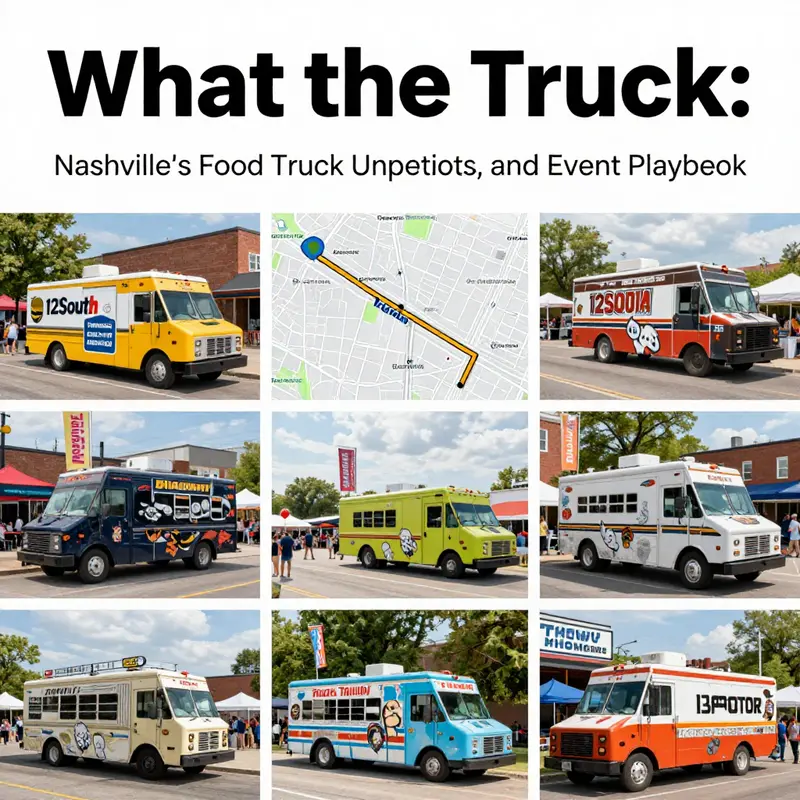
Nashville wears its hunger on the street, and the city feeds it with a rolling, ever-changing menu of flavors. If you walk the avenues when the sun slips behind the domes and cranes, you’ll hear the distant hum of engines and the clatter of cooking stills coming alive in daylight and into the evening. The food-truck scene here isn’t a mere option for a quick bite; it’s a dynamic thread in the city’s fabric, weaving together neighborhoods, palettes, and moments of discovery into a single, shared experience. These are not just meals on wheels; they are itineraries of taste that invite locals and visitors to wander with intention and stumble upon something memorable at every corner.
At the core, Nashville’s mobile kitchens showcase a remarkable range. You’ll find trucks that cradle the bright spark of international street food alongside the slow-cooked warmth of Southern comforts. One truck might coax the spices of a distant market into a taco with a kiss of lime and cilantro, while another crafts a sandwich that riffs on local barbecue traditions with a modern, chef-driven twist. The culinary spectrum stretches further with desserts that glow in the glow of neon, and plant-based options that prove the city’s appetite is as inclusive as its music scene. What makes the scene uniquely Nashville isn’t only the variety, but how these kitchens travel with the city itself—cruising from park to park, from a busy downtown corner to a shaded spot near a market, offering a glimpse of what Nashville eats when the workday ends and people start seeking a shared moment of delight.
The city’s love affair with food on wheels is not accidental. It grew from a place where neighborhoods define identity and where residents prize accessibility as much as quality. In Nashville, you’re not driven to a single restaurant district; you’re invited to taste your way through multiple hubs that anchor the urban rhythm. In the mornings, trucks often gather near parks and markets, ready to greet early workers with soulful breakfasts or quick bites that fuel the day. By noon, the street corners around downtown begin to wake, and the trucks become portable curators of experience, offering bites that complement an afternoon stroll, a gallery visit, or a quick shift in the office routine. And by nightfall, as families stroll through areas like riverfront parks or lively districts near the river—where music, commerce, and conversation mingle—the trucks re-emerge as impromptu hubs of social life. In every setting, the sensory collage is unmistakable: the sizzle of a skillet, the aroma of roasted peppers, the clink of glassware, and the chorus of voices that tell you a city cares about sharing good food well.
What makes a Nashville truck stop feel like more than a quick bite is the way each truck carries a narrative about place. A well-curated fleet can balance nostalgia with novelty: a taco truck that leans into the warmth of a grandmother’s recipe while sprinkling in a bold, urban twist; a bakery-on-wheels that takes the comfort of s’mores and reimagines them with seasonal textures and local ingredients. A burger truck built on the premise of customization becomes a micro-culinary workshop, letting guests assemble flavors with almost ritual precision; a pizza on wheels may deliver slices that pay homage to a regional style while embracing the city’s appetite for experimentation. The conversation is not merely about price or speed but about the way cooks present themselves—through the design of their carts, the music they play, the way they greet neighbors—and how these signals invite you to linger as part of a larger urban tableau. It’s easy to underestimate how much character a truck gains from the small choices it makes: the color of its canopy, the rhythm of its service, the presence of a chalkboard menu that invites you to imagine a bite you haven’t ordered yet. In a city famous for music, the soundtrack of a truck’s operation matters just as much as the recipe on its burner.
There are places in Nashville where these rolling kitchens converge into a steady, almost ceremonial cadence. The Alley at 12th Street, for example, becomes a hive where a curated mix of trucks gathers, creating a destination that feels less like a market and more like a daily festival of sharing. Nearby, Fifth + Broadway serves as a rotating stage where vendors come and go, bringing a rotating cast of flavors that reflect the city’s evolving tastes and seasonal cravings. Then there are markets that broaden the scope even further, where farmers’ stalls stand shoulder to shoulder with mobile cooks, emphasizing fresh, locally sourced ingredients that anchor the day’s offerings in a sense of provenance and community. This is where the truck scene reveals its deeper value: not only do these kitchens feed the crowd, they also sustain the city’s sense of place by connecting people to the people who grow and prepare the food, often in ways that echo the city’s traditions while inviting new voices to participate.
Music City’s calendar reinforces this sense of gathering, offering seasonal festivals that celebrate the breadth of Nashville’s mobile culinary landscape. The Nashville Food Truck Festival, a seasonal centerpiece, has roots in downtown venues that have long hosted the city’s public celebrations. Historically, Bicentennial Park and Riverfront Park have served as backdrops for dozens of trucks, with live music, family-friendly activities, and craft beer gardens turning the day into an immersive, communal experience. The scale of attendance in past years underscores how much excitement these events generate: thousands of people come to sample, to listen, and to watch the streets transform into a listening room where the cuisine is the melody. The festival serves a practical purpose beyond entertainment: it functions as a curated microcosm of Nashville’s broader truck culture, highlighting hot chicken-inspired specialties, barbecue highlights, a broad taco spectrum, vegan options, and other regional favorites. It’s a reminder that for many residents, the festival is as much a rite of spring or fall as a football game; it marks a time when the city invests in its shared appetite and reaffirms that good food on wheels can be a catalyst for community.
Staying current with the ever-shifting lineup of trucks and events is part of the street-food literacy in Nashville. A reliable way to stay in the loop is to check major platforms that track truck locations and menus in real time. These sources help plan a day of exploration, especially when schedules shift with weather, traffic, or special event bookings. The city’s official pages about the festival and related events are an essential compass, but so are the smaller, more intimate hubs that communities rely on to discover where the next bite waits. The result is a living map of Nashville’s stomach and soul, a map that changes with the wind but remains anchored by a shared desire to taste, explore, and tell a story through food. The city’s appetite for such stories is not merely about satisfying hunger; it is about inviting people to participate in an ongoing dialogue about what Nashville wants to eat, how it should be prepared, and who gets to tell that story in a moving kitchen that travels with the sun.
To look at the branding and presentation of these mobile kitchens is to appreciate another layer of Nashville’s culinary theater. The way a truck presents itself—from the color and typography on its sides to the way the service window frames a guest’s first impression—matters just as much as the menu. In this regard, the scene is not unlike the broader design world where a strong identity can make a simple plate feel special. A well-considered brand on wheels signals professionalism, consistency, and a clear point of view, inviting curious diners to lean in and try something they might not order otherwise. For those who want to understand how this branding translates into real-world practice, a deeper dive into the visual language of mobile kitchens can be found in branding on wheels—the ultimate guide to food-truck graphics and identity. This resource demonstrates how color palettes, typography, iconography, and vehicle graphics work together to tell a story that is as portable as the food itself, helping the truck become a familiar companion in the city’s daily walk.
The Nashville of today isn’t a static picture pasted onto a mural of honky-tonk and river traffic; it’s a living, breathing tasting room that migrates with the day’s flow. The trucks are built to be adaptable, portable, and intimate enough to feel personal even as they traverse the city’s busy arteries. Their success rests on more than the cleverness of a recipe; it rests on the sense that dining out in Nashville is a shared ritual—one that invites strangers to become neighbors for a meal and perhaps a memory. The experience is reinforced by the city’s openness to experimentation and to a culture that values both roots and reinvention. If you approach Nashville with curiosity, you’ll discover a city that treats the street as a stage and the plate as an invitation to participate in a broader, more generous story about how people feed themselves, how they celebrate, and how they come together in moments that feel larger than lunch—moments that are, for a time, what the city tastes like.
For travelers and locals alike, the practical idea is simple: plan with flexibility, stay curious about where the trucks are and what they’re serving, and let the city guide you through a pattern of bites that feels like a conversation you’ve been waiting to have. The more you lean into the experience—following the trucks from the alleyways of the downtown core to the shaded nooks near parks and markets—the more you’ll understand Nashville’s hunger as a kind of civic music. It’s a rhythm that pairs with the city’s theaters, its riverwalks, and its parks, turning a meal into a moment of shared experience rather than a solitary transaction. And as you wander, you’ll learn to read the city’s signs: a chalkboard menu that hints at a seasonal hero, a canopy that becomes a beacon for a crowd, a gentle greeting from a cook whose smile makes the line feel like a short chorus rather than a long chorus of waiting. In Nashville, food on wheels becomes an everyday invitation to participate in a city’s ongoing, delicious conversation.
If you want a starting point for your own tasting tour, think of the truck scene as a living map that invites you to move with its energy. Begin where a cluster of trucks has formed under a canopy of trees or near a concert or market. Let your curiosity lead you to try a few bites that call to you across the crowd, then allow a longer seat on a bench or a curb a few blocks away to become a moment of reflection on what you’ve just tasted. The magic isn’t just in the dish; it’s in the moment of discovery—the synergy between the people preparing the food, the people eating it, and the city’s own pulse that keeps the wheels turning. And as you leave one truck for another, one neighborhood for another, you carry with you the sense that Nashville’s trucks do more than fill stomachs. They fill memory, create connections, and remind everyone that food can travel, but community can travel with it, too. In a city that already feels like a grand, ambient playlist, the truck scene offers a way to hear its music in a new key, in a fresh light, and with a palate that’s always ready for the next chorus of flavor.
External resource: For more details on the Nashville Food Truck Festival and current event schedules, see Visit Music City’s events page: https://www.visitmusiccity.com/events/nashville-food-truck-festival
On Wheels and in the Market: The Economic Rhythm of Nashville’s Food Truck Scene
Nashville sits at a curious crossroads where music, hospitality, and a can-do entrepreneurial spirit meet on crowded sidewalks and at buzzing event venues. The city’s food truck ecosystem thrives not merely because people crave good food on the go, but because mobility itself has become a strategic advantage. A fleet of compact kitchens can arrive at the heart of a festival, a busy business district, or a late-night neighborhood gathering, offer a rotating set of flavors, and then move on before the next wave of customers forms. In this way, the street operates as a flexible laboratory where chefs test concepts, refine their procedures, and respond quickly to changing tastes and weather. The economics of this mobility are not just about the menu; they hinge on timing, location, and the ability to convert a moment of curiosity into a regular stream of revenue. When done well, a truck can become a familiar, welcome presence in a city where people are constantly seeking new experiences but also want reliability and a sense of place in their meals.
In Nashville, the regulatory and operational environment shapes everything from where a truck can park to how long it can stay and what kind of health standards must be met. The rules, designed to safeguard public health and city flow, require operators to obtain permits for temporary street commerce and to adhere to zone-specific parking rules. These requirements translate into real costs and real planning needs. A successful operator learns to map the hunt for foot traffic to the rhythm of the city’s calendar—college football weekends, summer nights near entertainment districts, and the line of attendees at outdoor concerts—without overcommitting to a single spot. The need to navigate a patchwork of regulations encourages a disciplined approach to permits, permits renewals, and compliance checks. In practice, that means a truck owner becomes as much a planner as a cook, charting routes and schedules weeks in advance while staying nimble enough to pivot when a street festival announces a larger crowd or a weather forecast threatens a sudden downpour.
Costs, too, are shaped by the movement mindset. The primary expense bucket is a blend of vehicle maintenance, stock procurement, fuel, insurance, and labor. Because the operational model centers on frequent turnover rather than long-term leases, fixed rent is often lower than in brick-and-mortar settings. The lower fixed cost base creates an attractive margin potential, particularly in high-traffic zones during peak hours. But the margins are not guaranteed. Weather can turn a promising week into a lean one, and citywide events can swing from feast to famine in a matter of hours. Seasonal patterns matter: spring and fall may bring steady streams of festival-goers and commuters, while mid-winter nights can thin the crowd. A resilient operator builds cash reserves and diversified revenue streams so that a lull in one location does not translate into a crisis across the business. A prudent practice is to test menus and service formats that can adapt to different contexts—quick bites at a busy transit hub, heartier offerings near stadiums, lighter, fresher options near parks—so revenue can flow across a wider terrain of consumer needs.
The pace of customer behavior in Nashville underscores the importance of branding and perception. Diners who sample a truck are not just buying a dish; they are buying into an identity. The most enduring brands in a mobile format are those that convey a sense of story, craft, and locality in a few seconds of decision. The urban dining crowd often favors freshness, clarity, and a clear point of view—whether that means a bold take on familiar flavors, a creative fusion that makes a familiar dish feel new, or a visually striking presence that makes people stop, photograph, and spread the word. Social signals matter as much as the plate. In this environment, operators cultivate a recognizably consistent menu, a reliable cadence of service, and a playful, vivid aesthetic that travels with the truck from one neighborhood to another. That aesthetic becomes a mobile billboard, inviting conversations, recommendations, and return visits. A well-positioned truck also leans into local culture, linking its offerings to the rhythms of music venues, street art, and community events without losing the clarity of its culinary voice.
From a broader economic perspective, food trucks contribute to urban vitality by expanding the dining ecosystem in ways that complement stationary restaurants rather than merely competing with them. They introduce new flavors to neighborhoods that might not otherwise be reached by brick-and-mortar kitchens and they create flexible job opportunities for cooks, drivers, and event staff who value autonomy and the chance to experiment. The social fabric that emerges around these mobile eateries—shared tables, spontaneous conversations, and a sense of discovery—also supports nearby businesses, as diners may linger longer, fueling foot traffic for other vendors and venues. The street thus becomes a corridor of opportunity where entrepreneurship meets culture, and each truck that rolls through adds a thread to the city’s economic tapestry. The growth of this sector can be seen in the way operators collaborate with event organizers, participate in seasonal markets, and form informal networks that share best practices for permits, safety, and inventory management. These relationships help convert episodic traffic into recurring revenue by building reputations that outlast a single location or a single season.
Yet there is no denying the challenges that accompany such dynamism. Market competition remains intense, not only among fellow trucks but also against a growing number of prepared-meal vendors and pop-up concepts that inhabit the same urban space. The most successful operators treat their businesses as living systems that require ongoing attention to cost control, menu optimization, and customer engagement. They maintain tight procurement discipline to avoid waste, leverage relationships with local suppliers for fresh ingredients, and implement simple, repeatable cooking processes to ensure consistent quality, even during periods of high demand. In practice, this means designing menus that balance complexity with speed, keeping equipment reliable, and training crew members so that service remains smooth in crowded conditions. It also means being deliberate about the pace of growth. Expanding to multiple trucks or entering new neighborhoods can magnify both opportunities and risks; without careful coordination, growth can outpace the ability to maintain quality, safety, and compliance.
To navigate an environment that blends public policy, urban life, and culinary experimentation, operators often rely on a holistic playbook. The most successful teams treat site selection as a strategic exercise rather than a hobby. They study pedestrian flow, nearby competition, and the cadence of events. They align their marketing with city calendars and neighborhood identities, using short-run promotions and visually engaging branding to create memorable moments. They also invest in the systems that keep a mobile operation professional—clear recipe cards to reduce waste, standardized safety checks for equipment, and straightforward bookkeeping that tracks revenue by location, date, and hour. This combination of disciplined operations and creative flexibility is what sustains a truck through the inevitable cycles of weather, festival schedules, and changing consumer mood.
In thinking about the longer arc of the Nashville truck economy, one can see a pathway toward more formalized resilience. Some operators explore partnerships that stretch a single culinary concept across several trucks or events, enabling smoother coverage during peak windows while maintaining a lean core team. Others pursue ongoing education in food safety, inventory optimization, and digital marketing to sharpen competitive edges in a crowded field. The underlying logic is not to chase scale for its own sake, but to braid together mobility, quality, and reliability into a dependable, locally rooted dining option. This is where the city’s dynamic energy intersects with practical management: a street-food culture that honors improvisation but also demands accountability. As the rhythm of the metropolis continues to evolve, so too does the infrastructure around which these mobile kitchens operate.
For readers looking to translate these observations into actionable steps, a practical approach starts with anchoring the business around a clear menu philosophy and a well-defined target audience. Location scouting becomes a continuous process, not a one-off event. Operators should cultivate a simple, repeatable service model that can be deployed across different venues with minimal friction. They should also build relationships that help brokers and organizers see value in having their truck at the heart of an event lineup. This means presenting reliable schedules, transparent pricing, and a track record of safety and quality. To explore the tactical side of choosing the right fit for a mobile kitchen, many aspiring operators turn to practical guides that explain model selection, equipment needs, and regulatory navigation. See Choosing the right food truck model for a deeper dive into how a business can align its culinary concept with the realities of Nashville’s street economy.
Beyond the mechanics of permit stacks and kitchen gear, the city’s truck ecosystem invites a broader reflection on urban resilience and local development. The mobility of these businesses can help neighborhoods reframe their own identities, turning underused spaces into lively nodes of activity. They can provide quick, affordable alternatives to sit-down meals for workers and visitors alike, while offering a dynamic platform for cultural exchange. When operators approach their work with a sense of stewardship—respecting neighbors, maintaining cleanliness, and contributing to the local economy through fair employment and honest pricing—their presence becomes something more than a disposable dining option. It becomes part of the city’s cultural fabric, a testament to ingenuity, adaptability, and a shared appetite for exploration.
For scholars and practitioners alike, the Nashville food truck scene offers a concrete case study in the economics of mobile food ventures. The literature on small business operation, city economies, and micro-enterprise suggests that the most successful pilots use money, labor, and appetite for risk in a balanced, disciplined way. Real-world practice aligns with broader research indicating that flexible business models can harness agglomeration effects—where proximity to a dense attractor like a music district or university campus generates disproportionate demand—while maintaining the ability to relocate to where customers gather most. This dynamic, when managed with care for costs and compliance, yields not only financial returns but social value in the form of job creation, culinary innovation, and a more vibrant street life. For readers seeking a rigorous theoretical frame to connect these observations to broader economic models, the Quantitative Economics journal offers quantitative perspectives on small business efficiency and urban micro-dynamics, which can illuminate the mechanisms behind street-level entrepreneurship. See https://onlinelibrary.wiley.com/journal/17596678 for more.
In closing this chapter, the Nashville truck economy emerges as a microcosm of urban entrepreneurship. It illustrates how capital-light models can punch above their weight by leveraging mobility, branding, and local culture. It shows that success rests not on a single clever dish but on a system that blends regulatory savvy, operational discipline, and a habit of listening to the city—its crowds, its events, its changing weather, and its evolving tastes. The narrative invites readers to consider how a city can nurture such mobility while preserving the very streets that make it possible. For those curious about the next steps in building a resilient, scalable mobile food operation, the journey begins with choosing the right model and mapping a path that respects both the business and the neighborhood it serves. Choosing the right food truck model remains a practical touchstone for translating ideas into an actionable plan, allowing aspiring operators to frame a venture that is economically sound, legally compliant, and culturally resonant.
Rolling Social Hubs: How Nashville’s Food Trucks Forge Culture and Community
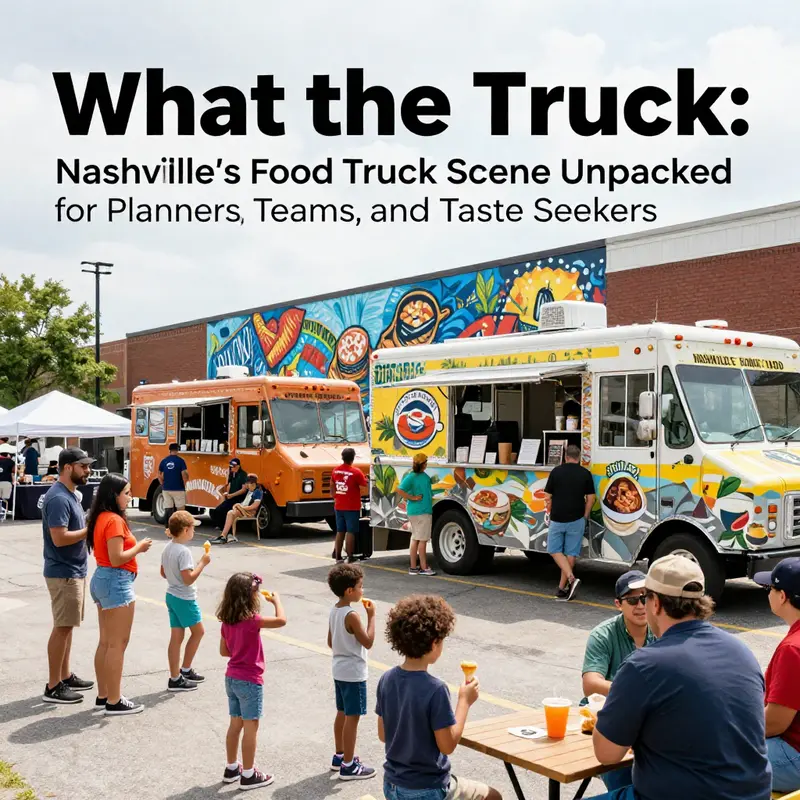
Nashville’s reputation as a city of music, hospitality, and invention extends beyond concert halls and studio rooms into the open street where food travels on wheels. The mobile dining scene, anchored by iconic, itinerant kitchens, folds flavor, conversation, and place into a single experience. It is not merely about grabbing a bite; it is about entering a public moment that invites neighbors to share a space, a story, and a sense of belonging. The trucks arrive at dusk or dawn and set up a temporary dining room on a curb or in a park, projecting a pulse that resonates with locals and visitors alike. Their presence reframes what a meal can be in a city that rewards curiosity and collaboration. Where a brick-and-mortar restaurant might lock in a fixed audience, a mobile kitchen negotiates the city’s rhythms, a nimble partner for festivals, late-night strolls, and spontaneous gatherings. The effect is a choreography of flavor and sociability that enriches the urban fabric without demanding permanence. In Nashville, this dynamic has become a form of cultural infrastructure, a practical art that feeds both appetite and community spirit.
The scene feels almost architectural in its warmth. A truck’s lights cut through the evening air, casting a soft glow on faces waiting in line. Friends share stories about recent shows, a parent asks a child what a dish might taste like, and neighbors trade tips about origins and ingredients in exchange for a memory. These exchanges are not incidental; they are the currency of a shared city. Food is the friendly invitation, but the real value lies in the conversations that begin with a bite and continue with recommendations, memories, and a sense of kinship with the neighborhood. Public space becomes a living room, a community kitchen, and a forum for cultural exchange all at once. The magic rests in small, repeated moments — a laugh over a mispronounced dish, a note about an upcoming street fair, a whispered tip about the best time to catch a performer or a new chef trying a spicy twist. In this sense, branding becomes a civic act: a vehicle becomes a canvas, a menu a memoir, and the entire operation a public invitation to participate in a living conversation about what a city tastes like and who it wants to become.
The public-facing, on-the-ground power of mobile dining in Nashville also rests on its ability to foster inclusive social spaces. Trucks routinely converge at places where people gather for work, play, and culture: downtown corridors, music venues, parks, and student neighborhoods become crossroads where a quick, flavorful meal helps break down barriers. The shared act of eating becomes a social equalizer, inviting people who might not cross paths in other contexts to sit side by side and exchange impressions about a city that is otherwise segmented by time, income, and schedule. In neighborhoods that lack a dense cluster of sit-down options, these mobile kitchens offer a taste of possibility: a way to sample a culture, a tradition, or a memory without committing to a longer or more expensive venture. The result is a more porous urban culture, where diverse voices are invited to participate in a pedestrian economy that rewards curiosity and reciprocity. The trucks’ itinerancy mirrors the city’s broader project of building inclusive spaces—places where the act of sharing food becomes a bridge that spans differences and builds common ground.
Beyond nourishment and social glue, the mobile food phenomenon in Nashville aligns closely with urban placemaking and cultural stewardship. Pedestrian-friendly street life emerges when dining is paired with other arts and civic activity. The trucks contribute to the city’s narrative by curating a dynamic, recurring presence that neighborhoods anticipate and remember. Festivals, block parties, and spontaneous gatherings turn into mini-events that are defined as much by their food as by the conversations and performances that accompany it. In these moments, the line between consumer and participant blurs: someone who comes for a quick bite may stay for a moment longer, listening to a musician, admiring a mural, or discovering a craft vendor nearby. The city’s capacity to accommodate this level of spontaneity depends on thoughtful, workable regulation—planning that preserves curb space for dining while ensuring safety and accessibility. When done well, policy becomes a partner in cultural life, not a restraint, allowing the best of Nashville’s public culture to flourish in the open air.
If the future of the city’s cultural life is written on the rails of its street-food economy, then Nashville’s rolling kitchens are a living draft. They teach a city to value flexibility as a cultural asset, to honor craftsmanship in a domain that rewards quick iteration, and to recognize that storytelling can take vivid, delicious form in the space between a mouthful and a memory. The trucks do not erase traditional dining; they augment it by adding speed, place-based memory, and social energy to the palette. They invite residents to become urban co-authors, charting a shared landscape where flavor, place, and people fuse into lasting impressions. For visitors seeking a named origin story, the city offers a spectrum of experiences—from a late-night bite after a show to a daylight tasting that introduces a newcomer to a favorite neighborhood. The effect is not ephemeral; it is generative. A night out can seed new friendships, a casual bite can amplify an artist’s story, and a neighborhood corner can become a signature memory of the city.
Final thoughts
Nashville’s food truck ecosystem is a dynamic portal to flavor, connection, and opportunity. For event planners, these trucks deliver flexible catering, authentic experiences, and scalable options that fit everything from intimate gatherings to large conferences. For corporate teams, they offer morale-boosting, localized menus, and a chance to support local businesses while keeping programs energized. Local community groups find celebration, sponsorship, and outreach opportunities in every rotation, while enthusiasts discover a world of cuisines on wheels and a city that welcomes experimentation. The four chapters illuminate a coordinated ecosystem where scene, hotspots, economics, and culture converge to make the Nashville truck story not just about food, but about shared moments that bring people together.