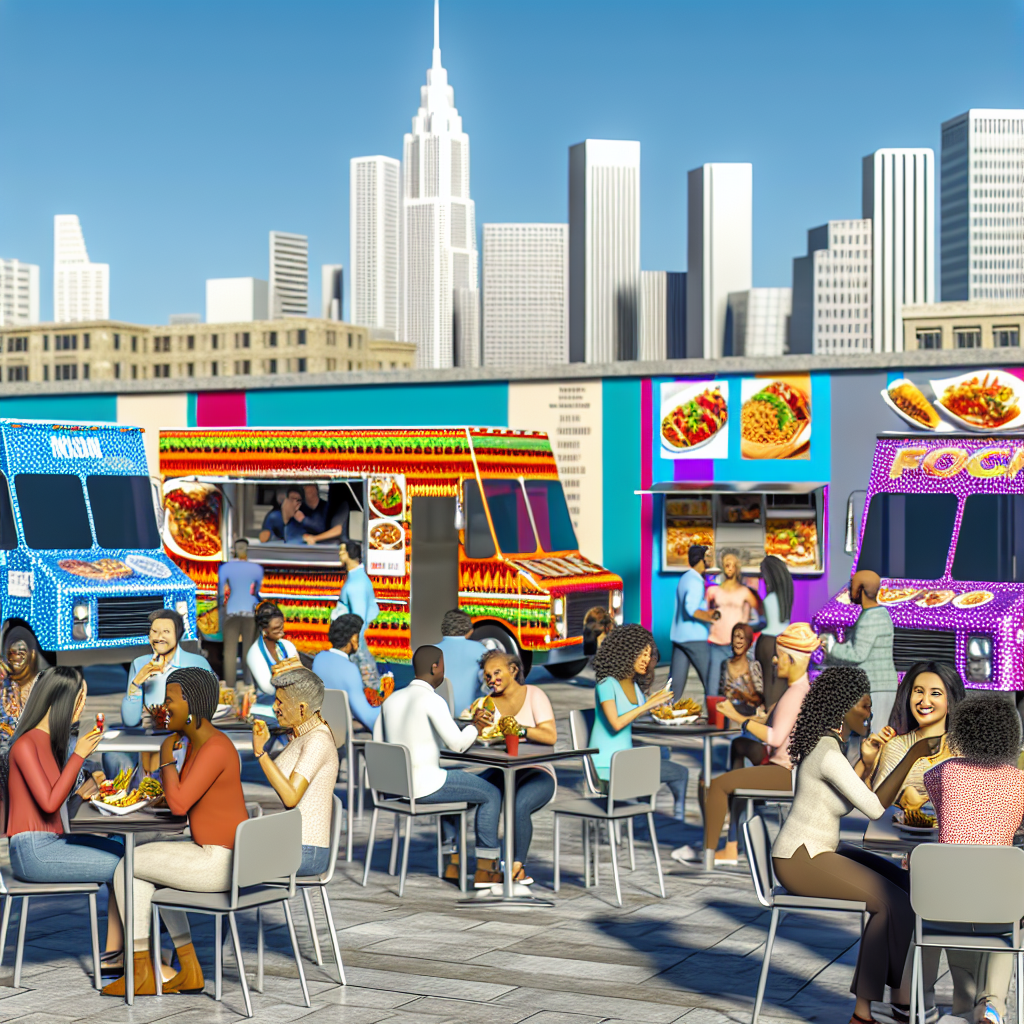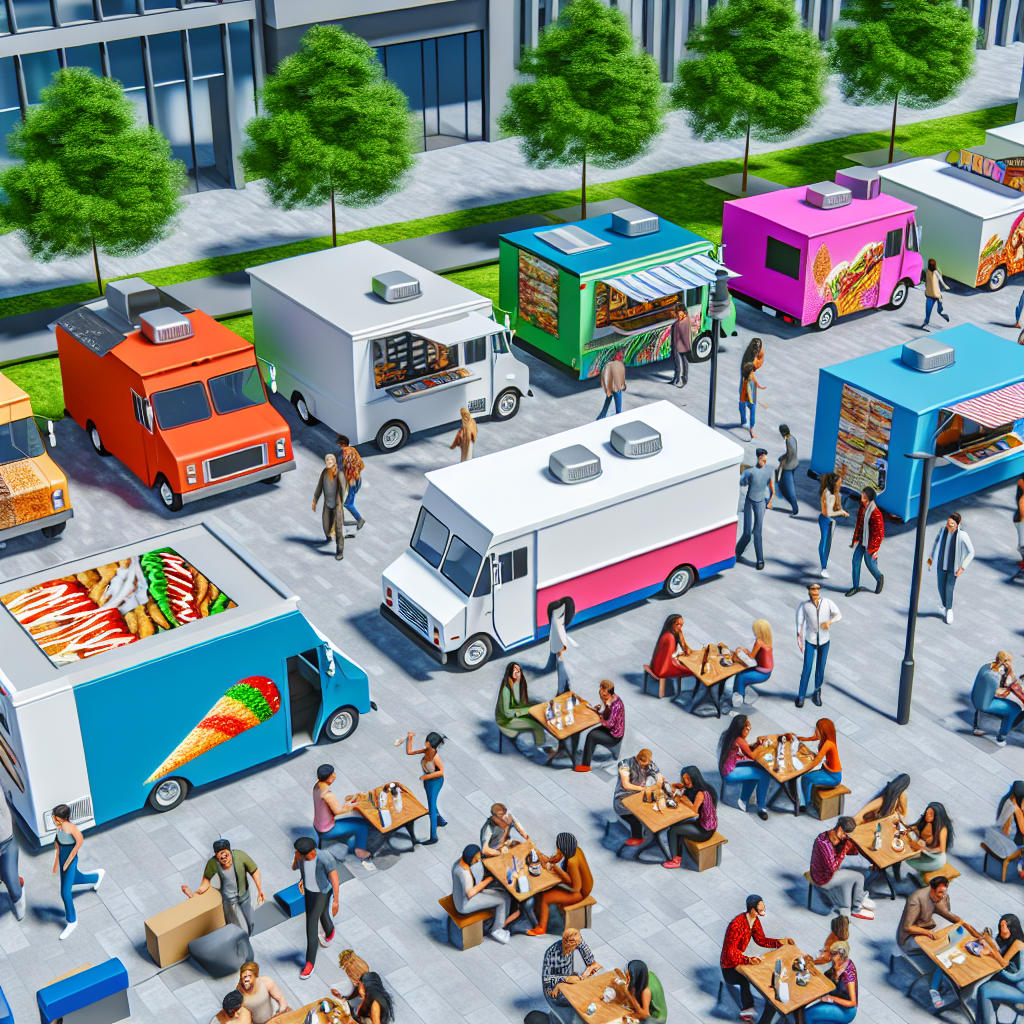
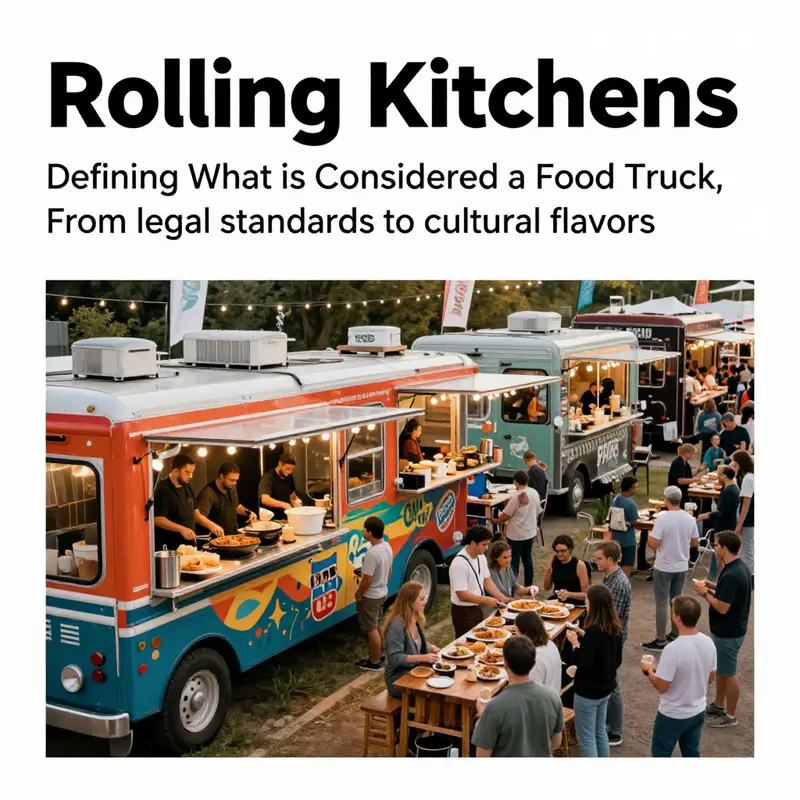
Food trucks have become vibrant icons of culinary culture, offering everything from sizzling street tacos to gourmet fusion creations. More than just vehicles, they meld mobility with the magic of cooking, delivering flavors directly to neighborhoods, offices, and events. Understanding what qualifies as a true food truck is essential—not only for event planners, corporate teams, and community organizers, but also for everyday food lovers eager to explore authentic bites. In Chapter 1, we’ll outline their definition, core features, and the unique blend of transportation and food service regulations. Chapter 2 dives into the practical compliance aspects—health codes, permits, and operational rules spanning different jurisdictions. Finally, Chapter 3 zooms out to the global stage, exploring the economic reach, growth trends, and diverse regulations that shape this thriving industry.
Rolling Kitchens on Wheels: Defining a Food Truck, Its Core Gear, and the Twin Regulatory Tracks That Shape It
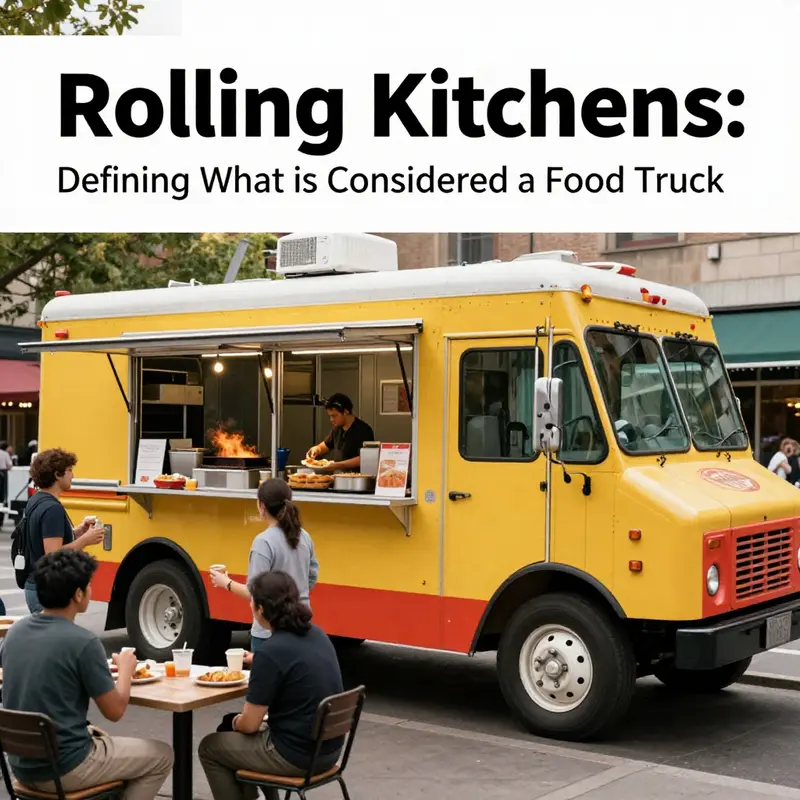
A food truck sits at a curious intersection of mobility and gastronomy. It is more than a van that sells meals on a street corner; it is a rolling kitchen, a compact workshop where fire, heat, and aroma converge with customer service in a single, compact footprint. The Cambridge Dictionary captures part of this essence by defining a food truck as a vehicle in which food can be cooked and sold, that moves from place to place. The definition foregrounds two functions at once: the capability to operate as a vehicle and the ability to function as a fully equipped kitchen, even while it is en route or parked at a temporary site. This dual identity matters, because it frames the everyday realities of planning, design, and compliance that separate a clever street snack from a legitimate mobile food business. In practice, a food truck is a carefully engineered unit—self-contained, durable, and adaptable enough to withstand the city’s noise, heat, potholes, and unpredictable crowds—yet it must be nimble enough to reposition at a moment’s notice when a festival closes, when a business district empties for the evening, or when a line of curious residents forms outside a parking lot. The mobility embedded in the concept is not incidental; it is the core advantage that enables creators to move, test ideas, and meet patrons where they live, work, and gather. The culinary act performed inside the truck is inseparable from the way it travels, parks, and interacts with public spaces. A truck that cooks, chills, and serves must be designed to perform all three functions safely and efficiently, even under changing weather, varying electricity supply, and diverse customer footfall. This integration of preparation, cooking, storage, and service in a single mobile envelope is what makes a food truck both a kitchen and a vehicle, and it is the defining feature that shapes its regulation as much as its menu.
What, then, qualifies as the core features of a food truck? The answer rests on a practical synthesis of space, equipment, and workflow. First, there is the self-contained kitchen area. The vehicle houses cooking appliances calibrated for on-site operation, from grilling surfaces and fryers to ovens or warming units. The equipment must be compact enough to fit the vehicle’s footprint yet robust enough to endure repeated daily use. Second, the truck contains refrigeration and cold storage to keep ingredients safe from spoilage during transit and at events. Third, there is a planning space for food preparation and assembly, where ingredients are washed, cut, marinated, and portioned before being combined into the finished dishes. Fourth, there is a customer-facing surface or sales counter, where orders are taken, payments processed, and meals handed to diners. And finally, there is storage for dry goods, utensils, condiments, and waste receptacles that allow operations to continue smoothly from location to location. Some trucks are designed with power systems, such as generators or high-efficiency battery setups, to run equipment and lighting, while others leverage connections to external power at certain sites. The crucial thread is that all these components come together within a single, mobile unit, which is the essence of the truck as a kitchen on wheels rather than a mere wagon or cart with a handheld stove.
Equally essential is the distinction between a food truck and other forms of mobile vending. A cart or a stand may travel or be relocated, but it lacks the fully integrated cooking capability that is central to a food truck. The line is drawn where the mobility plus a cooking facility converge with a service approach that allows hot meals to be prepared and served at the point of sale. That combination of culinary capability and mobility creates a unique value proposition: it enables vendors to test new concepts with lower fixed overhead, adapt menus to local tastes and seasonal opportunities, and respond rapidly to the rhythms of urban life, all while maintaining a direct relationship with customers. This is why many operators choose a rolling kitchen approach as a strategic pathway to independence, creativity, and community engagement. The result is a culinary enterprise that travels, but also leaves a tangible footprint wherever it stops: the glow of a flame, the sizzle of a pan, the aroma that travels beyond the vehicle’s perimeter, and the smiling faces of regulars who track a truck’s route with the same enthusiasm as a favorite neighborhood cafe.
To understand how a food truck functions in the real world, it is useful to consider the regulatory framework that governs its operation. The dual nature of the vehicle as both a transport and a food establishment creates a layered oversight regime. On one hand, health and safety regulations—commonly administered by local or regional public health authorities—focus on the food itself: how it is prepared, stored, and kept at safe temperatures; how the utensils and surfaces are cleaned; how waste is managed; and how staff are trained in safe handling. On the other hand, transportation laws regulate the vehicle as a moving object on public roads: licensing, registration, insurance, emissions, safety inspections, and compliance with parking or traffic rules. Operators must navigate this dual set of requirements to keep their doors open and their customers safe. The interplay of these rules can shape everything from where a truck can operate to how long it can stay at a given site, to what kind of venting system must be installed to protect both kitchen staff and nearby patrons. The practical implications are clear: the food served is only as trustworthy as the processes behind it, and the vehicle’s ability to move is only as reliable as the legal permissions that keep it on the road.
Consider, in illustrative terms, a university campus scenario. A campus vehicle that functions as a mobile kitchen must meet health codes related to food handling and hygiene, ensuring that cooking surfaces are clean, temperatures are monitored, and waste is handled properly. At the same time, that same vehicle must be registered as a commercial vehicle with valid plates and insurance, and it must satisfy safety standards appropriate for operation on campus roadways, driveways, and parking areas. The dual oversight creates a practical checklist: food safety training for staff, proper storage and flow of ingredients, routine sanitation, a clean and orderly service window, and the mechanical integrity of the chassis, wheels, brakes, lights, and exhaust. A food truck operator becomes accustomed to maintaining multiple permits, renewals, and inspections, a process that may seem burdensome at first but gradually reveals itself as a disciplined routine essential to sustainable operation. The distinction between a food truck and a simple mobile cart becomes even clearer when one considers these regulatory layers. A cart may sell pre-packaged items and require only a modest permit; a food truck, by contrast, must demonstrate that it can not only deliver food safely but also travel responsibly, with due regard to road rules and public health obligations. In legal and practical terms, the food truck embodies a hybrid identity that brings together the worlds of culinary practice and mobile commerce, demanding both kitchen discipline and vehicle stewardship.
This dual framework is not a mere backdrop; it actively shapes the design, procurement, and daily routines of truck operators. The menu, equipment layout, and even the vehicle’s color and branding are influenced by regulatory considerations. For instance, the choice of cooking equipment can depend on how much ventilation is permissible in the area and how much exhaust can be safely vented into the street or nearby structures. The waste management plan must align with local sanitation rules, including separation of recyclables, grease disposal, and cleanliness standards at the service window. The lighting and signage must comply with street-facing regulations while also supporting a smooth customer experience during busy peaks. The business model itself—whether a truck focuses on high-volume, quick-service options, or offers more elaborate, chef-driven dishes—is intertwined with the regulatory landscape, because the latter affects throughput, safety margins, and the speed with which a crew can operate without compromising quality. In other words, the legal framework does not merely constrain the truck; it interacts with every strategic decision, pushing operators to design kitchens that are efficient, compliant, and resilient.
To ground this discussion in shared reference points, consider the broader legal and regulatory literature that treats food trucks as legitimate food establishments with the added dimension of vehicle operation. The dual regulation principle is widely recognized as a defining feature. It is this convergence of culinary craft and transport law that explains why many jurisdictions require separate permits for the cooking activities and for the vehicle itself, including health department approvals for the kitchen layout, equipment spacing, and sanitation protocols, alongside transportation permits, insurance, and sometimes even route-specific permissions. The practical upshot is that successful food truck businesses cultivate two parallel competencies: a mastery of food safety and hospitality, and a mastery of regulatory navigation. They learn to anticipate inspections with the same confidence they bring to forecasting customer demand, and they adopt routines that turn compliance from a barrier into a built-in optimization of operations. The result is a resilient model that can adapt to changing urban landscapes—feeder events, street fairs, office district lunch rushes, and late-night neighborhoods—while maintaining consistent quality and safety.
In the broader conversation about what constitutes a food truck, a few clarifications help distinguish it from related forms of mobile food service. A truck is mobile and self-contained, capable of cooking and serving on site, and it is designed with a window or hatch to facilitate direct interaction with customers. A cart might roll to a location but may lack cooking capabilities or require external facilities to complete the cooking process. A stationary trailer, assembled for pop-up dining in a fixed location, shares some equipment with a food truck but sacrifices the degree of mobility that is central to the mobile concept. A food truck thus occupies a unique niche: it blends the mobility and convenience of a service vehicle with the immediate, interactive atmosphere of a kitchen, allowing operators to bring specialized cuisines directly to people who might not have easy access to a brick-and-mortar restaurant.
Because this integration of mobility, kitchen functionality, and public-facing service is so central, many prospective operators start by mapping a route rather than a fixed site. They treat their truck as a portable storefront that can be dispatched to different neighborhoods, campuses, office parks, and event venues. They consider not only what they will cook, but how they will cook it within a given space, what safety features must be installed, and how to maintain consistent quality despite the changing contexts. The planning process includes the menu, equipment selection, power and water supply, waste management, and a practical maintenance calendar that can survive the rigors of daily deployment. It also includes a robust understanding of the local rules, which can vary widely from one municipality to another and from one state to another. In this sense, the food truck is a dynamic enterprise that thrives at the intersection of culinary imagination and regulatory literacy, a combination that has helped thousands of chefs and entrepreneurs translate creativity into movable, sustainable livelihoods. Those who navigate this terrain well often emphasize the importance of starting with a clear regulatory map, aligning the kitchen design with safe handling practices, and then building a business model that leverages the truck’s mobility to reach audiences in new and surprising places. For anyone exploring the field, the idea of a food truck as a portable kitchen on wheels becomes less of a trope and more of a practical blueprint for turning culinary passion into a disciplined, compliant, and adaptable enterprise.
For readers who want a concise, widely recognized point of reference on the subject, the official Wikipedia article on food trucks provides a broad overview of the concept, its variations, and its place in the culinary economy. See the external resource at https://en.wikipedia.org/wiki/Food_truck for a general context that complements the specifics discussed here.
Internal link to further resources: for those curious about how operators navigate the regulatory terrain, a detailed guide on navigating food truck industry regulations is available here navigating food truck industry regulations. This resource offers practical guidance on licensing, permits, inspections, and compliance workflows that accompany the dual demands of food safety and vehicle operation. It complements the core discussion by providing a hands-on perspective on turning the theoretical framework of dual regulation into daily practice.
In sum, a food truck is defined not only by its ability to cook and sell food on a mobile platform but also by the regulatory choreography that governs its existence. The core features—an integrated kitchen, refrigeration, prep space, service window, and storage—work in concert with the requirements for safe operation as both a vehicle and a food establishment. The dual regulation framework ensures that such businesses contribute to public health and road safety while preserving the flexibility that makes mobile entrepreneurship so appealing. This blend of culinary craft and regulatory navigation is what gives the food truck its distinctive identity: a portable, adaptable kitchen that travels through urban life, enabled by rules that, when mastered, become engines of reliable, compliant, and creative commerce.
On the Move, Yet Regulated: How Health Codes, Permits, and Standards Define What a Food Truck Really Is Across Jurisdictions
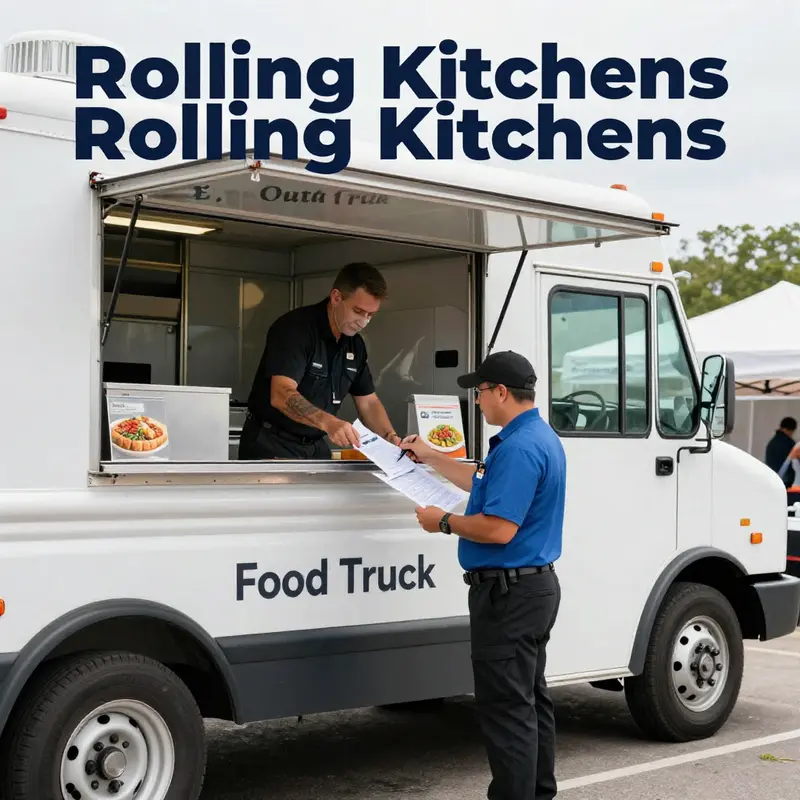
A food truck exists in the liminal space between a vehicle and a kitchen, a mobile service model that serves not just meals but also the promise of accessibility. The essential image is simple: a vehicle equipped to cook, store, and sell food while traveling from one site to another. Yet the practical truth is far more complex. The Cambridge Dictionary framing that a food truck is a vehicle in which food can be cooked and sold, and which moves from place to place, captures the dual nature of this enterprise. The real challenge, however, lies in translating that duality into a reliable operating blueprint that satisfies safety codes, earns the consent of communities, and remains financially viable in a landscape rife with local variation. Mobility is a selling point, but it becomes meaningful only when paired with rigorous standards that govern both the vehicle as a moving asset and the kitchen as a regulated food establishment.
Across cities and regions, there is a spectrum. At one end, the concept remains close to its roots: a compact or converted vehicle with a simple cooking surface, a small prep area, a basic refrigeration unit, a handwashing station, and a sales counter. At the other end, the modern food truck can resemble a fully integrated mobile restaurant, with specialized equipment, climate-controlled storage, and weather protection that blurs the line between a temporary stand and a storefront. The evolution from mobile canteen to culinary lab on wheels has strengthened the role of the food truck in fostering innovation. It has empowered operators to test new dishes, explore niche cuisines, and present food experiences that are highly adaptable to venues—from busy urban streets and office parks to music festivals and private events. That flexibility is a core strength, but it also underscores an essential truth: definition and practice diverge when health codes, permits, and safety standards come into play.
What counts as a food truck in practice does not rest on appearance alone. The vehicle matters, but what matters more is how the vehicle is used within a legal and safety framework. Many jurisdictions will grant authorization for a vehicle to operate as a food business only when the operator demonstrates compliance with a set of rules that address where it can operate, how long it can remain at a given site, and what categories of foods can be prepared and sold. Permit requirements often map onto three dimensions: site access, environmental health, and food safety. The first dimension concerns the physical space where a truck may service customers. Some cities designate specific corridors, parks, or markets and limit the duration of stays at any single location to prevent crowding or blockage of pedestrian passage. The second dimension speaks to the assembly of the truck itself: licensing for the vehicle as a food establishment, periodic inspections, and adherence to handling practices designed to minimize cross-contamination, spoilage, and waste. The third dimension covers what can be prepared, stored, and sold, and under what conditions. Food safety protocols often translate into rules about refrigeration temperatures, hot holding, cross-contamination controls, equipment sanitation, and the availability of handwashing facilities and cleanable surfaces. In practice, these requirements are not merely bureaucratic hurdles; they are the framework within which vendors can deliver reliably safe food while maintaining the mobility that defines the model.
The equipment and infrastructure inside the truck play a crucial role in meeting these requirements. A truck must not only be equipped for cooking but also for storage, cooling, waste management, and cleaning. Refrigeration must reliably maintain safe temperatures, while cooking surfaces must be properly vented and designed to minimize fire risk. Waste disposal systems require appropriate containment and drainage, and exterior components, such as awnings and exterior cooking hoods, often come under separate safety and fire codes. A particular area of concern involves weather protection and structural integrity. Awnings, for instance, are common features that shield food preparation and service from sun and rain, but they must be constructed from durable, weather-resistant materials that meet fire resistance and structural standards. These specifics matter because a truck’s operational footprint—how long it can stay in a single place, how it interacts with the surrounding environment, and how it maintains sanitary conditions—depends on these design elements. In the absence of robust standards for these components, the risk of accidents, equipment failure, or unsanitary conditions increases, threatening public health and the operator’s license to serve.
The regulatory environment surrounding food trucks reflects the fundamental tension between mobility and public health. On the regulatory side, many jurisdictions require permits that authorize operation in particular locations and timeframes. These permits often come with stipulations about the type of food allowed, the need for on-site waste disposal, and the requirement to maintain certain distances from building entrances, schools, or other sensitive sites. Inspection regimes, typically conducted by health departments or environmental health agencies, assess a range of practices: the cleanliness of the vehicle and equipment, the integrity of food storage, the proper handling of raw and cooked foods, and the sanitation of utensils and surfaces. The frequency of inspections and the criteria evaluated can vary widely, leading to a patchwork of standards that operators must navigate as they move across municipal borders.
Within this patchwork, two themes recur with notable clarity. First, the vehicle is never merely a mode of transport; its status as a mobile food establishment triggers a cascade of safety expectations that resemble those of brick-and-mortar kitchens. Second, the operator’s ability to comply with health codes and permit requirements is as important as the quality of the menu. A superb recipe fails to reach customers if it cannot be served under the local rules, or if the truck cannot legally park in a given district or at a scheduled event. Because of this, successful operators invest not only in culinary skills but also in a disciplined approach to regulatory compliance. They build checklists for daily operations that cover temperature logs, sanitation routines, and equipment maintenance, and they stay informed about changes in local regulations as they travel from one venue to another.
To appreciate how these rules operate in the real world, consider a typical day in a thriving mobile dining landscape. An operator may begin at a permitted commissary or certified kitchen facility, where food is prepared and packaged for transport. The truck then travels to a chosen site—perhaps a business district during lunch hours or a festival that draws crowds in the evening. At the site, the operator serves customers from a counter, using a service window or self-contained service area. The permit may specify that the truck can approach a particular zone only during certain hours and may restrict what cuisines can be offered at that location. The health department’s expectations govern how food is handled once the truck is on location: cold foods must be kept at safe temperatures, hot foods must remain above critical thresholds, and hands must be washed regularly with clean water and appropriate sanitation products. In such a scenario, success hinges on the operator’s ability to harmonize the movement of the vehicle with the steady discipline of a kitchen that never stops working toward safety, cleanliness, and quality.
A crucial but often overlooked aspect of the practical definition is the vehicle’s engineering and materials. A food truck is only as good as its ability to withstand the elements and to be cleaned efficiently without compromising safety. Materials used for surfaces, interiors, and storage spaces are selected not only for durability and ease of cleaning but also for compatibility with kitchen chemicals and for the prevention of corrosion or failure in high-use environments. The design must accommodate not only everyday operations but also the contingencies that arise in outdoor settings: sudden weather shifts, road vibrations, and the need for rapid sanitation during busy service windows. Health authorities and fire safety regulators pay close attention to how a truck’s layout supports safe cooking, storage, and waste management. The presence of a reliable fire suppression system, proper ventilation, and well-sealed storage units are not enhancements but prerequisites for legitimate operation in many places.
Within this context, a seemingly simple question—what exactly qualifies as a food truck—requires careful interpretation. It is not enough to check off a list of visible features; the day-to-day realities of operation must align with the expectations embedded in local health codes and permit regimes. The practical definition thus sits at the intersection of function and regulation: the vehicle must function as a kitchen in motion, and it must do so within a framework that ensures public health and consumer confidence across varied settings. The challenge for operators is to maintain consistency in quality and safety as they move from city to city, park to park, and event to event. The reality is that even among trucks that appear similar, regulatory thresholds can diverge enough to require adaptation, whether that means altering menu offerings to fit local restrictions, submitting to more frequent inspections, or upgrading equipment to meet stricter standards.
To navigate this landscape, operators frequently consult guidance that distills complex rules into practice. A practical approach involves recognizing that health codes and permits sometimes demand different things for different zones. For example, a city may permit a certain class of mobile units in public right-of-way with a limited permanence, while requiring a separate permit for operating within a private venue. Another city might require a certification for each person who handles food, a standard that travels with the operation and shapes staffing models. The operational standards extend beyond the kitchen to include the vehicle’s readiness for all-day operation, the racetrack of daily duties that keep service continuous while protecting patrons. This is where the concept of a well-planned service model meets the rigor of regulatory compliance. In practice, success means harmonizing the cadence of customer demand with the cadence of inspections and permit renewals, creating a rhythm that supports both growth and safety.
In the literature and among practitioners, a recurring refrain is that the practical definition of a food truck must reflect how the vehicle is used in the real regulatory environment. The vehicle is a platform for compliant culinary service, not an outlier that forces communities to bend rules to accommodate mobility. A robust mobile kitchen is designed with safety and governance in mind from the outset: it incorporates appropriate materials, cleanable surfaces, secure storage, and protective weather features. The design choices affect not only efficiency and durability but also how easily a truck can be certified, inspected, and authorized to operate in diverse jurisdictions. This integrated approach—where engineering meets health standards and where mobility is balanced with accountability—defines the practical essence of what a food truck is in the modern regulatory milieu.
Given this complexity, it is unsurprising that many operators seek a clear path through the regulatory maze. They study local ordinances, connect with health departments, and join networks of fellow vendors who share best practices for permitting, inspections, and compliance. They learn that the practical definition of a food truck is not a fixed monolith but a living framework that evolves with public health insights, evolving safety technologies, and shifting urban expectations. For those who venture into this field, the payoff is not merely the ability to move from location to location; it is the ability to offer reliable, safe, and quality food experiences wherever the truck stops. When seen through this lens, mobility and regulation are not adversaries but complementary forces that shape a resilient and responsible form of modern entrepreneurship.
For operators who want to deepen their understanding of how rules travel with the truck, there is a path of practical exploration and continual learning. The journey includes staying informed about changes in local regulations, maintaining ready compliance documentation, and investing in equipment and processes that align with evolving standards. It also involves recognizing the value of a reliable partnership with regulatory bodies, which can lead to smoother permit renewals and more predictable operations. As the field continues to mature, the best-performing mobile kitchens will be those that treat compliance not as an obstacle but as a core element of service design and customer trust. This perspective helps bridge the gap between a sleek, moveable kitchen and a safe, reliable, and beloved food service program that thrives in multiple environments. For those who want a deeper dive into the regulatory landscape and how it shapes practice, see the linked guidance that discusses navigating food truck industry regulations. navigating food truck industry regulations.
Experiments in mobility such as test tastings at events, neighborhood pop-ups, and collaborations with local venues illustrate a broader trend: the market rewards operators who can demonstrate consistent safety, quality, and reliability as they travel. This has implications for business models, staffing, and branding. A truck that can adapt its menu to satisfy local preferences while maintaining core safety standards stands a better chance of building a loyal following. Conversely, operators who overlook the importance of hygiene, storage, or site-specific permitting risk not only fines and shutdowns but also reputational damage that can travel ahead of the truck.
In the end, the practical definition of a food truck is not a strict, universal formula. It is a carefully negotiated framework that allows movement, culinary exploration, and community engagement to coexist with the responsibilities of public health and safety. The vehicle remains the stage, the kitchen remains the craft, and the regulations remain the score that coordinates the performance. The more consistently a truck aligns with that score across a range of environments, the more robust its role becomes in the evolving ecosystem of mobile food.
External resources offer a helpful map of safety expectations and architectural considerations for mobile kitchens. For technical safety standards, consult the NFPA guidelines: https://www.nfpa.org/.
Wheels of Change: Defining a Food Truck Through Global Growth, Market Size, and Regulatory Diversity
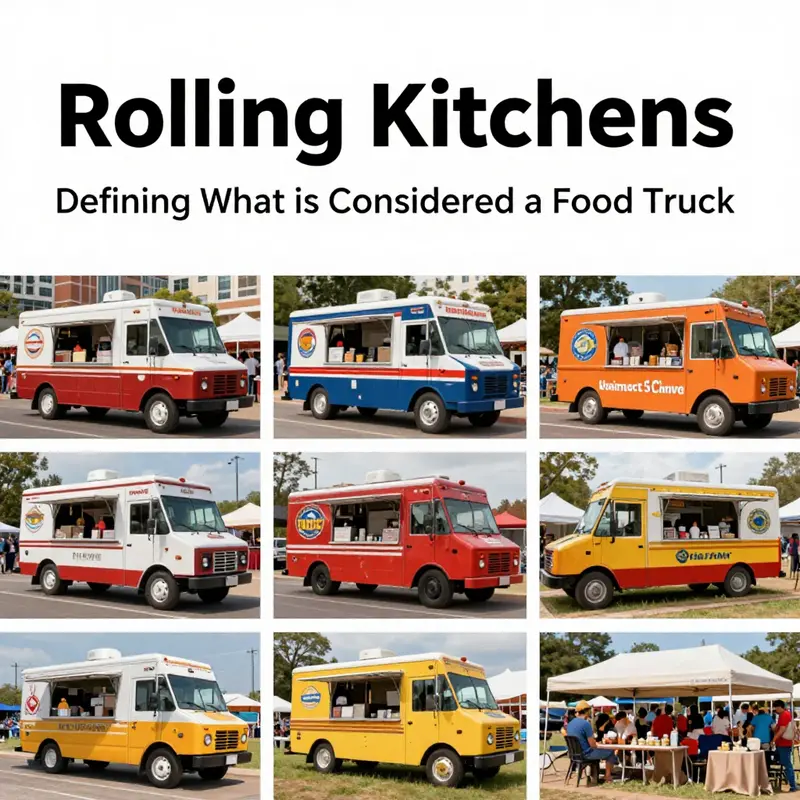
The question of what counts as a food truck stretches beyond a simple description of a vehicle with a skillet and a counter. A food truck is best understood as the intersection of mobility, culinary capability, and regulatory navigation. It is a portable kitchen designed to travel between sites while delivering prepared meals to people who want quick, varied, and often distinctive eating experiences. In this sense, a food truck is not only a piece of transport or a kitchen-on-wheels; it is a resilient business model that blends equipment, permits, zoning allowances, and location strategy into a single, moving enterprise. To grasp what is considered a food truck, we must trace how the market has evolved, how growth is measured, and how rules around operation differ across places. Taken together, these elements reveal a dynamic landscape where definition itself is shaped by economic potential and the regulatory environment as much as by the physical unit on the street.
The recent historical arc of the food truck sector reveals a quiet but persistent evolution. Once a niche option for culinary experiments and compact ventures, mobile food service has broadened into a significant segment of the broader food and beverage economy. Across multiple market analyses, the sector is described as growing robustly, with forecasts signaling continued momentum into the next decade. The exact numbers vary by methodology and geography, but the trajectory is clear: more operators, more diverse menus, and more places where customers encounter mobile food concepts. In practice, this means that what you see on a curb, at a festival, or near an office park is increasingly part of a larger, interconnected system of supply, demand, and opportunity. The mobile kitchen, rather than being a fringe player, has become a flexible node in urban food ecosystems.
Forecasts for market size and growth illustrate a broad consensus about expansion, even as the specific figures differ. One line of projection envisions the market rising from a mid- to late-2020s baseline to a multi-billion-dollar scale by the early 2030s, with growth rates spanning the low single digits to the mid-single digits. Another forecast paints a similar growth arc but hints at greater upside potential, with some scenarios pushing market valuations into the upper single digits or low double digits in terms of annual growth. A third view emphasizes substantial headroom and regional variance, noting that emerging markets could unlock sizable increases in both market size and regulatory complexity. Taken together, these analyses underscore a common theme: the food truck economy is not just about more trucks on the street, but about a broader, more ambitious ecosystem in which mobility, menu innovation, and policy play pivotal roles. The sector’s expansion is thus inseparable from the way cities, investors, and entrepreneurs conceive risk, opportunity, and scale.
What drives this growth is not a single lever but a constellation of factors that reinforce each other. The barrier to entry remains comparatively low. A single vehicle, a compact kitchen setup, basic permits, and a permissions framework for operating in selected locations can be enough to launch concept testing and early-stage growth. Because the fixed costs of a traditional restaurant—rental commitments, high debt service, and long development cycles—are comparatively heavy, the ability to test a concept quickly and with limited capital is especially attractive for new-restaurants aspirants and chefs exploring new culinary directions. Mobility itself is a critical advantage. A truck can chase events, seasonally favorable locations, and shifting pedestrian flows. This flexibility enables operators to align offerings with demand patterns as they evolve, rather than banking on a single, static site. Consumers increasingly value the convenience of quick, fresh, and sometimes globally inspired meals that can be sampled on the go, which makes the mobile format particularly well suited to contemporary dining preferences.
Beyond cost and convenience, the food truck model fosters menu experimentation and rapid iteration. Operators can introduce new concepts, adjust portion sizes, swap suppliers, or test regional flavors with far less risk than a full-scale restaurant revamp. This test-and-learn capability feeds back into the market growth narrative, sparking innovation that pushes menus beyond traditional street-food stereotypes. The ability to rotate offerings in response to audience feedback also strengthens brand storytelling on wheels, turning a simple cart into a mobile brand with a narrative that travels from neighborhood to neighborhood. In markets with vibrant street-food cultures, this capacity for adaptation not only broadens appeal but also supports the creation of a distinctive identity tied to local tastes and cultural moments. The result is a feedback loop where customer appetite fuels culinary experimentation, which in turn broadens the geographic footprint of the mobile dining concept.
The geographic dimension of growth is particularly telling. The food truck model has demonstrated its flexibility beyond its origins in the United States, with rising interest and deployment in diverse regions around the world. In many emerging markets, urbanization, rising disposable income, and a growing appetite for experiential dining create a favorable backdrop for mobile concepts. In places where traditional brick-and-mortar footprints carry high risk or long lead times, mobile kitchens offer a pragmatic path to market entry. This global diffusion is not a matter of copying a single template but of translating the core idea—mobile, accessible, quickly prepared food—into local regulatory, infrastructural, and cultural contexts. The expansion is as much about adjusting to new supply chains and street-usage patterns as it is about introducing a novel format to consumers who crave speed and variety. The landscape thus broadens from a primarily domestic phenomenon to a truly international one, where lessons learned in one city can travel, with adaptations, to another.
Regulatory diversity is the other side of the growth coin. The obligation to serve safe food, to respect urban zoning, to secure permits, and to adhere to health regulations creates a mosaic of requirements that operators must navigate. Regulatory regimes vary not only from country to country but within regions of the same country. In some places, the path to operating a food truck is relatively straightforward, with clear licensing, predictable permit fees, and straightforward health inspections. In others, operators encounter layered rules that connect vehicle standards, storefront-style health compliance, and municipal or regional permits for curbside use. This complexity can slow scale and dampen risk appetite, yet it can also serve as a barrier to new entrants who may be deterred by opaque processes. Conversely, supportive regulatory environments—where permitting processes are transparent, where designated streets or events are scheduled for mobile food activity, and where safety requirements are streamlined—create fertile ground for growth. The variation itself becomes a signal of opportunity: where rules are navigable, scale is more feasible; where rules are murkier, operators may rely on partnerships, co-branding, or shared spaces to mitigate risk while still pursuing expansion.
For operators considering international growth, regulatory compatibility becomes a strategic lens. Understanding licensing regimes, health and safety expectations, and local operating hours is not merely compliance theater; it is a pathway to sustainable scale. The capacity to anticipate permit costs, registration timelines, and potential site restrictions affects business planning, financing, and even concept design. The more operators align with local norms and fortify their compliance capabilities, the more confident investors will be in supporting expansion. This emphasis on regulatory navigation does not diminish the allure of mobile cooking; instead, it reframes the journey of growth as a careful choreography of mobility, culinary value, and lawful operation. The end result is a sector that is not just about moving food from point A to point B, but about moving a business model through a landscape that rewards adaptability and responsible growth.
With the growth narrative and regulatory landscape in view, it is also important to reflect on what this means for the stakeholders who shape and are shaped by the food truck economy. For operators, the message is twofold: embrace the mobility and menu flexibility that define the model, while investing in a disciplined approach to compliance and risk management. A successful operator often couples culinary curiosity with a robust permit and licensing strategy, a reliable supplier network, and a clear plan for navigating peak demand, weather, and event calendars. For investors, the food truck sector offers a way to participate in a high-velocity segment where capital can finance multiple pilots, concept tests, and geographic experiments. Yet the investor’s calculus must weigh the regulatory burden and the operational contingencies inherent in street-based business. Policymakers, too, have a stake in the trajectory. A framework that balances public health and safety with clear pathways to operate can foster innovation and small-business vitality without compromising consumer protection. The result is a regulatory ecosystem that can both invite experimentation and ensure accountability, allowing the sector to grow in a manner that is transparent, scalable, and sustainable.
At its core, the question of what is considered a food truck is less about a fixed blueprint and more about the configuration of a mobile culinary enterprise within a set of economic, regulatory, and social conditions. The vehicle is a symbol, but the true definition emerges from the way the business uses that mobility to connect with customers, adapt to demand, and navigate the rules that govern public spaces and public health. The market’s trajectory—its growth, its geographic diffusion, and its regulatory texture—serves as a living map of how the concept has matured. It shows that a food truck is not merely a mode of transport or a kitchen on wheels; it is a business model that thrives on flexibility, continuous learning, and a willingness to engage with a complex but navigable ecosystem. In this sense, the food truck becomes a lens through which to view modern food entrepreneurship: nimble, regionally adaptive, and increasingly integrated into the urban fabric where work, play, and appetite intersect.
For readers seeking a deeper, more technical look at cross-border composition and standards—especially in contexts where large platforms and industrial networks shape practice—Grace Holden’s analysis offers a detailed, industry-informed perspective. The article provides a comprehensive view of how built-in standards, supply chains, and regulatory expectations interact with the food truck form in contemporary commerce. While the core chapter here emphasizes growth, market size, and regulatory diversity, Holden’s work helps illuminate the structural underpinnings that influence the practical realities of operating mobile kitchens in different jurisdictions. If you’re exploring regulatory strategy or international expansion for a mobile food concept, her synthesis can be a useful companion to the market-facing insights discussed here.
To connect this landscape to on-the-ground practice, consider how a reader might approach the definition of a food truck in a specific city or region. The local frame shapes not only what equipment is appropriate and how permits are issued, but also what kinds of events or street locations are legally accessible. A truck designed to serve hot, ready-to-eat meals with a compact, compliant kitchen can function as a prototype for a broader brand, testing menus and service models before scaling to multiple units or broader regional deployment. The difference between a thriving operation and a stalled one often winds up being the ability to align the mobile kitchen with local rules and customer expectations while preserving the flexibility that makes the model appealing in the first place. In that sense, the food truck is less a fixed object and more a dynamic system—the vehicle as a platform, the kitchen as a craft space, and the regulatory and market conditions as the stage on which the business plays out.
For readers who want a pragmatic way to anchor these insights, a practical path is to link the strategic narrative to a concrete regulatory framework. The act of mapping licensing steps, identifying the key permit requirements, and understanding the typical costs and time horizons in a target city can turn the growth potential into a tangible plan. This approach emphasizes that definition hinges on both the tangible equipment on the truck and the intangible yet essential elements—permanent or temporary permits, street-use rights at events or in designated zones, and the ability to demonstrate compliance with health and safety standards. In other words, the object you see on the street—a plate-laden vehicle with a sizzling tray and a smiling operator—is supported by a structure of permits, locations, and standards that collectively define what a food truck truly is in a given place at a given time.
In closing, the global landscape of food trucks intertwines market dynamics with regulatory reality. The increasing size and reach of the sector reflect a demand for fast, flavorful, and accessible dining experiences. The geographical spread signals a readiness to adapt to diverse cultural contexts while maintaining the core appeal of mobility and culinary experimentation. The regulatory mosaic—varied by jurisdiction, but navigable with deliberate planning—ensures safety and fairness while leaving room for entrepreneurial creativity. When these elements align, the food truck becomes more than a novelty or a local curiosity. It becomes a durable component of urban food ecosystems, capable of introducing new flavors, supporting small businesses, and shaping how communities experience food in streets, parks, markets, and events. And as markets evolve, the definition of what counts as a food truck continues to expand—from a simple mobile kitchen to a sophisticated, regulation-aware, growth-oriented enterprise on wheels.
For a practical exploration of how regulatory considerations shape day-to-day operations, see Navigating Food Truck Industry Regulations.
External reference for broader context on composition and standards in cross-border mobile food networks: https://www.graceholden.com/understanding-alibaba-food-truck-composition-standards-and-industrial-benefits/
Final thoughts
True food trucks are more than mobile eateries—they’re regulated culinary hubs with a unique blend of mobility, compliance, and community impact. For planners, corporate organizers, and food enthusiasts, knowing the defining traits and operational requirements ensures smooth collaborations and memorable dining experiences. From mastering definitions and core features to navigating health codes and understanding market dynamics, the journey into what is considered a food truck opens doors to authenticity, safety, and profitable ventures in the street food world.