If you’re shaping a mobile dining dream for event planners, HR teams, community groups, or food enthusiasts, understanding the startup cost for a food truck is your first shared mission. Costs vary widely—from the cab you roll in on to the kitchen gear inside, plus the legal green lights and the initial spark of brand presence. This guide breaks the budget into three essential chapters: first, the vehicle purchase and basic equipment that turn a shell into a kitchen-on-wheels; second, licensing and the legal framework that keeps you rolling safely and compliantly; and third, marketing, branding, and the initial operations that help you attract planners, residents, and curious diners at your first big event. Each chapter builds on the last to give you a holistic view of total outlay, realistic timelines, and practical tips tailored to diverse partners—from high-profile corporate events to intimate local meetups. By the end, you’ll see not just numbers, but a narrative of how smart budgeting accelerates your journey from dream to delicious, on the move.
Rolling Forward: Decoding the Vehicle and Core Equipment Costs Behind Launching a Food Truck
Launching a food truck is as much a study in logistics as it is in culinary artistry. The romance of rolling into a street festival with sizzling aromas often obscures a quieter math: the upfront investments that make every mile possible. In this chapter, we drill into the two most critical anchors of that math—the vehicle itself and the essential kitchen setup that turns a mobile unit into a functioning, compliant kitchen on wheels. These elements do not merely enable operations; they define the scale, schedule, and risk profile of a new venture. Understanding them helps map out a realistic path from concept to the first serving window, where the difference between aspiration and launch hinges on practical, well-considered costs rather than bravado or optimism alone.
The vehicle purchase sits at the top of the expense pyramid for most prospective operators. The variation is striking because it is driven by a handful of design choices: size, whether the unit is new or used, the degree of customization, and the compatibility of the chassis with kitchen equipment. In practical terms, a starting point for evaluating the numbers comes from a spectrum that runs from basic, purpose-built models to fully customized units offering specialized workstations and extended bays. On the lower end, basic models that are suitable for delivery or light mobile service can be acquired for roughly $8,000 to $9,500. This bracket covers standard, compact platforms that may come with simpler interiors or preconfigured layouts designed for efficiency in tight urban spaces. For operators who want a more recognized brand or slightly larger footprints, the base price tends to sit closer to the mid single digits—roughly $9,000 to $12,000 for widely available, entry-level configurations. As the vehicle grows in size or becomes more specialized, the price range expands. A mid-range choice, balancing space with practicality, often lands in the $18,000 to $41,000 neighborhood. This band reflects options that provide sturdier cooling, more robust electrical setups, and greater customization potential without leaping into full-scale, purpose-built catering trucks.
Alongside this spectrum sits the question of customization: the more you tailor a truck toward a particular cuisine or service model, the higher the initial cost tends to be. A simple, functional conversion might include a basic griddle, a fry station, or a compact refrigeration module, while a fully customized unit—designed to support high-volume production, diverse cooking methods, or a striking on-vehicle brand presence—can push the price up toward the upper end of the range. When evaluating bids or listings, it helps to separate three layers of cost: the base chassis or platform, the installation or conversion work, and the interior fit-out that enables the kitchen to function. Each layer adds value, but they also compound the overall investment. For many first-time operators, a practical approach is to identify a middle ground—enough space and capability to execute a reliable menu while avoiding overreach that could hamper cash flow during the early months of operation.
In the market described by current data, the vehicle cost is frequently the single most consequential line item. The numbers echo across different brands and configurations. In some markets, inexpensive, basic models sit at the $8,000s, providing a lean foundation that can be appealing for entrepreneurs testing a concept or targeting low-cost, high-frequency events. More widely used, mid-range options hover in the $18,000 to $22,000 range, especially for platforms that balance compact size with functional kitchen corridor layouts. When orders scale or when operators demand more expansive side panels, enhanced loading doors, or longer service windows, the price can rise into the $30,000s or higher. Even within a single model family, the price can vary with quantity, optional features, or geographic incentives, creating a practical truth: there is no universal “one-size-fits-all” vehicle price, only a continuum that must be matched to the business plan and the expected cadence of events.
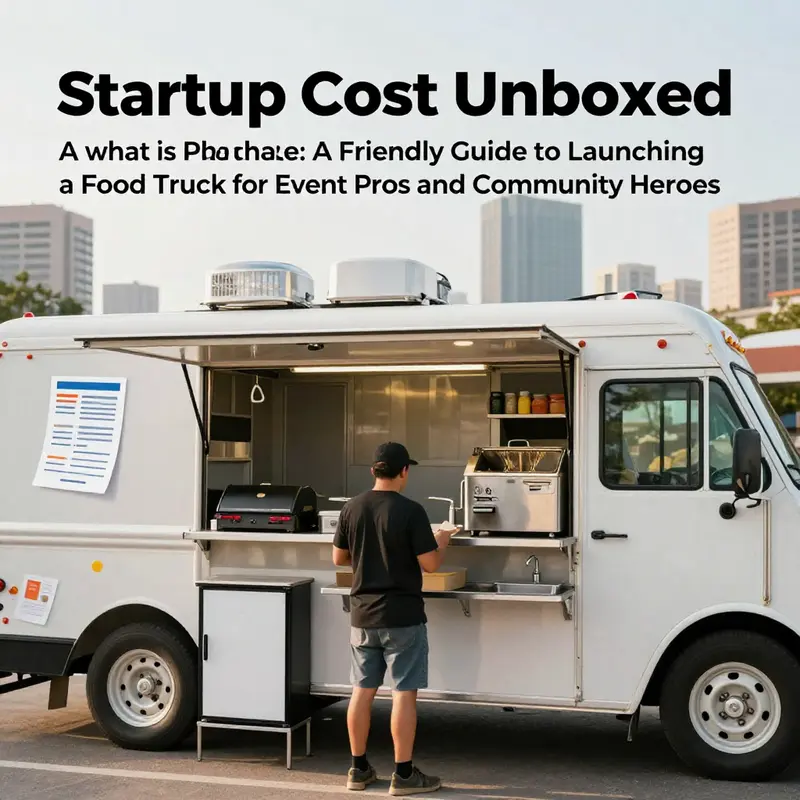
With the vehicle concept in place, the kitchen setup—often described in terms of “equipment and setup”—is the second major arc of the initial spend. The kitchen module is not just a collection of appliances; it is a carefully arranged workflow designed to keep food moving safely, quickly, and with consistent quality. Basic equipment includes the core workhorses: a reliable grill or griddle for the cooking surface, a fryer for items that benefit from quick, high-heat preparation, a refrigerator to protect perishables, a dedicated sink for handwashing and sanitary rinsing, and a few sturdy storage units to keep utensils, spices, and packaging organized. The financial footprint for this core setup can start at around $2,800 and extend to roughly $7,000, depending on the brand, energy requirements, and the compactness of the layout. This price band reflects pragmatic choices—efficient, durable components that deliver dependable performance without over-saturating the truck interior with high-cost, specialty equipment.
But for operators pursuing particular cuisines or service formats—think fried chicken, burgers, tacos, or even sushi-on-wheels—the equipment factor can grow quickly. Specialty setups, which may require more powerful fry stations, precise refrigeration for perishable ingredients, or climate-controlled display cases, have a tendency to push the investment toward the higher end of the spectrum, sometimes surpassing $14,000. In other words, your cuisine signals your equipment needs, and those needs drive cost up or down in meaningful ways. A careful menu design that aligns with equipment capabilities can help avoid overspending on gear that sits idle or underutilized in the first year.
Cost considerations extend beyond the equipment itself to the practicalities of keeping the operation compliant and functional. Licensing, permits, and health inspections are necessary to operate legally and safely, and while these aren’t part of the kitchen’s physical installation, they are inseparable from the overall launch cost. The exact amounts vary by city and region, but a baseline might include modest business licensing fees, a food-handler permit, and a mobile-vendor permit. These items can collectively range from a few hundred to a couple of thousand dollars, with health department inspections adding another modest line item. The financial reality is that the paperwork is not a mere formality; it is a foundational cost of doing business in the food service space, and it can influence the pace at which a trader can begin serving customers, secure prime event slots, or renew permissions for recurring markets.
Internal brand and marketing investments also begin in those early days. Even when a truck is not yet rolling to a big event, the business needs a visible identity. Branding and signage—the vehicle wrap, the logo, the menu board style, and the printed packaging—are not cosmetic accoutrements; they are the first tangible signals to potential customers. The cost of branding and signage typically runs in the low thousands, with a broader campaign for launch and early awareness—social media, flyers, and pop-up sampling—adding a few hundred to a couple of thousand dollars. The goal is to land a coherent, legible message across vehicle graphics, storefronts, and online channels that lays the groundwork for a recognizable, memorable presence when the truck hits the road for real.
An often-overlooked early expense is the initial stock of ingredients and disposables. This isn’t just about filling the first inventory order; it’s about ensuring you can serve a measurable number of customers on day one without discarding a large portion of unused ingredients shortly after. A practical range for this initial stock sits in the vicinity of $700 to $2,800, a figure that acknowledges the need for flexibility in the first weeks of operation as you calibrate recipes, portions, and supplier lead times. It also underlines the cyclical nature of working capital in a mobile food business: money tied up in ingredients is not available to cover ongoing operating costs, and misjudgments in the initial order can ripple into cash flow constraints in the critical early period.
Parking access, market deposits, and location-specific costs add another layer of complexity that new operators must plan for. Securing a preferred parking spot or a space in a popular market can require upfront deposits or earnest payments, often ranging from several hundred to a couple of thousand dollars. The variability here is significant because some markets price access as a function of anticipated footfall or the temporary licensing window, while others require non-refundable fees that guarantee a slot during a particular day or event. These costs matter because they directly affect the ramp-up timeline: even with a ready truck and a fully equipped kitchen, a limited number of high-traffic locations can throttle sales until a consistent pathway to customers is established.
Putting these pieces together yields a composite picture that, while not universal, reflects a credible startup pathway for many first-time food truck operators in 2026. The vehicle itself forms the broad scaffold of capability, flexibility, and mobility. The kitchen equipment and the layout of the work area translate that mobility into consistent, safe, and efficient service. The licensing and permits, the initial inventory, the branding, and the market access together form the operating framework that supports a successful debut and a sustainable early run. When you assemble these elements carefully, the total cost picture begins to make sense, even if it still appears daunting at first glance. For a mid-range, fully equipped truck prepared to launch, the reported average starting point sits in the neighborhood of roughly $21,000 to $28,000, expressed in U.S. dollars, when translated from the commonly cited RMB ranges used in the source market. This estimate captures the essential balance between a practical, serviceable vehicle and a functional kitchen setup, without assuming a premium on either side that would exaggerate the initial hurdle.
To bridge the gap between theory and practice, prospective operators often anchor their plan to a two-tier approach: (1) secure a vehicle compatible with their anticipated menu and event cadence, and (2) assemble a kitchen configuration that is robust enough to deliver fast, high-quality food without overcommitting capital to equipment that may not be used immediately. The first tier is the vehicle, the second tier is the kitchen. When evaluated together, they dictate the pace at which a business can go from concept to customer-facing operation. In this sense, the journey from idea to ignition begins with a practical assessment of what you can afford to spend, what you can realistically generate in sales during the first quarter, and how quickly you can scale your fleet and kitchen as demand grows. If you are contemplating a move toward a more modular or upgrade-ready design, it can be worth exploring layouts that support incremental improvements—systems that let you add a secondary cabinet, an extra refrigeration unit, or a larger service window as sales justify the investment.
As a practical takeaway, the starting point for many would-be operators is to treat the vehicle and core equipment as a paired decision rather than two separate purchases. You might start with a reasonably capable base truck and a durable, efficient kitchen module that can handle a reliable menu and a steady, repeating workflow. This approach reduces the risk of stranded costs associated with over-customization or underutilized, high-end gear that can quickly become a liability in the absence of a strong customer base. It also creates room for strategic reinvestment as the business matures—from upgrading to a larger, higher-volume vehicle to expanding the kitchen with additional cold storage or a second service window when demand spikes. The careful calibration of vehicle power, water supply, waste management, and electrical load is a practical constraint that will shape every subsequent decision, including where to locate the truck, which events to target, and how to price menu items to cover the ongoing costs of operation and growth.
Within this framework, the decision to consult a broader playbook becomes valuable. For many operators, a step-by-step reference point toward best practices—covering topics from choosing the right model to financing and regulatory navigation—can anchor a practical plan. For those seeking a deeper dive into model selection and the implications for cost and operations, a relevant resource can be found at this guide: Choosing the right food truck model. This resource helps connect the dots between vehicle form, kitchen function, and the economics of launching with confidence. As you map your own budget, keep the focus on the intersections of mobility, compliance, and capacity, because that is where the most meaningful savings and the most sustainable paths forward tend to emerge.
In closing this segment of the cost picture, it is important to anchor expectations in the data while remaining flexible in planning. Costs are not static; they shift with the market, currency fluctuations, parts availability, and regulatory conditions. A disciplined budgeting approach—one that plans for the vehicle, the kitchen, the permits, and the working capital to cover the gap between launch and early sales—creates the strongest foundation for a successful rollout. When you factor in the vehicle price range, the essential equipment, and the recurring costs associated with permits, inventories, and marketing, the total investment required for a ready-to-launch truck sits in a realistic band that is accessible to many aspiring operators who are prepared to commit the time, energy, and capital necessary to bring a food truck to life. In the next section, we will explore how to translate these upfront numbers into a practical financing and cash-flow plan, including strategies to secure working capital and to stagger expenditures as revenue begins to flow from day one.
External guidance that aligns with these considerations can offer additional clarity for this stage of planning. For formal, jurisdiction-agnostic guidance on financing and startup costs, the U.S. Small Business Administration provides comprehensive resources to help structure funding, assess risk, and navigate the early months of operation: https://www.sba.gov.
Chapter 2: Licensing, Permits, and the Legal Framework That Lets Your Food Truck Hit the Road
The food truck is as much a legal enterprise as it is a culinary concept. The sizzling grill and hot aromas attract customers, but the true engine that keeps a mobile kitchen running is a web of licenses, permits, and regulatory compliance. For many aspiring operators, the license stack feels like an obstacle course, one that eats into time and budget if not anticipated. Yet when approached with a clear map and a disciplined process, licensing becomes a practical asset: it clarifies where you can operate, how you’ll be inspected, and what protections you must secure for your team and your customers. The path from concept to curbside service begins with federal basics and funnels into state and local specifics, a cascade of requirements that varies as surely as the neighborhoods you serve. Understanding this framework isn’t just about paying fees; it’s about aligning your business model with the rules that govern food safety, labor, taxation, and community impact.
From the moment you form your business—the simplest step here is obtaining a federal Employer Identification Number (EIN), a free and routine process handled through the Internal Revenue Service. An EIN functions as the business’s social security number for tax purposes and is essential for hiring employees, opening business banking accounts, and filing taxes. Yet the EIN does not grant permission to operate in a specific city or through a particular channel. That permission comes from a sequence of licenses and permits issued by state and local governments, tailored to your cuisine, your vehicle, and your intended venues. In many jurisdictions, the licensing canvas starts with a basic business license, then extends into more specialized areas—food handler certifications, health department approvals, and mobile vendor permits—before you can legally serve a customer.
Cost is only one facet of licensing, and, as with the rest of the startup conversation, it varies widely. Across many U.S. cities, a basic business license can range from a modest tens of dollars to a few hundred. The health department, which protects public safety, typically requires a more substantive check: inspections, facility standards, and ongoing compliance. A health permit may fall somewhere in the low hundreds, but the price can tilt higher depending on the city and the complexity of your kitchen design. A mobile vendor permit is another recurring consideration, often priced annually or per season, and it can run from a few hundred to over a thousand dollars, depending on whether you operate daily, on events, or in high-demand corridors.
In practice, licensing isn’t a one-step hurdle; it’s a managed process that unfolds over weeks or months as you configure equipment, establish sanitation protocols, and finalize your menu. The cost envelope for licensing and permits can be modest in some locales and considerably heftier in others, especially in cities with dense event calendars or stringent health codes. It’s common to encounter a spectrum of fees that include application costs, renewal fees, and mandatory inspections. The variance is not just a matter of dollars; it reflects differences in how authorities enforce food safety, how they allocate parking and vending zones, and how they regulate temporary operations at markets, fairs, and pop-up venues.
A practical starting point is to draft a compliance calendar early in the planning phase. List the licenses and permits you anticipate, map out the typical timelines for application and renewal, and reserve a portion of your budget for unexpected delays or amendments. This planning is more than administrative housekeeping; it helps you forecast cash flow, avoid operational gaps, and demonstrate to lenders and investors that you have a trackable, responsible plan for ongoing compliance. Your calendar should begin with foundational steps: confirm your EIN, register the business with your state, and obtain the local business license. Then, layer on health permits and food handling credentials, followed by the mobile vendor permit and any zoning or permit requirements that govern where you may operate. Some cities require a fire code inspection or a water and waste disposal permit, especially if your setup includes a larger grill, fryer line, or a dedicated refrigeration unit. If your operation includes serving alcohol or certain regulated ingredients, you’ll encounter additional licensing layers. The breadth of what you need should be discussed with a local licensing official or a trusted consultant who understands your city’s particular framework.
The actual price tags can be surprising, but the narrative behind those numbers helps you plan responsibly. For example, health permits and inspections are not one-off costs; they incorporate ongoing compliance expectations. Health departments may require periodic inspections, routine recordkeeping, and adherence to prescribed sanitation standards. The cost here often covers inspection services, plan review for your kitchen layout, and potential permit inspections for your equipment. If you operate in districts that emphasize small business innovation or community markets, there may be reduced rates or streamlined processes for mobile vendors who align with local economic development goals. In other words, the licensing landscape rewards operators who demonstrate reliability, hygiene, and consistency.
One of the most critical elements in this landscape is zoning. Zoning determines where you can physically park, prep, and sell. Some neighborhoods welcome mobile kitchens near office clusters or nightlife districts, while others restrict street vending to specific blocks, times, or event zones. Obtaining zoning clearance may involve a permit or special-use authorization, and it can impact your choice of vehicle, truck size, and operating hours. If you plan to operate in multiple jurisdictions or travel between counties or cities, you may need to obtain separate licenses for each location. The administrative complexity grows with expansion, yet so does the opportunity to tailor your menu, pricing, and service style to local demand. The key is to anticipate these requirements in your early budget and in your business plan so you can scale responsibly rather than face sudden regulatory roadblocks.
Beyond the core licenses, there are practical considerations that operators often overlook until a late stage. Insurance—general liability, workers’ compensation if you hire staff, and appropriate vehicle insurance for your mobile operation—has to be integrated with licensing. Most jurisdictions require proof of insurance as a condition of licensing, and many also require ongoing certificates of insurance for workers who perform certain tasks or for vendors who operate with subcontractors. Sales tax permits enable you to collect and remit sales tax on food and beverages, a responsibility that requires you to maintain accurate records of sales, purchases, and exemptions. Depending on your product mix, you may also need liquor licenses or special permits for beverage service, which can escalate both the time and cost of your approvals. Even if your initial plan is simple, the regulatory framework often expands as you explore partnerships, co-packing arrangements, or participation in large events where multiple regulatory authorities are involved.
The learning curve here benefits from talking to peers who have navigated the process. They can share what agencies scrutinize most closely, typical processing times, and practical tips that reduce friction. When possible, engage early with your local small business development center or chamber of commerce, and consult the SBA’s guidance on licenses and permits. The SBA’s resource on obtaining business licenses and permits offers a structured starting point for understanding the federal-to-local flow of approvals and the kinds of documents you will need to assemble. It’s a reliable anchor for your planning and a prudent reference as you assemble a portfolio of licenses that will accompany you on every route you choose to serve.
As you consider the totality of licensing costs, it’s important to remember that the numbers reflect not just paperwork but a framework that protects customers and workers, supports fair competition, and ensures a level playing field for mobile food businesses. A properly licensed operation communicates professionalism to customers and to potential partners, from event organizers to landlords who host market spaces. It also reduces the risk of shutdowns or fines that can sink an otherwise promising launch. The most effective way to approach licensing is with a disciplined, methodical process that creates a compliant foundation on which your culinary concept can grow. You’ll move more confidently when you have a realistic expectation of what must be secured, a practical timetable for securing it, and a budget that accommodates renewals and occasional updates to your operation as codes evolve.
For readers who want to see the licensing landscape mapped in practical terms, a useful companion resource is a guide focused on navigating food-truck industry regulations. It offers a grounded, accessible view of the interplay between health codes, vendor permits, and local zoning. You can explore that guidance here: navigating food-truck industry regulations.
No discussion of licensing would be complete without acknowledging the broader legal ecosystem that touches startup costs. Federal requirements are only the beginning. States may impose corporate reporting, state-level sales taxes, and specific registrations for food service businesses. Local authorities manage the daily realities—where you park, how you dispose of waste, what signage is permissible, and how you handle temporary closures for inspections or staffing changes. The layered nature of these rules means that a well-prepared operator treats compliance as an ongoing operational discipline rather than a one-time chore. A robust compliance plan keeps your business flexible. As you add new staff, expand your route, or enter new markets, your licenses and permits should scale with you, not lag behind your actual operations.
In practical terms, this means budgeting not merely for initial fees but for renewal cycles, potential audits, and the administrative labor required to stay current. A rough planning heuristic is to allocate a portion of your startup budget to licensing and permits that aligns with the complexity of your menu and the geographic footprint you envision. For some operators, licensing costs stabilize at a modest percentage of total startup outlay; for others, particularly those operating across multiple jurisdictions or with specialized equipment, the licensing envelope can be more substantial. The key is transparency with investors and partners about the regulatory obligations you face and the contingencies you have in place to meet them on time.
Finally, keep in mind that licensing is not static. Regulations change with policy shifts, public health priorities, and evolving consumer expectations. The most resilient operators treat compliance as a dynamic facet of business strategy, one that benefits from ongoing education, proactive communication with authorities, and partnerships with experienced consultants or mentors. In the end, the legal framework is not a cage but a scaffolding that supports sustainable growth—one that enables you to serve safe, high-quality food wherever your truck takes you. If you align your menu, your schedule, and your business model with the regulatory rhythm of your chosen locales, you can convert licensing from a perceived barrier into a reliable, predictable component of your startup’s success.
External resource you may find helpful as you plan the licensing path: https://www.sba.gov/business-guide/launch-your-business/obtain-business-licenses-and-permits
Marketing on Wheels: Branding and the First Moves in Launching a Food Truck
The moment a food truck owner steps onto a potential street or market with a machine that has the power to transform a simple idea into a meal and a memory, the game changes from concept to story. The chapter you are reading sits at the crossroads of branding, marketing, and the practicalities of getting off the ground. It is here that the cost calculus of a food truck reveals its true shape: not just the price tag on the steel and stove, but the investment in identity, reach, and early revenue streams that determine whether a concept becomes a staple in a city’s culinary landscape or another idea that fades in the noise. The numbers are a guide, not a destiny. They set the stage, but the real theater is how you spend those funds to attract, convert, and keep customers who will tell your story for you.
To start with, branding is not a luxury; it is the backbone of a mobile business that must capture attention in a crowded environment. A well defined brand is a promise delivered on wheels. It begins with a crisp name and a memorable visual language, but it ripples outward to every stakeholder interaction—your logo and color palette, your vehicle wrap, your menu design, your packaging, and even the way your team speaks to customers. In the early stages, branding is an investment in trust. You want a customer who sees your truck and instantly understands what you stand for, what you value, and why your food choice matters in the experience they are about to have. That clarity translates into faster decision making for a potential customer who is deciding whether to try you, return, or recommend you to a friend. In an event lineup or a busy street market, quick recognition becomes a competitive advantage as strong branding shortens the path from attention to sale.
Marketing, then, is an ongoing dialogue with that customer. It begins even before you flip your first switch on the burners. You lay the groundwork with a compelling brand identity, a clean, accessible website or landing page, and social profiles that invite engagement rather than just broadcasting menus. The initial marketing budget in the US research results is typically in the range of five thousand to twenty thousand for branding and marketing efforts combined. This covers designing a professional logo, creating a website, and building a social media presence, along with a launch campaign that might include promotional events and targeted ads. Those figures are not arbitrary. They reflect the reality that a mobile food business must be visible where people gather—markets, office parks, college campuses, and street corners that teem with impulse buyers. A well planned marketing push turns curiosity into foot traffic at the first few events and, importantly, creates a data trail that informs how you adjust your offerings and your messaging as you scale.
A practical approach is to balance the aspirational with the operational. Start with branding assets that work in multiple formats: a logo that scales well from a single napkin to a full vehicle wrap, a color system that communicates your food concept at a glance, and typography that remains legible from a distance. The vehicle wrap, in particular, acts as a moving billboard. It is a unique asset that, with the right design, can convey your menu, your values, and your personality in seconds. A wrap should be legible at speed, informative without crowding, and consistent with packaging and interior signage. If you picture branding as a lighthouse, the wrap is its beam sweeping across the harbor; it must be bright, focused, and unmistakable.
Beyond visuals, the digital ecosystem anchors the customer journey in dates and locations. A strong website might feature a simplified menu, hours, a calendar of markets or events, and a link to a loyalty program or newsletter. The goal is to capture emails and social follows before customers even taste your food, turning them into future patrons who will hear from you again—recipes, new offerings, seasonal menus, or simply reminders of where you are parked today. Social media, when used strategically, becomes a living map of your story. It narrates the daily rhythm of a food truck: the prep in the kitchen, the hustle at the window, the moment when a customer discovers your dish, and the thank-you at the end of a busy shift. The content cadence doesn’t need to be complicated. A steady stream of behind-the-scenes photos, high-contrast shots of a signature item, and timely posts announcing location shifts or special promotions can yield compound value over weeks and months. The key is consistency; the audience learns to expect your voice, your schedule, and your evolving menu.
Notably, the branding and marketing plan must align with the first operational phase. Initial operations demand more than cash for equipment and permits; they require a test-and-learn approach to product-market fit on wheels. Early revenue streams often emerge from direct sales at markets, corporate parks, and local events. The strategy is to create reliable, recurring opportunities to sell while refining the offering based on real customer feedback. This is the stage where a lean approach proves its worth: you run a low-overhead operation to validate your concept, learn which dishes travel best, and identify the preferred locations and times for peak traffic. In many stories, this is exactly where strong branding makes the difference. A solid brand helps customers remember you between appearances, which increases the likelihood of repeat purchases and word-of-mouth recommendations — two compounding forces that strengthen the bottom line with relatively modest incremental marketing spend.
The financial framework often mirrors the strategic one. Brand development and initial marketing, as cited in the market data, typically sit in a five- to twenty-thousand band for the start, depending on the scope and the channels chosen. There is wisdom in aiming toward a lean but coherent package: invest enough to build credibility and visibility, but avoid overextending before you have validated your concept. A lean approach does not mean cutting corners on quality; it means prioritizing the elements that will translate into tangible, repeatable customer flow. That is where a deliberate blend of branding, a practical website, a few targeted ads, and a carefully managed launch event can yield outsized returns. It also means designing packaging and point-of-sale elements that reinforce the brand narrative — customized napkins, sleeves, and cups that emphasize the brand voice and values. The power of effective packaging should not be underestimated; customers often make a decision about whether to return based on the memory of the whole experience, including how well the product is presented and how smoothly the service felt.
There is a human side to this narrative that is essential to understand. People buy experiences, not just meals. A food truck branding can attract customers who seek novelty or build a loyal base that returns because they associate the truck with reliability and warmth. The staffing script plays a role here as well. Barriers to entry in service can be reduced when staff are trained to communicate the brand story in short, authentic lines and when the service style reflects the brand’s personality. The silent promise behind a well-curated brand is consistency: every interaction should feel like a continuation of the customer’s first impression. That consistency begins with the physical environment — the truck exterior, the layout of the service window, and extends into the interior where sanitation, efficiency, and hospitality converge to create a brand experience that customers want to repeat.
To connect the branding to the practicalities of operations consider the lifecycle of a launch plan. At the outset you are investing in a brand identity that can withstand the wear of continuous use. You are also investing in digital visibility that can scale with your following. But you must also reserve budget for the fundamental launch actions that drive in-person revenue. This means securing a few anchor events, negotiating favorable placement at markets, and establishing a dependable rotation with venues that host mobile vendors. The objective is not merely to exist at a venue; it is to create a predictable flow of customers who come to see you, taste your offerings, and leave with a positive impression that compounds over time. That is the magic of branding married to operations: the brand draws the crowd and the operational framework delivers the product and the experience that turns first-time visitors into regular patrons.
An important caveat often overlooked is the danger of under-investing in branding and marketing in the interest of saving costs. The instinct to trim the branding budget is powerful in the early days because cash is tight and every dollar seems fragile. Yet the opposite choice — investing in a strong brand and measurable marketing early on — tends to yield durable benefits. A well-executed brand reduces the friction of first-time visits by making expectations clear and elevating perceived value. It also creates a platform for growth because as the business scales the brand’s narrative can extend into new markets, new offerings, and new partnerships with minimal rework. The discipline is to test aggressively within a defined budget, capture learnings, and adjust. The marketing machine should be sized to generate enough momentum to cover fixed costs, sustain the truck’s movements, and keep the brand’s promise in front of potential customers.
In this sense the chapter on startup costs is not simply about acquiring a vehicle and equipment. It is about authoring a micro ecosystem that can survive the early months and then compound as you grow. The vehicle and kitchen gear form the stage on which your brand performs, but the performance itself is how you talk about the food, how you present it, and how you invite customers to join the story that defines the lasting impact. The initial inventory, licenses, and permits ground the operation in compliance and readiness; the marketing and branding steps lift the product from a meal to an experience that people want to share. And because the business lives where the people are, the mode of engagement must be tailored to the rhythms of the places you serve. Some markets are friendly to bold visual statements; others reward subtlety and consistency. The ability to adapt while preserving a clear brand voice is a rare strength in a mobile business and a decisive factor in the early success of a food truck.
To synthesize the path from concept to flourishing mobile eatery is a blend of design discipline, market insight, and disciplined budgeting. The initial costs for branding and marketing, as well as for the necessary operational start-up, should be proportionate to the ambition of the concept and the pace at which you can learn. A disciplined plan that emphasizes a strong brand identity, a straightforward digital presence, and a practical, test-driven approach to sales will often outperform expensive but unfocused campaigns. The narrative you craft with your brand becomes the customer’s reason to try you, to return, and to advocate for you to others. In the end, branding isn’t just a cosmetic layer; it is the backbone of the business’s viability, especially when time and dollars are limited.
For readers seeking a deeper dive into building a brand identity that travels as well as your menu, consider exploring resources that discuss the practicalities of branding on wheels and identity design, which can offer structured guidance for translating concept into a portable, resilient presence. The learning can be reinforced by looking at how other operators have aligned their locations, schedules, and partnerships with their branding decisions to maximize exposure and revenue. The core principle remains straightforward: invest in branding with intent, pair it with a clear plan for marketing, and anchor both in a lean, iterative operations model that prioritizes customer feedback and measurable results.
If you are ready to connect branding with the rest of the startup costs, you will find that a well-executed branding and marketing plan can act as a lever — pull it early, and it can accelerate customer acquisition and revenue streams more efficiently than a later, more expensive push. The first months will be about learning, but they will also be about telling your story in a way that resonates with people who encounter you in the places you serve. Your truck becomes not just a vehicle but a moving invitation for a shared experience, a promise of consistent quality, and a signal that your culinary idea is worth a seat at the table.
Final thoughts
Understanding the startup cost for a food truck is a complete picture, not a single line item. By separating the journey into three chapters—vehicle and equipment, licensing and legal compliance, and marketing plus initial operations—you gain a practical, actionable map. You’ll know what to negotiate, what to save toward, and when to expect timelines to align with permits, market openings, and your launch events. With a clear budget, you can tailor a plan that suits event calendars, community needs, and your culinary vision while keeping cash flow healthy and appetites satisfied. The result is more than a truck; it’s a moving venue that meets planners, teams, and fans where they gather, ready to delight.