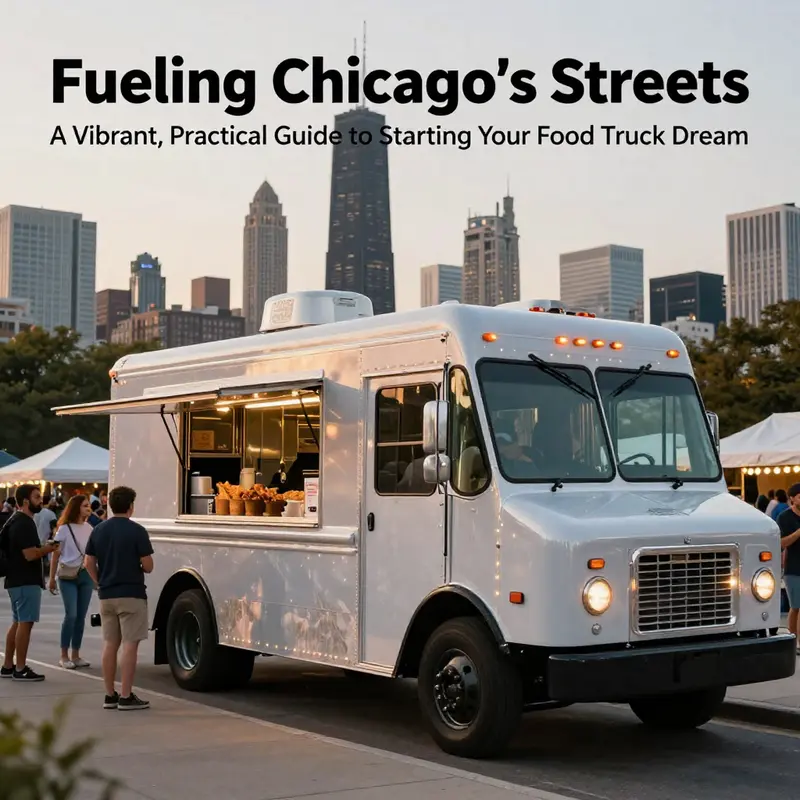
Chicago’s food truck scene is a dynamic, delicious doorway to entrepreneurship that invites collaboration with event planners, corporate teams, local groups, and food enthusiasts. The Windy City’s neighborhoods hum with culture, energy, and demand for varied, high-quality eats—precisely the right recipe for a mobile kitchen that travels where people gather. But turning a concept into a thriving, compliant business takes more than a great menu. It requires strategic planning, smart partnerships, and a clear map of local rules that shape where you can park, how long you can stay, and what paperwork backs every handoff of a hot meal. This guide breaks the journey into three essential chapters, each built to help you, whether you’re coordinating a large corporate event, organizing a community celebration, or simply feeding curious locals and visitors. You’ll discover how to navigate Chicago’s regulatory landscape, design a business model that fits your budget and ambitions, and craft location strategies and branding that resonate with diverse audiences. By connecting regulatory insight with practical planning and captivating engagement, you’ll be better prepared to launch a food truck that delights customers, supports organizers, and earns repeat business across the city’s vibrant micro-communities. Let’s map out the path from concept to open window, so you can roll into Chicago with confidence and a plan that honors both your mission and the city’s guidelines.
Licenses, Permits, and City Rules: Navigating Chicago’s Food Truck Compliance Landscape
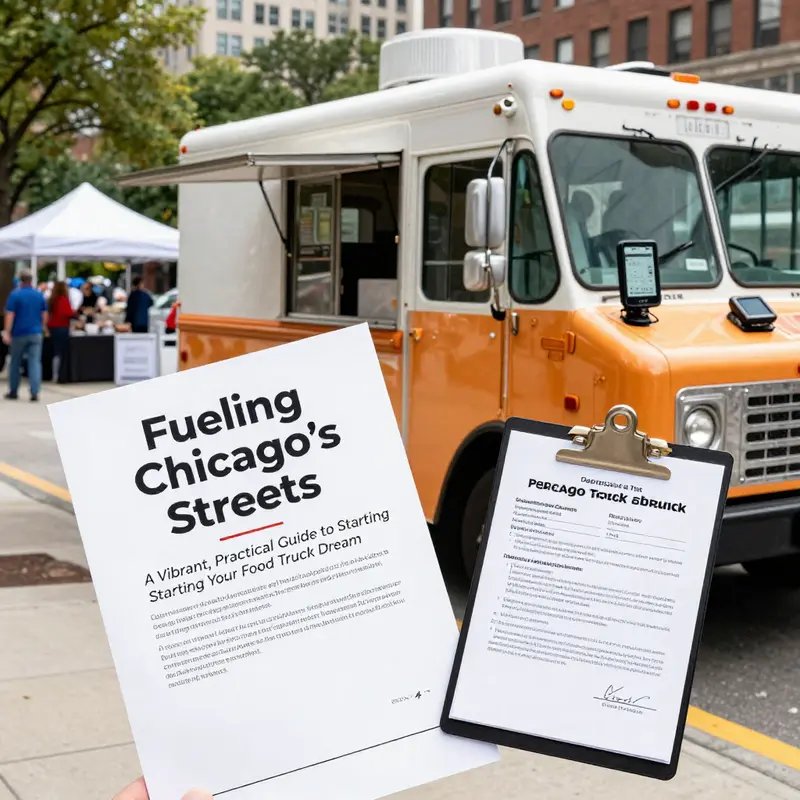
Launching a food truck in Chicago means mastering a layered web of rules, permits, and inspections before you serve your first customer. The city treats mobile food vendors as both food establishments and vehicles, and that dual identity shapes every compliance step. Understanding which agencies govern your operation, what each permit requires, and how to sequence applications will save time, money, and frustration. This chapter walks a prospective owner through the core permits and compliance tasks, explains practical strategies to meet requirements efficiently, and clarifies common stumbling blocks so you can move from idea to lawful operation with confidence.
Chicago’s public health framework is the foundation. The Chicago Department of Public Health (CDPH) sets the standards for safe food handling and issues the Food Service Establishment Permit that authorizes mobile food preparation. Applying for this permit means submitting detailed plans that show the truck layout, plumbing and ventilation, refrigeration capacity, and proposed food handling processes. Inspectors will want to see how raw and cooked foods are separated, where handwashing sinks are located, and how waste will be contained. Before the truck can open, it must pass a health inspection. To avoid surprises, consult CDPH guidance early so your build-out meets their expectations.
Staff certification is non-negotiable. Chicago requires that at least one person in the operation hold a certified Food Protection Manager credential. This credential demonstrates knowledge of critical food safety principles and is obtained by passing an accredited exam. Many operators also train all staff in foundational food handling practices and recommend a Hazard Analysis and Critical Control Points (HACCP) approach for menu items that involve extended holding, cooling, or complex preparation. Investing in training reduces the chance of violations and builds customer trust.
The mobile aspect of your business triggers additional licensing layers. The City of Chicago requires a Mobile Food Vendor Permit and a City business license. The Department of Business Affairs and Consumer Protection (BACP) manages many of these permits and enforces rules about where and when you can park. Chicago enforces a 200-foot rule: mobile vendors must generally stay at least 200 feet from a brick-and-mortar restaurant. The city also caps how long a truck may remain in a single location, often limiting vending to two-hour increments in many areas. These distance and time rules are intended to balance competition and neighborhood needs. Plan routes and service windows around them.
Zoning and location approvals involve the Department of Buildings and, sometimes, the Office of the City Clerk. These agencies confirm that the truck’s equipment, signage, and setup meet local building and municipal codes. For example, trucks with external generators or extended service setups may be reviewed for electrical safety. If your truck will operate at private events, property owners may need to provide written permission or additional approvals. When scouting regular locations—near offices, parks, or cultural venues—check zoning restrictions and confirm no special local prohibitions apply.
Registering your business with state authorities is a parallel requirement. You must register your business entity with the Illinois Secretary of State and obtain a sales tax permit from the Illinois Department of Revenue. The sales tax permit lets you collect and remit state and local sales taxes. Keep detailed sales records, and set up accounting from day one so tax reporting is accurate. The city may request copy of your sales tax registration during the permit process.
Insurance is another gating requirement. Before certain permits are issued, Chicago requires proof of general liability insurance and commercial auto insurance. Liability coverage protects against customer claims, property damage, and bodily injury. Commercial auto insurance covers the vehicle itself and is typically mandatory given the truck’s dual role. Limits and specific requirements vary by permit and location, so obtain quotes early and work with an insurer familiar with mobile food operations. Not having proper coverage can halt permit issuance and expose you to severe financial risk.
Fire and electrical safety inspections are routine. Because cooking often involves open flames, deep fryers, or hot surfaces, the Office of the Fire Marshal will inspect the truck’s suppression systems, extinguishers, ventilation, and fuel storage. If you use propane, tanks must meet regulatory standards and be secured properly. Electrical systems must be professionally installed and safe for mobile conditions. Plan for these inspections when designing the truck’s layout and budget for required equipment upgrades.
Technology and reporting requirements add another compliance dimension. The City of Chicago requires mobile food vendors to use GPS or other tracking systems to report location data. This helps the city enforce distance and time rules, and it allows regulators to locate vendors for inspections. Many operators use integrated location-tracking apps to share real-time positions with customers while meeting city reporting rules. Ensure your software choices meet the city’s technical specifications and that you maintain records of reported locations in case of dispute.
Timing and sequencing matter. Start with a clear project timeline that sequences design, certification, inspections, and permit applications. For example, secure your business registration and sales tax permit before applying for the city business license. Simultaneously, design the truck interior to CDPH specifications so you can schedule fire and health inspections close together. Early engagement with CDPH and BACP staff can reveal agency-specific preferences that speed approvals. Many operators request pre-inspection consultations to review plans and avoid rework.
Costs for permits and inspections vary and should be included in your startup budget. Permit fees, application costs, and inspection charges add up. Factor in recurring renewal fees and the potential cost of remediation if an inspection requires upgrades. If budgeting for a used truck, add potential retrofit costs to meet current codes. Many first-time owners underestimate these expenses; planning for them avoids cash-flow surprises.
Common pitfalls are worth calling out so you can avoid them. First, incomplete or inconsistent documentation will delay approvals. Submit complete plans, detailed equipment lists, and accurate business registration documents. Second, underestimating the time needed for inspections and approvals can push your launch date back by weeks. Third, overlooking local rules about placement, time limits, or event permits can generate fines. Keep a checklist, track submission dates, and follow up regularly with agency contacts to ensure progress.
When it comes to choosing where to operate, thoughtful location planning minimizes regulatory conflict. Because of the 200-foot rule and time limits, focus on designated vending zones, public spaces where trucks are permitted, private events, and special markets. Major parks, university campuses, and festival venues often have established vendor application processes. Applying to participate in curated events not only aligns with city rules, but also reduces the need to find transient street parking within tight legal windows.
If you plan to serve alcohol, expect an extra permitting layer. Alcohol service in a mobile environment requires both a license and adherence to strict rules about ID checks, hours of service, and zones where alcohol is allowed. The process may involve additional background checks, bond requirements, and coordination with state-level liquor authorities. Many truck owners weigh the revenue potential against the added compliance complexity before deciding whether to pursue alcohol sales.
Recordkeeping and ongoing compliance are part of daily operations. Keep up-to-date maintenance logs, employee training records, temperature logs for food storage, and copies of inspection reports. Organized records make renewals easier and help resolve disputes. Regularly review city notices and policy updates, as regulations evolve and enforcement priorities shift.
Practical strategies can smooth the path. Build relationships with city inspectors and licensing staff. A cooperative approach often clarifies expectations and expedites solutions when issues arise. Hire or consult with professionals experienced in mobile food permitting, such as an experienced contractor, a licensed electrician familiar with mobile kitchens, or a consultant who has navigated Chicago’s processes. Their experience helps avoid rework and speeds approvals.
Join local vendor associations or networks. These groups share insights on permit cycles, best practices for inspections, location approvals, and operational tips unique to Chicago. Networking with other vendors can yield shared solutions for frequent challenges, such as seasonal location shifts or vendor-host relationships for recurring private events.
If financing or budgeting is a concern, note that permits and compliance steps are often eligible expenses under small business loans or grant programs. Some incubator programs or mobile food cooperatives offer leasing arrangements that include retrofitted trucks with many compliance elements pre-installed. These options reduce upfront capital needs and can deliver a truck that already meets many city requirements. Explore incubators and cooperative models if capital is tight.
When planning for long-term success, see compliance as a competitive advantage. A consistently clean, code-compliant truck and a well-trained team reduce the likelihood of violations and build a reputation for reliability. Customers notice visible certifications, professional signage, and orderly service. Compliance also makes it easier to expand into catering, larger events, or multiple trucks, as past good standing with city agencies eases future permit processes.
Finally, keep official resources handy. For the most accurate, current information, refer to the City of Chicago’s official guidance and contact points. Their site includes application forms, fee schedules, and licensing checklists that align with the steps described here. For additional industry-focused guidance and tips on navigating municipal rules, see this practical guide on navigating food truck regulations.
https://www.chicago.gov/city/en/depts/cdpd.html
For a vendor-focused perspective that covers compliance topics and industry strategies, consider this internal resource on navigating food truck industry regulations for practical tips and deeper insights: navigating food truck industry regulations.
Complying with Chicago’s regulatory framework takes planning, patience, and persistent attention to detail. Treat the permit process as an investment in credibility. Meet health and safety standards, secure the right licenses, follow city placement rules, and keep excellent records. Do these things well, and you’ll not only avoid penalties, but also create a strong foundation for a resilient food truck business in Chicago.
Mapping the Road to a Chicago Food Truck: From Planning to Funding and the Right Vehicle
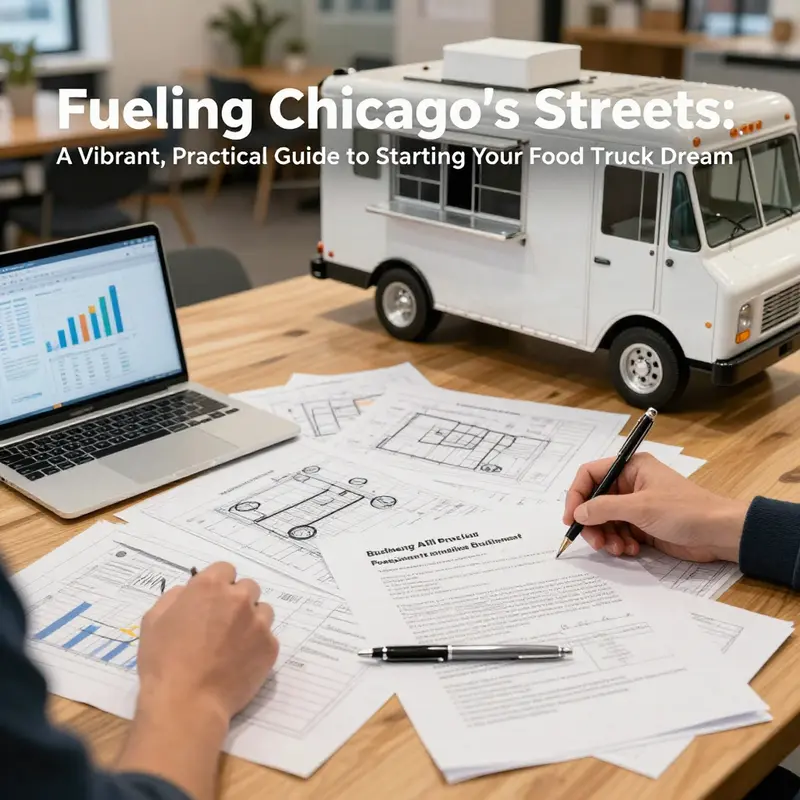
The story of a Chicago food truck begins long before the first batter hits a pan. It starts with a careful, almost surgical, examination of a city that loves to eat and to see new faces on its streets. Chicago offers a feast of opportunity, but the landscape is crowded, competitive, and tightly regulated. A budding entrepreneur cannot rely on appetite alone. The road to a successful curbside operation winds through a well-crafted plan, smart financing, and a vehicle that meets the city’s exacting health and safety standards. The journey is not glamorous at every turn, yet when the plan aligns with the rules, the payoff can be sustainable, scalable, and deeply satisfying. The chapters that follow in this book have mapped the terrain. This section focuses on three pillars essential to turning a concept into a working, lawful, and resilient mobile kitchen: disciplined planning, prudent funding, and thoughtful vehicle procurement. The aim is practical clarity—enough detail to chart a course, enough foresight to avoid costly detours, and enough realism to sustain momentum as the truck moves from concept to curbside.
Planning starts with a concept that can travel. A successful Chicago food truck must do more than promise a tasty dish; it must present a compelling reason for customers to choose it among a sea of options. The foundation is a comprehensive business plan that grows beyond a glossy idea. It should spell out the food concept in clear terms, define the target demographics, and outline the menu with pricing that covers costs while staying competitive. A robust plan also maps the operational logistics: how orders flow, what staffing looks like on busy days, and how inventory is managed to keep waste low and quality high. Financial projections are not guesswork; they are the backbone of every decision. The plan should include startup costs, ongoing operating expenses, and revenue forecasts that reveal when the business will break even. For an investor or lender, the plan becomes a confidence instrument—a narrative that links the concept to measurable milestones, such as daily sales targets, peak event windows, and the cadence of revenue growth over the first two years.
In Chicago, the planning process must embed the constraints that guide where and when a truck can operate. The city’s rules are designed to manage competition and safety, and they shape the very rhythm of street commerce. A key constraint is the rule that a food truck cannot park within 200 feet of a brick-and-mortar restaurant. This keeps competition from overwhelming fixed locations yet requires a strategist’s eye to identify zones with sufficient demand and minimal friction. Time limits at any given location also shape the menu strategy and staffing plan. A two-hour cap means a crew can move efficiently, keep service fast, and maintain high sanitary standards. A GPS tracking system is not optional; it is a regulatory requirement that provides the city with location data in real time. These mechanisms, while imposing, also offer data-driven opportunities: they reveal patterns of foot traffic, event calendars, and the rhythms of city life that can be leveraged to design a more responsive operation.
To navigate this landscape successfully, the planning phase must also consider permits and compliance. In Chicago, a Food Service Establishment Permit from the Department of Public Health, a Business License from the Department of Business Affairs and Consumer Protection, and a Mobile Food Vendor Permit are essential. Depending on menu choices, an Alcohol Permit may be required if alcohol is served. The chain of inspections begins early; a preliminary health consultation with the Department of Public Health can streamline the path to a successful inspection. Fire safety audits are mandatory and should be built into the schedule, not tacked on at the last minute. The aim is not to check boxes but to embed a culture of safety from day one. A practical approach is to view the licensing process as a project with milestones: assemble the proper documents, engage a licensed contractor for vehicle outfitting, secure the permits, and align financial projections with the timing of approvals. This is where the plan becomes a living document, updated as new requirements emerge or as the business scales to multi-truck operations.
The second pillar—funding—requires clear eyes about cash flow, risk, and the timing of capital investments. The initial outlay to launch a Chicago food truck is substantial, reflecting the need for a compliant kitchen on wheels, reliable refrigeration, a fire suppression system, and a vehicle that can pass rigorous inspections. Startup costs commonly fall in a broad range, influenced by the choice of new versus used equipment, the level of customization, and the quality of the vehicle chassis. A practical funding strategy blends personal savings with external sources, balancing risk and control. Small business loans provide a structured path to capital with favorable terms for food-related projects. The U.S. Small Business Administration (SBA) offers loan programs tailored to small enterprises like food trucks, with terms designed to ease repayment. While the process can be lengthy, the benefit is access to capital at rates that sustain growth rather than hamper it. Grants or technical assistance from local agencies can add non-dilutive capital, especially for minority-owned or women-owned ventures. The city’s own economic development resources may provide guidance, mentorship, and sometimes funding or matching opportunities that reduce the barrier to entry.
Crowdfunding functions not only as a fundraising mechanism but also as a marketing engine. It builds a community around the concept before the first fry leaves the pan. A well-structured campaign explains the concept, showcases the brand, and offers early supporters a tangible stake in the journey. This approach complements traditional debt or equity financing by engaging potential customers as stakeholders and early testers of the menu. The goal is to align financial strategy with a brand story that translates into customers who walk up to the truck with anticipation rather than indifference. Yet even with a robust plan and diversified funding, the timing of capital deployment matters. Funds are needed not only to buy or lease the truck but also to cover initial inventory, licensing fees, first month’s payroll, insurance, and a safety stock that prevents service interruptions during the first wave of operations.
Vehicle procurement is a critical bridge between plan and practice. The decision to buy a new chassis or a used truck comes with a spectrum of trade-offs. A new vehicle offers predictable reliability and the room to tailor the kitchen to exact specifications, but it requires a larger upfront investment. A used truck reduces up-front costs but demands thorough due diligence, including a rigorous inspection by a licensed mechanic familiar with food-service installations. Either path requires a professional contractor who understands city codes and can oversee the conversion from a bus to a fully functional mobile kitchen. This is not a simple remodeling project; it is a compliance-driven process that touches the electrical system, gas lines, ventilation, fire suppression, waste management, and food-grade sanitation surfaces. The installer should be versed in Chicago’s health and safety standards and should work with the same cadence as the permitting process, so inspections and approvals keep pace with the build.
A fully equipped kitchen on wheels must meet a baseline of essential equipment: a commercial-grade refrigerator and freezer units capable of maintaining safe temperatures, a consistent cooking setup suitable for the intended menu, a reliable handwashing station, a food-prep area that minimizes cross-contamination, and a robust fire suppression system designed to handle a variety of potential incidents. Waste disposal and grease management are not afterthoughts; they are integral to the operation and must be designed into the truck’s layout and maintenance plan. A well-planned layout enhances workflow, reduces service delays, and supports a consistent standard of food safety. The truck’s interior must be easy to clean, with non-slip flooring, easily washable surfaces, and accessible inspection points for health checks. In Chicago, the friction between a menu that travels with the truck and the constraints of a street kitchen means the kitchen design should emphasize efficiency, scale, and flexibility, allowing quick changes to menu offerings without sacrificing speed or safety.
Beyond the mechanics of the truck, the business must embrace a stance toward safety, hygiene, and quality that customers can feel in every interaction. HACCP principles, though often associated with larger operations, are becoming a baseline standard for mobile food vendors. Training staff to maintain temperature controls, to practice proper hand hygiene, and to sanitize surfaces between customers is not a luxury; it is a liability-reducing discipline that protects both patrons and the brand. A clean, well-maintained truck signals professionalism and commitment. It makes staff feel confident and customers feel safe. In practice, this means daily checklists, regular equipment maintenance schedules, and clear protocols for incident reporting. The brand’s promise—fresh, flavorful, safe food delivered with speed—must be reflected in every touchpoint, from the graphic design on the vehicle to the way orders are fulfilled at a crowded festival line.
The interplay of planning, funding, and vehicle procurement in Chicago carries a practical energy. It is not enough to dream of a mobile eatery; the dream must be anchored in a plan that respects the city’s rules while exploiting its opportunities. Locations must be chosen with an eye toward the city’s rhythm: downtown business districts during lunch hours, cultural venues where crowds gather after performances, university campuses, and popular farmers markets and seasonal events. The city’s Open Data Portal can be a useful companion for planners who wish to analyze foot traffic patterns, parking density, and event schedules. This data-driven approach helps identify neighborhoods where a new truck can thrive, and it helps forecast demand for different menu concepts. The thrill of discovery, such as finding a new festival or a recurring street fair that aligns with the truck’s strengths, becomes a core part of the business strategy.
As the plan becomes real—the truck is purchased or leased, the kitchen is installed, the permits are secured—operators should remember that Chicago rewards consistency. A reliable schedule, transparent pricing, and consistent service earn repeat customers. The city rewards that reliability with better opportunities: preferred spots for known vendors, invitations to exclusive events, and the potential for multi-day contracts at large gatherings. Yet consistency depends on the systems behind the scenes: accurate procurement practices, careful cash-flow management, and a constant evaluation of the operator’s compliance with health, safety, and transportation regulations. A disciplined owner maintains a living document—a rolling business plan that captures lessons learned from each event, incorporates changes in the menu, refines the forecast of cash flow, and updates the vehicle’s maintenance plan in response to usage patterns. In a market as dynamic as Chicago’s, the ability to adapt without compromising quality is the true competitive edge.
To travelers on this road, the practical map through Chicago’s regulatory terrain is essential. For a practical map through the regulatory maze, see navigating food truck industry regulations. The link provides a concise overview of the standards, helps clarify the sequence of steps, and serves as a reminder that the regulatory process, while sometimes tedious, is designed to protect both the public and the brand. This chapter intentionally blends the gritty realities of permits, the strategic weight of a robust business plan, and the mechanical demands of a kitchen on wheels. It frames the start-up phase as a period of intelligent trade-offs rather than a sprint through a checklist. The goal is to empower readers to approach the launch with confidence: they will know when to push forward, when to pause for due diligence, and how to align financing with a realistic rollout plan that respects the city’s tempo.
In closing this look at business planning, funding, and vehicle procurement, the emphasis is on building a foundation that can weather Chicago’s competitive food scene. The right plan reduces risk, the right financing accelerates growth, and the right vehicle integrates safety, efficiency, and brand identity into a single mobile platform. The next chapters will build on this foundation by exploring how to operate a truck legally and profitably, cultivate a loyal customer base, and scale the brand across multiple locations and events. The careful student of this craft will learn to balance creativity with compliance, appetite with accountability, and ambition with discipline. External resources provide further guidance, but the core of success remains grounded in a well-crafted plan, a realistic funding strategy, and a vehicle that can carry both the food and the promise of a memorable Chicago experience.
External resource: https://www.chicago.gov/city/en/depts/doh.html
Where to Park, How to Stand Out, and How to Keep Customers Coming Back: A Chicago Food Truck Playbook
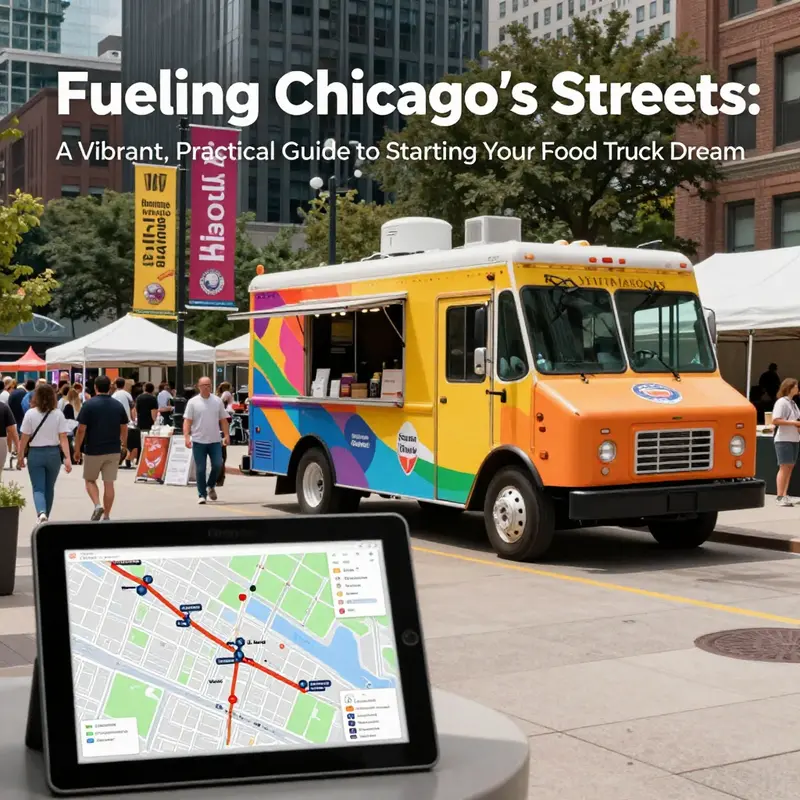
Location is a competitive advantage in Chicago’s food truck scene. Understanding where you can operate, when foot traffic peaks, and how to respect local rules will shape your daily revenue and long-term reputation. Chicago requires mobile vendors to obey spacing and time limits near brick-and-mortar restaurants and to report locations via GPS. Those constraints create clear tactical decisions: choose permitted zones that match your concept, schedule your shifts around events and commutes, and build a presence where customers expect great food on the go.
Start with data, not guesswork. The city publishes maps and event calendars that reveal consistent patterns of movement. Downtown business districts fill with office workers during weekday lunch hours. Cultural destinations like Millennium Park and Navy Pier surge on weekends and during festival seasons. Transit hubs, campuses, and stadiums provide steady crowds when trains, classes, or games let out. Identify several target micro-markets — for example a weekday financial-district lunch spot, an evening location near a music venue, and a weekend farmers market. Rotate among them in predictable cycles so regulars learn your schedule.
The 200-foot rule and the two-hour limit near restaurants demand discipline. Treat each stop like a retail pop-up: optimize the two-hour window for peak throughput. Position the truck where lines won’t block sidewalks and where ordering and pickup flow smoothly. Invest time in scouting exact curb cuts, hydrant locations, and bus habits. A spot 20 feet closer to a crosswalk can mean more impulse purchases. Use field research: map the walking routes people use to reach office towers or park entrances, and park where sightlines and natural pauses coincide with your service window.
Special events can be lucrative but require planning. Concerts, sports events, and festivals often permit higher volume and longer dwell times. Apply early for event slots. Tailor your menu for speed and portability when crowds swell: handheld items minimize plate turnover and allow faster service. For big events, define clear queuing strategies and deploy staff to manage line speed. Consider pre-ticket bundles or collaboration with event organizers to secure premium placement.
Seasonality matters in a city with distinct weather. Warm months expand outdoor opportunities; winter narrows them. Prepare for cold-weather strategies such as shortened menus emphasizing hot items, portable heat lamps, and winter-friendly packaging. Partner with indoor markets, breweries, or food halls for off-season stability. Establish relationships with neighborhood businesses that might sponsor or host you during colder months.
A strategic location plan must also consider logistics. Where will you park to restock, refill water, and dispose of waste? Proximity to suppliers and commissary kitchens reduces downtime. Chicago’s shared kitchen incubators and cooperatives can provide storage and prep space, and may offer leasing that reduces initial capital outlay. Balance the cost of a farther, cheaper commissary with the lost time and fuel for repeated trips.
Branding turns a parked truck into a destination. Your visual identity should be legible from a distance and consistent across every touchpoint: the vehicle wrap, menu boards, staff uniforms, packaging, and social media. Choose a name that conveys your concept and is easy to say and remember in passing. Keep the color palette and typography simple and bold; customers often make split-second decisions, and a strong visual contrast will draw their eye.
Design the truck exterior with both aesthetics and information in mind. Use large, high-contrast menu highlights that quickly tell customers what you sell and what makes it special. Feature signature items with short descriptors and price anchors. Incorporate a clear URL or social handle and a scannable QR code for digital menus or loyalty sign-up. Visibility at night is crucial; integrate lighting into your design so the truck reads well after dusk.
Your menu is part of the brand. Limit choices to what you can execute perfectly every service. A focused menu reduces complexity, speeds service, and improves consistency. Highlight one or two signature items to build word-of-mouth. Use storytelling sparingly: a line or two on origin, local sourcing, or a flavor twist can add personality without slowing orders. Price with care: set targets that cover food cost, labor, and overhead while remaining competitive for the location and moment.
Packaging and presentation extend your brand beyond the truck. Compostable or branded packaging signals quality and aligns with sustainable values that many Chicago customers appreciate. Ensure containers are functional—prevent leaks, keep items warm, and fit in commuters’ hands. Packaging is a moving billboard; a well-designed box or sleeve keeps your name visible during social shares and repeat visits.
Digital presence amplifies physical location. Consistent, authentic social media updates make you discoverable and dependable. Post daily location updates using geotags and concise copy. Share behind-the-scenes content that reveals craft, personality, and care. Short videos showing plating, staff, or menu prep perform well and create connection.
Integrate your social feeds with location-tracking apps and map listings. Real-time location posts reduce search friction for hungry customers. Use pinned posts or highlights to show weekly schedules and recurring markets. Leverage visually led platforms to showcase signature items and customer reactions. Encourage user-generated content by featuring customer photos on your feed and incentivizing tags with small discounts or shout-outs.
Customer engagement is a continuous cycle: attract, satisfy, listen, and reward. Fast, friendly service is non-negotiable. Staff must be trained to move orders quickly while maintaining warmth. A single negative interaction can spread faster than a positive one; prioritize consistent service standards and simple operating procedures.
Collect feedback in ways that respect the speed of the transaction. A QR code on receipts or a short link on packaging that invites a 30-second survey yields actionable insights without disrupting the queue. Use feedback to refine menu items, adjust portion sizes, and identify staff training opportunities. Publicly acknowledge changes driven by customer input; when patrons see their suggestions implemented, loyalty deepens.
Loyalty programs need not be complex. A digital punch card or a simple email list with exclusive offers can turn casual customers into regulars. Time-limited incentives, such as weekday discounts for early-bird commuters or a weekend special for locals, encourage repeat visits at predictable times. Consider partnerships with nearby businesses for cross-promotions: a bar might offer a discount voucher for your truck after patrons leave, or a bookstore might host a special pop-up.
Community engagement builds resilience. Participate in neighborhood festivals, charity events, and school functions. Sponsor a local team or provide catering for community meetings. These activities increase visibility and create emotional ties that sustain business during slow periods. Form alliances with other vendors to share tips, coordinate schedules, and advocate for better vending policies.
Operational transparency fosters trust. Display food safety certifications and allergy information clearly. Train staff in safe handling and customer communication about ingredients. Chicago diners value cleanliness and safety; visible commitment to hygiene and compliance can distinguish you immediately.
Effective marketing balances paid and organic efforts. Low-cost tactics like email newsletters, targeted social posts, and collaborations with local influencers can outperform expensive advertising if executed with authenticity. Offer media-friendly angles: a seasonal menu launch, a charity benefit, or a creative mash-up that speaks to the city’s diverse palate. Invite local food writers and bloggers to sample off-hours and provide honest feedback.
Metrics drive better decisions. Track daily sales by location, item-level performance, average ticket size, and peak service times. Use this data to refine scheduling and menus. If a particular sandwich sells twice as well at a lunch spot than a festival, allocate more inventory there. Consistent measurement turns guesswork into repeatable advantage.
Plan for growth without sacrificing identity. If successful, consider additional trucks or rotating pop-ups, but maintain the brand DNA that built your following. Standardize recipes and training, create a repeatable operating manual, and invest in a shared inventory system to control costs. Expansion requires balancing scale with the local authenticity that customers value.
Finally, don’t overlook repair and resale planning. Keep meticulous maintenance records for the vehicle, equipment, and generator. A well-maintained truck holds value and reduces downtime. When it’s time to sell or upgrade, documentation of repairs and upgrades will increase resale value and appeal to buyers seeking a turnkey operation.
For deeper guidance on creating a strong visual identity for your vehicle and brand, consult the ultimate guide to food truck graphics and identity. For city-specific rules, permitted zones, and event calendars, the City of Chicago provides essential resources and maps that help you plan safe, legal, and strategic operations: https://www.chicago.gov/city/en/depts/dcd/provdrs/food_trucks.html
Final thoughts
Launching a food truck in Chicago blends ambition with exacting execution. By respecting regulations from the first permit to ongoing health checks, you protect your customers and your growing business. A solid plan anchors every choice—whether you’re serving at a dawn farmers market, a corporate campus, or a neighborhood festival—and helps you partner with event organizers, HR teams, and community groups who crave reliable, delicious experiences. With clear planning, proactive outreach, and a brand that resonates, your truck becomes more than a meal—it becomes a mobile hub of connection, culture, and community across Chicago’s iconic districts.