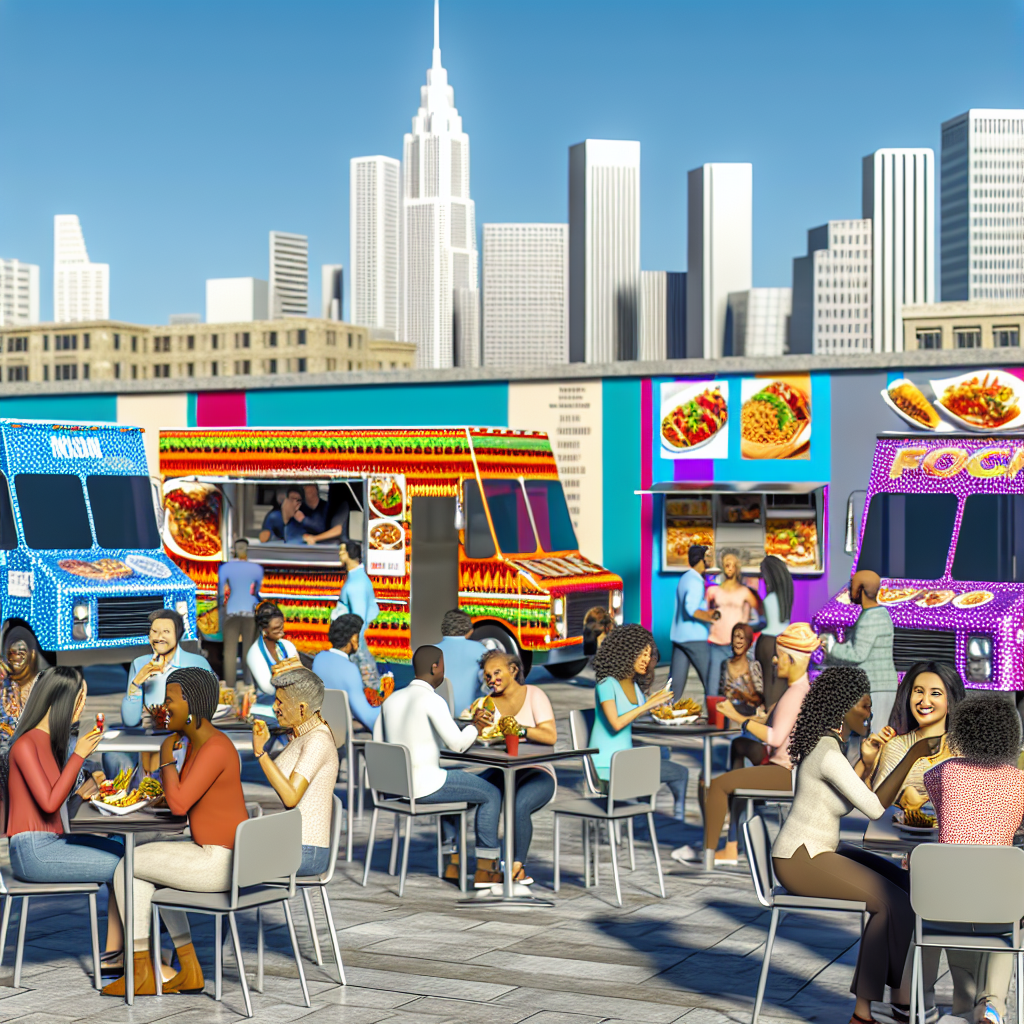
Toronto’s food truck scene is an ever-evolving landscape, brimming with culinary creativity on wheels. With the city’s diverse population and bustling events, food trucks offer tasty, accessible meals that cater to a variety of tastes. However, many planners, organizers, HR teams, and food enthusiasts find themselves wondering, ‘How many food trucks are there in Toronto?’ This question opens the door to understanding market trends, the role of technology, the challenges faced by these mobile kitchens, and the regulations that shape the industry. Each chapter dives deeper into these themes, ultimately painting a picture of the current state of food trucks in Toronto, offering insights that can benefit event organizers, corporate teams, community groups, and food lovers alike.
The Moving Target: Market Trends, Regulation, and the Elusive Count of Toronto’s Food Trucks
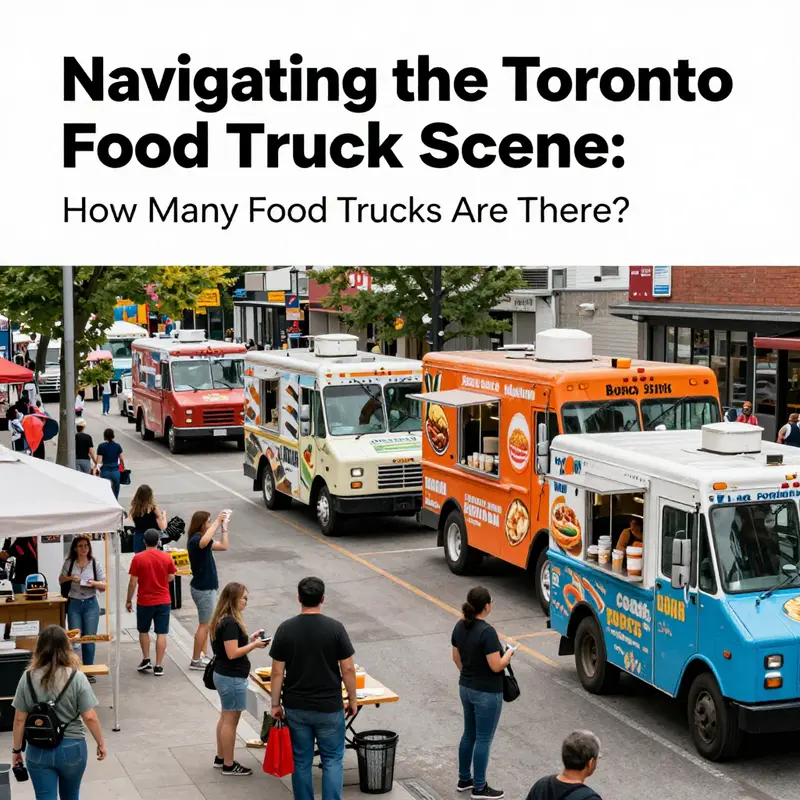
Counting the exact number of food trucks in a fast-changing, densely occupied city like Toronto is a task that promises clarity but often delivers complexity. The current body of research makes this clear: there is no single authoritative tally that captures every street-food vehicle, every pop-up kitchen, or every mobile kitchen that operates within city limits at any given moment. What the sources do reveal, with surprising coherence, is a city whose mobile dining scene has evolved from a fledgling novelty into a robust, diverse ecosystem. It is a landscape defined by opportunity and constraint in equal measure, where the rhythm of growth is matched by the cadence of regulation, and where numbers continually catch up to a market that itself moves with the seasons, events, and policy shifts. To understand how many food trucks Toronto has, one must navigate a layered narrative of market trends, regulatory frameworks, and practical realities that together shape a moving target rather than a fixed figure.
Historical memory helps set the frame. In 2014, a survey found that roughly half of respondents believed there were not enough food trucks to meet demand. That moment captured a city at the cusp of change: an appetite for portable, affordable, diverse foods meeting a supply that lagged behind. Today’s Toronto shows the opposite impulse in many districts. The city has witnessed a saturated yet dynamic scene where a core cluster of operators compete for the same high-traffic zones—downtown arteries, the waterfront promenade, and areas such as Yorkville or entertainment districts—while new venues and events continually shift where trucks assemble and operate. The market’s geography has become a map of micro-ecosystems: a handful of well-trodden corridors where footfall and lunchtime demand converge, and a wider periphery where operators test concepts, sizes, and schedules. This spatial complexity makes a single, citywide headcount seem less a simple statistic and more a living snapshot that would need constant updating to stay accurate.
The drivers of growth in Toronto’s mobile food scene are multifaceted. Consumer demand remains a stubborn, sometimes stubbornly resilient force. People seek novelty, individualized dishes, and the convenience of a quick, flavorful bite. Food trucks answer that desire with a portable menu and a cadence that allows experimentation. This is matched by entrepreneurial energy: for many operators, a truck represents a lower barrier to entry than a brick-and-mortar restaurant, a platform to test ideas, and a direct line to customers. The third pillar—the orchestration of events and designated parking zones—creates a framework in which trucks can reach audiences en masse. Markets, street fairs, waterfront gatherings, and seasonal pop-ups all contribute to the visibility and viability of mobile kitchens. Taken together, these dynamics push volume up in visible locations even as they complicate the task of counting.
Yet growth rarely travels in a straight line, especially where public policy and public health intersect with commerce. The Toronto context blends provincial and municipal regulation with local public health requirements. Ontario’s health and safety standards apply to mobile food operations, and operators must meet strict requirements for food storage, waste management, sanitation, and cross-contamination prevention. Permits and licenses, often tied to specific locations and operating hours, shape where and when trucks may operate. In practical terms, these rules create a revolving door of compliance duties. A truck that operates successfully in one neighborhood may face different licensing expectations if it shifts to another zone or if it changes its hours. The regulatory framework is designed to protect public health while enabling a vibrant, responsible industry. The result is a market that is not only dynamic but also complex to map, because the same truck may be counted in one jurisdiction on one day and excluded or reclassified on another.
The spectrum of offerings in Toronto’s mobile dining scene further complicates any neat tally. A city renowned for its cultural diversity translates into a remarkable array of cuisines on wheels. From Asian-inspired street bites to gourmet sliders, vegan specialties to artisanal beverages, the trucks mirror the city’s mosaic of tastes. This diversity is not merely a reflection of consumer appetite; it is also a strategic response by operators who adapt to demand shifts and to the evolving urban food ecology. A trend toward specialization has emerged, with some operators focusing on a signature concept that travels between events and parks, while others leverage the flexibility of a mobile format to explore wholesale and wholesale-like arrangements, distributing products to smaller venues or partner businesses. In this sense, the “count” of trucks is only part of the story. The broader question is how many mobile culinary concepts are actively deployed, how many operate on a given day, and how many are in reserve during off-peak seasons. Those nuances matter for anyone trying to understand the scale of Toronto’s mobile food economy.
Operationally, the market offers a spectrum of vehicle configurations. The range includes compact units designed for newcomers and easier entry, alongside fully equipped, larger platforms capable of sustained, high-volume operations. The choice between compact and larger configurations is not merely a cost calculus; it also intersects with licensing, parking, and health compliance considerations. A smaller vehicle may maneuver more easily through crowded corridors and gain access to a broader set of pop-up opportunities, while a larger truck may deliver higher throughput in busy windows but face tighter parking constraints and more rigorous inspection regimes. For current and prospective operators, understanding these options is part of a broader assessment of where and how to deploy a mobile kitchen in a city whose streets and policies are in constant negotiation.
From a practical planning perspective, entrepreneurs often rely on a portfolio of knowledge resources that help bridge the gap between concept and compliant operation. Several guides and industry analyses provide a scaffold for making sense of vehicle selection, equipment specifications, and regulatory expectations. These resources help operators navigate the practicalities of starting out, scaling up, or staying compliant within the Toronto ecosystem. In the current moment, observers increasingly point to municipal reports and industry analyses as the most reliable channels for trend data, even if those channels do not yield a singular citywide count. For anyone mapping Toronto’s mobile food landscape, the takeaway is clear: numbers must be triangulated from multiple sources, with an explicit acknowledgment of what each source includes or excludes. A count that excludes pop-ups, temporary sites, temporary licenses, and seasonal events, for example, will inevitably underrepresent the reality on the ground.
Because the market’s density cannot be reduced to a single figure, industry observers emphasize the importance of concrete data points beyond headcounts. Local health units and city licensing offices are the gateways to understanding how many trucks are officially permitted to operate, where, and during what hours. Event organizers and business improvement associations keep calendars that reveal where trucks tend to congregate, which can illuminate patterns in supply and demand that a simple total would miss. In this sense, data users are urged to look for clusters of activity—the downtown core at lunch, the waterfront in warmer months, and major event corridors—while recognizing that many operators also function in a more fluid, opportunistic mode that evades a static tally. As a result, a reliable answer to “how many food trucks are there in Toronto?” is less a single census and more a composite sketch built from licensing data, market intelligence, event rosters, and periodic spot checks across neighborhoods.
The absence of a singular, official total invites a broader reflection on what counts as a meaningful metric for a city whose food culture travels as much as its people do. If the goal is to gauge market impact, counts must be complemented by measures of activity—how many trucks are actively serving customers on a given day, how many new operators enter the scene in a year, how many exits occur, and how many trucks participate in major events or seasonal markets. If the goal is regulatory insight, the focus shifts to compliance rates, the distribution of permits by zone, and the variation in operating hours across neighborhoods. For researchers and planners, the practical implication is that policy design benefits from flexible dashboards that track these interconnected dimensions over time rather than leaning on a single, static headcount. In short, the Toronto food truck landscape is more accurately described as a dynamic ecosystem than a fixed inventory.
This chapter, then, serves not as a final census but as a guided tour of the factors that shape any count. It draws attention to how a city’s appetite, entrepreneurial energy, and regulatory architecture converge to produce a mobile dining scene that is both vibrant and intricate. The official tally may lag or remain elusive, yet the visible footprint—the density in certain districts, the cadence of events, and the cadence of permits—tells a consistent story: Toronto’s mobile food culture is real, diverse, and increasingly integrated into the city’s broader culinary economy. For practitioners planning a course of action, this means assessing opportunities with an eye toward location strategy, event calendars, and the practicalities of compliance, rather than waiting for a definitive city-wide number that may never arrive in a single source.
For readers who want to see how this translates into concrete planning and compliance, practical guidance exists in dedicated resources that map the regulatory terrain and offer operational checklists. A standout step for anyone considering entry into the market is to engage with the regulatory framework early, understanding how permits are issued, what zones require special permissions, and how hours of operation cross with municipal by-laws. Such guidance becomes indispensable when the landscape itself is a moving target. It is precisely this blend of opportunity and constraint that defines Toronto’s food truck scene. The city invites experimentation and entrepreneurial energy, but it does so within a framework designed to protect public health, ensure fair competition, and maintain urban livability. Those who navigate this framework well often succeed not merely by counting trucks but by cultivating dependable operations, reliable supply lines, and a reputation for consistency alongside variety.
As a practical note for industry observers and city stakeholders alike, ongoing data gathering remains essential. When counts are unavailable, triangulation from licensing databases, event rosters, and market analysis provides the best achievable picture. In the absence of a fixed tally, the best evidence comes from observation of patterns, rather than a single number on a spreadsheet. The Toronto scene rewards adaptable thinking, meticulous compliance, and a willingness to ride the wave of market demand while staying anchored in safety and local policy requirements. This is the essence of a living, urban, mobile food culture—a culture that continues to grow not just in quantity, but in resilience, creativity, and community impact.
For readers seeking a broader statistical lens beyond municipal sources, external analyses offer valuable context on how Toronto compares with other dense urban centers in terms of food truck density and urban mobility. A widely cited source in this space is Statista, which tracks density trends and urban food service dynamics. While the precise figures require access to the platform, these analyses reinforce the central message: counts vary by definition, and the real story is the city’s ongoing experiment with mobile dining, regulatory adaptation, and the emergence of new patterns in where and how people eat on the go. This broader perspective helps situate Toronto within a global conversation about how cities balance vibrant street food cultures with health, safety, and urban planning concerns.
If you want a practical reference point that ties into day-to-day management and compliance, there are accessible guides that walk operators through the specifics of vehicle selection, equipment specifications, and provincial standards. These resources translate the regulatory language into actionable steps, enabling newcomers to translate ambition into a compliant, resilient business. They also emphasize a crucial point: even without a single citywide headcount, there are reliable pathways to operate successfully, growing a fleet, and expanding reach within the city’s diverse neighborhoods. In this sense, the lack of a definitive number is not a barrier but a prompt to understand the market’s structure so that one can identify opportunities, manage risk, and participate in a thriving, ever-changing urban food ecosystem.
For readers who want to dig deeper into the regulatory landscape as they plan or analyze market opportunities, you can consult practical guidance on navigating food truck regulations and related permits. This resource offers a grounded, action-oriented overview of how to align a mobile kitchen with local expectations while avoiding common compliance pitfalls. It is a helpful companion for anyone weighing entry into Toronto’s mobile food space or seeking to optimize a current operation within the city’s evolving regulatory environment. To connect with this practical guide, you can follow the internal link that leads to a detailed outline of the regulatory journey for food truck operators in the city.
External data and broader market context aside, the core takeaway remains stable: Toronto’s food truck scene is real, dynamic, and multi-layered. The precise count is less important than understanding how the market functions, where activity concentrates, and how operators navigate the regulatory and logistical terrain. This is a city that welcomes mobile ingenuity, and that welcome comes with a framework to ensure safety, fairness, and environmental responsibility. The number, in other words, may be elusive, but the story behind that number is clearly discernible—and it speaks to a city that continues to experiment with how people eat on the move.
External resource: For a broader statistical lens on food truck density and urban dining trends, see Statista’s analysis on food truck density in Toronto, Canada: https://www.statista.com/statistics/1397581/food-truck-density-in-toronto-canada/.
Internal link reference: For practitioners seeking regulatory guidance and practical steps, see Navigating food truck industry regulations. Navigating food truck industry regulations. This resource helps translate the regulatory framework into actionable planning for operators and prospective entrants.
null
null
Counting on Wheels: The Elusive Headcount of Toronto’s Food Trucks and the Market Pressure Behind the Number
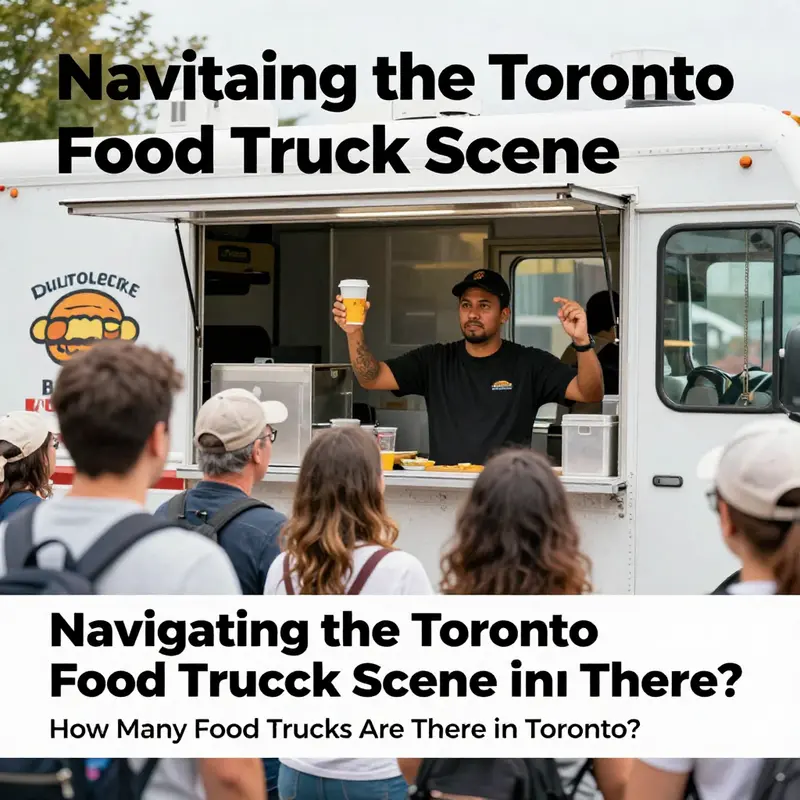
Toronto’s food truck scene moves in a space where counts matter, yet there is no single citywide census that captures every cart, every van, or every parked kitchen on the street. The absence of an official headcount means a narrative built from impressions, snapshots, and scattered data rather than a definitive tally. Yet even without a precise number, a coherent picture emerges: mobile food thrives in a city where pedestrian networks and public spaces invite spontaneity and crowds. The downtown core, parks, waterfronts, and event venues repeatedly host multiple operators, signaling a dynamic market even if the total remains unsettled. The lack of a fixed count does not imply stagnation; it reflects a field that is evolving with permits, seasons, and urban life.
Historical hints help calibrate today’s expectations. A few industry reflections and past surveys suggested consumer interest outpaced supply at times, hinting that more players could fit into the ecosystem. Those signals persist, even as Toronto reshapes where people gather and eat. Seasonal rhythms—summer festivals, farmers markets, and late-night streets—generate recurring demand and underscore the value proposition of mobile dining: proximity to foot traffic, flexibility, and the ability to reach neighborhoods where fixed restaurants are scarce or absent.
The sector’s diversity further complicates counting. The category includes street carts, roving trucks, and pop-up configurations that vary in scale, licensing, and operating models. Some vendors operate as direct-to-consumer sellers, moving between neighborhoods and events, while others function as wholesale partners, supplying other food businesses. This hybridity explains why the scene can feel busy even when a formal tally is elusive. In a city with dense pedestrian corridors and vibrant public spaces, mobile vendors contribute to street life, culinary variety, and the local economy.
Regulatory and policy framework adds another layer of complexity. Licensing, health inspections, signage rules, and vehicle compliance shape where and when operators can work, often varying by district or event. This mosaic can slow growth in some corridors while enabling it in others, depending on access to sanctioned locations and the pace of enforcement. For new entrants, the rules may seem daunting, but they also offer a stable structure that protects public health and urban vitality.
Technology and logistics influence the market even if they do not directly change the headcount. Innovations in delivery, inventory management, and data sharing reshape how vendors operate, collaborate with event organizers, and scale their businesses. Taken together, the regulatory environment, urban demand, and technology create fertile ground for growth, where more players and more menus can evolve within a durable ecosystem. The precise number becomes less important than understanding how operators navigate permits, crowds, and partnerships to sustain momentum.
For readers seeking practical perspectives, resources from practitioners, industry groups, and city partners map types, standards, and applications for street vendors. These materials illuminate best practices for health compliance, fleet management, and reliable procurement, and can be found on practitioner hubs and regional industry sites. While a citywide headcount remains elusive, a robust and adaptive market is evident in the steady stream of new entrants, recurring events, and wholesale relationships that together sustain industry resilience.
Ultimately, the chapter’s question—how many food trucks are there in Toronto?—invites a deeper look at how the city’s mobile food economy functions in practice: where demand concentrates, how permits shape supply, and how partnerships enable operators to scale. The absence of a single census should not distract from the broader takeaway: Toronto’s mobile food ecosystem has grown into a resilient, adaptive market that thrives on street presence, event-driven activity, and wholesale supply arrangements. It’s a narrative of momentum, not a census, and it reflects a city that continues to experiment with space, flavor, and the pace of urban life.
Counting on a Moving City: How Toronto Regulates Food Trucks While the Exact Number Remains Elusive
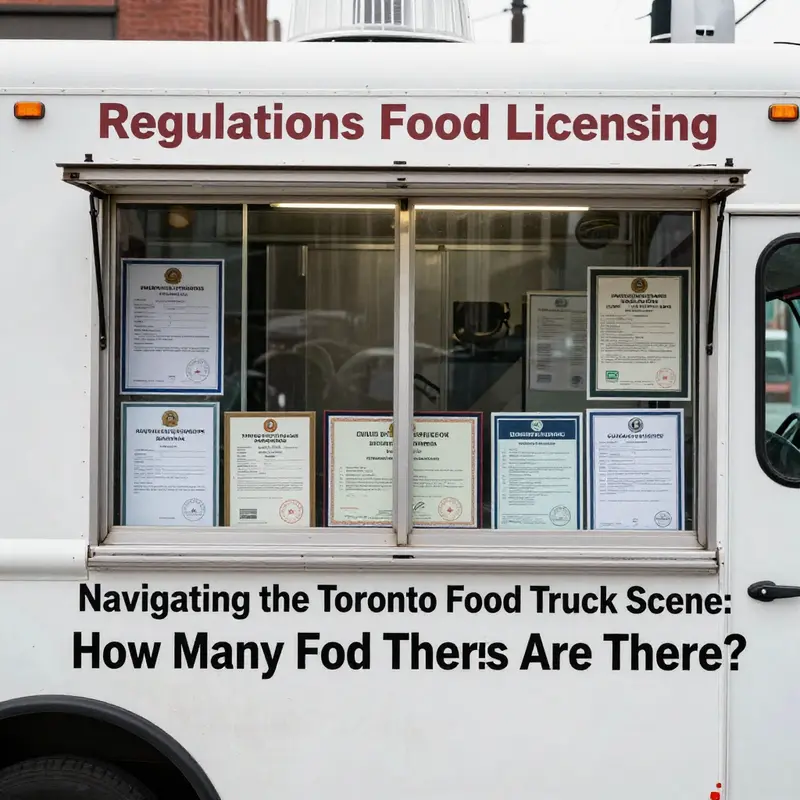
In Toronto, the question of how many food trucks populate the streets is one of those intriguing paradoxes. The city hosts a thriving, mobile food culture, yet there is no publicly published, real-time tally that reflects the exact total of operating trucks at any given moment. The absence of a definitive headcount does not diminish the vibrancy of the scene; rather, it underscores how regulation, licensing, and the fluid nature of mobile vending intersect with a public appetite for variety, convenience, and entrepreneurship. The core reality is that numbers, in this case, are not the primary driver of understanding the ecosystem. The regulatory framework and operational practices shape what the trucks look like on the pavement far more than a simple census could reveal. A careful reading of the available sources shows a structured system designed to ensure safety, accessibility, and orderly street life, even as the fleet itself shifts with seasons, events, and market opportunities.
From the municipal perspective, Toronto’s governance of mobile food service begins with formal permissions that certify a truck’s ability to operate in public spaces. The Food Service Establishment Permit, issued by the Toronto Public Health department, is the foundational credential for any truck serving food to the public. This permit carries with it explicit expectations around food safety, hygienic design of the onboard equipment, and adherence to health regulations that protect consumers. The permit operates within a broader lattice of compliance obligations that remind operators that mobility does not absolve responsibility. The requirements extend beyond the kitchen on wheels to the vehicle’s overall condition, the cleanliness of surfaces, and robust waste management practices. The effect is twofold: it imposes standards that help maintain public health and it provides a framework within which a diverse array of vendors can coexist on city streets, markets, and event grounds without compromising safety or quality.
Complementing the Food Service Establishment Permit is the Temporary Food Premises Permit. This permit is tailored for the episodic and seasonal nature of mobile vending, where trucks may participate in fairs, street festivals, farmers’ markets, and other temporary venues. The Temporary Premises Permit is not a mere formality; it anchors operations to specific locations and durations, with precise parking rules designed to keep sidewalks accessible, traffic flowing, and emergency routes clear. The combination of these permits creates a dynamic but controlled operating environment. Operators must plan routes, times, and locations with a clear eye toward how their vehicles will fit into urban space without creating friction with pedestrians, cyclists, or other road users.
Vehicle standards form another pillar of the regulatory architecture. The city’s expectations for the vehicles themselves focus on safety, reliability, and the practical realities of food preparation and service in a mobile setting. Standards encompass the structural integrity of the truck, the sanitation of cooking surfaces, and the safe handling and disposal of waste. The implication for operators is that a mobile kitchen is not merely a flashy exterior; it is a compact, fully regulated workspace that must meet the same level of rigor as a brick-and-mortar restaurant in terms of cleanliness, food handling, and environmental responsibility.
The parking and location rules embedded in the licensing framework further shape the mobility and visibility of food trucks. Operators must comply with designated parking zones and cannot block sidewalks, intersections, or fire lanes. The practical effect is that even a large fleet can appear to be a modest presence if violators are removed or discouraged, which helps mitigate the common concerns associated with curbside dining—congestion, noise, and obstructed pedestrian flow. In practice, this means that a truck might be warmly welcomed at a market one week and restricted from a street corner the next, depending on city events, public safety considerations, or changes in policy. The regulatory environment, therefore, rewards adaptability and punctuality while reinforcing a shared sense of space for residents and visitors.
All of these layers—the permits, the vehicle standards, and the parking rules—are designed to harmonize a vibrant, entrepreneurial food scene with the needs of a dense urban environment. The absence of a precise, current count does not imply regulatory opacity. Instead, it highlights a system in which data is distributed across multiple portals: licensing databases, health inspections, event permits, and market schedules. For researchers and policymakers, this mosaic provides a qualitative map of the ecosystem. It also points to a practical challenge: if one seeks a single, authoritative number of trucks, the city’s public-facing interfaces may not deliver it in real time. The result is a pragmatic reality for operators. They plan around broad, well-defined rules rather than a fixed population figure, and they navigate a market that can expand or contract as permits are issued, renewed, or revoked.
The regulatory undertakings create a predictable operating environment that supports business confidence while maintaining urban livability. The licensing regime does more than protect consumers. It scaffolds a space where new entrants can test ideas, small operators can scale gently, and diverse culinary concepts can circulate. In this sense, regulation functions as a backbone that supports the mobility of vendors without locking the city into a rigid or oversized fleet. The balance between openness and oversight is delicate. On one side, the city wants to welcome the energy of mobile food as part of its cultural and economic fabric. On the other, it must prevent congestion, ensure safety, and respect the needs of everyday city life. The result is a regulatory culture that prizes compliance, transparency, and proactive engagement with operators.
From a business perspective, the lack of a definitive headcount is not a hurdle but a characteristic of a living market. Operators come and go, events rise and fall, and the geographic footprint of permissible operation shifts with city planning decisions and seasonal demand. This fluidity is a defining trait of Toronto’s mobile food sector. For researchers and observers, the absence of a constant total invites a different kind of inquiry: rather than pinning a number to a moving target, one can understand the health and momentum of the ecosystem through the number of active permits, the rate of new permits issued, and the incidence of compliance across licenses. These signals paint a robust picture of a market in motion, even if the exact count remains elusive.
While the official tally may be uncertain, there are credible sources that sketch the ecosystem in broader terms. A study or survey from several years past revealed that public sentiment in Toronto toward food trucks was generally positive, with a sense that these mobile businesses still had room to grow. The data, however dated, hints at a market that was transitioning from novelty to a regular feature of the city’s food landscape. It shows a city that values variety in its street-level dining and supports entrepreneurship that can adapt to a diverse urban audience. To translate this into current, actionable intelligence would require access to up-to-date licensing and permit records, ideally consolidated in a transparent, citizen-accessible database. Such a resource would enable a more precise count while preserving the nuanced view of where and when trucks operate.
For readers who want to connect the regulatory framework to practical navigation, consider the everyday realities of a truck operator who must align business goals with city rules. A typical day starts with a check of permit validity and any updates to temporary venue permissions. The operator must confirm that the vehicle remains compliant with health and safety standards, that any required waste disposal arrangements are in place, and that the location selected for service aligns with parking and sidewalk access rules. The next hours may involve travel to a planned market, a campus event, or a scheduled festival, each with its own permit requirements and timing constraints. In this world, regulatory clarity is not a bureaucracy to endure but a roadmap that helps planners, vendors, and customers share public space without friction. And because events and seasons continuously reshape demand, the ability to adapt quickly within the licensing system becomes a practical form of competitive advantage.
Of course, the question at the heart of this chapter—how many food trucks are there in Toronto?—serves as a reminder that numbers matter, even when they are not readily published. The absence of a single figure invites a broader, more meaningful inquiry: what is the capacity of the city to absorb, regulate, and welcome mobile food entrepreneurship while preserving safety, accessibility, and urban coherence? The regulatory framework provides part of the answer. It offers a lens through which to view the health of the ecosystem, the balance between open markets and orderly streets, and the ongoing negotiation between vendors and the communities they serve.
For those who wish to explore deeper, practical perspectives on how regulations shape daily operations and strategic planning in the food-truck sector, a detailed discussion of navigating food-truck regulations can offer useful insights. Navigating food-truck regulations.
In closing, the Toronto case demonstrates that regulatory architecture can support a thriving, mobile culinary culture even when a precise numerical audit remains out of reach. The city has laid out a framework that prioritizes public health, safe operations, and orderly street life. It enables a dynamic, entrepreneurial food scene to flourish within the bounds of civic responsibility. The absence of a real-time count does not diminish the significance of this system. Instead, it highlights how regulations, permits, and street-level logistics collectively shape the shape and pace of the city’s evolving food-truck landscape. For researchers, policymakers, and operators alike, the focus should be on the health of the licensing ecosystem, the efficiency of permit processing, and the alignment between street-level needs and regulatory expectations. Those elements, more than a single number, reveal how a city organizes movement, flavor, and opportunity on its own terms.
External reference: For a historical glimpse into public opinion about the number of food trucks in Toronto, see Statista’s 2014 survey data, which offers context for how residents perceived the scale of mobile provisioning at that time. https://www.statista.com/statistics/376959/number-of-food-trucks-in-toronto/
Final thoughts
The food truck landscape in Toronto is as dynamic as the city itself, filled with countless stories, diverse cuisines, and constant change. While an exact number of food trucks remains elusive, their impact is undeniably significant—bringing communities together, providing jobs, and contributing to the local economy. As we examined the market trends, technology influences, challenges, and regulatory frameworks, it becomes clear that food trucks are not merely transient kitchens but vibrant pillars of Toronto’s culinary identity. Whether you’re an event planner, HR professional, local group, or a foodie at heart, understanding this scene allows for richer experiences and better decisions in engaging with Toronto’s flavorful offerings.