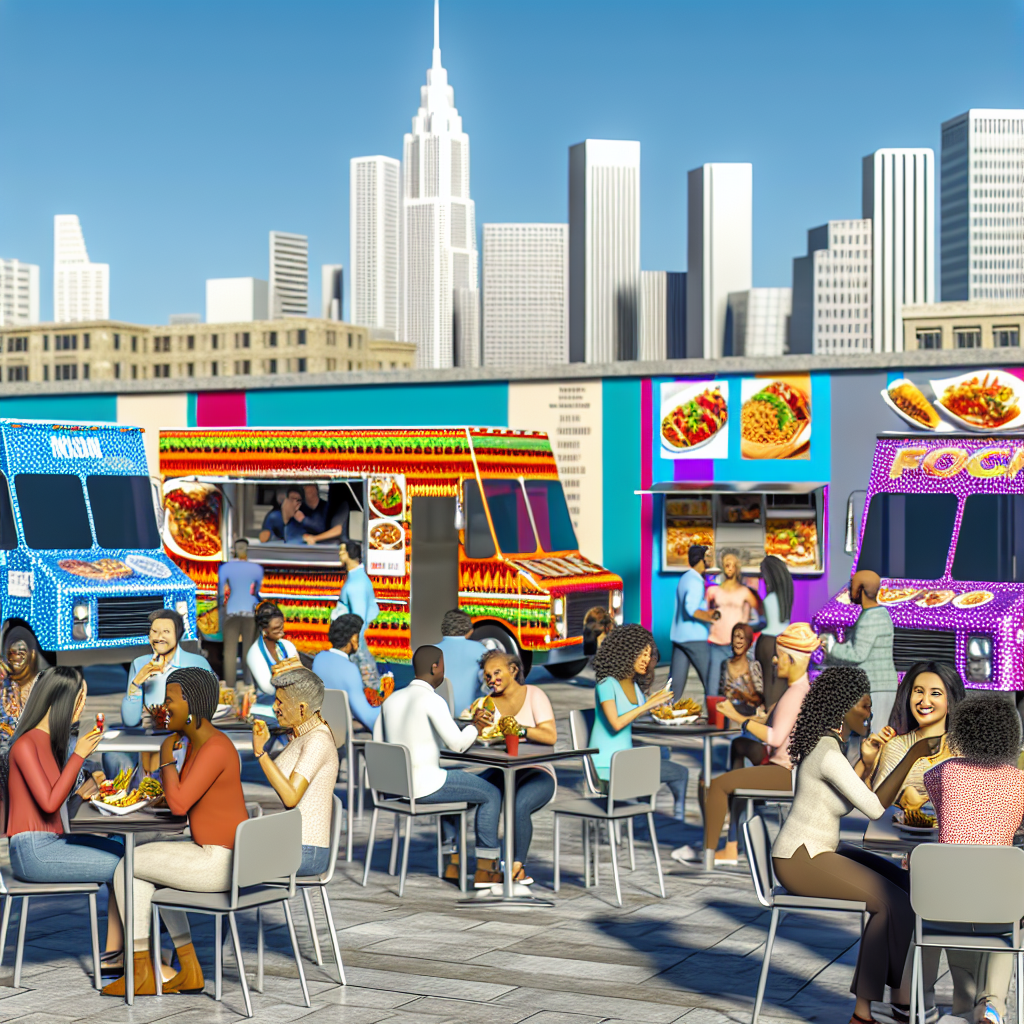
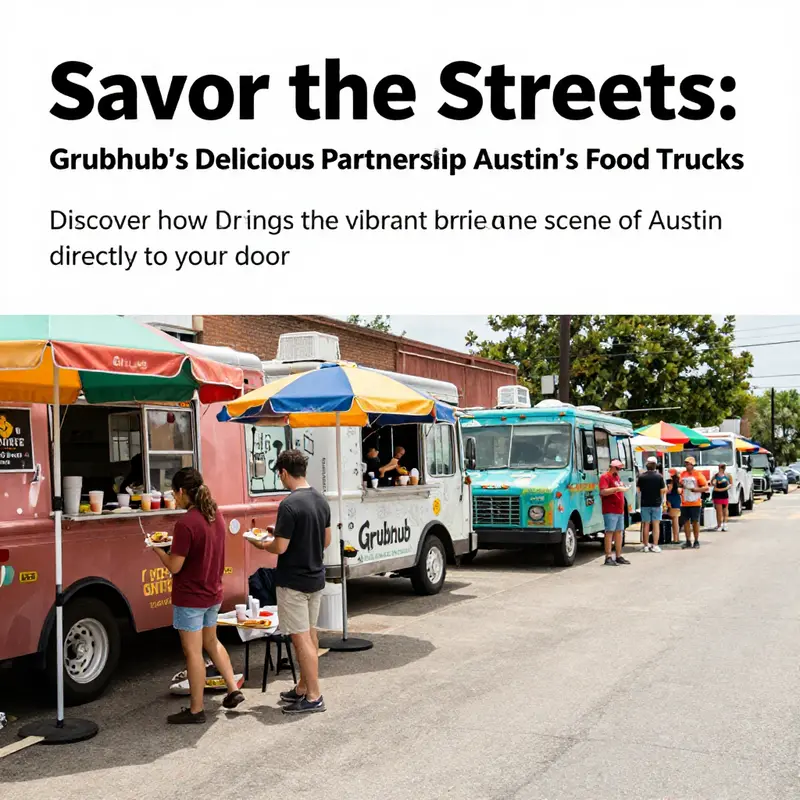
Austin’s food truck scene is a dynamic fusion of flavors, creativity, and convenience. With Grubhub’s partnership with food trucks, residents and visitors alike can indulge in the city’s mobile culinary delights without stepping outside. This collaboration not only supports local businesses but also enhances the dining experience through quick and easy delivery. In this article, we’ll explore how Grubhub connects customers to a variety of food truck offerings, the straightforward ordering process, the diverse culinary options available, and the multitude of benefits that come with using Grubhub for food truck deliveries in Austin. Let’s dive into the scrumptious world of Austin’s food trucks and discover why ordering through Grubhub is a game changer!
Delivery on Wheels: How a Leading Online Platform Brings Austin’s Food Trucks to Your Doorstep

In the cultural heartbeat of Austin, where food trucks press into every neighborhood like a live soundtrack and patios glow beneath string lights at dusk, a quiet technological thread is stitching the city’s mobile kitchens to the daily routines of residents and visitors. The most visible effect is a simple luxury: meals that arrive at your doorstep with the same ease as a takeout from a bricks-and-mortar restaurant. Yet behind this convenience lies a careful balancing act. A leading online delivery platform has expanded its reach by partnering with a wide array of food trucks scattered across the city. This collaboration does more than widen choice; it reshapes the rhythms of local commerce, offering mobile vendors a larger stage while giving customers flexible access to a rotating cast of flavors. The story here isn’t about a single service name or a fixed storefront; it’s about a system that recognizes Austin’s distinctive food culture—the mingling of street food, festival energy, and the simplicity of ordering with a tap—and makes it portable, predictable, and easier to enjoy in ordinary days as well as extraordinary ones.
To understand how this works, picture the city as a living map where trucks move through blocks, neighborhoods, and event venues in answer to demand. The delivery platform does not own or operate the trucks; instead, it provides a digital framework where mobile vendors can sign up, display menus, manage availability, and receive orders just as a brick-and-mortar restaurant would. The trucks preserve their own identity—their branding, their menus, and their signature dishes that have earned loyalty in the community. What changes is the way customers discover them and the way orders travel from curb to couch. A customer in East Austin, craving a late lunch with a distinctive twist, can open the app, discover a rotating lineup of trucks near their location, and choose a dish that might have once required a special walk or a fortuitous street-side stop. The same platform makes it possible for someone living in the suburbs to tap into the city’s mobile culinary tapestry and enjoy a meal without driving across town.
This shift toward on-demand access is especially meaningful in a city where weather, traffic, and event calendars can transform a routine noon into a logistical puzzle. The platform’s role is to translate the movement of food trucks into a reliable, on-time delivery experience. Trucks upload their menus and set their own hours when feasible, while the platform uses location data to connect customers with nearby options and to predict delivery windows. For trucks, this arrangement translates into a broader audience and more predictable revenue streams. It helps balance the ebbs and flows of street-level demand, particularly during lunch rushes near office corridors and late nights after concerts, sports games, or community gatherings. In many cases, the platform also helps trucks manage peak periods by routing orders to drivers who are already in the general vicinity, rather than forcing trucks to chase demand in a way that drains time and energy.
The practical side of the partnership rests on a straightforward premise: a truck signs up, its menu and hours are displayed in the app, and a driver picks up the order and delivers it to the customer. The trucks continue to operate where they are most visible—outside office buildings, near university campuses, along busy arterials, and at pop-up events that draw crowds. The platform’s technology smooths the friction in this ecosystem. It standardizes payment processing, provides order tracking, and ensures that customers can specify modifications, dietary needs, or delivery instructions with the same clarity they would expect at a fixed location. The result is a seamless blend of mobility and service reliability that suits Austin’s fast-paced tempo while preserving the spontaneity that makes street food so appealing.
From a consumer standpoint, the experience feels familiar and efficient. A user browses a range of cuisine styles—think quick bites, bold flavors, and comfort foods that travel well—then selects a truck and places an order. The interface often supports features like time-slot options, so someone can schedule a delivery for a specific hour or request a window that aligns with their workday. This flexibility is especially valuable in a city known for its active outdoor life, where people schedule lunches around meetings, workouts, or a planned stroll through a park. The platform’s design keeps menus clear and current, highlighting seasonal specials or rotating dishes that trucks use to test new ideas or respond to local preferences. A driver arrives with the order at the customer’s door, or hands off the food at a designated building entrance, depending on the delivery instructions and building access. It is a mode of service that preserves the immediacy of a street-side purchase while extending its reach well beyond the truck’s physical footprint.
A crucial dimension of this ecosystem is how it supports the people who run mobile kitchens. For many operators, owning a truck means wearing many hats: cooking, sourcing ingredients, maintaining equipment, managing licenses, and chasing day-to-day cash flow. The platform’s integration helps reduce some of the logistical friction that can gnaw at a small business. It aggregates orders, handles payment processing, and offers a data-backed view of demand that can inform menu planning and staffing. In turn, truck owners gain insights into which hours yield the most orders, which neighborhoods respond to certain flavors, and how promotions or menu tweaks influence sales. The feedback loop created by this digital partnership allows small, mobile businesses to scale responsibly, test new markets, and adapt quickly to changing tastes.
For customers, the benefits go beyond convenience. Access to a diverse set of trucks means more opportunities to explore the city’s culinary diversity. A late-night craving for something tangy and spicy can be satisfied by a truck serving regional specialties that aren’t commonly found in a fixed-location restaurant. A lunch break can become a mini culinary tour without leaving the office district, and a weekend stroll can culminate in a flavorful detour that arrives at home just as the sun dips below the skyline. The platform’s search and filter capabilities help users curate experiences around cuisine type, price range, and delivery time, turning street food into a reliable option rather than a park-and-hope venture.
Within this broader picture, there is a strong educational thread. The mobile nature of these businesses encourages a culture of collaboration and learning. Truck operators often share tips about supply chains, food safety, and packaging best practices to ensure that meals travel well on the back of a bike, a scooter, or a car. The platform, in turn, emphasizes standards that help maintain quality, from temperature control to tamper-evident packaging. This mutual commitment to reliability helps build trust with a new generation of customers who value convenience without compromising the integrity of a meal.
Austin’s ecosystem benefits from this model in another subtle way. The city has a vibrant festival and events calendar that amplifies demand in certain neighborhoods at specific times. The platform’s flexible approach to delivery makes it easier for trucks to participate in these bursts of activity without requiring permanent storefronts in every district. A truck that spends the afternoon near a popular downtown park or a university campus can shift its presence to a nearby market or event zone in the evening, while the platform coordinates routes and delivery windows. This synergy not only diversifies the customer base for trucks but also contributes to a sense of dynamic, place-based dining that is emblematic of Austin.
To maintain a sense of local resonance, consumers in Austin who lean into the street-food ethos often seek opportunities to understand the stories behind their meals. A visit to a nearby truck can become more meaningful when customers know where ingredients come from, how dishes are crafted, and what the truck’s ongoing journey looks like. Here, a useful bridge exists between the immediacy of a mobile kitchen and the longer arc of the city’s food culture. For readers who want a window into the local truck scene and the community around it, the Los Chiflado’s Truck blog offers perspectives and updates from operators who navigate the same streets and events that the delivery platform touches. This resource captures the texture of daily life on wheels and can inspire curious diners to explore more of what Austin’s mobile kitchens have to offer. loschifladostruck blog.
The broader implication of these partnerships is not merely about meals arriving faster. It is about cultivating a more resilient, inclusive, and adventurous food economy. Mobile vendors can reach customers outside peak hours and outside the zones where fixed restaurants have built their presence. They can experiment with new configurations—pop-up collaborations with local bakeries, themed menus tied to neighborhood celebrations, or cross-promotions with other street vendors—without the overhead of a traditional storefront. Customers, in turn, gain a tastier roadmap through the city’s creative energy, a set of reliable delivery options that align with busy lives, and a sense that Austin’s food landscape is both accessible and alive.
Of course, no system is without its challenges. Coverage gaps can occur depending on geography and time of day, and not every truck will be available in every neighborhood for every hour. Weather, traffic, and the rhythms of city life influence delivery times and order volume. The platform’s strength lies in its capacity to absorb these variables while maintaining a degree of predictability for both the customer and the truck owner. It also carries the responsibility of supporting safe practices—from approved food handling to secure packaging that preserves heat and texture during transit. For trucks, the relationship with the platform is a partnership rather than a dependence; it is a channel that amplifies reach but does not erase the distinctive decision-making that defines each truck’s brand.
In sum, Austin’s collaboration with a leading online delivery platform has become a meaningful case study in how cities can harness technology to celebrate mobility and taste. It preserves the spontaneity and community of street food while delivering the reliability that modern urban life sometimes requires. It invites residents to imagine the city as a continuous lunchroom, where a single tap can unlock a door to a new flavor profile, a story, or a shared meal with neighbors and colleagues. And it reminds us that food, at its best, travels well not just because of careful packaging or fast drivers, but because it carries a connection—between cook and customer, between street corner and doorstep, between culture and memory. The arrangement thrives where logistics, culinary craft, and local culture converge. In that convergence, Austin continues to redefine what it means to eat well when you’re on the move. For readers curious about the day-to-day mechanics or the human stories behind these mobile kitchens, a window into the local truck world is often just a click away through the city’s independent food truck community hub and its related storytelling projects.
External resource: The latest on how a major online delivery marketplace frames its offerings and partnerships can be found at https://www.grubhub.com.
Flavor at Your Doorstep: How Austin’s Mobile Kitchens Reach Your Home Through a Local Delivery Platform

Austin has long lived at the crossroads of food culture and improvisation. The city’s streets pulse with the energy of food trucks, pop-up concepts, and cooks who treat the curb as a kitchen and the sidewalk as a stage. In recent years, a quiet but powerful shift has been reshaping how locals and visitors experience this vibrant ecosystem: delivery from food trucks right to the table, or rather, to the living room, office, or dorm. The chapter you’re reading traces how a particular delivery platform—operating in a city that loves speed, variety, and Texas-sized flavors—has made it possible to enjoy mobile cuisine without chasing a truck to a parking lot or event venue. The bigger arc is simple, even if the mechanics are intricate: in Austin, you can browse a surprisingly varied lineup of mobile kitchens, order from menus that reflect a city’s love for smoky barbecue, bright tacos, generous burgers, fresh bowls, and fusion mashups, and have those meals show up at your doorstep within minutes or at worst, a short ride later. This is not just about convenience; it is about expanding access, stabilizing revenue for operators who often work on tight margins, and weaving street food into daily life in a way that respects both the craft of the cooks and the rhythm of the city.
To understand how this delivery reality unfolds, we must start with the mechanism itself. In a city like Austin, the delivery platform operates much like a city’s own transit system for meals. You begin by opening the app or the website, a moment that feels almost ceremonial in today’s on-demand culture because it signals a shift from idea to action. The first step is location. The app prompts you to set your location to Austin, Texas, and this isn’t mere formality. It determines which trucks are participating, which neighborhoods have reliable coverage, and which vehicles can reach your doorstep within the window you expect. The interface then invites you to search for food trucks—an option that sits alongside traditional restaurants. This is where the platform signals its respect for Austin’s culinary diversity: you don’t just see a single menu under a single name; you explore a gallery of mobile kitchens, each with its own personality, cuisine type, and rhythm of operation.
The next phase is selection. Trucks list menus much as restaurants do, but with a nuance unique to the mobile world: a chef can change a menu daily or weekly, offering rotating specials that reflect seasonal ingredients, local collaborations, or the energy of a particular event. You can filter by cuisine—tacos for late-night cravings, bowls for a lighter option, burgers for something hearty—or by dietary preferences, which helps diners with gluten-free needs, vegan lifestyles, or allergy considerations find compatible options quickly. Filtering matters, because Austin’s food truck scene is not monolithic. It is a mosaic where a single block can host burritos, thai-inspired noodles, vegetarian bites, and everything in between. Browsing these menus feels like wandering through a market where every stall has a kitchen and every stall promises something new.
Once you identify a truck that appeals, the ordering flow follows a familiar cadence while reminding you of the trucking world’s pragmatism. You add items to the cart, and you’re offered customization options—extra sauce, no onions, a spicier version of a familiar favorite. In many cases, you’ll see a note from the truck itself about kitchen constraints, or a suggestion for a possible substitution if a dish isn’t available in delivery form. This is the moment where the mechanics of mobility intersect with the intimacy of a home kitchen: the truck swaps a tray and a burner for a bag and a thermally insulated container, ensuring the warmth and integrity of the meal as it travels.
The platform summaries the order with a clear view of the total cost, including the delivery fee, and an estimated delivery time. Here in Austin, the rhythms of traffic, weather, and local events can nudge those estimates, but the app’s history of real-time updates helps set expectations in a way that feels reliable rather than speculative. Payment methods are kept current and straightforward, a small but essential detail that allows the process to stay smooth even when you’re juggling work, family, or a night class. When you place the order, the platform sends the request directly to the truck, which prepares the meal with the speed and care that mobile kitchens have honed in parking lots and street corners across the city. The dynamic shifts once the order leaves the truck’s hands and enters the courier’s, and here the delivery system’s tracking features come into play. Real-time updates invite you to watch your meal’s journey—from kitchen to curbside to doorstep—emphasizing a transparency that has become a defining feature of modern food delivery.
This narrative of delivery is not merely about speed; it is about the alignment of two distinct systems: the mobility of street food and the predictability of home delivery. Austin’s unique geography—its neighborhoods spread in a way that encourages walkable districts but also creates gaps in foot traffic during off-peak hours—makes an on-demand delivery option especially attractive. The platform helps fill those gaps by connecting hungry residents and curious visitors with a broader array of mobile kitchens than might be accessible through a fixed storefront alone. For operators, the delivery channel complements the truck’s on-site business, allowing revenue to grow beyond the limited windows when a truck can be physically present at an event or a stoplight lineup. Some days, a truck can reach dozens of households in a single sweep; on others, it supports a steady trickle of orders that helps stabilize cash flow between larger pop-ups or weekend festivals. That stability matters. In a sector historically susceptible to weather, traffic snarls, or timing demands, a digitized delivery pipeline provides a buffer, a way to keep the flame lit and the grill warm even when the street scene changes.
What does this mean for the people who place orders? It means a more accessible tradition. Austin residents who live in neighborhoods distant from popular food-pod clusters can still enjoy a night out without leaving their apartments or commuting across town to a truck stop. It also means the city’s visitors—tourists chasing a taste of local culture—can sample a wider spectrum of the mobile kitchen landscape without having to chase down a tweeting schedule or stand in a long line. The convenience, however, does not erase the craft; it shines a light on the work that goes into delivering meals from a mobile kitchen. Packaging takes on a critical role here. The trucks adapt to the realities of delivery by using containers designed to retain heat, protect the food from the elements, and minimize spill risk. A well-executed packaging strategy doesn’t just preserve warmth; it preserves the experience—the aroma that lingers as you open the container, the careful balance of flavors, and the sense that the dish was assembled with intention before it ever left the kitchen.
As with any service that moves between fast-paced street life and steady home routines, there are caveats. Not every truck participates in delivery, and some may offer delivery only during certain hours or days. Availability can fluctuate with weekends, peak lunch times, or festival seasons when trucks are busy feeding crowds at events or participating in partnerships that keep them away from the curb. A shopper might see a diverse range of trucks on a given evening or discover that a favorite vendor appears only sporadically on the delivery platform. These realities mirror the broader rhythm of the city’s food scene, which thrives on spontaneity and the ability to adapt. For diners who rely on a consistent set of options, a small degree of flexibility—keeping an eye on the app for rotating menus, or selecting a few go-to trucks that regularly offer delivery—becomes part of the practice of ordering.
This is where the platform’s design fosters a sense of community around the trucks and their customers. Unlike traditional dining apps that emphasize a handful of fixed-location restaurants, this approach acknowledges the mobility of the kitchen and the way that a city’s neighborhoods shape culinary options. In practical terms, a user may notice a truck’s delivery availability is stronger in some neighborhoods than others, particularly in central districts that benefit from shorter trip distances and more consistent traffic patterns. The platform’s search and filtering tools support this reality by surfacing trucks with clear delivery windows and transparent delivery zones. It is not merely about choosing a dish; it is about choosing a relationship with a truck that may move from week to week yet remains a reliable source of flavor when you need it.
To deepen readers’ understanding of the regulatory and operational context behind this delivery model, consider the broader framework that governs mobile food businesses and their ability to deliver. Regulations that affect where a truck can park, how it can set up its kitchen, and how it coordinates with local health authorities can shape which trucks participate in delivery at any given time. The interplay between municipal policies, street use, and business licensing creates a dynamic that is as much a part of the city’s food culture as the menus themselves. For readers who want to explore these dimensions further, a concise overview of the regulatory landscape can be found in this resource on navigating food-truck regulations. This reference offers grounding on the kinds of permits, inspections, and operational considerations that mobile kitchens typically navigate as they expand into delivery channels and regular business hours.
In the end, the experience of ordering from a food truck through a delivery platform in Austin is about balancing spontaneity with reliability. It invites you to imagine the street as a pantry, the truck as a rolling kitchen, and your home as the dining room where flavor arrives with the convenience of a tap or a click. It invites cooks to imagine a wider circle of customers who might order a bowl of noodles at midnight or a set of spicy tacos at noon, knowing that the platform can bridge time and distance without diluting the craft. These are the subtle but meaningful shifts that make delivery from mobile kitchens more than a convenience; they turn a local hustle into a daily possibility, a test kitchen into a neighborhood tradition, and a city’s catering culture into a flexible, modern dining experience.
If you’re curious about the broader landscape of food trucks and the evolving logistics that help drive this kind of service, you can explore related regulatory insights here: navigating food-truck industry regulations. While the scene continues to adapt to new delivery models and consumer expectations, what remains constant is the shared appetite for speed, variety, and the sense that even the most portable kitchens can feel like they belong to a larger, connected community. For readers who want a tangible reference while exploring how delivery platforms present and coordinate these options, a practical external resource that highlights the delivery app landscape is available here: https://www.grubhub.com. This external link provides a current snapshot of how one major platform approaches partnerships with local food vendors, the logistics of order fulfillment, and the expectations placed on customers enjoying mobile cuisine in a growing urban ecosystem.
A City of Mobile Kitchens: The Rich Variety of Food Trucks Delivered by Grubhub in Austin

Austin has always thrived on the energy of its street-food vortex, where a simple corner becomes a makeshift kitchen and a handful of chafing dishes can spark a citywide conversation. In this landscape, Grubhub acts as a bridge between the kinetic energy of food trucks and the daily rhythms of homes, offices, and gatherings. The sight of a line weaving through a late-afternoon crowd downtown is no longer the only path to a hot bite; now, a tap in the Grubhub app can summon a diverse lineup of mobile kitchens to roll up to a doorstep, a dorm, or a business park. This arrangement does more than simply move meals from point A to point B; it expands the culinary map of the city, letting residents and visitors explore flavors that might have been difficult to reach beyond the truck’s current locale. It also reshapes how the trucks themselves are perceived, evolving from occasional, location-based stops into regular, delivery-enabled extensions of a menu.
The diversity of options is where Austin’s food truck ecosystem truly shines, and Grubhub’s platform amplifies that breadth. You can encounter a spectrum of choices that reflect the city’s appetite for bold, sometimes frontier-pushing, combinations as well as timeless favorites. On the one hand, there are kitchens that cradle the familiar warmth of Tex-Mex staples—tender meats, bright salsas, and cheeses melted into comforting, crave-worthy forms. On the other hand, the platform accommodates a range of global cuisines—Korean-inflected grilled meats, Middle Eastern mezze, and street-food-inspired plates that fuse regional techniques with local ingredients. The result is a culinary panorama that feels both rooted in Austin’s traditions and buoyed by the city’s hunger for experimentation. This is not a curated gallery of novelty meals; it is a living menu that shifts with the city’s seasons, with the day of the week, and with the rhythms of new operators who bring their own stories and techniques to the mobile kitchen format.
What makes the Grubhub-enabled delivery of food trucks particularly compelling in Austin is the way it makes the city’s culinary personality portable. A resident near a university campus, a professional ducking out for a quick lunch in downtown, or a family planning dinner after a long day now has access to a rotating cast of trucks that previously would have been limited to a single spot or a seasonal festival. The platform allows customers to browse menus, compare prices, read reviews, and gauge estimated delivery times—all from a single, familiar interface. This transparency reduces the risk that comes with trying a new truck and invites a broader audience to sample something beyond their habitual go-to choices. In practice, you might be exploring a breakfast burrito that arrives with morning warmth, then swing into a post-work dinner that features plant-forward plates with house-made sauces and thoughtful spice balances. Grubhub’s search and discovery tools make it easier to find options that align with dietary preferences, whether that means high-protein builds, vegan and vegetarian plates, or allergen-conscious preparations, all while preserving the spontaneity that makes street food so appealing in the first place.
Another layer of this story is the variety of service models the ecosystem accommodates. In Austin, the population ranges from morning commuters to night-shift workers to weekend revelers. Trucks adapt by offering delivery-ready formats that emphasize heat retention, bold packaging, and practical portion sizes. Some trucks operate with a drive-thru or walk-up mindset at certain hubs, while others lean into delivery-only formats that optimize their production lines for distance and time. Grubhub’s infrastructure is well suited to these different configurations, coordinating order flow with kitchen capacity and delivery routes so that a truck can sustain efficiency across a busy shift. The delivery process in turn affects how meals are composed and presented. Emphasis on stable warming methods, sauce packaging that travels well, and compact, transport-friendly portions can be seen as a form of culinary craftsmanship, where the best ideas translate cleanly from the truck window to the customer’s table—or couch, or desk, or park bench.
From a consumer perspective, the experience of ordering from a food truck via Grubhub blends the immediacy of a street-side encounter with the predictability of a curated delivery experience. The vibrant energy of a truck—the exhaust of a hot grill, the hum of a specialty exhaust hood, the gleam of a sauce-laden spoon—takes on a new kind of continuity when the meal is brought to you. This is especially meaningful in a city where the weather can dictate the tempo of meals and where parking and curb-side realities can complicate the simple act of grabbing a bite. Delivery via Grubhub reduces those friction points, enabling a family dinner in a living room, a solo lunch at a desk, or a late-night craving to be satisfied without leaving the building. It also opens doors to dietary exploration. Vegans, vegetarians, and omnivores alike can find options that suit their needs, from plant-forward bowls and wraps to noodle dishes and grilled proteins that satisfy without sacrificing flavor. The presence of these choices in a single app creates a shared, frequently revisited map of the city’s tastes, inviting everyone to sample something new without the risk of wandering far from home in search of a good meal.
Operationally, Grubhub’s partnership with Austin’s mobile kitchens extends beyond convenience. It offers a framework in which the trucks can focus on cooking without becoming captive to the physical constraints of a Sunday festival or a busy block party. While the truck’s physical location remains a crucial part of its identity and its weekly rhythm, the delivery channel provides a stabilizing complement—an additional revenue stream that can reduce the volatility that often accompanies street-based schedules. This stabilizing effect matters; it helps operators plan for peak times, manage inventory, and forecast demand more reliably. In a city known for its entrepreneurial energy, that reliability can translate into more consistent hiring, more deliberate menu development, and more thoughtful packaging that reflects both culinary pride and practical considerations for long-distance delivery. The synergy between cuisine and logistics thus becomes a key driver of Austin’s contemporary food-truck culture: the platform makes it easier to share a truck’s story while also ensuring that the story remains edible, arriving hot, intact, and ready to enjoy.
For operators, the digital storefront isn’t just about reaching more customers; it’s about shaping the identity that travels with the truck. In this sense, the visual language of the brand—logos, color palettes, typography, and even the tone of the menu descriptions—becomes a form of competitive capital that travels along with the food. The opportunity to present a consistent, compelling image through the Grubhub listing helps a truck attract repeat customers who are drawn not only to a dish but to the entire experience that the brand promises. This is where the broader ecosystem of resources around food trucks can help. Operators can benefit from guidance on branding, pricing, and menu architecture—areas where the city’s vibrant food culture intersects with the practical realities of mobility and scale. A good truck menu on Grubhub does more than display options; it tells a story about the people behind the food, the care that goes into sourcing ingredients, and the care taken to deliver a meal that feels fresh and thoughtfully prepared even after a doorstep journey.
The cultural implications of this delivery-enabled diversity are equally significant. Austin’s food-truck scene has long been a proving ground for experimentation, a place where artists, chefs, and home cooks cross-pollinate ideas. When those ideas become accessible through a platform like Grubhub, they acquire a broader stage and a longer shelf life. The city’s neighborhoods benefit too. Delivery coverage reduces the friction that might deter someone from trying a new truck, and it makes it easier for workplaces to offer a rotating lunch menu that changes with the season. The social function of food—sharing, discovering, and returning to favorites—gains new momentum when a quick delivery becomes as routine as a coffee run. The result is a more interconnected food culture in which the vitality of the streets remains central, even as the appetites of people who live, work, and study there become more diverse and more ambitious.
Within this evolving narrative, an operator’s success hinges on several interlocking factors. First is the quality and distinctiveness of the food itself. Austin’s palate is curious and adventurous, and it rewards both high-heat technique and thoughtful, balanced flavor profiles. The second is consistency—consistency in taste, portion sizing, and packaging that preserves temperature and texture during transit. Grubhub’s logistics capabilities act as a catalyst here, aligning kitchen output with delivery demand so that items arrive as expected. Third is the accessibility of information—the ease with which customers can discover the truck, compare options, and decide when to order. The platform’s search algorithms, user reviews, and visual menus play an important role in shaping expectations and driving trust. Finally, there is the question of the operational environment: how well a truck can maintain its standards when shifting from a street corner to a delivery pipeline. The best outcomes come from thoughtful preparation, robust packaging, and a culture of responsiveness—where operators monitor feedback, adjust recipes, and experiment with new offerings that travel well and delight customers.
The interconnections among these factors are what ultimately render Grubhub delivery more than a convenience; they render it a channel for a city’s culinary imagination. In Austin, the mobile kitchen is not a temporary installation but a facet of everyday life, and the app-based delivery system helps translate the vibrancy of the trucks into reliable, repeatable experiences for diners. The city’s geography—dense downtowns, a network of neighborhoods, and the constant movement of people and work—becomes more navigable when meals can arrive from a spectrum of trucks rather than from a single fixed storefront. This democratization of access is part of what endears Grubhub to residents who crave variety without wanting to extend a lunch break into a long foraging expedition. It also invites visitors to think of the city as a living menu, where every block could host a new flavor and every order could reveal a new cultural thread.
For readers seeking a practical entry point into this landscape, it helps to think of Grubhub in Austin as a dynamic, integrated system rather than a static list. It is a conduit that connects the city’s moveable, flavor-forward kitchens with the daily life of people who want good food quickly and reliably. The system thrives when both sides—operators and diners—engage actively: trucks maintain clear menus and consistent packing standards; customers explore with curiosity and provide feedback that fuels refinement; and the platform continuously evolves to improve delivery times, order accuracy, and the presentation of the food’s story. In this way, Grubhub’s delivery of food trucks becomes a cultural practice as much as a service—an ongoing dialogue about how a city feeds itself, how it values craft, and how it imagines the future of food on the move.
For those curious about how these ideas take root in a real neighborhood, a deeper dive into the branding and identity strategies that trucks use to stand out on digital shelves can be illuminating. A resource that offers insights into how food trucks translate their on-street presence into a cohesive, portable brand is the guide focused on branding on wheels. It helps explain how logos, color schemes, and packaging choices communicate the essence of a truck even before the first bite is taken, and how that branding travels with the meal through delivery. You can explore that perspective here: branding on wheels: the ultimate guide to food truck graphics and identity. This linked resource complements the Austin-specific experience by highlighting how a strong visual identity supports recognition and trust when customers encounter a truck via a delivery app.
As the city continues to evolve, the delivery-enabled variety of Austin’s food trucks stands as a striking example of how digital platforms reshape local culture. The appetite for new tastes lives on the street, in kitchens that are mobile by design, and in the digital storefronts that make those tastes accessible everywhere. Grubhub’s role in this ecosystem is more than logistical support; it is a catalyst for cultural exchange, a mechanism for economic resilience, and a driver of everyday delight. The platform helps transform a spontaneous, on-the-ground experience into a predictable, repeatable ritual—one that keeps Austin’s culinary conversation vibrant, inclusive, and deliciously mobile.
External reference: https://www.grubhub.com/search?query=food+trucks&location=Austin%2C+TX
Rolling Out Digital Doorsteps: How Grubhub Delivers for Austin’s Food Trucks and Expands Their Reach

Austin’s food truck scene has long thrived on the energy of neighborhood corners, crowded farmers markets, and the punch of shift-driven crowds chasing inventive flavors. The city’s streets sizzle with scent as trucks roll from one popular spot to another, turning curb space into a rotating stage for culinary experimentation. In that dynamic context, a delivery platform can feel like a natural extension of the truck’s repertoire, not a replacement for its identity. The question is not merely whether Grubhub delivers for food trucks in Austin, but how the platform reshapes the possibilities of a mobile kitchen in a city where spontaneity is part of the appeal and where a strong online presence can convert casual curiosity into repeat business. The answer, when approached thoughtfully, is that delivery via a major platform does more than shuttle meals from point A to point B. It transforms the truck’s operating model into a flexible, data-informed, brand-enhancing venture that can complement in-person sales with a steady stream of orders, all while preserving the immediacy and energy that make food trucks unique in Austin’s culinary tapestry. The platform acts as a digital storefront that leverages the city’s appetite for convenient, flavorful experiences, and it does so without requiring a truck to abandon its core mobility or its loyal local following. Instead, it invites operators to meet customers where they are—on their phones, in their offices, near concerts, at office parks, or along busy corridors where a quick lunch is the norm—while still allowing the truck to move, park, or pivot to new corners as events and demand dictate.
The most immediate and tangible benefit is access to a broader customer base. Grubhub’s app and website operate as discovery engines for people who may not know a truck’s exact location or hours, yet crave its particular combination of flavors. This is especially valuable in a city like Austin, where residents and visitors regularly search for convenient, on-the-go meals with a distinct personality. A truck that relies solely on foot traffic can become a hidden gem, while a Grubhub listing can convert that gem into a digital storefront that remains visible during lunch breaks, late nights, and weekend bursts of activity. In practical terms, a truck can sustain or even expand order volume by appearing in a wider radius and at times when it might otherwise be quiet. Rather than being limited to a single block or a single shift, the truck’s culinary identity travels with it into a larger, city-wide delivery ecosystem. This expanded reach is not about replacing the in-person experience; it is about extending it. When a customer tastes a taco, a phone buzzes with another option to explore, another flavor to sample, another moment when the brand becomes part of everyday life. The platform’s traffic is not simply about large numbers; it’s about relevant, intent-driven customers who are already primed to order.
Beyond reach, the platform has the potential to meaningfully increase order volume and, by extension, revenue during the most profitable windows of the day. Delivery traffic tends to cluster around lunch and dinner, with a secondary surge tied to late-evening cravings or weekend events. For a truck that moves through neighborhoods or parks at different times, Grubhub’s model aligns with the essence of mobile food: flexible timing that can be optimized to capture peak interest. The incremental revenue from delivery can be substantial even without a proportional increase in overhead. There is no need to invest in a brick-and-mrown dining space, yet the online channel provides a way to monetize a given route or a particular city block with a predictable, scalable flow of orders. This is especially meaningful in Austin, where the density of events, offices, and campuses creates natural inflection points in demand. The platform’s capacity to drive consistent orders during those windows helps smooth cycles of supply and demand for operators who already juggle multiple stops, routes, and parking permits.
Operational flexibility is another cornerstone of this arrangement. Food trucks operate on a rhythm defined by permits, parking availability, and the realities of street-level logistics. Grubhub’s model complements that rhythm by allowing trucks to accept deliveries from their current location without forcing a permanent shift into a brick-and-mlick kitchen or a fixed storefront. The delivery model respects mobility, so a truck can continue to serve pedestrians while simultaneously routing orders to nearby neighborhoods. That dual capability matters because it preserves the essential charm of the mobile business—being able to relocate to maximize customer exposure—while offering an additional channel that turns every stop into a potential “micro-restaurant.” In practice, this means operators can optimize between curbside sales and delivery windows, coordinating with event schedules, campus hours, and neighborhood markets in real time. The flexibility to adapt to changing demand, to pivot routes in response to street closures or festivals, and to adjust hours without committing to new leases, all makes delivery a natural partner for Austin’s mobile cuisine.
The value proposition extends into how orders are managed and how customers are engaged. Grubhub’s toolkit includes real-time order tracking, which not only reassures customers about the delivery timeline but also enables operators to monitor performance across their network of routes. Feedback, in the form of customer reviews and structured ratings, feeds directly into the iterative process of menu refinement and service optimization. For operators who already adjust menus based on what’s selling on a given day, delivery data provides a deeper, data-driven lens through which to understand demand, identify popular combinations, and anticipate the impact of weather, events, or road restrictions on delivery times. The analytics component helps reduce guesswork and adds a layer of accountability for both the kitchen and the riders. When a truck notices a trend—say, a higher demand for a particular dish after a certain time or a preference for a specific spice level—they can adapt quickly, testing new iterations or promoting a signature item to capture the moment.
Brand visibility and marketing exposure emerge as less intangible but nonetheless critical benefits. Being present on a well-known platform increases credibility in the eyes of potential customers who might encounter the truck only through digital channels. The experience of ordering from a trusted app creates a sense of reliability and convenience that can translate into repeat business, even for those who haven’t previously sought out a particular truck. In Austin’s competitive landscape, this can be a differentiator, especially for newer or lesser-known trucks trying to gain traction. The platform’s search and recommendation algorithms further amplify this effect, surfacing trucks to users who are actively looking for specific flavors, dietary options, or price points. In a city where word-of-mouth is powerful and social media amplifies every bite, discovery through Grubhub can turn curious diners into loyal patrons.
Of course, the introduction of online ordering invites practical considerations. Packaging must withstand transit while preserving texture and temperature, a challenge that is particularly relevant for tacos, bao, or delicate bowls. Some operators already maximize packaging efficiency at pop-up setups, but delivery adds a new dimension: containers must be leak-proof, heat-retentive, and compatible with the on-the-go nature of Austin living. Efficiency in kitchen workflow becomes even more important when orders are funnelled through a digital channel, where delays affect not just a single customer but a stream of deliveries routed to multiple neighborhoods simultaneously. The truck’s team should plan for delivery-integration from the outset—reflecting on which menu items travel best, how many sauces hold up during transit, and how to balance a core menu with delivery-specific builds that travel well. Equally important is a clear understanding of coverage and delivery zones. Austin’s geography is varied, spanning dense urban cores, university corridors, and rapidly developing neighborhoods. A thoughtful approach maps delivery blocks to areas with high demand, ensuring riders aren’t chasing empty seats and that drivers arrive with meals while they remain hot and fresh. This spatial awareness complements the truck’s physical mobility, allowing operators to choreograph routes that maximize both speed and quality.
Accessibility to a broader audience inevitably interacts with the brand’s identity and its marketing strategy. A strong brand on wheels needs more than just a good recipe; it requires consistency across digital and physical touchpoints. The very notion of branding that travels well—visual identity, packaging, and messaging that convey a distinct personality—encourages customers to connect with the truck beyond a single transaction. For operators, this means integrating branding considerations into the delivery experience itself. A well-designed container label, a memorable logo on the app, and a recognizable color scheme in promotional photos help bridge the in-person bite with the digital interaction. This is where a dedicated branding strategy, discussed in depth in Branding on Wheels: The Ultimate Guide to Food Truck Graphics and Identity, becomes especially valuable. A cohesive look, paired with a clear value proposition, makes the delivery experience feel like a seamless extension of the truck’s overall story rather than a separate service. Branding on Wheels: The Ultimate Guide to Food Truck Graphics and Identity offers practical guidance for operators seeking to align their on-site and online identities, ensuring that the truck’s visual language remains consistent whether customers encounter it at a curb or on a screen.
Beyond aesthetics, the platform’s role in resilience and adaptability deserves attention. Austin’s climate and event calendar can disrupt traditional walk-up business, from sudden rain to festival schedules that draw crowds away from some neighborhoods and toward others. Delivery can act as a stabilizing force, maintaining revenue streams when foot traffic shifts. It can also support marketing campaigns tied to local happenings, school events, or concerts, delivering a mouth-watering reminder that a truck is a quick, delicious option in a sea of choices. Delivery data, in turn, becomes a strategic tool: operators can identify which events or neighborhoods yield the strongest orders and then adjust their lateral moves and schedule accordingly. The result is a more resilient model that leverages mobility rather than compromising it. In this sense, Grubhub is not a static channel but a dynamic partner that helps Austin’s trucks respond to the city’s rhythm with greater precision.
A final, often-understated benefit concerns the way delivery links with ongoing learning and growth for first-time truck owners and seasoned operators alike. The platform’s visibility invites feedback, not just in the form of ratings but through a steady flow of customer cues about what’s working and what isn’t. This feedback loop encourages a more iterative approach to menu development, pricing, and service design. For a growing business, that means less reliance on instinct alone and more emphasis on data-informed decisions, a combination that accelerates learning while reducing risk. In a city where competition is intense and customer expectations are high, having a systematic way to test new dishes, evaluate delivery times, and refine the overall experience matters a great deal. It’s about converting everyday transactions into opportunities for refinement, experimentation, and sustainable growth.
In sum, the case for delivery in Austin through a prominent on-demand platform rests on a triad of expanded reach, scalable volume, and flexible operations—each strengthened by strong brand identity and responsive engagement with customers. The model respects the truck’s mobility and its core strengths while offering a structured channel that smooths revenue cycles, informs menu and packaging decisions, and increases the likelihood that a customer who loves a dish will order it again, whether they find it backstage at a venue, at a neighborhood park, or near their office during a lunch rush. It invites trucks to see a city as a living, breathing marketplace that can be accessed in more places and at more times, without erasing the spontaneity that makes mobile eating feel magical. For operators who plan with intention—balancing in-person service with a strategic delivery program—the combination can transform a mobile kitchen into a more resilient, recognizable, and dependable business. The Austin delivery landscape is not merely a convenience add-on; it is a complementary channel that honors the city’s love of flavor, speed, and variety while expanding the possibilities of what a truck on wheels can achieve. For those who want to explore the broader implications of delivering from a food truck in an urban setting, the Grubhub Austin food truck guide provides a useful external perspective on how delivery ecosystems are evolving in this dynamic market: https://www.grubhub.com/blog/austin-food-truck-guide-2026.
Final thoughts
With its powerful partnership with Austin’s thriving food truck scene, Grubhub offers a unique way to enjoy flavorful street cuisine from the comfort of your home. From a diverse array of culinary options and a simple ordering process to the many benefits of delivery, Grubhub enhances the dining landscape in Austin. For event planners, corporate teams, food enthusiasts, and casual diners, this service makes exploring the vibrant food truck community more accessible and enjoyable than ever. Indulge in local flavors—Grubhub brings the street to your doorstep!