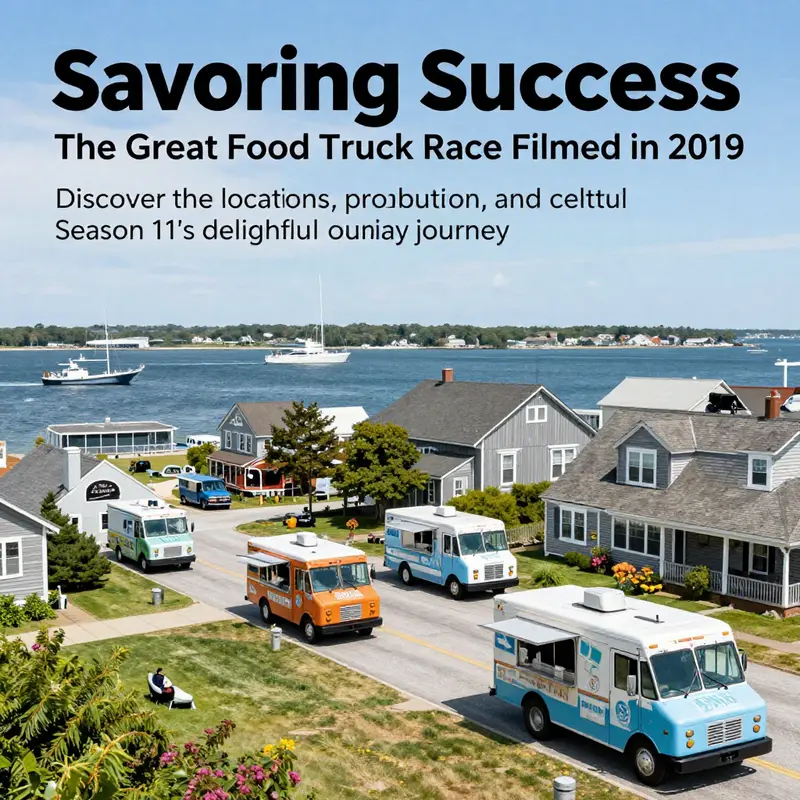
In late 2019, the vibrant coastal city of Newport, Rhode Island, transformed into the electrifying backdrop for Season 11 of The Great Food Truck Race. This captivating competition not only showcased the creative skills of diverse culinary teams but also highlighted Newport’s scenic vistas and rich history. As we explore the filming locations, air date details, and the culinary context of this season, you’ll journey through the sights and sounds that defined an unforgettable experience for both competitors and food enthusiasts alike. Each chapter will shed light on how Newport’s charm and historical significance contributed to a unique food truck adventure, culminating in a delicious celebration of culture and cuisine.
Routes Across a Nation: Tracing The Great Food Truck Race’s 2019 Filming Footprint
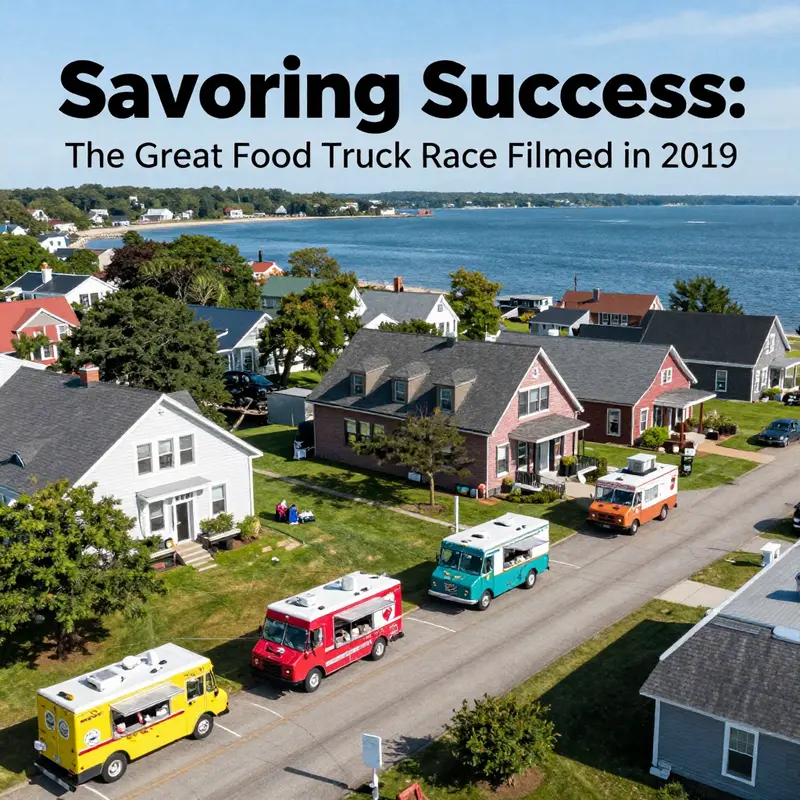
The question of when The Great Food Truck Race was filmed in 2019 invites a bigger story than a simple calendar entry. Season 11, which would air later that year, did more than carry a prize and a set of clever challenges from city to city. It mapped a route that stitched together urban energy, regional flavors, and the cinematic pull of landscapes that could turn a simple lunch rush into a televised tableau. Filming in 2019 didn’t settle in one place; it unfolded across a mosaic of American environments, each presenting a different test for the teams and a distinct narrative color for the viewers watching back home. The season’s cadence—beginning in one dense city, winding through others with their own culinary genealogies, and culminating in a desert panorama—was as much about the geography of food as it was about the logistics of producing a traveling food competition on a tight schedule. The result was a season that felt like a cross-country tasting tour, where the trucks and their crews had to adapt quickly to changing climes, city rhythms, and audience expectations.
The official outlines of that year’s filming point to several core destinations that became the backbone of the race’s 2019 footprint. Baltimore, Maryland, opened the season with a pulse that could only come from historic neighborhoods and a cityscape that blends venerable brick with modern street energy. The challenge in this first leg leveraged the buoyant mix of seafood, soulful street food, and the kind of quick-witted teamwork that thrives in a dense, walkable urban environment. New Orleans, Louisiana, followed with a city that carries a built-in culinary culture like a badge: a living archive of Creole and Cajun techniques, vibrant markets, and streets where music isn’t just a soundtrack but a social language. The teams had to translate tradition into portable fare while navigating the rhythms of a city that has long made dining an event rather than a meal. San Antonio, Texas, then stepped up with its own cultural gravity—the riverwalk vistas, markets that hum with history, and a cuisine that borrows from indigenous roots, Spanish influences, and modern Texan innovation. The challenges there could push teams to balance efficiency with a sense of regional storytelling, letting the plate carry a sense of place as much as flavor. Palm Springs, California, brought the final stretch into a desolate beauty that demands resilience as much as it does creativity. In that sun, with heat that can test equipment, teams are urged to innovate on the fly, letting the landscape become a character in the race’s closing chapters.
Taken together, these locations illustrate a deliberate design: the season travels across a spectrum of urban textures and geographic textures to test a team’s adaptability. Each stop offered a different stage for cooking, a different audience energy, and a different backdrop for television. The Baltimore start is all brick, alleyways, and a sense of city history that infuses the food with an edge of endurance and grit. In New Orleans, the backdrop is the city’s living culinary archive, where a bite must speak to centuries of technique and cultural exchange, all while the clock keeps its steady, merciless pace. San Antonio offers a fusion-forward stage—where the past and present mingle in markets and along the river, pushing teams to honor tradition while also delivering on a modern, mobile dining experience. Palm Springs closes with an arid palette that makes the act of cooking outdoors both a technical challenge and a visual spectacle, turning steam and sizzle into a late-season finale that feels both triumphant and intimate.
But the season’s visual and logistical grammar isn’t confined to these four cities alone. Contemporary reports and production notes from that year consistently emphasize that the show’s filming carried a broader geographic imagination. Newport, Rhode Island, for instance, has been cited by some sources as a significant backdrop during that period, invoking a coastal charm that could sweeten the show’s cinematic reach without pulling the focus from the urban competition. Newport’s coastal winds, harbor views, and historic architecture can lend a quiet poetry to moments between challenges. While the four-city route provides the spine of the season’s narrative, Newport’s presence—whether as a scenic interlude, a testing ground for a judging panel’s walk-by conversations, or a backdrop for a late-season segment—adds a dimension to the season’s memory. In other words, the filming footprint of 2019 isn’t a straight line on a map; it’s a tapestry. The official filming destinations provide the reliable core, yet the season’s visual identity winks at additional locations that contributed to its atmosphere. This layered approach mirrors how food operates on the show: there’s a clear structure to the route, but every stop allows a kitchen’s improvisation to color the final result.
The practical logic behind this multi-city approach rests on the show’s core premise: a portable kitchen is most expressive when it is anchored in a place with a story. Baltimore births a pace that rewards speed and place-based constraints; the city’s neighborhoods, often lined with row houses and markets, create micro-ecosystems where a truck must contend with street-level traffic, curbside permissions, and the ebb and flow of foot traffic. New Orleans rewards a chef’s memory of markets and street food, where spice blends and technique carry a sense of tradition that can be translated into a compact, shareable menu served within a tight window. San Antonio’s setting brings a river-walk rhythm and market energy that asks teams to balance crowd control with cultural storytelling—knowing when to lean into a crowd’s appetite for authenticity versus when to pivot to a broader audience’s palate. Palm Springs, with its sun-bleached vistas and resort-like energy, tests equipment reliability and the ability to deliver a coherent narrative under desert heat and shifting light. The combination is a deliberate choreography: the teams must learn not only to cook on the run but also to read the room, to leverage a city’s temperament, and to adapt their branding and service to a place’s constraints and opportunities.
In that sense, the filming year becomes a study in mobility—the movement of people, plates, and perspectives. Each location imposes a different cadence on service. In Baltimore, the crew may chase a brisk, street-side tempo where a line of locals and visitors becomes part of the show’s energy. In New Orleans, the air is thick with intoxicating aromas, music, and the expectation that the dish will tell a story as immediate as the city’s street chatter. In San Antonio, there is a sense of cultural palimpsest, where the history of the land and the story of the river converge in a marketplace, prompting teams to craft menus that honor lineage while still feeling contemporary. In Palm Springs, the desert’s hush accentuates the sizzle of the pan and the sparkle of the setup, inviting a different kind of performer’s performance—one that relies on the visual pull of steam, color, and the contrast between shade and sun. The audience, watching from home, experiences not just food but geography—the way a city’s energy informs a truck’s personality and, by extension, the show’s larger narrative about what it means to chase flavor across a country.
This geographic vastness also speaks to production logistics that any traveling competition must balance. A show that hops between venues must contend with permits, road closures, and the inevitable detours that arise when a crew tries to capture the best shot without compromising safety or the integrity of the cuisine being prepared. The scheduling becomes a narrative in itself: a day that begins with a market-run may end with a sunset kitchen rush, and the cut between these beats has to feel seamless to the viewer. The producers must choreograph not only the teams’ movements but also camera placements, sound captures, and the pacing of judging moments so that each city’s character is felt without allowing any single locale to dominate the season’s mood. In this light, the filming year is less a list of places than a journey through process: how do you design a competition that honors place while ensuring that each team has a fair shot at telling its culinary story on a moving stage?
Newport’s possible presence as a backdrop, even if not the central stage in every episode, helps illuminate how production teams think about place across the calendar. The town’s maritime charm—its promenades, harbor spots, and architectural lines—can function as a visual relief or a narrative anchor between the more intense city challenges. The coastal air also affects the sensory details of the show: the sea breeze can influence food presentation logistics, from which ingredients are chosen for a particular day to how a truck’s canopy catches the light. The net effect is a season that reads visually as a tour of American landscapes, but it also reads emotionally as a sequence of meals that travel through memory and place. If the audience glimpses Newport in a few frames, that recognition becomes part of the season’s texture—an interlude that invites retrospective viewing and a deeper sense of how geography shapes appetite.
From a storytelling perspective, the 2019 filming footprint offers a lesson in how location can function as more than a backdrop. It becomes a governor of tone, a force that can accelerate or ease the pressure on teams, a silent character that amplifies the stakes of each bite and each decision. A city can deliver a challenge that hinges on timing, a crowd, and a particular market dynamic; or it can offer a respite that allows teams to pause, regroup, and reframe their menus in response to what they’ve learned so far. The show’s editors harness this variety to produce a rhythm that keeps viewers engaged, moving from one city’s texture to another’s with a sense of anticipation about what flavors and tactics will emerge next. The 2019 filming footprint thus functions on multiple levels: it’s a logistical blueprint, a culinary map, and a visual diary of how a traveling food competition negotiates space, time, and taste.
As the chapters of the season unfold, there is also a subtle reminder of the broader ecosystem in which these episodes exist. The production pipeline—catering teams, on-site coordinators, camera crews, and local vendors—must align with the season’s narrative arc. The show’s broader cultural resonance rests on the idea that food travels well when it carries a sense of place and people. The teams’ menus are often a conversation across geography—an opportunity to translate a city’s memory into a dish that can be plated and shared. The audiences’ responses in the stands and at home are, in turn, responses to both flavor and landscape. When a dish evokes the humid air of New Orleans or the sunbaked calm of Palm Springs, the viewer metabolizes the geography as part of the culinary story and comes away with a more integrated sense of how geography shapes appetite.
For readers seeking to deepen their understanding of how such a show manages its branding and identity on wheels, one practical lens lies in how teams craft their visual stories. A consistent vehicle identity helps a truck stand out in varied cityscapes and among a rotating cast of competitors. The branding on a truck—its colors, typography, and emblematic motifs—becomes a portable ambassador that travels across markets and audiences. In that spirit, creators and teams may draw on resources that explain the deeper mechanics of building a distinctive on-truck identity. One such resource offers a focused look at how graphics and branding choices can transform a mobile kitchen into a memorable, market-ready icon. Branding on Wheels: The Ultimate Guide to Food Truck Graphics and Identity provides a practical framework for thinking about color palettes, logo treatment, and the way that a truck’s exterior can tell a story before a single bite is tasted. The link serves as a reminder that the visual language of a food truck matters just as much as the flavors it serves, especially when the show’s route spans cities with diverse aesthetic sensibilities. In a program that is as much about spectacle as it is about sustenance, that visual coherence helps audiences follow the journey with a sense of continuity even as each city delivers its own surprise.
To connect these threads back to the broader arc of 2019, the season’s filming footprint reveals something about the television landscape that year as well. Audiences craved variety—city narratives that felt intimate yet expansive, and food stories that could travel through time and memory while still feeling immediate and relevant. A traveling competition anchored by four or five flagship locales could offer the best of both worlds: a strong, recognizable route that audiences could track and a dynamic set of episodes that could surprise with new flavors and new crowd dynamics. The possibility that Newport offered additional scenic or narrative flourishes underscores how producers leverage regional character to deepen the show’s tone without compromising its core format. It also hints at why viewers remember certain landscapes long after the final bite is taken—the combination of culinary technique, street-level theater, and a place’s distinctive mood creates a sensory imprint that lingers in memory. The season’s filming map, with its core cities and its suggestive coastal backdrop, remains a testament to how a food competition can become a cross-country conversation about place, people, and palate.
In the end, answering when The Great Food Truck Race was filmed in 2019 means recognizing the season as a carefully engineered journey through a nation’s diverse scenes. It is a calendar of production that respects geography as a shaping force for cooking, service, and storytelling. It is a choreography that invites the audience to feel the push and pull of urban tempo, regional tradition, and landscape’s quiet drama. And it is a reminder that food television, at its best, offers not only a menu of dishes but also a map of the country—one where the truck’s wheels are as much about movement as they are about meaning. For those who want to trace the season’s official route, a quick look at the year’s publicly shared notes and episode guides confirms the four-city core: Baltimore, New Orleans, San Antonio, and Palm Springs, with Newport’s coastal presence adding a final, resonant note to the year’s visual tapestry. The combined effect is a record of how 2019’s filming illuminated the ways in which place and palate travel together, turning a competition into a narrative about a country in motion and a cuisine continually evolving through the journeys it undertakes.
External resource: For a concise overview of the season’s filming locations from the network’s perspective, you can consult the official program page, which offers context about how each stop contributed to the competition’s dynamic rhythm. https://www.foodnetwork.com/shows/the-great-food-truck-race
Wheels, Weather, and a Newport Backdrop: Filming The Great Food Truck Race in 2019
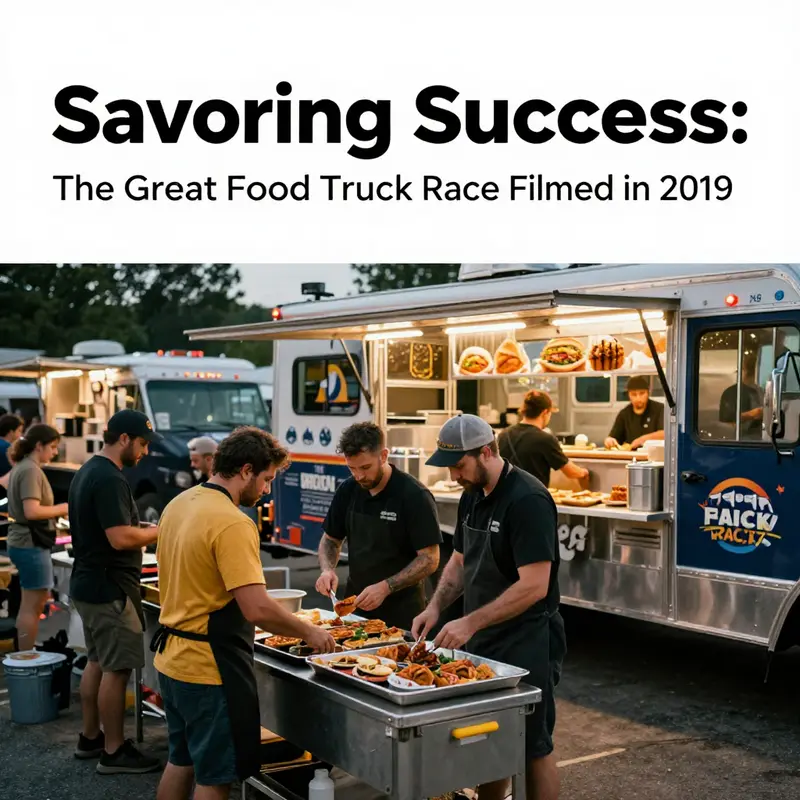
The Great Food Truck Race has a way of turning cities into kitchens on wheels, and the 2019 chapter—Season 11, known to fans as Holiday Hustle—arrived with a crisp coastal breeze and a backdrop that felt almost cinematic. Filmed in Newport, Rhode Island, the season stitched together the energy of a bustling culinary competition with the quiet grandeur of a harbor town that wears its history lightly and its sunsets with bold confidence. The air date, set against a season’s worth of preparations, mattered as much to the narrative as the clatter of griddles and the sizzle of sauces. The first episode aired on November 27, 2019, in the United States, a moment that felt like a door opening onto a familiar format that could still surprise. Four episodes formed the season’s arc, a compact sprint that demanded precision from every team and a tempo that kept the audience watching not just for who would win, but for how Newport’s streets and seafronts would shape the competition’s rhythm. The filming year, marked clearly in production logs as 2019, anchored a specific moment in time when the city’s winter-kissed evenings and the late-fall light became co-conspirators in the storytelling. The decision to keep the season tight—four episodes rather than a longer run—created a narrative intensity that aligned beautifully with Newport’s compact geography. The contestants moved through a sequence of spots around the town where the trucks could operate, interact with local customers, and face the practical constraints of a schedule that demanded speed without sacrificing flavor. In practice, the filming lived in a space where culinary skill met logistical choreography; a place where the show’s producers balanced the show’s needs with the city’s charmed cadence, delivering a performance that felt both spontaneous and carefully orchestrated. The result was not simply a race against time and rivals but a dance with a setting that offered decor, light, and a living audience without ever feeling staged in an artificial way. This is where Newport’s coastal scenery—its harbor, its narrow streets, its architectural breadth—transformed from a backdrop into a character that helped define the season’s mood and stakes. The season’s “Holiday Hustle” tag was not just a seasonal label but a design philosophy: this was a competition intended to reflect a festive, community-oriented spirit that paired seasonal menus with a town that thrives on hospitality and the visual drama of water meeting stone. The trucks, in turn, became portable canvases on which teams could paint their culinary identities against the town’s own color palette, with the water as a constant companion and spectator, and a crowd that could shift from curious locals to traveling visitors who had come to Newport for more than just a meal. The interplay between food and locale was not incidental. It was a deliberate choice that recognized how much location can influence taste, pace, and decision-making in a reality competition. Newport’s maritime atmosphere offered a naturally cool environment for experimentation, where the chill in the air could be countered by the heat of a sizzling pan and a bright, welcoming smile from a truck operator who knew how to read a customer’s thirst for something comforting and something new at the same time. The show’s crew leaned into this tension: weather, light, and crowds became variables to be anticipated rather than obstacles to be endured. In that sense, filming in Newport was less about chasing spectacular action in a single scene and more about building a consistent, immersive experience across several stops that would hold together as a four-episode voyage. The producers and directors and crew didn’t just stage moments; they curated experiences—moments when a team could win the crowd’s affection through a thoughtful plate, a deft service tempo, or a story that connected a dish to the place where it was served. The result was a season that could claim Newport not as a mere stage but as a co-creator of the show’s flavor profile. Behind the scenes, the logistics of filming among a town that is both a living community and a seasonal tourist magnet demanded sensitivity and foresight. Permits had to be secured not just for street operations but for the specific times of day when foot traffic and vehicle movement needed to sync with lighting and camera coverage. The production had to negotiate the delicate balance of accessibility for locals and the show’s appetite for varied vantage points—wide shots that capture the harbor’s expanse and intimate close-ups that convey the character of a single dish being plated at a particular curbside. Newport’s geography offered these angles in abundance: the long sightlines by the water, the intimate lanes where customers gathered, and the architectural textures that could be leveraged to convey a story of place as much as a story of competition. In practice, teams could not rely on a single trick; they had to continuously adapt. The city’s changing shoreline light, the ebb and flow of pedestrians, and the rhythms of a downtown that never truly behaves like a controlled studio set all required a nimbleness that brought the contestants into a live, evolving stage. This is where the Holiday Hustle season distinguished itself from other installments. It did more than travel from point A to point B with four episodes; it invited the audience to walk a course that looked and felt real in a place that has welcomed visitors for generations while simultaneously defending a local sense of identity. The show’s editors stitched together scenes of trucks landing on Newport’s docks or pulling into a corner near a pedestrian plaza, then cutting to the sizzle and the steam inside each truck as cooks crafted a menu that spoke to the moment and to the place. The physical settings and the culinary decisions became a symbiotic pair, each feeding the other—the scenery lending drama to the cooking, the cooking authenticating the sense that this was a city that knows how to celebrate food and community with equal vigor. The teams, in response, had to demonstrate not only culinary competence but also the ability to read a crowd and move with the city’s tempo. They learned quickly that in a coastal town, the weather is not merely background; it is an active factor that shapes service times, the display of the menu, and the storytelling around each dish. A late afternoon wind off the water could alter the way steam hovered above a cooking station, changing a customer’s perception of a dish before they even took a bite. The teams adapted by adjusting their timing, their plate presentation, and even their interactions with customers. They learned to leverage Newport’s scenic moments—the way a setting sun could bathe a row of trucks in a warm light, or how the reflection off the water could add a glow to a dish’s appeal. These are the details that transform a competition into a narrative about craft and place. The season also highlighted how contestants balance speed with quality. In a contest where every minute matters, the presence of a picturesque environment can tempt teams to linger at a spot for photo-ready shots or to refine a glaze that would look appealing under the town’s unique lighting. Yet the show’s challenge format often rewards efficiency as much as taste, a dynamic that Newport’s layout was well suited to test. The four-episode arc meant each stop carried significant weight, and the pacing needed to be carefully calibrated so that viewers could feel momentum without losing the sense of place. The decision to frame the season within four episodes, rather than a longer run, was more than a practical scheduling choice. It reflected a philosophy about how much a destination can contribute to storytelling when the narrative is allowed to breathe in a concentrated window of time. The audience experiences the city’s character, not as a backdrop, but as a co-protagonist in the feast of competition. In the end, the Newport setting did more than provide scenic beauty; it offered a texture and a tempo that shaped the contestants’ strategies, the crews’ working rhythms, and the audience’s sense of what this particular season could be. The Holiday Hustle identity was thus inseparable from the place, a fusion of gastronomy and geography that gave the show its distinctive flavor in 2019. For those who want a more general sense of how such productions operate and how a city becomes an integral part of a food-focused reality experience, the Los Chiflado’s Truck blog offers a look at broader industry practices and ethics in a way that complements the specific case of this Newport season. Readers can explore topics such as how communities respond to mobile culinary events, how teams manage branding under public scrutiny, and how the economics of temporary storefronts shape the choices contestants make under pressure. The use of a real city, with real residents and real rhythms, adds a layer of authenticity that is hard to replicate in a controlled studio environment. As the season progressed, it became clear that Newport’s appeal would be felt not only by the competitors and the audience but also by the people who live and work in the area. The town’s ability to welcome strangers while preserving its own pace created an inviting setting for the competition. Watching the trucks weave through streets that are both familiar and new provided a sense of discovery that resonated with viewers who enjoy the interplay of travel, cuisine, and human connection. The four episodes operated like a compact exploration of how food can travel and how place can travel with food. Each stop offered a micro-story: a dish that reflected a moment in time or a culture in conversation with a coastal town’s traditions. The season’s production thus achieved more than a sequence of challenges. It captured a city’s spirit and translated it into flavor, texture, and aroma that could travel across screens and into viewers’ kitchens. The air date anchored the moment, but the filming in Newport gave the season its lasting texture. The episode count kept the stakes tight, ensuring a crisp, memorable arc that fans could recall when they revisited the season, or when they later discussed how a particular dish was born from a stall on a Newport street. In sum, Season 11’s Newport chapter stands as a compact, vivid example of how a destination can shape a competition’s course. It illustrates that the magic of these shows lies not only in clever challenges or charismatic teams but in the way a place speaks to the food and the people who bring it to life. The city isn’t merely a stage; it’s a partner in the craft, influencing decisions, inspiring plate presentations, and providing moments of visual poetry that keep audiences hooked through four episodes of holiday hustle and culinary bravura. For readers who crave a deeper dive into related ideas—how producers orchestrate these city journeys, what it takes to secure permits, and how teams strategize under time pressure—the following resource offers a broader look at the mechanics behind the scenes. External reference: IMDb page for The Great Food Truck Race Season 11 (https://www.imdb.com/title/tt11133402/). And for ongoing discussions of how cities shape food-focused reality programming, consider exploring the Los Chiflado’s Truck blog, which offers perspectives on branding, logistics, and resilience in mobile food ventures: Los Chiflado’s Truck blog.
Flavors on the Newport Route: The Culinary and Cultural Currents of The Great Food Truck Race (2019)
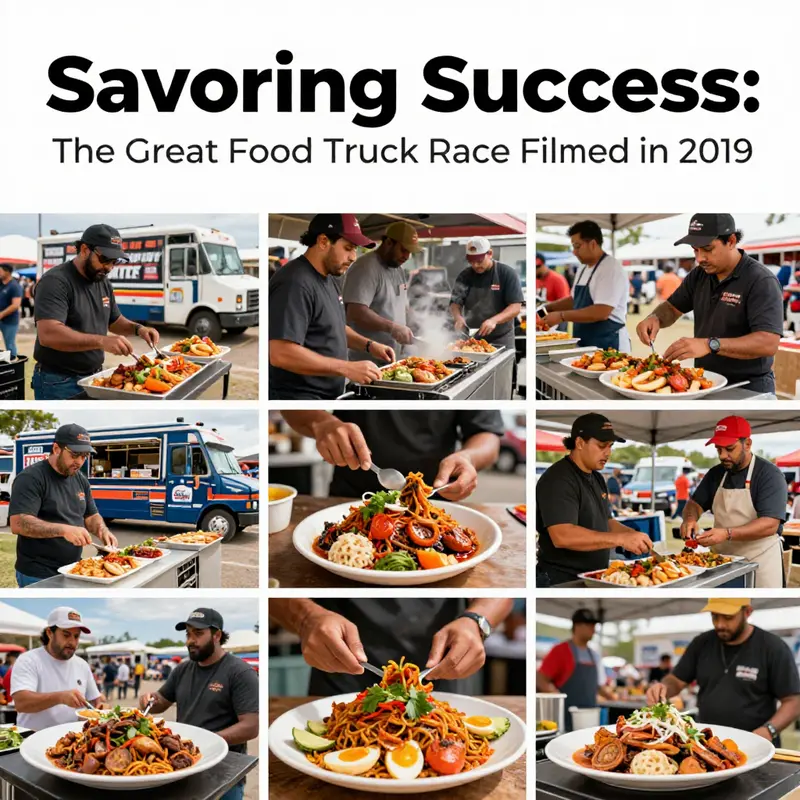
The Great Food Truck Race, filmed in 2019, unfolds not just as a contest of speed and sales, but as a study in how place shapes palate. When the cameras rolled in Newport, Rhode Island, the season pressed into view a cityscape that is at once maritime, historic, and intensely modern in its appetite for new combinations of flavor. The result is a chapter in the show’s larger story about how mobile kitchens translate local character into portable meals. The Newport backdrop, with its salt-kissed air and harbor views, becomes more than scenery; it is a participant in the drama of a competition where taste, timing, and terrain collide. The season’s filming, which culminated in a late-2019 premiere, captures a moment when a seaside New England town offered the show a multi-layered stage: the water’s edge for dramatic entrances, cobblestone streets for brisk queues, and a climate that nudges cooks toward crisp contrasts and quick improvisations. It is a portrait of cuisine in which the ocean’s rhythms, the town’s history, and the crews’ entrepreneurial flair fuse into a single narrative about food as place, as memory, and as performance.
The season’s premise rests on a simple but powerful premise: teams of chefs travel through diverse locales, crafting signature dishes that speak to regional ingredients while also speaking to a broad, hungry audience. In Newport, that dynamic is intensified by the city’s own culinary vocabulary, constructed from decades of fishing culture, colonial tasting menus, and the stubborn charm of the Atlantic shoreline. The show does not merely present meals; it stages them as conversations between cook, crowd, and coastline. The clips, often shot on spots around the harbor and along Newport’s beloved routes, reveal how a kitchen on wheels negotiates both the constraints of speed and the generosity of local generosity, all while contending with the town’s seasonal rhythms. The filming taps into a sense of place that’s less about tourism and more about immersion: the crews don’t just sell food; they offer a taste of Newport’s mood—its brisk mornings, its sunlit afternoons by the water, and the way the town slows down long enough for a line to form, a conversation to begin, and a dish to tell a small, urgent story.
Culinary ambition in this season is inseparable from cultural context. The teams arrive with a toolbox of techniques and a menu philosophy that must flex when faced with coastal seafood traditions, New England dairy textures, and the improvisational spirit that defines street fare across the country. Newport’s rivers of seafood, its shellfish markets, and its long history as a summer crossroads contribute an explicit flavor to the competition: dishes that balance brine, sweetness, heat, and crunch. The kitchens on wheels become translators, translating local lure into portable memory. A bite here might echo a seaside tradition—soft, velvety, and bright with citrus; a bite there might lean toward smoky smoke and char where land meets sea. In practice, the season demonstrates how experience, technique, and taste negotiate a place’s identity in real time. It is not merely about who sells fastest, but who can capture a sense of a locale in a plate—who can bind a dining room, even a temporary one, to the coast it frequents.
Newport itself is a study in maritime culture and historical layering, a city where a cliff walk offers a stately promenade beside stately homes, and where small shoppes, eateries, and carts mingle with museums and views of the harbor. The season makes this geography feel practical, not ornamental. The trucks move between waterfront spaces, family-friendly piers, and compact streets that funnel crowds into makeshift queues. The audience learns quickly that the show’s appeal is amplified by the way the physical landscape informs decisions about what to serve, how to plate, and how to talk to customers. A dish that shines in a sun-dappled square might struggle in a shaded alley; a dish that pleases a long line of locals might fail to spark curiosity among visitors for whom Newport is a once-in-a-lifetime stop. In that sense, the Newport shoot becomes a case study in how context is cooked into the competition’s rhythm. The contestants have to read not just their own prep lists, but the weather, the flow of foot traffic, and the way the town’s residents respond to new flavors presented in a familiar setting.
Cultural resonance comes through in the careful balance of tradition and invention. Newport’s culinary currents include a reverence for seafood, a history of Italian-American influence, and a broader New England sensibility that prizes fresh ingredients, comfort, and ingenuity. In the show’s hands, these currents do not appear as static stereotypes but as living forces that prompt teams to pivot their menus. The episode arcs reveal how teams reframe their ideas in response to a single market day by the wharf, or an evening crowd gathered at a historic site. The result is a menu language that reads as both memory and experimentation: a nod to classic coastal dishes reimagined through the lens of mobility and every-day improvisation. The urban-rural spectrum at play—where roadside booths meet seaside cuisine—pushes contestants to consider not only what is delicious, but what is feasible within time, space, and budget constraints. The show’s structure, with its escalating challenges and time-bound service windows, compresses this cultural negotiation into a sequence of moments in which food becomes a vehicle for place-based storytelling.
The season’s filming in Newport thus captures more than culinary technique; it captures how place becomes pedagogy. Local ingredients provide a vocabulary; the waterfront provides a cadence; and the audience’s gaze provides a mirror. When the camera lingers on a steam of harbor fog crossing a quay as a truck flips open its service window or when a crowd gathers around a bright, steam-wreathed pan, viewers glimpse the intimate exchange between cook and consumer that underwrites the entire enterprise. The show’s editors often capitalize on the coast’s sensory cues—the briny tang on the air, the sound of gulls over a line of eager diners, the glow of a sunset over a row of historic façades. These elements do more than decorate the scene; they shape how teams conceive their offerings in real time. A dish might lean toward brightness to wake up a diner after a windy afternoon, or it might lean into deeper, comforting textures as temperatures drop in the evening. The charisma of Newport’s locations—the way a simple portside stall becomes a place where strangers become neighbors for a few minutes—feeds the show’s narrative of culinary adaptation and cultural exchange.
Within this framework, the show foregrounds a broader truth about American food culture: the best mobile concepts are those that translate local memory into something portable. In Newport, that translation happens through two intertwined channels: technique and storytelling. Technique is the craft of turning seasonal, coastal produce into concentrated flavors that travel well and withstand the pressures of a bustling market day. Storytelling is how a truck owner, a cook, or a team captain communicates with the crowd—through a name, a backstory, a suggestion of regional pride, or the promise of a familiar comfort reimagined for a new audience. The season demonstrates that successful mobile kitchens are not just about culinary prowess; they are about social fluency, the capacity to read a crowd’s mood, and the willingness to adjust a plan midstream when a location’s character begins to tilt the day toward something else entirely.
In this sense, the Newport segment of the season becomes a microcosm of how food culture operates on a national scale. The interplay of coastal abundance, maritime history, and urban vitality mirrors larger patterns in the country’s evolving food landscape: a growing emphasis on provenance, a preference for dishes that fuse technique with story, and a willingness to take culinary risks when the stakes—visibility, customer satisfaction, and cultural resonance—are high. The show’s format, with its rapid-fire service and multi-stop route, amplifies these dynamics. Each stop becomes an experiment in how far a concept can travel and still feel rooted. Each crowd’s reaction to a dish becomes a data point about how local flavors travel across geographies, how they are interpreted by cooks who may come from somewhere else, and how they can be adapted to fit a different palate without losing their essence.
The chapter’s attention to Newport’s physical texture matters because it reminds viewers that food is never created in a vacuum. It is shaped by weather, by street architecture, by walkable lanes that determine how long a line stays put, and by the city’s seasonal tempo. A dish that would be perfect on a summer pier might need a variation on a chilly late-fall evening. Conversely, a warm, hearty offering crafted for a Newport crowd might feel too heavy for a sun-drenched afternoon on a crowded inlet. The show’s crews learn quickly that the best menus are those that can flex—maintaining core identity while offering subtler adjustments that respond to place and moment. The Newport shoot thus reads as an education in culinary adaptability, a reminder that flavor is not merely about a recipe but about the conditions under which that recipe is offered to a diverse audience.
From a cultural standpoint, the season also highlights how community and commerce intersect in the world of food trucks. The mobile kitchen becomes a communal instrument; it invites passersby to participate in the act of tasting, sharing, and judging. The same street that hosts a festival in the summer may become a practical laboratory of taste in the fall, when fewer tourists mean more locals in attendance and a different energy. The dynamic of competition—the push to stand out, to feed more people, to earn a place higher on the leaderboard—exists within a broader social ecology. The show, by situating this dynamic in Newport, foregrounds the city’s role as both spectator and participant in a living culture of food street commerce. It shows how a town’s identity can be amplified by the presence of traveling cooks who, in turn, borrow from that identity as they craft menus that feel both familiar and newly exciting. In short, the season is less about a handful of signature dishes and more about the ways a coastal town’s culture informs, challenges, and ultimately enriches the culinary ideas being tested on the road.
This chapter would be incomplete without acknowledging the velocity at which viewers encountered these cultural exchanges. The episodes compress weeks of planning, testing, and improvisation into tight, watchable segments. Yet those segments carry a slow-blooming truth: food culture is not a finished product but an ongoing conversation between producer, consumer, and place. Newport’s cinematic light and the town’s layered streetscapes contribute to that conversation by inviting viewers to notice the subtle choices cooks make. A menu’s emphasis on local seafood, for example, is not simply a nod to regional supply chains; it is a statement about where a community’s curiosity lives and how quickly it can be translated into a street-meal form. The season demonstrates that the most compelling mobile menus are those that honor origin without becoming frozen in it—menus that honor the coast while inviting the crowd to discover something unexpected, even transformative, within the familiar. And in this, the show achieves its broader aim: to reveal how culinary invention can be both anchored in a place and liberated by it.
To center the conversation around branding, the idea that a truck’s identity matters as much as its dish becomes clear in Newport’s microcosm. A truck’s visuals, its name, and its story matter when the clock is ticking and a customer is deciding what to try first. The way a team presents itself, the clarity of its concept, and the ease with which a diner can connect with the vehicle’s personality all feed the line of those willing to give a dish a first chance and a second. In that sense, food trucks function as ambulatory museums of taste and narrative, moving through a city that itself is a living archive of maritime history and seasonal ritual. For teams, the challenge extends beyond perfecting a recipe; it includes packaging, display, and the spoken word—the cheer, the wink, the brief note that invites a dare or a memory. Newport’s scenic complexity amplifies these choices, often rewarding a bold, story-rich approach while punishing clumsy execution or a dish that feels out of step with the moment. The result is a vivid reminder that cuisine in a competitive setting is as much about performance and perception as it is about technique and texture.
As the cameras recorded the season’s Newport chapters, a larger narrative about American food culture emerged with particular clarity. The country’s mobile-food culture thrives at the intersection of mobility, cost-consciousness, and a hunger for novelty that still respects heritage. The Newport episodes crystallize that intersection into a living tableau where the coast’s influence mingles with global techniques, where a simple shellfish-inflected sauce can feel both deeply local and globally resonant. The show’s editors, in turn, choreograph this synthesis into a rhythm that feels inevitable: a quick-fire sequence of prep, service, and applause, followed by a quick recalibration of ideas as the next location opens on the map. In the end, the Newport season is less a snapshot of one competition and more a demonstration of how place, flavor, and performance travel together, shaping menus that are at once recognizably regional and cosmopolitan in their ambition.
To the reader awaiting a more technical examination of how food-truck teams balance cost, speed, and quality, the Newport segment offers a compact case study. The demands of a seaside town that is both tourist magnet and local heartbeat push teams to steward a limited set of ingredients with maximal effect. They learn to lean into regional seafood textures, to leverage the brightness of citrus or herbaceous notes that cut through the carriage of windy docks, and to time their service so that a dish lands hot and vibrant in the last moments of a crowded day. The practical lessons extend beyond Newport’s gates: the same principles translate to any cityscape where mobile kitchens must operate efficiently while still conveying a sense of place. The episode’s success confirms that when cooks are allowed to honor local character while executing a disciplined service model, audiences respond with enthusiasm, curiosity, and a readiness to explore a menu that travels with the chef rather than remaining fixed to a kitchen station.
Within this framework, a single route through Newport becomes a thread running through the day’s broader themes. The show’s journey is a passport for taste, a tour through how communities welcome strangers who bring new flavor ideas and how those ideas, in turn, get folded into local repertoires. The townspeople who sample the dishes become co-conspirators in the act of culinary creation, validators of a concept that might otherwise have remained a mere recipe. The result is a season that feels less like a competition and more like a toast to the coastal world’s evolving cuisine, where the act of eating on the move is both practical and poetic. The Great Food Truck Race, 2019 in Newport, thus reads as a layered chronicle of American food culture in motion—an invitation to consider not only what tastes good but how taste, memory, and place come together to tell a story that travels well.
For readers who want to explore a related thread—the idea that branding and identity are essential to mobile food concepts—consider the deeper guide to how graphics and package design can shape a truck’s reception on crowded streets. This resource offers practical insight into building a cohesive on-the-road identity that resonates with audiences while staying legible from a distance, a skill particularly valuable in fast-changing environments like Newport’s bustling serves. Branding on Wheels: the ultimate guide to food-truck graphics and identity.
External reference: for readers interested in the broader context of urban, budget-friendly food-truck scenes as a comparative lens, a widely read local outlet offers a comprehensive overview of options and crowd-pleasers in large-city settings. External resource: https://www.houstonchronicle.com/food/2026/01/19/best-food-trucks-in-houston-budget-wise-picks-and-crowd-pleasers/
Final thoughts
As the aroma of creativity and competition wafted through the air, The Great Food Truck Race filmed in 2019 brought Newport to life through a delicious lens of diverse culinary talents and local charm. Each episode invited viewers to explore not just the food, but the rich backdrop of a city with a story. From its breathtaking views to its historical landmarks, Newport served as an ideal backdrop for a season rich in culture, flavor, and excitement. Whether you are an event planner, corporate team member, or simply a lover of food, the experiences and insights from this culinary adventure are sure to inspire your next delicious endeavor.