Michigan offers an exciting landscape for mobile cuisine, festivals, and on-the-spot experiences. The appeal of pairing a sizzling taco or spicy ramen with a refreshing drink is undeniable for event planners, corporate teams, and communities looking to spark energy and connection. Yet alcohol service from a food truck isn’t simply a question of enthusiasm; it hinges on tightly regulated frameworks set by the Michigan Liquor Control Commission (MLCC) and local authorities. While on-premises consumption permits exist, they are typically tied to established restaurants, bars, and taverns—not mobile vendors. This means that, in most cases, a food truck cannot legally sell alcohol at will. The chapters that follow unpack regulatory pathways, compare licensing barriers between mobile vendors and fixed establishments, and translate compliance into practical steps for events, neighborhoods, and everyday consumers who want to enjoy responsibly curated beverage options at mobile-food occasions. By the end, you’ll have a clear sense of what’s possible in Michigan and how to design engaging, compliant experiences for your audience.
Alcohol on Wheels: Decoding Michigan’s Rules for Food Trucks and On-Premises Permits
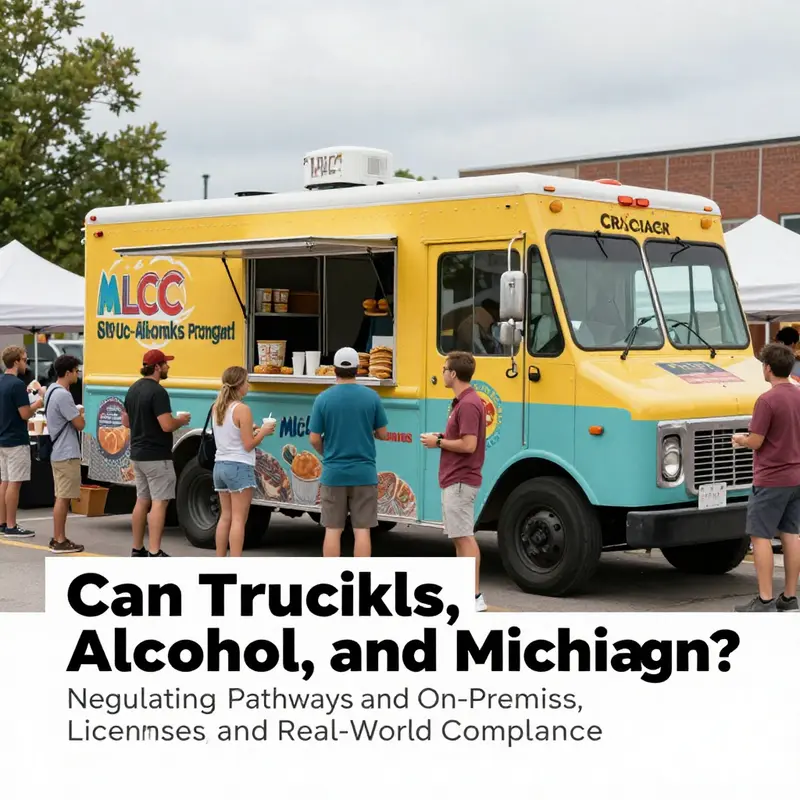
The question of whether a food truck can sell alcohol in Michigan opens a window into a carefully mapped regulatory landscape. In practice, the short answer is nuanced: alcohol service from a mobile vending unit is not a simple yes or no. Michigan’s liquor laws are administered by the Michigan Liquor Control Commission (MLCC), and they frame alcohol licensing around the idea of consumption at a fixed, licensed establishment. That framework traditionally aligns with brick and mortar venues—restaurants, bars, and taverns—that can meet the required standards for on-site drinking, including food service, health compliance, and responsible beverage service. For a moving vehicle, the landscape shifts. The MLCC guidance emphasizes that licenses tied to on-site consumption are intended for stationary places where patrons eat and drink within a defined footprint. A food truck, by its nature, is designed to move from one location to another, bringing a temporary kitchen and service window to a broad range of neighborhoods, events, and markets. This fundamental mismatch—mobility versus a license that envisions a fixed site—has created a regulatory hurdle that many operators expect to be insurmountable for day-to-day alcohol service.
Yet, the regulatory narrative is not strictly binary. The detailed guidance from MLCC notes that some pathways exist in theory for certain operators to offer alcohol at specific, controlled situations. The concept hinges on on-premises consumption permits that are associated with a physical location where alcohol is consumed on-site. To translate that idea to a food truck scenario, an operator would need either a temporary or permanent on-premises consumption permit that recognizes the food truck’s service area as a lawful, approved space for drink service. In essence, the vehicle would need to function as part of a legally defined premises, with clear boundaries for where alcohol can be served and consumed. The practical challenge is enforcing those boundaries while the truck is (a) parked in a location and (b) moving between locations for lunch, dinner, or events.
The key rule to internalize is straightforward in wording, if not in all its implications: alcohol service tied to a license is linked to a site, not a vehicle. The MLCC requires that a permit holder maintain conditions that support responsible service, including age verification and trained staff. In many cases this means the person pouring drinks must be a licensed bartender or a server who has completed recognized responsible beverage service training. The state’s emphasis on training is not merely bureaucratic; it reflects a broader priority of preventing underage consumption, reducing intoxication risks, and ensuring that customers receive food with their drinks, rather than alcohol being the sole focus of the interaction. A food truck, operating on a street or at an outdoor event, would therefore need to weave these expectations into every service window, even when the vehicle is surrounded by a crowd that might be drawn to alcohol as much as, or more than, to food.
Application pathways for alcohol service by a mobile vendor hinge on the permit structure offered by MLCC, and this is where the official guidance becomes most instructive. A food truck operator must consult the MLCC’s official permit pages to determine whether an on-premises consumption permit can be issued in connection with a mobile service model. The process involves specifying the physical location(s) where alcohol will be served and ensuring that the location meets all regulatory criteria. Documentation will typically include proof of business licensing, restaurant or food service permits, health department clearances, and a plan that demonstrates how the truck will operate within the confines of a licensed premises footprint when alcohol is being served. It is not enough to claim a strategic partnership with a nearby restaurant; the permit itself must be anchored to a defined site where alcohol is consumed on-site under the law.
For operators seeking practical clarity, the distinction between serving alcohol on-site from a truck parked within a permitted zone and serving alcohol to customers who then move away from the truck with their drinks is essential. The law does not permit normal takeout alcohol service from a food truck as easily as from a stationary retailer. The takeaway model remains largely prohibited, which underscores why many menus that include beverages at a food truck focus on non-alcoholic options or weave in partnerships with licensed venues where alcohol service is already permitted. The onus falls squarely on the operator to ensure that any sale of alcohol aligns with the defined licensing framework and with local zoning and health requirements that can vary widely from city to city.
As readers of this chapter will know from the broader arc of the article, local variations matter deeply. Michigan’s state rules do not exist in a vacuum; municipal codes often add layers of requirements for street vending, outdoor sales, and alcohol service in public spaces. Some municipalities restrict alcohol service to licensed hybrid premises with fixed boundaries, while others may permit temporary licenses or event-based permissions that could, in theory, accommodate a mobile vendor under tightly controlled conditions. The tension here is between the mobility that makes a food truck appealing and the regulatory appetite for a stable, inspectable, and accountable alcohol service environment. In this sense, the aim of MLCC policy is not to deny all mobile alcohol opportunities outright, but to ensure any such activity is anchored to a defined, controllable space with trained staff, reliable oversight, and clear patron expectations.
The practical implications for operators are concrete. First, to pursue any form of on-premises alcohol service linked to a truck, the operator must secure standing authority from the MLCC, which may require a formal, location-based permit arrangement. Second, there is the requirement to keep the truck stationary during the service window. The moment a vehicle begins to move again while alcohol is being served or consumed, the regulatory justification begins to erode. Third, the operator must implement responsible beverage service protocols, including verifying age and ensuring that staff are trained. Fourth, there will be a need to align with local health and safety standards, which includes proper food handling, sanitation, and potentially refrigeration standards for alcoholic beverages.
To illustrate how this might unfold in practice, imagine a scenario where a licensed food truck operates at a recurring site, such as a festival lot or a designated curbside zone in a city that has approved such arrangements. The operator would apply for an on-premises consumption permit tied to that location, ensuring that the truck remains stationary while alcohol is served to people who are consuming meals at the site. The staff would carry out age verification and require customers to be seated or within a defined on-site consumption area. The service window would be designed to prevent consumption off-site, and signage would reflect the explicit on-site policy. Even in this construct, the license is anchored to a location, not a roaming vehicle, reinforcing the sense that the permit reflects a social space as much as a vending operation.
For those who want a structured map of the official pathways, the MLCC maintains a portal dedicated to alcohol permits, including those applicable to mobile vendors. The page lays out the types of permits, the eligibility criteria, the application steps, and the documentation needed. While it may read as a straightforward checklist, the underlying substance reveals how carefully Michigan courts the balance between commerce, safety, and public trust. The information emphasizes that eligibility is not automatic for mobile food operators and that obtaining any form of on-premises consumption permit involves a rigorous process, city by city, site by site. This is not a loophole to exploit but a framework that seeks to ensure that any alcohol service is integrated with food service, age verification, staff training, and a legally defined consumption area.
In the heart of this topic lies not only the license itself but the culture of service it presumes. Michigan’s Responsible Beverage Service training, when required, is about more than compliance; it is about shaping how staff interact with customers in a high-stakes setting where intoxication and safety intersect with public health. The training covers recognizing signs of intoxication, refusing service to intoxicated patrons, checking IDs, and handling challenging situations with discretion. A well-trained server becomes a guardian of the guest experience while also acting as a regulator of the surrounding environment. For operators who want to blend a culinary show with a responsible consumption environment, the training requirement becomes a central design decision, influencing hiring, shift planning, and the overall experience of the event or site.
If the reader seeks to traverse this landscape with a sense of realism, it helps to anchor expectations in the realities of local administration. The state-level permits interact with city ordinances and county health codes, which may impose additional constraints on hours of operation, signage, parking, and noise. The fire marshal and code enforcement officers may have a say in how a mobile alcohol service integrates with a public space, especially in densely populated neighborhoods or areas with strong pedestrian traffic. The practical takeaway is simple: even if a theoretical permit could exist for a mobile unit, the actual likelihood of sustained alcohol service from a moving truck is highly contingent on the permit’s anchorage to a defined site and on the willingness of local authorities to approve and monitor that arrangement.
Amid these considerations, operators often inquire about alternative routes that preserve business goals without running afoul of the law. One pathway is to maintain alcohol-free operations from the truck while still offering beverage options at partner venues that hold their own licenses. This can take the form of a collaborative arrangement where the food truck provides culinary offerings at a licensed restaurant or tavern that serves alcohol under its own license, effectively integrating the culinary experience with a licensed alcohol service in a manner that stays squarely within statutory boundaries. Another pathway is to participate in events for which temporary permits may be issued, allowing alcohol service within a controlled footprint for a defined time period. In both cases, the license that permits alcohol remains tied to a fixed location or a defined event environment rather than the vehicle itself, preserving compliance while enabling the business to explore alcohol-associated revenues in a responsible, legally sound manner.
A final practical note invites readers to reflect on the broader regulatory ecosystem. Local zoning decisions, health department directives, and property access rights all shape where and when a food truck can operate with alcohol. Even when a permit exists, it can be rendered less practical by parking restrictions, city curfews, or quiet hours that curtail business opportunities. This landscape argues for a strategic, phased approach: first, determine if a stable site can host the on-premises consumption operation; second, complete the MLCC permit process with attention to documentation and staff training; third, coordinate with city agencies to secure the necessary zoning and health approvals; fourth, develop a compliant service model that prioritizes customer safety and the integrity of the liquor license. The more methodical the plan, the more likely it is to deliver a lawful, sustainable path to alcohol service that complements the food truck’s culinary strengths rather than forcing a mismatch between mobility and licensing.
For readers who want a concise map of the regulatory terrain, there is value in reviewing the broader discussion on navigating food truck regulations. This internal resource helps situate alcohol licensing within the spectrum of permissions, inspections, and operational considerations that define successful mobile food businesses. Navigating food-truck industry regulations offers a focused lens on how operators balance permits, health requirements, parking, and hours of operation. While the article you are reading anchors the topic of alcohol in Michigan, the linked resource provides context on how regulators approach mobile commerce, which is essential for any operator contemplating alcohol service as part of a broader business model.
Ultimately, the question of whether a food truck can sell alcohol in Michigan defies a single, universal answer. It is a question of what licensing pathway might exist for a particular operation, at a particular site, in a particular municipality, under a defined set of hours and contingencies. The only stable truth is that if alcohol is to be served from a truck, it must be anchored to a licensed, on-site consumption framework that complies with all state and local rules. If that framework cannot be established, then the safer, more practical approach is to keep alcohol service outside the mobile model and explore partnerships and event-based opportunities that align with the letter of the law. In this sense, the journey toward alcohol service for Michigan food trucks is less about a loophole and more about a careful, compliance-first design that respects the intent of the state’s liquor laws while preserving the entrepreneurial energy and culinary creativity that draw people to mobile food vendors.
For the definitive regulatory guidance, consult the Michigan Liquor Control Commission at https://www.michigan.gov/mlcc/0,1607,7-128-493549364937_4938-,00.html.
From Street Sizzle to Sealed Permits: Navigating Michigan’s Licensing Labyrinth for Alcohol on Food Trucks
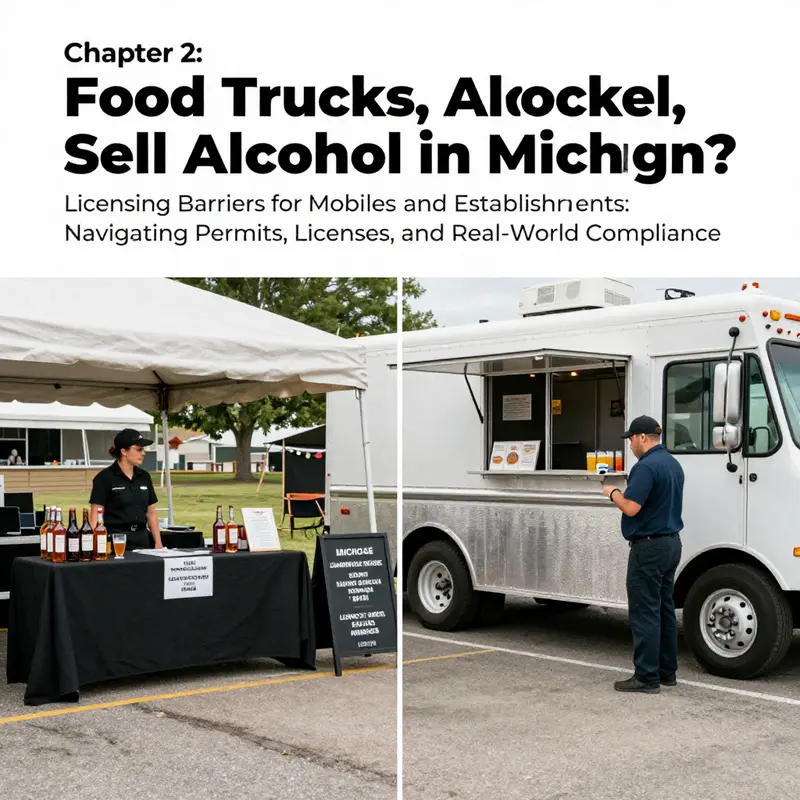
When a food truck rolls into a crowded lot, the sizzle of peppers and the aroma of fried dough often set the scene for a vibrant street meal. The idea of pairing that kind of richness with a cold beer or a glass of wine is tempting. Yet in Michigan, the dream of selling alcohol from a mobile kitchen collides with a dense structure of state and local regulations that treats alcohol licensing like a guarded doorway rather than a casual feature. The tension is not just about the decision to pour a drink; it is about whether a food truck can legally offer alcohol at all, and if so, under what precise and often punishing conditions. To understand the path for operators, restaurateurs, and event organizers, we need to follow the thread from the Michigan Liquor Control Commission (MLCC) to the municipal streets where the trucks operate. In this landscape, licensing is not a single permit but a system with gatekeepers, prerequisites, and limits that can feel like a moving puzzle for a business model built on mobility and speed.
The overriding rule, as state authority figures often remind prospective sellers, is that alcohol is tightly regulated and not generally available to mobile vendors unless a distinct licensing framework is satisfied. Restaurants and bars can obtain licenses to serve alcohol for on-site consumption, subject to the type of establishment and the jurisdiction in which they operate. This is the baseline, and it creates the initial barrier: a food truck is not automatically granted a permit that allows alcohol service on the move. The MLCC’s published guidance makes it clear that on-premises consumption permits are tied to recognized establishments—places where patrons sit down, order a meal, and consume beverages in a setting that the license envisions as a stable, fixed site. A food truck, by the nature of its business, travels, relocates, and often operates in public or semi-public spaces that change from hour to hour. This fundamental difference in operating model underpins why many operators encounter a legal obstacle the moment they consider adding alcohol to their menu.
From the outside, the contrast might look simple: one line of business sells food, another sells alcohol, could those lines cross? The MLCC’s position is nuanced. In the official framework, a typical on-premises liquor license does not extend to a mobile vendor that lacks a fixed premises. If a truck wants to serve alcohol, it cannot rely solely on the standard restaurant or tavern license that a brick-and-mortar diner would use. The live policy in practice has led some to describe a dual-track reality: first, a license to sell alcohol for on-site consumption, and second, a separate licensing mechanism specific to mobile vendors. In some versions of the licensing narrative, this is imagined as a Mobile Vendor Permit in addition to the normal liquor license. The language across sources hints at this dual-path reality, even as the MLCC’s official pages emphasize the ineligibility of mobile vendors for the standard on-premises permits. The practical effect is a process that is complex enough to deter many operators, and costly enough that the economics of selling alcohol from a truck often do not pencil out without strategic compromises.
What makes this more than a theoretical barrier is the lifecycle of compliance that accompanies any alcohol service. Even if a Mobile Vendor Permit exists in some interpretive framing, it does not come with blanket approval to pour beverages in every place a truck might park. The location, the hours of operation, and the physical proximity to sensitive zones are all part of the approval calculus. Local rules matter as much as state rules, and in many communities, the boundaries are drawn with careful attention to youth access, public safety, and the character of neighborhoods. The combined effect is a system that rewards careful planning and punishes improvisation. A truck that seeks to serve alcohol must anticipate not only the cost of the permits themselves but the ongoing obligations that come with them: secure areas, trained staff in responsible alcohol service, ID checks, and clear adherence to age-verification protocols. The safeguarding logic behind these provisions is straightforward enough, but the practical impact on a mobile business is substantial. The driver who wants to capitalize on a bustling festival, a street fair, or a weekend market must weigh the benefits of alcohol sales against the risk of delayed approvals, last-minute permit renewals, or outright denial.
Given that the MLCC’s official stance can appear rigid, it is worth looking at the ecosystem around licensing as it actually plays out on the ground. Some operators have attempted to craft a workable model by partnering with an established, licensed venue. In such arrangements, the food truck operates in tandem with a bar or restaurant that already holds a valid liquor license. The truck then serves food and becomes, effectively, an extension of the licensed site rather than a standalone mobile alcohol seller. In this configuration, the question of legality does not vanish, but it shifts dramatically. Alcohol is legally permitted to be offered only when the truck is on the premises of the licensed site, and the license liability rests with the stationary establishment. Mobility, which is the core advantage of a food truck, is consequently constrained to the footprint of the partner site. The food‑truck model thrives on the ability to rove across neighborhoods, to chase festival schedules, to respond to events across a city—yet when alcohol enters the equation, that flexibility often contracts into a subservient role within a fixed legal perimeter. The economics of this approach hinge on the balance between the revenue uplift from alcohol sales and the costs and logistical overheads of certification processes, partner agreements, and the potential reduction in location options.
The regulatory atmosphere is not simply a matter of having the right paperwork. It is also the matter of when and where the paperwork is valid. The MLCC framework contemplates specific proximities and time blocks that affect permission to operate with alcohol. For example, many jurisdictions impose distance restrictions from schools, churches, or other sensitive institutions. The intent behind these constraints is to minimize the concentration of alcohol-serving venues near places where the community gathers for education, worship, or residential life. And if a permit is issued, it might be limited to certain hours or seasons, a feature that aligns with the event-driven tempo of food-truck culture but adds a layer of scheduling complexity for operators who plan multi-day fairs or regional tours. The seasonal or event-specific nature of a permit, rather than a year-round license, means that operators cannot simply count on a steady stream of nightly alcohol sales. They must segment their business calendar, apply for renewals, and absorb the administrative burden that comes with repeating the permit process for each season or festival. This rhythm—seasonal permissions that must be chased and renewed—can reshape strategic planning around menus, staffing, and cash flow, nudging operators toward more predictable revenue channels and away from the unpredictability of alcohol sales.
All of this leads to a central inference: for most food trucks in Michigan, alcohol sales are not feasible as a free-standing, year-round feature. Even with a Mobile Vendor Permit in the theoretical mix, the operational reality is that the permit is rarely a simple, open road for daily alcohol service. The more common reality, in many communities, is a constraint-laden, partnership-driven model that relies on the physical presence of a licensed site rather than independent mobile liquor service. This is not to say the door is permanently closed. The licensing framework remains flexible enough to accommodate unique event-driven opportunities, such as street fairs and pop-up collaborations, where the environment is controlled, the footprint is clear, and the event organizers or host venues have negotiated the required licenses with the MLCC and the local authorities. But the cost of entry, the complexity of compliance, and the regulatory risk create a formidable threshold for the average food-truck operator who wants to pour beer or pour wine on every curbside corner.
To understand why this threshold remains so high, it helps to consider the model that supports alcohol distribution in Michigan. The system is built to prevent anonymous and unregulated consumption; it seeks to prevent sales from traveling into vulnerable or inappropriate settings; and it aims to preserve a chain of accountability that begins with the license and ends with the server. The server must be trained in responsible serving practices, must verify age, and must adhere to a defined operating framework that ensures alcohol is served only to patrons who are legally allowed to drink and only in a manner consistent with the license. A food truck, with its rotating crew and travel pattern, introduces a host of potential compliance challenges. The staff may vary from shift to shift, the truck’s location shifts with the city’s rhythms, and the on-site security provisions must be enforceable wherever the truck parks. This combination of mobility and compliance creates a matrix that many operators decide is not worth the revenue uplift unless they can secure stable, predictable conditions through a fixed partner venue or a carefully curated festival schedule.
In the absence of a universal, mobile-friendly licensing path, many operators focus on the non-alcohol side of the business—with the marketing leverage of a lively beverage scene still within reach through partnerships. The trend toward collaboration reflects a broader reality: the food truck economy thrives on mobility, speed, and the ability to reach diverse crowds across neighborhoods and events. Alcohol, by contrast, anchors a business to a particular set of legal responsibilities and physical spaces. The result is a carefully negotiated compromise: serve food with non-alcoholic beverages freely, and pursue alcohol sales only through a controlled, legally permitted channel that minimizes risk. And even when alcohol is not available, there are many other ways to create a distinctive, premium customer experience: unique pairing menus, craft mocktails, seasonally inspired beverages, and careful, legally compliant beverage offerings that do not require a separate liquor license. By leaning into these alternatives, operators can still craft a compelling value proposition while respecting the regulatory boundaries that protect public safety and the integrity of the licensing system.
What does this mean for the entrepreneurial mind behind a Michigan food truck? It means recognizing that the dream of serving alcohol on the move is not a simple add-on but a regime that requires long-term commitments, substantial administrative investment, and careful location planning. It means understanding the difference between a truly mobile service model and an extension model tethered to a licensed venue. It means preparing for a world where the magic of street dining—where the truck arrives, customers gather, and food becomes a shared experience—needs to be carefully choreographed with the legal framework that governs alcohol. In practical terms, a prospective operator should start with a conservative assessment: can the business afford the cost and risk of pursuing an alcohol pathway? If the answer leans toward high risk or uncertain returns, the prudent course is to optimize the food and beverage portion of the menu within the non-alcoholic domain, while exploring controlled, venue-based collaborations that preserve the brand’s mobility and identity.
This is not simply a theoretical meditation on licensing. It is a pragmatic map drawn from the real-world constraints described in licensing guidance and observed in the field. The Michigan MLCC and local jurisdictions shape a landscape where the aspirational image of alcohol served from a roving kitchen collides with the logistical reality of fixed-site permits, seasonal approvals, and proximity rules. The path forward for a food truck business in Michigan, if it is to include alcohol, is to navigate the gatekeepers with a savvy blend of compliance, partnership, and opportunistic event participation. It asks operators to build a business model that anticipates permit renewals as part of the annual operating plan, to secure a stable venue arrangement for alcohol service, and to be ready to pivot away from on-site alcohol sales if the licensing door remains closed or doors swing only intermittently open. In the end, the choice to pursue alcohol sales from a food truck is less about appetite and more about the architecture of the business—how the permits align with the route, how staff training translates to daily operations, and how the revenue streams balance the regulatory obligations.
For those who want to dig deeper into the regulatory underpinnings, the Michigan Liquor Control Commission’s official resources offer the most authoritative view of what is possible and what remains out of reach for mobile vendors. The agency’s pages lay out the framework that separates fixed-location licenses from the unique challenges faced by mobile operators. The distinction is not merely academic; it translates into real-world decisions about where a truck parks, when it can operate, and how it stages its beverage program across events, neighborhoods, and seasons. As the legal language makes clear, the safest, most straightforward path to alcohol sales in Michigan for a food truck is through a licensed partner site that already holds the necessary liquor license and can legally extend that license to the truck on its premises. This approach preserves the authenticity of a mobile business while respecting the boundaries that protect the public and the licensing system as a whole.
For readers who want a practical reference point, further exploration of the licensing framework can be found in the broader regulatory guidance and up-to-date policy statements on the MLCC’s website. And for a closer look at the regulatory journey many operators undertake, a useful companion discussion is available in the dedicated article on navigating the food truck industry regulations, which provides context about how operators maneuver through licenses, permits, and compliance across Michigan’s urban and rural landscapes. See: Navigating Food Truck Industry Regulations.
In sum, the road to selling alcohol from a Michigan food truck is not a straightforward highway. It is a carefully guarded corridor that requires substantial alignment with state licensing rules and local ordinances, often favoring a fixed-site arrangement or an event-based model rather than unrestricted mobile service. The combination of permit complexity, proximity and timing restrictions, and the option to operate within a licensed establishment creates a sober arithmetic: for most operators, the revenue from alcohol does not justify the cost and effort of securing a standalone mobile permit. The business decision, therefore, becomes less about taste and more about strategic fit within the licensing landscape. The path forward is not closed to innovation, but it demands disciplined planning, meaningful partnerships, and a willingness to adapt the business model to the reality of Michigan’s liquor laws. This nuanced understanding sets the stage for the next chapter, where the discussion turns to how operators can leverage community events, partnerships, and regulatory savvy to build a compelling beverage program within legal boundaries while continuing to celebrate the core appeal of food trucks: mobility, variety, and direct connection with customers on the street.
External resource: https://www.michigan.gov/mlcc
Alcohol Sales by Michigan Food Trucks: Navigating the Regulatory Landscape
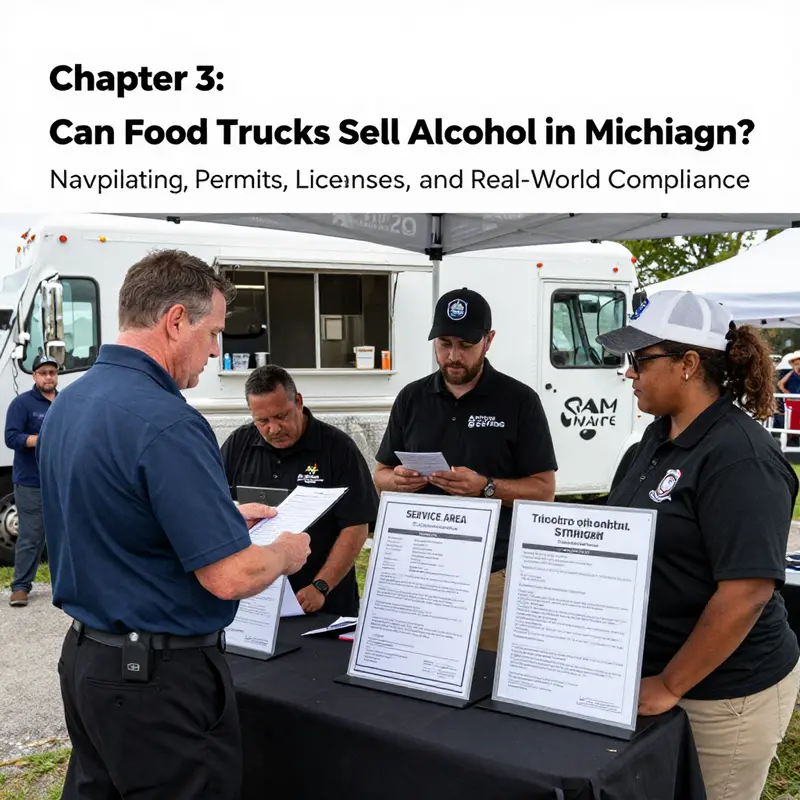
In Michigan, selling alcohol from a food truck is not automatically permitted. The state liquor control framework licenses on-premises alcohol service to fixed venues such as restaurants or bars, and licenses are generally not portable to mobile vendors. Local ordinances may allow temporary or event-based alcohol service, but such permissions are exceptional and require careful coordination with city authorities and the Michigan Liquor Control Commission (MLCC). Operators typically pursue two paths: partner with a licensed fixed site that can host the truck, or participate in events where the event sponsor holds the necessary liquor licenses. As a practical alternative, many operators emphasize nonalcoholic beverages or collaborate with licensed venues for alcohol service. Any attempt to sell alcohol without proper licensing can lead to fines, suspension of licenses, and other penalties. For current requirements, consult MLCC resources and local clerks, and ensure all approvals are clearly documented in contracts that assign responsibilities for compliance and liability.
Final thoughts
The short answer is nuanced: while Michigan can offer exciting beverage experiences, a food truck as a mobile vendor generally cannot independently sell alcohol under MLCC rules. Establishments with on-premises permits, careful event planning with licensed partners, and strict adherence to local ordinances are the practical paths forward. By working within the law and prioritizing responsible service, event organizers can deliver engaging food experiences, maintain guest enthusiasm, and protect attendees and vendors alike. The key takeaway: design your beverage strategy around licensed partners or non-alcoholic options, and treat alcohol service as a carefully licensed, venue-based element rather than a standalone mobile offering.