The excitement of Food Truck Race Season 16 resonates beyond just the tantalizing aromas of gourmet dishes; it tells a story of competition, creativity, and culinary excellence. With vibrant food cultures showcased and passionate talents competing, this season has left an indelible mark on viewers and food enthusiasts alike. From investigating who clinched the coveted victory to analyzing competition dynamics, discovering key insights, and gauging audience reception, we embark on a flavorful journey that celebrates street food heroics. Each chapter unveils another layer of this extraordinary race, linking the journey of the contestants to greater trends in the food truck industry that engage event planners, corporate teams, community groups, and food lovers all over.
From David vs. Goliath to a Double-Flavor Victory: Unpacking Salty & Sweet’s Season 16 Triumph
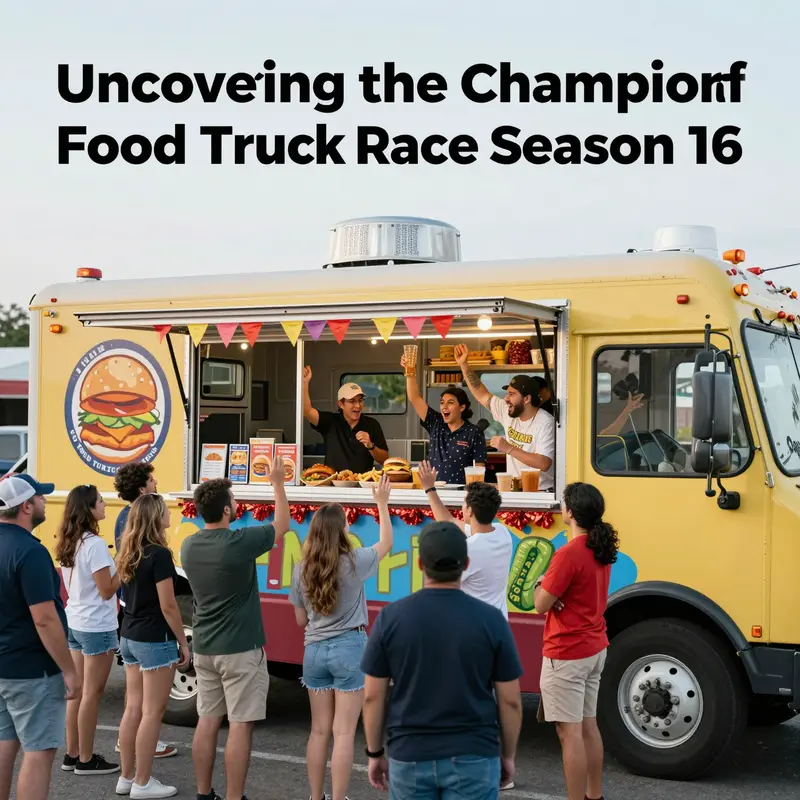
Season 16 of The Great Food Truck Race arrived with a premise steeped in contrast: small, nimble teams facing off against larger, more entrenched competitors. The season, subtitled David vs. Goliath, promised a clash of runs and raw talent, of improvisation meeting organization, and of culinary voices that could cut through a crowded market. By the time the final episodes rolled in, one partnership stood out not just for winning in the end, but for turning the season’s pressure into a coherent and market-savvy plan. Salty & Sweet, the two-chef team led by Kevin and Jennifer, claimed the crown, a victory that was as much about strategic execution as it was about creative plate work. Their win, which premiered on June 18, 2023, became a case study in aligning a distinctive menu with a strong sales engine and a route to audiences that could transcend picky palates and seasonably fickle crowds. The story of Salty & Sweet is not merely about success in a reality competition; it is a reminder of how a food concept, when balanced and well managed, can become a portable brand across a rotating set of streets, markets, and neighborhoods.
To understand why Salty & Sweet prevailed, it helps to trace the season’s throughline. The contestants navigated a format that tested every facet of a food truck operation: the nimble navigation of city grids, the discipline of inventory and cost control, and the artistry of a menu that could be plated quickly under pressure while still telling a story. The duo’s approach leaned into a core philosophy: flavor should be approachable yet memorable, price points should accommodate high-traffic events as well as slower detours, and the service experience should feel personal even when a line loops around the block. In practice, that translated into a double-barrel plan. First, a menu that offered a confident balance of salty and sweet profiles—savory bites that could sustain the pocketbook and sweet finishes that could convert loyalty in a single moment. Second, a sales machine that prioritized speed, consistency, and visibility, ensuring that a customer could recognize the team’s identity within seconds of stepping into the queue and then feel confident that what landed on the plate would justify the wait.
Kevin and Jennifer did not rely on a single trick or a flash-in-the-pan dish. Instead, they built a repertoire of offerings that could be scaled up or down without sacrificing quality, a trait that proved essential when the competition demanded rapid pivots. In the market, this translates to thinking beyond a single signature dish and toward a menu architecture that supports cross-utilization of ingredients, reduces waste, and accelerates the kitchen’s rhythm. It is a hard-won discipline in a world where a single misstep in timing or portioning can ripple into a customer’s dissatisfaction and a missed challenge moment. Salty & Sweet understood this implicitly. They designed sauces and components with an eye toward batch cooking, enabling them to maintain consistency across a city-wide rotation of pop-up events, each with its own tempo and potential supply hiccups. The result was a consistent product that arriving customers recognized and trusted, a reputation that compounds in a circuit where repeat interactions translate into sales momentum.
The season’s arc also highlighted the dynamics of underdog storytelling. The David and Goliath frame does not simply celebrate small teams beating the big players; it emphasizes the strategic choices that let a lighter squad punch above its weight. Salty & Sweet’s performance demonstrated the power of two complementary strengths. Kevin, with culinary instincts that favored bold, straightforward flavors, kept recipes grounded in technique and reliability. Jennifer, on the other hand, steered the business side—the pricing, the lineup timing, the menu’s narrative arc that customers could follow from the first bite to the last. The pairing created a feedback loop where execution and perception reinforced each other. When customers saw a line forming for Salty & Sweet, they were not merely queuing for food; they were queuing for a story in which the two chefs had mapped out a path to victory and invited everyone to participate in it.
If there is a lesson in their triumph for readers who dream of launching or refining an own operation, it begins with the understanding that a great concept must translate into a practical system. The balance between salty and sweet is more than a flavor profile; it is a metaphor for the business model. Salty elements anchor the price and portioning, ensuring the truck remains cash-flow positive even on days when attendance is unpredictable. Sweet elements deliver the memorable moment that turns a one-off customer into a repeat guest who returns to the truck with friends and social proof in mind. The synergy between these two impulses creates a brand voice that is both approachable and distinctive, a voice that travels well across city blocks and festival grounds alike. Kevin and Jennifer did not chase novelty for its own sake. They refined what their audience valued: speed, warmth in service, reliability, and a menu that could be plated with precision under the pressure of a live competition. Those choices manifested in a performance that not only survived the race’s late-night service pressure but thrived in it, allowing the team to recover from missteps and convert near-disasters into opportunities for growth.
Beyond the mechanics of speed and plate balance, Salty & Sweet’s success also spoke to a deeply human dimension: how a team communicates under stress. The show’s most gripping moments are when partners negotiate the tension of competing demands—budget versus ambition, speed versus quality, and the desire to stand out while staying true to one’s culinary compass. Kevin and Jennifer showed that the best teams in this circuit do not rely solely on talent; they cultivate a shared vocabulary and a mutual trust that guides decision-making when every choice is a potential turning point. In practice, this meant rapid, calm decision-making during the chaos of back-to-back service windows, a willingness to adjust a plan on the fly when a market demanded a different lineup, and above all a discipline that kept egos in check while the clock counted down. The show rewarded that discipline with a consistency that fans could rally around. When a truck becomes a fixed presence in a rotating circuit, consistency translates into audience memory, and memory becomes demand, and demand becomes momentum across successive stops.
The show also highlighted the importance of branding as a living, breathing element of the business rather than a static artifice. Salty & Sweet did not rely on flashy slogans or generic imagery; they crafted a recognizable identity built around a flavor-forward concept that could travel with them. The branding resonated not only in the newspaper clippings of the finale but in street-level chatter, in the way customers described the first bite, and in the way casual observers found themselves recommending the truck to friends who would soon become customers themselves. The ability to translate branding into a repeatable, scalable service is one of the underappreciated yet essential skills in the food truck world. The season showed how a simple unity of concept—salt, sweetness, speed, and reliability—could cohere into an experience that felt both intimate and scalable.
For readers who scrutinize the path to victory, Salty & Sweet’s journey underscores the value of an adaptable menu and a precise operational cadence. It is tempting to view success as a result of one extraordinary dish or one sudden stroke of luck on a given night. In truth, the show rewards teams that manage a chain of micro-decisions with consistent care. Ingredient sourcing that reduces waste, prep that ensures every dish hits the window on time, and a menu designed to function in environments from high-footfall city streets to slow, experimental markets—all of these pieces matter. The limited-time pressure of a reality competition can accelerate the development of these muscles, pulling out the best in teams who are prepared to be honest about their limits and deliberate about their growth. Salty & Sweet’s victory did not happen by accident. It rose from a foundation built in the kitchen and a chassis engineered for mobility and resilience. The season’s challenges required the kind of on-the-ground problem solving that cannot be rehearsed in a test kitchen alone. It demanded real-world testing at different neighborhoods, different times of day, and with crowds whose tastes shift with the weather and the mood of the day. The team’s ability to calibrate flavor profiles to local preferences while maintaining a signature voice is a central takeaway for anyone aiming to replicate the feasibility of such a model.
In the larger landscape of the competitive food-truck world, Salty & Sweet’s win invites further reflection on what it means to build a lasting business on wheels. It suggests that the most valuable currency is not a single secret dish but a reliable system that can sustain growth across a moving marketplace. The contestants who followed the rankings learned that victory often favors those who manage the tension between bold concepts and pragmatic execution. The season’s narrative, anchored by the David-versus-Goliath framing, becomes less a fairy tale of a lone genius and more a demonstration of how two cooks transformed a strong instinct into a business-ready operation that could travel—and win—across many geographies. The finale’s outcome, firmly tied to that balance, invites aspiring operators to study not only the recipes but the rituals: the way teams test plates on the front line, gather feedback from crowds, reframe a menu without losing its core identity, and craft a sales approach that makes every shift profitable.
If one listens closely to the cadence of Salty & Sweet’s episodes, a quiet principle emerges: a great concept is only as good as its execution, and execution in a high-stakes setting is a function of cadence, clarity, and trust. Cadence is about aligning the team’s pace with the street’s demand; clarity is about communicating a story that guests can grasp in seconds; and trust is about knowing that the other person has your back when the timer hits zero. The balance of salty and sweet is more than a culinary tactic; it is a metaphor for how to balance ambition with practicality, showmanship with service, and novelty with reliability. Throughout Season 16, Kevin and Jennifer demonstrated that a two-person operation could carry the weight of a branded identity across multiple city veins and still emerge with a trophy and a shared sense of purpose. The journey is instructive not only for how to win a competition but for how to construct a durable, customer-centered business in a world where hands-on skills, brand storytelling, and daily discipline intersect on a crowded street corner.
For readers who want to explore more about the realities of running a food-truck operation—beyond the glossy TV moments—the broader landscape includes considerations like pricing strategy, financial resilience, and the day-to-day logistics that keep a truck rolling. Those themes recur across many successful ventures and are echoed in discussions found on industry blogs and practical guides that offer real-world tips for first-time owners. As you read stories of Salty & Sweet, consider how their focus on a balanced menu and a disciplined operation translates into the choices you might make in your own kitchen on wheels. It is a reminder that in the mobile food space, triumph often comes not from a single spectacular dish but from the steady, repeatable decisions that hold up under pressure—a philosophy that can be adopted, adapted, and applied to almost any culinary venture.
To see how one might continue learning from such journeys, you can explore additional perspectives and practical insights at the Los Chiflado’s Truck blog. It offers a window into the broader world of rolling kitchens, with notes on resilience, financing, and the daily realities of keeping a truck on the move. The endurance of a successful truck lies not only in what is plated for the crowd but in how the crew negotiates the road—its curves, its potholes, and its opportunities for growth. In the end, Salty & Sweet’s Season 16 victory stands as a case study in marrying culinary ambition with operational discipline, an alliance that keeps a truck thriving and a brand thriving even as the next season’s route begins to map its own challenges.
External reference: https://www.imdb.com/title/tt27739310/
Griddle Duels and Underdog Uprisings: Decoding Season 16 of The Great Food Truck Race
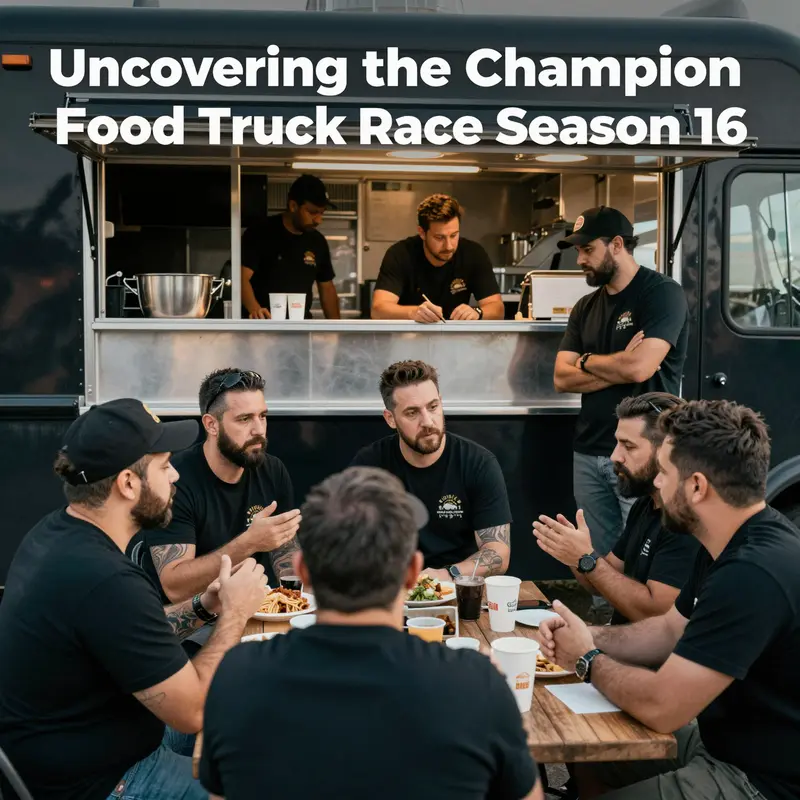
Season 16 of The Great Food Truck Race arrived under a banner that felt almost mythic in its framing: David versus Goliath. On the surface, the premise sounds simple enough—small, nimble teams take on bigger, better-funded competitors in a brutal test of speed, speed of thinking, and speed of service. But the show’s real drama is not merely about who grills the best patty or who plate-sums their sauce to a perfect gleam. It centers on a relentless, elimination-based engine where the bottom-performing team at the end of each challenge must pack up and leave. That engine, as described on Prime Video, keeps the narrative taut and the competition uncompromising. Every episode becomes a study in efficiency, as teams race the clock and each other to maximize real-world sales while navigating variables that range from customer preference to city zoning, and from weather to traffic. The core mechanics do not reward only culinary brilliance; they reward a balanced fluency—pricing that reflects demand, branding that signals value, location strategies that capture high-footfall moments, and a menu that can morph without losing its soul under pressure. The season’s architecture, then, is less a parade of signature dishes and more a continuous test of business acumen under fire, with the cooking acting as the most public barometer of each team’s overall appeal and durability.
The theme of David versus Goliath adds a narrative layer that elevates the ordinary rhythms of a food-truck sprint into a parable of resourcefulness. Davids—those lean, scrappy outfits that may have started with less funding, fewer cooks, or tighter supplier networks—must translate hustle into scale in the moment. Goliaths, by contrast, bring the ballast of prior wins, better equipment, established supply lines, and perhaps a wider social reach. The tension between these poles is not simply about who has the better grill or a flashier logo; it is about how teams deploy limited assets to create a compelling customer proposition in urban environments that often skew pressure toward the quickest service rather than the most novel recipe. In this setup, a shaved ice of risk becomes a strategic blend—a recipe that depends on speed, adaptability, and the ability to pivot menus and locations with almost architectural precision. The show’s emphasis on real sales rather than scripted outcomes reinforces that the race is less a staged victory lap and more a genuine test of entrepreneurial stamina.
Viewer impressions about the season, including those shared by IMDb users, highlight another consequential layer: Tyler Florence’s return to the hosting role. The energy he brought to the table—without overt managerial interference—appeared to intensify the atmosphere in a way that bolstered team morale and audience engagement alike. Florence’s presence underscored a larger operating principle of the show: the competition is steered not by puppet-mastered maneuvers but by the teams themselves. He facilitated a stage where the teams’ choices mattered, where misread signals could cost a challenge, and where the emotional currency of a bad day could ripple into a stronger tomorrow. This dynamic matters because it frames the path to victory as a continuous negotiation between art and commerce. A team may deliver a dish that gleams with technique, yet if it fails to convert foot traffic into dollars in a timely fashion, it remains a beautiful, under-fulfilled proposition.
The season sits within a broader industry context that makes its lessons resonate beyond the show. Food trucks, as a cultural and economic movement, have evolved into a global phenomenon that touches millions daily. The format of Season 16 mirrors that evolution: it celebrates speed and mobility, but it also foregrounds how teams adapt to fluctuating urban palettes, evolving consumer trends, and the realities of operating as a mobile business in dense economies. The juxtaposition of flexible street cuisine with the discipline of sales targets makes the competition not simply entertaining but instructional for viewers who inhabit real-world marketplaces. It invites audiences to consider not only what a team serves, but how, where, and why a particular service proposition wins in the field. The episode-by-episode cadence of elimination ensures that every decision—whether to invest in a premium ingredient for a high-traffic location or to pivot toward a more affordable, high-volume option—carries weight and consequence. The show, in this sense, doubles as a living case study in street-level entrepreneurship, where success is measured in daily receipts as much as in the artistry of the plate.
For those who crave a sense of the season’s arc without spoilers about the eventual winner, the record is clear: as of the existing materials, no definitive winner is disclosed. The absence of a post-season reveal in these sources becomes, paradoxically, a storytelling strength. It invites speculation grounded in observed dynamics rather than a single finale’s denouement. The persistent uncertainty mirrors real life in small business, where outcomes hinge on a constellation of factors that shift with each city block, each festival footprint, and each seasonal crowd. The mechanics reward teams that can create consistent, repeatable value in the face of shifting circumstances. The most resilient outfits exhibit a triad of competencies: they design menus that can flex with supply chains, they price to optimize both margins and volume, and they cultivate a brand presence that translates passersby into paying customers at a rate that sustains a mobile operation across multiple markets.
In this light, the season’s drama rests on several interlocking forces. First, the ability to maximize sales is not confined to the kitchen but extends to every touchpoint—the queue experience, the vendor’s visibility in a crowded market, and the speed with which a team can process payment and deliver on the promise of freshness. When a team’s service line collapses under pressure, even a superb dish risks becoming a missed opportunity. The show’s structure thus tends to favor teams that choreograph their operations with surgical precision: pre-set mise en place, clear division of labor, and an ongoing feedback loop that steers decisions in real time. Second, the branding and identity a team builds must be legible to a quick-moving urban audience. In a street-food context where first impressions go from street to stomach in moments, the graphics, signage, and overall on-truck presentation can become a decisive edge. A strong brand acts as a shortcut to credibility, inviting customers to take the leap from curiosity to purchase. Third, adaptability is not merely a contingency; it is a proactive strategy. The best teams anticipated the city’s rhythms, pivoting from a slow lunch-hour lineup to a late-evening pivot that chased events, concerts, or markets where a new crowd lurks with hungry eyes and open wallets.
This triad—operational precision, brand clarity, and adaptive strategy—does not demand a miracle; it rewards a disciplined, iterative approach. The show provides a stage on which each episode functions like a micro-challenge in business execution. A team may lean into a lower price with a high-volume model to outrun a more expensive product that cannot sustain a long service window. Alternatively, a team might double down on a signature dish and lean into experiential marketing—chef’s tastings, live cooking demonstrations, or neighborhood partnerships—to convert foot traffic into lasting loyalty. The ultimate measure, however, remains sales performance at the end of a challenge. The lowest performer leaves, and the cycle continues, compressing the learning curve into a compressed timeline that tests not only craft but the competency to monetize craft under pressure.
If one looks for the season’s enduring takeaway, it is not a guarantee about which team will win. Rather, it is a portrait of how modern street-food entrepreneurship negotiates a landscape that favors speed and creativity without sacrificing sustainability. The Davids prove they can outmaneuver the Goliaths not just through a single spectacular dish but through a continuous, coordinated effort across menus, pricing, and presence. A David’s victory emerges when the cumulative effect of all small, consistent advantages tilts the balance in the final stretch. A single misstep—an underpriced product at a critical moment, a misread location, a failed shift in branding—can unwind days of hard-won progress. On this basis, the championship is less about the brightest flame in the skillet and more about the team that keeps producing steady, scalable value across ever-changing urban ecosystems.
For readers seeking a deeper dive into the season’s team rosters, specific challenges, and the detailed results of individual episodes, the official Prime Video page provides a comprehensive resource. It compiles contestant profiles, challenge briefs, and outcomes that illuminate how each team performed in context. While the winner remains unresolved in the material available for this chapter, the page stands as a valuable reference for fans who want to trace the arc of the season step by step and compare strategic decisions against the outcomes those decisions produced. The season’s momentum hinges on the dynamic between creative cuisine and ruthless efficiency, a balance that continues to define why food trucks captivate audiences and investors alike.
As a final reflection on this chapter’s inquiry, the absence of a confirmed winner in the current sources should not be read as a gap but as a testament to the show’s design. The Great Food Truck Race Season 16 invites viewers to evaluate the competing models of value in food entrepreneurship. It prompts questions that any aspiring mobile operator might ask: How do you convert curiosity into sustained sales? How do you scale a lean operation without surrendering its soul? How do you keep your brand visible and trustworthy when the clock and the crowd are both against you? The answers, at least in part, emerge from a season that places its bets on the ongoing contest between David’s ingenuity and Goliath’s advantages. They unfold in the real-time economies of city blocks, the improvisational theater of street food, and the stubborn, hopeful energy of teams determined to prove that a truck, a kettle, and a plan can outpace the odds when every bite counts.
For readers who want to explore another facet of the industry while waiting for a definitive finale analysis, consider exploring related content on branding strategies that help food trucks stand out in a crowded market. Branding on Wheels: The Ultimate Guide to Food Truck Graphics and Identity offers practical perspectives on how visual identity supports sales and audience retention—an area that repeatedly proves crucial in a competition built on perception as much as on plate. While the show tests tactical execution under pressure, branding often determines whether a curious passerby becomes a loyal customer, a factor that can tip the scales when every episode narrows the field to a handful of contenders. The season’s drama thus encourages viewers to connect the on-screen struggles with real-world business levers that drive sustainable growth beyond television.
External reference: for a broader, official framing of the season’s challenges and outcomes, see the Prime Video episode pages and challenge write-ups. https://www.amazon.com/gp/video/detail/B0CQJXZV3W?ref=dvmpdtvod1
Racing for the Trophy: Unraveling the Hidden Mechanics Behind Season 16’s Culinary Showdown
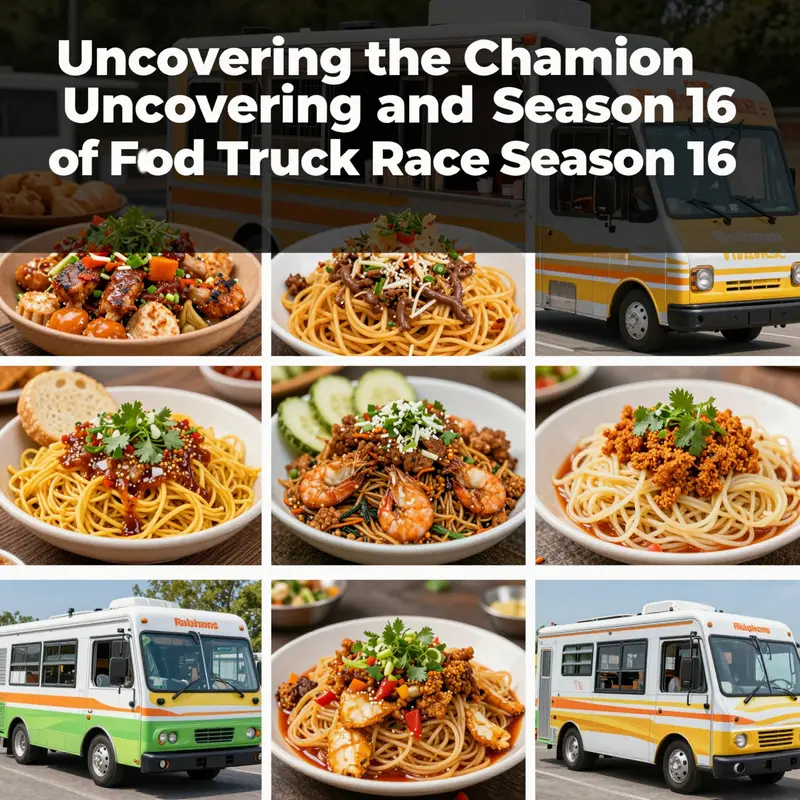
The Great Food Truck Race, Season 16 arrives like a rolling stage where steam, scent, and strategy collide on city streets and dusty festival grounds. Though the final victor remains undisclosed within the available materials, the season emerges as a compelling study in how a food business pivots under pressure. The journey toward the prize is less a straightforward culinary sprint and more a multi-layered test of sales discipline, brand resonance, logistical precision, and audacious menu choreography. As viewers ride along with each episode’s push and pull, certain threads become clear: the winner is rarely decided by technique alone; it is the convergence of hustle, market fit, operational rhythm, and the ability to translate flavor into consistent, repeatable revenue across disparate locales. In Season 16, those threads appear prominently, weaving a narrative about what it takes to survive the gauntlet and, ultimately, lift the trophy carried to the finish line by the season’s two strongest teams.
The format itself has long demanded more than culinary prowess. It tests teams in a crucible where every challenge sharpens the edge of real-world food entrepreneurship. The contestants must not only craft foods that sing with personality but also navigate the relentless clock, the variable foot traffic of each location, and the unpredictable weather or street-level logistics that can tilt a day’s sales. The end-of-challenge elimination mechanism intensifies every decision. A team can amass impressive kitchen chops, yet if their sales numbers dip on the wrong day, their journey ends sooner than their culinary dreams anticipated. In Season 16, that tension between art and commerce is a constant drumbeat, shaping the strategy of every squad from the first city block to the final, fated stretch toward the season’s prize.
What often separates the eventual winner from the rest is not a single genius move but a steady calibration of business instincts. A team’s ability to read the market in real time — to sense which flavors will move, which price points will sustain a line, and how to adjust menus in response to the crowd — becomes a decisive advantage. The show’s narrative—and the broader industry truth it mirrors—revolves around a fundamental law of food entrepreneurship: culinary talent is essential, but in a high-velocity environment with limited cooking time and finite space, the real currency is sales velocity. Season 16 underscores this truth with subtle, almost whispered clarity. The teams that finish with the most reliable sales momentum, the most adaptable menus, and the most lucid branding tend to keep pace with the competition even as the challenges intensify and the stakes rise.
Branding, in particular, rises as a critical x-factor in the season’s drama. The food itself may turn heads, yet people decide to queue, to sample, and to return because the concept feels cohesive, memorable, and worth the wait. In the food truck world, branding is not a surface affair but a structural advantage. It guides a customer’s sensory journey, informs pricing expectations, and long after the episode ends, shapes repeat business and word-of-mouth referrals. Season 16, with its global constellation of cuisines and concept twists, demonstrates that a strong on-truck identity can translate into loyalty in a marketplace saturated with choice. A vivid blend of logo, color palette, staff choreography, signage, and even the micro-moments of interaction with customers can become a disproportionate driver of sales and, by extension, a competitive edge in the race.
This is where the season’s narratives about diversity of offerings become more than a celebration of flavor. They illuminate a trend within the broader food truck ecosystem: consumers crave novelty, but they remain tethered to familiarity and value. The producers often spotlight teams that strike a balanced marriage between daring culinary ideas and a grasp of what passes for a sustainable business in a street setting. A concept that might appear audacious — perhaps a fusion of street-food traditions from different regions — must still translate to a workflow that can scale across locations and weather conditions. The most successful teams in Season 16 exhibit a practical audacity: they push boundaries, but they do so with a menu engineering mindset that considers cost of goods, portion control, and the per-day pace required to stay profitable under pressure.
The broader industry context provides a lens through which Season 16’s dynamics can be understood more deeply. The food truck sector has been expanding in recent years, with growth that suggests the model remains resilient and adaptable. While the show captures the drama of competition, it also mirrors a real-world market that continues to attract entrepreneurs seeking lower barriers to entry, flexible work patterns, and direct connections to customers. The season’s emphasis on sales and marketability aligns with industry observations that profitability in mobile dining is propelled by a blend of menu appeal, price optimization, and a knack for turning street-level attention into sustained customer engagement. When a team can greet a queue, manage a compact kitchen, and deliver consistent taste across a schedule of demanding venues, they build the credibility that can translate into long-term success beyond the televised race.
The culinary diversity that shines in Season 16 is not merely a showcase of flavors but a signal of the market’s evolving appetite. The show routinely presents menus that cross borders or reinterpret familiar street foods through a modern lens. This echoes a larger trend within the food service landscape toward global influences, hybrid concepts, and the playful tension between authenticity and community-pleasing practicality. Such menus can be a magnet for curious guests who want something distinctive, but they also demand careful planning: sourcing ingredients that travel well, calibrating spice levels for broad palates, and maintaining a menu that remains compelling while still being manageable for a rotating crew. The teams that balance innovation with execution become the most credible contenders for the prize because they can sustain excitement while delivering reliably on the fundamentals that accumulate sales day after day.
All of these strands accumulate into a more nuanced picture of why Season 16 matters to readers who are charting a map for what it takes to win a season of a competitive food truck race and, more broadly, to build a durable street-food business. The two finalists are not simply those with the best-tasting dishes or flashiest presentations. They are, at their core, the teams whose sales numbers reflect not just appetite but a disciplined approach to pricing, promotion, and customer experience. They exhibit a consistent tempo in operations, a keen sensitivity to location-based realities, and the stamina to endure a season-long imposition of constraints. The ultimate winner, when revealed, will likely embody a synthesis of all these traits: culinary creativity married to operational efficiency, a brand that resonates with audiences across platforms and streets, and a sales machinery that scales rather than collapses under pressure.
For readers and aspiring entrepreneurs watching Season 16 from the stands or the screen, the lessons are portable. They point toward practical steps that any street-food venture can adopt. Begin with a concept that is both evocative and executable, something that travels well and can be taught to a team without losing its soul. Then build a brand that tells a story in a glance and translates into a memorable customer journey. Your signage, your menu write-ups, your staff’s friendliness, and your ability to respond to a shifting crowd — together these create a feedback loop where demand meets capability. It is in that intersection that sales velocity becomes your most powerful ally. As the season unfolds, the teams that master this intersection show not only that flavor can win hearts but that consistent delivery and smart business choices can turn a good run into a lasting venture.
Season 16’s exploration of sales, branding, and culinary risk serves as a microcosm of the modern food truck market. The two finalist teams, however unknown to public recap yet, will come to personify a convergence point: they will prove that strong cuisine can be the magnet that draws a line of customers, and strong business discipline can sustain that line through the long hours, the long days, and the unpredictable streets. The show’s larger contribution is not simply in identifying a winner but in illustrating a robust approach to street-level food entrepreneurship. For anyone who has ever watched a food truck roll into a new neighborhood and wondered how it all works, Season 16 offers a lucid blueprint. It invites viewers to notice how a concept, properly branded and expertly managed, becomes more than a dish on a cart. It becomes a rolling invitation for customers to return, again and again, and to share their experience with others in their communities. The finale, therefore, holds a promise that goes beyond pride or prize money. It signals the potential for a small business to scale, adapt, and endure in a world where flavor alone rarely guarantees lasting success.
In the end, the question of who wins Season 16 remains part of a larger conversation about what it means to thrive on the wheel. The show’s merit lies not only in identifying a single champion but in presenting a case study of how vision, sales craft, and resilient execution combine to shape sustainable street-food ventures. The winners, whenever they are announced, will have demonstrated that triumph in this arena is as much about how you operate as about what you cook. And as audiences gather around the episode reels, they are invited to reflect on how the lessons from this season might apply to their own ambitions — whether they dream of a single standout cart or of a broader, enduring presence in the bustling world of mobile dining.
To readers seeking a practical touchstone that connects this season’s insights to real-world execution, the branding strategy behind the trucks matters as much as the recipes they serve. A cohesive visual identity helps customers remember and seek out the truck again, turning single visits into repeated engagements. The on-truck experience — from the tone of voice in menu copy to the rhythm of the service line and the friendly efficiency of the crew — guides how people relate to the concept. This coherence, combined with a flexible pricing approach and mise en place for rapid production, forms the backbone of sustainable street-food success. As Season 16 demonstrates, the most compelling stories emerge when flavor, brand, and sales competence cohere, producing not only a moment of delight but a lasting impulse for return.
Internal link to extend practical guidance: branding on wheels, the ultimate guide to food truck graphics and identity
External resource for broader industry context: https://www.shopify.com/blog/food-truck-business-ideas
Decoding the Crown: The David-vs-Goliath Drama and the Unrevealed Winner of Season 16
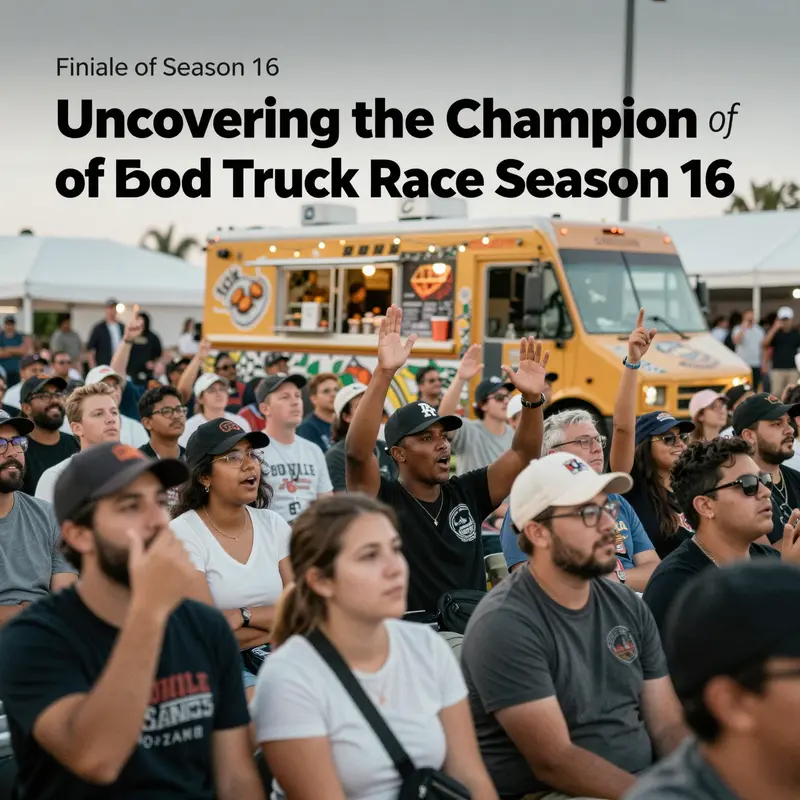
When the premieres arrive, audiences lean into the familiar thrill of competition, then lean even closer when a season signals something different. The Great Food Truck Race Season 16 opened with a bold premise: a landscape where small, independently run kitchens clash against the incisive efficiency of larger corporate-backed teams. It is not just a contest of who can plate a dish the fastest, but a study in resourcefulness, branding, and adaptive strategy under pressure. The David-vs-Goliath frame promises a narrative where underdogs can topple giants, if they can play the game with cunning, grit, and a little culinary magic. Viewers, watching from couches that often double as makeshift labs for hunger and judgment, absorbed not only the recipes but the politics of the competition—the way teams steward supplies, how they allocate time, and how they leverage brand stories into a winning arc. And as the eight-episode arc unfolded on Prime Video, it became less a straightforward race and more a layered meditation on entrepreneurship under siege, on ethics in scarcity, and on how audiences value resilience when the odds are skewed toward the familiar and the well-resourced.
From the outset, the season’s design underscored the drama of contrasts. You had teams racing not merely against each other, but against a clock that felt merciless and a kitchen that could shift from triumph to setback in a heartbeat. The format amplified the tension of scarce ingredients, limited prep spaces, and the real-world constraints that put a premium on improvisation. The show has long thrived on challenging its contestants to translate passion into a business plan, so Season 16’s emphasis on entrepreneurship, resource allocation, and fair competition landed with an audience primed for a more nuanced conversation about how a food truck wins in a world where supply lines, permits, and permits-like hurdles define the clock as much as a timer does. That shift felt contemporary, and it resonated with viewers who see entrepreneurship not as a linear ascent but as a series of calibrated risks and measured pivots.
The competition’s core premise—teams from diverse backgrounds facing off—hit a particular chord this season. The dynamic raised questions about identity, access, and the social dimension of a televised food race. Small, independent vendors were pitted against participants who carried the aura (and perhaps the advantage) of established networks. The producers seemed intent on rendering the field as a microcosm of the broader economy, where scale often translates into buffer zones against failure, yet ingenuity and storytelling power can still tilt the balance. The result was a season that offered rich, sometimes uncomfortable, conversations about who gets to win in a marketplace that rewards not only taste but also visibility, logistics, and the kinds of relationships that sustain a business across a semester of challenges. The audience was invited to weigh not just the dishes but the stories behind them, to consider what success would look like when the kitchen is a mobile stage and the audience is both judge and jury.
If you scanned the chatter on social media during and after episodes, you found a chorus of engagement that went beyond edible critiques. People debated dish execution and plating, of course, but they also argued about strategy. Some argued that the underdogs held the edge because they could pivot quickly, while others argued that the giants had the advantage of scale and a broader network to lean on for support, inspiration, or simply press-friendly backstory. In these conversations, the season offered a rare gift: it became a catalyst for discussions about what it means to compete when the playing field is not perfectly level, and what it means to win when the public has become as much a participant as a spectator. The platform itself, Prime Video, amplified this sense of immediacy. Viewers could instantly share clips, dissect challenges, and remix moments into new narratives. The effect was less a single winner-driven story and more a tapestry of micro-stories about strategy, consequence, and the messy magic of cooking under pressure.
Yet, for all the dialogue about strategy, the actual conclusion remains curiously ambiguous in the data publicly available. The initial research materials indicate a critical truth: there is no definitive, widely reported answer to who won Season 16. This is not a matter of misreporting or a hidden finale; it reflects a particular set of realities within reality television discourse. Sometimes a season’s ending is tightly kept within the production notes, and the triumph is not celebrated in a way that easily translates into a single, widely acknowledged headline. Other times, the narrative emphasis shifts toward the journeys of the teams—their growth, their setbacks, their public personas—rather than a final tally. The audience, in turn, fills this gap with speculation, pleasure in the ride rather than the destination, and a readiness to celebrate the season as a whole rather than fixate on a single victor. This dynamic, while perhaps unusual for fans who crave closure, is precisely what makes Season 16 a rich case study in how modern reality programming can cultivate lasting interest without a conventional emblem of victory stamped into the final frame.
What is also visible in the reception is a deeper appreciation for the season’s thematic ambitions. The David-vs-Goliath storyline did more than evoke old hero myths; it reframed competition as a test of ethics and enterprise under constraints. Viewers could see how teams negotiated trade-offs: sacrificing speed for sustainability, choosing to invest in branding or in culinary experiments, deciding when to push boundaries and when to protect a fragile project. These choices created a narrative rhythm that rewarded adaptive thinking over brute speed. In practice, that meant the creators rewarded strategic patience, not only culinary flair. A food truck must balance the math of cost and revenue with the sentiment that fuels a business—story, trust, and the promise of consistent, quality service. The season’s success in prompting such reflections is a sign that the show has evolved beyond the simple thrill of a race to a more studied exploration of how culinary entrepreneurship travels through real-world constraints.
Audience reception, thus, reflected an appreciation for depth. Many viewers highlighted the season as a demonstration that a compelling narrative can coexist with rigorous competition. The sixteenth installment did not rely solely on dramatic banter or flamboyant dishes to keep interest. It built a larger framework in which the contestants’ choices mattered in meaningful ways, and the audience could track the consequences of those choices across episodes. That approach feeds a broader appetite for reality programming that treats contestants as real entrepreneurs with a stake in the outcomes, not merely as performers. The show’s commitment to exploring entrepreneurship, resource allocation, and fair competition added layers to the entertainment, inviting viewers to evaluate the legitimacy of each team’s approach. In turn, the conversation around the finale—when it eventually arrived—was shaped by this accumulated understanding of competition as a multi-dimensional craft rather than a sprint toward a binary win.
From a production standpoint, the reception fed into how the season was curated and marketed. The choice to foreground a diverse set of teams, including those beyond the typical culinary brands, created a lens through which audiences could interpret the competition as a social and economic microcosm. The show’s editors, in collaboration with a cast of makers who carried both skill and story, stitched an arc that rewarded resilience and ingenuity. The absence of a clearly publicized winner did not derail interest; instead, it reframed the finale as a culmination of the contestants’ arcs rather than a single pin on a wall. This approach aligns with a broader media trend where the journey asserts itself as a source of legitimacy, and the ultimate victor becomes a satisfying but not solitary focal point. The result is a season that invites ongoing dialogue about what constitutes success in the modern food business and how audiences define “winning” when the game blends performance, business acumen, and community storytelling.
An important facet of the season’s discussion involved how branding intersected with perception. In a field where the vehicle of the business—the truck—carries not just food but identity, the visual and narrative branding of a team can become as consequential as the dish itself. Strong branding can translate into trust, audience recall, and potential market traction beyond the show’s taping. In this sense, Season 16 offered a masterclass in how a brand story can ride the wave of televised challenges into perceived credibility among viewers and potential customers. The interplay between culinary technique and branding strategies became a central axis around which fans framed their expectations and judgments. For those who want to explore the practical side of branding on wheels, the reference guide on how to craft a cohesive and memorable identity for a food truck can serve as a useful companion to watching the show. In particular, the article on branding on wheels offers insights into the design and messaging that help a truck stand out in a crowded marketplace. You can read more about this approach here: branding on wheels: the ultimate guide to food truck graphics and identity.
The question of the season’s ultimate victor remained a live, open thread within fan communities. Some argued that the branding and business acumen displayed by certain teams offered a form of indirect victory—a victory in influence, reach, and the potential to translate the show’s audience into real-world customers. Others insisted that the on-screen performance—the consistency of quality, the adaptability under pressure, and the execution of a mission—constituted a more robust claim to victory than any final round could symbolize. In many ways, the absence of a single, universally acknowledged winner became a narrative device in itself. It invited viewers to assess the season as a mosaic of competence, improvisation, and perseverance, rather than a linear sprint toward a singular endpoint. That approach mirrors a broader shift in television storytelling, where the end is not merely the closing shot but a lasting sense of what the characters have learned, how their ventures might evolve, and what the audience carries forward into the next chapter.
The season’s reception also carried implications for how audiences will engage with future installments. If Season 16 demonstrated anything, it is that audiences crave a holistic portrait of entrepreneurship wrapped in a competitive format. They want to see teams that reflect diverse experiences, that wrestle with real-world constraints, and that demonstrate how branding, economic savvy, and culinary craft intersect on wheels. They want a narrative that respects the intelligence of viewers and treats the contestants as people who are building something bigger than a moment on television. The feedback suggests a readiness for more seasons that lean into these elements, offering both dramatic tension and practical takeaways. In this sense, the Season 16 conversation extends beyond spoilers or the thrill of the final reveal. It concerns the continuing education of viewers who want to understand how to translate kitchen mastery into sustainable business practice, a topic that crosses the boundary from screen to street with a practical, hopeful energy.
For readers who want to delve deeper into the broader context of televised food entrepreneurship, there is a wealth of related material that complements the Season 16 conversation. The Prime Video page offers a synopsis, cast details, and user reviews that help situate the season within the broader arc of the show’s history. The official page serves as a reliable reference point for understanding how the season was positioned and received by its core audience. If you are curious about the exact mechanics of the competition or want to read contemporary audience reactions, this page provides a solid starting point: https://www.amazon.com/gp/video/detail/B0CZ9B7KJL. Meanwhile, for practitioners and enthusiasts who want to translate the show’s lessons into real-world practice, one resource that connects branding, logistics, and resilience is the long-form guide on branding on wheels mentioned earlier. Together, these sources help situate Season 16 within a wider ecosystem of food entrepreneurship media, where the line between entertainment and practical knowledge blurs in intriguing ways.
The upshot of the audience reception is clear. Season 16 succeeded at a different kind of win: it sparked dialogue, broadened participation in the conversation about culinary business, and offered a textured portrayal of what it means to chase growth under constraint. The question of who took home the crown may linger as a backbeat, but the season’s real victory lies in the way viewers absorbed its themes and carried them forward. They learned to value strategic adaptability, the power of a strong brand, and the courage to compete—not in a vacuum, but within a real, shifting economy where opportunity rarely comes for free. And as the next cycle looms, that broad, inclusive optimism will shape not only how winners are perceived but how triumph itself is defined in the world of the mobile kitchen—the world the show has been inviting us to imagine and to join.
External resource: For official context and additional background, see the Prime Video page: https://www.amazon.com/gp/video/detail/B0CZ9B7KJL
Final thoughts
Food Truck Race Season 16 has not only crowned a champion but also offered a vibrant lens through which to view the culinary world. From the exhilarating competitions and triumphs to the dynamics that shaped the race, each element contributes to the growing narrative of food trucks as integral players in modern dining culture. Ultimately, whether you’re an event planner seeking inspiration, an HR professional looking for team-building activities, or simply a fan of spectacular food experiences, the story of this season empowers each of us to appreciate the artistry and hard work behind our beloved food trucks.