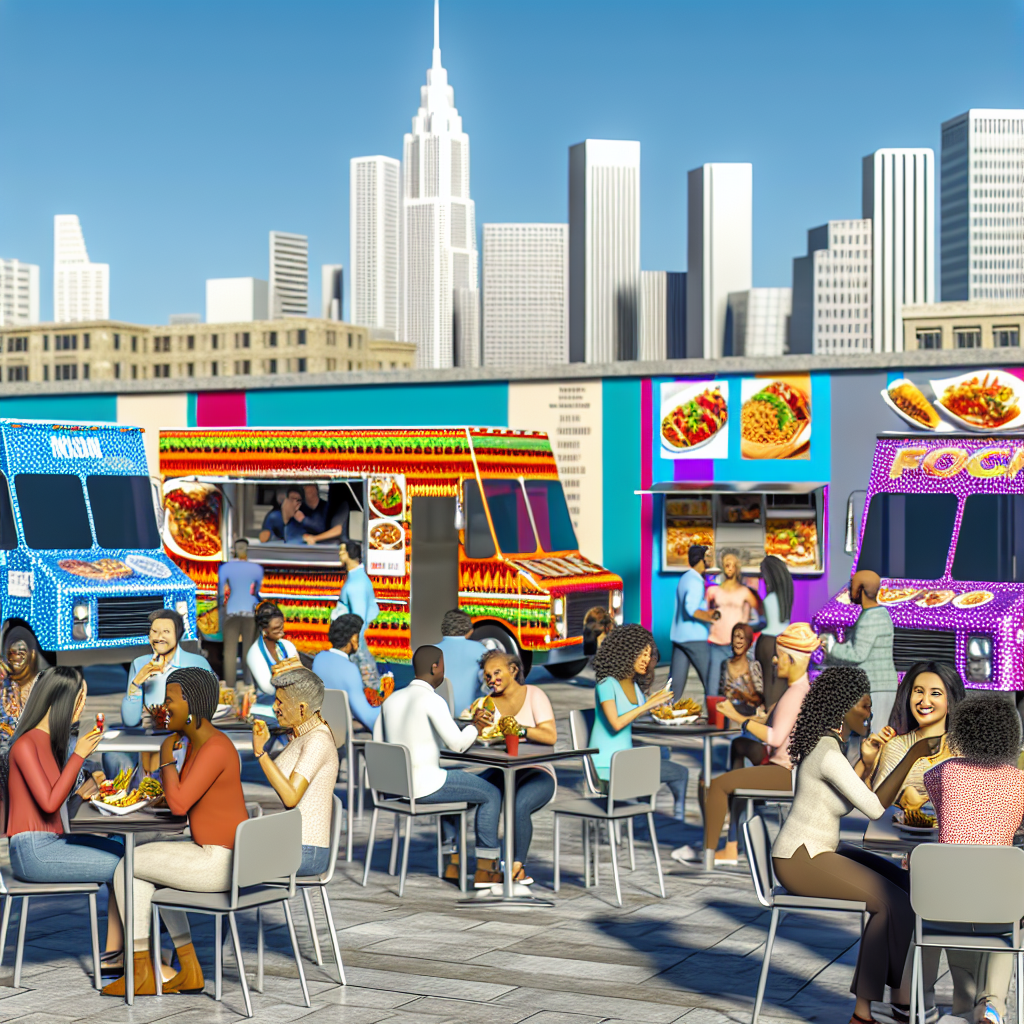
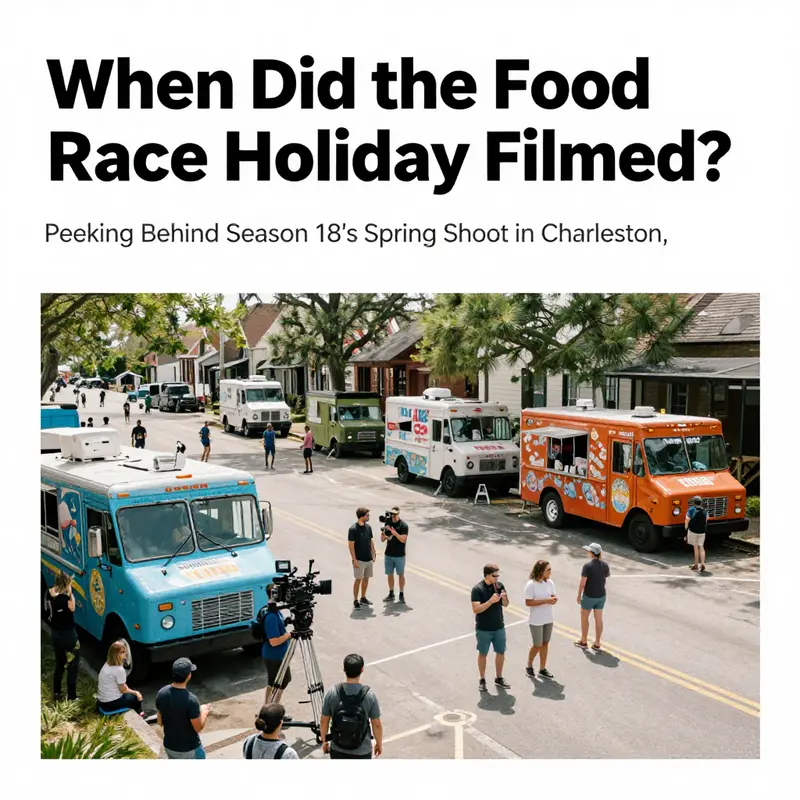
If you’re coordinating a big event, guiding a corporate schedule, or simply planning a community gathering around a beloved food scene, understanding when the Food Truck Race holiday was filmed helps you align calendars, permits, and guest experiences. The Great Food Truck Race Season 18, titled “Truckin’ Awesome: Crushing Charleston, Part 1,” premiered in August 2025, but the real story lies in the spring window that likely shaped the season’s energy and logistics. This article unpacks the filming window, the broadcast strategy, how trustworthy sources verify timing, and the broader economic and social ripple effects on Charleston and similar host cities. Each chapter builds toward a holistic picture: the why and when behind the shoot, how it influences scheduling decisions for planners, and what communities gain or navigate during a production run. From venue permits to vendor coordination, the timing of a film-in-a-city event matters for all stakeholders. Expect concrete takeaways that you can apply to your own event calendars, from planning windows to engaging local partners during peak production months.
null
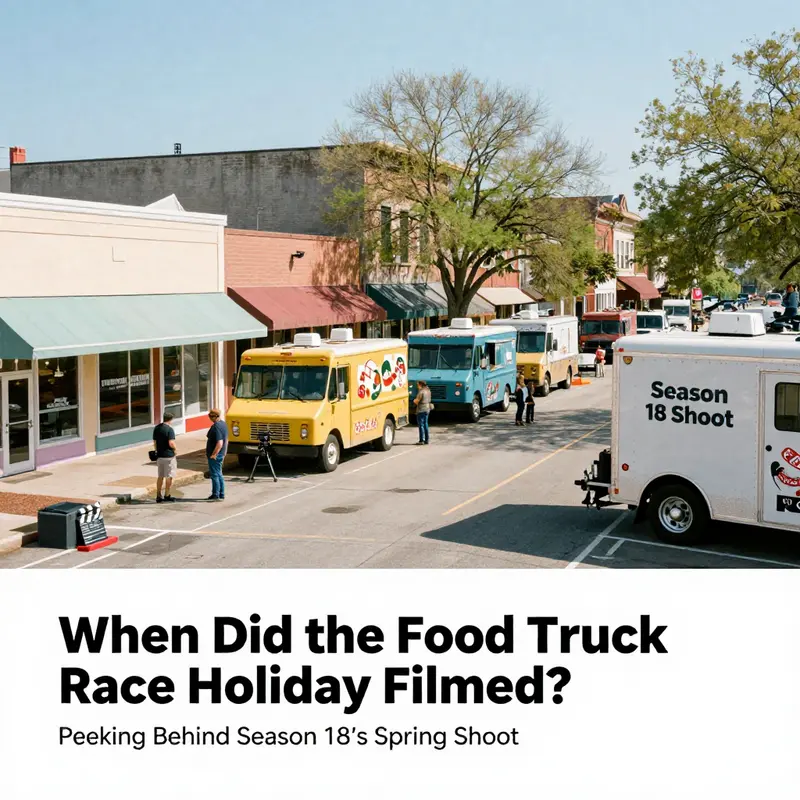
null
Unfolding the Timeline: When Season 18’s Charleston Challenge Was Filmed, How the Broadcast Strategy Shaped Its Summer Debut, and What That Says About The Great Food Truck Race
If you’ve ever chased the air dates of a television competition the way you chase a menu for a pop-up, you know the real story isn’t the hour of televised chaos. It’s the months that precede it—the careful choreography of filming, post-production, and promotion that turns a bustling set into a season’s arc. For the latest chapter of the long-running culinary race across the country, fans have long wondered: when did the holiday episode shoot, and when would the episodes actually land on screens? The material available points to a clear pattern that is both practical and revealing about how reality competition shows operate. The Great Food Truck Race Season 18, which carried the subtitle and momentum of Charleston’s distinctive street cuisine with the banner of a summer-ready arc, followed a script well worn in reality television: film in the fall, polish in post, and roll out into late summer when audiences tilt toward lighter, more social viewing. In this case, the details converge around a fall 2024 filming window in Charleston, South Carolina, with the season premiering on August 17, 2025. This sequencing—fall filming, summer launch, and a city-centered arc—aligns with the show’s broader broadcast strategy and the way the network times premieres to maximize the share of viewers who are already primed for heat, weeks of travel, and a festival-like ambience in televised form.
To understand the choice of that autumnal shoot, it helps to place it within the production rhythm common to this kind of competition show. Filming months before air is not an accident; it’s a necessity. The format depends on rigorous episode-ready footage, a substantial amount of post-production, and the ability to weave in promotional campaigns without sacrificing the surprises that keep fans engaged. In practice, crews typically descend on a host city when the tourist season is winding down but the weather remains liberal enough to film outdoors with confidence. Charleston, with its historic districts, bustling waterfronts, and a culinary landscape that sits squarely in the Lowcountry’s tradition, provides a backdrop that’s both photogenic and narratively rich. The fall light in coastal cities offers a texture that is easier to exploit in color timing and editing than the harsher summer glare. A season filmed in fall has the advantage of capturing a city that feels active yet not overwhelmed by the peak tourist tempo. It creates a sense of both immediacy and timelessness, the kind of atmosphere that translates well to the storytelling cadence of a competition where team dynamics and quick service decisions drive the suspense as much as the plates themselves.
From a practical standpoint, fall filming also aligns with a production calendar that must juggle permits, local collaboratives, and logistics across a city that never sleeps but does shift its rhythms with the calendar. The crews needed to secure street access, market spaces, and city blocks while negotiating road closures, vendor permissions, and the inevitable weather contingencies that come with the shoulder season. Charleston’s geography—dense historic neighborhoods, inland waterways, and a waterfront that keeps shifting with the tide—adds layers of complexity that demand careful scheduling. The fall period, then, becomes an operational target: enough daylight hours to capture multiple routes and challenges, a period when temperatures are still comfortable for long shoots, and a window that leaves room for post-production to shape the narrative arcs ahead of a summer-time broadcast slate. If you imagine the process as a long, meticulous relay race, fall filming is the baton handoff that hands a completed, color-balanced, audio-polished product to post teams who stitch together the season’s pacing and the promotional machinery that will drum up anticipation in the months before the premiere.
Charleston itself is not merely a backdrop; it is a character whose texture informs the competition’s flavor and the contestants’ decisions. The city’s maritime air, its markets, and its neighborhoods feed into the show’s mood. The teams must interpret the city’s sensibilities—the way a brisk wind off the harbor might influence a plan to serve a dish in a pop-up window along a cobbled street, or how a downtown market’s rhythm can affect timing on a service counter. In this sense, the fall shoot doesn’t just capture the drama of a heat-of-the-moment decision; it captures how a city’s pulse helps shape strategy. The episodes are built around routes through diverse blocks and districts, each with its own color and cadence. That inevitability—the way a place invites certain choices and discourages others—becomes a silent but powerful player in the competition. The narrative engine of the season is not merely a test of speed and taste; it’s a test of adaptability within an urban landscape that challenges contestants to think on their feet and to leverage the city’s stubbornly local ingredients into something competitive yet faithful to place.
The sequence and the silences between shoots matter as well. Filming in fall affords a natural arc to the season’s progression that mirrors many network strategies for reality programming: it gives editors the space to curate episodes with a sense of build, tension, and payoff. The producers can stage moments—whether a crucial decision at a waterfront stall, a tense countdown in a bustling market, or a misstep in a route that tests the teams’ improvisational skills—that feel earned rather than contrived. The fall window also dovetails with promotional cycles; early teasers can leverage Charleston’s aesthetics—its brick facades, its weathered signage, its culinary traditions—without committing to specific spoilers. When the public finally meets the season in mid-August, the audience has not only a sense of the city’s flavor but of the show’s operational tempo: a calendar that has moved from the quiet of pre-shoot coordination to the bustle of post-production polish and finally to the summer audience’s appetite for a fast-paced, travel-based competition.
A subtle but significant aspect of this timing is the way it frames the season’s arc. Season 18’s Charleston focus allowed the producers to distill a season-long narrative into a concentrated geography-first experience. In places where the show’s earlier seasons might have wandered across multiple cities, the Charleston focus concentrates the geographic and cultural contrast into a single, legible stage. Viewers can measure progress not just by the evolving color of a dish or the ingenuity of the menu but by the contestants’ increasing sense of place: how well they read the city’s incentives, how they adapt to the schedule’s pace, and how they respond when the clock becomes as much a character as the judges. By the time the episodes began to air in August 2025, the audience would have a sense of Charleston’s particular challenges—the way a historic street can limit vehicle maneuverability, the way a market’s hours shape service windows, and the way a coastal town’s seasonal rhythms inform a food truck’s rhythm. It is a narrative where setting informs strategy, and timing becomes a narrative force in its own right.
Of course, the broadcasting side of the equation is always in conversation with the behind-the-scenes realities. The fall filming window speaks to a broader industry pattern: the need to balance the show’s calendar with the realities of a network’s scheduling and a season’s marketing momentum. A summer premiere is not just about heat and holidays; it’s about aligning a show’s energy with the time when audiences are likely to be on the move, traveling, or gathering with friends and family around meals that feel adventurous. The “Truckin’ Awesome: Crushing Charleston” moniker, whether or not the official promotional material dubbed it with a two-part arc, hints at the rapid-fire nature of the rounds and the city’s capacity to host a succession of high-stakes cook-offs in a way that keeps the footage feeling instant and ongoing. The show’s release timetable—an August premiere—creates a window where new viewers can discover the season as a shared summer ritual, while returning fans are treated to the immediacy of a familiar competition’s return in a setting that tests contestants’ instincts in a city that rewards both culinary ambition and logistical prudence.
If there’s a through-line here, it’s that the filming’s timing is a strategic choice as much as a logistical one. Fall filming in Charleston produced footage that was ready to be shaped into a summer narrative. The editors and producers could assemble episodes with enough lead time to design a continuous flow: a sequence of quick-fire challenges, a handful of elimination moments, and a pattern of city-specific scenes that highlight the host city’s ambience without letting the geography overwhelm the contestants’ journeys. In other words, the fall shoot becomes a foundation for a summer television experience. The release strategy—publicized with a steady stream of promotional material and a calculated rollout of episodes—serves the audience by delivering a familiar cadence in which anticipation grows across the season’s run, with each episode building on what came before and teasing what’s next.
Another layer worth acknowledging, even when it isn’t the central focus of the show’s fan conversations, is how the fall filming window relates to other Food Network productions. The publicly available information does not indicate a concurrent filming timeline with other holiday-themed competition programs. For example, a separate holiday-themed show’s season was on air in December 2024, implying a different production cycle that did not synchronize with Season 18’s fall shoot. Keeping filming windows distinct helps reduce logistical conflicts for local partners, ensures better coordination with city services during peak tourist periods, and allows the network to maintain a steady cadence of new content across the calendar. This separation also clarifies for fans who track production calendars that the Charleston-centered chapter of the race existed within its own operational timeline, even as the network balanced multiple shows and campaigns across the year. The interwoven but distinct calendars are a reminder that reality television is less a single event than a mosaic of decisions aligned to audience behavior, city logistics, and the pressures of storytelling in real time.
In reflecting on this schedule, it’s natural to consider what the Charleston arc meant for the season’s overall arc—the surprise twists, the local collaborations, and the way teams interpreted the city’s environment to craft menus that would travel beyond the street and into the screens of homes across the country. The season’s title, with its emphasis on a bold, city-forward concept, invites viewers to see more than a parade of dishes. It invites them to share the anticipation of a journey, to feel the pace of a city where every corner holds a potential challenge or an opportunity to turn a plan on the fly. This approach makes the fall shoot feel less like a logistical necessity and more like a deliberate artistic choice: a way to harness a city’s complexity into a narrative that rewards improvisation and teamwork as much as it rewards culinary invention. The 2024 filming window is thus not simply a date on a calendar; it is a strategic heartbeat that allows the season to breathe in Charleston’s air, reflect the city’s rhythm, and then be delivered to audiences in a format that is as much about timing as it is about taste.
Finally, a note on the information landscape surrounding the season’s filming dates. While enthusiasts often scour press releases and fan-labeled schedules for clues, the most authoritative details come from the show’s official channels and established industry databases. The first episode’s air date—August 17, 2025—was publicly documented, and the season’s broader arc in Charleston is commonly described in promotional materials and retrospective summaries. For those who want to verify broadcast timelines and episode-by-episode air dates, a trusted external resource provides authoritative context. The Great Food Truck Race Season 18’s page on a recognized database confirms these air dates and offers additional details about the season’s episodes and participants. This external reference reinforces the timeline’s coherence and helps fans connect the filming window to the broadcast window with confidence.
In sum, the filming of Season 18’s Charleston chapter in fall 2024, followed by an August 2025 premiere, reflects a deliberate rhythm that mirrors both the realities of production and the appetites of the audience. The decision to anchor the season in a single city with a rich culinary and cultural landscape aligns with a strategy that emphasizes place, pace, and performance. It’s a reminder that in reality competition television, time matters—the moments captured in the field are not simply footage to be edited, but threads that, when woven together in post-production, become a tapestry of place, people, and palate. Fans who track the dates discover not just when the show was filmed or when it aired, but how those dates serve a larger narrative impulse: to present a summer ritual that invites viewers to travel vicariously, taste the city’s memory in each bite, and watch teams grow into a rhythm that only a city like Charleston could demand.
External resource: For authoritative details on filming schedules and broadcast timelines, refer to the official IMDb page for The Great Food Truck Race Season 18, which provides air dates and season-specific information. https://www.imdb.com/title/tt23996580/
Tracing the Filming Window for the Holiday Episode: Verifying When the Great Food Truck Race Season 18 Was Shot
Tracing the filming window for a holiday-themed chapter of a traveling cooking competition is like piecing together a recipe from scattered notes. Fans, researchers, and curious viewers often start with air dates and episode titles, then work backward through clues about where teams traveled, which cities hosted the challenges, and when the production crews would have needed to move between locations. In the case of the recent Season 18, the publicly known air date for the first major episode—touted in coverage as part of a broader arc titled Truckin’ Awesome—was August 17, 2025. That single data point sets a line in the sand, a reference momently anchored in time, but it does not by itself reveal the exact dates of filming. To understand when the crew was in the field, one must read the calendar not as a straight line from filming to air, but as a complex weave of timelines: pre-production planning, scouting, permitting, build-outs, travel, on-site shoots, and a post-production window that sometimes runs months long after the last scene is captured. In practice, the conventional pattern for this type of show is to shoot several months before broadcast. The logic behind this timing is straightforward enough: crews need weeks to edit, producers need to test cuts, and networks want time to promote the upcoming episodes with trailers, press materials, and controlled leaks that shape fan anticipation without spoiling key twists. When one contemplates Season 18’s broader arc—comprising ventures such as the Savannah and Charleston legs, and a later set of city-adjacent assignments—the spring months of 2025 emerge as the most plausible window for actual filming, with March through June serving as the most likely span for principal shoots. This estimate aligns with standard industry pacing: a production team assembles, routes are scouted and locked, permits are filed in the host cities, and the trucks themselves are fitted with the gear, the props, and the cold-storage and cooking rigs necessary for a robust, on-the-ground competition. Yet, even with a plausible window established, the public record remains deliberately sparse about explicit filming dates. The producers and the network behind the show typically guard such details as a matter of strategic privacy, preferring to release air dates first and then reveal production notes later, if at all. The consequence of this approach is that determined observers must rely on triangulation rather than a single confirmed timestamp. If a single episode is publicized with a specific air date, this does not automatically translate into a precise filming date, but it does anchor the general arc: a springtime shoot leading to a late-summer broadcast. The available public material—air dates, titles of episodes, and the towns involved—provides a scaffolding upon which fans and researchers can test hypotheses about when the action occurred, and that scaffolding is reinforced by the geographical emphasis of the arcs. For instance, Charleston and Savannah are both warm-weather locales whose histories with produced reality programming suggest that crews would be warmly active there during late spring and early summer, when the weather is reliably cooperative for outdoor shoots and city operations can accommodate fast-paced, live-to-tape sequence work without the hazards of deep winter cold. It is likewise plausible that a holiday-themed episode would have been scheduled to align with off-peak production windows in some departments, a strategy some shows adopt to minimize conflicts with major public events or seasonal city schedules. A holiday frame, in particular, invites a different cadence for the teams: more intense near-term challenges, tighter crew schedules, and a compact shoot window that enables editors to stitch in festive props, seasonal music cues, and the narrative beats that hinge on the holiday atmosphere. The absence of official, granular filming dates means fans must treat any specificity with a healthy degree of skepticism. What is verifiable is that the season’s first wave of episodes carried a strong sense of place—Savannah, Charleston, and an array of coastal venues that balance culinary ambition with the logistical choreography of a traveling competition. The available episode titles do more than hint at the cities; they signal where the cameras were aiming to capture dramatic moments: the weathered charm of historic districts, the entrepreneurial bustle of waterfront markets, and the surge of competition as teams convert culinary concept into mobile, ticketed experiences. When you place these elements side by side with the known air date, a plausible sequence emerges: a spring kickoff that allows for the March-to-June filming phase, followed by a deliberate post-production cycle that compresses the editing, scoring, and delivery tasks into a timetable designed to produce a blockbuster summer run. The question, then, is not merely whether the filming happened in spring, but how the crew balanced the demands of a holiday-themed structure with the realities of location-based shooting. Festivals, parades, and seasonal events often punctuate the calendars of coastal cities; in Charleston and Savannah, these moments can be both a boon and a risk. They add vivid color to the episodes and provide natural, dramatic backdrops for the competition, yet they can also complicate logistics: traffic management, street closures, and the unpredictability of crowds must be managed so that the camera crews can capture clean, reusable takes without obstructing public life. The production team’s capacity to negotiate these conditions is a testament to the behind-the-scenes craft that sustains reality competition at a high level. In this sense, the precise filming window becomes less a single date and more a tuned operation: a sequence of weeks when the routes are secure, the schedules are coordinated, and the crews move with the rhythm of a traveling circus of cuisine. The interpretation of season-17-level patterns helps here as well. Historically, this kind of show has favored spring or early summer shoots that can be wrapped before the sweltering peak of late summer; this pattern supports a clean post-production timeline and a predictable air window that aligns with prime-time scheduling. A reader should not mistake this as a definitive confirmation of the actual filming dates, but rather as a careful reconstruction based on available indicators. It is a reminder that in modern television, especially for traveling, food-focused competitions, the public-facing calendar is the product of a layered network of decisions: what cities are willing and able to host, what permits can be secured in time, which partners are available to supply food trucks and stoves, and how the overall narrative arc of the season can be realized without compromising safety, quality, or the element of surprise that makes these programs compelling. The way these pieces fit together says more about the practicalities of production than about a single stamped date. In terms of verification, this kind of work relies on multiple streams. There is the official route: network press releases or corporate announcements that signal when a season is underway or when an episode is ready to air. There is the industry ledger: production calendars and episode guides that appear in trade publications or trade databases, often offering a non-public glimpse into the season’s construction. And there is the fandom record: social posts, behind-the-scenes photos, and episode trailers that hint at where the crew has traveled and what they have captured on location. Taken together, these sources yield a careful, cautious narrative: filming likely occurred in the spring 2025 window, with the first major episodes curated for a late-summer broadcast in August. The possibility that a special holiday segment—if that was indeed part of the plan—had a separate filming moment cannot be ruled out; it might have overlapped with the main spring window or occurred in a shorter, targeted shoot during a different part of the year. This nuance matters for researchers who seek to place the episodes in a broader context—how the show structured its competition, how the teams responded to the holiday frame, and how production synchronized with city life. For readers who want a concrete pathway for further study, a careful approach is to consult a combination of sources that include the public listings of the season’s episodes, production notes where available, and credible databases that catalog air dates and episode order. The triangulation method strengthens an argument about the filming window without claiming an exact date that remains officially undisclosed. In this sense, the chapter on when the holiday episode was filmed becomes a case study in data reliability rather than a simple calendar readout. It highlights how fans and scholars can responsibly interpret the visible traces—episode titles, city choices, and air dates—while remaining mindful of the gaps that stay closed behind studio doors. The nuanced takeaway is that the publicly asserted air date anchors the timeline, while the private mechanics of production determine the actual moment the cameras rolled. The result is a well-aligned narrative that respects both the excitement of the show and the privacy that production teams maintain around their schedules. For readers who want to deepen their understanding of the production ecosystem and how such calendars are managed, there is a relevant point of reference in resources that explore the practicalities of operating a mobile kitchen competition. These discussions illuminate how teams must adapt to a rotating schedule, how permits are secured, and how the seasonal calendar influences everything from vehicle readiness to the pacing of on-screen challenges. The real art, then, is in reading between the lines: recognizing that an August air date implies a spring filming haul, which in turn suggests a window when the cities in question were most hospitable to a fast-moving production—when daylight lasted longer, weather was more predictable, and logistical constraints could be navigated with the careful coordination of crews who know the territories inside and out. For this chapter, the best practice remains: rely on multiple, credible signals rather than a single piece of public data. The absence of a formal confirmation does not diminish the value of the inferred timeline; it simply frames it as a carefully reasoned hypothesis grounded in observed patterns of production behavior and the known scheduling realities of a modern traveling competition. As fan interest continues to grow and more behind-the-scenes material occasionally surfaces, future readers may gain an increasingly precise map of the filming window. Until then, the spring-to-summer hypothesis for Season 18’s holiday framing stands as a reasoned reconstruction, one that respects the uncertainties that accompany showbiz calendars while offering a coherent story about how such productions are conceived, executed, and ultimately shared with audiences around the world. If you want to explore how production calendars inform the practicalities of a food-focused, mobile competition—and what that means for planning your own travel or event around a show’s filming schedule—you can consult broader industry discussions that address the realities of working with itinerant production, city permitting, and the challenge of coordinating multiple moving parts across a tight timeline. This kind of reading helps readers appreciate the craft behind the dates we see on screen and the quiet, sometimes hidden work that makes a single episode possible. And for those who want to connect a practical thread to the broader conversation about how the show is organized, one can look at how the show’s structure and production demands shape the decisions around vehicle readiness, route intensity, and team logistics, which in turn influence the pacing of the competition, the intensity of the challenges, and the aural and visual tapestry that audiences associate with a given season. The chapter ends with a reminder that the precise moment cameras began rolling on a holiday-themed segment remains a guarded detail. Yet the converging evidence—air dates, city choices, production workflows, and the broader rhythm of spring-to-summer shoots—offers a credible, responsible portrait of the filming window. This portrait is sufficient for understanding how the episode came to life, even as one waits for any official archival notes that may someday confirm or refine the timeline. In the meantime, researchers can continue to expand the evidentiary base by tracking official announcements, reviewing city permit records where publicly accessible, and watching for nods in production conversation that might appear in interviews or creator commentary. The layered approach—combining public air-date data with production-pattern reasoning—keeps the inquiry rigorous while honoring the private nature of filming calendars. For curious readers who want to dive deeper into how such productions are organized and what it means for fans who follow along, the path forward is to treat the holiday episode as a strategic peak within Season 18’s broader design, rather than a discrete pinpoint in time. And as the season unfolds in future chapters, the narrative will continue to weave together the threads of timing, location, and the storytelling choices that make this kind of programming compelling. External verification and further details can be consulted on the season’s listing here: https://www.imdb.com/title/tt13655946/.
Timing the Holiday Rush: Filming The Great Food Truck Race’s Charleston Episode and Its Ripple Effects
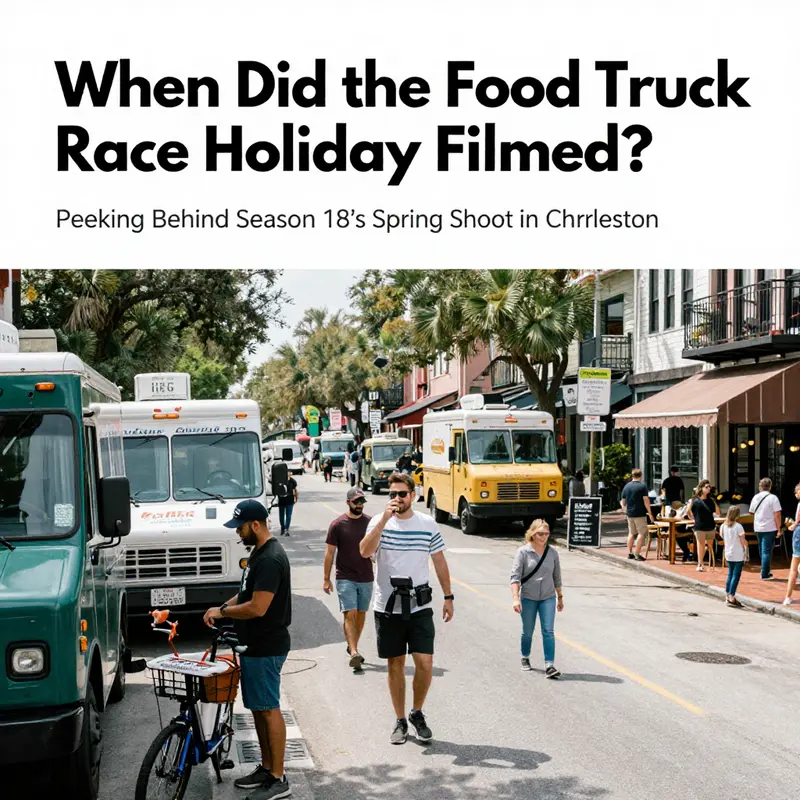
Charleston’s harbor breeze carried a hint of salt and seasonal anticipation as cameras rolled on the Charleston episode of The Great Food Truck Race. The season’s installment, wrapped under the umbrella title Truckin’ Awesome: Crushing Charleston, Part 1, arrived with the double edge of a holiday spirit and a hard-edged schedule. Filming for a nationally televised competition happens long before audiences meet the first bite of a dish on screen, and the questions about timing ripple outward into conversations about local economies, community life, and the urban pace of a city that hosts strangers for a few weeks and then welcomes them back as fans and visitors. The exact filming dates for Season 18 remain under wraps, a common practice in a world where spoilers and leaks can chip away at the surprise of a premiere. Yet, given that the episode aired on August 17, 2025, observers and industry insiders typically frame the production as having occurred several months earlier, with schedules likely concentrated in the spring. In practice, that often translates to a window that spans late winter to early summer, with grins in the calendar that line up closer to March through June in many markets. The reality is that the series’ producers operate on a timeline designed to align with postproduction, cook-offs, and the rolling cadence of summer premieres. What remains consistent across seasons is the underlying rhythm: planning, scouting, securing permits, assembling a crew, and then rolling cameras in cities that offer both flavor and logistics that support a dynamic, camera-friendly environment. While the exact spring months may not be publicly enumerated, the logic of the industry makes the spring-to-summer frame a reasonable assumption for a show anchored in vibrant street scenes, bustling markets, and the kind of culinary variety that Charleston embodies so well. The public-facing dates—the air date in August 2025—provide a fixed anchor for fans and scholars alike to triangulate when the filming likely occurred. Production companies, after all, depend on a careful balancing act: maximizing the charm and authenticity of the host city while ensuring the schedule leaves room for postproduction, editing, direction tweaks, and the inevitable delays that come with large-scale shoots. In other words, the question of when the holiday episode was filmed is not a simple answer but a reflection of how modern television productions choreograph time, place, and people to tell a story that resonates beyond the screen. The Charleston shoot, with its blend of coastal character, historic streets, and a dining scene that invites natural collision between food trucks and full-bodied storytelling, serves as a microcosm of this choreography. The production’s timing matters not only for the crew and the cast but for the city that hosts them, for local businesses that ride the temporary wave of attention, and for residents who become temporary participants in a televised narrative that travels far beyond the Lowcountry. The most reliable frame of reference comes from official listings and industry summaries. The Great Food Truck Race Season 18 was filmed in Charleston, a location that has long attracted producers because of its culinary diversity and its capacity to transform ordinary corners into stages for competition and culinary theater. When the episode finally aired on August 17, 2025, viewers could feel a sense of arrival, a culmination of weeks of preparation that happened in a different season’s calendar arc. Although the precise filming dates are not disclosed publicly, the standard trajectory of such productions—scout, secure permits, assemble a local and traveling crew, perform the shoot, and commence postproduction—creates a predictable cadence. The spring window is a reasonable expectation, given the city’s climate, the logistics of street filming, and the proximity to summer tourism that often enhances the appeal of a showcase episode that leans into Charleston’s festive atmosphere. In this sense, the holiday episode’s timing becomes a compound signal: it marks a moment on the calendar when good weather, abundant daylight, and the city’s event-driven rhythm align with the needs of a fast-paced production. The show’s creators and network partners would have weighed variables including local permit regimes, police coordination, and the availability of venues, all while preserving the spontaneity and authenticity that fans expect from a food-truck competition set in a historic port city. There is a symbiotic exchange between the filming schedule and the city’s life: while the production benefits from Charleston’s scenic streets and a steady stream of visitors attracted by the culinary scene, local businesses and neighborhoods receive an influx of activity—crowd movement, deliveries, and a heightened sense of place that can translate into longer-term interest in the city’s amenities and experiences. The economic and social dimensions of timing become inseparable from the act of filming itself. If the production period overlapped with Charleston’s peak tourist season, the impact could extend beyond the immediate shoot. Hotels, restaurants, and service providers would adjust to accommodate a larger crew, extra meals, and the needs of a traveling team. Even if the shoot occurred in the shoulder seasons, the visibility of a nationally broadcast episode can elevate the city’s profile, nudging curious travelers to map out itineraries that thread through the very streets that hosted the episode’s contest. The narrative of timing also carries a quiet, logistical pressure that sometimes goes unremarked in viewers’ conversations. Permits for road closures, street closures, and the use of public spaces require careful coordination with city officials. The dynamic interplay between public life and film crews can temporarily alter traffic patterns, parking availability, and the cadence of daily routines for local residents. In Charleston, with its tight-knit neighborhoods and bustling downtown lanes, even short bursts of restricted access can prompt conversations about detours and alternative routes, as well as the practicalities of day-to-day life during a shoot. Yet the same periods of disruption are often offset by the goodwill of communities that recognize the value of wide exposure. The episode’s holiday framing—incorporating seasonal colors, festive food vibes, and a sense of communal celebration—may amplify the city’s hospitality narrative, reinforcing Charleston’s identity as a culinary capital and a destination where visitors come to savor both history and innovation in equal measure. The production’s timing thus becomes a thread that ties together several layers of impact. On the one hand, the immediate economic uplift is tangible: a surge in customers for local eateries, transient employment for crew members and technicians, and the ripple effect of crew housing, catering, and transport services that circulate through the city during the shoot. On the other hand, the sociocultural resonance extends beyond dollars and hours. The presence of a nationally televised program fosters community pride, inviting residents to engage with the show’s narrative through crowdsourced insights, local tastings, and public events that align with the episode’s themes. People may volunteer to participate in crowd scenes, or simply find a new sense of belonging as locals recognize their city on a global stage. The broader cultural exchange is equally meaningful. Food trucks in the episode would showcase regional flavors as well as the entrepreneurial spirit that characterizes the mobile culinary economy. The spotlight can spark curiosity and inspire new ventures among aspiring vendors who observe the competition, the logistics, and the community support that help a mobile kitchen flourish. The episode’s holiday angle adds another layer of significance. In a city where seasonal markets, festival atmospheres, and special events punctuate the calendar, the filming carried an added sense of vigor. The timing thus intersects with Charleston’s own seasonal identity, amplifying the feel of a temporary, cinematic event in which streets transform into playgrounds for culinary storytelling. This intersection of timing and place underscores a broader pattern: media productions that choose historically rich, food-forward cities tend to leave a post-airing footprint that can be felt in the months that follow. Tourists inspired by the episode may search for the specific truck stops and locations featured on screen, looking to recreate moments from the show or simply to savor similar flavors in the city’s bustling dining scene. In this way, timing operates as a catalyst for ongoing engagement, turning a temporary shoot into a long-running invitation for visitors to experience Charleston’s food culture. To readers who want a closer sense of how these processes unfold in real time, the experience of the film crew offers a practical lens. The workdays are long, the streets are more crowded than usual, and the crew must balance efficiency with safety and authenticity. Equipment moves through neighborhoods as sound stages briefly inhabit sidewalks and lanes. Permit officers may coordinate traffic shifts to minimize disruption while maintaining the integrity of the production’s schedule. The staging of holiday-themed moments demands precise choreography: a truck arrival, a cookout demonstration, a crowd sequence, and a tasting that captures the warmth of community sharing. Each of these moments is a function of timing as well as talent, and the way they’re stitched together on camera depends on meticulous planning and flexible adaptation to real-world conditions. As the episode reveals—through its on-screen tension, the camaraderie among crews, and the vibrant street scenes—the timing of filming is not merely a logistical backdrop. It is an active ingredient in the storytelling alloy. The chapter of Charleston’s episode, told through the days and weeks of production, becomes a case study in how a city’s energy and a production’s cadence can converge to create a narrative that travels far beyond its air date. For readers who want to explore the production’s footprint from a policy and practice perspective, there is value in examining how local authorities facilitate or regulate such events. The guidelines around street use, noise ordinances, and the management of large crews are not mere footnotes; they are integral to ensuring that the filming process respects residents while enabling the creative ambitions of the show. The balance is delicate but essential: a city gains visibility and potential long-term benefits from hosting a high-profile production, while residents expect to maintain the normal rhythms of their daily lives. The potential for an afterglow in tourism—people visiting filming locations, seeking out featured culinary experiences, and exploring neighborhoods that became backdrops for competition—presents a tangible long-term return that often justifies the temporary inconveniences associated with filming. The timing of the shoot, then, intersects with economic development strategies and cultural branding. It is not merely about when the cameras rolled but about how that moment becomes a reference point for future inquiries: How does a city leverage a televised event to attract visitors and entrepreneurs? How do local businesses adapt to the seasonal ebbs and flows that accompany the show’s schedule? And how does the city maintain a hospitable environment that respects its residents while welcoming audiences from across the country? In the end, the question of when the holiday episode of The Great Food Truck Race was filmed is less a single date than a window of influence. The city’s streets, the crews’ schedules, and the episode’s narrative arc come together to shape a moment that resonates in the local memory and in the broader memory of fans who read about Charleston as the host city for this gastronomic contest. The episode’s air date acts as a public hinge, enabling viewers to connect the dots between production timing and on-screen outcomes. In the months following the broadcast, the city may see renewed interest in its culinary traditions, more dining out, and a curiosity about the logistics that turned city blocks into a stage for competition. The long view suggests that a well-timed shoot can contribute to a lasting impression—one that invites visitors to explore the city’s markets, its waterfront vistas, and the stories that food and place can tell when presented through the lens of television. For researchers and enthusiasts who want to dig deeper into the production timeline and its public footprint, industry references and official listings offer accessible entry points. The IMDb listing for The Great Food Truck Race Season 18 provides a concise framework for air dates and episode details, anchoring the discussion in a verifiable record. This external resource helps corroborate the narrative of filming timing and its relationship to the season’s broadcast schedule. In sum, the Charleston shoot and its holiday frame illustrate a broader truth about televised food adventures: timing matters as much as talent. The day’s light, the city’s permits, the crews’ rhythms, and the episode’s holiday mood all converge to shape a story that is at once local and global. The audience experiences a bite-sized snapshot of Charleston’s culinary culture, while the city experiences a ripple that can extend far beyond the episode’s run. The season’s success is not only measured by ratings but by the way the city embraces the moment—how it invites future travelers to walk the same streets, taste the same flavors, and remember the week when filming turned a routine spring into a festival of food on screen. For further reading on the production footprint and schedule, readers can consult official show listings and industry profiles that track filming timelines across seasons. As the show’s next chapters unfold, it will be instructive to observe how timing continues to influence both the creative process and the communities that host it, shaping a narrative that remains vibrant long after the final plate is plated on screen. External resource: https://www.imdb.com/title/tt13655946/
Final thoughts
Understanding when the food truck race holiday was filmed isn’t just about calendar dates—it’s about the relationships between production schedules, city life, and audience anticipation. The spring window likely shaped not only the on-screen energy of Season 18 but also practical decisions for event planners, HR teams coordinating large gatherings, and local communities hosting or benefiting from a high-profile shoot. By examining the filming window, broadcast timing, reliability of sources, and the broader impacts, planners and fans can better anticipate and align their own activities with similar productions in the future. The result is a more seamless integration of entertainment events with community life, all while honoring the logistics that keep such productions safe, respectful, and vibrant.