Bringing culinary delights to military bases via food trucks is a tantalizing vision, yet it comes with a twist of complexity due to stringent rules and regulations governing food services on military installations. Understanding how to effectively navigate these waters is crucial for event planners, corporate HR teams, community groups, and food enthusiasts alike. Chapter one lays down the foundational knowledge about military food service rules, ensuring you know what it takes to operate legally on base. We then shift gears in chapter two, guiding you through the essential contracting procedures needed to become an authorized vendor. Finally, chapter three dives into event participation and off-base operations, exploring how food trucks can connect with military personnel during various events or from nearby locations. Each chapter will enrich your understanding of how to get a food truck on a military base and ensure a successful venture.
Gate to the Grill: Navigating Military Regulations to Bring a Food Truck onto a Base
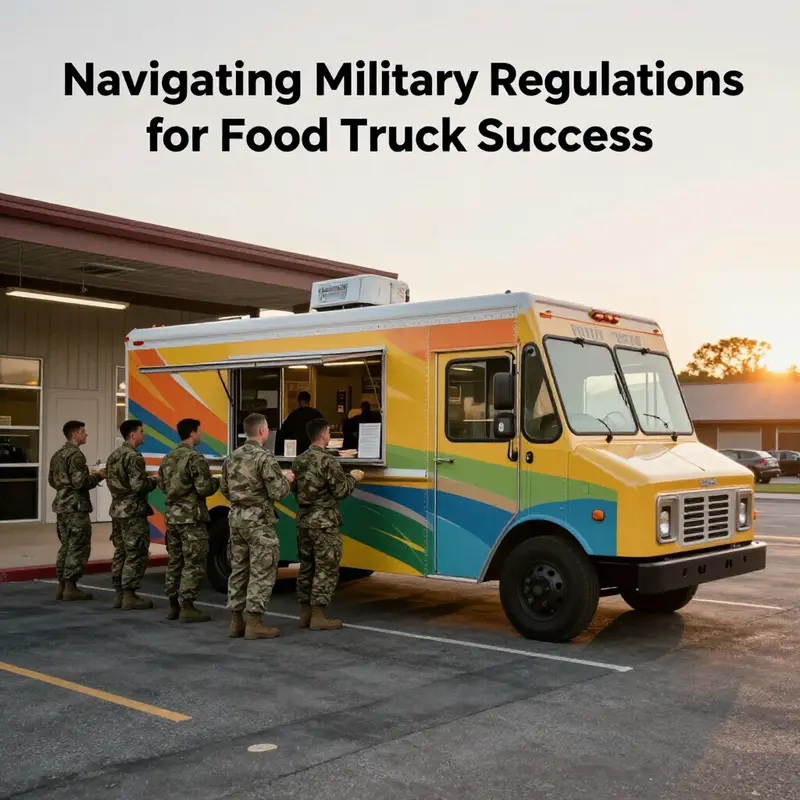
A food truck on a base is more than a chance to serve a hot meal—it’s a carefully orchestrated collaboration between private enterprise and a high-stakes public mission. The first time a chef imagines the scent of cumin and grilled onions wafting through a base wind, the image feels uncomplicated: a trailer parked near the gate, a line of service members, a steady stream of compliments. But behind that scene lies a complex lattice of rules, security checks, procurement channels, and health standards designed to ensure safety and readiness. The base is a closed system in which every hungry drawer of a lunch break, every post-exercise snack, and every morale-boosting treat must be accounted for with precision. As a result, the straightforward idea of rolling a mobile kitchen onto the property quickly reveals its reality: the base does not grant a generic permit to park and serve in open spaces. Instead, the path to feeding troops through a licensed mobile unit travels through formal vendor relationships, official events, and, in some cases, off-base avenues where civilian cooks can still reach the same military audience with the right permissions in place. This chapter does not treat the base as a simple curbside audience, but as a regulated ecosystem where food, safety, security, and service converge. The goal is not to bend the rules but to operate within them, to align a culinary business with DoD processes, and to understand how the right partnership can turn a truck into a trusted, dependable food service asset for a community that works, trains, and often rests under demanding schedules and shifting demands.
The journey begins with a truth that many aspiring operators learn quickly: civilian food trucks do not automatically gain access to base grounds. The base’s dining needs are typically met through two channels that are familiar to veterans of procurement and to those who have worked with government contracts. One channel consists of military dining facilities—DFACs and other government-operated food service venues—that exist to feed service members and authorized civilians under strict oversight. The other channel relies on contracted vendors who have earned the right to operate on base through formal government procurement processes. These channels are not interchangeable. They are distinct pathways that require different qualifications, different timing, and different levels of scrutiny. The DoD maintains a formal contracting system that assigns food service work to firms that have demonstrated reliability, consistency, and compliance with a broad set of standards—from health inspections to security clearances. In that context, the fantasy of driving onto a base with a cheerful banner and a grill that sizzles on a weekday afternoon is replaced by the reality of a vendor relationship built on precise specifications, pre-approval processes, and scheduled windows that fit the installation’s mission and its security posture.
If the aim is to work through those channels, there are three primary routes that operators typically pursue. The most formal and potentially rewarding is to become a contracted vendor through the DoD procurement system. This requires you to engage with the U.S. Army’s Contracting Command or the Defense Health Agency and to participate in government bidding processes that are visible on SAM.gov. Registration on SAM.gov is not merely a formality; it is the gate through which all federal contracts pass. It signals to bases that your business is eligible, trackable, and compliant with federal registration requirements. The bidding process itself is a rigorous exercise in presenting your capabilities, your compliance posture, and your ability to deliver consistent service under the unique pressures of a military environment. It demands a clear demonstration of how your mobile kitchen meets not just culinary standards but also regulatory, security, and continuity requirements. When a contract is awarded, the operator may be permitted to operate a mobile food unit under controlled conditions and according to a defined schedule. The details of such contracts—locations, hours, menus, security requirements, and contingency plans—are spelled out in formal documents that become the operating manual for your base presence. This is the path that many operators dream of because it offers predictable access and institutional legitimacy, but it also requires patience, careful preparation, and a readiness to align with a government procurement lifecycle that can stretch across multiple months or longer.
The second route is to participate in authorized base events. Some installations welcome civilian vendors for special occasions—holiday celebrations, family days, open houses, recruiting fairs, or military career expos. These opportunities are temporary by design, serving as demonstrations of how a food service unit can contribute to the event experience without integrating into the base’s regular dining plan. Approvals for event-based food service typically flow through the base’s Public Affairs Office or, in some cases, through the Base Exchange. They are contingent on base security, crowd management considerations, and the availability of space that can be safely configured for food preparation and service. Even here, the process is not informal. You will likely need to coordinate with the Morale, Welfare, and Recreation office or a Family Support Center to learn the rules for events, to submit the necessary paperwork, and to arrange for water, power, waste disposal, and compliance with sanitation standards. The upside of this path is the potential to introduce a base community to your offerings, to build brand recognition among personnel who might become long-term customers, and to cultivate a track record that could support future formal proposals. The challenge, naturally, is that events are sporadic, time-bound, and subject to review. A successful event can generate momentum, but it rarely substitutes for a standing contract. Even so, many operators report that event participation serves as a crucial proving ground: it demonstrates reliability, safety, and an ability to adapt to the base environment, which are essential traits in any procurement assessment.
The third route is less about formal base management and more about proximity and service to the base community from outside the installation. This is the off-base option: operating near the gates, in nearby military town corridors, or on streets that are frequently visited by military personnel who commute to and from post. In practice, bases often have designated zones around the perimeter where civilian vendors can operate with appropriate local licensing and without intruding on restricted access areas. The challenge here is dual: you must comply with city and county regulations for mobile vending, and you must still respect base rules about near-base traffic, signage, and access. The off-base approach can be a steady business if you cultivate a reputation for quality, reliability, and safe food handling, while ensuring you do not encroach on the installation’s security footprint or misalign with the base’s public affairs messaging. The fundamental point remains the same across all three routes: you cannot simply show up and pitch a menu. The base requires a formal relationship that ensures the vendor is vetted, insured, and prepared to operate in a setting where public service and security converge.
Behind these pathways lies a shared spine of requirements that apply to any mobile food operation, whether it seeks to serve troops on a base or in any other jurisdiction. A valid business license and local permits are non-negotiable. The health department’s food service permit becomes the baseline standard for safe handling, cooking, storage, and cleanliness. A mobile food unit registration may be required in some states, especially for settings where a vehicle-based operation is involved. Liability insurance—often at a minimum of one million dollars—protects your business, the base, and patrons from accidents, slips, falls, or other mishaps that can arise in a busy service environment. A valid driver’s license, and in some cases a commercial vehicle permit, ensures you are legally authorized to operate the vehicle on public roads and may be a prerequisite for any base access, particularly if the vehicle itself is part of the security and safety equation. The DoD’s security posture adds a further layer: background checks and, in some cases, security clearances for those who have access to restricted areas, installation information, or sensitive personnel data. Even if you are not entering restricted zones daily, the footprint you bring onto a base—your staff, your equipment, and your supply chains—will be evaluated for risk and reliability. The health and safety dimensions are intertwined with security: your operation must be designed to prevent contamination, to manage waste responsibly, and to minimize any risk associated with food preparation in a high-demand, high-security environment.
Given that reality, the practical steps toward reality begin long before a grill is lit inside a base perimeter. The journey starts with a robust, well-structured business plan that explicitly links your capabilities to the base’s needs. You must articulate how your menu supports the base’s mission: quick service during peak hours, nutritious options, consistent quality, and the ability to operate with limited oversight in sometimes austere settings. Your plan should map out how you will meet health standards under field-like conditions, how you will manage power and water in a mobile unit, and how you will maintain a rapid turnover during busy periods without sacrificing safety. It should also demonstrate your contingency thinking: what happens if a power drop occurs, if a delivery is delayed, or if weather imposes a disruption to outdoor service. In the language of procurement, these are risk mitigations and business continuity measures that help a base commander see you as a dependable asset rather than an extra variable.
A critical piece of the puzzle is the formal registration and qualification process that enables you to bid for base opportunities. The federal contracting landscape is not merely about the lowest price; it is about compliance, reliability, and the capacity to deliver under the unique pressures of military life. The SAM.gov system is the clearinghouse for government opportunities, and registering your business there signals your willingness to engage in formal processes. It also helps you stay informed about requests for proposals, pre-solicitation notices, and contract awards that may involve food service on installations. Beyond SAM.gov, you may need to align with the Army’s Contracting Command, the DHA, or other service-specific procurement channels, depending on the installation and the scope of the mission you aim to support. The process requires careful documentation: business licenses, proof of insurance, evidence of health department compliance, employee certifications, and a clear record of any past regulatory actions. Preparation here is not a one-off task; it is the steady drumbeat of compliance that underwrites every communication with base officials and every proposal you submit. If you approach this work with meticulous organization, you create the impression of a partner who can be counted on to align with a base’s priorities and to treat the operation with the seriousness it deserves.
The narrative of pursuing a base contract, however, is not just about paperwork. It is about relationships—building trust with the people who manage base dining facilities, who schedule events, and who coordinate with community programs. Establishing contact with the base’s MWR office, the Public Affairs Office, and the logistics or contracting units forms the connective tissue of your approach. These offices oversee the spaces, schedules, and policies that govern outside vendors. When you speak with them, you are not merely presenting a menu; you are presenting a plan for reliability, safety, and mutual benefit. A recurring theme in successful base partnerships is the way the operator integrates feedback, demonstrates flexibility in the face of shifting base needs, and communicates clearly and promptly about any issues that could affect service. The ability to respond quickly to last-minute changes in training schedules, security briefings, or event date alterations often distinguishes a vendor who earns repeat opportunities from one who secures only a single appearance.
The nuts and bolts of the process can feel tedious, but they are the scaffolding that holds a legitimate operation together. A realistic timeline may stretch across several months, especially if the contract involves a competitive bidding process. The base will require demonstrations of safe handling, proper waste management, and a robust sanitation program. You may be asked to provide health inspection records, staff certifications, and a plan for continuous operation even when the base needs to reallocate resources for exercises or emergencies. A successful applicant does not circumvent these steps but embraces them as a framework that ensures the base can rely on your truck as a stable, predictable component of its food services. In that sense, the base’s rules are less about limitation and more about protection—protecting personnel, protecting the reputation of the installation, and protecting the integrity of the service delivery that supports those who defend the country.
To bring this to life, imagine a hypothetical operator who begins by studying the installation’s procurement calendar, identifying potential bid opportunities through SAM.gov, and preparing a modular service plan that can be adapted to multiple installations. This operator would develop a core menu with flexible pricing, a sanitation protocol that exceeds minimum standards, and a staffing roster that can scale up or down to match event demand. The operator would then reach out to the base’s MWR or Public Affairs office to express interest in event-based opportunities, while simultaneously filing the pre-qualification package for a longer-term contract. In parallel, they would maintain diligent compliance with local health codes and vehicle regulations, ensuring that each safety certificate, insurance policy, and permit remains current. If, after a period of observation and participation in events, the base sees a pattern of reliable service, timely communications, and a commitment to safety, the door to a formal contract may slowly open. It is not immediate, and it is not guaranteed, but it is a path that has worked for operators who treat the opportunity with the seriousness it warrants and who consistently demonstrate the capacity to serve a dynamic, security-conscious audience.
As an operator considers these pathways, it is wise to consult the base community’s informal guides as well. A practical approach is to engage with the local MWR staff or Family Support Center to learn about any upcoming events, permitted areas for temporary stalls, and any base-specific restrictions that may apply to off-base vendors who wish to reach the military community nearby. These conversations can surface practical details—such as preferred power configurations, water availability, and waste disposal arrangements—that are often the deciding factors in whether a vendor can sustain operation on base property or in adjacent areas. They can also provide a sense of the base’s culture: how leadership views vendor partnerships, how quickly approvals move during busy periods, and how communications are handled when a crisis or drill demands priority use of space. Across different bases, those cultural nuances can shape the exact path you take and the tempo of your progress.
The experiences of operators who have navigated this terrain repeatedly emphasize a common lesson: success is built on a foundation of compliance, reliability, and a collaborative mindset. It is not enough to have excellent food or to offer a unique concept; the base must feel confident that you will deliver a safe, predictable product and that your operation will not disrupt or undermine the base’s core mission. That confidence comes from a track record of thorough preparation, robust documentation, and thoughtful risk management. In practice, this means you should be ready to discuss your food handling procedures in detail, to show evidence of staff certifications, to outline how you will handle food sourcing and supplier continuity, and to explain your plans for power, water, and waste in installations that may have limited on-site infrastructure. It also means presenting a security-conscious plan, including how you will secure the vehicle and staff during hours of operation, how you will manage deliveries, and how you will respond to concerns raised by base personnel or the public affairs office. When these elements align, a food truck can transition from a promising concept to an integrated support asset that serves those who serve the nation with a dependable, high-quality meal.
In the pursuit of these opportunities, it is useful to remember a simple, durable framework that can guide your decisions and keep you anchored to the base’s priorities. Start with registration and eligibility. Ensure your business is registered in SAM.gov and that you understand the specific contracting channels relevant to the installation you target. Next, pursue formal operating avenues—whether as a contracted vendor or an event-based participant—while maintaining a separate, compliant off-base plan to reach military personnel who live and commute nearby. Then, align your health, safety, and security programs with DoD expectations, and demonstrate a readiness to adapt to the base’s unique scheduling and security dynamics. Finally, commit to ongoing communication with base leadership, maintain meticulous records, and cultivate a reputation for reliability. The combination of these elements—documentation, readiness, and a collaborative posture—transforms an ambitious food truck idea into a program that can nourish a community with discipline and care.
For those who want a more practical roadmap, consider this distilled sequence. First, do not assume you can operate freely on base. Second, register your business on SAM.gov to qualify for government contracts. Third, contact the base’s MWR, Public Affairs, or Logistics Office to explore event-based opportunities. Fourth, apply for formal contracting bids through the DoD procurement channels. Fifth, ensure full compliance with local health, safety, and vehicle regulations. Each step is a milestone that brings you closer to serving a base community with integrity. The path is real, but it requires patience, meticulous preparation, and a willingness to navigate a landscape defined by security and service as much as by appetite and aroma.
If you want a concise map that you can consult as you plan, think in terms of posture over pavement. Your posture is your readiness to partner with the base, your willingness to meet the installation’s needs, and your capacity to operate with safety and reliability at the forefront. The pavement is the physical space your truck will occupy when you finally gain access, the equipment you bring, and the menu you serve. The two are linked: a strong posture can persuade a base to open the door, and a carefully chosen menu coupled with dependable operations can sustain a base’s appetite through months of training cycles, deployments, and drills. In that sense, the base becomes not a distant, guarded arena but a partner with shared goals—calm, consistent meals that support readiness, morale, and the daily rhythm of service members and civilian employees alike. The operator who understands this shared purpose will find that the gate to the grill is less about a permit and more about a partnership built on trust, accountability, and the mutual benefits that good food can bring to teams in the field and at the desk.
To close the loop on the practical path ahead, there is real value in tapping an informed resource that translates the often opaque language of regulations into actionable steps. For operators who want a grounded perspective on navigating food truck industry regulations and turning interest into formal opportunities, a detailed guide on industry requirements can be a valuable companion: navigational guidance and regulatory alignment can be accessed here. navigating food truck industry regulations
From the first inquiry to the moment you receive a contract or a scheduled event date, the arc of bringing a truck onto a base is defined by discipline, documentation, and a readiness to work within a system built to protect personnel and ensure consistent service. The most successful operators treat the process as a long-term partnership rather than a one-off sale. They align menus with nutritional standards and base preferences, they plan for contingencies that may arise from security drills or weather, and they craft communications strategies that keep base leadership informed and confident in the operation. In practice, that means a routine that begins with up-to-date records, continues with precise health and safety checks, and culminates in a delivery of hot meals that arrives on time, every time. It also means recognizing that even as the base remains a bastion of security and order, it also remains a community that welcomes dependable, high-quality food service when the vendor demonstrates steadfast commitment to safety, reliability, and service.
As you consider the external landscape and the internal requirements, you may also want to keep in mind the broader regulatory context. Government procurement is designed to ensure fair competition, protect public health, and maintain consistent quality across a vast network of facilities and services. While the specifics can vary by installation and by service branch, the core principles are remarkably consistent: eligibility, compliance, verification, and performance. When you approach the base with this mindset, you are not simply chasing a contract; you are joining a structured, mission-focused ecosystem that values reliability and safety as highly as flavor and efficiency.
The final note is practical and hopeful. A well-prepared operator who invests in compliance, demonstrates the capacity to deliver under pressure, and maintains transparent communication with base leadership can cultivate relationships that persist beyond a single event. The base community benefits from a vendor who treats requirements with respect, whose products meet sanitation and safety standards without exception, and whose presence reduces the overhead for base staff while improving the daily experience for those who keep the mission moving. If you approach the opportunity with patience, a clear plan, and a willingness to learn the language of base operations, you will discover that the gate to the grill opens not just for a moment, but for a sustained partnership that feeds a community in every sense of the word.
External resource: https://www.fsis.usda.gov/food-safety/safe-food-handling/mobile-food-vending
Bidding for Breakfast on Base Ground: Navigating Contracts to Bring a Food Truck onto a Military Installation
A food truck on a military base is a symbol of everyday normalcy in a world of strict schedules and duty rosters. Yet the dream of pulling up at a gate, serving hot meals to fatigued airmen, soldiers, and sailors, is seldom realized through a casual stroll with a permit in hand. The landscape is not simply about good food or a clever menu; it is a ledger of approvals, contracts, and compliance that begins long before wheels roll onto pavement. The core idea is straightforward in concept but exacting in practice: you don’t just show up and dine; you pursue a formal partnership through contracting channels, or you integrate into authorized events where the base permits temporary food service. Understanding this pathway—how to become a contracted vendor, how to participate in approved events, and how to extend your reach to nearby communities when on-base access is limited—frames a chapter of the food-truck journey that most operators overlook until they face a closed gate.
The first bend in the road is to recognize the base’s preference for centralized or contract-based food services. Military installations operate under a strict framework that governs who can feed the community, how meals are prepared, and where those meals are served. On most bases, civilian food trucks cannot simply park beside a barracks or near the main entrance and start serving. The base typically relies on either government-operated dining facilities or pre-approved contractor vendors who have earned the right to operate under a controlled schedule. This is not a reflection on the quality or appeal of mobile cuisine; it is a matter of safety, security, and consistency. In a setting where thousands of people live, work, and train, the menu, sourcing, and sanitation have to be traceable, auditable, and aligned with a broader base supply chain. The practical implication for an operator is to reframe the goal from “parking and serving” to “earning a formal contract that authorizes service under defined conditions.”
The contract route—Option A—unfolds as a structured doorway rather than a crack in the fence. Becoming a contracted vendor means entering a government procurement process. In the United States, this typically involves registering the business in the System for Award Management (SAM.gov), identifying opportunities posted by the DoD or its component services, and submitting a proposal that demonstrates capability, reliability, and value. The path is not instantaneous. It requires a readiness to compete in a formal bidding environment where the criteria are not only about menu quality but also about compliance, security clearances where applicable, food safety track records, chain-of-custody for ingredients, and the ability to maintain consistent service during the operation window specified in the contract. The process demands accuracy, patience, and a willingness to conform to the base’s procurement rhythms, which are often slower and more methodical than the private sector’s fast-track sales cycles.
To begin this journey, every operator should start with the fundamentals: register the business in SAM.gov to be eligible to bid on government contracts, build a compelling capability statement that highlights past service delivery, food safety credentials, and a robust health-compliance record, and align your operations with DoD procurement practices. The act of bidding is less about the exact recipe and more about proving your operational reliability—your ability to scale when the base needs large numbers of meals, your plan for cold-chain integrity, your personnel training records, and your approach to security and access control for a mobile food unit. The procurement world, with its bid solicitations and evaluation criteria, may look distant at first, but it becomes the cleanest route to legitimate, ongoing access to base facilities and events. Each bid you pursue should be tailored to the installation’s stated needs, informed by the base’s public affairs guidance and the logistics office’s schedule, and designed to demonstrate how your food truck can integrate with the base’s existing dining services ecosystem rather than compete with it.
In this context, the word “partnership” carries weight. A contracted vendor is not merely a vendor; it is a partner in the base’s mission to support service members and civilian staff with consistent, safe, and palatable meals. Your bid should articulate how your offerings complement the base’s dining facilities, how you will sustain supply during peak training cycles or emergency drills, and how you will maintain accountability for food safety, allergen control, and waste management. The base procurement process values a vendor who can commit to a predictable schedule and who can operate within the base’s security and safety parameters. It is not enough to say your menu would be popular on Fridays; you need a concrete plan for shift coverage, truck maintenance, sanitation procedures, and vehicle routes that minimize disruption to base operations. The evaluation committees read hundreds of proposals; what distinguishes a winning bid is a combination of clarity, rigor, and a demonstrated track record—or a robust plan to achieve one—under the DoD’s standards.
The Singapore scenario, often used as a benchmark in this book’s comparative sections, underscores how differently bases can operate under different governance frameworks. In the Hillview Precinct example, mobile food vendors must register and obtain a trading permit, and they can only trade on days with confirmed bookings. The authority of MINDEF or the local municipal bodies to regulate on-base or near-base food service is explicit, and centralized catering arrangements are favored. While these conditions may feel restrictive, they also provide a stable playbook for vendors who want to serve military communities abroad or in similar regulatory climates. The contrast is instructive: where bases in some jurisdictions prefer centralized or contracted solutions, others strictly regulate every mobile unit’s activity outside the gate. In either case, the underlying lesson remains the same: success hinges on navigating the formal channels, not improvising through informal access.
Option B—participating in authorized events—offers a more immediate, albeit temporary, route to base exposure. Special events such as holiday gatherings, family days, open houses, or recruiting fairs create windows where the base invites civilian vendors to contribute to morale and community engagement. These occasions are not open-ended concessions; they require a formal, often rapid, approval process through the base’s Public Affairs Office or other coordinating offices. The advantage is twofold. First, you gain visibility with a base population that values convenient, comforting, and familiar meals during a high-stress period of the year. Second, you build a track record—data you can present in a future bid. Event-based operations demand agility: flexible staffing, a portable food safety setup that can be audited on short notice, and an ability to work within variable site layouts. The coordination with base events typically includes logistics planning, site safety assessments, and adherence to access control measures that can change from day to day. It is a proving ground for a vendor’s ability to operate inside the base’s security perimeter, a key credential when a longer-term contract becomes a possibility.
The process for event-based opportunities often begins with outreach through the base’s Morale, Welfare, and Recreation (MWR) office or Family Support Center. These offices are designed to facilitate engagement with the civilian economy in ways that support the base community. They can tell you what events are on the calendar, what the expected attendance is, and what the base’s current dining arrangements look like. They can also advise on the necessary approvals and point you toward the communications channels that will get your application in front of the right decision-makers. The temporary nature of these events means that the risk to the base is lower and the opportunity to assess a vendor’s performance is higher. A well-run event can be a powerful proof of concept, particularly if the food truck can demonstrate flexibility in menu offerings, speed of service, and sensitivity to base security and dietary requirements. The challenge lies in balancing reliability with spontaneity: the base needs to know that your operation can be scaled up or down as events demand, without compromising safety or security.
Option C expands the horizon beyond the gate. Some vendors find success by serving military personnel off-base, near entrances, or in adjacent towns where service members frequently travel. This approach sidesteps the long procurement cycle by placing the truck where the base population commutes. The caveat here is to respect local regulations governing off-site commerce, which include business licensing, health inspections, and vehicle permits. The off-base strategy is not about circumventing base rules; it is about recognizing the community that surrounds a base and creating a complementary service that still aligns with the base’s values and safety standards. In practice, many operators use this pathway as a prelude to a future base partnership. By establishing credibility in the surrounding area, and by maintaining a spotless safety and compliance record, a vendor broadens the spectrum of opportunities that can be leveraged when a formal base contract or event-based invitation arises.
For all three routes, the general requirements to operate a food truck remain constant, even when the base is not the direct customer. You must hold a valid business license and local permits, obtain a health department food service permit, and ensure your mobile unit is registered where required by state or city authorities. Insurance is non-negotiable: liability coverage is typically a one-million-dollar minimum, and a robust risk-management plan should be in place for vehicle, fire, and sanitation risks. A driver’s license and, in some jurisdictions, a commercial vehicle permit are essential, particularly if the operation involves a larger, heavier vehicle or a multi-vehicle fleet. The emphasis here is on living up to the same rigorous standards that govern any on-site food service operation, but with the added dimension of security, access control, and the potential for interactions with military personnel who are particularly sensitive to food safety and allergen concerns.
The internal logic of this chapter is to illuminate the path that begins with a precise understanding of the rules and ends with a credible, deliverable plan for serving a specific community. The base environment rewards operators who can demonstrate organization, reliability, and adaptability. A successful bid or event participation is less about a flashy menu and more about a consistent, auditable system that ensures food safety, predictable service, and a clear alignment with the base’s mission and culture. This means meticulous record-keeping, a transparent supply chain, and a concrete plan for handling peak demand periods during drills, ceremonies, or family days. It also means a readiness to engage with internal base stakeholders—logistics officers, dining facility managers, public affairs staff, and security officers—to map out the best possible service model, from truck placement and queuing to waste removal and restroom provisioning for staff.
The Singapore comparison can be revisited here as a reminder that the base’s regulatory framework is not merely a barrier but a map. In a setting where the Hillview Precinct controls bookings and permits for mobile vendors, a vendor moving toward a base partnership would do well to align with the authority responsible for commercial activity in public spaces. If a future deployment or cross-border operation is contemplated, understanding the local governance matrix—who issues trading permits, what constitutes a confirmed booking, and how fees are assessed—helps prepare a vendor for any base, domestic or foreign. The broader takeaway is that the core competencies of a successful food-truck operator—compliance, reliability, and the ability to weave a service into a larger system—are universal, even when the doors to the base kitchen remain closed at first.
As you map out the steps toward base-based operation, you will likely need guidance on navigating the labyrinth of regulations and procurement cycles. A wealth of resources exists to support this journey, but one practical path remains the formal channels that govern government contracts. The SAM.gov registry is the entry point for vendors who want to bid on DoD opportunities, and the base’s own offices—the MWR, Public Affairs, and Logistics—are the front-facing receptors for inquiries about events or contracts. Your inquiry should be precise, courteous, and data-driven: articulate your capabilities, present a clear menu that can be consistently produced within the base’s safety and dietary considerations, and propose a schedule that aligns with the base’s operational tempo. It is also prudent to prepare a security plan that covers access control, incident response, and traceability of ingredients and equipment, given the heightened vigilance that characterizes military environments.
In practice, many operators find themselves building a portfolio of proof—the successful execution of a few controlled events, a robust health and safety record, and a track record of reliable service. These elements become the currency of a compelling bid when the time comes to pursue a longer-term contract. The narrative that forms around these experiences is not about one great day of sales; it is about the cumulative demonstrations of discipline, safety, and service. The consequence is a vendor who is not only a supplier of meals but a trusted extension of the base’s welfare mission. And as the procurement landscape continues to evolve—through updates to rules, security protocols, and base policies—the operators who stay current and adaptable will be best positioned to convert opportunity into application into approval.
To help anchor this narrative in practical steps, consider the following flow as a mental model for any operator eyeing the base arena. First, establish the baseline: ensure every essential license and permit is in place, and develop a health and safety plan that can withstand scrutiny. Second, pursue SAM.gov registrations and begin monitoring bid solicitations that reference dining services, mobile food units, or on-base food service. Third, reach out to the base’s MWR and Public Affairs offices to inquire about event opportunities and to understand the approval workflow for temporary deployments. Fourth, if a contract opportunity appears, tailor the proposal to the installation’s needs, emphasize reliability and security, and present a compelling value proposition that aligns with the base’s operational realities. Fifth, cultivate a small, dependable operations team who can manage peak times, maintain rigorous sanitation, and respond quickly to any on-site issue without compromising safety or mission readiness. This is not a sprint; it is a marathon of compliance, relationships, and performance that builds legitimacy over time.
Throughout this journey, the internal link to industry guidance can be a helpful companion. For operators who want a quick orientation to the regulatory terrain, the resource on navigating food-truck industry regulations offers a roadmap that complements the base-specific processes. It is not a substitute for the formal base contracting pathways, but it can help translate the language of rules into practical steps you can take as you prepare proposals, audits, or event plans. The point is to translate knowledge into action, and action into delivery that the base community can rely on day after day. As you advance, keep your focus on safety, reliability, and a service mindset that respects the unique rhythms of military life. A well-executed base partnership becomes more than a transaction; it becomes a component of the daily life and morale of those who wear the uniform and those who support them.
In the end, there is no single shortcut to the doors of a military base that leads directly to a rolling kitchen. There is, however, a proven sequence: understand the contracting routes, align with authorized channels, demonstrate unwavering compliance, and prove that your operation can reliably deliver value within the base’s security and dietary framework. The Singapore example cautions against assuming that a base is a free market for mobile vendors, yet it also suggests a universal formula: the more you can demonstrate alignment with governance, booking processes, and controlled operations, the more your chances of turning a dream into a consistent dining option for base personnel. The journey from curiosity to contract is a disciplined ascent, but with careful preparation, persistent outreach, and steady performance, a mobile kitchen can become a trusted fixture in a military community. The route may be long, but the payoff—a stable, mission-aligned business and a strong reputation in a demanding market—remains compelling and achievable for operators who take the time to build the bridge, one approved step at a time.
External resource: https://www.fsis.usda.gov/food-safety/safe-food-handling/mobile-food-vending
Event Access and Off-Base Routes: Legally Navigating Military Ground to Bring a Food Truck to a Community in Uniform
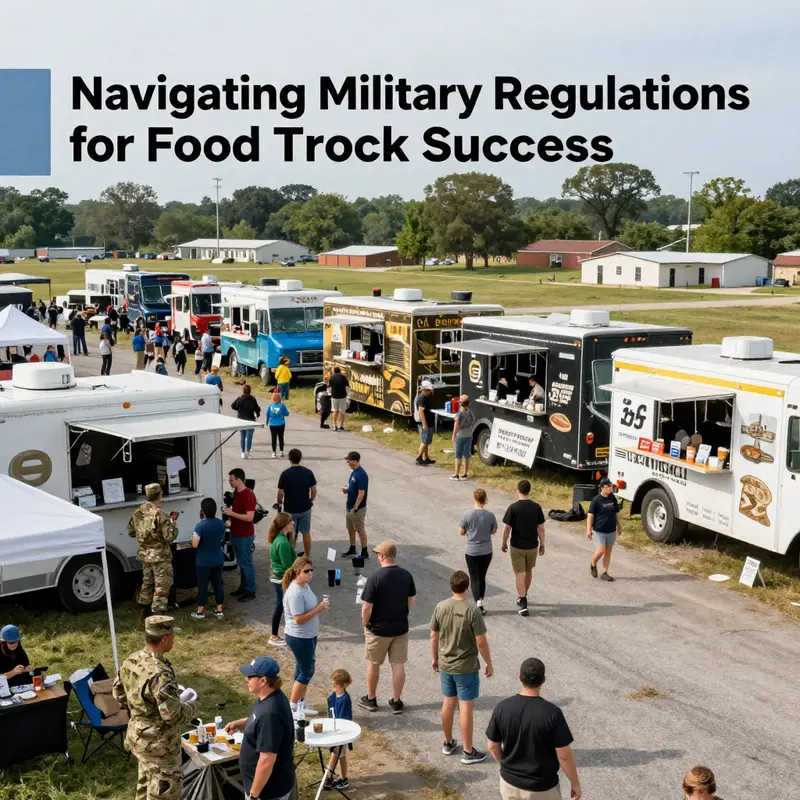
The idea of parking a food truck on a military base sits at the intersection of opportunity and constraint. It promises a built in audience, predictable traffic, and the chance to serve a community with routine, predictable needs. Yet the reality is that bases operate as controlled environments where access, safety, and accountability are paramount. This chapter outlines two primary legal pathways for operators: participating in base events through approved channels and serving military personnel off base while complying with local and federal regulations. The best operators treat base opportunities as programs rather than one off chances, aligning their offerings with base priorities, community welfare, and national security standards. The path begins with understanding who must formally approve each move, what standards must be met, and how to present a value proposition that satisfies base leadership and the service members who keep the installation running.
Access to bases is restricted by design. Bases are not open markets; they are workplaces with security protocols and high stakes activities. Vendors are invited, vetted, and scheduled for events rather than admitted by happenstance. The difference between a casual street vendor and a base partner is the difference between a permissioned process and a permission granted through formal channels. There is a clear path forward when you understand the approvals ecosystem and what the base needs from a vendor: a safe, reliable, and value-adding presence.
The first principle is to treat participation as a program. Base leadership wants confidence that a vendor will not disrupt critical operations, will meet health and safety standards, and will contribute positively to the visitor experience. The approval cycle typically involves offices such as Public Affairs and Morale Welfare and Recreation, as well as logistics or facilities management. Each base uses its own terminology, but the core requirements stay consistent: a clear mission for the vendor, a robust risk assessment, and evidence of the ability to manage food service in a controlled environment. Outreach often starts with the base Public Affairs office to learn about upcoming events, apply through formal channels, and confirm dates, attendance, and site constraints.
Documentation is the practical currency in this ecosystem. You will likely be asked for business licenses, proof of liability insurance, and a health permit. Some jurisdictions require mobile food unit registration. The base may request a safety plan, environmental compliance statements, and an evidence of training in food protection. The time invested in gathering documents pays off when an event window opens and you can respond with confidence rather than scrambling for forms.
Ultimately, the objective of on and off base engagement is to deliver a trusted, predictable service to service members and families. The relationship can yield repeat invitations for future events or longer term partnerships. The key is to remain aligned with the base mission, stay compliant, and treat every engagement as a chance to strengthen the community you serve.
Final thoughts
Navigating the process of getting a food truck operational on a military base requires a well-informed approach grounded in understanding military regulations, effective contracting strategies, and community engagement through event participation. By fostering connections and adhering to official protocols, food truck vendors can carve out significant opportunities in the military landscape. So gear up, align your strategy with military requirements, and dive into the culinary adventure of serving those who serve.