
From pop-up tastings to after-work corporate events, a licensed food truck can be the centerpiece of memorable experiences. Yet the path to a valid license blends local health rules, vehicle requirements, and zoning realities. This guide helps Event Planners, Corporate HR, Community Groups, and Food Enthusiasts navigate permits with confidence. We break down core permits, vehicle and driver requirements, health and staff qualifications, and the practicalities of parking and events. Along the way, you’ll discover how to align your program with city rules, project timelines, and budget considerations. Each chapter builds on the last, so you can coordinate with vendors, venues, and city authorities, ensuring a smooth, compliant rollout. Whether you’re orchestrating a large festival, planning a private company catering, or simply exploring the flavors in your neighborhood, you’ll gain a clear, actionable roadmap to secure a food truck license and roll into your next event with legitimacy and flair.
Licensing on Wheels: A Step-by-Step Path to Your Mobile Food Vending License
Getting a license for a food truck is not a single stamp but a carefully sequenced journey. The process blends public safety with entrepreneurial ambition and begins long before the first sizzle of the grill. In most places the path is built from a core set of permits, each one unlocking the next. While the exact steps shift by location, there is a familiar rhythm you can follow: prove you can keep food safe, demonstrate vehicle readiness, and show you can operate in public spaces without disrupting the community. When you chain these steps together, you create a solid legal foundation for serving customers from a mobile kitchen.
The journey starts with thorough research. Local regulations shape every move, so a careful review of city or county portals is essential. Jurisdictions that publish mobile vendor guidance make it possible to understand the scope, timing, and costs before you invest. The core idea is simple: the more you know about the rules before you apply, the smoother the process will be. In many places the main permit you pursue is a Mobile Food Vendor Permit or a health department related permit. Some jurisdictions separate the health review from the business registration, but the function remains the same — verify that your operation can meet sanitation, temperature control, and cleanliness standards while you operate on streets and sidewalks.
With the regulatory frame in view, the next layer is the business setup. You will likely need to register your enterprise with the city or state, creating formal recognition of your operation within the local economy. In some locales a traditional storefront business license is not required for a moving kitchen; instead, you may be asked to obtain a Business Tax Receipt or a similar mobile-specific permit. The information requested tends to be straightforward: the legal name of the business, ownership structure, the type of food service offered, and the address you will use for licensing and correspondence. This step matters not just for compliance, but for your own clarity about how your business will be perceived by customers, banks, and potential partners. It anchors your project in the bureaucratic reality that governs commerce, even when your kitchen is riding on wheels.
The heart of the licensing process is the Mobile Food Vendor Permit. This license makes your truck legally eligible to operate on city streets. In some cities the permit is issued by the health department, while in others the core permit bears a different name but serves the same purpose: your operation must meet sanitation, food handling, and facility standards. A critical part of this step is the proposed layout of your vehicle, including where you will store ingredients, how you will cook and hold foods, and where handwashing will occur. Plans for equipment, sinks, refrigeration, waste disposal, and surface sanitation are typically required. The goal is to show that the truck can be operated in a sanitary manner, with clear separation between raw and prepared foods and with reliable waste management. It is one thing to have a recipe; it is another to demonstrate that the interior workflow will never compromise public health.
Alongside the vendor permit, you will usually face a separate health-related permit for the food facility itself. This permit, often labeled as a Health Department Permit or Food Service Establishment Permit, requires approval that your vehicle’s interior complies with sanitation codes and that the equipment and workflow facilitate safe preparation, storage, and service. The process commonly entails submitting detailed plans for the flow of food, the locations of storage and prep spaces, handwashing stations, and waste lines. Some jurisdictions provide a regulated license application only after the initial submission has been reviewed, signaling that the health authority is satisfied with the basic concept and layout before moving to a more granular check. Inspections may follow to verify that your truck’s interior meets standards during a live assessment, not merely on paper. These checks focus on practical solvency: do you have the right temperatures for food storage, is there appropriate separation of zones for different foods, are surfaces easy to clean, and is wastewater kept securely managed?
Interwoven with health considerations is the reality of vehicle compliance. A food truck is a commercial vehicle, and it must carry proper documentation and protections. This includes a valid vehicle registration, proof of insurance, and a license plate that reflects its commercial use. In many places you will also need to demonstrate that you hold a driver’s license appropriate for operating a larger vehicle. In some jurisdictions there may be an interior inspection to confirm that the layout aligns with health and safety requirements—the workflow, storage, and handwashing setups must be practical for everyday use, not just in theory. This is not an obstacle to be feared; it is a practical safeguard that ensures you can operate safely for customers and staff alike.
Staff health and hygiene also enter the licensing calculus. Health certificates or food handler certifications for all staff members involved in food preparation are standard in many jurisdictions. The aim is simple and essential: ensure every worker who touches food or handles utensils has training in safe handling, cross-contamination prevention, and personal hygiene. Health cards indicating immunity or clearance from communicable diseases may be required, and renewals are common as part of ongoing compliance. In addition to certification, reliable training for your team in hygiene practices, cleaning procedures, glove use, and safe cleaning schedules helps you pass inspections with confidence and maintain a consistent standard of service.
Another dimension to consider is zoning and parking. Even if your truck is legally licensed, you must be mindful of where you are allowed to operate. Zoning regulations determine permissible locations, designated zones, or event corridors, and some areas require specific permits for temporary setups. In practice, this may mean you need an event permit for a weekend market or a special assignment to operate in a particular district. The importance of checking these rules cannot be overstated; a polished truck can be sidelined if it appears in a restricted zone without authorization. This layer of compliance often interacts with scheduling and event planning, so you should build it into your go-to-market timeline from the outset.
All of these steps carry fees and processing times that vary widely. Applications typically carry a fee, with renewals recurring on a yearly or seasonal basis. Some jurisdictions impose additional costs for inspections or for approvals to operate in certain districts or at events. Processing times can stretch from a few weeks to several months, depending on how crowded the department is and how complete your initial submission appears. A smart strategy is to prepare a complete, well-organized packet from the start, anticipate requests for revisions, and build a buffer into your launch timeline to accommodate possible delays. If your plans include participation in large events, you may need additional event-specific authorizations that further shape your schedule and budget.
As you move through these steps, keep your mission in view: the licensing journey is not merely about compliance; it is a foundation for a credible, scalable business. A well-structured license signals to customers, suppliers, and partners that you are committed to high standards and predictable service on the street. It is the prerequisite for building your brand, securing financing or insurance, and growing into new neighborhoods or even new cities. The practical payoff comes not in a single form but in the confidence that your operation can deliver safe, consistent meals wherever you park, whether at a busy downtown corner, a weekend market, or a private event. The process is iterative and adaptive—regulations change, permits renew, and each renewal is an opportunity to reassess your equipment, staff training, and sanitation practices to ensure you remain durable and compliant.
For a broader view of how these rules fit into the bigger picture of running a food-truck business, see our guide on navigating food truck industry regulations. It helps place the permits described here within a wider framework and can be particularly useful if you plan to expand, relocate, or operate across multiple jurisdictions. The central idea is that core permits form a reusable blueprint: understand the health and safety expectations, demonstrate a practical kitchen layout, ensure vehicle and driver readiness, and commit to ongoing compliance through regular training and inspections. This blueprint makes the licensing journey navigable rather than overwhelming and aligns your ambitions with the realities of city regulations.
As you finalize your strategy, remember that the path varies by city but follows a recognizable arc. Oakland and New York City examples show the same fundamental logic at work: begin with solid research, secure the core permits that authorize operation, pass a health-focused review of your facility, confirm vehicle readiness, and build an ongoing program of staff training and regulatory checks. The chapter you are drafting is not merely about obtaining a license; it is about embedding a disciplined, health-first approach into every wheel turn and every service line you create. With patience, organization, and attention to detail, you will move from plan to pavement with confidence, and your food truck will be ready to meet customers wherever the road takes you.
Licenses on Wheels: A Practical Path to Vehicle Registration, Driver Licensing, and Insurance for Your Food Truck
Turning a food truck dream into a compliant, road-ready business hinges on three intertwined pillars: vehicle registration, driver licensing, and insurance. These are not mere formalities; they are the backbone that keeps you legally on the road, protects your team, and safeguards your investment. When you approach them as a single, cohesive process rather than a series of isolated tasks, the path becomes clearer and far less overwhelming. The rules differ from one state to another, yet the underlying principles are universal. Start by treating the truck as a business asset that must be tagged, tested, and insured for public operation. Then, ensure the operator’s credentials match the vehicle’s requirements, and finally, secure a policy that blankets the entire operation—from the cab to the kitchen equipment mounted on the chassis. The journey through registration, licensing, and insurance is not a one-and-done milestone; it is an ongoing practice of compliance, renewals, and documentation that travels with you every mile you serve customers.
Vehicle registration is the entry point into the regulatory system. In most states, the food truck must be registered as a commercial vehicle. This means the vehicle is linked to the business through the state’s Department of Motor Vehicles, not merely as a private automobile. The process typically begins with proof of ownership, which may be the title or a lienholder document if a loan exists. You will be asked to provide the vehicle identification number (VIN), the make and model, and the vehicle’s registered weight. Registration fees are due at the time of filing, and you will receive a license plate that is specific to the vehicle’s use as a business vehicle. The plate signals to inspectors and law enforcement that the truck is operating in a commercial capacity and subject to the corresponding rules.
Alongside registration, a safety inspection is usually required. This inspection ensures the truck meets basic roadworthiness standards—brakes, steering, tires, lighting, emissions where applicable, and overall mechanical condition. The inspection is not merely a box to check; it is a practical evaluation of whether the truck can safely navigate the roads while carrying a kitchen’s worth of equipment and staff. Preparing for this step means gathering several documents in advance: proof of ownership, a valid driver’s license, proof of insurance, and any business registration paperwork you hold from your city or state. Some jurisdictions also require emissions testing if your vehicle falls into a certain weight class or age range. Planning for these tests well ahead of time can prevent delays that stall your launch.
The next layer, driver licensing, is about who is behind the wheel and under the hood. The operator generally needs a valid driver’s license that permits operating a commercial vehicle if the truck’s weight, size, or seating capacity triggers a commercial qualification. In many cases, a standard Class C license suffices. However, if the truck exceeds weight thresholds or has a higher passenger capacity, a Commercial Driver’s License (CDL) may be required. It’s crucial to verify the specific thresholds in your state because the line between “commercial” and “non-commercial” can shift with vehicle modifications, tank sizes, or the inclusion of a full kitchen in the back. Beyond the baseline license, some states mandate endorsements or certifications related to food handling and sanitation, particularly for operators who serve in public spaces or at events. These endorsements are designed to ensure that the person handling food in a mobile setting understands safe temperatures, proper storage, and cross-contamination prevention. If your team includes more than the owner-operator, each person involved in food preparation or service may need to meet these standards.
As you pursue licensing, think of it as a continuum rather than a one-time paperwork sprint. Some operators find it convenient to separate the licensing steps across a few weeks—ensuring the driver’s license is up to date, enrolling staff in a food-handling course, and lining up a CDL assessment if required. While you navigate these choices, keep in mind that your ability to operate hinges on your insurance as well. Commercial auto insurance is not optional; it is a fundamental risk-management tool tailored to vehicles used for business purposes. The policy should cover liability arising from vehicle operation, property damage, and injuries that may occur as a result of traffic incidents. It often extends to the mobile kitchen equipment, inventory, and other business assets stored in or on the truck. A robust policy can also include coverage for non-owned or hired vehicles, which is valuable if you contract with third parties for certain routes or events. In practice, the insurance landscape for food trucks is specialized because the risk profile differs from a private vehicle or a stationary restaurant. Many insurers offer policies crafted for mobile kitchens, bundles that combine auto liability with equipment coverage, and options for temporary locations or event-based service. Without appropriate coverage, even a minor accident can trigger fines, penalties, or out-of-pocket repairs that threaten your cash flow and reputational standing.
The intersection of registration, licensing, and insurance is where local regulations come alive. Registration confirms you have a legitimate, roadworthy vehicle that can legally operate in your jurisdiction. Licensing confirms you have the right to drive that vehicle in the required contexts, including any food-handling responsibilities that your state recognizes. Insurance provides a financial safety net that protects your business, your employees, and your customers. Together, they create the legal framework that supports a reliable, sustainable mobile operation. However, this framework does not exist in a vacuum. Local zoning, parking rules, health department requirements for on-street food service, and event permits all interact with the triad of registration, licensing, and insurance. Before you park at a permit site or roll into a busy market, confirm that your truck is cleared for that specific location and that your license covers the activity you plan to conduct there. A practical way to approach this is to map your typical routes and venues against the local rules that apply to each place. If you find yourself uncertain, consult your state DMV for vehicle-related requirements and your state department of transportation for any additional commercial vehicle considerations. You can also lean on the broader regulatory landscape described in community resources that gather industry-wide insights, such as Navigating Food Truck Industry Regulations. This can help you anticipate conflicts between a proposed location and permit restrictions and steer you toward compliant choices.
Beyond the mechanics of forms and fees, think of this triad as a living system that travels with your truck. You will need to maintain updated registration, renew licenses as required, and revisit your insurance policy at renewal to ensure coverage matches your current operation. If you add new equipment, relocate the vehicle’s home base, or expand to evening events with longer routes, you may need to adjust registrations and endorsements accordingly. The peace of mind that comes with knowing you are fully compliant translates into smoother inspections, fewer friction points with authorities, and a better chance of securing event opportunities that value compliance as much as cuisine. The administrative work may feel tedious, but it is the price of consistency in a mobile business that thrives on trust, reliability, and safety. Remaining proactive—checking for changes in state thresholds for CDL qualification, monitoring insurance limits that reflect the truck’s cargo and equipment, and ensuring that each staff member who handles food carries appropriate food-handling credentials—keeps the operation resilient in a landscape that evolves with public health standards and transportation regulations.
For a concise view of how regulations shape day-to-day operations, you can explore Navigating Food Truck Industry Regulations. This resource helps outline the practical implications of regulatory changes for a mobile kitchen and offers cues on staying ahead of compliance requirements without getting overwhelmed by the details. As you finalize the specifics of your truck’s registration, licensing, and insurance, you will likely find that these elements dovetail with broader planning tasks—cost forecasting, scheduling renewals, and aligning with event calendars. A well-maintained regulatory backbone can actually simplify growth. When you present your truck as a legally compliant, insured, and properly licensed business, you project credibility to customers, partners, and permitting authorities alike.
In terms of concrete steps to assemble the package, begin with a checklist that mirrors the order of operations: secure the title and proof of ownership, arrange a safety inspection through the state or local DMV, file the registration with your state, and obtain the license plate. Then verify the classification of your vehicle to determine whether a standard driver’s license is enough or if a CDL is necessary. Look into endorsements or certifications for food handling if your state requires them for food service in a mobile setting. Finally, approach insurers who understand the unique risks of a mobile kitchen. Request quotes that cover liability, property damage, and equipment, and compare how premiums reflect your vehicle’s specifications, driving routes, and business hours. Keep all documents organized and readily accessible for inspections, event applications, and channel partners who require proof of compliance.
The practical payoff is tangible: fewer surprises at inspection, smoother transitions between venues, and a road map that supports expansion without sacrificing safety or legality. While the specifics will vary by location, the core idea remains constant—that a food truck is first a licensed vehicle, then a licensed business operator, and finally a mobile enterprise backed by robust insurance. By treating registration, licensing, and insurance as a single integrated system, you can avoid the friction that derails new operations and instead focus on delivering consistent, high-quality service to customers who are eager to enjoy meals on wheels.
External resource for broader official guidance: Official U.S. Department of Transportation: Vehicle Registration and Licensing Information. https://www.transportation.gov
Licensing on Wheels: Health, Safety, and Staff Readiness for Your Food Truck Permit
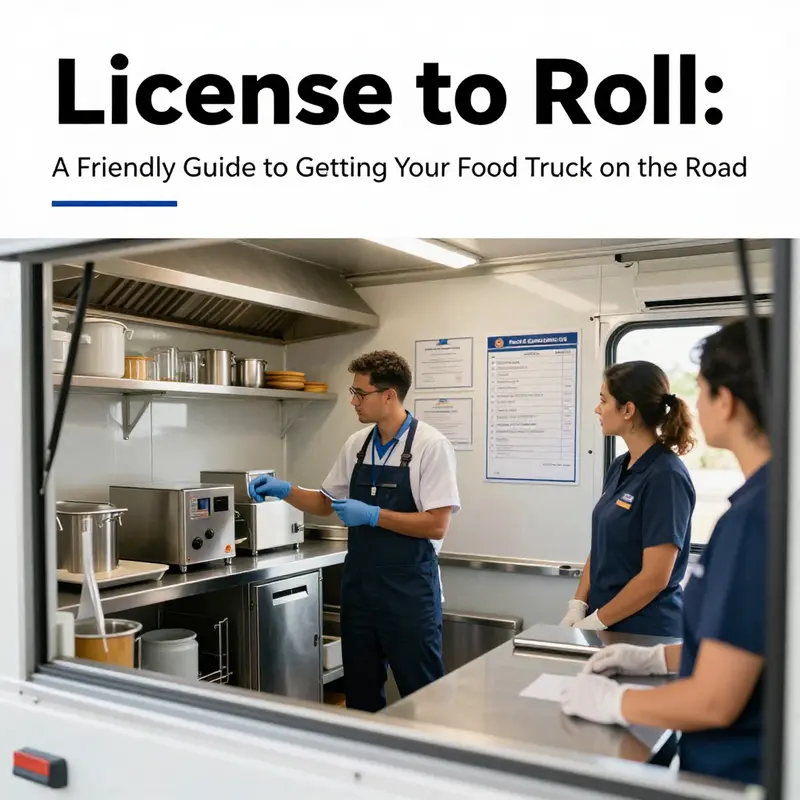
The path to launching a food truck is a careful sequence of approvals, inspections, and preparations designed to protect the public and keep your operation reliable. Across jurisdictions, the core requirements share common goals: show that your mobile kitchen meets health and safety standards, that your vehicle is roadworthy, and that your team is prepared to handle food with care. Reading this as a roadmap helps you stay focused on what inspectors will review when they visit your truck or your commissary.\n\nHealth and safety sit at the center of every requirement. The main anchor is the Mobile Food Facility Permit (or its closest equivalent), which grants permission to operate in a given area and is usually paired with a plan review. The plan review asks you to describe your layout, where cooking and cooling occur, how handwashing is performed, and how waste and wastewater are managed. You will also document a water supply, temperatures for foods, and training plans for staff on hygiene practices, temperature control, cleaning, and allergen awareness.\n\nVehicle safety and compliance are equally important. You will need valid registration and appropriate insurance, and many places require evidence that propane systems and cooking appliances meet fire codes, that ventilation is properly installed, and that fire extinguishers are accessible and correctly rated. Electrical and plumbing installations are often inspected as well, along with safeguards for generators, water supply, and wastewater containment. A safe truck is seen as a portable kitchen that protects customers and staff at every stop.\n\nPeople and process matter just as much as the vehicle. Most jurisdictions expect at least one certified Food Safety Manager on site during service, with the manager authorized to oversee critical controls and respond to safety issues. In addition, every food handler should hold a valid certificate or card in basic food safety. Allergen awareness, cross-contamination prevention, and proper cleaning and sanitizing practices should be part of every training program. For mobile units, training must address the unique challenges of small spaces, rapid temperature changes, and separation of raw and ready-to-eat foods during transit and service.\n\nFinally, many permits require a formal commissary arrangement. A commissary provides access to potable water, wastewater disposal, dishwashing facilities, and vehicle space for storage. A written agreement with a licensed commissary is often requested as part of the permit package and can simplify inspections by showing you have a stable infrastructure nearby. You’ll assemble a comprehensive dossier including licenses, permits, equipment certifications, staff training records, temperature logs, and proof of insurance. When you submit your plan and schedule inspections, address any deficiencies promptly, and maintain ongoing compliance, your permit journey becomes a predictable sequence rather than an unknown hurdle.
Licensing a Food Truck: An Overview of Zoning, Parking, and Event Permits
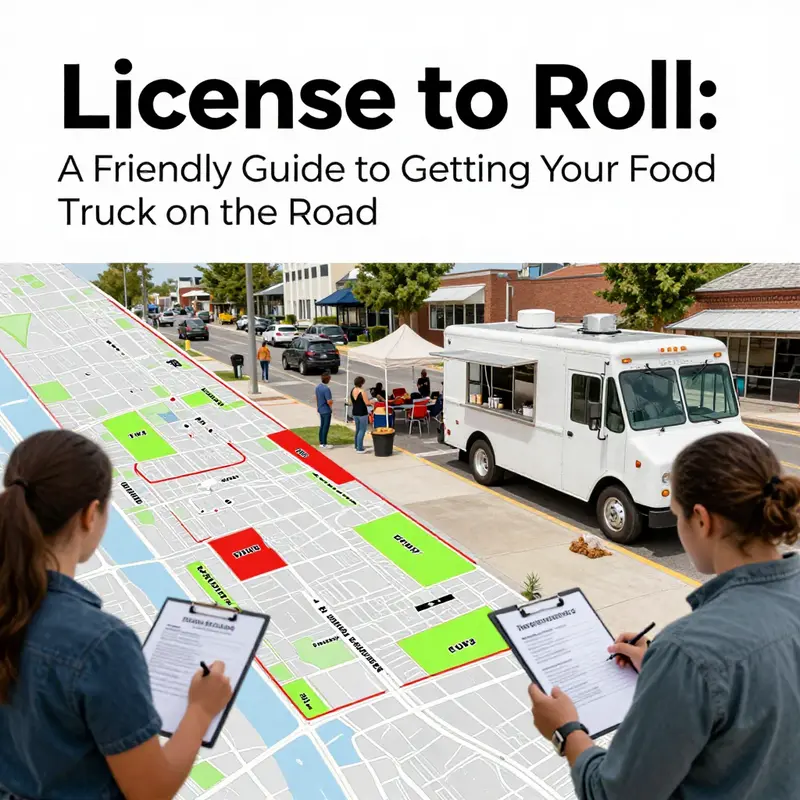
Licensing a food truck requires coordinating multiple approvals that depend on where you operate and how you serve customers.
The core steps typically start with a mobile food vending permit from the health department or a related agency. This credential confirms basic sanitation, equipment, and workflow standards for the vehicle, and inspections may occur before launch and on a regular renewal cycle.
Beyond health permits, many jurisdictions require a mobile business license or a separate mobile vendor designation. This ensures your business activities are captured in taxation and reporting systems and helps prevent administrative roadblocks when you rotate through districts.
Zoning and parking rules determine where you can operate, when you can park, and how long you can stay. Check zoning codes and planning offices early to identify approved locations, proximity restrictions, and loading zones. Parking rules often include time limits and space constraints that impact daily scheduling and route planning.
If you plan to participate in events, factor in event permits, insurance requirements, and host venue rules. Apply well in advance and align your licenses with the organizer’s expectations, since event spaces can have separate requirements and deadlines.
Maintain a well-organized record of permits, inspections, staff certifications, and insurance to simplify renewals and expansions. A proactive approach – starting with health and safety approvals and then layering on zoning, parking, and event permissions – helps create a predictable, compliant operation.
Licensing on Wheels: Navigating Regional Rules, Timelines, and Costs for Your Food Truck
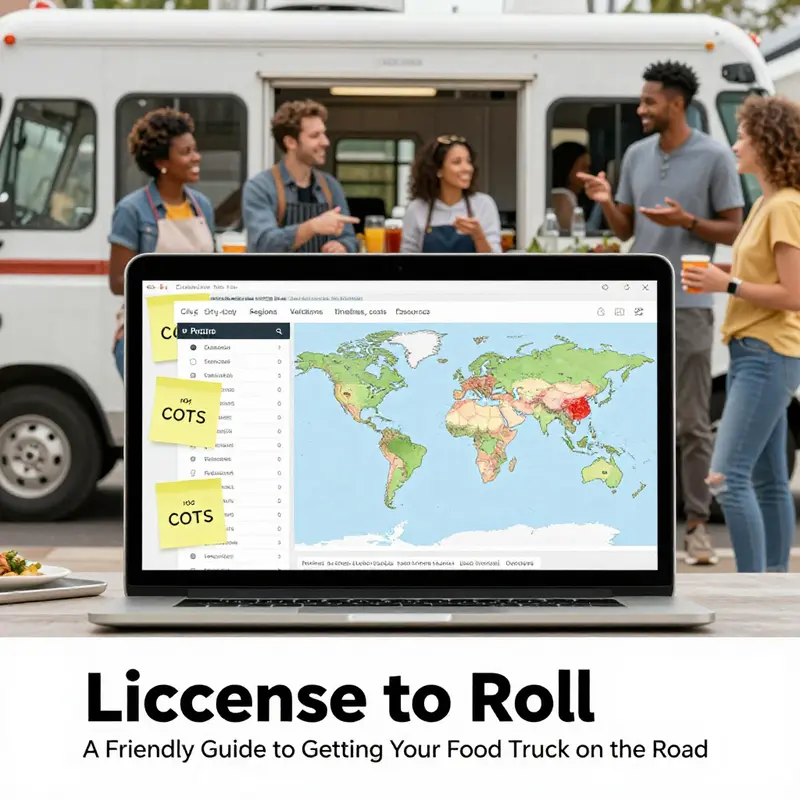
Getting a license to operate a food truck is less a single form than a map. It is a layered process that starts with core health and business permissions and then threads through a tangle of local rules, zoning rules, and city-specific fees. The result, when done well, is a license portfolio that grants you permission to move from street corner to festival stage with a kitchen on wheels. Yet the reality is sobering: what you must complete in one city can differ markedly from what a neighboring county requires. The practical truth is that every jurisdiction has its own fingerprints, and the most successful owners treat licensing as a local project rather than a nationwide checklist.
At the heart of the journey are several recurring elements. Most aspiring vendors will encounter a mobile food vending license, the essential permission that signals you may operate in a public space. In many places you also need a form of business authorization, though a traditional storefront business license may not fit a mobile model. A health or food facility permit sits alongside these basics, ensuring your truck’s layout, equipment, and sanitation practices meet local standards. Your vehicle itself must be a registered commercial vehicle, backed by valid insurance, and the driver behind the wheel should hold the appropriate license for operating a commercial vehicle. And no crew member can handle food without proof of health readiness—typically a food handler certificate or health card.
Beyond these core items, regional rules often hinge on where you park and how you do business. Zoning and parking regulations can carve out designated zones, require event permits, or demand temporary location approvals. If you plan to participate in festivals or farmers’ markets, a separate event permit may be necessary. All of this means that the same food concept might travel smoothly in one neighborhood and face a roadblock in another. The practical implication is clear: you must research and prepare for the exact jurisdictional landscape that will cradle your truck.
To illustrate the everyday texture of this process, consider how a major city frames licensing. In New York City, for example, the mobile food vending license is a dedicated permit you apply for through the city’s official channels, with guidance and contact options available via the health department’s portal and city help services like 311. The precise steps, documents, and timelines are published details on the city site, and applicants are encouraged to verify requirements with the health or licensing department directly. This example is not a universal map, but it shows the pattern: a formal license for mobile vending, a health review for your kitchen, and a predictable sequence of checks aimed at protecting public health and orderly streets.
The licensing tapestry, however, extends far beyond a single city’s borders. The chapter you’re reading now threads a larger point: while the basic licenses appear similar, the specifics—what gets reviewed, how long it takes, and how much it costs—are intensely local. The broad framework remains recognizable: confirm you have a valid business presence, ensure your vehicle meets safety and sanitation standards, and align your operation with local parking and zoning constraints. The timeline will reflect your locality’s pace and the completeness of your submission. Some towns offer streamlined online portals that speed up processing, while others rely on a chain of inspections, verifications, and in-person reviews that stretch across weeks or months.
Costs, unsurprisingly, follow the same regional rhythm. Expect a spectrum rather than a fixed price. A basic business license might run from roughly fifty to two hundred dollars in many places. A health department permit or food facility permit commonly falls into the low hundreds to mid-hundreds. Mobile vendor permits, which authorize street operation, can range from a hundred to well over a thousand dollars annually depending on city size, demand, and the level of oversight. There are often recurring fees for food handler permits per employee, typically in the ten- to fifty-dollar range, and for liability insurance, which many jurisdictions require at a baseline of one million dollars. Additional costs—signage, vehicle modifications to meet equipment and safety standards, and even periodic inspections—seed the budget with ongoing obligations.
If you plan to work in multiple jurisdictions or you anticipate rapid expansion, you must think in terms of a licensing calendar. Collect and organize every document you might need: proof of business registration, vehicle registration, driver’s license, proof of insurance, plans for your kitchen layout, equipment specifications, and sanitation procedures. A well-prepared submission can prevent delays that occur when a reviewer asks for missing pages or clearer diagrams. Alongside the documents, develop a practical timeline. Start with the requirement you expect to take the longest to complete, then map back to shorter tasks such as acquiring staff health certificates or obtaining a fire safety inspection if that applies to your locale. The smoother your early filings, the faster you accelerate toward your first parking spot and your first customer.
The journey to a licensed road-ready truck is not only about ticking boxes. It is also about building a compliance mindset. This means designing your kitchen and service area with sanitary flow in mind, planning for waste management, and training your crew to adhere to regional food-handling expectations. Every health certificate earned by a team member is more than a credential; it is a pledge of safety that resonates with customers and regulators alike. When you think about the process in these terms, licensing becomes less of a hurdle and more of a reliable framework that safeguards both your brand and your community.
The practical approach to navigating this landscape blends curiosity, organization, and professional diligence. Begin by identifying the exact agencies you must engage: the department of health, the licensing office, and, where relevant, the zoning or planning department. Reach out early to confirm what plan review requirements exist for your truck’s layout and equipment. In many jurisdictions, you will be asked to submit floor plans showing the kitchen footprint, the location of handwashing stations, refrigeration, and cooking appliances, along with sanitation protocols and waste disposal arrangements. Having these diagrams ready and clearly annotated can shorten review cycles and reduce back-and-forth questions.
Beyond the paperwork, there is a broader strategic layer: understanding who has the authority to grant permissions and how they prefer to receive information. Some offices accept electronic submissions, while others require hard copies and in-person walkthroughs. Some districts favor a phased approval where you secure an initial provisional permit before completing all inspections. The key is to stay in a steady dialogue with the permitting body, respond promptly to any requests for clarification, and plan for possible re-inspections. In this environment, patience is a critical skill, because delays can ripple through your launch timetable and your planned location strategy.
Incorporating a regulatory lens into your business plan also helps you price the venture realistically. Compliance costs aren’t vanity expenses—they influence your break-even calculations, debt planning, and cash flow. If you intend to operate at a wide range of venues, you should budget for multiple event-permit fees and parking costs. Some operators bundle these expenses into a “license plus space” model with festival organizers, while others negotiate add-ons for daily street operation. Either way, the disciplined accountant in you will thank the planner who accounts for all permit renewals and potential increases in fees year over year. And because regulations evolve, keep a habit of reviewing official guidance at least annually, even if you’re not actively expanding.
In this chapter, you’ve seen how regional variance shapes every license, permit, and penny spent. The path is not a straight line, but a tapestry of local rules that reward thorough preparation and proactive engagement. If you want a concise guide that helps translate these regional nuances into concrete steps, consult the SBA’s Starting a Food Truck Business resource. It offers region-specific checklists and direct links to the relevant agencies, serving as a practical companion to the local research you will conduct. For a deeper dive into the compliance conversation and how to stay ahead of regulatory shifts, you can explore further insights on navigating the broader regulatory landscape at the linked resource below.
For a deeper dive into staying compliant and navigating the regulatory maze, see Navigating Food Truck Industry Regulations.
External resource: For a structured, official overview of the licensing journey, the U.S. Small Business Administration provides a comprehensive guide that walks aspiring food truck owners through licensing, permits, and regional considerations: https://www.sba.gov/business-guide/plan-your-business/start-food-truck-business
Final thoughts
Securing a license to operate a food truck blends documentation, compliance, and community collaboration. By understanding core permits, vehicle responsibilities, health standards, zoning realities, and regional nuances, event planners, HR teams, and community groups can orchestrate vibrant, compliant mobile dining experiences. Start with the basics, map a realistic timeline, engage venue partners early, and build a checklist that scales with your event calendar. A licensed truck not only keeps you on the right side of the rules but also sets the tone for trust, safety, and delicious, well-managed experiences for guests.