
Power is the heartbeat of any successful mobile kitchen. The right generator keeps lights on, refrigerators cold, and ovens firing, no matter where your event takes you. Yet the price tag isn’t one-size-fits-all: it shifts with size, fuel, technology, and integration into a customized rig. For event planners coordinating multi-venue galas, corporate admins organizing off-site gatherings, local community groups running pop-ups, and individual food enthusiasts chasing bigger stages, understanding what drives cost saves time, budget, and stress. This guide breaks down how much a food truck generator costs across markets and situations. Each chapter builds on the last, moving from broad price ranges to the specifics of power output, fuel technology, built-in solutions, and total ownership. By the end, you’ll have a clear sense of the investment required and how to optimize it for reliability, safety, and audience delight.
Power on Wheels: Reading Market Segments and Price Ranges for Food Truck Generators
Power on wheels begins with a simple truth: power is the core of a successful food truck operation, yet the price map behind that power is not a straight line. The cost of a food truck generator varies in a broad spectrum, shaped by capacity, fuel type, brand, and how the unit is built to endure the road. For anyone planning a kitchen on the move, the most useful starting point is to translate power needs into a practical budget, then let that budget constrain the options rather than the other way around. Market data consistently shows a tiered landscape. At the low end, small to mid-range units in the 1kVA to 3kVA range can handle lighting, a compact refrigerator, and a couple of cooking devices. These units typically sit between five hundred and two thousand dollars, offering a safe entry point for those testing a lean footprint or a tight schedule. For a truck that aims to serve a steady stream of customers with more equipment, this first tier becomes a gatekeeper: you may transition quickly from curiosity to a need for a more capable unit as the menu expands and service windows lengthen. The math is practical: initial capital plus ongoing fuel and maintenance equals the real price of power on the road.
Moving up to mid-range generators in the 5kVA to 10kVA band, price ranges tend to stretch from about two thousand to six thousand dollars. This is the terrain where many larger trucks operate with multiple high-wattage appliances, such as grills and fryers alongside larger refrigeration systems. The logic here is straightforward: more watts, more stability, and a defense against the occasional long service day when the sun is high and demand spikes. Gasoline-powered models dominate this segment because they strike a balance between performance and maintenance practicality for mobile operations. The tradeoff is clear: continuous duty capability and fuel availability in the field versus upfront cost. Inverter options exist within this band, offering quieter operation and cleaner power, which matters when you depend on sensitive electronics like POS systems and laptops in a kitchen-on-wheels. If noise and power quality are priorities, you may choose an inverter within this size range, ensuring the system can support a larger array of devices without compromising performance or your customer experience. If you’re counting devices rather than kilowatts, you’ll be thinking about a single oven, two fryers, a robust reach-in cooler, a display cabinet, and the lighting that makes your stand inviting, all synchronized by a dependable power source.
The high end introduces industrial-grade generators designed for heavy, continuous use. In this market, units rated at 7,000 watts and up commonly fall into a price corridor of roughly three thousand five hundred to six thousand five hundred dollars or more. These machines are engineered for robustness: they’re built to endure long shifts, to run multiple large appliances without faltering, and to maintain performance in the face of variable workloads. They’re heavier, louder, and more demanding in terms of fuel and maintenance. For operators who schedule extended service days or manage a small fleet, the reliability and resilience of this tier often justify the higher price. The value here is not merely in watts but in the equipment’s ability to sustain a busy kitchen without frequent pauses for refueling or repairs. At the same time, a growing number of buyers compare this tier with high-efficiency inverter options, recognizing that cleaner power, improved fuel economy, and reduced wear on electronics can alter the long-term cost of ownership—even if the upfront price is higher.
An increasingly popular alternative is the electric generator food truck, a model that blends battery storage with solar input to offer off-grid capability. These systems typically start around four thousand dollars, with fully customized configurations climbing to roughly six thousand five hundred dollars, depending on the energy storage capacity, solar array size, and how smartly the system is managed. The allure is clear: reduced fuel costs, lower emissions, and a predictable energy footprint that can be advantageous in markets with noisy or fuel-access restrictions. The upfront investment is higher, but the long tail—lower maintenance, longer replacement cycles, and potential incentives for solar and battery storage—can tilt the financial equation in favor of sustainability over a five- to ten-year horizon. For operators who want a brand narrative built around energy independence and environmental responsibility, this pathway offers a compelling platform for growth, especially as you consider future expansion to more frequent events or multiple units.
But price is only part of the equation. The practical challenge comes from accurately estimating power needs before purchase. It’s common for new owners to overestimate demand to avoid underpowered setups, yet that approach often yields underutilized capacity and higher idle costs. A disciplined method starts with a device-by-device inventory: overhead and task lighting, the refrigerator and freezer units, coffee and smoothie machines, the griddles and fryers, the ventilation system, and the POS hardware. From there, you build a load profile that reflects peak usage rather than average demand. The result is a generator size that provides enough headroom to handle busy periods without collapsing into inefficiency during lulls. With a solid load assessment, you can distinguish between a reliable, middle-range unit and a larger, more capable machine that may remain underused until a dramatic increase in business justifies the investment. The decision becomes less about chasing the latest feature and more about matching power quality to the kitchen’s rhythm, fuel considerations to the local environment, and the overall budget to the expected horizon of growth.
The conversation about generator selection should thread back to the foundation of the business: the truck model and the kitchen configuration you have in mind. The path you choose should harmonize with the chassis, electrical panel, and safety standards that govern your setup. For many operators, a helpful starting point is to explore how different truck configurations influence power needs and cost. The guide to choosing the right food truck model provides a practical lens for translating the price map into an executable plan. It helps you align the generator choice with the designed workflow, the space constraints of the kitchen area, and the maintenance schedule you can realistically sustain. See the guide here: Choosing the right food truck model.
Finally, every pricing decision should include a glance at the total cost of ownership. Fuel, oil changes, air filters, spark plugs, battery life for inverter systems, and warranty considerations all accumulate over time. A newer, mid-range generator may win on efficiency and maintenance costs, while an older unit might seem cheaper upfront yet demand more frequent repairs. When maintenance cycles and spare parts availability are factored in, the difference between a well‑chosen 3kW inverter and a 6kW non-inverter setup becomes clearer: the inverter’s clean power and quiet operation can protect a delicate refrigeration lineup and extend the life of a compact kitchen, even if it costs more at the register. This is not merely a math problem; it’s a customer experience and risk management exercise. A generator that keeps pace with demand without drawing undue attention to noise or emissions helps you build trust with customers, landlords, and regulators alike, while supporting a stable workforce that relies on dependable power during peak hours. For those who want to explore current market options and price benchmarks in more depth, external resources provide broad datasets and reviews to calibrate expectations: https://www.amazon.com/s?k=food+truck+generator
Sizing the Sizzle: How Power Output and Size Drive Food Truck Generator Costs
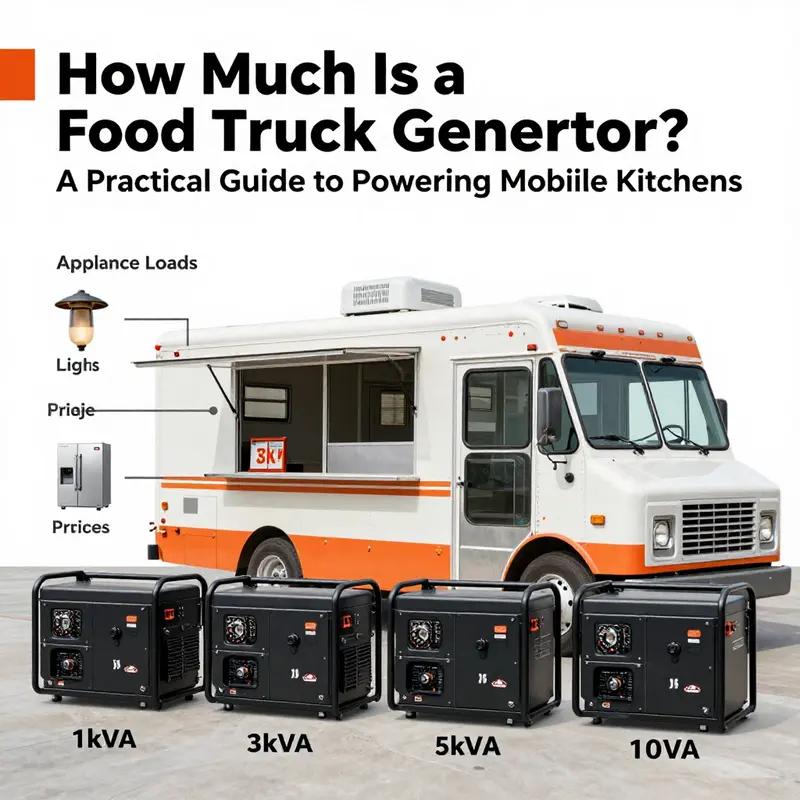
Choosing a generator for a food truck is a balancing act between how much power your kitchen actually needs and how you want to spend your money over the long run. The sticker price is only part of the story. Power output, the type of generator, and its physical footprint all shape not just the upfront cost but the reliability, maintenance, and the way the unit fits into your mobile workspace. To bring this into focus, imagine three broad tiers that align with typical truck configurations: small setups, mid-size operations, and high-demand commercial kitchens. Each tier maps to a power range, a class of generator, and a practical cost band that operators should expect as a starting point for budgeting and negotiation. As you plan, keep in mind a simple rule of thumb: size your generator with a buffer of about 20–25 percent to cover startup surges and to allow for future equipment additions. If your total load runs at around 5 kW, a 6 to 7 kW unit is a wiser choice than a straight 5 kW unit, because motors and compressors demand a temporary surge when they first start.
For the smallest food trucks, the basic electrical demand centers on lighting, a compact refrigerator, a small fryer or griddle, a handful of warming lamps, and a payment terminal. In practical terms, that typically translates to about 1.5 kW to 3 kW of continuous power, with occasional peaks that push beyond that during startup. The market reflects this need with portable inverter options in the roughly 1.5 kW to 3.5 kW range. These units are designed to deliver clean, stable electricity ideal for sensitive electronics and POS systems, while remaining quiet enough for daytime street operation. Pricewise, you’re generally looking at a range from about five hundred dollars up to roughly twelve hundred dollars, depending on the exact output, tank size or battery capacity, and the inclusion of accessories like USB outlets or trailer-ready mounting kits. The appeal of these smaller options lies in their portability and their ability to run on gas or propane, a flexibility that’s often favored by startups with tight space constraints and evolving menus.
Move up to a mid-size kitchen, and the power equation shifts. A full mid-size kitchen—griddles, fryers, ovens, multiple reach-ins, and a few high-demand appliances—typically needs between 5 kW and 10 kW. Here, the choice broadens to mid-range inverter models, traditional gasoline generators, and, for operators who emphasize long runtimes and stability, diesel options. Inverter designs continue to be popular in this segment due to their clean power profiles and improved efficiency; they handle simultaneous loads with less voltage flicker and lower noise than many older models. Price bands widen as well, with mid-range inverter options commonly landing from about $1,500 up to around $3,000, and diesel units that push higher, often in the $3,500 to $8,000 range depending on the exact rating, build quality, and run-time features. The cost difference isn’t merely about more watts; higher-end units deliver longer continuous runtimes, more robust starting capability for multiple heavy appliances, and better fuel economy for all-day shifts.
At the high end, commercial trucks that operate with multiple appliances and climate control demand 10 kW or more. This tier includes heavy-duty diesel generators and large inverter systems designed for durability, multi-shift use, and extended operation with minimal attention. In this space, prices commonly start around $3,500 and can exceed $8,000 for the more capable, long-running diesel configurations and for units incorporating advanced cooling, sound attenuation, or dual-fuel or hybrid features. The logic here is straightforward: the more power you draw and the more uptime you require, the higher the initial investment, as well as the ongoing fuel and maintenance costs. Even in this class, however, there are practical improvements to be had. Hybrid or battery-assisted designs, while pricier at purchase, can deliver meaningful savings on fuel and maintenance if your truck runs long shifts with limited downtime and ample solar charging or battery backup.
Beyond the raw wattage, there is a constant tension between portability and performance. Inverter generators—often the first choice for mobile kitchens—offer superior power quality, switching efficiency, and quieter operation, which translates into lower risk for sensitive electronics and less noise nuisance in busy street scenes. Traditional gasoline units, while sometimes cheaper upfront, may suffer more voltage fluctuations under load, and their running noise and emissions can be less favorable for a food truck in a crowded market. Diesel generators bring durability and longer runtimes to the table, a strong argument for daily operation in a busy schedule, but they tend to be heavier and louder. The size and weight of the unit are not just about moving it; they affect how you mount, ventilate, and service it during service hours. A compact inverter may weigh around 40 to 50 pounds in a portable form, with small footprint dimensions suitable for rooftop or under-chassis mounting. Mid-range units often weigh in the 130 to 150 pound range, while large diesel units can push above 250 pounds. These realities guide not just where the generator sits in your truck, but how it’s secured, vented, and accessed for refueling or maintenance.
Of course, many operators weigh custom solutions that integrate a generator into the truck’s body or a dedicated compartment. In the market, fully customized builds with built-in power systems can start at modest levels—close to a thousand dollars for a basic integrated option—and rise to six thousand five hundred dollars or more for premium installations with larger capacity, robust mounting, enhanced cooling, and smart controls. The difference is not simply the wattage; it includes enclosure design to dampen noise, ease of service, and the ability to run in hot or cold climates without overheating. In all cases, the core calculus remains the same: identify your total load, add a safety margin for startup and future expansion, and ensure your unit can physically fit within the available space while meeting ventilation and safety requirements. When you plan this way, the numbers become less abstract and more actionable for budgeting and site planning.
To connect planning with practical action, consider how the generator fits into your broader truck model strategy. The choice of chassis, kitchen layout, and traffic patterns influences the optimum power package. A guide on choosing the right food truck model can help you align your electrical needs with the truck’s size, configuration, and operational style. You can explore that guidance here: Choosing the right food truck model.
As you translate these tiers into a shopping list, several reminders help avoid overpaying or underbuying. First, always oversize by roughly 20–25 percent to cover startup surges and potential menu expansions. Second, prioritize inverter technology for clean power and better protection of sensitive devices like POS systems, iPads, and digital scales. Third, match the unit’s weight and footprint to your mounting options, ensuring you have safe access for refueling, air flow, and maintenance. Finally, consider futures beyond today’s menu: solar compatibility or hybrid configurations can offer resilience and sustainability benefits that align with longer-term operational goals. In short, the right generator is less about chasing the highest wattage and more about balancing power, portability, reliability, and lifecycle costs.
For those who want to dive deeper into the model-fit discussion, the linked guide provides a broader frame. It helps you think through not just the electrical load but how the kitchen’s workflow, space, and customer experience inform the best generator choice. And when you’re ready to broaden your reading beyond the planning stage, an external resource offers practical perspectives on clean power and efficiency in mobile operations. See the official resource page for deeper technical detail on inverter performance, run-time, and energy storage options.
External reference: official resource page on clean and efficient mobile power options. official product page
Powering the Mobile Kitchen: How Fuel Type and Technology Shape Food Truck Generator Costs
Powering a food truck means more than turning on lights and burners. It is about pairing the right source of power with the rig’s layout, the customer experience you want to deliver, and the realistic rhythm of your routes, events, and climate. The price tag for a food truck generator does not come from a single factor; it emerges from a careful balance of fuel type, technology, and the scale of the operation. In practice, you’ll find a broad spectrum of options that fit everything from a compact city cart to a full-service trailer that hums through back-to-back catering gigs. The smallest, simplest setups tend to sit at the lower end of the price scale, while the most robust, feature-rich systems push toward the upper end. The decision is less about chasing the most power and more about aligning power capability with everyday needs and long-run reliability. When you map out your equipment list—griddles, fryers, reach-ins, blenders, lights, and electronics like POS systems and tablets—you begin to see how each category of generator serves a different operational posture and budget.
For basic configurations, most food trucks fall into the small to mid-range category. These are typically 1kVA to 3kVA designs that can support essential lighting, a compact refrigeration unit, and a handful of cooking appliances. In practical terms, this level of power is enough for a lean, nimble kitchen that prioritizes speed and efficiency over a large, multi-station setup. Price points for this tier are generally modest, often in the range of a few hundred to a couple of thousand dollars. The economics here are compelling for new ventures or lighter seasonal use: you gain portability and simplicity without shouldering the cost of a big, heavy-duty system. Units at this end of the spectrum are frequently chosen for their balance of portability and serviceability, with wheels and compact footprints that ease street deployment and street-side storage.
Step up to larger, higher-performance generators and you’re looking at a different math. A food truck that operates with multiple high-wattage appliances—think several cooking surfaces, robust refrigeration, and extended hours—will typically require a 5kVA to 10kVA setup. These power plants deliver the sustained output needed to keep everything from ovens to freezers running through long events or back-to-back shifts. Price ranges rise accordingly, commonly landing somewhere in the two-thousand-to-six-thousand-dollar zone, depending on the exact power rating, the fuel type, and the sophistication of the unit, including whether it’s an inverter model. Diesel remains a prevalent choice in this band because of its durability and efficiency during extended use, but the final decision often hinges on availability of fuel, maintenance infrastructure, and how quietly the unit must operate in event spaces or markets with noise restrictions.
Inverter technology has reshaped expectations for a food truck power plant. Inverter generators are valued for delivering clean, stable power with minimal voltage fluctuations, which is crucial for protecting sensitive electronics such as POS systems, tablets, and refrigeration controls. They also tend to run quieter and with better fuel efficiency, features that matter in densely packed urban festivals or neighborhoods with strict noise ordinances. However, this performance comes at a premium. An inverter-based system—even at modest wattage—generally costs more upfront than a traditional non-inverter model. The higher initial price is often justified by the improved power quality and customer experience, since a steadier supply reduces the risk of outages or equipment stress during peak service. In practical terms, a small inverter setup might provide around two kilowatts of continuous output with a higher peak allowance, which can be overkill for some basic carts but indispensable for those who rely on precise electronics and a quiet operation.
Fuel versatility adds another layer to the price equation. Multi-fuel generators that can run on gasoline, propane, or natural gas offer flexibility that can be a strategic advantage for mobile operations that move between venues, pop-up markets, or different neighborhoods with varying fuel availability. These units, especially at higher capacities, tend to command a premium because their internal design must support multiple fuel pathways and the associated management systems. The practical payoff is not just convenience; it’s robustness in the field. The ability to switch fuels to avoid supply interruptions or exploit price swings can keep a truck cooking when a particular fuel supply is constrained or priced unfavorably. For some operators, the added upfront cost is a prudent hedge against fuel disruptions and maintenance headaches, while others may opt for simplicity with a single-fuel diesel or gasoline setup.
Custom-built solutions reflect the most ambitious end of the spectrum. Some serious operators commission fully integrated generator systems that are designed to live on a trailer or within the vehicle’s backbone. These arrangements may start with a basic integrated generator package and scale up to substantial mobile power plants. In terms of price, you’ll see ranges begin to climb once you move into integrated, turnkey configurations—these are often quoted in the range of thousands for a basic, built-in setup, with premium, fully equipped configurations edging toward the higher end of the spectrum. For the largest and most demanding operations, diesel-based mobile generator sets can be engineered for continuous operation, with wheels and self-start capabilities built into the design. The upfront investment here becomes substantial, but the payoff lies in predictable performance, easy mobility, and the ability to sustain heavy-duty use during large events or long daily runs.
Putting numbers to the landscape helps translate ideas into decisions. A basic, non-inverter generator intended for light use might start under a thousand dollars and climb toward the low two-thousands for a capable, wheel-mounted diesel unit suited to a compact kitchen. For operators who need more complex power delivery to support several high-wattage appliances or a bigger fridge, a mid-range setup is typically in the two-thousand-to-four-thousand-dollar range. When an operation requires quiet operation, clean power, and high reliability for critical electronics, inverter-based models in the small to mid-size segment become more common—and their price reflects the technology’s value, often pushing the upper end of the range for that class. Finally, custom, high-capacity diesel sets intended for large or highly intense operations can span from about twenty thousand dollars to nearly twenty thousand per set for especially robust, mobile, self-starting configurations. This tier represents the choice of performance and scalability over initial affordability, aimed at events where uptime and resilience are non-negotiable.
The practical takeaway is to begin with a careful power audit of the truck. List every device that will draw current, estimate the running time of each device during peak service, and add a margin for start-up surges and future upgrades. Don’t forget to account for climate, which can alter how efficiently a generator runs and how much fuel you’ll burn. Cold environments may demand more power for startup and warming, while hot climates can tax cooling systems and shorten generator life if not sized appropriately. The operational setting matters too. A truck stationed at markets with long hours, high traffic, and strict noise controls will benefit from an inverter setup with quiet operation and controlled power delivery, even if it costs more upfront. Conversely, a truck that operates in more isolated locations or at events with fewer power constraints might perform well with a robust conventional diesel generator in the mid-range category. As with most business decisions, you are balancing upfront cost against long-term reliability, maintenance, fuel consumption, and the potential to scale.
For readers who want a bigger-picture view of how generator choices fit into overall truck design, a broader discussion on selecting the right food truck model can provide additional context and practical alignment. See Choosing the right food truck model. This anchor helps connect the power planning to the larger decisions about layout, equipment placement, and workflow, ensuring that power, space, and operations are coordinated rather than treated as separate concerns.
In closing, the price implications of a food truck generator reflect a layered reality. Diesel units offer endurance but demand careful fuel management; gasoline units can be easier to source but may ride higher on maintenance needs; inverter technology adds power quality and quiet operation at a premium; and multi-fuel or custom-installed sets push the ceiling for capability and resilience. Each option has a distinct place depending on your menu, schedule, environment, and plan for growth. The key is to translate your menu of appliances into a realistic power profile, then map that profile to a generator category that provides sufficient headroom without oversizing capital costs. The right choice will deliver dependable performance, protect expensive equipment, and help keep the business on track even as demands evolve and events multiply. The chapter that follows will further explore how to quantify lifetime costs and compare ownership scenarios so you can choose not just the cheapest generator, but the best fit for your culinary ambitions on wheels.
Power On Wheels: Navigating Costs, Integration, and Custom Solutions for Food Truck Generators
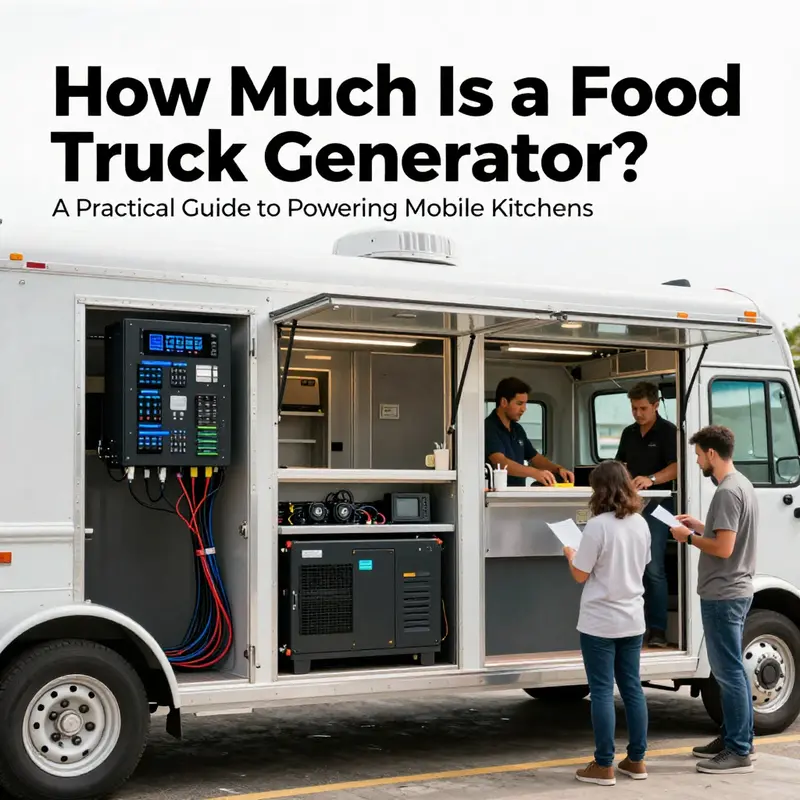
Power in a mobile kitchen is the quiet engine that keeps the pace of service steady and predictable. The price you see for a food truck generator is rarely a single number; it reflects a spectrum of power needs, installation demands, and long‑term goals for reliability and efficiency. A compact, portable unit can begin around $1,000 and cover basic lighting, a small refrigerator, and modest cooking needs. Step up to mid‑range capacities, and you’re looking at $2,000 to $6,000 for a setup that can handle multiple appliances under a more demanding workload. And when the goal is quiet operation, clean power for sensitive electronics, and continuous reliability, inverter models rise in price but deliver a level of performance that can redefine a day’s work on a crowded street or at a bustling festival. This is not merely about acquiring a generator; it is about choosing a power partner that fits your operation’s tempo, location realities, and regulatory environments. The decision becomes especially consequential when you consider integrated, turnkey solutions that arrive as a single, engineered package rather than a patchwork of separate components. In that context, even the basic integrated options, which include a generator, protective circuitry, and a vehicle‑specific wiring plan, start from a higher baseline than a stand‑alone unit, and prices can extend well beyond the cost of the generator alone. When thinking about a turnkey truck, operators often confront a price range that begins beyond the costs of the individual components and rises toward premium territory, reflecting the effort to align a power system with the truck’s geometry, safety requirements, and service schedule. The central tension, then, is not simply “how much is a food truck generator?” but “which power strategy best supports our workflow, our location strategy, and our capital plan for growth?” A clear map of this landscape helps bring the numbers into sharper relief and makes the decision more about fit than about appetite for expense. A practical starting point is to anchor expectations to the scale of operation you envision, and to layer in the realities of the street: noise restrictions, fuel logistics, and the need for dependable performance across a day’s service and into peak hours at events.
Type and performance sit at the core of cost. Diesel, gasoline, and propane each offer trade‑offs in durability, fuel availability, and noise profiles. Diesel power tends to be favored for longer runtimes and better torque delivery under heavy loads, a meaningful advantage when a grill, a fryer, a compact oven, and refrigeration run in concert. Gasoline engines often come lighter and cheaper, with shorter runtimes but enough capability for smaller menus and shorter shifts. Propane is a natural fit for mobile food operations where fuel logistics are already part of the setup, and it can offer cleaner emissions in some markets. The real differentiator, however, is how the generator manages power. Standard fixed output units are reliable for a predictable load, but when you need to protect sensitive electronics—POS systems, digital displays, payment tablets—an inverter generator can be worth the price premium. Inverter technology provides “clean power” with stable voltage and a smoother sine wave, minimizing interference and reducing the risk of equipment malfunctions. The payoff is not just reduced risk; it’s the ability to run electronics in environments with strict noise and emissions limits, a common constraint in urban settings.
The second axis of price is integration. A generator isolated from the kitchen’s electrical system may work, but as soon as you begin to add multiple refrigeration units, vent hoods, high‑demand ovens, or a combination oven and fryer, the wiring landscape becomes more complex. A simple portable generator plugged into a few outlets can be a cost saver upfront, yet it may force compromises in layout, heat management, and upgrade paths. By contrast, a fully integrated system is crafted to the truck’s interior, with a purpose‑built cabinet, heat dissipation design, gas‑tight or exhaust considerations, and a transfer switch that coordinates with the vehicle’s electrical framework. The benefit is reliability and a tidy workflow: less rummaging for outlets, fewer adapters, and a setup that technicians recognize as a single, tested package. The trade‑off is higher upfront investment and a longer lead time to secure installation and certification. Some operators also consider hybrid approaches—starting with a robust portable unit that serves as a primary power source and adding an integrated system later as the business scales—though this strategy can complicate maintenance and logistics if not carefully planned.
A further dimension is the scale of the operation. For a small truck with limited electrical needs, a 1kVA to 3kVA portfolio often suffices. These units power lights, a compact refrigeration option, and a couple of cooking modules without pushing engine or fuel limits. For larger setups with multiple high‑wattage appliances—several refrigerators, a grill, a fryer, and perhaps a convection oven—many operators lean toward 5kVA to 10kVA capacities. Inverter models at this scale retain their value, delivering cleaner power and more efficient fuel use, yet they form a more expensive category. The final price envelope can also reflect the market environment, with diesel‑equipped systems tending to be priced differently than gasoline or propane equivalents and with inverter configurations carrying a premium for the quality of output and noise attenuation.
From a financial planning view, the total cost of ownership goes beyond the sticker price. Installation and integration, safety features such as grounding and circuit protection, and compliance with electrical codes add layers of cost that should not be underestimated. When you’re building a power backbone for a mobile kitchen, you are also investing in uptime and safety. A misstep here can translate into downtime during a busy service, lost revenue, and the accompanying stress of trying to operate with insufficient or unstable power. This is why some operators opt for turnkey, custom vehicles that arrive with the electrical system certified and road‑ready. The price tag for these ready‑to‑use units reflects the design work, the components chosen, and the ongoing support structure that accompanies the build, rather than just the component costs. In the end, the choice between a portable, do‑it‑yourself approach and a fully integrated, custom configuration boils down to a blend of risk tolerance, capital availability, and a vision for growth. If you anticipate rapid expansion, or if you operate in markets with strict compliance standards or dense urban traffic where downtime is costly, investing in a turnkey power solution can be a prudent consolidation of risk and a facilitator of growth. For others, a carefully selected portable inverter system can deliver the flexibility to operate across diverse venues while keeping upfront costs within reason.
For readers who want a practical reference point as they plan, consider that many operators use a 10,000 starting‑watt class generator as a baseline for medium equipment loads, recognizing that startup surges from compressors and ovens demand headroom. That baseline helps frame both the initial purchase and the subsequent planning for fuel, maintenance, and potential upgrades. It also clarifies why the total cost picture can rise quickly when you add an integrated power cabinet, a dedicated generator compartment, and professional installation. If you’re weighing two paths—portable versus integrated—the decision hinges on your service model, the locations where you operate, and your appetite for capital expenditure up front versus long‑term stability. A thoughtful approach is to document your peak load, differentiate running watts from surge watts, and factor in a realistic buffer for weather, seasonality, and event intensity. In a mobile kitchen, power is a strategic asset as much as an asset on the prep line; it shapes your ability to serve consistently, scale the menu, and respond to the rhythms of street commerce.
For readers seeking further context that aligns with this chapter’s focus on design and cost, you may find value in exploring one of our related guides that discusses how layout and equipment choices influence electrical planning. Choosing the right food truck model offers a deeper look at how kitchen workflows, equipment footprints, and capital budgeting interplay with power requirements. This chapter’s practical takeaways—whether you lean into a portable, upgradeable solution or invest in a fully integrated power system—connect directly to the real‑world choices described in that guide. In addition, a broader examination of finances for first‑time operators helps frame the cost against expected revenue streams and the pace of growth, supporting a balanced, data‑driven plan. To ground the discussion in external reference, consider the widely cited efficiency and performance data for high‑capacity portable generators, which showcases the role of runtime, noise, and output quality in challenging urban environments. External reference: https://www.generac.com/en-us/products/portable-generators/10000-watt-portable-generator/.
Power on Wheels: Navigating Cost, ROI, and Total Cost of Ownership for Food Truck Generators
A food truck lives and dies by the reliability of its power. The generator is not just a piece of equipment; it is the lifeblood that keeps lights on, cool food safely stored, and every burner, mixer, and POS device humming through a shift. Yet for a business still weighing the capital outlay against daily operating costs, that power comes with a concrete price tag and a horizon of financial considerations. Understanding how much a food truck generator costs—and how those costs ripple through budget, cash flow, and profitability—is essential. The cost landscape is variegated because power needs vary with kitchen size, equipment mix, and the chosen energy system. The most economical setups for compact operations can run in the low thousands, while larger fleets with multiple high-wattage appliances demand much more, and the cost can tilt upward quickly if you lean toward premium, quieter inverter technology that delivers “clean power” suitable for sensitive electronics and modern POS systems.
At the lower end, small to mid-range generators, roughly in the 1kVA to 3kVA class, serve basic trucks with essential lighting, a compact refrigeration unit, and a handful of cooking appliances. In practice, you can find these units priced between roughly $500 and $2,000. For a small truck, a 2kW diesel setup is a common reference point, offering sufficient room for minor kitchen loads while keeping the upfront cash outlay manageable. If a truck’s layout is restrained to a single refrigeration line, a couple of hot plates, and modest lighting, these models often hit the sweet spot between affordability and practicality. The key is to match the generator’s output to anticipated peak demand. Over- or under-sizing can tilt the balance unfavorably, either wasting fuel and creating unnecessary maintenance or, conversely, risking voltage drop on critical appliances during peak hours.
As trucks grow and menu offerings expand, the need for more robust power becomes evident. Larger or higher-performance generators, in the 5kVA to 10kVA range, are typically needed to support multiple high-wattage appliances—grills, fryers, large refrigeration units, and climate control for a kitchen that runs near continuous demand during service. Price ranges for these units generally fall between $2,000 and $6,000. The choice often hinges on fuel type, reliability, and whether the unit is an inverter model. Diesel remains a widely favored option for its durability and long-run reliability in mobile operations, though propane and gasoline variants are also common, each with its own pros and trade-offs in fuel availability, efficiency, and startup resilience. Inverter generators, while pricier, bring notable benefits for a mobile kitchen: they run quieter, produce cleaner power ideal for sensitive electronics like laptops and POS systems, and can be optimized for fuel efficiency with smart load management. A high-end example sometimes cited in industry discussions is an 11,250-watt, super-quiet inverter unit powered by propane, reflecting how technology choices can push the price higher while delivering a more comfortable operating environment and less fatigue for workers and nearby customers.
For teams seeking a turnkey footprint, there is also the possibility of a custom food truck with an integrated generator. Prices here can start very low for basic configurations—around $1,000 in some cases for a basic, non-commercial setup—and rise to roughly $6,650 or more for premium, fully equipped builds. This integration can deliver design efficiency, space savings, and more predictable maintenance planning, but it also ties the capital expenditure more tightly to the vehicle itself. The takeaway is straightforward: a generator’s price is a function of size, fuel type, and power output, but the broader financial impact emerges when you factor in the total cost of ownership (TCO), not just the sticker price.
The typical power needs for a busy food truck that blends refrigeration, cooking, and climate control generally hover in the 3,000 to 5,000-watt band. This aligns with a practical rule of thumb: you should size the generator to cover peak demand plus a cushion for startup surges, especially when multiple appliances start simultaneously. It’s prudent to model a worst-case scenario during a peak service period and ensure the system has headroom for refrigerant compressors kicking in, fryers firing up, and lights at full brightness without risking brownouts or nuisance shutoffs. The economics of this choice are nuanced. If you opt for a smaller unit and routinely push it beyond its comfort zone, you risk premature wear and more frequent maintenance. If you oversize, you pay for idle capacity and higher fuel use. The art lies in balancing reliability with cost efficiency, capturing the triple aim of operational stability, fuel economy, and a healthy return on investment.
ROI and break-even calculations are not purely arithmetic; they hinge on how consistently you manage energy. The financial literature around food truck operations often points to a break-even window of roughly 18 to 24 months when efficiency and revenue growth align. A generator matters a great deal here because it influences both operating costs and revenue potential. Fuel efficiency and maintenance burdens translate directly into monthly cash outlays, while downtime or reliability issues can erode daily revenue through lost sales and delayed service. A robust generator with solid fuel efficiency and lower maintenance demands does more than keep the kitchen running; it preserves your service quality, reduces the risk of stock spoilage, and protects cold-chain integrity—factors that sustain customer trust and repeat business.
In terms of long-term economics, smart energy management becomes a growth lever. An efficient unit with advanced load-sensing capabilities can throttle output to match demand, cut fuel consumption, and lower wear. Some operators explore solar-assisted charging or hybrid configurations to reduce fossil fuel dependence during off-peak hours or in sunny markets. These approaches may come with higher upfront costs but can substantially lower operating expenses and environmental impact over time, aligning with consumer expectations for responsible business practices and potentially unlocking favorable financing terms or incentives.
From a budgeting perspective, the generator is a piece of the broader capex puzzle. It sits alongside the truck body, essential kitchen equipment, permits, and branding as a major line item that shapes cash flow in the early years. A simple way to frame the investment is to consider the generator’s share of upfront costs and the incremental monthly costs it drives. For many shops, the upfront investment in the generator is a sizable portion of the initial capex, but the most meaningful financial signal comes from the ongoing costs: fuel, oil changes, air filters, spark plugs, and scheduled servicing. A well-maintained unit can extend its life well beyond ten years, but a neglected system can fail early, forcing unscheduled downtime and emergency repairs that disrupt service and dent profitability.
To help future operators think through budgeting and ROI, consider a practical modeling approach. Build a plan that projects monthly fuel consumption under typical service conditions, maintenance intervals and costs, and a replacement timeline for the generator itself. Pair that with revenue forecasts by location, expected foot traffic, and the operating hours you anticipate for each market. A defensible ROI target—commonly cited as 18 to 24 months—rests on controlling both the cost side and the revenue side. Efficiency matters here. A generator with better fuel economy, lower maintenance frequency, and longer intervals between part replacements will preserve cash flow and improve the odds of hitting or beating the target.
For practitioners who want a quick, actionable check-in on budgeting, a practical reminder is to separate the generator’s price from its practical impact. The numbers in the market show a broad spectrum: some operators secure small, inexpensive units and rely on careful energy management to stay within a tight budget, while others equip larger trucks with high-wattage, quieter inverter systems to support a full kitchen and premium customer experience. Either path can be valid, provided it is grounded in a comprehensive plan that includes energy forecasting, maintenance scheduling, and revenue forecasting. The end goal is not merely to own a generator but to own a generator that supports predictable service quality, reliable uptime, and a path to profitability.
If you’re exploring how to start translating these ideas into your business plan, there are practical resources that can help you structure the conversation. For example, a focused set of financial tips for first-time food-truck owners can offer step-by-step guidance on budgeting for equipment, including generators, and on building a sound ROI framework. Financial tips for first-time food-truck owners provide a useful starting point for new operators who want to translate capacity planning into cash flow projections and break-even analysis.
As you weigh the trade-offs, remember that the generator is more than a price tag. It is a daily contributor to the reliability of your business, to customer satisfaction, and to the overall economics of your mobile kitchen. A thoughtful choice—balancing size, fuel type, and the right mix of efficiency and quiet operation—will help you sustain profitability without compromising service quality. In the broader planning framework, the generator should be considered alongside other capital needs and operating expenses, with a clear expectation of how it supports revenue opportunities across different venues and markets. In that sense, the investment in power becomes an investment in capability: the ability to serve hot, fresh meals consistently, to protect inventory, and to deliver a dependable customer experience that turns first-time customers into regulars.
External perspective can also shape your approach. For a broader framework on budgeting and ROI in food trucks, this external resource offers structured guidance on financial planning and operational efficiency and can complement the internal calculations you perform when sizing and selecting a generator: https://www.foodtrucks.com/food-truck-financial-planning-guide
Final thoughts
Understanding the cost of a food truck generator isn’t just about the sticker price. It’s about sizing for your needs, choosing the right fuel and technology, and weighing integration options against your event calendar and audience expectations. Small setups win on price and simplicity but may require strategic power management for refrigeration and peak service times. Medium to large rigs demand sturdier, often diesel-powered or inverter systems, delivering clean power with greater reliability—at a higher upfront cost that pays off through fewer outages and happier customers. Integrated, custom solutions can compress total ownership costs by combining power, control, and safety into one package, though they require thoughtful planning and upfront investment. Across all paths, calculating total cost of ownership, factoring in maintenance, fuel, and potential downtime, reveals the true value of a well-chosen generator for your operation. The right choice aligns with your needs, timeline, and audience, turning power into a reliable driver of a memorable culinary experience.