For food truck enthusiasts, the idea of parking your beloved mobile kitchen at home is as appealing as it is practical. Whether you’re an event planner seeking the perfect catering options, a corporate HR professional planning employee appreciation events, or a food lover dreaming of your very own truck, knowing the rules around parking your food truck at home is essential. In this guide, we’ll cover the crucial topics of zoning laws, safety regulations, homeowners’ association rules, and insurance considerations, each carefully crafted to ensure you can park your food truck with confidence and joy. So let’s dive in to unveil everything you need to know to safely and legally park your food truck at your residence!
When Your Driveway Meets the Law: Zoning Rules for Parking a Food Truck at Home
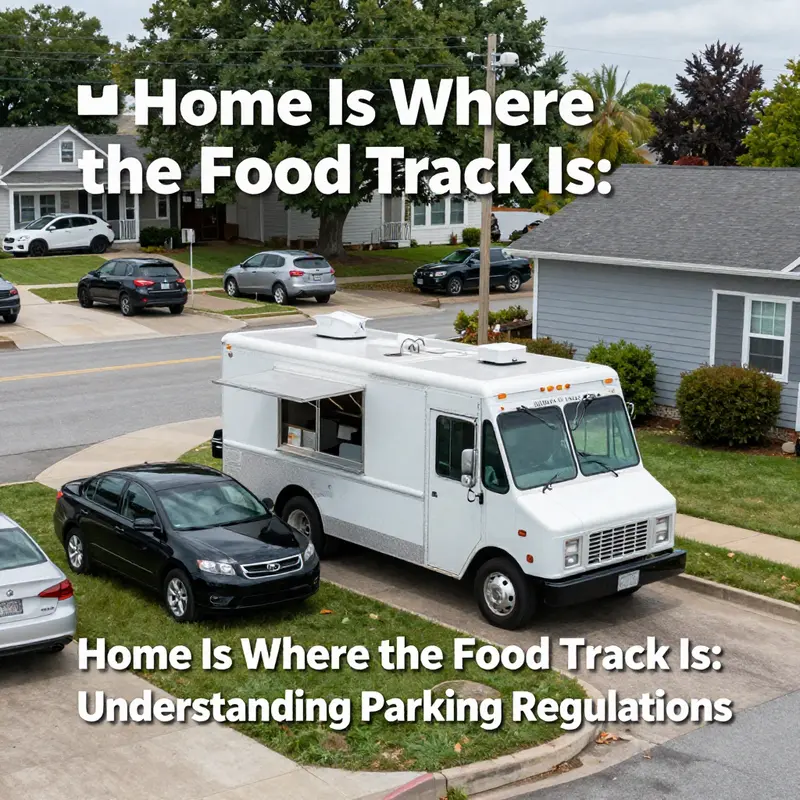
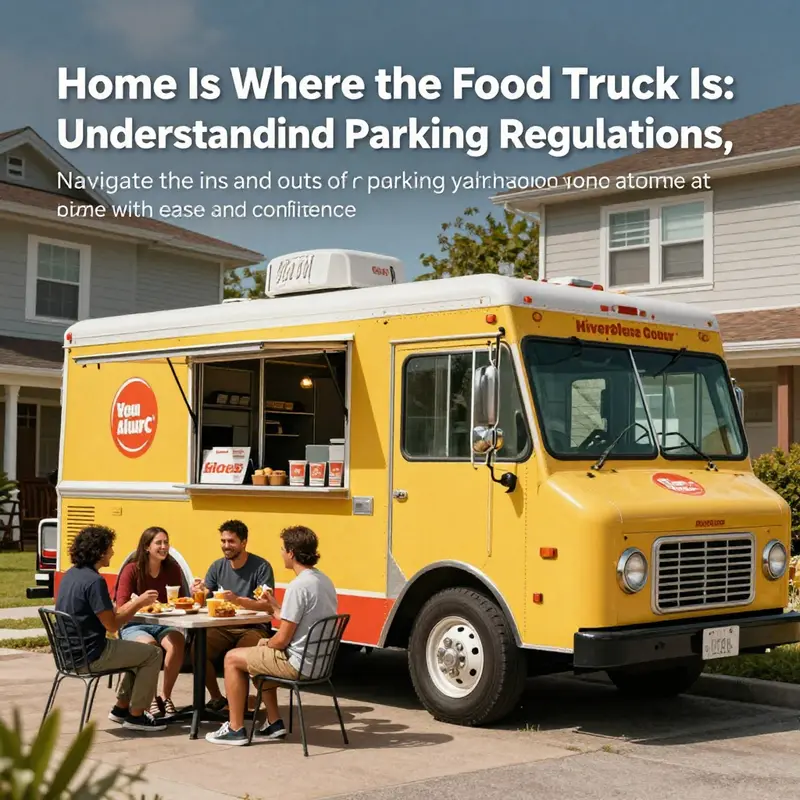
When your driveway becomes the likely storage for your food truck, you must understand zoning and local ordinances that govern that choice. Rules vary widely, but the central idea is simple: residential areas are generally not set up for commercial vehicle operations. That means parking a food truck at home is often permitted for storage or overnight parking, but using the truck as a business base can trigger zoning restrictions, permit requirements, and code enforcement actions.
Local zoning codes divide a city into areas where certain uses are allowed or restricted. Commercial corridors and industrial zones exist because they handle higher traffic, noise, and waste. Residential zones prioritize neighborhood character, safety, and quality of life. A food truck parked on private property can upset that balance. Neighbors can complain about late-night generator noise, fumes, or increased foot traffic. Cities respond to those complaints with rules aimed at protecting residents.
Most municipalities treat a food truck differently when it is simply stored versus when it is actively operating. Storage or overnight parking on private property is often tolerated if the truck is moved occasionally and does not create a nuisance. But if you plan to cook, sell, or invite customers to your yard, you enter a new regulatory category. That activity is not merely parking; it is a commercial use. Many zoning ordinances explicitly prohibit commercial uses in residential districts unless a special permit is granted.
The practical steps to determine legality are straightforward. Start with the local zoning office or planning department. Ask whether residential parcels allow commercial vehicle storage, and whether there are limits on duration. Request the specific sections of the municipal code that apply. If the code is unclear, ask for written clarification. This prevents misunderstandings later, and gives you a record if enforcement issues arise.
When an ordinance forbids operation, a few standard remedies may still exist. You can seek a special use permit or conditional use variance. These allow a property owner to run a business from a residential lot under defined conditions. Approval typically involves an application, a fee, and a public hearing. Neighbors are notified. Conditions may include limits on hours, noise reductions, trash management plans, and off-street customer parking. A successful permit balances your business needs with neighborhood concerns.
Health and sanitation rules add another layer. Even when a zoning permit is granted, public health departments insist food trucks comply with sanitation standards. That means proper waste containment, potable water supplies, and approved cooking equipment. Parking a food truck at home could complicate waste disposal and sewage connections. Health inspectors may require proof that the vehicle can meet all sanitation rules while parked. If your residential property lacks infrastructure, the health department may deny permission.
Safety regulations matter too. Fire departments limit where large vehicles can sit to preserve emergency access. Generators and fuel storage are regulated because they present fire hazards. Using heavy cooking equipment close to a wooden structure raises safety flags. Local fire codes may require fire extinguishers, clearances from structures, and specific ventilation measures. These requirements apply regardless of whether your truck is parked on a public street or private driveway.
Homeowners’ associations often have separate restrictions. HOAs can forbid parking commercial vehicles visible from the street. Their covenants can impose fines or demand removal. Even if the city permits parking, an HOA rule may still prohibit it. Always review HOA bylaws before assuming you can use your driveway for a business vehicle. A short conversation with the HOA board can reveal permitted parking rules and any potential loopholes.
Insurance and liability are frequently overlooked. Regular auto insurance rarely covers cooking equipment, customer injuries, or business property. Commercial vehicle insurance differs. It covers liability for food-related injuries, on-site incidents, and business property stored inside the truck. If you park at home and a customer is injured while visiting, homeowner insurance may not cover the claim. Confirm your coverage with an insurance agent. Make sure the policy covers the truck while parked and while operating at permitted locations.
Enforcement varies based on how a violation is discovered. Many enforcement actions start with a neighbor complaint. Code enforcement officers respond to those calls, and they may issue a notice of violation. Notices typically offer a period to remedy the problem. If not remedied, penalties can escalate to fines, towing, or a lien against the property. Civil penalties are common, and repeated violations can invite the city to seek injunctive relief.
Some jurisdictions take a proactive approach with clear mobile vending zones and hours. These cities adopt maps and schedules that show where food trucks can operate legally. Others leave the matter to case-by-case hearings. If you live in a place with a robust food truck culture, you might find clear rules that accommodate vendors, even allowing private storage with conditions. In more restrictive towns, city planners and neighborhood associations may be uninterested in allowing any commercial vehicle presence.
If storage at home is essential, consider compromises that reduce neighborhood impact. Move the truck periodically to avoid being classified as permanently parked. Keep the vehicle clean and odor-free. Use muffled generators or shore power when possible to cut noise. Store waste in sealed containers and schedule regular pickups. Avoid cooking or servicing the truck on-site. These steps reduce the likelihood of complaints and may keep you within the spirit of local rules even if the law remains ambiguous.
Documentation is your friend. Keep copies of all permits, licensing paperwork, inspections, and insurance certificates on file. If you obtain special permission from the planning department or health agency, retain written approval and any conditions imposed. If neighbors raise objections, showing proof of compliance can shorten disputes. When applying for permits, gather supporting documents such as site plans, a waste management plan, and a safety checklist. A clear paper trail often makes enforcement less likely.
Appeals and variances require patience and strategy. If denied a permit, you can appeal or request a variance. Prepare to demonstrate how your operation will protect neighborhood interests. Offer mitigation measures like restricted hours, soundproofing, and a customer flow plan. Attend hearings and engage with neighbors early. A small concession can make the difference between approval and denial.
There are also creative solutions that avoid home parking altogether. Rent secure storage in a commercial lot. Share space with a restaurant during off-hours. Join a commissary or a food truck incubator. These options keep your truck compliant and reduce the need for home-based storage. They can also provide necessary infrastructure, such as grease traps, potable water hookups, and waste disposal.
Local government websites and planning staff provide authoritative guidance. When in doubt, ask for code citations and written interpretations. Some cities publish clear vendor guides that explain where trucks can park, how long they can stay, and what permits are required. Others require persistent phone calls and visits to get straightforward answers. If you operate near a major city, consult the local department responsible for building and safety, which often houses mobile vending rules. For example, the Los Angeles Department of Building and Safety offers relevant guidance on mobile vending and related permits: https://www.lacity.org/department/building-and-safety
Finally, consider the broader impact on your business. Operating from home can save costs, but it carries legal and reputational risks. A single enforcement action can cost more than a month of paid storage. A negative neighbor reputation limits future growth and invites increased scrutiny. Balancing convenience with compliance ensures long-term viability.
For more detailed operational guidance and regulatory perspectives, vendor-focused resources can help you interpret local codes and prepare permit applications. One useful internal resource explains broader industry regulations and compliance strategies, and it can help you plan next steps: navigating food truck industry regulations.
Understanding zoning and local ordinances is not optional. It is central to running a food truck responsibly. Learn the rules, document approvals, and adopt practices that reduce impact. When you align your operations with regulations, you protect your business, your neighbors, and your ability to grow.
From Driveway to Permits: Navigating Parking and Safety Regulations for a Home-Based Food Truck
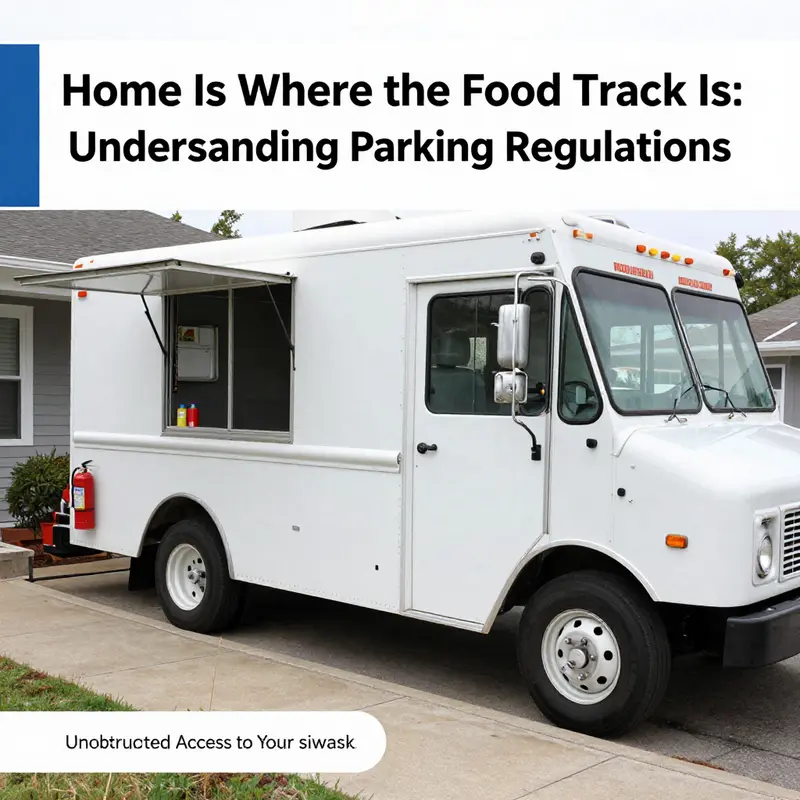
When a dream becomes a plan to park a kitchen on your driveway, the practical questions quickly shift from what you can cook to what the curb will legally tolerate. The idea of operating a food business from a home property is appealing for convenience, control, and direct connection to your neighborhood. Yet the path from dream to daily operation is paved with zoning codes, fire codes, and insurance requirements that many newcomers discover only after a truck has rolled into the driveway. The last thing you want is to wake up one morning to a summons or a halted operation because a local rule wasn’t understood or properly addressed. The core message is simple: you can’t assume that parking a food truck at home equates to running a home business, even if you own the vehicle or plan a limited schedule. Regulations differ by city, county, and even by neighborhood, and they can flip from permissive to prohibitive with the flip of a calendar or a change in who enforces the rules. The complexity is not a barrier to entry so much as a map to navigate with care and patience.
Zoning remains the first and most influential gatekeeper. Residential zones are designed to protect quiet streets, safe traffic flows, and predictable land use. In many places, commercial activities—especially those that generate regular traffic, odors, and waste—are restricted or outright prohibited on private residential property. A truck parked in a driveway might be allowed simply as a storage asset or for occasional staging, but turning that same space into a primary base of operations or a semi-permanent business site can trigger a cascade of permits, variances, and inspections. Some jurisdictions draw a clear line between “storage” and “use.” The former may be tolerated if the vehicle is out of sight, not used to serve customers from home, and not contributing to on-site manufacturing. The latter can demand a business license, a mobile vendor permit, or a special use permit that lets an otherwise residential property host a commercial operation. The distinction matters. It can determine whether you can park a truck, how long you can keep it there, and what kind of customers or deliveries you can accommodate on your own curb. If you sense that the line between storage and use is not obvious in your area, you’re not alone. The best way forward is to contact the local planning department or zoning administrator and ask for the precise language that applies to your parcel. A quick conversation can reveal definitions of terms such as “commercial vehicle,” “home-based business,” and “intended use,” which may differ substantially from your own intentions.
Even when a property is technically permissible for private parking of a commercial vehicle, the practicalities of safety and access quickly come to the fore. Safety codes are not a nuisance to be endured; they are a framework designed to prevent fires, chemical exposures, and traffic mishaps in a setting where the home, pedestrians, and a food service operation share the same footprint. A food truck is not merely a vehicle; it is a compact kitchen that contains cooking appliances, propane or other fuel systems, electrical gear, waste streams, and often generators. This combination creates real risks that local authorities manage through fire and health codes, vehicle inspections, and sometimes site-specific requirements. One of the earliest questions you’ll encounter is whether the truck can remain parked overnight if you are simply using it as a storage or prep area versus whether you intend to operate it as a mobile kitchen from your property. In many places, keeping the truck on-site for an extended period is allowed only under certain conditions, such as regular inspections, proper ventilation, appropriate storage of fuel and electricity, and clear access for emergency responders. The focus is not to block driveways or sidewalks, to avoid creating maneuvering hazards for pedestrians, and to ensure that emergency vehicles can reach every part of the property without obstruction. These are not mere formalities; they are practical safeguards that protect your home and your neighbors.
A key subset of safety concerns centers on fire risk and ventilation. The culinary heat inside a mobile kitchen demands careful handling of propane tanks, electrical installations, exhaust systems, and the location of the unit relative to structures. Propane must be secured, stored away from ignition sources, and kept at a safe distance from doors, windows, and combustibles. Electrical work needs correct grounding, weatherproofing, and, in many jurisdictions, periodic inspections by a licensed professional. Ventilation is not negotiable when you’re cooking near walls, garages, and living spaces; it influences not only fire safety but also air quality and neighbor comfort. Health department guidelines add another layer by requiring appropriate sanitation facilities, waste management, and pest control, regardless of whether the cooking happens on a fully commercial street or in a private driveway. Even the best intentions—cleaning routines, food safety training, and meticulous adherence to health standards—won’t counteract a finding that your home-based set-up fails to meet minimum requirements for sanitation, ventilation, and worker safety. The narrative here is not about stifling entrepreneurship; it is about recognizing the boundaries that protect communities and ensure the safety and reliability of food served from a home site.
The conversation about permits and licenses often visits a few crossroads that can be navigated with a careful plan. Some areas require a business license even if you are not selling out of a storefront, and a mobile vendor permit may be necessary if you intend to operate from a residential property, even on a limited or seasonal basis. In other cases, a special use permit or a variances process might be needed to permit a semi-permanent mobile kitchen in a residential zone. What makes this part tricky is that multiple agencies can be involved in the approval process. Fire, health, and building departments may each require an inspection or a sign-off to ensure compliance with their mandates. A formal written approval from the local government is not an optional extra; it is the legal anchor that confirms your right to use the site as a business location, even if the business is mobile only in the sense that meals are prepared and served from a truck that sits on your property. The path toward obtaining these documents is often incremental. You’ll typically begin with the planning or zoning department to establish whether your concept fits within the parcel’s permitted uses. If it does, you’ll proceed to gather the supporting documentation for business licenses and vendor permits, which may entail fire safety checklists, ventilation plans, waste management plans, and possibly a site plan showing the truck’s placement, setbacks, and accessibility features.
Within this regulatory tapestry, homeowners’ associations can add their own tapestry of rules. If your property sits within an HOA boundary, the collective interest in aesthetics, property values, and neighborhood harmony can yield restrictions that exceed city codes. It is common to find HOAs that prohibit commercial vehicles in driveways or on lawns, even when the municipality would otherwise allow storage or light operational activity. A simple step—checking the HOA bylaws and seeking a solutions-oriented conversation with the board—can prevent a future dispute. In some cases, HOA rules can be harmonized with city rules through a written agreement, a variance, or a modification of the community’s guidelines. Ignorance of HOA restrictions is a frequent cause of abrupt policy enforcement and costly corrections, so talking to the right person and documenting any permissions is a prudent part of the process.
Another essential layer is insurance and liability. Home insurance policies are not designed to cover all business risks that may arise from operating a mobile kitchen from a private property. You may discover that a standard auto policy does not extend to business-related activities conducted on-site, or that liability limits are insufficient for food service operations conducted on a residential property. To close this gap, many operators pursue commercial vehicle insurance for the truck itself, plus a separate general liability policy that extends to on-property operations, food handling, and customer interactions that occur on the premises. It’s not just a matter of protecting your financial interests; it’s about ensuring that the venture can weather an unfortunate incident without jeopardizing your home and personal assets. A thoughtful approach to insurance also encourages rigorous operational practices—such as dedicated cleaning procedures, secure storage for ingredients, and clear separation between home life and business activities—to reduce risk and preserve personal peace of mind.
So, what should someone do first if the goal is to keep a food truck at home in a lawful, safe, and sustainable way? Start with information gathering. Contact your local city or county planning department to confirm whether parking a food truck on private property is permitted and under what circumstances. In many cases, you’ll discover that temporary storage or limited overnight parking is allowed under certain conditions, while long-term or frequent operation from home requires a permit package and inspections. Once you know the baseline, map out a plan that includes the steps to obtain any necessary licenses, permits, or variances. If you live in an HOA, bring the discussion to the board early and present your compliance plan, not merely your intentions. Prepare a safety narrative that covers fuel storage, ventilation, waste disposal, and access routes for emergency responders. Finally, secure insurance tailored to your use case and ensure that all aspects of the operation are documented in a way that is auditable and easy to review should questions arise.
For readers seeking a concise, field-tested reference on navigating the parking challenges connected to home-based food ventures, consider exploring practical guidance from industry peers who have faced similar constraints. Mastering Food Truck Parking Challenges can offer real-world scenarios, helping you translate policy language into a workable plan. You can read more about these strategies here: Mastering Food Truck Parking Challenges.
In the end, the key is not simply to park a truck and hope for the best. It is to respect the jurisdictional framework that governs land use, safety, and public welfare while crafting a process that protects your investment and your neighbors. Laws vary widely, and they can change. A proactive, informed approach reduces the risk of fines, fines, or forced removal, and it supports the possibility that your home-based truck becomes a sustainable, compliant part of your business plan. When you commit to verifying local regulations, pursuing the right licenses, and implementing robust safety and sanitation practices, you preserve your ability to operate with confidence. It is a matter of balancing entrepreneurial ambition with civic responsibility, and recognizing that true independence in business often emerges not from ignoring regulations, but from navigating them thoughtfully and thoroughly.
External resources can provide additional clarity when you’re ready to codify your plan. The Small Business Administration offers foundational guidance on mobile food vending and regulatory compliance, which can help frame the baseline expectations you may encounter across different jurisdictions: https://www.sba.gov/business-guide/plan-your-business/understanding-food-truck-regulations. This external reference can serve as a starting point for conversations with local officials and for drafting a clear compliance roadmap that aligns with the specifics of your location.
The Driveway Dilemma: Navigating HOA Rules and Home Parking for a Food Truck
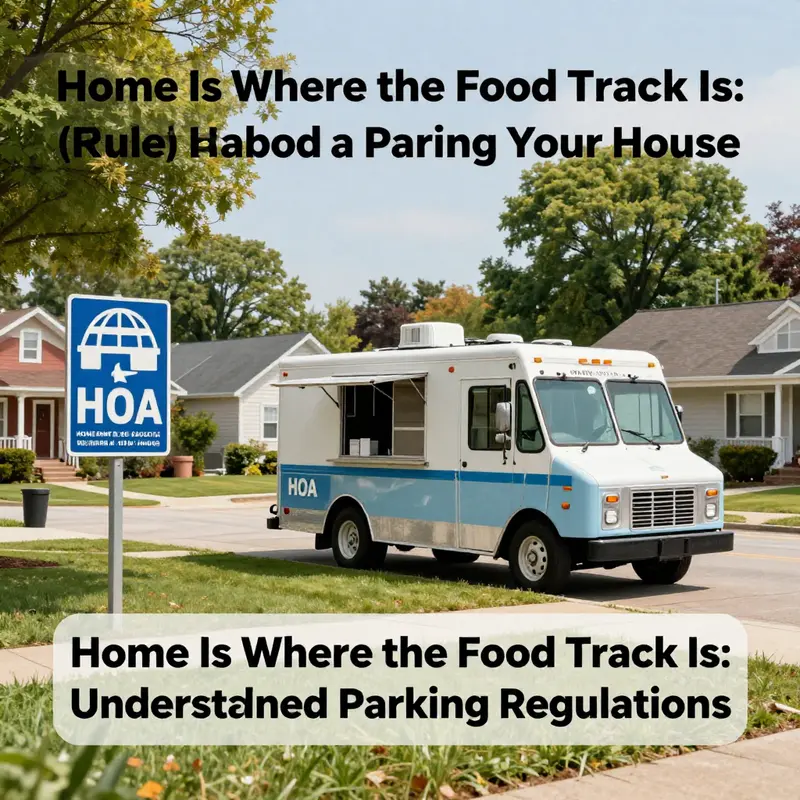
For many aspiring food entrepreneurs, the appeal of keeping a food truck close at hand is powerful. The idea of pulling the truck into the driveway after a long day, testing a new recipe, or greeting neighbors with a fresh batch of bites can feel like a direct path from idea to income. Yet the reality of homeowners associations (HOAs), local zoning, and a web of safety rules often complicates that dream. This chapter looks at why a home parking plan for a food truck is frequently met with resistance, what that resistance really means in practical terms, and how you can chart a responsible course that respects neighbors, the law, and your business ambitions. The goal is not to dampen creativity but to illuminate the actual constraints so you can decide, with clarity, whether home parking is a viable stepping stone or a path better saved for later stages of growth.
HOAs are usually the first and loudest gatekeepers when a food truck tries to park in a residential setting. In most communities, CC&Rs—covenants, conditions, and restrictions—frame what is permissible on private property, including how vehicles may be stored or parked. Food trucks are almost universally treated as commercial vehicles or as mobile businesses. In many HOA agreements, that classification triggers prohibitions or strict limitations on parking commercial vehicles on residential lots, especially in driveways or front yards. The aim of these rules is not to police culinary ambition but to preserve the curb appeal, prevent traffic or parking congestion, and minimize the risk of noise, fumes, and waste in a quiet neighborhood. When a truck is used as a storefront or kitchen, the line between a personal vehicle and a business asset becomes visible to the HOA’s leadership and the property management framework. The consequence, if you ignore or misread the rules, can be costly fines, mandated removal of the vehicle, or even legal action by the HOA or local authorities. The tension between a homeowner’s entrepreneurial drive and the community’s standards is real, and the outcome often hinges on the specifics of the CC&Rs and how aggressively an HOA enforces them.
Beyond HOA covenants, local zoning and municipal ordinances add layers of constraint that can be just as constraining as, if not more than, HOA rules. Many residential zones are designed to be quiet and low-traffic, with explicit prohibitions on operating a business in a way that generates regular customers, commercial deliveries, or outdoor refrigeration noise in living spaces. Even if a vehicle is privately owned, the intent to operate a business from home—a kitchen on wheels that serves customers—can cross a line that zoning boards are not willing to blur. The practical effect is that, in many places, parking a food truck at home with the aim of permanent or semi-permanent operation is not permitted without a suite of permits: a business license, a mobile vendor permit, and various site or special use permits. The distinction between parking a vehicle for storage or personal use and parking it to operate a business becomes legally significant, and it often determines whether a home-based model is legitimate or requires relocation to a commercial district or a commissary kitchen.
Even if you have a clear path around HOA griptapes and zoning barricades, safety rules still apply with exacting rigor. A food truck parked on private property cannot obstruct driveways or required emergency vehicle access. Fire lanes, sidewalks, and access points must remain clear for responders, which means careful planning about where the truck sits, how it’s maneuvered, and how long it remains in place. Noise and odors create another set of considerations. Generators, exhaust from cooking equipment, and the potential for strong smells near living spaces can push neighbors and regulators to label a setup as a nuisance. Municipalities often cap how long a commercial vehicle may be parked on a private property without movement, and even a well-intentioned, short-term stay can become a violation if it reads as ongoing commercial activity rather than a temporary arrangement for maintenance or testing. The safety and nuisance framing matters because it affects not just compliance but your ability to maintain good neighborly relations, which in turn affects your brand’s reputation and your ability to grow.
In addition to HOAs and municipal codes, homeowners must navigate homeowners’ expectations for property aesthetics and neighborhood character. A neighborhood’s identity—its lawns, fences, driveways, and the visual cadence of the street—can be fragile when a food truck becomes a regular fixture. Some HOAs explicitly ban commercial signage, prep areas, or waste storage visible from the street. Even in communities that allow certain work-related vehicles, a food truck often signals a business operation rather than private life, and that distinction can provoke stricter enforcement or a challenge from other residents who fear a shift in the neighborhood’s rhythm. The result is not merely a policy document but a lived experience: curbside gatherings that once felt neighborly become flashpoints for disputes, and the dream of a home-based kitchen becomes a negotiation rather than a straightforward venture.
So what should you do if you’re seriously considering parking a food truck at home? The most responsible first step is to talk to the right people before you spend a minute more on plans. Start with your HOA’s board or property management company. Request a copy of the CC&Rs, and ask for a precise interpretation of what is allowed or prohibited for vehicles classified as commercial or mobile businesses on private property. If your CC&Rs are quiet or ambiguous, ask for a formal ruling or a written policy from the HOA that clarifies whether any home-based food-service activity could ever be permitted. At the same time, contact your city or county planning department to confirm the zoning classification of your property and to learn what permits, if any, would be required for home-based food preparation or limited on-site service. The goal is not to test the boundaries but to understand them clearly so you can align your business model with the rules rather than fight them later.
The practical pathway, if permission exists in some form, usually involves a package of permits that acknowledges the commercial nature of the venture while setting guardrails to prevent disruption to the neighborhood. A home-based food operation, if allowed, is often constrained by restrictions on hours of operation, on-site signage, waste disposal, and customer traffic patterns. Some jurisdictions provide a pathway through a home occupation permit or a conditional use permit, but these come with obligations: regular inspections, noise monitoring, waste management plans, and sometimes limitations on the number of patrons you can serve or the days you can operate. Even when these permits exist, they often require that customers don’t come and go in vehicles that clog the street, that the truck does not sit in one place for extended periods, and that the site remains visually consistent with a residential setting. The regulatory landscape, in short, rewards delivery, safety, and predictable traffic patterns over the flexibility of a street-food dream parked at home.
Insurance, too, has to keep pace with the reality that a food truck parked at home carries business risk. Personal auto policies are typically not adequate coverage for a vehicle used as a commercial kitchen. You’ll want commercial vehicle insurance to protect the truck, equipment, and operations, plus a robust general liability policy that covers on-site cooking, food handling, and potential property or neighbor claims. A strong risk management plan should address trash disposal, allergen control, fire safety, and compliance with health department standards if you ever intend to serve customers from a home base, even on a limited or celebratory basis. The combination of HOA restrictions, zoning rules, safety considerations, and insurance requirements creates a comprehensive framework that can either help you pivot toward a compliant home-based model or push you toward a different starting point for your business.
If your heart is set on a test-run while you navigate those rules, there are responsible alternatives that honor the restrictions and keep your culinary dreams moving forward. Consider leasing space in a commercial kitchen or using a shared kitchen facility that aligns with your state’s health code requirements. These environments offer the essential infrastructure—ventilation, grease management, waste disposal, and inspections—without triggering a neighborhood-level dispute. You can also investigate permitted “pop-up” events, catering gigs hosted at community spaces, or seasonal markets where regulatory compliance is clearly defined and where customer flow is managed outside the constraints of a private driveway. In some cases, operators use a combination of a registered vehicle for events in permitted zones and a separate primary kitchen for prep, storage, and administrative tasks. The transition can be gradual but is often the most sustainable path when the home-based option is blocked by HOA or zoning rules.
As you plan, it is crucial to keep your neighbors in view. A thoughtful approach to communication can prevent conflicts even before they arise. If you discover that your HOA prohibits commercial activity in the manner you had envisioned, consider proposing compensating adjustments: reduced on-site activity, no overnight parking, enhanced waste disposal practices, and strict adherence to noise and odor guidelines. Bring a concrete plan to the conversation—timelines, cleanup protocols, and contingencies for shifts in regulations. Demonstrating respect for the community’s concerns can sometimes open doors to narrowly tailored exceptions or, at minimum, a more constructive relationship with the HOA and neighbors. The broader point stands: the success of a home-based approach hinges not simply on whether a rule exists but on how you implement your business within the boundaries those rules create.
For readers who want to expand their understanding of how regulations shape the viability of home-based ventures, there is value in exploring the wider regulatory landscape. To gain a broader sense of how policies influence opportunities for food trucks, you can explore Navigating food truck industry regulations. This resource offers a larger framework for understanding what permits, inspections, and community expectations might mean for your plans at home and beyond. Navigating food truck industry regulations.
The core takeaway is practical and unromantic: in many communities, the dream of parking a food truck in your house is just that—a dream, at least in its most literal form. HOAs and zoning regimes are designed to protect neighborhoods from disruption, and the intent behind those rules is to preserve property values and living conditions. The reality is nuanced. Some HOA or municipal systems provide a path to a sanctioned home-based operation, but those paths are highly location-specific and require a careful, formal application process. In the majority of cases, the best move is to treat the home as a base for planning, prep, and administration—perhaps the seed for a future, compliant off-site operation—while you test concepts, build your brand, and cultivate a customer base in a manner that does not rely on exposing you to fines, enforcement actions, or community conflict.
If you choose to proceed with a home-based approach, maintain a clear separation between personal residence and business activity. Use the property for storage and prep only when permitted, and ensure that any on-site activity that involves customers, cooking, or delivery drivers exists only in regulated venues that meet health, fire, and safety standards. Keep the space clean, quiet, and visually consistent with residential expectations, and be prepared to adjust plans if regulations tighten or neighborhood sentiment shifts. The practicality of the strategy rests on a consistent, transparent compliance posture and a willingness to adapt as rules evolve.
As you close this chapter on parking a food truck at your house, the message is not that you cannot be entrepreneurial in a residential setting. It is that the path is not universal. It requires a careful alignment with HOA covenants, zoning requirements, safety codes, and insurance needs. It demands an approach that respects neighbors and the character of the community while preserving the energy and ambition that drew you to this business in the first place. If the home-based possibility proves impractical, the route toward a successful and scalable food venture lies in partnering with a commercial kitchen, exploring permitted pop-up opportunities, or locating a storefront or shared space that supports growth while delivering a consistent, compliant customer experience. In either scenario, the core principles remain the same: understand the rules, plan meticulously, secure the right licenses, and remain responsive to the evolving regulatory and community context. Only with that disciplined approach can your culinary ideas move from a driveway’s edge to a sustainable, legally sound operation that stands up to the long journey of building a food business.
Home on the Street: Insurance, Liability, and the Practical Realities of Parking a Food Truck at Your House
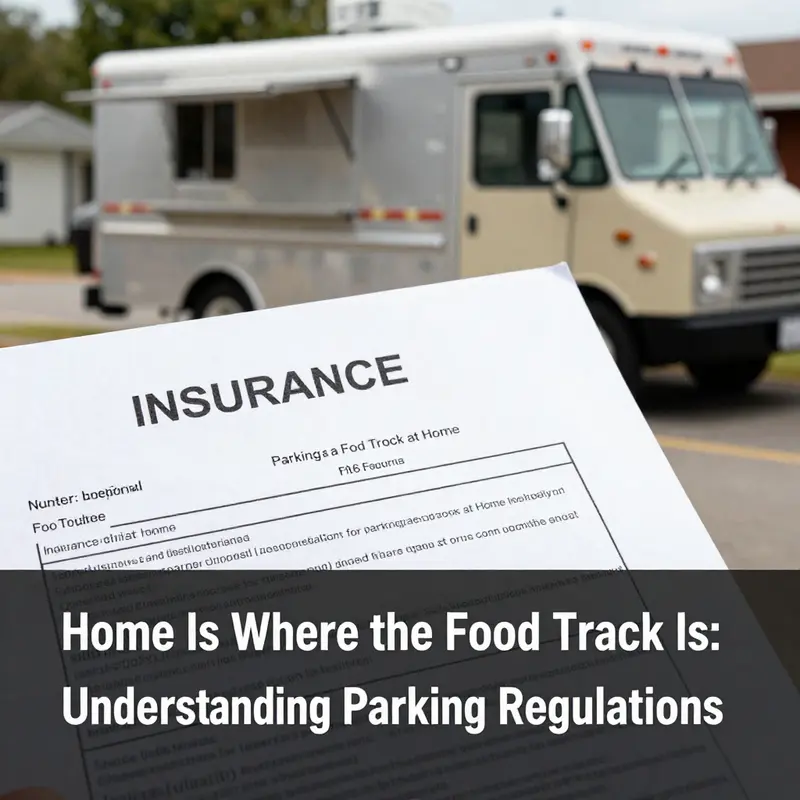
Dreams of turning a driveway into a doorway to a thriving food business sit comfortably with the practicalities of law, risk, and everyday life. Parking a food truck at your house is not a single decision but a web of intersecting rules, costs, and responsibilities. The question isn’t only whether you can physically park the truck in your driveway; it is whether you can legally store it there, operate from that location, and carry the risk that comes with blending a private residence with a commercial vehicle. The answers vary by place, but a clear thread runs through most jurisdictions: if you intend to run a business from a home address, you must reckon with insurance implications, liability exposure, zoning and neighborhood rules, and a set of practical safety measures that protect you, your neighbors, and your investment. In this chapter, we explore those dimensions in a way that helps you plan thoughtfully rather than improvise around them. Insurance sits at the heart of the discussion because it shapes what can happen when the truck is parked and when it is used for business activities. Insurance is not merely about payment after a mishap; it is a framework that reflects a shift in risk. When a vehicle that was originally acquired for personal use becomes a platform for commerce, the risk profile changes. Even if the act of parking in a private space seems benign, the moment you start cooking, serving, or transporting goods from home, the exposure landscape changes. Many insurers treat the shift in use and location as a material change that can affect coverage terms. If the policy was written for private, non-commercial use at a typical residence, introducing a food-trucking operation—even if conducted only from a driveway or yard—may require a notice, a policy endorsement, or a switch to a commercial auto policy. Failure to disclose this shift can complicate claims later, should an accident occur or damage arise on your property. This is not a mere technicality; it is a core risk-management practice. The nature of the risk shifts in two broad directions. First is the vehicle itself. A food truck carries heavier loads, larger dimensions, and specialized equipment. Its operation introduces a higher long-term liability surface than a typical personal vehicle. Generators, fryers, hot equipment, and even the process of securing a license to sell on the go add elements that aren’t part of standard personal-use coverage. The second change is location. Parking a commercial vehicle at a private residence invites questions about fire safety, access for emergencies, and property damage risk. If a vehicle were to tip, leak fuel, or collide due to parking on an incline, the potential for injury or damage multiplies. Insurers assess these factors by looking at both the vehicle’s use and its location. They may require documentation of how the truck will be stored, what safety measures will be in place, and how access will be maintained for emergency services. It is not unusual for a standard auto policy to exclude coverage for a vehicle used for business purposes or to exclude certain types of liability arising from commercial activities conducted at home. The prudent path is to notify your insurer about the change in use and location and to seek guidance on whether a commercial auto policy, a rider, or a specialized coverage package is necessary. This conversation is not a formality; it is a crucial step to preserve coverage when it matters most. The risk calculations behind these decisions are grounded in fundamental insurance principles. When a vehicle’s use changes—from personal transport to a platform for commerce—the risk of accidents, property damage, or liability claims generally rises. Insurance contracts are built on risk allocation: parties agree that the insurer will bear certain kinds of losses in exchange for premiums. If the risk profile shifts and the insurer is not informed, two adverse outcomes can follow. First, a claim could be denied because the insurer deems the loss to fall outside the scope of the policy as written. Second, the policyholder could face exposure beyond the policy limits because the coverage was not designed for the new use or the new location. Those are not hypothetical warnings; they are real-world outcomes that can arise when home parking becomes a business operation without appropriate disclosure and coverage. The chapters of risk extend beyond the policy. Liability is a natural companion to ownership of a commercial vehicle parked on private property. The owner carries the responsibility to ensure the vehicle is safe, secure, and compliant with local rules. If the truck is parked in a driveway and an accident occurs—perhaps the vehicle moves unexpectedly on a slope, or a misaligned wheel causes damage to a neighbor’s property—the liability can extend beyond the driver. In many cases, the vehicle owner bears the ultimate responsibility for damages caused by the vehicle, regardless of fault. That means maintaining good parking practices becomes part of the daily risk management routine. Simple steps can reduce exposure: use wheel chocks, engage the parking brake, ensure the area around the truck is level and well-lit, and keep the driver’s door access clear for safe entry and exit. Yet practical safety goes beyond preventing movement. The equipment itself—stoves, fryers, gas lines, electrical connections—requires routine maintenance, proper venting, and safe fueling practices. Backup power sources, like generators, must be secured to minimize fuel spill risks and noise disturbances. Local nuisance laws sometimes limit the hours of operation, permissible noise levels, and odor control. If your driveway becomes a kitchen hub, neighbors are likely to notice. The risk isn’t only about the immediate event of cooking but about the cumulative impact: odors drifting toward windows, smoke while the exhaust system is warming up, and the potential for smoke and heat to travel along property lines. In neighborhoods governed by homeowners’ associations, additional layers of compliance come into play. HOAs may impose restrictions on commercial vehicles, parking patterns, and the visibility of equipment in certain areas. It is essential to check the association’s bylaws before tucking a mobile kitchen into the cul-de-sac. Noncompliance can trigger fines or mandated removals, creating not just a legal risk but an operational disruption that could erode the confidence of customers and the patience of neighbors. The regulatory terrain extends to licensing and permits. Even if the vehicle remains on private property, you might need a business license, a mobile vendor permit, or a special use permit from your local government if you plan to use the truck as a semi-permanent business location. The precise requirements hinge on the jurisdiction, but the underlying principle is consistent: local authorities aim to balance entrepreneurial energy with public safety, traffic flow, and neighborhood character. The practical steps begin with a careful assessment of the local landscape. Start by checking with the city or county planning department about whether parking a food truck at a private residence is allowed and if operating from home triggers additional permits. If your goal is to operate regularly from home, you may need to register as a business, secure a mobile vendor permit, or obtain a special use approval that legitimizes the home-based operation. It is wise to review HOA rules early in the process, because the HOA can supersede even permissive municipal rules in some communities. If a rule exists that prohibits commercial vehicles from being parked in driveways or yards, you will need to explore exceptions or relocate to a compliant site. The support network for a home-based food truck rests on several pillars: insurance, permits, and risk management practices. Insurance first. Contact your insurer to disclose the shift in use and the new parking arrangement. Ask whether your policy provides coverage for a vehicle that is parked at home and used for business purposes, and whether you need to upgrade to a commercial auto policy or add a rider that covers the truck’s business activities. Documentation helps: you may be asked to provide details about the truck’s storage configuration, the type of equipment onboard, fuel storage plans, and the health and safety measures you will implement. In addition to insurance, invest in robust liability control measures at home. Keep the truck in a secure, level space with wheel chocks and a robust braking system engaged when parked. Install and maintain a reliable fire suppression system appropriate for the cooking equipment you operate. Ensure that there is clear access for emergency vehicles, unobstructed pathways for people entering or leaving the home, and a plan for quick removal of the truck if required by authorities. Noise and odor controls deserve equal attention. If generators are part of the setup, explore quieter models, proper exhaust routing, and schedules that minimize disturbances for neighbors during early morning or late-evening hours. Odor management may involve upgrading hoods and filters and maintaining clean grease traps. These are not merely regulatory boxes to check; they are risk-reduction steps that protect your business reputation and reduce potential liability. The importance of timing and communication cannot be overstressed. If you anticipate challenges with the local rules or HOA restrictions, engaging early with neighbors and officials can smooth the path. Explain your plans, share safety measures, and invite feedback. Demonstrating transparency reduces the likelihood of disputes and enhances your ability to operate smoothly. It is also wise to prepare for a rapid response plan in case enforcement actions arise. Know who to contact, how to document compliance, and what steps you can take to correct any issues that might trigger a violation notice. This proactive approach benefits everyone in the long run, even if it requires additional effort upfront. As you plan, remember that the core objective is to align your home-based ambitions with a sustainable risk profile. The path won’t be identical across every jurisdiction, but the rhythm is familiar: assess risk, disclose changes to your insurer, obtain necessary permits, secure the site, minimize nuisances, and maintain open channels with neighbors and authorities. For readers seeking a compact roadmap, a practical, action-oriented resource is a helpful companion. Mastering Food Truck Parking Challenges offers a concise guide to navigating the logistics of parking, safety, and compliance in a home-based context. See the linked resource for an approachable set of steps that complements the deeper exploration here.
Final thoughts
Parking your food truck at home can be a delightful and efficient choice, provided you navigate the legal landscape wisely. By understanding zoning laws, meeting safety regulations, adhering to HOA rules, and securing the right insurance, you can enjoy the dual benefits of convenience and compliance. Whether catering an event or preparing meals for local food lovers, your home base can become the heart of your food truck venture. So get informed, stay compliant, and let your culinary passions roll!