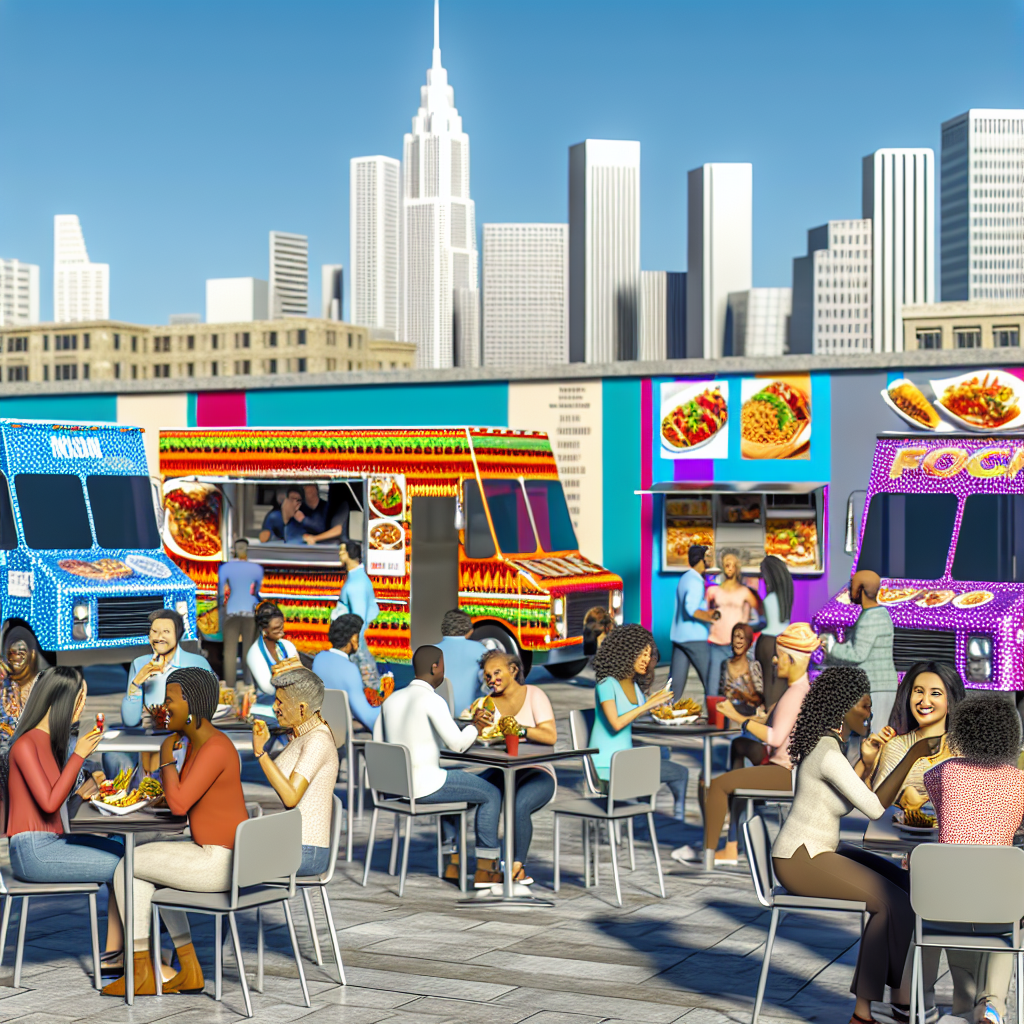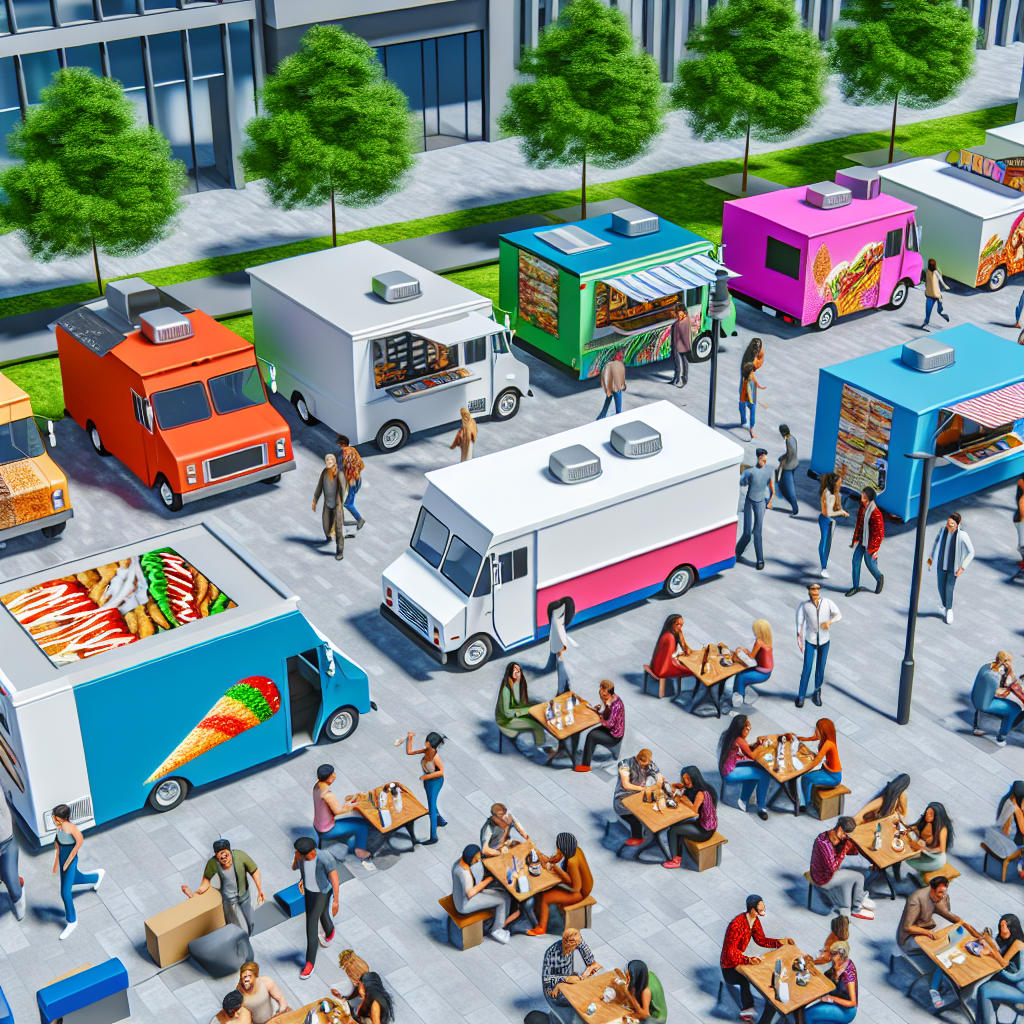
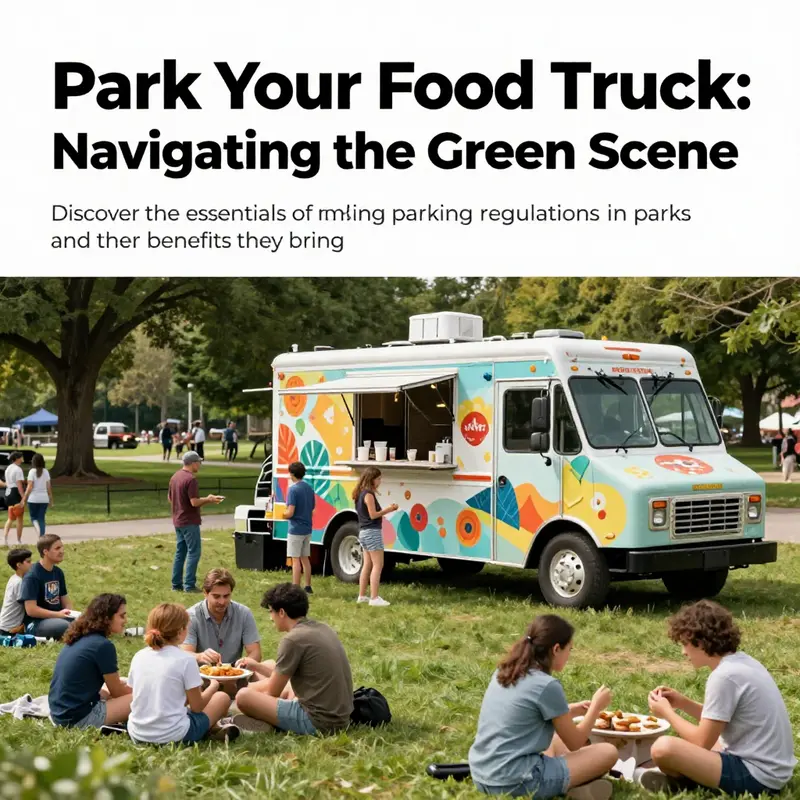
Food trucks have become a staple in cityscapes, serving delectable bites to eager patrons. But can these mobile kitchens set up shop in our beloved parks? This question brings us to a world filled with local regulations, visitor behaviors, operational perks, successful integrations, and best practices for ensuring a smooth operation. Let’s dive into each chapter to explore how food trucks not only fit into our greenspaces but enhance them, connecting communities through flavors and convenience.
Steering Through Park Policy: How Local Rules Shape Where Food Trucks Park in Parks
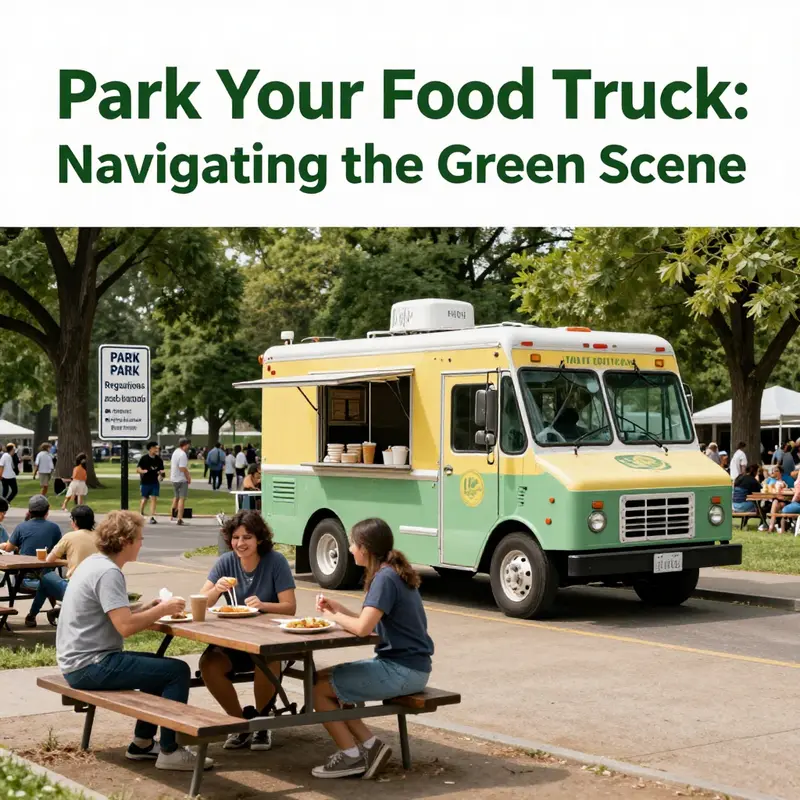
Public parks are a shared canvas where commerce, community, and green space intersect. Whether a food truck can park in a park is not a universal yes or no, but a carefully drawn allocation of space that depends on local regulations, park policies, and the particular layout of the park itself. In some urban centers, trucks have become a familiar part of park ecosystems, offering convenient nourishment during events or on busy weekends. In others, stricter rules around safety, traffic flow, and environmental impact keep mobile vendors at a cautious distance. The flexible reality across cities mirrors the broader urban planning principle that public spaces must balance economic activity with accessibility and safety. This balancing act is why you will often encounter designated zones, time limits, and prerequisite permits rather than free rein for mobile vendors. As with many public-space decisions, the most credible answers come from consulting the relevant city or park authority rather than relying on anecdote.
The regulatory landscape is multi-layered. At the city level, health codes, business licenses, and insurance requirements are standard prerequisites for operating in public spaces. Permit systems are designed to ensure that vendors meet sanitation standards, comply with zoning rules, and align their routes and hours with other city services and traffic patterns. Take, for instance, a major metropolitan city’s approach to mobile vending: operators must secure a specific permit before they can set up in any park. The permit process typically includes background checks, proof of food safety training, and proof of financial responsibility. In parallel, park authorities may designate particular areas as approved vending zones or “mobile vendor hubs” to concentrate activity in a way that preserves pedestrian flow and sightlines. The aim is not to ban vibrant food culture but to channel it where it can be enjoyed without compromising the park’s core functions.
Within those broader regulatory veils, park-specific policies further tailor where and when trucks can operate. Parking restrictions are common—operators are often limited to a small number of trucks per park, and the vehicle may be allowed to park only in certain pockets such as near entrances, in marked loading zones, or adjacent to event spaces. Time limits are another frequent tool; many jurisdictions cap a single location stay at a few hours, particularly during peak visitation periods, to distribute opportunities and reduce long lines that impede pedestrian movement. Seasonal variations are equally practical: when weather turns harsh or park programming slows, some parks scale back or suspend mobile vending. Taken together, these controls reflect a pragmatic approach to urban parks as living, adaptable environments rather than simple backdrops for commerce.
From the environmental and sanitation perspective, the rules extend beyond mere presence. Vendors must handle waste through responsible disposal, manage grease through approved receptacles, and, increasingly, minimize single-use packaging by offering compostable or reusable options where feasible. In many jurisdictions, parks push for packaging and serviceware that align with waste reduction goals and recycling pipelines. Noise levels, too, emerge as a key concern near residential zones and quiet corridors within parks. Proximity rules are common, with buffers designed to keep cooking operations at a respectful distance from playgrounds or restful green spaces to preserve a sense of serenity amid urban buzz. These environmental and social safeguards are not anti-business; they are preconditions for vendors to operate in spaces that are used by families, athletes, park rangers, and neighbors alike.
The practical implications of these policies become clearer when vendors and park authorities collaborate in a measured way. Many cities encourage a cooperative approach—vendors work with park management to select sites that minimize congestion and alternate with other temporary attractions. The logistics of this collaboration often involve pre-approval of routes, hours, and event compatibility. For park-goers, the result is a predictable rhythm: a known area where food can be found without forcing newcomers to navigate unsafe crosswalks or choke points. And for the broader public, a well-managed food-truck presence can expand the park’s appeal without eroding its primary functions, such as free movement, open play, and daylight leisure.
For operators seeking to answer the core question—can a food truck legally park in a park?—the starting point is explicit, official guidance. Permit applications, health compliance proof, and insurance certificates are the baseline. Beyond that, operators should verify whether a park has a defined “food truck zone,” a seasonal experiment, or partner-driven events that invite mobile vendors. The rules may also specify permitted hours and days, with stricter constraints during school holidays or major city-wide events. Because policies vary not just by city but by individual park, a careful site-by-site review is essential. In many cases, official park websites and city regulatory portals outline the precise requirements, approved locations, and operating hours. For readers who want a consolidated entry point to these processes, resources exist that summarize the workflow of local regulation in a practical way and can guide prospective vendors through the complexity of compliance.
Beyond the regulatory scaffolding, it is worth noting what research in urban parks across commercial districts has revealed about the effect of food trucks on park use. While the economic and culinary value of mobile vendors is undeniable, studies have shown that the presence of food trucks often has a limited influence on overall visitation numbers, duration of stays, or the use of park facilities. In some urban parks, despite occasional lines or audible activity, visitor plans to come to the park remained essentially unchanged. A striking statistic from the observed sites indicated that 99.1% of park users reported no alteration in their plans due to the trucks. This doesn’t negate the value these services provide; it simply highlights that the best-regulated integrations respect the core purposes of parks while enriching the visitor experience in ways that are additive rather than disruptive. These findings reinforce the idea that well-designed regulatory frameworks—paired with thoughtful site selection and clear communication with park users—can allow mobile vendors to complement, rather than complicate, park life.
For readers who want to explore practical governance practices in greater depth and connect policy considerations with day-to-day operations, one aspect to consider is the resource aimed at guiding operators through the regulatory maze. It emphasizes how to align business needs with municipal and park standards, how to prepare for inspections, and how to navigate the practicalities of permits, zones, and hours. As you weigh whether a specific park can accommodate a truck, it’s helpful to follow a clear, stepwise approach: determine the municipal permit requirements; check park-specific zoning and time restrictions; verify environmental expectations and waste-management guidelines; and coordinate with park staff to understand event calendars and peak periods. The path to compliance is not a single document but a coordinated set of checks that ensure the park remains accessible, safe, and welcoming to all visitors while still supporting small, mobile food enterprises.
For a concise, externally published reference that informs the regulatory backbone of mobile vending, see the official mobile vending guidelines published by city park authorities. And for readers who want a compact, practitioner-focused overview that abstracts the rules into actionable steps, consider a deeper dive into practical regulations available online. To connect this chapter to additional perspectives, you can explore further discussion on navigating the regulatory landscape through the linked resource navigating food-truck industry regulations.
As policy makers, park managers, and operators continue to experiment with the right balance between lively street cuisine and preserved park purposes, the overarching message is clear: local regulation shapes the feasibility and character of food-truck parking in parks. Permits, zones, hours, and environmental safeguards are not barriers so much as scaffolding that enables responsible, reciprocal use of shared space. When these elements are transparent and well communicated, the park remains open to the energy and diversity that mobile vendors bring, while still delivering the safety, calm, and high-quality experience that park visitors rely on. The evolution of these policies will continue to reflect shifts in urban design, climate considerations, and community expectations, guiding how trucks can be part of park life without compromising the fundamental promises of public space.
External resource: https://www.nyc.gov/parks/programs/mobile-vending
Why Food Trucks Rarely Change Parkgoer Behavior (and How They Still Matter to Parks)
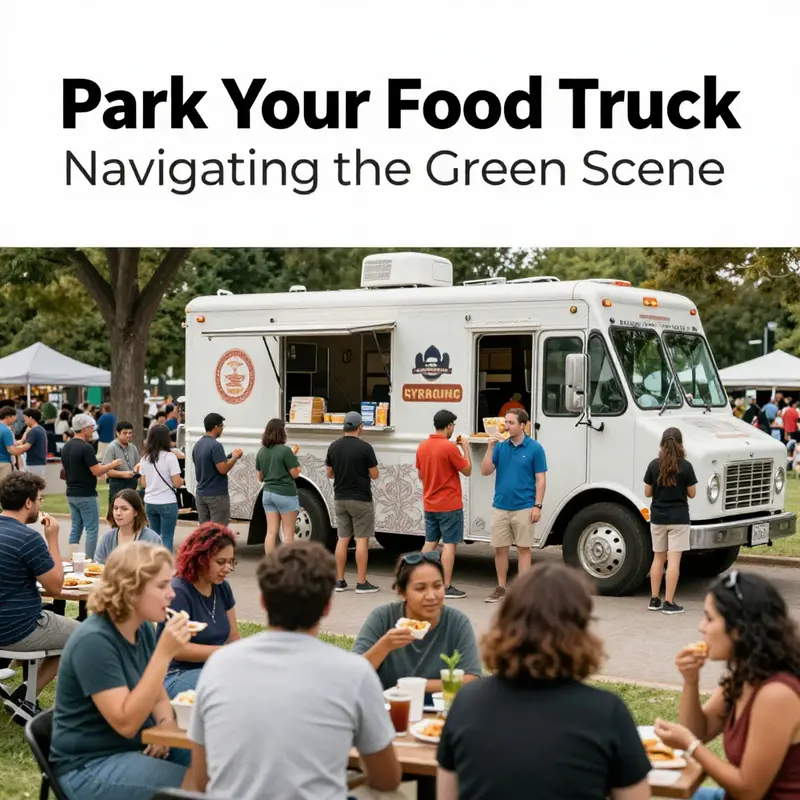
Food trucks in parks often attract attention, but evidence shows they rarely change how people use park space. Observational and survey research in metropolitan, commercial-district parks reveals a consistent pattern. On days with food trucks present, the raw number of people lingering in the park can rise. Yet the average length of stay across visitors stays the same. Most park users do not change their plans because of truck-related lines or noise. This suggests food trucks add an amenity without fundamentally reshaping park activity.
A focused observational study helps clarify this dynamic. Researchers recorded daily park attendance and motivations, comparing days with and without food trucks. They found an increase in visitors who stayed on truck days, shifting counts from smaller to larger totals. At the same time, counts labeled as staying specifically to eat or drink also changed. Crucially, these variations did not translate into longer visits. The average dwelling time remained unchanged across all observation days, whether trucks operated or not. In short, food trucks altered visitor composition and numbers in measurable ways. They did not increase the time people spent in the park.
Surveys reinforce this finding with a different lens. When asked whether lines or noise from food trucks would change where they visited, 99.1% of respondents said no. That is an unusually strong consensus. It indicates that perceived nuisance from trucks rarely drives people away. Visitors prioritize other park attractions, such as exercise, green space, socializing, and scheduled events. Food trucks function as a complementary option, not a decisive factor in visit choice.
Explaining why trucks do not shift behavior requires thinking about motives. Many park visits are purpose-driven. People arrive to jog, picnic, meet friends, or attend events. Those purposes set a time budget. A short line at a truck rarely outweighs those original plans. Research applying the model of goal-directed behavior finds that when people choose to patronize a food truck, they aim for convenience, quality, or a social experience. These motivations influence whether a visitor buys food, but not whether they extend their park stay.
Operational realities of food trucks help explain the observed balance. Trucks are compact and designed to serve crowds quickly. They provide cooking and storage that meet event needs. They can fit into constrained urban park layouts and operate with relatively low overhead. This makes them efficient at capturing spur-of-the-moment demand without requiring the long dwell times associated with sit-down restaurants. For event organizers and park managers, this efficiency is a strength. It enables food service during peak windows without monopolizing space or altering general park flow. For guidance on the practicalities of parking and operating a truck in municipal spaces, resources that cover permitting, site selection, and setup are valuable. One useful practical guide covers tips on addressing parking challenges for mobile vendors: mastering food truck parking challenges.
Even though the measurable effects on park visitation and duration are small, food trucks can influence local economies. They draw foot traffic and attract a more diverse crowd. Some visitors travel from beyond the neighborhood specifically to visit renowned trucks, creating spillover benefits for nearby shops and services. This can be especially visible around scheduled events or during weekend markets. Local retailers and service vendors often see upticks in customers when trucks are present. That economic boost occurs even when individual park behaviors remain stable. In other words, trucks may not change how long existing visitors stay, but they can increase the number of people moving through the area.
There are also social benefits to consider. Food trucks often serve as focal points that encourage incidental social interaction. They create moments of discovery and can animate underused park corners. The willingness of people to wait for or seek out street food contributes to a lively atmosphere. Managers who are sensitive to programming can use trucks to complement concerts, fitness classes, and family events. That alignment can increase perceived value without demanding visitors change long-term habits.
What about disturbances? Concerns about noise, lines, and service congestion are common. Yet the evidence suggests these factors rarely displace other uses. Effective placement helps. Trucks positioned near designated circulation areas, away from children’s play zones or quiet corners, reduce conflicts. Short operational hours during peak times and clear queuing spaces minimize impacts. These are practical measures park managers can adopt to maintain harmonious use.
Policy implications follow directly from the evidence. If the goal is to increase park visitation time, food trucks are not a guaranteed solution. They should be seen as part of a broader strategy. When combined with programming, seating, shade, and amenities, trucks can enhance the experience and contribute to economic activity. If the goal is to animate public space and support local entrepreneurs, trucks are an effective tool. Permit policies and placement rules should reflect those distinct objectives.
Finally, food truck success in parks hinges on alignment. Trucks succeed when they meet visitor motivations: convenience, food quality, and social experience. Park managers seeking to maximize benefits should coordinate truck presence with events and amenities. They should also apply best-practice placement and permit frameworks to avoid friction. The evidence shows trucks rarely change parkgoer behavior dramatically. Yet they remain a low-cost, flexible resource for enlivening parks and supporting nearby economies.
For the detailed empirical study underpinning these findings, see the original research available online: https://www.sciencedirect.com/science/article/pii/S245196722400002X
Why Food Trucks Belong in Parks: Operational Advantages That Make Parking Work
Operational advantages and practical implications
Food trucks bring a practical, low-impact service model to parks. Their design and operating model align well with the rhythms of public green spaces. Evidence from urban parks in commercial districts shows that food trucks rarely disrupt park visitation patterns. In one comprehensive survey, 99.1% of park users said they never changed their plans because of food truck queues or noise. That figure signals compatibility: food trucks can coexist with leisure, play, and passive park uses without driving visitors away.
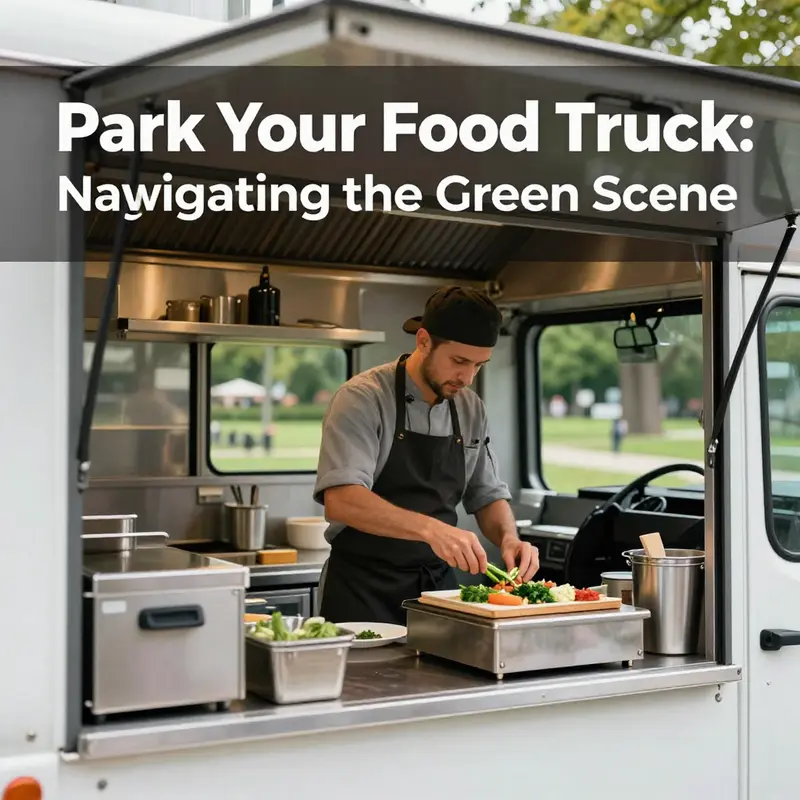
This compatibility matters because park managers and vendors share goals: maintain peaceful, accessible public space while providing amenities that respond to demand. Food trucks accomplish both with relatively light infrastructure and flexible operations. Unlike a fixed restaurant, a truck arrives with most necessities built in. Full kitchens, refrigeration, and prep areas are compacted into a single vehicle, allowing vendors to serve high volumes without permanent alterations to the park landscape. That capacity makes food trucks especially effective during events, festivals, and peak usage times.
Another operational advantage is built-in foot traffic. Parks in dense neighborhoods or commercial corridors naturally draw passersby. When several trucks cluster in a designated area, they form a micro-economy that feeds predictable demand. This regularity matters for revenue forecasting. Vendors who park in parks often see steadier daytime sales than trucks that depend solely on sporadic events. For park authorities, the aggregation of trucks can create a controlled, safe service zone that attracts visitors without concentrating noise or waste in sensitive parts of the park.
Cost structure also favors mobile vendors. Food trucks have lower startup and recurring overhead than brick-and-mortar eateries. They require less capital to equip and fewer fixed costs like long-term leases. In park settings, additional savings come from shared infrastructure when a cluster of trucks uses common utilities, waste points, and designated parking. Shared services reduce individual expenses and simplify compliance with health and safety standards. Centralized waste management systems, for example, make it easier to handle grease and refuse without impacting park cleanliness.
Operational flexibility is a defining strength. Trucks can relocate quickly when demand shifts. If a weekday lunch crowd moves from one side of a park to another, vendors can reposition to maintain access. This mobility helps trucks adapt to seasonal patterns and special events. It also supports temporary or experimental programming in parks, such as rotating cuisines or trialing new service hours. For cities exploring permitted vendor models, this flexibility reduces risk: policy changes and pilot programs can be implemented without the sunk cost of permanent fixtures.
Food trucks also support high-volume service when needed. Modern trucks often contain full-service kitchens with grills, fryers, ovens, and significant storage. Those capabilities allow vendors to handle complex menus and serve hundreds of customers during busy periods. In turn, parks benefit from rapid food service during events without needing temporary concessions or tents. For event organizers, partnering with experienced truck operators streamlines food logistics and decreases setup time.
Shared logistics reduce friction for both vendors and park operators. When trucks cluster, they can coordinate deliveries, pooling equipment and labor where appropriate. Centralized loading zones minimize conflicts with pedestrian paths and lawn areas. Clear, consistent site plans help trucks park safely, manage queues, and control power and water connections. These practical arrangements make food trucks less intrusive than ad hoc setups and reduce wear on park infrastructure.
A subtle but important benefit is the positive management of visitor expectations. Visitors often accept brief lines or background noise as part of an urban park’s atmosphere. The survey finding that over 99% of visitors did not alter their plans because of trucks underscores this point. That tolerance gives park managers room to introduce vendors without provoking widespread dissatisfaction. Proper site selection and sensible operating hours still matter. But when trucks follow clear rules and sit in well-chosen locations, they integrate into the park fabric rather than overwhelm it.
Health, safety, and regulatory compliance are easier to enforce in designated truck areas. Centralized sites allow inspectors to access multiple vendors efficiently. Shared support infrastructure—such as waste containment, grease traps, and approved power hookups—reduces the chance of environmental harm. For park authorities, establishing a permit process tied to these standards protects natural assets and reduces long-term maintenance costs.
There are also business resilience benefits. Lower fixed costs and mobility help truck operators weather market uncertainty. If a park’s foot traffic dips due to construction or seasonal decline, trucks can redeploy to alternate locations. This mobility translates to continuity of service and less pressure on park managers to maintain vendor density at all times.
Operational success depends on thoughtful policy and design. Clear permit rules, transparent site maps, and coordinated utility access create predictable conditions for vendors. Designated parking pads, firm boundaries for seating and queuing, and simple signage all reduce friction. For operators, attention to efficient service flow and waste handling prevents many conflicts before they start. Resources that outline best practices for mobile food vending are useful reference points for both managers and vendors.
If you need practical guidance on siting, permits, and daily logistics, a focused resource on parking specifics can help. See this guide on mastering food truck parking challenges for actionable insights.
When a park hosts food trucks well, the outcome is mutually beneficial. Visitors gain convenient, varied food options. Vendors access reliable foot traffic and lower overhead. Park authorities preserve the character of public space while adding a modern amenity. The balance depends on deliberate planning, shared infrastructure, and straightforward rules that align vendor operations with park goals.
For detailed operational planning, technical specifications, and industry best practices, consult further resources that cover mobile vendor guidance and community-based food truck models: https://www.linkedin.com/pulse/benefits-joining-food-truck-park-community-nadeem-battla/
Stoves in the Shade: Case Studies of Food Truck Integration in Urban Parks
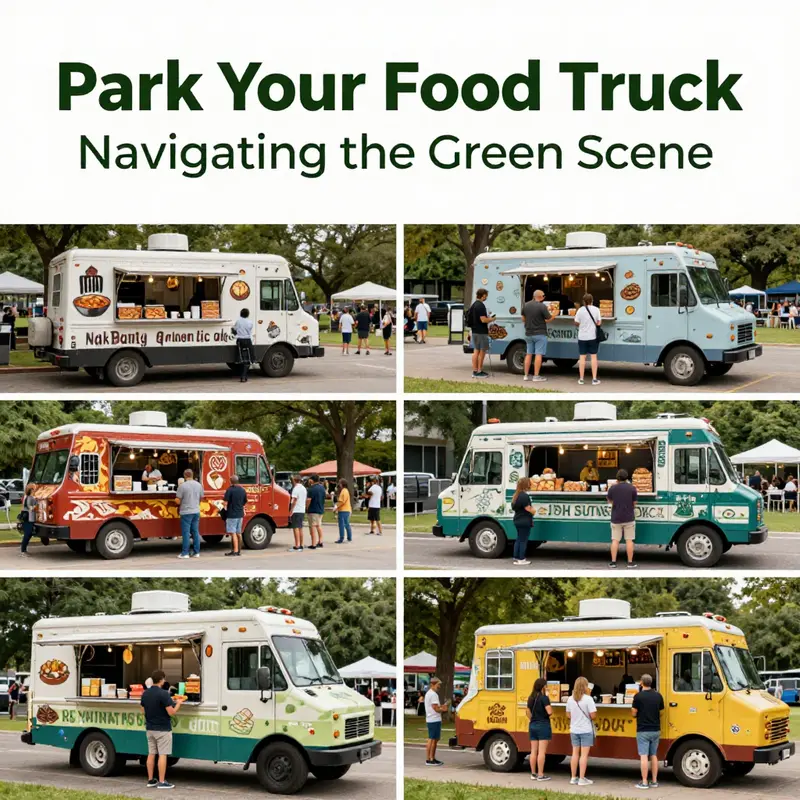
Urban parks have long served as civic laboratories where daylight economies meet public life. The sight of a rolling kitchen parked beside a playground or along a winding path signals more than a meal; it marks a deliberate rethinking of how park space can accommodate commerce, culture, and community simultaneously. The idea that a mobile kitchen can be woven into the fabric of a park is not a recent whim but a tested approach in cities that balance accessibility with sustainability. Food trucks, with their compact footprints and flexible operations, offer a practical means to extend park programming beyond traditional hours and to diversify the experiences available in greenspaces that often contend with limited real estate and tight budgets. Yet the success of such integration hinges on thoughtful planning: clear rules about location, duration, safety, cleanliness, and environmental performance. When these elements align, parks can become more than destinations for leisure; they become platforms for small business, social exchange, and culinary variety that reflect the city’s own diversity.
Across several urban landscapes, the evidence suggests that the presence of food trucks can be harmonized with park life without upending how visitors use the space. In many urban parks situated within commercial districts, operators have found that the portability of mobile kitchens is an asset rather than a distraction. Studies from cities like Portland and Austin show a pattern: food trucks are deployed within a regulated framework that designates specific zones, times, and operational standards. The result is a predictable, controlled environment in which visitors can enjoy a meal and a stroll without the park losing its sense of place or its crowd-management logic. Notably, research undertaken in these contexts has indicated that food trucks typically exert minimal influence on overall park visitation numbers, on how long people stay, or on the use of park facilities. A striking finding from some urban park studies notes that 99.1 percent of park users reported no change in their plans to visit the park, even when lines formed or noises rose around food trucks. That statistic is not a straightforward endorsement of trucks as a universal good, but it does underscore a broader truth: when policies are well designed, the presence of mobile vendors can coexist with the fundamental purposes of parks—recreation, exploration, and social cohesion—rather than compete with them.
The Portland model offers an instructive example of how policy and design can work in tandem. In the city’s Parks & Food Trucks program, designated zones within parks allow vendors to operate under a framework that emphasizes cleanliness, safety, and minimal environmental impact. Such zoning does more than regulate where a truck can park; it signals a commitment to maintaining the park’s aesthetics while ensuring that the culinary edge adds value rather than noise. The zones are not permanent fixtures; they are adaptive spaces that can shift with festival calendars and seasonal demand. This design-minded approach helps preserve the park’s core ecosystems and pedestrian flows while enabling a social economy to flourish around a regular, rotating cast of vendors. The intent is not to clutter the park with commerce but to choreograph it—creating predictable touchpoints for families, workers on lunch breaks, and residents seeking weekend activities. In this sense, the trucks function as temporary pavilions that respect the park’s identity while expanding its function.
Cities have also experimented with more expansive urban corridors, illustrating the potential for scale and cultural exchange within outdoor spaces. New York City’s Summer Streets program, which temporarily closes select major roadways and integrates food truck pods into adjacent parks and plazas, demonstrates how mobility and park life can be braided into larger urban celebrations. The model has evolved from a transient event to more permanent installations in several boroughs, including Brooklyn’s Prospect Park, where trucks now appear routinely during festivals and weekend gatherings. The effect extends beyond calories and convenience; the food pods become cultural catalysts, offering cuisines that mirror the city’s broad spectrum of communities. Diners are drawn not merely by quick meals but by a chance to sample a world of flavors in a single setting. In these settings, the park is no longer a backdrop but a curated stage for public life, where mobility, performance, and food intersect in a way that invites longer stays and curiosity about neighboring neighborhoods.
The Urban Land Institute’s 2025 synthesis reinforces this narrative. The organization’s research highlights that thoughtfully integrated food truck programs can increase foot traffic and extend visitation hours, turning parks into longer, more luminal experiences that blend outdoor recreation with civic and culinary activity. Such findings are especially meaningful when viewed against the backdrop of tight municipal budgets; mobile vendors offer a relatively low-cost model for expanding park offerings without significant capital expenditures. Yet the operational success of these programs rests on disciplined governance that attends to vendor selection, waste management, energy use, parking, and the overall visitor experience. For practitioners seeking a deeper technical orientation, the field notes and standards laid out in the analysis Inside Food Cart With Canopy: Detailed Standards, Properties, and Performance Analysis for Industry provide a rigorous framework. The guide emphasizes construction durability, zoning compliance, and environmental performance as non-negotiables when placing semi-permanent or permanent installations in parks and plazas. Though the guide speaks to a broader market, its recommendations are directly applicable to park contexts where longevity and stewardship matter as much as appetite and arrangement.
Of course, integration is not without its tensions. Local regulations, park policies, and site-specific constraints can complicate even well-intentioned programs. Noise, queues, waste, and the sheer pace of service can disrupt the quiet rhythms that many parkgoers prize. Yet the research cited above offers an important corrective: these concerns are not insurmountable, provided they are anticipated and managed through thoughtful design and ongoing governance. One practical lesson is the value of pilot phases that gradually expand footprints and hours while collecting data on crowd dynamics and environmental impact. Transparent communication with park users about zoning, hours, and waste protocols helps to set expectations and reduces friction. In this way, the social and economic advantages—access to diverse, affordable meals; support for small and local operators; and the enrichment of park events with live cultures—can be realized without compromising safety, cleanliness, or the park’s ecological integrity.
From a planning perspective, the success of food truck integration hinges on creating an ecosystem that respects both the public’s right to a tranquil green space and the public’s appetite for a lively, inclusive street-food culture. The design logic is simple but powerful: provide adaptable, clearly bounded spaces; enforce robust cleanliness and waste management regimes; ensure visibility and accessibility for all users; and align food truck operations with major events and seasonal schedules to minimize conflicts with peak park use. When these elements cohere, parks can host rotating kitchens as if they were seasonal seasonings in a larger culinary palette—adding flavor to the park’s life while preserving its core functions. The result is less about spectacle and more about stewardship: a public space that remains welcoming to families, joggers, birdwatchers, and late-evening strollers, while offering a dynamic array of dining options that reflect community diversity.
For readers seeking practical guidance on how to navigate the parking and space-planning aspects raised here, consider the deeper exploration offered in Mastering Food Truck Parking Challenges. It provides grounded perspectives for city planners, park administrators, and operators who aim to balance mobility with order, flavor with calm, and commerce with conservation. As these case studies illuminate, the future of urban parks may lie less in preserving a static moment and more in orchestrating a sequence of experiences that are as fluid as a convoy of mobile kitchens, yet as considerate as a well-tended garden.
External reading: For a broader synthesis of these patterns and their implications for urban parks, see https://www.urbanlandinstitute.org/research/food-trucks-in-urban-parks-case-studies. This resource contextualizes the case studies within a professional framework of land use, placemaking, and long-term resilience, offering a lens to interpret the evolving relationship between park space and mobile cuisine.
Parks on the Plate: Navigating Best Practices for Food Trucks in Public Green Spaces
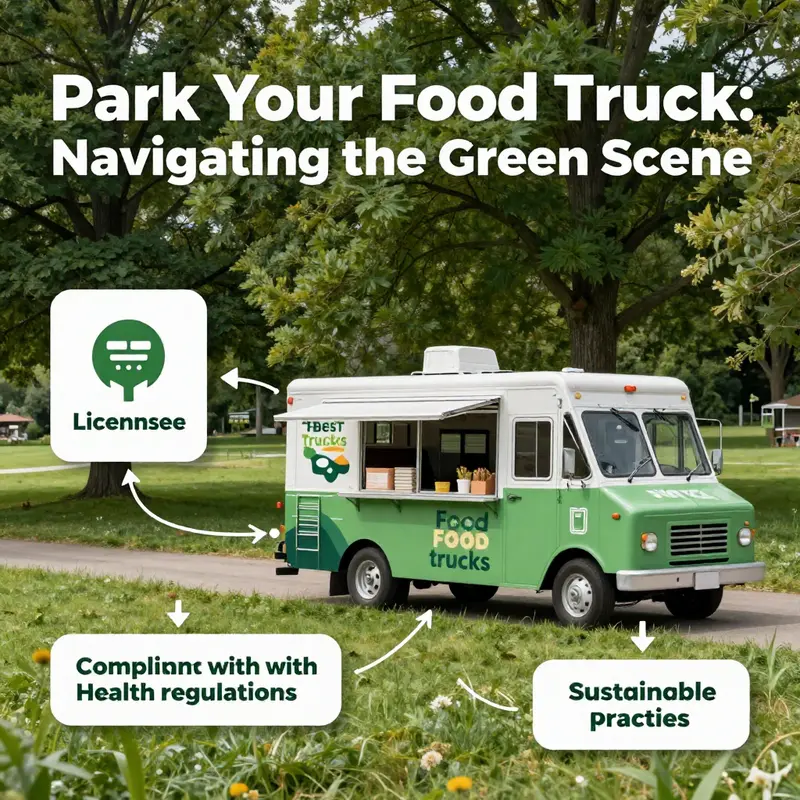
Public parks are living ecosystems, not just scenery. They host joggers, families, festivals, and quiet corners where people linger to breathe, chat, or simply observe their surroundings. Introducing a food truck into this mix can amplify the park’s appeal, but it also tests the delicate balance between accessibility, safety, and quiet enjoyment. The broader research landscape shows a nuanced picture: food trucks can park in parks, but success hinges on local regulations, park policies, and the unique contours of each site. In many urban parks adjacent to commercial districts, mobile vendors have become a familiar amenity, offering convenient options without erasing the park’s core environments. Importantly, studies have found that the mere presence of a truck does not automatically boost visitation or extend how long people stay; in fact, in several commercial-area parks, the average visit length and facility use remained steady despite queues or ambient noise. Among park users, the vast majority—about 99 out of 100—reported that their plans to visit were unaffected by food trucks. This snapshot doesn’t imply indifference, but rather a dynamic equilibrium: when trucks operate thoughtfully, they complement park life rather than disrupt it. With that context in view, the chapter unfolds a practical cadence for operators who aim to harmonize mobility and public space, not to crowd it.
From a design and efficiency standpoint, food trucks bring tangible advantages to park environments. Their compact form fits tight urban footprints, and their operating costs can be more favorable than traditional brick-and-mortar outlets, especially in facilities that face seasonal demand or event-driven surges. A well-designed truck carries not only a kitchen but the capacity to store ingredients, stage preparations, and scale service to large crowds during concerts, fairs, or weekend gatherings. These operational realities align with the park’s need to preserve open pathways, reduce waste, and minimize on-site disruption. In this sense, food trucks can act as mobile extensions of park programming, offering culinary variety without permanently altering the landscape. For park administrators and operators seeking formal guidance, official resources such as mobile food vendor guidance from government bodies provide a solid framework for compliance, safety, and best practices.
The core of successful park operation rests on how well a truck’s footprint integrates with the surrounding environment. The first necessity is a parking strategy that respects pedestrian flows and emergency access. Vendors should position themselves in designated zones that minimize blocking sidewalks and keep fire lanes clear. Proximity to high-footfall nodes—entrances, plazas, playgrounds, and event stages—enhances visibility without intensifying crowding. Yet visibility must be paired with restraint: lines should not spill into gathering spaces or impede everyday park life. A disciplined stance on location goes beyond convenience; it becomes a matter of civic courtesy, signaling that the truck is part of the park’s ecosystem, not an occupying force.
Hygiene and safety follow as non-negotiable anchors. All operations must comply with local health regulations, with explicit controls over ingredient storage temperatures, food preparation surfaces, and utensil sanitation. The personal hygiene of staff—handwashing practices, clean uniforms, and safe handling of food—entails a basic standard that reassures customers and protects vulnerable park users. In a public setting, these practices are as much a branding statement as a compliance measure; they convey seriousness about safety and care for the shared space. The equipment choice matters too: reliable insulation for cold and hot storage, secure waste handling, and leak-proof containers help maintain park cleanliness and prevent spillover into the surrounding grass and pathways.
Beyond safety, menu design becomes a conversation between portability and personality. The most effective park menus favor items that are simple to prepare, easy to transport, and resilient to environmental fluctuations. Sandwiches, cup salads, hot beverages, and other travel-friendly options often prove reliable, while seasonal ingredients allow operators to reflect local harvests and changing tastes. A flexible menu also bolsters inclusivity by accommodating dietary preferences and health trends, which broadens the truck’s appeal across diverse park users. The ability to adapt offerings during peak hours or in response to weather patterns can transform a routine visit into an enjoyable, repeatable experience.
Customer experience in a park context rests on clarity and speed. Clear signage and a concise menu help guests decide quickly, while intuitive payment and ordering systems shorten lines and reduce crowding. Mobile payment options, pre-orders, or staggered pickup windows can turn a potential bottleneck into a smooth, predictable process. The park environment rewards efficiency without sacrificing warmth; the sounds of frying or the aroma of street food should enhance rather than overwhelm the surroundings. A subtle but important element is the visual identity of the truck itself. Consistent branding, legible menus, and clean façades invite trust and curiosity, encouraging visitors to engage with the vendor while they enjoy the park’s open-air ambiance.
Constructive engagement with park management emerges as a keystone of long-term success. Establishing open lines of communication from the outset—before the first permit is granted—supports alignment with park programming, maintenance schedules, and seasonal events. A proactive stance on scheduling helps prevent conflicts with concerts, sports leagues, or community gatherings, ensuring that the truck contributes to, rather than competes with, planned park activities. When operators demonstrate reliability and responsiveness, park authorities are more likely to extend permits, pioneer longer-term uses, and consider broader collaborative opportunities. This cooperative dynamic is beneficial not only for the vendor but for park visitors who come to expect a consistent, well-run presence that respects the rhythm of park life.
Branding inside the park was once thought to threaten the park’s sense of place. But done thoughtfully, branding can reflect local culture and contribute to a positive sense of community. Social media becomes a two-way street: daily menus, featured items, and glimpses of behind-the-scenes interactions draw both local regulars and casual visitors, creating a following that translates into predictable crowds and word-of-mouth buzz. The key is balance—branding should illuminate the park experience without overpowering it. The best practice is to weave the vendor’s narrative into the park’s story, acknowledging the space’s history and the community it serves. In this sense, branding becomes an invitation to a shared experience rather than a solitary display of commercial energy.
To operationalize these principles, a simple, respectful, and practical approach is essential. For operators who want to deepen their knowledge on the mechanics of setting up and maintaining a park-based business, a dedicated resource on parking challenges offers concrete, scenario-based guidance. See the article on mastering-food-truck-parking-challenges for a compact set of tactics drawn from field experience and policy considerations. This internal linkage reflects how the practicalities of parking and movement weave into every decision from stall placement to queue management. mastering-food-truck-parking-challenges
Ultimately, the question of whether food trucks can park in parks is less about a single rule and more about the choreography of space, safety, and community. When operators honor designated zones, maintain impeccable hygiene, design menus with portability in mind, and nurture constructive relationships with park staff, the truck becomes a supporting character in the park’s ongoing narrative. The data that drive this chapter speak to a larger truth: well-executed, regulation-aware operations can coexist with the park’s primary mission—providing restorative green space and opportunities for recreation. In places where such coexistence is realized, visitors experience a richer park day, not because food is the primary draw, but because it is thoughtfully integrated into the fabric of public life.
For readers seeking broader forms of guidance that frame best-practice expectations and governance, external resources from national bodies offer a comprehensive, policy-oriented perspective. These guidelines complement on-the-ground experience by standardizing safety, cleanliness, and operational efficiency across diverse parks and jurisdictions. External resources emphasize that when a park’s core values—access, safety, cleanliness, and community—are preserved, mobile food vendors can be a welcome addition rather than a disruption. In this light, the park becomes not a stage for competition, but a shared space where diverse services, from programming to food, reinforce the public good.
External resource: Best Practices for Food Truck Operations in Parks. https://www.foodtrucks.org.uk/insights/best-practices-for-food-truck-operations-in-parks
Final thoughts
As we’ve journeyed through the landscape of food trucks in parks, it’s clear these mobile kitchens are not just a trend—they’re an integral part of community life. The ability to navigate local regulations and policies, understanding visitor behavior, appreciating the operational benefits, examining noteworthy case studies, and adhering to best practices are crucial elements that define success. Food trucks bring flavors, experiences, and joy to our parks, making them well worth the integration into our green spaces.