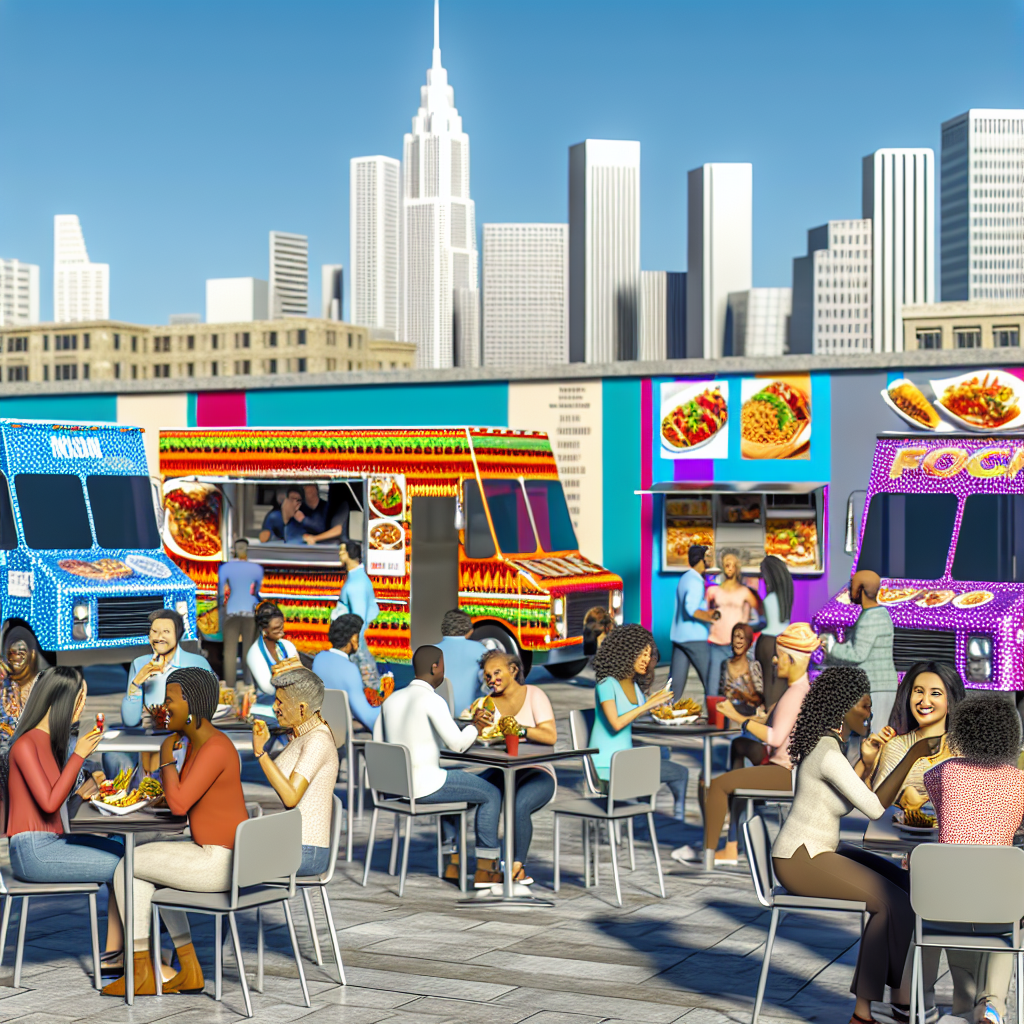
Across markets and communities, food trucks remain one of the most dynamic ways to bring flavor, culture, and connection to events. But budgeting for a new ride on the street isn’t one-size-fits-all. Our current snapshot shows a broad spectrum: basic and mid-range trucks often land between $2,400 and $8,000, with small electric carts, hot dog or taco trailers, and coffee setups landing on the lower to mid end. On the higher side, fully equipped or customized units—think larger pizza trucks or specialty concepts—can stretch well into the $13,900–$19,960 range. And the total ticket isn’t just the sticker price. Permits, insurance, initial inventory, and marketing add meaningful layers to the initial investment, often pushing the overall budget beyond $10,000. For event planners, HR teams, community organizers, and curious food enthusiasts alike, understanding where those numbers come from—and how they compound—helps translate a big idea into a realistic plan. The chapters that follow will guide you through the market landscape, the cost components you’ll encounter, and how different truck types and strategies shift the bottom line.
Price on the Move: Reading the Real Cost Landscape for Food Trucks in 2026
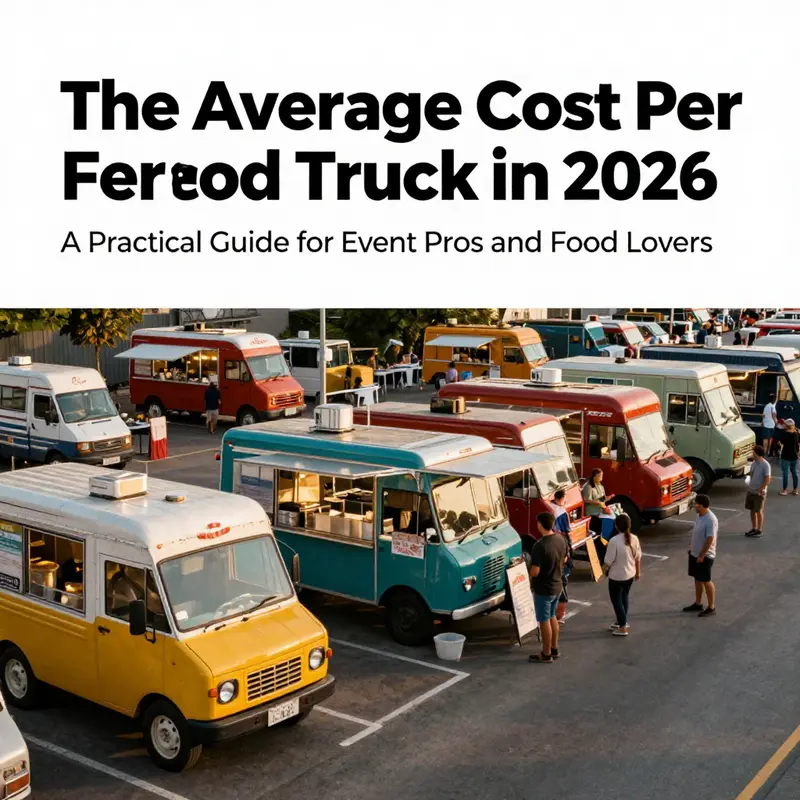
The question of how much a food truck costs hinges on a wide tapestry of choices, trades, and practical realities. In 2026, buyers find prices moving along a spectrum that reflects the vehicle’s size, the level of customization, and the type of cuisine envisioned. The numbers aren’t just about sticker price; they reveal a larger story about how investors enter a market that is at once accessible and layered with operational considerations. For anyone plotting a first or second act in street food entrepreneurship, the cost picture has to be read with both a scalpel and a compass: a scalpel for the fine-grained details of what is included, and a compass for how those choices translate into sustainable daily operations. Across markets, the range begins with basic, compact setups and climbs into fully equipped, branded, climate-controlled operations. The common thread is that most buyers start toward the lower end of this spectrum, then expand as demand, margins, and branding ambitions solidify. In practical terms, this means the average cost you should expect for a new, functional mobile kitchen that is ready to serve a loyal line of customers sits somewhere in the mid-to-upper end of the initial band, with significant room for upward movement if you push into premium equipment, larger formats, or high-traffic domains. Prices the market reports cite for basic to mid-range trucks typically fall between roughly $2,400 and $8,000. That band covers a surprising breadth of configurations: from a small electric ice cream vending bike to more conventional hot dog or taco trailers, to coffee carts that promise a compact but efficient kitchen on wheels. It’s important to keep in mind that those figures are snapshots of what is available in early 2026, and the lower end of the range often represents equipment that is either minimal in capability or sourced from a basic, no-frills kit. The upper edge of that band can involve more robust frames, larger work areas, and newer components that improve reliability and service speed, which matters greatly when you’re facing a busy lunch rush or a crowded weekend market.
Within this spectrum, it helps to anchor some concrete reference points. A small electric ice cream bike vending cart is cited at about $2,400, illustrating how a compact, highly specialized unit can enter the market at a relatively modest price. A basic hot dog or taco trailer might start around $5,200, reflecting a step up in kitchen footprint, weather protection, and perhaps a few essential appliances. A standard mobile kitchen or a coffee cart usually ranges from $3,500 to $5,000, aligning with the need for a compact but functional cooking area, a storefront-like appeal, and reliable power options. Finally, a fully equipped small mobile kitchen can be found starting at about $2,600, though the context of that price depends on what is included in the base package and whether any upgrades or add-ons are assumed. The market also lists higher-end or customized units that push the price into higher brackets: a custom outdoor food kiosk or fast-food truck can run from roughly $3,500 to $5,000, while a larger, fully equipped commercial pizza or coffee truck can cost between $13,900 and $19,960 depending on the level of branding, equipment density, and service capacity. This spread reflects a practical truth in mobile food retail: as you scale up the menu, improve efficiency, and invest in branding, the capital requirements grow—sometimes quickly.
All these numbers feed into a simple, pragmatic conclusion. For most street-food ventures starting from scratch, a reasonable shorthand estimate for the average cost of a new, reasonably equipped food truck sits around $5,000 to $7,000. It’s a window that captures the mid-range configurations, realistic equipment suites, and a sensible footprint that allows for daily operations in urban markets, fairs, and road-side niches. Yet, this estimate comes with an important caveat: the total investment can easily exceed $10,000 once you account for permits and licensing, insurance, initial inventory, and the critical—but often overlooked—marketing push that helps a new truck break through in a crowded field. Permits can vary by city and country but tend to be recurring reminders that the truck is not just a kitchen on wheels; it is a regulated piece of a larger food-service ecosystem. Insurance sits alongside risk management: it protects the dream and the practical liability of serving the public, while inventory and initial stock—the ingredients, packaging, and basic supplies—shift the liquidity demands of the first weeks of operation. Marketing, in turn, is the multiplier that converts a functional truck into a recognizable brand on the street. These costs, when combined, can nudge a project from a lean startup into a more robust, branded, and resilient operation. The right planning discipline—knowing not just what the truck costs to build, but what it costs to launch and sustain—distinguishes ventures that fail to take root from those that scale with confidence.
Readers who are positionally closer to a regional market with a different currency or price structure will naturally see a shift in the baseline, but the fundamental logic remains the same: the more you invest in a solid chassis, durable construction, and dependable equipment, the more your daily performance and long-term efficiency will reward you with smoother service, less downtime, and stronger customer trust. If you are weighing options across a spectrum of setups, there is a meaningful decision at every price point. You can choose to begin with a repurposed vehicle to minimize upfront risk, or you can invest in a purpose-built chassis with climate-controlled kitchens, a premium refrigeration suite, and power autonomy that keeps you running in locations with limited access to electricity or water. The choice isn’t simply about cost; it’s about the expected cadence of your business—how often you will operate, how much food you will produce, how far you will travel, and what kind of customer experience you want to deliver.
To give perspective on a regional flavor that some readers might need, it’s useful to consider a parallel in another substantial market, where price structures reflect local costs and supply chains. In South Africa, from market data collected in 2026, a fully equipped food truck can range from roughly ZAR 350,000 to ZAR 1,200,000, translating to about USD 18,000 to USD 60,000. Those ranges are wider because they encapsulate differences in chassis choices, the level of customization, and whether the unit is new or second-hand. For those seeking to minimize the initial outlay, repurposing an existing vehicle—such as a standard delivery van or small truck—and installing essential kitchen equipment can bring entry costs down to about ZAR 350,000. Such an approach can be attractive for entrepreneurs who want to test concepts, refine menus, and learn the ropes with lower risk, but it may also impose limitations on menu complexity, speed, and operational efficiency that affect margins and growth potential over time.
On the higher end, more ambitious builds with advanced features—climate-controlled kitchens, high-capacity refrigeration, solar power capabilities, and premium branding—can push the price into roughly ZAR 800,000 to ZAR 1,200,000 or more. This end of the spectrum is typically aligned with larger operations or brands aiming for a distinctive, elevated image. It is also where the day-to-day running costs—fuel consumption, maintenance, and power needs—come under the microscope, because a larger vehicle and more powerful systems demand careful fuel budgeting and ongoing service plans. In this global snapshot, the South African data point emphasizes a core reality for any market: you can enter the space with modest tooling, but the long arc toward resilience and scale often travels through a staged progression—from starter kit to reliable workhorse, then to a refined, high-capacity operation.
From a budgeting perspective, the shared lessons across markets are straightforward yet meaningful. First, there is value in clarity about what “ready to serve” means for your concept. A basic, no-frills setup might suffice to prove a concept during a limited pilot phase, a pop-up season, or a single-venue trial. If your plan is to deploy across multiple events, you will quickly encounter the truth that reliability, speed, and consistency are economic multipliers—the more you invest upfront in durable construction and dependable equipment, the more your unit earns back through reduced downtime and stronger throughput. Second, the menu strategy you choose will shape your equipment needs and, by extension, your capital requirements. A simple menu with a few core items may be supported by lean appliances and compact layouts, whereas a broader menu with hot and cold preparations, specialized gear, and climate controls will push you toward larger footprints and higher price tags. Third, the regulatory and business environment matters. Permits, health inspections, and insurance are a predictable recurring cost that must be incorporated into the first-year plan, not treated as an afterthought. The practical effect of these realities is a recommendation as old as street markets themselves: budget with a plan, not a dream. Build in a financing or savings cushion, project your monthly operating costs, and ensure that your price strategy yields a sustainable margin at the volumes you anticipate.
If you are curious about how these considerations translate into the decision of which model to choose, a helpful reference is to review the broader literature on selecting the right food truck model. An accessible starting point is to explore the topic in a structured guide that walks through chassis choices, kitchen layouts, and branding implications. For a quick, accessible overview, you can consult a resource that summarizes model selection and practical setup considerations. See Choosing the right food truck model for a concise framework that couples operational needs with financial sensibility while keeping the narrative grounded in real-world constraints and opportunities.
The conversation about costs also invites a broader reflection on what counts as value in a mobile kitchen. A lower price tag may yield a faster path to market, but it can come with tradeoffs in menu flexibility, service speed, and long-term durability. Conversely, a higher investment—whether in a larger vehicle, climate control, or a stronger branding package—can translate into higher throughput, a more consistent customer experience, and better resale value. The resale calculus matters in this business: as the fleet of mobile units in a city grows, so does the potential to recoup capital by upgrading, merging, or selling a unit that no longer aligns with evolving business goals. The lifetime cost of ownership thus hinges on a balance between upfront capital outlay, ongoing operating costs, and the expected revenue ceiling your setup enables. When you map these factors, the path from a modest, entry-level truck to a scalable, brand-forward operation becomes less a leap of faith and more a sequence of informed, incremental steps.
Looking ahead, it is useful to anchor these observations in a practical budgeting mindset. A realistic plan starts with a core assumption: you will invest in the truck itself, but you will also need to secure permits, insurance, initial inventory, and a marketing push. You can allocate roughly one-tenth to one-fifth of your initial budget for permits and licensing, recognizing that these fees vary by jurisdiction and can involve multiple agencies. Insurance often requires a more substantial commitment, especially if you operate in diverse environments where liability considerations are high. Initial inventory includes not just food stock but also disposables, napkins, sauces, condiments, and cleaning supplies, plus any smallwares you’ll rely on day to day. Marketing spending may include signage, a basic digital presence, social media promotions, and initial incentives to draw crowds to new events. When you pull these elements together, the overall first-year investment begins to grow beyond the sticker price of the truck itself. This is not a cautionary tale about overspending; it is a precise reminder that the economics of mobile food are not contained within the chassis. The true test is how quickly the vehicle becomes a reliable, waste-reducing, customer-attracting platform for your cuisine.
The regional dimension also reminds us to consider currency and price normalization when comparing markets. For readers who operate in or near markets outside the United States, the direct currency translation is only part of the picture. Local labor costs, supply chain reliability, import duties or tariffs, and even the typical event density influence the total cost of ownership. In some markets, an apparently modest base price can balloon once you include essential equipment upgrades, regulatory compliance, and energy reliability solutions such as solar power or upgraded electrical infrastructure. In others, a more generous local supply chain can push down the cost of hardware and refrigeration, enabling a faster path from concept to kitchen on wheels. These dynamics are not merely theoretical. They play out in the day-to-day choices of vendors who must balance risk, fundraising realities, and strategic timing for growth, especially in markets where competition is intensifying and consumer expectations keep rising.
From a narrative standpoint, the cost landscape also shapes the opportunities for experimentation and specialization. A basic, low-cost entry can be a compelling platform for testing menus, markets, and seasonal themes with minimal risk. A mid-range truck—within the $5,000 to $7,000 ballpark in USD terms—often provides a steadier base for regular events, repeat customers, and a more stable cash flow. A high-end, purpose-built truck—whether it features climate control, premium branding, or high-capacity refrigeration—can unlock new venues, higher ticket sizes, and subtler brand signals that resonate with a particular audience segment. The decision, ultimately, is not only about what the truck costs to acquire but how well the truck enables you to deliver value to customers, manage costs, and sustain your business through seasonal fluctuations and market shifts.
For readers who want to anchor these reflections with a regional reference point, the South African market provides a tangible case study. The data indicate that entry-level, well-converted options can be launched for under ZAR 400,000, while an average well-equipped unit sits around ZAR 600,000–700,000. Those figures translate to roughly USD 18,000 to USD 60,000, underscoring a broad middle ground that is surprisingly accessible for new entrants but also capable of supporting more ambitious branding and equipment configurations. The key message is consistent across markets: the average cost to begin is never a single number. It is a framework that hinges on how lean or how expansive you want the operation to be, how much you invest in reliability and brand equity, and how aggressively you plan to scale your footprint in a crowded culinary landscape.
As you plan, keep in view the broader ecosystem. The most successful operators tend to pair careful upfront budgeting with a crisp plan for cadence—how often they attend markets, how many venues they service in a month, and how much time is allocated to maintenance, restocking, and travel. A well-constructed plan treats the truck not as a one-off purchase but as a growth engine with predictable operating costs, a clear path to profitability, and an adaptable template for evolving menus and locations. If you are assessing a potential purchase today, the takeaways are practical and actionable: start with a credible baseline cost range, identify the minimum equipment and layout needed to support your core offerings, and add a buffer that covers permits, insurance, inventory, and marketing. Then, as you explore options, weigh the incremental benefits of upgrades—more refrigeration, faster service, more resilient power options, and stronger branding—against the incremental price tag. This approach helps ensure that the price you pay is an investment that yields reliable, repeatable performance rather than a quantity of features that remain unused.
For deeper explorations of the model-selection framework and to see how different configurations map to different business strategies, the internal link above provides a structured lens for evaluating options. In parallel, keep an eye on external resources that document regional price ranges and supply-chain realities, as these can shed light on how similar concepts unfold in markets other than your own. The combination of practical, incremental budgeting with flexible, scalable design is what ultimately separates ventures that merely survive from those that grow with confidence and clarity.
External reading on market pricing in 2026 offers additional context on how costs are evolving for mobility-enabled food service. For a comprehensive regional snapshot, you can consult external market data here: https://www.foodtrucksa.co.za/food-truck-prices-in-south-africa-2026/
Cost on Wheels: Navigating the Real Price of Food Trucks from Tiny Carts to Full-Fledged Kitchens
The question of how much a food truck costs invites a spectrum of answers, and that spectrum mirrors the market itself: a range that stretches from pocket-sized, simplified setups to expansive, fully dialed-in culinary campuses on wheels. To speak in a single figure would be to miss the way the market arrives at a price point that can surprise and empower every aspiring street chef. What you pay for is not only the metal and panels that form the chassis, but the kitchen’s soul—the equipment inside, the permits that unlock a path to the street, and the ongoing lifeblood of fuel, insurance, maintenance, and marketing that keeps the wheels turning. In practice, the total sticker price you face—and more importantly, the total lifetime cost—depends on the size of the operation, the level of outfitting, the type of cuisine, and how you plan to operate. In late 2025 and into early 2026, market data presents a layered portrait: it shows a broad ladder of price points, from the modest, almost starter setups that serve as stepping stones for new entrants, to the expensive, fully equipped vehicles that look like a small restaurant on four wheels.
For the broadest picture, it helps to separate several major axes of cost. First, the fundamental purchase price—what you pay to acquire the vehicle and have the kitchen built out. Then, the ancillary costs that turn the purchase into a functioning business on day one: permits, insurance, initial inventory, and branding. Finally, ongoing monthly costs that recur as a matter of course: fuel, maintenance, repairs, and marketing. Each axis matters, but the balance among them determines whether a given price tag is a smart investment or a stretch that requires staged financing or strategic partnerships.
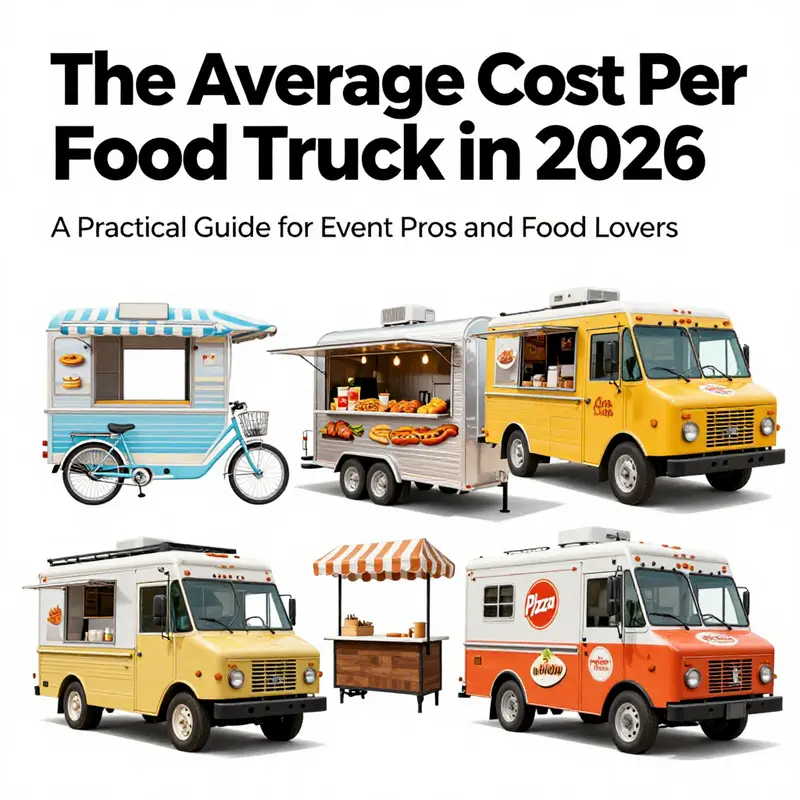
When we group the market into practical spending tiers, a mosaic begins to take shape. The most modest end includes compact, purpose-built carts and trailers designed for specific tasks—an electric ice-cream bike, a compact hot dog or taco trailer, or a coffee cart. These units, while not “trucks” in the traditional sense, are the entry ramps many operators rely on to test their concept, location, and customer flow. On the low end, a small electric ice-cream bike vending cart can start at roughly $2,400, and a basic hot dog or taco trailer is priced from around $5,200. A standard mobile kitchen or coffee cart typically sits in a range of about $3,500 to $5,000, and a fully equipped small mobile kitchen can be found starting near $2,600. The message here is not that these numbers are directly interchangeable with a full-sized truck, but that the market provides affordable, modular entry points that allow a budding entrepreneur to prove a model before scaling up.
Moving up the ladder, the mid-range and higher-end configurations reflect a shift toward more robust equipment, larger footprints, and broader culinary capability. A custom outdoor food kiosk or a fast-food trailer, for instance, can fall within a $3,500 to $5,000 band—yet these figures also illustrate how the meaning of “cost” changes with intent. If your goal is a high-volume operation in a dense market, you might invest in a larger, fully equipped pizza or coffee truck, with price ranges commonly reported between roughly $13,900 and $19,960 for certain configurations. These figures underscore something essential: sometimes the line between “truck” and “trailer” blurs, and the distinguishing feature is not only size but the degree of customization and the reliability of the equipment inside.
But while sticker prices on units at the low and mid end can look approachable, a more complete understanding of cost requires looking beyond the initial purchase. The market landscape in early 2026 includes a broader and more consequential set of data about the cost to operate. A large, respected strand of industry reporting focuses on the purchase price of a new vehicle versus a used one. Across reputable sources, the average cost to purchase a new food truck is often listed in a wide band—from about $100,000 up to $250,000—depending on chassis, build-out, and the level of professional kitchen equipment included. By contrast, used food trucks typically range from about $40,000 to $80,000, though those numbers can be influenced by condition, mileage, the reputation of the builder, and the availability of modern equipment upgrades. Those two ranges—new and used—capture the most significant difference in the capital outlay: new trucks promise the latest layouts, the newest appliances, and longer remaining service life, while used trucks offer a more attainable entry point with potentially faster time to market.
To keep the analysis honest, it’s important to name the elephant in the room: the purchase price is rarely the end of the wallet. The kitchen is a machine with components that demand regular attention, and the business itself imposes a secondary price tag that can dwarf the sticker on the cab. Kitchen equipment—grills, fryers, refrigerators, sinks, preparation surfaces, and storage units—can add a substantial sum to the upfront cost. A typical ballpark for outfitting, even for a compact setup, runs from about $20,000 to $50,000, depending on the sophistication of the equipment, the energy needs, and the efficiency of the layout. If the concept calls for heavy frying or grilling, or if there is a need for specialized refrigeration for certain ingredients, the budget increases further. This equipment premium is not merely a one-time line item; it is a driver of operating efficiency, food safety compliance, and the speed with which the vendor can scale to a busy lunchtime crowd or a weekend festival.
Beyond the kitchen, permits and licenses represent a fixed cost that can vary significantly by city and county. Health department approvals, mobile vending permits, selling in certain zones, and inspection fees—these collectively can range from roughly $500 to $3,000 in many jurisdictions, though some regions require more extensive compliance checks or annual renewal fees. Insurance is another recurring necessity and a genuine business expense: robust coverage for liability, property damage, and business interruption typically costs between $1,500 and $4,000 per year, with fluctuations based on the truck’s value, the driver’s record, and the geographic markets in which it operates.
Then there is the plumbing, electrical, and waste infrastructure inside the truck. A modern mobile kitchen relies on a network of water supply, hand-washing stations, gray-water management, and electrical capacity to support multiple appliances at high demand. The complexity of these systems will directly affect the build-out cost and the ongoing maintenance costs. Fuel and routine maintenance form a predictable monthly line item for any driver who depends on a vehicle for income. For larger, highway-legal trucks built on bigger chassis, fuel costs and maintenance can run roughly $1,000 to $2,000 per month, depending on duty cycles, travel distances, and the efficiency of the drivetrain. In turn, the branding and marketing front—web presence, social media, customer loyalty initiatives, and promotional materials—can require a fresh injection of capital early on. A robust upfront brand package can fall in the $2,000 to $10,000 range, reflecting design costs, signage, and initial marketing collateral. Finally, inventory and supplies—ingredients, packaging, and consumables—must be stocked before the first service, with typical initial spares and stock in the $2,000 to $5,000 neighborhood.
Taken together, these components reveal the arithmetic behind the headline prices. A used, mid-sized unit with a solid build-out might land in a total first-year budget in the neighborhood of $60,000 to $120,000 when you include equipment upgrades, permits, insurance, initial inventory, and branding, plus a prudent cushion for unanticipated costs. A new, larger truck with a fully modern kitchen, on the other hand, can push first-year figures well into six figures and beyond, depending on the exact configuration and the market. It is not unusual for a serious, full-service mobile kitchen to require more than a year to recoup the investment under favorable market conditions, especially if the operator is building a new brand, scouting multiple locations, or pursuing high-traffic events that demand peak performance. In this environment, the evolving financial landscape has paradoxically made it possible for a wider range of entry points to exist side by side: the market accommodates the resolute entrepreneur who starts small and the bold operator who swings for the fences with a larger, more capable vehicle.
A particular thread that often informs decisions is the chassis choice. A significant portion of food trucks in operation today rides on Chevrolet chassis platforms, a trend driven by durability and the wide availability of parts and service. Yet, this choice does not come without trade-offs. While a Chevrolet-based unit may offer advantages in terms of equipment costs and maintenance, it also tends to carry a higher upfront investment relative to smaller, lighter-weight vehicles and can incur greater fuel consumption and a larger parking footprint. In markets where space is at a premium or where event schedules require tight maneuverability, these factors can influence not only the initial price but the total cost of ownership over five to ten years. For readers who want to translate these chassis considerations into practical planning, there is a wealth of technical discussion and field-tested guidance that weighs the trade-offs of different build strategies, including the implications for serviceability, reliability, and long-term operating costs. A comprehensive resource on Chevrolet-based configurations provides deeper context on technical specifications, grades, and application techniques, helping operators align their expectations with real-world performance.
With numbers in view, many aspiring operators ask for a simple budgeting approach that scales with ambition. A pragmatic method begins with a base line: determine whether your plan centers on a compact, low-capital entry or a larger, high-capacity operation. For the compact path, you might be negotiating with a used truck in the 40,000 to 80,000 range, then layering in mid-range equipment upgrades, permits, and a modest brand package to arrive at a first-year budget near the lower end of the six-figure spectrum. Add a broader culinary repertoire, a more polished brand presence, and a location strategy that targets premium events, and the budget can move quickly toward the upper six figures. For the more ambitious path—new, highly equipped trucks, expansive kitchens, and strategic investment in location rights—the numbers can escalate into a six-figure initial outlay and a longer runway to break even, especially if the business is built around a novel concept, a multi-site rollout, or a high-volume festival circuit.
A practical way to anchor planning is to imagine two parallel decision tracks: one that emphasizes speed to market with a smaller unit and another that prioritizes capacity and resilience through a larger, more robust truck. The first track leverages low-cost, modular components, quick-turn vehicles, and a lean operating model. It may start with a used chassis, a kitchen assembly that prioritizes essential appliances, and a marketing plan designed to test demand in a single or limited set of venues. The second track requires more substantial capital up front but promises greater throughput, more consistent service quality, and potentially higher margins in busy markets. The two tracks are designed to converge through careful financial planning, staged investments, and a clear understanding of break-even dynamics across different venues and seasons.
To bridge between the two tracks and avoid the trap of underinvestment, many operators incorporate a phased build strategy. In the first phase, a basic, reliable platform is secured and outfitted with essential equipment that supports essential menu items. In the second phase, the operation expands its capabilities—adding more refrigeration, a larger griddle or fryer setup, or a second hand-wash station, for instance. The incremental approach reduces risk while allowing real-world data to inform subsequent purchases, from location strategy to inventory planning. In addition, the practice of seeking inexpensive, high-throughput solutions—such as using energy-efficient appliances and optimizing the kitchen workflow for speed—can yield meaningful savings that compound over time. A one-off bargain on equipment can be tempting, but the best value often lies in the interplay between initial readiness and scheduled upgrades, ensuring that cash flow remains healthy while the business scales.
If there is one overarching takeaway from the cost landscape, it is the importance of context. Every decision about a food truck, from chassis choice and kitchen equipment to permits and branding, must be calibrated to the operator’s goals, the markets they intend to serve, and the cadence of their events. A city with frequent, high-foot-traffic lunch crowds may reward a compact, highly efficient setup with a rapid service model, even if the upfront cost is tempered by more modest equipment. A festival-heavy tour might justify a bigger investment in capacity and reliability, as the payoff comes from serving large queues quickly and delivering consistent menu quality at scale. In either case, the cost narrative is not a single number but a story of how a plan translates into a street-food operation, day after day, event after event. The numbers, then, function best as guides rather than fixed destinies.
For readers who want a practical, step-by-step framework to plan and track costs, a well-structured budgeting approach is essential. Start with a hardware baseline: the buy-in price for the vehicle or cart, plus a defined range for the kitchen build-out. Add a buffer for equipment upgrades or replacements that may be necessary as you scale. Then add the non-negotiables: permits and licenses, insurance, and an initial inventory that corresponds to your menu. Finally, map recurring monthly costs, including fuel, maintenance, and marketing. Once you have a monthly burn rate, you can project profitability by estimating revenue per event, the frequency of events, and the expected margins per menu item. This method yields a more robust sense of the total startup cost and the trajectory toward break-even, rather than relying solely on headline purchase prices.
The internal conversation most founders have with themselves often centers on the relationship between cost and risk. A higher upfront investment can yield longer-term stability if it translates into reliability, better health and safety compliance, and a smoother customer experience. However, the economics of street vending are unforgiving if the vehicle is undersized for demand or if the kitchen cannot support the menu at peak times. Conversely, a lean setup can be nimble and cost-efficient, but it demands meticulous planning to avoid frequent downtime and service bottlenecks. The sweet spot, for many operators, lies in a carefully staged approach that unlocks capability and scale at a pace aligned with market feedback and cash flow realities. In this sense, the “average cost” for a food truck is less a single sum than a budgeting philosophy: it’s about balancing ambition with discipline—acknowledging multiple price layers, preparing for ancillary costs, and choosing a growth path that suits local markets and personal risk tolerance.
To connect this discussion with practical, reader-facing decisions, consider the value of an early, focused exploration of budgeting resources and community knowledge. For readers who want a grounded, example-based look at finances and planning, a dedicated resource on cost planning for first-time truck owners provides clear, pragmatic guidance and templates. Financial tips for first-time food truck owners offers a concise entry into the budgeting mindset and can help readers translate these broad price signals into a usable financial plan. This kind of resource is especially helpful when you’re weighing whether to pursue a smaller, more affordable setup as a testing ground or to push forward with a larger, more capable truck that carries higher risk and higher potential reward.
As you map your own path, it’s helpful to remember that cost will always be a function of choice: how much you invest upfront, how your layout optimizes flow, how robust your equipment is for the menu, and how effectively you manage ongoing costs. The numbers you encounter—the $2,400 entry points for carts, the $5,200 basics, the $13,900 to $19,960 for higher-end small trucks, the $40,000 to $80,000 used-truck range, and the $100,000 to $250,000 new-truck range—are not just price tags. They are signals about what business model you are pursuing, how quickly you want to scale, and what level of service reliability you expect to deliver. They also reflect how the industry is adapting to rising costs, evolving standards, and the demands of a diverse customer base.
What remains constant is the need for deliberate planning and disciplined budgeting. A successful food-truck venture is not built on a single lucky purchase; it grows through careful sequencing of investments, strategic location choices, and the willingness to adjust plans as markets unfold. The best practice is to start with a credible, tested plan that defines your minimum viable operation, then layer in upgrades and capacity as revenue, permits, and customer data allow. In that sense, the cost discussion is also a roadmap: it points to the decisions you will make about location, menu, hours of operation, and branding—elements that ultimately determine whether your truck becomes a durable, scalable asset in the street-food ecosystem, or a costly detour that never quite finds its rhythm.
For readers seeking concrete next steps, the budgeting framework described here can be adapted to any market. Start with a clear sense of your target menu and service model, then map out the purchase price for the vehicle or cart, the build-out and equipment package, and the non-negotiables like permits and insurance. Add a bill of materials for initial inventory and packaging, along with a branding plan and a basic website or social presence. Finally, build a monthly forecast that includes fuel, maintenance, and marketing spend, so you can estimate your break-even point. The numbers will vary by city, by event calendar, and by the specific equipment chosen, but the underlying logic—scale with purpose, budget for the unexpected, and build in flexibility—remains consistent across successful ventures.
To conclude this panoramic view of price, a final reminder about the wealth of options available: the market accommodates curatorial decisions that align with risk tolerance and strategic aims. Whether you start with a compact unit at the low end of the spectrum, or you opt for a larger, more sophisticated truck that promises higher throughput, your path is validated by thoughtful implementation, rigorous budgeting, and disciplined execution. The chapters that follow will drill into the practicalities of model selection, location strategy, and financial planning in more detail, but the core truth remains: average cost per food truck is not a single number; it is a carefully negotiated portfolio of upfront price, ongoing costs, and strategic growth built to fit the particular street you intend to conquer.
For readers who want a technical deep-dive on a specific chassis conversation that surfaces frequently in this space, see the external resource on chassis specifications and application techniques. Understanding Chevrolet Food Truck: Technical Specifications, Grades, and Application Techniques. https://www.foodtruckinsider.com/chevrolet-food-truck-specs/
null
null
Final thoughts
In short, the average cost per food truck is a blend of size, equipment level, and concept. Basic to mid-range options provide approachable entry points for many street-food ventures, while larger, fully equipped units or specialized concepts command higher prices. Remember to budget for permits, insurance, initial inventory, and marketing, which collectively shape the true investment. By evaluating your event goals, audience, and growth plans, you can identify where your dollars should be allocated to maximize impact without overextending your budget. The takeaway: know your target price band, map the necessary features, and plan for the unavoidable extras that turn a good idea into a thriving street-food experience.