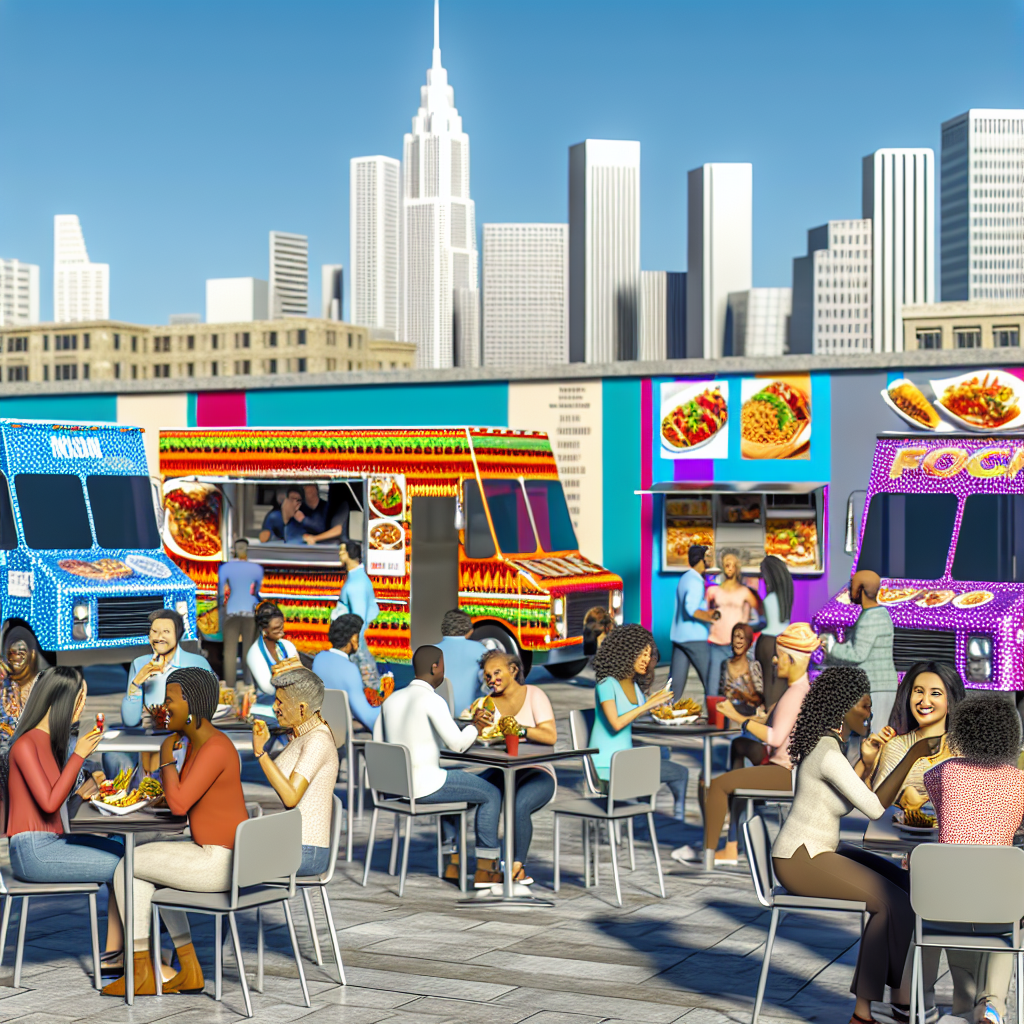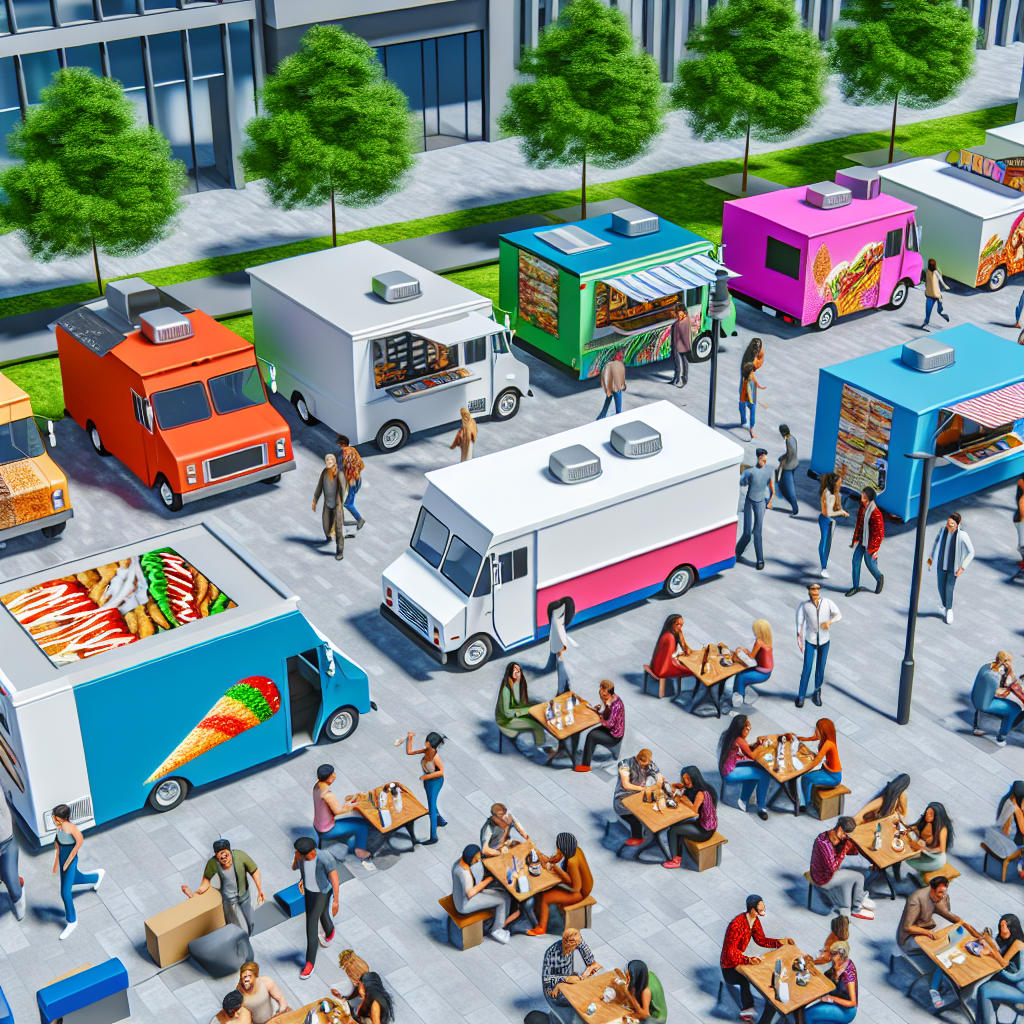
Skepticism about food trucks being “over” has circulated for years, only to collide with a smarter, more connected, and more diverse street-food scene. Today, mobile kitchens are not retreating into the background; they’re expanding their footprint in urban centers, academic campuses, corporate districts, and community events. The appeal is simple and powerful: high-quality, culturally resonant meals served quickly, with the flexibility to adapt to changing demand, guest preferences, and sustainability goals. In bustling cities, the Hawthorne Asylum’s cluster of 20-plus trucks demonstrates how a shared micro-market becomes a living ecosystem—one that offers approachable pricing, varied international flavors, and dynamic schedules that work with real-life rhythms. In academia, rotating truck calendars on campus convert empty corridors into social hubs and late-night dining corridors, proving that mobile kitchens can be both convenient and integral to campus culture. On the technology and design front, new generations of fully equipped, electric, and modular rigs push the boundaries of what a “mobile kitchen” can be—balancing performance, safety, and brand experience. Finally, market data points to sustained demand: corporate districts seek gourmet convenience, events crave variety, and communities expect socially engaging, lower-friction dining options. Across cities, campuses, workplaces, and neighborhoods, food trucks remain a flexible, innovative, and enduring element of modern dining—more relevant than ever for organizers, teams, and food lovers alike. The four chapters that follow unpack this vitality from urban currents to campus life, technology-driven kitchens, and market-driven growth, showing how the question “are food trucks over” becomes a conversation about resilience, creativity, and shared appetite.
null
null
Are Food Trucks Over in Academia? Reimagining Campus Schedules and On-Site Dining Dynamics
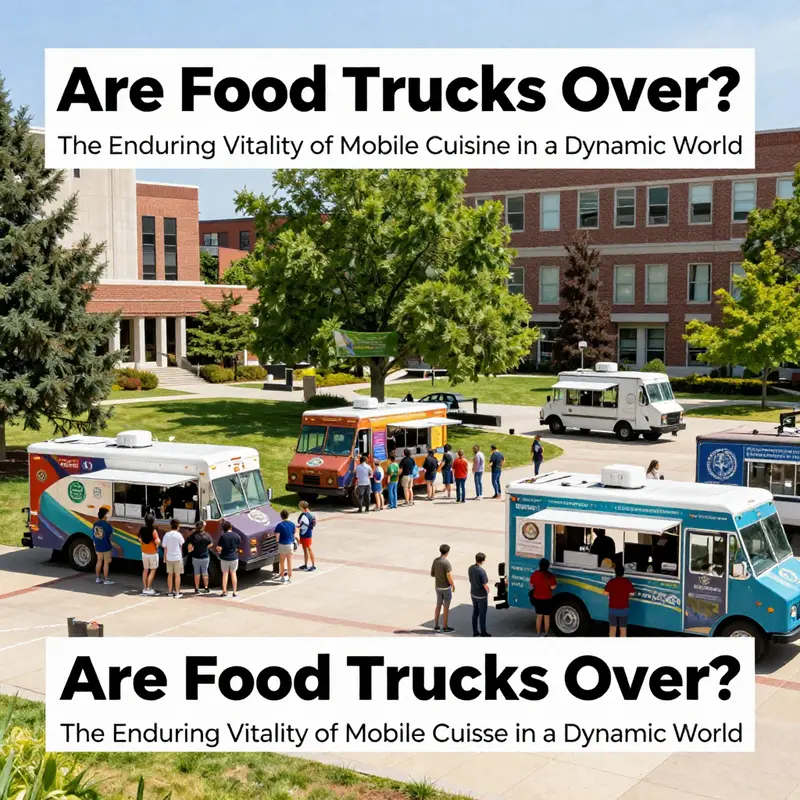
The question implied by the chapter title—are food trucks over in academia?—takes its answer not from the persistence of a single dining format but from the way campuses have woven mobile kitchens into the fabric of daily life. Across universities, the dining landscape has quietly shifted from a reliance on fixed dining halls to a more fluid ecosystem where rolling kitchens become ambassadors of variety, speed, and cultural curiosity. In this sense, food trucks are not a fading novelty but a scalable instrument for shaping campus life. They respond to the core demands students voice—faster service, broader menus, and experiences that feel less institutional and more evocative of the street-food cultures that travel between neighborhoods and nations. This is not a post-pandemic nostalgia tour; it is a functional evolution that reflects how students study, socialize, work late, and seek nourishment that travels with the rhythm of their day.
On campuses, scheduling is no afterthought but a strategic instrument. Unlike fixed cafeterias with limited hours, food trucks introduce a time-sensitive layer to dining that campuses can choreograph with remarkable precision. A truck will arrive at a designated spot for a window that fits class schedules, exam crunches, and late-night study sessions. The visibility of itineraries through campus apps or dining platforms turns a brisk lunch into a planned event and a late-night meal into a campus ritual. The result is a dining map that moves with the semester’s pace rather than a static grid of minutes and meals. This scheduling model also invites experimentation. Universities can test new concepts—regional staples, fusion bites, or plant-forward plates—without committing to permanent kitchen facilities. They can pivot quickly between seasonal themes, cultural celebrations, or finals-week relief efforts, all while maintaining predictable, repeatable access for students who juggle classes, jobs, and internships.
The campus food-truck phenomenon hinges on a delicate balancing act between accessibility, cost, and quality. For students, the value proposition is clear: a broader range of flavors at price points that fit a student budget. A typical campus truck menu frequently lands in a price range that makes it feasible for daily meals, late-night cravings, and occasional indulgences alike. This affordability is not a democratizing impulse alone; it is a strategic response to the diverse dietary needs and cultural backgrounds that define modern campus communities. For administrators, the model represents a cost-efficient expansion of dining options. Instead of investing in new permanent kitchens and staff, campuses can partner with a rotating roster of vendors to deliver fresh offerings with lower capital risk. In a sense, food trucks become a testing ground for culinary concepts that might otherwise never graduate from a pop-up to a permanent venue.
The social value of on-campus mobile kitchens extends beyond food. They anchor informal gathering spaces where students from different disciplines, clubs, and backgrounds intersect. The Hawthorne Asylum area in Portland, with its cluster of more than twenty food trucks, serves as a vivid urban microcosm of this principle. That setting demonstrates how a dense compact of kitchens can cultivate a sense of place, a shared dining culture, and spontaneous cultural exchange. In the campus context, the equivalent is not merely a place to eat but a platform for social navigation—where students discover a new cuisine between lectures, where late-night cravings spur conversations across dorms, and where campus identity begins to take shape around the food vendors that keep hours long enough to accommodate night-owl study sessions. The power of these micro-communities is not incidental; it is a direct outcome of the mobility and variety that campus scheduling makes possible.
The real benefit of this model lies in the way it places entrepreneurship at the heart of campus dining. Many university partnerships with food trucks foreground local small businesses and student-owned ventures, connecting the campus economy with neighborhood ecosystems. This aligns with broader campus goals of economic development and inclusive access to fresh, locally sourced ingredients. When students encounter trucks that draw on local producers or regional specialties, they not only eat well but also gain exposure to entrepreneurial pathways that extend beyond the classroom. The rotating nature of campus truck schedules helps sustain a continuous stream of fresh concepts while offering students firsthand insight into the realities of running a mobile culinary operation. And because trucks are nimble by design, campuses gain the ability to test market appetite for ideas that could balloon into larger campus initiatives—perhaps a campus district that uses mobile kitchens as a stepping-stone to more permanent accommodations or as a branded dining experience during major campus events.
The regulatory and logistical dimensions of campus dining with trucks cannot be ignored, yet they are not prohibitive so much as constitutive. Institutions develop formal contracts with operators that clarify health and safety standards, waste management, hours of operation, and engagement with campus sustainability goals. They also establish clear channels for feedback, ensuring that student voices shape the menu mix and service pace. In practice, this often means transparent scheduling, digital notifications, and direct channels for students to suggest dishes or priority themes for upcoming trucks. The result is not simply a menu but a dynamic learner-facing system that teaches governance, collaboration, and innovation in real time. For campuses exploring these dynamics, a practical touchstone emerges: the ability to harmonize vendor selection with health compliance, accessibility, and equity. Ensuring that every student has equitable access to diverse options remains essential, even as trucks rotate through a campus map and as events or finals periods demand different configurations of service.
A crucial aspect of the on-campus model is its strategic flexibility. Food trucks are inherently adaptable, capable of reconfiguring menus to align with seasonal produce, campus events, or shift in dietary trends. A campus might host a festival of world cuisines during a cultural week, or mount a health-and-witness-food week that highlights nutritious options and transparent sourcing. The ability to scale up or down—adding more trucks during peak times or dialing back during slower weeks—helps keep dining services resilient in the face of enrollment fluctuations or budgetary pressures. It also supports sustainability goals by enabling tighter alignment between supply chains and campus consumption patterns, reducing food waste through better forecasting and flexible production planning.
The design and technology dimensions of mobile kitchens contribute to the enduring appeal of this model. Modern food trucks, including electric variants and fully equipped mobile kitchens, offer reliability, safety, and efficiency that were unimaginable a decade ago. The equipment is modular and adaptable, allowing operators to switch menus without incurring a heavyweight capital cost. This is especially meaningful in campus settings, where the speed of service, compact footprints, and ease of maintenance determine the viability of a pickup-and-go dining strategy. The shift toward electric and more efficient appliances dovetails with campus sustainability plans, providing a tangible path to reducing emissions while maintaining a robust, year-round dining program. In essence, the campus dining landscape benefits from the same innovations shaping urban food trails—portable kitchens that can be deployed in response to demand, seasonality, and special events, all within a framework of safety, accessibility, and accountability.
When campuses consider expanding with food trucks, they sometimes draw inspiration from cities that have converged on this model as a cultural mainstay. The Hawthorne corridor in Portland, with its cluster of trucks offering everything from Korean BBQ bowls to Thai noodles and British fish and chips, illustrates a singular point: consumers value not just food but the experience of choosing from a curated field of options. That same logic translates to university towns where students crave the sense of discovery that comes with a lineup of trucks offering distinct concepts. The campus setting provides a different stage for the narrative, one that emphasizes consistency, reliability, and community impact. Students expect a dependable schedule, a consistent quality bar, and a sense that the dining experience supports their academic and social lives rather than competing with them.
As this model matures, it becomes clear that the question is less about whether food trucks can exist within campus ecosystems and more about how campuses harness their potential to teach, engage, and sustain a living dining culture. The campus dining revolution—if one can call it a revolution—embodies a philosophy of food service that privileges agility, context, and inclusion. It sees students not as passive diners but as active participants in a broader culinary conversation. The trucks act as both mirrors and catalysts: they reflect student tastes while pushing dining services to expand horizons, test new ideas, and innovate in ways that permanent facilities often struggle to match. In this sense, food trucks are less about replacing dining halls and more about expanding the appetite for diverse experiences within the university’s educational mission.
For administrators weighing the path forward, the pragmatic takeaway is that campus food trucks offer a scalable complement to traditional dining venues. They can fill gaps in service during peak periods, extend late hours for study and events, and provide low-risk avenues to pilot new concepts before a major capital commitment. The key lies in careful orchestration: thoughtful scheduling, transparent vendor governance, inclusive menu planning, and robust health and safety practices. When done well, the on-campus truck ecosystem becomes a living classroom—one that blends culinary entrepreneurship with consumer literacy, event planning, and sustainable operations. Students learn by tasting and evaluating, staff learn by coordinating and optimizing, and the campus learns by integrating dining into the cadence of academic life rather than treating it as a separate, trivial routine.
This approach also invites a broader reimagining of the campus food journey. It invites partnerships that extend beyond the dining services office: student nutrition clubs, sustainability offices, local food networks, and entrepreneurship centers all have a stake in shaping a table that expands rather than contracts. In that sense, the campus food-truck dynamic mirrors the larger question of whether food trucks are over in society at large. The answer, supported by campus practice, appears to be a confident no. They are not only here to stay but to grow more deeply embedded in how communities learn about food, economies, and culture while meeting everyday needs with immediacy and flair. The campus is a controlled, educational laboratory where this mobile dining form can be tuned to optimize learning outcomes, student satisfaction, and community well-being.
For readers who want to explore practical considerations further, the literature on campus dining provides a useful blueprint. It emphasizes scheduling transparency, vendor performance management, safety compliance, equity in access, and metrics that track student engagement and satisfaction. These are not abstract goals; they are operational givens that determine how successfully a campus can deploy trucks without compromising quality or inclusivity. As campuses continue to experiment, the model will likely evolve toward more integrated dining districts on campuses, more robust digital interfaces that guide students to available trucks, and more deliberate efforts to connect food with learning outcomes—whether through nutrition education, culinary skills workshops, or partnerships with student-led entrepreneurship programs. The trajectory suggests that food trucks have found a complementary niche within higher education, one that recognizes the value of mobility, diversity, and speed without sacrificing safety, equity, or purpose.
In the end, the dynamic is not about a single trend surviving or collapsing; it is about how institutions adapt a flexible food-service framework to the realities of student life. The campus context amplifies certain strengths of the food-truck model: the ability to scale, to test ideas quickly, and to weave food into the social and academic fabric. This is not a retreat from dining halls but a strategic expansion of what dining can be on campus. It invites students to participate in a shared experience that transcends the cafeteria line, offering a mosaic of choices, a festival of flavors, and a campus-wide invitation to explore, engage, and eat together. If anything signals that food trucks are over, it would be a campus that stops listening to its students, stops innovating, and stops treating food as a dynamic, educative element of daily life. The opposite is already evident in many places: campuses that schedule with purpose, partner with diverse culinary voices, and view dining as an integral, living part of the educational journey.
For readers interested in how these dynamics intersect with broader policy and industry practices, a closer look at the regulatory and governance aspects provides additional context. Campuses often adopt a framework in which trucks operate within defined zones, hours, and health standards, while vendors bring a culture of agility that resonates with student expectations for quick, delicious, and affordable food. The combination creates a dining ecosystem that is resilient, experiential, and educational in equal measure. And as the campus landscape continues to reflect changing student demographics, shifting dietary preferences, and new sustainability targets, the rolling kitchen model is well positioned to adapt without losing its core strengths: accessibility, variety, and immediacy. In this light, the question remains not whether food trucks belong on campus, but how universities can orchestrate their presence so that the experience is enriching, equitable, and enduring.
For campuses seeking bite-sized guidance on how to proceed, the literature points to a few practical anchors: plan with flexibility, ensure robust vendor governance, design schedules that align with class rhythms, communicate clearly to students, and measure impact beyond mere sales. Digital platforms become essential tools, transforming a simple lunch break into an opportunity for engagement, feedback, and community building. The best campus programs treat trucks as instructors and partners, not as add-ons. When this philosophy guides implementation, food trucks do more than fill a dining gap. They animate campus life, mirror the complexity and variety of the communities they serve, and underscore a central truth: in education as in cuisine, movement and discovery are allies, not adversaries. The street, after all, has always been a classroom—and on campuses, it is fast becoming a laboratory where meals, ideas, and identities are tested, tasted, and celebrated.
External resource: https://www.chronicle.com/article/college-food-trucks-are-a-dining-revolution
Are Food Trucks Over? The Tech-Driven Comeback of the Mobile Kitchen
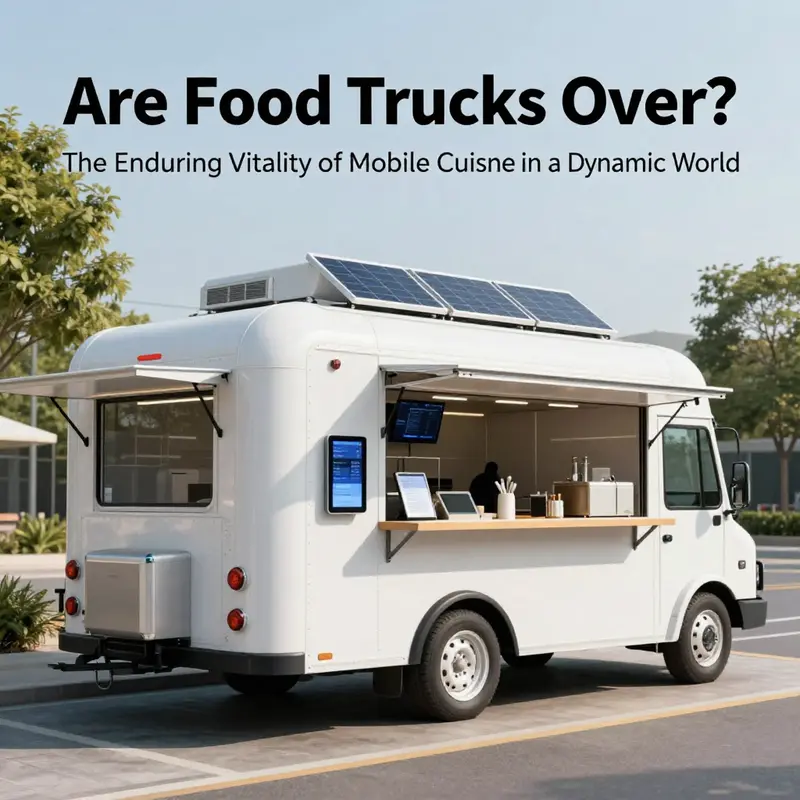
The fear that food trucks are fading away has given way to a clearer truth: the mobile kitchen is evolving, not ending. Across cities and campuses these fleets adapt with a precision and pace that would have surprised a generation ago. The question is no longer whether food trucks can survive but how they will thrive in a landscape that demands speed, variety, accountability, and sustainability. This chapter treats the modern mobile kitchen as a smart, adaptive system that blends craft, technology, and hospitality in a durable, scalable form.
Step into a contemporary food truck operation and you feel calm efficiency disguised as casual charm. There is a rhythm to it that feels like orchestration rather than improvisation. Behind the counter, maintenance alarms and smart sensors keep equipment ready. Real time inventory and supply chain logic help operators anticipate shortages before lines form. The result is improved reliability, steadier throughput, and a dining experience that feels on par with a brick and mortar restaurant.
Design and layout matter. The best modern trucks use modular multi station configurations with clear zones for cooking, assembling, and cooling. There is a growing emphasis on flexible interiors, central workflows, and safe packaging. These choices extend to the customer interface as well, with clear ordering, visible workflow, and a welcoming outdoor space that invites customers to linger. The mobile kitchen becomes a portable restaurant that travels with ease and delivers consistent value.
For operators seeking growth, electric power and modular designs offer scale without heavy fixed costs. Warranties and customization options provide security in a volatile cash flow environment. In the long run these decisions reduce downtime, waste, and stress while increasing repeat visits. The market supports new models of collaboration and deployment, from street clusters to campus popups and corporate events, all while preserving mobility.
Food Trucks Aren’t Over: Navigating Market Viability, Demand, and the Buzz of Event-Driven Growth
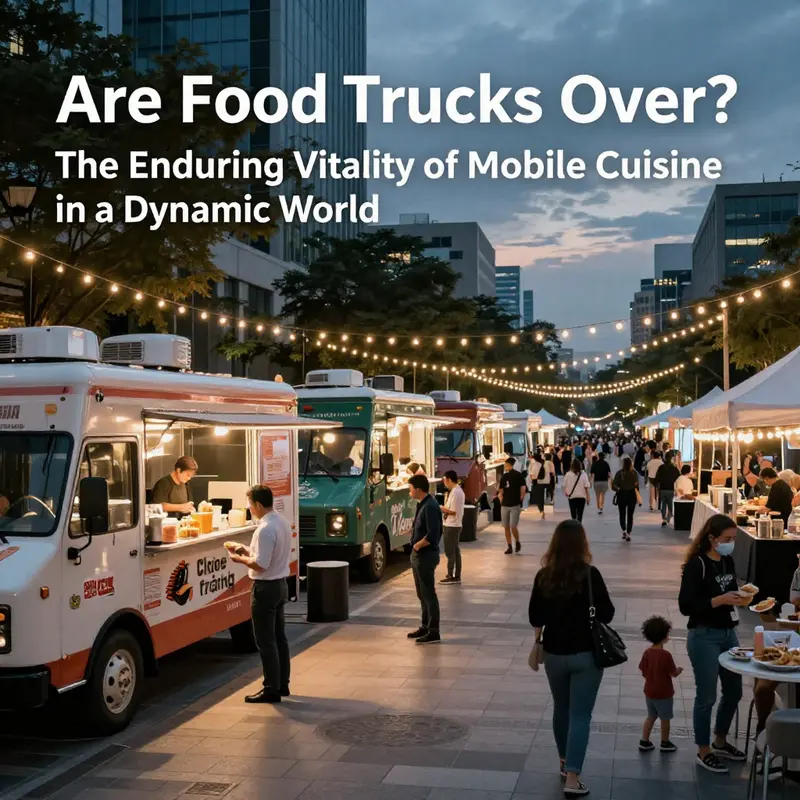
Not over, not fading. The food truck phenomenon has evolved into a flexible ecosystem where mobility, customization, and timely experiences align with how people eat, socialize, and work. The trucks are a portable channel for food culture that travels with the rhythms of cities, campuses, and outdoor venues. In this sense, the question isn’t whether food trucks are viable, but what kind of viability they embody in a given moment and how operators read the weather of demand to steer their next move.
Take the example of a city known for its outdoor dining culture, where a cluster of food trucks can create a dynamic street market on wheels. The appeal is practical as well as aspirational: meals that balance quality, variety, and speed at a price point that fits busy schedules. The hours, often starting early and running late, maximize the dining window in urban life, and the result is a social space where strangers become neighbors through shared aromas and the ritual of choosing a dish that speaks to a moment.
The market viability rests on three strengths: mobility that lowers barriers and broadens reach; demand for experiences that blend flavor with speed and Instagrammable moments; and events—festivals, corporate gatherings, and campus activities—that provide reliable inflection points for growth. Operators who treat events as channels for storytelling, partnerships, and community engagement can scale while maintaining quality. Branding on wheels, cohesive interior layouts, and service that matches the pace of crowds become differentiators in a crowded field.
Looking forward, the future of food trucks is as much about culture as commerce. Sustainability, energy-efficient equipment, responsible sourcing, and technology-enabled experiences—digital ordering, loyalty programs, and data-driven menu optimization—will shape successful models while preserving the human warmth of street food. The narrative is one of mobility meeting taste, timing, and place, expanding access to diverse cuisines and experiences wherever people gather.
Final thoughts
The question of whether food trucks are over misses the bigger picture: mobility, flexibility, and cultural resonance keep mobile kitchens at the heart of how communities eat together. In cities, campuses, and events, trucks respond to changing tastes, budgets, and timing with agility—while evolving through better design, smarter energy use, and sharper branding. The enduring vitality of mobile cuisine isn’t a footnote to dining trends; it’s a blueprint for how modern food service can stay dynamic, inclusive, and relevant for a broad audience. For event planners, HR teams, community groups, and food enthusiasts, the message is clear: embrace the energy of the street, lean into technology and partnerships, and let mobile kitchens help you deliver memorable, accessible experiences that delight today and adapt for tomorrow.