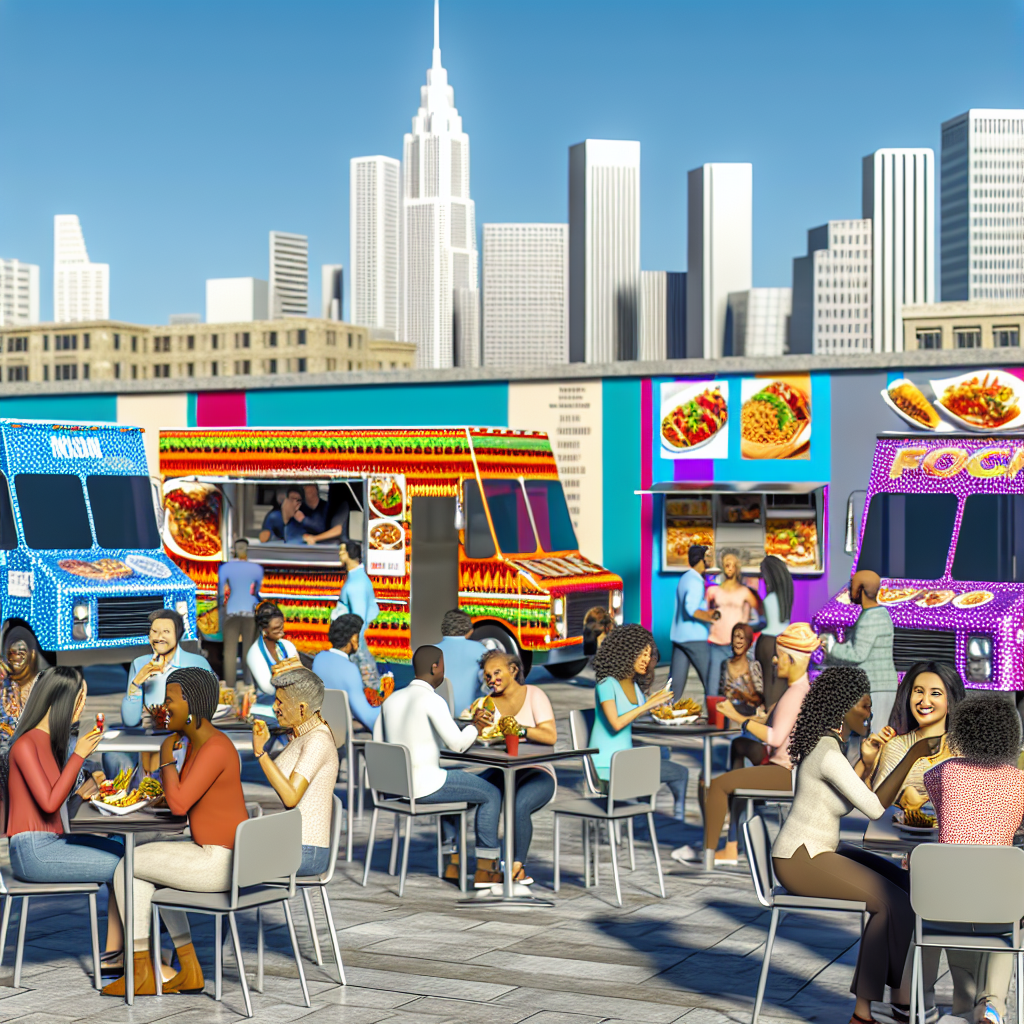
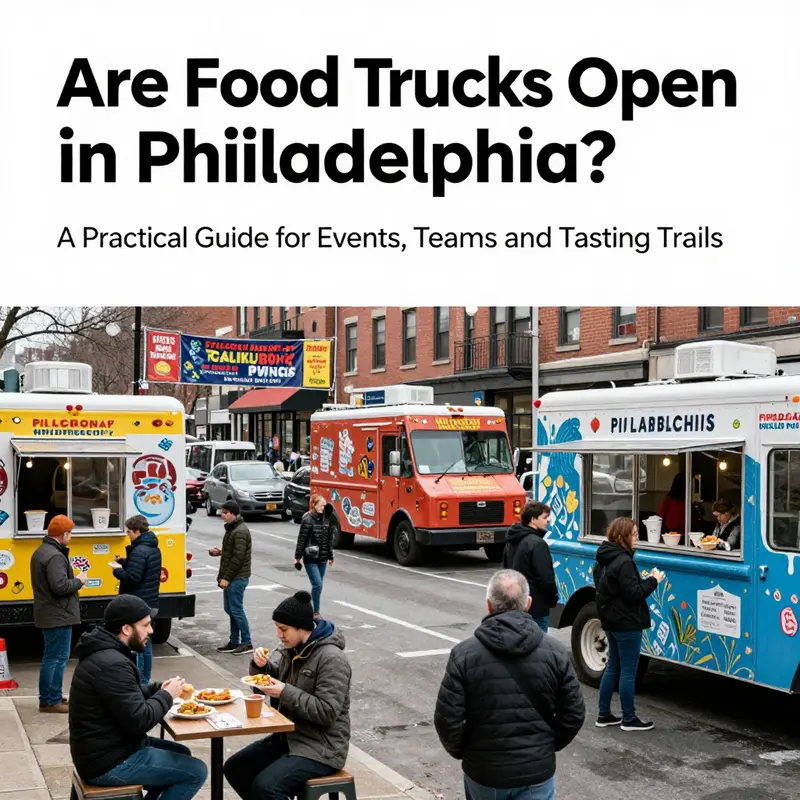
Philadelphia’s street food scene is a living, breathing mosaic of bite-sized culture and big-city energy. Food trucks here don’t just serve meals; they animate blocks, spark spontaneous meetups, and offer reliable catering options for events of every size. Whether you’re an event planner coordinating a conference, a corporate HR team planning a weekend retreat, a local community group seeking neighborhood flavor, or a foodie chasing the next delicious bite, understanding how and when Philly’s trucks operate helps you design impactful experiences. In the chapters that follow, you’ll discover how seasonal availability shapes vendor operations, how real-time location data keeps events dynamic, and how the broader economic and social ripple effects of these mobile kitchens redefine urban life. With these insights, you can plan with confidence, align with vendors, and invite guests to savor Philadelphia in motion.
null
null
On the Move in Philly: Reading Real-Time Location and Hours Data for Philadelphia’s Food Trucks
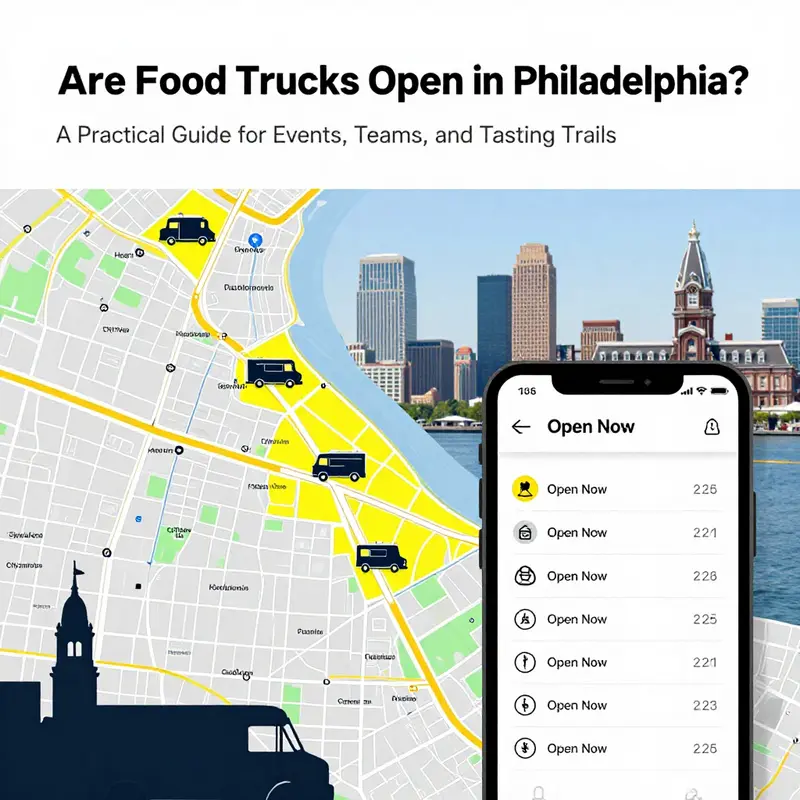
Philadelphia’s street life has long carried the aroma of frying oil, citrus, and something bright and bold that only a city with a steady stream of mobile kitchens can deliver. The question aren’t simply whether food trucks exist in the city, but whether they are open right when you want them to be. The answer, in practice, is a yes with a caveat: open hours are uneven, moving targets. This is not a flaw in the system but a reflection of how the city’s mobile food economy operates. Trucks roam in a rhythm shaped by seasons, permits, street closures, and the ebb and flow of customer crowds. There is no single, citywide clock that guarantees a truck will be where you expect it to be at a given moment. Instead, you dance with a constellation of signals—vendor updates, municipal resources, community chatter, and the subtle geography of neighborhoods that stay lively regardless of weather or weekday.
The real-time question—are they open now?—belongs to a broader category of urban data that is inherently decentralized. There is no master feed listing every truck’s location and live status. The most reliable approach is to triangulate several streams of information. First, the trucks themselves. Each vendor maintains their own channels for updates—social posts, a basic website, or periodic notices on a mobile-friendly page. These updates are often the most accurate signal for a given truck’s current whereabouts or any shifts in hours. Second, city and county resources provide a public-facing framework that describes where vendors are allowed to operate and under what conditions. A mobile vendor map or an equivalent city dashboard can guide you to probable zones where trucks cluster during lunch hours or after work, but even these portals rarely guarantee real-time precision because the trucks can depart or relocate on short notice. Third, user-generated and community-sourced updates fill in the gaps. Locals, office workers, and commuters frequently share sightings, photos, and loose schedules on forums and in group chats. While these sources are not as formally authoritative as an official map, they often capture a momentary snapshot that the broader data mosaic cannot.
The practical upshot is simple: if you want to know what’s open in the moment, you assemble a short checklist and practice a quick routine before you set out. Start with the vendor’s own updates. If you’re chasing a specific truck or a particular cuisine, this is the bedrock—their feed, their website, or their pinned posts. Then cross-check with an official or semi-official mobile vendor map that the city maintains for public safety and regulatory purposes. The city’s platform is not an exhaustive live tracker, but it helps you target neighborhoods and time windows where trucks are most frequently present. If you still don’t have a precise read, widen the net with a quick scan of nearby streets, as many trucks shift between a handful of hubs or corridors with remarkable regularity. Finally, glance at community chatter. A text thread or a local group might reveal an impression of today’s pattern—where the line forms, what’s drawing a crowd, and whether weather or events might push a truck to an alternate route.
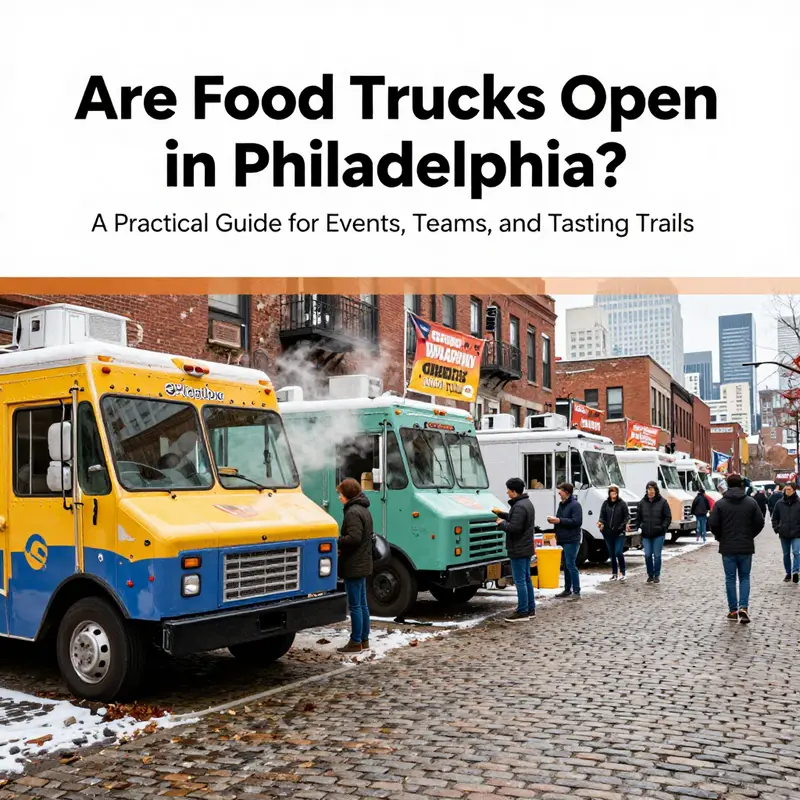
To navigate this landscape with confidence, it helps to move beyond a single source. The absence of a universal, real-time API for every mobile vendor does not doom you to guesswork. It invites a more resilient approach that mirrors how people actually experience the food-truck scene: buurt by buurt, corner by corner, and hour by hour as the city breathes in and out with the seasons. In winter, for instance, when temperatures dip and rain becomes more frequent, open hours can condense around indoor or sheltered spaces, and street corners near transit hubs and business districts often host a steady cadence of vendors who adapt by pairing warmth with comfort foods and a brisk, predictable rotation. In summer, hot afternoons and festival calendars pull trucks into parks, waterfront promenades, and busy plazas, creating longer lines and a social energy that makes the question of “Are they open?” almost existential for passersby trying to plan a quick bite between meetings or errands.
For those who want a practical way to gauge openness without chasing every note across multiple channels, a simple, repeatable checklists can be surprisingly effective. Begin with the most concrete signal—what the vendor says on their own platform—and then read the room, literally. If a truck announces a curbside pop-up in a known corridor at a fixed start time, you can count on a window of operation that’s predictable, even if a stray foot traffic surge nudges the start or end time by a few minutes. If the truck posts a flexible schedule, or if updates appear sporadically, place your bets on nearby clusters with guaranteed turnover, such as plazas, transit-adjacent locations, or markets where vendors rotate in because of shared facilities or event calendars. These patterns aren’t random; they reveal a distributed logic that keeps the city’s food culture alive through shifting hours and places.
A central part of this logic is the city’s regulatory framework, which quietly shapes where and when trucks can park, and how they must operate once they do. The existence of permits, health inspections, and safety checks ensures that open hours align with the city’s expectations for food safety, while the logistics of street space—curbside activation, street closures for events, and seasonal market rotations—determines the physical possibilities for a given block. The best way to understand this framework is not through a single diagram but through a sustained engagement with the resources that document, regulate, and support mobile food vendors. In practice, that means consulting the city’s official guidance on mobile vendors and the practical updates from the broader network of vendors who navigate these rules daily. A careful reader will notice that the regulatory picture is less about pedantic compliance and more about enabling a flexible, responsive ecosystem where food can cross neighborhood boundaries with minimal delay.
If you want to go deeper into the regulatory terrain, there is a compact path to practical understanding. A good starting point is a focused exploration of local rules and permitting requirements, followed by a read-through of the most recent public data on locations and schedules. This approach helps you map not just where a truck might be, but why a truck might be there at a particular time. It illuminates the relationship between open hours and the decision to relocate, a choice often driven by foot traffic, event invites, and the opportunity to serve new neighborhoods while maintaining compliance with street-use rules. For a practical primer on local rules, try navigating food-truck regulations.
The broader story of open status, then, is not simply a matter of whether a cart is serving a platter at a given moment. It is a story of access—how residents and visitors access diverse cuisines as a mobile, decentralized network rather than a fixed row of fixed places. The challenge of real-time data, in this sense, becomes a feature of urban life that invites communities to stay agile and curious. It asks people to couple patience with planning, to develop a sense for where the city concentrates its mobility on any given day, and to recognize that a successful bite may depend on reading the city’s tempo as much as on reading a clock. The rhythm of open hours is a chorus made up of many voices—vendors adjusting to weather, regulators shaping the stage, and city dwellers negotiating time, distance, and appetite. And in that chorus, Philadelphia’s food trucks perform with a resilience that is almost musical: they pause, shift, and resume with the weather’s forecast and the crowd’s demand always in the background, waiting to be discovered by those who know how to listen and look.
In the end, the question of whether a particular truck is open is less about a binary yes or no than about the practice of finding a moving target through a map of signals. It is the art of reading a city that has learned to orchestrate flexibility into its daily life. The open status becomes less about catching a truck in the act and more about understanding the pattern of activity—where trucks tend to cluster, how their hours shift with events, and what channels consistently provide the most reliable picture of today’s lineup. For a curious walker, a thoughtful commuter, or a foodie chasing a moment of warmth in the city’s winter air, that pattern is a guide. It invites a slower form of urban exploration—one that respects the boundaries of local regulations while embracing the spontaneity that makes street food in Philadelphia feel like a conversation between neighborhoods and the people who live, work, and eat there.
For readers who want to imagine this experience as a practical journey rather than a theoretical one, consider the habit of checking multiple signals in quick succession, then choosing a few likely hubs to explore. This method not only increases the odds of finding something open but also reveals the city’s subterranean choreography—the way vendors migrate from one stretch to another, the way a lunch crowd forms around a square, and the way a late-evening stroll can end with a warm, freshly cooked bite. The real-time data landscape may be intricate, but it is ultimately liberating. It frees you from the illusion that a single source can capture every moment and instead invites you to participate in the city’s living, breathing food-scape. The result is not a mere meal; it is an encounter with a dynamic urban system that thrives when people move with it.
In this sense, the question “are food trucks open in Philadelphia?” dissolves into a practice of awareness and choice. You learn to triangulate signals, respect the regulatory context, and enjoy the unpredictability that makes street food an ever-changing, always-available resource for nourishment and discovery. The city’s trucks are not stationary monuments; they are itinerant performers, tucked in a few blocks here and a few blocks there, ready to surprise you with a taste you did not know you were craving until that very moment. And because the data behind their movements is dispersed across channels, your readiness to engage with the scene becomes part of the experience itself. The next time you plan a stroll through a neighborhood that hums with lunch-hour energy or a weekend circuit that gathers friends in a public space with a line of aromatic carts, you’ll bring a practiced eye and a patient pace. You’ll know that openness is not a fixed attribute but an outcome of a city that trusts its streets to host a revolving door of flavors, and you’ll be ready to meet it, hungry and hopeful, wherever the trucks decide to roll.
External reference: https://www.yelp.com/biz/the-best-food-trucks-in-philadelphia-pa
Open Wheels, Open Doors: Philadelphia’s Food Trucks as a Living, Moving Sidewalk of the City
Philadelphia’s food-truck scene is not a novelty or a seasonal spectacle. It is a regular, evolving thread in the city’s daily life, weaving through neighborhoods, business districts, and public plazas with a reliability that many residents have come to expect. Yes, food trucks are open in Philadelphia, and they tend to be open more often than not, weather permitting and regulation allowing. Hours and locations shift with the calendar and the calendar shifts with the hours of daylight and school calendars, with commute patterns, with public events, and with the slow, stubborn rhythms of urban life. In practical terms, this means a city where one can find an assortment of cuisines on nearly any given block, at a pace that allows people to grab a quick bite on the way to work, to a meeting, or to a late-night shift. The reality, however, sits on a foundation of rules and procedures designed to balance opportunity with public health, traffic flow, and neighborhood character. The result is a resilient ecosystem in which mobile vendors—operating under a clear set of licenses, permits, and inspections—contribute to both the city’s economy and its social fabric. Real-time updates about where a truck is parked or when it opens remain essential, and savvy residents frequently cross-check a vendor’s social feed, a city database, or a map app to plan a meal. In this sense, the question of whether Philadelphia’s trucks are open becomes a broader reflection on access, accessibility, and the city’s ongoing negotiation between mobility and order.
The city’s regulatory architecture for mobile food vendors sits at the intersection of health, zoning, and commerce. At its core is the Mobile Food Vendor license, issued by the Department of Licenses and Inspections (L&I). This license, paired with a valid food-service establishment permit from the Department of Public Health, creates the backbone of legal operation. These are not merely bureaucratic hurdles; they are guardrails that shape where a truck can park, when it can operate, and how it can handle food safely in dynamic street spaces. The licenses, fees, and inspections are designed to ensure that a family at a curbside table can enjoy a meal without compromising public health, even as a truck moves from one block to another with the city’s changing hours and crowds. The regulatory system recognizes mobility as an asset, not a loophole, and it seeks to prevent an erosion of standards that could undermine the many vendors who play by the rules.
Yet the open-hood experience of a Philadelphia food truck—where a menu is handwritten in chalk or marker, where a cook calls out a dish to attract a passerby, and where the aroma of spices travels with the wind—depends as much on the spatial rules as on the kitchen’s heat. Zoning and location restrictions are central. The city generally blocks parking within a certain radius of fixed-location restaurants or other licensed trucks in the same area, and it restricts operations on sidewalks, streets, or in designated no-vending zones without special permission. These measures are not aimed at suppression but at preventing conflicts with brick-and-mortar businesses, preserving pedestrian safety, and reducing curbside clutter in high-traffic corridors. The practical upshot is that a truck’s opening hours and its ability to stay in a given block are contingent on the surrounding activity and the permits granted for particular zones or events. Center City, transit hubs, and certain residential neighborhoods often come with tailored rules, reflecting the city’s attempt to balance investment, livability, and access in diverse urban contexts.
In Philadelphia, the typical operating window for food trucks centers around daytime to early-evening hours, with a general framing from around 7:00 AM to 10:00 PM. Of course, exceptions attend special events, seasonal market clusters, or designated festival zones, where operators may receive temporary permits to extend hours or to serve crowds in venues with heightened demand. The enforcement regime hinges on regular inspections by both health authorities and L&I, ensuring that vending aligns with sanitation standards, equipment temperatures, waste disposal, and safe handling practices. Non-compliance can trigger fines, suspensions, or even revocation of licenses, underscoring that the city’s indulgence of mobility is contingent on responsibility at the curb. This framework is not just about the letter of the law; it is about cultivating trust between residents, visitors, and the vendors who anchor neighborhood corners with familiar faces and familiar flavors. In this sense, a truck’s open status is a signal that the operator has successfully navigated a layered system designed to keep the city moving while maintaining public health and order.
Beyond the regulatory ledger lies a richer storyline about urban planning and policy that has helped redefine how mobile vendors fit into Philadelphia’s urban fabric. Since 2019, the city has been gradually formalizing and steering food-truck operations through zoning designations that identify underutilized spaces as viable vending zones. The goal has been twofold: to reduce congestion and friction with fixed businesses and to expand access to affordable, diverse food options in neighborhoods where healthy options have historically been scarce. This is not merely a culinary concern; it is a spatial problem with social implications. Data-driven zoning, informed by indicators such as food deserts, population density, and economic indicators, has allowed planners to place a premium on equitable access. The 2023 zoning policy report highlighted that a substantial share of registered trucks now operate within these designated zones, translating policy into practice by promoting local economic activity and improving food access in low-income communities. The design of these zones—near transit nodes, in public plazas, or on underutilized lots—reflects a deliberate attempt to convert mobility into a public good: a portable, low-cost avenue for nourishment that travels with the city’s rhythms.
This urban planning approach sits alongside a broader movement in cities worldwide that view mobile vendors as part of resilient food systems. The Philadelphia case underscores how zoning can be used strategically to channel entrepreneurship into spaces that might otherwise remain underutilized, while ensuring that health, safety, and quality standards remain non-negotiable. The conversation around policy is not purely technical; it involves community input, economic development goals, and the evolving needs of neighborhoods that have been underserved or overlooked. In practice, the city’s approach has meant that a truck can be part of day-to-day life in a neighborhood, a stop on a commute route, and a potential ally in addressing food inequity when integrated with other local initiatives. The policy landscape recognizes that mobility, when guided by data and community voices, can become a durable component of urban sustainability rather than a temporary, peripheral feature.
The social dimension of Philadelphia’s mobile food scene is equally important. Food trucks serve as cultural ambassadors, offering cuisines that reflect a city of immigrants and travelers who have brought recipes, techniques, and flavors from around the world. In many cases, these vendors provide a bridge between culinary heritage and everyday dining, enabling operators to sustain small businesses and preserve traditions in a city where opportunity is as mobile as the trucks themselves. The accessibility of mobile food options plays a direct role in improving food literacy and dietary variety for neighborhoods that have historically faced barriers to healthy eating. When street vendors situate themselves in a community with limited access to grocery stores or sit-down dining options, they often contribute to a subtle, yet meaningful, shift in daily routines. A quick meal can become a shared social moment, with neighbors gathering around a curbside counter as a cook explains a dish, chats with customers, and folds a napkin with a practiced gesture. These scenes are not incidental; they reinforce a sense of neighborhood vitality and belonging.
Yet the social benefits are not unambiguous. The same regulatory environment that enables mobility can also create hurdles for vendors with limited capital or formal employment histories. Licensing costs, complex application procedures, and ongoing compliance requirements can pose barriers to entry for aspiring operators, especially those from immigrant communities or younger entrepreneurs seeking a foothold in the formal economy. This tension has prompted ongoing advocacy and policy experimentation aimed at reducing friction in licensing, lowering costs, and creating equitable zones where vendors can operate without facing undue displacement or being crowded out by larger, established players. In this light, the city’s mobile-food economy is not just about selling dishes; it is about crafting pathways to entrepreneurship that acknowledge cultural diversity, economic inclusion, and neighborhood resilience.
The seasonal heartbeat of Philadelphia’s street-food life also has a ceremonial side. A number of seasonal markets and night-time gatherings have become staples in parts of the city where street dining is both a practical nourishment and a social occasion. These events organize clusters of vendors, create pedestrian-friendly zones, and transform underused spaces into lively public forums where music and conversation accompany meals. While the exact scale and schedule of these gatherings shift year to year, the impulse remains clear: to use the street as a shared dining room, where people can sample a spectrum of cuisines without committing to a sit-down restaurant experience. The economic impulse behind these gatherings is undeniable. Vendors gain exposure, customers gain access to affordable food, and local businesses enjoy spillover benefits from increased foot traffic. The urban impact extends beyond the stalls themselves; these events can revitalize adjacent storefronts, catalyze street-life, and animate otherwise quiet blocks, contributing to a more vibrant urban tapestry.
The 2025 Philadelphia food-truck explosion, though tragic, sits in this narrative as a stark reminder of how tightly interwoven the sector has become with the city’s economic and social life. The aftermath catalyzed lawsuits and a broader public conversation about safety, insurance coverage, and the adequacy of regulatory oversight. The ensuing policy and legal debates highlighted the fragility of an ecosystem that thrives on small margins and high mobility. They also underscored the need for stronger, more predictable support systems—clear guidance on licensing, comprehensive insurance requirements, and robust, proactive inspections. In the long view, these developments are a call to balance entrepreneurial opportunity with public accountability, ensuring that as the city’s curbside economy grows, it does so with the safeguards that keep both operators and patrons secure. The lesson is not to curb the vibrancy of the street but to channel it through stronger partnerships among health authorities, licensing departments, urban planners, and community organizations. By aligning incentives with safety, the city can sustain a mobile food culture that feeds diverse communities while maintaining confidence in the city’s streets.
From a planning and policy vantage point, Philadelphia’s mobile food economy demonstrates how urban policy can leverage mobility to address core city goals: accessible dining, economic opportunity, and equitable neighborhood development. The shift toward designated zones, coupled with licensing simplifications, has opened space for more operators in varied neighborhoods, including those with historically limited access to fresh, affordable options. Data-driven zoning, in concert with community input and performance metrics, helps ensure that mobile vendors contribute to a healthier urban ecosystem rather than creating only momentary convenience. This is not a static balance but a continuously recalibrated arrangement. Planners, health officials, and licensing authorities alike are tasked with monitoring trends, adjusting zones, and updating permit regimes to reflect changing demographics, traffic patterns, and food-safety standards. In this ongoing work, the city treats open hours as a public service, not a private privilege, ensuring that the street remains a shared platform where culinary diversity can flourish while the public remains protected.
For readers seeking practical guidance amid this evolving landscape, a valuable resource on the regulatory terrain is the practical guide to navigating food-truck industry regulations. This online guide, authored with both aspiring operators and seasoned vendors in mind, connects the dots between licenses, health permits, and location rules in plain language. Navigating food-truck industry regulations offers a concise map of steps, fees, and compliance expectations that can help new entrants move confidently from idea to active curbside service without becoming ensnared in red tape. This kind of accessible information helps ensure that the city’s rules serve as a scaffold for opportunity rather than a barrier to entry, reinforcing the idea that an open street can be a thriving, inclusive venue for everyday meals.
As a closing note for this chapter, the interlocking stories of regulation, urban design, economic opportunity, and social impact suggest a city that treats mobility as a core feature of its social infrastructure. When trucks roll into a neighborhood, they carry more than food; they carry the potential to reshape how residents relate to the street, to each other, and to the city as a whole. The open status of these vendors—when supported by well-designed licenses, appropriate health and safety standards, and thoughtful zoning—becomes a proxy for a city that values accessible, diverse, and resilient urban life. Philadelphia’s experience shows that a well-regulated mobile-food economy can contribute to food equity, support small businesses, and activate spaces that might otherwise lie dormant. It is not a panacea, and it is not without tension. It is, however, a dynamic element of a modern city’s edible landscape, a moving line on a map that tells a story of how people live, eat, work, and connect on the street.
External resource: For further context on safety and enforcement issues connected to the period following the 2025 incidents, see https://www.philly.com/food-truck-explosion-lawsuits-2025-04-16.
Final thoughts
Philadelphia’s food truck ecosystem thrives by balancing seasonal realities with the city’s pulse. Vendors adapt to winter winds and summer crowds, event planners leverage location intelligence to maximize engagement, and communities reap social and economic benefits that extend beyond a single meal. By treating trucks as flexible partners—checking real-time updates, planning with weather contingencies, and supporting diverse vendors—your events become more memorable, inclusive, and resilient. The next time you map out a festival, workplace celebration, or neighborhood gathering, let Philly’s mobile kitchens guide your planning and taste the city’s dynamic, delicious energy.