In 2013, the food truck scene caught fire on our screens with Season 4 of The Great Food Truck Race, culminating in a thrilling victory for the Culinary Cravings team. Made up of talented chefs Chris and Emily from Texas, they captivated audiences with their culinary creativity and team dynamics throughout various challenges that spanned across vibrant cities. This season not only unveiled the culinary skills required to thrive on the road but also showcased essential strategies and teamwork vital for success. With unique challenges facing the competitors, we will delve into how these elements contributed to the triumph of Culinary Cravings, examining the impact winning had on the participants and what aspiring food truck owners can learn from their journey.
null
null
Rallying on Wheels: How Team Dynamics and Real-Time Decisions Won The Great Food Truck Race Season 4
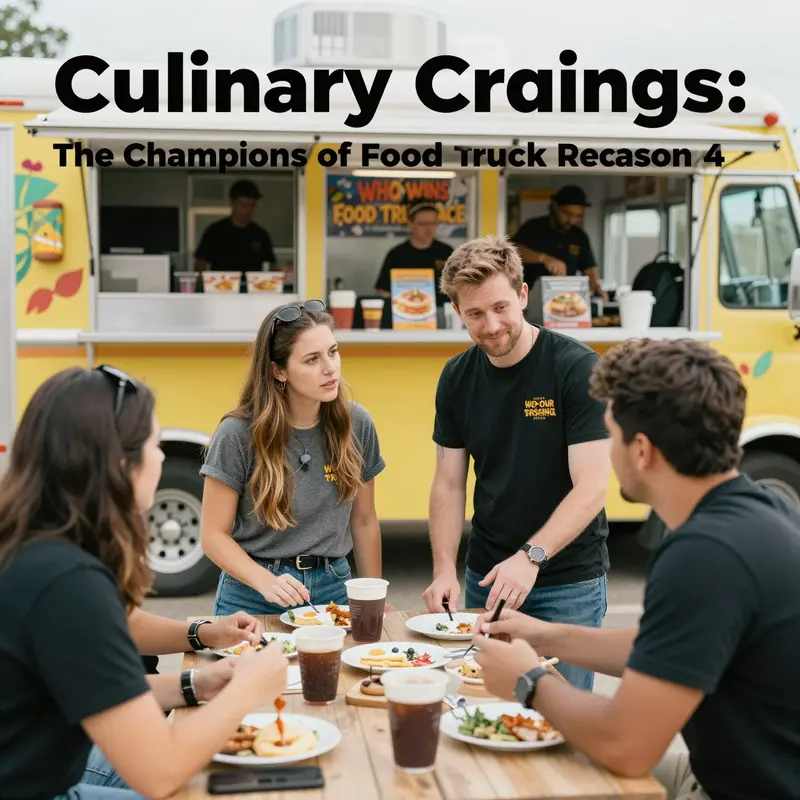
The Great Food Truck Race Season 4 unfolds like a long, winding relay, where each leg tests not just culinary skill but the unglamorous core of execution: teamwork under pressure. In 2013, Culinary Cravings—Chris and Emily from Texas—stood at the end of that relay with the prize money and the season’s hard-won respect. But their victory wasn’t simply a matter of cooking fast or presenting bold flavors. It was the result of a disciplined, almost quiet craft: how two people coordinate, communicate, and recalibrate in real time when the clock and the competition are both unforgiving. The show’s architecture—the city-to-city sprint, the live feedback from customers, the constant decision-making about menu focus, price, and proximity—demands a kind of cognitive synchrony that helps teams survive when every choice carries a price. If there is a through line in this season, it’s that the easiest way to fail is to assume that better recipes automatically translate into victory. The true currency is trust and timing—the sense of when to push, when to pull back, and how to translate a single, uncertain moment into a move that keeps the truck in the race and the team aligned.
What makes team dynamics so critical here is not just the duet structure of the show but the relentless tempo of choice. The competition is unforgiving: if they don’t make the top sales, they lose and go home. That blunt criterion, echoed by viewer reviews across streaming platforms, reframes every decision as a potential tipping point. In those moments, two people must agree on a plan, then marshal every resource—griddles, burners, prepped components, even the pace at which they engage customers—to execute that plan under pressure. The dynamic between Chris and Emily—one balancing calm operational leadership with rapid tactical shifts, the other supplying intuitive menu adaptation and a steady hand on front-line customer interaction—offers a clear case study in how two minds can fuse different strengths into a single, resilient operating system. The show’s rhythm magnifies these dynamics. It’s not only what they cook but how they decide what to cook, where to park, and how to respond when the city winds up delivering a surprise: a longer line, a new food trend in town, a last-minute health inspector concern, or a rival pushing a faster lunch-hour cadence.
Behind every decisive move lies a blend of shared mental models and explicit communication. The teams must negotiate space and time—who takes the lead on the grill, who monitors the cash box, who handles the front of the line, and who steers the menu in a direction most likely to pull in the crowds while maximizing margin. These are not abstract questions; they are real-time operational puzzles. A critical skill is forming a quick, coherent plan and then testing it in the crucible of a busy service window. The two-person dynamic makes this both more intimate and more fragile. With limited personnel, any misalignment can cascade into bottlenecks, slower service, and frustrated customers who weigh the quality of the food against the speed of service. In the early rounds, the teams learn to map tasks to strengths and to recognize when a moment demands a pivot rather than a stubborn adherence to a preplanned script. This is the essence of decision-making under duress: accuracy and speed are both at stake, and the team’s shared commitment to a common purpose must outpace the clock.
The season’s structure also elevates the social psychology of competition. The host’s presence—authoritative, energetic, and public-facing—carries its own dynamic load. Tyler Florence’s role, as described by later observers, is more than a formal figurehead; he becomes a barometer for morale. When a team senses his engagement, the sense of momentum can become contagious. Conversely, if external pressures—production demands, filming schedules, the improvisational nature of reality TV—squeeze the crew’s emotional bandwidth, the team’s mood can become a latent force that shapes choices as much as hunger and taste do. This interplay between leadership presence and team morale matters; it demonstrates how leadership, even when not directly prescribing each move, sets the emotional climate in which decisions are made. The show thus offers a microcosm of how high-stakes teamwork functions in any demanding food-service setting: leadership exists not only in the formal command but in the capacity to maintain coherence among the people who must execute the plan together.
In evaluating why Culinary Cravings rose to the top, one can see a pattern that resonates beyond a single season: successful teams cultivate a robust feedback loop between product decisions and day-to-day operations. They test ideas in the field, quickly discard failures, and institutionalize what works. This feedback loop operates at several levels. First, the duo must decide which dishes to feature and how to price them within the constraints of mobility and volume. A dish might sound compelling in theory but fail in practice if it slows service or interrupts turnover. The best teams convert that learning into an evolving, practical menu map that stays legible to customers while keeping the kitchen flowing. Second, they continually adjust the service model itself. Where are the best parking spots in a given city? Which routes attract the most foot traffic? How can they communicate value and speed to a crowd that has only a moment to decide? These questions demand quick consensus and swift execution. They require the pair to calibrate risk against reward in every shift, a discipline that undercuts the chaos that can derail a truck when the heat and pressure rise.
The two-person format can magnify both strength and fragility. When teams succeed, it’s often because they have a shared decision-making rhythm: a quick, almost silent alignment on what matters most in a given moment, followed by an explicit plan to execute. When teams stumble, it’s typically because a misalignment—perhaps one person prioritizing the menu’s creative ambition while the other stresses reliability and speed—creates friction at the point of service. In the case of Culinary Cravings, the public record relies on general descriptions, but the season’s arc points toward a symbiotic exchange of strengths. Chris might anchor the culinary vision with a sense of precision and a steady focus on quality, while Emily might drive the on-the-ground intensity, translating that vision into a service cadence that remains fast and friendly under pressure. Their harmony wasn’t merely about having compatible personalities; it was the deliberate practice of aligning goals, sharing situational awareness, and adjusting on the fly to meet the day’s demand.
Another layer emerges when we consider how decision-making unfolds across multiple episodes and cities. The show’s episodic challenges require teams to translate culinary identity into local relevance. A concept might be universal, but its execution must be adaptable to regional tastes and logistical constraints. This requires a flexible mental model—a shared understanding of how to reinterpret a dish’s core concept to fit a different audience without diluting what makes it special. In practice, this might mean altering a signature sauce to accommodate spice preferences in a particular market, or rebalancing a menu to emphasize speed and portion control during a peak lunch period. The teams that succeed do not abandon their brand or their cooking philosophy; they translate it with agility. They keep the essence intact while adjusting the form to fit the moment. That is a harder skill than it sounds because it demands both a deep knowledge of the craft and a nimble willingness to revise once the data indicates a better path forward.
A telling thread in the broader literature on reality competition psychology is the way relationships shape strategic choices over time. The New York Times has explored how interpersonal dynamics influence long-term outcomes in these shows, arguing that strategy grows from the interplay of trust, communication quality, and emotional resilience. For readers who want to connect the on-screen drama to scientific insight, that analysis offers a credible framework: teams with well-developed injury resilience—those who can tolerate stress without sacrificing clarity of thought—tend to perform better when the stakes are high. The implications extend beyond the screen. In a bustling kitchen or on a moving food truck, the same ingredients hold true. Clear communication, mutual respect, and a shared sense of purpose are not mere soft skills; they are measurable advantages that translate into higher throughput, consistent quality, and happier customers. The season’s narrative—Culinary Cravings’ path to victory—reads as a practical demonstration of these principles at work in a real-world, high-pressure environment.
From a performance perspective, one practical takeaway is the importance of role clarity and decision ownership within a two-person unit. When two people divide labor in a way that plays to their strengths, the risk of bottlenecks diminishes. One person might own the menu strategy in the moment—deciding which dishes to push when a queue forms—while the other monitors operational flow, ensuring that the cooking pace matches demand. The balance between planning and improvisation is what allows teams to stay ahead of the rising pressure of each service window. This is not merely about cooking technique; it is about creating a resilient operating system where information flows quickly and decisions are grounded in shared reality. In Season 4, the teams who honed these habits appeared to move with a calm efficiency that could deflect the kind of chaos that derails less cohesive units.
The broader takeaway for future seasons, and for any team looking to emulate that success in a mobile, customer-facing setting, is that winning is less about spectacular moments of genius and more about a steady force of coordination and decision discipline. The show rewards teams that synchronize their actions, align their aims, and maintain a steady rhythm even when the environment throws a curveball. This is the essence of effective team dynamics: a robust, shared framework for interpretation and action that persists across shifting contexts. It is no accident that the narrative of Culinary Cravings culminates not with a single breakout dish but with a seamless, purpose-driven display of teamwork where every move supports a clear, common goal. Their story invites readers to consider not just what makes a recipe memorable, but what makes a team capable of translating memory into momentum in the face of relentless competition.
As with any high-stakes collaborative endeavor, the human element remains central. The way teammates read each other’s cues, how they handle disagreements, and how they recover when something goes wrong—all of these factors shape outcomes as surely as technique and timing do. The Great Food Truck Race Season 4, through its focus on two-person teams navigating a high-pressure circuit, offers a compelling lens on the social dimensions of performance. It reminds us that in any mobile kitchen under the spotlight, the fastest stove is nothing without a shared compass and the trust to follow it. Culinary Cravings’ victory thus can be understood not just as a triumph of taste but as a demonstration of how collective decision making, anchored in mutual support and adaptive leadership, can steer a team to success in a landscape where every second counts.
For readers who want to explore the connective tissue between branding, operations, and teamwork, the idea of a cohesive visual and operational identity can provide a practical illustration. Branding on wheels—the ultimate guide to food truck graphics and identity—offers a perspective on how a consistent, persuasive truck image reinforces internal alignment and customer perception. When a team agrees on what the truck represents, that shared sense of identity can lower cognitive load during busy hours, freeing mental bandwidth for sharper decisions. In a field where every customer interaction is a potential turning point, this alignment between brand and practice can be as valuable as any culinary adjustment. The interplay between identity, service, and decision-making makes the case for integrating design thinking into frontline operations, a habit that teams like Culinary Cravings appear to embody as they move from city to city.
To deepen the understanding of why some teams rise to the top, consider the broader context of modern reality competition psychology. The field emphasizes that success emerges when participants cultivate not just technical competence but a resilient, communicative dynamic that keeps the team marching in lockstep toward a shared objective. The insights from these analyses illuminate why Season 4’s champions stood out: a combination of culinary clarity, strategic pragmatism, and a well-tuned relational engine that could absorb shocks and keep turning the wheel.
In closing, the story of Culinary Cravings in The Great Food Truck Race Season 4 offers more than a trophy moment. It presents a blueprint for operational excellence under pressure: define a clear shared objective, distribute labor to amplify strengths, maintain open, quick channels of communication, and stay adaptable in the face of shifting circumstances. The show’s format magnifies the consequences of decisions made under pressure, and the champions exhibit a disciplined, integrated approach to turning cooking talent into sustained performance. The chapter of Season 4 thus becomes a valuable case study for anyone seeking to understand how teams can endure the grind of a fast-paced, competitive environment and still emerge with dignity, skill, and victory. For scholars and practitioners alike, it is a reminder that the path to victory often travels through the quiet rooms of collaboration, where two people—working in concert—turn raw opportunity into refined achievement.
branding on wheels—the ultimate guide to food truck graphics and identity provides a practical lens on how a shared brand language can support internal alignment and customer clarity, a reminder that identity and teamwork are not separate threads but intertwined strands of a successful operation. For those seeking a broader contextual framework on the psychology of reality competition in a media landscape that prizes both drama and performance, The New York Times offers a thoughtful analysis of how interpersonal relationships shape strategic choices and long-term outcomes in these formats: https://www.nytimes.com/2023/08/15/style/reality-television-psychology.html
Racing the Route: What Season 4 Proved About Victory on The Great Food Truck Race
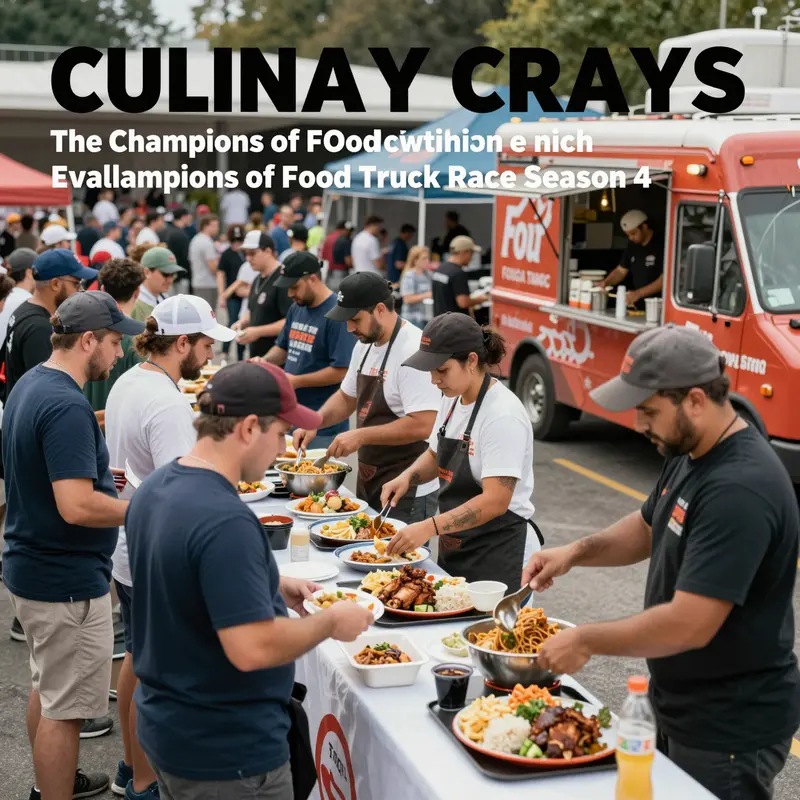
The Great Food Truck Race Season 4, which aired in 2013, marked a turning point in how audiences understood the arc of competition on the show. It followed eight new teams as they loaded up trucks, chased the horizon, and faced a route longer and more demanding than any in the series to that date. The journey stretched across thousands of miles, a logistical drumbeat that kept time with the pace of service windows, local markets, and the unpredictable push-and-pull of public appetite. At the center of the narrative stood Culinary Cravings, the team that would emerge as champions. Chris and Emily, a pair of Texas-based chefs, demonstrated that the recipe for victory blended more than culinary skill; it required the ability to translate flavor into consistent sales across a moving target of cities, neighborhoods, and customer bases. In that sense, Season 4 offered a lens not just on cooking under pressure, but on running a mobile business in a way that tests every link in the chain: planning, sourcing, timely service, and the capacity to pivot when a plan meets reality.
What set this season apart, in the eyes of viewers and critics alike, was the way victory was defined. The competition has long claimed to measure a balance of talent, endurance, and strategy. Yet Season 4 leaned into a more practical metric: real-time sales performance. As the competition unfolded, it became clear that a team could Plate a stunning dish and still falter if the demand engine—pricing, marketing, customer rapport, and efficient turnover—failed. The show’s producers anchored success in a constant stream of top-tier sales across the markets visited, rather than in one spectacular performance or a flashy menu. This emphasis on sustained profitability over the course of the race created a different kind of tension. It urged teams to manage costs, monitor margins, and respect the economic cadence of street food. Indeed, an oft-cited viewer remark from IMDb captured the core truth: “If they don’t make the top sales, they lose and go home.” The emphasis on sales figures reinforced a simple, enduring truth about food-truck life: taste wins battles, but sales win campaigns.
The return of Tyler Florence as host added a renewed electricity to the show’s cadence. Florence’s presence felt both familiar and revitalized, aligning with the season’s longer route and higher stakes. He brought a conductor’s poise to the episodes, guiding contestants through a maze of challenges with a steady hand and a quick wink. His energy helped the show maintain its humor and heart even as the pace intensified. The absence of the backbiting drama that had sometimes characterized earlier seasons gave Season 4 a clarity of purpose. The focus stayed on the core struggle—the teams’ ability to translate culinary intention into steady, scalable business under pressure. The competition’s atmosphere traced a line from the quiet hum of a truck’s generator to the bright glare of a packed curbside service window, all while the clock kept moving and the miles piled up behind the contestants.
Structurally, Season 4 was a marathon in disguise. It introduced a route that surpassed prior seasons in distance and scope, pushing teams to navigate a continent-wide circuit that tested endurance as much as appetite. The show’s format required teams to adapt to location shifts, weather changes, and the irregular rhythms of city life. The culinary challenge was never simply about concocting a new dish; it was about translating a vision into a working system that could survive the strain of back-to-back deployments. Each stop offered a chance to refine the menu, renegotiate the supply chain, and recalibrate the operation’s tempo to match the crowd. That constant recalibration was not just a matter of taste; it was a matter of timing. A single misalignment—an order queue that piled up, a vendor who ran late, or a misjudged line length—could ripple into a drop in sales and a missed checkpoint. The long route, therefore, functioned as a real-world stress test for the whole enterprise of running a mobile food business.
The season’s overarching message, echoed by the narrative arc of Culinary Cravings, was that winners are defined less by a single masterstroke than by a pattern of effective choices across multiple markets. The idea that triumph comes from a rare spark is supplanted by the reality that consistent performance wins races. Across eight teams and a gauntlet of episodes, the show underscored how success hinges on a chain of decisions: where to station the truck, how to stage lines, when to rotate menu items, and how to price offerings in ways that attract volume without eroding margins. It is a lesson that resonates with any aspiring operator who understands that the true test of a food truck is less a moment of brilliance than the ability to repeat prudent actions under pressure, day after day, city after city.
The show’s emphasis on real-time market performance aligns with the way modern food trucks live and breathe. They are not only about the chef’s craft but about the customer’s perception, the speed at which money changes hands, and the capacity to translate a brand’s identity into reliable, repeatable experiences. Season 4 embraced this dynamic by weaving the challenges of the road into the fabric of the marketplace. A truck must attract customers, earn their trust, and deliver value quickly enough to win their return. The teams’ success depended on their ability to anticipate peak moments in different locales, manage the line, and maintain a consistent level of service even as the crowd fluctuated. The result was a season in which culinary innovation mattered, but operational discipline mattered more. In this environment, Culinary Cravings demonstrated how to hold the line between creativity and commerce, balancing a menu that could express their identity with a structure that kept costs in check while sales climbed.
The season’s narrative also highlighted the role of logistics in the race’s outcome. The 4,000-plus mile journey demanded more than appetite; it demanded a system. Teams faced breakdowns, roadblocks, and the need to improvise gear tightening and emergency plans while keeping customers satisfied. A breakdown in a generator, a late shipment of key ingredients, or a miscommunication about a venue’s time window could derail a crew’s day as surely as a poor dish could derail a night. The best teams built redundancy into their operations. They carried spare parts, trained staff to handle multiple roles, and kept their menus adaptable so they could pivot toward what was available and profitable at a moment’s notice. This kind of resilience is as essential to a mobile business as it is to a food-based competition. The episode-to-episode rhythm rewarded teams that could translate theory into practice at the curb, with the audience watching as each city’s constraints forced new creative solutions.
Another dimension that Season 4 illuminated was the importance of customer rapport and speed. The competition proved that even the most exceptional culinary concept can fail if it cannot connect with customers quickly enough to keep the revenue flowing. In a market where lines form and dissipate in moments, service speed—the ability to manage a queue, present an appealing display, and communicate with guests—became as critical as the recipe. The contestants who understood that serving a well-timed, well-priced experience could sustain a steady win pattern across markets found themselves earning not only smiles but repeat business and higher sales figures. The show’s calibration of these elements was precise: flavor and innovation remained essential, but they existed within the frame of market responsiveness and scale.
Culinary Cravings’ victory also spoke to the power of teamwork and role clarity. The two-person dynamic—each bringing complementary strengths, one perhaps guiding the overarching menu concept and the other shepherding day-to-day operations—delivered a blueprint for other teams. The race’s pressure cooker environment meant that every decision had to be made quickly and communicated clearly. Roles had to be defined so that there was no hesitation when time was short or a line began to swell. The synergy between Chris and Emily was not merely about shared cooking talent; it represented a disciplined approach to leadership in a fast-moving, cash-flow-driven business. The show’s structure rewarded teams who could co-create a compelling product and support it with a dependable, scalable process.
As Season 4 unfolded, the interplay between a chef’s artistry and a business’s discipline became the narrative’s throughline. The contestants faced locals who knew their market better than any menu chart could predict. They also encountered the realities of street-level entrepreneurship: the unpredictability of weather, the vagaries of permit timing, and the challenge of turning a crowd that might be attracted to one truck’s signage or another’s menu into a reliable, revenue-generating audience. The show’s producers did not shy away from these truths; instead, they placed them at the heart of the competition, inviting viewers to consider what it takes to build a sustainable, repeatable business out of a mobile kitchen on a curveball world tour.
In reflecting on the season’s structure and outcomes, it is clear that the race’s winner’s advantage extended beyond the kitchen. It lay in a willingness to operate within the rules of a market, to adjust to new constraints, and to do so with a deliberate clarity about what success would require week after week. The eight teams offered a spectrum of approaches, with Culinary Cravings embodying a disciplined, market-minded ethos. They demonstrated that enduring success on the road depends on a thoughtful blend of menu stewardship, operational resilience, and the ability to build a loyal customer base across diverse communities. The result was not merely a trophy or a cash prize, but a demonstration of how the concept of a food truck—centered on speed, consistency, and local relevance—could translate into a winning strategy across an extended, demanding journey.
For readers interested in the broader landscape of operating a food truck in today’s regulatory environment, a visit to the detailed guidance on industry regulations can offer practical context to the season’s challenges. navigating food truck industry regulations provides a compass for understanding how legal considerations shape strategy, schedule, and sales in real-world settings. This link is provided as a resource to connect the show’s dramatic, competitive arc with the ongoing, day-to-day realities of running a food truck business.
Ultimately, Season 4’s story is a reminder that the question of who wins is not a simple verdict on taste or novelty. It is a verdict on how well a team translates culinary potential into consistent, scalable value across a portfolio of markets. It is a testament to the idea that true victory in a mobile business comes from a disciplined balance of creativity, operational fluency, customer engagement, and financial literacy. The road was long, and the route tested every assumption. Yet the season’s outcome—Culinary Cravings’ triumph—stood as a concrete reflection of how the most durable forms of success are built: not from a single brilliant dish, but from a coherent, repeatable system that proves itself, time after time, under pressure, in the real world of street food. The narrative invites future contestants and entrepreneurs to study the season as a case study in strategic execution, resilience, and the enduring power of connecting with customers where they live, eat, and decide which truck to frequent.
External resource: https://www.amazon.com/The-Great-Food-Truck-Race-Season-4/dp/B0B7XK5ZJ6
null
null
Final thoughts
The story of Culinary Cravings, the champions of Season 4 of The Great Food Truck Race, embodies the essence of culinary artistry, strategic teamwork, and personal growth. Their journey reminds us that skill and passion can lead to triumph, even in the face of fierce competition. For event planners, corporate teams, and food enthusiasts alike, there are invaluable insights to extract from their story. This season demonstrated that to find success in the culinary world, it requires not just cooking skills, but also collaboration, creativity, and resilience. Whether you’re organizing an event or simply dreaming of your own food truck, let the lessons of Chris and Emily inspire your next steps.