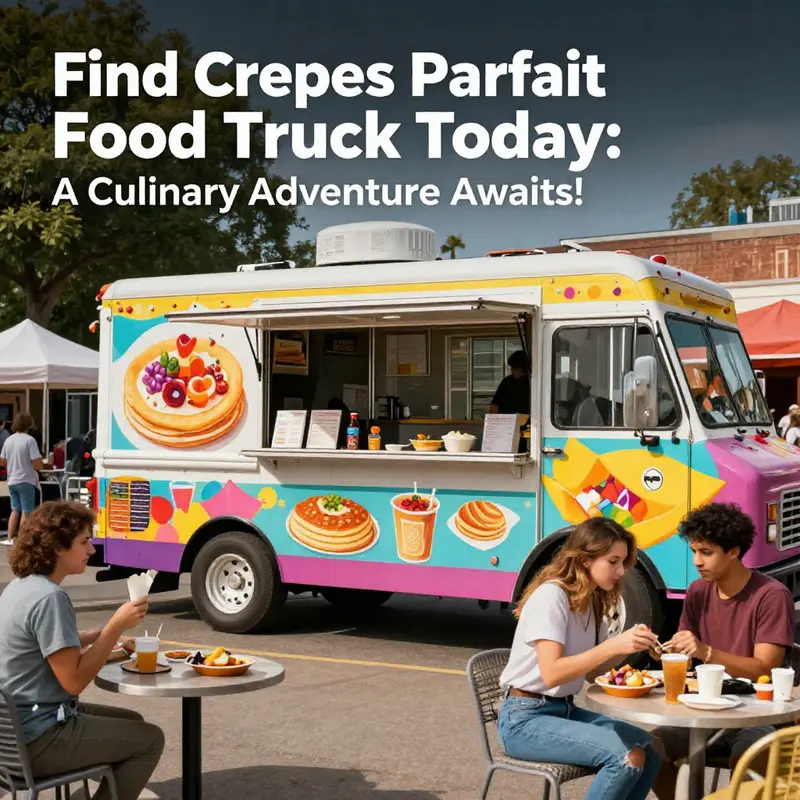
As food trucks rise to the heights of culinary fame, keeping track of your favorites can feel like a dizzying challenge. Among these mobile gastronomic gems, Crepes Parfait stands out with its mouthwatering crepes and vibrant community spirit. Yet, on this delightful journey, you may find yourself asking: Where is Crepes Parfait Food Truck today? Fear not—this article will serve as your ultimate guide through each avenue of discovering its whereabouts. From the latest social media updates to tracking apps, historical insights, and community engagement, we’ll delve into all the avenues you can explore. With every chapter, you’ll uncover a part of the Crepes Parfait story that brings the food truck right to you, whether you’re an event planner seeking catering, a corporate HR team planning a special meal, or a food enthusiast in search of your next treat!
Navigating the Daily Route: Uncovering Crepes Parfait’s Current Spot in Washington, DC 20005
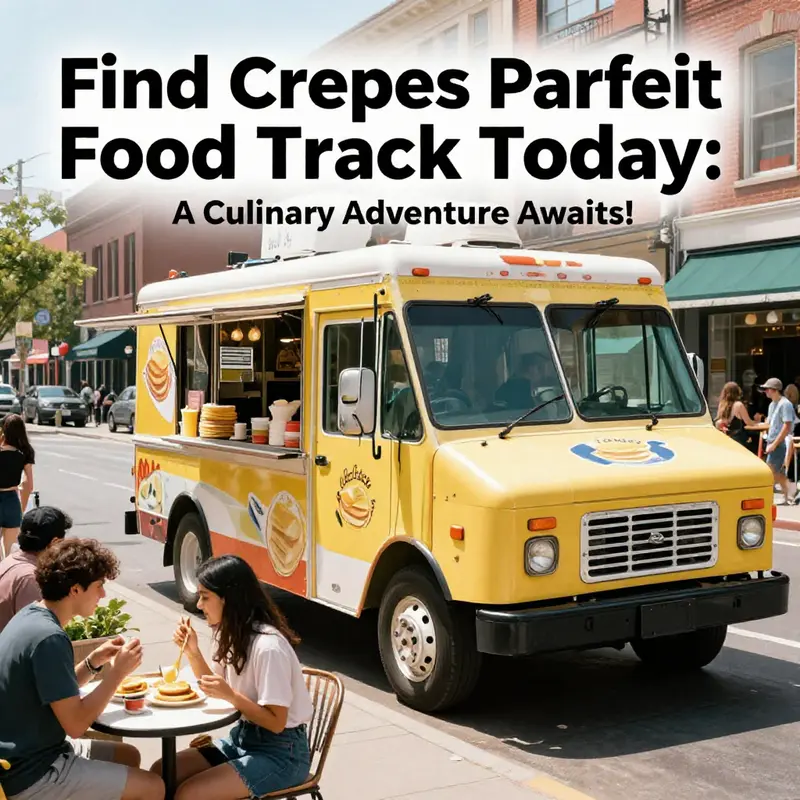
The Crepes Parfait Food Truck has become a beloved fixture for local food enthusiasts in Washington, DC. Even though the mobile kitchen’s exact location might seem elusive at times, current information confirms that, at present, the truck is stationed in the vibrant area of Washington, DC 20005. For those planning their lunch break or an adventurous food outing, knowing the precise locale and the operational hours is essential. The truck operates on a fixed schedule, serving its gourmet crepes from Monday to Wednesday between 11:00 am and 2:00 pm. This schedule not only helps regular patrons plan their visits but also adds a unique sense to the food truck’s routine that contributes to its charm and loyal following.
Operating from a consistent spot in a bustling urban center like Washington, DC, offers both advantages and challenges. On one hand, having a fixed location during these days means customers can count on a reliable source of delightful crepes without the need to search for them on wandering routes. On the other hand, the urban environment demands careful planning, both from the vendor’s end and from customers looking to navigate busy streets and parking challenges. In fact, many in the mobile food industry often discuss strategies for overcoming logistical hurdles. For further insights into these challenges, one might refer to an excellent resource on mastering the challenges of food truck parking, which provides valuable tips on negotiating shifts in location, finding legal parking spaces, and ensuring that operations continue smoothly despite urban congestion.
The fixed schedule of Monday through Wednesday is not arbitrary. It reflects a careful balance between meeting consumer demand and ensuring operational efficiency. These midweek hours are chosen to target local office workers and residents who appreciate a break from routine. The 11:00 am to 2:00 pm window covers lunch hours and early early afternoon cravings, making it convenient for people who have a relatively predictable schedule. However, while the schedule is steadfast, it is always recommended that food enthusiasts verify the truck’s current status before embarking on their culinary journey. With real-time updates shared on various social media platforms or through food truck tracking applications, checking the latest details can ensure that one arrives at the right place at the right time.
Social media plays an increasingly important role in bridging the gap between the transient mobile food business and its loyal customer base. Followings on platforms such as Instagram and Facebook allow vendors like Crepes Parfait to update patrons on any changes due to inclement weather, local events, or necessary adjustments imposed by city regulations. Although today the truck is confirmed to be at Washington, DC 20005, past instances have shown that flexibility is key. Operators sometimes choose to relocate temporarily to capitalize on larger crowds or special events. For customers who enjoy spontaneity, keeping a close eye on these channels offers the added bonus of discovering pop-up events and limited-time specials.
The location itself, Washington, DC 20005, is an area known for its blend of historical significance and modern vibrancy. The neighborhood attracts a diverse crowd ranging from tourists to local professionals looking for a quick, delicious meal. Its streets are alive with the energy of busy offices, local markets, and community centers that foster a spirit of cultural exchange. In such a dynamic locale, the Crepes Parfait Food Truck stands as a mobile beacon of culinary creativity. Its presence contributes to a larger narrative about urban food culture and the modern consumer’s appreciation for gourmet yet accessible dining options.
The operating schedule further reflects a broader trend in the food truck industry, where reliability and consumer engagement go hand in hand. Food truck operators have learned that consistency in both location and time fosters trust among patrons. A scheduled appearance gives regular customers a routine to follow, and for those new to the experience, a fixed schedule offers a clear window to sample the offerings without guesswork. It is important to note that while schedules are typically published in advance, occasional deviations might occur. For instance, if unexpected city events or roadwork come into play, the operators are quick to update their audience. This proactive communication is essential for maintaining a reputation of dependability and customer care.
Another interesting aspect of operating from a specific location in an urban center like Washington, DC, is the challenge of harmonizing with the local environment. Urban spaces are governed by an intricate set of regulations that pertain to parking, health codes, and operating hours. Navigating these rules requires both legal acumen and practical experience. Food truck operators are constantly in dialogue with city officials and local business communities to ensure that they remain compliant while also delivering a memorable food experience. This balancing act adds another layer to the story of the Crepes Parfait Food Truck. It is not merely about serving crepes but also about seamlessly integrating into the vibrant urban tapestry, where every meal served is a small celebration of community and ingenuity.
For those unfamiliar with the unique rhythm of food truck operations, it is worth understanding how these mobile kitchens become iconic parts of a city’s culinary landscape. The fixed location of Washington, DC 20005 is more than just a pin on a map; it is the convergence point where innovation meets tradition. Food trucks began as a modern twist on the age-old street food culture and have evolved into a phenomenon where gourmet quality meets quick, on-the-go service. This evolution is characterized by a commitment to quality, community engagement, and adaptability. The Crepes Parfait Food Truck epitomizes these qualities by offering a consistent schedule, a reliable location, and an unyielding dedication to customer satisfaction.
With a schedule that is precise and reliable, customers know when to expect a flavorful break from their busy routines. The dedication to serving crepes between 11:00 am and 2:00 pm from Monday to Wednesday has solidified the truck’s presence as a beacon of predictability in an otherwise unpredictable urban food scene. Moreover, this operating window has allowed the truck to quite literally become part of the midweek routine for a considerable number of food enthusiasts. By adhering to such a clear timetable, Crepes Parfait not only manages to build anticipation among its audience but also reinforces the idea that good food is worth taking the time to plan for.
Even though the hub is currently in Washington, DC, the underlying operations and decisions behind the scenes are complex and strategic. Vendor managers and chefs work together to ensure that every crepe is prepared to perfection, and this focus on quality is evident in every bite. Being stationed in a prominent area not only provides a steady stream of customers but also encourages positive word-of-mouth referrals. Such organic marketing is invaluable for mobile vendors who rely on a constant influx of new and returning customers. This continuous cycle of excellence and engagement fuels the reputation of Crepes Parfait as a must-visit culinary destination.
Beyond the immediacy of location and timing, there are fascinating logistical elements that sustain the day-to-day functioning of a food truck. The coordination between supply orders, preparation of fresh ingredients, and the intricacies of operating a fully mobile kitchen in a bustling urban setting are all part of an ecosystem that is rarely visible to the customer but crucial to the overall experience. There is a rhythmic cadence to the way that food trucks like Crepes Parfait manage their resources and schedule, a cadence that mirrors the pulse of the city itself. It is this symbiotic relationship between the vendor and its environment that makes food truck dining not only a chance to enjoy excellent food but also a way to engage with the city’s heartbeat.
For the modern urban diner, having access to real-time updates is paramount. While the schedule for Crepes Parfait is set, the unpredictable nature of urban life requires customers to be in tune with the moment. Technology has played an essential role in bridging that gap. Food truck tracking applications offer live updates that can alert patrons if there are any last-minute changes or special events planned for the day. In many ways, these digital tools enhance the personal experience of dining from a food truck. They help to mitigate uncertainties, ensuring that the culinary adventure is as smooth as it is satisfying. The integration of technology and culinary service exemplifies a modern approach to food culture that values convenience and immediacy.
It is also interesting to consider the cultural implications of a food truck establishing itself in a specific district like Washington, DC 20005. This location is not a random choice—the area is steeped in history and is characterized by its diverse community. The food truck thus becomes an ambassador for cultural exchange. While the menu might focus on one signature item, the very presence of the truck on the street offers a moment of rendezvous for people from all walks of life. In this way, Crepes Parfait does more than serve food; it fosters community connections, invites conversations, and creates shared experiences that resonate well beyond the simple act of dining.
At the heart of this narrative is a commitment to clarity and reliability. By providing a consistent schedule and location, the Crepes Parfait Food Truck dispels some of the uncertainties that are commonly associated with mobile dining. Yet, it also reminds us that even in a world driven by digital immediacy, tradition and regularity still hold significant value. For those who wish to enjoy the best that Washington, DC has to offer, planning a visit between 11:00 am and 2:00 pm on a Monday, Tuesday, or Wednesday can guarantee a delicious encounter with one of the city’s celebrated culinary offerings.
The relationship between schedule and satisfaction is evident. Diners appreciate that the truck’s current location—Washington, DC 20005—offers a predictable meeting point, a symbol of trust in a world where the next meal might be just around the corner. For those still exploring the broader realm of food trucks and all that urban culinary life holds, it might prove enlightening to learn more about the strategies that keep mobile kitchens successfully operating. This topic, with its blend of operational intricacies and cultural relevance, continues to inspire both culinary entrepreneurs and food lovers alike.
In closing, the story of Crepes Parfait is one of adaptability, passion, and precision. While today the truck enjoys a steady anchorage in Washington, DC 20005 during its operating hours, the history behind its location, the efforts to maintain a fixed schedule, and the dynamic approach to dealing with unforeseen circumstances reveal the meticulous planning behind every meal served. For those eager to experience the delight of freshly made crepes in the heart of the city, a quick call to (202) 455-4331 or a glance at real-time tracking services can provide the assurance needed to seize that gastronomic moment.
For those who wish to explore further into the world of food trucks and gain insights into how these mobile vendors successfully tackle operational challenges, additional details can be found through external resources such as Tastemade Food Trucks. Visit Tastemade Food Trucks for more on how technology and tradition are being harmonized to enhance the food truck experience.
Beyond the Feed: The Mystery and Promise of Crepes Parfait’s Social Media Footprint Today
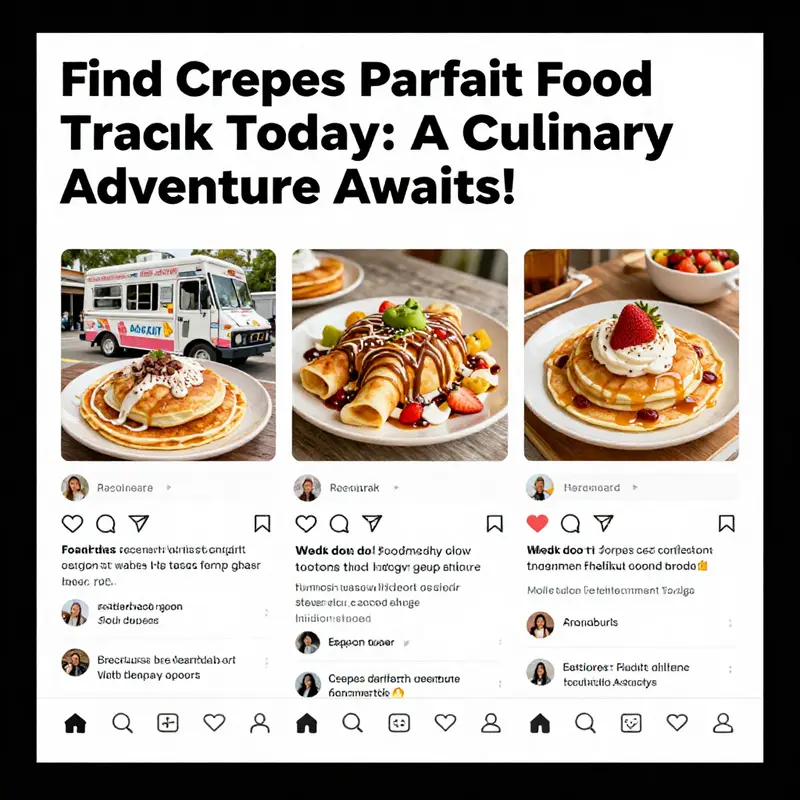
In the modern culinary landscape, the reputation and whereabouts of a food truck often hinge on its digital presence, and while social media platforms have become essential instruments for sharing live updates, building community, and cultivating excitement, there are occasions when the online narrative falls silent. Today we find ourselves in such a scenario with the Crepes Parfait food truck. Despite the anticipation built by loyal enthusiasts and curious newcomers alike, the usual social media buzz that marks its daily journey has, at least for now, left us with more questions than answers. The absence of real‐time updates for today—March 14, 2026—opens a window into the both the promise and the challenges that food trucks face in the digital realm.
Every day, the vibrant world of mobile cuisine is punctuated by live posts, tweets, and snaps that offer fans a glimpse into where their favorite kitchens on wheels might be parked. Social media platforms work to bridge the gap between the fleeting physical presence of a food truck and the enduring digital record that lives on in stories and posts. In this context, the Crepes Parfait food truck has long represented an intersection of culinary creativity and modern mobile marketing. However, the current void in updates raises questions about how contemporary food truck operators can balance the spontaneity of on-the-road operations with the disciplined, almost ritualistic, process of digital engagement.
Historically, many food truck owners have relied on platforms such as Instagram and Facebook to articulate not only their menus and locations but also to recount the unfolding story of their daily operations. These channels serve as conduits to an audience that is deeply invested in both the food and the experiences that epitomize street dining. For instance, an arresting snapshot of a freshly prepared crepe or a behind-the-scenes video of the morning setup can evoke a powerful sense of immediacy and intimacy. Yet when the expected updates are missing, it compels us to reflect on the implications of digital silence. Without the usual posts, potential customers are left to wonder if the food truck has chosen a different route or paused its operations for the day, and in doing so, the absence of information becomes as informative as its presence.
In many ways, the challenge of determining the precise location of Crepes Parfait today speaks to bigger questions about the role of social media in the food truck industry. The widely celebrated ability to track real-time movements offers both convenience and a degree of predictability that fans have come to rely on. However, the situation at hand reminds us that digital tools are only as reliable as the data that feeds them. Occasional lapses—whether due to technical issues, strategic pauses, or unanticipated events—can transform a dynamic storytelling platform into an arena of speculation and uncertainty. Many food truck managers encourage their followers to utilize third-party mobile applications that specialize in aggregating the latest updates from various vendors. Such platforms, including popular ones like Food Truck Finder or Tastemade Food Trucks, have become indispensable for those who do not want to miss their favorite street eats. Their importance is magnified on days when social media accounts remain silent. When personal social media pages fail to offer guidance, technology steps in to fill the gap by collating scattered pieces of information into a single, user-friendly interface.
Beyond the immediate practical issues, the current lack of social media updates also provokes a deeper meditation on the evolving relationship between food trucks and their digital identities. Every post, tweet, or live story is not merely an update on location or menu; it is an invitation to experience a moment, to be part of an unfolding narrative. When this digital dialogue is interrupted, it sends a subtle reminder that behind every food truck, there are layers of planning, spontaneity, and sometimes the unexpected. The silence can be interpreted in multiple ways: it might suggest an operational rethink or simply a day when the digital channels did not capture the transient magic of the moment. It may also indicate a deliberate pause—a space carved out so that when the next message appears, it resonates all the more strongly with its community. This interplay between visibility and silence has become a critical aspect of the modern food truck experience.
The enigma of not knowing the Crepes Parfait food truck’s precise location today is emblematic of challenges faced by many small catering operations that rely heavily on social media as a lifeline to their market. In an era where the absence of a tweet or post can spark frustration or even disappointment among followers, food truck operators must continually adapt their digital strategies to maintain trust and engagement. The digital landscape is unforgiving when updates are sparse, which is why many operators have begun to incorporate redundancy into their communication channels. In addition to their primary social media accounts, they may also use instant messaging platforms, dedicated mobile apps, and even collaborations with local influencers to keep the word out. This multi-pronged approach not only minimizes the risk of complete silence but also enriches the overall customer experience by offering updates through multiple avenues. For more on building a strong presence in the food truck world, you might consider reading about effective strategies for enhancing a business’s public image, which is discussed in detail on an insightful article about food truck graphics and identity available here.
Despite the current gap in updates, there is a certain reassurance in the fact that the digital pulse of the food truck community rarely falters for long. Often, the momentary absence of information is paired with a rapid resumption of lively postings and enthusiastic engagements. This dynamic rhythm—alternating between periods of high connectivity and brief spells of silence—is characteristic of any venture that thrives on both mobility and real-time interaction. In many cases, a temporary lapse in updates can even heighten the anticipation for the next burst of information, as followers grow increasingly curious about the subsequent location or new culinary creation by the food truck. The interplay of mystery and expectation, therefore, becomes an intrinsic part of the experience, one that reminds us that the journey itself, with its unpredictable twists and turns, is just as important as the destination.
In reflecting on both the operational and digital challenges that a food truck like Crepes Parfait encounters, it is essential to appreciate the broader context in which these mobile cuisines operate. The food service industry has undergone significant transformation over the past decade, largely driven by the integration of digital communication and location-based services. Food trucks, which once depended solely on word-of-mouth and physical signage, now harness the power of algorithm-driven platforms to reach a wider audience. However, reliance on digital networks also means contending with the limitations inherent to those systems. Technical glitches, lapses in connectivity, or even human oversight can result in a break in communication. When the familiar stream of updates slows or halts unexpectedly, it forces both the operator and the audience to recalibrate their expectations. In this recalibration, there is room for innovation, both in the way operators structure their communication protocols and in the way customers engage with the brand.
This current situation with Crepes Parfait also reflects a more nuanced narrative about the value of patience and flexibility in digital engagement. While modern consumers are accustomed to the instantaneous nature of updates that social media promises, there is also growing awareness that behind every online post lies an intricate web of logistical challenges, creative decisions, and sometimes unforeseen circumstances. The unpredictability inherent in a mobile food business means that social media updates, though highly anticipated, are sometimes vulnerable to disruption. This unpredictability is not necessarily negative; rather, it underscores the authentic, unfiltered nature of life on the move. The absence of an update today invites followers to embrace the uncertainty and perhaps even reach out directly through alternative channels to confirm details. It is a gentle reminder that while technology casts a wide net, the human element remains at the core of every food truck narrative.
The digital silence surrounding today’s update on Crepes Parfait might also stimulate a broader discussion about how information is disseminated in the era of social media. In an environment where every moment is potentially livestreamed and every location update contributes to a brand’s evolving identity, the lack of a digital footprint can seem like a setback. However, it also serves as an opportunity to explore the challenges of maintaining continuous engagement in an ever-shifting online landscape. Operators can take this moment to analyze gaps in their communication strategies, consider diversifying their channels, and even experiment with novel ways of connecting with their audience. A well-timed behind-the-scenes glimpse, a candid apology for the silence, or even a teaser for an upcoming event can help turn a temporary void into a moment of transparency and renewed trust. In essence, every pause in communication offers both a challenge and an opportunity for creative re-engagement.
In drawing together the threads of this discussion, it becomes clear that the mystery of Crepes Parfait’s absent social media update does not signal an end but rather highlights the evolving dynamics of digital storytelling in the food truck industry. The space between updates, as frustrating as it might seem to eager followers, is a natural part of a process that balances spontaneity with communication. It compels both the operator and the consumer to acknowledge that real-time digital engagement is a multifaceted endeavor, often subject to moments of uncertainty. As fans look forward to the eventual reappearance of a location update or the revival of a lively online narrative, they are reminded that the journey is as engaging as the destination. Technology, with all its promise and occasional shortcomings, continues to play a pivotal role in shaping how we experience the vibrant world of street cuisine.
While the specific update for today remains elusive, the broader context offers a comforting explanation. The digital silence today is not an indication that Crepes Parfait has ceased to exist or has permanently retreated from the online spotlight. Instead, it reflects the intricate balancing act inherent in managing an ever-evolving mobile food business. Each day presents new challenges—from operational logistics to the rapid pace of social media cycles—and the absence of an update is merely a chapter in an ongoing narrative that values resilience, adaptability, and creative engagement. Engaging with a food truck today means accepting that the unexpected is part of the experience; it is a dynamic interplay of communication, movement, and culinary creativity.
In conclusion, even as we stand uncertain about the precise location of Crepes Parfait on this particular day, it is important to appreciate the many layers that define the food truck experience. The interplay of live tracking apps, social media updates, and the intrinsic unpredictability of mobile operations weaves a rich tapestry that goes far beyond a simple location update. As the digital markers resume their steady stream of information, enthusiasts and customers alike will have the opportunity to reengage with a narrative that is both challenging and immensely rewarding. Today’s silence, in its own way, speaks volumes about the constant evolution of communication in the world of food trucks—and in that very silence, there lies an invitation to explore, inquire, and ultimately appreciate the vibrant, unpredictable dance of life on the road.
Navigating the Mobile Feast: How Tracking Apps Solve the Puzzle of Finding Crepes Parfait Today
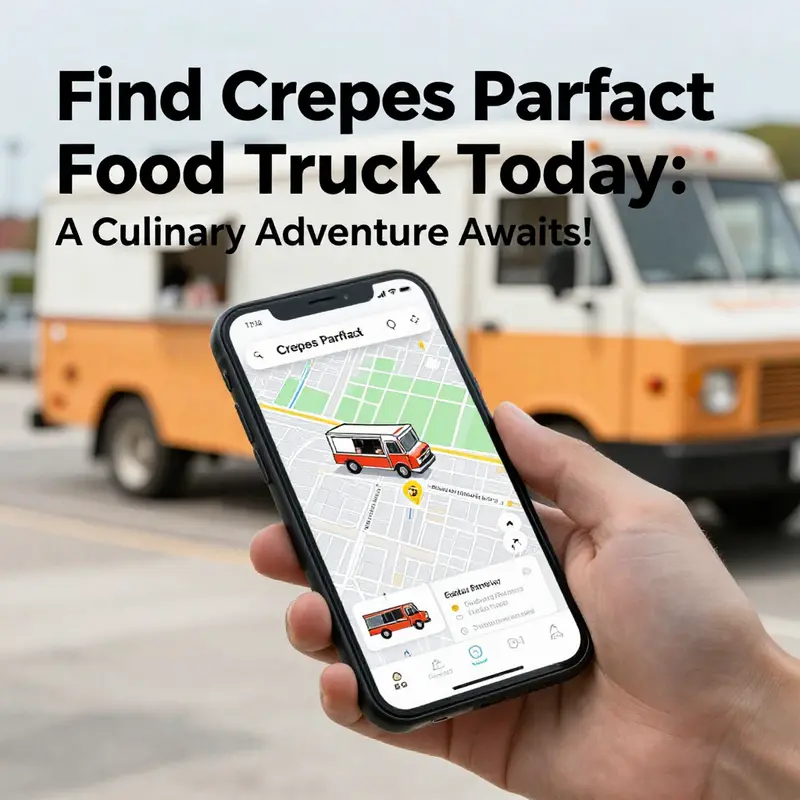
In the era when food trucks have evolved into mobile culinary hotspots, the challenge of pinpointing a favorite seller like Crepes Parfait has spurred a new wave of digital solutions. With an ever-changing schedule and a dynamic location that can shift from street corner to local festival in a matter of hours, enthusiasts have long relied on word-of-mouth and chance encounters to secure their favorite treats. However, the advent of sophisticated food truck tracking apps has revolutionized the process, turning what was once a game of hide-and-seek into a precise, data-driven experience.
These tracking apps, rooted in real-time data and intuitive design, are more than just location services. They are comprehensive platforms that weave together the pulse of mobile vendors with the demands of modern consumers. For the uninitiated, the traditional model of roaming city blocks in search of a food truck often ended in frustration—a truck could have moved on, or the sought-after crepes parfait might have been sold out by the time you arrived. Such unpredictability can erode the joy associated with spontaneous culinary adventures. By contrast, these digital tools provide live updates, detailed menus, and even the capability to pre-order your meal, ensuring that culinary enthusiasts can plan their outing with confidence and precision.
At the heart of these applications is a robust network that continuously aggregates data from individual vendors. Using location-based services, each participating truck updates its status, offering consumers a snapshot of its current position, wait times, and available menu items. This interplay between mobility and technology creates a seamless encounter where a potential customer can confirm the truck’s availability before even stepping outside. In the case of Crepes Parfait, whose current status might not always be publicly broadcast on conventional social media channels, these apps bridge the gap between the food truck’s schedule and the consumer’s craving.
An essential element of these platforms is the integration of intuitive filters and search functions that allow users to hone in on exactly what they’re looking for. Instead of browsing through endless listings or relying on sporadic social media updates, a user can simply enter a few keywords—such as “crepes parfait” or a related cuisine—to reveal a curated list of nearby trucks. In doing so, the application not only saves time but also enhances the experience by ensuring that patrons are never too far from their favorite sweet or savory indulgence. This level of precision proves indispensable in busy urban centers, where food trucks weave through shifting cityscapes and every minute counts.
Beyond mere location sharing, these tracking apps offer functionalities that elevate the entire dining experience. Many of them include features to view full menus with prices and vibrant images to whet the appetite. For those with a busy schedule or simply wanting to avoid long waits, the ability to pre-order is a game changer. In practical terms, imagine a scenario where a customer, pressed for time between meetings, can use the app to not only locate the Crepes Parfait truck but also to order ahead and receive an accurate estimate of wait times. This degree of planning transforms the street food encounter into a smooth, efficient, and pleasurable experience.
The precision of these apps heavily relies on their ability to integrate multiple data sources. Sensors, GPS technology, and even manual updates from food truck operators combine to create a live canvas of culinary mobility in a given city. For vendors, this digital endorsement is equally crucial. By embracing technology, food trucks no longer rely solely on physical signage or static schedules; instead, they become active participants in a digital ecosystem that updates consumers in real time. This dynamic approach not only aids in retaining loyal customers but also invites new ones who might otherwise be intimidated by the unpredictable nature of mobile vending.
A notable aspect of these applications is their emphasis on user experience. The interfaces are typically designed with simplicity in mind—clear maps, bold icons to denote truck statuses, and easy navigation features that even those less familiar with technology can appreciate. Minimalistic design coupled with a focus on key details ensures that the user is constantly informed and engaged. When looking for something as specific as a crepes parfait, this ease of use makes the difference between an enjoyable outing and a stressful hunt. Each update, notification, or filter selection plays its part in constructing a user-friendly portal where culinary dreams meet real-world convenience.
Alongside the technical features, there is also a cultural shift associated with the adoption of these technologies. Food trucks have traditionally been a mainstay of local communities, with regular routes and repeat customers who come to rely on them for their daily culinary fix. The integration of tracking software into this framework has created a hybrid scenario where community and technology intersect. The digital community formed around these apps often shares real-time tips, ratings, and even photos of food truck menus, building a collaborative ecosystem of diners and vendors alike. Such interactions enrich the urban culinary landscape, drawing a diverse crowd of tech-savvy food lovers and traditional enthusiasts who value the blend of personal service with modern efficiency.
For many patrons, the journey to find a favorite food truck is as much about the experience as it is about the food. There is a unique thrill associated with the chase—a blend of anticipation, discovery, and community connection. Tracking apps have preserved this element of surprise while simultaneously mitigating the risks of disappointment. Instead of wandering aimlessly, users now have the confidence that a quick glance at their phone will reveal where the Crepes Parfait truck is and just how busy it might be. This balance between spontaneity and reliability is a hallmark of the modern mobile dining experience.
Imagine a typical day in an urban center: the sun is shining, and the air vibrates with the buzz of pedestrians and traffic. Amid this urban pulse, a food lover’s phone pings with an update: the Crepes Parfait truck is now just a few blocks away, with a freshly updated menu that promises a delightful fusion of sweet and savory flavors. The app not only shows the truck’s current location on a detailed map but also signals the estimated readiness of orders, allowing the customer to time their journey perfectly. This real-time convergence of digital data and physical presence encapsulates the promise of modern food truck tracking systems—a promise of convenience, efficiency, and delight in every bite.
For many vendors, these technologies are not without their own set of challenges. Maintaining accurate, real-time data requires cooperation between the truck operators and the app developers. Issues such as network latency, GPS inaccuracies, or even simple human error can occasionally disrupt the seamless experience that these apps aim to provide. Despite these hurdles, the overall trajectory is one of improvement and adaptation. Continuous updates in software and better integration between hardware components have steadily improved system reliability. This commitment to technological advancement ensures that users are less likely to face outdated information or misdirected navigation, thereby reinforcing the trust users place in these digital tools.
Furthermore, the feedback systems integrated within these applications are a critical asset. Many apps allow users to rate the food truck experience, share reviews, and even upload photographs of their orders. This crowdsourced data provides a dual benefit: it informs potential customers about current conditions and offers vendors tangible insights into customer satisfaction and areas for improvement. When tracking apps incorporate these social elements, they evolve from simple GPS locators to comprehensive community platforms that amplify the voice of the consumer. In such a connected ecosystem, every notification or update serves not only as a directional guide but also as a conversation starter among local food enthusiasts.
The success of these tracking apps also lies in their ability to adapt to various urban environments. In densely populated metropolitan areas, where traffic and congestion are constant companions, a small delay in receiving an update could mean the difference between a long line and a quick, pleasant meal. Thus, the algorithms governing these apps must be both robust and sensitive to the unique rhythms of each city. Whether it’s during a high-volume lunch rush or a quiet weekday afternoon, the dynamic nature of food truck scheduling is well-managed by platforms that continuously learn and adjust. This adaptability is particularly significant for vendors like Crepes Parfait, where precision tracking can translate directly into increased customer satisfaction and higher turnover during peak hours.
Additionally, the digital transformation of food truck culture has spurred positive external effects on local economies. By enabling customers to easily locate favorite trucks, these apps can drive higher foot traffic to areas that might otherwise be overlooked. This increased mobility benefits not just the vendors but also the surrounding businesses, as a thriving food truck scene often correlates with a bustling community vibe. Small neighborhoods and business districts alike have seen a revitalization fueled by the accessibility and community engagement facilitated by these tracking tools. As more consumers adopt these digital solutions, the ripple effect on local commerce becomes increasingly evident, underscoring the symbiotic relationship between mobile technology and street food culture.
In this digitally interconnected world, the quest to track down something as specific as a crepes parfait has become an adventure that marries technology with taste. The tracking apps streamline the process so that whether you are a first-time visitor or a loyal customer, you always have a finger on the pulse of the food truck scene. This streamlined process means less time lost in idle wandering and more time indulging in the culinary delights that permeate the urban landscape. For the dedicated fan of crepes parfait, every update, every notification provided by these apps, signals not just the location of a food truck, but the promise of a satisfying meal and a moment of culinary joy.
Moreover, the community aspect embedded in these digital platforms cannot be overstated. Many urban food aficionados actively participate in online forums and social media groups where the latest updates regarding food trucks are shared. This communal dialogue enriches the tracking app experience by adding layers of personal reviews, tips on the best times to visit, and even behind-the-scenes glimpses into the daily operations of mobile vendors. In such a scenario, the journey to find a crepes parfait becomes more than just a transaction—it is a shared adventure that blurs the line between technology and tradition, forging a mutual bond between the vendor and the community.
As the food truck industry continues to evolve, these tracking apps remain at the forefront of innovation, constantly refining their methods to meet the demands of both vendors and consumers. Their role in modern urban culture is undeniable: by blending real-time data, user-friendly interfaces, and a commitment to community building, they provide a solution that goes beyond mere location tracking. For many, the ability to easily track down a staple like the Crepes Parfait truck is a testament to the seamless integration of digital innovation into everyday life. The journey from a hopeful search to a fulfilled appetite lies in the efficient, reliable networks these apps create.
For those looking to embrace this new era of culinary convenience, the message is clear: technology is an indispensable ally. By exploring modern tracking solutions, customers can transform the simple pleasure of eating into an enlightening experience that epitomizes the blend of tradition and innovation. Whether you are navigating bustling city streets or enjoying a quiet afternoon, these apps bring you closer to the flavors you love, ensuring that the search for a gourmet crepes parfait is always met with success. To discover the potential of these innovative tools firsthand, consider exploring the mobile ecosystem that empowers food trucks and enhances your dining adventures. For instance, you might find that the convenience and precision of these systems elevate the entire experience, much like in-depth insights provided on platforms such as the guide on choosing the right food truck models available on this informative resource.
At the intersection of technology and culinary passion, the promise of real-time digital navigation continues to guide food enthusiasts toward unexpected delights. As you navigate the bustling streets in search of the elusive Crepes Parfait truck, remember that every update and notification is a stepping stone toward that perfect blend of flavor and convenience. With a simple tap, you could be moments away from savoring the signature dish that has captured the hearts of food lovers everywhere. As you explore this ever-evolving digital landscape, keep an eye on reliable solutions like those offering live location updates and dynamic menus. To experience this seamless integration for yourself, consider checking out the detailed features and benefits by visiting the external link at the end of this discussion: Download Perch from the App Store.
From 19th-Century Canteens to 21st-Century Street Cuisine: The Legacy Behind Crepes Parfait Food Truck

In the evolving world of mobile cuisine, the history of food trucks is both rich and fascinating. Early mobile canteens emerged in the 19th century with horse-drawn chuckwagons and lunch wagons that brought hot meals to workers in remote areas. These early ventures relied on simple equipment and a relentless spirit of innovation. The concept of serving quality food from a mobile unit has deep roots in practicality and cultural evolution. As the century turned, trucks and vans seamlessly filled roles in military operations and on bustling construction sites. These early examples laid a strong foundation for a culture that now embraces food trucks as cherished icons of urban life. Each innovation, no matter how modest in its beginnings, added layers to a tradition that would eventually transform culinary experiences in modern cities.
The story of Crepes Parfait Food Truck reflects these historical transformations flawlessly. As a modern food truck, this establishment is a natural heir to a tradition dating back to the era of horse-drawn vehicles. Crepes Parfait operates with an artisanal focus that taps into a long lineage of mobile culinary art. Its emphasis on freshly made crepes, prepared using just four specialized pans, speaks to a simplicity that belies a rich operational history. While some patrons have noted that service can sometimes feel slow, the focus remains on quality and authentic preparation. This concentration on skillful technique over rapid turnover mirrors lessons from the past. Early food vendors did not always prioritize speed over the quality of finely honed recipes, and today, Crepes Parfait honors that legacy with every dish it crafts.
A deeper look into the origins of mobile food service reveals practical approaches that can be traced from the rudimentary setups of the past. In the late 19th and early 20th centuries, food vendors traveled great distances with minimal resources. They offered hearty meals to laborers and soldiers alike, often working long hours under challenging conditions. These pioneers faced logistical dilemmas similar to what food trucks confront today. While modern vendors use advanced cooking techniques and a contemporary style, they still contend with issues such as limited cooking space and supply constraints. The emphasis on using a few key pieces of equipment has not changed much since the days of the chuckwagon. Every squeeze of citrus and every carefully flipped crepe tells a story of perseverance that connects today’s mobile kitchens to their historical predecessors.
Economic and cultural shifts also played a significant role in the evolution of food trucks. Over the decades, society experienced substantial changes in consumer habits and dining preferences. The move towards more casual, yet still quality, culinary options allowed food trucks to flourish. In urban centers, the charm of street food became synonymous with freshness and local flair. This rise in popularity was not isolated; it resonated across borders in the United States, United Kingdom, France, and beyond. The modern food truck movement drew inspiration from a culinary tradition that values simplicity, authenticity, and innovation. Even as the methods of service evolved, the heart of the experience remained in its ability to serve a unique and satisfying meal. Crepes Parfait is a vivid example of this continuity, embodying the spirit of an enterprise that has evolved while staying true to its historical roots.
The culinary journey of Crepes Parfait is enriched by an artistic narrative that blends historic operation with modern flair. The curated menu inspired by traditional crepe recipes offers a direct homage to street vendors of the past. Every crepe is crafted with an intention to honor traditions while infusing contemporary tastes. Consumers today seek unique experiences that combine authenticity with creativity. The focus on sensory appeal and artisanal preparation helps the food truck carve a niche among its competitors. It is a clear reflection of the period when simple cooking methods met innovation in unexpected ways. Historically, mobile kitchens were known for remarkable adaptability, often serving diverse communities as they moved from one neighborhood to another. Over time, these mobile services have grown in complexity while still preserving a sense of nostalgia. This balance of heritage and modernity plays a central role in the continued success of Crepes Parfait.
The historical context is not just about the evolution of service methods, but also about how consumer values have shifted over time. In earlier eras, practicality and basic sustenance were the primary goals when food trucks rolled into town. Today, the emphasis has shifted towards experiential dining that celebrates local culture and culinary excellence. The modern consumer appreciates the story behind the food, as much as the food itself. In this view, the tale of Crepes Parfait adds value beyond its menu. The operational details—such as limited cookware and hands-on preparation—highlight an enduring commitment to quality. Despite the occasional delay, customers willingly accept a measured pace if it means receiving an authentic and thoughtfully prepared crepe. A look into such practices reveals a subtle but important evolution: modern food trucks now integrate a passionate narrative with every service, linking each meal to a legacy of resourcefulness and taste. Those interested in exploring more about effective mobile branding strategies can review insights on this subject in an article on branding on wheels and the identity of mobile vendors.
Tied closely to its historical traditions, the Crepes Parfait Food Truck presents a solution to modern culinary challenges by embracing its heritage. In today’s dynamic food scene, the location of a food truck can be as fleeting as the trends it adopts. While inquiries often seek to answer the question, “where is Crepes Parfait Food Truck today,” the answer is found in its continuous evolution from a storied past. The fluid nature of street food demand follows economic, social, and regulatory trends that have been evolving since the day the first mobile canteen hit the road. Modern food truck operators frequently rely on real-time updates from digital media or specialized tracking applications. However, the underlying history is what truly sets each vendor apart from larger, conventional restaurants. Crepes Parfait continues to honor this legacy by adapting traditional preparation methods to meet changing tastes and logistical realities.
Many of the challenges that food trucks face today mirror those encountered by early mobile vendors. Both eras had to contend with limited space and resources while ensuring that every meal met customer expectations. The narrow confines of a truck require strategic planning and skilled labor to maintain quality. In historical contexts, vendors mastered the art of working with minimal tools under pressure. In the modern environment, food trucks take these lessons and blend them with today’s technical innovations. Whether it is using just four crepe pans or innovative point-of-sale technology, the focus remains on delivering an elevated culinary experience despite operating within significant constraints. The evolution of these practices highlights not only the ingenuity of the predecessors but also the resilience of contemporary operators who continue to serve quality food on the move.
The layered history of mobile food services also touches on regulatory and logistical aspects that have shaped the industry. In earlier decades, the informal nature of food vending allowed for flexible practices that suited the immediate needs of consumers. Today, strict regulations govern food safety, vendor operations, and even parking choices in urban landscapes. These guidelines have both supported and challenged the evolution of food trucks. Crepes Parfait, like many modern vendors, must navigate these challenges carefully. The balance between maintaining authenticity and ensuring compliance illustrates a modern struggle echoed in historical anecdotes of food vendors taking small risks to innovate. It is a struggle that has been part of the evolution of street food and remains central to the vehicle’s operation. This regulatory framework, while different in scope and detail, does not diminish the spirit of food trucks; rather, it reinforces a commitment to quality and public trust.
Across decades, the appeal of mobile food has continued to rise as it represents a blend of creativity and resilience. Early food trucks set the stage for an industry that today serves billions worldwide. People enjoy not only the flavors but also the stories that come with each mobile vendor. The narrative of the Crepes Parfait Food Truck is steeped in this tradition of storytelling. Its journey echoes the broader evolution of street food culture, where every crepe is a symbol of a long history of craftsmanship and innovation. This continuity offers a genuine connection between the humble origins of mobile kitchens and the sophisticated operations of today. The emphasis on detailed preparation, community engagement, and a unique culinary experience transforms a simple meal into an event. Modern customers are drawn to this layered history as much as they are to the delectable food itself.
The unique charm of Crepes Parfait lies in its ability to merge a robust historical past with present-day culinary trends. It is a mobile enterprise that does not shy away from acknowledging its origins while embracing innovation. While many inquire about the daily route of the food truck, the real story is found in its lasting impact on mobile dining culture. Every detail of its operation—a limited yet carefully maintained set of cooking tools, a focus on fresh ingredients, and a dedication to flavor rather than speed—reinforces a respect for tradition that modern diners find appealing. This thoughtful approach to food service allows Crepes Parfait to stand apart in a competitive market. It is a dynamic example of how a storied past can inspire present vitality and continued evolution in the food truck industry.
Although the question of location is common, it is vital to appreciate the deeper narrative behind a food truck’s presence. The story of food trucks like Crepes Parfait spans eras, from the humble beginnings of mobile canteens to the refined operations of today. The location of the vehicle may change daily, but its historical significance and cultural impact remain constant. By examining its lineage, one can trace a line that connects the resourceful vendors of the past with innovative operators in the present. This historical continuity offers valuable lessons on resilience, adaptability, and the power of tradition. When patrons seek the current whereabouts of Crepes Parfait, they are not merely wishing to locate a truck; they are connecting with a legacy that continues to evolve and inspire urban culinary culture.
In today’s market, where every detail matters, the heritage of the mobile food industry is a valuable asset. Crepes Parfait stands as a testament to the enduring nature of street food culture. The reliance on minimal yet effective equipment highlights an operational philosophy that values quality over quantity. Long before the advent of modern service apps and social media updates, vendors survived on reputation and word-of-mouth. This same ethos remains at the heart of the food truck scene, where authentic experiences are prized above rapid service. As consumers increasingly favor genuine, locally sourced meals, the historical narrative behind each truck enriches the dining experience. The tangible connection to a storied past, combined with innovative culinary techniques, leaves a memorable impression on every visitor. It reminds us that even in a fast-moving world, heritage can thrive on wheels.
Drawing the discussion to a broader perspective, the legacy of mobile food services forms an integral part of today’s urban tapestry. The journey from early horse-drawn wagons to high-end gourmet trucks like Crepes Parfait illustrates a remarkable evolution. Each era has contributed to the modern definition of street food, merging tradition with cutting-edge practices. This synthesis of history and innovation has allowed vendors to continuously meet the evolving demands of their customers while preserving the charm of their origins. The story is not simply one of culinary evolution but also of human connection, adaptation, and the celebration of everyday creativity. Even as questions about the truck’s precise location today arise, it is the rich heritage behind every crepe and every service moment that truly matters. For a more detailed exploration of the operational aspects and heritage of food trucks, one may refer to additional insights available online.
For more details on historical evolution and current challenges faced by vendors like Crepes Parfait, please consider reviewing further commentary available on external platforms. For an in-depth look at customer reviews and operational nuances, explore the information provided on this external source.
Connecting Locally: The Dynamics of Community Engagement with Crepes Parfait Food Truck Today
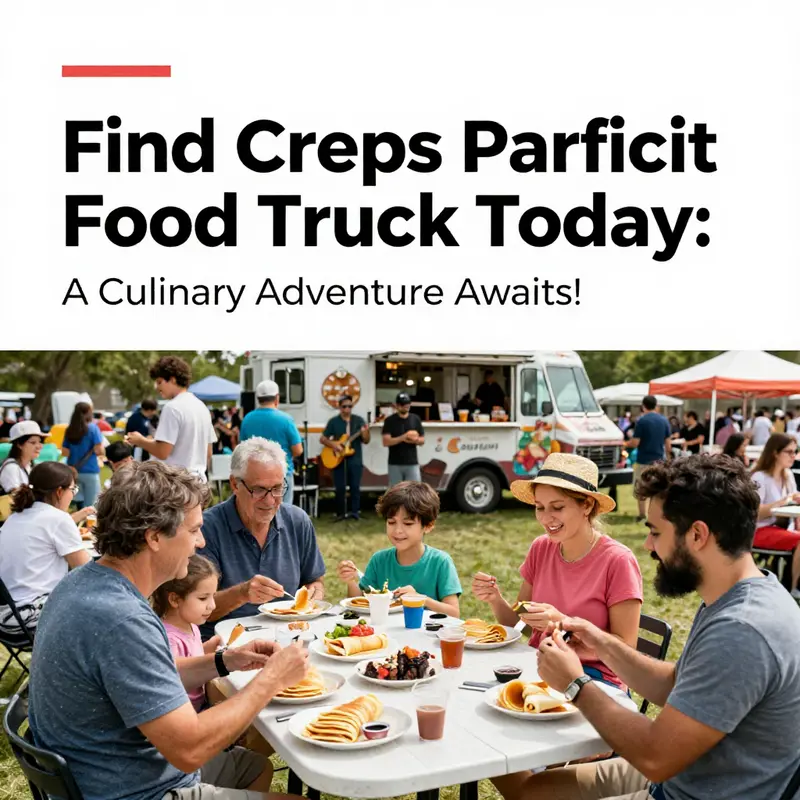
The Crepes Parfait food truck has become an emblem of culinary delight and community connection, even when precise details of its daily operations remain uncertain. Although current records indicate an absence of real-time location updates for today, March 14, 2026, and there is limited hard data on specific community engagement events, the story of this mobile kitchen speaks volumes about the interplay between operational challenges and its deep-rooted efforts to connect with local patrons.
At its heart, the Crepes Parfait food truck symbolizes how a modest enterprise can inspire a strong sense of community while navigating the hurdles of mobile street vending. Historically, food trucks have been more than just purveyors of snacks and treats; they are hubs of localized interaction, a place where neighbors meet, share stories, and indulge in a shared love for innovative cuisine prepared on the move. For Crepes Parfait, every crepe crafted on those four crepe pans represents both an artisanal effort and an opportunity to respond to community needs, even if occasional operational constraints cause delays. One recent review mentioned a wait exceeding 20 minutes. This observation does not necessarily mar the experience but instead highlights the duality of being both a popular local attraction and an enterprise with real-time production challenges.
The limited equipment configuration, with only four crepe pans available during peak times, suggests that while the truck is operating as a daily fixture, its capacity to serve a large crowd rapidly may be momentarily curtailed. However, this operational constraint also offers a window into the broader reality faced by many small-scale vendors, where balancing artisanal quality with service speed is an ongoing challenge. Even a minor slowdown translates into a narrative of commitment: every extra minute spent waiting for a perfect crepe is a testament to the passion with which this food truck operates. It is a reminder that quality and care often require a bottleneck in production, and this bottleneck is woven into the fabric of community interactions.
That commitment to quality has helped build a loyal base of customers who appreciate not just the taste of the crepes, but also the experience of ordering them. In many ways, the story of Crepes Parfait mirrors larger trends in the mobile food industry. Customers today look for experiences as much as they do for food; they are drawn to the personal touch and the sense of adventure in potentially tracking the truck’s whereabouts via approved social media updates or specialized food truck tracking apps. In fact, for real-time information, many enthusiasts turn to platforms like Instagram or Facebook, where vendors frequently update their followers on daily locations, pop-up events, or even unexpected roadblocks that might affect service times. Although no event or special community engagement activity is confirmed for today, familiar patterns from past days suggest that the truck’s operators are always on the lookout for opportunities to blend mobility with community outreach.
Engagement in local events, from charity pop-ups to neighborhood festivals, forms a substantial aspect of the truck’s identity. Events might not feature in every update, but their sporadic nature lends an air of excitement to follow the truck’s journey. When the truck appears at a local festival or community fair, it becomes more than a mobile kitchen—it transforms into a meeting point, a venue for shared joy, and often, an informal hub that drives local culture. Its very unpredictability is part of its charm, a timely reminder that even in a schedule defined by modern, often rigid digital notifications, the spontaneity of food trucks infuses an element of tradition and surprise into contemporary urban life.
Operational realities, such as those highlighted by the wait times, bring forth important conversations about capacity management in the mobile culinary world. The question arises: How can a beloved food truck with a limited set of equipment balance high-quality output with the demand of a bustling community? Some have pointed to solutions such as upgrading equipment or modifying the menu to include items that require less intensive preparation. However, these decisions involve trade-offs. Reagents of change in the culinary landscape often influence a vendor’s identity – and in this case, the craftsmanship of the crepe is considered essential to the brand. As such, there is an inherent tension between operational efficiency and the desire to continue producing handcrafted creations.
Individuals working behind the scenes understand that every additional minute a customer waits is a reminder of the painstaking process behind each crepe. This dedication is not isolated; it is part of a larger continuum of mobile food enterprises, where aesthetics, customization, and customer interactions are celebrated as much as the food itself. In this realm of culinary street vending, ambiance and branding hold as much weight as the recipe. Aspiring food truck operators often delve into articles on how elements such as visual appeal can augment customer engagement. For instance, a detailed look into the importance of food truck graphics and identity can offer insights into how design influences perceptions and ultimately, the customer experience. Such perspectives are very useful for anyone seeking to fuse operational dynamics with memorable community interactions. Learn more about the balance between visuals and culinary service in a comprehensive guide on food truck graphics and identity.
While current data may not list an explicit community event today, community engagement can be experienced in the simple act of visiting or tracking the truck’s updates. The food truck community’s reliance on modern digital tools is ever-growing. Mobile food truck tracking applications and official social media profiles have become the primary methods customers use to determine which vendor is nearby. These tools have revolutionized the way food trucks interact with their clientele by offering real-time updates, thereby bridging the gap between location ambiguity and consumer convenience. The inherent unpredictability adds a level of excitement for many patrons who, by planning their day around the brief window when the food truck appears, become part of an unfolding, communal dinner event.
Moreover, the underlying story of operational success intertwined with the occasional hiccup, such as longer wait times during peak hours, provides an evolving narrative that many customers find endearing. Every scratch on a crepe pan or every moment of service delay weaves a narrative of resilience and a commitment to quality. These small struggles serve as powerful metaphors for the human condition, where minor setbacks pave the way for creative problem-solving and unexpected moments of connection.
In many modern cities, where digital coordination often replaces traditional community bonds, the story of a modest food truck stands as an exception. The food truck scene, with its rapid rotations and unpredictability, highlights how ephemeral structures can still become powerful shapers of daily urban life. This is evident in the way customers share their experiences on social media platforms and word of mouth. Although the exact coordinates of the Crepes Parfait food truck might not be documented in a location feed today, its influence is indisputable. The brief encounter that some people might have during a busy afternoon becomes a cherished memory that speaks to the truck’s authenticity. Such moments underline that community engagement is not solely a function of sophisticated marketing but is also rooted in the shared human experience of anticipating a special dining experience.
A further intriguing aspect is how operational constraints shape customer expectations. In an age where speed is often directly equated with competence, a delay in service might appear counterintuitive. However, for patrons who recognize the art behind each crepe, a short wait becomes a symbol of the craft and effort invested by the staff. The fact that the truck’s singular setup with a limited number of cooking pans can lead to extended wait times does not diminish the overall experience; rather, it amplifies the encounter by marking it as something that is not mass-produced. In this way, the experience recasts waiting as a shared ritual, a communal pause during which conversations spark and relationships are reinforced. The connection between the vendor and its patrons grows more profound, as every minute of anticipation becomes an opportunity for building trust and mutual respect.
On a broader scale, this operational narrative is closely linked to ongoing industry trends where many vendors face similar challenges. In-depth industry guides, such as the Dessert Food Trucks Guide, explore how both the tangible and intangible aspects of service—ranging from equipment capacity to visual branding—play a crucial role in attracting and retaining customers. Such resources are invaluable for understanding how budding and established vendors alike can refine their operations while preserving the artisanal quality that distinguishes them in a competitive marketplace. For those interested in learning more about optimizing such performance challenges while maintaining community engagement, further insights are available at the external resource https://www.example.com/dessert-truck-guide.
This blend of operational challenges, community engagement, and the relentless pursuit of quality marks an extraordinary narrative of modern mobile dining. Even in the absence of a definitive schedule or a precise daily location broadcast, Crepes Parfait continues to inspire a community-driven tradition that celebrates connectivity, authenticity, and culinary craftsmanship. Whether it is an unexpected update on a social media feed or the gentle hum of an excited crowd gathered around the truck, every interaction reiterates that the food truck is more than just a transient eating stop—it is a vibrant thread in the urban fabric.
In summary, the experience offered by the Crepes Parfait food truck is a dynamic interplay of creative culinary art, operational resilience, and community connectivity. The modest setup leading to occasional wait times does not detract from the authenticity of the experience; it instead accentuates the real-world challenges that define small-scale culinary endeavors. Community engagement, therefore, is less about the physical presence in a predetermined location and more about the intangible connections, shared memories, and cultural dialogues that the truck inspires every time it sets up shop. Amid digital notifications and scheduled pop-ups, there lies an unstated promise that every crepe served carries a story—a story of perseverance, flavor, and community spirit.
This narrative extends an invitation to both loyal patrons and curious newcomers to immerse themselves in the evolving tradition of mobile dining. It is a call to appreciate the craftsmanship behind each crepe and to recognize the value in every interaction, however brief it might be. In following the truck’s journey via its social media updates or tracking applications, customers are not merely acquiring food; they are part of a larger, ongoing conversation about quality, community, and the simple joy of shared culinary experiences. The experience remains as much about participation as it is about consumption, forging a community that continues to grow with each passing day. The Crepes Parfait food truck, with its blend of operational challenges and community warmth, stands as a living testament to the resilience and innovation of today’s mobile culinary enterprises.
Final thoughts
As we wrap up this delicious exploration, we hope that you now feel equipped to find Crepes Parfait Food Truck with ease. By leveraging the power of social media and tracking apps, you can always stay updated with its charming culinary journey. From its rich history to the community spirit that surrounds it, Crepes Parfait is much more than just a food truck—it’s a beloved part of the local culture. Whether you’re craving a sweet treat or looking to plan an event, this guide ensures you won’t miss out on the wonders of Crepes Parfait. So what are you waiting for? Happy hunting!