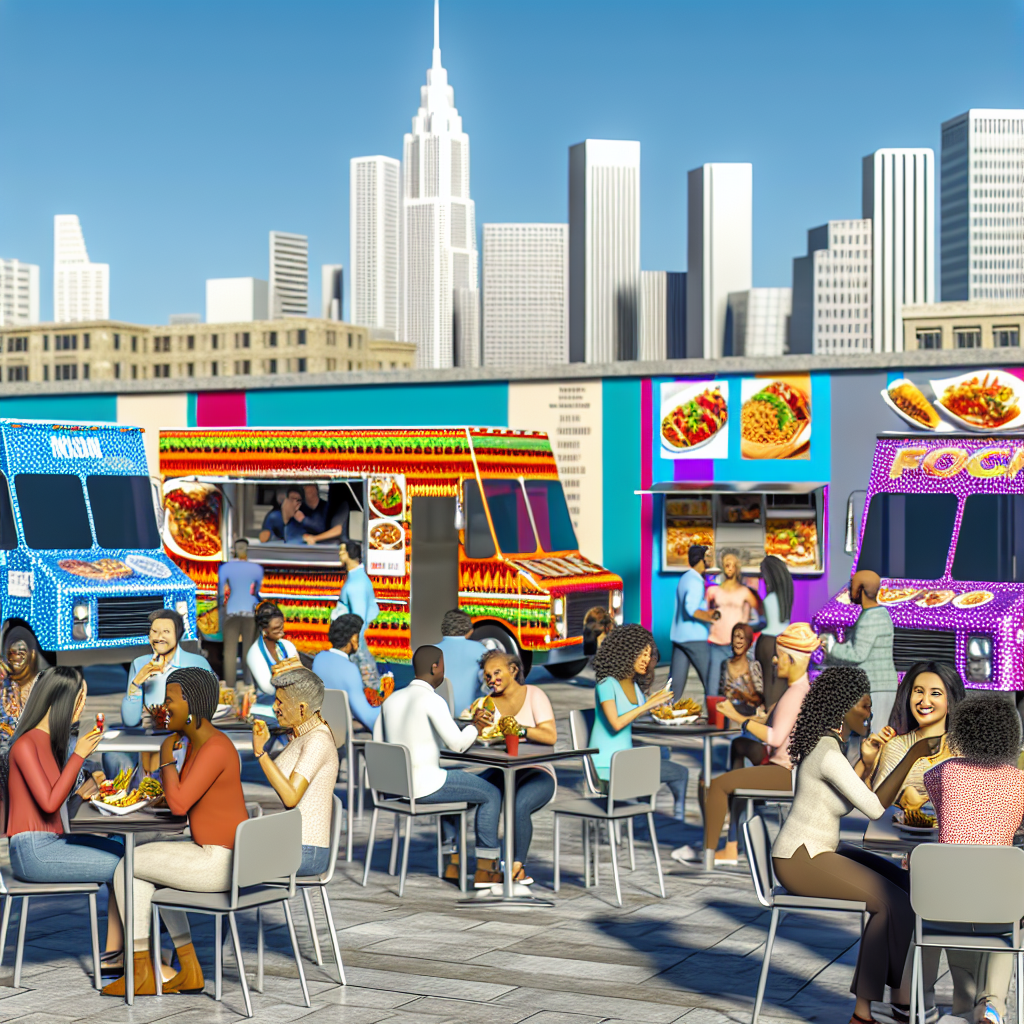
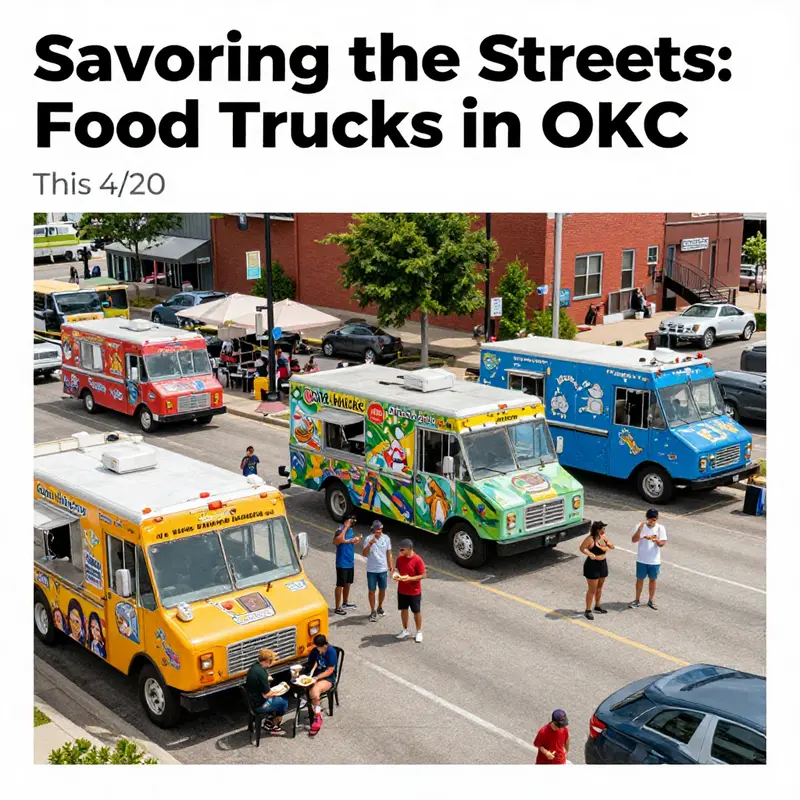
April 20th is destined to be a flavorful day in Oklahoma City, as food trucks roll out their unique culinary creations across the streets. While this date may not host a major festival, the city’s food scene comes alive with diverse flavors and vibrant food cultures waiting to be explored. Event planners, local groups, and food aficionados alike can dive into the booming food truck scene that captures the spirit and culinary innovation that defines OKC’s streets. Whether you’re organizing an event or simply looking to sample gourmet street food, this guide highlights everything from food truck locations and social media insights to local event opportunities and culinary trends, giving you the complete picture of where to find the best food trucks in OKC on April 20th.
Tracking the Street-Eats Pulse in OKC on 4 20: Where Food Trucks Gather and How to Find Them
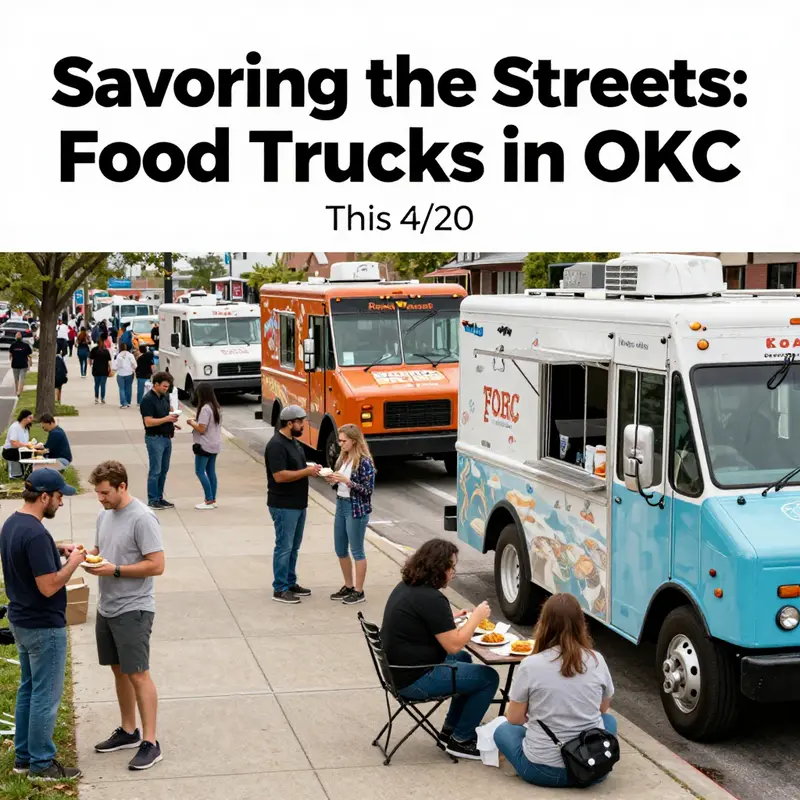
Oklahoma City on 4 20 unfolds as a quiet buzz that builds into a full-blown street-food chorus, a citywide chorus that tastes like smoke, spice, and a little something sweet. The day carries with it a sense of anticipation, the way a city feels when a festival arrives and every block seems to hum with the promise of a fresh bite. In OKC, 4 20 is more than a date on a calendar; it is a moment when the food-truck scene compresses into a single, walkable arc of downtown energy and park-side flavor. The aroma of grilled meat, warm tortillas, and pan-crisped sandwiches drifts through the streets, and curious visitors follow that scent like a thread through the city’s layout. It’s not just about eating; it’s about a shared experience—watching cooks work metal and flame, hearing the sizzle, and seeing the crowd weave between vendors as they select a plate that feels both familiar and new. This is the day when Oklahoma City’s temporary street market becomes a living map of the city’s appetite, with each truck offering a story plated in portable form and designed to travel with the crowd as it moves from one scenic vantage to another.
In the heart of this day is the OKC Street Food Festival, a curated gathering that brings a diverse roster of trucks into a concentrated radius where eager eaters can sample a spectrum of cuisines without leaving the core of the city. The festival is crafted around a simple but powerful idea: local cooks and planners collaborate to deliver a compact, legible tapestry of flavor that is both easy to navigate and rich in variety. The trucks typically showcase barbecue smoke that curls into the air, the bite of street tacos loaded with bright toppings, and the creamy pull of gourmet grilled cheese that invites a second or third bite. There are also vegan options that chart a different path through the same urban landscape, proving that a day built around mobility and street-side dining can accommodate different dietary journeys without losing the festival’s core energy. This inclusive, multi-flavored approach makes the day feel like a tour through a city’s culinary imagination, where every stop presents a new interpretation of familiar comforts.
The festival’s main gathering point is traditionally anchored by Bricktown and the nearby waterfront corridor, which makes the cycle of walking from truck to truck feel natural, almost inevitable. Bricktown Waterfront Park often serves as the central pulse of activity, a visually and physically accessible hub that anchors the day’s movement. The choice of this setting is more than picturesque; it’s practical. The park-side paths are designed for pedestrians and cyclists, and the surrounding streets are planned for easy access from the core of downtown. People arrive by multiple routes, from the light-rail hubs to the riverwalk, and the layout encourages a steady, unhurried flow. The festival’s footprint, consequently, becomes a cross-section of the city’s public life: family groups nursing cups of lemonade, friends lingering over a late afternoon bite, and tourists mapping out their own edible itinerary, all while the city’s skyline forms a recognizable backdrop. It’s a scene where urban space and culinary craft meet with a shared sense of discovery.
What makes the experience stand apart is the deliberate curation of the trucks and the way the day unfolds around a few dependable patterns. You can expect the trucks to cover a range of familiar favorites—traditional barbecue that leans on time-honored smokers, a rotation of taco setups that emphasize bright salsa and hand-made tortillas, and a few specialty sandwiches whose warmth comes from careful, on-site cooking. The lineup also tends to include a few avant-garde options—concepts that feather in upscale flavors with street-food practicality. The result is a balanced menu that makes it easy to sample multiple cuisines in one outing, often within a stroll that doubles as a walking tasting tour. The staging of these trucks is not random; it is guided by a blend of vendor partnerships, practical considerations around space and service efficiency, and the day’s projected crowd. As a result, the most flavorful moments occur when a visitor follows a winding path from a smoky grill to a zesty taco stand, then to a comforting, melty grilled cheese that somehow feels both nostalgic and modern at once.
For those who want to plan a day that maximizes flavor without sacrificing time, a practical mindset helps. Begin by identifying a primary arrival window—usually the early hours of the festival when lines are shorter and the grill is hottest. From there, allow a gentle loop: a round of small bites from a few trucks, a stroll through the park’s shaded paths, and a second pass at a different cluster that introduces a cuisine you haven’t tried yet. This approach is not just about speed; it’s about pacing your senses so that you can savor the moment—the way smoke lingers on the breeze, the way a tortilla crackles just enough as you bite, the way a cheese pull stretches into a playful string of shared laughter with a friend. The experience becomes less about clock-watching and more about capturing the texture of the day, the way the crowd’s energy shifts as the sun moves across the sky and the aromas rearrange themselves with the changing breeze.
In the world of street-food events, real-time information is your best friend. The OKC Street Food Festival organizes its day around a central plan, but it’s the live updates that turn a good outing into a great one. If you want to know exactly which trucks are on the move, where they have parked, or what the day’s best bites are likely to be, checking the festival’s official site or the city’s event channels can save you a lot of wandering. These sources provide the current vendor list, the day’s schedule, and any last-minute changes in location, which matter when a truck decides to rotate to a new corner to shorten lines or to align with an anticipated crowd surge. The practical upshot is simple: to experience the full spectrum of what OKC has to offer on 4 20, you’ll want to couple your appetite with a touch of flexibility and a willingness to follow the day’s evolving map.
Beyond the festival’s focal location, the city’s broader urban landscape also participates in the day’s flavor. Downtown OKC, with its broad avenues and riverfront vistas, invites a dynamic interplay between classic brick-and-mortar eateries and the mobility of street vendors. Park-goers may wander from the festival hub toward nearby greenspaces, where food-truck aroma wafts through the trees and mingles with the chatter of people reclaiming public space after work or school. In this sense, the day becomes a kind of tasting tour of the city’s geography, a choreography of spaces that encourages exploration and casual conversation about what makes a city’s food scene feel both intimate and expansive. The sense of community that emerges—neighbors, visitors, and regulars alike sharing bites and stories—transforms a crowded, food-centric event into a social landscape where memories are shaped as much by the people you meet as by the flavors you encounter.
For readers who want a deeper, more practical understanding of how such events come together, there is value in looking behind the scenes at how operations are planned and scaled for a day like this. The orchestration involves a careful balance of vendor relations, operational logistics, and crowd management, all under the umbrella of festival programming that aims to showcase local talent while maintaining a smooth, enjoyable experience for attendees. This is where the narrative becomes instructive: it’s not just about the moment of tasting but about the systems that sustain that moment—the permits, the truck permits, the route permissions, and the safety protocols that ensure a day of open-air eating remains comfortable and safe for everyone involved. In that sense, the OKC Street Food Festival isn’t merely a parade of flavors; it is a case study in how a city can facilitate a mobile culinary culture without losing sight of public space and governance. If you’re curious about the operational side—how menus are planned, how costs are managed, and how trucks coordinate with festival organizers—you can explore related discussions that illuminate the realities of running a food-truck operation on a scale that invites thousands to participate. For a deeper look into these mechanics, see the resource linked below to guide your understanding of the broader food-truck ecosystem and the practicalities of turning a day into a sustainable business moment.
For readers who want a concise pathway to the day’s flavor map, there are a few practical anchors to keep in mind. First, the central concentration around Bricktown and the waterfront tends to be where the largest clusters of trucks appear, making it a reliable starting point. From there, a gentle clockwise walk toward nearby parks can reveal more intimate, neighborhood-leaning setups that occasionally rotate into the same geographic footprint, ensuring that even if a line spools up at one stand, another great option is just a short stroll away. Second, the day rewards those who arrive with a flexible plan, not a fixed expectation. If a preferred truck has a long line, stepping aside to explore nearby options often yields a surprise you won’t regret. Third, the social fabric of the event—friends sharing bites, families snapping photos of colorful carts, and newcomers asking questions of cooks wielding skillets and spatulas—transforms the act of dining into a shared celebration of place and appetite. In short, the city’s energy on 4 20 is not solely in the plates that pass from pan to mouth, but in the way the urban environment itself becomes a canvas for taste, movement, and memory.
As you prepare to follow that map, a few pointers help translate this narrative into a real-life plan. The official OKC Street Food Festival site serves as your primary compass for accurate timings, exact vendor rosters, and the day’s progression. Crowd dynamics shift with the sun and with the weather, so a flexible approach—ready to pivot your route based on what you find when you arrive—often yields the best results. If you’re curious about the bigger picture—how food trucks choose their routes, how pricing is set for high-volume days, and how operators balance quality with speed—a practical resource on truck operations can provide a grounded, real-world look at these decisions. For context and deeper reading on truck operations and the economics underlying a day like this, see loschifladostruck.com/blog.
Finally, the sense of belonging that emerges on 4 20 in OKC is what lingers after the plates have been cleared and the crowds have thinned. The city’s public spaces become intimate neighborhoodesque dining rooms where the shared act of eating in public reasserts a communal identity. Vendors who know their regulars by name blend with newcomers who are tasting street-food culture for the first time, and the air remains charged with the possibility that the next truck you try might offer your favorite dish reimagined in a new context. The festival’s careful balance of tradition and experimentation ensures that this is a day that respects memory while inviting discovery. It invites you to slow down enough to notice the details—the smoke curling toward a blue sky, the gleam of a cheese pull in the late afternoon light, the laughter of a group forming a new circle of friends around a shared tray. And as the sun sets over the city, you depart with a pocketful of napkins and a mind full of tastes that will linger long after you’ve washed your hands and tucked your earbuds back in. The 4 20 flavor map of OKC doesn’t just point you to where to go; it invites you to experience how a city’s edible landscape negotiates space, time, and community in a single, flavorful day.
External resource for readers seeking a broader sense of the event’s infrastructure and how the day unfolds across years can be found at the official festival site, which provides current details and historical context for OKC’s street-food culture. https://www.okcstreetfoodfest.com
Tracking the Pulse of OKC Street Food: Social Signals, Local Foot Traffic, and the Quest to Locate Food Trucks on 4/20
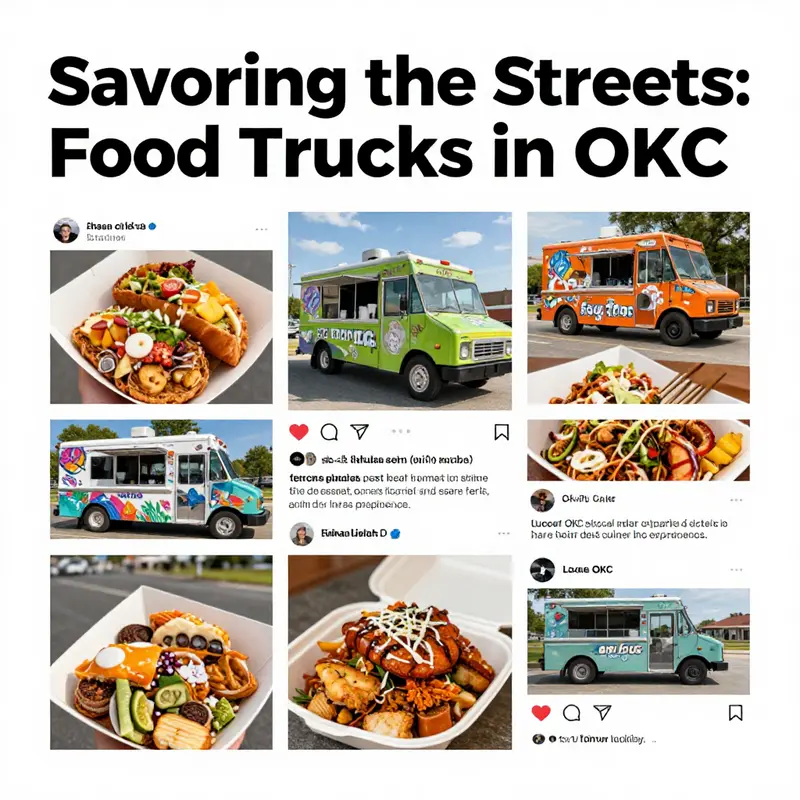
In Oklahoma City, April 20 often arrives with the same crowd noise as any other sunny weekend, yet the city’s street-food heartbeat on that date rarely centers around a single, fixed hub. Food trucks in OKC move like itinerant musicians, following micro-cues from weather, neighborhood buzz, and the shifting rhythms of foot traffic. On a day without a citywide festival or a universally shared event, locating the trucks becomes less about consulting a single schedule and more about reading the city’s social weather. The result is a dynamic, living map made of posts, stories, tags, and comments that drift across platforms much like a flock of birds shifting direction as the air changes. For someone hoping to taste a little variety on 4/20, the approach must be both curious and methodical, a blend of patience and smart listening to the city’s digital signals. It helps to remember that the absence of a centralized event does not mean a pause in the urban food narrative; it means the narrative is more distributed, more improvisational, and more closely tied to what people talk about in real time than what a flyer might promise weeks in advance.
Social media has become the city’s most agile map of food truck activity. In OKC, localization tags are not mere hashtags; they function as a connective tissue that links people to places and moments. Tags like #okc, #oklahomafoodie, and more specific labels tied to neighborhoods or districts help hungry seekers discover trucks that are nearby or on the move. They enable a kind of communal search that works even when the trucks aren’t parked in a single lot or tied to a single park. The practice is simple in conception but powerful in effect: a truck posts a location update, a follower saves the location, someone else chimes in with a recommended route or a tip about a nearby parking spot, and soon a small, local network emerges around a corridor or a district. It’s a phenomenon that extends beyond mere geolocation; it builds a local identity around the trucks and the communities they serve, weaving a sense of place where people can connect with food as a social event rather than a one-off purchase.
The more sophisticated operators understand that social media is not a one-way megaphone but a reciprocal space where engagement translates into loyalty. They post updates not only about where they are, but how to find them, what special items are available, and what the behind-the-scenes process looks like. The best feeds mix real-time location with behind-the-scenes narratives—a quick clip of a grill warming up, a manager answering questions about the day’s specials, a glimpse of the prep work that goes into delivering a hot meal during a busy shift. This kind of content invites comments and questions, which the trucks answer with timely responses. The interaction is fluid and ongoing, gradually eroding the traditional notion that a dine-in venue anchors the experience. In this sense, a 4/20 afternoon in OKC can feel less like a static schedule and more like a live, evolving conversation about where people want to gather and what they want to eat.
Beyond the thrill of a live feed, there is a deeper analytic value embedded in these social signals. A growing body of urban research suggests that social media data can illuminate how communities perceive and utilize public spaces, offering a form of community insight that can guide where trucks should position themselves for maximum impact. A study from the University of Oklahoma, focusing on park usage and public sentiment, illustrates how online conversations can reveal patterns of preference and sentiment tied to particular areas. While the data—collected through platforms that capture real-time dialogue—does not replace on-the-ground observation, it can help operators and organizers triangulate where foot traffic is likely to cluster and where positive sentiment tends to concentrate. The implication for a food-truck operator on a day like 4/20 is practical: by listening to where people are talking about OKC’s neighborhoods in real time, a truck can time its moves to align with pedestrians already drawn to a park, a market corner, or a street that is buzzing with weekend energy.
If you are planning to be in OKC on 4/20 and want to chase the trucks with purpose, the strategy is straightforward but formidable in execution. Start with social calendars and event pages that pull together local food vendors and mobile eateries. On Facebook, search for events and groups that consistently feature OKC food trucks, and filter for dates around April 20. On Instagram and X (formerly Twitter), follow not only the branded handles of trucks but also the localized tags that locals routinely use when they’re scouting for curbside meals. Hashtags such as #OKCFoodTrucks, #OKCStreetFood, and more generic city tags like #okc can reveal both the trucks that are actively posting and the spots where their audiences congregate. Eventbrite often lists pop-up markets and neighborhood gatherings where multiple trucks participate, providing a practical glimpse of where a cluster of trucks might appear in a single afternoon. Real-time location apps dedicated to trucks, while variable in coverage, can still offer a snapshot of current geolocations and upcoming stops, enabling a more strategic approach to chasing the fleet.
Yet the reality on the ground is that the city’s food-truck map is not contained within a single feed. It requires cross-channel listening, a habit of checking multiple sources and cross-referencing what you see online with what you observe in person. A truck might post a location update that places it near a particular neighborhood, only to move a block away minutes later because a rooftop event opens up a new appetite for street food or a rain cloud shifts walking patterns away from one block and toward another. In such moments, the ability to adapt becomes the most valuable skill for a hungry explorer. This adaptive approach—checking a mix of feeds, reading the sentiment of comments, and noting which neighborhoods repeatedly attract attention—helps create a practical, usable picture of where to find trucks on a given day. It also pays homage to how the city’s appetite for variety shapes the movement of the trucks themselves, as operators follow foot traffic rather than chasing a fixed schedule.
As operators strategize their routes and as curious diners seek out a taste of the city, it’s worth acknowledging a subtle but powerful dynamic: the social networks surrounding food trucks extend beyond the city’s physical boundaries. A truck’s online presence can draw in visitors from nearby suburbs or even other towns who are curious about a particular cuisine or who are drawn to a certain style of mobile dining. The geographic reach of social media means that a truck can cultivate a reputation that precedes its arrival, and a loyal following can follow it from neighborhood to neighborhood, turning a one-time stop into a recurring ritual. This is the essence of the modern food-truck ecosystem in a mid-sized city: a network that is mobile, responsive, and increasingly data-informed. The real-time nature of social media makes it possible to feel the pulse of OKC in near real time, even on a day without a marquee event. It is this living, breathing map—the interplay of post, comment, and in-person encounter—that shapes the experience of 4/20 for locals and visitors alike.
For operators who want to participate in this ecosystem thoughtfully, one practical recommendation is to think of branding as a compass as much as a banner. A consistent visual identity makes a truck easier to identify in a sea of mobile options, and while the food itself remains the centerpiece, the visual signal—colors, typography, and a clean, recognizable design—helps first-time customers remember where to look next time they are in the area. The principle is simple: be easy to spot, easy to recognize, and easy to share. In the sense of online discovery, a well-designed identity can translate into a better click-through on a post, a higher likelihood that a passerby will stop at a corner where your truck is stationed, and a more efficient chance of building a loyal local following. For operators who want to explore this dimension further, resources that discuss branding on wheels offer design principles that can translate into real-world gains. You can explore a practical guide to food-truck graphics and identity at the branding-on-wheels-the-ultimate-guide-to-food-truck-graphics-and-identity page. This resource frames how color palettes, emblem design, and legible typography work together to create a visual hook that can be recognized in a bustling street scene. branding-on-wheels-the-ultimate-guide-to-food-truck-graphics-and-identity
While branding matters, the strategic use of social signals remains the most actionable tool for locating trucks on a date like 4/20. A practical approach is to schedule a light, multi-channel scan across the morning, midday, and late afternoon, checking for updates in a staggered pattern so you aren’t overwhelmed by a flood of posts all at once. Look for a consistent thread: a neighborhood where several posts converge, a time window when foot traffic tends to spike, or a cluster of comments asking about a particular truck’s next stop. When patterns emerge, you can triangulate your path to pass through those neighborhoods during the peak window, increasing your chances of a satisfying encounter with multiple trucks at once. This method respects the city’s cadence and acknowledges that the human element—like a group of friends agreeing to meet for lunch in a specific district—often serves as the strongest spark for a line forming outside a truck, a scene you might not predict from a single post.
The broader takeaway is not about chasing a definitive list of “where the trucks are on 4/20” but about understanding a city in motion, where digital chatter and physical spaces intersect to create a flexible, redistributable map of culinary options. The careful reader will notice how this dynamic aligns with urban studies that emphasize the value of social media in revealing how residents interact with public spaces. The Oklahoma study referenced earlier underscores that sentiment analysis and interaction density can signal which parks or plazas become focal points for communal life, and which routes attract the most attention. For anyone who cares about OKC’s street-food culture, this is not a matter of waiting for a single event to organize a food journey; it is about embracing a continuous, data-informed practice of listening, moving, and tasting.
In the end, the question of “where are the food trucks in OKC on 4/20?” resolves into a broader understanding of how the city’s appetite travels through space and time. The trucks, moving bodies of commerce and craft, ride the currents created by weather, events, and the micro-decisions of passersby who decide to turn left instead of right, to linger at one corner a little longer, or to follow a bright sign to a nearby intersection. The social channels you monitor become not just a tool for finding a meal but a lens into the day’s social geometry. And while a single, definitive map may be elusive on a date without a citywide festival, a well-timed blend of online listening and street-level curiosity can yield a surprisingly rich, locally grounded sense of where the city’s mobile kitchens are likely to congregate—and where they may drift next, guided by the same subtle cues that shape every other urban pursuit in OKC. For those who want to deepen their understanding of how these signals operate in the wider city landscape, academic resources offer a complementary perspective, and one that can inform both casual diners and professional operators seeking to optimize their travels or their routes. As one studies the city’s digital echo chamber, a practical takeaway emerges: treat social media as a companion map, not a replacement for street-level observation, and let the city guide you toward the next tempting stop rather than trying to command every move.
External context from urban research provides an additional layer of credibility to these observations. A respected study from the University of Oklahoma highlights how social-media data can illuminate patterns of space use and public sentiment in OKC, reinforcing the idea that the digital conversations around a place reflect real-world behavior. This connection between online discourse and physical spaces is not merely theoretical; it translates into concrete tactics for anyone seeking to understand where crowds might gather, where vendors should focus their attention, and how audiences respond to different kinds of culinary offerings. For readers who want to explore this dimension more deeply, the following external resource offers an entry point into how scholars view urban spaces through the lens of social data: https://www.uok.edu. This link provides access to broader discussions that contextualize the practical, day-to-day experiences of food trucks amid the city’s evolving social fabric.
If you are an operator seeking to capitalize on these insights, or a dedicated diner who wants to plan a food pilgrimage through OKC, the combination of social listening, cross-platform checks, and a smart, brand-consistent presence on the street can transform a vague sense of possibility into a tangible, enjoyable afternoon. It is a reminder that even on days without a marquee event, the city’s culinary landscape is alive with choices and opportunities, waiting to be discovered by those who listen with intention and move with curiosity. And as you move through the afternoon, remember that the city’s social pulse is a resource just as valuable as any map or app—if you know how to read it, and if you keep your eyes and appetite open to the serendipity that makes street food such a vital, shared experience in OKC.
Where the Trucks Roll on 4/20: Navigating OKC’s Food Truck Scene When There Isn’t a Citywide Festival
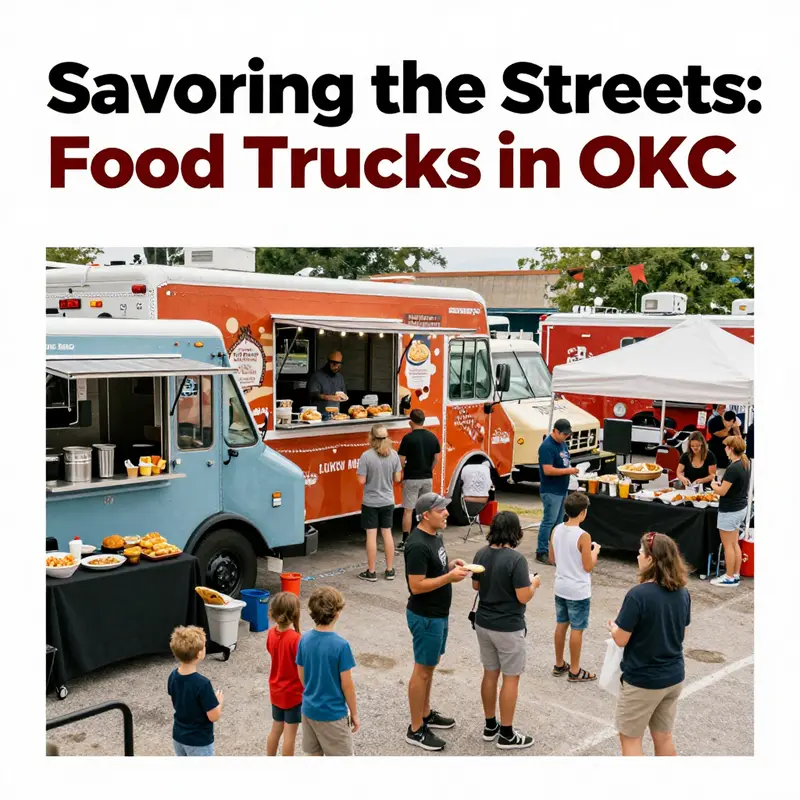
In Oklahoma City, the food truck scene moves with the tempo of the city itself. Some days the streets bloom with official festivity, roving carts parked shoulder to shoulder along a curated route, programmed by city events and co-hosted markets. On other days, especially around April 20, the skyline doesn’t announce a single, well-publicized gathering. Yet that absence is not a void for the hungry or the curious. It is a map with more possibilities and more variables, a cityscape where opportunity travels on wheels and the real work of discovering where the trucks are happens in real time, through a mix of observation, networks, and patient sleuthing. If you’re chasing the exact whereabouts of OKC’s food trucks on a date that isn’t tied to a major festival, you are not alone. The appetite to know where the trucks will roll is a natural impulse for planners, diners, and vendors alike. What follows is less a timetable than a way to read the city’s rhythm on a day when the events calendar isn’t shouting from the rooftops, but the street corners still hum with potential.
OKC is a city of districts that have become informal hubs for the mobile culinary economy. The Paseo Arts District, Bricktown’s walkable cores, Midtown’s bustling blocks, the Plaza District’s eclectic storefronts, and the park-and-market clusters that populate downtown all tend to attract a rotating cast of vendors. The absence of a citywide festival on a specific date does not erase those patterns; it invites readers to look for the subtle signals that define a day’s best chances for a truck sighting. In practice, this means understanding how vendors decide where to park, what markets they join, and how they communicate with each other and with potential guests. It also means recognizing what the city’s open-public spaces, and the unofficial calendars that vendors rely on, can tell us about the likely routes on any given weekend or holiday-adjacent day.
The first clue you learn to read is the rhythm of markets and pop-up aggregations. Oklahoma City supports a steady flow of weekend markets and evening gatherings in parks, plazas, and former industrial sites that have become community anchors. These are not grand, city-sponsored productions every week, but they function like magnets for vendors who prefer a predictable, repeating audience: local residents, workers, students, and visitors who are out to sample the city’s evolving street-food identity. If you map the recurring markets—those that typically return on Saturdays or Sundays, or after work during the warmer months—you begin to see where trucks are most likely to appear when a specific date lacks a formal festival. Even on a day like 4/20, when an official carnival is not on the city’s ledger, these venues still attract a fleet of trucks that appreciate a steady stream of foot traffic.
The city’s weather, traffic patterns, and permit calendars further shape a truck’s choice of location. Parks and public squares require permissions, and the organizers who coordinate these permissions balance the desire for variety with the need for reliable service. A single park may host a community market on a given weekend, and the next weekend a different operator may pick the same spot, driven by a rotation among vendors or a shift in sponsorship. The result is a living map rather than a static schedule. On a date like April 20, the best approach is to treat the city as a network of potential crossroads rather than a single destination. You start by identifying a few anchor districts that consistently host food trucks when formal events are sparse: places with a history of markets, sidewalks that accommodate long lines, and open spaces that welcome temporary stalls. From there, you follow the natural cues—parking lots with visible truck lines brandished by the wait staff of nearby eateries, the clatter of a portable grill near a park entrance, a crowd gathering near a street corner with a makeshift seating area—until the pattern resolves itself into a probable path for that day.
To translate this pattern into a practical plan, you need to think about the logistics of mobile dining as a system. Food trucks are small businesses that thrive on visibility, mobility, and speed. Their routes are shaped by fuel costs, crew schedules, food safety requirements, and the vendors’ relationships with market organizers and property owners. A truck cannot be everywhere at once, but it can be in two or three favorable spots simultaneously, rotating as the day unfolds. This is why the best strategy is often a combination of early reconnaissance and flexible timing. If you arrive early at a likely hotspot, you may catch a truck or two before the lines swell. If you wait a bit, you may see a shift as vendors relocate to a new corner that offers a stronger line or a more forgiving parking arrangement. That fluidity is not a sign of unreliability; it is the nature of a mobile dining ecosystem that thrives on independence and opportunistic planning.
What does this look like in practice? Imagine a late-mpring afternoon in a central district that sits between downtown conveniences and residential pockets. The temperature has just cooled to a comfortable level; people stroll, linger, and decide where to eat with a mix of appetite and curiosity. A truck or two pull into a shaded lot behind a market hall, while another set circles the perimeter of a community park, pulling into a small plaza where a musician has drawn a casual crowd. The menus offered are a chorus of familiar comfort foods and adventurous bites, each truck representing a micro-entrepreneur ship sailing from its home kitchen to the street. The experience is not planar; it is layered with the sounds of grills, the hiss of steam, the clink of cups, and the occasional cheer from a small group of patrons. The magic lies in the interplay: the truck with a bold, recognizable signature on its side, a separate truck with a more experimental fusion concept, and a third that is a favorite of neighborhood regulars. The three form a triangle of choices that makes the afternoon feel like a curated, spontaneous festival of flavors rather than a static lineup.
For someone who hopes to discover these patterns on a date like 4/20, there is value in thinking beyond a single, fixed destination. Instead, consider a daylight-to-dusk arc that weaves through several micro-hotspots. A good arc might begin with a stroll through a popular market block where a cluster of trucks tends to set up on weekends. From there, a short walk toward a nearby park or plaza could reveal a second cluster that gathers as the afternoon heat shifts. If time allows, a quick hop to a third location can capture the late-afternoon arrivals—the trucks that prefer a later rotation when foot traffic spikes again as workers leave offices and families begin their evening routines. This approach respects the unpredictability of a date without a formal festival while still offering a satisfying, food-forward itinerary.
The social dimension of food trucks adds a layer of richness to the search. Vendors are not simply sellers of meals; they are storytellers who bring a sense of place to the street. Their social presence—their posts, their interactions with customers, the way they describe the sourcing of ingredients—transforms a route into a narrative. On a date when a city calendar is quiet, the chance to interact with a truck owner or cook becomes a meaningful part of the experience. A brief chat about a dish’s inspiration, a note about a special ingredient, or a promise to return for a new weekly special creates a connection that outlasts the meal. This human element is a reminder that the city’s food truck ecosystem depends as much on relationships as on the wheels that carry it.
Reality check and practical steps often matter most when the plan is to find trucks on a day without a festival. Start with a mental map of the city’s most reliable food-truck zones—areas where the rhythm tends to repeat itself on weekends or after-work hours. Then, add a layer of flexibility: identify a few backup sites that can accommodate impromptu movements, such as larger parking lots near community centers, or edge-of-park corners where vendors can easily pull in and out. Use these anchors to guide your day rather than chasing a single rumor of a truck lineup. Remember that the city’s open spaces are designed to accommodate more than one operator at a time, and that a short walk can yield a surprising find. In this context, a date like 4/20 becomes less about a precise schedule and more about cultivating a sense of discovery, a way to read the city’s food geography as it breathes and shifts through the afternoon.
If you’re planning to share this journey with others, keep in mind that the best experiences often emerge from a blend of curiosity and courtesy. Vendors appreciate predictable guests who respect the flow of the crowd and the needs of the crew. Arriving with cash or a basic card option is practical, but being patient in line and understanding that some menus change daily reflects a respect for the craft. A meal shared outdoors in OKC’s mild weather can become a simple celebration of the city’s vitality, a reminder that street food is an expression of community as much as it is a product for sale. The absence of a formal festival on a given date is not a signal of emptiness; it is an invitation to participate in the city’s organic, evolving food culture. Each visit becomes a chance to catch the pulse of a district, to observe how the community responds to the trucks’ presence, and to notice how a few blocks can offer a miniature festival in the making.
For readers who want a practical touchstone beyond general guidance, there is a resourceful route for sustainability and planning. Vendors, organizers, and patrons often benefit from looking at the logistics side of the business—the choreography of parking, setup, and service that allows a truck to turn a corner into a temporary kitchen. The idea is not to chase every possibility but to cultivate a dependable set of steps that can be repeated in future visits. In this sense, the pursuit on 4/20 resembles a carefully assembled itinerary rather than a single destination. And while no two days will look identical, the underlying logic—identify fixed clusters, anticipate shifts, stay flexible, and treat every encounter as a chance to expand your understanding of the city’s food landscape—remains a reliable compass.
As you refine your approach, a single, practical tip can anchor your planning: think in terms of partial routes rather than full schedules. Allow yourself the possibility of arriving at a location, staying long enough to sample a couple of dishes, and then pivoting to a nearby alternative if the crowd moves elsewhere. This approach preserves the sense of discovery and minimizes frustration when a given site proves unexpectedly quiet or crowded. It also aligns with the reality that food trucks float on the edge of time—arriving, serving, and moving with the flow of patrons who themselves are moving through the city’s spaces from morning to evening. The success lies not in a rigid plan but in a nimble, observant mindset that treats every street corner as a potential stage where good food, good company, and good timing can converge.
For those who crave further practical insight into the logistics that turn a food-truck route into a sustainable business, there is a broader conversation about parking, street access, and regulatory navigation. Understanding these elements can make a difference in how confidently you can plan to visit trucks on any given date, including 4/20. It is not just about where the trucks are, but how they got there and how they move between sites in pursuit of efficiency and quality. The conversation extends to the conversations drivers have with market organizers, local authorities, and property owners—an ecosystem built on cooperation, patience, and adaptability. When you approach the city with this awareness, the experience of discovering trucks on a date without a festival becomes less about luck and more about attentive, respectful exploration. You learn to read the signs that indicate a truck is ready to roll, even if the city’s official calendar has nothing explicitly scheduled for that moment.
In the end, discovering where the trucks will be on a day like 4/20 in OKC is less about finding a fixed destination and more about following a living map. It’s a map drawn by the trucks themselves, by the markets that host them, and by the neighborhoods that welcome them with open sidewalks. It invites you to listen for the music of grills, the chatter of regulars, and the tentative aroma of a new dish that breaks your routine. It rewards patience, curiosity, and a willingness to move with the city’s tempo. And if you combine this ground-level approach with a thoughtful, flexible plan, you can assemble a satisfying, street-food-rich experience even when a citywide festival is not on the books. The trucks will roll. You simply have to look, listen, and be ready to follow.
Internal link note: for readers who want a deeper dive into practical parking considerations that often determine a truck’s daily routes, see the resource on mastering parking challenges for food trucks. This material can offer a grounded, experience-based perspective on how trucks adapt to different spaces and constraints across the city. mastering parking challenges for food trucks
External resource: for a broader view of Oklahoma food truck events and listings, you can explore external listings that compile market opportunities across the state. https://www.eventbrite.com/e/food-trucks-events-in-oklahoma-united-states-tickets-1234567890
Culinary Currents on 4/20: Mapping OKC’s Food Truck Scene and Local Flavor
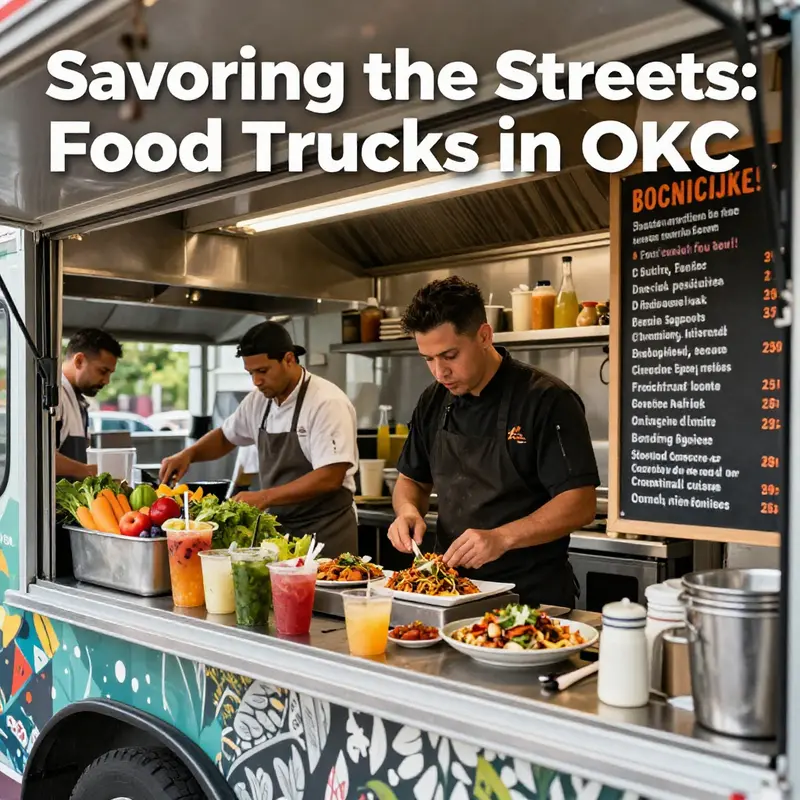
The city bends toward the street with a rumor of smoke and spice on a day that some residents mark in memory, others in curiosity. In Oklahoma City, April 20th does not anchor a single, citywide festival that pulls every truck to one plaza; instead, it becomes a study in how a dispersed, mobile dining culture adapts to a shared calendar. On the ground, the trucks drift through the urban fabric, staking out the places where foot traffic meets appetite: the sunlit edges of downtown, the reopened alleys near office corridors, the pulse of neighborhood markets, and the seasonal hum of farmers’ markets that lace spring and early summer with a scent of herbs and smoke. The result is not a parade of sameness but a mosaic of craft kitchens, each with its own tempo, its own source of pride, and its own idea of how to feed a city that values speed and soul in equal measure.
What makes OKC’s food truck scene on a date like 4/20 particularly revealing is the absence of a single, mandated hub. The trucks are free agents, yet not aimless; they rely on a collective intelligence formed by the city’s sharing of space and signals. Real-time updates are the lifeblood: a truck that has just finished a run in a central district will pivot to a nearby park lawn for a turnover, a different crew may fire up a smoke-driven grille after a farmers’ market close, and a small kitchen with a pin of a map on its side sign may relocate to a block where a music performance is drawing a crowd. The dynamic is less about a fixed address and more about a choreography of places. It rewards those who read the city’s rhythms—the time of day, the weather, the crowd’s mood, and the signals a vendor sends out through social media and word of mouth.
To follow those signals, today’s diners lean on digital trails as much as they lean on the scent of seared meat. Facebook Events often become the first breadcrumb: a post announcing a pop-up downtown, a pop-up loop between neighborhoods, or a street-food collaboration for a weekend that coincides with April’s openness to outdoor gatherings. Instagram is filled with ephemeral maps and stories showing where a truck has parked for the hour, or where a passenger-loaded cart is turning a corner to catch a new traffic flow. Hashtags like #OKCFoodTrucks or #FoodTruckOKC become street-level newspapers, readable in real time by anyone who wants to taste the city’s trends as they evolve. Eventbrite lists may surface a local neighborhood festival that has opened space for several trucks to showcase regional flavors, hour by hour, which is often where the real test of concept meets the real test of palate. The most practical tool, of course, remains the mobile apps that track live locations. They weave a line of sight from the kitchen’s heartbeat to the diner’s appetite, turning the act of eating out into a social, shared itinerary rather than a solitary decision.
The geographic logic of OKC’s truck scene around 4/20 is a study in balance. There is the pull of urban centers—downtown districts where office workers and night owls cross paths with the sizzle of the grill. There is the draw of cultural corridors like arts districts and market streets where communities gather for markets, live music, and street performances. There is the evergreen appeal of parks along the river, where a cool breeze can transform a lunch hour into a moment of communal nourishment. Trucks profit from proximity to these hubs, but the real value lies in their willingness to shift. A truck might move from a busy square during a lunch rush to a quieter corner after the crowd thins, chasing lingering demand and the chance to forge a longer conversation with a familiar customer. In a city that prizes authenticity and speed, the ability to pivot becomes a competitive edge and a social signal that the kitchen is as responsive as it is creative.
What truly defines the food truck fare around this time is the way culinary experimentation travels through the same streets as the people who crave it. The scene has matured beyond the generic street foods of earlier decades and toward a more deliberate craft. Live-fire techniques—grilling over charcoal or wood—bring a primal texture and a caramelized sweetness that can only come from direct heat. Flash-frying adds a crisp counterpoint to tender interiors, while sous-vide finishes can lock in tenderness before a final sear—an approach that emphasizes texture and mouthfeel as much as impact and speed. Cooks who blend these techniques with local ingredients create a dialogue between place and plate, a sense that the city is not merely a backdrop but an ingredient itself in every dish.
Amid these currents, a recognizable shape emerges: the rise of specialty-focused trucks that cast a spotlight on regional ingredients and heritage recipes. In OKC, this often translates into a reverent interpretation of the onion burger, a Smash-style burger whose genesis sits in the city’s culinary memory. The onion burger is not just about beef and bread; it’s about a specific method—slowly rendered onions that bleed sweetness into the patty, releasing umami as the patty caramelizes. The result is a humble dish elevated by technique and patience, a dish that demands a soft bun that can cradle the juicy interior without collapsing under heat and steam. Truck menus that foreground this item typically pair it with a restrained set of condiments—mustard, a crisp pickle, perhaps a smear of fresh lettuce—so the core aromas and textures can sing. What this implies about OKC’s truck culture is a reverence for flavor clarity and a belief that simple ingredients, treated well, can outshine more complicated fancy fare.
Several trucks have embraced this philosophy while pushing boundaries in other directions. They chip away at the stereotype of the street vendor by layering flavor, texture, and context. They use live-fire grilling to bring a smoky depth that lingers, then balance intensity with bright, acid-driven toppings to keep the palate engaged. Some introduce regional ingredients with a modern twist—corn from nearby fields paired with a tangy citrus reduction, a chili crisp that carries heat without overpowering the meat’s character, or herbs harvested from a community garden that week. This is how the local scene evolves: not by repeating old patterns but by iterating, testing, and sharing the results with the same audience that becomes both critic and partner in the cooking process.
The narrative of today’s food trucks is inseparable from the people who run them. Many operators have built multi-channel businesses that hinge on the social web as much as on the grill’s flame. They cultivate relationships with diners who seek not just a meal but an experience—an encounter with a cook who can explain the provenance of a spice, who can describe how a crust forms on a patty under a kiss of heat, or who can riff on a menu item with a cultural memory that resonates with the city’s diverse neighborhoods. The trucks are not simply moving kitchens; they are portable classrooms and tiny cultural centers. They offer a stage for regional ingredients to tell their story in a crowd, and they create a sense of ritual around a quick, shared meal. In this sense, the food truck is a micro-institution of OKC’s culinary life, a place where entrepreneurship, tradition, and community intersect.
A practical guide to navigating this world, if you find yourself on 4/20 in OKC, is to treat the day as a chance to follow a pattern rather than chase a destination. Start with the city’s social feeds, and track where a few trusted trucks post their appearances. Then, look for the urban clusters where there is gravity—near the core, near a music venue, near a farmers’ market, near a festival staging area. The synergy of these locations often means multiple trucks congregate in a short radius, creating an unspoken map of where to go for the most varied and reliably fresh options. If you have a taste for a specific cuisine, that’s where a little pre-planning pays off. Check if a truck has posted a sample menu for the day; some may offer a limited sequence of dishes that highlight seasonal ingredients or a signature dish that anchors their identity. For those who want to discover something new, wandering between trucks—sampling bites, comparing textures, savoring a regional staple presented in a new light—can be as rewarding as the meal itself.
To keep that sense of discovery alive, many operators lean into collaboration. A pop-up event can feature two or three trucks, each offering a complementary bite that invites diners to move from one stand to another and build a little, informal tasting tour. The city’s spaces—the parks, the alleys, the plazas—become a fluid dining room where the rhythm of the day is measured not only in orders but in social interactions: a neighbor trading a tip about a new vendor, a student turning to a cook to learn a cooking technique, a group of friends deciding to try a bite that disappears quickly because its ingredients are in demand. It’s a scene that rewards listening as much as tasting, curiosity as much as appetite, and it shows how a metropolitan food culture can function on the fly with a sense of pace and poise.
For readers who want to plan ahead without sacrificing spontaneity, the chain of local signals remains essential. The city’s official association for food trucks often curates calendars that list events, permit windows, and market days where trucks are guaranteed to be present. These listings are invaluable for someone who wants to time a visit with an event that heightens variety without turning the experience into a rigid schedule. They also point toward the broader ecosystem that supports street food in OKC: permitting frameworks, festival partnerships, and the cross-pollination with local farmers and artisans. The result is a thriving, multi-sensory economy in which the kitchen on wheels is both a business and a cultural conduit. The trucks may come and go, but the energy they generate—a sense that food can travel as freely as people do—remains a constant invitation to taste and participate.
As you move through OKC’s streets on 4/20, you may notice that onion burgers are not mere nostalgia but a signal of continuity. The old flavors meet new techniques, and the city witnesses a culinary conversation between heritage and modern craft. It is this conversation that keeps the trucks relevant in a city whose appetite for speed and quality grows with every season. The trucks’ ability to adapt—to alter a recipe for a limited run, to swap a sauce when a supplier faces a hiccup, to propose a menu that speaks to a neighborhood’s identity—becomes the thread that ties disparate corners of the city into a single, shared dining experience. The experience is neither a show nor a race but a choreography of taste, movement, and memory, performed on wheels.
For those who want to stay in touch with the pulse of OKC’s mobile kitchens, a few practices help. Follow the trucks you trust, and give yourself permission to sample beyond the familiar. Engage with the cooks to learn about where ingredients come from and how techniques transform simple foods into something memorable. Read the stories behind the plates—the origins of a recipe, the seasonal twist that makes a dish bright, the way a neighborhood’s resources shape a menu. These are the narratives where the city’s food culture reveals itself: a city that cares about technique, about provenance, and about sharing flavor with the community it calls home. And as trends rise and fall, the core remains the same: food on wheels that invites conversation, fosters connection, and makes a meal feel like an event rather than an errand.
If you’re seeking a tangible thread to trace in this landscape, start with the community’s own archives. The OKC Food Truck Association site offers a gateway to schedules, permit windows, and event calendars that ground your explorations in real-time data rather than memory. These resources anchor a day that can otherwise feel fluid, giving you a reliable grounding while you chase the city’s evolving flavors. For more context, and to see how others are narrating their journeys with the food trucks of OKC, the blog at Los Chiflado’s Truck provides a window into the stories behind the wheels and grills. Read more at loschifladostruck.com/blog.
In sum, the food truck scene in OKC around 4/20 embodies a paradox: freedom of movement within a framework of community signals. It’s a living example of hyper-local, fast-casual dining evolving into a contemporary culinary incubator. The trucks are staging grounds for technique, culture, and collaboration, where regional ingredients meet heritage recipes and modern methods. The onion burger becomes a touchstone, not a relic, a reminder that enduring flavors can emerge from careful, disciplined craft and a willingness to experiment on a crowded street. The city’s street-food narrative—robust, adaptive, inclusive—speaks to a future where taste travels as quickly as ideas, and where a simple bite in a busy city can feel like a shared, comforting ritual.
External resource: https://www.okcfoodtrucks.org
Final thoughts
As April 20th approaches, it’s clear that Oklahoma City’s food truck scene is brimming with energy, innovation, and flavor. From lively locations and engaging social media buzz to potential event collaborations, there’s never been a better day to explore the diverse food offerings in OKC. Whether you are in search of trendy food options, authentic local flavors, or just want a candid space to socialize, food trucks will certainly enhance your culinary journey this date. So mark your calendars, gather your friends, and get ready to embark on a food adventure that celebrates the vibrant street food culture of Oklahoma City.