
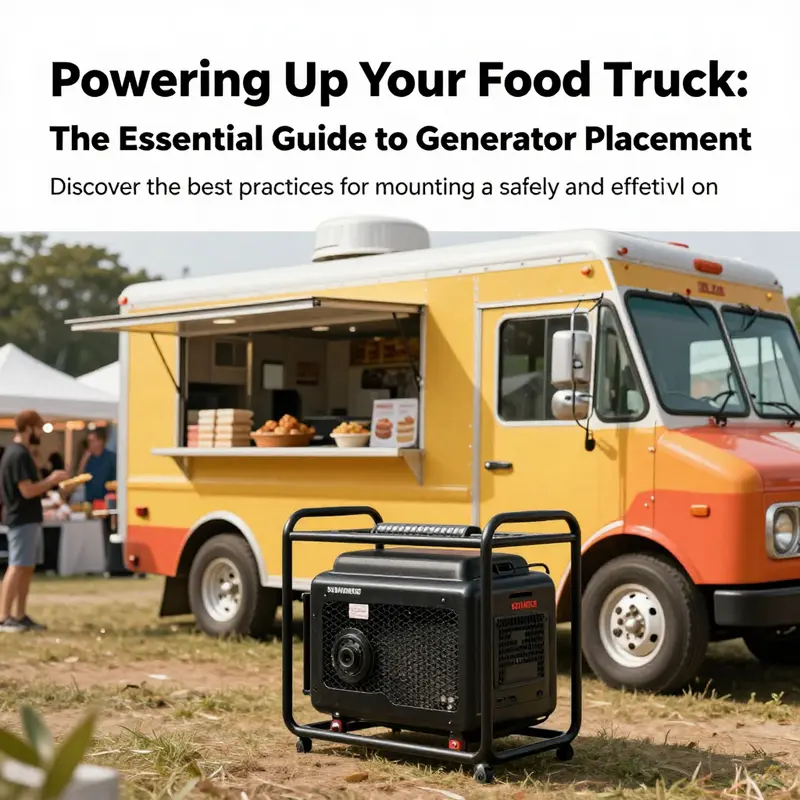
Choosing the right placement for a generator on your food truck is a critical aspect of ensuring its efficient operation. Not only does the location impact safety and accessibility, but it also influences the overall performance of your mobile kitchen. With a focus on ventilation and safety, accessibility, noise reduction, and weight distribution, this guide will help event planners, corporate teams, community groups, food enthusiasts, and all food truck owners make informed and strategic decisions. Let’s dive into the key factors to consider when mounting a generator, ensuring that your food truck runs smoothly while creating a safe and enjoyable experience for your customers.
Ventilation in Motion: Strategic Placement of a Generator on a Food Truck for Safety, Efficiency, and Quiet Operation
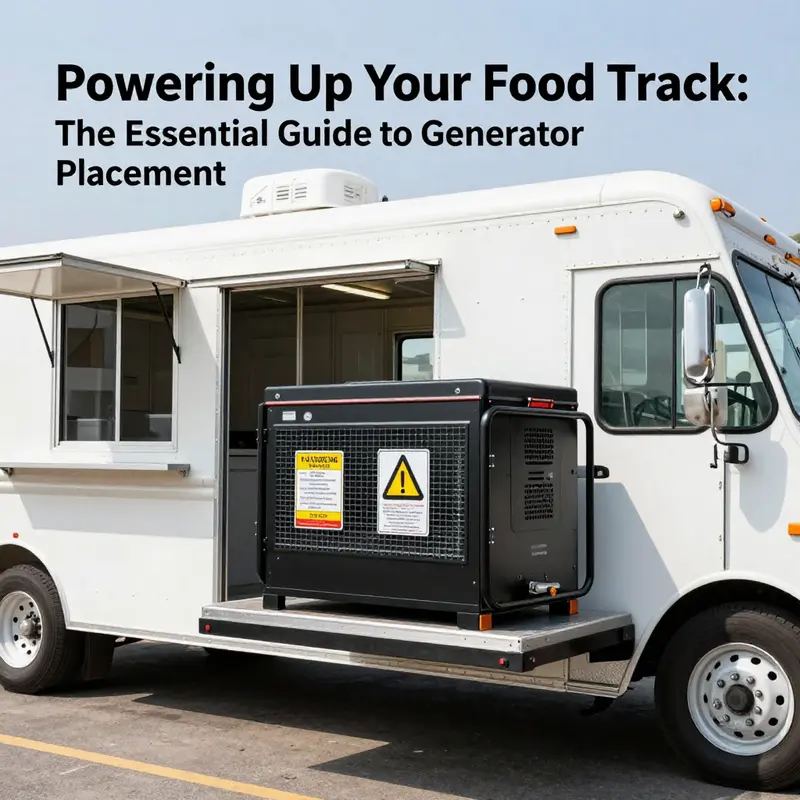
Choosing where to mount a generator on a food truck is more than a matter of space. It is a careful balance of ventilation, safety, maintenance access, and customer experience. When you serve meals in a mobile environment, the goal is to keep the power steady without compromising the kitchen’s cleanliness, air quality, or the crew’s ability to work efficiently. The path to that balance starts with recognizing that the generator is a heat source, a potential exhaust risk, and a component that adds weight and vibration to a moving platform. All of these factors must be weighed together as you decide how to integrate power into your overall design. In practice, the most practical and safe approach is to position the generator outside the immediate cooking zone, with an eye toward airflow, serviceability, and noise containment. Yet the best exact placement can vary depending on the trailer’s layout, the type of generator, and the specific demands of your menu. A thoughtful layout makes it possible to run a high-demand service without burning more fuel, raising temperatures, or obstructing access to critical equipment. For many operators, the tongue or front portion of the trailer frame becomes the preferred starting point, because it offers a combination of accessibility and clearance that is difficult to achieve in other spots. Mounted correctly, the unit can pull in cooling air, vent exhaust away from grease-laden zones, and sit behind a protective enclosure that minimizes the spread of heat and sound toward the dining area. The practical advantages extend beyond safety. A generator mounted to the truck’s tongue often keeps the rear doors and serving window free from heat, fumes, and the splashes of moisture that can come from a busy service line. It also provides a straightforward path for fuel lines, electrical conduits, and exhaust piping, all of which benefit from a centralized, external mounting approach. It is important to acknowledge, however, that the tongue is not a one-size-fits-all solution. Some configurations may place the tongue too close to the door seals or ventilation intakes on the kitchen side, which could undermine airflow and complicate maintenance. In those cases, a side-mash or rear-exterior enclosure may offer a better balance of service access and heat dissipation. The best approach is to work with a qualified electrician and a generator manufacturer to ensure the installation meets electrical and structural requirements, local codes, and fire-safety standards. The professional assessment can help you determine if a tongue mount is the simplest and most effective route or if an alternate exterior location can deliver the same safety margins with fewer compromises to the kitchen’s workflow and cold-chain equipment. In any scenario, code compliance, fire safety, and proper ventilation are non-negotiable. Exceeding basic clearance requirements and providing dedicated exhaust routing minimize heat buildup and reduce the risk of heat-induced damage to sensitive components like refrigeration, POS systems, and digital displays. The nature of a food truck operation—where grease, moisture, and high humidity are common—means that any enclosure used to house a generator should be purpose-built for harsh conditions. A weatherproof, corrosion-resistant enclosure with louvers for ventilation is far preferable to an improvised box that muffle sounds but traps heat. The enclosure should incorporate anti-vibration mounting to prevent the generator’s rhythmic shake from transferring into the chassis and to spare customers from the perception of constant engine noise. The enclosure’s design must also account for condensate and splash protection, since spilled oils and cooking vapors can accelerate corrosion and shorten the life of electrical connections. When considering whether to mount the generator on the tongue, near the trailer’s front, or on the side, you should also account for airflow. The goal is to create a flow that brings in cooling air from the exterior, channels exhaust away from intake vents, and reduces the chance that exhaust gases, even when diluted, could find their way into the kitchen or canopy. A practical way to prioritize ventilation is to run the exhaust pipe away from the main service window and any air intakes for the kitchen hood or grease filters. For many operators, this reduces the likelihood of backdrafts and prevents exhaust heat from irradiating the cooking line. It is also worth considering the direction of travel and typical service patterns. If you spend longer events with the truck stationary and the generator idling to support extended service, superior ventilation and quieter operation become even more critical. Inverter generators, when paired with appropriate load management, offer a compelling combination of clean power and adaptive engine speed. They can automatically throttle to match demand, which means less noise, lower fuel consumption, and reduced thermal stress on the enclosure and surrounding equipment. The result is a more pleasant dining area and a more efficient power system overall. This efficiency is not just about comfort; it translates into practical reliability. The ability to adjust output to the exact needs of a given service reduces the risk of overheating, trips, or electrical faults that could disrupt a busy event. It also means that when the truck is parked in a hot or humid environment, the generator is less prone to heat-related shutdowns. The integration of a generator into a food truck is as much about safeguarding the load as it is about powering it. Sensitive devices such as POS terminals, digital displays, and refrigeration units require stable, clean electricity. Inverter technology helps ensure that the electrical supply is free from the surges and harmonic distortion that can occur with older, non-inverter systems. By maintaining a steadier voltage and a purer waveform, these systems reduce the risk of data errors, display glitches, and compressor faults. This reliability is especially important as events grow, menus expand, and the customer base rises. As you map out the installation, you should also consider how you will service the generator. Accessibility for fueling, oil changes, filter replacements, and routine inspections is essential. Placing the unit in a location that allows easy access can dramatically decrease downtime and simplify maintenance. The tongue, with its readily accessible exterior surface, typically provides a straightforward path to fuel lines, battery charging circuits, and ignition systems without interfering with the kitchen’s workflow. If you decide that a tongue mount remains the best choice, you will want to design a dedicated, secure enclosure that deters theft and resists weather. The enclosure should feature a solid base frame linked to the trailer chassis, rubber isolation mounts to minimize vibration, and weather seals to prevent water ingress. The enclosure should also incorporate a lockable access panel that is easy to operate with gloves on, since food trucks are commonly staffed by cooks who are dealing with steam, oil, and hot surfaces. It is important to plan the wiring and connections with care. A well-planned electrical run reduces voltage drop along the line, protects wire insulation from heat, and simplifies future upgrades. All splices and terminations should be inside an appropriate junction box with weatherproof gaskets. The objective is to create a clean, fault-tolerant distribution system that can reliably deliver power to refrigeration, lighting, cooking equipment, and digital displays. The installer should size conductors to carry the expected continuous load plus a safety margin, and they should route cables away from hot exhaust paths and away from splash zones. In most cases, a dedicated automatic transfer switch, when available, helps ensure that critical equipment remains powered even if the truck’s main electrical system experiences a surge or a fault. In short, the placement of a generator on a food truck is not a single decision but a system design choice. The tongue offers compelling advantages for cooling, access, and clean power delivery, but the best outcome rests on a thorough assessment of the truck’s layout, the equipment mix, and the service patterns you anticipate. To make a solid decision, consult an experienced electrician who understands mobile food operations and the unique demands of outdoor events. Such a professional can verify clearances, confirm proper exhaust routing, and ensure that the enclosure’s materials and construction meet safety standards. If you are still weighing how a generator fits into your broader setup, this is often part of choosing the right food truck model. See the linked guidance for a comprehensive view of how power, space, and equipment work together to shape your final configuration. For deeper technical context and practical case studies on generator systems for mobile kitchens, you can consult EcoFlow’s detailed guide on food truck power and essential generator systems: https://www.ecoflow.com/blog/food-truck-power-essential-generator-systems-guide.
Accessibility as Power: Designing a Generator Mount That Keeps Your Food Truck Running Safely and Efficiently
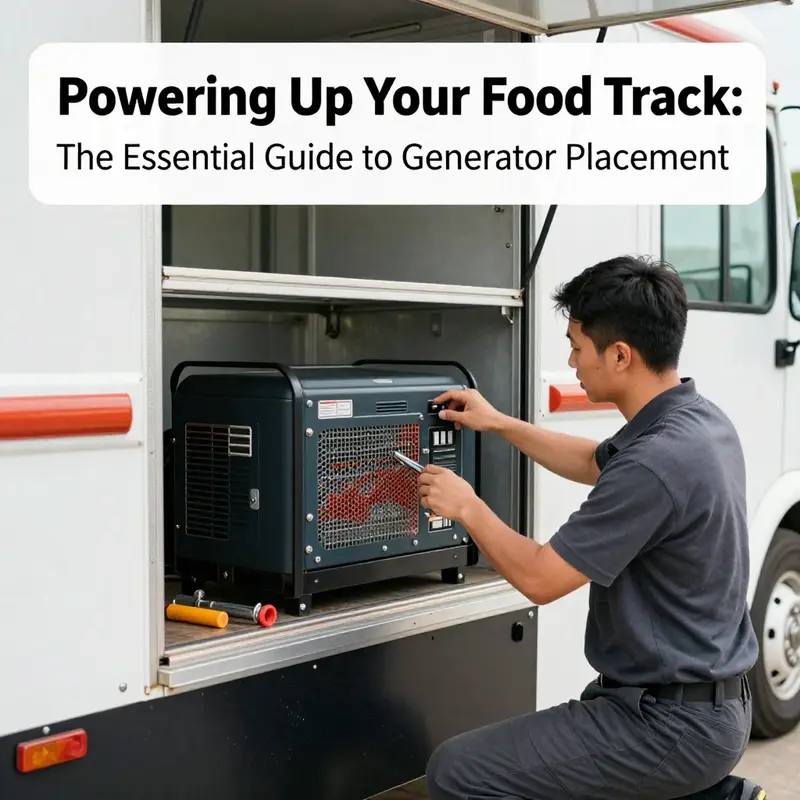
Power is the quiet backbone of a food truck’s operations. The generator sits at the heart of the system, not as a flashy feature but as a dependable muscle that keeps burners lit, refrigeration humming, and lights bright for customers and staff. When the question arises of where to mount this critical piece of equipment, most operators instinctively think about space, weather, and aesthetics. Yet accessibility emerges as a decisive factor that shapes safety, efficiency, and the long life of the unit. This chapter follows that line of thinking, weaving practical considerations into a narrative about how to place, protect, and connect a generator so it serves the kitchen without becoming a liability. The guidance here builds on the idea that a generator is not just a power source but a component that must harmonize with the truck’s rhythm, flow, and safety culture. While exterior mounting near the rear or a side wall is a familiar default, accessibility can push you toward options that prioritize serviceability and air circulation without compromising customer experience or regulatory compliance. In the end, the best mounting decision balances ease of maintenance with reliable performance, strong structural support, and thoughtful integration with the truck’s electrical and mechanical ecosystems.
A practical starting point is to think of accessibility as continuous care rather than a one-time placement choice. The exterior approach remains the simplest in many cases because it keeps the unit out of cramped kitchen enclosures and away from heat and fumes. The exterior location also reduces the risk of carbon monoxide buildup inside the cabin and reduces heat load on cooking equipment, which can help maintain stable temperatures in the galley and on refrigeration lines. These advantages are especially meaningful in hot climates or during long shifts when the generator works harder to meet peak demand. Still, not all exterior spots are created equal. A generator mounted too close to the customer area can introduce noise, a factor that, even when mitigated, can affect the dining experience. Conversely, a poorly ventilated enclosure or a position that blocks access for routine checks can turn maintenance into a chore rather than a routine duty. The balance, therefore, lies in choosing a location that preserves serviceability and safety while supporting a calm, efficient rear or side zone that doesn’t interrupt the flow of foot traffic or the arc of service counters.
One design philosophy that aligns with accessibility is to position the generator where technicians can work without climbing into tight spaces or crawling under a vent hood. A mounting option that often proves advantageous is placing the generator on the trailer tongue or at the periphery of the chassis, rather than tucked into a high, hard-to-reach compartment at the back of the truck. This forward, exterior position creates a large, clear footprint for maintenance tasks: fuel checks, oil changes, and quick inspections can be performed with the unit standing at eye level or slightly below, without tools or kneeling on cold pavement. It also allows easy refueling in a controlled, ventilated area. When the tongue area is dedicated to the generator, you can design a purpose-built enclosure that shields the unit from weather while ensuring the exhaust path remains clear and isolated from the cooking zone. The emphasis on ventilation cannot be overstated. Generators rely on robust airflow to dissipate heat, and in a mobile kitchen the airflow is a moving variable affected by speed, wind direction, and the enclosure’s geometry. A well-ventilated mounting site maintains cooler intake air, reduces thermal stress on the engine, and extends service intervals. The tuck-away exhaust path should be directed away from the food prep area and seating, with a stack or ducting that minimizes backflow into any open zones. When cooling air is allowed to freely reach the unit, the engine breathes easier, sustaining efficiency during peak service and preventing temperature-related derating that can occur when the unit overheats.
To keep this accessibility thread intact across the life of the truck, the installation must also respect structural integrity. A generator adds significant static and dynamic loads to the vehicle, and the resonance of road travel translates into vibrations that can loosen fittings or damage electrical connections over time. A robust mounting framework uses a dedicated skid or bracket system anchored to the vehicle’s chassis and, if feasible, reinforced through the trailer or body structure. The design should account for weight distribution, ensuring the generator’s mass doesn’t upset the truck’s balance or the suspension’s working envelope. Thoughtful weight distribution reduces tire wear and improves handling, especially when the truck is fully loaded with groceries, ice, and customers. Engineers or qualified installers stress that weight distribution isn’t just about where the unit sits; it’s also about how the mount dissipates vibration and how the tank, lines, and wiring route around or through the mounting assembly. Anti-vibration mounts, flexible conduits, and properly rated fasteners are a must in preventing fatigue damage to the frame and to electrical connections. The goal is to create a system that operates smoothly on a crowded street and remains reliable in the endless cycle of movement, weather exposure, and routine maintenance.
Beyond physical placement and structural considerations lies the critical question of sizing. A generator that is too small will constantly run at or near full capacity, shortening its life and creating uneven performance as kitchen loads fluctuate. The recommended practice is to oversize the generator by roughly 20–25% beyond peak power needs. This buffer serves several purposes. First, it accommodates unexpected electrical loads that can pop up during a busy event, such as a surge when multiple pieces of equipment kick on simultaneously or when refrigeration units cycle into high-demand periods. Second, it lowers the load factor on the engine, which reduces wear, minimizes fuel strain, and helps maintain consistent voltage and frequency, crucial for sensitive appliances and control systems. Third, a larger, properly ventilated unit generally enjoys cooler operating temperatures under normal workloads, which again contributes to longevity and reliability. Oversizing must be balanced with enclosure size, noise considerations, and fuel storage capacity. An oversized generator that cannot be accommodated by the enclosure or the surrounding space creates new safety hazards and defeats the goal of accessible maintenance because the unit becomes physically difficult to reach. The installer’s job is to design a system where the generator has enough breathing room, a path for venting, and a staging area for service tasks without impeding daily operations.
The integration of the generator with the food truck’s broader electrical ecosystem is another piece of the accessibility puzzle. Generators do not operate in isolation; they must feed into a distribution plan that prioritizes essential kitchen loads—refrigeration, cooking, and critical lighting—while providing backup capacity for non-critical loads that can be shed if needed. An externally mounted unit offers a straightforward route to connect to transfer switches, feeders, and distribution panels designed for mobile use. The key is to coordinate with the truck’s electrical layout during planning so that wiring runs are protected, weatherproof, and code-compliant. A clean integration minimizes chances of fuel leaks, electrical shorts, or accidental disconnections during busy service periods. A well-integrated system also includes a practical plan for the fuel supply. External mounting catapults the fueling process into a safer, more controlled environment, away from open flames and high-heat surfaces. It is essential to install proper fuel shutoffs, secure hose connections, and a leak-detection protocol, so a small issue does not escalate into a larger risk on a crowded street.
Accessibility also means ongoing ease of maintenance. Regular servicing is simpler when the generator is outside the main kitchen zone, but the enclosure must still protect the unit from weather, dust, and vandalism. A purpose-built enclosure should feature secure access doors that swing or slide away for easy reach, weather seals to prevent moisture ingress, and ventilation louvres that balance protection with airflow. The enclosure should be tall enough to allow service staff to stand and work without stooping, and it should offer space for essential maintenance tasks such as oil checks and filter changes without requiring disassembly of surrounding equipment. A thoughtfully designed service area reduces downtime and improves safety, because technicians can perform routine tasks without juggling hoses, cords, and shop rags in tight spaces. Keeping maintenance logs, recommended service intervals, and emergency shutoff procedures near the mounting area creates a culture of preparedness that travels with the truck on every route.
As you envision the optimal setup, there is value in considering how this choice signals broader business decisions. The mounting strategy reveals a philosophy about resilience, workflow, and customer experience. An accessible exterior mount communicates that reliability and safety are non-negotiable priorities. It says that the business values consistent service, clear air for the kitchen, and a predictable routine for maintenance crews. This mindset translates into fewer unscheduled outages, steadier service during peak hours, and a safer environment for staff who work around hot equipment and electrical systems. It also aligns with best practices for regulatory compliance, as accessible components can be inspected and tested with less disruption and less risk to staff. When coupled with professional guidance from electricians and the generator manufacturer, the result is a mounting strategy that stands up to the rigors of street vending and the demands of busy service windows.
For operators weighing options, a practical path is to treat accessibility as the guiding constraint. Start with placement that prioritizes exterior exposure to air and ease of access. Favor a location on the trailer tongue or the truck’s outer frame where maintenance tasks can be performed without entering the kitchen. Build or buy a weatherproof enclosure with clear clearance around the unit so service staff can reach fuel, oil, air filters, and electrical connections without contortions. Confirm that the mount, the enclosure, and the exhaust path are engineered to minimize heat transfer to cooking equipment, reduce noise leakage toward the customer area, and maintain overall balance in the vehicle. And remember that the generator will be a partner in the kitchen’s operations, not a separate module requiring constant fuss. Coordinate the sizing with anticipated loads for peak service and for refrigeration, while leaving buffer capacity for sudden surges. Plan for integration with the truck’s power distribution so that essential equipment remains energized during transitions or fuel outages, and ensure there is a practical, tested shutdown procedure that can be activated quickly in emergencies.
With these considerations in mind, those who want a broader frame for decision making can consult the broader guide on choosing the right food truck model. This resource helps align machinery choices with truck design, workflow, and long-term maintenance planning, ensuring that the generator’s location works harmoniously with the vehicle’s overall architecture. For more context on how equipment decisions fit into the larger picture of mobile kitchen design, see the article on Choosing the right food truck model. Choosing the right food truck model.
What follows from this approach is a resilient, safer, and more efficient system that serves the kitchen without becoming a constant hurdle. Accessibility should never be an afterthought. It should guide the day-to-day realities of installation, usage, and upkeep. When operators plan with access in mind—from the initial layout to the final commissioning—the generator becomes a reliable companion rather than a source of friction. The result is a food truck that can meet the demands of a bustling service window, stay compliant with safety standards, and demonstrate to staff and customers alike that power, safety, and performance are among the driving forces behind every successful service. And as the unit hums in its well-ventilated, purpose-built enclosure, the kitchen can focus on what it does best—delivering great food with efficiency, consistency, and care.
External resource for deeper reading: For a broader, in-depth exploration of generator systems tailored to food trucks, consider reviewing the external guide on food truck power systems: https://www.ecoflow.com/blog/food-truck-generator-guide
Quiet by Design: Smart Placement of a Generator on a Food Truck for Safety, Sound, and Service
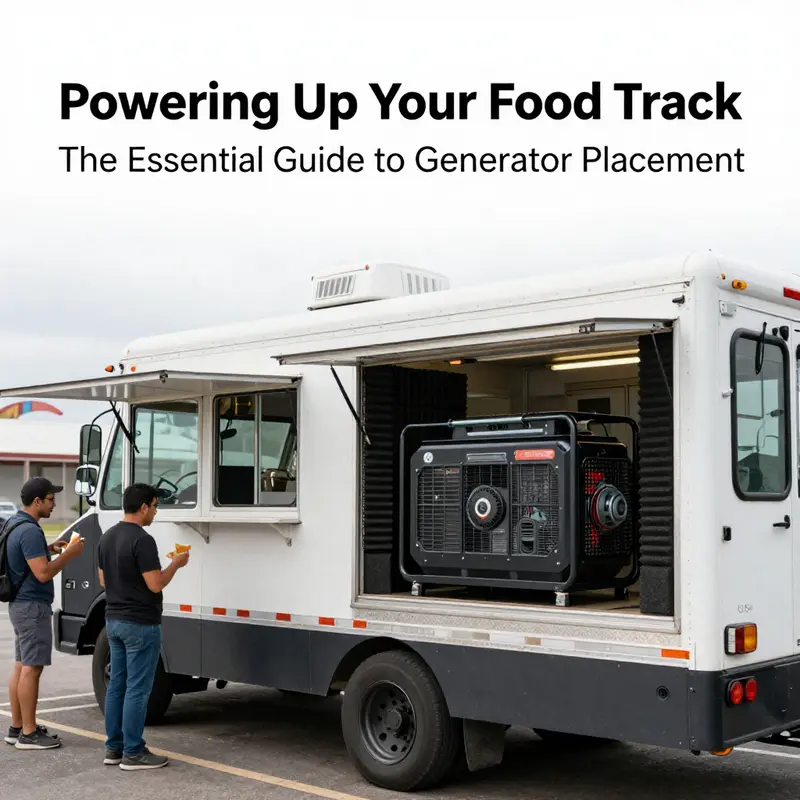
Mounting a generator on a food truck is not just a question of where there is space. It is a deliberate exercise in balancing safety, accessibility, and the customer experience. The core idea is simple in theory but nuanced in practice: keep the generator outside, near the rear or side, in a secure and ventilated enclosure that protects people while letting the machine breathe. This outward placement rings true because the exhaust, heat, and vibration from a generator are not trivial nuisances; they are safety and comfort concerns that ripple through every shift, from the cook line to the front counter. When a unit is tucked inside, heat accumulates and fumes can migrate. When it sits too close to the service window or dining area, the noise and the potential for emissions become a distraction or, worse, a hazard. Therefore, the exterior position is less a design flourish and more a safeguard for both the crew and the customers. In practice, this means choosing a location that offers robust ventilation, straightforward access for maintenance, and a path for exhaust and electrical connections that does not cross the cooking area or customer space. A rear- or side-mounted setup is popular because it channels cooling air and exhaust away from the heart of operation while keeping fuel access and routine checks within easy reach for the team. The enclosure itself deserves careful attention. It should be secure against weather, vandalism, and tampering, with weatherproof seals and a design that minimizes radiant heat buildup. A well-ventilated exterior enclosure reduces the risk of heat-induced performance drops and keeps noise from bouncing around in metal corners or open spaces. Within this framework, the enclosure becomes more than a shell; it becomes a small safety chamber that, if engineered correctly, protects everyone nearby and preserves the efficiency of power delivery. The external location also aligns with practical maintenance needs. Generators require regular fueling checks, oil changes, air filter maintenance, belt inspections, and occasional part replacements. External access eliminates the need to squeeze into a cramped interior compartment or to disrupt the cooking workflow to tend to routine service. This accessibility translates into safer procedures, quicker turnarounds, and less downtime during busy shifts. It is worth noting that the advice here is not a solitary preference but a synthesis of best practices observed in mobile food operations and supported by safety standards. Before any bolt is tightened, a qualified electrician or the generator manufacturer should review the plan to confirm that electrical and structural requirements are met. Such oversight helps ensure that the enclosure, wiring, and mounting hardware are compatible with the vehicle’s frame, the load it must bear, and the local electrical code stipulations that govern mobile food ventures. In the broader context of running a compliant operation, the mounting decision also intersects with local regulations on noise, emissions, and safety. A thoughtful location can ease the path toward compliance and avoid neighborhoods or towns that restrict generator use during specific hours. This is where practical alignment with regulations matters, and it is worth exploring guidance on navigating food-truck industry regulations to understand how your approach stacks up against the rules of your jurisdiction. For a deeper dive into these considerations, see our guide on navigating food-truck industry regulations. https://loschifladostruck.com/navigating-food-truck-industry-regulations/ As you translate these principles into a concrete plan, the next layer to consider is how to tame noise and vibration, because even a well-ventilated, accessible external setup will still send sound waves your way if not properly isolated. The goal is not total silence but a comfortable, customer-friendly ambiance that does not compete with the sizzle of the grill. The strategies summarized here come from a clear engineering approach: isolate vibration at the source, secure the mounting to prevent flex, and, if needed, deploy a purpose-built enclosure that contains sound while preserving cooling flow. The most impactful step is vibration isolation. Mechanical noise is primarily transmitted through the chassis by engine and alternator vibrations. Installing high-quality anti-vibration mounts between the generator frame and the truck’s structural members acts as a buffer that soaks up oscillations before they travel into the metalwork, the floor, and the seating area. This foundational move is simple in concept but powerful in effect. It reduces not only the perceived noise but also the mechanical wear that can lead to loose fasteners, rattling panels, and a creeping increase in unwanted sound. The mounts should be selected to handle the generator’s weight and the dynamic loads generated during operation and transport. They must also be installed in a way that preserves a rigid connection where it matters most. In other words, the generator should be anchored firmly enough to resist movement without transmitting every vibration directly into the truck’s frame. A loose or poorly designed mount can turn a supposedly quiet unit into a constant source of annoyance. Moving beyond mounts, the physical placement of the generator should minimize vibration paths into the vehicle. A location that places the unit on a firm, non-flexing surface and away from the main body panels helps maintain the truck’s quiet environment. Bolting the unit down with the correct hardware and ensuring that mounting points are free of flex are essential checks. Any flex is a pathway for vibration to become noise, as stress and resonance find their way through thin metal and trays. If space allows, a dedicated skid plate or reinforced platform can further decouple the generator from the truck’s living areas. Building such a platform may involve custom brackets or a small frame integrated with the vehicle chassis. Engineering consideration here is not about aesthetics; it is about controlling a chain reaction: stiff frame, stable mounting, fewer transmission paths, and, consequently, less noise. Even with careful mounting, some level of noise will be present. At this stage, additional containment can be considered for locations close to service windows or seating areas. A purpose-built sound enclosure, designed to allow adequate ventilation, can significantly dampen sound propagation. The enclosure acts as a barrier to acoustic energy, absorbing and blocking noise before it escapes into the truck interior or the customer zone. The key to a successful enclosure is ventilation. A closed box that traps heat will have the opposite of the desired effect: higher noise due to the cooling system straining to shed heat. A well-designed enclosure uses strategically placed vents, perforated panels, and, where appropriate, sound-absorbing interior lining such as acoustic foam or mineral wool. These interior layers reduce internal echoes and reverberation, which amplify the perception of noise. It is important to strike a balance between sound containment and heat dissipation. In practice, this balance means careful placement of intake and exhaust paths so that cooling air flows unhindered and exhaust gases do not approach the cooking area or any open flames. If you pursue an enclosure, plan for inspection access and service clearances. A good enclosure will include access panels that can be opened without tools for routine checks, while remaining secure during operation. Keeping panels tight and eliminating gaps minimizes sound leaks, which otherwise degrade the effectiveness of the enclosure. Even with an enclosure, you can further reduce noise by enhancing the interior acoustic environment inside the generator compartment. Lining the interior with sound-absorbing materials, such as specialized foam or mineral wool, helps trap and dissipate sound before it can bounce back into the truck’s interior. These materials perform best when placed away from hot surfaces and where they do not obstruct air pathways. Regular maintenance also plays a decisive role in quiet operation. A new belt, clean air filters, properly lubricated moving parts, and the absence of loose components all contribute to a smoother and quieter run. A generator that is running smoothly not only produces less noise but operates more efficiently, reducing fuel consumption and wear. The maintenance routine should be part of a standard operating procedure that includes checks during pre-shift routines and post-run cooling. In addition to the mechanical side, attention to electrical safety and structural integrity remains critical. The electrical connections between the generator and the vehicle’s systems must be designed and installed by a qualified electrician. The paneling, wiring harnesses, and interlocks should be inspected regularly for wear, corrosion, or damage. Any signs of deterioration call for immediate repair to maintain both safety and quiet operation. The mounting strategy also touches the geometry of weight distribution. Placing the generator on the truck bed or chassis, and ensuring that the weight is balanced, helps preserve handling and prevents undue stress on the suspension. A heavy, poorly balanced installation can lead to tire wear, suspension fatigue, and, indirectly, more noise due to increased vibrations and rattles. A robust bracket or skid that anchors the generator to a fixed point on the frame and distributes the load is preferable to a temporary or improvised setup. The interdependence of these factors means the final plan should be validated by a professional who can assess the truck’s structure, gauge the generator’s weight, and confirm that all safety clearances are respected. For operators who are navigating these considerations for the first time, there is value in looking at broader guidance about staying compliant and safe in mobile food operations. The broader question of how to balance speed, safety, and standards comes up again and again in the literature on operating a food truck. A useful touchpoint is the discussion about regulations and best practices for the mobile food industry. See our guide on navigating food-truck industry regulations for a structured overview of how to align your mounting and noise-control decisions with local rules and safety codes. https://loschifladostruck.com/navigating-food-truck-industry-regulations/ In practical terms, the right approach is to think through the installation as an evolving system rather than a one-time fix. The external location, the enclosure, the vibration isolation, and the sound containment all work together to deliver the right balance of performance and comfort. You may start with a simple, exterior mounting near the rear or side, using anti-vibration mounts and a rigid bracket. If noise and thermal management demand it, you can add a ventilated enclosure and interior sound-absorbing materials. Every step should be checked against safety standards and local ordinances, and you should involve a qualified professional early in the process. This collaborative approach reduces the risk of an installation that looks good on paper but disappoints in practice. With careful planning, the result is a generator setup that meets safety requirements, minimizes nuisance to customers, remains accessible for service, and preserves a pleasant working environment for staff. The right placement helps keep the kitchen running smoothly during a busy service, when heat, noise, and airflow are particularly consequential. It also helps protect the brand’s reputation for a well-run operation and a comfortable dining experience. In the end, the question of where to mount a generator on a food truck becomes a question of how to integrate power with people: a design that respects safety, minimizes disruption, and supports reliable performance. External mounting, intelligent vibration isolation, and thoughtful sound containment create a setup that serves the lights, the burners, and the customers with equal care. External considerations, professional oversight, and adherence to regulations together form a practical framework you can apply to any truck design. For deeper, practical reading on how these strategies translate to real-world mobile applications, see the external resource linked below. External resource: https://www.solarisenergy.com/blog/generator-noise-reduction-strategies-for-mobile-applications
Weight on the Move: Strategic Generator Placement for Safe, Balanced Power on a Food Truck
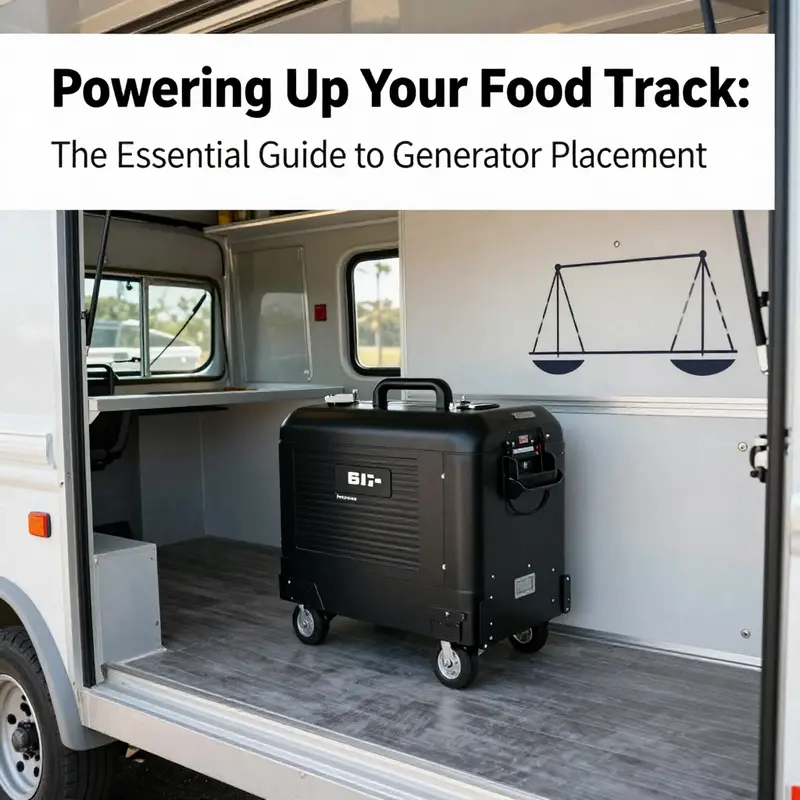
Mounting a generator on a food truck is not just about snagging a power source somewhere convenient. It is a careful act of engineering that blends safety, performance, and the practical realities of cruising a mobile kitchen. The generator is a core partner to the fire and kitchen systems, a steady supplier of electricity for lights, vents, refrigeration, and the craft of cooking itself. Because it sits at the intersection of heat, vibration, exhaust, and weight, its placement is one of the most consequential decisions in truck design. The dialogue around where to mount a generator often centers on two intertwined questions: how to vent and protect the unit from the elements, and how to keep the vehicle stable and controllable on the road. When these questions are answered together, the resulting layout supports not just compliance and safety, but a smoother workflow for the crew and a more reliable service for customers.
From a safety standpoint, the exterior mounting of a generator—typically near the rear or along a side—remains the most practical solution. The logic is straightforward: an external enclosure provides robust ventilation for exhaust and heat, reducing the chance of carbon monoxide accumulating in the cooking or customer areas. It also keeps heat from the generator itself at a distance where it can be managed by the truck’s airflow rather than crowding the interior, which is already busy with steam, flames, and hot surfaces. The external position also simplifies maintenance. Regular fueling, checks, and service require physical access that interior placements simply cannot offer without interrupting operations. When a generator sits outside, a technician can assess fuel levels, test configurations, and replace parts without crawling into tight kitchen nooks. All of this translates into less downtime and fewer hazards for staff moving between the grill, the fryer, and the electrical panel.
However, even with exterior mounting, the placement choice must respect the balancing act that keeps a food truck safe on the road. The weight of the generator, its bracketry, and its mounting hardware all contribute to the truck’s overall load distribution. A generator that sits too far forward or too light on the frame can tilt the balance toward the hitch or the front axle, which can degrade braking, steering response, and suspension life. The opposite—too much mass over the rear end—can exaggerate tongue weight and complicate maneuvering, especially when turning or backing into tight alleys or park spaces. This is not a case of aesthetic preference; it is physics in motion. The goal is to position the generator so its weight helps the vehicle ride at a predictable height and behaves consistently under braking and acceleration.
Industry guidance points toward placing the generator as close to the axle line as feasible, with a bias toward the rear axle when possible. This approach minimizes the moment arm that could otherwise shift the center of gravity in a way that unsettles the trailer or tow hitch. By staying near the drive axle, the unit contributes to a more even distribution between the front and rear wheels. A classic rule-of-thumb is to aim for a front-to-rear weight balance that leans toward a 60/40 distribution, favoring the drive axle without overburdening the front wheels. This alignment helps the truck maintain towing stability during highway travel and resilient handling through crowded urban settings. It also supports more predictable braking, since weight transfer during stops remains within the vehicle’s designed range. The practical upshot is a truck that feels steadier, more controllable, and less prone to instability when gusty crosswinds or abrupt lane changes occur on a busy stretch.
To realize this balance in real life, robust mounting brackets and anti-vibration mounts are indispensable. The generator should be secured with hardware that resists loosening due to road shocks and engine vibrations. Anti-vibration mounts isolate the unit enough to cut noise and reduce wear on the frame, while still allowing the generator to remain firmly in place. This is not merely about protecting the generator; it protects the truck’s structural integrity and extends the life of other components connected to the power system, such as the wiring harness, fuel lines, and cooling ducting. A well-damped installation minimizes the transmission of vibration into the chassis, preserving the integrity of fasteners and reducing fatigue on the mounting points.
The physical placement also has to harmonize with the truck’s overall layout and the daily rhythms of operation. The exterior enclosure should be positioned to maximize airflow while staying clear of exhaust paths for the kitchen and the customer zone. Excessive heat near doors or service windows can compromise food safety and guest comfort, so careful routing of exhaust outlets and intake vents is essential. In addition, the enclosure must be designed to guard against weather, dirt, and accidental contact, while still allowing straightforward access for service. This is a balance of protection and practicality: a sturdy shell that shields the unit without turning maintenance into a scavenger hunt.
Beyond the mechanical and safety considerations, the placement of the generator has ripple effects on efficiency and reliability. A generator that is close to the truck’s center of gravity tends to experience fewer dynamic loads during acceleration, deceleration, and cornering. The result is a more stable electrical supply and less fatigue on the mounting hardware. This is crucial when you’re powering refrigeration, vent hoods, lighting, warmers, and point-of-sale equipment, often in quick succession or during peak service periods. A stable power setup reduces voltage drops and potential nuisance trips that disrupt cooking rhythms—moments that can ripple into longer lines or spoiled ingredients if cooling cycles are interrupted. In practical terms, the goal is not to chase the absolute lowest center of gravity in a vacuum but to align generator weight with the truck’s operating envelope so power reliability and vehicle handling reinforce each other.
Consulting professionals for an installation remains a prudent step. A qualified electrician can verify that the electrical system and the enclosure comply with code requirements and the manufacturer’s guidelines. They can also tailor the mounting approach to the specific generator model’s dimensions, weight, vibration characteristics, and exhaust routing needs. The collaboration often extends to the trailer or hitch manufacturer, as the alignment between the vehicle’s structural frame and the mount points matters as much as the generator’s own performance. The right counsel helps ensure you are not only safe on the road today but compliant with regulations for future inspections and audits.
As you weigh these placement decisions, it helps to keep the design philosophy in mind: weight distribution is not an afterthought but a core design parameter that interacts with ventilation, access, noise, and maintenance. The most robust setups treat the generator as an integrated system rather than a standalone add-on. In practice, that means measuring the truck’s GVWR and the axle ratings, then calculating the allowable contributions from all mounted hardware—including the generator—and validating the arrangement with the vehicle’s spec sheets and the enclosure’s engineering data. With the generator weighing several hundred pounds, even seemingly modest shifts can push you outside safe limits. You want the final layout to sustain safe towing performance and predictable handling whether you’re navigating city blocks or cruising toward a weekend crowd line.
The human element matters just as much as the machinery. The crew’s workflow should guide where the generator sits. If the unit is easily reachable from the kitchen exterior, routine checks—fueling, oil level, coolant temperature, and air intake cleaning—become a predictable part of service days, not a scrimmage with tight spaces. A well-placed generator also minimizes the need for staff to maneuver around hot surfaces or restricted spaces when performing maintenance. It is a quiet win when maintenance can be conducted without interrupting service or the customer experience. These practicalities echo a broader truth about food-truck design: when power and cooking harmony are achieved through thoughtful placement, the business operates more smoothly, and the customer is less aware of the mechanical choreography behind the scenes.
For readers exploring the broader design trajectory, the choice of model and layout can influence generator placement in meaningful ways. Different chassis lengths, wheelbases, and appliance footprints shift what counts as near the axle line or near the rear. The decision is indeed a dialogue between the truck’s physical dimensions and the business’s operating realities. A thorough evaluation of space, power requirements, and future scalability can help determine whether a rear-axle-focused placement best serves the operation or if a longer truck with additional rear clearance might be warranted. This is where a holistic approach pays dividends: a layout that accommodates generator weight alongside kitchen equipment, propane systems, plumbing, and storage will tend to deliver the most reliable service and the highest resale value over time. For those at the start of this journey, a useful touchstone is to review how others have balanced this equation when choosing the right food truck model, a consideration that frames power, space, and mobility within a single, coherent plan. Choosing the right food truck model.
The environmental context also frames the strategy. Outdoor placement minimizes interior heat buildup and reduces the risk of indoor CO exposure, but it imposes weather-related challenges. A well-sealed enclosure with appropriate weatherproofing ensures that rain, dust, and road salt do not compromise electrical connections or the generator’s cooling system. It also means considering security—external mounted units should be housed in a secure, lockable compartment to prevent tampering while still allowing rapid access for routine checks. These protections are not merely about theft prevention; they’re essential to safeguarding the integrity of the electrical system and the safety of the crew who rely on it every service day.
In the end, the question of where to mount a generator on a food truck is a question of balance. It requires an integrated view that respects mechanical design, electrical safety, regulatory compliance, and real-world operations. The recommended approach—external mounting near the rear or side, secured with robust brackets and anti-vibration mounts, and positioned as close to the axle line as possible—offers a practical blueprint for achieving that balance. It is a blueprint that serves power reliability, road safety, and the everyday realities of keeping a mobile kitchen humming through crowded markets, long shifts, and changing weather. Stay mindful of the GVWR and axle ratings, confirm the layout with a qualified professional, and remember that the best setup treats the generator as an active participant in the truck’s harmony rather than a passive add-on. The result is a food truck that not only serves great food but does so with steady power, predictable handling, and a kitchen that can keep pace with demand, mile after mile.
External reference for further reading on generator system best practices and the safety considerations of outdoor mounting can be found at EcoFlow’s Food Truck Power guide. This resource emphasizes the importance of addressing ventilation, secure mounting, and the overall system integration needed to support reliable, safe operation on the road. https://www.ecoflow.com/blog/food-truck-power-essential-generator-systems-guide
Final thoughts
Mounting a generator correctly on your food truck is pivotal for its efficient operation and safety. By prioritizing ventilation, ensuring accessibility for maintenance, reducing noise levels, and considering weight distribution, truck owners can create a better environment for food preparation and customer enjoyment. Each factor plays a role in maintaining a balance between functionality and safety. Your food truck is not just a vehicle; it’s a culinary adventure on wheels. Make informed choices, consult experts, and power your passion for food on the go!