
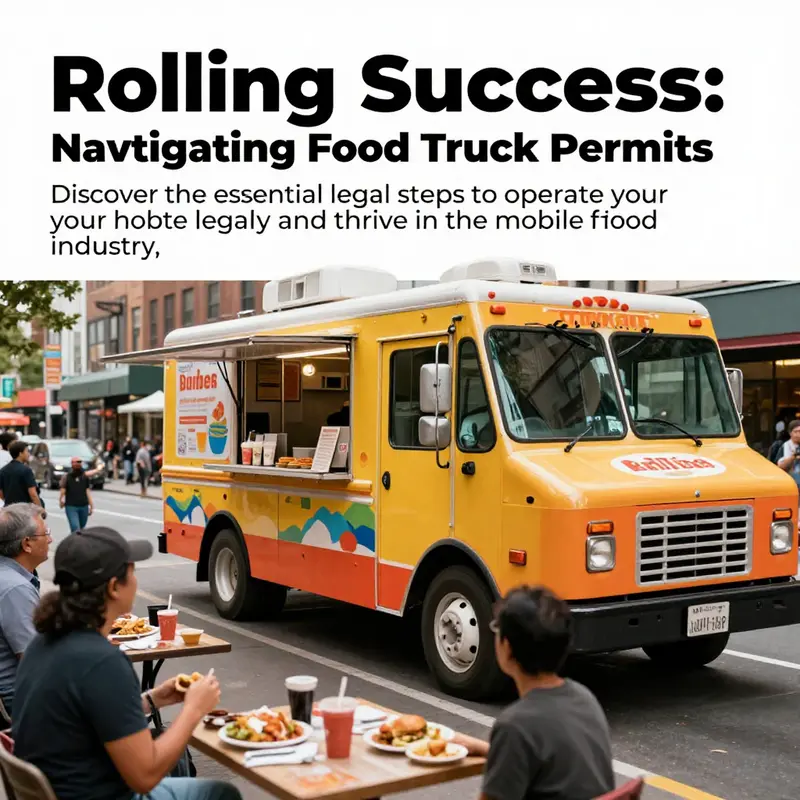
The tantalizing aroma wafting from a food truck often draws a crowd, but behind the scenes lies an intricate web of permits and regulations. Understanding how food truck permits work is crucial for event planners, corporate teams, and food enthusiasts who want to harness the culinary magic of mobile kitchens. This guide breaks down the essential aspects of food truck permits, covering everything from the foundational principles of legal compliance to the specific certificates and local regulations that can determine success. With this knowledge, event planners can secure the best vendors, corporate HR teams can ensure compliance during events, local community groups can effectively support food trucks, and food enthusiasts can learn what to expect from their favorite vendors. Join us as we delve into the world of food truck permits and ensure a flavor-packed journey ahead!
Permits That Power a Food Truck: A Practical Roadmap to Legal Operation
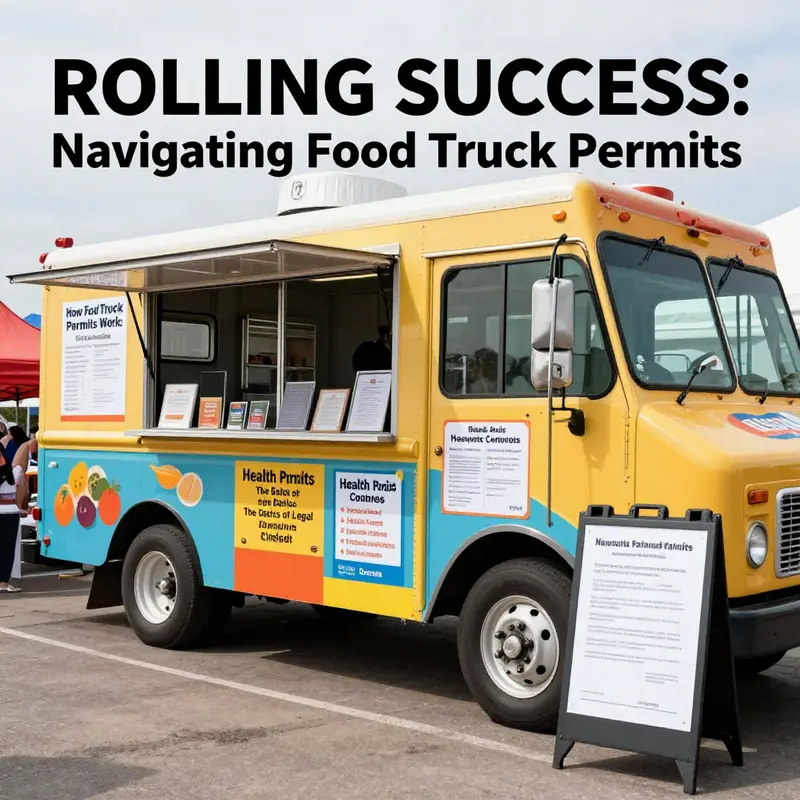
Operating a food truck legally depends on a layered set of permits, inspections, and local rules that work together. Each permit serves a distinct purpose. Together they protect public health, clarify tax obligations, and define where and how you can sell. Understanding how these pieces fit will turn a confusing pile of forms into a predictable path you can follow.
Start by thinking of permits as a sequence you clear one by one. First comes the business-level paperwork that authorizes commerce. Next follows the public-health approvals that keep customers safe. Then zoning and event permissions decide where you may park and sell. Finally, safety reviews and specialty licenses address equipment and fuel. The order and names vary by city. But the steps you face are similar in most places.
A business license is the foundation. It names your legal entity and registers your operation with the city or county. Many local agencies require this license before they will accept other applications. It also triggers obligations like local business taxes. Treat it as a quick administrative step. Get it early to avoid delays later.
Public-health permits form the core of food truck regulation. Your local health department will want proof that you and your team know safe food handling. This typically means a food handler’s card or food safety certification. The department will also assess the truck itself. Inspectors check refrigeration, handwashing facilities, hot-holding systems, and waste disposal. They verify that you can maintain safe temperatures and prevent cross-contamination. If your truck is custom-built, you will likely submit detailed plans or blueprints. Officials will review the layout for plumbing, ventilation, and grease management. Plan review can take weeks, so schedule it early in any build or retrofit.
The mobile vendor or mobile food unit permit ties everything together. Issued by the health department or a similar agency, it confirms that the truck meets all health and safety standards. It often requires passing an on-site inspection after the truck build is complete. Inspectors will run water, test refrigeration, and watch food prep practices. You will usually need to be present and demonstrate your operations. Some jurisdictions issue conditional approvals during temporary events, so confirm rules if you plan to trial your concept at a fair or market.
Zoning and parking rules are where many operators face surprises. Cities often restrict where food trucks can park. Restrictions may apply to proximity from brick-and-mortar restaurants. Other rules limit operation near schools or residential neighborhoods. Some areas designate approved vending zones. Others require time-limited stays or distance buffers. You may also need a separate parking permit for specific lots, private events, or street-side spaces. Always check with the local planning or zoning office. Their guidance will determine how flexible your daily routing can be.
Selling at events adds another layer. Festivals, farmers’ markets, and private gatherings frequently require event-specific permits. Organizers typically require proof of your business license, health permit, and insurance. They may also ask for a temporary use permit or an event-specific vendor pass. Build a checklist for event organizers so you can supply documents quickly. Many event hosts keep a vendor packet for this purpose.
Fire and safety certifications are essential when cooking equipment uses open flames, gas, or deep fryers. The local fire department inspects exhaust hoods, suppression systems, gas lines, and portable fire extinguishers. They may require a certified hood or automatic suppression system for certain cooking setups. If you use compressed gas, you must comply with fuel storage rules. These reviews ensure your truck won’t pose a hazard to customers or neighboring businesses.
Tax compliance often requires a sales tax permit. This allows you to collect and remit sales tax. Requirements vary by state and locality. Some jurisdictions expect separate registrations if you cross municipal borders. Keep careful records of gross sales. Accurate records make tax filings and permit renewals smoother.
Inspections and renewals happen regularly. Health and fire permits commonly require annual renewals and periodic inspections. Inspectors will look for consistent practices that match what you documented. Maintain logs for temperature checks, cleaning routines, and supplier receipts. These records show consistent compliance and can speed up inspections.
Plan for timelines and costs. Initial permit processing can take from a few weeks to several months. Plan review alone may add weeks to your launch. Fees vary widely. Expect modest charges for business licensing and sales tax registration. Health plan review, inspection fees, and fire department approvals can add more. If you work with a custom builder, include a buffer for design changes to meet code. Budget both time and money for revisions.
If you operate in multiple cities, prepare to navigate multiple permit systems. Each jurisdiction may have different forms, inspection criteria, and renewal dates. Some cities offer reciprocity or simplified processes for trucks already permitted elsewhere. Others require full inspections and applications. Maintain a compliance calendar listing renewal deadlines for each place you operate. That calendar will prevent lapses that can lead to fines or temporary closures.
Preparing for inspections reduces friction. Before a scheduled visit, confirm that your handwashing station works and supplies are stocked. Verify that all equipment has clear temperature readings and calibration where needed. Show documentation of staff training and your cleaning schedule. Keep receipts for equipment installation and any tested suppression systems. Inspectors expect accessible spaces. Organize your storage and service areas so they are easy to view and evaluate.
Common pitfalls slow or stop launches. Applying in the wrong jurisdiction is a frequent error. Food trucks can be ambiguous: are they operating in the city where they park or the city where they are licensed? Check municipal boundaries and rules that define operation. Another mistake is underestimating fuel and hood requirements. Ignoring those standards leads to costly retrofits. Missing vendor insurance or incorrect liability coverage is another hurdle. Events and landlords will often require a certificate naming them as an additional insured. Confirm insurance details early.
When permits need to be transferred, follow the local process carefully. You may resell a truck and expect permits to move with the vehicle. Some permits are non-transferable. Others require formal transfer applications. Notify the appropriate agencies when ownership changes. Provide all required documentation to avoid permit gaps.
Records and ongoing compliance create a defensible operation. Keep copies of licenses, inspection reports, certificates, and insurance in both physical and digital formats. Store vendor contracts and event approvals with dates and contact information for organizers. Back up digital copies in cloud storage. When an inspector or event organizer asks for documents, you can respond immediately.
If you feel lost, use local resources. Contact the health department’s plan review staff. They can clarify submission requirements and common reasons for denial. Local small-business centers and food truck associations can offer practical, jurisdiction-specific advice. Peers who already operate locally often share tips on scheduling, parking, and compliance strategies. Consider consulting a professional experienced in food service permitting when rules seem complex.
Permit denials happen, but they are often fixable. Respond quickly to any corrective action notices. Make the required changes, document the work, and request a re-inspection. If you disagree with an inspector, follow the formal appeal process. Maintain a professional tone and provide clear evidence to support your case.
Finally, adopt a proactive mindset. Permitting is not a one-time hurdle. It is an ongoing practice that keeps your business stable. Build permit and inspection tasks into your weekly checklist. Regularly review local rule updates. Many cities update their vending rules and zoning codes. Staying informed and prepared reduces surprises.
For a practical checklist and deeper guidance on the specific licenses and permits you may need, see the comprehensive external guide linked below. It outlines common requirements, preparation tips, and typical timelines to expect.
External resource: A Guide to Food Truck Licenses & Permits | KaTom – https://www.katom.com/blog/food-truck-licenses-permits
For local regulatory insight and daily operational tips, consult a focused industry resource that covers municipal regulation challenges. A helpful local link is available here: navigating food truck industry regulations (https://loschifladostruck.com/navigating-food-truck-industry-regulations/).
Permits, Inspections, and Paperwork: How Food Truck Licensing Really Works
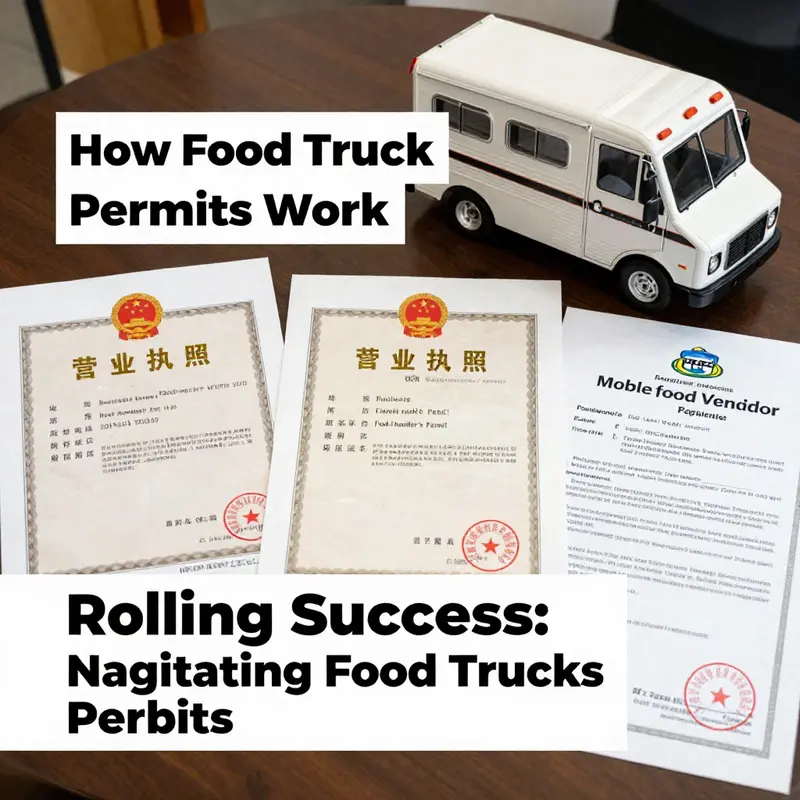
Permits, Inspections, and Paperwork: How Food Truck Licensing Really Works
Starting a food truck means converting a good idea into a regulated, inspected business. Permits and certifications are not bureaucratic hurdles to ignore. They are the framework that keeps customers safe and your operation legal. The process can feel complex because requirements vary by city, county, and state. Still, the same basic elements recur: a business license, food-safety credentials, a mobile vendor permit, tax registration, and safety approvals from fire and building authorities. Understanding how these pieces fit together simplifies planning and avoids costly delays.
Begin with the business license. This is your legal recognition at the city or county level. It establishes your entity and authorizes you to operate a commercial venture in that jurisdiction. Many other permits require a current business license as a prerequisite. Apply early, because processing times vary and some localities demand evidence of this license when you seek health or zoning approvals.
Food-safety credentials are next. A food handler’s permit or food safety certification shows you and your staff know proper food handling and sanitation. These certificates typically result from short courses and an exam. Health departments require them because mobile kitchens pose unique risks: limited space, fluctuating temperatures, and close customer contact. Training reduces the chance of foodborne illness and is commonly required for at least one supervisor on board during service.
The mobile food vendor permit is the most specific and crucial license for a truck. Issued by the local health department or public safety office, this permit confirms your vehicle meets health, plumbing, and food-storage standards. Expect inspectors to evaluate refrigeration, cooking equipment, handwash sinks, potable water storage, waste-water tanks, and waste-disposal procedures. They also check layout and workflow to ensure cross-contamination is prevented. If you use gas appliances, a fire department review is typical. If your unit is custom-built, submit blueprints or floor plans. Approval often hinges on those plans.
Sales tax registration is another must. Called a seller’s permit in many places, it gives you authority to collect and remit sales tax. Without it, you risk fines and back taxes. Register with your state tax agency and keep detailed records of daily sales. Sales tax rules vary by product and by location, and some jurisdictions tax prepared food differently than groceries. Keep tax paperwork organized and review local rules as part of your startup checklist.
Zoning and mobile vending permits govern where you can park and sell. Cities regulate locations to balance competition, pedestrian flow, and public safety. Rules often limit proximity to brick-and-mortar restaurants, schools, or special event zones. Some municipalities issue location-specific permits; others allow flexible roving permits with time and place restrictions. Competition for prime spots can be intense. Know how local rules allocate spaces, whether by lottery, first-come-first-served, or reserved vendor zones.
Health and safety inspections are not one-time events. Expect an initial inspection before your mobile vendor permit is issued. Inspectors verify that water systems, refrigeration, sanitation, and food-preparation surfaces match approved plans. After opening, periodic inspections enforce ongoing compliance. Be prepared for unscheduled visits that focus on temperature control, hygiene practices, and pest prevention. Recordkeeping helps here: logs for temperature checks, cleaning schedules, and supplier invoices demonstrate consistent standards.
Fire department permits are especially important when cooking equipment, deep fryers, or gas lines are present. Fire inspectors check ventilation, fire suppression systems, and safe fuel storage. If you operate on open flame or fry with hot oil, make sure your truck’s suppression system is certified and serviced. Gas appliances often require pressure tests and certified shutoff valves. Fire approvals can be the longest lead item, so coordinate early with the health department and fire marshal.
Permits often tie to vehicle and equipment standards. Some jurisdictions classify units by type—truck, trailer, or pushcart—each with distinct rules. For example, a fully self-contained vehicle with onboard water supply and waste tanks may qualify as a mobile food establishment. If the unit lacks those features, it can fall under different permit classes and require separate approvals. If you build a custom unit, you will likely need a plan review. That review examines plumbing schematics, equipment specifications, and construction materials.
Insurance and bonds are frequently required or strongly advised. General liability covers customer incidents. Auto insurance must be commercial grade, covering the vehicle and its operation. Workers’ compensation insurance is mandatory where employees are involved. Some localities also require a surety bond for vendors. Carrying the right insurance protects your business and smooths permit approvals.
Many food truck operators underestimate the importance of timing. Permit sequencing matters. Start with your business license and tax registration. Submit health department plans early if your unit is under construction. Apply for fire approval and mobile vendor permits while finishing build work. Scheduling inspections in sequence reduces rework and delays. If you pitch at festivals or private events, secure temporary event permits well before the date; event organizers usually require proof of current permits.
Costs vary widely. Permit fees include application charges, inspection fees, and sometimes annual renewals. Fire inspections, plan reviews, and vendor space applications can each incur separate costs. Budget for permits as a recurring expense, not just a one-time startup cost. Renewal deadlines and late penalties exist in many jurisdictions. Keep a calendar of expiration dates and renewal requirements to avoid gaps that could force you to cease operations temporarily.
Compliance is also about operational practice. Standard operating procedures (SOPs) for cleaning, waste disposal, food storage, and employee hygiene are practical documents inspectors expect to see. Temperature logs, chemical-sanitizer concentration checks, and cleaning checklists show continuous attention to safety. These records also prove invaluable if a health complaint arises or if a regulator questions your procedures.
When rules seem opaque, use local resources. Contact your health department early. Many agencies provide plan review guidance, checklists, and pre-application conferences. Local small-business support centers and vendor associations offer practical advice from experienced operators. Connecting with fellow food truck owners can save months of guesswork. There are also helpful guides online that outline common requirements and sequences of steps.
Expect variation between jurisdictions. A requirement in one city may not exist in another. For instance, some places allow vending in certain parks but prohibit it near schools. Others enforce strict distance rules from restaurants. Some require a physical commissary—a commercial kitchen where you prepare and store food—while others allow full preparation on the truck. Research local nuances before you invest in truck modifications.
Penalties for noncompliance range from fines to business closure. Operating without the correct permits risks inspections, fines, and forced shutdowns. That can cost more than the permit fees and lost revenue. Correcting violations often requires additional inspections and repeated fees. Prevent issues by maintaining permits, meeting renewal deadlines, and addressing inspector feedback promptly.
Finally, plan for growth and changes. New product lines, alcohol sales, or expanded service areas often trigger new permit requirements. Selling alcohol typically requires a liquor license and additional insurance. Adding a second truck or partnering with festivals may require vendor contracts and separate permits. Revisit permits whenever your operation changes, and treat regulatory updates as part of routine business planning.
For a practical, step‑by‑step overview that maps permit needs to each stage of your food truck build and launch, consult a comprehensive guide available here: a practical step‑by‑step permit guide. If you need help with local interpretations, check your city or county health department pages and vendor resources. For broader industry insight and strategies on managing permits and compliance, this internal resource on navigating food truck industry regulations provides relevant tips and community perspectives.
By treating permits not as paperwork but as a foundation, you protect customers and create reliable operations. The right permits, timely inspections, and consistent recordkeeping keep your truck rolling and your business growing. Stay proactive, ask questions early, and document everything. That approach reduces surprises and helps you focus where it matters most: serving great food on wheels.
Practical step‑by‑step permit guide
navigating food truck industry regulations
From Plans to Pass: The Inspection Trail That Makes a Food Truck Legal on the Street
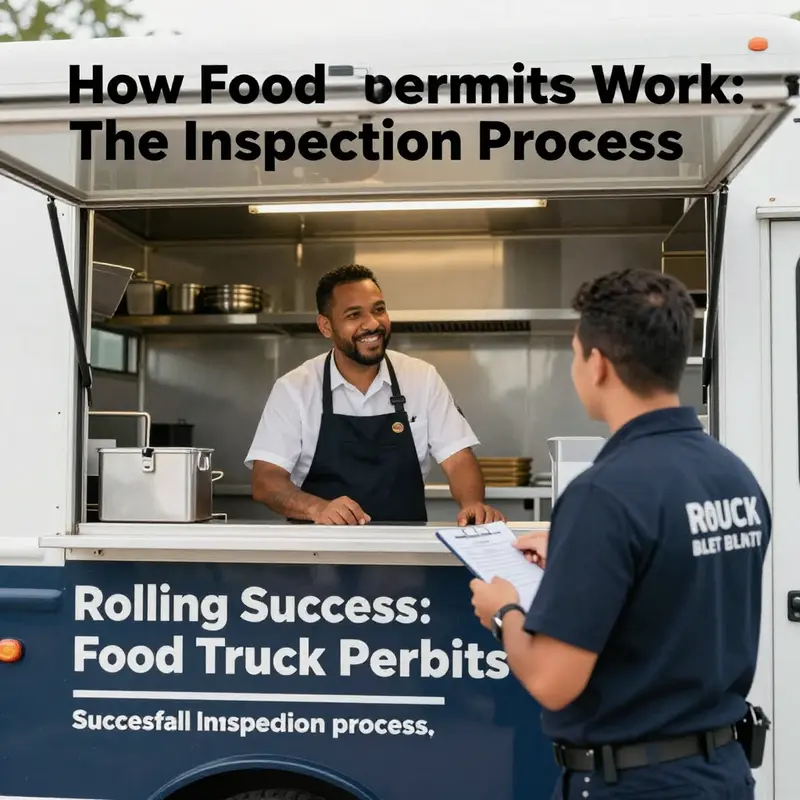
Securing a permit for a food truck is less about filing a single form and more about navigating a carefully choreographed sequence of checks that translate a mobile kitchen idea into a legal, safe, and reputable street business. The journey hinges on inspections, but those inspections are not merely gatekeeping—they are a structured dialogue between a would-be operator and the public health system designed to prevent harm, protect consumers, and ensure fair play in a crowded market. To understand how permits work, you must imagine the process as a continuous arc that starts long before the truck hits the curb and continues long after it begins serving customers. The arc begins with the recognition that a food truck is a moving facility, not a stationary restaurant, and then proceeds through planning, construction, review, and ongoing compliance that bends to the rhythms of safety, sanitation, and accountability. Each permit in this chain—business license, food handler’s certification, and, most critically, the mobile food vendor permit—rests on the prior steps, yet each step adds its own layer of scrutiny and responsibility. In many jurisdictions, the path is standardized on a common core: a business license first, a health-focused food safety credential second, and a rigorous mobile unit permit third. The logic is simple but exacting. A city or county wants to know who is operating, where, and under what conditions. It wants to see that the operator understands time-honored food safety practices and that the truck itself embodies a design that does not threaten public health. In practice, this translates into a sequence of inspections that validate both the concept and the construction as compatible with local expectations for cleanliness, safety, and order on the public right of way.
The initial inspection, sometimes described as a plan review in disguise, occurs as the truck’s design and construction are nearing completion. Inspectors do not merely check off a list; they engage with the layout as a working system. They study where raw ingredients will be stored, how cold and hot holding will be achieved, where handwashing will occur, and how waste will be disposed of without contaminating the front-line work zones. The goal is to confirm that a compact kitchen can function without cross-contamination and without endangering employees or patrons. The FDA’s Food Code often informs these expectations, and many localities translate those guidelines into practical, enforceable standards. Surfaces must be non-porous and easy to clean, so that every crumb and splash can be sanitized effectively. There must be enough space between stations so that a chef can move from thawing to chopping to cooking without bumping into a hallway of potential hazards. Equipment must be appropriately installed and secured, with refrigeration capable of maintaining safe temperatures and with proper ventilation to control heat, smoke, and steam. The inspectors also look for a plan for waste disposal—how grease, liquids, and solid waste will be collected, stored, and removed without creating odors or attracting pests. They want assurance that the unit can be cleaned thoroughly and that the electrical and gas systems are integrated into the kitchen workflow with contingencies for outages or equipment failure.
This initial scrutiny culminates in a judgment about the truck’s readiness to transition from a drawn schematic to a working kitchen on wheels. Some jurisdictions require formal plans and blueprints, while others emphasize a checklist of functional criteria. Either way, the concept must withstand the health department’s scrutiny before the business can move forward. If the design passes, the operator may be asked to revise the layout to accommodate specifics such as a dedicated handwashing station with soap, towels, and a continuous supply of potable water, or a dedicated space for cooling and storing perishables. In Washington State, for example, there can be a distinct path between a unit that’s clearly classified as a food truck or trailer and another that might be treated as a different mobile unit, each with its own plan-review steps under the Licensing & Inspections framework. This demonstrates how the line between “permitted” and “not yet permitted” is defined not by a single rule but by a constellation of local regulations that must harmonize with national food-safety principles.
As the truck moves from concept to chassis to kitchen, the pre-operational inspection follows, and this is where the permit truly becomes tangible. The pre-operational visit is a moment of tangible confirmation that a truck is ready to serve, yet it is also an opportunity for the operator to demonstrate readiness for the day-to-day reality of public-facing service. Inspectors will ensure that your fire safety measures are in place, including appropriate fire extinguishers and clear access to extinguishers in case of an emergency. They look for first-aid readiness and visible safety signage that communicates essential instructions to staff and customers alike. They also verify that branding and exterior signage comply with local rules—some jurisdictions want clear identifiers or license marks on the vehicle itself, designed to prevent confusion and ensure accountability. Beyond these outward signs, the exterior and interior of the truck must align with the agreed-upon plan; there is little room for improvisation once a permit is in play. Temporary permits often accompany this phase, indicating that the unit has earned provisional approval to operate while remaining conditions are addressed. Permanent permits, by contrast, reflect a level of final confidence from the authorities and signal that the operator has met all essential criteria for ongoing compliance.
The heartbeat of the permit system is not a single snapshot but a rhythm: ongoing compliance. After the truck opens, health departments conduct routine inspections that, in many areas, are unannounced. The focus remains squarely on food handling, temperature control, personal hygiene, and diligent recordkeeping. Temperature logs, cleaning schedules, and maintenance records are not merely bureaucratic artifacts; they are the living memory of how the operation protects the public. A lapse as simple as an unrecorded refrigerator temperature or an irregular handwashing drill can trigger corrective actions. And because the mobile nature of a food truck complicates each of these concerns—frequent relocation, varying street condition, fluctuating power sources—the inspectors emphasize adaptability. Operators must demonstrate that their systems hold up under these conditions: that a melt-down in the hot line does not occur because a refrigeration unit is temporarily compromised; that the grease trap remains functional after a long shift; that waste disposal plans are honored irrespective of location or event. The day-to-day discipline of keeping logs, maintaining equipment, and training staff becomes the invisible backbone of the permit’s legitimacy.
Within this framework, violations span a spectrum from minor to severe. A minor breach—perhaps a slightly out-of-date sign or a missing label on a cleaning chemical—may trigger a straightforward correction, a re-inspection, and, in many cases, a notice that future noncompliance could escalate the consequences. More serious issues, such as repeated temperature mismanagement, cross-contamination risks, or unsafe electrical wiring, can lead to fines, mandatory corrective actions, or even suspension of the permit. In practice, the inspections function as a feedback loop: they identify conditions, require corrective measures, verify that changes have been implemented, and then continue with a new cycle of oversight. This ongoing cadence is essential precisely because a mobile kitchen operates across neighborhoods, markets, and private events, each presenting unique risks and opportunities. The operator’s ability to stay in front of these risks—maintaining up-to-date staff training, documenting routine cleaning, and keeping equipment in good order—defines the difference between a thriving business and an abrupt interruption.
The regulatory ecosystem that maintains this balance is not a monolith but a mosaic. Health departments collaborate with licensing bodies, fire departments, and city planning offices to coordinate permits that touch health, safety, and zoning. A local zoning permit may restrict where a truck can operate, protecting residential areas or preserving parking and pedestrian flow in busy districts. A fire department permit, particularly for units that rely on gas or more complex cooking arrangements, ensures that the equipment is safely installed and that emergency shutoffs are accessible. The sales tax permit or business license connect the vehicle to the formal economy, creating traceability for revenue collection and accountability. To the operator, this entire sequence can feel like navigating a city’s labyrinth, but it is a designed system with the aim of turning a compelling culinary concept into a dependable, ethical, and accountable street-side business. The guidance is consistent: plan thoroughly, build to code, document everything, and prepare to adapt as inspections reveal new requirements or better practices.
If the process seems exacting, there is a practical logic to it. The permits are not barbed fences but guardrails that help you operate safely, transparently, and predictably. They are the public’s assurance that a moving kitchen will not become a source of contamination, fire, or traffic disruption. They also provide a predictable framework for growth. A well-planned permit journey—from early plan reviews through pre-operational checks to ongoing inspections—gives operators a clear understanding of what is expected at every turn. It also creates a baseline of accountability that can support expansion into new markets, collaborations with event organizers, and relationships with local authorities. The permit journey thus functions as both a shield and a ladder: shielding patrons from risk and offering operators a structured path to scale responsibly.
For readers seeking tailored guidance, many city and county health departments offer resources, hotlines, and plan-review staff to help translate broad health-code language into practical steps. In contexts where direct phone access is possible, they encourage hopeful operators to call dedicated plan-review lines or to reach out by email with diagrams and sketches of the proposed truck. In Washington, for example, plan-review staff can be contacted at a specific toll-free line and email, which underscores how jurisdictions invest in direct, human assistance to demystify the permitting maze. Such avenues, along with official online portals, often provide checklists, sample floor plans, and reminders about documentation that speeding up the review process often hinges on combining accurate information with a thoughtful presentation of how the truck will operate in daily life.
The broader literature and practical guides echo this approach. A comprehensive overview of licenses and permits, including how to prepare for permitting inspections, serves as a compass for newcomers who must translate ideas into a permitted operation. These resources emphasize the same core ideas: the truck must meet health and safety standards, the layout must be defensible against cross-contamination, and ongoing compliance must become second nature. They remind readers that the permit journey is not merely a final stamp of approval but a continuous practice of vigilance, recordkeeping, and staff training. The routine of inspections becomes a rhythm that, when embraced, reduces risk and builds trust with customers who want to know that a vendor on wheels treats food safety with the seriousness it deserves.
To connect this chapter to the practical, day-to-day reality of operating within a permit framework, consider the practical step of staying connected with guidance and updates outside the truck. A simple, ongoing reference to authoritative resources and local regulations can keep a business aligned as rules evolve with public health guidance and urban policy. A careful operator will not only comply with today’s standards but also anticipate changes that may arise from evolving science or shifting municipal priorities. The overarching takeaway is that permits work through a dynamic system of checks and balances—one that rewards preparedness, meticulous documentation, and a culture of safety. The result is a street food economy that is vibrant, diverse, and responsibly managed, where each window of a mobile business serves not only appetite but also public confidence.
For readers who want a practical touchstone as they map their own permitting journey, the internal guidance compiled by experienced operators is invaluable. A concise, grounded resource like a navigable guide to food truck regulations can help align your planning with community expectations. For more on navigating food-truck regulations and the broader regulatory environment, you can explore the resources at Navigating Food Truck Industry Regulations. And for an external perspective on safe handling and preparation practices that underpin these inspections, official guidance from the U.S. Department of Agriculture’s Food Safety and Inspection Service provides a foundational reference on safe food handling and preparation practices. The link below points to a robust external resource designed to give readers a concrete sense of the safety principles that inspectors expect you to uphold in every shift, every day:
External resource: https://www.fsis.usda.gov/food-safety/safe-food-handling-and-preparation
Internal link for further guidance on navigating regulations: Navigating Food Truck Industry Regulations
Permits in Practice: Navigating Local Variances to Launch a Food Truck
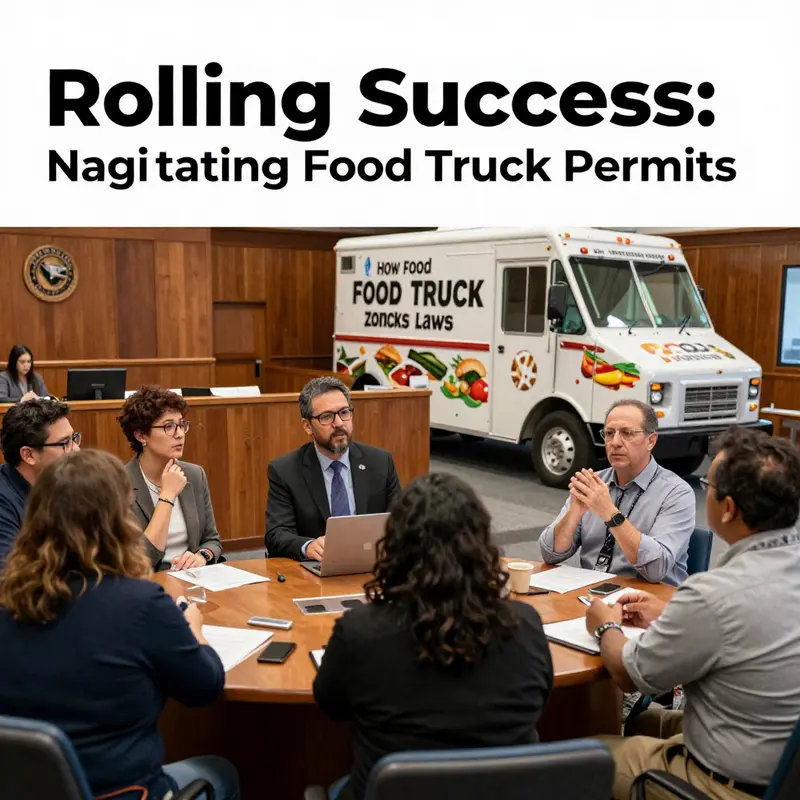
A food truck operates at the intersection of entrepreneurship and governance. Its freedom to roll onto a street or into a park hinges on a web of permits and approvals that vary in detail from one place to the next. Yet the core idea remains constant: permits exist to prove that a mobile kitchen meets safety, sanitation, and location standards so that the public can eat confidently and the city can manage crowds, traffic, and waste. Understanding how these permits work, and how local variances shape the path from idea to street, is not just about compliance. It is about building a sustainable business on a foundation that authority and customers alike trust. The typical journey begins with a basic business license. This step announces your enterprise to the municipal or county government, establishing you as a legitimate entity. It is usually a prerequisite before you can apply for other permits, because many health and safety checks are built on the assumption that you are operating a registered business. In practical terms, a business license is your passport to do business within a jurisdiction; without it, even the best menu and the cleanest truck face an uphill climb. From there, the layers begin to accumulate. A food handler’s permit or a food safety certification often comes next. These credentials ensure that you and your crew understand proper food handling, temperature control, cross-contamination prevention, and sanitation protocols. Local health departments typically issue these certifications, and they are a signal to customers that what you serve will be prepared with care for safety and hygiene. The heart of the permit stack, though, is the mobile food vendor permit—sometimes called a street vending permit, a mobile unit permit, or a similar title. This is the stern gatekeeper of the mobile business model. It confirms that your truck, your process, and your practices align with the health and safety standards set for operating in a public space. It is not merely a stamp of approval; it is a validation that your unit can be inspected regularly and kept in a compliant state as conditions, equipment, and even menus evolve. The mobile vendor permit is the one that often demands the most detail in its review. Jurisdictions want to see that your refrigeration units are correctly installed and sized, that cooking equipment has proper ventilation, that waste disposal systems are in place, and that clean water access is guaranteed for both cooking and handwashing. In many places, you will also be asked for blueprints or detailed plans of your truck’s layout. These documents help reviewers confirm that your equipment will function safely in the limited space of a mobile kitchen, and that there is a logical workflow from receiving ingredients to plating a finished dish. The layout plans—sometimes called floor plans or equipment schematics—can cover everything from the location of a handwashing sink to the path hot surfaces take and how waste streams are managed. The level of specificity varies by jurisdiction, but in critical markets it is common to see a requirement for stamped or professional plans, especially if the unit is custom-built rather than a standard, pre-approved model. The process does not stop with the mobile vendor permit. A battery of ancillary authorizations often accompanies the core permit package. A sales tax permit, for example, is essential for collecting and remitting sales tax on food items. Without this permit, a vendor could face tax liabilities that undermine profitability and jeopardize license renewal. A local zoning permit or use permit is frequently needed to ensure you are operating in an area approved for mobile food service. Zoning rules can restrict where a truck may park, how long it can stay, and what kinds of foods may be offered in certain locations. In many jurisdictions, there are designated zones or events where food trucks are encouraged to congregate, and outside of these areas you may face restrictions or outright prohibitions. A fire department permit is another common requirement, particularly if your truck uses gas or features complex cooking equipment. Fire codes govern vent hoods, fuel storage, emergency shutoffs, and the placement of fire extinguishers. Across the board, most jurisdictions require inspections before permits are issued. Inspections are the touchstone of compliance: they verify that your truck meets the hygiene, ventilation, water, waste, and equipment standards mandated by local rules. In some cases, a first-round inspection is the final hurdle before a permit is granted; in others, there may be multiple checks as part of a phased approval process. Even beyond the general framework, local variances can be substantial. Some municipalities require a special permit to operate in public parks or near schools. Others have carved out “food truck zones” that are explicitly approved for mobile vendors, with timing and operational rules tailored to local needs. These variances matter because they determine the best location strategy and the calendar you can plan around. If a city designates certain streets or blocks for food trucks, a vendor may need to align schedules with these zones to optimize visibility and customer flow. Conversely, if a jurisdiction restricts parks or school-adjacent operations during certain hours, you must adapt your menus, staffing patterns, and service style to avoid conflicts. The practical effect for an operator is clear: you must research the specific requirements of your intended operating area before committing to equipment purchases or branding decisions. This is not a one-time task but an ongoing discipline, because rules can shift with changes in leadership, public health priorities, or urban development plans. To navigate this landscape, build a map in your planning documents that links each permit to its issuing agency and its expected timeline. Start with the basic licenses—business and health—then layer in the more location-specific permits. In many cases, the health department will serve as the central hub for guidance, directing you to the right plan review staff or issuing office for zoning and fire codes. A practical example underscores how this works in a real system. In certain states, a truck that fits within standard dimensions may be treated as a standard mobile unit, with plan review and permitting handled by the health department. If the unit is particularly large or uses unusual configurations, reviewers may route you toward a different agency or additional approvals. In Washington State, for instance, the classification of a unit as a food truck or trailer can trigger plan review requirements. If the unit doesn’t meet that definition, you may be classified as a different type of mobile unit that requires Licensing & Inspections (L&I) approval. In such cases, contacting plan review staff at the health department or the L&I help desk can save days or weeks of back-and-forth. The essential messages from these examples are simple but powerful: no matter how polished your concept, the legal path is concrete and local. A smooth permitting journey begins with knowing whom to contact and what documents to prepare. The documents usually include standard business registration details, certified blueprints or layouts, a detailed equipment list, water supply and waste disposal plans, and proof that you have access to a reliable source of clean water and an approved means of wastewater management. Because inspections are common, it pays to go into the process with a practical pre-inspection checklist. Confirm that critical systems—refrigeration, cooking appliances, ventilation, sinks, and waste lines—meet the public health standards. Ensure that your electrical and gas installations align with code requirements. Have your fire extinguishers charged and accessible, and verify that your emergency shutoff mechanisms function. The aim is not to surprise inspectors with missing components but to demonstrate that every facet of the truck’s operation has been thoughtfully designed for safety and efficiency. In addition to the core permitting steps, many operators discover that local rules touch on operating behaviors as well. For instance, restrictions on operating near schools may require you to schedule service to avoid the school’s bell times. Park restrictions and permit quotas in certain neighborhoods can influence where you set up shop, which, in turn, affects your potential revenue. People who fail to research these subtleties often mis judge the feasibility of a given location and pay the price in fines, notices to cease operations, or even permit revocation. This is where the value of a proactive, research-driven approach becomes evident. Rather than treating permits as a box to check, think of them as a framework for sustainable growth. The right permits do not just allow you to sell food; they enable you to operate with predictability. You can plan truck maintenance around inspection cycles, train staff to align with certified food safety guidelines, and market in ways that respect local land-use rules. When you are preparing to apply for permits, connections matter. Engage with the local health department early in the process. Ask for a written checklist, request a pre-application meeting if available, and seek clarity on any ambiguous terms in the guidelines. Document every step and keep a file of communications, because permit decisions can hinge on precise language in regulations. If you encounter a variance or a supplemental permit, approach the process with the same methodical mindset you apply to your recipes: document, test, and iterate until the system aligns with your operational plan. Opportunities often arise in the spaces between strict rules—zones where the jurisdiction is encouraging mobile vendors to pilot new formats, or events that invite multiple trucks into a controlled, permitted environment. Vendor permits for events and municipal facilities are increasingly part of the permitting picture. They extend your ability to serve during festivals, farmers markets, or city-organized gatherings, but they come with their own checklists and inspection regimes. Even with a robust set of permits, ongoing compliance is not optional. Permits are renewed, re-inspected, and occasionally renegotiated as rules shift or as you pivot the menu. Service changes, new equipment, or a move to a different neighborhood can require new plan reviews or updates to existing approvals. That is why maintaining close ties with the issuing agencies and scheduling periodic internal reviews is worth the effort. It is also why many operators build a simple, repeating cadence into their business practice: annual license renewals, semi-annual health and safety checks, quarterly equipment calibration, and a rolling review of zoning and event permit opportunities. The overarching lesson is not simply about obtaining permits; it is about creating a disciplined operating model that respects local variances while preserving the flexibility to adapt. As you plan, remember that guidance exists beyond the building and inspection tables. Industry resources emphasize the same core ideas: start with the basics, map out the jurisdiction-specific requirements, and prepare documentation with an eye toward future changes. For a practical, location-aware overview of licenses and permits, consider resources like guidance provided by industry-focused outlets and reputable guides that outline permitting inspections and how to prepare for them. For a practical perspective on navigating these rules, see Navigating Food Truck Industry Regulations. Thinking of your journey as a continuous loop rather than a one-off hurdle keeps the process manageable and reduces the risk of surprises at critical moments. And while the specifics of each permit can feel like a labyrinth, the constructive path remains constant: know the authorities, prepare the right documents, anticipate inspections, and build a compliant foundation for growth. If you want to explore broader perspectives that connect permits to profitability, you can consult external resources that summarize the permitting journey from the perspective of aspiring operators and seasoned veterans alike. One such resource compiles practical steps from initial permits to profits, highlighting how permitting decisions influence everything from location strategy to cash flow. Start with a comprehensive, location-aware approach, and your permits will stop feeling like an obstacle and start feeling like an enabler of your mobile kitchen’s long-term success. Useful, location-specific guidance is often complemented by general reference materials that help you anticipate the kinds of equipment, layouts, and workflows that comply with health codes and safety requirements. By treating permits as a living part of your business plan, you gain the confidence to select the right truck, design an efficient kitchen, and pursue the right events and spaces with clarity. In this sense, the permit landscape, with its local variances and regulatory nuances, becomes a map rather than a maze—one you can navigate with foresight, preparation, and a steady partnership with the authorities who ensure that every plate served from a food truck meets the standard of care that communities expect. For a practical, how-to-style overview that complements this narrative, take a look at further reading that consolidates steps from permits to profits and offers a template for preparing for permitting inspections. start-food-truck-permits-profits.
Final thoughts
Understanding food truck permits is more than just navigating paperwork—it’s about ensuring your culinary vision thrives within the legal boundaries of your community. By grasping the basics of legal compliance and the specific requirements needed in your area, you can position yourself or your organization for success. Whether planning an event or simply indulging in mouthwatering street food, being informed empowers everyone involved. With food trucks on every corner, let’s create delicious moments while supporting vendors and enjoying the vibrant culture they bring. Embrace this adventure, and together, we can ensure every food truck rolls smoothly into the future!