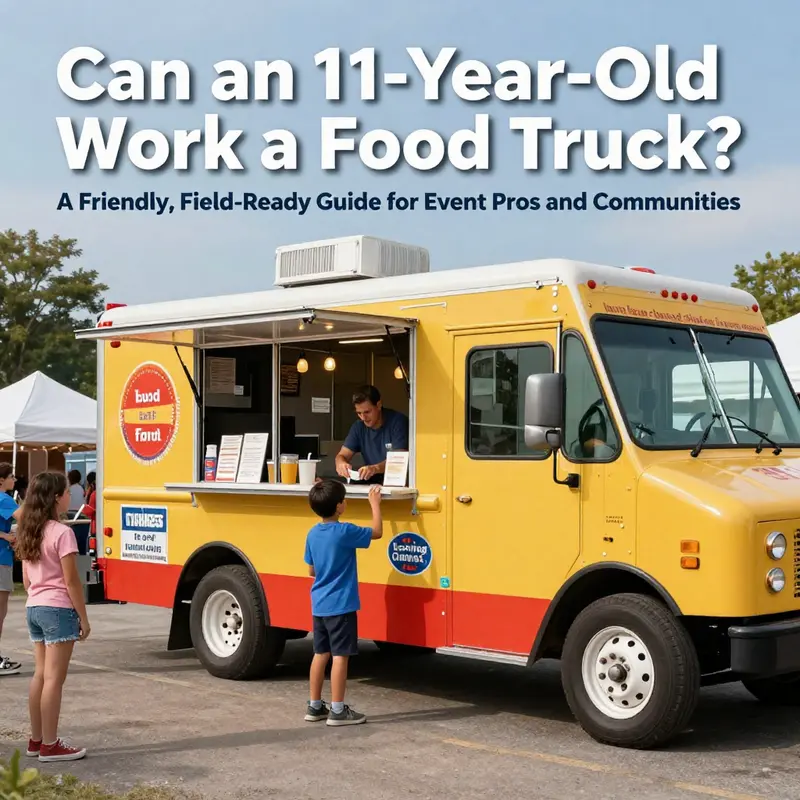
Flavors on wheels bring communities together, but when a family dreams of a kid-friendly, community-driven food truck, a chorus of questions follows. Can an 11-year-old legally contribute to a mobile kitchen? What safety standards apply, and who bears the responsibility if something goes wrong? For event planners, corporate HR teams, local groups, and individual food enthusiasts, clarity matters more than cleverness. This guide anchors the conversation in real-world rules and humane practice, offering a practical road map that respects both opportunity and safety. We’ll start with the Legal and Safety Landscape, where federal norms and venue rules set non-negotiable guardrails. Then we’ll map the Operational Realities and Skill Gaps, translating the day-to-day demands of a food truck into age-appropriate learning steps. Next, we’ll explore Family Contexts, Supervision, and Limited Roles, highlighting how households can structure meaningful, safe involvement. Finally, we’ll close with Regulatory References, Practical Guidance, and Compliance—giving organizers concrete steps, resources, and best practices. Throughout, the emphasis stays steady: youth can engage in learning, community service, and family business in thoughtful, supervised ways, while essential tasks remain supervised and non-hazardous. As you read, you’ll see how each chapter builds toward a practical conclusion: safety, legality, and opportunity aren’t mutually exclusive; they can coexist in a well-planned family venture that honors everyone at the curb.
Legal Roads and Kitchen Tightropes: Why an 11-Year-Old Can’t Run a Food Truck
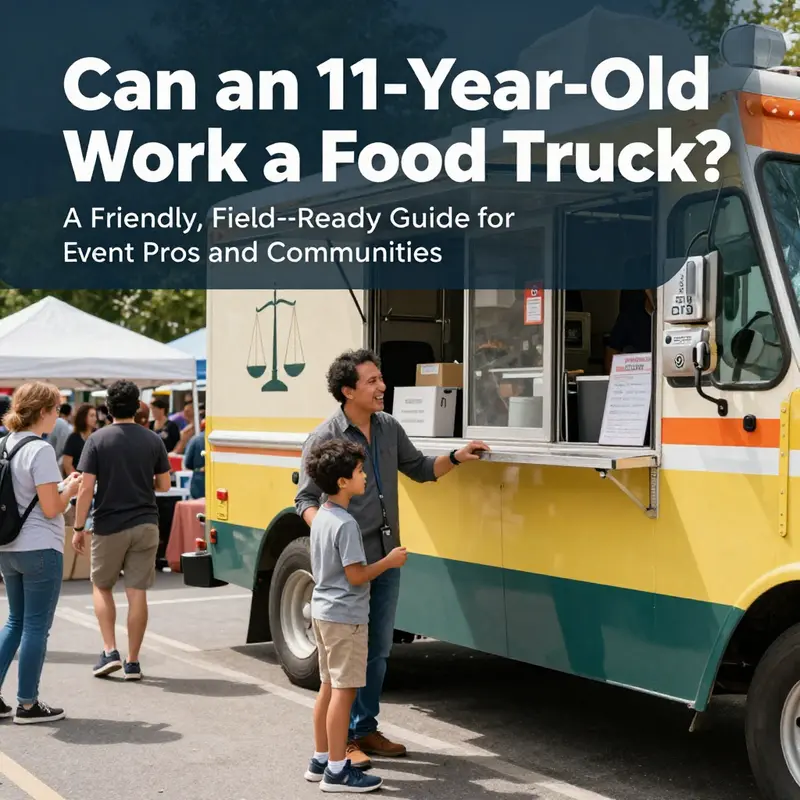
The image of a family with a weathered food truck rolling into a neighborhood, steam curling from the grill, is a powerful one. It promises independence, a shared dream, and the rush of being your own boss in a bellied, bright-blue truck that smells of garlic, peppers, and ambition. Yet for an 11-year-old, that dream encounters a hard, professional reality—the kind that rests not in courage or curiosity but in law, safety, and the practical craft of running a mobile food operation. The question, at its core, bends toward a simple curiosity: could an eleven-year-old legally and safely work a food truck? The honest answer sits at a complicated crossroads of federal rules, local health codes, insurance requirements, and the practical demands of a business that travels with its own hazards, from hot oil and open flames to the constant motion of streets and parking lots. In most places, the answer is no, at least not in the sense of performing core roles that keep the truck running. The reality is less dramatic in sound bites and more complex in everyday practice, where every task—from sanitation to keeping the timetable—demands a level of training and responsibility that is not typically within reach for someone so young.
To understand why, it helps to begin with the legal frame. In the United States, federal child labor standards set a clear boundary: children under 16 are generally restricted from non-agricultural employment that is deemed hazardous or too complex. The U.S. Department of Labor enforces these rules, and they extend to occupations that would be common in a food truck setting—operating cooking appliances, handling hot food, driving a vehicle, or performing tasks that require specialized safety knowledge. Even in a setting where a child could be present at a truck’s location, the law typically prevents them from performing the most risky or operationally essential duties. The difference between simply being near a truck and actively operating one is substantial and legally meaningful. The open flame of a grill, the speed and weight of a vehicle, the use of sharp knives and knives, the management of hot surfaces, and the manipulation of electrical equipment all elevate the risk profile to a level that requires adult supervision, licensing, and often professional training. When a business contemplates staffing, the regulations do not merely govern whether a job exists; they govern what tasks can be assigned, who can do them, and under what hours. This is not mere pedantry. It is about preventing injuries, safeguarding the public, and ensuring the business can function within a framework of accountability.
So the age question isn’t merely about whether a kid would have fun or learn something valuable. It is about whether the law views the activity as safe, appropriate, and manageable for a minor. For most 11-year-olds, the horizon of a food truck job belongs not behind the grill but in the realm of observation, learning, and supervised participation in non-hazardous roles. The distinction matters because it shapes both the opportunity and the responsibility that a family or any operator must consider when a child is involved in a food-truck venture. The list of tasks that could be considered non-hazardous for a minor—passing napkins, assisting with basic cleaning under supervision, or helping with promotional materials—appears simple, almost mundane. Yet even these roles come with liability considerations and health-safety expectations. For instance, keeping surfaces clean, while essential, still requires adherence to sanitation standards that are designed around trained staff who understand cross-contamination risks, food handling practices, and the correct use of cleaning agents. In a high-speed service window or a tightly packed event, missteps can lead to foodborne illness concerns or slip-and-fall hazards that expose the business to liability. The safety net of supervision can help, but it does not erase the fundamental regulatory boundaries that apply to minors in food-service environments.
The operational realities of a food truck compound the legal caution. A successful mobile kitchen is a system: a rotating cast of tasks that must be coordinated with the precision of a small orchestra. It demands knowledge of food safety, including proper storage temperatures, cross-contamination prevention, and rigorous cleaning schedules. It requires inventory management—tracking stock of ingredients, disposables, and packaging—and an understanding of how shortages ripple across a day’s service. It depends on customer service and the ability to communicate clearly under stress, especially when lines form, orders need to be filled quickly, and the truck is parked in a bustling lot or a festival ground where the pace is relentless. It also calls for a basic technical aptitude: the ability to perform routine vehicle checks, monitor fuel, understand electrical systems, and recognize when something needs professional attention. All of these competencies accumulate over time, often through formal training, on-the-job practice, and the steady accumulation of experience. An 11-year-old’s cognitive and motor development, while impressive for many tasks, is typically not yet aligned with the demands of safely managing a kitchen that operates at high temperatures and with multiple risk factors, or with keeping a vehicle in a safe, roadworthy condition.
The result is a kind of practical barrier that aligns with the legal barrier. The aim is not to dampen a child’s entrepreneurial spirit, but to protect them and others. It is also a matter of liability and risk transfer. Food-truck operations come with a heavy layer of liability. Health departments enforce sanitation rules; occupational safety standards apply to equipment and workflows; and insurance policies for mobile food vendors often exclude coverage for underage workers or require strict, adult-only supervision for all tasks. When a minor is involved, many business owners end up facing questions about who is responsible if something goes wrong, how coverage would apply, and whether a parent’s or guardian’s role could be interpreted as assuming risk without the right professional structure in place. The legal safety net is not just about following a page of rules. It is about ensuring that a business can operate without exposing young people to hazards that could leave lasting injuries, or expose the company to lawsuits and financial losses.
This is not to say that minors have no place in a family-operated food truck or in youth entrepreneurship journeys. There is a meaningful and valuable space for involvement that stays within safe, supervised boundaries. An eleven-year-old might, with strict oversight, assist with setup after the truck arrives, help with uncomplicated tasks that do not involve heat or moving machinery, or participate in promotions and marketing activities that develop skills in communication, design, and business planning. They might help draft a social media post, assemble simple promotional materials, or participate in a school-based project that teaches consumer-facing skills in a controlled environment. In some communities, there are programs designed to introduce youth to entrepreneurship through school-based or community-led initiatives that emphasize mentorship, safety training, and age-appropriate responsibilities. In those environments, the child learns the fundamentals of business while staying within a structure that prioritizes safety and compliance. The emphasis remains clear: these experiences should be educational and supervised, not operational in a way that would place the young person in a hazardous role.
For those who want to understand the nuances of what a minor can and cannot do in the food-truck ecosystem, a useful guide sits at the intersection of regulations and practical considerations. It is worth exploring resources that address how to navigate the complex web of rules governing mobile food operations and youth participation. One useful anchor for readers who want to dig deeper into the regulatory landscape is a dedicated page that discusses how to navigate food truck industry regulations. It helps separate myth from rule and offers practical steps for families who want to involve young people in a way that is compliant and safe. This resource emphasizes understanding local health department requirements, rider and worker safety, and the responsibilities that come with overseeing young participants in a mobile kitchen environment. By anchoring curiosity in this kind of guidance, families can plan opportunities that teach valuable skills while maintaining safety and legality. navigating food truck industry regulations.
Across the country, the differences in state and local rules can be subtle or stark. Some jurisdictions adopt stricter interpretations of what constitutes a hazardous environment, while others emphasize the need for formal training and certification for anyone handling food or operating a vehicle. The reality is that even parents who want to give their child a taste of entrepreneurship confront a layered structure of permits, inspections, and compliance checks. These checks are not merely bureaucratic hurdles; they are designed to ensure that customers receive safe food and that workers—young or old—are protected from harm. While an eleven-year-old cannot legally take the helm of a moving truck or flip burgers on a blazing grill, there is value in structured, age-appropriate exposure. Cooking demonstrations in the classroom, participation in the business planning process under adult supervision, or taking part in a controlled, low-risk setting where the child learns about food safety, pricing, and customer service can be highly educational. Such experiences build a foundation for future, more advanced responsibilities when the child reaches the appropriate age and the authority to assign tasks accordingly.
The broader narrative, then, is not simply about whether a child can press a button or carry a pan. It is about how communities, families, and regulators create a space where curiosity can mature into capable, ethical, and safe entrepreneurship. The arc is forward-looking: it asks how to cultivate skills, foster resilience, and encourage responsible risk-taking while protecting the youngest participants from harm and ensuring public safety. In practice, this means layering learning experiences with the right supervision, ensuring that every task aligns with current laws and best practices, and recognizing that some of the most powerful lessons come not from hard tasks, but from observing, learning, and gradually taking on more as maturity and training permit.
If you imagine a future where a child can grow into a capable food-business professional, the path begins with education, mentorship, and real-world exposure that does not place the child in a hazardous role. It begins with a clear understanding that legal age restrictions are not arbitrary limitations but protective measures designed to keep young people safe while allowing them to explore their interests in constructive, supervised ways. It also involves acknowledging the emotional and community dimensions of family ventures. A food truck is not just a device for selling meals; it is a system of relationships—between cooks and customers, between the truck and the street, and between the family members who share the dream. When those relationships are built on safety, trust, and compliance, the journey becomes meaningful. The child learns the rhythm of service, the importance of sanitation, the value of teamwork, and the discipline of planning. In time, with the right age and the appropriate kind of training, they may step into roles that are more demanding and more central to the operation. Until then, the best practice is to keep the learning journey aligned with the law and with the practical realities of a mobile kitchen.
In closing, the question of whether an eleven-year-old can work a food truck is best answered with three clear truths. First, federal and local regulations generally prohibit operating roles for someone so young in non-agricultural settings, with the safety and vehicle-control responsibilities alone presenting a significant barrier. Second, the realities of food-safety protocols, equipment handling, and vehicle operation require a level of training and judgment that typically develops with time and experience. Third, there is still ample room for meaningful, supervised involvement that supports family business goals while protecting the child and the venture alike. By focusing on age-appropriate, safety-first experiences, and by leaning on formal guidance and community programs that emphasize mentoring and education, families can cultivate the spark that often drives entrepreneurial ambition without compromising safety or legality. The road to learning and leadership in the world of mobile food service does not run through the heat of the grill at eleven; it begins with curiosity, careful planning, and a commitment to doing things the right way. External resource: https://www.dol.gov/agencies/whd/minors
Chapter 2—The Roadblocks and Realities: Why an 11-Year-Old Can’t Legally or Safely Operate a Food Truck
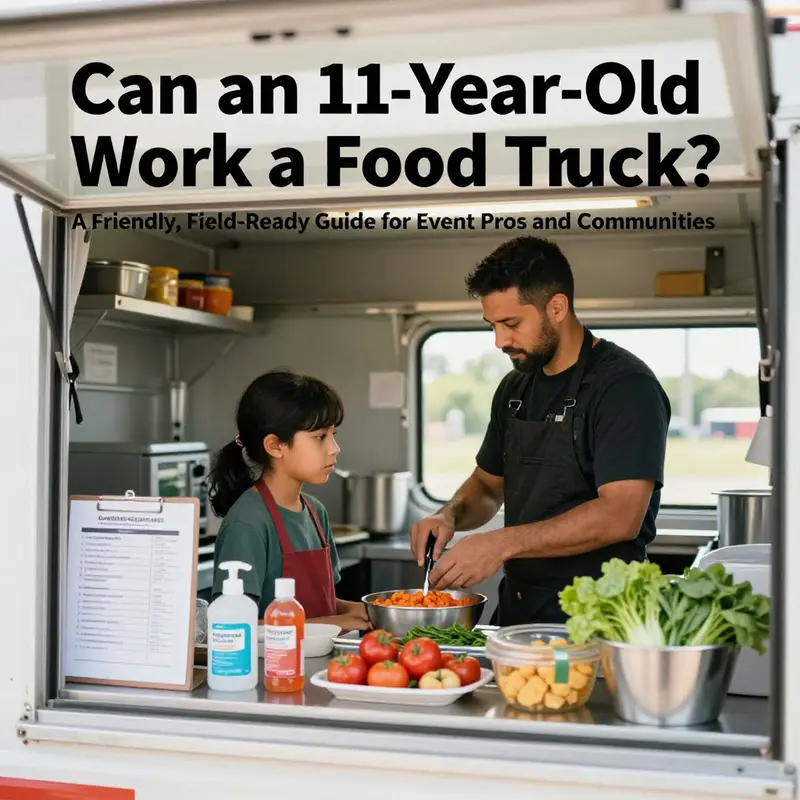
When families imagine turning a shared love of food into a small business on wheels, the idea of a bright, energetic child helping behind the scenes often surfaces. An 11-year-old may have a natural curiosity, a quick smile, and a knack for organizing a classroom project. In a family setting, these traits can feel like building blocks for entrepreneurship. But the jump from admiration to operation is a chasm when the subject is a food truck. The vehicle is not merely a mobile stand; it is a compact kitchen, a service hub, and a tiny workspace charged with heat, noise, and constant movement. The dream of a child helping out can be inspiring, yet the practical, legal, and safety considerations create a sober frame that many families overlook in the rush of excitement. The core truth is straightforward: in the United States, an 11-year-old cannot legally serve as a primary operator of a food truck. Even presence at the location is not the same as performing essential duties. The line between supervision and hands-on responsibility is carefully drawn by law and reinforced by risk management practices that most families do not wish to cross. This chapter traces the roadblocks, tying together the legal framework, the safety hazards, and the operational realities that collectively render the vision of a child running a food truck unrealistic in most jurisdictions.
To begin, the legal landscape sets a hard boundary. The Fair Labor Standards Act governs child labor in non-agricultural settings, and it is enforced with the aim of protecting young workers from hazardous work and from jobs that demand capacities beyond their physical or cognitive development. The general rule is that children under 16 are not allowed to hold many types of jobs that involve operating commercial equipment, handling hot food, driving vehicles, or performing complex tasks. A food truck blends all of these elements into a single, high-stakes environment. From the moment the gas flame is ignited to the moment the last pan is wiped clean, the operation includes heat, knives, electrical equipment, and the potential for heavy lifting. Although there are allowances for youth involvement in supervised, non-hazardous activities, the essential duties—the cooking, the driving, the deep cleaning, and the financial responsibilities—remain out of reach for someone who has not reached the legal age. The law recognizes that the consequences of a misstep in a kitchen window, a grease trap, or a moving vehicle can be severe, affecting not only the young worker but customers and the business itself.
The details matter. Federal rules do not simply ban “work” in a food truck; they distinguish between permissible exposure and hazardous labor. Many tasks in a commercial kitchen and a mobile operation are deemed hazardous due to heat, sharp tools, heavy equipment, high noise levels, and the risk of burns, cuts, or accidental injuries. A responsible adult understands that the kitchen environment is a place of precise timing and rapid decision-making. A novice, especially a young child, is unlikely to maintain the vigilance required to prevent cross-contamination, manage temperatures, or avoid slips and burns in a fast-paced service window. When a truck bounces along a curbside, a sudden movement can turn a routine task into a dangerous incident. The driver must operate a heavy vehicle with attention to pedestrians, other road users, and regulatory compliance. The intersection of these tasks creates a scope of work that is simply beyond what the law allows an 11-year-old to perform regularly and independently. The legal framework is not a hypothetical obstacle; it is a practical safeguard designed to protect young people from occupational hazards that they may not yet matured enough to anticipate or respond to effectively.
Beyond the letter of the law, there is the question of safety. Even if a family considered a loophole or a loophole-based arrangement, the risks remain substantial. Food trucks operate in urban streets, festival grounds, and parking lots where space is tight and the exposure to traffic and unpredictable crowds is constant. The griddle or fryer is hot enough to cause serious burns, and the control panels for gas, electricity, and water are designed for trained hands. A child may be curious and enthusiastic, but curiosity does not equate to the precise motor control or the risk awareness that food-preparation equipment demands. A misread timer, an imperfect temperature reading, or a hurried misstep can lead to food safety failures that threaten public health and invite legal liability. The weight of liability is not merely theoretical; it translates into higher insurance costs, stricter compliance requirements, and a more burdensome operational load for a family business that is still learning to align its processes.
Operationally, the world of food trucks is a specialized domain that blends culinary skill, hospitality, supply chain management, and basic mechanical aptitude. The reality is that a truck is a moving kitchen, and running it well requires a depth of knowledge that many adults spend years developing. Food safety and sanitation are foundational; the best practices around preventing cross-contamination, maintaining proper temperatures, and keeping surfaces pristine under high demand are learned through formal training, experiential practice, and ongoing vigilance. Inventory management is another pillar. Successful operators forecast demand, track perishable ingredients, manage ordering cycles, and preserve freshness across a busy service day. The math involved in balancing a menu with a fluctuating demand can be subtle and precise. A child just starting to learn multiplication and budgeting would still be far from mastering a system that ensures consistent quality and minimizes waste—an essential requirement for a profitable food operation.
Customer service, too, demands not just a friendly demeanor but a sense of situational awareness that grows from experience. A food truck is a high-pressure front line where the clock is always ticking. Orders must be taken accurately, guest expectations managed, and issues resolved with diplomacy. The cashier function, the handling of cash and change, and the speed with which a team can recover after a mistake all influence the customer experience and the bottom line. For an 11-year-old, the cognitive load of juggling quick-fire questions about ingredients, dealing with upset customers, and maintaining composure under a continuous stream of orders is substantial. The emotional regulation requirements—staying calm when things go wrong, making quick on-the-spot decisions, and collaborating with teammates under stress—are areas where most children at that age are still developing. The upshot is that even a well-meaning youngster who is eager to contribute is unlikely to perform at the level needed to sustain a professional operation safely and consistently.
In light of these realities, the so-called “simple tasks” that a child might perform become less clear. It is possible for an 11-year-old to help with non-hazardous, supervised activities such as setting up a pop-up stand, arranging napkins, or assisting with clean-up routines under the watchful eye of a responsible adult. They might help with marketing materials, display coordination, or basic greeting duties that do not involve food preparation, handling hot surfaces, or financial transactions. These roles can be valuable for fostering early business literacy and a sense of teamwork, and they can provide a sense of pride in contributing to a family project. Yet such tasks are best viewed as supportive roles rather than core responsibilities. The distinction matters because it preserves the safety and legal boundaries while still offering children the opportunity to learn about entrepreneurship and customer service in a controlled, age-appropriate way.
The skill gap between an 11-year-old and a competent food-truck operator is vast. Even with a strong curiosity and quick willingness to learn, mastery requires a blend of practical training and time. Cooking on professional equipment demands precise timing, instrument calibration, and an understanding of product safety that comes from hands-on practice and formal instruction. Food-safety protocols—like maintaining correct temperatures for clubs of perishable proteins, dairy, and sauces; preventing cross-contamination between raw and prepared foods; and implementing sanitation schedules that ensure a clean, safe kitchen environment—are not an optional add-on; they are the backbone of the operation. The mental discipline and physical stamina necessary to manage long shifts, the physical demands of standing for hours, and the coordination required to move swiftly through a crowded service window are resources that accumulate with age and experience. A child’s development, while rapid and impressive, does not linearize into the professional competencies that a mobile kitchen requires. The result is a clear, durable gap between what is possible for an 11-year-old and what is required to run a food truck day after day, under the realities of real-world conditions.
Despite these realities, the impulse to involve young people in family ventures remains meaningful and can be channeled into constructive, safe experiences. The healthiest approach is to frame an 11-year-old’s involvement as a learning journey that emphasizes observation, mentorship, and age-appropriate participation that never places them at the center of the operational wheel. Supervised roles may include helping with setup before the truck opens, assisting with promotional events, or participating in simple, non-food-related tasks such as branding activities, online storytelling, or community engagement efforts. These opportunities cultivate entrepreneurial thinking, resilience, and teamwork without exposing the child to hazardous environments or the business risks tied to driving, cooking, or financial management. It is also an invitation to develop core skills—responsibility, punctuality, teamwork, and the ability to follow schedules and checklists—that will serve them well when they are older and legally permitted to assume more significant responsibilities.
For families that want to nurture early interest in culinary arts and business, there are age-appropriate pathways that align with safety and law. Cooking classes designed for younger audiences, supervised food-preparation workshops, and school-based programs can build a foundation of knowledge about flavors, techniques, and kitchen hygiene. Youth entrepreneurship programs, mentorship opportunities, and small-group projects can teach budgeting, marketing, and customer interaction in a structured environment. These experiences create a durable reservoir of knowledge that can inform future decisions about career paths in hospitality, food service, or business ownership when the child is older and the legal framework permits more direct participation. In this way, the family’s culinary dream remains alive, but the execution mirrors the child’s developmental stage and legal boundaries. The lesson is not to suppress ambition but to cultivate it in ways that are safe, legal, and educational.
As readers consider their own circumstances, a practical test emerges: if the aim is to build a resilient, compliant business that can scale, then the structure of involvement must reflect ages, capacities, and responsibilities. A vehicle that carries heat, oil, and electricity cannot be a classroom for a child. Instead, the family can reframe the project as a longer apprenticeship, where the child observes, learns, and participates in non-hazardous areas that contribute to the enterprise’s culture and efficiency. The business can grow in stages as the child ages and the legal permissions expand. In the interim, the heart of the venture—delicious food shared with the community—becomes a shared goal that unites family members and teaches valuable life lessons about teamwork, perseverance, and the careful balance between enthusiasm and safety. For those who want to explore the broader landscape of mobile-culinary entrepreneurship and the strategic choices involved in branding, equipment, and operations, a concise read can be found in the related blog, which offers insights into the broader world of food-truck ventures in a more general sense. blog.
To conclude this exploration of roadblocks and realities, the ultimate guidance remains clear. An 11-year-old cannot legally or safely operate a food truck as the primary operator. The combination of federal labor standards, safety considerations, and the practical demands of running a mobile kitchen creates a boundary that respects the developmental stage of a child while upholding the standards necessary to protect public health and the business’s integrity. However, this does not extinguish curiosity or the opportunity for meaningful involvement. Families can cultivate a safe, supportive path that honors the child’s interest, fosters early business literacy, and prepares them for more meaningful responsibility in the years ahead. The focus should be on learning, supervision, and gradual exposure to the world of food service and entrepreneurship, rather than early, unsupervised immersion into hazardous tasks or financial management. As readers move to the next chapter, they will encounter practical frameworks for safety protocols, training resources, and strategies to plan a future that aligns with both aspiration and law.
External resource for further reading: https://www.dol.gov/agencies/whd/minors
Chapter 3: Can an 11-Year-Old Work a Food Truck? Navigating Family Involvement, Supervision, and Safe, Limited Roles
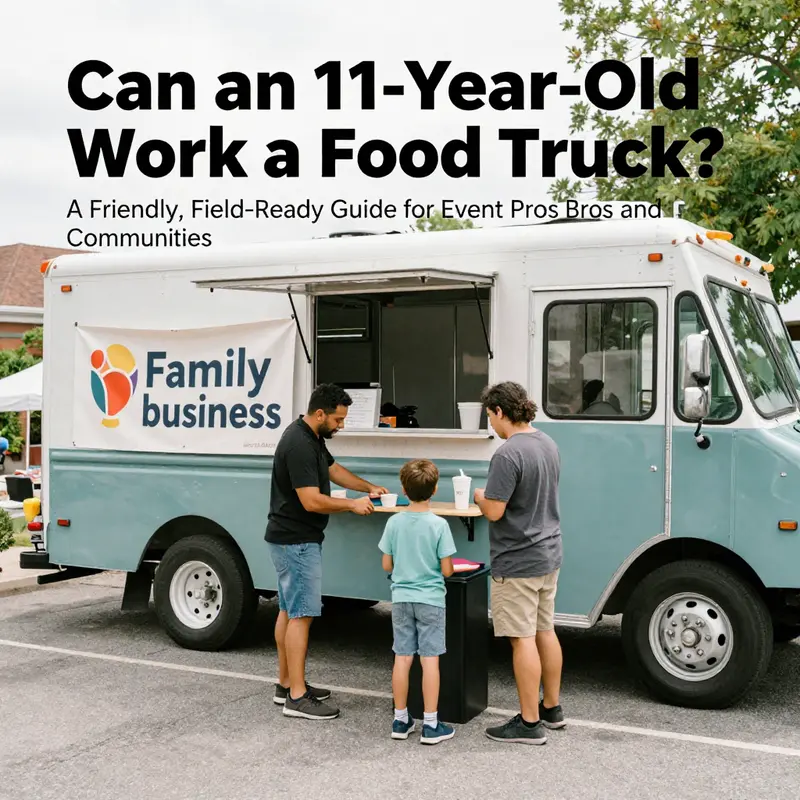
Curiosity about what a food truck does often starts early. A kid who helps in the kitchen at home might admire the sizzle of the grill, the bright lights of a vending window, and the idea that meals can travel with the team as a single, rolling business. The appeal is real. The image of a family unit turning a simple recipe into a small enterprise on wheels can feel empowering. But when you put an 11-year-old into the frame of a real food truck operation, the picture shifts from a story of culinary ambition to a ledger of laws, safety protocols, and practical realities. It becomes clear, even to the most enthusiastic family, that the question is less about what a child might want to do and more about what must be done to protect the child and everyone else on the street. The answer, in most places, is that an 11-year-old cannot serve as a primary operator of a food truck. Yet the topic is far from black and white, and the nuance matters if families want to involve their children in a constructive, lawful, and safe way.
Legal constraints frame the conversation from the start. In the United States, federal child labor laws are designed to shield young people from hazardous or overly complex workloads. The core rule is simple at first glance: under a certain age, children are not allowed to perform non-agricultural work that is considered hazardous or that involves operating machinery, handling hot equipment, or managing complex processes. Food trucks present a bundle of these hazards: hot surfaces and oils, sharp tools, the need to regulate temperatures for perishable foods, and the potential for vehicle operation. These elements are precisely the kinds of tasks that the U.S. Department of Labor and state agencies scrutinize. The result is a framework that keeps 11-year-olds from independently running a truck or taking on duties that resemble professional kitchen or driver responsibilities. The restrictions are not a statement about a child’s character or eagerness; they are a recognition that some responsibilities require a level of physical development, decision-making maturity, and training that typically comes with time and schooling, not in-the-mild demands of a busy street food setting.
Even in the narrow window where a family might think a child could contribute meaningfully without crossing lines, the rules remain strict. A child who is present at a truck site may participate in supervised, non-hazardous tasks, but those tasks are carefully bounded. The child may help with non food-contact roles like setting up a stand or organizing basic supplies, but anything that touches hot surfaces, raw ingredients, or high-speed workflows is out of the question. Driving a vehicle is never an option for an under-16 worker in non-agricultural settings, and operating cooking appliances or taking on financial responsibilities would be beyond what the law permits for a child of this age in most jurisdictions. The liability angles are equally daunting: even well-meaning families can be exposed to regulatory penalties, insurance complications, and potential accidents if a young person is placed in danger or entrusted with a task that requires professional training.
These legal guardrails are complemented by safety concerns that extend beyond paperwork. The kitchen on wheels is a tightly organized space. It demands quick reflexes, steady hands, and an ability to follow precise sanitation procedures even during the rush of a busy lunch or dinner service. Children need to be physically secure around hot equipment, sharp knives, and heavy containers. They must understand how to avoid cross-contamination, monitor cooking temperatures, and respond to spills that could threaten the slippery floor and pose slip-and-fall risks. In a crowded street environment, there are external hazards as well: traffic, pedestrians, noise, and the unpredictable dynamics of market hours. An 11-year-old, no matter how capable, would face temptations that are hard to balance in a real-world kitchen on wheels. These constraints are not about limiting a child’s potential; they are about aligning a child’s capacity with tasks that reflect an appropriate degree of responsibility and maturity.
Operationally, the day-to-day realities of running a functioning food truck are itself a formidable classroom. The enterprise requires mastery of food safety and sanitation, inventory management, and the ability to forecast demand. It demands customer service skills that are learned not in a classroom but in the flow of a crowded service window, handling questions about ingredients, accommodating dietary requests, and resolving small conflicts with a calm, professional demeanor. The financial side—the pricing, cost controls, and sometimes the maintenance of a vehicle—forms another layer that an 11-year-old would not ordinarily manage, even with a parent’s oversight. The pace is intense, and the tasks are interconnected. A misstep in one area can ripple into another, affecting taste, safety, or the bottom line. This is not to say a child cannot contribute to the family venture in any way. It is to recognize that the path of a full worker on a food truck is a path with many gates, most of which are closed to under-16s by law, policy, and common sense about safety.
So where does this leave families who want to bring their children into a food truck project in a constructive manner? The honest answer is that there are legitimate, safe ways to involve a child that respect the law and the realities of the business. The most straightforward route is to frame the child’s participation as a supervised, educational experience rather than employment. Under the watchful eye of an adult, the child can learn by observation, help with very gentle, non-hazardous tasks, and participate in activities that cultivate an understanding of the business without crossing into dangerous territory. Think of roles that center on organization rather than operation: labeling supplies, assisting with the setup and breakdown of a service area, tidying the dining space, or helping to distribute marketing materials—activities that reinforce responsibility, teamwork, and practical kitchen awareness without placing the child in a position where harm could occur.
The distinction between observation and work is subtle but essential. When a child observes, they absorb how a team coordinates prep, front-of-house service, and the timing that keeps a truck moving efficiently from one stop to the next. They may notice the meticulous steps of cleaning and sanitation, the careful tracking of inventory, and the discipline that keeps a menu fresh and compliant with health standards. When a child participates in non-hazardous tasks under strict supervision, the activity remains within boundaries that emphasize safety and learning rather than labor. In this scenario, the child is not assuming financial accountability, driving, or operating equipment. Instead, the child is cultivating curiosity, learning the rhythms of a small business, and developing a sense of responsibility that could inform future, age-appropriate opportunities—whether in a restaurant kitchen, a different small business project, or later work when they reach the legal working age.
To navigate this terrain wisely, families often start with a clear, age-appropriate plan that sets expectations and preserves schooling. School comes first; work-like responsibilities must not interfere with attendance or homework. A family’s approach can be designed as a learning track rather than a job track. It can include time-bound, supervised activities that are explicitly non-hazardous and do not involve handling hot food or operating machinery. This might involve learning about the basics of food safety, watching how inventory is organized, and assisting with simple tasks that do not require technical skill. The key is to establish a framework that keeps the child engaged, curious, and safe, while not blurring the line between mentorship and employment that a labor law would define.
The legal landscape also suggests a prudent approach for families who are serious about integrating a child into a family business. It is crucial to consult local labor laws and to understand what permits or registrations may be required if age-appropriate involvement is even deemed permissible in any capacity. In some communities, there are youth apprenticeship programs or supervised, structured activities that align with local rules. These programs can provide a bridge between curiosity and legitimate, educational work experiences as the child grows older. In practice, many families use the early teens as a milestone—when the child may gradually take on more responsibility under adult supervision, with a path toward more complex tasks once they reach the permissible working age. The idea is to build a culture in which safety, learning, and compliance are foundational, not optional.
For families who want a clearer map of what is permissible and what is not, there are practical resources that lay out the rules in approachable terms. The guidance from the U.S. Department of Labor, for instance, emphasizes that the primary responsibility lies with adults to ensure compliance and safety, and that youth employment must be arranged in ways that are safe, do not interfere with school, and do not jeopardize the child’s well-being. While the family context can allow some flexibility, it does not abolish the boundaries that protect young workers. This means that even in a family venture, the child’s role must be chosen with care, purpose, and an explicit understanding of the legal framework. When young people are introduced to the world of work in a family setting, the emphasis should be on learning, mentorship, and gradual exposure to responsibility rather than on performing the duties of a professional employee.
If the family chooses to explore this path, a thoughtful, well-documented approach can help. Create a written agreement that outlines the child’s role, the supervision structure, the hours that will be observed, and the specific tasks that are allowed. This agreement can function as both a learning contract and a safety checklist, ensuring that all parties are aligned. It is also wise to rehearse safety drills, such as what to do in case of a burn, a spill, or a minor injury. The more the family treats safety as a shared value, the more natural it feels to communicate openly about boundaries and responsibilities. In this process, the child learns that work is not just about effort but also about prudence, care, and the importance of keeping others safe—lessons that will serve them well in any future occupational setting.
The broader takeaway is that a food truck—though it can be a fantastic arena for entrepreneurship, creativity, and teamwork—should not be a place where an 11-year-old is pushed into a role that resembles actual employment. The law, the safety considerations, and the practical realities of operating in a dynamic street environment all converge to set a high bar for what is appropriate at this age. But there is still room for meaningful involvement that honors the child’s curiosity. The family can transform simple participation into a structured, supportive journey that nourishes a love of food, service, and business sense without compromising safety or legality. When done thoughtfully, this arrangement respects both the child’s present needs and their future potential, fostering an early understanding of responsibility that does not risk harm or legal trouble.
For those who want guidance tailored to the specifics of the local setting, the path begins with a careful review of the relevant regulations and a candid conversation within the family about goals and boundaries. As much as the dream of a busier, more connected family business can be appealing, the priority must always be the well-being and development of the child. The road ahead can still be bright and entrepreneurial, but with a pace and a structure that keeps everyone safe and compliant. In the end, the family lesson is not about denying possibilities; it is about shaping them with wisdom and foresight. The truck can become a classroom on wheels, a canvas for teamwork, and a stepping stone to future opportunities that are appropriate for the child’s age and growing capabilities. When that balance holds, the entire enterprise benefits—the child, the family, and the customers who enjoy meals served with care, not risk.
For families considering involving their 11-year-old in a food truck venture, see the practical overview of regulations and best practices in the post on navigating food-truck industry regulations. This resource offers approachable guidance on how to structure participation in a way that aligns with safety, education, and compliance: navigating food-truck industry regulations.
External perspective is equally important. Official guidance from the U.S. Department of Labor highlights the framework that governs youth employment, clarifying that adults must supervise and that safety and schooling come first. The public-facing resources emphasize the priority of well-being and lawful work experiences for young people. For more formal guidelines, refer to the department’s youth employment pages, which outline age-appropriate tasks and the kinds of work that remain off-limits for younger workers: https://www.dol.gov/agencies/whd/child-labor
null
null
Final thoughts
The bottom line is clear: an 11-year-old cannot legally or safely operate a food truck. Federal child labor laws restrict under-16 non-agricultural work, and operating cooking equipment, driving, or managing critical duties are off-limits for liability and safety reasons. Yet there is meaningful, hands-on involvement that respects boundaries—especially within family-owned ventures. Supervised, non-hazardous tasks like setup assistance, simple marketing, and customer engagement can be valuable learning experiences that foster responsibility, teamwork, and community spirit. For event planners and organizations, the takeaway is to design youth participation that aligns with safety guidelines, offers mentorship, and celebrates family entrepreneurship without compromising compliance. The path forward blends opportunity with clear boundaries, supported by practical resources and thoughtful planning.