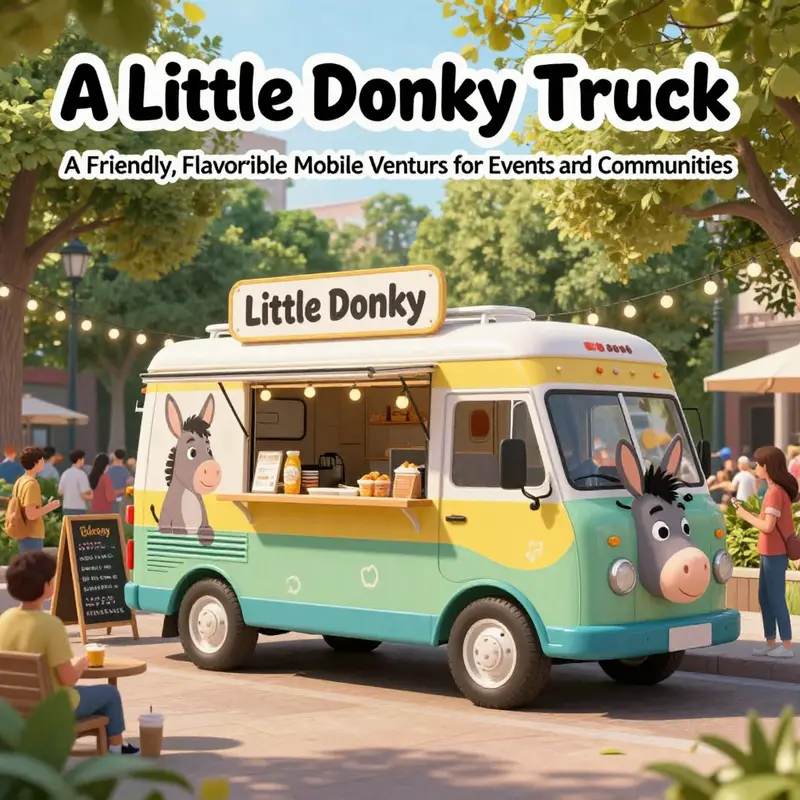
A Little Donkey Food Truck invites organizers, teams, and enthusiasts to imagine a mobile kitchen with personality, portability, and purpose. In a world where events seek memorable, shareable experiences and communities crave local flavor, a cheerful donkey-themed truck can become a flexible asset—moving from corporate celebrations to neighborhood street festivals with ease. This article explores how such a venture aligns with current market dynamics, how to design a practical yet playful operation, and how regulatory, economic, and social considerations shape its long-term viability. The journey unfolds across three chapters: first, assessing market trends and feasibility to ensure there’s a place in the street for a donkey with a mission; second, detailing an efficient operational design and a menu strategy that travels well and travels smart; and third, examining regulatory, economic, and societal impacts to build trust, resilience, and community pride around the brand. Each chapter speaks directly to Event Planners & Organizers, Corporate HR & Admin Teams, Local Community Groups, and Individual Consumers & Food Enthusiasts—showing how a Little Donkey Food Truck can delight crowds, support causes, and become a reliable partner for memorable moments.
A Donkey on Wheels: Market Trends, Feasibility, and the Rise of Donkey-Themed Mobile Eateries
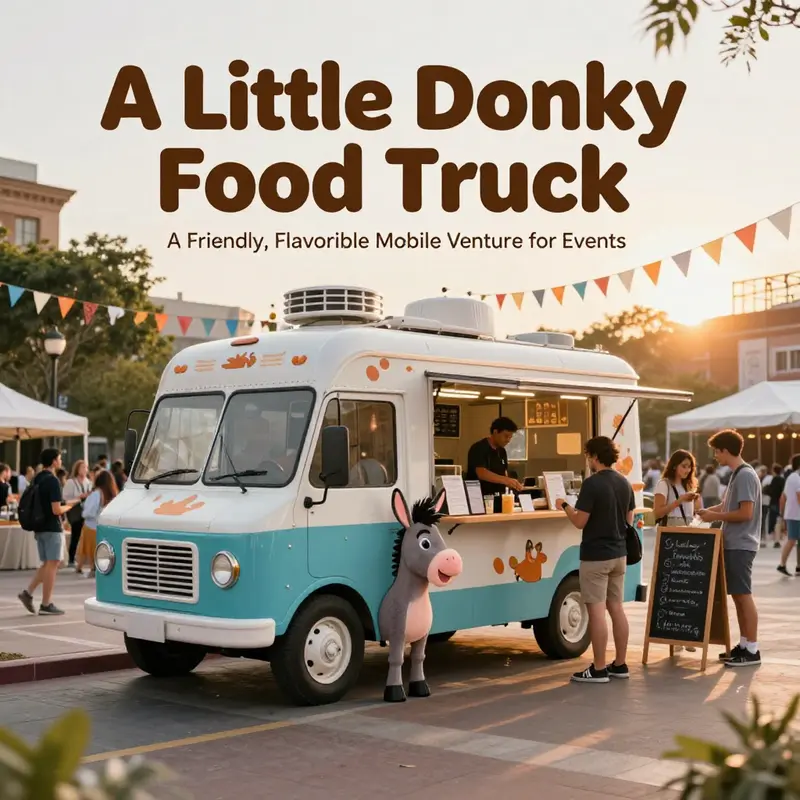
A donkey-themed mobile eatery is more than a playful image; it represents a convergence of appetite, technology, and urban design that is reshaping how small food businesses operate on the move. The concept taps into a fundamental shift in consumer behavior: a desire for convenient, high-quality food experiences delivered with speed and personality. Across cities and event spaces, diners are drawn to the novelty of a mobile kitchen that feels approachable yet crafted, friendly yet efficient, and, importantly, capable of meeting shifting demands wherever they appear. This chapter dives into the market dynamics that make such a concept feasible, the sustainability and branding choices that underpin its long-term viability, and the operational blueprint that can turn a donkey-inspired idea into a resilient, revenue-generating venture. It is not merely a whimsical narrative but a practical exploration of where the mobile food sector is headed and how a distinctly themed truck can carve out a stable niche within a crowded, competitive landscape. The broader market context is essential here. Industry forecasts describe a food truck sector on a growth trajectory, powered by urbanization, event culture, and a growing consumer appetite for flexible, experiential dining. The market’s size trajectory—tapping into billions of dollars by the end of the decade—signals not only appetite but opportunity. Yet growth is not a guarantee for every operator. The value proposition for a donkey-themed concept rests on differentiating experiences, not just menus. A compelling brand narrative, consistent quality, and dependable operations are the levers that convert curiosity into repeat patronage and, eventually, profitability. In this sense, the donkey motif becomes less about novelty and more about identity. It anchors menu design, service style, and customer interactions in a consistent frame, making a mobile kitchen feel approachable in the same way a beloved neighborhood storefront might, while preserving the mobility and lower overhead of a truck. The contemporary consumer increasingly expects sustainability to be baked into business models as a core attribute rather than a peripheral concern. Electric street food carts have emerged as a preferred option for many operators who want to balance environmental responsibility with long-term cost efficiency. The advantages are tangible: lower emissions, quieter operation that preserves neighborhood ambiance, and reduced fuel and maintenance expenses over time. These economics translate into competitive pricing flexibility, more predictable operating costs, and a branding advantage with environmentally conscious customers. A donkey-themed truck can lean into this narrative through clean, modern aesthetics and a public story about responsible sourcing, reduced waste, and a transparent energy footprint. The market trend toward sustainability is not an abstract ideal; it is a practical framework for daily decision-making, from vehicle choice to packaging, menu engineering, and supplier relationships. When a brand communicates a clear commitment to eco-friendly practices, it creates a halo effect that resonates with a broad audience, especially urban professionals, families at festivals, and health-minded diners who value transparency and stewardship. The digital landscape has become a crucial amplifier for such a brand. Social media platforms—Instagram, TikTok, and Facebook—offer real-time engagement channels that can build a loyal following around a mobile concept that thrives on location-based experiences. A well-executed online presence does more than showcase colorful photos or clever captions; it provides a narrative framework—the donkey on wheels story—that invites customers to participate through behind-the-scenes glimpses, live streams from events, and exclusive promotions tied to venues or times of day. A strong visual identity, reinforced through every touchpoint, is essential. Here the branding on wheels approach—the practical playbook for graphics, logos, and vehicle design—becomes a strategic asset rather than a cosmetic choice. For a deep dive into how graphics and identity on a food truck can be engineered to reinforce a distinctive, memorable persona, see branding on wheels: the ultimate guide to food truck graphics and identity. By aligning branding with the product and the customer journey, the vehicle itself becomes a moving billboard, a recognizably branded experience that travels through neighborhoods and at events with a message about quality, playfulness, and a respect for community ingredients. The operational feasibility of a donkey-themed mobile kitchen rests on a few hard facts about supply chains, menu discipline, and location strategy. Sourcing high-quality ingredients from reliable suppliers is not an afterthought but a core competency. The best menus on wheels are built with a clear promise: fresh, locally sourced, and seasonally inspired options that reflect regional tastes while leveraging the portability of a truck. This means developing a supply network that can adapt to on-the-ground realities—late cancellations, weather-induced demand shifts, or last-minute event changes—without compromising consistency. A lean, well-curated menu helps manage food costs, streamline kitchen workflows, and minimize waste. It also makes it easier to communicate the brand story to customers who value simplicity and clarity. In a donkey-themed concept this clarity can be expressed through a signature item family that evolves with the seasons, paired with a handful of crowd-favorites that travel well, maintain texture, and deliver a reliable flavour profile across venues. The shift toward artisanal, regional, and comfort-forward offerings aligns with broader consumer preferences. Many successful mobile concepts have found their niche by focusing on a few star items that demonstrate culinary craft and personality, rather than offering a sprawling menu that stretches supply chains and kitchen capacity. The donkey motif supports this approach by providing a memorable frame for the menu narrative—comfort food with a twist, familiar flavors executed with care, and presented with a storytelling angle that invites curiosity and repeat visits. Event-based strategies also figure prominently in the feasibility calculus. Festivals, concerts, sporting events, and corporate gatherings provide concentrated customer pools with a high willingness to spend on unique experiences. The logistics for such events require a disciplined approach to permissions, health regulations, and traffic planning. A donkey-themed truck can become a familiar, reliable presence at recurring events in a city, building a rhythm of appearances that customers anticipate. This rhythm translates into predictable revenue streams, staff scheduling patterns, and improved equipment utilization. It is not enough to show up and serve; operators must plan around peak hours, line management, and the time needed to clean and re-stock between events. The ability to move efficiently from one site to another—minimizing downtime, maximizing throughput, and maintaining food safety standards—defines long-term viability. The regulatory environment frames both risk and opportunity. Food safety requirements, vehicle inspections, and appropriate permits are non-negotiable foundations. For mobile operators, licenses to operate in different jurisdictions, compliance with health codes, and insurance coverage form a legal and financial backbone that determines whether a concept can scale. The donkey-themed model benefits from early, proactive planning around these issues: selecting jurisdictions with clear pathways to mobile operations, forging relationships with local inspectors, and implementing standard operating procedures that ensure consistency across locations. A durable, safety-forward culture becomes a key differentiator in a competitive market, signaling to customers that the brand takes pride in every step of the process—from cold-chain management to allergen controls and the cleanliness of the service area. From a financing perspective, the economics of a donkey-themed mobile business hinge on several interrelated variables. Upfront costs include the purchase or retrofit of a vehicle, branding and graphics, a kitchen setup appropriate for a compact space, and initial inventory. Ongoing costs encompass fuel (if not fully electric), insurance, maintenance, staff wages, packaging, and permit renewals. The electric vehicle option, while potentially higher in upfront cost, can translate into lower operating costs and a smaller environmental footprint, which can attract investors who prioritize sustainable metrics and a positive community image. The payback horizon depends on multiple factors: vehicle efficiency, menu mix, event calendar density, location strategy, and the ability to convert foot traffic into repeat customers. A practical approach to financial planning involves crafting a lightweight, modular business model that can scale. Rather than committing to a single fixed route, the operator can deploy a mix of high-traffic daytime locations and evening events, allowing for a more even revenue distribution and better utilization of the kitchen. This flexibility supports resilience in the face of seasonality, weather, or regulatory constraints that might limit access to certain sites. The human component is crucial as well. Staff training in food safety, customer service, and mobility logistics becomes a cornerstone of quality. Because a mobile concept can encounter diverse environments—from bustling urban streets to quiet park corners—the team must adapt quickly, maintain consistent service, and uphold a shared brand ethos. The donkey theme can aid in building culture by fostering a playful, collaborative environment that motivates staff to take pride in their work and engage customers with a friendly, approachable demeanor. A strong, repeatable operational playbook is essential. This includes standardized recipes, portion control, equipment usage protocols, cleaning schedules, inventory tracking, and a transparent approach to waste reduction. The more reliably the truck can execute its core promise—delicious, fresh food delivered with cheer—the more likely it is to develop a loyal customer base and to win repeat business from event organizers who value dependable vendors. Marketing strategy should harmonize with operations. A donkey-themed concept benefits from a contract-friendly communications plan that integrates social media, on-site promotions, and partnerships with local producers and venues. The storytelling dimension—explaining the origin of the concept, the sourcing ethos, and the care behind each dish—can be amplified through short videos, live streams, and behind-the-scenes snippets from the truck’s daily routine. This storytelling is not merely entertainment; it reinforces trust and can elevate perceived value, making customers more willing to pay a premium for quality and experience. The online presence becomes a crucial extension of the in-person experience. Regular updates about menu changes, location announcements, and featured events help maintain a sense of anticipation. Yet the most important metric remains customer satisfaction, which is built through consistency, speed, and warmth in service. A donkey-themed truck can leverage a straightforward, friendly service style that complements the brand’s personality. The long-term prospects for this concept are strongest when it is anchored in a community-forward mindset: supporting local producers, participating in neighborhood events, and offering menu options that reflect regional flavors and seasonal availability. Such alignment with community values feeds both the brand story and the business’s operating model. It also broadens the potential for partnerships with schools, sports clubs, charitable organizations, and cultural festivals, which can create recurring demand and stabilizing revenue streams. In this sense, the donkey on wheels becomes more than a vehicle for food; it is a platform for community engagement, education about sustainable practices, and a shared cultural experience. The road ahead for this concept is not free of tension. Market saturation, procurement fluctuations, and regulatory shifts can challenge any mobile operator. The key is to maintain agility without sacrificing quality. That means designing a vehicle and kitchen layout that maximize space, investing in versatile equipment that can switch between different menu formats, and creating adaptable menus that can be easily adjusted in response to supply constraints or demand spikes. The donkey-themed approach helps here by offering a flexible emotional hook that can unite a diverse customer base around a common, lighthearted experience while still delivering a serious culinary product. As the industry continues to evolve, the most successful players will be those who treat the truck as a platform rather than a single-purpose tool. They will cultivate relationships with event organizers, cultivate a brand narrative that invites participation, and continuously refine the operational model to reduce waste, improve throughput, and enhance the customer experience. In the end, the feasibility of a donkey-themed mobile eatery rests on a simple synthesis: a clear value proposition, a sustainable operational plan, and a branding strategy that resonates with a wide audience while remaining true to a core identity. When these elements align, the truck becomes a visible, portable embodiment of contemporary dining culture—where a little whimsy travels far and feeds communities with care and craft. External resources offer broader context for entrepreneurs considering this path. For a comprehensive market overview that informs strategic decisions about growth, competition, and scope, see the broader analysis of the food truck market. External resource: https://www.marketsandmarkets.com/Market-Reports/food-trucks-market-143597981.html
A Little Donkey on the Move: Designing an Electric Food Truck and Its Farm-to-Table Menu
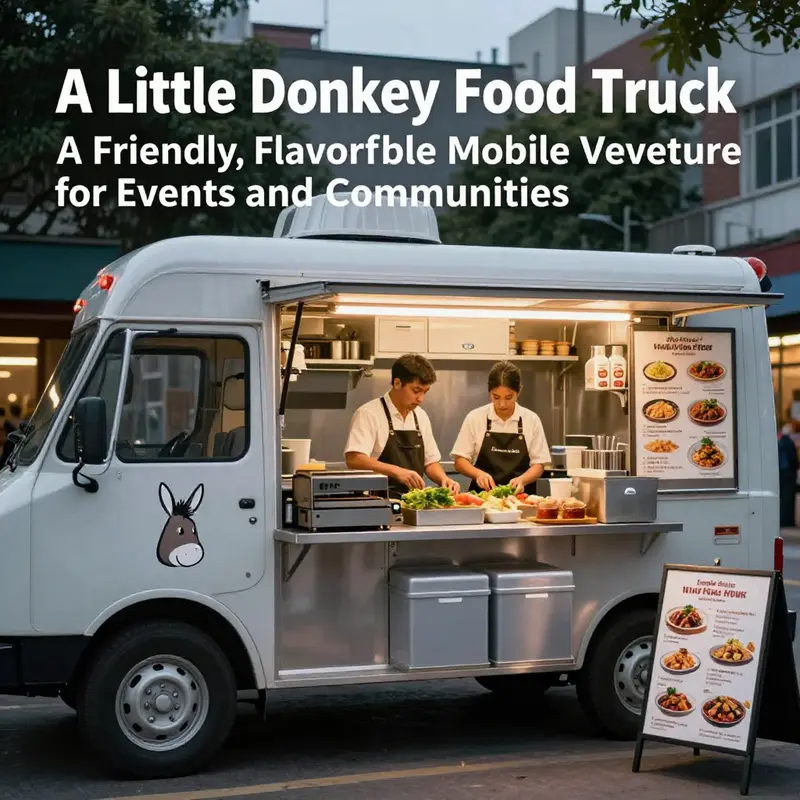
The Little Donkey mobile concept blends farm-to-table integrity with street-food speed. This chapter outlines a compact, electric kitchen-on-wheels designed for urban markets, school events, and festival lanes. The vehicle is envisioned as roughly 14 to 18 feet long, built on an electric chassis with a high-capacity battery that can support a full day of service, plus a buffer for peak demand. A robust electrical system powers induction cooktops, refrigeration, and hot-holding, with a potential solar canopy to offset daytime loads. The layout divides into four zones—prep, cook, finish, and serve—each carefully designed for flow, safety, and sanitation, with color-coded tools, separate refrigeration for allergen-free items, and an efficient pass-through to the window. The safety framework includes a hooded ventilation system with fire suppression, a three-compartment sink, and a handwashing station. Sustainability threads through material choices, packaging, waste streams, and local sourcing, aiming for minimal waste and strong ties to community producers. The menu centers on a core rotation of six to nine items that travel well, with seasonal variations that leverage local produce. A signature wrap, a grain bowl, and a plant-forward option provide the backbone, while sauces and garnishes unlock cross-utilization without complicating procurement. The service model blends walk-up ordering with optional pre-ordering via mobile devices to shorten lines while preserving the theater of service. The culinary narrative is supported by branding that emphasizes warmth, neighborliness, and transparency about ingredients, work practices, and environmental impact. Finally, the launch plan charts a staged roll-out from a soft opening at a farmers market to multiple locations, accompanied by training focused on technique and guest communication, and a risk-management map that covers power reliability, food safety, and weather contingencies. The chapter closes with a reflection on how a small electric kitchen can travel with purpose, connecting producers to eaters and turning a moving platform into a neighborhood friend.
A Little Donkey Food Truck: Regulatory, Economic, and Societal Impacts
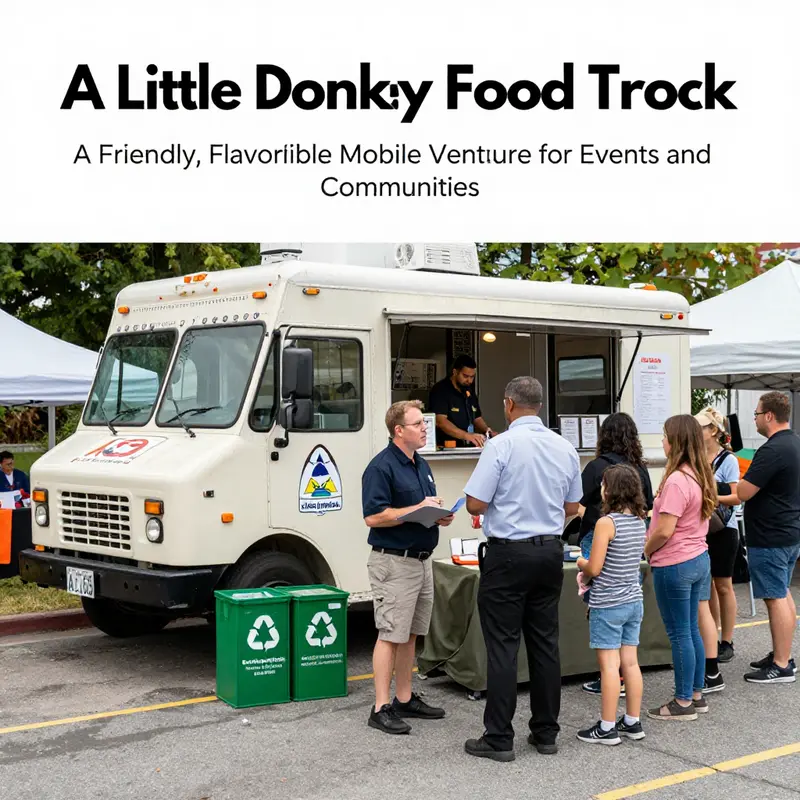
The notion of a Little Donkey Food Truck sits at an intriguing crossroads where appetite, mobility, and everyday policy meet. It is not merely a culinary venture on wheels; it is a small ecosystem that tests how cities, regulators, entrepreneurs, and residents co-create public space. A truck, especially one that carries a whimsical name into crowded streets and markets, invites curiosity. Yet curiosity soon gives way to practicality: how does a tiny operation stay compliant, how does it compete with stationary eateries, and how does it contribute to the community without transforming neighborhoods into parallel economies that leave some residents behind? The answers lie in a careful balance of health safeguards, sound economics, and a social vision that sees the truck not as a transient distraction but as a mobile forum for shared nourishment and cultural exchange. In this converging space, the regulatory framework provides a map, not a cage. It sets expectations for safety and consistency while allowing room for local adaptation and entrepreneurial experimentation. The journey of a Little Donkey Food Truck, then, unfolds as a narrative about keeping people fed, safe, and engaged in a city that is always in motion.
Regulatory structure for a mobile food service begins with public health foundations that the public rarely sees, yet which underpin every successful day on the street. The U.S. Food and Drug Administration offers Compliance Programs that guide inspectors and operators through a common language of safety. These programs are not generic checklists; they are risk-based scripts that help determine where a truck must focus its efforts. A food truck operates under the same safety expectations as a brick-and-mortar restaurant, but with the added layer of mobility. The FDA’s broader framework, including the Food Code and related guidance, emphasizes temperature control, sanitation, and employee hygiene. Temperature logs, monitoring of hot and cold holding, and rapid cooling practices become daily rhythms for a Little Donkey, just as they do for a kitchen inside a stationary building. It is this shared standard—a consistent baseline of care—that makes customers feel confident returning to a truck that moves but never compromises on safety. Understanding these expectations helps owners plan for inspections, prepare documentation, and build a culture of compliance rather than last-minute improvisation.
The practical implications of these regulations extend well beyond the moment of service. A Little Donkey Food Truck must establish hazard analysis and risk-based preventive controls that identify and manage potential failures in the flow of food—from sourcing and receiving to preparation, cooking, cooling, and serving. This requires a structured yet flexible approach. The concept of hazard analysis is simple in theory: anticipate where things could go wrong and put safeguards in place before they do. In practice, it means detailing critical control points, validating that controls work, and maintaining records that prove controls are actively managed. For a small operation, this is a disciplined habit rather than a bureaucratic burden. It translates to practical routines: calibrated thermometers for every batch, clearly labeled storage for raw and cooked ingredients, daily sanitation logs, and a staff training cadence that ensures every team member understands why temperatures matter and how to respond if a deviation occurs. These practices are not merely regulatory obligations; they are the architecture of trust that allows a Little Donkey to operate in tighter spaces and busier times than a fixed shop might tolerate.
Inspections and ongoing oversight are not punitive specters looming over a mobile kitchen. They are a feedback loop that helps a small enterprise evolve. Regular checks, when approached constructively, offer opportunities to tighten procedures, improve record-keeping, and elevate overall performance. For the operator, the goal is not to maximize the time between inspections but to render each inspection a straightforward confirmation of well-run processes. A well-documented system—temperature logs, pest control measures, facility sanitation schedules, and evidence of employee health training—speaks volumes about the seriousness with which the team treats customer welfare. The consequences of negligence are severe: fines, temporary closures, or in the worst case, license revocation. While such outcomes are daunting, they underscore an important point: regulatory compliance is an investment in longevity and legitimacy. A Little Donkey that consistently meets or exceeds standards can weather regulatory shifts, adapt to new markets, and earn a durable reputation for reliability.
Beyond the letter of the law, the deeper economic currents around mobile food service reveal a landscape where small operators chase efficiency without sacrificing quality. Small food trucks, including a hypothetical Little Donkey, contribute meaningfully to local economies by creating jobs, stimulating demand for local suppliers, and offering affordable, accessible dining options in dense urban cores and thriving neighborhoods alike. The model typically features lower overhead than brick-and-mortar restaurants, enabling more flexible pricing and the potential to recover startup costs more quickly. Yet the economic truth is more nuanced. Compliance costs, from equipment needs to documentation systems and periodic training, charge a real price. For a one- or two-person crew, those costs can be proportionally significant. This is where prudent financial planning comes into play: investing in robust refrigeration, portable handwashing stations, and reliable generators is not just regulatory savvy; it is prudent risk management that reduces the likelihood of costly shutdowns. The key is to align price points and menu design with the realities of operating near the edge of profitability while maintaining a quality standard that fosters repeat business. In many ways, the Little Donkey becomes a case study in balancing lean operations with the discipline required to sustain them over many events, seasons, and neighborhoods.
Economic resilience for a mobile unit also depends on relationship-building with local suppliers and event organizers. A truck cannot rely solely on quick-service fame; it must create a reliable local network of producers, distributors, and venues. This means establishing straightforward agreements with farmers and vendors who can provide fresh ingredients in predictable cycles. It also means cultivating trust with event planners and street-market coordinators who value punctuality, consistency, and the ability to scale during peak hours. A well-run vendor ecosystem reduces volatility, making a Little Donkey more adaptable in the face of weather swings, traffic disruptions, or sudden changes in regulations. The storytelling around such a business matters, too. People come to the truck not only for food but for a sense of neighborhood presence—the feeling that a small crew is a part of the local fabric, listening to customer feedback, and adjusting menus to reflect seasonal produce and cultural celebrations. In this sense, the economic vitality of mobile food ventures intersects with social vitality, weaving flexibility with accountability.
The societal impact of a Little Donkey on wheels extends from the economics of food access to the everyday experience of public spaces. When a mobile kitchen parks in a plaza, a parklet, or a busy corridor, it becomes more than a point of sale. It acts as a small social node, inviting conversations about flavor, technique, and community priorities. This is where equity comes into view, a critical dimension of any discussion about food systems. If a handful of dense, high-traffic corridors soak up most of the truck activity, others may feel excluded from the urban food landscape. Regulators and business owners should be mindful of how to distribute opportunities more equitably. That might involve scheduling at neighborhood centers that lack a fixed dining option, coordinating with community organizations to host recurring markets, or ensuring that permit processes do not inadvertently favor operators with greater resources. A Little Donkey can help illustrate these principles in practice, not as a social experiment, but as a sustainable model that respects both consumer choice and neighborhood character. The impact is not solely measured by meals sold; it is measured by the quality of everyday encounters—the quick chat with a local resident about a preferred spice blend, the shared listening to feedback from a school bake sale, the sense that food on wheels can be a bridge rather than a barrier.
The regulatory and economic narratives are not separated walls but a single, interconnected ecosystem. A consistent regulatory approach supports stable operations, which in turn underpins predictable costs, pricing, and service levels. Predictability matters for both customers and the small business behind the Little Donkey. When inspectors recognize a truck’s established processes, when menus reflect tested safe practices, and when staff demonstrate clear hygiene standards, public trust grows. Trust, in turn, becomes a foundation for longer collaborations with community groups, schools, and cultural festivals. This is how a seemingly transient food-on-wheels concept can emerge as a reliable presence in the urban rhythm rather than a sporadic visitor. On the other hand, inconsistent enforcement, opaque licensing practices, or delayed renewals can erode confidence, complicate scheduling for events, and threaten community connections that a mobile unit works hardest to cultivate. The balance is delicate, but with thoughtful leadership, a Little Donkey can ride the wave of mobility without losing its footing in health, safety, and social reciprocity.
A deeper reflection on the societal dimension invites a cautionary comparison. Research on the consequences of asset disruption in rural settings underscores a broader principle: when a key asset like a vehicle, permit, or license becomes unavailable, households and local businesses can experience cascading economic hardship. Although donkeys in rural contexts are not the same as mobile food enterprises, the logic translates. A small operator who loses access to a vehicle, faces a delayed permit renewal, or confronts a sudden and expensive compliance upgrade is temporarily stranded. The downstream effects ripple through neighborhood food security, local employment, and consumer choice. This analogy is not a scare tactic; it is an argument for predictable regulatory pathways, clear fee structures, and scalable compliance solutions that support small ventures rather than penalize them for limited resources. When policy makers recognize the fragility of small operators in such moments, they can craft minimizing adaptations—grace periods for minor infractions, phased upgrades to equipment, or targeted technical assistance—to keep the Little Donkey on the road and in the game of nourishing the city.
The narrative of a Little Donkey Food Truck, thus, is a story of alignment. It is about aligning the pace of city life with the tempo of a small kitchen on wheels, aligning regulatory expectations with practical realities, and aligning community needs with the energy and creativity of local entrepreneurs. This alignment rests on three pillars: safety-first operational discipline, deliberate economic partnerships that extend value beyond the truck, and a social ethic that treats mobility as a doorway to inclusion rather than a barrier to access. The regulatory framework provides the guardrails and milestones; the business acumen provides the road map and fuel; the community provides the dent of meaning that makes a truck worth chasing across markets and festivals. When these elements converge, a Little Donkey is not simply a mobile vendor; it becomes a neighborhood fixture that demonstrates how a city can welcome new voices to its streets while maintaining high standards for health, fairness, and opportunity. As cities continue to evolve toward more flexible, pedestrian-friendly, and inclusive food ecosystems, the Little Donkey emblem on a curbside corner may well symbolize a balanced path forward—one in which safety, economy, and society walk hand in hand on a shared boulevard.
For readers who want a practical doorway into the regulatory landscape discussed here, a concise resource on navigating the complex terrain of food truck regulations can be especially helpful. It offers a practical walkthrough of permitting, inspections, and compliance milestones that mobile operators encounter in daily practice. The link below points to a resource that translates federal safety expectations into actionable steps that a small team can follow, reducing the guesswork often associated with compliance and enabling operators to focus on what they do best—creating and sharing good food in public spaces. Navigating Food Truck Industry Regulations
As the chapters unfold, the conversation will continue to explore how a Little Donkey can adapt to different regulatory regimes, crowd dynamics, and changing tastes while staying true to a core commitment: to feed people well, safely, and with a sense of neighborhood belonging. The next parts will examine how emerging technologies, local governance experiments, and community partnerships shape the practical, day-to-day life of mobile food vending. The story is ongoing, and the road ahead is as interesting as the flavors on the menu. To understand the practical dimensions of these shifts, readers can turn to a broader framework of regulatory guidance and industry perspectives that provide context for the choices a Little Donkey might make in a given city, season, or festival. External factors, from tariffs to supplier availability, will influence menu design and sourcing strategies, underscoring the need for flexible planning and strong supplier relationships. The underlying message remains clear: mobility is a powerful platform for food innovation when paired with disciplined safety practices, fair opportunity, and an engaged, local audience. External resources, including official guidance on compliance programs, offer a compass for that journey. For a foundational reference on regulatory expectations, see the official guidance provided by the FDA, which outlines the agency’s approach to facility operations and food safety standards for mobile units: https://www.fda.gov/food/compliance-facilities-and-food-operations/compliance-program-guidance
Final thoughts
A Little Donkey Food Truck blends the warmth of a friendly brand with the practicality of a mobile kitchen, offering a flexible option for events, workplaces, and communities. Market trends suggest that mobile catering continues to grow as a low-overhead, high-reach model, especially when the concept blends local flavors, sustainability, and social engagement. By focusing on a clear operational design and a menu that travels well, the truck can deliver consistent quality across settings—from corporate celebrations to neighborhood festivals. Regulatory awareness and community partnerships deepen trust, while thoughtful branding and a compelling menu create lasting impressions. The donkey mascot becomes more than a gimmick; it’s a signal of hospitality, reliability, and shared experiences. Ready to bring this cheerful concept to life, aligned with the needs of planners, teams, and food enthusiasts alike? The Little Donkey Food Truck stands ready to roll, serve, and bring joy wherever people gather.